Moderns don't get it!

SUBHEAD: Modernists do not understand the systemic risk inherent in dependence on complex technologies.

By Kurt Cobb on 8 May 2016 for Resilience -
(http://www.resilience.org/stories/2016-05-08/why-a-modern-can-t-understand-the-risks-we-face)


Image above:Closeup of the Mandelbrot set centered at (0.282, -0.01) at magnification 195.3125 times along the Y-Axis using 5000 iterations. Created by Reguiieee in 2008. Via Wikimedia Commons. From original article.

In my previous piece, I discussed why it is useless to argue with a person clinging to what I called the "religion" of modernism. I summarized four main tenets of the modern outlook as follows:
  1. Humans are in one category and nature is in another.
  2. Scale doesn't matter.
  3. History can be safely ignored since modern society has seen through the delusions of the past.
  4. Science is a unified, coherent field that explains the rational principles by which we can manage the physical world.
These assumptions make modern humans particularly susceptible to becoming captives of the bell curve. Our understanding of risk is mediated by a misleading picture of regularity in the physical world and in human society. Moderns believe that nearly all risks--and certainly the nontrivial ones relating to our survival as species--can be easily calculated and managed.

The truth about risk is actually much more disturbing. The generator of events in the universe is hidden from us humans. We see the results and make up theories about the causes and the processes.

Some theories work well such as those relating to the prediction of the orbits of planets, for example.

But, others have a challenged track record. Economist John Kenneth Galbraith remarking on his own profession once said: "The only function of economic forecasting is to make astrology look respectable."

The idea that the study of human psychology, sociology and economics would yield theories as powerful as those we have for predicting the orbits of planets has long since been abandoned (except by economists, it seems).

Humans remain quite unpredictable. And, the trends in the societies in which we live are all the more difficult to perceive and forecast since there are so many people interacting with each other using our worldwide communications and logistics system, each pursuing their individual aims.

Now let's return to the bell curve, a famous statistical construct. Many phenomena in nature when tallied on a graph result in a bell curve. Such a curve can be quite useful for understanding distributions of physical characteristics that are constrained by the laws of physics and biology. For example, we can reasonably predict that a distribution of human height will fall along something resembling a bell curve.

The constraints of biology and gravity imply a range for the stature of humans. We might expect to see very few adult humans who are either 3 feet tall or 7 feet tall, but many in between. We would, however, expect to see none who are 100 feet tall. And, we could easily arrive at an average that would not be far from any individual, say, 5 feet.

Social phenomena, such as wealth distribution, are not governed by the laws of physics in the usual sense. While one might find quite a few people at a social gathering who are near 5 feet in height, there would be no one who is 5,000 feet tall.

On the other hand, it is quite possible for one person in a room to have a net worth of $50,000 and another to have 1,000 times that or $50 million. There is no physical constraint on the creation of money other than the energy required by a clerk to type instructions into a computer at a central bank.

While social phenomena such as wealth distribution do not follow the same pattern as physical phenomena, they can still be quantified and illustrated.

So far, we've been talking about things which we can readily measure, and we have said nothing about the future. This is where things get sticky. Risk is all about judging the likelihood of something happening in the future--and we can know nothing about the future for certain. (Even the orbit of a planet might be altered by its collision with a comet or a rogue planet. This is unlikely in a short time frame, but grows ever more likely with time--admittedly long spans of time.)

Now, it is one thing to say that in the future adult humans are very likely to remain mostly between 3 feet and 7 feet tall with a few outliers, but none 100 or 1,000 feet tall (unless the laws of biology and physics change).

It is quite another to predict the stock market, predict world oil supplies 40 years from now, predict the date of the next world war (which we'd have to define since there are wars going on all the time) or predict human population 1,000 years from now.

There are so many variables which affect predictions such as these that all we might do is hazard a guess. If we end up being right, it will be more a matter of luck than method.

But a "modern" might make generalized, but confident predictions about some of these. The stock market will go up in the long run, say, over the next 50 years, because economic growth will continue apace during that time--growth resulting from the deployment of many new technologies and new abundant, cheap energy sources.

A modern might predict that oil supplies will be irrelevant 40 years from now or predict that they will continue upward during the next 40 years because of--you guessed it--new technologies.

A modern might predict that human population will be larger in 1,000 years as the human ability to provide for greater populations with much higher efficiency continues to develop.

Part of what is lacking in these pronouncements is an understanding or even acknowledgement of the risks inherent in the technology that will allow these felicitous (depending on your point of view) outcomes.

Since we cannot view the generator of events in the world, we can only theorize about causes and effects, never know. While the interactions among unpredictable humans make social forecasting very difficult, adding that unpredictability to human interactions with the physical environment makes long-term forecasting in human affairs as a practical matter impossible.

And here we must acknowledge that our understanding of the physical world is very limited, however much we may think it is comprehensive. Scientists in all disciplines continue to discover relationships and processes which challenge long held views.

If such revelations happen over just one lifetime, and we are basing our projections on our current understanding, then we simply cannot fathom how perceptions of the world around us will change over long periods--or whether those new perceptions will tell us that we are getting ever closer to a complete picture of the universe or that we will never arrive at one.

The modern seems unaware of what I've called the chief intellectual challenge of our age, namely, that we live in complex systems, but we don't understand complexity. I alluded to complexity as a double-edged sword in my previous piece, both a tool for adaptation and barrier to it.

The failure to understand how little we know about the world we live in and the inability to see that the world cannot be reduced to an engineering problem have led us to deploy inventions the consequences of which we cannot know--and more important, which threaten systemic ruin for human civilization.

A friend of mine calls this the Midgley Effect after the noted mechanical engineer and chemist, Thomas Midgley Jr. Midgley was responsible for two major inventions which are no longer in use because they were so injurious.

One, lead in gasoline, has had myriad well-documented public health effects. Yet, at the time of its invention, lead was heralded as an innocuous additive to gasoline to improve engine performance. Almost no thought was given to where the lead would go once it exited the tailpipes of the world's gasoline-powered transportation fleet.

This theme carried over into Midgley's other now infamous invention, chlorofluorocarbons, known by the trade name Freon. The world needed a liquid that would be highly volatile and chemically inert to aid the spread of refrigeration.

Early refrigerators used toxic, flammable and corrosive liquids to transfer heat from the inside to the outside of the refrigerator. Chlorofluorocarbons as a nontoxic and nonflammable refrigerant seemed an ideal solution.

The problem, of course, was that no one thought about the systemic risks of releasing chlorofluorocarbons into the environment, substances which were designed to persist over decades.

If it were not for the efforts of one curious scientist, F. Rowland Sherwood, in the early 1970s, we might not have learned about the emerging catastrophic interaction between chlorofluorocarbons and the ozone layer. Rowland asked a simple question: Where do chlorofluorocarbons go after they are released into the environment?

The answer was shocking. They were reaching the ozone layer and destroying it thereby threatening all life on Earth, life which had evolved under the ozone layer's protection from the sun's ultraviolet radiation. This was really a case of potential catastrophic ruin that might have gone undetected until the damage was far more advanced.

Sherwood's research led to the Montreal Protocol in 1987, a worldwide agreement to phase out the use of ozone-destroying chemicals.

But the inventor of chlorofluorocarbons was widely lauded during his lifetime, winning several top awards for his achievements in chemistry and even serving as president of the American Chemical Society.

Since then, we have had many examples of worldwide systemic releases of dangerous chemicals which were thought to be innocuous or at least "safe" by the standards of the day.

Ignoring all this the modern pretends that we've learned our lessons and now couldn't possibly do things which could bring down civilization, that is, pose the risk of systemic ruin.

Everyone feared the destruction which a nuclear war might bring. But it wasn't until computer modelers suggested that total nuclear war between the United States and the Soviet Union could bring on dramatic summer cooling of 20 to 35 degrees C that the full systemic consequences of a such a war were understood.

The shroud, known as nuclear winter, that would envelope the sky would initially block out 99 percent of the natural radiation. It would mean a wipeout for the world's food supply and the end of civilization and possibly many species, including perhaps humans.

Such a nuclear exchange seems unlikely today. But it is still possible.

We humans continue to flirt with systemic ruin by touting the benefits of those things which could cause it. Genetically engineered crops (often called genetically modified organisms or GMOs) have been introduced worldwide with virtually no testing on how such novel genes might interact with the natural environment.

As author on risk Nassim Nicholas Taleb has explained, where there is repeated use of a technology with a nonzero risk of systemic ruin, that ruin over time becomes almost certain.

 If you do something which has a 1 in 10,000 chance of killing you and you do it only one time, you will probably survive. But if you do it 10,000 times, you will almost surely end up in your grave.

That is the problem with GMOs, and we have no way of even calculating the risk. We face the possibility of a wipeout of the food system for reasons which we cannot anticipate--that come from the hidden risks accompanying the spread of novel interspecies gene transfer without any understanding of the dynamics of such transfers once released. If we stopped now, perhaps we would avoid such a wipeout. But if we continue, we are only playing a more elaborate version of Russian roulette with gene-splicing technology.

Others have noted the systemic dangers of creating self-replicating nanobots, possibly leading to the so-called gray goo problem in which nanobots consume significant portions of the biosphere in order to feed and replicate.

Some systemic risks are more passive. We've created a worldwide electrical system which we now know is vulnerable to solar storms. It is only a matter of time before one capable of shutting down much of the world's electric power generation hits.

So critical is electricity to the daily functioning of our global communications and logistics systems and to everyday systems such as water purification and wastewater treatment, that a denial of electricity to much of the world for more than a few weeks might very well lead to mass death and the end of modern technical civilization. Yet, we as a species have done little to prepare for this event.

What the modern believes is that such scenarios are so unlikely that we should ignore them. He or she believes that the bell curve (normal distribution) of outcomes applies to such risks, when, in fact, we cannot calculate their probability since we cannot quantify what might cause them in the first place.

The point about systemic risk is not that any one of these scenarios is likely. It is that any one of a thousand unlikely systemic risks could seriously endanger all of society. We don't need all of them to take place to experience catastrophe. We just need one. Climate change comes to mind.

And so, as we pile risk of systemic ruin upon risk, we are doing nothing more than whistling past the graveyard, lost in modernist denial--obliviously believing that we know far more about and have far more control over our environment than we do.


.

Trumptopia

SUBHEAD: The tragedy is that no other serious, grown-up figures stepped forward in this dangerous moment of history.

By James Kunstler on 9 May 2016 for Kunstler.om -
(http://kunstler.com/clusterfuck-nation/trumptopia/)


Image above: Donlad Trump media storm. From (https://reclaimourrepublic.wordpress.com/2016/03/28/video-donald-trumps-daughter-in-law-continues-her-support-in-presidential-race-america-first-abc-nyt-interviews/).

For years, it was easy to see the political storm clouds gather over Europe with its fractious coalitions and its ancient babble of conflicts. Marine Le Pen’s Daddy, severe old Jean-Marie, was on the scene in France decades before Donald Trump ascended to glory on the noxious clouds of America’s crapified culture, attended by heavenly hosts of Kardashian angels and the cherub Honey BooBoo.

For all the strains in recent American life, the two-party system had seemed as solid as the granite towers of the Brooklyn Bridge.

Not even the estimable Teddy Roosevelt could blow up the system when he tried in 1912 — though his Progressive (“Bull Moose”) Party carried California, Pennsylvania, and Minnesota, and he far out-polled the incumbent Republican President Taft, who garnered a measly 8 electoral votes (Democrat Woodrow Wilson won).

Ross Perot made an impact in 1992 — he certainly had a good point about NAFTA and “the giant sucking sound” of jobs draining out of the USA. But his popinjay manner didn’t go over so well, and at the critical moment in the general election he lost his nerve and withdrew, only to foolishly re-enter weeks later.

Then there was the Ralph Nader in 2000, whose egoistic crusade arguably put George W. Bush in the White House.

Since then, the country see-sawed between the long tenures of two Deep State errand boys from each major party, putting both parties in such a bad odor that Trump now rises on their mephitic fumes. Which raises the question, of course: what exactly is this Deep State? Answer:

A leviathan of symbiotic rackets producing maximum incompetence affecting adversely the majority of citizens. It’s a blood-sucking beast of a hundred-thousand heads draining the USA of its dwindling vitality, lying about its intentions while it advertises the pietistic certainties of the Left and superstitious shibboleths of the Right, leaving a smoking hole in the middle where the practical problems of everyday life used to be worked out by practical means.

The Deep State is also the sum of unintended consequences and diminishing returns of a late-stage, bureaucratic, techno-industrial economy cannibalizing itself to stay alive.

One obvious conclusion is that this economy has got to change before there is nothing left to eat, and no political figure on the scene, including Trump and Bernie Sanders, has a plausible vision of where this takes us. Both really just assume that the engine keeps chugging down the track of ever more material wealth that can be distributed differently.

The truth is, there will be a lot less material wealth of the kind we’re used to, and a lot less capital representation in the things we call “money.” In fact, the scene at hand today is just a spectacle of the shrewdest and biggest rodents scarfing up the table-scraps of a 200-year-long banquet.

Hillary Clinton, of course, is the Deep State incarnate, which is the real reason so few citizens trust her. Every poor schnook getting shaken down for a $90,000 appendectomy bill looks at Hillary and knows exactly what she represents.

Every 25-year-old jobless, couch-surfing millennial carrying fifty-grand in college debt sees the face of the Deep State in her self-satisfied demi-smile. Mainly, she has gulled the diversity pimps — because they are wards of the Deep State — and women, because it’s Mommy’s “turn” to direct the Deep State.

Writer, financier, and Deep State rogue operative Jim Rickards keeps insisting that Uncle Joe Biden will end up as the Democratic nominee. (He said so in a Tweet just the other day). You have to wonder what this guy knows. Don’t suppose that Uncle Joe is the knight on a white horse you’ve been waiting for. After all, he’s vice-president of the Deep State.

Voters seem attracted to Trump because he’s so eager to give the finger to the Deep State. It deserves the finger, but it also needs to be carefully disassembled without blowing up what remains of this country. Trump already has a good start on blowing up the Republican Party.

Never before have so many party officials dissociated themselves from the (so far) presumptive nominee. I expect to see more extreme measures against Trump to be yet attempted by the party mandarins in the two months before the convention. I doubt you will hear about them before they happen.

In the face of that, Trump’s behavior only gets more childish. His speech after the Indiana primary was a masterpiece of incoherence. Everything that reflected on the magnificence of his victory was “incredible.” Interestingly, that was exactly the right word. He’s tuned in to the national nervous breakdown underway.

From time to time, when he’s not speaking emptily about how much he is loved, Trump voices some legitimate concern of the Deep State’s victims. There are few decent jobs outside the Deep State’s own rackets. We’re not obliged to take in a limitless stream of immigrants.

Nation-building by military means has been a dismal failure. The national debt is a problem. The country’s infrastructure is decrepit. Trump says he can negotiate a fix to all this: the art of the deal. Blowing smoke up the Deep State’s ass is not a plan.

The tragedy is that no other serious, grown-up figures stepped forward in this dangerous moment of history. The party that Trump purports to represent lost itself in a wilderness of grift, jingoism, and supernatural pettifoggery.

The rival Democratic Party is high on the fumes of “diversity and inclusion,” kindergarten politics that only corrode what’s left of our tattered common culture. Hillary’s Deep State couldn’t have found a better diversionary subterfuge. Both parties are close to blowing up altogether. I’m not convinced that they’ll survive their own conventionas this summer. Then what?

.

Retrospective from the Cthulhucene

SUBHEAD: The geological period we’re entering is not the Anthropocene, but the Cthulhucene.

By John Michael Greer on 4 May 2016 for the Archdruid Report -
(http://thearchdruidreport.blogspot.co.uk/2016/05/the-dawn-of-cthulhucene-retrospective.htm)


Image above: An illustration of H. P.Lovecraft's sea creature Cthulhu. From (http://hdimagelib.com/fantasy+sea+creatures).

"This year’s Earth Day in Ashland, Oregon, where I live, featured an interfaith service at the local Unitarian church, and I wasn’t too surprised to get a call inviting me to be one of the presenters.”

That was the opening sentence of the first post ever to appear on The Archdruid Report, Real Druids, which went up ten years ago this Friday. When I typed those words, I had no clear idea of what I was going to do with the blog I’d just started.

The end of the publishing industry I wrote for in those days was just then waking up to the marketing potential of author blogs; I was also in the third year of my unpaid day job as head of the Ancient Order of Druids in America (AODA), a small and old-fashioned Druid order distinctly out of step with the pop-culture Neopaganism of the time, and hoped to use a blog to bring the order to the attention of anyone out there who might be interested in something so unfashionable.

So I sat down at the computer, logged into my Blogger account, clicked on the button marked new post, and stared blankly at it for a while before I started to type. That, as they say, is how it all began.

In terms of the perspectives with which this blog deals—the grand sweep of human history, and the much vaster sweep of geological and evolutionary deep time—ten years is less than an eyeblink. In terms of a single human life, though, it’s a considerable span.

 Over that period I’ve moved from Ashland to Cumberland, Maryland, the red-brick mill town in the north central Appalachians where I now live. My writing career has burgeoned since then, too, helped along considerably by the two novels and nine nonfiction books that started out as sequences of blog posts.

My other career, the unpaid one mentioned above, also went through plenty of changes—if any of my readers ever have the opportunity to become the presiding officer of a nearly defunct Druid order and help it get back on its feet, I certainly recommend the experience! Still, twelve years in the hot seat was enough, and at the winter solstice just past I stepped down as Grand Archdruid of AODA with a sigh of relief, and handed the management of the order over to my successor Gordon Cooper.

There have been plenty of other changes over the last ten years, of course, and quite a few of them also affected The Archdruid Report. One that had a particularly significant impact was the rise, fall, and resurgence of the peak oil scene. Most of a decade before that first post, a handful of people—most of them petroleum geologists and the like—noticed that oil was being pumped much more quickly than new oilfields were being discovered.

Now of course this turn of events had been predicted in quite a bit of detail well before then; back in the 1970s, in particular, when the phrase “limits to growth” hadn’t yet become taboo in polite company, plenty of people noticed that trying to extract an infinite supply of oil from a finite planet was guaranteed to end badly.

That awareness didn’t survive the coming of the Reagan counterrevolution. More precisely, it survived only on the far fringes of the collective conversation of our time, where the few of us who refused to drink Ronnie’s koolaid spent most of two decades trying to figure out how to live in a civilization that, for all intents and purposes, seemed to have succumbed to a collective death wish. Still, our time in exile didn’t last forever.

It was 1998, as I recall, when I found the original Running On Empty email list—one of the first online meeting places for people concerned about peak oil—and I stayed with the movement thereafter as it slowly grew, and the rising tide of data made the case for imminent peak oil harder and harder to dismiss out of hand.

Two books published in the early 2000s—Richard Heinberg’s The Party’s Over and James Howard Kunstler’s The Long Emergency—helped launch the peak oil movement into public awareness.

Not incidentally, those were also the books that convinced me that it might just be possible to talk frankly about the predicament of industrial society: not just peak oil, but the broader collision between the economic ideology of limitless growth and the hard realities of a fragile planet.

The Archdruid Report came out of that recognition, though I thought at first that its audience would be limited to the Druid community; I figured that people who had embraced Druid nature spirituality might be more open to the kind of intellectual heresy I had in mind. The blog turned out to have a much broader audience than that, but it took me quite a while to realize that, and longer still to recognize its implications.

Meanwhile the peak oil movement hit its own peak between 2008 and 2010, and began skidding down the far side of its own Hubbert curve. That’s standard for movements for social change, though it was probably worsened by the premature triumphalism that convinced many peakniks that once they’d proved their case, governments had to do something about the impending crisis, and that also led some large peak oil organizations to spend money they didn’t have trying to run with the big dogs.

At this point, as the fracking bubble falters and the economy misbehaves in ways that conventional economic theory can’t account for but peak oil theory can, the bottom has likely been reached, and a much shorter period of exile is duly ending. Talk about peak oil in the media and the political sphere is picking up again, and will accelerate as the consequences of another decade of malign neglect bear down with increasing force on the industrial world.

One of the things I find most interesting about this trajectory is that it didn’t impact The Archdruid Report in the way I would have expected. During the years when the peak oil movement was all over large portions of the internet, my monthly page views and other site stats remained fairly modest.

It wasn’t until 2010, when the peak oil scene was beginning to falter, that my stats started to climb steadily; my first breakout all-over-the-internet post came in 2011, and thereafter readership has remained high, wobbling up and down around an average of a quarter million page views a month. All ten of my top ten posts, in terms of total unique page views, appeared between 2011 and this year. On the off chance my readers are interested, here they are:
  1. Collapse Now and Avoid the Rush, Jun 30, 2012
  2. Donald Trump and the Politics of Resentment, Jan 20, 2016
  3. How It Could Happen, Part One: Hubris, Octr 3, 2012
  4. How Not to Play the Game, Jun 29, 2011
  5. An Elegy for the Age of Space, Aug 24, 2011
  6. The Next Ten Billion Years, Sep 4, 2013
  7. Into an Unknown Country, Jan 2, 2013
  8. Fascism and the Future, Part 3: Weimar America, Feb 26, 2014
  9. The Recovery of the Human, Feb 1, 2012
  10. The Death of the Internet: A Pre-Mortem, Apr 29, 2015
(I discovered in the process of making this list, by the way, that the Blogger gizmo for tracking all time top posts doesn’t actually do what it’s supposed to do. Like so much of the internet, it provides the illusion of exact data but not the reality, and I had to go back over the raw numbers to get an accurate list. My readers may draw their own conclusions about the future of a society that increasingly relies on internet-filtered information as a source of guidance.)

None of these posts are only about peak oil, or even about peak energy. You’ll find references to the hard physical and geological limits of the energy resources available to our species in most of them, to be sure, and quite a few detailed discussions of those limits and their implications among the other 489 posts that have appeared here in the last decade. That said, those limits aren’t quite central to this blog’s project. They derive, like the other common themes here, from something else.

The philosopher Arthur Schopenhauer noted that his treatise The World as Will and Representation, massive though it is, was simply the working out of a single idea in all its ramifications.

The same is true of this blog, though I’m an essayist and novelist rather than an analytical philosopher, and thus my pursuit of the idea I’m trying to pin down has been somewhat more discursive and rambling than his. (I make no apologies for that fact; I write the way I like to write, for those who like to read it.)

Not all ideas can be summed up in a few words or a snappy slogan. In particular, the more thoroughly an idea challenges our basic preconceptions about the nature of things, and the more stark the gap between its implications and those of the conventional wisdom, the more thoroughly and patiently it must be explored if it’s going to be understood at all.

Even so, there are times when an unexpected turn of phrase can be used, if not to sum up a challenging idea, at least to point in its direction forcefully enough to break through some of the barriers to understanding.

Thanks to one of my readers—tip of the archdruidical hat to Mgalimba—I encountered such a turn of phrase last week. That came via a 2014 talk by cutting-edge thinker Donna Haraway, in which she challenged a currently popular label for the geological period we’re entering, the Anthropocene, and proposed her own coinage: the Cthulhucene.

She had specific reasons for the proposal, and I’d encourage my readers to see what she had to say about those, but I have somewhat different reasons for adopting the term. H.P. Lovecraft, who invented the squid-faced, dragon-winged, monster-clawed devil-god Cthulhu for one of his best stories, used that being and the other tentacled horrors of his imaginary pantheon to represent a concept as alien to the conventional thought of industrial society as the Great Old Ones themselves.

The term Lovecraft used for that concept was “indifferentism”—the recognition that the universe is utterly indifferent to human beings, not sympathetic, not hostile, not anything, and that it’s really rather silly of us, all things considered, to expect it to conform to our wishes, expectations, or sense of entitlement.

Does this seem embarrassingly obvious? The irony, and it’s a rich one, is that most people nowadays who insist that the universe is indifferent to humanity turn around and make claims about the future that presuppose exactly the opposite.

I’ve long since lost track of the number of committed atheists I’ve met, for example, who readily agreed that the universe is indifferent to our desires, but then insisted there has to be some other energy resource out there at least as cheap, concentrated, and abundant as the ones we’re currently using up.

That claim only makes sense if you assume that the supplies of matter and energy in the cosmos have somehow been arranged for our benefit; otherwise, no, there doesn’t have to be any other resource out there. We could simply use up what we’ve got, and then have to get by without concentrated energy sources for the rest of the time our species happens to exist.

That’s far from the only example of stealth anthropocentrism I’ve encountered in the same context. I’ve also long since lost track of the number of committed atheists who reject the idea of a caring cosmos out of hand, but then go on to claim that technological progress of the kind we’ve made is irreversible.

That claim only makes sense if you assume that history is somehow arranged for our benefit, so that we don’t have to worry about sliding back down the long slope we climbed so laboriously over the last five centuries or so.

If history is indifferent to our preferences, by contrast, the way down is just as easy as the way up, and decline and fall waits for us as it did for all those dead civilizations in the past.

Then there’s the most embarrassing claim of all, the devout insistence that humanity’s destiny lies out there in space. “Destiny” is a theological concept, and it’s frankly risible to find it being tossed around so freely by people who insist they’ve rejected theology, but let’s go a step further here.

If the universe is in fact indifferent to our wishes and desires, the mere fact that a certain number of people have gotten worked up over science-fiction visions of zooming off toward the stars does not oblige the universe to make space travel a viable option for our species.

There are in fact very good reasons to think that it’s not a viable option, but you won’t get many people to admit that these days. We (or, rather, some of us) dream of going to the stars, therefore it must be possible for us to go to the stars—and before you claim that human beings can achieve anything they can imagine, dear reader, I encourage you to read up on the long history of attempts to build a working perpetual motion machine.

I’ve picked on atheists in these three examples, and to some extent that’s unfair. It’s true that most of the really flagrant examples of stealth anthropocentrism I’ve encountered over the last ten years came from people who made quite a point of their atheism, but of course there’s no shortage of overt toxic anthropocentrism over on the religious side of things.

I’m thinking here of those Christian fundamentalists who claim that Christ is coming soon and therefore it doesn’t matter how savagely we lay waste a world they themselves claim that God made and called good. I’ve met atheists, to be fair, who recognize that their belief in the absence of purpose in the cosmos implies that no providence will protect us from the consequences of our own stupidity.

I’ve also met religious people who recognize that the universe defined by their beliefs is theocentric, not anthropocentric, and that human beings might therefore want to cultivate the virtue of humility and attend to the purposes that God or the gods might have in mind, rather than assuming in blithe arrogance that whatever humanity thinks it wants, it ought to get.

The dawn of the Cthulhucene represents the arrival of a geological period in which those latter ways of understanding the world will be impossible to ignore any longer. We are beginning to learn no matter how hard we scrunch our eyes shut and plug our ears and shout “La, la, la, I can’t hear you” to the rest of the universe, the universe is not going to give us what we want just because we want it: that the resources we waste so cluelessly will not be replaced for our benefit, and we will have to face every one of the consequences of the damage we do to the planetary biosphere that keeps us alive.

In place of the megalomaniacal fantasy of Man the Conqueror of Nature, striding boldly from star to star in search of new worlds to plunder, we are beginning to see a vast and alien shape rising before us out of the mists of the future, a shape we might as well call Cthulhu: winged, scaled, tentacled, clawed, like a summary of life on earth, regarding us with utterly indifferent eyes.

In those eyes, we balding social primates are of no more importance in the great scheme of things than the trilobites or the dinosaurs, or for that matter the countless species—intelligent or otherwise—that will come into being long after the last human being has gone to join the trilobites and dinosaurs in Earth’s library of fossil beds.

The sooner we grasp that, the easier it will be for us to drop the misguided anthropocentric delusions that blind us to our situation, wake up to the mess we’ve made of things, and get to work trying to save as many of the best achievements of the last three hundred years or so before the long night of the deindustrial dark ages closes in around us.

Given that the universe is simply not interested in pandering to the fantasies of omnipotence currently fashionable among influential members of our species—given that no special providence is going to rescue us from the consequences of our assorted stupidities, no resource fairy is going to give us a shiny new energy source to make up for the resources we now squander so recklessly, and the laws of nature are already sending the results of our frankly brainless maltreatment of the biosphere back in our faces with an utter lack of concern for our feelings and interests—how should we then live?

That’s the theme that I’ve been trying to explore, in one way or another, since this blog got under way. It’s a vast theme, and one that I haven’t even begun to exhaust yet. I have no idea if I’m still going to be blogging here ten years from now, but if not, it won’t be due to lack of things to talk about.

One more thing deserves to be said here, though. All along the journey that brought me from that first tentative post to this week’s retrospective, one of the things that’s made the way easier and a good deal more enjoyable has been the enthusiasm, understanding, and critical insight that’s been shown by so many of my readers.

Time after time, faced with the choice of backing away from a controversial subject or plunging ahead, I’ve taken the plunge, and discovered that my readers were more than ready to jump with me.

Time after time, too, when I’ve offered a rough sketch of some part of the landscape I’m trying to explore, my readers have asked questions and posed challenges that helped me immeasurably in clarifying my thinking and discarding approximations that didn’t work.

As this blog begins its eleventh year, I’d like to thank everyone who’s made a comment here—and also everyone who’s made a donation to the tip jar and thus helped me afford the hours each week that go into these blog posts.

My gratitude goes with each of you; I hope you’ve found the journey so far as rewarding as I have.

.

Will developers write Kapaa’s future?

SUBHEAD: The General Plan update forsakes  "Keep Kauai Rural"  for major Eastside development.

By Gabriela Taylor on 6 May 2016 in Island Breath -
(http://islandbreath.blogspot.com/2016/05/will-developers-write-kapaas-future.html)

http://www.islandbreath.org/2016Year/05/160507hokuaplanbig.jpg
Image above: The developers of HoKua Place proudly showing inclusion of their traffic stopping development near the Kapaa Bypass Road in the Kauai General Plan Update. Also note the solid block of Urban Center (orange) and Resort Area (maroon) along crowded east coast between Wailua and Kapaa. From (http://www.hokuaplace.com/general-plan.html). Click to embiggen.

WHAT:
General Plan Update Meeting on Kauai Traffic

WHEN: 
 Monday, May 9th 2016 from  2:00pm to 4:30pm

WHERE:
Kauai County Building Meeting Room 2A/2B (adjacent to the DMV)
4444 Rice Street in Lihue, Kauai, Hawaii

I’ve been attending the Community Advisory Committee (CAC) General Plan Update Meetings, because it’s vital that we give our input about decisions that will affect us on Kauai for the next 20 years and beyond.

I’m discouraged about the direction that this is going and need your help.  Please read my Garden Island newspaper article below for a more comprehensive explanation of what happened last week the all day GPU meeting for development of  the Eastside, where the developer for Hokua Place resurfaced and was supported by the county as though it were a done deal. And I was the only one there to contest it.

Please remember that in addition to the 780 dwellings  (only 25% affordable),  there are 3 new resorts going up over the next 4 years in the Wailua Corridor. Doing the math, this equates to  at least 3000 additional cars pouring onto Kuhio Highway. And the DOT only has committed to building one more lane from the south end of the Kapaa By-Pass Road to the light at the corner of Coco Palms. We have only seen the tip of the iceberg regarding traffic!

We need to flood the CAC with testimony. It is important to state the problem, but then necessary to come up with solutions. I will ask the CAC for  the following:
  1. A moratorium on permits for any new resorts and non-affordable housing developments.
  2. Go back to the 2000 GPU and delete the proposed up-zoning from Ag to Urban of the 97 acres proposed for Hokua Place development (with more dwellings than the House lots), to be built with a commercial component, behind the Kapaa Middle School. 
I will also support new Bill#2627 proposed by Gary Hooser and Mason Chock to add affordable rentals, in a unique way, to Lihue District. They acknowledged that Kapaa/Wailua District isn’t appropriate for such development:
"There are many challenges not he least of which is the extreme traffic in the Kawaihau District.” (TGI, op-ed column Forum page, May 4).


Will developers determine our future?

By Gabriela Taylor on 28 April 2016 for the Garden Island 

(http://thegardenisland.com/news/opinion/guest/will-developers-determine-our-future/article_bd36fbc8-dd73-5e79-bbac-fdc4194f7632.html)

The April 28th “Community Place Type and Visioning Workshops” meeting in Kapaa was an all day opportunity for the residents of Kapaa to stand up and speak to what is important for our future. Sadly, few residents were seen among several county employees as well as the CAC, (General Plan Update (GPU) Committee members).

Crippling Kapaa traffic was barely mentioned or the already planned future developments (6 in total), further contributing to the already insurmountable congestion problems, let alone any significant solutions presented for addressing these most pressing issues.

It was disappointing to not hear the DOT speak of solid plans for road expansion, save for the pittance of a third lane added from the south Kapaa By-Pass Rd running in front of Coco Palms to Olehena Rd., to begin construction in 2017.

But the biggest shock was to see that slides, projected on a screen by the county, displayed images of the proposed 97 acres for Urban development beside Kapaa Middle School with the same zoning designation color as urban downtown Kapaa, as though Hokua Place were a done deal.

There have been more  than 160 written testimonies as well as oral comments protesting  this monstrosity in previous public hearings. The developer, Greg Allen, was there defending the up-zoning from agriculture to urban for Hokua Place, as well as were some county employees (conflict of interest?) who thought it would be good for the economy (property taxes?).

Hey county!!  What about the quality of our lives here in the Wailua/Kapaa area?

The final wrap-up presentation, which included recaps of the CAC process, sorely lacked substance and insights on how people on the east side are going to manage with the lack of the most basic quality of life factors being met today as a result of poor planning in the past, and now compounded as we move forward into the future.

Are we willing to learn from past mistakes and make a course correction, or are we only willing to repeat them through complacency?

We need to pause and conduct a comprehensive calibration of where we are and how we got here. That means examining all aspects of what it means to be a remote island state. What about lack of affordable housing and food security on an island with 90% of food imported (boat and plane) and  the challenge of affording to live here when cheap oil disappears?

Up-zoning Ag land or leasing it to seed companies is not in the interest of sustainability for our island. In essence, the band aid approach will not work unless the Herculean challenge of sustainability is faced. We are living on a small island that ships or flies in 90% of it’s food.

Climate Change challenges us, even now, with droughts and unusual weather patterns that threaten agriculture everywhere. Food prices will go up when cheap oil runs out. I haven’t heard the CAC/GPU respond to that, nor to affordable housing.

Besides creating more mayhem to the stressed traffic situation, Hokua Place has categorized only 25% of its nearly 780 proposed housing units as affordable (online: luc.hawaii.gov). The question is what is the threshold for “affordable” and to whom does this apply, and compared to what one is using as the base for “unaffordable”.

Of course, they can sell expensive dwellings to people moving here from the mainland. Imagine nearly 1600 additional cars from Hokua Place and another 1600 guests and employees from the three new Wailua resort developments behind Longs and Coco Palms flooding Kapaa/Wailua, and cry, or pray that road rage and depression don’t do us in with heart attacks! This is not to mention the barely acknowledged additional “entitled residential projects” – Kulana and Pi’ilani Mai He Kai (DHHL Anahola).

Before that happens, I ask you to get involved in this community process by attending the next CAC/GPU meeting on Traffic Monday May 9, 2-4:30 in the Lihue County building, adjacent to the DMV. Public speaking time is limited so make it short, but please either turn in written testimony or email it to to:  (plankkauai@kauai.gov)

Ask the CAC/GPU, to go back to the last GPU of year 2000, and delete the recommendation that 93 agricultural acres behind the Kapaa Middle School Urban be up-zoned to Urban.

Also, how about  considering a moratorium on resort development, no more permits given for resorts and non-affordable housing developments in the Kapaa/Wailua area and put the focus on addressing our most current and pressing issues instead of exasperating them?  See you there!

See also:
Ea O Ka Aina: Wailua self destruction 8/20/15
Ea O Ka Aina: My Hokua Place Testimony 6/20/15
Ea O Ka Aina: Hokua Place comment deadline 6/18/15
Ea O Ka Aina: Coco Palms Good to Go 3/11/15
Ea O Ka Aina: Kapaa Heights Development 1/14/15
Ea O Ka Aina: Lihue loss of vision 9/5/14
Ea O Ka Aina: Annals of pure bullshit - Coco Palms 6/22/14
Ea O Ka Aina: Coco Palms Travesty 8/10/13 
.

No Substiute for Newspapers

SUBHEAD: We burn our bridges, and raise generations who forgot that those bridges ever existed.

By Brian Kaller on 5 May 2016 for Restoring Mayberry -
(http://restoringmayberry.blogspot.com/2016/05/no-substitute-for-newspapers.html)


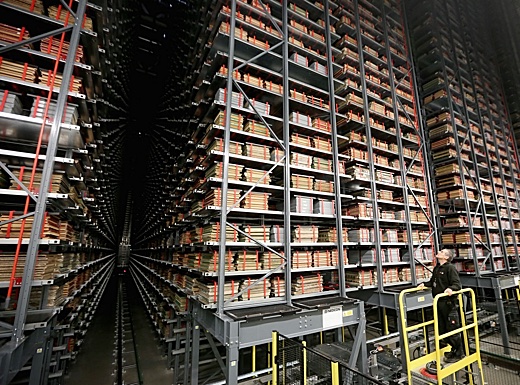
Image above: Archive room of the National Newspaper Building storing 60 million newspapers spanning three centuries. From (http://darkroom.baltimoresun.com/2015/01/national-newspaper-building-60-million-newspapers-spanning-three-centuries/#5).

[IB Publisher's note: For fifteen years we subscribed to the Garden Island News. After they were bought by an off-island Oahu business and the presses were sold and removed to Canada we cut our subscription. It was hardly a newspaper by then anyway. All the classified ads had drifted to CraigsList and the news was anything but - puff pieces, corporate promos, public relations announcements, etc. Real news and opinion had retreated to the internet - if you could find a reliable source. Just to let you know, when the internet server farms go down because Google FaceBook can't make any money we are prepared. We've invested in a mimeograph machine and a couple of manual typewriters and several reams of paper for future paper editions of Island Breath.]

One of the few web sites I read religiously is the Archdruid Report, by John Michael Greer, celebrating its 10th anniversary this week. Some months ago he wrote a piece about newspapers, and I wrote back this comment:

This piece hits home for me, as I boarded that sinking ship of newspaper journalism in the 1990s, even as newspapers were shrinking their articles and redesigning their pages to look more like web sites.

Before my time, newspapers carried a vast range of information. Many had labour sections written for the majority of people who work for a paycheque, and not just a business section for investors. Some ran synopses of the Sunday sermons of their area’s most prominent religious leaders – important not just for piety, but for politics, as the local preachers and bishops had, and still have, enormous influence. Many came out twice a day, so people could read the news more often than most of us check web sites now.

Our modern culture tells us that we have more information today than anyone in history, because of the internet – but that assumes that data that could theoretically appear on a screen has the same value as words read from paper. In truth, few web sites will cover the library board meeting or the public works department, and if they do they are likely to be a blog by a single unpaid individual. Yet these ordinary entities shape our children's minds and our present health, and as such are infinitely more important than any celebrity gossip -- possibly more important then presidential campaigns.

Even if a blogger were to cover the library board or water board, no editors would exist to review the material for quality or readability, and the writer would be under no social, financial or legal pressure to be accurate or professional, or to publish consistently, or to pass on their duties to another once they resign. Transcripts of church sermons are even harder to find online, so some of the most important shapers of public opinion go unknown by anyone outside their circles.

I’ve worked on a number of issues with community activists in the USA, some left-wing and some right-wing, but no one wanted to associate with a church unless they belonged to one, and then only with their own. When I suggested to one auditorium of activists (left-wing, in this case) that they go to various churches and learn about them, I was actually shouted down; animal sacrifice, I think, would have earned less outrage.

Of course, as people readily point out to me, you can surf the internet and do your own research, but you must work diligently to winnow the accurate material from the dubious claims – anyone can create a web site that says anything. Moreover, most people are not going to do all that trouble themselves – we have lives, after all – and you shouldn’t have to. We used to have people who did that for us, and they were called reporters.

When I talk about newspapers this way, people often respond that we have made progress, for we no longer destroy forests. Of course some people used to harvest trees for newspaper and not replant them, but it doesn’t have to be that way – you could plant willow and get ten tonnes of wood to the hectare per year in this climate, and never fell another ancient forest of giant trees.

Contrast that with the mountains of coal we have to burn to feed server farms, the rare-earth-metal mining, the semiconductor factories and the global shipping that we need to employ just to create a mammoth server farm and global telecommunications network, all to do what we did with a piece of paper.

Once a newspaper was read, moreover, it had only begun its useful life – then it would be used to wrap gifts or groceries, then to line insulation or chicken coops, then as tinder for the fire, and the resulting ashes could then make soap or fertiliser. Once an electronic device has a single minor problem, however, it tends to go into a dump, with all its heavy metals and plastics, perhaps to contaminate the soil for thousands of years to come.

Computers are useful for some things, of course – I’m writing this on one, and you’re all reading this on another one. What I don't like is that we have come to depend on them entirely for everything else in our lives -- reading, organising, music, storytelling, faith, and general human interaction.

Moreover, when everyone is doing this, we no longer feel the need to maintain paper records or photos, and even if we wanted to look at card catalogs or the telephone book, no such things exist anymore. We burn our bridges, and raise generations who forgot that bridges ever existed to anywhere else.
.

EPA uses GMO company studies

SUBHEAD: EPA using industry-funded research to determine if glyphosate causes cancer.

By Nadia Prupis on 3 May 2016 for Common Dreams -
(http://www.commondreams.org/news/2016/05/03/epa-using-industry-funded-research-determine-if-glyphosate-causes-cancer)


Image above: Logo for the United States Environmental Protection Agency with a bit of mashup by Juan Wilson.

The U.S. Environmental Protection Agency (EPA) used industry-funded research to conclude that the herbicide chemical glyphosate is not likely to cause cancer in humans—contradicting findings by the World Health Organization (WHO)—according to an analysis the EPA posted to, then swiftly removed from, its website on Friday.

"EPA's determination that glyphosate is non-carcinogenic is disappointing, but not terribly surprising—industry has been manipulating this process for years," said Nathan Donley, a scientist with the Center for Biological Diversity (CBD). "The analysis done by the World Health Organization is more open and transparent and remains the gold standard."

The agency's since-deleted analysis (pdf), which includes an October 2015 memorandum from its Cancer Assessment Review Committee (CARC), states:
The epidemiological evidence at this time does not support a causal relationship between glyphosate exposure and solid tumors. There is also no evidence to support a causal relationship between glyphosate exposure and the following non-solid tumors: leukemia, multiple myeloma, or Hodgkin lymphoma.
Groups cited in the analysis include private biochemical firms like Inveresk Research International, Nufarm, and Arysta Life Sciences.

WHO reported the exact opposite in a groundbreaking March 2015 study, which prompted a wave of measures against the use of the chemical. California placed it on the state's public 'cancer list' in September, while workers around the country lined up to sue Monsanto for conducting what they called a "prolonged campaign of misinformation" to convince farmers, consumers, and the government that its Roundup line of products was safe to use.

As CBD points out, because the studies cited in the EPA's analysis are unpublished, they have not been subject to public scrutiny. In addition, they focus on testing glyphosate as a singular ingredient, rather than looking at the effects of herbicides available in stores.

"Most products containing glyphosate have other ingredients that can make the pesticide more dangerous," CBD said.

Nor is this the first time that the EPA has been caught using biased research to approve of dangerous chemicals. Last November, the Intercept's Sharon Lerner reported that the agency used Monsanto's own research to determine that there was "no convincing evidence" glyphosate was an endocrine disruptor.

An EPA spokesperson said Friday that the document was posted to the website prematurely and was removed "because our assessment is not final," and that the agency would release a completed, peer-reviewed analysis by the end of 2016.

Meanwhile, as the agency played damage control on Friday, a lawsuit was filed in San Francisco alleging that glyphosate residues in Quaker Oats discredits the food company's claims that its product is entirely natural.

"Glyphosate is a synthetic biocide and probable human carcinogen, with additional health dangers rapidly becoming known," the lawsuit states. "When a product purports to be '100% Natural,' consumers not only are willing to pay more for the product, they expect it to be pesticide-free."

The news comes just as advocacy groups including Friends of the Earth and Beyond Pesticides plan a rally outside the White House on Wednesday to deliver 400,000 petitions to the EPA calling for a ban on the chemical.

EPA is currently undertaking a "registration review" of glyphosate, a process which determines whether chemicals can be used safely for the next 15 years based on scientific evidence.

"We shouldn't gamble with the risk of cancer and must take appropriate precautions until we get a conclusive answer about the true dangers of glyphosate," Donley continued. "The indiscriminate drenching of farms, ball fields, and backyards with glyphosate needs to end."


.

Pesticides in Paradise Video

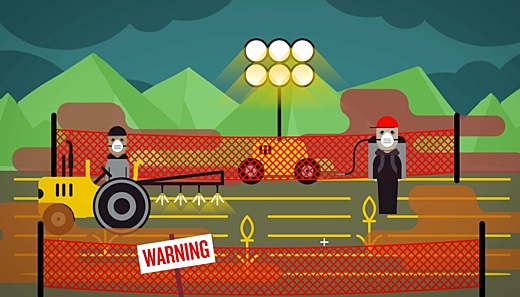
SUBHEAD: Hawaiian's health and environment at risk due to Big-Ag application of restricted pesticides on GMO experimental seed crops.

By Center for Food Safety on 5 May 2016 in Island Breath
(http://islandbreath.blogspot.com/2016/05/pesticides-in-paradise-video.html)


Image above: still image from animation below concerning pesticide use on GMO fields in Hawaii.  From video below.

The Center for Food Safety has released a new video about pesticides in Hawaii. Please share this far and wide, the Pesticides In Paradise booklet is an Open Publication. Spread the word in your neighborhood!

Center for Food Safety is a national non-profit public interest and environmental advocacy organization working to protect human health and the environment by curbing the use of harmful food production technologies and by promoting organic and other forms of sustainable agriculture. CFS also educates consumers concerning the definition of organic food and products. CFS uses legal actions, groundbreaking scientific and policy reports, books and other educational materials, market pressure and grass roots campaigns through our True Food Network. CFS's successful legal cases collectively represent a landmark body of case law on food and agricultural issues.


Video above: 'Pesticides in Paradise". From (https://youtu.be/CKhviAbMXE0).

.

TTIP leaks reveal US position

SUBHEAD: Leaked text shows attempts by US to undermine EU environment and health protection laws.

By Staff on 1 May 2016 for GreenPeace -
(http://www.greenpeace.org/eu-unit/en/News/2016/TTIPleaks-confidential-TTIP-papers-unveil-US-position/)


Image above: American negotiators hidden agenda. From original article.

Greenpeace Netherlands has obtained 248 pages of leaked Transatlantic Trade and Investment Partnership (TTIP) negotiating texts [1], which will be published on Monday 2 May at 11:00 CET. The documents unveil for the first time the US position and deliberate attempts to change the EU democratic legislative process.

The classified documents represent more than two-thirds of the overall TTIP text as of April, at the 13th round of TTIP negotiations in New York. They cover 13 chapters addressing issues ranging from telecommunications to regulatory cooperation, from pesticides, food and agriculture to trade barriers.

Jorgo Riss, director of Greenpeace EU, said: “These leaked documents confirm what we have been saying for a long time: TTIP would put corporations at the centre of policy-making, to the detriment of environment and public health. We have known that the EU position was bad, now we see the US position is even worse. A compromise between the two would be unacceptable.”
Greenpeace identified four main issues of concern:
  • Long standing environmental protection is dropped
The “General Exceptions” rule, enshrined in the GATT agreement of the World Trade Organisation (WTO), is absent from the text. This nearly 70-year-old rule allows nations to restrict trade “to protect human, animal and plant life or health", or for "the conservation of exhaustible natural resources" [2].          
  • No place for climate protection in TTIP
If the goals of the Paris Summit to keep temperatures increase under 1.5 degrees are to be met, trade should not be excluded from CO2 emissions reduction specifications. But nothing about climate protection can be found in the obtained texts.
  • Precautionary principle is forgotten
The US wants the EU to replace the EU’s hazard approach with ‘risk management’, disregarding the precautionary principle, [3] which is enshrined in the EU Treaty but is never mentioned in the consolidated text.
  • Open door for corporate lobbying
The leaked documents suggest that both parties consider giving corporations much wider access and participation in decision making.

Jorgo Riss said: “The effects of TTIP would be initially subtle but ultimately devastating. It would lead to European laws being judged on their consequences for trade and investment – disregarding environmental protection and public health concerns.”

A 70-year-old EU rule, which allows nations to restrict trade in order “to protect human, animal and plant life or health," or for "the conservation of exhaustible natural resources,” would end, if U.S. President Barack Obama gets what he wants.

Furthermore, the “Precautionary principle is forgotten”: it’s currently enshrined in the EU Treaty, but Obama wants it gone; it is stated in the EU Treaty as allowing "rapid response in the face of a possible danger to human, animal or plant health, or to protect the environment. In particular, where scientific data do not permit a complete evaluation of the risk, recourse to this principle may, for example, be used to stop distribution or order withdrawal from the market of products likely to be hazardous.”&

Obama wants there to be no ability for EU nations to withdraw from the market “products likely to be hazardous.” All products would be assumed safe, unless proven not to be.


.

Send out the Clowns

SUBHEAD: The loathsome Koch brothers have already made their move onto Hillary’s side of the game-board.

By James Kunstler on 2 May 2016 for Kunstler.com -
(http://kunstler.com/clusterfuck-nation/send-out-the-clowns/)


Image above: Painting "THe Monkey Whisperer", oil on canvas, 24"x30" by Mark Bryan. From (http://www.artofmarkbryan.com/circus/#!jig[1]/NG/264).

In this decade of maximum peril, a prankish God delivers two maximally detested candidates to lead the faltering nation as events run ahead of all the convenient narratives. For instance: the idea that Republican “insiders” can block Trump’s path to the nomination. 

The insiders may be phantoms after all. For instance, the loathsome Koch brothers have already made their move onto Hillary’s side of the game-board. Trump won’t miss their campaign contributions for a New York minute (while Hillary might find a way to stuff the cash into some Cayman Islands lock-box of the Clinton Foundation).
 
Events played right into Trump’s smallish hands last week when protesters outside a Donald rally in Costa Mesa, CA, waved Mexican flags and placards calling for the reestablishment of Aztlán del Norte. Kind of proves his point about illegal immigration, don’t it? 

Trump also supposedly blundered in saying that Hillary had only “the women’s card” left to play in her donkey trot to the election. I’m not so sure he’s wrong about that — though the indignometer needle danced through the red-line after he said it.

Has it come to this? The women’s party against the men’s party? What kind of idiot psychodrama is this country acting out? Mom and dad mud-wrestling in an election year hog-wallow? A Reality TV show writ large from sea to shining sea? Are there no better ways of understanding the difficulties we face?
 
Lately Hillary has been boasting of her ability to bring Wall Street to heel, theoretically after Wall Street installs her in the White House. Voters (especially women) might want to pay attention to Hillary’s lavish praise for President Obama’s handling of the banking turpitudes still unresolved seven years after the crack-up of 2008. 

What did the Dodd-Frank Act (signed by “O” in 2010) accomplish except to provide more lucrative work-arounds, by Too-Complex-To-Comprehend legalese, for Too-Big-To-Fail banks. It was written by bank lobbyists and lawyers and was about 2,270 pages longer than the old Glass Steagall Act that Bill Clinton vaporized in 1999. 

Do you suppose that Bill and Hill might have talked about the repeal of Glass Steagall back then? Do you wonder what she thought about it at the time… being a lawyer and all?

This week attention is fixed on the Indiana primary where Devil Bat Ted Cruz desperately makes his last stand against the Trump juggernaut. It seems that former House Speaker John Boehner actually succeeded in driving a wooden stake through Cruz’s hypothetical heart by casually remarking that he was “the most miserable sonofabitch I ever worked with.” 

Kind of hard to explain that one away, though Ted tried by sending out his new attack dog Carly Fiorina and claiming that he never worked with the Speaker of the House — a risible claim for a national legislator in the same party.

All of this would be amusing if the USA wasn’t sliding into the twilight of what many people call “modernity” — which is code for the techno-industrial hyper-complexity we’ve been enjoying lately as a species. We have yet to comprehend the diminishing returns of heaping more complexity on what is already too complex. Exhibit A for most of the common folk must be the Affordable Care Act (also signed by “O” in 2010). 

Whereas the shrewd stylings of Dodd-Frank surely mystify the public, most full-functioning adults understand what it means when their health insurance premiums go up by 20 percent and the new deductible makes it unthinkable to even consider going to the emergency room.

The sad truth may be that rackets of this kind are unreformable, and that we can’t begin to do things differently until they collapse. It should be obvious, for instance, that American health care needs to move in the opposite direction from where it has been going — from giantism, as epitomized by colossal merged mega-hospital corporations, back to some kind of local clinic care in which doctors and their subalterns are not burdened by an oppressive matrix of Charge-Master grift. 

There may be less razzle-dazzle technology in that future model, but much more hands-on care, plus an end to the kind of financial pillage that bankrupts households for relatively routine illnesses (the $90,000 appendectomy).

Likewise in virtually all other areas of American life, the real trend as yet un-discussed in this election campaign, will be unwinding and downscaling of the onerous, toxic hyper-complexity of the age now passing and finding our way to a workable re-set of what used to be known as political-economy.

In the meantime: a clown show.

.

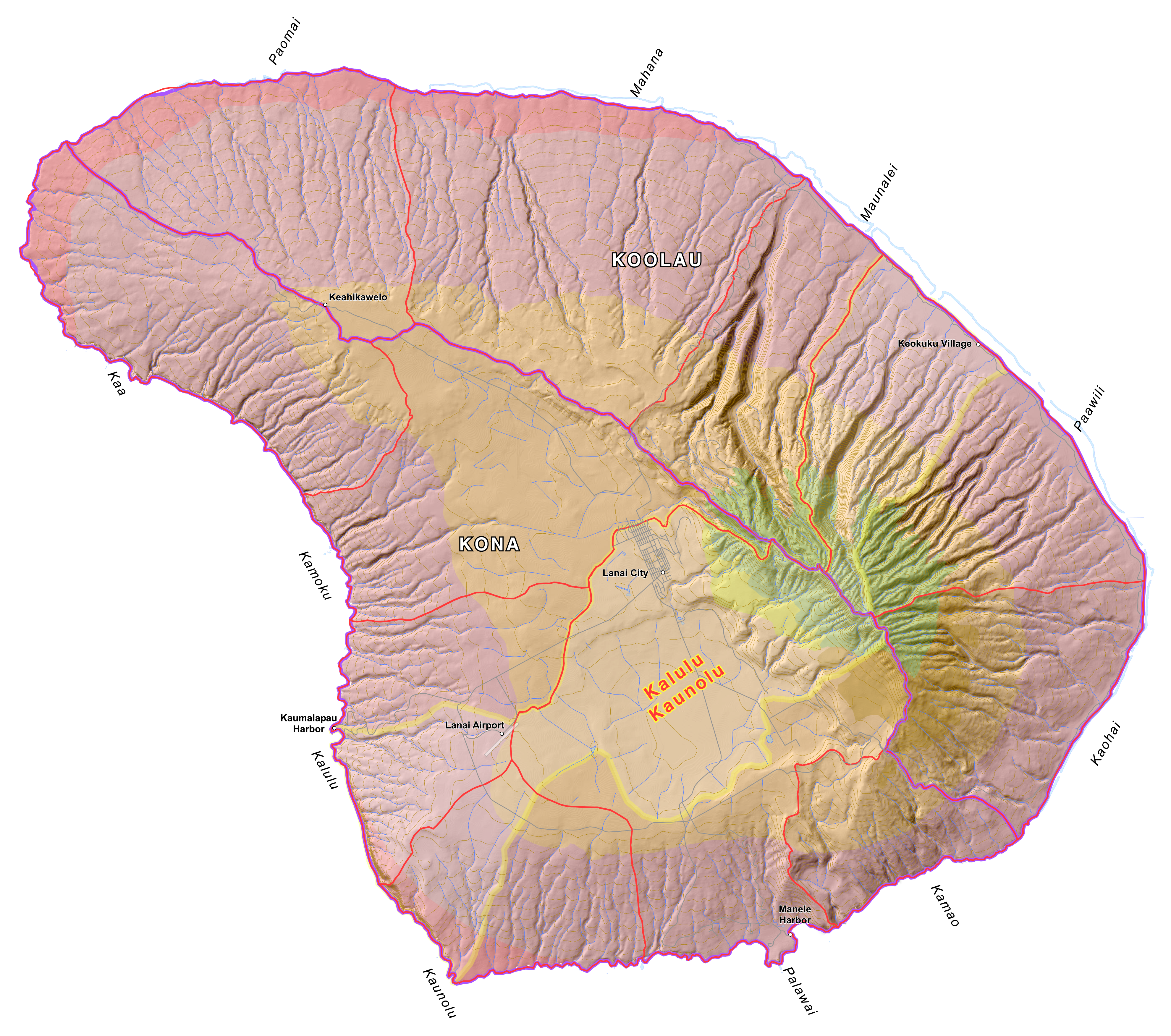
Introduction to Hawaiian Land Areas

SUBHEAD: This is a synthesis of the Hawaiian historical record combined with contemporary ecological frameworks.

By Juan Wilson & Jonathan Jay on 2 May 2016 for Island Breath-
(http://islandbreath.blogspot.com/2016/05/introduction-to-hawaiian-land-areas.html)


http://www.islandbreath.org/hawaiinei/M8Niihau/M8NiihauRasterFile.png

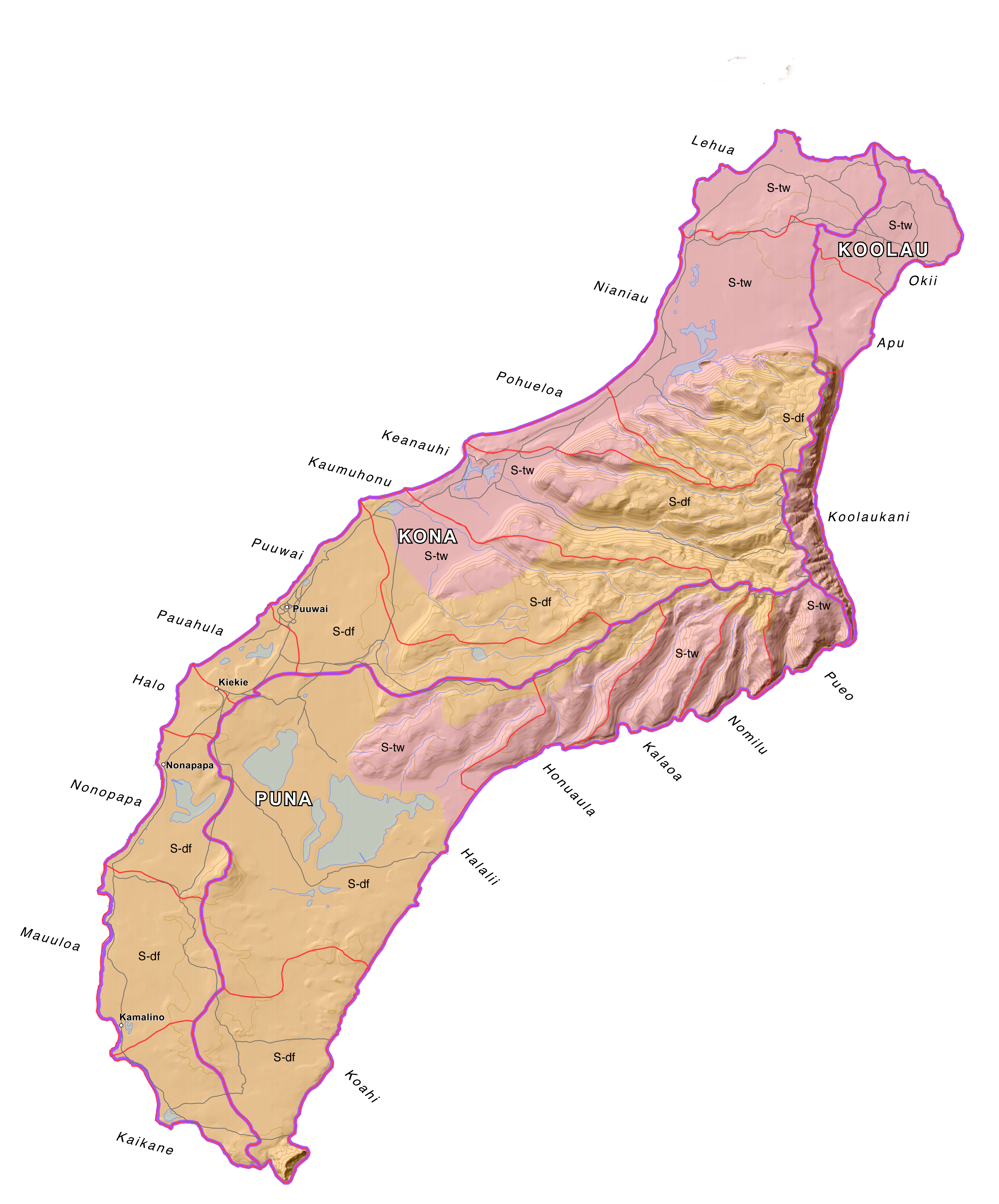
Image above: Map of Niihau, Hawaii, showing Life Zones, Ahupuaa and Moku. Click to enlarge.

By Juan Wilson
The traditional land divisions of pre-contact Hawaiians was based on the sustainability and self-reliance within community watershed areas (ahupuaa) as well as within bioregions (moku) and lastly individual sovereign islands (mokupuni). These natural land divisions were the result of the flow of water over the land.

We are now beginning to include evidence of the flow of water over and under the surface of the islands. We are calling these areas of consideration Waihona.

For simplicity and efficiency this current work is not being coordinated through the Ahu Moku Committee. Historic documents, reference material and selected kapuna are being consulted. On May 1st 2016 we released the current state of the work to the public.

We welcome comment and criticism. This work is far from complete. Waihona are only partially covered at this time.

The new work can be found by clicking here:
(http://www.islandbreath.org/hawaiinei/hawaiinei.html

The available downloadable files of Big Island, Maui, Kahoolawe, Lanai Molokai, Oahu, Kauai and Niihau are in the following formats:

GoogleEarth Files - .kmv
Arch D size Plot Files - .pdf
High Resolution Raster Files - .png
ArcView GIS Shape Files - .shp
AutoCad Document Exchage Files - .dxf

The older Ahu Moku work can be found here:
(http://www.islandbreath.org/mokupuni/mokupuni.html)


By Jonathan Jay
Although this work began as an inquiry into the existing historical cartographic documents and collected oral descriptions of the traditional and customary Ahupua`a and Moku land management system of the Polynesian and Hawaiian people, this work is now a synthesis of that historical record combined with contemporary Western ecological and environmental frameworks, adapted to existing present conditions.

As such, this work is no longer an attempt to accurately recreate the boundaries of ahupua'a or moku divisions at a particular point in history. Instead, by attempting to discern the principles and frameworks of understanding that allowed for the creation of organic divisions of land in the first place, we now strive to apply these principles to our contemporary conditions - 'Ahupua`a & Moku for the 3rd Millennium' if you will.  It is our hope that this work will provide the basis for prudent, long-range, sustainable land-use and resource management.


.

Women Who Farm

SUBHEAD: The actions of women rooted in agriculture, leadership and cultural change.

By Katie Massy on 1 March 2016 for Overgow the System -
(http://www.overgrowthesystem.com/women-who-farm/#wome-who-farm)


Image above: A woman farming. From  original article.

From backyards, abandoned urban spaces, rural properties, and farmland, women around the world, are leading a change that nourishes the soil, encourages biodiversity, safe-guards the seeds, and teaches the children.

This movement continues to gain power through the women who are changing the future of food. Their hardwork, re-skilling and activism is what the world has been waiting for.
Women Who Farm seeks to share these stories.

This project establishes itself as an online media project, and as a book that follows the stories of 15 women across Canada and the United States. The book is still in its infancy stage, while the online project is now underway.

Women Who Farm seeks to celebrate women, through it’s multiple platforms in order to create a new narrative of perserverance, skill and leadership. These stories can inspire both women and men, towards a more ecological and diverse food system which in turn will bring about a more socially just and biodiverse world.

As Vandana Shiva, an agricultural activist says, “We are either going to have a future where women lead the way to make peace with the earth, or we are not going to have a human future at all.”

Are you a woman dedicated to small-scale agriculture, homesteading, gardening, market farming, or raising animals in an ethical way?  Be apart of Women Who Farm! We seek to celebrate women who are leading the local food movement.

To be featured on the Women Who Farm Facebook page send in a photo of yourself on your farm, or in your garden, etc. and we will send you a question. Once we receive your reply, we will feature you on our social media channels. We will post your photo with your engaging quote and give credit to you and your farm.

Do you want to write for Women Who Farm?  We are seeking to publish articles through our online platform connected with Over Grow The System. We will also share your article on the Women Who Farm social media sites.

One last easy way to be apart of Women Who Farm: Tag yourself #womenwhofarm and connect up with us!

Please send all photo’s, submissions and any questions you may have to submissions@womenwhofarm.com

[Her]Story is an online feature of Women Who Farm that empowers and celebrates women around the world. We share the stories of women to inspire a new narrative of empowerment through gardening, homesteading, farming, beekeeping, and seed saving.

This online platform is for you. By sharing your story, you inspire others to create positive change on both the land and in communities throughout the world. By sharing the good work that you and countless women are indebted to, you inspire ripples of positive global change.

Tips & suggestions for your entry:
  • Please give full, in depth replies. Write like you would in an essay.
  • Find someone who can go over and edit your entry before you enter in below.
  • Feel free to advertise the work you are doing, such as your blog or book etc., but don’t let it over shadow the writing. You can advertise at the end of the article the work in which you want to promote.
  • We want to share your story with both the challenges and victories. We are inspired by the real stories of what it means to farm and grow food. It’s not all sunshine and kale, and we are totally inspired by that. Check out some of our Her[Story] features below.
  • After we receive your submission, we will contact you and ask for photographs.  
  • Please send in ten to fifteen high quality images. Images really help with the telling of your story.
  • You don’t have any high quality images? Reach out to your community to see if there is anyone who will take pictures of you and your work.  Some smart phones take good enough quality images that look beautiful. We request that all images are 2000pix wide
  • Please reply to the questions you feel most called to. You do not need to reply to all of them.

My name is Katie Massy. I have been farming since the age of 25. I found my life’s career when I planted the first seeds of early Spring. My first year farming was filled with struggle, but that year of not having a boss, being free on the land, eating amazing food, made me fall in love with being a farmer.

Heart and Soil Organics, run by my partner and I, began when I met a man travelling down from the Haida Gwaii, who urged me to start growing food. With limited access to locally grown food, and most food being shipped in, he was concerned about the Haida Gwaii and noted that Vancouver Island was in a similar situation. It was that day that my partner and I decided to start farming.
We now grow on an acre of land, maybe a little bit more.

Our intention is not to plow more soil, but to grow with better soil, quality seed, and rain harvested water. We spend a lot of time soil building. Each year we harvest enough rain water to irrigate our entire farm for the year.

With the support of our customers it is possible for us to grow food that nourishes both the land and its people. When people take home food we have grown, I feel such happiness in my heart. They have tasted what a real tomato tastes like.

I believe farming is such a perfect vocation for women. It takes real nuturing and attention to grow good food. We don’t need to know how to fix huge tractors, or combines. All we need are some hand tools, determination and a strong back.

I hope that you share your story with me. Together we can change the cultural ideal of what it means to be a woman and celebrate being a farmer. It is a great thing to be a woman who farms.


Video above: "Women Who Farm". Featuring Katie Massy. From original article. (https://vimeo.com/155460216).

.

Gross Domestic Product

SUBHEAD: The art of Phillip Hua displays the contrast between grace and rigidity, between animate life and financial growth.

By Barry Lopez on 1 May 2016 for Orion Magazine -
(https://orionmagazine.org/article/gross-domestic-product/)


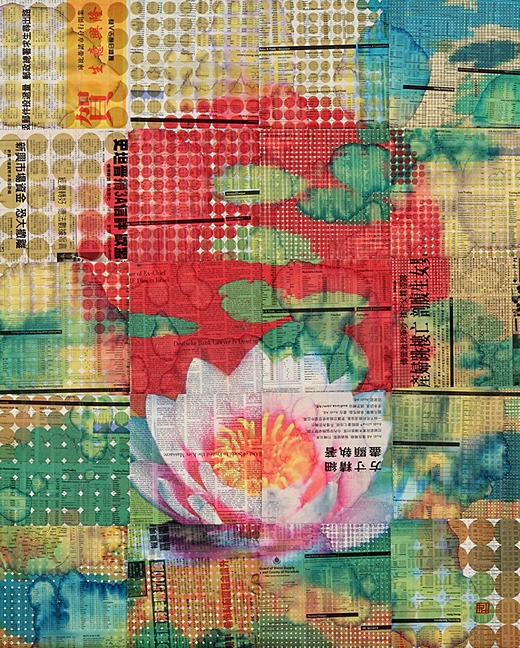
Image above: "What You Own" by Phillip Hua. From original article.

Like a leopard hiding in the limbs of an acacia, Phillip Hua’s artwork caught me by surprise. The contrast between grace and rigidity, between animate life and random, inert news of financial growth, posed for me unbidden questions about wealth, though a mind other than mine could have gone off in some other direction. Hua has layered in a lot of meaning here, in a style reminiscent of classical Chinese painting, which also combines text with image.

I thought first, on seeing these collages, of Sven Beckert, a scholar of the Industrial Revolution, whose Empire of Cotton provides the reader with 250 years of perspective on the situation the West faces today. He begins his analysis by meticulously tracing the origins of industrial capitalism.

The years 1492–1780, writes Beckert, were an era during which the proprietary rights of entrepreneurs, the development of innovative instruments to move capital, state-financed expansion of infrastructure, and the militarized exploration of Europe’s hinterlands prepared the ground from which the Industrial Revolution would spring.


Image above: "Owning the Risk" by Phillip Hua. From original article.

He calls this time “the era of war capitalism” because its most distinctive characteristic was violence—crushing native resistance, expropriating lands, and establishing slavery on a gargantuan scale.

The underlayer of Hua’s collages, a palimpsest beneath the airy layer through which his birds fly, his fish swim, and his trees climb, is the perpetuated record of the violent exploitation Beckert describes. The newspaper graphics seem sinister, in the way a snake ascending a tree toward a clutch of eggs in a nest might seem sinister.

For the moment, Hua’s creatures are able to flit and soar and flourish apart from the implacable lines of regimented information, with all the indifference and volatility they imply.

It’s the very precariousness of the situation, though, that raises for me the question of what we value. Is the promise of material wealth, the rhetoric of buy and sell on these pages, the sort of wealth we hope to secure? Or is the wealth we most desire symbolized by the birds?


Image above: "Eloquent Indicators" by Phillip Hua. From original article.

Generally speaking, we have enough folklore streaming through our minds about birds—the canary in the mine, the prize goes to the early bird, not a sparrow falls, a life free as a bird’s—to understand at several levels the contrast Hua is creating. His art is not narrowly didactic. It is, instead, ethical and stark, and, importantly, has an international reach.

A shopkeeper in Dhaka or one in Brooklyn knows exactly what’s going on here. Hua’s work follows a line of moral objection that can be traced back at least five hundred years to Bartolomé de las Casas, writing to his Dominican superiors in Spain from the “new world,” in the mid 1500s, denouncing the inhumanity of the encomienda system.

If art is to fulfill its primary purpose, to recollect for us a world other than the one of our daily lives, it must do what Hua has done here—remind us of what we aspire to. His creatures move freely, not yet trapped in the acquisitive, reductive prose beneath them, in which numbers, not lives, often stand for reality.

It would be wrong, I believe, to categorize Hua’s work as political. He is a historian, really, telling us the story we repeatedly forget, the story of unflinching objection to the legacy of war capitalism. His primary aim, I have to think, is not to entertain but to encourage.


Image above: "Atlas" by Phillip Hua. From original article.

He’s asking whether we wish to continue entrusting our future to strategies for individual profit, to the clamor of bells on the trading floors of stock exchanges, or to the informing sound of birdsong, a sound far more profound than the narrow slot we have provided for birdsong in our cherished texts of natural history.

• Phillip Hua’s art has been widely exhibited, and he has been shortlisted for the Young Masters Art Prize. He teaches at the Academy of Art University in San Francisco. Barry Lopez, an Orion contributing editor, is the author of fourteen books, including Arctic Dreams, for which he received the 1986 National Book Award.

.

The markets are being faked

SUBHEAD:  All of this is being played to keep people believing the system is still working.

By Mac Slavo on 29 April 2016 for SHTF Plan -
(http://www.shtfplan.com/headline-news/market-analyst-nothing-is-real-all-of-this-is-being-played-to-keep-people-believing-the-system-is-working_04292016)


Image above: Two cowgirls riding the fake bull. From (https://gacar.afrogs.org/#/index).

The stock market may be hovering near all-time highs, but according to Greg Mannarino of Traders Choice that doesn’t mean the valuations are actually real:
"We exist, beyond any shadow of any doubt, in an environment of absolute fakery where nothing is real… from the prices of assets to what’s occurring here with regard to the big Wall Street banks, the Federal Reserve, interest rates and everything in between.
…All of this is being played in a way to keep people believing, once again, that the system is working and will continue to work."
President Obama has suggested that people like Greg Mannarino who are exposing the fraud for what it is are just peddling fiction. And just this week the President argued that he saved the world from a great depression and that the closing credits of the 2008 crash movie “The Big Short” were inaccurate when they claimed that nothing has been done to fundamentally curb the fraud and fix the system under his administration.

But as Mannarino notes, the President and his central bank cohorts are making these statements because the system is so fragile that if the public senses even the smallest problem it could derail the entire thing:
Let’s just look at the stock market… there’s no possible way at this time that these multiples can be justified with regard to what’s occurring here with the price action of the overall market… meanwhile, the market continues to rise...

Nothing is real. I can’t stress this enough… and we’re going to continue to see more fakery… and manipulation and twisting of this entire system…  We now exist in an environment where the financial system as a whole has been flipped upside down just to make it function… and that’s very scary...

We’ve never seen anything like this in the history of the world… The Federal Reserve has never been in a situation like this… we are completely in uncharted territory where the world’s central banks have gone negative interest rates… it’s all an illusion to keep the stock market booming.

Every single asset now… I don’t care what asset… you want to look at currency, debt, housing, metals, the stock market… pick an asset… there’s no price discovery mechanism behind it whatsoever… it’s all fake… it’s all being distorted...

The system is built upon on one premise and that is confidence that it will work… if that confidence is rattled the whole thing will implode… our policy makers are well aware of this… there is collusion between central banks and their respective governments… and it will not stop until it implodes… and what I mean by implode is, correct to fair value.
And when that confidence is finally lost and the fraud exposed – and it will be as has always been the case throughout history – the destruction to follow will be one for the history books.
In a previous interview Mannarino warned that things could get so serious after the bursting of such a massive bubble that millions of people will die on a world-wide scale:
It’s created a population boom… a population boom has risen in tandem with the debt. It’s incredible.
So, when the debt bubble bursts we’re going to get a correction in population. It’s a mathematical certainty.
Millions upon millions of people are going to die on a world-wide scale when the debt bubble bursts. And I’m saying when not if…

When resources become more and more scarce we’re going to see countries at war with each other. People will be scrambling… in a worst case scenario… doing everything that they can to survive… to provide for their family and for themselves.

There’s no way out of it.
And that may be why governments around the world are preparing for nothing short of Armageddon that will see rioting in the streets, violence, civil war and regime change. In the United States, the Federal government and Pentagon have been war-gaming large scale economic collapse scenarios and those preparations began in earnest shortly after the collapse of 2008.

Nationally syndicated talk radio host Mark Levin explains:
I’m going to tell you what I think is going on.
I don’t think domestic insurrection. Law enforcement and national security agencies, they play out multiple scenarios. They simulate multiple scenarios.
I’ll tell you what I think they’re simulating.
The collapse of our financial system, the collapse of our society and the potential for widespread violence, looting, killing in the streets, because that’s what happens when an economy collapses.
I’m not talking about a recession. I’m talking about a collapse, when people are desperate, when they can’t get food or clothing, when they have no way of going from place to place, when they can’t protect themselves.
There aren’t enough police officers on the face of the earth to adequately handle a situation like that.
I suspect, that just in case our fiscal situation collapses, our monetary situation collapses, and following it the civil society collapses – that is the rule of law – that they want to be prepared.
There is no other explanation for this.
The entire system is built upon a fraud. The losses have been hidden and papered over with trillion dollar cash infusions by governments and central banks around the world.

It is only a matter of time. That we can be sure of.

If you’re reading this and haven’t yet done so, it’s time to prepare for a collapse of a magnitude never before witnessed.

The elite are feverishly building bunkers for a reason, just as the government is spending billions of dollars on food stockpiles, assault weapons, and hundreds of millions of rounds of ammunition.

Why? Because they know.
.