SUBHEAD: The United States and its news media look like they want this country to commit suicide.
By James Kunstler on 7 July 2017 for Kunstler.com -
(http://kunstler.com/clusterfuck-nation/suicide-by-stupidity/)
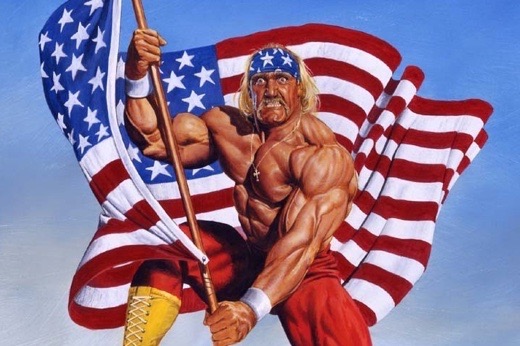
Image above: In 2012 World Wrestling Federation star Hulk Hogan considered running for President. From (http://bleacherreport.com/articles/1399118-election-2012-hulk-hogan-for-president-it-almost-happened).
One has to wonder, though, about the editors who serve up this baloney. Are they mere servelings of the Rand Corporation, Raytheon, and other parties with an interest in the war business, or can they possibly believe their own extrusions of fabricated agit-prop?
For instance, the imputed Russian “annexation of Crimea,” as if the place was some kind of nostalgic, sore-beset Ruritania of independent princes, colorful peasants, and earnest postal clerks cruelly enslaved by bloodthirsty Cossacks. No, Crimea had been officially a province of Russia since exactly 1783 — which was, by the way, the same year that the American Revolution officially ended via the Treaty of Paris.
After the Russian Revolution (1917) the Crimean peninsula became an autonomous province of the Soviet Union, meaning it remained a part of what was then Russia. In 1954, Nikita Khrushchev turned the administrative duties over to the Ukrainian Soviet Socialist Republic, which was then also a province of the greater USSR, i.e. Russia.
Through the entire modern era, Crimea has been the site of the USSR’s, and now Russia’s, only warm-water naval bases. Ask the average American college student why that is, and you will surely receive a blank stare.
Crimea is a peninsula on the Black Sea, which connects to the Mediterranean Sea. Hence Crimea’s strategic value. For a few short years in the 21st century, following the breakup of the USSR, the now-independent Ukraine had possession of Crimea and essentially rented the existing naval bases to Russia.
That provided a much needed revenue stream for the struggling country, which was also utterly dependent on imported Russian natural gas supplies, which Ukraine had to pay for.
When the elected president of Ukraine, Victor Yanukovych, was overthrown in 2014, with the help of the US State Department and CIA, Russia was obliged to secure its naval bases in Crimea — where the overwhelming majority of citizens were culturally and linguistically Russian anyway.
A referendum ratified the transfer of Crimea back to Russia. Apart from these procedural details, it must be obvious that Russia would never have ceded its strategic naval bases on the Black Sea to Ukraine, especially when that beleaguered country was being manipulated by the USA and NATO into becoming an adversarial presence on Russia’s border.
At the same time, the US and NATO have been running war games near Russia’s border in the Baltic region and American soldiers have been deployed into Lithuania. What war are they preparing for exactly? What is supposedly at issue (besides America’s apparent lust for war)?
That last question applies equally to the incessantly repeated trope that Russia interfered in the 2016 US election. What is supposedly at issue? The New York Times has been making this empty allegation for a year now, without ever specifying exactly how Russia might have “interfered.”
In the process, the newspaper has squandered its credibility on what looks exactly like a witch hunt — a campaign against dark and mysterious supernatural forces. It is doing great harm to an already badly-educated, misinformed, economically distressed, drug-addled American public. It also looks like plain old war-mongering.
Coverage of the Trump-Putin meeting during the G-20 conference this week is being played like a World Wrestling Federation championship bout. Which president is weak or strong? Which one will be a loser of a winner?
This is no way to cover geopolitical relations. The United States and its news media look like they want this country to commit suicide by stupidity.
.
By James Kunstler on 7 July 2017 for Kunstler.com -
(http://kunstler.com/clusterfuck-nation/suicide-by-stupidity/)
Image above: In 2012 World Wrestling Federation star Hulk Hogan considered running for President. From (http://bleacherreport.com/articles/1399118-election-2012-hulk-hogan-for-president-it-almost-happened).
But if Mr. Trump agrees to work with Mr. Putin despite a list of Russian transgressions beginning with the annexation of Crimea and ending with its interference in the 2016 presidential election, he will also look weak while Mr. Putin can claim that he reconstructed the relationship.America wakes up to astonishing bullshit from its so-called Newspaper of Record in this lead front-page propaganda dump du jour. Granted, American education has succeeded in destroying the critical faculties of at least three generations so that the public drowns in a soup of unreality every day. In the news business now, as in the national life generally, anything goes and nothing matters.
—The New York Times
One has to wonder, though, about the editors who serve up this baloney. Are they mere servelings of the Rand Corporation, Raytheon, and other parties with an interest in the war business, or can they possibly believe their own extrusions of fabricated agit-prop?
For instance, the imputed Russian “annexation of Crimea,” as if the place was some kind of nostalgic, sore-beset Ruritania of independent princes, colorful peasants, and earnest postal clerks cruelly enslaved by bloodthirsty Cossacks. No, Crimea had been officially a province of Russia since exactly 1783 — which was, by the way, the same year that the American Revolution officially ended via the Treaty of Paris.
After the Russian Revolution (1917) the Crimean peninsula became an autonomous province of the Soviet Union, meaning it remained a part of what was then Russia. In 1954, Nikita Khrushchev turned the administrative duties over to the Ukrainian Soviet Socialist Republic, which was then also a province of the greater USSR, i.e. Russia.
Through the entire modern era, Crimea has been the site of the USSR’s, and now Russia’s, only warm-water naval bases. Ask the average American college student why that is, and you will surely receive a blank stare.
Crimea is a peninsula on the Black Sea, which connects to the Mediterranean Sea. Hence Crimea’s strategic value. For a few short years in the 21st century, following the breakup of the USSR, the now-independent Ukraine had possession of Crimea and essentially rented the existing naval bases to Russia.
That provided a much needed revenue stream for the struggling country, which was also utterly dependent on imported Russian natural gas supplies, which Ukraine had to pay for.
When the elected president of Ukraine, Victor Yanukovych, was overthrown in 2014, with the help of the US State Department and CIA, Russia was obliged to secure its naval bases in Crimea — where the overwhelming majority of citizens were culturally and linguistically Russian anyway.
A referendum ratified the transfer of Crimea back to Russia. Apart from these procedural details, it must be obvious that Russia would never have ceded its strategic naval bases on the Black Sea to Ukraine, especially when that beleaguered country was being manipulated by the USA and NATO into becoming an adversarial presence on Russia’s border.
At the same time, the US and NATO have been running war games near Russia’s border in the Baltic region and American soldiers have been deployed into Lithuania. What war are they preparing for exactly? What is supposedly at issue (besides America’s apparent lust for war)?
That last question applies equally to the incessantly repeated trope that Russia interfered in the 2016 US election. What is supposedly at issue? The New York Times has been making this empty allegation for a year now, without ever specifying exactly how Russia might have “interfered.”
In the process, the newspaper has squandered its credibility on what looks exactly like a witch hunt — a campaign against dark and mysterious supernatural forces. It is doing great harm to an already badly-educated, misinformed, economically distressed, drug-addled American public. It also looks like plain old war-mongering.
Coverage of the Trump-Putin meeting during the G-20 conference this week is being played like a World Wrestling Federation championship bout. Which president is weak or strong? Which one will be a loser of a winner?
This is no way to cover geopolitical relations. The United States and its news media look like they want this country to commit suicide by stupidity.
.