Showing posts with label Pesticides. Show all posts

Bayer Battered

SUBHEAD: After buying Monsanto Bayer suffers major blow losing second RoundUp cancer trial.

By Tyler Durden on 20 March 2019 for Zero Hedge -
(https://www.zerohedge.com/news/2019-03-20/bayer-battered-after-suffering-major-blow-second-roundup-cancer-trial-loss)


Image above: Plaintiff DeWayne Johnson looks on at the start of the Monsanto trial in San Francisco, California on July, 09, 2018. From (https://www.sfgate.com/nation/article/Does-Roundup-cause-cancer-Patient-s-case-13061244.php).

Bayer AG shares are down over 12% in European trading - the biggest drop since 2003 - after a U.S. jury found the RoundUp weed killer was a substantial factor in a California man's cancer. This is the second case that has gone against manufacturer Monsanto, acquired by Bayer last year.

On Tuesday, a federal court jury in San Francisco ruled unanimously for plaintiff DeWayne Johnson,  in a lawsuit against Monsanto. Attorneys say the trial, which will determine in a second phase whether the company is liable and if so, for how much, could help determine the fate of hundreds of similar lawsuits.

The plaintiff's attorneys said he developed non-Hodgkin lymphoma after 26 years of regularly using Roundup to tackle weeds and poison oak, according to the Wall Street Journal. The active ingredient in Roundup and Ranger Pro is glyphosate, a herbicide.

Hardeman’s case is considered a “bellwether” trial for hundreds of other plaintiffs in the US with similar claims, which means the verdict could affect future litigation and other cancer patients and families. Monsanto, now owned by the German pharmaceutical company Bayer, is facing more than 9,000 similar lawsuits across the US.

The decision strikes another blow to the German pharmaceuticals group. In August, a jury ordered its Monsanto unit to pay $289 millionafter determining it failed to warn customers of the potential cancer risks of two of its weedkillers, Roundup and Ranger Pro. The verdict was cut to $78.5 million on appeal.

Analysts are broadly negative on the news, BUT appear to be buyers of any dip... and today's a big dip.
News is a “major blow,” according to Baader (buy, PT EU123), which says Bayer shares might move towards EU60 in the short-term. If stock falls toward 2018 lows, probability of Bayer becoming a target for activists or a takeover will increase.
Morgan Stanley (overweight, PT EU82) says there was “budding enthusiasm” among investors for either a potential “surprise” verdict in favor, or a hung jury, given multiple days elapsing during deliberations.
Overhang on Bayer shares “could be significant” as outcome was considered by some investors to be a potential bellwether for ~765 outstanding glyphosate cases, Goldman Sachs analyst Keyur Parekh (buy, PT EU78) writes.
Citi says “steady heads required” as >EU20b of litigation risk is already priced into the shares. Says legal checks instruct bank to be more focused on the upcoming Hall vs Monsanto trial being held in St Louis from April 1. St Louis result will better determine whether the estimate of a potential settlement liability of $1-6b needs to be refined.
Any extreme weakness is an opportunity to buy, according to Bernstein (outperform, PT EU86) as an ultimate liability well above the $5b is already “baked-in
Monsanto says studies have established that Roundup's active ingredient, glyphosate, is safe. It has appealed a separate U.S. court decision last year in favor of a man who used Roundup.
"We are disappointed with the jury's initial decision, but we continue to believe firmly that the science confirms that glyphosate-based herbicides do not cause cancer," Bayer said in a press release.
"Bayer stands behind these products and will vigorously defend them."


.
RoundUp and honey bee decline

SUBHEAD: Millions of bees mysteriously disappeared, leaving farms with fewer pollinators for crops.

By Tyler Durden on 26 September 3018 for Zero Hedge -
(https://www.zerohedge.com/news/2018-09-25/weed-killer-linked-colony-collapse-disorder-honey-bees)

http://www.islandbreath.org/2018Year/09/180927roundupbig.jpg
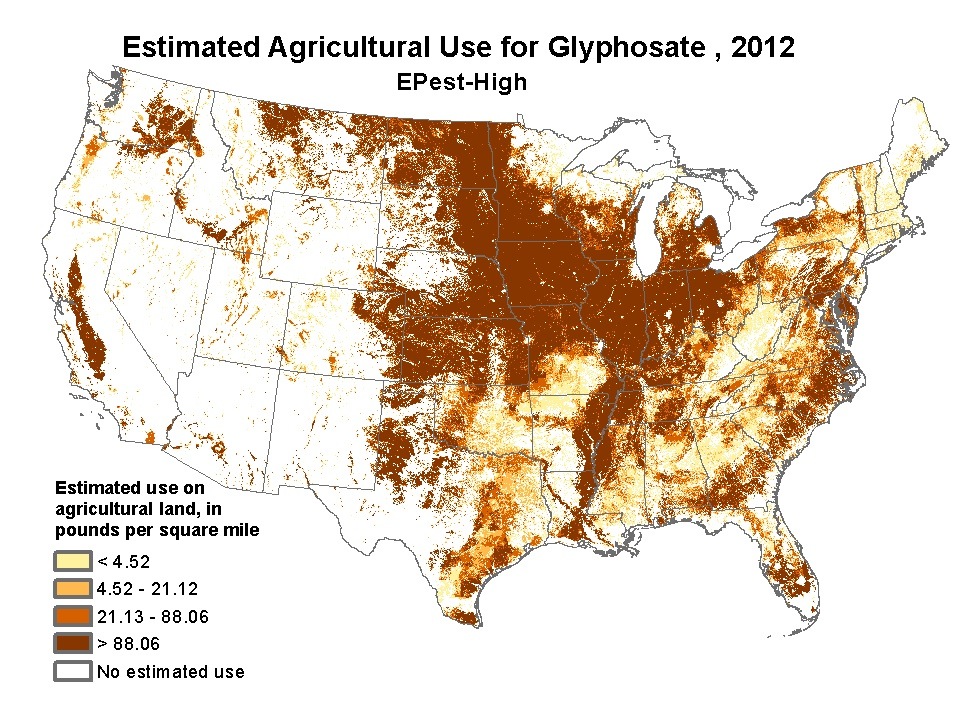
Image above: United State Geological Survey map of the continental states showing extent and intensity of the use of glyphsoates applied to cropland in 2012. Click to enlarge.  From (https://water.usgs.gov/nawqa/pnsp/usage/maps/show_map.php?year=2012&map=GLYPHOSATE&hilo=L).

Glyphosate, the world's most common weed killer, has caused significant concerns over its potential risk to human health, animals, and the environment for several decades. Earlier this month, a US court awarded a groundskeeper $289 million who claimed Bayer AG unit Monsanto's glyphosate-based weed-killers, including Roundup, gave him terminal cancer.

Now, a new report from PNAS alleges that glyphosate may be indirectly killing honey bees around the world, a threat that could potentially also leave a major mark on the global economy.
“We need better guidelines for glyphosate use, especially regarding bee exposure, because right now the guidelines assume bees are not harmed by the herbicide.
Our study shows that’s not true.” said Erick Motta, the graduate student who led the research, along with professor Nancy Moran.
UT News of The University of Texas at Austin says that glyphosate interferes with an important enzyme found in plants and microorganisms, but not in animals, it has long been assumed to be nontoxic to animals, including humans and bees.

However, the latest study reveals that by altering a bee’s gut microbiome — the ecosystem of bacteria living in the bee’s digestive tract, including those that protect it from harmful bacteria — glyphosate jeopardizes its ability to fight infection.

For this study, scientists exposed honeybees to glyphosate at normal levels found on farms. The researchers painted the bees' backs with colored dots so they could be tracked and later recaptured.

Three days later, they saw that the honeybees exposed to glyphosate suffered a significant loss of bacteria in their guts and were more susceptible to infection and death from harmful bacteria.
“Studies in humans, bees and other animals have shown that the gut microbiome is a stable community that resists infection by opportunistic invaders,” Moran said. “So if you disrupt the normal, stable community, you are more susceptible to this invasion of pathogens.”
In recent times, US beekeepers have reported a massive loss of bees or Colony Collapse Disorder (CCD). Millions of bees mysteriously disappeared, leaving farms with fewer pollinators for crops. Officials have been baffled, and the media has been quiet about the bee population collapse.

Explanations for the phenomenon have included exposure to pesticides or antibiotics, habitat loss, and bacterial infections. The latest study now adds herbicides to the list as a possible contributing factor.
“It’s not the only thing causing all these bee deaths, but it is definitely something people should worry about because glyphosate is used everywhere,” said Motta.
Among the nuts, almond growers have the largest need for bee pollination. Bee pollination is worth $15 billion to the US farming industry.

Any sharp change in global bee populations could affect the beef and dairy industries. Bees pollinate clover, hay, and other forage crops. As the bee population dwindles, it increases the cost of feedstock.

That forces inflation into beef and milk prices at the grocery store and ultimately hurts the American consumer. This could then lead to increased imports of produce from foreign countries where bee populations are healthy, further widening the trade deficit.

Couple this with the current trade war and this particular "black swan" - or rather "black bee" - problem, may be just the tipping point that finally forces the US economy to catch down to the rest of the world.


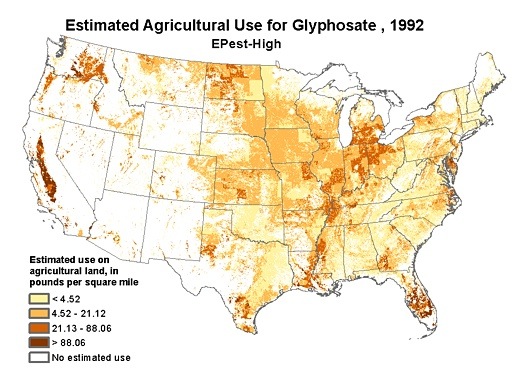
Image above: United State Geological Survey map of the continental states showing extent and intensity of the use of glyphsoates applied to cropland in 1992, twenty years earlier than map above. Note that  at that time the Central Valley in California was the densest and most intense use of glyphosates on food crops.  From (https://water.usgs.gov/nawqa/pnsp/usage/maps/show_map.php?year=1992&hilo=H&map=GLYPHOSATE).

See also:
Ea O Ka Aina: Bayer Beware! 9/11/18
Ea O Ka Aina: Side effect of Monsanto's Roundup 6/24/17
Ea O Ka Aina: Glyphosate harms gut enzyme 6/21/17
Ea O Ka Aina: RoundUp for Breakfast 4/20/16
Ea O Ka Aina: RoundUp carcenogenic in California 9/14/15
Ea O Ka Aina: Roundup Threatens Coral Reefs 12/30/14
Ea O Ka Aina: Word out on Roundup soaked wheat 11/24/14
Ea O Ka Aina: Gluten or Glyphosate Intolerance? 11/18/14
Ea O Ka Aina: Roundup and Lymphoma 6/10/14
Ea O Ka Aina: Roundup and human health 4/25/13
.

Breakfast with a dose of Roundup?

SUBHEAD: Weed killer is found in most of the oat cereals and granola bars tested, including some organic.

By Alexis Tempkin - Toxicologist on 15 August 2918 for EWG.org -
(https://www.ewg.org/childrenshealth/glyphosateincereal/#.W3con4WeGPX)


Image above: A child pouring Cheerios into a cereal bowl. From original article.

Popular oat cereals, oatmeal, granola and snack bars come with a hefty dose of the weed-killing poison in Roundup, according to independent laboratory tests commissioned by EWG.

Glyphosate, an herbicide linked to cancer by California state scientists and the World Health Organization, was found in all but two of 45 samples of products made with conventionally grown oats.

Almost three-fourths of those samples had glyphosate levels higher than what EWG scientists consider protective of children’s health with an adequate margin of safety. About one-third of 16 samples made with organically grown oats also had glyphosate, all at levels well below EWG’s health benchmark.

 Glyphosate does not belong in cereal. Act and urge the EPA to restrict pre-harvest applications of glyphosate and tell companies to identify and use sources of glyphosate-free oats.
 Report on samples tested indicates even organic oat products contained measurable amounts of glyphosate, but none were above the EWG's Health Benchmark of 160 parts per billion.
Samples Tested Conventional   Organic
Samples Tested 45   16
Glyphosate Detected 43   5
Detects above EWG’s Health Benchmark       31   0
Glyphosate is the active ingredient in Roundup, the Monsanto weed killer that is the most heavily used pesticide in the U.S. Last week, a California jury ordered Monsanto to pay $289 million in damages to a man dying of cancer, which he says was caused by his repeated exposure to large quantities of Roundup and other glyphosate-based weed killers while working as a school groundskeeper.

EWG tested more than a dozen brands of oat-based foods to give Americans information about dietary exposures that government regulators are keeping secret. In April, internal emails obtained by the nonprofit US Right to Know revealed that the Food and Drug Administration has been testing food for glyphosate for two years and has found “a fair amount,” but the FDA has not released its findings.

Each year, more than 250 million pounds of glyphosate are sprayed on American crops, primarily on “Roundup-ready” corn and soybeans genetically engineered to withstand the herbicide. But when it comes to the food we eat, the highest glyphosate levels are not found in products made with GMO corn.

Increasingly, glyphosate is also sprayed just before harvest on wheat, barley, oats and beans that are not genetically engineered. Glyphosate kills the crop, drying it out so that it can be harvested sooner than if the plant were allowed to die naturally.

Roundup was produced for decades by Monsanto, which this year merged with the German pharmaceutical company Bayer AG. In the case decided last week, the jury found that Monsanto knew for decades of the product’s hazards and not only failed to warn customers, but schemed to publicly discredit the evidence.

The California case that ended Friday was the first of reportedy thousands of lawsuits against Monsanto. These suits have been brought by farm workers and others who allege that they developed cancer from years of exposure to Roundup.

In 2015, the International Agency for Research on Cancer, part of the World Health Organization, reviewed extensive U.S., Canadian and Swedish epidemiological studies on glyphosate’s human health effects, as well as research on laboratory animals. The IARC classified the chemical as probably carcinogenic to humans, and has steadfastly defended that decision despite ongoing attacks by Monsanto.

In 2017, California listed glyphosate in its Proposition 65 registry of chemicals known to cause cancer. The state’s Office of Environmental Health Hazard Assessment, or OEHHA, has proposed a so-called No Significant Risk Level for glyphosate of 1.1 milligrams per day for an average adult of about 154 pounds. That level of exposure is more than 60 times lower than the safety level set by the Environmental Protection Agency.

California’s level represents an increased lifetime risk of cancer of one in 100,000 for an average adult. But for many cancer-causing drinking water contaminants, OEHHA’s lifetime risk factor is set at one in 1 million.

Additionally, because children and developing fetuses have increased susceptibility to carcinogens, the federal Food Quality Protection Act supports including an additional 10-fold margin of safety. With this additional children’s health safety factor, EWG calculated that a one-in-a-million cancer risk would be posed by ingestion of 0.01 milligrams of glyphosate per day.

To reach this maximum dose, one would only have to eat a single 60-gram serving1 of food with a glyphosate level of 160 parts per billion, or ppb. The majority of samples of conventional oat products from EWG’s study exceeded 160ppb, meaning that a single serving of those products would exceed EWG’s health benchmark.

As part of a glyphosate risk assessment, the EPA estimated potential highest dietary exposure levels for children and adults. The EPA has calculated that 1-to-2-year-old children are likely to have the highest exposure, at a level twice greater than California’s No Significant Risk Level and 230 times EWG’s health benchmark.

Studies suggest that glyphosate-sprayed crops such as wheat and oats are a major contributor to glyphosate in the daily diet. In EWG lab tests, 31 of 45 samples made with conventionally grown oats had 160 ppb or more of glyphosate.

The highest levels, greater than 1,000 ppb, were detected in two samples of Quaker Old Fashioned Oats. Three samples of Cheerios had glyphosate levels ranging from 470 ppb to 530 ppb. Twelve of the food samples had levels of glyphosate lower than EWG’s health benchmark, ranging from 10 ppb to 120 ppb. Only two samples had no detectable glyphosate.

Glyphosate was also detected at concentrations of 10 ppb to 30 ppb in five of 16 samples made with organic oats. The five samples came from two brands of organic rolled oats: Bob’s Red Mill and Nature’s Path.

A third brand of organic rolled oats and all other organic oat products tested did not contain detectable concentrations of glyphosate.

How does glyphosate get into organic foods? It could come from glyphosate drifting from nearby fields of conventionally grown crops, or by cross-contamination during processing at a facility that also handles non-organic crops. Nature's Path explains:
While organic farming certifications prohibit the use of glyphosate, organic products do not always end up completely free of glyphosate residue. While this news may come as disappointing, it is not entirely surprising. Glyphosate use has skyrocketed in the past decade, and it maintains the ability to adhere to water and soil particles long enough to travel through the air or in a stream to nearby organic farms.
The problem of glyphosate contamination of organic foods underscores the need to restrict pre-harvest uses of glyphosate and the need for more data on glyphosate levels in products, an area where U.S. federal agencies are falling short.

Two years ago, under pressure from the Government Accountability Office, the FDA began testing for glyphosate in a limited number of foods. At the 2016 North American Chemical Residue Workshop, an FDA scientist presented data showing that glyphosate has been detected in several oat-based food products.

After a Freedom of Information Act request by US Right to Know, earlier this year the FDA released documents that said the agency has found “a fair amount” of glyphosate in several processed foods. The results have not been released, but could be made public later this year or in early 2019.

In 2016, the non-profit Food Democracy Now tested for glyphosate in single samples of a variety of popular foods. “Alarming levels” of glyphosate were found in a number of cereals and other products, including more than 1,000 ppb in Cheerios. More recently, the Center for Environmental Health tested single samples of 11 cereal brands and found glyphosate levels ranging from about 300 ppb to more than 2,000 ppb.

EPA has denied that glyphosate may increase the risk of cancer, and documents introduced in the recent California trial showed how the agency and Monsanto worked together to promote the claim that the chemical is safe.

EWG has been urging the EPA to review all evidence linking glyphosate to increased cancer risk and other adverse health effects in human and animal studies. The EPA should limit the use of glyphosate on food crops, including pre-harvest application.

Oat-based foods are a healthy source of fiber and nutrients for children and adults, and oat consumption is linked to health benefits such as lowered cholesterol and decreased cardiovascular risk.

Parents should not have to wonder whether feeding their children these heathy foods will also expose them to a pesticide that increases the risk of cancer.

.

Civilization as Asteroid

SUBHEAD: We and our livestock are more than an order of magnitude greater than all animals on land.

By Darrin Qualman on 13 June 2018 in Resilience -
(https://www.darrinqualman.com/humans-livestock-extinctions/)


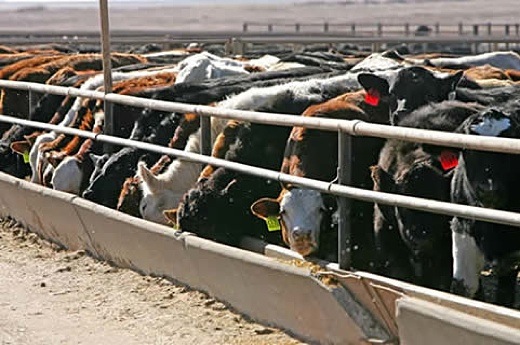
Image above: These 600-700 pound steers are being fed in a feedlot in Jetmore, Kansas, for “backgrounding” to gain weight to around 1,000 pounds. They’ll be sent to another feedlot for “finishing” before slaughter. From (https://aspenranchrealestate.com/Colorado_Cattle_Ranching).

Humans and our livestock now make up 97% of all animals on land.  Wild animals (mammals and birds) have been reduced to a mere remnant: just 3%.  This is based on mass.  Humans and our domesticated animals outweigh all terrestrial wild mammals and birds 32-to-1.

To clarify, if we add up the weights of all the people, cows, sheep, pigs, horses, dogs, chickens, turkeys, etc., that total is 32 times greater than the weight of all the wild terrestrial mammals and birds: all the elephants, mice, kangaroos, lions, raccoons, bats, bears, deer, wolves, moose, chickadees, herons, eagles, etc.

A specific example is illuminating: the biomass of chickens is more than double the total mass of all other birds combined.


Image above: At this KFC "broiler shed" there is only artificial light, no fresh air, and huge fans circulate the stale ammonia filled air. Chicken meat is perfect for our fast food culture. A producer can ‘grow’ a chicken within a few weeks with super large breasts, and minimize overhead through economies of scale. From (https://pos394.wordpress.com/2014/11/02/do-you-know-how-your-chicken-was-raised/).

Before the advent of agriculture and human civilizations, however, the opposite was the case: wild animals and birds dominated, and their numbers and mass were several times greater than their numbers and mass today.

Before the advent of agriculture, about 11,000 years ago, humans made up just a tiny fraction of animal biomass, and domesticated livestock did not exist.  The current situation—the domination of the Earth by humans and our food animals—is a relatively recent development.

The preceding observations are based on a May 2018 report by Yinon Bar-On, Rob Phillips, and Ron Milo published in the academic journal Proceedings of the National Academy of Sciences.  Bar-On and his coauthors use a variety of sources to construct a “census of the biomass of Earth”; they estimate the mass of all the plants, animals, insects, bacteria, and other living things on our planet.

The graph below is based on data from that report (supplemented with estimates based on work by Vaclav Smil).  The graph shows the mass of humans, our domesticated livestock, and “wild animals”: terrestrial mammals and birds.  The units are millions of tonnes of carbon.[1]  Three time periods are listed.


Image above: Graph of history of land based mammals and bird biomass over last 11,000 years. From www.darrinqualman.com.

The first, 50,000 years ago, is the time before the Quaternary Megafauna Extinction.  The Megafauna Extinction was a period when Homo sapiens radiated outward into Eurasia, Australia, and the Americas and contributed to the extinction of about half the planet’s large animal species (over 44 kgs).  (Climate change also played a role in that extinction.)

In the middle of the graph we see the period around 11,000 years ago—before humans began practicing agriculture.  At the right-hand side we see the situation today.  Note how the first two periods are dominated by wild animals.  The mass of humans in those periods is so small that the blue bar representing human biomass is not even visible in the graph.[2]

This graph highlights three points:
  1. Wild animal numbers and biomass have been catastrophically reduced, especially over the past 11,000 years
  2. Human numbers and livestock numbers have skyrocketed, to unnatural, abnormal levels
  3. The downward trendline for wild animals visible in this graph is gravely concerning; this graph suggests accelerating extinctions.
Indeed, we are today well into the fastest extinction event in the past 65 million years.  According to the 2005 Millennium Ecosystem Assessment “the rate of known extinctions of species in the past century is roughly 50–500 times greater than the extinction rate calculated from the fossil record….”

The extinction rate that humans are now causing has not been seen since the Cretaceous–Paleogene extinction event 65 million years ago—the asteroid-impact-triggered extinction that wiped out the dinosaurs.

Unless we reduce the scale and impacts of human societies and economies, and unless we more equitably share the Earth with wild species, we will enter fully a major global extinction event—only the sixth in 500 million years.  To the other species of the Earth, and to the fossil record, human impacts increasingly resemble an asteroid impact.

In addition to the rapid decline in the mass and number of wild animals it is also worth contemplating the converse: the huge increase in human and livestock biomass.  Above, I called this increase “unnatural,” and I did so advisedly.


The mass of humans and our food animals is now 7 times larger than the mass of animals on Earth 11,000 or 50,000 years ago—7 times larger than what is normal or natural.

For millions of years the Earth sustained a certain range of animal biomass; in recent millennia humans have multiplied that mass roughly sevenfold.

How?  Fossil fuels.  Via fertilizers, petro-chemical pesticides, and other inputs we are pushing hundreds of millions of tonnes of fossil fuels into our food system, and thereby pushing out billions of tonnes of additional food and livestock feed.

We are turning fossil fuel Calories from the ground into food Calories on our plates and in livestock feed-troughs.   For example, huge amounts of fossil-fuel energy go into growing the corn and soybeans that are the feedstocks for the tens-of-billions of livestock animals that populate the planet.

Dr. Anthony Barnosky has studied human-induced extinctions and the growing dominance of humans and their livestock.  In a 2008 journal article he writes that “as soon as we began to augment the global energy budget, megafauna biomass skyrocketed, such that we are orders of magnitude above the normal baseline today.”

According to Barnosky “the normal biomass baseline was exceeded only after the Industrial Revolution” and this indicates that “the current abnormally high level of megafauna biomass is sustained solely by fossil fuels.”

Only a limited number of animals can be fed from leaves and grass energized by current sunshine.  But by tapping a vast reservoir of fossil sunshine we’ve multiplied the number of animals that can be fed.  We and our livestock are petroleum products.

There is no simple list of solutions to mega-problems like accelerating extinctions, fossil-fuel over-dependence, and human and livestock overpopulation.  But certain common sense solutions seem to present themselves.

I’ll suggest just one: we need to eat less meat and fewer dairy products and we need to reduce the mass and number of livestock on Earth.  Who can look at the graph above and come to any other conclusion?

We need not eliminate meat or dairy products (grazing animals are integral parts of many ecosystems) but we certainly need to cut the number of livestock animals by half or more.

Most importantly, we must not try to proliferate the Big Mac model of meat consumption to 8 or 9 or 10 billion people.  The graph above suggests a stark choice: cut the number of livestock animals, or preside over the demise of most of the Earth’s wild species.
  1. Using carbon content allows us to compare the mass of plants, animals, bacteria, viruses, etc.  Very roughly, humans and other animals are about half to two-thirds water.  The remaining “dry mass” is about 50% carbon.  Thus, to convert from tonnes of carbon to dry mass, a good approximation is to multiply by two.
     
  2. There is significant uncertainty regarding animal biomass in the present, and much more so in the past.  Thus, the biomass values for wild animals in the graph must be considered as representing a range of possible values.  That said, the overall picture revealed in the graph is not subject to any uncertainty.  The overall conclusions are robust: the mass of humans and our livestock today is several times larger than wild animal biomass today or in the past; and wild animal biomass today is a fraction of its pre-agricultural value.
Graph sources:
– Yinon M. Bar-On, Rob Phillips, and Ron Milo, “The Biomass Distribution on Earth,” Proceedings of the National Academy of Sciences, May 17, 2018.
– Anthony Barnosky, “Megafauna Biomass Tradeoff as a Driver of Quaternary and Future Extinctions,” Proceedings of the National Academy of Sciences 105 (August 2008).
– Vaclav Smil, Harvesting the Biosphere: What We Have Taken from Nature (Cambridge, MA: MIT Press, 2013).


.

France votes against glyphosate

SUBHEAD: The French government has voted against the renewal of an EU Commission license for glyphosate use.

By Staff on 1 September 2017 for Farming UK -
(https://www.farminguk.com/News/France-votes-against-the-use-of-pesticide-glyphosate_47307.html)


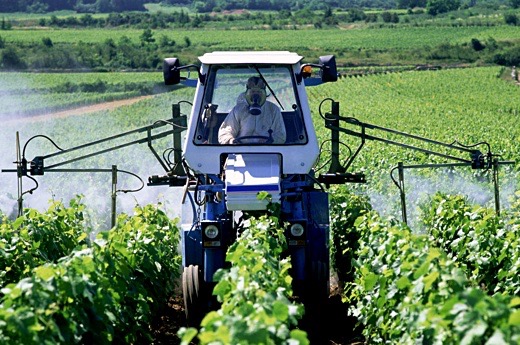
Image above: Grape vine spraying near Mersault village, Burgundy, France. From (https://www.pourquoidocteur.fr/Articles/Question-d-actu/2888-Pesticides-les-effets-reels-sur-la-sante).

The French government has voted against the renewal of an EU Commission license for the pesticide glyphosate.The decision by the French government comes as evidence emerges of the risk of birth defects caused by exposure to pesticides.

Monsanto is the major supplier of products containing glyphosate, with ‘Roundup’ being the best-known product.

The product is widely used by farmers, gardeners and local authorities to control weeds. In 2015 the World Health Organisation’s (WHO) classified glyphosate as a probable carcinogen.

But in March, the EU's chemicals agency said glyphosate should not be classed as a carcinogen. And a survey has shown that a ban on glyphosate in the UK could force one in five wheat farms into 'serious financial difficulty'.

More than half of British farmers say they are concerned that a ban could cost them more than £10,000 every year.Speaking at Cereals 2017, NFU Vice President Guy Smith said:
“This year looks like being a watershed year for classical chemistry for arable farms with these three decisions on the horizon from Europe.

“A poor decision on endocrine disruptor definition could see an end to the availability of around 26 active ingredients; the European Commission is proposing a ban on the use of neonicotinoids on all outdoor crops; and a decision on the reauthorisation of glyphosate is due by the end of the year.

“The NFU will continue to make the case for evidence-based decisions to be made in all three of these areas, and we will continue to work with our members to help them make the case to politicians and other decision makers about the importance of these products and to demonstrate the damage that bad decisions will have on farming and our food supply.”
.

Lehua Island rodenticide info

SUBHEAD: Site available with links to articles, research and  testimony letters about the aerial drop.

By Kawai Warren on 5 August 2017 in Island Breath -
(http://islandbreath.blogspot.com/2017/08/lehua-island-rodenticide-info.html)


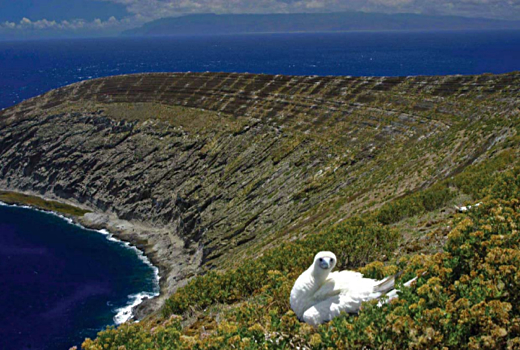
Image above: There is no question that the introduction of rats, by humans, to Hawaii has been a disasters, especially for places like Lehua with ground nesting birds. Poisoning mammals may not directly kill birds but it may kill mammals like monk seals and whales near the shores where poison reaches the water.  From (http://www.landcareresearch.co.nz/publications/newsletters/kararehe-kino/kararehe-kino-issue-19/which-toxin-is-best-for-eradicating-rodents).

A new website is now live for anyone wanting quick links to articles, research and public testimony letters about the Lehua aerial drop. The link is (https://www.lehua-island-hawaii-conservation.org/).

It is a resource for concerned residents, fishermen, journalists and scientists who need reliable information about the project.

The site states in part:

LEHUA ISLAND, 18 miles from Kaua'i in western Hawaii, is a rare and pristine State Wildlife Sanctuary. It harbors Federally-listed endangered and threatened species such as monk seals, green sea turtles, and three species of endangered birds.

Endangered loggerhead turtles have been sighted, and a rare species of reef coral (Cosinaraea wellsi) has been reported at a depth of 120 ft. Whales, dolphins, manta rays and eagle rays frequent the area. A native Hawaiian subsistence community of Ni'ihauans, 3/4 mile from Lehua, catches fish and ama crab in Lehua's waters to feed their families.

Starting August 8, 2017, the state Department of Land and Natural Resources and US Fish and Wildlife intend to drop approximately 11.5 tons of diphacinone rodenticide on Lehua Island.

The diphacinone rodenticide will enter the coastal waters below the high tide line, resulting in an unknown level of collateral damage to non-target species within this precious marine and cultural ecosystem.

In their agency comment letters, NOAA, the EPA, Hawaii Department of Health, and many scientists have expressed concern about the lack of baseline, Lehua-specific data to justify the poison drop, as well as lack of a rigorous monitoring commitment and enforcement mechanisms for the proposed biosecurity acitivities.

The EPA urged DLNR to conduct effective consultation with the local Hawaiian and marine community. Yet, two native Hawaiian organizations and a representative of OHA submitted comment letters and an Opposition Statement describing environmental justice issues and lack of inclusion in decisionmaking.

A public meeting called by DLNR to announce the Final Environmental Assessment for the aerial drop was met with intense community outrage.

In 2009 DLNR had conducted a very similar aerial drop of diphacinone on Lehua that failed in its rodent eradication goal. Mortalities that followed included two whales and a large-scale fish die off that agencies claimed were not related to the aerial rodenticide drop.

Nevertheless, following the 2009 diphacinone aerial drop, the head of Hawaii Department of Agriculture's Pesticide Branch, prior to his retirement, directed staff "not to issue aerial application permits that might result in pellets entering into marine ecosystems until the EPA develops study protocols for such ecosystems."

This Archive provides quick access links to official source documents, research reports and other official information for those wanting to learn more about the concerns raised in the Lehua aerial rodenticide operation.

The Archive was assembled through the input of scientists, legal researchers, policy watchdogs and others concerned about the lack of public awareness about this project, questionable statements made by agency staff, and significant omissions within the Environmental Assessment documents approved by the project's state and federal agencies.

See also:
Ea O Ka Aina: Impact of Lehua rat poisoning 6/8/17
Ea O Ka Aina: Navy operation coincides with fishkill 3/18/09
.

Kauai hui sues DLNR over GMOs

SUBHEAD: To ensure that public lands are given the proper and environmental review before being leased out for commercial use. 

By Staff on 14 June 2017 for Hawaii Alliance for Progressive Action -
(http://www.hapahi.org/news/2017/6/14/kauai-groups-sue-state-to-enforce-environmental-review-law)


Image above: "No Tresspass" sign on gate to public land leased to private corporations for experimenting with pesticides combined with genetically modified organisms sited on "reclaimed" wetlands close to nearby the ocean reefs and westside Kauai populations centers. What could go wrong? From (http://www.huffingtonpost.com/maggie-sergio/gmo-pesticide-experiments_b_3513496.html).

A Kauai-based community group, Ke Kauhulu o Mana, have filed a lawsuit against the State Department of Land and Natural Resources (DLNR) and Syngenta.

The suit calls for enforcement of Hawaii Revised Statute (HRS) Chapter 343, which requires an environmental assessment (EA) or an Environmental Impact Statement (EIS) for any significant actions or development proposed on publicly-owned, coastal and conservation-zoned lands.

In this instance, the lands in question are located on Kauai’s west side in Mana adjacent to the coast, about three quarters of a mile from the homes and community of Kekaha, and close to the frequent surfing and recreation beach, Targets.

The hui, Ke Kauhulu O Mana, is represented by west side residents Loui Cabebe and Punohu Kekaualua III. The plaintiffs include the Surfrider Foundation, Kohola Leo and the Hawai'i Alliance for Progressive Action (H.A.P.A.).
“These lands are historically Hawaiian crown lands. According to the state Constitution, these lands are supposed to be held and protected as part of the public trust. The State of Hawai`i as the present caretaker of these lands needs to take that responsibility seriously. We are disappointed that to date, they have failed to do so. We feel compelled to take this legal action to ensure that the regulations designed to preserve and protect crown lands are respected, and that state agencies do their job and enforce those laws.”

- Loui Cabebe, long time west Kauai resident and representative of plaintiff group, Ke Kauhulu o Mana.
The plaintiffs are represented by public interest attorney, Lance Collins, who has a wide range of experience with a focus on good government, environmental protection and native Hawaiian law. Mr. Collins has brought a number of successful cases under HRS 343, most recently Kalepa v. Dept. of Transportation and Maalaea Community Assn v. Dept. of Housing & Human Concerns.

“This suit is being filed to ensure that sensitive, coastal, and publicly-owned lands zoned for conservation are given the proper and legally required environmental review prior to being leased out for private commercial use,” said Collins.

According to Collins, a thorough review evaluating direct, indirect and cumulative impacts which the law requires, has not been done.

The complaint further states that the proposed use of the lands may have significant negative impacts given the anticipated heavy application of Restricted Use Pesticides involved in the industrial farming of crops by Syngenta.

Syngenta has announced plans to sell its Hawai'i operations to the Wisconsin-based company, Hartung Brothers. However, media reports also indicate that Hartung Brothers will be contracted by Syngenta to perform the same activities currently conducted by Syngenta employees. Thus the environmental and health impacts will remain similar regardless of the named entity conducting day to day operations.

State must ensure that permittees abide by regulations and protect public lands

“These lands are historically Hawaiian crown lands. According to the state Constitution, these lands are supposed to be held and protected as part of the public trust,” says Loui Cabebe, a native Hawaian and long time West side resident and representative of the plaintiff group, Ke Kauhulu o Mana.

“The State of Hawaii as the present caretaker of these lands needs to take that responsibility seriously.

We are disappointed that to date, they have failed to do so. We feel compelled to take this legal action to ensure that the regulations designed to preserve and protect crown lands are respected, and that state agencies do their job and enforce those laws,” he added.

The complaint states that the DLNR must require and ensure the execution of a full Environmental Impact Statement (EIS) covering the lands currently being used by Syngenta.

Based on what is known of the company’s activities thus far, and because of the close proximity of the parcel in question to the ocean and its conservation designation, Syngenta’s use of the land will have significant impacts on the recreational use of the beach and near-shore waters, adjacent reef eco-systems, fishermen, surfers and endangered native species.

Area once considered for park expansion leased instead to Syngenta

In granting Syngenta its permit to utilize the lands the DLNR has stated the action is exempt from the requirements of HRS343 as no significant impacts are expected.  The complaint alleges this decision was made based on only a superficial review.  

That review is woefully inadequate in light of the area’s conservation zoning, its proximity to the coastline and the pesticide-intensive nature of the proposed use by Syngenta.

The complaint further points out that exemption to HRS343 was granted even though the Office of Hawaiian Affairs expressed concerns about possible burials in the area and even though Syngenta’s own federal permits indicate much of the work is done in areas that impact critical habitats of rare and endangered species.

The approximately 60 acre parcel comprises section 5(b) lands, which means they are held in public trust for the people of Hawai`i and are subject to native Hawaiian entitlements.  The area was previously identified by State agencies as ideal for future park expansion, but is now part of Syngenta’s approximately 3,000 acres of leased, publicly-owned crown lands on Kauai’s west side.

Pesticide-intensive industrial farming hazardous to health and the environment

The complaint argues that a full EIS is needed given the scale and nature of the planned industrial farming activities which are distinctly different from the operations of local farmers in several ways.

First and foremost, these large scale actions are occurring on state-owned conservation lands situated in a sensitive coastal environment.

Secondly they involve the heavy application of restricted use pesticides (RUP). Thirdly, night-time activity involving the use of bright lights is known to impact endangered species such as the ‘a’o (Newell’s Shearwater) and ua’u (Hawaiian Petrel). The Kauai Endangered Seabird Recovery Project has reported that between 1993 and 2013, populations of the ‘a’o declined by 94 percent while the ua’u declined by 78 percent.

The federal permits held by Syngenta to grow experimental crops state clearly that the activity is occurring in areas where critical habitats for endangered species exist.

The case will be heard in the environmental court on Kaua‘i, presided over by the Hon. Randal Valenciano.

.

Impact of Lehua rat poisoning

SUBHEAD: Will the aerial rat poison drop endanger Niihauans and the local fisheries?

By Kawai Warren on 7 June 2017 for Island Breath -
(http://islandbreath.blogspot.com/2017/06/impact-of-lehua-rat-poisoning.html)


Image above: North-west coast of Lehua Island in foreground with Niihau Island in background. Photo by Juan Wilson on 7/9/11.

I attended the community meeting for the Environmental Assessment Draft in Kekaha. Their was a handful of fisherman that expressed their concern about the side effects of the rat extermination poison and aerial application.

A day after the meeting, we got word that our comments at the meeting were to "do it quickly".

At the meeting I attended in Kekaha no one supported the aerial drop, because the impact it could have on the fisherman, Niihauians, fish, limu, coral, opihi, a' am a, and ocean ecosystems.

The US Fish and Wildlife Service and the Hawaii Department of Land and Natural Resources (DLNR)  are trying to get this done this summer. Unless the fisherman raise their voices and get the media involved. Check out the article below.

Our fisheries (near shore) on the Westside is all ready impacted by these chemicals Atrazine, bentazon, chlorpyrifos, fipronil, metolachlor, propiconazole, and simozine from Kinikini ditch and second ditch during seasonal flooding.


Image above: GoogleEarth 2011 aerial perspective showing proximity of Lehua and Niihau Islands. Same orientation direction as photo above. Only about 4,000 feet separate the two. Image by Juan Wilson.


The Lehua Aerial Poison Drop

SUBHEAD: A risk that the lethal anticoagulant rodenticides could impact the biologically diverse area.


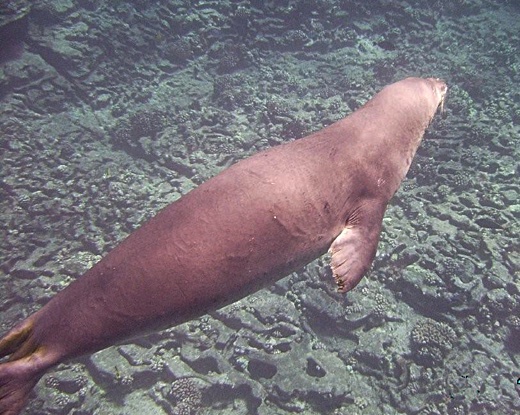
Image above: Photo of monk seal swimming close to shoreline of Lehua Island in shallow water. Photo by Richard Jarke on 7/9/11.

By Maggie Sergio on 7 June 2017 for Huffington Post - 
(http://www.huffingtonpost.com/entry/5936e141e4b033940169ce56)

In Hawaii, the Department of Land and Natural Resources (DLNR), and U.S Fish and Wildlife Service (USFWS) are planning several rat poison drops via helicopter onto Lehua Island, located approximately 30 miles west of Kauai.

These drops are being fast-tracked for this summer, part of an eradication project for the 284 acre bird sanctuary.

The planned drop is three-quarter of a mile from an important Native Hawaiian community on Niihau. There is risk that the poison pellets (lethal anticoagulant rodenticides) could impact the biologically diverse and important Lehua Crater.

Sources indicate that DLNR and USFWS are pressuring the State Department of Agriculture to grant permission for the poison bait to be dropped right up to the shoreline, which will result in bait entering the marine environment, allowing the toxins to infiltrate and settle in waters frequented by commercial and Native Hawaiian subsistence fishermen.

The agencies will not disclose or estimate the duration or extent of any fishing bans for tour and recreational boats in surrounding waters. The extent of a ban might be of concern to the local fishing and tour boat communities, given that a 942-day fishing ban was recommended after another Island Conservation poison drop on Wake Island in the in 2012.

If given the green light, the poison drops will happen on Lehua this summer, delivering an estimated 8-10 tons of anticoagulant rodenticide. Birds, fish, monk seals, and other wildlife that consume the cereal-based poison bait either directly or indirectly (secondarily) will be affected, and there is risk of contaminating the food web.

Note: the estimated application rate has been calculated from the amount disclosed on a kg/per hectare basis. Pesticide labels were not included in the draft environmental assessments (EA), so it is unclear if the proposed amount to be dropped is within legal limits.

The Failed 2009 Poison Drop Lehua Controversy
This will be the second poisoning of Lehua in the name of “conservation,” after a failed attempt in 2009. The previous drop was highly controversial—dead fish washed up on the neighboring island of Niihau, and a juvenile whale beached itself.

The state of Hawaii claimed the fish die-off and dead whale were “coincidental” and not related in any way to the nearly four tons of rat poison that had been dropped on the island just days earlier.

After researching the failed event in 2009, which included findings in this presentation given at a national pesticides conference, questions remain about what really happened.

Why was there a two month delay in requesting the fish be tested for exposure to the poison?

Since the rodenticide used in 2009, diphacinone, metabolizes quickly, did the delay in testing capture meaningful results? Are the chain of custody documents available for review?

Could ultra-nutrification and de-oxygenating of the waters, due to the cereal component of the poison bait that entered the surrounding ocean, be a contributing reason for the algae bloom, which, officials claimed, was the cause of the fish kill?

Or, could the poison pellets that entered the marine environment have impacted the fish, not enough to kill them, but enough to cause immunosuppression, thereby making the fish more susceptible to the impacts of an algae bloom? These questions have never been addressed by the agencies.

Are Rats a Problem on Lehua? - Not According to the Data
The data provided in both draft EAs (both the state and feds created a draft environmental assessment) does not support that the rodents on Lehua are having a negative impact on the bird life on the island.

All evidence provided is anecdotal, and astonishingly, USFWS has no idea of the size of the rodent population. One could reasonably ask—since this critical piece of data is unknown—why is this project being fast tracked?

The agencies need to respond to these questions: Why is the collateral damage and potential risk to the food web, in addition to putting sustenance and commercial fishermen in jeopardy, worth the risk? How much consideration was truly given to the Native Hawaiian Ni’ihauans in this accelerated operation, aside from conversations set up and/or attended by the owner of Ni’ihau, the Robinson family?

The only evidence of rodent impact to birds included in the state issued EA shows that four eggs from the nest of a wedge tail shearwater showed indication of predation by rats.

As the wedge tailed shearwater is considered to be a species of least concern by the IUCN (with a worldwide population of over 5 million birds), this hardly constitutes a scientifically-based rationale for dropping 8-10 tons of pesticide, threatening the fragile ecosystem, rare reef system, and food chain.

The DLNR and USFWS have yet to respond to public demands for site-based scientific (vs. anecdotal) evidence on the Lehua rat population, bird decline and mortality causation on Lehua, if any, that justifies this large scale poison drop.

Downplaying Risks  - The Selling of Island Eradication Projects
Both EAs issued mispresent environmental risks, and make misleading statements about the lethal and sub-lethal impacts to wildlife poisoned, which are referred to as “non-target species.”

Though the proposed poisons have never been tested on coral reefs, and the impact is completely unknown, the EA makes the puzzling, badly worded statement on page 73 of the federal EA that “there are no data to indicate corals have been impacted by anticoagulant rodenticides from previous eradication projects.”

Since there are no studies which reflect that rodenticide testing on coral reefs has ever been carried out, and long term, ecosystem monitoring is lacking in eradication projects, the above statement made in the EA could be viewed as disingenuous.

I asked Dr. Mourad Gabriel, who has done extensive research on wildlife diseases, including the impacts of rodenticides on wildlife for his thoughts on the statement specific to coral reefs - his response can be found below.
“The lack of data collected on a topic should not imply that a deleterious impact does not occur.” - Mourad W. Gabriel MS, PhD - Executive Director of Integral Ecology Research Center.
Page 51 of the federal EA cites studies from 1977, 1998, and 1999 with respect to birds eating the poison bait and make the following, false claims:
9. To minimize consumption of bait pellets by shorebirds and terrestrial birds, the bait pellets are dyed a green or blue color, which birds appear to prefer less than yellow or red. 10. Bait pellets are formulated large enough that it would be difficult for a small, seed-eating bird to consume the whole pellet.
The video below, from the New Zealand documentary, “Poisoning Paradise – Eco-cide NZ,” is evidence that color and size of the pellets will not deter birds or other animals from eating them. Deaths of birds poisoned during these projects can occur either directly from eating the bait, or secondarily, by consuming poisoned rodents, insects and fish. Video courtesy of Clyde Graf.

Island Eradications - Previous Problems
Information received from a FOIA request filed in 2014 reveals serious ethical issues from previous eradication projects and shows the consequences of what can go wrong.

Rat Island
In October 2008, USFWS and Island Conservation aerially dropped 51 tons of brodifacoum over Rat Island, located in the Aleutian Islands, and then left for eight months. When they returned, over 400 dead birds were collected, including 46 bald eagles.

Note: the total number of poisoned wildlife counted was by no means the total number of animals poisoned, nor was any long term monitoring done to test for sub-lethal impacts.

In the investigation that followed, U.S. Fish & Wildlife Law Enforcement division reported ten illegal actions including exceeding legal application rates mandated by the pesticide label, failure to properly calibrate dispersion equipment and failure to keep accurate records of their pesticide applications.

You can read a copy of the full USFWS law enforcement report here, released as the result of a FOIA request.

After the investigation by USFWS law enforcement, the Ornithological Council issued this scathing report. You can find a copy of it here.

Wake Island
Located in the South Pacific, Wake Island is host to a military base and is under the jurisdiction of the U.S. Air Force. Wake Island was the recipient of an island eradication attempt in 2012, carried out by Island Conservation and USFWS.

While the almost 20 ton rat poison drop failed to kill all the rats, the more serious issues are the internal emails released in response to the 2014 FOIA request. The discussions between USFWS, the USAF and Island Conservation show that after the fish were tested for brodifacoum, a fishing ban was recommended for 942 days.
FYI – note the Wake Atoll brodifacoum results analysis. We have a couple of options. I guess it comes down to how long we want to restrict consumption of fish at Wake. The current recommendation is approximately 942 days. Also with no money [and] furloughs occurring July 8 – end of September, it is unlikely that a sampling project will occur this FY. I’ll keep you in the loop, but thought you’d might like this info for future projects.” - USAF
You can find the entire email exchange containing the details of the fishing ban recommendation here.

While USFWS and the state of Hawaii assert that no final decision has been made, sources indicate that this project is planned for this summer, and that lead state agencies are awaiting approval from the Hawaii Deptartment of Agriculture (Pesticides Division).

It is notable that some of the supporting state agencies for this poison drop are currently facing a federal investigation charging racial discrimination against Hawaii’s native communities in their lack of care in state pesticide regulation.

The Farallon Islands
This is not the first time that helicopter drops of rodenticides have been called into question. In 2013 a planned rodenticide drop of 1.5 tons of brodifacoum over the Farallon Islands National Marine Sanctuary was halted due to public opposition and heavy questioning into Island Conservation’s conflict of interest in authoring the draft environmental impact statement. 

The city of San Francisco closed their strongly worded letter urging USFWS to seek a partner for the risk assessment that did not have a financial interest in the project.

It remains to be seen whether Hawaii’s impacted communities and scientists will demand fuller disclosure and further study from its agencies and sole-source contractor Island Conservation. For it is Kaua’i’s fishing and tourism industries, and local Hawaiian residents that have the most to lose if anything should go wrong.

In 1962, with the publication of “Silent Spring,” Rachel Carson warned us of the influence the pesticide industry has on agriculture. Fifty-five years later, the dominion of the pesticide industry continues, and non-native species has become another market opportunity to exploit.

.

Dow-DuPont illegal spraying on Oahu

SOURCE: Jeri DiPietro (ofstone@aol.com)
SUBHEAD: Whistleblower alleges herbicide spraying by Dow-DuPont in Waialua, Oahu, violated safety rules.

By Rick Daysog on 22 May 2017 for Hawaii News Now -
(http://www.hawaiinewsnow.com/story/35491969/whistleblower-alleges-herbicide-sprayings-potentially-exposed-waialua-community)


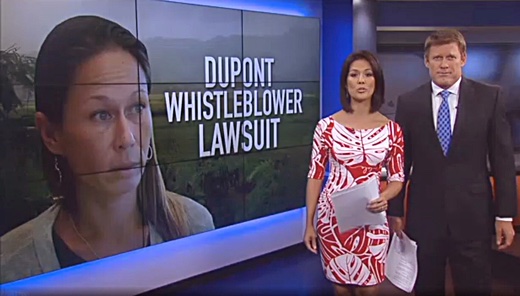
Image above: Still frame from video report on DuPont pesticide spraying on Oahu. From video at (http://www.hawaiinewsnow.com/clip/13352327/whistleblower-alleges-herbicide-sprayings-in-waialua-violated-safety-rules).

A former farm worker alleges in a lawsuit that a GMO seed company dangerously mishandled herbicides, potentially exposing the Waialua community.

Shannell Grilho said that DuPont Pioneer fired her and her husband Morgan Armitage about a year ago, after she raised questions about the company's spraying practices.

"They should not be able to do this to anyone," Grilho said. "We're still dealing with it now. We're trying. We got evicted from where we were living."

According to Grilho, the company sprayed its fields even on days when the winds exceeded safety rules. Pioneer's former Waialua farm is adjacent to Waialua High and Intermediate School and a nearby subdivision.

"You're talking about health, safety and welfare, hazardous chemicals. Not only are they worried about their co-workers who they supervise but they're worried about bringing this back to their children," said Michael Green, Grilho's attorney said.

Pioneer declined to respond to the specific allegations in the lawsuit but issued this statement: "We … (follow) rigorous safety protocols to ensure the safety of our employees and our neighbors."
Pioneer no longer uses those fields, but has operations in Kunia and on the Big Island.

According to Grilho's lawsuit, Pioneer sprayed its fields with herbicides such as Roundup and Honcho, using backpack sprayers and boom sprayers mounted on tractors. The sprayers are required to keep 500 feet away from workers.

But Grilho said sprayers sometimes came too close, forcing her to evacuate co-workers in a van to drive to a safer location.

She said that after she raised her concerns with a supervisor, she was reprimanded and was ordered to work in the fields.

She said she was given boots two sizes too big and was required to walk up to 50 acres a day, injuring her knee.

Two days before Christmas in 2015, she was fired. Her husband Morgan, a 13-year Pioneer employee, was terminated about a month later.

"This is only to make as much money DuPont can make, to get these crops done and get them sprayed. Everyday it's for the almighty dollar for them and the hell with the workers," Green said.
"This is disgusting of major corporations and it has destroyed this family financially. But they can't destroy their spirit."

See also:
Ea O Ka Aina: Stop Monsanto-Bayer Merger 1/14/17
Ea O Ka Aina: Chemical Company Troubles 5/13/16
Ea O Ka Aina: Stink Grows Over Chlorpyrifos 1/23/16
Ea O Ka Aina: DowPont Genetically Modified Offices 12/15/15
Ea O Ka Aina: Kauai's Toxic Cocktail 6/20/14
Ea O Ka Aina: Ecoterrorist Coprorations 4/25/14
Ea O Ka Aina: Dow - DuPont - Syngenta sue Kauai 1/11/14
Ea O Ka Aina: Farming vs poisoning the land 2/14/14
Ea O Ka Aina: Glorious night for Kauai 1/18/13

Hawaii environmentalists advocate for pesticide regulations
State to study impacts of agricultural pesticide use
Pesticide-free zones proposed near schools, hospitals

.

Where have all the insects gone?

SUBHEAD: People, have a gut feeling. They remember how insects used to smash onto their windshields.

By Gretchen Vogel on 10 May 2017 for Science Magazine -
(http://www.sciencemag.org/news/2017/05/where-have-all-insects-gone)


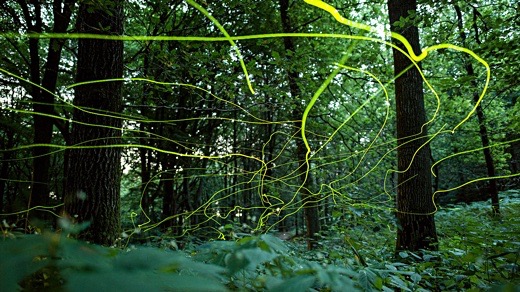
Image above: Fireflies, like these in a forest in the Netherlands, have disappeared from some areas in North America and Europe where they were once abundant. Photo by Paul Van Hoof. From original article.

Entomologists call it the windshield phenomenon. "If you talk to people, they have a gut feeling. They remember how insects used to smash on your windscreen," says Wolfgang Wägele, director of the Leibniz Institute for Animal Biodiversity in Bonn, Germany. Today, drivers spend less time scraping and scrubbing.

"I'm a very data-driven person," says Scott Black, executive director of the Xerces Society for Invertebrate Conservation in Portland, Oregon. "But it is a visceral reaction when you realize you don't see that mess anymore."

Some people argue that cars today are more aerodynamic and therefore less deadly to insects. But Black says his pride and joy as a teenager in Nebraska was his 1969 Ford Mustang Mach 1—with some pretty sleek lines. "I used to have to wash my car all the time.

It was always covered with insects." Lately, Martin Sorg, an entomologist here, has seen the opposite: "I drive a Land Rover, with the aerodynamics of a refrigerator, and these days it stays clean."

Though observations about splattered bugs aren't scientific, few reliable data exist on the fate of important insect species. Scientists have tracked alarming declines in domesticated honey bees, monarch butterflies, and lightning bugs.

But few have paid attention to the moths, hover flies, beetles, and countless other insects that buzz and flitter through the warm months. "We have a pretty good track record of ignoring most noncharismatic species," which most insects are, says Joe Nocera, an ecologist at the University of New Brunswick in Canada.


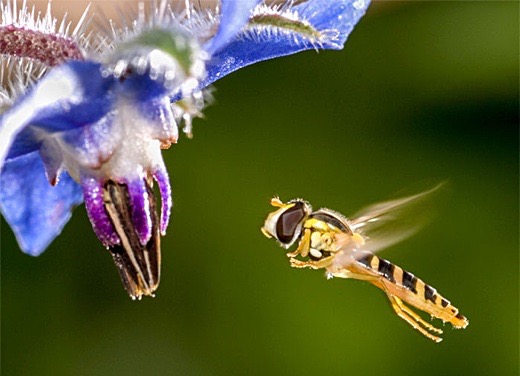
Image above: Hover flies, often mistaken for bees or wasps, are important pollinators. Their numbers have plummeted in nature reserves in Germany. Photo by Jef Meul. From original article.

Of the scant records that do exist, many come from amateur naturalists, whether butterfly collectors or bird watchers.

Now, a new set of long-term data is coming to light, this time from a dedicated group of mostly amateur entomologists who have tracked insect abundance at more than 100 nature reserves in western Europe since the 1980s.

Over that time the group, the Krefeld Entomological Society, has seen the yearly insect catches fluctuate, as expected. But in 2013 they spotted something alarming. When they returned to one of their earliest trapping sites from 1989, the total mass of their catch had fallen by nearly 80%.

Perhaps it was a particularly bad year, they thought, so they set up the traps again in 2014. The numbers were just as low.

Through more direct comparisons, the group—which had preserved thousands of samples over 3 decades—found dramatic declines across more than a dozen other sites.

Such losses reverberate up the food chain. "If you're an insect-eating bird living in that area, four-fifths of your food is gone in the last quarter-century, which is staggering," says Dave Goulson, an ecologist at the University of Sussex in the United Kingdom, who is working with the Krefeld group to analyze and publish some of the data. "One almost hopes that it's not representative—that it's some strange artifact."

No one knows how broadly representative the data are of trends elsewhere.

But the specificity of the observations offers a unique window into the state of some of the planet's less appreciated species. Germany's "Red List" of endangered insects doesn't look alarming at first glance, says Sorg, who curates the Krefeld society's extensive collection of insect specimens. Few species are listed as extinct because they are still found in one or two sites.

But that obscures the fact that many have disappeared from large areas where they were once common. Across Germany, only three bumble bee species have vanished, but the Krefeld region has lost more than half the two dozen bumble bee species that society members documented early in the 20th century.

Members of the Krefeld society have been observing, recording, and collecting insects from the region—and around the world—since 1905. Some of the roughly 50 members—including teachers, telecommunication technicians, and a book publisher—have become world experts on their favorite insects.

Siegfried Cymorek, for instance, who was active in the society from the 1950s through the 1980s, never completed high school. He was drafted into the army as a teenager, and after the war he worked in the wood-protection division at a local chemical plant.

But because of his extensive knowledge of wood-boring beetles, the Swiss Federal Institute of Technology in Zurich awarded him an honorary doctorate in 1979. Over the years, members have written more than 2000 publications on insect taxonomy, ecology, and behavior.

The society's headquarters is a former school in the center of Krefeld, an industrial town on the banks of the Rhine that was once famous for producing silk. Disused classrooms store more than a million insect specimens individually pinned and named in display cases.

Most were collected nearby, but some come from more exotic locales.

Among them are those from the collection of a local priest, an active member in the 1940s and 1950s, who persuaded colleagues at mission stations around the world to send him specimens. (The society's collection and archive are under historical preservation protection.)

Tens of millions more insects float in carefully labeled bottles of alcohol—the yield from the society's monitoring projects in nature reserves around the region.

The reserves, set aside for their local ecological value, are not pristine wilderness but "seminatural" habitats, such as former hay meadows, full of wildflowers, birds, small mammals—and insects. Some even include parts of agricultural fields, which farmers are free to farm with conventional methods.

Heinz Schwan, a retired chemist and longtime society member who has weighed thousands of trap samples, says the society began collecting long-term records of insect abundance partly by chance.

In the late 1970s and early 1980s, local authorities asked the group for help evaluating how different strategies for managing the reserves affected insect populations and diversity.

The members monitored each site only once every few years, but they set up identical insect traps in the same place each time to ensure clean comparisons.

Because commercially available traps vary in ways that affect the catch, the group makes their own. Named for the Swedish entomologist René Malaise, who developed the basic design in the 1930s, each trap resembles a floating tent.

Black mesh fabric forms the base, topped by a tent of white fabric and, at the summit, a collection container—a plastic jar with an opening into another jar of alcohol. Insects trapped in the fabric fly up to the jar, where the vapors gradually inebriate them and they fall into the alcohol.

The traps collect mainly species that fly a meter or so above the ground. For people who worry that the traps themselves might deplete insect populations, Sorg notes that each trap catches just a few grams per day—equivalent to the daily diet of a shrew.

Sorg says society members saved all the samples because even in the 1980s they recognized that each represented a snapshot of potentially intriguing insect populations. "We found it fascinating—despite the fact that in 1982 the term ‘biodiversity' barely existed," he says. Many samples have not yet been sorted and cataloged—a painstaking labor of love done with tweezers and a microscope. Nor have the group's full findings been published.

But some of the data are emerging piecemeal in talks by society members and at a hearing at the German Bundestag, the national parliament, and they are unsettling.

Beyond the striking drop in overall insect biomass, the data point to losses in overlooked groups for which almost no one has kept records. In the Krefeld data, hover flies—important pollinators often mistaken for bees—show a particularly steep decline.

In 1989, the group's traps in one reserve collected 17,291 hover flies from 143 species. In 2014, at the same locations, they found only 2737 individuals from 104 species.

Since their initial findings in 2013, the group has installed more traps each year. Working with researchers at several universities, society members are looking for correlations with weather, changes in vegetation, and other factors. No simple cause has yet emerged.

Even in reserves where plant diversity and abundance have improved, Sorg says, "the insect numbers still plunged."

Changes in land use surrounding the reserves are probably playing a role. "We've lost huge amounts of habitat, which has certainly contributed to all these declines," Goulson says. "If we turn all the seminatural habitats to wheat and cornfields, then there will be virtually no life in those fields."

As fields expand and hedgerows disappear, the isolated islands of habitat left can support fewer species. Increased fertilizer on remaining grazing lands favors grasses over the diverse wildflowers that many insects prefer. And when development replaces countryside, streets and buildings generate light pollution that leads nocturnal insects astray and interrupts their mating.

Neonicotinoid pesticides, already implicated in the widespread crash of bee populations, are another prime suspect. Introduced in the 1980s, they are now the world's most popular insecticides, initially viewed as relatively benign because they are often applied directly to seeds rather than sprayed.

But because they are water soluble, they don't stay put in the fields where they are used. Goulson and his colleagues reported in 2015 that nectar and pollen from wildflowers next to treated fields can have higher concentrations of neonicotinoids than the crop plants.

Although initial safety studies showed that allowable levels of the compounds didn't kill honey bees directly, they do affect the insects' abilities to navigate and communicate, according to later research. Researchers found similar effects in wild solitary bees and bumble bees.

Less is known about how those chemicals affect other insects, but new studies of parasitoid wasps suggest those effects could be significant. Those solitary wasps play multiple roles in ecosystems—as pollinators, predators of other insects, and prey for larger animals.

A team from the University of Regensburg in Germany reported in Scientific Reports in February that exposing the wasp Nasonia vitripennis to just 1 nanogram of one common neonicotinoid cut mating rates by more than half and decreased females' ability to find hosts.

"It's as if the [exposed] insect is dead" from a population point of view because it can't produce offspring, says Lars Krogmann, an entomologist at the Stuttgart Natural History Museum in Germany.

No one can prove that the pesticides are to blame for the decline, however. "There is no data on insecticide levels, especially in nature reserves," Sorg says.

The group has tried to find out what kinds of pesticides are used in fields near the reserves, but that has proved difficult, he says. "We simply don't know what the drivers are" in the Krefeld data, Goulson says. "It's not an experiment. It's an observation of this massive decline. The data themselves are strong.

Understanding it and knowing what to do about it is difficult."

The factors causing trouble for the hover flies, moths, and bumble bees in Germany are probably at work elsewhere, if clean windshields are any indication. Since 1968, scientists at Rothamsted Research, an agricultural research center in Harpenden, U.K., have operated a system of suction traps—12-meter-long suction tubes pointing skyward. 

 
Set up in fields to monitor agricultural pests, the traps capture all manner of insects that happen to fly over them; they are "effectively upside-down Hoovers running 24/7, continually sampling the air for migrating insects," says James Bell, who heads the Rothamsted Insect Survey.

Between 1970 and 2002, the biomass caught in the traps in southern England did not decline significantly. Catches in southern Scotland, however, declined by more than two-thirds during the same period. 
 
Bell notes that overall numbers in Scotland were much higher at the start of the study. "It might be that much of the [insect] abundance in southern England had already been lost" by 1970, he says, after the dramatic postwar changes in agriculture and land use.

The stable catches in southern England are in part due to constant levels of pests such as aphids, which can thrive when their insect predators are removed. Such species can take advantage of a variety of environments, move large distances, and reproduce multiple times per year. 
 
Some can even benefit from pesticides because they reproduce quickly enough to develop resistance, whereas their predators decline. "So lots of insects will do great, but the insects that we love may not," Black says.

Other, more visible creatures may be feeling the effects of the insect losses. Across North America and Europe, species of birds that eat flying insects, such as larks, swallows, and swifts, are in steep decline. Habitat loss certainly plays a role, Nocera says, "but the obvious factor that ties them all together is their diet."

Some intriguing, although indirect, clues come from a rare ecological treasure: decades' worth of stratified bird droppings. Nocera and his colleagues have been probing disused chimneys across Canada in which chimney swifts have built their nests for generations. 
 
From the droppings, he and his colleagues can reconstruct the diets of the birds, which eat almost exclusively insects caught on the wing.

The layers revealed a striking change in the birds' diets in the 1940s, around the time DDT was introduced. The proportion of beetle remains dropped off, suggesting the birds were eating smaller insects—and getting fewer calories per catch. 
 
The proportion of beetle parts increased slightly again after DDT was banned in the 1970s but never reached its earlier levels. The lack of direct data on insect populations is frustrating, Nocera says. "It's all correlative. We know that insect populations could have changed to create the population decline we have now. But we don't have the data, and we never will, because we can't go back in time."

Sorg and Wägele agree. "We deeply regret that we did not set up more traps 20 or 30 years ago," Sorg says. He and other Krefeld society members are now working with Wägele's group to develop what they wish they had had earlier: a system of automated monitoring stations they hope will combine audio recordings, camera traps, pollen and spore filters, and automated insect traps into a "biodiversity weather station". 
 
Instead of tedious manual analysis, they hope to use automated sequencing and genetic barcoding to analyze the insect samples. Such data could help pinpoint what is causing the decline—and where efforts to reverse it might work best.

Paying attention to what E. O. Wilson calls "the little things that run the world" is worthwhile, Sorg says. "We won't exterminate all insects. That's nonsense. Vertebrates would die out first. But we can cause massive damage to biodiversity—damage that harms us."

.

Executive Order pushes pesticides

SUBHEAD: We can’t allow the protections we depend on for clean water, clean air, and safe food to be gutted.

By Staff on 26 April 2017 for Center for Food Safety -
(http://salsa3.salsalabs.com/o/1881/t/0/blastContent.jsp?email_blast_KEY=1370269)


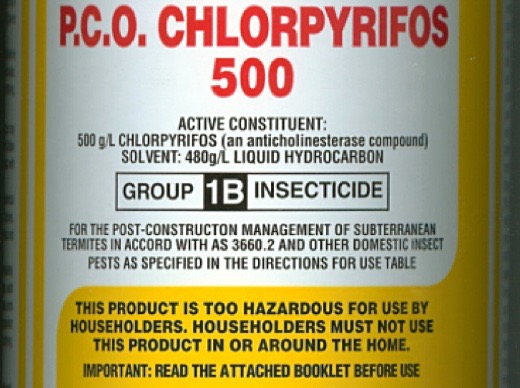
Image above: Photo detail of can of Dow Chemical's chlorpyrifos pesticide distributed by David Gray Co. with warning: "This product is too hazardous for use by householders. Householders must not use this product in or around the home." From (http://www.fertilisersdirect.com.au/pco-chlorpyrifos-1l.html).
 
The hits to our food, farms, and environment just keep coming.
Just hours ago, President Trump signed a new Executive Order, this time specifically on agriculture, directing the Secretary of Agriculture to undertake a 180-day review to “identify and eliminate" what Trump says are "unnecessary regulations”.1

The Presidential Order also creates a new task force to recommend eliminating food and agriculture legislation, policies, and regulations that might hinder the profit-making of “agribusiness.”

What kind of regulations are they looking at? Well, the details are slim, but what is there doesn’t look good. We know that regulations regarding the oversight, production, and export of genetically engineered crops are high on the list.2

The Executive Order also seems to push for faster and/or easier approvals for pesticides and biotech crops, pushing biotech crops abroad to ease export market access, easing the privatization of scarce public water resources for corporate gain, and opening public lands up to mining, farming, ranching and other activities that don’t belong on our public lands.3

We know that Agribusiness has Trump’s ear. He picked Sonny Perdue, one of Big Ag’s own, for his USDA Secretary.

And this week, the Associated Press dropped a bombshell:
Dow Chemical gave $1,000,000 to Trump’s inauguration fund, and the chemical giant is now urging the Environmental Protection Agency (EPA) to set aside its findings on chlorpyrifos and three other pesticides that federal scientists from several agencies found were harmful to endangered species and human health.4
Trump’s EPA also just green-lighted Dow’s new “Enlist Duo” genetically engineered crops, resistant to 2,4-D, part of the Vietnam Era Agent Orange pesticide.

In January, then President-elect Trump sat down chemical giant Bayer’s CEO Werner Baumann and Monsanto’s CEO Hugh Grant at Trump Tower and had a “productive meeting” on “the future of the agriculture industry” and the pending merger between the two companies.

Combined, President Trump, EPA Administrator Pruitt, and newly confirmed USDA Secretary Perdue have received millions of dollars from Big Ag and chemical companies.

We can’t allow the protections we depend on for clean water, clean air, and safe food to be gutted by the new administration and the corporations which have purchased great influence over the President and his policies.

Trump needs to hear from you – add your name  to petition

1. http://www.nydailynews.com/newswires/news/national/latest-trump-aims-ease-farming-regulations-article-1.3099884
2. https://www.politicopro.com/tech/whiteboard/2017/04/perdue-to-chair-trumps-task-force-on-rural-america-086691
3. https://www.whitehouse.gov/the-press-office/2017/04/25/presidential-executive-order-promoting-agriculture-and-rural-prosperity
4. http://bigstory.ap.org/article/a29073ecef9b4841b2e6cca07202bb67/ap-exclusive-pesticide-maker-tries-scrap-risk-study

.