Showing posts with label Maui. Show all posts

Maui conservation effort working

SUBHEAD: Large landscape scale reforestation at Auwahi on Haleakala is proof.

By Jan TenBruggencate on 21 July 2017 for Raising Islands-
(http://raisingislands.blogspot.com/2017/07/landscape-scale-conservation-can-work.html)
http://www.islandbreath.org/2017Year/08/170803auwahibig.png
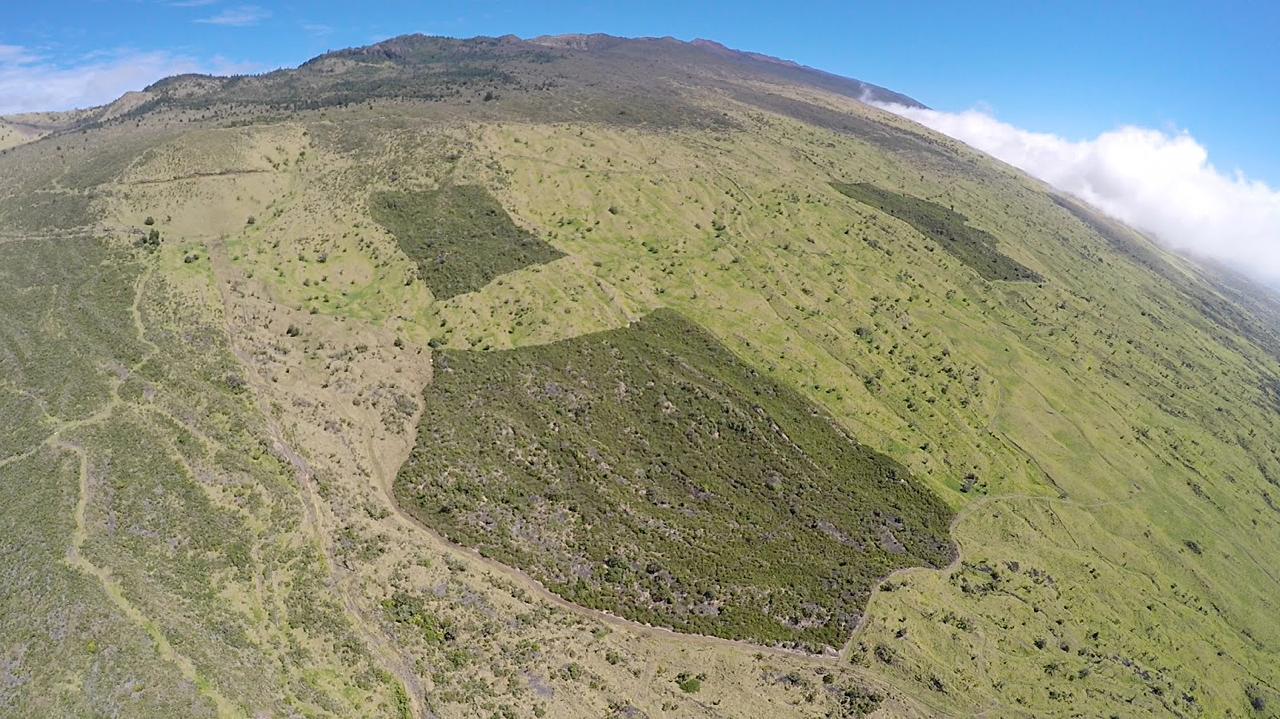
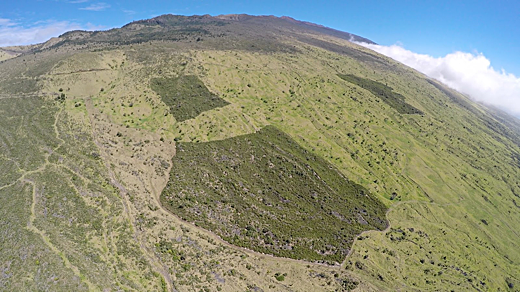
Image above: Southern flank of southwest Maui where Auwahi reforestation project is turning Haleakela green. From original article. Click to enlarge.

When Art Medeiros fenced some Maui pasture that had a smattering of native dryland forest plants on it, most folks figured he was engaged in a pipe dream.

He hoped that by excluding deer and cattle, and with a little loving care and some outplanting, something approaching a healthy native dryland forest could result.

Medeiros was right. The image above is the proof. The three dark green patches are areas fenced to keep grazing animals out and then planted with dryland natives. The 10-acre center square was fenced and planted 20 years ago, the bottom 23 acres 12 years ago, and the 23-acre shape at the right eight years ago.

Medeiros worked with the landowners, `Ulupalakua Ranch’s Erdman family, along with the U.S. Fish and Wildlife Service and the Natural Resources Conservation Service, to form the Auwahi Forest Restoration Project. You can learn more about it at this website.

What they found is that landscape-scale conservation efforts work.

It is a remarkable example, but certainly not the only example in Hawaii.
  • When the Territory of Hawai`i removed feral cattle from the Koke`e grasslands on Kaua`i, those rolling acres of pasture were able to convert back to forest that is now Koke`e State Park.

  • When George Munro on Lana`i fenced hundreds of acres at Kanepu`u a century ago to keep out deer and mouflon sheep, he protected a native forest that survives today.

  • When Lida and David Burney took the analysis of ancient pollen samples at Makawehi on Kaua`i  and planted those plants into a nearby former cane field, they restored something long gone from that landscape. 
Medeiros a few decades ago saw a few botanical gems in a severely degraded landscape. When he proposed trying to restore it, he got a lot of pushback. It was a dead forest standing, he was told - Degraded landscapes were inevitably going to further decline.

He didn’t give up.

“The question was whether we could rebuild this system, or was this (an example of) the end of all natural systems?”

At Auwahi, there were priceless old endemic trees, but they were not reproducing and had not reproduced for decades. The native species covered only 3 percent of the landscape.

Why care? Native dryland forest is some of the rarest treasure in the Hawaiian realm. It has been displaced by development, agriculture, pasture and constant pressure from non-native predators on the natural landscape, like cattle, deer, goats, sheep, pigs and rats.

Medeiros and his team fenced out the cattle and deer at Auwahi, starting with the 10-acre square they now call A-1. With the help of teams of community volunteers, teachers, canoe clubs and many others, they began planting out native species—more than 125,000 seedlings to date.
The result: Native species cover in some areas is now 82 percent.

“Near two-thirds of native tree species at Auwahi are now producing seedlings naturally, a sign of a healthy functioning ecosystem, including some species that had not done so in centuries,” Medeiros said.

And on a dry slope of Haleakala, where much of the landscape is brown and yellow, here it is deep green. Not only an indication that the plants are back, but that the landscape is functioning as a watershed.

Medeiros gives special credit to the landowners, Pardee and Sumner Erdman and their family, for their dedication to conservation, and their willingness to convert pasture to native forest—without compensation.

“`Ulupalakua Ranch has...served largely as a silent and enthusiastic partner. In all my years in conservation, I have never seen another for-profit group act in this way,” he said.

Donors to the project over the years included the Frost Family Foundation, Maui County Department of Water Supply, Hawai`i Community Foundation, Hawai`i Tourism Authority, Maui County Office of Economic Development and the Edward J Anderson Foundation.
.

Effort to de-occupy Hawaii

SUBHEAD: "E Ho'Olokahi Ka Lahui" "A Call to Make the Nation as One"

By Walter Ritte on 25 June 2017 in Island Breath -
(http://islandbreath.blogspot.com/2017/06/effort-to-de-occupy-hawaii.html)

http://www.islandbreath.org/2017Year/06/170625kalahuibig.jpg
Image above: Poster/Schedule for E Hoʻolokahi Ka Lahui events featuring royals who lead Hawaii during its independence. Click to enlarge.

I’d like to invite you to a series of free La Ho'i Ho'i Ea (Sovereignty Restoration Day) events in July! Celebrate with the community and learn about the legal steps being taken to de-occupy Hawaii.

The E Hoʻolokahi Ka Lahui events are being held on each of the Islands in conjunction with the sovereignty month of La Hoʻi Hoʻi Ea and will feature speakers, films, music and local food.

Our goal is to bring attention to the fight for an independent and sustainable Hawaii. We want to lokahi around the effort to de-occupy Hawaii at the Peace Palace at the Hague in the Netherlands and educate the international community of the truth of who we are.

Food independence remains a crucial problem for Hawaii – the event series is our opportunity to discuss this and other issues with our community while celebrating the beauty and perseverance of our islands and people.

WHEN & WHERE:
July 1 – Molokai, Kaunakakai library, 5-9 PM
July 8 – Kauai, Kauai Community College, 11 AM-4 PM
July 15 – Big Island, Kona location TBA
July 22 – Big Island, Uncle Roberts Aha Bar in Kaimu 4-9 PM
July 23 – Maui, location TBA
July 29 – Oahu, location TBA

Check back often for updates on the HCFS Facebook page >>

We hope to see you there.


.

Abundance Circle • Story Connective

SUBHEAD: A volunteer effort to share the abundance of food between individual growers and gatherers.

By Rebecca Rhapsody on 23 April 2017 for Story Connective -
(https://storyconnective.podbean.com/)


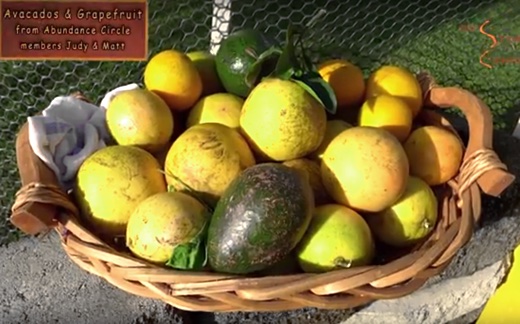
Image above: Avacados and grapefruit offered by Judy and Matt sharing extra produce with to Abundance Circle on Maui through Vicki Levin. Still frame from video below by Story Connection.

Vicki Levin is a champion of locally grown food and community. She gathers up excess food produced by her friends' and neighbors' gardens and distributes it among them all.

It's called the Abundance Circle.

For example, when one member of the Abundance Circle has too many ripe oranges from their tree for their own household, they contribute the extra fruit to the Abundance Circle.

Vicki collects everyone's excess produce and distributes it to the group. In this way, the person contributing the excess oranges will get sunflower sprouts, kale, bananas, & more from the extra produce other Abundance Circle members give... free of charge!

It's not a trade and it's not a barter. Even when a member's garden doesn't have anything to give for a time, they still receive. Everyone just contributes whatever they have excess of to the Circle Abundance, and everyone benefits. Vicki's dream is for everyone to have even a small garden in their backyard.


Video above: Interview with Vicki Levin by Rebecca Rhapsody about the Abundance Circle on Maui. From (https://youtu.be/HD-j7VgKetI).

VIDEO CREDITS:
Interview
Rebecca Rhapsody at StoryConnective.org

Audio and video production
Loxley Clovis at StoryConnective.org

Ukulele score and performance
Rebecca Rhapsody at StoryConnective.org

Story Connective art and logo by
Sarai Stricklin SaraiStricklin.com

SPECIAL THANKS TO:
Vicki Levin and her Abundance Circle members

Artwork ‘Makamaluohonaokalani’
Marilyn Kahalewai at Kumukahi.org

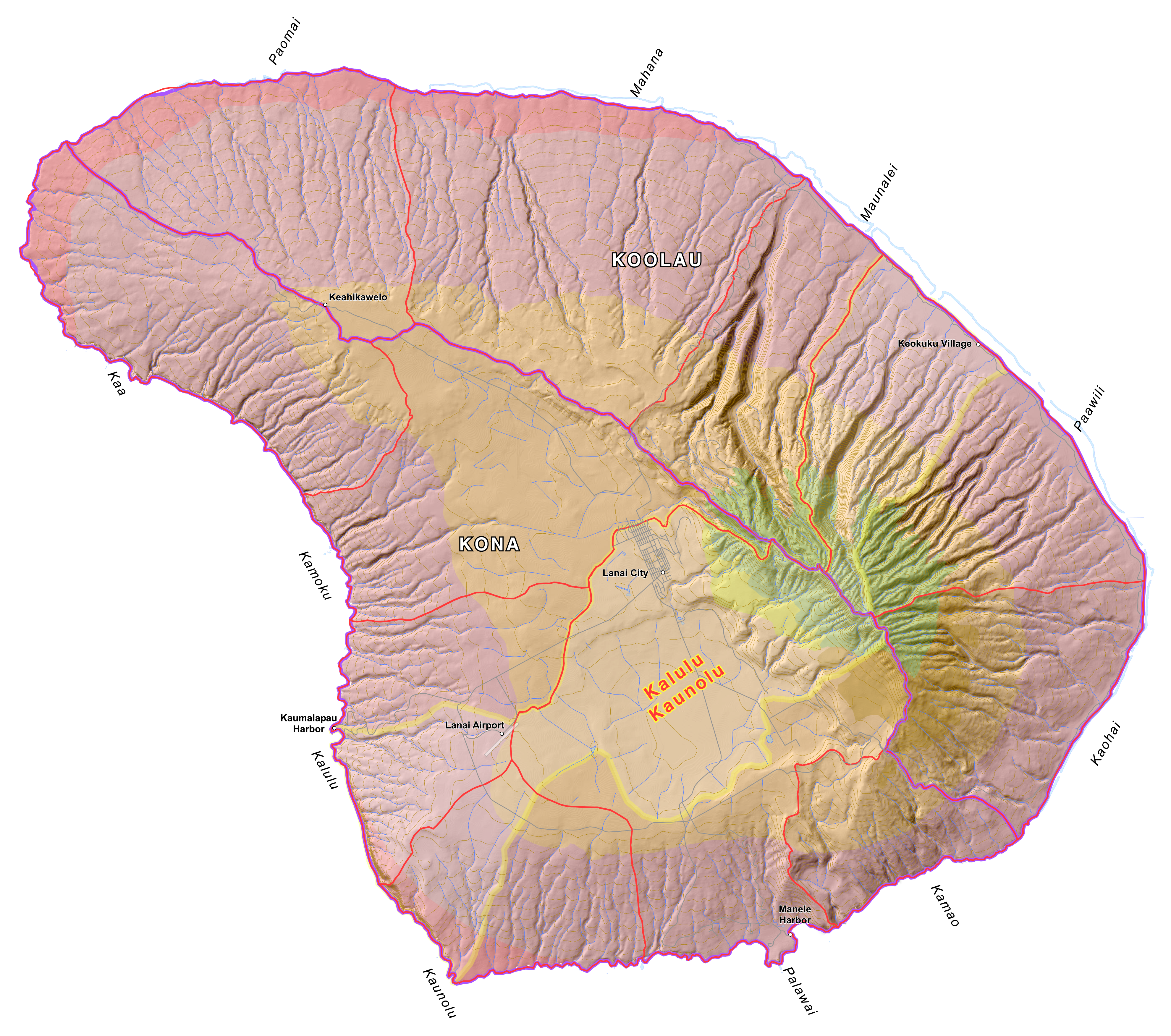
Moku and Ahupuaa map of Maui 'Mokupuni O Maui"
Juan Wilson at IslandBreath.org

SHARING AND SUPPORT: 
If you support Story Connective's 501(c)(3) mission and vision of bringing stories of resilience and possibilities to the world and would like to help our project, there are many ways you can help us.

Share this with video friends, family, coworkers. Like us at Facebook.com/StoryConnective

Subscribe to our YouTube Channel at https://www.youtube.com/channel/UCDb41I_NpEhN-_ciTLOGt7A

Subscribe to our podcast feed: https://storyconnective.podbean.com/ using the Podbean app (for all devices), iTunes (Apple devices), & Google Play Music (Android devices)

Stay tuned to Story Connective on YouTube and the Story Connective podcast for more on this series: Re-envision Maui.

Fiscal Sponsor of Story Connection is ELLSSA – a non profit committed to Empowering individuals to take care of the future. Learn more about at www.ellssa.org

The Story Connective is listener and viewer supported. Support our crowdfunded project at https://www.Patreon.com/Storyconnective or by using the "Be a patron" button on your Podbean podcast app.

FAIR USE:
The purpose of this video is for non-profit education, news and commentary.

CREATIVE COMMONS LICENSE:
Attribution-ShareAlike
2.5 Generic (CC BY-SA 2.5)

.

From Standing Rock to Maui

SUBHEAD: We are like the Dakota Sioux fighting to protect the Missouri River because Water is Life.

By Jonathan Greenberg on 25 March 2017 for Maui Independent -
(http://mauiindependent.org/native-wisdom-water-protector-alika-atay-on-the-power-of-we-the-people/)


Image above: From ().

In November, organic farmer Alika Atay, the grassroots leader of Hawaii’s ʻĀina Protector’s United effort was elected to the Maui County Council in a stunning upset (described in detail here).
Atay was the lead plaintiff in the SHAKA Movement’s federal lawsuit over the invalidation of Maui’s successful GMO Moratorium initiative in 2014.

This Maui Independent In Their Own Words features the barrel-chested, deep-voiced leader known to many Native Hawai’ians as “Uncle Alika.” His words are from interviews conducted during the past year by journalist Jonathan Greenberg.

Protect Our Water

I stand to protect our drinking water. We are very similar to our brothers and sisters in the Dakotas fighting to protect the Missouri River because Ola Ka Wai: Water is life.

Aina Protectors United is like-minded people who have been raised under the values of Aloha Aina (love of the land). Everything we do has a connection to the earth and our resources. Given our responsibility under Aloha Aina, we must stand up and protect.

I am speaking for the land, for the water, for the children. We all have a responsibility to stand up for future generations. The importance of native water rights and the ʻĀina Protectors movement is to allow those of us who are of the ʻĀina to understand that this is our indigenous right that we are born with.

We need to stand up and say enough of the oppression.

For me and the people, we are all kanakas. If they poison us, if they allow this to continue, they are creating cultural ethno genocide. They are slowly killing us, the kanaka–Hawaiians and my children and my future descendants. If we die or if we get sick and this place gets polluted, where else do we go? We don’t have anywhere else to go in the world to call our homeland.

This is our homeland. And as Kanaka Maoli, as indigenous people of this land, we cannot allow corporations such as Monsanto to be more important than the health and welfare of our people.

We are into into grassroots democracy. Grassroots democracy comes from the ground up, from the indigenous, spiritual, and cultural level. It says we will live the way we want to live.

My involvement with this movement began 40 years ago, when agrochemical companies sprayed DDT onto their plants, like the pineapple plantations. After soaking the plants, the DDT soaked the soil, and after soaking the soil, it went down and hit our water aquifer. It tainted our drinking water well until we could no longer drink fresh water from the well. Forty years later that well is still tainted. We cannot drink that water. It is still tainted.

Monsanto fields are only 40 feet above sea level. We ran into a Monsanto field and saw their spray board. It said they sprayed a 100-acre field four times a day, and the next day, five times a day, the very next day four times. With different chemicals.

You drench the fields, and then you get a big rain. The earth becomes a wet sponge and gets saturated, and all that chemical poison gets pushed down. The question is not if it’s going to hit our water table. The question is if they keep this up unchecked, when will it hit our water table to also make it unsafe for us to be drinking fresh water?

I believe this is about water and the pesticides that affect water. I am concerned with the drenching of our land with pesticides and the effect this has on our water. We live on an island and must protect our sacred water.

We have to look at the damage heavy chemical pesticides are doing to the soil and the aquifer. Not only what affects us now but more so the long-term future concerns. What kind of water will our future generations have to drink?

Look at what our experience has been for the last two years against the biotech pesticide companies. During the [GMO Moratorium Initiative] contest, there was big, big involvement of organized corporate money, spending close to $8 million.

Yet the people voted yes, and the people defeated them. The big lesson was the power of the people; what was victorious was organized people.

If You Are Not at the Table, You Are On the Menu

If you are not at the table, you are on the menu.
Whatever community you are, whatever country you are, you’ve got to open your eyes and be at the table.

We have that power. We the people can organize ourselves to stand up against them and say, “This is wrong.” Yes we call out Aloha ʻĀina; love the land. But it is not as simple as that. You cannot interpret it just by the words. You have to understand the values that are in there. How do you practice Aloha ʻĀina values? By protecting our natural resources, protecting our water.

Right now, with this [November Council election] victory, we are setting the cornerstone of the house that we want to live in. It is up to the rest of the village to be involved in the construction of the house.

I am looking forward to setting policy, regulations, and enforcement that will protect our natural resources. We need our entire village to be involved to solve these problems.

We live on an island, and our job is to protect this aquifer, our sacred water. There is a wave of momentum for change to protect our Maui way of living. Everyone sees the handwriting on the wall and is concerned with protecting the environment, which also protects our tourist economy.

Our Responsibility to Become Great Ancestors

Our ancestors, my ancestors, they lived here for 1,500 years. They lived here organically, naturally.

They didn’t live with chemical poisons. Then my ancestors handed it over to me: green pristine, clean, and sacred.

And in a very short period, westernization came in and almost killed us. Almost. Unless we come in and say, “Nuff already. This ain’t happening.”

We want to become great ancestors.

I don’t want to pass on and have my descendants say, “My tutu—he didn’t do a good job by giving us this place all polluted.”

We have a responsibility to our future. That’s why we do this.


Video above: "Water Protector Alika Atay on People Power" From original article. (https://youtu.be/Gu5dZ1_agNY). 

See also:
Ea O Ka Aina: Lessons from Standing Rock 3/14/17
Ea O Ka Aina: Standing Rock will not go away 2/24/17
Ea O Ka Aina: DAPL fight not over yet 2/19/17
Ea O Ka Aina: Tribes divest DAPL bankers 2/13/17
Ea O Ka Aina: Army Corps okays DAPL easement 2/8/17
Ea O Ka Aina: Trump orders go on DAPL EIS 2/3/17
Ea O Ka Aina: Trump orders shale oil pipelines 1/24/17
Ea O Ka Aina: Missile launcher at Standing Rock 1/19/17
Ea O Ka Aina: Lockdown at Trans-Pecos Pipeline 1/10/17
Ea O Ka Aina: Standing Rock has changed us 12/9/16
Ea O Ka Aina: As Standing Rock celebrates... 12/5/16
Ea O Ka Aina: Army Corps denies DAPL easement 12/4/16
Ea O Ka Aina: My Whole Heart is With You 12/2/16
Ea O Ka Aina: The Loving Containment of Courage 12/1/16
Ea O Ka Aina: The Beginning is Near 12/1/16
Ea O Ka Aina: Obama hints at DAPL rerouting 11/3/16
Ea O Ka Aina: New military attack on NODAPL 11/3/16
Ea O Ka Aina: How to Support NoDAPL 11/3/16
Ea O Ka Aina: Standing Rock has changed us 12/9/16
Ea O Ka Aina: As Standing Rock celebrates... 12/5/16
Ea O Ka Aina: Army Corps denies easement 12/4/16
Ea O Ka Aina: My Whole Heart is With You 12/2/16
Ea O Ka Aina: The Loving Containment of Courage 12/1/16
Ea O Ka Aina: The Beginning is Near 12/1/16
Ea O Ka Aina: Feds to shutdown NoDAPL Camp 11/25/16
Ea O Ka Aina: NoDAPL people are going to die 11/23/16
Ea O Ka Aina: Hundreds of vets to join NoDAPL 11/22/16
Ea O Ka Aina: Obama must support Standing Rock 11/21/16
Ea O Ka Aina: Trump's pro oil stance vs NoDaPL 11/15/16
Ea O Ka Aina: Kauai NoDAPL Demonstration 11/12/16
Ea O Ka Aina: Obama to Betray Standing Rock 11/12/16
Ea O Ka Aina: Trump impact on Standing Rock 11/12/16
Ea O Ka Aina: Ann Wright on Standing Rock 11/8/16
Ea O Ka Aina: Turning Point at Standing Rock 11/6/16
Ea O Ka Aina: Jackson Browne vs DAPL owner 11/5/16
Democracy Now: Boycott of DAPL Owner's Music Festival
Ea O Ka Aina: World responds to NoDAPL protests 11/5/16
Ea O Ka Aina: NoDAPL victory that was missed 11/5/16
Ea O Ka Aina: DAPL hid discovery of Sioux artifacts 11/5/16
Ea O Ka Aina: Dakota Access Pipeline will leak 11/5/16
Ea O Ka Aina: Route of the Dakota Access Pipeline 11/4/16
Ea O Ka Aina: Sanders calls for stopping DAPL 11/4/16
Ea O Ka Aina: Obama hints at DAPL rerouting 11/3/16
Ea O Ka Aina: New military attack on NODAPL 11/3/16
Ea O Ka Aina: How to Support NoDAPL 11/3/16
Unicorn Riot: Tweets from NoDAPL 11/2/16
Ea O Ka Aina: Standing Rock & the Ballot Box 10/31/16
Ea O Ka Aina: NoDAPL reclaim new frontline 10/24/16
Ea O Ka Aina: How far will North Dakota go? 10/23/16
Ea O Ka Aina: Amy Goodman "riot" charge dropped 10/17/16
Ea O Ka Aina: Amy Goodwin to face "Riot Charge" 10/16/16
Ea O Ka Aina: Shutdown of all tar sand pipelines 10/11/16
Ea O Ka Aina: Why Standing Rock is test for Oabama 10/8/16
Ea O Ka Aina: Why we are Singing for Water 10/8/16
Ea O Ka Aina: Labor's Dakota Access Pipeline Crisis 10/3/16
Ea O Ka Aina: Standing Firm for Standing Rock 10/3/16
Ea O Ka Aina: Contact bankers behind DAPL 9/29/16
Ea O Ka Aina: NoDAPL demo at Enbridge Inc 9/29/16
Ea O Ka Aina: Militarized Police raid NoDAPL 9/28/16
Ea O Ka Aina: Stop funding of Dakota Access Pipeline 9/27/16
Ea O Ka Aina: UN experts to US, "Stop DAPL Now!" 9/27/16
Ea O Ka Aina: No DAPL solidarity grows 9/21/16
Ea O Ka Aina: This is how we should be living 9/16/16
Ea O Ka Aina: 'Natural Capital' replacing 'Nature' 9/14/16
Ea O Ka Aina: The Big Difference at Standing Rock 9/13/16
Ea O Ka Aina: Jill Stein joins Standing Rock Sioux 9/10/16
Ea O Ka Aina: Pipeline temporarily halted 9/6/16
Ea O Ka Aina: Native Americans attacked with dogs 9/5/16
Ea O Ka Aina: Mni Wiconi! Water is Life! 9/3/16
Ea O Ka Aina: Sioux can stop the Pipeline 8/28/16
Ea O Ka Aina: Officials cut water to Sioux 8/23/16 

.

Introduction to Hawaiian Land Areas

SUBHEAD: This is a synthesis of the Hawaiian historical record combined with contemporary ecological frameworks.

By Juan Wilson & Jonathan Jay on 2 May 2016 for Island Breath-
(http://islandbreath.blogspot.com/2016/05/introduction-to-hawaiian-land-areas.html)


http://www.islandbreath.org/hawaiinei/M8Niihau/M8NiihauRasterFile.png

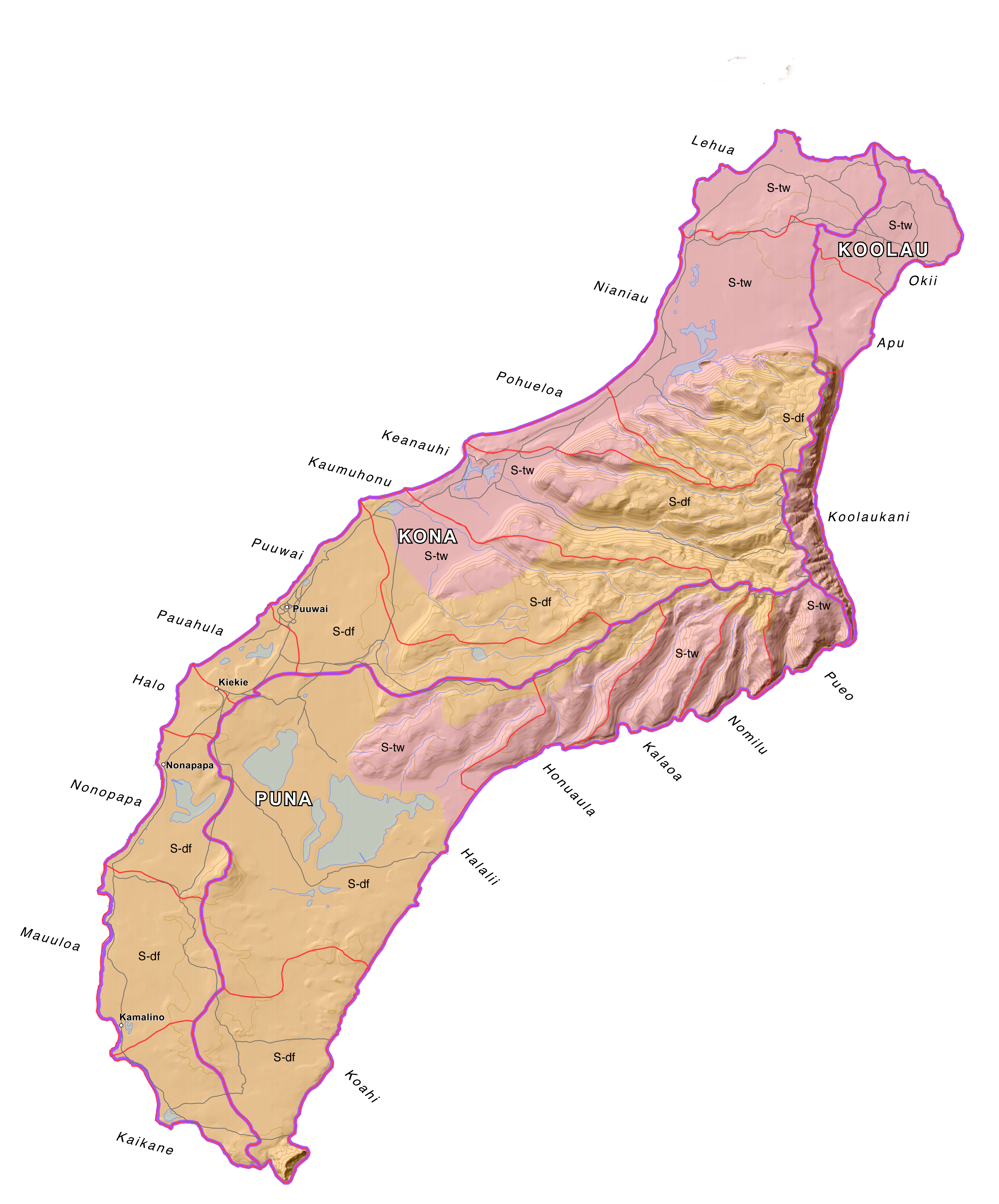
Image above: Map of Niihau, Hawaii, showing Life Zones, Ahupuaa and Moku. Click to enlarge.

By Juan Wilson
The traditional land divisions of pre-contact Hawaiians was based on the sustainability and self-reliance within community watershed areas (ahupuaa) as well as within bioregions (moku) and lastly individual sovereign islands (mokupuni). These natural land divisions were the result of the flow of water over the land.

We are now beginning to include evidence of the flow of water over and under the surface of the islands. We are calling these areas of consideration Waihona.

For simplicity and efficiency this current work is not being coordinated through the Ahu Moku Committee. Historic documents, reference material and selected kapuna are being consulted. On May 1st 2016 we released the current state of the work to the public.

We welcome comment and criticism. This work is far from complete. Waihona are only partially covered at this time.

The new work can be found by clicking here:
(http://www.islandbreath.org/hawaiinei/hawaiinei.html

The available downloadable files of Big Island, Maui, Kahoolawe, Lanai Molokai, Oahu, Kauai and Niihau are in the following formats:

GoogleEarth Files - .kmv
Arch D size Plot Files - .pdf
High Resolution Raster Files - .png
ArcView GIS Shape Files - .shp
AutoCad Document Exchage Files - .dxf

The older Ahu Moku work can be found here:
(http://www.islandbreath.org/mokupuni/mokupuni.html)


By Jonathan Jay
Although this work began as an inquiry into the existing historical cartographic documents and collected oral descriptions of the traditional and customary Ahupua`a and Moku land management system of the Polynesian and Hawaiian people, this work is now a synthesis of that historical record combined with contemporary Western ecological and environmental frameworks, adapted to existing present conditions.

As such, this work is no longer an attempt to accurately recreate the boundaries of ahupua'a or moku divisions at a particular point in history. Instead, by attempting to discern the principles and frameworks of understanding that allowed for the creation of organic divisions of land in the first place, we now strive to apply these principles to our contemporary conditions - 'Ahupua`a & Moku for the 3rd Millennium' if you will.  It is our hope that this work will provide the basis for prudent, long-range, sustainable land-use and resource management.


.

Maui GMO moratorium back in court

SUBHEAD: Federal judge struck down voter-approved initiative last year. Shaka movement resurrects it.

By Brian Perry on 6 February 2016 for Maui News -
(http://www.mauinews.com/page/content.detail/id/606695/Appeals-court-to-hear-GMO-moratorium-case.html)


Image above: Demonstrators supporting Maui GMO moratorium send message to justice system. From original article.

The 9th Circuit Court of Appeals will hear arguments about whether to overturn a federal judge's ruling last year that struck down a Maui County voter-approved moratorium on genetically modified organisms.

In a ruling Thursday, the appeals court denied a motion to dismiss the appeal by the SHAKA Movement, opening the door for arguments before the court headquartered in San Francisco.

SHAKA attorney Michael Carroll called the ruling "really good news."

"The court denied the motion to dismiss, allowing the court to hear full arguments on the appeal," he said Friday. "Now the court will have to consider all our substantive arguments."

Carroll said he also was pleased that the court ruled in favor of allowing consideration of the Center for Food Safety to file an "amicus curiae," or "friend of the court" brief, in the case, which he called "another plus for our joint efforts."

The 9th Circuit also will be considering requests for amicus briefs from Moms On a Mission Hui, Moloka'o Mahi'ai and Gerry Ross.

On Friday afternoon, Monsanto said its motion to dismiss the appellant's case challenged the appeal, unsuccessfully, for lack of standing, but that the denial of the motion was without prejudice, meaning the case had not been decided on its merits.

"The court of appeals for the 9th Circuit will now move to consider the merits of the case and instructed that the standing arguments could be raised in the merits phase of the case," the company's statement said. "Monsanto believes the federal district court in Hawaii reached the correct conclusion invalidating the ballot initiative, and we will vigorously defend this position."

There was no immediate comment from Maui County.

The appeals court scheduled deadlines for briefs in the case.

The SHAKA appeal stems from last year's ruling by U.S. District Judge Susan Oki Mollway to declare the Maui County GMO moratorium invalid and unenforceable. She said that the moratorium exceeded the county's authority and was pre-empted by federal and state law.

SHAKA attorneys argued that Mollway erred in the ruling by citing a federal law that is not applicable to the Maui County moratorium ordinance.

The judge's ruling "overrode (the people's) rights guaranteed under the Hawaii State Constitution and invalidated the election results of county residents trying to protect themselves from unique harms affecting health, safety, the environment, natural resources, as well as Native Hawaiian rights," the appellants' brief says.

Mollway's ruling shelved a SHAKA attempt to implement the moratorium that voters narrowly approved in November 2014. The ordinance would have outlawed the cultivation, growth or testing of genetically engineered crops until scientific studies determined their safety and benefits.

The moratorium initiative drew more than 23,000 votes, or 50.2 percent, in favor. Those opposed were 47.9 percent. The vote came despite biotech companies and their allies spending nearly $8 million - the most ever in a Hawaii election by far - to oppose it.

Nine days following the general election, the moratorium ordinance was challenged in court by Monsanto, Dow Agrigenetics, other seed companies and their supporters. Mollway ruled in their favor June 30.

Leaders of the SHAKA Movement, a citizens group that gathered enough signatures for the first-ever ballot initiative in the county in 2014, filed an appeal Nov. 30 with the 9th Circuit Court of Appeals.

Maui County is "ground zero" for the testing and development of genetically engineered seed crops because of Hawaii's long growing seasons, SHAKA attorneys say. GMO agricultural operations use more than 80 different chemicals, creating "chemical cocktails" with unknown health and environmental impacts, they say.

* Brian Perry can be reached at bperry@mauinews.com..

Bill calls for return of Superferry

SOURCE: Dick Mayer
SUBHEAD: The measure says an inter-island ferry service is a “missing link” in Hawaii’s transportation system.

By Brian Perry on 28 January 2016 for Maui News -
(http://www.mauinews.com/page/content.detail/id/606376/Bill-calls-for-return-of-ferry.html)


Image above: The second Hawaii Superferry was originally christened The Haukai but was renamed the USNS Guam after the Navy took it over for a song. It has not performed well. From (http://www.msc.navy.mil/inventory/ships.asp?ship=217).

[IB Publisher note: This disingenuous article does have one point in its favor. The Hawaiian islands should have a means of surface travel from one point in the archipelago to another. That would mean by boat since we are in the middle of the Pacific Ocean.  Today, traveling from from one county to another (or in the case of Maui , and Kauai County, from one town to another) may require a jet trip and passing through a TSA screening). We strongly believe on passenger service by boat between islands. Moreover, we have no problem with shipping inspected freight along with passengers on those ferry. Where we have a particular problem is with drive-on, drive-off passenger cars and trucks. And also with high speed (over 20mph). These recommended limits have to due mostly with either damage to ocean mammals (seals, whales, dolphins run over at high speed) or damaging effects to the outer islands from overcrowded Oahu.  Just remember Oahu has 3/4 of the population of all seven inhabited islands and that all the opihi and imu rocks have been stripped from Oahu. In the first week or two of the Superferry service from Oahu from Maui a pickup truck was found returning to Maui loaded with imu rocks that had been illegally taken and were worth much on Oahu. Remember that the high speed Superferry was in reality a US Navy weapon supplier hoping to sponsor a prototype with funding from the State of Hawaii. The two boats built by Austal performed terribly in the open ocean. Passengers were nauseous at high speed during the short trip between Oahu and Maui. Reports recently indicate that the ships have been battered by open ocean in Navy use of the vessels. We don't want to be suckers again. Lastly, this article never mentions the visceral rejection of the Superferry by large numbers of people on the outer islands. Children and grandparents got in the water, facing US Coast Guard grappling hooks, to deny access of the Superferry to Nawiliwili Harbor and people of Maui arose through the courts to thwart the ferry there.]

[Inter-Island  FERRY ??Link to Senate Bill 3022 (http://www.capitol.hawaii.gov/measure_indiv.aspx?billtype=SB&billnumber=3022&year=2016)]

Maui News Article:
Re-establishing an inter-island ferry capable of carrying hundreds of passengers as well as vehicles and cargo should be a priority for Hawaii, giving residents an alternative to expensive air transportation, according to a bill introduced Wednesday by Big Island Sen. Lorraine Inouye.

Under Senate Bill 3022, the state Department of Land and Natural Resources would be required to conduct an environmental assessment for a ferry system.  The measure would provide a company operating an inter-island ferry vessel with a tax credit and a 50 percent reduction in harbor fees for its first year of operation.

DLNR’s Division of Boating and Ocean Recreation was reviewing the ferry bill and had not taken a position, spokeswoman Deborah Ward said.

The bill defines an inter-island ferry as a vessel designed to carry at least 400 passengers per voyage, along with motor vehicles and cargo.

The measure comes nearly seven years after the Hawaii Superferry stopped operating in 2009 following a Hawaii Supreme Court ruling that a state law allowing the ferry to operate without a complete environmental impact statement was unconstitutional.

The first of two ferries, the Alakai, provided sporadic service between Kahului and Honolulu harbors for about 18 months from late August 2007 to March 2009.  During winter months, rough seas in channel crossing plagued the Alakai’s passengers, with some reporting seasickness.  Plans called for a second ferry to service the Big Island, but that never happened.

The bill’s findings note that Hawaii is an island state with major populations on six islands an with transportation mostly limited to costly air travel or small ocean charters.

“There are security concerns associated with residents and visitors being overly reliant on one inter--island carrier and a few smaller commuter operations, as airports face severe operational disruption in the event of a significant natural or man-made disaster,” the bill says.

Referring to the now defunct Hawaii Superferry, the measure says the Legislature’s previous attempt at implementing a statewide ferry operation “failed due to a lack of mandatory environmental impact statements.”

“However, the limited run of the Hawaii Superferry did prove to be a successful mode of transportation, for both persons and limited property, between the islands of Maui and Oahu” the bill says.  “The operation connected family members, provided individuals physically unable to fly with a less burdensome alternative to air travel and supported inter-island business opportunities.”

The measure says an inter-island ferry service is a “missing link” in Hawaii’s transportation system.

News of the ferry bill’s introduction brought a swift reaction from Albert Perez, executive director of the Maui Tomorrow Foundation, which was at the forefront of legal challenges of the Superferry.

“The serious problems posed by invasive species could devastate our economy,” he said.  “We are already getting one introduction of little fire ants and one of coqui frogs once a week…We need to be shutting down avenues of invasive species transport, not creating new ones.”

And, Perez said, an inte-risland ferry system has been proved to be a “money loser”.  Other ferry systems have gone bankrupt, he said.

“Seas in Hawaii are often rough, and a ferry would only be able to run on certain days,” Perez said, adding that ferry tickets would be more expensive than people think.

A cost-benefit study would show an inter-island ferry system in Hawaii would be a poor investment, he said.  Ferries in Washington state are heavily subsidized and face constant pressure to cut their budgets, he added.

Wednesday was the deadline for lawmakers to introduce bills.  Inouye’s bill passed first reading, but it had not been referred to committee or set for a hearing.

Maui Sens. J Kalani English (East Maui-Upcountry-Molokai-Lania) and Gil Keith-Agaran (Wailuku-Waihee-Kahului) are among the bill’s sponsors.

In 2009, a Delaware bankruptcy court allowed Hawaii Superferry to abandon the two ferries.  The U.S. Navy later bought the ferries.

In July 2013, state-owned equipment let behind by the Superferry was auctioned off.  The state sold barges, loading ramps and miscellaneous equipment to the highest bidders.  The state spent $40 million on harbor improvements to accommodate the Superferry.

During its brief stint in Hawaii, the Superferry was a magnet for protesters concerned about its environmental impacts, its potential harm to whales and introductions of alien species.  Opponents blocked the ferry from docking at Kauai.

In 2014, former Honolulu Mayor Mufi Hannemann and then gubernatorial candidate said he would make it a priority to bring back the Superferry, despite likely controversy.  Hannemann said residents of Oahu and the Neighbor Islands had told him they wanted more transportation options than air travel.

See also:
Ea O Ka Aina: Another Superferry Story 6/26/15
Ea O Ka Aina: Superferry stationed in Japan 3/12/14
Ea O Ka Aina: Superferry U-Turn 1/27/12
Ea O Ka Aina: Superferry return from the dead 1/2/12
Ea O Ka Aina: Hawaii Superferry back? 1/26/11
Ea O Ka Aina: Superferry vessels go to Navy 12/23/11
Ea O Ka Aina: A Slower Ferry is Better 4/2/11
Ea O Ka Aina: Re-Enacting the Superferry 2/23/10
Ea O Ka Aina: Mufi Superferry Plans Sinking 8/22/10
Ea O Ka Aina: Mufi's Superferry Musings 8/18/10
Ea O Ka Aina: Superferry return to Hawaii? 2/5/10
Ea O Ka Aina: Superferry & MARAD expose 4/18/10
Ea O Ka Aina: Superferry Rising from the Dead? 2/8/10
Ea O Ka Aina: Governor Lingle Misspeaks 1/18/10
Ea O Ka Aina: Superferry Headed to Haiti1/19/10
Ea O Ka Aina: Superferry Progress Report 3/12/09
Ea O Ka Aina: Superferry Redux 10/27/09
Ea O Ka Aina: Superferry 9 Sinks 9/8/09
Ea O Ka Aina: Superferry still dead 5/15/09
Ea O Ka Aina: HI Leg wants Superferry back 4/8/09
Ea O Ka Aina: Plan to save the Superferry 4/5/09
Ea O Ka Aina: Nawiliwili No-Superferry Party 3/20/09
Ea O Ka Aina: Supreme Court rules on Superferry 3/16/09
Ea O Ka Aina: Superferry hits whale? 1/21/09
Ea O Ka Aina: Has HSF struck things? 1/19/09
Ea O Ka Aina: Superferry auditor report 12/18/08
Ea O Ka Aina: Fate of the Superferry 12/18/08
Ea O Ka Aina: The Superferry Showdown 12/17/08
Island Breath: Superferry book to tell the truth 11/23/08
Island Breath: Second Hawaii Superferry launched and stalled10/29/08
Island Breath: Superferry Radid Risk Assessment shows 9/13/08
Island Breath: Superferry submits reports of HSF operations 9/9/08
Island Breath: Superferry doubles trips to Maui 5/11/08
Island Breath: Superferry return to Kauai 5/3/08
Island Breath: Military tries Superferry 1/8/08
Island Breath: Superferry adds second trip to Maui 5/1/08
Island Breath:Superferry "Rudder" problem 2/5/08
Island Breath: Military tries Superferry 1/8/08
Island Breath: Superferry Night Schedule and Whales 1/8/08
Island Breath: Superferry adds second trip to Maui 1/5/08
Island Breath: News of September 17th 9/17/07
Island Breath: News of September 14th & 15th 9/15/07
Island Breath: News of September 13th 9/13/07
Island Breath: News of September 12th 9/12/07
Island Breath: News of September 11th
9/11/07
Island Breath: News of September 10th 9/10/07
Island Breath: Superferry Concerns 9/10/07
Island Breath: KOH Petition to USCG 9/5/07
Island Breath: HSF Slice & Swath Technology 9/5/07
Island Breath: News of Oahu animosity 9/5/07
Island Breath: Maritime Administration & EIS 9/3/07
Island Breath: Support from Oahu's DMZ 8/30/2007
Island Breath: DMZ - Stop the Strykers 7/2/07
Island Breath: Maui Case & Timeline 8/29/07
Island Breath: A Hawaiian's View 8/29/07
Island Breath: We Win Round Three 8/28/07
Island Breath: Plea to Reps and TRO 8/27/07
Island Breath: Rounds One & Two 8/23/07
Island Breath: Boycott the Superferry 8/17/07
Island Breath: Superferry Preparations 8/10/07
Island Breath: Hui-R Superferry Meeting 7/26/2007
Island Breath: Not So Super Ferry 7/24/07
Island Breath: Superferry Invasion 7/22/07
Island Breath: Superferry Noise 7/18/07
Island Breath: Superferry Delayed 5/25/07
Island Breath: Still No Superferry EIS 3/31/07
Island Breath: Superferry EIS Effort 3/25/2007
Island Breath: Superferry EIS Bill hearings 2/26/07
Island Breath: Superferry Promotion 2/24/07
Island Breath: Superferry Launched 1/28/07
Island Breath: Superferry Resistance 11/1/06
Island Breath: Superferry & Military 10/13/06
Island Breath: Superferry History 10/3/06
Island Breath: The SuperFerry hidden agenda 10/3/06
Island Breath: Stop the Superferry 8/29/06
Island Breath: Superferry Meetings 8/13/06
Island Breath: Hawaiian SuperFerry is back! 6/23/06
Island Breath: Superferry in Trouble 12/12/006
Island Breath: Superferry Reference 11/6/06
Island Breath: Stop the Superferry 8/29/06
Island Breath: Superferry Meetings 8/13/06
Island Breath: Superferry Problems 11/14/04


.

Maui's future is being created now

SUBHEAD: The many decisions we face mean that Maui’s future will probably be significantly different from today.

By Dick Mayer on 2 October 2015 for the Maui News -
(https://www.facebook.com/mauitomorrow.org/photos/a.10153474845360655.1073741825.489942260654/10156078868640655/)


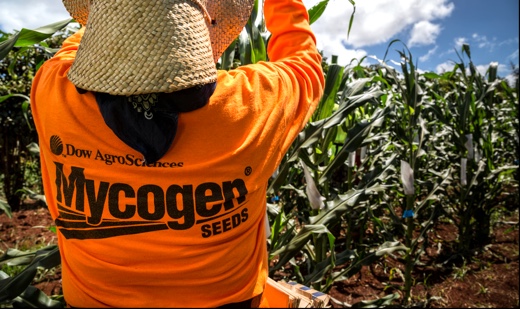
Image above: Dow AgroScience GMO worker on Maui. The future of agriculture? From (http://www.civilbeat.com/2014/11/monsanto-agrigenetics-sue-to-invalidate-maui-county-gmo-farming-ban/).

Maui is at an important crossroad. Major decisions are being made that will affect every resident and shape our beloved island’s communities and environment. These decisions and their timely implementation will allow us to control anticipated events and may prepare us to react effectively to events beyond our control.

Changes and Challenges:
A) Our agricultural future may face the biggest changes. Numerous forces raise a cloud over HC&S’s sugar operations, including increased concern over the health effects of cane smoke; legal challenges to restore water flow to East Maui streams; reduced electricity sales to Maui Electric; and decreased revenues due to low world sugar prices. Economics may be the decider, and that includes A&B’s desire to “bank” its valuable lands and retain water rights.

In addition, the courts will decide whether Monsanto can continue to grow and experiment with GMO crops on Maui due to health concerns that led to an initiative against GMO agricultural practices by Maui County residents.

Concurrently, there is a movement to make Maui agriculturally self-sufficient and organically healthier. Will Maui’s corporate agriculture be replaced by a more diversified, sustainable agriculture?

B) Our Maui County government has operated with a “Strong-Mayor” format for many decades and may be in serious need of a different structure. Most local governments of Maui’s size utilize a “Council + County Manager” structure where a professional County Manager and department heads are selected based on experience and qualifications, rather than on political connections, “name recognition,” or as a reward for loyal followers. In 2016 residents may vote for a Charter change.

C) Due to the uncontrolled growth of luxury homes that drive up home costs and rental fees, local families are becoming frustrated that their children are being forced to leave Maui. Our County government will need to regulate McMansions and provide for additional work-force housing in livable neighborhoods with proper infrastructure.

D) Our hospital’s management will change from public (State control) to a private operation. To balance its budget will Kaiser cut back on services? Dismiss employees? Raise rates?

E) Our Time-Warner cable system, plus much of our internet and telephone service may be taken over by Charter Communications which doesn’t have the highest reputation. Will the Hawaii DCCA actively protect consumers with tough, pro-active negotiation of contracts and subsequent strict enforcement of conditions? How will Maui’s local Akaku station fare?

F) Maui’s electricity future will change if Hawaii’s Public Utility Commission allows Florida-based NextEra to take over the Hawaiian Electric Company monopoly, including its MECO subsidiary. However, Maui County is now investigating alternative energy management opportunities: a Maui-based public utility, or a consumer-owned cooperative like Kauai’s.

G) Electricity production and distribution may adjust to reflect a need to reduce electricity costs, control climate change, and become less dependent on imported fuels. Solar, wind, and geothermal could play a larger role, especially if we decide to be less reliant on a large centralized power plant and more comfortable with distributed production and local battery capability.

H) Will high tourism employment continue if the County persists in allowing hotels to transform into timeshares with a reduced need for hotel and restaurant employees? With many unemployed workers, wages may be reduced for the remaining workers resulting in housing and rental costs becoming even less affordable.

I) Beyond our local control, but nevertheless significant, are several natural environment trends: modified weather patterns that may mean reduced and more variable rainfall, making agriculture less secure; decreased comforting trade winds; and rising sea levels, forcing Maui to restrict public and private shoreline construction.

J) The County administration’s proposal to push for direct international flights from some Asian cities could open Maui to serious pests for which we are unprepared. The administration wants to allow tourists to have passports checked at the departure airport, but is making no provision for needed inspections of potential invasive species, especially from tropical cities.

The many decisions we face mean that Maui’s future will probably be significantly different from today. Our leaders will need to make politically difficult choices that can reduce negative consequences and enhance benefits. Will they (and we) be up to it? The answers will determine Maui’s future.


.

Maui TPP talks fail

SUBHEAD: Only the negotiators and  official U.S. trade advisers representing corporate interests wanted this deal.

By Sarah Lazare on 1August 2015 for Common Dreams -
(http://www.commondreams.org/news/2015/08/01/do-or-die-talks-end-failure-could-tpp-be-derailed-good)


Image above: Detail of photo negotiators on TPP deal pose at resort pool on Maui at break in failed talks. From original article.

Global justice campaigners say disintegration of Maui negotiations 'good news for people and the planet'.

This week's closed-door Trans-Pacific Partnership (TPP) negotiations in Maui, which President Barack Obama hoped would be the last round, ended Friday in failure to reach a final agreement, thereby pushing a U.S. ratification fight into the tumultuous 2016 presidential election cycle at the earliest—and raising hopes that the corporate-friendly accord could be derailed for good.

Global justice campaigners, who will now have more time to organize against the pact, were buoyed by the development, with Sujata Dey of Council of Canadians declaring on Saturday: "This stall in talks could mean the death of the deal, and a win for the public interest all over the world."

The TPP ministers claimed in a joint statement released Friday that they have "made significant progress and will continue work on resolving a limited number of remaining issues."

But analysts say that the ministers' failure to close a deal strikes a significant blow against Obama's agenda. Under the timeline set in the controversial Fast Track legislation passed in the U.S. last month, a minimum of roughly four-and-a-half months is required between the conclusion of negotiations and a yes-or-no vote in Congress, according to the calculations (pdf) of watchdog group Public Citizen.

"It’s good news for people and the planet that no deal was done at this final do-or-die meeting given the TPP’s threats to jobs, wages, safe food, affordable medicines and more," said  Lori Wallach, director of Public Citizen's Global Trade Watch, in a press statement.
"Only the beleaguered negotiators and most of the 600 official U.S. trade advisers representing corporate interests wanted this deal, which recent polling shows is unpopular in most of the countries involved."
Friends of the Earth said on Saturday that U.S. negotiators "are trying to divert attention from this failure by claiming that an agreement concluded in Maui on the TPP environment chapter is a major success. This is incorrect."

"Environmental chapters in recent U.S. free trade agreements with Peru, Colombia, Korea, and Panama are narrow in scope dealing mainly with conservation issues," the environmental organization continued. "Not a single one of these agreements has resulted in a U.S. suit to enforce obligations to curb trade in illegally-harvested timber or illegal trade in endangered species.

Now, it appears that the TPP environment chapter may be even weaker than its predecessors, and that many of its provisions will be merely aspirational and not legally binding."

Under negotiation since at least 2008, the TPP includes the U.S. and 11 Pacific Rim countries: Australia, Brunei, Canada, Chile, Japan, Malaysia, Mexico, New Zealand, Peru, Singapore and Vietnam. These nations together represent 40 percent of the world's GDP, making it poised to be the largest such deal in history.

The accord has been negotiated in near-complete secrecy, and the vast majority of what is known about its contents has been revealed through leaks. Global social movements and civil societies have raised alarm about provisions that they say dramatically expand corporate power at the expense of people and the planet.

—Lori Wallach, Public Citizen
One such measure was revealed this week when WikiLeaks published a secret letter from a TPP ministerial meeting in December 2013, which shows that the United States is pressing for the privatization of "state-owned enterprises" (SOEs).

"Even an SOE that exists to fulfill a public function neglected by the market or which is a natural monopoly would nevertheless be forced to act 'on the basis of commercial considerations' and would be prohibited from discriminating in favor of local businesses in purchases and sales," explained WikiLeaks on Wednesday. "Developing countries such as Vietnam, which employs a large number of SOEs as part of its economic infrastructure, would be affected most. SOEs continue to fulfill vital public functions in even the most privatized countries, such as Canada and Australia."

The TPP is known to include numerous other controversial provisions, including secret corporate tribunals that allow multinationals to sue governments for loss of "expected future profits" and measures that would hike drug costs while decreasing access.

Hundreds gathered this week in Maui, where the negotiations were taking place, to protest the TPP's "corporate assault on people and planet."

"Behind me stands my ancestors and my ‘ohana (family)," declared protester Lorilani Keohokalole-Torio on Wednesday. "We are not aligned with people coming in and restructuring how we live. It hurts my na‘au, my gut. We are fed up, we are educated, we are empowered, and we are aligned to help this place, mother earth, regain the strength that she wants back."

.

Jackson County GMO ban upheld

SUBHEAD: A federal judge has upheld the Jackson Counnty, Oregon, GMO crop ban legislation.

By Info on 6 June 2015 for Shaka Movement -
(http://islandbreath.blogspot.com/2015/06/jackson-county-gmo-ban-upheld.html)


Image above: Supporters of the Jackson County measure to ban GMO crops react 5/20/2014 after returns show it passing by a wide margin. From (http://www.oregonlive.com/politics/index.ssf/2014/05/jackson_county_gmo_crops_ban_w.html).

Great News for SHAKA and the Maui GMO Crop Moratorium: A Federal Judge upholds the Jackson Counnty, Oregon, GMO Crop Ban. This can help Maui by setting a precident in Federal Court. Our next court date is Monday, June 15.

A federal judge just ruled in favor of Jackson County's ban on genetically engineered crops! This is a major win for farmers and families who want to keep Monsanto OUT of our food supply.

Just last year, farmers and local activists in Jackson County voted overwhelmingly to ban GMOs after organic farmers found their crops were being contaminated by Roundup-resistant seeds made by Syngenta, the agrochemical giant.

But even though Jackson County voters passed the GMO ban by a 2:1 margin, Monsanto and their Big Chem allies still refused to accept defeat. They took their fight to the courts in a desperate last-ditch attempt to overturn the will of the people -- and now they've been stopped in their tracks.

This victory proves that when grassroots activists join together, we can take on the biggest corporations – and win.


GMO ban litigation shifts gears

By Mateusz Perkowski on 2 June 2015 for Capital Press -
(http://www.capitalpress.com/apps/pbcs.dll/section?category=staff&template=staffProfilePages&staffID=mperkowski)

A federal judge has also found that lawmakers intended to permit the GMO ban when they excluded Jackson County from a 2013 bill that pre-empted other local governments from regulating biotech crops.


Litigation over the genetically engineered crop ban in Oregon’s Jackson County is now expected to focus on whether the government took farmers’ property without just compensation.

A federal judge on May 29 rejected the argument by two alfalfa farms that Oregon’s “right to farm” law rendered the prohibition invalid.

U.S. Magistrate Judge Mark Clarke said the “right to farm” statue prohibits ordinances and lawsuits that treat a common farming practice as a trespass or nuisance, but it does not protect activities that harm commercial agriculture.

Oregon’s legislature passed the law to shield farmers from urban encroachment and complaints about smells, noises and other irritations, he said.

“While farming practices may not be limited by a suburbanite’s sensitivities, they may be limited if they cause damage to another farm’s crops,” Clarke said.

Growers are able to file lawsuits over such grievances under the “right to farm” statute, and Jackson County’s ordinance simply “serves to prevent such damage before it happens” — even if it hasn’t yet occurred, he said.

While Clarke has dismissed the farmers’ arguments regarding “right to farm,” their claim seeking $4.2 million in compensation from Jackson County remains alive in the case.

The growers, Schulz Family Farms and James and Marilyn Frink, argue that forcing them to remove about 300 acres of herbicide-resistant “Roundup Ready” alfalfa amounts to the county condemning their property for public use, which requires just compensation.

“Their right to make a living, support their families and contribute to the local economy will be seriously damaged by the ban — costing them millions of dollars,” said Shannon Armstrong, attorney for the farmers, in an email.

The lawsuit argues that Jackson County’s ordinance is a form of “inverse condemnation,” in which the government takes private property without using its power of eminent domain.

It would be easier for the farmers to prevail if they convince the judge that the ban on genetically modified organisms is a “physical taking” of their property, said Paul Sundermier, an Oregon attorney specializing in takings and condemnation cases.

They can also claim that the GMO ban is a “regulatory taking,” but this is a tougher legal route because the plaintiffs would have show the ordinance eliminated all the economically viable use of their property, Sundermier said.

“Regulatory takings are very difficult to prove,” he said.

The question would then be whether removing the alfalfa completely wipes out its value, since the farmers may still be able to sell the hay even if they ultimately kill the perennial plant.

Even as the case shifts to government takings, it’s possible that the “right to farm” argument may be resurrected on appeal.

The plaintiffs could wait until the entire case is finished before challenging Clarke’s findings or obtain a partial judgment that they could appeal earlier, among other options.

Capital Press was unable to reach Jackson County for comment. The ordinance was set to take effect on June 5 but the county previously agreed not to enforce the prohibition until there’s a judgment in the case.

The Center for Food Safety, a nonprofit critical of biotech crops, considers the ruling a “big win” but expects the plaintiffs will challenge it before the 9th U.S. Circuit Court of Appeals, said George Kimbrell, senior attorney for the group.

The judge has recognized that genetically engineered crops pose a significant commercial threat to non-biotech growers, which was a key issue in the litigation, Kimbrell said. “This case is a resounding affirmation of the right of farmers to protect themselves from GE contamination.”

Most Oregon counties are pre-empted from regulating GMOs under Senate Bill 863, passed by lawmakers in 2013. The legislature excluded Jackson County from the legislation because its GMO prohibition initiative was already on the ballot when SB 863 was enacted.

Roughly two-thirds of Jackson County voters approved the measure in a 2014 election. The county includes the cities of Ashland and Medford.

The alfalfa farmers argued that SB 863 did not affect the “right to farm” law, which they interpreted as protecting their genetically engineered alfalfa crops from being destroyed regardless of the GMO ban.

The judge disagreed, pointing to testimony from lawmakers representing the county who claimed the ordinance was necessary to avoid unwanted cross-pollination between biotech crops and those that are conventional or organic.

Former Gov. John Kitzhaber also stated that Jackson County was specifically exempt from Senate Bill 863, the state pre-emption law, when he pushed lawmakers to approve it, said Clarke.

.

Justice Delayed is Justice Denied!

SUBHEAD: the people of Maui County voted that GMOs cause significant irreparable harm to their environment.

By Michael C. Carroll on 30 March 2015 for Shaka Movement -
(http://islandbreath.blogspot.com/2015/03/justice-delayed-is-justice-denied.html)


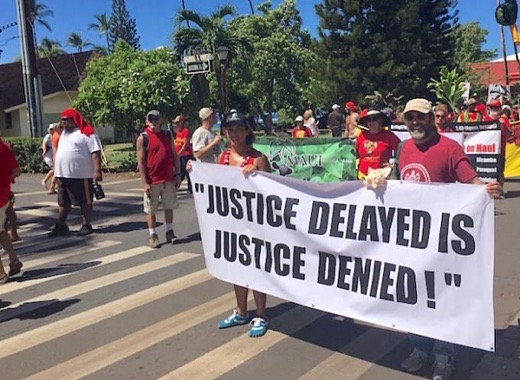
Image above: Photo of Maui GMO Ban supporter. Check the following link rto Common Dreams article on Monsanto resistance to Maui GMO vote. From (http://www.commondreams.org/news/2014/11/14/monsanto-dow-chemical-file-lawsuit-destroy-maui-countys-gmo-ban).

The Five Citizen's of Maui County, Dr.Lorrin Pang, Mark Sheehan, Lei’ohu Ryder, Bonnie Marsh, Alika Atay, and the SHAKA Movement are gathering to demand that the vote be upheld in spite of the efforts of both the County and Federal Court to negate our vote, thus allowing for harm to continue. They are calling out for the Public Trust Doctrine to be recognized as valid. The demonstration is scheduled for Tuesday March 31, 2015 at 11:30 a.m. in front of the Maui County Building.

The Court had originally scheduled the hearing on all dispositive motions for March 10, 2015. The hearing was continued, and on March 19, 2015, the Federal District Court entered an order extending the preliminary injunction until at least June 2015 without opposition from the County of Maui.

The preliminary injunction allows the Industry to continue the activities that Maui voters had voted to stop given the harmful impacts.

In court filings submitted in opposition to this ruling, SHAKA stated:
“A voting majority of Maui County decided that GMO operations are causing significant irreparable harm to the natural environment, human health, and cultural heritage when the County of Maui adopted this Ordinance. In essence, the Court has before it the testimony of Maui voters that would need to be discredited if this Court were to continue the injunction.”
The Federal District Court also had originally scheduled for March 31, 2015 a hearing on SHAKA’s request to have the case decided in Maui State Court and the County of Maui’s request to dismiss SHAKA’s separate lawsuit to enforce the ordinance. On March 29, 2015, the Court notified the parties that it was electing to decide the motions without a hearing.

SHAKA was disheartened by the news that the hearing will not proceed forward but plan on being heard at the Maui County Building on March 31, 2015 at 11:30 a.m., the day originally scheduled for the hearing. We will be heard. We are not going away.

CONTACT:
Michael C. Carroll (legal counsel for SHAKA)
Bays Lung Rose Holma
808-523-9000
mcarroll@legalhawaii.com

See also:
Ea O Ka Aina: Update on Maui GMO Ban 3/15/15

.

Update Maui GMO ban repeal

SUBHEAD: County has a duty to honor the will of voters, and to protect the health and safety of its citizens.

By Staff on 15 March 2015 for the Shaka Movement -
(http://islandbreath.blogspot.com/2015/03/update-maui-gmo-ban-repeal.html)


Image above: On September 10th, 2014, Monsanto crew members Gerard Manuel, left, and Rommel Angale, right, count corn sprouts in a field of test hybrids in a breeding nursery near Kihei, Hawaii. (Matthew Thayer/AP/The Maui News) From (http://www.oregonlive.com/today/index.ssf/2014/11/maui_voters_pass_gmo_ban_but_j.html).

On Monday night, March 9th, just hours before the court hearing that had been scheduled on December 16, Judge Mollway issued a continuance (postponement) until March 31. The judge’€™s reasons for doing this were because it somehow came to her attention that there were two bills before the State legislature seeking “€œto prohibit county ordinances abridging the rights of farmers and ranchers to use agricultural practices not prohibited by federal law.”€ The judge rhetorically asked, “€œIs there any dispute that the enactment of either of these bills would nullify the ordinance at issue in this case?”€

With the help of our allies at the Center for Food Safety, we were able to come to court the next morning with a letter from Senator Russel Ruderman (chair of the State Senate Committee on Agriculture) explaining to the judge that the two bills she sited were “effectively “€˜dead”€™ for this legislative session.”€ A copy of the letter is available here.

As the hearing progressed, Judge Mollway requested two additional briefs from our counsel, which we consider to be of significant importance. The first is our response to the County of Maui’s motion (joining with the industry) asking the Judge to dismiss SHAKA’€™s complaint and case against the industry (for the harms they are inflicting upon the public health and the public trust resources of Hawaii) as well as the county officials (for their failure to certify and implement the citizen’€™s initiative approved in last November’€™s election). A copy of our brief in response is available here.

Secondly, the judge asked for a 2500 word memo, just from our lawyers, on the harm of keeping in place the injunction the industry and the County conspired to ask the federal court to order on November 13, 2014 (9 days after the election); An order, by federal authority, enjoining the County from “€œpublishing or certifying, enforcing, or otherwise acting upon the ordinance.”€

The federal court, basing it’€™s judgement upon the “€œstipulated agreement”€ between the County and the industry, ordered that this prohibition would remain in place “€œuntil March 31, 2015, or until further order of this court.”

The memorandum that Judge Mollway requested will be the first opportunity that we will have to bring to the court the issue of “€œharms”€, which are the very foundation of the ordinance we together passed, and the attack on the wellbeing of the people of Hawaii, (our soils, our waters, and our future) represented by the bioengineering activities of Monsanto and Dow Chemical and their associates in the biotechnology chemical industries. This brief is due by Friday, March 13, and will be available on this website at that time.

The memorandum in opposition to Maui County’€™s motion to dismiss SHAKA’€™s case includes the following:

“€œThe rush with which the County and the Industry have sought to invalidate the Ordinance in the Federal Court action does not support granting this Motion. All the agreements to dispose of this case in an expedited fashion were made between the Industry and the County before SHAKA was allowed to intervene and state an objection.

The Industry and the County never contacted SHAKA regarding its position on the expedited briefing schedule and the injunction, despite being aware of this pending State Court action and SHAKA’€™s interest in the Federal Court action. Simply because the Industry and the County are seeking to terminate this case in four months does not justify dismissing the State Court action and giving greater weight to the Federal Court action."

“The County’€™s actions and statements since the Ordinance was first introduced under the voter initiative power make plain that the County does not “€”and will not” €”support the Ordinance. Although the County attempts to argue that it “€œhad no opportunity to enforce the ordinance because it has been subject to the restraining order issued in the Robert Ito Farms case[,]”€ this is an overstatement. The County itself agreed to a stipulation with the Industry subjecting the County to the restraining order. The County enjoined itself."

“Ultimately, it is the County’€™s job to enforce ordinances that are adopted by its electorate. This is regardless of whether County officials oppose the law or whether the officials consider the law “controversial.”€

Once the Maui electorate approved the Ordinance into law, the County was obligated to certify the election results approving the Ordinance and properly implement the law. The County refused to implement the Ordinance, so SHAKA sought declaratory and injunctive relief in this action in order to have the Ordinance enforced."

“Not only did the County have a duty to honor the will of its voters, but it also has a continuing duty to protect the health and safety of its citizens and the natural resources. Under the Public Trust Doctrine, the County has a significant duty to preserve and protect environmental resources for current and future generations.

As a result of the County’€™s inaction and failure to protect these interests, the necessary protections to Maui’s environment, public health, and natural resources demanded by Maui voters have been compromised."

 See December 2014 memorandum here (http://www.mauigmomoratoriumnews.org/wp-content/uploads/2014/12/Filed_Memo_in_Opposition_to_County.pdf)

In response to Judge Mollway’s request at the March 10th hearing, SHAKA’€™s lawyers today filed a brief explaining the “€œbalance of harms”€ alleged by the industry compared with the harms being inflicted upon our environment and island communities. The issue is central to the injunction that expires on March 31st that till now has prevented the certification of the November election result and the Moratorium we voted for. The document is available here.

In the most relevant section the memorandum states – “€œAt stake is ongoing damage to the environment, potentially serious health problems associated with continuing practices, threats to Native Hawaiian culture and practices, and the integrity of our own election process. These interests are significantly concrete and cannot be remedied by money damages.

 They are significantly greater than the corporate profits that the Industry relies on to justify the injunction. These harms are, for all intents and purposes, irreparable and imminent”€

A more extensive discussion and elaboration on each of these points (referencing testimony submitted to the court in form of declarations by Maui residents and expert witnesses) is contained within the memorandum.

See March 2015 memorandum here (http://www.mauigmomoratoriumnews.org/wp-content/uploads/2015/03/BriefOnTheBalanceofHarms.pdf)

SHAKA Movement
See http://www.mauigmomoratoriumnews.org/
PO Box 970538
Paia HI 96779

.

Hawaii Home Rule Tour

SUBHEAD: Tour with special with Vandana Shiva, Andrew Kimbrell, musical artist Makana and more.

By Christiane Douglas on 21 January 2015 for ShakaMovement -
(http://www.shakamovement.org/)


Image above: From promotional material provided.

Hawaii Center For Food Safety presents Vandana Shiva Home Rule Tour with special guests Andrew Kimbrell, musical artist Makana and more.

We will join community leaders from across Hawaii on Oahu and Maui to share stories from the frontlines of a global movement to empower community food systems. From Hawaii to India, these stories capture the importance of home rule in the future of food. Together, we rise. Please join us.

January 25th, 2015 - Maui
What: Dr. Vandana Shiva Talk Story Session
Location: Seabury Hall
Time: 3:00 pm
Cost: $15
Get Tickets Here: https://mauihomeruletour.eventbrite.com/
Facebook Event: https://www.facebook.com/events/1015082218509388/

More than anywhere else, counties in Hawaii should have the right and authority to determine the future of their food system. This is home rule. Hawaii is home to untold biodiversity and some of the most beautiful landscapes on Earth. However, it is also ground zero for the outdoor experimentation of pesticide-promoting plant technologies, genetically engineered to withstand heavy spraying of toxic chemicals.

On Oahu, Kauai, Maui, and Molokai, chemical and biotechnology companies like Monsanto, Syngenta, Dupont, Dow Chemical, Bayer, and BASF have purchased prime agricultural land, taking advantage of Hawaii’s isolation and year-round growing season, in order to field test crops that have been genetically engineered (GE) to withstand greater applications of pesticides.

Despite public health concerns and contamination of natural resources, the State of Hawaii has taken no action to regulate the activities of biotechnology companies performing open-air testing on genetically engineered seed and synthetic pesticides.

As a result, Kauai, Maui and Hawaii Counties asserted their county’s authority to create policies that address these issues and protect the safety and health of its residents and land. Otherwise known as “Home Rule,” Hawaii has shown the world just how important this kind of political power is in the movement to create more safe and sovereign food systems.


Video above: This January, Dr. Vandana Shiva, internationally acclaimed food sovereignty activist, author, and philosopher, will join community leaders from across Hawaii on Oahu and Maui to share stories from the frontlines of the global movement. From (http://youtu.be/fgF-NajbCH4).

SOCIAL MEDIA PACKAGE - Copy and post in seconds!

It's easy! All event details and ticket info can be found here:
tinyurl.com/VandanaHomeRuleTour

We want our social media to motivate people to take action! Below are some "action asks" you can tweet, post to Facebook or even e-mail to your friends!

Showcase your #homerule pride and show up for the #VandanaHITour! Visit tinyurl.com/MauiEvent

Hawaii's food system is changing like never before. And we are winning.

Get the full story here: tinyurl.com/HIHomerule

Make a Donation: tinyurl.com/kokuaHI  #VandanaHITour tinyurl.com/kokuaHI


.