Showing posts with label Water Pollution. Show all posts

Truth about Hawaiian bottled water

SOURCE: Ken Taylor (littlewheel808@gmail.com)
SUBHEAD: The industry exacerbates the global water crisis, and it’s not good for the islands either.

By Risa Kuroda on 27 July 2017 for Civic Beat -
(http://www.civilbeat.org/2017/07/the-truth-about-hawaiian-bottled-water/)


Image above: Kauai Natural Artesian Water promotional photo showing a waterfall background. That's not where this water comes from. From (http://www.foodsofhawaii.com/author/kauai-natural-artesian-water/).

Quickly trying to gather your things and your peace of mind, you relax your shoulders slightly: you’ve made it through the security checkpoint at Honolulu International Airport.

Since TSA made you empty your Hydro Flask, you decide to look for a drink. The only water fountain in the terminal trickles water so intermittently that it would take ages to fill your bottle.

You considered just getting a sip to quench your thirst but perceived the risk of catching a minor disease or being shot in the face with a random jet stream as you unwillingly pursed your lips as close to the fountainhead as possible. With a defeated sigh you drag yourself to a store to find no shortage of cold, refreshing, pristine, and over-priced Hawaiian bottled water.

Chances are, you recognized maybe one of the three Hawaiian bottled water brands in that airport store. Hawaii bottles an abundance of magical life giving elixirs but for the most part the water in the bottles of Hawaiian Springs, Waiakea or Hawaii Volcanic, to name a few, is not the water that most Hawaii residents drink.

As the state’s second-highest revenue-generating export, Hawaii’s water travels thousands of miles to bring in in hundreds of thousands of dollars to the local economy.

Sounds like a good trade off right? Unfortunately the implications of bottled water on our islands may not be as pristine as we hope it to be.

In fact, our bottled water industries gravely contribute to the exacerbation of the global water crisis, which has profoundly negative impacts on our environment and local communities.

The global water crisis is no hoax. Earth is covered in water but only 2.5 percent of it is fresh water.

Of that portion, 70 percent of it is locked in ice and nearly 30 percent is deep underground in aquifers. Just 0.3 percent of all fresh water is surface water, or what is considered “renewable water” within humanity’s conceivable lifespan.

Though agriculture is the main culprit of consumptive, meaning non-renewable, water extraction bottlers like Hawaiian Springs and Hawaii Volcanic’s unscrupulous use of artesian aquifer wells contribute to what political and environmental pundits foresee as eventual cause for future wars.


Image above: A Surfrider poster about the danger to sea birds of floating plastic junk like water bottle caps. From (https://www.b4plastics.com/nl/news/survival-of-the-fittest-plastics-een-evolutie-die-we-uitlokken-of-ondergaan).


Bottled water, and its role in the global water crisis, is also about the bottles, the transportation, the marketing, the profits and the collateral damages that occur both to the environment and to human communities during and after the production of this fetishized commodity.

Though some companies are turning to glass bottling most, including the main bottling companies in Hawaii, still use polyethylene terephthalate plastic. Every PET bottle made requires double the amount of water actually in the bottle to manufacture. Since the average American consumes 36.4 gallons of bottled water per year, we are actually consuming around 72.8 gallons of bottled water.

In the same one-year span, more than 17 million barrels of crude oil is needed to produce the bottles — an amount of oil enough to sustain 1 million vehicles on the road or power approximately 190,000 American homes for one year. In a study done on FIJI Water, the manufacture and transport of one bottle was worth 7.1 gallons of water, 1 liter of fossil fuels and 1.2 pounds of greenhouse gases.

At what enormous cost does Hawaiian water make its way not to the communities where it came from but to the lobbies of five-star hotels in Hawaii and around the world? It is estimated that solving the water crisis would cost $10 billion.

The price that bottling companies pocket in revenue is $13 billion. We cannot think for one second that Hawaii has nothing to do with perpetuating a crisis.

Plastic bottles also do not biodegrade. The bottled water industry generates as much as 1.5 million pounds of bottles per year and only 13 percent of plastic bottles are actually recycled after being discarded. The rest go to landfills, where they can leach toxic chemicals into the land.

Or better yet, they end up in the ocean: Marine plastic pollution has impacted at least 267 species worldwide, including 86 percent of all sea turtle species, 44 percent of all seabird species and 43 percent of all marine mammal species.

Since Hawaii depends on the environment, including the vitality of our marine life, it is incredibly important for us to not turn our islands into a giant, lifeless trash heap. After all, would tourists or even the film industry pay to experience Hawaii’s dead monk seals and turtles?

In addition, though bottling companies can contribute jobs to a neighborhood, when the profit-driven interests of a corporation conflict with the interests of a local community or ecosystem, it is rarely the latter that benefit.
]
Most often, local communities and watersheds are left to deal with negative externalities when bottling companies decide to turn a blind eye.

For example, our state is currently in a period of drought and has just recently bounced back from a period of severe to extreme drought just last year. Given intensifying global warming, it is not prudent to be unscrupulously drawing upon water sources for jobs and capital accumulation. In the end, the communities will be the ones literally left in the dried up dust while bottling corporations’ wallets are lush with green Benjamins.

Bottled water is no environmentally friendly product. It is a prime example of greenwashing, which is an attempt to do ethically or environmentally what should not be done at all.

Under General Comment 15 of the United Nations Committee on Economic, Social and Cultural Rights, governments have a responsibility to ensure that its citizens not only have access to but also actually have clean and affordable tap water in accordance with their right to life.

The residents of Hawaii, like those of San Francisco and Concord, Massachusetts, need to take back the tap and push Hawaii lawmakers to wake up to the dirty truth that is Hawaii’s bottled water industry.


Decision against Kauai Springs
SUBHEAD: The industry exacerbates the global water crisis, and it’s not good for the islands either.


By For Chris Deangelo on 6 October 2014 for the Garden Islands -
(http://thegardenisland.com/news/local/crime-and-courts/a-landmark-decision/article_7feed654-4d29-11e4-afca-c7950a559d55.html)


Image above: Label for  a five gallon bottle of Kauai Springs water. The water comes from a diversion of spring water to Grove Farms. From (https://i2.wp.com/kauaisprings.com/images/Kauai-Springs-Label-1.jpg).

In February, the state Supreme Court — in what has been called a landmark decision for Hawaii’s Public Trust Doctrine — sided with the County of Kauai by striking down a 2008 circuit court ruling that the Kauai Planning Commission “exceeded its jurisdiction” in denying Kauai Springs, Inc. permits for its operation.

Seven months later, and contrary to that ruling, the Koloa-based water bottling and distribution company’s doors remain open.

“They continue to operate,” said Attorney David Minkin, who was hired as special counsel to represent the county in the Kauai Springs case. “Working with the Planning Department, we have sent them a notice of violation telling them that, if they don’t shut down, we will start fining them and turn it over both at the Planning Commission level as well as the prosecutor’s office to go after them for violating the law.”

The notice was sent to Kauai Springs on Tuesday, following a site investigation of the property by the Planning Department a week before. It orders the company to cease and desist all water bottling and distribution activities. Failure to comply could result in fines of up to $10,000 per day, as well as criminal prosecution, the letter states.

Kauai Springs has been given until Oct. 14 to respond.

On Wednesday, at the request of Councilman Tim Bynum, Minkin briefed the Kauai County Council’s Planning Committee on the Supreme Court ruling in the case and its application and relevance to the law.

Hawaii’s Public Trust Doctrine states that, “For the benefit of present and future generations, the state and its political subdivisions shall conserve and protect Hawaii’s natural beauty and all natural resources, including land, water, air, minerals and energy sources, and shall promote the development and utilization of these resources in a manner consistent with their conservation and in furtherance of the self-sufficiency of the state … All public natural resources are held in trust by the state for the benefit of the people.”

Minkin said the Supreme Court judge ruled the Planning Commission made the right call in denying the permits.

So what does the ruling mean moving forward?

“It means that, especially when water’s at issue, that every agency that has some duty or responsibility has to take a look at it from the constitutional perspective of the Public Trust Doctrine,” Minkin said. “You just can’t punt it and say, ‘Not my kuleana.’ You have to look at it. You have to evaluate it. You have to get information. And if you’re left with a question in the back of your mind that you don’t have enough information, it’s not the department, in this case the Planning Commission, it’s not their duty to go out and track down and get information.”

Instead, the applicant — in this case, Kauai Springs — must present the appropriate information.

“It basically shifts the burden,” Minkin said of the ruling.

Councilman Mel Rapozo questioned what good the Supreme Court decision is if the county doesn’t act on it. He said it’s time to put teeth behind it and stop Kauai Springs from utilizing the island’s natural resources illegally.

“I think the public needs to know. Are we going to fine them? Are going to just send them letters? I mean, if it’s this landmark decision, we should be prosecuting,” Rapozo said.

Kauai Springs has a long-term agreement with the Knudsen Trust to obtain water from a spring at the base of Mount Kahili. The pipeline, which brings the water to company’s Koloa bottling facility, is owned by Grove Farm.

Deputy County Attorney Mauna Kea Trask said the ruling was a substantial document, 107 pages to be exact, and “took a while to digest.”

“We are moving down that avenue,” he said of enforcement, adding that his hope is to reach a resolution without having to expend additional funds or go back to court.

Minkin said recent efforts to work things out with Kauai Springs’ legal counsel proved unsuccessful.

“We’ve resolved it as much as I can, now the next step has to be taken,” he said to Rapozo. “And I’ve made the recommendation, I agree with you — my background is also law enforcement — and I think, yes, this needs to be shut down.”

Kauai Springs owner Jim Satterfield did not return phone calls or emails seeking comment.

For several years, the case went back and forth, with both sides filing appeals. In 2007, the Planning Commission denied Kauai Springs’ three permit.

Kauai Springs turned around and sued the commission over the denial of the permits.

In 2008, 5th Circuit Judge Kathleen Watanabe sided with Kauai Springs and ordered the county to issue the permits.

“We felt, and the county felt, that was inappropriate … and we appealed it and we got the initial decision by the intermediate court,” which vacated the circuit court’s final judgement, Minkin said. “Applicant wasn’t happy with that and then it went up to the state Supreme Court, and the state Supreme Court went even further than the intermediate court did, to basically specify what our duties are as the county.”

The county has spent about $111,000, under the budget of $115,000, on the case, including the appeal, according to Minkin.

Bynum said he is proud of the Planning Commission and county for taking the Public Trust Doctrine seriously. While the court case was long, with many ups and downs, it was important for the community, he said. 

.
Side effect of Monsanto's Roundup

SUBHEAD: Algae worry about the notorious glyphosate pesticide discovered in Great Lakes.

By Lorraine Chow on 7 July 2017 for Alternet -
(http://www.alternet.org/environment/glyphosate-sprayed-gmo-crops-linked-lake-eries-toxic-algae-bloom)


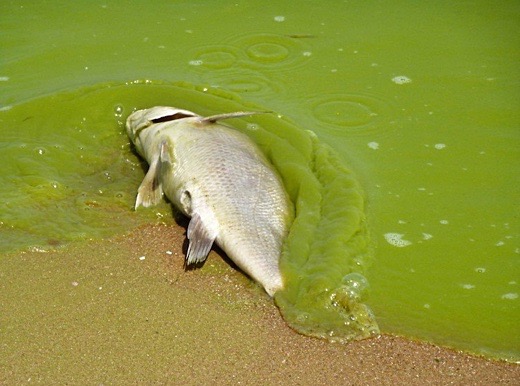
Image above: A dead fish surrounded by algae in Lake Erie during a record-setting algae bloom in 2011. Photo by Tom Archer. From original article.

Glyphosate, the controversial main ingredient in Monsanto's Roundup and other herbicides, is being connected to Lake Erie's troubling algae blooms, which has fouled drinking water and suffocated and killed marine life in recent years.

Phosphorus—attributed to farm runoff carried by the Maumee River—has long beenidentified as a leading culprit feeding the excessive blooms in the western Lake Erie basin. Now, according to a new study from chemistry professor Christopher Spiese, a significant correlation has been established between the increased use of glyphosate to the percentage of dissolved reactive phosphorus (DRP) in the runoff.

As No-Till Farmer observed from the study, DRP loads in Lake Erie increased in the mid-1990s at the same time that farmers began the widespread cultivation of crops genetically engineered to withstand multiple applications of Roundup.

"For every acre of Roundup Ready soybeans and corn that you plant, it works out to be about one-third of a pound of P [phosphorus] coming down the Maumee," Spiese told the agricultural publication.

Here's how the team came to the conclusion, as No-Till Farmer reported:

Through his own and others' research, Spiese found that depending on the types of metal in the soil, glyphosate does release P. For example, when glyphosate is applied to soil containing iron oxide-hydroxide, P is immediately released. But almost nothing is removed when it's an iron oxide material.

Finally, Spiese took soil samples all over the Maumee watershed, applied P to them and then sprayed glyphosate to see how much P was released vs. soil that wasn't sprayed with glyphosate after 24 hours. He saw desorption occurred all over the watershed, but certain areas were higher than others, specifically in the southeastern corner.

Based on the average two glyphosate applications growers make every year, Spiese estimates that overall, 20-25 percent of the DRP runoff is caused by glyphosate. But depending on the location within the watershed, that percentage could be much lower or much greater.

"Some of those sites, it's less than a percent. Other sites it's almost 100 percent," he says.

Previous studies have tied glyphosate to the phosphorous fueling Lake Erie's blue-green algae. In 2009, Ohio Sea Grant researchers, Drs. R. Michael McKay and George Bullerjahn of Bowling Green State University, found that glyphosate could only be detected in the lake at certain times of year—after crops are planted.

"Our research is finding that Roundup is getting into the watershed at peak farming application times, particularly in the spring," McKay said.

Approximately 1,000 metric tonnes (about 2.2 million pounds) of Roundup is applied in the Lake Erie watershed per year, and it is being detected in adjacent waterways particularly in the spring, the Ohio Environmental Protection Agency (EPA) noted from McKay and Bullerjahn's study.

The researchers also found that the blue-green algae (cyanobacteria) in the lake are capable of using phosophonates.

"It turns out that many cyanobacteria present in Lake Erie have the genes allowing the uptake of phosphonates, and these cyanobacteria can grow using glyphosate and other phosphonates as a sole source of phosphorus," Bullerjahn said.

• Lake Erie’s Toxic Algae Bloom Forecast for Summer 2016 http://ow.ly/2f31301dia5 @greenpeaceusa@HuffPostGreen

• EcoWatch (@EcoWatch) 3:55 PM - 13 Jun 2016

Harmful Lake Erie blooms have increased at record levels over the last decade,according to the U.S. EPA and are expected to become more common due to warmer temperatures and heavy rainfall that feed algae growth.

The toxic algae rob oxygen from the waters creating dead zones where fish and other marine life are unable to survive. The algae is also a threat to humans—swallowing it can cause health problems such as rashes, vomiting, numbness and difficulty breathing.

In February this year, the U.S. and Canada announced a goal to reduce the amount of phosphorus entering affected areas of Lake Erie by a total of 40 percent by 2025.

See also:
Ea O Ka Aina: Glyphosate harms gut enzyme 6/20/17
Ea O Ka Aina: Monsanto and EPA collusion 3/29/17
Ea O Ka Aina: Corporate monster Monsanto 3/20/17
Ea O Ka Aina: Monsanto colluded with EPA 3/14/17
Ea O Ka Aina: Monsanto and First Amendment 1/24/17
Ea O Ka Aina: EPA obedient to Monsanto 12/17/16
Ea O Ka Aina: 'Non-GMO' labels not strong enough 9/29/16
Ea O Ka Aina: Monsanto's Bizzaro World 8/13/16
Ea O Ka Aina: Our Right to Health 7/17/15
Ea O Ka Aina: Pope on a roll 7/3/15
Ea O Ka Aina: Gluten or Glyphosate Intolerance? 11/18/14
Ea O Ka Aina: Sri lanka bans RoundUp 3/17/14
Ea O Ka Aina: Roundup and human health 4/25/13
Ea O Ka Aina: Monsanto knew of birth defects 6/7/11
Ea O Ka Aina: Feds lay down for GMOs 2/15/11
Ea O Ka Aina: Monsanto Lies, Again and Again 10/17/09

.

DAPL battle not over

SUBHEAD: A federal judge ruled an environmental review of the project was inadequate, and ordered it redone.

By Nick Visser on 15 June 2017 for Huffington Post -
(http://www.huffingtonpost.com/entry/judge-dakota-access-pipeline_us_594233bbe4b003d5948d22e7)


Image above: A demonstrator holds a ‘Water Is Life’ sign in front of the White House during a protest against the Dakota Access Pipeline in Washington, D.C. From original article.

A federal judge on Wednesday said an environmental review of the controversial Dakota Access Pipeline was inadequate, handing a last-minute victory to Native American tribes and environmentalists who have long opposed the project.

In a 91-page decision, U.S. District Court Judge James Boasberg said the Army Corps of Engineers, which gave its final approval to the oil project in February, “did not adequately consider the impacts of an oil spill on fishing rights, hunting rights, or environmental justice, or the degree to which the pipeline’s effect are likely to be highly controversial.”

Boasberg ordered the agency to conduct new reviews of those sections of its environmental analysis, but did not halt the use of the pipeline, which began flowing oil on June 1.

The Standing Rock Sioux tribe, which filed the lawsuit, called Wednesday’s decision a “significant victory.”

“The previous administration painstakingly considered the impacts of this pipeline, and President Trump hastily dismissed these careful environmental considerations in favor of political and personal interests,” tribe chairman Dave Archambault said in a statement. “We applaud the courts for protecting our laws and regulations from undue political influence, and will ask the Court to shut down pipeline operations immediately.”

The $3.8 billion, 1,170-mile pipeline has been at the center of an environmental battle for more than a year after thousands of activist, many with Standing Rock, descended on a small region of North Dakota to protest. The monthslong standoff drew international media attention and led the Army Corps of Engineers to pull the plug on the project.

However, just weeks into his presidency, Donald Trump signed an executive order reopening both the Dakota Access and Keystone XL pipelines. Now in operation, at its peak, the Dakota Access pipeline could ship up to 570,000 barrels of oil a day.

The courts have previously rejected legal arguments to shut down the pipeline. Boasberg in February allowed the project to go ahead after siding with its owner, Energy Transfer Partners, over a lawsuit that alleged the pipeline threatened cultural and historic sites.

The judge said he would consider whether the pipeline should shut down while a new environmental review is being conducted at a later time, The Guardian reports.

“This decision marks an important turning point. Until now, the rights of the Standing Rock Sioux Tribe have been disregarded by the builders of the Dakota Access Pipeline and the Trump administration ― prompting a well-deserved global outcry,” Jan Hasselman, an attorney for the group Earthjustice, which represented the Standing Rock Sioux, said in a statement:

“The federal courts have stepped in where our political systems have failed to protect the rights of Native communities.”

See also:
Ea O Ka Aina: Defense contractors fought NoDAPL 5/27/17
Ea O Ka Aina: Tribes divest DAPL Bankers 2/13/17
Ea O Ka Aina: Veterans defending NoDAPL 2/11/17
Ea O Ka Aina: Army Corps okays DAPL Easement  2/8/17
Ea O Ka Aina: Trump orders go on DAPL EIS 2/3/17
Ea O Ka Aina: Water Protectors pipeline resistance 2/1/17 
Ea O Ka Aina: Force a full EIS on DAPL 1/27/17
Ea O Ka Aina: Missile launcher at Standing Rock 1/19/17
Ea O Ka Aina: Lockdown at Trans-Pecos Pipeline 1/10/17
Ea O Ka Aina: Standing Rock has changed us 12/9/16
Ea O Ka Aina: As Standing Rock celebrates... 12/5/16
Ea O Ka Aina: Army Corps denies easement 12/4/16
Ea O Ka Aina: My Whole Heart is With You 12/2/16
Ea O Ka Aina: The Loving Containment of Courage 12/1/16
Ea O Ka Aina: The Beginning is Near 12/1/16
Ea O Ka Aina: Feds to shutdown NoDAPL Camp 11/25/16
Ea O Ka Aina: NoDAPL people are going to die 11/23/16
Ea O Ka Aina: Hundreds of vets to join NoDAPL 11/22/16
Ea O Ka Aina: Obama must support Standing Rock 11/21/16
Ea O Ka Aina: Trump's pro oil stance vs NoDaPL 11/15/16
Ea O Ka Aina: Kauai NoDAPL Demonstration 11/12/16
Ea O Ka Aina: Obama to Betray Standing Rock 11/12/16
Ea O Ka Aina: Trump impact on Standing Rock 11/12/16
Ea O Ka Aina: Ann Wright on Standing Rock 11/8/16
Ea O Ka Aina: Turning Point at Standing Rock 11/6/16
Ea O Ka Aina: Jackson Browne vs DAPL owner 11/5/16
Democracy Now: Boycott of DAPL Owner's Music Festival
Ea O Ka Aina: World responds to NoDAPL protests 11/5/16
Ea O Ka Aina: NoDAPL victory that was missed 11/5/16
Ea O Ka Aina: DAPL hid discovery of Sioux artifacts 11/5/16
Ea O Ka Aina: Dakota Access Pipeline will leak 11/5/16
Ea O Ka Aina: Route of the Dakota Access Pipeline 11/4/16
Ea O Ka Aina: Sanders calls for stopping DAPL 11/4/16
Ea O Ka Aina: Obama hints at DAPL rerouting 11/3/16
Ea O Ka Aina: New military attack on NODAPL 11/3/16
Ea O Ka Aina: How to Support NoDAPL 11/3/16
Unicorn Riot: Tweets from NoDAPL 11/2/16
Ea O Ka Aina: Standing Rock & the Ballot Box 10/31/16
Ea O Ka Aina: NoDAPL reclaim new frontline 10/24/16
Ea O Ka Aina: How far will North Dakota go? 10/23/16
Ea O Ka Aina: Amy Goodman "riot" charge dropped 10/17/16
Ea O Ka Aina: Amy Goodwin to face "Riot Charge" 10/16/16
Ea O Ka Aina: Shutdown of all tar sand pipelines 10/11/16
Ea O Ka Aina: Why Standing Rock is test for Oabama 10/8/16
Ea O Ka Aina: Why we are Singing for Water 10/8/16
Ea O Ka Aina: Labor's Dakota Access Pipeline Crisis 10/3/16
Ea O Ka Aina: Standing Firm for Standing Rock 10/3/16
Ea O Ka Aina: Contact bankers behind DAPL 9/29/16
Ea O Ka Aina: NoDAPL demo at Enbridge Inc 9/29/16
Ea O Ka Aina: Militarized Police raid NoDAPL 9/28/16
Ea O Ka Aina: Stop funding of Dakota Access Pipeline 9/27/16
Ea O Ka Aina: UN experts to US, "Stop DAPL Now!" 9/27/16
Ea O Ka Aina: No DAPL solidarity grows 9/21/16
Ea O Ka Aina: This is how we should be living 9/16/16
Ea O Ka Aina: 'Natural Capital' replacing 'Nature' 9/14/16
Ea O Ka Aina: The Big Difference at Standing Rock 9/13/16
Ea O Ka Aina: Jill Stein joins Standing Rock Sioux 9/10/16
Ea O Ka Aina: Pipeline temporarily halted 9/6/16
Ea O Ka Aina: Native Americans attacked with dogs 9/5/16
Ea O Ka Aina: Mni Wiconi! Water is Life! 9/3/16
Ea O Ka Aina: Sioux can stop the Pipeline 8/28/16
Ea O Ka Aina: Officials cut water to Sioux 8/23/16


.

First DAPL Spill Reported

SUBHEAD: "Not if, but when the DAPL leaks". The dreaded 'Told You So' moment  has arrived. 

By Deirdre Fulton on 10 May 2017 for Common Dreams -
(https://www.commondreams.org/news/2017/05/10/told-you-so-everyone-was-dreading-first-dapl-spill-reported)


Image above: A spill of 84 gallons is small in the pipeline business, but any leak before the line is operational confirms worries indigenous felt and does not bode well for the future. From (http://www.telesurtv.net/english/news/North-Dakota-Officials-Tell-Pennsylvania-Go-Big-Go-Fast-Against-Pipeline-Protesters-20170506-0009.html).

Throughout the battle over the Dakota Access pipeline (DAPL), Indigenous campaigners and their allies repeatedly warned it was not a question of if, but when a breach would occur.

Now, before the pipeline is even fully operational, those warnings have come to fruition.
The Associated Press reports Wednesday:
The Dakota Access pipeline leaked 84 gallons of oil in South Dakota early last month, which an American Indian tribe says bolsters its argument that the pipeline jeopardizes its water supply and deserves further environmental review.
The April 4 spill was relatively small and was quickly cleaned up, and it didn't threaten any waterways. The state's Department of Environment and Natural Resources posted a report in its website's searchable database, but it didn't take any other steps to announce it to the public, despite an ongoing lawsuit by four Sioux tribes seeking to shut down the pipeline.
"At the pipeline's pump station there's what's called a surge tank, which is used to store crude oil occasionally during the regular operation of the pipeline," Brian Walsh, an environmental scientist with the state Department of Environment and Natural Resources Ground Water Quality Program, told Dakota Media Group. "And connected to that tank is a pump, which pumps oil back into the pipeline system, and the leak occurred at that surge pump."

The pipeline operated by Texas-based Energy Transfer Partners (ETP) is expected to be in service by June 1.

"As far as this happening during the start-up, I don't want to make it sound like a major event, but the fact that you had oil leaving the tank says there's something not right with their procedures," longtime pipeline infrastructure expert Richard B. Kuprewicz said to Dakota Media Group. "They might have been trying to hurry."

Joye Braun, of the Cheyenne River Sioux tribe (one of those still engaged in a legal battle to shut down the pipeline), cited Kuprewicz when explaining why the news was so concerning.

"This leak hits close to home, my home," Braun said. "We have always said it's not if, but when, pipelines leak, and to have someone like Richard B. Kuprewicz—a pipeline infrastructure expert and incident investigator with more than 40 years of energy industry experience—question the integrity and building practices of Dakota Access says something pretty serious could go wrong."

"That worries me," she continued. "South Dakota already faces water shortages and our livelihoods depend on water, from ranching and farming to healthcare. Do we have more spills just waiting to happen? This is our home, our land, and our water. This just proves their hastiness is fueled by greed not in the best interest for tribes or the Dakotas."

News from elsewhere in the country this week hardly helps ETP's case.

Following two spills of millions of gallons of drilling fluids into Ohio wetlands last month, the Federal Energy Regulatory Commission (FERC) has "curtailed work" on ETP's Rover gas pipeline, the Washington Post reported Wednesday.

After the spills and 18 reported leaks, the Post reported, FERC
blocked Energy Transfer Partners, which also built the controversial Dakota Access pipeline, from starting horizontal drilling in eight areas where drilling has not yet begun. In other areas, where the company has already begun horizontal drilling, the FERC said drilling could continue.
The FERC also ordered the company to double the number of environmental inspectors and to preserve documents the commission wants to examine as it investigates the spills.
Meanwhile, the Ohio Environmental Protection Agency earlier this week fined ETP $430,000 for damaging the wetland, which an agency spokesman has said "will likely not recover to its previous condition for decades."

Responding to the South Dakota incident, Dallas Goldtooth of the Indigenous Environmental Network said,
"We fear more spills will come to bear, which is an all too frequent situation with Energy Transfer Partners pipeline projects. As such, eyes of the world are watching and will keep Dakota Access and Energy Transfer Partners accountable.
See also:
Ea O Ka Aina: From Standing Rock to Maui 4/3/17
Ea O Ka Aina: Standing Rock will not go away 2/26/17
Ea O Ka Aina: Kauai military buildup at PMRF 2/22/17
Ea O Ka Aina: DAPL fight not over yet 2/19/17
Ea O Ka Aina: Tribes divest DAPL Bankers 2/13/17
Ea O Ka Aina: US Vets defending NoDAPL  2/11/17
Ea O Ka Aina: Army Corps okays DAPL Easement  2/8/17
Ea O Ka Aina: Trump orders go on DAPL EIS 2/3/17
Ea O Ka Aina: Water Protectors pipeline resistance 2/1/17 
Ea O Ka Aina: Force a full EIS on DAPL 1/27/17
Ea O Ka Aina: Missile launcher at Standing Rock 1/19/17
Ea O Ka Aina: Lockdown at Trans-Pecos Pipeline 1/10/17
Ea O Ka Aina: Standing Rock has changed us 12/9/16
Ea O Ka Aina: As Standing Rock celebrates... 12/5/16
Ea O Ka Aina: Army Corps denies easement 12/4/16
Ea O Ka Aina: My Whole Heart is With You 12/2/16
Ea O Ka Aina: The Loving Containment of Courage 12/1/16
Ea O Ka Aina: The Beginning is Near 12/1/16
Ea O Ka Aina: Feds to shutdown NoDAPL Camp 11/25/16
Ea O Ka Aina: NoDAPL people are going to die 11/23/16
Ea O Ka Aina: Hundreds of vets to join NoDAPL 11/22/16
Ea O Ka Aina: Obama must support Standing Rock 11/21/16
Ea O Ka Aina: Trump's pro oil stance vs NoDaPL 11/15/16
Ea O Ka Aina: Kauai NoDAPL Demonstration 11/12/16
Ea O Ka Aina: Obama to Betray Standing Rock 11/12/16
Ea O Ka Aina: Trump impact on Standing Rock 11/12/16
Ea O Ka Aina: Ann Wright on Standing Rock 11/8/16
Ea O Ka Aina: Turning Point at Standing Rock 11/6/16
Ea O Ka Aina: Jackson Browne vs DAPL owner 11/5/16
Democracy Now: Boycott of DAPL Owner's Music Festival
Ea O Ka Aina: World responds to NoDAPL protests 11/5/16
Ea O Ka Aina: NoDAPL victory that was missed 11/5/16
Ea O Ka Aina: DAPL hid discovery of Sioux artifacts 11/5/16
Ea O Ka Aina: Dakota Access Pipeline will leak 11/5/16
Ea O Ka Aina: Route of the Dakota Access Pipeline 11/4/16
Ea O Ka Aina: Sanders calls for stopping DAPL 11/4/16
Ea O Ka Aina: Obama hints at DAPL rerouting 11/3/16
Ea O Ka Aina: New military attack on NODAPL 11/3/16
Ea O Ka Aina: How to Support NoDAPL 11/3/16
Unicorn Riot: Tweets from NoDAPL 11/2/16
Ea O Ka Aina: Standing Rock & the Ballot Box 10/31/16
Ea O Ka Aina: NoDAPL reclaim new frontline 10/24/16
Ea O Ka Aina: How far will North Dakota go? 10/23/16
Ea O Ka Aina: Amy Goodman "riot" charge dropped 10/17/16
Ea O Ka Aina: Amy Goodwin to face "Riot Charge" 10/16/16
Ea O Ka Aina: Shutdown of all tar sand pipelines 10/11/16
Ea O Ka Aina: Why Standing Rock is test for Oabama 10/8/16
Ea O Ka Aina: Why we are Singing for Water 10/8/16
Ea O Ka Aina: Labor's Dakota Access Pipeline Crisis 10/3/16
Ea O Ka Aina: Standing Firm for Standing Rock 10/3/16
Ea O Ka Aina: Contact bankers behind DAPL 9/29/16
Ea O Ka Aina: NoDAPL demo at Enbridge Inc 9/29/16
Ea O Ka Aina: Militarized Police raid NoDAPL 9/28/16
Ea O Ka Aina: Stop funding of Dakota Access Pipeline 9/27/16
Ea O Ka Aina: UN experts to US, "Stop DAPL Now!" 9/27/16
Ea O Ka Aina: No DAPL solidarity grows 9/21/16
Ea O Ka Aina: This is how we should be living 9/16/16
Ea O Ka Aina: 'Natural Capital' replacing 'Nature' 9/14/16
Ea O Ka Aina: The Big Difference at Standing Rock 9/13/16
Ea O Ka Aina: Jill Stein joins Standing Rock Sioux 9/10/16
Ea O Ka Aina: Pipeline temporarily halted 9/6/16
Ea O Ka Aina: Native Americans attacked with dogs 9/5/16
Ea O Ka Aina: Mni Wiconi! Water is Life! 9/3/16
Ea O Ka Aina: Sioux can stop the Pipeline 8/28/16
Ea O Ka Aina: Officials cut water to Sioux 8/23/16
 
.

Continuing Fukushima Danger

SUBHEAD: Turkish Radio & Television update report on Fukushima Daiichi Nuclear Plant catastrophe.

By Martin Stanford on 14 April 2017 for TRT World -
(https://www.youtube.com/watch?v=hMr3pBAPgLg)


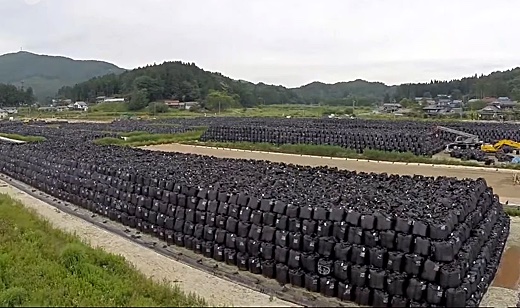
Image above: The government has also spent more than $1.5 billion collecting radioactive soil and earth from the Fukushima area, which now sits in thousands of industrial-sized black plastic bags stacked five high on several sites.  Sill frame from Part I video below.

See video below for full report.

TRT World transcript excerpts (government-funded public broadcaster of Turkey), Apr 14, 2017:

Martin Stanford, host of ‘Insight’ Radiation Alert — a nuclear scientist tells us the cleanup at Japan’s Fukushima plant could take 100 years… The decommissioning process has barely begun… A British nuclear scientist who’s just come back from Fukushima has told this program it could take up to 100 years.

1:15 in – Dana Lewis, senior correspondent: In three years Tokyo will host the Summer Olympics, and ironically one of the commercial slogans asks ‘Is Japan cool?’

It would almost be funny if the situation wasn’t so serious. 150 miles from Tokyo is the Fukushima nuclear power station where the situation is not cool — it’s a super-heated atomic catastrophe ever since a powerful earthquake rattled Japan in 2011 a 15-metre tsunami engulfed Fukushima and caused three reactors to melt down and they still are.

1:45 in – Kevin Kamps, Beyond Nuclear: It’s unknown where those cores are at… There is some possibility that it’s burrowed completely through the containment, and is sitting in groundwater.

2:30 in – Lewis: Deep inside Fukushima there is a molten mess… But exactly how deep are those cores? And that is a burning question. These close-up photographs show that it has burned through some of the containment structure and burrowed deep in the foundation of the reactor.

Until those cores can be retrieved, the radiation will keep spewing into groundwater and leaking — no one knows for sure where… Neil Hyatt is a professor of nuclear materials chemistry. [He's] back from touring Fukushima — well at least the storage areas… and he admits the situation will haunt Japan for generations.

3:45 in – Neil Hyatt, nuclear scientist: Somewhere between 40 and 100 years for the Fukushima cleanup and complete decommissioning is probably a reasonable estimate…

4:00 in – Lewis: But while they plan to get to those cores Tokyo Electric is struggling with a lethal radioactive dragon…

4:45 in – Hyatt: One concern is that there could be a resumption of the nuclear chain reaction…

7:00 in – Mark Whitby, engineer: This was an unprecedented accident, it was very close to being much worse than Chernobyl… It wasn’t so much the reactor cores which were melting – there was nothing they could do to to retrieve that situation.

The real problem was that one of the reactors had been recently taken offline, it had a fuel pond which was very hot, stacked with 20 years worth of fuel rods and that was beginning to boil dry… Had that fuel pond boiled, and Prime Minister Kan was very aware of this, this would have been 12 Chernobyls…


Video above: Turkish Radio & Television's "Insight: Fukushima Danger - Part I". From (https://youtu.be/hMr3pBAPgLg).


Video above: Turkish Radio & Television's "Insight: Fukushima Danger - Part II". From (https://youtu.be/ruk3X-4zs5k).

See also:
Ea O Ka Aina: Fukushima worse than ever 2/5/17
Ea O Ka Aina: Fukushima radiation on West Coast 1/13/17
Ea O Ka Aina: Fukushima cleanup cost to double 12/9/16 
Ea O Ka Aina: Tokyo damaged by nuclear pellet rain 9/24/16
Ea O Ka Aina: Nuclear Power and Climate Failure 8/24/16 
Ea O Ka Aina: High radioactivity in Tokyo  8/22/16
Ea O Ka Aina: Nuclear Blinders 8/18/16
Ea O Ka Aina: Fukushima and Chernobyl 5/29/16
Ea O Ka Aina: Fukushima radiation damages Japan 4/14/16
Ea O Ka Aina: Fukushima's Nuclear Nightmare 3/13/16
Ea O Ka Aina: Fifth Fukushima Anniversary 3/11/16
Green Road Jounral: Balls filled with Uranium, Plutonium 2/19/16 
Ea O Ka Aina: Fukushima impacts are ongoing 11/8/15
Ea O Ka Aina: Petroleum and Nuclear Coverups 10/21/15
Ea O Ka Aina: Fukushima Radiation Contamination 10/13/15
Ea O Ka Aina: Radioactive floods damage Japan 9/22/15
Ea O Ka Aina: Fir trees damaged by Fukushima 8/30/15
Ea O Ka Aina: Japan restarts a nuclear plant 8/11/15
Ea O Ka Aina: Fukushima disaster will continue 7/21/15
Ea O Ka Aina: Too many fish in the sea? 6/22/15
Ea O Ka Aina: Fukushima prefecture uninhabitable 6/6/15
Ea O Ka Aina: In case you've forgotten Fukushima 5/27/15
Ea O Ka Aina: Radiation damages top predator bird 4/24/15
Ea O Ka Aina: Fukshima die-offs occurring 4/17/15
Ea O Ka Aina: Fukushima Impact Update 4/13/15
Ea O Ka Aina: Fukushima - the end of atomic power 3/13/15
Ea O Ka Aina: Where is the Fukushima Data? 2/21/15
Ea O Ka Aina: Fuku-Undo 2/4/15
Ea O Ka Aina: Fukushima MOX fuel crossed Pacific 2/4/15
Ea O Ka Aina: Fukushima worst human disaster 1/26/15
Ea O Ka Aina: Japan to kill Pacific Ocean 1/23/15
Ea O Ka Aina: Japan's Environmental Catastrophe 8/25/14

ENE NEws: Nuclear fuel found 15 miles from Tokyo 8/10/14
Ea O Ka Aina: Earthday TPP Fukushima RIMPAC 4/22/14
Ea O Ka Aina: Fukushima Daiichi hot particles 5/30/14
Ea O Ka Aina: Japanese radiation denial 5/12/14
Ea O Ka Aina: Entomb Fukushima Daiichi now 4/6/14
Ea O Ka Aina: Fukushima Disaster 3 Years Old 4/3/14
Ea O Ka Aina: Tsunami, Fukushima and Kauai 3/9/14
Ea O Ka Aina: Japanese contamination 2/16/14
Ea O Ka Aina: Bill for Fukushima monitoring 2/9/14
Ea O Ka Aina: Tepco under reporting of radiation 2/9/14
Ea O Ka Aina: Fukushima Fallout in Alaska 1/25/14
Ea O Ka Aina: Fukushima engineer against nukes 1/17/14
Ea O Ka Aina: California to monitor ocean radiation 1/14/14
Ea O Ka Aina: Demystifying Fukushima Reactor #3 1/1/14
Ea O Ka Aina: US & Japan know criticality brewing 12/29/13
Ea O Ka Aina: Fukushima Forever 12/17/13
Ea O Ka Aina: Brief radiation spike on Kauai 12/27/13
Ea O Ka Aina: USS Ronald Reagan & Fukushima 12/15/13
Ea O Ka Aina: Fukushima Pacific Impact 12/11/13
Ea O Ka Aina: Berkeley and Fukushima health risks 12/10/13
Ea O Ka Aina: Madness engulfs Japan 12/4/13
Ea O Ka Aina: Edo Japan and Fukushima Recovery 11/30/13
Ea O Ka Aina: Reaction to Fukushima is Fascism 11/30/13
Ea O Ka Aina: Radioisotopes in the Northern Pacific 11/22/13
Ea O Ka Aina: Fukushima cleanup in critical phase 11/18/13
Ea O Ka Aina: Fukushima fuel removal to start 11/14/13
Ea O Ka Aina: Fukushima, What me worry? 11/13/13
Ea O Ka Aina: Remove other Fukushina fuel 10/29/13
Ea O Ka Aina: End to Japanese Nuclear Power? 10/3/13
Ea O Ka Aina: Fukushima & Poisoned Fish 10/3/13
Ea O Ka Aina: Fuel Danger at Fukushima 9/27/13
Ea O Ka Aina: Reactor #4 Spent Fuel Pool 9/16/13
Ea O Ka Aina: Fukushima is Not Going Away 9/9/13
Ea O Ka Aina: X-Men like Ice Wall for Fukushima 9/3/13
Ea O Ka Aina: Fukushima House of Horrors 8/21/13
Ea O Ka Aina: Fukushima Apocalypse 8/21/13
Ea O Ka Aina: Fukushima Radioactive Dust 8/20/13
Ea O Ka Aina: Cocooning Fukushima Daiichi 8/16/13
Ea O Ka Aina: Fukushima radiation coverup 8/12/13
Ea O Ka Aina: Leakage at Fukushima an emergency 8/5/13
Ea O Ka Aina: Fukushima burns on and on 7/26/13
Ea O Ka Aina: What the Fukashima? 7/24/13
Ea O Ka Aina: Fukushima Spiking 7/15/13
Ea O Ka Aina: G20 Agenda Item #1 - Fix Fukushima 7/7/13
Ea O Ka Aina: Fukushima and hypothyroid in Hawaii 4/9/13
Ea O Ka Aina: Japan to release radioactive water 2/8/13
Ea O Ka Aina: Fukushima as Roshoman 1/14/13
Ea O Ka Aina: Fukushia Radiation Report 10/24/12
Ea O Ka Aina: Fukushima Fallout 9/14/12
Ea O Ka Aina: Fukushima Unit 4 Danger 7/22/12
Ea O Ka Aina: Fukushima denial & extinction ethics 5/14/12
Ea O Ka Aina: Fukushima worse than Chernobyl 4/24/12
Ea O Ka Aina: Fukushima dangers continue 4/22/12
Ea O Ka Aina: Fukushima children condemned 3/8/12
Ea O Ka Aina: Fukushima fights chain reaction 2/7/12
Ea O Ka Aina: Tepco faking Fukushima fix 12/24/11
Ea O Ka Aina: The Non Battle for Fukushima 11/10/11
Ea O Ka Aina: Fukushima Debris nears Midway 10/14/11
Ea O Ka Aina: Fukushima Radiation Danger 7/10/11
Ea O Ka Aina: Fukushima Abandoned 9/28/11
Ea O Ka Aina: Deadly Radiation at Fukushima 8/3/11
Ea O Ka Aina: Fukushima poisons Japanese food 7/25/11
Ea O Ka Aina: Black Rain in Japan 7/22/11
Ea O Ka Aina: UK PR downplays Fukushima 7/1/11
Ea O Ka Aina: Fukushima #2 & #3 meltdown 5/17/11
Ea O Ka Aina: Fukushima sustained chain reaction 5/3/11
Ea O Ka Aina: Ocean Radioactivity in Fukushima 4/16/11
Ea O Ka Aina: Japan raises nuclear disaster level 4/12/11
Ea O Ka Aina: Fukushima No Go Zone Expanding 4/11/11
Ea O Ka Aina: Fukushima to be Decommissioned 4/8/11
Ea O Ka Aina: Fukushima Poisons Fish 4/6/11
Ea O Ka Aina: Learning from Fukushima 4/4/11
Ea O Ka Aina: Fukushima Leak goes Unplugged 4/3/11
Ea O Ka Aina: Stick a fork in it - It's done! 4/2/11
Ea O Ka Aina: Fukushima reactors reach criticality 3/31/11
Ea O Ka Aina: Fukushima Non-Containment 3/30/11
Ea O Ka Aina: Fukushima Meltdown 3/29/11
Ea O Ka Aina: Fukushima Water Blessing & Curse 3/28/11

.

"Hawaii's Fresh" milk poisons

SUBHEAD: No headlines until recent storms sent tsunamis of dairy sewage racing through Ookala, HI.

By Koohan Paik on 12 April 2017 in Island Breath -
(http://islandbreath.blogspot.com/2017/04/hawaiis-fresh-milk-poisons.html)


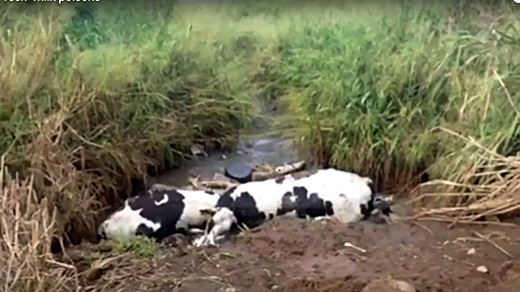
Image above: Dead cows ended up in stream runoff with mud and feces on the way to the ocean. From video below.

For years, Ookala residents have been putting up with the sickening pilau caused by Big Island Dairy mauka of the village.

No wonder it smells so rotten; the dairy confines a concentration of 1,800 cows (and growing) that stand and sleep in their own feces. If the cull rate compares to other industrial dairies, it would be about 30 percent per year, and the carcasses are thrown in a nearby pit that is in the path of stormwater runoff.

But the grumbling of Ookala residents didn’t make headlines until recent storms sent tsunamis of dairy sewage racing through their neighborhoods.

At a community meeting on March 28, one man lamented medical bills totaling tens of thousands of dollars for family members who had become sick after their home was marinated in fecal wastewater.

Several water-quality tests in early March taken from Ookala stream (when both dry and after a rain) showed, in all but one sample, that levels of enterococci tallied in at over 2,000 colony-forming units/mL, dangerously exceeding the maximum limit of 130/mL. Residents can’t safely fish or pick opihi with this toxic water flowing into the ocean.

No measurements were taken for antibiotics or hormones carried by the excrement, but, considering the source, high levels would be no surprise.

Most shocking has been Gov. David Ige’s lack of enforcement to protect us. Is this yet another instance of our elected officials colluding with big business?

Yes, it seems that Ige is putting agribusiness before health, safety and local livelihoods. For example, in 2014, the state joined Meadow Gold processing on Oahu to aggressively push dairies to lower the minimum price at which they could sell milk to Meadow Gold. Everyone knew a price drop would send local dairies belly-up.

That tragedy befell Ed Boteilho, whose family had run Cloverleaf Dairy in Hawi for over a half-century. It also prevented Dutch artisanal cheesemaker Kees Kea from achieving his dream of providing quality European cheeses to Hawaii.

Why? Because the only dairies that could afford to operate were the high-volume mega-dairies owned by mainland entities. The sole survivor of the price drop is Big Island Dairy, owned by Steve Whitesides of Idaho, where he owns another mega-dairy comprised of 14,000 cows.

What a difference a price makes. By signing the lowered milk price into law, the future of Hamakua as Oahu’s industrial dairy zone was sealed. Small-scale, local, environmental dairies are now unviable – unless the higher milk price can be restored.

Given this profit-before-people-agenda, it is no surprise that no environmental assessment (EA) was conducted for Big Island Dairy, the largest industrial dairy to ever operate in Hawaii.

And now that the dairy is building its own processing plant (which would cut Meadow Gold out of the chain), there are no plans for an EIS. But there should be.

 The processing plant, which leases land from the state, would produce far more toxic wastewater than what is currently released. If they can’t manage the havoc they are already wreaking, who gave them the green light to make more pilikia?

Big Island Dairy is in Hawaii to exploit. With the compliance of Ige, this bad neighbor has driven local farmers out of business; it has driven pathogen levels in our streams through the roof; it has carpeted our pastures with controversial GMO corn; and, to add insult to injury, it is expanding.

This is the kind of irresponsible ag that turns beautiful lands into rural slums. This is not what we want for Hamakua.


Video above: This film reveals some of what goes on with a large scale industrial milking operation and illustrates why Kauai does not want one in Mahaulepu.  From (https://youtu.be/cOgGjSG8d_I).

See also:
Ea O Ka Aina: Hawaii Dairy Farm permits revoked 2/25/17
Ea O Ka Aina: Out to Pasture 6/2/16
Ea O Ka Aina: Mahaulepu Dairy Farm draft EIS 5/28/16
Ea O Ka Aina: Hawaii Dairy Farm faces lawsuit 6/3/15
Ea O Ka Aina: Hawaii Dairy Farm Factsheet 10/11/14
Ea O Ka Aina: Kauai Grassfed Dairy Fraud 4/13/14
.

From Standing Rock to Maui

SUBHEAD: We are like the Dakota Sioux fighting to protect the Missouri River because Water is Life.

By Jonathan Greenberg on 25 March 2017 for Maui Independent -
(http://mauiindependent.org/native-wisdom-water-protector-alika-atay-on-the-power-of-we-the-people/)


Image above: From ().

In November, organic farmer Alika Atay, the grassroots leader of Hawaii’s ʻĀina Protector’s United effort was elected to the Maui County Council in a stunning upset (described in detail here).
Atay was the lead plaintiff in the SHAKA Movement’s federal lawsuit over the invalidation of Maui’s successful GMO Moratorium initiative in 2014.

This Maui Independent In Their Own Words features the barrel-chested, deep-voiced leader known to many Native Hawai’ians as “Uncle Alika.” His words are from interviews conducted during the past year by journalist Jonathan Greenberg.

Protect Our Water

I stand to protect our drinking water. We are very similar to our brothers and sisters in the Dakotas fighting to protect the Missouri River because Ola Ka Wai: Water is life.

Aina Protectors United is like-minded people who have been raised under the values of Aloha Aina (love of the land). Everything we do has a connection to the earth and our resources. Given our responsibility under Aloha Aina, we must stand up and protect.

I am speaking for the land, for the water, for the children. We all have a responsibility to stand up for future generations. The importance of native water rights and the ʻĀina Protectors movement is to allow those of us who are of the ʻĀina to understand that this is our indigenous right that we are born with.

We need to stand up and say enough of the oppression.

For me and the people, we are all kanakas. If they poison us, if they allow this to continue, they are creating cultural ethno genocide. They are slowly killing us, the kanaka–Hawaiians and my children and my future descendants. If we die or if we get sick and this place gets polluted, where else do we go? We don’t have anywhere else to go in the world to call our homeland.

This is our homeland. And as Kanaka Maoli, as indigenous people of this land, we cannot allow corporations such as Monsanto to be more important than the health and welfare of our people.

We are into into grassroots democracy. Grassroots democracy comes from the ground up, from the indigenous, spiritual, and cultural level. It says we will live the way we want to live.

My involvement with this movement began 40 years ago, when agrochemical companies sprayed DDT onto their plants, like the pineapple plantations. After soaking the plants, the DDT soaked the soil, and after soaking the soil, it went down and hit our water aquifer. It tainted our drinking water well until we could no longer drink fresh water from the well. Forty years later that well is still tainted. We cannot drink that water. It is still tainted.

Monsanto fields are only 40 feet above sea level. We ran into a Monsanto field and saw their spray board. It said they sprayed a 100-acre field four times a day, and the next day, five times a day, the very next day four times. With different chemicals.

You drench the fields, and then you get a big rain. The earth becomes a wet sponge and gets saturated, and all that chemical poison gets pushed down. The question is not if it’s going to hit our water table. The question is if they keep this up unchecked, when will it hit our water table to also make it unsafe for us to be drinking fresh water?

I believe this is about water and the pesticides that affect water. I am concerned with the drenching of our land with pesticides and the effect this has on our water. We live on an island and must protect our sacred water.

We have to look at the damage heavy chemical pesticides are doing to the soil and the aquifer. Not only what affects us now but more so the long-term future concerns. What kind of water will our future generations have to drink?

Look at what our experience has been for the last two years against the biotech pesticide companies. During the [GMO Moratorium Initiative] contest, there was big, big involvement of organized corporate money, spending close to $8 million.

Yet the people voted yes, and the people defeated them. The big lesson was the power of the people; what was victorious was organized people.

If You Are Not at the Table, You Are On the Menu

If you are not at the table, you are on the menu.
Whatever community you are, whatever country you are, you’ve got to open your eyes and be at the table.

We have that power. We the people can organize ourselves to stand up against them and say, “This is wrong.” Yes we call out Aloha ʻĀina; love the land. But it is not as simple as that. You cannot interpret it just by the words. You have to understand the values that are in there. How do you practice Aloha ʻĀina values? By protecting our natural resources, protecting our water.

Right now, with this [November Council election] victory, we are setting the cornerstone of the house that we want to live in. It is up to the rest of the village to be involved in the construction of the house.

I am looking forward to setting policy, regulations, and enforcement that will protect our natural resources. We need our entire village to be involved to solve these problems.

We live on an island, and our job is to protect this aquifer, our sacred water. There is a wave of momentum for change to protect our Maui way of living. Everyone sees the handwriting on the wall and is concerned with protecting the environment, which also protects our tourist economy.

Our Responsibility to Become Great Ancestors

Our ancestors, my ancestors, they lived here for 1,500 years. They lived here organically, naturally.

They didn’t live with chemical poisons. Then my ancestors handed it over to me: green pristine, clean, and sacred.

And in a very short period, westernization came in and almost killed us. Almost. Unless we come in and say, “Nuff already. This ain’t happening.”

We want to become great ancestors.

I don’t want to pass on and have my descendants say, “My tutu—he didn’t do a good job by giving us this place all polluted.”

We have a responsibility to our future. That’s why we do this.


Video above: "Water Protector Alika Atay on People Power" From original article. (https://youtu.be/Gu5dZ1_agNY). 

See also:
Ea O Ka Aina: Lessons from Standing Rock 3/14/17
Ea O Ka Aina: Standing Rock will not go away 2/24/17
Ea O Ka Aina: DAPL fight not over yet 2/19/17
Ea O Ka Aina: Tribes divest DAPL bankers 2/13/17
Ea O Ka Aina: Army Corps okays DAPL easement 2/8/17
Ea O Ka Aina: Trump orders go on DAPL EIS 2/3/17
Ea O Ka Aina: Trump orders shale oil pipelines 1/24/17
Ea O Ka Aina: Missile launcher at Standing Rock 1/19/17
Ea O Ka Aina: Lockdown at Trans-Pecos Pipeline 1/10/17
Ea O Ka Aina: Standing Rock has changed us 12/9/16
Ea O Ka Aina: As Standing Rock celebrates... 12/5/16
Ea O Ka Aina: Army Corps denies DAPL easement 12/4/16
Ea O Ka Aina: My Whole Heart is With You 12/2/16
Ea O Ka Aina: The Loving Containment of Courage 12/1/16
Ea O Ka Aina: The Beginning is Near 12/1/16
Ea O Ka Aina: Obama hints at DAPL rerouting 11/3/16
Ea O Ka Aina: New military attack on NODAPL 11/3/16
Ea O Ka Aina: How to Support NoDAPL 11/3/16
Ea O Ka Aina: Standing Rock has changed us 12/9/16
Ea O Ka Aina: As Standing Rock celebrates... 12/5/16
Ea O Ka Aina: Army Corps denies easement 12/4/16
Ea O Ka Aina: My Whole Heart is With You 12/2/16
Ea O Ka Aina: The Loving Containment of Courage 12/1/16
Ea O Ka Aina: The Beginning is Near 12/1/16
Ea O Ka Aina: Feds to shutdown NoDAPL Camp 11/25/16
Ea O Ka Aina: NoDAPL people are going to die 11/23/16
Ea O Ka Aina: Hundreds of vets to join NoDAPL 11/22/16
Ea O Ka Aina: Obama must support Standing Rock 11/21/16
Ea O Ka Aina: Trump's pro oil stance vs NoDaPL 11/15/16
Ea O Ka Aina: Kauai NoDAPL Demonstration 11/12/16
Ea O Ka Aina: Obama to Betray Standing Rock 11/12/16
Ea O Ka Aina: Trump impact on Standing Rock 11/12/16
Ea O Ka Aina: Ann Wright on Standing Rock 11/8/16
Ea O Ka Aina: Turning Point at Standing Rock 11/6/16
Ea O Ka Aina: Jackson Browne vs DAPL owner 11/5/16
Democracy Now: Boycott of DAPL Owner's Music Festival
Ea O Ka Aina: World responds to NoDAPL protests 11/5/16
Ea O Ka Aina: NoDAPL victory that was missed 11/5/16
Ea O Ka Aina: DAPL hid discovery of Sioux artifacts 11/5/16
Ea O Ka Aina: Dakota Access Pipeline will leak 11/5/16
Ea O Ka Aina: Route of the Dakota Access Pipeline 11/4/16
Ea O Ka Aina: Sanders calls for stopping DAPL 11/4/16
Ea O Ka Aina: Obama hints at DAPL rerouting 11/3/16
Ea O Ka Aina: New military attack on NODAPL 11/3/16
Ea O Ka Aina: How to Support NoDAPL 11/3/16
Unicorn Riot: Tweets from NoDAPL 11/2/16
Ea O Ka Aina: Standing Rock & the Ballot Box 10/31/16
Ea O Ka Aina: NoDAPL reclaim new frontline 10/24/16
Ea O Ka Aina: How far will North Dakota go? 10/23/16
Ea O Ka Aina: Amy Goodman "riot" charge dropped 10/17/16
Ea O Ka Aina: Amy Goodwin to face "Riot Charge" 10/16/16
Ea O Ka Aina: Shutdown of all tar sand pipelines 10/11/16
Ea O Ka Aina: Why Standing Rock is test for Oabama 10/8/16
Ea O Ka Aina: Why we are Singing for Water 10/8/16
Ea O Ka Aina: Labor's Dakota Access Pipeline Crisis 10/3/16
Ea O Ka Aina: Standing Firm for Standing Rock 10/3/16
Ea O Ka Aina: Contact bankers behind DAPL 9/29/16
Ea O Ka Aina: NoDAPL demo at Enbridge Inc 9/29/16
Ea O Ka Aina: Militarized Police raid NoDAPL 9/28/16
Ea O Ka Aina: Stop funding of Dakota Access Pipeline 9/27/16
Ea O Ka Aina: UN experts to US, "Stop DAPL Now!" 9/27/16
Ea O Ka Aina: No DAPL solidarity grows 9/21/16
Ea O Ka Aina: This is how we should be living 9/16/16
Ea O Ka Aina: 'Natural Capital' replacing 'Nature' 9/14/16
Ea O Ka Aina: The Big Difference at Standing Rock 9/13/16
Ea O Ka Aina: Jill Stein joins Standing Rock Sioux 9/10/16
Ea O Ka Aina: Pipeline temporarily halted 9/6/16
Ea O Ka Aina: Native Americans attacked with dogs 9/5/16
Ea O Ka Aina: Mni Wiconi! Water is Life! 9/3/16
Ea O Ka Aina: Sioux can stop the Pipeline 8/28/16
Ea O Ka Aina: Officials cut water to Sioux 8/23/16 

.