Open Source Seeds

SUBHEAD: New Open Source License fights the patenting of seeds through "copyleft" license.

By David Bollier on 3 May 2017 for Billier.org -
(http://www.bollier.org/blog/new-open-source-license-fights-enclosure-seeds)
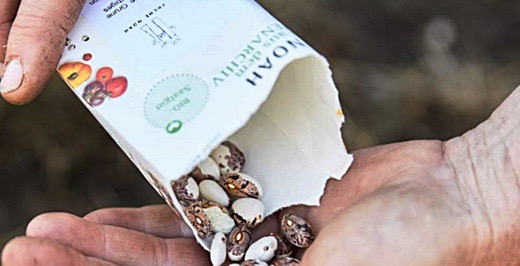

Image above: A packet of newly developed seeds once opened becomes an agreement of "copyleft" not to patent the seeds within. From original article.

As more and more plant varieties have become privatized through patents, and as large corporations have bought up smaller seed breeders, a dangerous consolidation has occurred.

The genetic diversity of agricultural crops has shrunk, making crops more vulnerable to disease and our food supply more insecure. Meanwhile, farmers and the public have become more dependent on a few large agrochemical companies.

In short, seed patents have become a tool for privatizing seed from the pool of open and commonly owned plant genetic resources: an insidious enclosure of seed commons.

This scenario is eerily similar to the consolidation of software for personal computers some twenty years ago.  Microsoft used its market dominance to incorporate all sorts of software programs into its Windows operating system, a strategy sometimes referred to as “embrace, extend and extinguish.”

As Microsoft exploited its de facto monopoly over common software systems, programs for word-processing, spreadsheets and other functions began to go out of business.

But just as open source software served as a powerful antidote to proprietary software, so a group of academics, activists and plant breeders in Germany has now pioneered a similar antidote to seed patents:  an open source license.

The Open Source Seed license, recently released by a group called OpenSourceSeeds, is trying to “make seeds a common good again.” The license amounts to a form of “copyleft” for new plant varieties, enabling anyone to use the licensed seeds for free. Like the General Public License for free software, the seed license has one serious requirement: any seeds that are used, modified or sold must be passed along to others without any legal restrictions.

This is the “share-alike” principle, which is also used by Creative Commons licenses.  Its purpose is to prevent the privatization of a common resource by requiring any user to share it freely and forever.
The Open Source Seed license directs any users:
You will in particular refrain from making any claim to plant variety rights, patent rights or any other statutorily possible exclusivity rights of the seeds or their propagation and enhancements.

Simultaneously, the licensing provisions oblige you, in turn, to subject any seeds or enhancements of the seeds obtained from the present seeds to these licensing provisions, and only to pass them on to third parties on these conditions (“copyleft”). Should you infringe the obligations arising from this licence agreement, you will forfeit your rights of use of the seeds or any seeds or enhancements obtained therefrom.

By acquiring or opening the packet of these plant seeds you accept, by way of an agreement, the provisions of a licence agreement where no costs shall be incurred to you. You especially undertake not to limit the use of these seeds and their enhancements, for instance by making a claim to plant variety rights or patent rights on the seeds’ components.

You shall pass on the seeds, and propagations obtained therefrom, to third parties only on the terms and conditions of this licence. You will find the exact licensing provisions at www.opensourceseeds.org/licence. If you do not wish to accept these provisions, you need to refrain from acquiring and using these seeds.
The open source seed license was released on April 25 in Berlin by the Association for AgriCulture and Ecology (AGRECOL e.V) and the German NGO Forum on Environment and Development. They also released the first two open-sourced seeds, the tomato “Sunviva” (Lycopersicon esculentum L.) and the spring/summer wheat known as “Convento C.”  (For more on this event, see this story by Intellectual Property Watch.)

OpenSourceSeeds hopes that plant breeders will use its license to protect access to new crop varieties, eventually producing a new sector of open source seed production.  The group’s website invites breeders and seed distributors to register on its database so that buyers can discover where they can purchase open source seeds.

OpenSourceSeeds explains that its agenda is to promote food security through seed diversity; restore crop seeds as a common good; and assure free access to seed (meaning, no legal restrictions on use; seeds can still be sold).

It envisions a more ecological approach to farming rather than the monoculture crops of industrial agriculture. It wants to develop and promote a diversity of crop types, and promote varieties with ecological potential for niche locations and landscapes. All of these goals require a non-private, commonly owned seed sector where private profit is not the primary goal.

If you’d like to explore this topic further, here is an informative background essay, “Liberating Seeds with an Open Source Seed License,” by Johannes Kotschi and Klaus Rapf, of AGRECOL, the Association for AgriCulture and Ecology, in Germany.

Bravo, OpenSourceSeeds, for this ingenious initiative!  May your new license and ethic of seed stewardship produce many bountiful harvests in the future.

Check out the Open Source Seed Initiative in the US, too. It is quite active in advancing the same goals as OpenSourceSeeds and its license.  


.

Do not trust the bastards

SUBHEAD: Bread and Circus - Carrot and Stick - It's always been a game to keep the serfs in line and obedient. 

By Juan Wilson on 15 May 2017 for Island Breath -
(http://islandbreath.blogspot.com/2017/05/do-not-trust-bastards.html)


Image above: Ex-officials of the town of Bell California on trail for corruption. Bell, a working class community of 35,000 people had a City Manager Robert Rizzo being paid a total of $1.5 million dollars in wages and benefits; and the assistant city manager Angela Spaccia and police chief Randy Adams were making a half million dollars in salaries and benefits. Bell’s city council members  received $100,000 a year salaries. Those arrested pleaded no-contest to criminal charges. From (http://www.chapman.edu/wilkinson/about/events/bell-conference.aspx).

The previous three posts to this website have been to serve a single purpose - to demonstrate, from the perspective of Hawaii, the bankruptcy of our America's government systems at the federal, state and county level.

Government, corporate and military leadership attracts narcissists, sociopaths, egomaniacs, psychotics, and occasionally idiot savants. You can certainly see that at the county, state and federal level of American government as it is applied to once independent Hawaii.

That is not to say that all the activities of the agencies of each level of government are bad. Some of those activities are excellent. But the overarching effect at each level is destructive to Hawaii and the people that live here.

 The overarching effect of federal, state and county governance is to bleed people of resources to support expensive military budgets and corporate profits.

Ever more, however, is required.

This means further expansion of population and developmental growth to continue economic growth at the cost of the environment and human freedom. Always it means more war somewhere to dominate someone so the military has a reason to be and the corporations have more markets to profit from.

All in all it's an ugly con game we keep falling for.

See also:

Kauai Nui Kuapapa

United under one chief. Bullshit. Niihau isn't a moku of Kauai but Mana is.

Kouchi taps Dela Cruz

Pro-development Senator Dela Cruz takes over Senate Ways & Means.

Blood Sport

Trump's more troubling than Nixon. Infantile, narcissistic... psychotic?


.

Kauai Nui Kuapapa

SUBHEAD: Kuapapa means united under one chief. Bullshit. Niihau isn't a moku of Kauai. Mana is a moku of Kauai.

By Juan Wilson on 14  May 2017 for Island Breath -
(http://islandbreath.blogspot.com/2017/05/kauai-nui-kuapapa.html)

http://www.islandbreath.org/2017Year/05/170514mokubig.jpg
Image above: A heavily sweating Kauai Mayor Carvalho and Big Island Mayor Kenoi are being "man-splained" how GMO and pesticide policy will go down in Hawaii by Secretary of Agriculture Thomas Vilsack in a meeting in 2011. Vilsack was a former governor of Iowa and an early supporter of corn ethanol production. He had also been a lobbyist and Vice President of Monsanto corporation. Glyphoste is in his blood. From (https://damontucker.wordpress.com/tag/mayor-bernard-carvalho/).

Recently I received a mailing purportedly from Bernard Carvalho to "talk about Nui Kuapapa" - "to talk about our island". The mailing invited me to identify which moku I live in from a provided map of Kauai and Niihau. The map was first seen in the drafts of the proposed Kauai General Plan Update 2020.

http://www.islandbreath.org/2017Year/05/170514mokubig.jpg
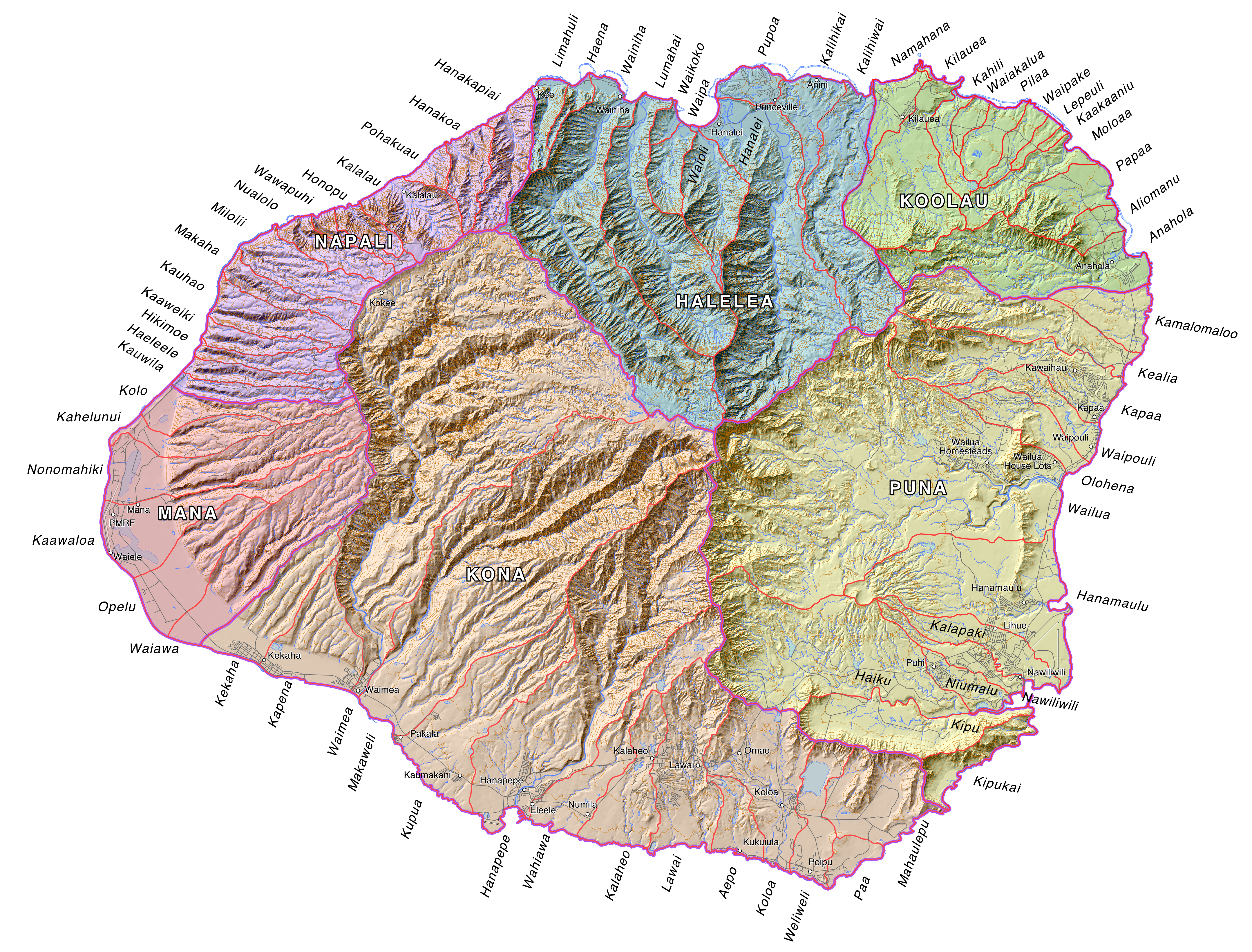
Image above: Map of Kauai and Niihau from the draft of the General Plan Update showing Niihau as a moku of Kauai and Kona moku flooding into half of the Napali moku from Haeleele to Nualolo. See also (http://kauainuikuapapa.com/moku/kona/).


Note, this map does conform to historic moku borders in some ways. Certainly Halelea, Koolau, and Puna are reasonable representations according to many, but not all cultural interpretations. As  in many modern maps no Mana Moku is shown. Mana is subsumed by Kona.

But in addition the Napali Moku has been shriveled by half as Kona has engulfed much of the western Napali ahupuaa from Haeleele to Nualolo, including Milolii. Since when has Milolii not been considered on the Napali Coast?

To see how shallow this cultural vision of Kauai is check out the source  (http://kauainuikuapapa.com/#home). The creators of this site are linked to the General Plan effort and reveal  something interesting when you get down to the contacts page:
Nā Hōkū Welo, LLC
P.O. Box 511
Līhue, HI 96766
Phone (808) 779-9454
Fax (855) 251-5425
partner@nahokuwelo.com

Nalani K. Brun
Economic Development Specialist IV-Tourism
Office of Economic Development
County of Kauai
4444 Rice St. Suite 200
Līhue, HI 96766
Phone (808) 241-4952
Fax (808) 241-6399
nbrun@kauai.gov
In my opinion, the map, as a part of the presentation of the entire General Plan Update Plan process, shares a false Hawaiian cultural patina. The map shows Kauai County - that is the islands of Kauai and Niihau. It show five moku on Kauai and show Niihau as a moku of Kauai. Moreover, the moku are not in conformance with the earliest Hawaiian maps prior to the introduction of private property.

The General Plan Update process pretends to be a gathering of our community voices to determine our future. It uses Hawaiian words to pretend it shares Hawaiian cultural perspective. It is presented in an informal style with lots of images of local people and places, but as merely props and scenery to disguise its true purpose - ECONOMIC DEVELOPMENT... particularly for tourism and real estate development.

Because this is a Kauai County government project it is seen from a county political perspective, Niihau has been reduced to an appendage of Kauai. 

From the get-go the County Planning Department has had the goal that the General Plan Update 2020 will implement a doubling of the population of Kauai in the next generation. It calls for a tripling of the population in the Hanapepe-Elelele area and a significant increase in military operations (and personnel) on the Westside.

Niihau is not a moku of Kauai!
Hawaiian language definitions, like English, are multidimensional. In general "moku" means a cut piece of something, and a "puni" means surrounded as by water.
Moku (Parker Hawaiian Dictionary)
 A district; a division of an island, as Kona on Hawaii, and Hana on Maui.
Mokupuni (Parker Hawaiian Dictionary)
The full form for island; that is, a division of land surrounded by water.
It is true that Kauai and Niihau were at one time part of a single larger island rivaling the Big Island and included the tiny island of Kaula further to the southwest of Niihau.  Niihau maybe politically part of Kauai County but it is a separate inhabited island and a mokupuni unto itself.

Maui has had a similar fate. At one time Maui was an island that included Molokai, Lanai and Kahoolawe. As it was eroded and broken into separate islands over geological time each part became a mokupuni unto itself.

But this is clear. All Hawaiian inhabited Hawaiian islands have an identified windward and leeward side (or Kona and Koolau moku).

Mana is a moku of Kauai!
Before I detail why, I must tell you I've been mapping the moku of Kauai for over a decade. In 2009 I was approached by Jean Ileialoha Beniamina to map the moku and ahupuaa of all the Hawaiian islands. She was then Chair of the Aha Kiole Committee (later to become the Aha Moku Council).

The committee and council sought kapuna and others with knowledge of historic Hawaiian land management and the names and places of moku and ahupuaa to report on each island.

I was commissioned by the Western Pacific Regional Fisheries Management Council (WesPac) through funds from the US National Ocean & Atmospheric Administration (NOAA) to do that mapping according to the reports of the Aha Moku Council.

In 2010 the maps I produced were accepted as complete. Some adjustments were made and corrections submitted by Ahu Moku participants and others who saw the maps once published and made available to the public. The results of that effort can be found at (http://www.islandbreath.org/mokupuni/mokupuni.html).

The Kauai map specifically can be found at (http://www.islandbreath.org/mokupuni/M7Kauai/M7KauaiRasterFile.png). The kauai and the other island maps can be found at the Aha Moku Council website here (http://www.ahamoku.org/index.php/maps/).

In studying the issues I came across two vital sources. One was Mrs. Ursula S. Emerson, the wife of minister Rev. John S. Emerson of Kauai. In conjunction with local Hawaiians she mapped Kauai, Niihau and Oahu.

Mokupuni O Kauai
Image above: The 1833 map of Kauai by Ursula Emerson, wife of Reverend John Emerson of Koloa. In my opinion this is the finest map of Kauai until four decades later. It had the best proportions features and selection of detail until after the overthrow of Hawaiian sovereignty. This copy came from the Kauai Historical Society. For some unaccountable reason the title block of the maps was mutilated. Click to enlarge and see full image.

This map of Kauai is dated 1833. Besides sailor's navigational maps, this is the first coherent map of Kauai. It identifies streams and renders interior valleys and ridges. The map also show the Great Ala Loa Trail and the ahupuaa and moku of the island.  I consider it the most accurate map of Kauai until after the Great Mahhele. It shows clearly six moku on Kauai, the westernmost one being Mana Moku. Her Kauai map was used a a basis for the US Navy and British Navy maps of the late 1830’s.

Mokupuni O Kauai
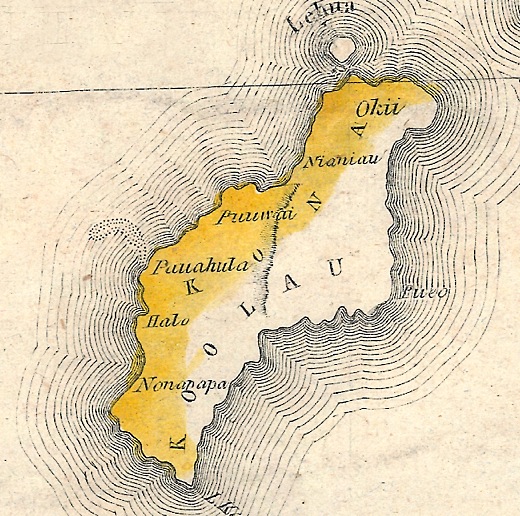
Image above:  Detail of the 1833 map of Niihau by Ursela Emerson. Click for complete map.

The Emerson map of Niihau distinctly identifies two moku - Kona and Koolau. It, like her map of Kauai, shows a detailed knowledge of shoreline, features and place names. Her maps were done in Hawaiian language and my understanding is that local Hawaiians were the source of her detailed knowledge of the islands.


Image above: Detail of Kauai island from 1838 map of Hawaiian Islands by S. P. Kalama.

Also, Simon Peter Kalama of Maui’s Lahaina Luna School was the first Hawaiian to map the Hawaiian Islands in 1837 and more accurately in 1838). He clearly shows Mana as a moku of Kauai and Niihau with a Kona and Koolau moku. See (http://islandbreath.blogspot.com/2010/06/na-mokupuni-o-hawaii-nei.html).


Image above: Detail of Niihau Island from 1838 map of Hawaiian Islands by S. P. Kalama 1838.  

It is not until well after the establishment of private property and the Hawaiian Government Survey map of 1878 did you see Mana as just an area of the westside of Kauai identified as the Moku of Waimea. That continued through the the Territory of Hawaii Map of 1901. Only later was area changed to be part Kona Moku.

I wrote to the partner at Nahokuwelo.com of this matter over a week ago saying I was prepared to work with him on the issues concerning Moku and Ahupuaa on Kauai and Niihau, needless to say, I got no reply.

If the cultural and historic confusion represented by the General Plan Update maps of moku on Kauai and Niihau are representative of the quality of the General Plan then woe be it unto Kauai and Niihau.

.

Kouchi taps Dela Cruz

SUBHEAD: Pro-development Senator Donovan Dela Cruz takes over Senate Ways And Means Committee.

By Richard Wiens on 12 May 2017 for Civil Beat -
(http://www.civilbeat.org/2017/05/dela-cruz-takes-over-ways-and-means-as-senate-shake-up-continues/)


Image above: Ron Kouchi appearing as an extra in the Sopranos. From (https://www.youtube.com/watch?v=PeAiL0sLaT8).

Senate President Ron Kouchi announces new committee assignments, but there’s no word yet on the possibility of a special session for rail.

The shake-up in state Senate leadership that began at the end of the legislative session with the ouster of Sen. Jill Tokuda as chair of the Ways and Means Committee continued Friday with the announcement of some new committee chairmanships.

Senate President Ron Kouchi issued a statement saying that, as expected, Sen. Donovan Dela Cruz will replace Tokuda as chair of the money committee, with Sen. Gil Keith-Agaran serving as vice chair.

Tokuda lost her position after some of her colleagues saw her as an obstacle to reaching consensus on a tax plan for the Honolulu rail project. No deal was reached before adjournment May 4, and a special session on the issue is still possible.

[IB Publisher's note: Ron Kouchi is a former Kauai County Council member and later Chair. He failed in a run for Kauai Mayor and then won an election representing Kauai in the Hawaii Senate. He is now President of the  Hawaii State Senate.

Donovan Del Cruz is also a Hawaii State senator. He helped Neil Abercrombie introduce the Public Land Development Corporation (PLDC) that would have made it easy for private developers to acquire public land for speculative development or other commercial operations.

Dela Cruz and Kouchi are two conniving and manipulative sociopaths who are in it to let the speculators succeed. That includes the players in the multi-billion dollar boondoggle of Honolulu Rail. Apparently Senator Jill Tokuda wasn't playing ball.]


Image above: Donovan Dela Cruz in 2014 advocating for Transit Oriented Development of affordable housing near Hawaii Rail Stations. From (http://www.hawaiifreepress.com/ArticlesMain/tabid/56/ID/13145/Lawmakers-Highlight-Need-for-More-Affordable-Housing.aspx).


Kouchi also announced Friday that the Committee on Judiciary and Labor will be split into two committees, with Tokuda chairing Labor and Sen. Brian Taniguchi chairing Judiciary.

During the just-completed session, Dela Cruz was vice chair of Ways and Means, Keith-Agaran was chair of Judiciary and Labor and Taniguchi was chair of the Committee on International Affairs and the Arts.

Kouchi also announced that Sen.Kaiali‘i Kahele will be the new majority whip.

.

Blood Sports

SUBHEAD: Trump is a more troubling personality than Nixon, infantile, narcissistic, at times verging on psychotic.

By James Kunstler on 12 May 2017 for Kunstler.com -
(http://kunstler.com/clusterfuck-nation/7571/)


Image above: Donald Trump "wax figure" at Ripley's Odditorium in Orlando, Florida. From what we can tell the wax figures hands have been slightly enlarged and the finger fattened up like Polish sausage.From (http://www.huffingtonpost.com/entry/rosie-odonnell-in-new-twitter-attack-we-have-three-weeks-to-stop-trump_us_586b2c56e4b0d9a5945c3b9c?slideshow=true#gallery/5826518ee4b0c4b63b0cc448/1).

What you’re seeing in the political miasma of “RussiaGate” is an exercise in nostalgia. Apart from the symbolic feat of getting a “black” president freely elected in 2008 (remember, Mr. Obama is also half-white), the Democratic Party hasn’t enjoyed a political triumph in half a century to match the Watergate extravaganza of 1972-74, which ended in the departure of Mr. Nixon, the designated Prince of Darkness of those dear dead days. Watergate had had a more satisfying finale than The Brides of Dracula.

So, in its current sad state, devoid of useful political ideas, mired in the mostly manufactured conflicts of race and gender, psychologically crippled by the election loss of a miserable candidate to the Golden Golem of Greatness, the Democratic Party is returning full steam to a gambit that worked so well years ago: beating the devil by congressional inquiry.

In President Trump (uccchhh, the concept!), they’ve got a target much juicier even than Old Nixie. It wasn’t for nothing that they called him “Tricky Dick.” He came back from political near-death twice in his career.

The first time, running as Dwight Eisenhower’s veep, he was accused of accepting the gift of a vicuna coat for his wife, Pat, and other secret cash emoluments. He overcame that with one of the first epic performances of the TV age, the “Checkers Speech” — Checkers being the family’s cocker spaniel, who Nixon invoked as a proxy for his own guileless innocence. It worked bigly.

The second near-death was his defeat in the California governor’s race of 1962, following his 1960 squeaker presidential election loss to John F. Kennedy. “You won’t have Nixon to kick around anymore…” he told the press.

But he rose from the grave in 1968 — after fortifying his bank account in a Wall Street law practice — when the Vietnam War was tearing the country apart (and wrecking the Democratic Party of Lyndon Johnson and Hubert Humphrey).

It is not unrecognized that in his first term Nixon functioned as a very capable executive, presiding over social and environmental legislation that would be considered progressive today — though he remained mired in the tarbaby of Vietnam.

But then, in the reelection campaign of ’72, he got a little too cute — or, at least, his campaign show-runners did, hiring a klatch of bumbling ex-CIA errand boys to burgle the DNC offices, who were then caught red-handed at the scene, which was the basement of the Watergate apartment complex… and the rest is history.

What a fabulous inquisition Watergate was! What a colorful cast characters: the wily old “country lawyer” Senator Sam Ervin, the dashing chief staff inquisitor Professor Sam Dash, the fallen Republican knights, Elliot Richardson and Archibald Cox, the lonely and heroic bean-spiller, John Dean! And many more.

The Watergate hearings on TV were more thrilling than Downtown Abby. Once Old Nixie went down the path of stonewalling and evasion — covering up an escapade he might not have even known about at the time — he was dead meat.

I remember that sweaty August day that he threw in the towel. (I was a young newspaper reporter when newspapers still mattered.) It was pretty much a national orgasm. “NIXON RESIGNS!” the headlines screamed. A moment later he was on the gangway into the helicopter for the last time.

Enter, stage right, the genial Gerald Ford….

Forgive me for getting caught up in the very nostalgia I castigate. And now here we are in the mere early months of Trumptopia about to hit the replay button on a televised inquisition.

In my humble opinion, Donald Trump is a far more troubling personality than Tricky Dick ever was, infantile, narcissistic, at times verging on psychotic, but the RussiaGate story looks pretty flimsy.

At this point, after about ten months of NSA-FBI investigation, nothing conclusive has turned up about Trump’s people “colluding” with Russia to gain unfair advantage in the election against You-Know-Who. Former NSA chief James Clapper has publicly stated twice in no uncertain terms that there’s no evidence to support the allegations (so far).

And there remains the specter of the actual content of the “collusion” — conveniently ignored by the so-called “Resistance” and its water-carriers at The New York Times — the hacked emails that evince all kinds of actual misbehavior by Secretary of State HRC and the DNC.

The General Mike Flynn episode seems especially squishy, since it is the routine duty of incoming foreign affairs officials to check in with the ambassador corps in Washington. Why do you think nations send ambassadors to other countries?

The upshot of all this will be a political circus for the rest of the year and the abandonment of any real business in government, at a moment in history when some very weighty black swans circle above the clouds waiting to crash land.

Enjoy the histrionics if you dare, and pay no attention to collapsing economy as it all plays out.

.

Big Oil's plan for public land denied

SUBHEAD: US Senate denies Trump plan to overturn Obama restriction on methane flaring on federal lands.

By Andrea Germanos on 10 May 2017 for Common Dreams -
(https://www.commondreams.org/news/2017/05/10/senate-just-killed-trumps-plan-hand-our-public-lands-big-oil)


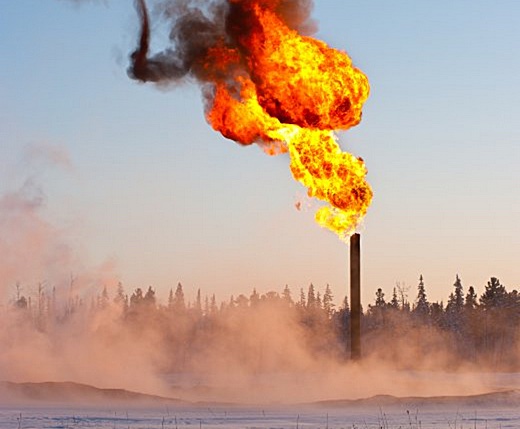
Image above: Methane flares as the gas is burned off at shale oil well site. From (http://www.globalchange.gov/news/white-house-issues-methane-reductions-strategy).

"Just when we thought all hope was lost, common sense prevailed today in the United States Congress," said Jessica Ennis, senior legislative representative with the environmental law organization Earthjustice.

That's because the Senate on Wednesday failed to pass a Congressional Review Act (CRA) resolution that would have killed an Obama-era Bureau of Land Management (BLM) rule that limits methane flaring from fossil fuel production on federal and tribal lands.

"Methane is a potent contributor to climate change, and letting companies simply vent or flare methane in vast quantities from their operations on publicly-owned lands is foolhardy," explained Jeremy Martin, senior scientist with the Clean Vehicles Program at the Union of Concerned Scientists (UCS). "That’s why it's so important that we protect common-sense standards, and why this resolution deserved a 'no' vote."

That vote was 49-51, with three Republicans—Susan Collins of Maine, Lindsey Graham of South Carolina, and Jon McCain of Arizona—joining Democrats in voting "no."

The House already voted to kill the rule, which environmental groups said amounted to "giving away a taxpayer-owned resource for free," and was thanks to the CRA, "a dirty trick that Congress can use to do the oil industry's bidding."

If the resolution had been successful in the Senate, it would have made making fossil fuel companies accountable for their pollution "nearly impossible," said UCS's Martin—"not only would it have overturned current rules, it would have blocked future administrations from setting standards."

Now, with that effort stopped, climate campaigners are cheering, though "[t]he fact that Congress even considered this giveaway to the oil industry is stunning," said Brett Hartl, government affairs director at the Center for Biological Diversity. "We applaud the senators who stepped up to kill this resolution, ensuring that people will breath cleaner air and saving taxpayers millions of dollars."

According to Lukas Ross, Friends of the Earth's climate and energy campaigner, the vote marks a "victory against Trump's plan to hand our public lands to Big Oil [and] is a win for the American people. Reducing venting and flaring from oil wells will reduce emissions contributing to climate change and save public resources. Today the Senate proved it will not always rob taxpayers to line Big Oil's pockets," he continued.

Still, it's not the time for climate campaigners to put their guard down.

"While we have beaten back this attack on the BLM methane rule, we know that Trump and his Big Oil cronies are eyeing other avenues," Ross cautioned. "An earlier Executive Order already instructs [Interior Department] Secretary Zinke to examine how to give Big Oil an ever bigger share of our public lands. We will continue to fight against any efforts to endanger the future of our lands and our climate," he said.

.

First DAPL Spill Reported

SUBHEAD: "Not if, but when the DAPL leaks". The dreaded 'Told You So' moment  has arrived. 

By Deirdre Fulton on 10 May 2017 for Common Dreams -
(https://www.commondreams.org/news/2017/05/10/told-you-so-everyone-was-dreading-first-dapl-spill-reported)


Image above: A spill of 84 gallons is small in the pipeline business, but any leak before the line is operational confirms worries indigenous felt and does not bode well for the future. From (http://www.telesurtv.net/english/news/North-Dakota-Officials-Tell-Pennsylvania-Go-Big-Go-Fast-Against-Pipeline-Protesters-20170506-0009.html).

Throughout the battle over the Dakota Access pipeline (DAPL), Indigenous campaigners and their allies repeatedly warned it was not a question of if, but when a breach would occur.

Now, before the pipeline is even fully operational, those warnings have come to fruition.
The Associated Press reports Wednesday:
The Dakota Access pipeline leaked 84 gallons of oil in South Dakota early last month, which an American Indian tribe says bolsters its argument that the pipeline jeopardizes its water supply and deserves further environmental review.
The April 4 spill was relatively small and was quickly cleaned up, and it didn't threaten any waterways. The state's Department of Environment and Natural Resources posted a report in its website's searchable database, but it didn't take any other steps to announce it to the public, despite an ongoing lawsuit by four Sioux tribes seeking to shut down the pipeline.
"At the pipeline's pump station there's what's called a surge tank, which is used to store crude oil occasionally during the regular operation of the pipeline," Brian Walsh, an environmental scientist with the state Department of Environment and Natural Resources Ground Water Quality Program, told Dakota Media Group. "And connected to that tank is a pump, which pumps oil back into the pipeline system, and the leak occurred at that surge pump."

The pipeline operated by Texas-based Energy Transfer Partners (ETP) is expected to be in service by June 1.

"As far as this happening during the start-up, I don't want to make it sound like a major event, but the fact that you had oil leaving the tank says there's something not right with their procedures," longtime pipeline infrastructure expert Richard B. Kuprewicz said to Dakota Media Group. "They might have been trying to hurry."

Joye Braun, of the Cheyenne River Sioux tribe (one of those still engaged in a legal battle to shut down the pipeline), cited Kuprewicz when explaining why the news was so concerning.

"This leak hits close to home, my home," Braun said. "We have always said it's not if, but when, pipelines leak, and to have someone like Richard B. Kuprewicz—a pipeline infrastructure expert and incident investigator with more than 40 years of energy industry experience—question the integrity and building practices of Dakota Access says something pretty serious could go wrong."

"That worries me," she continued. "South Dakota already faces water shortages and our livelihoods depend on water, from ranching and farming to healthcare. Do we have more spills just waiting to happen? This is our home, our land, and our water. This just proves their hastiness is fueled by greed not in the best interest for tribes or the Dakotas."

News from elsewhere in the country this week hardly helps ETP's case.

Following two spills of millions of gallons of drilling fluids into Ohio wetlands last month, the Federal Energy Regulatory Commission (FERC) has "curtailed work" on ETP's Rover gas pipeline, the Washington Post reported Wednesday.

After the spills and 18 reported leaks, the Post reported, FERC
blocked Energy Transfer Partners, which also built the controversial Dakota Access pipeline, from starting horizontal drilling in eight areas where drilling has not yet begun. In other areas, where the company has already begun horizontal drilling, the FERC said drilling could continue.
The FERC also ordered the company to double the number of environmental inspectors and to preserve documents the commission wants to examine as it investigates the spills.
Meanwhile, the Ohio Environmental Protection Agency earlier this week fined ETP $430,000 for damaging the wetland, which an agency spokesman has said "will likely not recover to its previous condition for decades."

Responding to the South Dakota incident, Dallas Goldtooth of the Indigenous Environmental Network said,
"We fear more spills will come to bear, which is an all too frequent situation with Energy Transfer Partners pipeline projects. As such, eyes of the world are watching and will keep Dakota Access and Energy Transfer Partners accountable.
See also:
Ea O Ka Aina: From Standing Rock to Maui 4/3/17
Ea O Ka Aina: Standing Rock will not go away 2/26/17
Ea O Ka Aina: Kauai military buildup at PMRF 2/22/17
Ea O Ka Aina: DAPL fight not over yet 2/19/17
Ea O Ka Aina: Tribes divest DAPL Bankers 2/13/17
Ea O Ka Aina: US Vets defending NoDAPL  2/11/17
Ea O Ka Aina: Army Corps okays DAPL Easement  2/8/17
Ea O Ka Aina: Trump orders go on DAPL EIS 2/3/17
Ea O Ka Aina: Water Protectors pipeline resistance 2/1/17 
Ea O Ka Aina: Force a full EIS on DAPL 1/27/17
Ea O Ka Aina: Missile launcher at Standing Rock 1/19/17
Ea O Ka Aina: Lockdown at Trans-Pecos Pipeline 1/10/17
Ea O Ka Aina: Standing Rock has changed us 12/9/16
Ea O Ka Aina: As Standing Rock celebrates... 12/5/16
Ea O Ka Aina: Army Corps denies easement 12/4/16
Ea O Ka Aina: My Whole Heart is With You 12/2/16
Ea O Ka Aina: The Loving Containment of Courage 12/1/16
Ea O Ka Aina: The Beginning is Near 12/1/16
Ea O Ka Aina: Feds to shutdown NoDAPL Camp 11/25/16
Ea O Ka Aina: NoDAPL people are going to die 11/23/16
Ea O Ka Aina: Hundreds of vets to join NoDAPL 11/22/16
Ea O Ka Aina: Obama must support Standing Rock 11/21/16
Ea O Ka Aina: Trump's pro oil stance vs NoDaPL 11/15/16
Ea O Ka Aina: Kauai NoDAPL Demonstration 11/12/16
Ea O Ka Aina: Obama to Betray Standing Rock 11/12/16
Ea O Ka Aina: Trump impact on Standing Rock 11/12/16
Ea O Ka Aina: Ann Wright on Standing Rock 11/8/16
Ea O Ka Aina: Turning Point at Standing Rock 11/6/16
Ea O Ka Aina: Jackson Browne vs DAPL owner 11/5/16
Democracy Now: Boycott of DAPL Owner's Music Festival
Ea O Ka Aina: World responds to NoDAPL protests 11/5/16
Ea O Ka Aina: NoDAPL victory that was missed 11/5/16
Ea O Ka Aina: DAPL hid discovery of Sioux artifacts 11/5/16
Ea O Ka Aina: Dakota Access Pipeline will leak 11/5/16
Ea O Ka Aina: Route of the Dakota Access Pipeline 11/4/16
Ea O Ka Aina: Sanders calls for stopping DAPL 11/4/16
Ea O Ka Aina: Obama hints at DAPL rerouting 11/3/16
Ea O Ka Aina: New military attack on NODAPL 11/3/16
Ea O Ka Aina: How to Support NoDAPL 11/3/16
Unicorn Riot: Tweets from NoDAPL 11/2/16
Ea O Ka Aina: Standing Rock & the Ballot Box 10/31/16
Ea O Ka Aina: NoDAPL reclaim new frontline 10/24/16
Ea O Ka Aina: How far will North Dakota go? 10/23/16
Ea O Ka Aina: Amy Goodman "riot" charge dropped 10/17/16
Ea O Ka Aina: Amy Goodwin to face "Riot Charge" 10/16/16
Ea O Ka Aina: Shutdown of all tar sand pipelines 10/11/16
Ea O Ka Aina: Why Standing Rock is test for Oabama 10/8/16
Ea O Ka Aina: Why we are Singing for Water 10/8/16
Ea O Ka Aina: Labor's Dakota Access Pipeline Crisis 10/3/16
Ea O Ka Aina: Standing Firm for Standing Rock 10/3/16
Ea O Ka Aina: Contact bankers behind DAPL 9/29/16
Ea O Ka Aina: NoDAPL demo at Enbridge Inc 9/29/16
Ea O Ka Aina: Militarized Police raid NoDAPL 9/28/16
Ea O Ka Aina: Stop funding of Dakota Access Pipeline 9/27/16
Ea O Ka Aina: UN experts to US, "Stop DAPL Now!" 9/27/16
Ea O Ka Aina: No DAPL solidarity grows 9/21/16
Ea O Ka Aina: This is how we should be living 9/16/16
Ea O Ka Aina: 'Natural Capital' replacing 'Nature' 9/14/16
Ea O Ka Aina: The Big Difference at Standing Rock 9/13/16
Ea O Ka Aina: Jill Stein joins Standing Rock Sioux 9/10/16
Ea O Ka Aina: Pipeline temporarily halted 9/6/16
Ea O Ka Aina: Native Americans attacked with dogs 9/5/16
Ea O Ka Aina: Mni Wiconi! Water is Life! 9/3/16
Ea O Ka Aina: Sioux can stop the Pipeline 8/28/16
Ea O Ka Aina: Officials cut water to Sioux 8/23/16
 
.

Stop Fukushima as Olympic venue

SUBHEAD: Japan is expanding 2020 Olympic events to be held in Fukushima Prefecture.

By Staff on 8 April 2017 for the Fukushima is Still News -
(http://www.fukushima-is-still-news.com/2017/04/no-olympics-in-fukushima.html)


Image above: Mashup illustration of Japanese Olympic baseball pitcher wearing radiation filter as he plays near stacked radioactive waste from nearby Fukushima Daiichi Nuclear Power Plant. From original article.

Children are our most beloved and cherished gift and they are also the most vulnerable to the generational damage of man-made radiation in air, food, soil and water.

Around the world children who are currently adolescent and possibly younger are in training to compete at the 2020 Summer Olympics and Paralympics in Japan.

Their parents most likely have no idea that some of the venues are near the most devastating and ongoing nuclear and industrial disaster in world history, Fukushima Daiichi.

Source:
(http://globalnews.ca/news/2571822/japan-olympics-minister-backs-fukushima-as-host-venue-for-2020/)
(http://in.reuters.com/news/picture/inside-fukushimas-j-village?articleId=INRTR2TVZW)


On March 11, 2016, the fifth anniversary of the Fukushima triple nuclear meltdowns, the Japanese Olympic minister Toshiaki Endo stated to the Associated Press that preliminary softball and baseball could be moved from the host city of Tokyo to Fukushima Prefecture.

But it gets worse, now soccer has been added too. This isn’t mere speculation, in fact organizers are developing J Village, only a few miles from Fukushima Daiichi, into a training facility for Japan’s soccer team and possibly more. J Village was used as a disaster staging and support facility during the early days of the Fukushima Daiichi nuclear disaster.

Source:
(http://www.japantimes.co.jp/sports/2016/01/30/soccer/j-village-to-serve-as-2020-olympic-soccer-training-center/#.VwWPM32AOko)


So how did we go from Fukushima the world's worst nuclear industrial disaster to one of the venues for the 2020 Olympic Games?

In a stunning development in 2013, Japan’s Olympic bid was won by Prime Minister Shinzo Abe when he promised the International Olympic Committee (IOC) that "it (Fukushima Daiichi) has never done, and will never do, any damage in Tokyo”.

Consequently, the IOC and International Paralympic Committee (IPC) are now left to engage in a dangerous game of bait and switch by using venues not only in Tokyo as originally agreed upon, but also in Fukushima Prefecture, not far from the Fukushima Daiichi nuclear disaster site.

Source:
(http://www.insidethegames.biz/articles/1015905/how-tokyo-2020-won-its-olympics-and-paralympic-bid-despite-fukushima)


Holding Olympic games in Fukushima Prefecture will endanger young athletes. To date there is no solution in sight to the ongoing radiation releases leaking into air, soil, food and water not only from Fukushima Daiichi but also from areas around the country that have been used for the open storage and incineration of toxic and radioactive tsunami rubble and garbage.

The man in charge of decommissioning Fukushima Daiichi, Naohiro Masuda, stated on NHK television in Japan that the solution to the radioactive leaks at Fukushima Daiichi “still needs to be invented” and appealed for international assistance.

Meanwhile, the Japanese government and IOC are planning for children, parents and coaches worldwide to travel to the region for the 2020 Olympics.

Source:
(http://www3.nhk.or.jp/nhkworld/english/news/nuclearwatch/20150331.html)


Hundreds of types of radioisotopes are emitted in nuclear accidents, many of which are long-lived and remain hazardous for millions of years. Easily inhaled, they pose a significant danger to everyone in affected environments and certainly to athletes during strenuous competition. Consider these facts:

**There is no safe dose. Women are two times more vulnerable to the harmful effects of ionizing radiation than men. Girls are at 10 times more at risk, and boys are 5 times more at risk.

The Biological Effects of Ionizing Radiation 7 (BEIR 7) report states "it is unlikely that a threshold exists for the induction of cancers" meaning that any dose of radiation, no matter how small, carries health risks.

Following the Chernobyl nuclear disaster it became scientifically evident that the DNA damaging effects of ionizing radiation are passed on to future generations.

Source:
(http://www.nirs.org/radiation/radhealth/radhealthhome.htm)
(http://static1.1.sqspcdn.com/static/f/356082/23097333/1373633249137/radchild.pdf?token=tvHeUhkD2v%2BuhKtz620LTq25fEQ%3D)
(http://www.ratical.org/radiation/Chernobyl/HEofC25yrsAC.html)


**Highly radioactive water used to cool Fukushima Daiichi’s damaged reactors is leaking and also being intentionally discharged into the Pacific Ocean every day. In addition, highly radioactive soil and other toxic waste has been moved to locations all over Japan and stored in open fields or incinerated by the ton. In one location, nearly 11 million tons of bagged radioactive garbage, soil and more is accumulating in Tomioka, Fukushima Prefecture.

Source:
(http://fukushima-diary.com/2016/03/2029900000-bq-of-cs-134137-leaked-as-contaminated-water-in-fukushima-plant/)
(https://www.youtube.com/watch?v=qqTwxa2ir_E)
(https://www.youtube.com/watch?v=UCP7PFT9coU)


**Radioactive hotspots have been detected in other areas of Japan including Tokyo. In one case even further south, in Yokohama, a petition on behalf of public schools and childcare facilities is pleading for the removal highly contaminated mud from rainwater recycling tanks, school roofs and gutters.

Source:
(https://ssl.form-mailer.jp/fms/b1285961429052)
(https://www.youtube.com/watch?v=IBkrIgJUWLk)
(http://www.fukuleaks.org/web/?p=10688)


**Bioaccumulation and migration of radionuclides are extremely complex issues. Greenpeace has reported high readings in areas of Fukushima Prefecture where extensive decontamination measures had already been taken by the government. This information has informed local citizens who had been told previously that they could return home.

Source:
(http://www.greenpeace.org/japan/ja/library/publication/20160304_report/)


**Tokyo Electric and Power Company (TEPCO) the owner of Fukushima Daiichi reactors, as of March 2017, has not been able to locate the molten fuel that continues to release significant amounts of radioactive material into the Pacific Ocean. TEPCO is incinerating more than 8 tons of garbage per day, much of it toxic and radioactive, with plans to burn 90% of all waste on site. It's just one example of an aggressive nationwide incineration campaign underway for several years.

Source:
(http://www.neimagazine.com/news/newsnew-incinerator-for-fukushima-waste-4849989)
(http://www.japantoday.com/category/national/view/tepco-group-contracts-kyoto-firms-to-incinerate-iwate-waste)


**To Mark THE 6th Anniversary of the ongoing Fukushima disaster, March 11, 2017, nuclear engineer, Arnie Gundersen of Fairewinds Energy Education, provides the most recent update on the condition and near impossible task of "cleaning up" the Fukushima site:

Source:
(http://www.fairewinds.org/fukushima/)


**Drinking water and food are critical concerns, because internal contamination is the most dangerous form of radiation exposure. Trace amounts of radionuclides from Fukushima Daiichi have been found in the tap water of numerous cities, and some samples contain both Cesium 134 and 137. Cumulative trace amounts can pose a significant health problem because there is no safe dose.

Source:
(http://www.fukuleaks.org/web/?p=15134)


**Laboratory tests have documented that some of the highest concentrations of radiation from Fukushima Daiichi are airborne which then settle to the ground. Recent samples from vacuum cleaner bags collected in Japan show readings as high as a shocking 4,454 Becquerel’s per kilogram.

Source:
(http://www.iwakisokuteishitu.com/pdf/e-monthly_data.pdf)


**The International Commission on Radiological Protection (ICRP) guideline for the public is 1 millisievert per year compared to Japan's 20 mSv/year since the disaster. By hosting the Olympics, Japan is willing to expose not only their own citizens but also children, young adults, families and coaches worldwide to higher than publicly acceptable levels of radiation per the ICRP. The emergency guideline of 20 mSv/year was never intended by ICRP to be a long term solution.

Source:
(http://www.icrp.org/docs/p111(special%20free%20release).pdf)


Allowing the Olympic and Paralympic games in Fukushima is nothing less than preposterous, because it's impossible to shield children from widespread radioactive contamination. Even after 30 years, the 30 km area around Chernobyl remains an exclusion zone, yet only 5 years after the Fukushima disaster began there are misguided plans to train young athletes in the town of Nahara at J Village, which is located 19 km (12 mi) from Fukushima Daiichi.

Source:
(http://www.greenpeace.org/international/en/publications/Campaign-reports/Nuclear-reports/Nuclear-Scars/)
(http://kyodonews.net/news/2016/01/30/47883)


Here in the United States, Former PResidential candidate Senator Bernie Sanders has stated grave concerns about the dangers of nuclear power and has called for the immediate closure of the Indian Point nuclear reactors near New York City.

Now that you know the facts, we petition you to learn as much as possible too and then work to stop any and all plans that will endanger athletes, their families and coaches worldwide due to the Fukushima Daiichi ongoing nuclear disaster at the 2020 Olympics and Paralympics.

Holding the 2020 Games in Fukushima or in fact anywhere in Japan will not, in reality, make the Fukushima Daiichi humanitarian and environmental crisis go away. It will only spread it much farther afield. The whole world is watching this very dangerous game.

See also:
Ea O Ka Aina: Continuing Fukushima danger 4/14/17
Ea O Ka Aina: Fukushima worse than ever 2/5/17
Ea O Ka Aina: Fukushima radiation on West Coast 1/13/17
Ea O Ka Aina: Fukushima cleanup cost to double 12/9/16 
Ea O Ka Aina: Tokyo damaged by nuclear pellet rain 9/24/16
Ea O Ka Aina: Nuclear Power and Climate Failure 8/24/16 
Ea O Ka Aina: High radioactivity in Tokyo  8/22/16
Ea O Ka Aina: Nuclear Blinders 8/18/16
Ea O Ka Aina: Fukushima and Chernobyl 5/29/16
Ea O Ka Aina: Fukushima radiation damages Japan 4/14/16
Ea O Ka Aina: Fukushima's Nuclear Nightmare 3/13/16
Ea O Ka Aina: Fifth Fukushima Anniversary 3/11/16
Green Road Jounral: Balls filled with Uranium, Plutonium 2/19/16 
Ea O Ka Aina: Fukushima impacts are ongoing 11/8/15
Ea O Ka Aina: Petroleum and Nuclear Coverups 10/21/15
Ea O Ka Aina: Fukushima Radiation Contamination 10/13/15
Ea O Ka Aina: Radioactive floods damage Japan 9/22/15
Ea O Ka Aina: Fir trees damaged by Fukushima 8/30/15
Ea O Ka Aina: Japan restarts a nuclear plant 8/11/15
Ea O Ka Aina: Fukushima disaster will continue 7/21/15
Ea O Ka Aina: Too many fish in the sea? 6/22/15
Ea O Ka Aina: Fukushima prefecture uninhabitable 6/6/15
Ea O Ka Aina: In case you've forgotten Fukushima 5/27/15
Ea O Ka Aina: Radiation damages top predator bird 4/24/15
Ea O Ka Aina: Fukshima die-offs occurring 4/17/15
Ea O Ka Aina: Fukushima Impact Update 4/13/15
Ea O Ka Aina: Fukushima - the end of atomic power 3/13/15
Ea O Ka Aina: Where is the Fukushima Data? 2/21/15
Ea O Ka Aina: Fuku-Undo 2/4/15
Ea O Ka Aina: Fukushima MOX fuel crossed Pacific 2/4/15
Ea O Ka Aina: Fukushima worst human disaster 1/26/15
Ea O Ka Aina: Japan to kill Pacific Ocean 1/23/15
Ea O Ka Aina: Japan's Environmental Catastrophe 8/25/14

ENE NEws: Nuclear fuel found 15 miles from Tokyo 8/10/14
Ea O Ka Aina: Earthday TPP Fukushima RIMPAC 4/22/14
Ea O Ka Aina: Fukushima Daiichi hot particles 5/30/14
Ea O Ka Aina: Japanese radiation denial 5/12/14
Ea O Ka Aina: Entomb Fukushima Daiichi now 4/6/14
Ea O Ka Aina: Fukushima Disaster 3 Years Old 4/3/14
Ea O Ka Aina: Tsunami, Fukushima and Kauai 3/9/14
Ea O Ka Aina: Japanese contamination 2/16/14
Ea O Ka Aina: Bill for Fukushima monitoring 2/9/14
Ea O Ka Aina: Tepco under reporting of radiation 2/9/14
Ea O Ka Aina: Fukushima Fallout in Alaska 1/25/14
Ea O Ka Aina: Fukushima engineer against nukes 1/17/14
Ea O Ka Aina: California to monitor ocean radiation 1/14/14
Ea O Ka Aina: Demystifying Fukushima Reactor #3 1/1/14
Ea O Ka Aina: US & Japan know criticality brewing 12/29/13
Ea O Ka Aina: Fukushima Forever 12/17/13
Ea O Ka Aina: Brief radiation spike on Kauai 12/27/13
Ea O Ka Aina: USS Ronald Reagan & Fukushima 12/15/13
Ea O Ka Aina: Fukushima Pacific Impact 12/11/13
Ea O Ka Aina: Berkeley and Fukushima health risks 12/10/13
Ea O Ka Aina: Madness engulfs Japan 12/4/13
Ea O Ka Aina: Edo Japan and Fukushima Recovery 11/30/13
Ea O Ka Aina: Reaction to Fukushima is Fascism 11/30/13
Ea O Ka Aina: Radioisotopes in the Northern Pacific 11/22/13
Ea O Ka Aina: Fukushima cleanup in critical phase 11/18/13
Ea O Ka Aina: Fukushima fuel removal to start 11/14/13
Ea O Ka Aina: Fukushima, What me worry? 11/13/13
Ea O Ka Aina: Remove other Fukushina fuel 10/29/13
Ea O Ka Aina: End to Japanese Nuclear Power? 10/3/13
Ea O Ka Aina: Fukushima & Poisoned Fish 10/3/13
Ea O Ka Aina: Fuel Danger at Fukushima 9/27/13
Ea O Ka Aina: Reactor #4 Spent Fuel Pool 9/16/13
Ea O Ka Aina: Fukushima is Not Going Away 9/9/13
Ea O Ka Aina: X-Men like Ice Wall for Fukushima 9/3/13
Ea O Ka Aina: Fukushima House of Horrors 8/21/13
Ea O Ka Aina: Fukushima Apocalypse 8/21/13
Ea O Ka Aina: Fukushima Radioactive Dust 8/20/13
Ea O Ka Aina: Cocooning Fukushima Daiichi 8/16/13
Ea O Ka Aina: Fukushima radiation coverup 8/12/13
Ea O Ka Aina: Leakage at Fukushima an emergency 8/5/13
Ea O Ka Aina: Fukushima burns on and on 7/26/13
Ea O Ka Aina: What the Fukashima? 7/24/13
Ea O Ka Aina: Fukushima Spiking 7/15/13
Ea O Ka Aina: G20 Agenda Item #1 - Fix Fukushima 7/7/13
Ea O Ka Aina: Fukushima and hypothyroid in Hawaii 4/9/13
Ea O Ka Aina: Japan to release radioactive water 2/8/13
Ea O Ka Aina: Fukushima as Roshoman 1/14/13
Ea O Ka Aina: Fukushia Radiation Report 10/24/12
Ea O Ka Aina: Fukushima Fallout 9/14/12
Ea O Ka Aina: Fukushima Unit 4 Danger 7/22/12
Ea O Ka Aina: Fukushima denial & extinction ethics 5/14/12
Ea O Ka Aina: Fukushima worse than Chernobyl 4/24/12
Ea O Ka Aina: Fukushima dangers continue 4/22/12
Ea O Ka Aina: Fukushima children condemned 3/8/12
Ea O Ka Aina: Fukushima fights chain reaction 2/7/12
Ea O Ka Aina: Tepco faking Fukushima fix 12/24/11
Ea O Ka Aina: The Non Battle for Fukushima 11/10/11
Ea O Ka Aina: Fukushima Debris nears Midway 10/14/11
Ea O Ka Aina: Fukushima Radiation Danger 7/10/11
Ea O Ka Aina: Fukushima Abandoned 9/28/11
Ea O Ka Aina: Deadly Radiation at Fukushima 8/3/11
Ea O Ka Aina: Fukushima poisons Japanese food 7/25/11
Ea O Ka Aina: Black Rain in Japan 7/22/11
Ea O Ka Aina: UK PR downplays Fukushima 7/1/11
Ea O Ka Aina: Fukushima #2 & #3 meltdown 5/17/11
Ea O Ka Aina: Fukushima sustained chain reaction 5/3/11
Ea O Ka Aina: Ocean Radioactivity in Fukushima 4/16/11
Ea O Ka Aina: Japan raises nuclear disaster level 4/12/11
Ea O Ka Aina: Fukushima No Go Zone Expanding 4/11/11
Ea O Ka Aina: Fukushima to be Decommissioned 4/8/11
Ea O Ka Aina: Fukushima Poisons Fish 4/6/11
Ea O Ka Aina: Learning from Fukushima 4/4/11
Ea O Ka Aina: Fukushima Leak goes Unplugged 4/3/11
Ea O Ka Aina: Stick a fork in it - It's done! 4/2/11
Ea O Ka Aina: Fukushima reactors reach criticality 3/31/11
Ea O Ka Aina: Fukushima Non-Containment 3/30/11
Ea O Ka Aina: Fukushima Meltdown 3/29/11
Ea O Ka Aina: Fukushima Water Blessing & Curse 3/28/11

.

Oil trader: "There is no growth"

SUBHEAD: World's largest oil trader has a stunning warning for OPEC pricing strategies. 

By Tyler Durden on 10 May 2017 for Zero Hedge -
(http://www.zerohedge.com/news/2017-05-10/there%E2%80%99s-no-growth-worlds-largest-oil-trader-has-stunning-warning-opec)


Image above: Oil price cartoon "Diminishing Returns" by David Simonds for the Observer. From (http://www.execreview.com/2017/04/as-wind-wave-and-shale-power-converge-could-this-be-the-end-for-opec/).

When it comes to the oil market, the narrative over the past year, ever since OPEC's first aborted meeting last April, has been just one: limit crude supply in hopes of rebelancing the oil market, reducing excess inventories, in the process sending the price of oil higher.

However, echoing what we have warned for many months, overnight the world’s biggest independent oil trader said OPEC's efforts could be in vain because the oil producing cartel is seeking to control the wrong thing:

"It's not a matter of supply, but global demand which is simply not there."
According to Vitol Group, the world's biggest independent oil trader demand isn’t expanding as much as expected, and U.S. shale output is growing faster than forecast, Bloomberg reports.

As a logical outcome, that’s increasing the burden on the world’s biggest producers, who need to stick to their pledges to cut supply just to keep prices from falling, said Kho Hui Meng, the head of the company’s Asian arm.

Meanwhile, shale continues to capture OPEC, and mostly Saudi, market share as do countries such as Iran and Libya which are not bound by the Vienna agreement production quotas.

But the biggest variable is demand, of which there is simply not enough: “What we need is real demand growth, faster demand growth,” Kho, the president of Vitol Asia Pte., said in an interview in Kuala Lumpur. “Growth is there, but not fast enough.”

The problem in a nutshell: originally, oil consumption, or demand, was forecast to expand this year by about 1.3 million barrels a day, growth has been limited to about 800,000 barrels a day so far in 2017, Vitol's Kho said, adding that meanwhile U.S. output had grown 400,000-500,000 barrels a day more than expected.

“If demand goes back to where it should, where it’s forecast, then it’ll help, but my gut feel tells me it is still a bit long,” he said. Vitol's dour demand outlook has been shared by the International Energy Agency itself, which trimmed its forecasts for global oil demand growth this year by about 100,000 barrels a day to 1.3 million a day as a result of weaker consumption in OECD member countries and an abrupt slowdown in economic activity in India and Russia, according to a report released last month.

As a result, the Paris-based IEA cut its estimate for India’s 2017 oil-demand growth by 11% . It's not just India: there’s also concern that consumption may slow in China, the world’s second-biggest oil user. As we reported in March, China's independent refiners or "teapots", which account for a third of the nation’s capacity, have received lower crude import quotas compared with a year earlier, prompting speculation their purchases could slow.

“The oil market is looking for growth but there’s no growth,” Vitol’s Kho said, adding that the refiners may only get approval for the same volume of imports as last year. And while U.S. gasoline consumption is expected to hit its seasonal summer peak soon, demand growth “is not there yet,” he said.

Yet, in what may be the third law of oil price (dis)information, for every bearish oil trader, there is an equally bullish oil producerm, in this case Saudi Arabia. And indeed, the world’s biggest crude exporter is quite optimistic on oil's prospects.

According to Bloomberg, Saudi Arabia expects 2017 global consumption to grow at a rate close to that of 2016, Energy Minister Khalid Al-Falih said on Monday.

“We look for China’s oil demand growth to match last year’s, on the back of a robust transport sector, while India’s anticipated annual economic growth of more than seven percent will continue to drive healthy growth,” he said in Kuala Lumpur.

While some fear a slowdown in Chinese oil demand, Sanford C. Bernstein & Co. doesn’t see any cause for concern. Growth in the nation’s car fleet will support gasoline demand, with increasing truck sales and air travel also helping fuel consumption, it said in a report dated May 9.

Saudi Arabia and Russia, the world’s largest crude producers, signaled this week they could extend production cuts into 2018, doubling down on an effort to eliminate a surplus.

It was the first time they said they would consider prolonging their output reductions for longer than the six-month extension that’s widely expected to be agreed at an OPEC meeting on May 25.

And then there is shale.

“We’ve always talked about the call on OPEC, how much OPEC oil is needed to satisfy world demand,” said Nawaf Al-Sabah, chief executive officer of Kufpec, a unit of state-run Kuwait Petroleum Corporation:
“Now, in this new paradigm, it’s really becoming the call on shale. And the market is setting itself at the marginal cost of a shale barrel.”
As Bloomberg points out, U.S. output has jumped for 11 weeks through the end of April to 9.29 million barrels a day, the most since August 2015, Energy Information Administration data show.

Furthermore, according to an EIA forecast released on Monday, US crude output for 2017 is expected to rise again, from 9.22MMbpd to 9.31MMBpd, and jump in 2018 from 9.9MMbpd to an all time high 9.96MMpbd.

That may prove optimistic.

According to a separate Bloomberg report, U.S. shale explorers are boosting drilling budgets 10 times faster than the rest of the world to harvest fields that register fat profits even with the recent drop in oil prices.

Flush with cash from a short-lived OPEC-led crude rally, North American drillers plan to lift their 2017 outlays by 32 percent to $84 billion, compared with just 3 percent for international projects, according to analysts at Barclays Plc.

Much of the increase in spending is flowing into the Permian Basin, a sprawling, mile-thick accumulation of crude beneath Texas and New Mexico, where producers have been reaping double-digit returns even with oil commanding less than half what it did in 2014.

Needless to say, that’s very bad news for OPEC and non-OPEC in the ongoing, and failing, global campaign to crimp supplies and elevate prices. Wood Mackenzie Ltd. estimates that new spending will add 800,000 barrels of North American crude this year, equivalent to 44 percent of the reductions announced by the Saudi- and Russia-led group.

Drilling budgets around the world collapsed in 2016 as the worst crude market collapse in a generation erased cash flows, forcing explorers to cancel expansion projects, cut jobs and sell oil and natural gas fields to raise cash.

The pain also swept across the Organization of Petroleum Exporting Countries, which in November relented by agreeing with several non-OPEC nations to curb output by 1.8 million barrels a day. So far, independent American explorers such as EOG Resources Inc. and Pioneer Natural Resources Co. are holding fast to their ambitious growth plans.

Some recently finished wells in the Permian region yielded 70 percent returns at first-quarter prices, EOG Chief Executive Officer Bill Thomas told investors and analysts during a conference call on Tuesday.

But the worst news for OPEC is that a new flood of oil may be imminent: "U.S. oil production is already swelling, even though output from the new wells being drilled won’t materialize above ground for months." In other words, "in a few months" expects a whole new wave of shale oil to hit markets.

It is unclear how long the shale strategy can continue: drillers can afford to be sanguine despite oil’s recent tumble because they’ve cushioned themselves with hedges, Martin said. Hedges are financial instruments that lock in prices for future output and shield producers from volatile market movements.

“There is some price malaise creeping in,” Martin said. “But the aristocracy of the U.S. independents have insulated themselves” through hedging.

At the end of the day, however, the biggest culprit for OPEC's failed strategy may be none other than the Fed and its peer central banks, who have made access to cheap money virtually problematic, money which shale companies that were near bankruptcy a year ago, are now using to pump record amounts in hopes of stealing Saudi market share.

“The specter of American supply is real,” Roy Martin, a Wood Mackenzie research analyst in Houston, said in a telephone interview. “The level of capital budget increases really surprised us.”

If Riyadh really want the price of oil to go up, perhaps it should send a letter to Janet Yellen to make it more difficult for shale companies to get the funding they need to produce any amount of oil with virtually no capital limitations.

Finally, we go back to Vitol’s Kho, who tried to end on an optimistic note.

He failed:
“I am still watching the U.S. summer gasoline demand,” he said. “OPEC has said it will try and extend its output cuts beyond June. So if that happens, and the discipline is good, and if the U.S. lack of growth in demand changes into summer, then we may see oil go back to the low $50s, but the prevailing mood today is not.”
.