Showing posts with label Fertilizer. Show all posts

Less rats mean more birds and fish

SUBHEAD: Rodent eradication saves chicks and fertilizes soil and reefs for better biodiversity.

By Jan TenBruggencate on 6 July 2018 for Raising Islands -
(http://raisingislands.blogspot.com/2018/07/new-study-finds-rat-eradication.html)


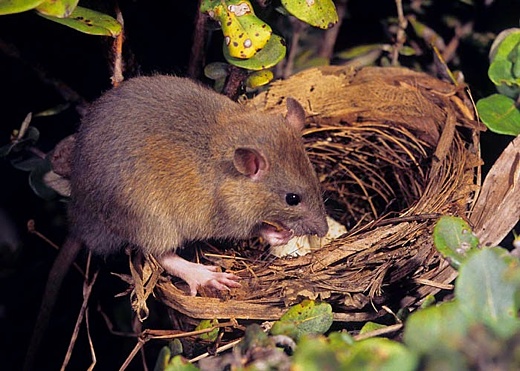
Image above: Rat in tree eating Hawaiian bird eggs. From (https://conservationbytes.com/2015/01/06/help-hawaiis-hyper-threatened-birds/).

If the rat eradication of Lehua Island (in Kauai County, Hawaii) ends up being successful, it could result in a more productive nearshore fishery.

Which is ironic, in that many of those fighting the eradication program were fishermen.

A new study in the journal Nature says that when rats kill off seabirds on islands, it means those birds are no longer pooping in the nearshore waters, fertilizing reefs. And that means fewer fish on those reefs.

This study was done in the Chagos Archipelago, where some islands have rats and others are rat-free. Researchers looked at both the fertility of the land on those islands and the productivity of their reefs, where erosion from the land would carry nutrients like bird-poop-sourced nitrogen.

The Chagos are atolls and reefs just south of the Equator in the Indian Ocean. Their ownership is disputed between Great Britain and Mauritius. One is Diego Garcia, which houses a U.S military base.

The results of the research were clear, said the authors, who are from Australian, British, Danish and Canadian research institutions.

On islands without rats, seabird density as well as nitrogen deposits were hundreds of times higher. Yes, hundreds: 250 to more than 700 times higher.

Those rat-free islands had reefs that had 48 percent more biomass of "macroalgae, filter-feeding sponges, turf algae and fish."

The researchers looked specifically at damselfish, and found that they both grew faster and had higher total biomass on the rat-free islands.

The theory, then, is that seabirds feed in the open ocean, deliver bird poop to the islands, and that the islands then feed the nearshore waters, which makes the waters more productive and capable of producing more fish.

"Rat eradication on oceanic islands should be a high conservation priority as it is likely to benefit terrestrial ecosystems and enhance coral reef productivity and functioning by restoring seabird-derived nutrient subsidies from large areas of ocean," the authors wrote.

Rats are not the only problems on islands. On Midway Atoll, near the western end of the Hawaiian archipelago, mice began eating seabirds after rats were removed from the islands there. The case of the vampire mice, which chewed into the necks of Laysan albatross, is reviewed here.

On other islands, the mice even seemed to be getting bigger on their diets of eggs and bird flesh. The Washington Post was among the many international publications that picked up the vampire mouse story.

All that said, rodents mainly go after eggs and chicks of nesting seabirds. That was the case at Lehua Island. Here is a description of the situation on the little island north of Ni`ihau before an application of a rodenticide to try to wipe out the rats.

"We found Wedge-tailed Shearwater and Red-tailed Tropicbird eggs broken open, the edges gnawed, the insides consumed. Tiny seabird chick bodies were commonplace–pulled out of burrows and half eaten.

This was particularly true for the diminutive Bulwer’s Petrel–the vast majority of Bulwer’s Petrel burrows we found had bits and pieces of chick inside," wrote Andre Raine, Project Manager for the Kauai Endangered Seabird Recovery Project.

A couple of months after the 2017 rat eradication effort at Lehua, Raine said he could clearly see the difference:

"Fat, healthy Wedge-tailed Shearwater chicks shuffled about in their burrows looking like animated fuzzballs. One of our burrow cameras showed a Bulwer’s Petrel chick exercising outside its burrow and actually fledging – a great omen, as this is something we have never recorded on our cameras in previous years," he wrote.

Most, but not all the rats were killed off at Lehua, and wildlife crews were back this year with rat-hunting dogs to try to kill off the survivors and protect the island's nesting seabird population.

And the island's coastal reefs and fisheries.
The removal of rats from islands is a major conservation effort. It has been done successfully at islands in Hawai`i like Mokoli`i off O`ahu and Mokapu off Molokai.

When it was accomplished at Palmyra Atoll south of the Hawaiian Islands, it had the unintended effect of killing off the disease-causing Asian tiger mosquito, which had depended on rats for blood meals. 
.

Civilization as Asteroid

SUBHEAD: We and our livestock are more than an order of magnitude greater than all animals on land.

By Darrin Qualman on 13 June 2018 in Resilience -
(https://www.darrinqualman.com/humans-livestock-extinctions/)


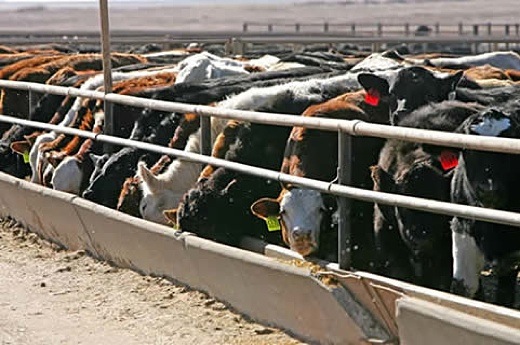
Image above: These 600-700 pound steers are being fed in a feedlot in Jetmore, Kansas, for “backgrounding” to gain weight to around 1,000 pounds. They’ll be sent to another feedlot for “finishing” before slaughter. From (https://aspenranchrealestate.com/Colorado_Cattle_Ranching).

Humans and our livestock now make up 97% of all animals on land.  Wild animals (mammals and birds) have been reduced to a mere remnant: just 3%.  This is based on mass.  Humans and our domesticated animals outweigh all terrestrial wild mammals and birds 32-to-1.

To clarify, if we add up the weights of all the people, cows, sheep, pigs, horses, dogs, chickens, turkeys, etc., that total is 32 times greater than the weight of all the wild terrestrial mammals and birds: all the elephants, mice, kangaroos, lions, raccoons, bats, bears, deer, wolves, moose, chickadees, herons, eagles, etc.

A specific example is illuminating: the biomass of chickens is more than double the total mass of all other birds combined.


Image above: At this KFC "broiler shed" there is only artificial light, no fresh air, and huge fans circulate the stale ammonia filled air. Chicken meat is perfect for our fast food culture. A producer can ‘grow’ a chicken within a few weeks with super large breasts, and minimize overhead through economies of scale. From (https://pos394.wordpress.com/2014/11/02/do-you-know-how-your-chicken-was-raised/).

Before the advent of agriculture and human civilizations, however, the opposite was the case: wild animals and birds dominated, and their numbers and mass were several times greater than their numbers and mass today.

Before the advent of agriculture, about 11,000 years ago, humans made up just a tiny fraction of animal biomass, and domesticated livestock did not exist.  The current situation—the domination of the Earth by humans and our food animals—is a relatively recent development.

The preceding observations are based on a May 2018 report by Yinon Bar-On, Rob Phillips, and Ron Milo published in the academic journal Proceedings of the National Academy of Sciences.  Bar-On and his coauthors use a variety of sources to construct a “census of the biomass of Earth”; they estimate the mass of all the plants, animals, insects, bacteria, and other living things on our planet.

The graph below is based on data from that report (supplemented with estimates based on work by Vaclav Smil).  The graph shows the mass of humans, our domesticated livestock, and “wild animals”: terrestrial mammals and birds.  The units are millions of tonnes of carbon.[1]  Three time periods are listed.


Image above: Graph of history of land based mammals and bird biomass over last 11,000 years. From www.darrinqualman.com.

The first, 50,000 years ago, is the time before the Quaternary Megafauna Extinction.  The Megafauna Extinction was a period when Homo sapiens radiated outward into Eurasia, Australia, and the Americas and contributed to the extinction of about half the planet’s large animal species (over 44 kgs).  (Climate change also played a role in that extinction.)

In the middle of the graph we see the period around 11,000 years ago—before humans began practicing agriculture.  At the right-hand side we see the situation today.  Note how the first two periods are dominated by wild animals.  The mass of humans in those periods is so small that the blue bar representing human biomass is not even visible in the graph.[2]

This graph highlights three points:
  1. Wild animal numbers and biomass have been catastrophically reduced, especially over the past 11,000 years
  2. Human numbers and livestock numbers have skyrocketed, to unnatural, abnormal levels
  3. The downward trendline for wild animals visible in this graph is gravely concerning; this graph suggests accelerating extinctions.
Indeed, we are today well into the fastest extinction event in the past 65 million years.  According to the 2005 Millennium Ecosystem Assessment “the rate of known extinctions of species in the past century is roughly 50–500 times greater than the extinction rate calculated from the fossil record….”

The extinction rate that humans are now causing has not been seen since the Cretaceous–Paleogene extinction event 65 million years ago—the asteroid-impact-triggered extinction that wiped out the dinosaurs.

Unless we reduce the scale and impacts of human societies and economies, and unless we more equitably share the Earth with wild species, we will enter fully a major global extinction event—only the sixth in 500 million years.  To the other species of the Earth, and to the fossil record, human impacts increasingly resemble an asteroid impact.

In addition to the rapid decline in the mass and number of wild animals it is also worth contemplating the converse: the huge increase in human and livestock biomass.  Above, I called this increase “unnatural,” and I did so advisedly.


The mass of humans and our food animals is now 7 times larger than the mass of animals on Earth 11,000 or 50,000 years ago—7 times larger than what is normal or natural.

For millions of years the Earth sustained a certain range of animal biomass; in recent millennia humans have multiplied that mass roughly sevenfold.

How?  Fossil fuels.  Via fertilizers, petro-chemical pesticides, and other inputs we are pushing hundreds of millions of tonnes of fossil fuels into our food system, and thereby pushing out billions of tonnes of additional food and livestock feed.

We are turning fossil fuel Calories from the ground into food Calories on our plates and in livestock feed-troughs.   For example, huge amounts of fossil-fuel energy go into growing the corn and soybeans that are the feedstocks for the tens-of-billions of livestock animals that populate the planet.

Dr. Anthony Barnosky has studied human-induced extinctions and the growing dominance of humans and their livestock.  In a 2008 journal article he writes that “as soon as we began to augment the global energy budget, megafauna biomass skyrocketed, such that we are orders of magnitude above the normal baseline today.”

According to Barnosky “the normal biomass baseline was exceeded only after the Industrial Revolution” and this indicates that “the current abnormally high level of megafauna biomass is sustained solely by fossil fuels.”

Only a limited number of animals can be fed from leaves and grass energized by current sunshine.  But by tapping a vast reservoir of fossil sunshine we’ve multiplied the number of animals that can be fed.  We and our livestock are petroleum products.

There is no simple list of solutions to mega-problems like accelerating extinctions, fossil-fuel over-dependence, and human and livestock overpopulation.  But certain common sense solutions seem to present themselves.

I’ll suggest just one: we need to eat less meat and fewer dairy products and we need to reduce the mass and number of livestock on Earth.  Who can look at the graph above and come to any other conclusion?

We need not eliminate meat or dairy products (grazing animals are integral parts of many ecosystems) but we certainly need to cut the number of livestock animals by half or more.

Most importantly, we must not try to proliferate the Big Mac model of meat consumption to 8 or 9 or 10 billion people.  The graph above suggests a stark choice: cut the number of livestock animals, or preside over the demise of most of the Earth’s wild species.
  1. Using carbon content allows us to compare the mass of plants, animals, bacteria, viruses, etc.  Very roughly, humans and other animals are about half to two-thirds water.  The remaining “dry mass” is about 50% carbon.  Thus, to convert from tonnes of carbon to dry mass, a good approximation is to multiply by two.
     
  2. There is significant uncertainty regarding animal biomass in the present, and much more so in the past.  Thus, the biomass values for wild animals in the graph must be considered as representing a range of possible values.  That said, the overall picture revealed in the graph is not subject to any uncertainty.  The overall conclusions are robust: the mass of humans and our livestock today is several times larger than wild animal biomass today or in the past; and wild animal biomass today is a fraction of its pre-agricultural value.
Graph sources:
– Yinon M. Bar-On, Rob Phillips, and Ron Milo, “The Biomass Distribution on Earth,” Proceedings of the National Academy of Sciences, May 17, 2018.
– Anthony Barnosky, “Megafauna Biomass Tradeoff as a Driver of Quaternary and Future Extinctions,” Proceedings of the National Academy of Sciences 105 (August 2008).
– Vaclav Smil, Harvesting the Biosphere: What We Have Taken from Nature (Cambridge, MA: MIT Press, 2013).


.

Chemical farming is unsustainable

SUBHEAD: Why poison ourselves when pesticides don’t save more of our crops than in the past?

By Alice Friedman on 16 March 2017 for Energy Sceptic -
(http://energyskeptic.com/2017/chemical-industrial-farming-is-unsustainable-why-poison-ourselves-when-pesticides-dont-kill-more-pests-than-in-the-past/)


Image above: Photo of tractor applying pesticide by Sidsal - Bofarm Industries. From (http://www.sidsal.com/photogallery.php).


Pesticides, herbicides, and insecticides destroy soil, ecosystems, and a third of the crop is still lost to pests, just as in the many millennia of farming before chemicals.

[Auther's note: This is a book review of Andy Dyer’s “Chasing the Red Queen”, and I have added additional information and conclusions.  This book is not technical and could be read by both high school and undergraduate students as an introduction to soil ecosystems and the damage done by agricultural chemicals, and the science of why this is ultimately not sustainable.]

We hear a lot about how we’re running out of antibiotics.  But we are also doomed to run out of pesticides, because insects inevitably develop resistance, whether toxic chemicals are sprayed directly or genetically engineered into the plants.

Worse yet, weeds, insects, and fungus develop resistance in just 5 years on average, which has caused the chemicals to grow increasingly lethal over the past 60 years.  And it takes on average eight to ten years to identify, test, and develop a new pesticide, though that isn’t long enough to discover the long-term toxicity to humans and other organisms.

And this devil’s bargain hasn’t even provided most of the gains in crop yields, which is due to natural-gas and phosphate fertilizers plus soil-crushing tractors and harvesters that can do the work of millions of men and horses quickly on farms that grow only one crop on thousands of acres.

Yet before pesticides, farmers lost a third of their crops to pests, after pesticides, farmers still lose a third of their crops.

Even without pesticides, industrial agriculture is doomed to fail from extremely high rates of soil erosion and soil compaction at rates that far exceed losses in the past, since soil couldn’t wash or blow away as easily on small farms that grew many crops.

But pest killing chemicals are surely accelerating the day of reckoning sooner rather than later. Enormous amounts of toxic chemicals are dumped on land every year — over 1 billion pounds are used in the United State (US) every year and 5.6 billion pounds globally (Alavanja 2009).

This destroys the very ecosystems that used to help plants fight off pests, and is a major factor biodiversity loss and extinction.

Evidence also points to pesticides playing a key role in the loss of bees and their pollination services.  Although paleo-diet fanatics won’t mind eating mostly meat when fruit, vegetable, and nut crops are gone, they will not be so happy about having to eat more carbohydrates.

Wheat and other grains will still be around, since they are wind-pollinated.

Agricultural chemicals render land lifeless and toxic to beneficial creatures, also killing the food chain above — fish, amphibians, birds, and humans (from cancer, chronic disease, and suicide).
Surely a day is coming when pesticides stop working, resulting in massive famines.

But who is there to speak for the grandchildren? And those that do speak for them are mowed down by the logic of libertarian capitalism, which only cares about profits today.

Given that a political party is now in power in the U.S. that wants to get rid of the protections the Environmental Protection Agency (EPA) and other agencies provide, may make matters worse if agricultural chemicals are allowed to be more toxic, long-lasting, and released earlier, before being fully tested for health effects.

Meanwhile chemical and genetic engineering companies are making a fortune, because the farmers have to pay full price, since the pests develop resistance long before a product is old enough to be made generically.  Except for glyphosate, but weeds have developed resistance. Predictably.

In fact, the inevitability of resistance has been known for nearly seven decades. In 1951, as the world began using synthetic chemicals, Dr. Reginald Painter at Kansas State University published “Insect Resistance in Crop Plants”.  He made a case that it would be better to understand how a crop plant fought off insects, since it was inevitable that insects would develop genetic or behavioral resistance.

At best, chemicals might be used as an emergency control measure.

Farmers will say that we simply must carry on like this, there’s no other choice.  But that’s simply not true.

Consider the corn rootworm, that costs farmers about $2 billion a year in lost crops despite spending hundreds of millions on chemicals and the hundreds of millions of dollars chemical companies spend developing new chemicals.

To lower the chances of corn pests developing resistance, corn crops were rotated with soybeans. Predictably, a few mutated to eat soybeans plus changed their behavior.  They used to only lay eggs on nearby corn plants, now they disperse to lay eggs on soybean crops as well.

Worse yet, corn is more profitable than soy and many farmers began growing continuous corn.  Already the corn rootworm is developing resistance to the latest and greatest chemicals.

But the corn rootworm is not causing devastation in Europe, because farms are smaller and most farmers rotate not just soy, but wheat, alfalfa, sorghum and oats with corn (Nordhaus 2017).

Before planting, farmers try to get rid of pests that survived the winter and apply fumigants to kill fungi and nematodes, and pre-emergent chemicals to reduce weed seeds from emerging.

Even farmers practicing no-till farming douse the land with herbicides by using GMO herbicide-resistant crops.

Then over the course of crop growth, farmers may apply several rounds of additional pesticides to control different pests. For example, cotton growers apply chemicals from 12 to 30 times before harvest.

Currently, the potential harm is only assessed for 2 to 3 years before a permit is issued, even though the damage might occur up to 20 years later.

Although these chemicals appear to be just like antibiotics, that isn’t entirely true.  We develop some immunity to a disease after antibiotics help us recover, but a plant is still vulnerable to the pests and weeds with the genetics or behavior to survive and chemical assault.

Although there are thousands of chemical toxins, what matters is how they kill, their method of action (MOA).  For herbicides there are only 29 MOAs, for insecticides, just 28.  So if a pest develops resistance to one chemical within an MOA, it will be resistant to all of the thousands of chemicals within that MOA.

The demand for chemicals has also grown due the high level of bioinvasive species.  It takes a while to find native pests and make sure they won’t do more harm than good.

In the 1950s there were just three main corn pests. By 1978 there were 40, and they vary regionally. For example, California has 30 arthropods and over 14 fungal diseases to cope with.

When I was learning how to grow food organically back in the 90s, I remember how outraged organic farmers were that Monsanto was going to genetically engineer plants to have the Bt bacteria in them.  This is because the only insecticide organic farmers can use is Bt bacteria, because it is found in the soil. It’s natural.

Organic farmers have been careful to spray only in emergencies so that insects didn’t develop resistance to their only remedy.

Since 1996, GMO plants have been engineered to have Bt in them, and predictably, insects have developed resistance.  For example, in 2015, 81% of all corn was planted with genetically engineered Bt.

But corn earworms have developed resistance, especially in North Carolina and Georgia, setting the stage for damage across the nation.  Five other insects have developed resistance to Bt as well.

GMO plants were also going to reduce pesticide use.  They did for a while, but not for long.  Chemical use has increased 7% to 202,000 tons a year in the past 10 years.

Resistance can come in other ways than mutations. Behavior can change. Cockroach bait is laced with glucose, so cockroaches that developed glucose-aversion now no longer take the bait.
It is worth repeating that chemicals and other practices are ruining the long-term viability of agriculture. Here is how author Dyer explains it:
“Ultimately the practice of modern farming is not sustainable” because “the damage to the soil and natural ecosystems is so great that farming becomes dependent not on the land but on the artificial inputs into the process, such as fertilizers and pesticides.

In many ways, our battle against the diverse array of pest species is a battle against the health of the system itself.  As we kill pest species, we also kill related species that may be beneficial. We kill predators that could assist our efforts. We reduce the ecosystem’s ability to recover due to reduced diversity, and we interfere with the organisms that affect the biogeochemical processes that maintain the soils in which the plants grow.

Soil is a complex, multifaceted living thing that is far more than the sum of the sand, silt, clay, fungi, microbes, nematodes, and other invertebrates. All biotic components interact as an ecosystem within the soil and at the surface, and in relation to the larger components such as herbivores that move across the land. Organisms grow and dig through the soil, aerate it, reorganize it, and add and subtract organic material.  Mature soil is structured and layered and, very importantly, it remains in place.

Plowing of the soil turns everything upside down.  What was hidden from light is exposed.  What was kept at a constant temperature is now varying with the day and night and seasons.  What cannot tolerate drying conditions at the surface is likely killed.  And very sensitive and delicate structures within the soil are disrupted and destroyed.

Conventional tillage disrupts the entire soil ecosystem. Tractors and farm equipment are large and heavy; they compact the soil, which removes air space and water-holding capacity. Wind and water erosion remove the smallest soil particles, which typically hold most of the micronutrients needed by plants.

Synthetic fertilizers are added to supplement the loss of oil nutrients but often are relatively toxic to many soil organisms.

And chemicals such as pre-emergents, fumigants, herbicides, insecticides, acaricides, fungicides, and defoliants eventually kill all but the most tolerant or resistant soil organisms.  It does not take long to reduce a native, living, dynamic soil to a relatively lifeless collection of inorganic particles with little of the natural structure and function of undisturbed soil”.
When I told my husband all the reasons we use agricultural chemicals and the harm done, my husband got angry and said “Farmers aren’t stupid, that can’t be right!”

I think there are a number of reasons why farmers don’t go back to sustainable organic farming.
First
There is far too much money to be made in the chemical herbicide, pesticide, and insecticide industry to stop this juggernaut.

After reading Lessig’s book “Republic, Lost”, one of the best, if not the best book on campaign finance reform, I despair of campaign financing ever happening.

So chemical lobbyists will continue to donate enough money to politicians to maintain the status quo.
Plus the chemical industry has infiltrated regulatory agencies via the revolving door for decades and is now in a position to assassinate the EPA, with newly appointed Scott Pruitt, who would like to get rid of the EPA.

Second
About half of farmers are hired guns.  They don’t own the land and care about passing it on in good health to their children.  They rent the land, and their goal, and the owner’s goal is for them to make as much profit as possible.

Third
Renters and farmers both would lose money, maybe go out of business in the years it would take to convert an industrial monoculture farm to multiple crops rotated, or an organic farm.

Fourth
It takes time to learn to farm organically properly.  So even if the farmer survives financially, mistakes will be made.  Hopefully made up for by the higher price of organic food, but as wealth grows increasingly more unevenly distributed, and the risk of another economic crash grows (not to mention lack of reforms, being in more debt now than 2008, etc).

Fifth
Industrial farming is what is taught at most universities.  There are only a handful of universities that offer programs in organic agriculture.

Sixth
Subsidies favor large farmers, who are also the only farmers who have the money to profit from economies of scale, and buy their own giant tractors to farm a thousand acres of monoculture crops.
Industrial farming has driven 5 million farmers off the land who couldn’t compete with the profits made by larger farms in the area.

But farmers will have to go organic whether they like it or not.

It’s hard to say whether this will happen because we’ve run out of pesticides, whether from resistance or a financial crash reducing new chemical research, or whether peak oil, peak coal, and peak natural gas will cause the decline of chemical farming.

Agriculture uses about 15 to 20% of fossil fuel energy, from natural gas fertilizer, oil-based chemicals, farm vehicle and equipment fuel,  the agricultural cold chain, distribution, packaging, refrigeration, and cooking to name a few of the uses.

At some point of fossil decline, there won’t be enough fuel or pesticides to continue business as usual.

Farmers will be forced to go organic at some point.  Wouldn’t it be easier to start the transition now?

Although steam engines could replace diesel and gasoline engines, steam engines are far less efficient, and biomass doesn’t grow quickly enough to be renewable for a steam engine economy.

By the civil war, vast regions of the U.S. east of the Mississippi were deforested for steam locomotives, factory steam engines, river boats, and for heating, cooking, and construction.

Nor can we return to muscle power to the extent we once did, because cars allowed us to build on top of land that used to graze horses.

What about electrifying farming?

It is unlikely we can electrify tractors – the weight of the battery needed would be about as much as the weight of the tractor, and further compact the soil.  Diesel is 500 times more energy dense pound for pound as a led acid battery, and 100 times as energy dense as lithium batteries.

Batteries also weigh a lot because half the weight of a battery is its management system, which uses half of the battery energy to keep the batteries from exploding or getting too hot or cold.

Nor can we string an overhead catenary wire system across hundreds of millions of acres of cropland.

What to do
We already know what to do.  There are hundreds, if not thousands of books and journal articles on how to convert an industrial farm to an organic one, such as:
  • Use pesticides less often, and only when absolutely necessary with integrated pest management guidelines to slow resistance down from 5 years to 8 years
  • Stop monoculture, or rotating just two crops, because insects can develop resistance.
  • Surround farms with wild land to increase biodiversity and provide more niches for birds, insects, and other natural predators of crop pests.
  • Restore the natural fertility of soil with manure, crop resides, compost, and cover crops.
  • Improve crop biodiversity and pest resistance by growing more varieties of corn, wheat, potatoes
  • Educate farmers like Ray Archuleta at the natural resources conservation service. He’s been teaching classes on how to restore soils in as little as two to three years.
  • Before fossil fuels, 90% of the population were farmers.  Provide meaningful jobs by breaking up large farms into smaller ones that grow many crops
And for some pests, like the green aphid, which has grown so resistant to so many chemicals that farmers are running out of options, a healthy ecosystem approach may be the only thing left to try.

Chasing the Red Queen. The Evolutionary Race between Agricultural Pests and Poisons
Published by Island Press. Link is to Amazon access to book.

References
Alavanja, M. 2009. Pesticides Use and Exposure Extensive Worldwide. Rev Environmental Health.

Benbrook, C. M. 2015. Trends in glyphosate herbicide use in the United States and globally. Environmental sciences Europe.

Nordhaus, H. March 2017. Cornboy vs. the billion-dollar bug. Technology to defeat the corn rootworm, scientists worry, will work only briefly against an inventive foe. Scientific American

Alice Friedemann   www.energyskeptic.com  author of “When Trucks Stop Running: Energy and the Future of Transportation”, 2015, Springer and “Crunch! Whole Grain Artisan Chips and Crackers”. Podcasts: Practical Prepping, KunstlerCast 253, KunstlerCast278, Peak Prosperity , XX2 report
.

Paris COP21 and Peace

SUBHEAD: We must remember that there will be no peace between people if we do not make peace with the Earth.

By Vandanah Shiva on 2 December 2015 for the Asian Age -
(http://www.asianage.com/columnists/paris-and-peace-155)


Image above: From (http://www.countercurrents.org/shiva061215.htm).

Land, water and agriculture-related conflicts are deliberately mutated into religious conflicts to protect the militarized agriculture model which has unleashed a global war against people.

Humanity stands at a precipice.

Merely 200 years of the age of fossil fuel has driven species and biodiversity to extinction, destroyed our soils, depleted and polluted our water and destabilized our entire climate system.

Five hundred years of colonialism have driven cultures, languages, peoples to extinction and left a legacy of violence as the basis of production and governance.

The November 13 Paris attacks have led to an escalation of violence in our way of speaking and thinking while dealing with a conflict. Paris has emerged as the epicenter of the planetary ecological crisis and the global cultural crisis.

From November 30 to December 11, movements and governments converge in Paris for COP21 — 21st Conference of Parties on the UN Framework Convention on Climate Change.

COP21 is not just about climate change; it is about our modes of production and consumption which are destroying the ecosystems that support life on this planet.

There is a deep and intimate connection between the events of November 13 and the ecological devastation unleashed by the fossil fuel era of human history. The same processes that contribute to climate change also contribute towards growing violence among people. Both are results of a war against the Earth.

Industrial agriculture is a fossil fuel-based system which contributes more than 40 per cent of the greenhouse gases leading to climate change. Along with the globalized food system, industrial agriculture is to be blamed for at least 50 per cent of the global warming.

Synthetic nitrogen fertilizers are based on fossil fuels and use the same chemical processes used to make explosives and ammunition. Manufacturing one kilogram of nitrogen fertilizer requires the energy equivalent to two liters of diesel.

Energy used during fertiliser manufacture was equivalent to 191 billion litres of diesel in 2000 and is projected to rise to 277 billion in 2030. Synthetic fertilizer, used for industrial agriculture, is a major contributor to climate change — it starts destroying the planet long before it reaches a field.

Yet the dominant narrative is that synthetic fertilizers feed us and without them people will starve.

The fertilizer industry says that “they produce bread from air”. This is incorrect.

Nature and humans have evolved many non-violent, effective and sustainable ways to provide nitrogen to soil and plants.

For example, pulses and beans are nitrogen-fixing crops. Bacteria named rhizobia, which exists in the nodules of their roots, converts atmospheric nitrogen into ammonia and then into organic compounds to be used by the plant for growth.

Intercropping or rotating pulses with cereals has been an ancient practice in India. We also use green manures which can fix nitrogen.

Returning organic matter to the soil builds up soil nitrogen. Organic farming can increase nitrogen content of soil between 44-144 per cent, depending on the crops that are grown.

Organic farming not only avoids the emissions that come from industrial agriculture, it transforms carbon in the air through photosynthesis and builds it up in the soil, thus contributing to higher soil fertility, higher food production and nutrition and a sustainable, zero-cost technology for addressing climate change.

Ecologically non-sustainable models of agriculture, dependent on fossil fuels, have been imposed through “aid” and “development” projects in the name of Green Revolution. As soil and water are destroyed, ecosystems that produced food and supported livelihoods can no longer sustain societies.

As a result, there’s anger, discontent, frustration, protests and conflicts. However, land, water and agriculture-related conflicts are repeatedly and deliberately mutated into religious conflicts to protect the militarized agriculture model, which has unleashed a global war against the earth and people.

I witnessed this in Punjab while I was doing research for my book, The Violence of the Green Revolution, on the violence of 1984. We are witnessing this today, as conflicts which begin because of land degradation and water crises — induced by non-sustainable farming systems — are given the colour of religious conflicts.

Since 2009, we heard of Boko Haram while we missed the news about the disappearance of Lake Chad. Lake Chad supported 30 million people in four countries — Nigeria, Chad, Cameroon and Niger. Intensive irrigation for industrial agriculture increased four-fold from 1983 to 1994.

Fifty percent of the disappearance of Lake Chad is attributed to the building of dams and intensive irrigation for industrial agriculture.

As the water disappeared, conflicts between Muslim pastoralists and settled Christian farmers over the dwindling water resources led to unrest. As Luc Gnacadja, the former secretary-general of the UN Convention to Combat Desertification, states about the violence in Nigeria, “The so-called religious fight is actually about access to vital resources”.

The story of Syria is similar. In 2009, a severe drought uprooted a million farmers who were forced to move into the city for livelihood. Structural adjustment measures, imposed by global financial institutions and trade rules, prevented the government from responding to the plight of Syria’s farmers.

The farmers’ protests intensified. By 2011, the world’s military powers were in Syria, selling more arms and diverting the narrative from the story of the soil and farmers to religion.

Today, half of Syria is in refugee camps, the war is escalating and the root causes of the violence continue to be actively disguised as religion.

Haber, the inventor of Zyklon B — a poisonous gas used in 1915 to kill more than a million Jews in concentration camps — was given a Nobel Prize in chemistry. American biologist Norman Borlaug received a Nobel Prize for Peace for the chemical-based Green Revolution that has only left a legacy of violence.

For me, COP21 is a pilgrimage of peace — to remember all the innocent victims of the wars against the land and people; to develop the capacity to re-imagine that we are one and refuse to be divided by race and religion; to see the connections between ecological destruction, growing violence and wars that are engulfing our societies.

We must remember that there will be no peace between people if we do not make peace with the Earth.

• Vandana Shiva is the executive director of the Navdanya Trust

.

A Soil Pilgrimage

SUBHEAD: Organic farming is the answer to drought and climate change and disintegration of civilization.

By Vandana Shiva on 15 October 2015 for The Asian Age -
(http://www.asianage.com/columnists/soil-pilgrimage-994)


Image above: Vandana Shive on "A soul Pigtimage". From (http://seedfreedom.info/campaign/terra-viva-our-soil-our-commons-our-future/).

Organic farming is the answer to drought and climate change. If we do not respect the soil and if we do not recommit ourselves to ahimsa, we can rapidly disintegrate as a civilization.

[Ashisma: circa 1875 - Without injury - Sanskrit,"a" without, and "himsa" injury]

I have just returned from a soil pilgrimage undertaken to celebrate the International Year of Soil and renew our commitment to a non-violent relationship with the earth, the soil and our society. On October 2, we started the pilgrimage from Bapu Kutir at Sevagram Ashram, Maharashtra.

My fellow pilgrims were those who have contributed over half-a-century of their lives to build the organic movement — Andre Leu, president of International Federation of Organic Agricultural Movements (IFOAM), Ronnie Cummins, director of the Organic Consumers Association (OCA) of the United States, and Will Allen, a professor and long-time organic farmer.

At Mahatma Gandhi’s hut, we took a pledge to stop the violence to the soil through chemical fertilisers and poisons and promote organic farming as ahimsa kheti. We dedicated ourselves to a transition from a violent, chemical, industrial agriculture that is destroying soil fertility and trapping farmers in debt through high-cost seeds and chemicals.

Vidarbha, for example, has emerged as the epicenter of debt-induced farmers’ suicides. It is also the region with the highest acreage of genetically modified organism (GMO) Bt cotton. Fields of non-Bt, native cotton — which is totally pest and weed-free — gives more yields than Bt cotton.

The Bt fields are being doused in pesticides because of pest outbreaks, since Bt is failing as a tool to control pests. Bt cotton fields are also being sprayed with Monsanto’s Roundup, a known carcinogen to control weeds.

There is no regulation of the poisons being used. Most of the GMO cotton seed is being blended and labelled for sale as vegetable oil. We are being fed GMO cotton seed oil, even though GMOs are not allowed in food in India. And while toxic oils spread without regulation, the new food safety rules have shut down the ghani (virgin oil press) that sold healthy and safe oils like flax, groundnut, sesame and mustard.

The oilcake is being fed to our cows. Those who kill others in the name of cow protection are silent on the fight against the toxic giants who are poisoning our “gau mata”.

The pilgrimage concluded at the Agriculture College, Indore, which started as Albert Howard’s institute on organic farming that contributed to the famous Indore process of composting.

Mahatma Gandhi came to know of the Indore process when he visited London to attend the Round Table Conference. Gandhi and Howard have shown that we can have a peaceful and respectful relationship with the soil and with each other.

Howard was sent to India in 1905 by the British Empire to introduce chemical farming. When he arrived, he found the soils were fertile and there were no pests in the fields. He decided to make the Indian peasant his professor and wrote the book An Agricultural Testament, known as the bible of organic farming.

Organic farming is the original example of “Make in India”. Howard’s book helped spread the organic movement to the US through the Rodale Institute and to the UK through the Soil Association, finding its way to far corners of the world.

The soil pilgrimage was our expression of gratitude to sources of organic farming in India — our fertile and generous land and Mother Earth that have sustained us for millennia.

Ecological and regenerative agriculture is based on recycling organic matter, and hence recycling nutrients. It is based on the Law of Return — giving nutrients back to the soil. As Howard wrote in The Soil and Health: “Taking without giving is a robbery of the soil and a banditry; a particularly mean form of banditry, because it involves the robbing of future generations which are not here to defend themselves.”

In taking care of the soil, we also produce more food on less land. Fertile soils are the sustainable answer to food and nutrition security. Organic agriculture is the only real answer to climate change.

The air pollution that has built up in the atmosphere is roughly 400 parts per million (ppm) carbon dioxide today. This is the reason for the greenhouse effect and climate chaos, including temperature rise. To cap the rise of temperature at two degrees centigrade, we need to reduce the carbon build up in the air to 350 ppm.

There is a need to reduce emissions and phase out fossil fuels, but it also requires reducing the stocks of excess carbon from the atmosphere and putting it back into the soil where it belongs. Here, organic, regenerative agriculture offers us the way out.

In the process, it also addresses food insecurity and hunger, reverses desertification, creates livelihood security by creating ecological security, and, therefore, creates the path to peace.

Above all, it allows a transition from the violent paradigm, structures and systems of capitalist patriarchy to the non-violent paradigm, structures and systems based on ahimsa, which include the well being of all.

Organic farming is the answer to drought and climate change. It is also a peace solution. If we do not respect the soil and our cultural diversity and if we do not collectively recommit ourselves to ahimsa, we can rapidly disintegrate as a civilization.

For me, organic agriculture is the dharma that sows the seeds of peace and prosperity for all. It helps us break out of the vicious cycle of violence and degeneration, and create virtuous cycles based on non-violence and regeneration.

Just as humus in soil binds soil particles and prevents soil erosion, it also binds the society and prevents violence and social disintegration. Since humus provides food, livelihood, water and climate security, it also contributes to peace.

Just as wet straw cannot be put on fire by a matchstick, communities that are secure cannot be put on fire by violent elements feeding on insecurity created by an economic model that is killing swadeshi and is only designed for global economic powers to extract what they want.

In taking care of the soil, we reclaim our humanity. Our future is inseparable from the future of the earth. It is no accident that the word human has its roots in humus — soil in Latin. And Adam, the first human in Abrahamanic traditions, is derived from Adamus, soil in Hebrew.

Mahatma Gandhi wrote: “To forget how to dig the earth and tend the soil is to forget ourselves.”

We must never forget that ahimsa must be the basis of our relationship with the earth and each other.

.

Soil is the stomach of the plant

SUBHEAD: The soil surrounding a plant’s root zone is effectively its digestive system, or ‘stomach’.

By Patrick Holden on 17 April 2015 for Sustainable Food Trust -
(http://sustainablefoodtrust.org/articles/soil-stomach-plant/)


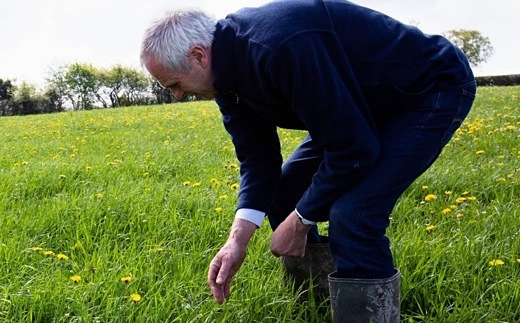
Image above: Photo of author Patrick Holden on the soil by Steph French from original article.

I am a long-standing farmer and representative of the organic movement, but it is only recently that I have come to see just how much microbiology permeates every aspect of our lives.

Although theoretically and mechanistically I knew this a long time ago, and was aware of the importance of soil biology and mycorrhizal fungi, it was only in 2012 that it really began to dawn on me how understanding the intimate, biological and symbiotic processes involved in my own digestion sheds light on the equivalent processes taking place in the soils of my farm.

In 2012 I heard a conference speech by Patricia Quinlisk, Head of Public Health in Iowa, about the remarkable recovery rate – up to 80% – of patients with digestive infections after they had received fecal microbiota transplants. Where antibiotics had been detrimental to their health, introducing healthy bacteria from stools had restored their colonic microflora.

It was through understanding that the human body is a biome – by definition, a large, naturally occurring community of flora occupying a major habitat – that I realised the full meaning of soil life and how interconnected it is to all other ecosystems.

The dark mysterious world of soil biology is rarely brought to the daylight of people’s understanding, even in the organic movement, due to the assumption that this is reserved for the in-depth investigations of soil scientists.

The attention to soil during this International Year of Soils and the Berlin Global Soil Week 2015 will hopefully bring some of the fascinating discoveries of soil science to wider public awareness. However, if we understand this science only in terms of the earth beneath our feet, we miss out on seeing the awe-inspiring interconnectivity of soil with the rest of life.

Parallel digestive systems
The key concept that has changed my thinking on farming is to understand that the soil surrounding a plant’s root zone is effectively its digestive system, or ‘stomach’. Building on this parallel, my body breaks down the food I eat in an internal and, mainly, but not exclusively, anaerobic process that involves symbiotic communities of bacteria, which occupy the stomach, small intestine and large intestine.

Nutrients are absorbed through the huge surface area of villi lining the gut, a process that is mirrored in the soil, although with plants the absorption is outside-in rather than inside-out. It is in this sense that the soil and its bacterial and fungal community can be seen as analogous to an external stomach of a plant, since these organisms, including a network of mycorrhizal fungi, play a central role in breaking down organic matter into absorbable nutrients, which are available to plants through their large surface area of root systems.

Although these processes in the body and in the soil function differently, there is a fundamental link – the digestive system. This system refines and transforms the material from one organism, which occupies a low place in the food chain, to nourish another, further up the ladder.

Through digestion, organic materials are broken down and transformed into new life forms: the soil biome nourishes the plant through complex digestive processes in the topsoil and rhizosphere, and the plant matter in turn becomes animal flesh as it is transformed through another biome, in this case an internalized gut. The health of all these interconnected organisms is, therefore, centrally dependent on the health of their digestive processes.

The secret world of microbes
At the microbiological level, there is something utterly compelling about the digestive process. This microscopic world opens up a new dimension of understanding in relation to the health connections between the life of the soil and the organisms that live inside our bodies.

In the human gastrointestinal tract, approximately 1.5kg–2kg of non-human life forms, mostly beneficial bacteria and also other microorganisms, help with the process of digestion, enabling the subsequent absorption of short-chain fatty acids, while living off the energy produced by the fermentation of undigested carbohydrates.

As well as digestion, microbes perform various other vitally important roles in regulating the immune system and preventing colonisation by pathogens. The study of microorganisms, through research such as the Human Microbiome Project, has opened up new doors for understanding health. Similarly, the Earth Microbiome Project is systematically characterizing the microbial diversity across the planet.

Even mainstream soil scientists are now beginning to present us with a new and clear message that microorganisms are crucial for soil health – even though we are only just coming to realise how important they are also for our own health.

The layer of healthy topsoil, thriving with microorganisms, which covers much of the land’s surface, is in effect a vast digestive system – the collective stomach of all plants, breaking down soil nutrients into bio-available forms that plants can absorb.

The rhizosphere, or root ball, is the gut of the plant and the zone where plant roots and soil organisms interact in a whole variety of biotic, symbiotic and pathogenic relationships to enable these organisms to do their work.

Plants secrete weak acids to dissolve minerals in the soil then draw these back up in solutions. They also secrete a portion of their photosynthetic energy through their roots as chemical exudates in the form of carbohydrates and proteins, which attract and stimulate the growth of bacteria and fungi.

Without the presence of microorganisms, the mechanics of the digestive system can still function to a certain degree. Purging our intestines of microorganisms through antibiotic use will not stop us from digesting food, just as bypassing the soil ecosystem through using chemical fertilizers or hydroponics will still stimulate plant growth. However, the long-term vitality and health of plants, animals and people is centrally dependent on the presence and diversity of microorganisms, in the soil and gut respectively.

Soil microbial communities are considered the most biodiverse in the world and it is estimated that a single teaspoon of garden soil may contain thousands of species, a billion individuals and one hundred metres of fungal networks.

However, only 1% of microbes that live in the rhizosphere have so far been identified by scientists due to difficulties in getting them to grow in the laboratory. “We know more about the stars in the sky than about the soil under our feet,” says US microbiologist Elaine Ingham.

Despite the lack of scientific knowledge of the specificities of soil microorganisms, the impacts of destroying soil biodiversity by failing to maintain sufficient organic matter, the overuse of chemicals and heavy tillage are obviously detrimental for soil health and fertility.

Microbiomes as the key to good health
The biodiversity of the organisms in our guts is also crucial for maintaining health. In the human microbiome, this is determined by the specific condition of each section of gastrointestinal tract. However, the compositions of microbial communities are different among people, because the ecological conditions of individual intestines are distinct depending on age, body condition, diet, lifestyle, geography and cultural traditions.

Gut microbiomes are unique to each person – a kind of microbial fingerprint. Modern diets with high sugar content and processed foods, along with increased antibiotic use, have been shown to be detrimental to gut microbiota, which, conversely, can be improved through diets that feed the microorganisms that keep our guts healthy.

The realisation that when I eat I am not actually directly feeding myself but a diverse community of microorganisms upon which I depend for my health, has drastically changed my perception of how my interventions as a farmer can have a similar effect on the soils over which I have temporary stewardship.

Every action, from crop rotation and feeding soil bacteria and fungi with composts or manures, to aeration and careful timing of grazing and cultivation, has the capacity to enhance or diminish soil life.

This new understanding has been mirrored in the scientific community. Until very recently, the mainstream understanding of food and agriculture has been through the lenses of reductionist chemistry and engineering, while biology has been largely sidelined or ignored.

The popularized ‘microbe revolution’ and increased scientific research in microbiology has put the spotlight on linking an understanding of the human biome with the microbial life in soil. However, as with all scientific advances, there are different ways of interpreting and using this knowledge for both the good and ill health of the planet.

If we consider the ‘nature as teacher route’ when feeding the soil with compost, we literally feed it with living food that contains a whole range of bacteria and fungi. This starkly contrasts to the biotechnology route in which synthetically bred microbial solutions are being hailed as the manufactured probiotics of the plant world, which aim to increase chemical fertiliser uptake.

Similarly, if we eat patented synthetically manufactured probiotics, we bypass the diversity and potency of eating living foods such as fermented foods. For example, it has been shown that one 16-ounce serving of sauerkraut is equal to eight bottles of high potency probiotics!

We need to be really open to all scientific and technological advances, yet remain extremely vigilant of the purposes they serve. There is huge potential for harnessing new knowledge in ways that can help us address the ecological crisis, yet there is also the danger of exploitation by vested interests, which view nature’s capital as a resource to be exploited.

My personal soil challenge is to continue to explore how an understanding of soil, in all its extraordinary dimensions, can inform my future farming practices and deepen my relationship with soil in a way that increases its health.

Every farming practice has an impact and every day, as a farmer, I have the possibility of deepening my knowledge, perhaps simply by walking on the earth and learning through my feet.

Through doing so I am increasing my intuitive understanding of the consequences of my actions on the soil.

.

Permaculture and Scarcity

SUBHEAD: Permaculture is a transition in our thinking, our habits, and our forms of economic organization.

By Charles Eisenstein on 20 September 2014 for the Economics of Happiness -
(http://theeconomicsofhappiness.wordpress.com/2014/09/20/permaculture-and-the-myth-of-scarcity/)


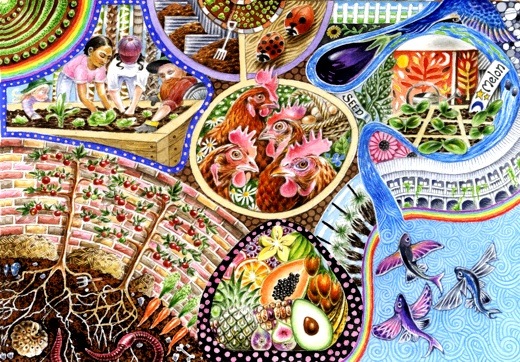
Image above: Watercolor illustration by Lucy Everett for Australian City Farms And Community Gardens Network. From (https://lucyeveritt.wordpress.com/2011/03/09/latest-commission-poster-for-australian-city-farms-and-community-gardens-network-acfcgn-watercolour/).

[IB Publisher's note: The idea of feeding 10 billion people through the use of permaculture is not really a desirable target for numerous reasons. Foremost is the cost to wilderness and all other megafauna on the planet. We do not think the world will be a better place with another three billion humans if there are no lions, bears, elk, tigers or moose. However we do think that permaculture and food-forest techniques can co-exist with greater biodiversity than we see today.]

At a conference a couple weeks ago, an activist who does work in Africa recounted an encounter she had with the minister of agriculture of a certain African country. The minister spoke with excitement about the high-tech agricultural technologies he was bringing into the country in partnership with large agribusiness companies, so the activist brought up the topic of organic agriculture.

The minister said, “Stop. You don’t understand. We cannot afford such luxuries here. In my country, people are starving.”

This reflects a common conception about organic agriculture – that it sacrifices productivity in the interests of the environment and health. It stands to reason that if you forgo pesticides and chemical fertilizer, yields are going to suffer.

This, in fact, is a myth. In Sacred Economics I cite research showing that when it is done properly, organic growing methods can deliver two to three times the yield of conventional methods.

Studies showing the opposite are poorly constructed. Of course if you take two fields and plant each with a monocrop, then the one without pesticides will do worse than the one with, but that isn’t really what organic farming is.

Conventional agriculture doesn’t seek to maximize yield per acre; it seeks to maximize yield per unit of labor. If we had 10% of the population engaged in agriculture rather than the current 1%, we could easily feed the country without petrochemicals or pesticides.

It turns out, though, that my statistics are way too conservative. The latest permaculture methods can deliver much more than just double or triple the yield of conventional farming. I recently came across this article by David Blume chronicling his nine-year permaculture enterprise in California.

Running a CSA for 300-450 people on two acres of land, he achieved yields eight times what the Department of Agriculture says is possible per square foot. He didn’t do it by “mining the soil” either – soil fertility increased dramatically over his time there.

When people project an imminent food crisis based on population growth or Peak Oil, they take for granted the agricultural methods we practice today. Thus, while the transitional period may involve temporary food shortages and real hardship, permaculture methods can easily feed the peak world population of perhaps 10 or 11 billion we’ll see by mid-century.

It is true that the old, control-based methods of agriculture are nearing the peak of their productive potential. Further investments in this kind of technology are bringing diminishing marginal returns – witness the proliferation of Roundup-resistant weeds and the “necessity” of new kinds of herbicides to deal with them.

This parallels the situation with so many other kinds of control-based technology, whether in medicine, in education, politics…. we are indeed nearing the end of an era.

One sign that this is so is that the old models are not working financially anymore either. Once upon a time, monocropping may have been the most economically efficient way to farm, but today even farmers who play by the conventional rules can barely stay in business. Blume outperforms them not only ecologically and yield-wise, but also financially.

Making the transition to permaculture is therefore a transition in our thinking, our habits, and our forms of economic organization. It springs naturally from ecological thinking, it embodies that habit of service to others, and it concords with the economic form of small, independent or cooperative producers.

For this reason, it does not easily fit into the operations of large agribusiness corporations. Let us note, though, that they too are becoming obsolete in their current hierarchical, centralized form.

The defining image of 20th century agriculture was the huge combine harvesting endless fields of grain. I’d like to offer a very different vision for 21st century agriculture:
  1. High-intensity permaculture around major population centers that meet 80/% of their food needs. Blume points out that even without modern permaculture techniques, the city of New York, with over one million people, met all its food needs from within seven miles prior to 1850.
  2. Widespread gardens replacing a significant portion of America’s current number one crop: lawn grass. Many suburbs could be nearly self-sufficient in food.
  3. A healing of the damaged lands of the farm belt and a restoration of the original forests and prairies of many of those areas. With high-intensity local production, many of the acres planted with corn, wheat, and soybeans in the Midwest will be unnecessary for food production. This is not to say that commodity crops for export to other regions will disappear, just that they will have a much diminished role.
  4. Increased biofuels production on decreased acreage. While most biofuel in the U.S. Is made from corn, Blume points out that other crops can deliver as much as ten times the fuel per acre – and that’s not even counting cellulose conversion technologies.
  5. As presaged by the resurgence of interest in farming among young people, a far greater proportion of the population will be engaged in agriculture, and gardening will be nearly universal. Depopulated rural areas will be repopulated and small town economies will flourish based on local production and consumption.
In America, the transition to this vision will involve a severe disruption of our present way of life. In other countries where people still practice small-scale farming akin to modern permaculture, the transition might be much smoother. They can leapfrog the 20th century directly into the 21st, without repeating our ecologically and socially devastating mistakes.

People in other lands can adapt the principles of permaculture to their own specific environmental and social circumstances. This is not about clever white people inventing a new model and imposing it on someone else.

Indeed, many permaculture techniques have been adopted from indigenous farmers around the world. It is about everyone learning from everyone else, all guided by the ideal of wedding agronomy to ecology and fostering bioregional food self-sufficiency.

• Charles Eisenstein will be speaking at Voices of Hope in a Time of Crisis on November 8th in New York City. In his work, Charles focuses on themes of human culture and identity. He is the author of several books, most recently Sacred Economics and The More Beautiful World our Hearts Know is Possible. His background includes a degree in mathematics and philosophy from Yale, a decade in Taiwan as a translator, and stints as a college instructor, a yoga teacher, and a construction worker. He currently writes and speaks full-time. He lives in Pennsylvania with his wife and children. http://charleseisenstein.net

This is the second article in our series by the speakers of Voices of Hope in a Time of Crises, a one-day event, which will explore localized solutions to our global problems and launch the International Alliance for Localization.

.

UNmasking climate smart agriculture

SUBHEAD: Any method of food production and consumption, to be truly sustainable, must enrich and protect Mother Earth.


By Staff on 23 September 2014 for Via Campesina -
(http://viacampesina.org/en/index.php/actions-and-events-mainmenu-26/1670-un-masking-climate-smart-agriculture)


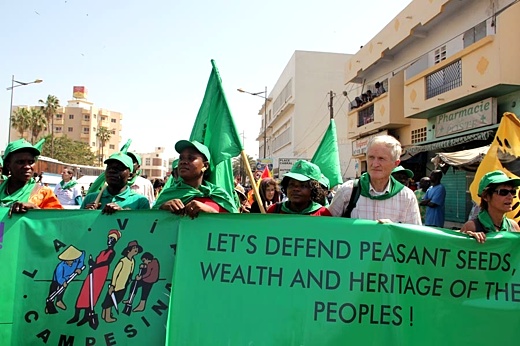
Image above: Demonstrators supporting Via Compasina and peasant seeds, wealth and heritage. From (http://www.spi.or.id/?p=3470).

History presents itself first as tragedy, and the second time as a farce.

As women, men, peasants, smallholder family farmers, migrant, rural workers, indigenous, and youth of La Via Campesina, we denounce climate smart agriculture which is presented to us as a solution to climate change and as a mechanism for sustainable development.

For us, it is clear that underneath its pretense of addressing the persistent poverty in the countryside and climate change, there is nothing new. Rather, this is a continuation of a project first begun with the Green Revolution in the early 1940’s and continued through the 70’s and 80’s by the World Bank’s Poverty Reduction projects and the corporate interests involved.

These projects, such as the so-called Green Revolution, decimated numerous peasant economies, particularly in the South, to the extent that many countries, like México for example, that were self-sufficient in food production, became dependent on the North to feed their population within a short couple of decades.

The result of these projects, dictated by industrial capital’s need for expansion, was the coopting of traditional agricultural producers and production and their insertion into the present industrial agriculture and food regime.

A regime that is based on increased use of toxic chemicals, dependent on fossil fuel inputs and technology, increasing exploitation of agricultural and rural workers, with its resulting loss of biodiversity; a food system that is now under the control of corporations and large industrial farmers, the main beneficiaries of these projects.

The result has been the loss of food security and sovereignty, transforming entire countries that were once net food exporters into net food importers. This is not so much that they cannot produce food, but because now, instead, they produce commodity crops used to produce industrialized foods, fuels, manufactured products for sale, and for speculation in the world financial markets.

Today, some of the same actors of these previous projects, such as the World Bank, are the forces behind the imposition of climate smart agriculture as a solution to climate change and to increase income of the rural poor using the same failed thesis that to increase incomes one must increase productivity.

It is clear that the intention is to create a market for the Green Revolution as a solution to climate change, poverty and as a proposal for sustainable development in rural areas. We identify this as part of a larger process of “green” structural adjustment projects required by an economic system and the political elites in distress, because they have exhausted other places for enormous speculative financial investments and now see agriculture and agricultural land as the new frontier.

Climate smart agriculture begins with deception by not making a differentiation between the negative effects of industrialized agriculture and the real solutions offered by traditional sustainable peasant agriculture which has contributed to alleviating poverty, hunger and remediation of climate change.

To the contrary, climate smart agriculture equates and equally blames all forms of agricultural production for the negative effects that in fact only industrialized agricultural and food production has caused, and fails to recognize and accept the differences between “agri-cultures” and agricultural production methods. The agricultural activity that has most contributed to greenhouse gas emissions has been industrial agriculture, not smallholder sustainable agriculture.

Climate smart agriculture will lead to further consolidation of land, pushing peasant and family farmers towards World Bank Projects, the Food and Agriculture Organization (FAO) and other institutions, creating dependency on so-called new technologies through their complete packages that include prescriptions of "climate smart varieties", inputs, and credit, while ignoring traditional tried and true adaptive farming techniques and stewardship of seed varieties in practice by farmers.

Reliance on World Bank promoted methods of production and genetically modified seed varieties will only increase the vulnerability of peasants and small-scale producers, as those packages will not allow them to adapt to climate change, nor will they be able to improve their incomes, and will only result in pushing them further into debt and increased dependency.

As the Green Revolution meant the imposition of synthetic fertilizers and pesticides as requirement to access loans and technical support, now it is the imposition of transgenic and biotechnology for the same requirements, and all under the name of productivity.

The idea of increasing agricultural productivity in a sustainable way, or what is now called “sustainable intensification”, is false. Even more so, when one considers that raising yield per hectare through production intensification only increases the income for corporations, financial market speculators, and large landholding farmers. So called “sustainable intensification” is not really about increasing yield per acre, it is more about green-washing large scale industrialized production following the old adage “get big or get out”.

Increasingly, peasant and smallholder family farmers have to produce crops for the commodity market and not for local and regional food systems. They are producing for corporations who are manufacturing unhealthy processed food, fuel and supplies to make other products such as farmed –meat and pharmaceuticals. Peasants and small–scale family farmers will have no choice but to continue to accept the task of feeding the insatiable capitalist food production machine and its speculative activities in the financial markets.

This intensification of production is also an effort to reduce the cost of labor, which means further degrading working conditions, and lower salaries for migrant workers.  Most peasants and small holders will be cast aside because there's no room for them in industrial agriculture except as landless peasants and one of millions of migrants that are seeking to try their luck as low wage laborers in the cities and countryside.

Ultimately, climate smart agriculture tries to cover-up and hide the need for genuine agriculture and land reform. It also hides, and lies about, the issue of scarcity of land and natural resources.  Land and natural resources are only scarce for peasant and small holding farmers. Poverty exists as a result of lack of access to land, land tenure and use, the unfair treatment and wages of workers and an unrelenting exploitation of their labor in order to meet the needs of capitalism, all of which is shaping the madness we are facing today.

In addition, climate smart agriculture, like the Reduction for Emission on Deforestation and Forest Degradation (REDD), will expand the carbon market and its use for financial speculation.

The possibility of big profits with investments in carbon credits generated from farmlands involved in climate smart agriculture projects will increase speculation in the carbon market, leading to further “carbon land grabs” by large-scale investors and producers, and the further displacement of peasant and smallholder farmers, just as REDD displaces indigenous people.\

Under this climate smart agriculture framework, there is little hope of reducing and removing greenhouse gases, trying to solve food insecurity or any significant rural economic and social development. The problems of poverty, food insecurity and climate change are not market failures, but rather are structural flaws that will persist and worsen with its implementation.
We need systemic change NOW!

Today, just as in the past, we are ready to fight against the false solutions of the capitalist “green economy” and for real solutions to climate change and poverty, through our demands for climate and environmental justice.

We continue to propose and put into practice wherever we can agroecological production and the construction of people’s food sovereignty. We consciously do this as another space to bring about the structural changes that we really need to deal with the issues of poverty, climate change and peoples’ inability to feed themselves.

We call on all social movements gathered in New York to denounce climate smart agriculture as a false solution, oppose the launching of the Global Alliance for Climate-Smart Agriculture by UN Secretary General Ban Ki-moon at the UN Climate Summit in New York City, and to join us in the struggle for food sovereignty, and for a different model of agriculture and food production that will provide a just economic well being for small-scale farmers and their communities while producing enough healthy food to meet people’s nutritional needs and guaranteed access to food for everyone.

Any method of production and consumption, to be truly sustainable, must enrich and protect Mother Earth.

See (Download this article as a PDF file)

.

Peak Fertilizer

SUBHEAD: Many countries are reaching diminishing returns on agricultural fertilizer usage.

By Lester Brown on 8 January 2104 for Earth Policy Institute -
(http://www.earth-policy.org/data_highlights/2014/highlights43)


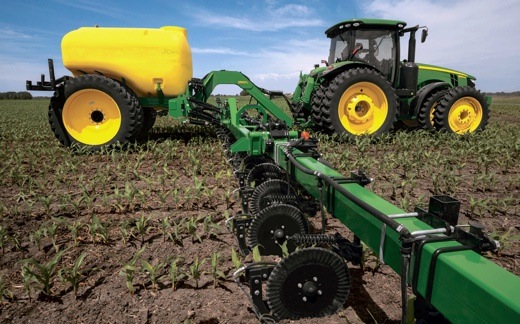
Image above: New John Deere fertilizer/pesticide sprayer. From (http://www.deere.com/en_US/media/corporate_images/2013_press_releases/2013_nutrient1_large.jpg).

When German chemist Justus von Liebig demonstrated in 1847 that the major nutrients that plants removed from the soil could be applied in mineral form, he set the stage for the development of the fertilizer industry and a huge jump in world food production a century later.

Growth in food production during the nineteenth century came primarily from expanding cultivated area. It was not until the mid-twentieth century, when land limitations emerged and raising yields became essential, that fertilizer use began to rise.

The growth in the world fertilizer industry after World War II was spectacular. Between 1950 and 1988, fertilizer use climbed from 14 million to 144 million tons. This period of remarkable worldwide growth came to an end when fertilizer use in the former Soviet Union fell precipitously after heavy subsidies were removed in 1988 and fertilizer prices there moved to world market levels.

After 1990, the breakup of the Soviet Union and the effort of its former states to convert to market economies led to a severe economic depression in these transition economies. The combined effect of these shifts was a four-fifths drop in fertilizer use in the former Soviet Union between 1988 and 1995. After 1995 the decline bottomed out, and increases in other countries, particularly China and India, restored growth in world fertilizer use.

As the world economy evolved from being largely rural to being highly urbanized, the natural nutrient cycle was disrupted. In traditional rural societies, food is consumed locally, and human and animal waste is returned to the land, completing the nutrient cycle.

But in highly urbanized societies, where food is consumed far from where it is produced, using fertilizer to replace the lost nutrients is the only practical way to maintain land productivity. It thus comes as no surprise that the growth in fertilizer use closely tracks the growth in urbanization, with much of it concentrated in the last 60 years.

The big three grain producers—China, India, and the United States—account for more than half of world fertilizer consumption. In the United States, the growth in fertilizer use came to an end in 1980. China’s fertilizer use climbed rapidly in recent decades but has leveled off since 2007. In contrast, India’s fertilizer consumption is still on the rise, growing 5 percent annually. While China uses 50 million tons of fertilizer a year and India uses 28 million tons, the United States uses only 20 million tons. (See data.)

Given that China uses 2.5 times more fertilizer than the United States and that the two countries’ average annual grain output totals are similar—450 million tons in China compared to 400 million tons in the United States—the grain produced per ton of fertilizer in the United States is roughly twice that in China.

This is partly because American farmers are much more precise in matching application with need, but also partly because the United States is the world’s largest soybean producer. (Brazil’s soy production has recently skyrocketed, bringing it into contention with the United States.) The soybean, being a legume, fixes nitrogen in the soil that can be used by subsequent crops. U.S. farmers regularly plant corn and soybeans in a two-year rotation, thus reducing the amount of nitrogen fertilizer that has to be applied for the corn.

Despite this U.S. advantage in fertilizer use efficiency over China, over-application poses serious pollution problems in both countries. Fertilizer runoff from the U.S. Corn Belt, for example, contributes heavily to an annual oxygen-starved “dead zone” in the Gulf of Mexico—an area where sea life cannot exist, which in some years grows to the size of New Jersey. Research suggests that U.S. and Chinese farmers could use substantially less fertilizer and maintain or even increase productivity.

In many other agriculturally advanced economies, fertilizer use has actually fallen in recent decades. France, Germany, and the United Kingdom, which together account for over one third of the European wheat harvest, have maintained high production levels despite significant declines in fertilizer use.

Farmers in France and Germany now use half as much fertilizer as they did in the 1980s, while U.K. fertilizer use has dropped by 40 percent. And in Japan, 56 percent less fertilizer is now used than in the peak year of 1973.

There are still some countries with a large potential for expanding fertilizer use. But in the many countries that have effectively removed nutrient constraints on crop yields, applying more fertilizer has little effect on yields. For the world as a whole, the era of rapidly growing fertilizer use is now history.

• For further reading on the global food situation, see Full Planet, Empty Plates: The New Geopolitics of Food Scarcity, by Lester R. Brown (W.W. Norton: October 2012). Supporting data sets and PowerPoint presentations are on-line at www.earth-policy.org/books/fpep.


See also:
Island Breath: Peak Phosphorus is upon us 6/24/08
Island Breath: Hawaiian Soil Sustainability 7/4/08
Ea O Ka Aina: Breaking Costly Nitrogen Addiction 11/17/09
Ea O Ka Aina: Food and Population 2/1/10 
Ea O Ka Aina: The Story of P(ee) 2/10/10
Ea O Ka Aina: What to do about Peak Phosphorus 4/21/10
Ea O Ka Aina: Peak Soil, Water & Phosphorus 5/12/10
Ea O Ka Aina: Green Revolution & Peak Food 8/1/10
Ea O Ka Aina: Book "The Coming Famine" 8/25/10
Ea O Ka Aina: Why Growth Won't Return - Food 3/11/11
.

Farming Paradigm Shift Needed

SUBHEAD:  United Nations agencies urgent call for an end to industrial agriculture food systems.

By Dr Mae-Wan Ho on 18 September 2013 for PermaCulture.org-
(http://permaculturenews.org/2013/09/18/paradigm-shift-urgently-needed-in-agriculture-un-agencies-call-for-an-end-to-industrial-agriculture-food-system/)
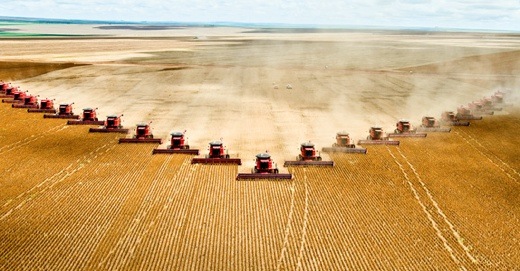

Image above: Grain combines eating the landscape. Industrial monoculture farming requires vast resources to produce food. Note the dust kicked up by the machines which is lost soil. From (http://peacefulanarko.wordpress.com/2010/04/23/the-anarchist-urban-ecosystem-agriculture/).

[Note: A fully referenced version of this article is posted on ISIS members website and is otherwise available for download here]

Agriculture the problem and the solution to climate change
Record breaking heat waves sweeping over both hemispheres this summer have put global warming back into the headlines, and with it, the problem of survival under climate change. The most urgent item on the agenda is how to produce food without adding even more greenhouse gases to the atmosphere, which can also withstand the increasingly frequent extreme weather events.

It is generally acknowledged that industrial agriculture and our globalized food system is a major contributor to greenhouse gas emissions, up to 50% if proper account is taken of emissions from land use change and deforestation, most of which are due to agriculture, and for food-related transport, processing, storage, and consumption (see Figure 1) [1]. Nevertheless, it is also generally recognized that agriculture holds tremendous promise for mitigating climate change, and much else besides.

UNCTAD (United Nations Conference on Trade and Development) – the developing nations’ equivalent of OECD (Organization for Economic Co-operation and Development) – joins a rising chorus of UN agencies in its latest Trade and Environment Review (TER) [2]. The solution for food security under climate change is a radical transformation of the agriculture and food system that would at the same time eliminate poverty, gender inequality, poor health and malnutrition.

The 320 page TER — the work of 63 authors from organisations around the world — provides a coherent, closely argued case backed up by evidence from numerous case studies and surveys showing that these interrelated problems could all be solved by a paradigm shift away from the current industrial agriculture and globalized food system to a conglomerate of small, biodiverse, ecological farms around the world and a localized food system that promotes consumption of local /regional produce.

The TER proposal is not dissimilar to that made in ISIS’ special report [3] Food Futures Now: *Organic *Sustainable *Fossil Fuel Free published in 2008, and in the International Assessment of Agricultural Knowledge, Science and Technology for Development (IAASTD) [4], which resulted from a three-year consultative process involving 900 participants and 110 countries around the world.

The same message was reinforced in several key publications from the FAO (Food and Agriculture Organization) [for example, 5, 6] and UNEP (United Nations Environment Programme) [7] to name but a few.

Why small farmers? Small farms predominate in the world today. Of the 1.6 billion ha of global croplands, 800 m ha are smallholder farms cultivated by 99 % of the 2.6 billion farmers; most of the farms are 2 ha or less. Together, smallholder farmers produce 70 % of the food consumed [7], and 70 % of these farmers are women. Small farms are known to be 2 to 10 times as productive as large industrial farms, and much more profitable, not just in the developing world, but also in the developed world [8-10].

Unfortunately, the perverse government agricultural subsidies in developed countries that favour large fossil-fuel intensive farms, the systematic dumping of subsidized export to developing countries, and structural adjustment programmes imposed by the International Monetary Fund and the World Bank on developing countries have all worked to destroy the livelihoods of small family farmers [11, 12].

Over the past decades, small family farms have all but disappeared in developed countries. In the developing world, some 1.4 billion people are undernourished and poor, 70%-80 % living in rural areas, who can no longer afford to buy enough food, even when food is available.

The successes of small agro-ecological farms
The successes of small agro-ecological farms are well known (see [3]). Study after study has documented improvements in yield and income as well as environmental benefits from eliminating agricultural input and polluting runoffs, increase in agricultural and natural biodiversity, reduction in greenhouse gas (GHG) emissions, and most of all, improvements in water retention, carbon sequestration and resilience to climate extremes such as drought and floods.

There is evidence of improved nutritional value in organically grown food, not just from reduction or elimination of pesticide residues, but from increased content of vitamins and micronutrients [13].

Olivier de Schutter, UN Special Rapporteur on the Right to Food is in no doubt that agroecology is a solution to the crises of food systems and climate change [14]. He cites a study [15] published in 2006 on 286 recent sustainable agriculture projects in 57 developing countries covering 37 million ha (3 per cent of the cultivated area), which found that crop productivity on the 12.6 million farms increased by an average of 79 per cent, while also improving the supply of critical environmental service.

Noémi Nemes from FAO points out that an analysis of over 50 economic studies demonstrates that in the majority of cases organic systems are more profitable than non-organic systems [16]. In developed countries, this is due to higher market prices and premiums, or lower production costs, or a combination of the two. In developing countries, greater profitability is due to higher yields and high premiums. The increased profits are accompanied by enormous savings due to reduced damages to the external ecosystems from polluting agrochemicals.

The importance of local knowledge and practices and diverse polyculture for resilience to climate change

Miguel Altieri at University of California Berkeley and Parviz Koohafkan from FAO stress the importance of biodiversity in agroecological farming for resilience [17], as revealed by three recent studies. In Central American hillsides after Hurricane Mitch, farmers engaged in polyculture with cover crops, intercropping and agroforestry, suffered less damage than their neighbours who practiced conventional monoculture.

The survey, spearheaded by the Campesino a Campesino movement, mobilized 100 farmer-technician teams to carry out paired observations of specific agroecological indicators on 1 804 neighbouring sustainable and conventional farms in 360 communities and 24 departments of Guatemala, Honduras and Nicaragua.

It found that plots where farmers adopted sustainable farming practices had 20 to 40 % more topsoil, greater soil moisture and less erosion, and experienced smaller economic losses than their conventional neighbours. Similarly in Sotonusco, Chiapas, coffee systems with high levels of vegetation complexity and plant diversity suffered less damage from Hurricane Stan than simplified coffee systems.

The same in Cuba; 40 days after Hurricane Ike hit the country in 2008, a farm survey in the provinces of Holguin and Las Tunas found that diversified farms suffered losses of 50 % compared to 90 or 100 % in neighbouring monoculture farms. In addition, agroecologically managed farms showed faster recovery of productivity (80–90 % 40 days after the hurricane) than monoculture farms.

All three studies highlight the importance of enhancing plant diversity and complexity in farming systems in reducing vulnerability to extreme climatic events. As many peasant farmers commonly manage polycultures and/or agroforestry systems, their knowledge and practices could provide a valuable source of information for agriculture in times of climate change. It is important for scientists to work with farmers to preserve and enhance this indigenous knowledge. Restoring biodiversity also is the best strategy to resist disease and pests.

Another remarkable example of productive and resilient polycultures innovated by farmers is described by Roger Leakey at James Cook University, Cairns, Australia [18]. This involves a three-point action plan to improve and rehabilitate marginal lands, many of which are unproductive or no longer suitable for agriculture.

The first step is to use legumes to fix atmospheric nitrogen. Nitrogen-fixing species such as Sesbania seban, Desmodium intorum and D. uncinatum are planted to provide green manure for cereal crops as well as fodder for livestock.

These plants can control root parasites of cereal crops such as Striga hermonthica by triggering their ‘suicide germination’ before the cereals are planted. Desmodium spp also act as repellent for insects pests of cereals like the stem borers Buseola fusca and Chila partellus. Similarly, planting Napier grass (Pennisetum purpuretum) as an intercrop or around small fields attract the insect pests away from the crops.

The next step is to integrate trees within the farming systems. Cash crops such as coffee, cocoa and rubber are increasingly grown by small holders in various combinations; also bananas with fruit trees like mango and avocado and local indigenous trees that produce marketable products.

Another innovation in the tropics, especially South-East Asia, led by farmers who used to practice shifting agriculture, is to plant a wide variety of commercially important tree species among food crops species on the valley slopes. These trees become productive successively in later years, creating a continuous supply of marketable produce such as cinnamon, tung nut, damar (edible gum), duku (edible fruit) and rubber for several decades, often ending in a timber crop.

Apart from generating income, the trees enhance biodiversity and promote agro-ecosystem functions that monoculture crops cannot provide: protecting sloping land from erosion, improving water infiltration into the soil, sequestering carbon and mitigating climate change (see above). In a further initiative over the past 20 years, agroforesters have taken this strategy to a higher level by starting to domesticate some of the very wide range of forest tree species that have been the source of food and non-food products.

Well-known horticulture techniques of vegetative propagation have been used to develop cultivars within local communities rather than in a research station, thus ensuring that farmers participating in the projects who have the indigenous local knowledge are the instant beneficiaries of the domestication.

As a result, highly productive cultivars yielding good quality produce required by market are rapidly and easily obtained. As the multiplication process is done vegetatively from mature tissues that can readily flower and fruit, trees become productive in 2-3 years.

A tree domestication project in Cameroon started 23 years ago grew from four villages and a small number of farmers to over 450 villages with 7 500 farmers. Benefits such as income started within 5 years. The third step, says Leakey [18], is to further expand the commercialization of the new tree crops, to create business opportunities and employment.

Rehabilitation of degraded land has the potential to double the amount of agricultural land globally. As pointed out by David Pimental and Michael Burgess at Cornell University, New York [19], decades of unsustainable industrial agricultural practices have resulted in massive loss of top soil and land degradation. Worldwide, the 1.5 billion ha of land now under cultivation are almost equal in area to the amount that has been abandoned by humans since farming began.

The sub-Saharan miracle of tree-planting continues

Chris Reij, Facilitator of African Re-greening Initiative, Centre for International Cooperation, at Free University, Amsterdam [20] reminds us of the miraculous re-greening of Sahel through the initiative of local farmers that has confounded scientists and policy-makers [21]. At the end of the 1960s and early 1970s, rainfall suddenly declined in the Sahel by about 30 %, causing widespread hunger and hardship, with dire predictions from many commentators and policy-makers.

But recent studies revealed some surprisingly positive trends. Farmers in several densely populated regions of Niger have been protecting and managing on farm natural regeneration of trees and bushes, a process that began around 1985, leading to re-greening of about 5 m ha, the largest environmental transformation in the Sahel and possibly in Africa.

It involves on-farm protection and management of useful trees that has fed about 2.5 m people: Faidherbia albida, a nitrogen fixing species that improves soil fertility and provides fodder for livestock, Pilostigma reticulatum and Guiera senegalensis for fodder, Combretum glutinosum for firewood, and Adansonia digatat for edible nutritious leaves. The annual production value of the new trees is in the order of at least €200 million, all of which goes to farmers, not necessarily in the form of cash but in the form of produce.

Apart from increasing biodiversity, providing fodder, food, and firewood, and increasing household income, the new agroforestry systems have had other positive impacts. The trees shelter the fields from wind and farmers in densely populated parts of Niger now plant crops once instead of 3 or 4 times as they did 20 years ago when the crops were covered by sand or destroyed by sand blast.

The trees provide shading and reduce temperature and evaporation, and help protect topsoil. They mitigate climate change by sequestering carbon. And on top of that, there is evidence that the trees also create more rainfall [21].

Many examples of farmers-managed re-greening can be found in other Sahel countries. In Mali’s Seno Plains, farmers protect and manage natural regeneration on about 450 000 ha where 90-95% of trees are younger than 20 years. As elsewhere, this region had a good tree cover in the 1950s and 1960s, but drought in the 1970s and 1980s led to destruction of much of the vegetation to make way for cultivation.

The result was large-scale wind and water erosion and declining crop yields. In the second half of the 1980s and the 2000s, farmers, governments and donors began to respond to the crisis by supporting the planting of on-farm trees.

Farmers in Sahel have also used simple water harvesting techniques to rehabilitate strongly degraded land in the early 1980s. The northern part of the Burkina Faso central plateau was an open laboratory for testing different water harvesting techniques, such as improved traditional planting pits and contour stone bunds, which slow rainfall runoff and induce infiltration into the soil. As a result, more water becomes available for plant growth and to recharge local groundwater. The scale of land rehabilitation in Niger and Burkina Faso since the end of the 1980s is about 500 000 ha.

Land that was barren and degraded has become productive. Crop yields vary from a few hundred kg/ha in years with poor rainfall to 1.5-2 tons/ha in years of normal or good rainfall. Yields are not only determined by rainfall, but also by the quantity and quality of organic fertilizers used. Land rehabilitation on the central plateau of Berkina Faso feed an additional 400 000 people.

Kenya is now the only country in Africa, and possibly in the world in which the new constitution obliges farmers to grow trees on 10 % of their land.

Even casual observers travelling to Tigray will be struck by the scale of natural regeneration in parts of this region, covering at least one million ha. Most of the re-greening has occurred in ‘enclosures’ or degraded lands set aside for rehabilitation.

A number of activities are combined: water harvesting, natural regeneration and enrichment planting, usually with exotic species, as well as organic agriculture using compost, pioneered by Sue Edwards of Institute of Sustainable Development in Addis Ababa, and Tewolde Gebre Egziabher, ex-Minister for the Environment of Ethiopia [22]. In the longest running experiment with farmers lasting 7 years or more, they have demonstrated a 50 to 200 % increase in crop yields with organic compost that are also on average 30 % more than with chemical fertilizers.

In the valley of Abraha Atsbaha, for example, such activities led to an increase in water levels in the valley, enabling several hundred shallow wells to be dug. In 2008, even when rainfall was very low and cereal crops failed, many families managed to cope because they were able to irrigate fruit trees as well as vegetable gardens around the wells.

Carbon sequestration could be enormous

Andre Leu, President of the International Federation of Organic Agricultural Movements (IFOAM), provides a thorough review on carbon sequestration in organic soils from diverse sources and ecosystems [23]. This ranges from 2.4 to 23.4, and even up to 33 tonnes of CO2/ha/y in a well-managed permanent pasture.

Significantly, scientists at the University of Illinois analysed the results of a 50-year agricultural trial and found that the application of synthetic nitrogen fertilizer had resulted in all the carbon residues from the crop disappearing, as well as an average loss of around 10 tonnes of soil carbon per hectare. This has large implications for conventional monoculture that are highly dependent on synthetic nitrogen fertilizers (see below).

Nitrogen fertilizer is responsible for the majority (70 % in some estimates [24]) of greenhouse gas emissions associated with the production of crops both through the fossil energy used in its manufacture and N2O emissions from the soil subsequent to its application.

Thus, organic agriculture offers the potential not only of substantial savings on direct emissions, but also sequestering enormous amount of carbon in the soil. Currently, certified organic agriculture is practiced on more than 37 m ha worldwide, with sales worth at least €44.522 billion for the minority of countries that have data, €20.156 billion in USA alone [25].

The livestock rearing debate

The issue of livestock rearing in agriculture has generated much heated debate, especially in view of the fact that up to 40 % of arable land is used for feedcrop production [26]. Livestock feed accounts for 38 % of the world’s cereal crop, 53% of oil crops, 25 % of roots, 24 % of pulses and 8 % of sugar crops plus 20 % of fish, and 12 % of milk, butter, and dairy in 2000 [27]. The highest users are North America and Western Europe with 72 % and 67 % of cereals respectively. The figures were similar for 2005.

One study estimated that livestock-related activities are responsible for 18 % of the world’s GHG emissions or about 80 per cent of the overall emissions from agricultural activities [28]: 34 % of that due to deforestation, 25 % from enteric fermentation and 25.9 % from manure, the remainder equally allocated to on-farm use of fossil fuel, manufacture of chemical fertilizers and transport and processing. The actual contribution could be much higher (see above for emissions due to synthetic nitrogen fertilizer, and Figure 1).

Anita Idel from Federation of German Scientists and Tobia Reichert of Germanwatch emphasize the capacity of grasslands to act as effective carbon sinks, which could make extensive pasture-fed livestock rearing a highly sustainable option [29].

Sustainable pasture and grassland management promotes the photosynthetic growth of grass and its roots. In addition, microorganisms and worms convert biomass into humus, which contains over 50 % carbon. Grassland covers a total area of 5.25 billion ha, i.e. about 40 per cent of the total land surface of our planet.

The giant grasslands of the world store in their soil more than a third of the global carbon stock. In savannah soils, it is estimated that more than 80% of the biomass can be found in the roots. Trials in the United States have shown that yields from permanent grasslands over a decade surpassed those of monocultures by 238%.

Cattle and other ruminants have co-evolved with grasslands over thousands of years, turning grass and hay — which cannot be used as human food — effectively into meat and milk, with the help of symbiotic bacteria in their rumen. Instead, industrial agriculture force feeds them on cereals to boost their performance artificially, making their lives short and brutish, and prone to disease. Non-high-performance cattle can be fed entirely on grass and live longer healthier lives, reducing the replacement rate. Sustainably used, pastures can contribute to humus accumulation and thus help to reduce atmospheric CO2 through carbon fixation above and below ground and carbon sequestration in the soil.

While cattle emit methane, this is more than offset by the increase in carbon fixation and sequestration in well-managed pastures. Ruminants are an integral part of traditional farming in many developing countries and indispensable for global food security.

Leu [23] cites studies showing that a significant amount of methane is actually biodegraded in soils, and this has been underestimated due to a lack of research. Furthermore, increase in temperature will drive up the rate of biological degradation of methane by methylotropic bacteria and other methanotrophic microorganisms.

This explains why historical atmospheric methane levels have been relatively stable, and also why naturally produced methane levels may not, and need not increase as the climate gets warmer. Well aerated soils and biologically active soils with high levels of methanotrophic microbes will metabolize the methane.

The case for local food production for consumption

Industrial agriculture has depended on replacing human labour with fossil fuel, most of which goes into producing fertilizers. But industrial agriculture is extremely energy intensive. FAO figures [30] indicate that 6 GJ of fossil energy (1 barrel of oil) is used in producing one ton of maize in industrial farming, whereas maize produced using traditional methods in Mexico, for example, takes only 180 MJ (4.8 L of oil) per ton.

This calculation includes energy for synthetic fertilizers, irrigation and machinery, but not the energy used in making the machinery, transporting products to and from the farm, and constructing the farm buildings. Similarly, in modern rice farming, the energy return on energy invested (output vs input) is less than 1, which means that more energy is consumed than produced. In modern maize farming, the ratio is slightly more than 1. In traditional farming of rice and maize the ratios are 60 to 70.

According to the US Congressional Research Services, energy costs represent between 22 to 27 % of the production costs of wheat, maize and cotton and 14 % of those of soybean [31]. Again, these figures do not include embedded energy in machinery and building, which would make them higher. Coupled with the transport and processing required in our globalized food system, it takes more energy to eat than to farm, says Gunnar Rundgren of Grolink AB Consultancy [32].

That is why oil and grain prices go up and down in tandem as shown by Richard Heinberg of Post Carbon Institute [33] (Figure 2), and it makes so much sense to move away from fossil fuel industrial farming and long distance transport.


Figure 2: Food and oil prices move in tandem

Local production and consumption would also greatly improve food safety, says Jutta Jaksche, Policy Officer of Food, Federation of German Consumer Organizations [34]. Increasing globalization has accelerated the industrialization of agricultural practices. This has resulted in large scale production that, in the absence of effective regulation, will follow a “race to the bottom” in safety, environmental, social, and ethical standards. A case in point was the EHEC O104: H4, a deadly E. coli bacterium strain traced to imported contaminated sprouts that killed at least 45 people and caused a major food crisis in Germany in 2011.

International standards work against consumer interests. For instance, [32, p. 106] “there are conflicts between consumers in the EU and exporting business in the United States over GMOs, chlorinated poultry and hormones in meat and dairy production. The majority of European consumers are wary of products of cloned animals or genetically modified fish, but commercial pressure groups often try to influence public debate and sentiment on this issue.”

Jean Feyder, Ambassador, and former permanent representation of Luxembourg to the UN and WTO in Geneva, is especially critical of the globalization of agricultural trade [35]. He says adequate regulation of agricultural markets is needed to shield small producers from international competition and dumping of food imports.

The financialization of agriculture — trading food commodities in the unregulated global financial market that many believe to have contributed to the 2008 world food crisis — is a new risk (see [36] Financing World Hunger, SiS 46). Land-grabbing [37, 38] see also [39] ‘Land Rush’ as Threats to Food Security Intensify, SiS 46) and financial speculation on food commodities continue to be a major cause of price surge and volatility witnessed over the past few years, not to mention the production of agro-fuels (see [40] Biofuels and World Hunger, SiS 49), which contribute little if at all to reducing CO2 emissions.

 Some scientists argue that when proper accounting is done, they actually increase CO2 emissions, even without taking into account land use change because nitrous oxide emissions from fertilizers have been greatly underestimated [41] (Scientists Expose Devastating False Carbon Accounting for Biofuels, SiS 49).

The structural adjustment policies imposed by the International Monetary Fund and the World Bank on developing countries have led to massive trade liberalization and the opening up of markets, giving consumers access to cheap, imported food [35]. Meanwhile, peasants have been encouraged to concentrate on producing export crops. However, the 2008 food crisis has radically challenged the relevance of this development model.

In developing countries, especially the LDCs (least developed countries), imports of chicken, rice, tomato concentrate and milk powder have risen rapidly, ruining local production and the livelihoods of tens of millions of peasant families, not to mention the loss of jobs in the craft and industrial sectors, as they too have been unable to withstand international competition. The trade balance in food products for LDCs moved from a $1 billion surplus 30 years ago, to a deficit of $7 billion in 2000 and $25 billion in 2008.

Haiti was self-sufficient in rice production in the 1970s. Today, less than 25 % of its rice needs are met by local production. Former US President Bill Clinton, currently the United Nations Secretary-General’s Special Representative for Haiti, publicly acknowledged before a US Senate committee that this policy, which he supported as former President, had been a mistake.

Yet, these perverse and iniquitous practices continue through the World Trade Organization (WTO), as Lim Li Ching of Third World Network and Martin Khor Director of South Centre document at length [42]. The OECD estimates that subsidies given to farm producers in all OECD countries totalled US$252 billion in 2009, or 22 % of the total value of gross farm receipts that year; and the same level applies in 2007 and 2008.

They call for harmful and perverse subsidies that promote or encourage the use of chemical pesticides and fertilizers, water and fuel, or encourage land degradation to be removed, and for special treatment and safeguard mechanisms to protect smallholder farmers’ livelihoods in developing countries.

Also, regulatory measures are needed to reorganize the prevailing market structure of the agricultural value chain now dominated by a few multinational corporations and marginalizes small farmers and sustainable production systems.

As Marcia Ishii-Eiteman of Pesticide Action Network North America points out [43], the top ten corporations including Monsanto, Dupont, Syngenta, Groupe Limagrain, Land O’Lakes, KWS AG, and Bayer, own more than 2/3 of the global proprietary seed market, while an overlapping set of 10 corporations including Bayer, Syngenta, Monsanto, Dow, BASF, and Dupont own 82% of the global pesticide market.

The complex network of acquisitions, mergers, and subsequent cross-licensing make the consolidation of control far more extensive and complete than the statistics indicate [44]. Furthermore, these multinational corporations have undue influence over public policy, research and trade agendas. It is necessary to curtail corporate concentration in the food system, and increase market access and competitiveness of small and medium-scale farmers to improve food and livelihood security.

Nicolai Fuchs of Nexus Foundation and Ulrich Hoffman of UNCTAD secretariat call for trade rules that encourage regionalized/localized food production networks and raised the key question of whether this can be achieved within current WTO rules, or whether it will require a more fundamental change in trade [45].

As a result of growing consumer concern over where their food comes from, many retail businesses already offer more and more regional products, and localized/regional networks already exist; as for example, the “GMO free regions”. Consequently, both public and private procurement would have to accept such systems.

Christine Chemnitz, Heinrich Boll Foundation and Tilman Santarius, Germanwatch agree to a fundamental rethink of current trade policies [46]. The principle of “economic subsidiarity” implies that economic exchanges in the food system should be carried out preferably at the local and national levels, while exchanges at the continental or global level should have only a complementary function. Economic subsidiarity aims at localizing economic activities whenever possible and reasonable, and is committed to shorter rather than longer commodity chains.

First and foremost, this includes policies that go beyond trade, which protect the land rights of communities and their access to basic natural resources, and especially those that strengthen women’s rights and land entitlements. These policies should promote a decentralized rural infrastructure to foster local marketing and ensure that rural and urban areas are sufficiently connected so that the hinterlands become the main suppliers of food for towns and cities.

Most importantly, small farmers should be supported to form a “critical economic mass” through for example cooperative forms of production, storing and marketing. Developing-country governments as well as international donors should provide institutional and financial support, including public finances for microcredit and loans to foster such associations.

Towards the green circular economy


In his Chapter [47] Han Herren, President of the Millenium Institute and a lead author of the IAASTD [4], highlights results of a modelling exercise undertaken by his institute for a comprehensive UNEP Report, Towards a Green Economy: Pathways to Sustainable Development and Poverty Eradication [7]. It shows that investments in sustainable agriculture can indeed meet the need for food security in the long term, while reducing agriculture’s carbon footprint, thereby making it part of the climate change solution.

More importantly, it also shows that the same investments into business as usual ‘brown agriculture’ will decrease returns on investments in the long run, mainly due to increasing costs of inputs especially water and energy, and stagnating/decreasing yields. The costs of negative externalities of brown agriculture will also continue to increase, initially neutralizing and eventually exceeding any economic and developmental gains.

Green agriculture will result in more calories per person /day, more jobs and business opportunities, especially in rural areas, and greater market access opportunities, especially for developing countries. In short, green agriculture is capable of nourishing a growing and more demanding world population at higher nutritional levels.

In the context of the truly green economy, the obvious link and synergy between food and energy can be maximised in the local production and consumption of both. Mae-Wan Ho from the Institute of Science in Society [48] shows how small integrated and biodiverse farms with off-grid renewable energies operating in accordance with nature’s circular economy may be the perfect solution to the food and financial crisis while mitigating and adapting to climate change.

Many proponents of renewable energies have long recognized that decentralised distributed generation is the key, given the modular nature of solar PV and wind power generation (see [49] Green Energies – 100% Renewable by 2050, ISIS/TWN Report).

This has proven so successful in just a few years that it is now forcing a major transformation of the electricity supply grid from a centralized inflexible structure into a dynamic, flexible and organic network with local power generation and energy storage at different levels (see [50] Renewable Ousting Fossil Energy, SiS 60).

These farms located close to urban centres and businesses could provide food and energy generated for the inhabitants, while municipal food and biological wastes can be recycled directly onto the farms [51] (Surviving Global Warming, Localized Food & Energy Systems in Natures Circular Economy, SiS 60).

.