Showing posts with label Seals. Show all posts

Impact of Lehua rat poisoning

SUBHEAD: Will the aerial rat poison drop endanger Niihauans and the local fisheries?

By Kawai Warren on 7 June 2017 for Island Breath -
(http://islandbreath.blogspot.com/2017/06/impact-of-lehua-rat-poisoning.html)


Image above: North-west coast of Lehua Island in foreground with Niihau Island in background. Photo by Juan Wilson on 7/9/11.

I attended the community meeting for the Environmental Assessment Draft in Kekaha. Their was a handful of fisherman that expressed their concern about the side effects of the rat extermination poison and aerial application.

A day after the meeting, we got word that our comments at the meeting were to "do it quickly".

At the meeting I attended in Kekaha no one supported the aerial drop, because the impact it could have on the fisherman, Niihauians, fish, limu, coral, opihi, a' am a, and ocean ecosystems.

The US Fish and Wildlife Service and the Hawaii Department of Land and Natural Resources (DLNR)  are trying to get this done this summer. Unless the fisherman raise their voices and get the media involved. Check out the article below.

Our fisheries (near shore) on the Westside is all ready impacted by these chemicals Atrazine, bentazon, chlorpyrifos, fipronil, metolachlor, propiconazole, and simozine from Kinikini ditch and second ditch during seasonal flooding.
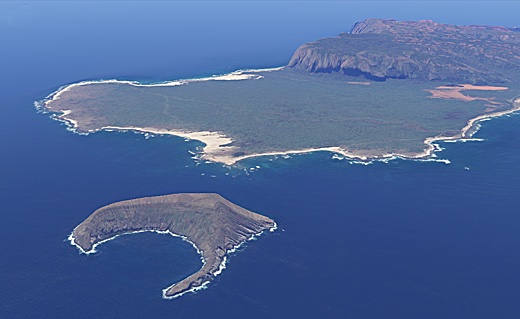

Image above: GoogleEarth 2011 aerial perspective showing proximity of Lehua and Niihau Islands. Same orientation direction as photo above. Only about 4,000 feet separate the two. Image by Juan Wilson.


The Lehua Aerial Poison Drop

SUBHEAD: A risk that the lethal anticoagulant rodenticides could impact the biologically diverse area.
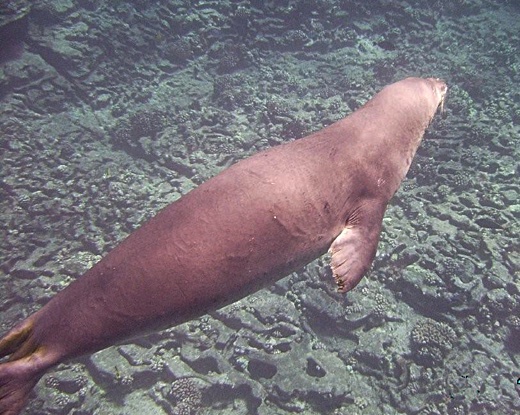

Image above: Photo of monk seal swimming close to shoreline of Lehua Island in shallow water. Photo by Richard Jarke on 7/9/11.

By Maggie Sergio on 7 June 2017 for Huffington Post - 
(http://www.huffingtonpost.com/entry/5936e141e4b033940169ce56)

In Hawaii, the Department of Land and Natural Resources (DLNR), and U.S Fish and Wildlife Service (USFWS) are planning several rat poison drops via helicopter onto Lehua Island, located approximately 30 miles west of Kauai.

These drops are being fast-tracked for this summer, part of an eradication project for the 284 acre bird sanctuary.

The planned drop is three-quarter of a mile from an important Native Hawaiian community on Niihau. There is risk that the poison pellets (lethal anticoagulant rodenticides) could impact the biologically diverse and important Lehua Crater.

Sources indicate that DLNR and USFWS are pressuring the State Department of Agriculture to grant permission for the poison bait to be dropped right up to the shoreline, which will result in bait entering the marine environment, allowing the toxins to infiltrate and settle in waters frequented by commercial and Native Hawaiian subsistence fishermen.

The agencies will not disclose or estimate the duration or extent of any fishing bans for tour and recreational boats in surrounding waters. The extent of a ban might be of concern to the local fishing and tour boat communities, given that a 942-day fishing ban was recommended after another Island Conservation poison drop on Wake Island in the in 2012.

If given the green light, the poison drops will happen on Lehua this summer, delivering an estimated 8-10 tons of anticoagulant rodenticide. Birds, fish, monk seals, and other wildlife that consume the cereal-based poison bait either directly or indirectly (secondarily) will be affected, and there is risk of contaminating the food web.

Note: the estimated application rate has been calculated from the amount disclosed on a kg/per hectare basis. Pesticide labels were not included in the draft environmental assessments (EA), so it is unclear if the proposed amount to be dropped is within legal limits.

The Failed 2009 Poison Drop Lehua Controversy
This will be the second poisoning of Lehua in the name of “conservation,” after a failed attempt in 2009. The previous drop was highly controversial—dead fish washed up on the neighboring island of Niihau, and a juvenile whale beached itself.

The state of Hawaii claimed the fish die-off and dead whale were “coincidental” and not related in any way to the nearly four tons of rat poison that had been dropped on the island just days earlier.

After researching the failed event in 2009, which included findings in this presentation given at a national pesticides conference, questions remain about what really happened.

Why was there a two month delay in requesting the fish be tested for exposure to the poison?

Since the rodenticide used in 2009, diphacinone, metabolizes quickly, did the delay in testing capture meaningful results? Are the chain of custody documents available for review?

Could ultra-nutrification and de-oxygenating of the waters, due to the cereal component of the poison bait that entered the surrounding ocean, be a contributing reason for the algae bloom, which, officials claimed, was the cause of the fish kill?

Or, could the poison pellets that entered the marine environment have impacted the fish, not enough to kill them, but enough to cause immunosuppression, thereby making the fish more susceptible to the impacts of an algae bloom? These questions have never been addressed by the agencies.

Are Rats a Problem on Lehua? - Not According to the Data
The data provided in both draft EAs (both the state and feds created a draft environmental assessment) does not support that the rodents on Lehua are having a negative impact on the bird life on the island.

All evidence provided is anecdotal, and astonishingly, USFWS has no idea of the size of the rodent population. One could reasonably ask—since this critical piece of data is unknown—why is this project being fast tracked?

The agencies need to respond to these questions: Why is the collateral damage and potential risk to the food web, in addition to putting sustenance and commercial fishermen in jeopardy, worth the risk? How much consideration was truly given to the Native Hawaiian Ni’ihauans in this accelerated operation, aside from conversations set up and/or attended by the owner of Ni’ihau, the Robinson family?

The only evidence of rodent impact to birds included in the state issued EA shows that four eggs from the nest of a wedge tail shearwater showed indication of predation by rats.

As the wedge tailed shearwater is considered to be a species of least concern by the IUCN (with a worldwide population of over 5 million birds), this hardly constitutes a scientifically-based rationale for dropping 8-10 tons of pesticide, threatening the fragile ecosystem, rare reef system, and food chain.

The DLNR and USFWS have yet to respond to public demands for site-based scientific (vs. anecdotal) evidence on the Lehua rat population, bird decline and mortality causation on Lehua, if any, that justifies this large scale poison drop.

Downplaying Risks  - The Selling of Island Eradication Projects
Both EAs issued mispresent environmental risks, and make misleading statements about the lethal and sub-lethal impacts to wildlife poisoned, which are referred to as “non-target species.”

Though the proposed poisons have never been tested on coral reefs, and the impact is completely unknown, the EA makes the puzzling, badly worded statement on page 73 of the federal EA that “there are no data to indicate corals have been impacted by anticoagulant rodenticides from previous eradication projects.”

Since there are no studies which reflect that rodenticide testing on coral reefs has ever been carried out, and long term, ecosystem monitoring is lacking in eradication projects, the above statement made in the EA could be viewed as disingenuous.

I asked Dr. Mourad Gabriel, who has done extensive research on wildlife diseases, including the impacts of rodenticides on wildlife for his thoughts on the statement specific to coral reefs - his response can be found below.
“The lack of data collected on a topic should not imply that a deleterious impact does not occur.” - Mourad W. Gabriel MS, PhD - Executive Director of Integral Ecology Research Center.
Page 51 of the federal EA cites studies from 1977, 1998, and 1999 with respect to birds eating the poison bait and make the following, false claims:
9. To minimize consumption of bait pellets by shorebirds and terrestrial birds, the bait pellets are dyed a green or blue color, which birds appear to prefer less than yellow or red. 10. Bait pellets are formulated large enough that it would be difficult for a small, seed-eating bird to consume the whole pellet.
The video below, from the New Zealand documentary, “Poisoning Paradise – Eco-cide NZ,” is evidence that color and size of the pellets will not deter birds or other animals from eating them. Deaths of birds poisoned during these projects can occur either directly from eating the bait, or secondarily, by consuming poisoned rodents, insects and fish. Video courtesy of Clyde Graf.

Island Eradications - Previous Problems
Information received from a FOIA request filed in 2014 reveals serious ethical issues from previous eradication projects and shows the consequences of what can go wrong.

Rat Island
In October 2008, USFWS and Island Conservation aerially dropped 51 tons of brodifacoum over Rat Island, located in the Aleutian Islands, and then left for eight months. When they returned, over 400 dead birds were collected, including 46 bald eagles.

Note: the total number of poisoned wildlife counted was by no means the total number of animals poisoned, nor was any long term monitoring done to test for sub-lethal impacts.

In the investigation that followed, U.S. Fish & Wildlife Law Enforcement division reported ten illegal actions including exceeding legal application rates mandated by the pesticide label, failure to properly calibrate dispersion equipment and failure to keep accurate records of their pesticide applications.

You can read a copy of the full USFWS law enforcement report here, released as the result of a FOIA request.

After the investigation by USFWS law enforcement, the Ornithological Council issued this scathing report. You can find a copy of it here.

Wake Island
Located in the South Pacific, Wake Island is host to a military base and is under the jurisdiction of the U.S. Air Force. Wake Island was the recipient of an island eradication attempt in 2012, carried out by Island Conservation and USFWS.

While the almost 20 ton rat poison drop failed to kill all the rats, the more serious issues are the internal emails released in response to the 2014 FOIA request. The discussions between USFWS, the USAF and Island Conservation show that after the fish were tested for brodifacoum, a fishing ban was recommended for 942 days.
FYI – note the Wake Atoll brodifacoum results analysis. We have a couple of options. I guess it comes down to how long we want to restrict consumption of fish at Wake. The current recommendation is approximately 942 days. Also with no money [and] furloughs occurring July 8 – end of September, it is unlikely that a sampling project will occur this FY. I’ll keep you in the loop, but thought you’d might like this info for future projects.” - USAF
You can find the entire email exchange containing the details of the fishing ban recommendation here.

While USFWS and the state of Hawaii assert that no final decision has been made, sources indicate that this project is planned for this summer, and that lead state agencies are awaiting approval from the Hawaii Deptartment of Agriculture (Pesticides Division).

It is notable that some of the supporting state agencies for this poison drop are currently facing a federal investigation charging racial discrimination against Hawaii’s native communities in their lack of care in state pesticide regulation.

The Farallon Islands
This is not the first time that helicopter drops of rodenticides have been called into question. In 2013 a planned rodenticide drop of 1.5 tons of brodifacoum over the Farallon Islands National Marine Sanctuary was halted due to public opposition and heavy questioning into Island Conservation’s conflict of interest in authoring the draft environmental impact statement. 

The city of San Francisco closed their strongly worded letter urging USFWS to seek a partner for the risk assessment that did not have a financial interest in the project.

It remains to be seen whether Hawaii’s impacted communities and scientists will demand fuller disclosure and further study from its agencies and sole-source contractor Island Conservation. For it is Kaua’i’s fishing and tourism industries, and local Hawaiian residents that have the most to lose if anything should go wrong.

In 1962, with the publication of “Silent Spring,” Rachel Carson warned us of the influence the pesticide industry has on agriculture. Fifty-five years later, the dominion of the pesticide industry continues, and non-native species has become another market opportunity to exploit.

.
Humpbacks rescue others from orcas

SUBHEAD: These whales rescue other species from hunting killer whale packs.

By Bryan Nelson on 30 July 2016 for Mother Nature Network -
(http://www.mnn.com/earth-matters/animals/stories/humpback-whales-around-globe-are-mysteriously-rescuing-animals-orcas)


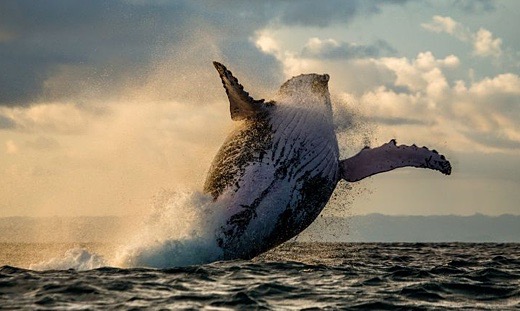
Image above: A humpback whale breaches the ocean surface. From (http://www.mnn.com/earth-matters/animals/blogs/weird-new-sound-heard-among-humpback-whales).

Humans might not be the only creatures that care about the welfare of other animals. Scientists are beginning to recognize a pattern in humpback whale behavior around the world, a seemingly intentional effort to rescue animals that are being hunted by killer whales.

Marine ecologist Robert Pitman observed a particularly dramatic example of this behavior back in 2009, while observing a pod of killer whales hunting a Weddell seal trapped on an ice floe off Antarctica.

The orcas were able to successfully knock the seal off the ice, and just as they were closing in for the kill, a magnificent humpback whale suddenly rose up out of the water beneath the seal.

This was no mere accident. In order to better protect the seal, the whale placed it safely on its upturned belly to keep it out of the water.

As the seal slipped down the whale's side, the humpback appeared to use its flippers to carefully help the seal back aboard. Finally, when the coast was clear, the seal was able to safely swim off to another, more secure ice floe.

Another event, involving a pair of humpback whales attempting to save a gray whale calf from a hunting pod of orcas after it had become separated from its mother, was captured by BBC filmmakers. You can watch the dramatic footage here:


Image above: From (https://youtu.be/-lw8_SAtX8o).

Perhaps the most stunning aspect of this behavior is that it's not just a few isolated incidents. Humpback whale rescue teams have been witnessed foiling killer whale hunts from Antarctica to the North Pacific. It's as if humpback whales everywhere are saying to killer whales: pick on someone your own size! It seems to be a global effort; an inherent feature of humpback whale behavior.

After witnessing one of these events himself back in 2009, Pitman was compelled to investigate further. He began collecting accounts of humpback whales interacting with orcas, and found nothing short of 115 documented interactions, reported by 54 different observers between 1951 and 2012. The details of this surprising survey can be found in the journal Marine Mammal Science.

In 89 percent of the recorded incidents, the humpbacks seemed to intervene only as the killer whales began their hunt, or when they were already engaged in a hunt. It seems clear from the data that the humpback whales are choosing to interact with the orcas specifically to interrupt their hunts. Among the animals that have been observed being rescued by humpback whales were California sea lions, ocean sunfish, harbor seals, and gray whales.

So the question is: Why are humpback whales doing this? Since the humpbacks seem to be risking their own well being to save animals of completely different species, it's hard to deny that this behavior seems altruistic.

There is also some reason to believe that the behavior isn't entirely selfless. Mature humpback whales are too large and too formidable to be hunted by orcas themselves, but their calves are vulnerable.

Orcas have been witnessed hunting humpback whale calves in much the same way that they hunt gray whale calves. So, by proactively foiling orca hunts, perhaps the humpbacks are hoping to make them think twice about messing with their own calves.

Then again, maybe it's just as simple as revenge. Even if it has more to do with revenge than altruism, though, the behavior would represent evidence of an intense and complicated emotional life among humpbacks that is unprecedented in the animal world, outside of primates.

One common feature among many humpback whale rescue efforts is that the humpbacks often work in pairs. Scientists will need to do more research into this behavior, though, to truly understand the significance of it.

Until then, these beautiful animals, which are perhaps best known for their majestic songs, have certainly earned some additional respect. They might just be the ocean's most ferocious and selfless first-responders.
.

Federal Court slams Navy sonar

SOURCE: KAtherine Muzik PHD (kmuzik@gmail.com)
SUBHEAD: 9th District Court of Appeals rejects US Navy's rules on ocean sonar use.

By Staff on 16 July 2016 for the Associated Press -
(http://abcnews.go.com/US/wireStory/federal-appeals-court-rejects-navy-sonar-rules-40627158)


Image above: Orca jumps for joy. From original article.

A federal appeals court ruled Friday that the U.S. Navy was wrongly allowed to use sonar that could harm whales and other marine life.

The Ninth U.S. Circuit Court of Appeals reversed a lower court decision upholding approval granted in 2012 for the Navy to use low-frequency sonar for training, testing and routine operations.

The five-year approval covered peacetime operations in the Pacific, Atlantic, and Indian Oceans and the Mediterranean Sea.

The appellate panel sent the matter back to the lower court for further proceedings.

A message seeking comment from representatives of the U.S. Pacific Fleet in Honolulu was not immediately returned.

Sonar, used to detect submarines, can injure whales, seals, dolphins and walruses and disrupt their feeding and mating

The 2012 rules adopted by the National Marine Fisheries Service permitted Navy sonar use to affect about 30 whales and two dozen pinnipeds, marine mammals with front and rear flippers such as seals and sea lions, each year.

The Navy was required to shut down or delay sonar use if a marine mammal was detected near the ship. Loud sonar pulses also were banned near coastlines and in certain protected waters.

Environmental groups, led by the Natural Resources Defense Council, filed a lawsuit in San Francisco in 2012, arguing that the approval violated the Marine Mammal Protection Act.

The appellate court ruled 3-0 that the approval rules failed to meet a section of the protection act requiring peacetime oceanic programs to have "the least practicable adverse impact on marine mammals."

"We have every reason to believe that the Navy has been deliberate and thoughtful in its plans to follow NMFS guidelines and limit unnecessary harassment and harm to marine mammals," the appellate ruling said.

However, the panel concluded that the fisheries service "did not give adequate protection to areas of the world's oceans flagged by its own experts as biologically important," according to a summary accompanying the court's decision.

"The result is that a meaningful proportion of the world's marine mammal habitat is under-protected," according to the decision.

.

DLNR responsibility on RIMPAC

SUBHEAD: 60 Day Legal Notice to Enforce the U.S. Endangered Species Act on the U.S. Navy and RIMPAC.

By Terry Lilly on 5 July 2016 in Island Breath -
(http://islandbreath.blogspot.com/2016/07/dlnr-responsibility-on-rimpac.html)


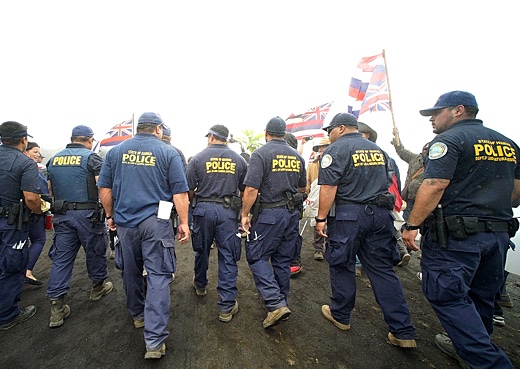
Image above: DLNR police armed with semiautomatic weapons enforcing restrictions on Hawaiian protest of construction of Thirty Meter Telescope on a sacred part of the summit of Mauna Kea mountain on the Big Island in 2015.  From (http://www.civilbeat.org/2015/12/should-hawaiis-dlnr-cops-carry-semi-automatic-weapons/).

[IB Publisher's note: The following is a letter from Terry Lilly to Mrs. Suzanne Case Chairperson of the Hawaii Department of Land & Natural Resources to enforce the US Endangered Species Act  against the U.S. Navy for conducting RIMPAC 2016 and damaging the environment in and around Hawaii. Certainly, the DLNR fully enforce regulations along the beaches of Polehale and Kalalau to keep residents without the proper permits from camping (presumably to protect these pristine environments.]

Dear Mrs. Case,
As Chair Person of the Hawaii DLNR you are head of law enforcement and bound by law to enforce the US Endangered Species Act (ESA) here in Hawaii. When you took your oath of office you swore to uphold US and State Law.

The federal and state ESA claims " Any employee or agent of the department upon whom the board has conferred powers of police officers, including the power to serve and execute warrants and arrest offenders, or issue citations throughout the state, and any police officer of the counties of this state shall have the authority to enforce any of the provisions of this chapter or any rule adopted under this chapter".
Furthermore, it has been determined in court "That the Willful Omission of enforcing the ESA can be considered a Take under the law itself". Which means that you are obligated to enforce this law.

I know you are well aware of the wording in the ESA and are aware of the need for the Navy to do a Habitat Conservation Plan before operating in the habitat of Hawaiian endangered species.

The reason I know you know this law is because in December of 1998 you attended and graduated from the same class I did in California which was hosted by the US Fish and Wildlife Service and Craig Potter who wrote the ESA in 1973.

The class was called "Endangered Species Act and Habitat Conservation Planning". You are listed on the attendance sheet as "Suzanne Case : The Nature Conservancy: 201 Mission Street 4th FL San Francisco CA : 415-281-0466.

During that class we were both give many legal quotes out of the ESA itself and also many court case studies.

We were presented by the top environmental attorney firms in the USA and Craig Potter himself these quotes about the ESA.
1. ESA Section 7 requires that EVERY Federal agency consult with the Fish and Wildlife Service (FWS) to ensure that the agency actions are "not likely to jeopardize the continued existence or ANY endangered species or result in the destruction or adverse modification of designated critical habitat of such species.
I can prove that the war ships off our coastline during RIMPAC and the US Navy five year long electronic microwave war testing here in Hawaii is "likely" to jeopardize the critical habitat of the endangered green sea turtle, hawksbill turtle and monk seal. These ships put out billions off watts of electromagnetic energy they discharge into the sea and they are using high intensity sonar. Both of these events harm, harass and take our endangered species.
2. 16 U.S.C. 1536 (a)(3)(4), 50 C.F.R. 402.14 legal code claims that : If the agency determines that an endangered species MAY be present in the area affected by the action and proposed actions is LIKELY to effect the species the ESA REQUIRES consultation.
NOAA has already determined that all Hawaiian waters are critical habitat for the monk seal because these endangered species travel in between islands!

Plus the very rare hawksbill turtle travels between islands and the baby green sea turtles live out at sea for the first part of their life.

So it is obvious that the wide area of sea that the Navy is discharging electricity into, blasting with explosives, sinking ships with bombs and using massive amounts of sonar and underwater (DARPA) tested electronics to track and destroy submarines is "likely" to harm, harass and take our endangered species.
3. Section 7 V. Section 10 of the ESA is a process by which FEDERAL agencies obtain permission to "TAKE" endangered species. The Navy must file for and receive an Incidental Take Permit to START RIMPAC or their microwave war test.
Section 7 outlines the process that the Navy must take to get a permit to operate in the habitat of our endangered turtles, whales and monk seas. This process is called an HCP.

It is described by law as:
Habitat Conservation Plan as a plan describing the ANTICIPATED effect of proposed taking on the affected species and HOW that TAKE will be minimized and mitigated for : the plan is submitted with and Incidental Take Permit.

No HCP was done or submitted by the Navy to operate RIMPAC! RIMPAC is in direct violation of the most powerful environmental law ever adopted by a country on our planet.

Commander Bruce Hay from PMRF openly told all of us on the KKCR radio show and in a private meeting with the top PMRF officials "RIMPAC 2014 had no way to monitor the effects on the sea turtles and coral reefs". He further said "RIMPAC 2016 will be operated just like RIMPAC 2014 and the Navy has NOT done an environmental study ahead of time or a Habitat Conservation Plan".

The ESA has been held up in court against the US Navy in dozens of law suits filed by the NRDC and Earth Justice and once again it looks like we must got to court to force the Navy to follow our Endangered Species Act, Marine Mammal Protection Act and Clean Water Act.

As a citizen of the USA I have the LEGAL rite to make you enforce the ESA onto the Navy. I have the legal rite to sue the Navy, NOAA, and the DLNR for violating the ESA and, or lack of enforcement of the ESA.

This is called a Citizens Suit. It is described in the ESA section 11 as : To enjoin any person, INCLUDING the United States of America and other governmental instrumentality or agencies, who allege to be in violation of the ACT or its implementing regulations.

Craig Potter who wrote the ESA said " This is the peoples law" because the people own the wildlife, not the government.

Well I am "the people" and I wish to formally allege that the US Navy is currently in violation of the ESA for not doing the needed Habitat Conservation Plan before RIMPAC started. I allege that you are violating the ESA for lack of enforcing the ESA onto the military. I allege that very same actions on NOAA for their lack of enforcing the ESA onto the military.

I am alleging these violation on behalf of the endangered sea turtles, whales, monk seals and their coral reef habitat because I have direct proof via HD video with time, date and GPS of the US Navy and their guests during the 2014 RIMPAC harming, harassing and taking our endangered species.
.
Since Commander Bruce Hay said "that RIMPAC 2016 will operated like RIMPAC 2014" and we know the capabilities of the ships currently involved in RIMPAC today we easily have the "Likelihood" that these current operations are effecting the habitat of our endangered species.

Therefore by law the military needs to stop ALL activities in Hawaiian waters and do the needed Habitat Conservation Plan and acquire the needed Incidental Take Permit to resume their destructive activities!

Please look at this letter as a legal 60 day notice under the ESA to force you to enforce the ESA on the US Navy. This is the responsibility of the oath of office you hold.

I would be more than happy to meet with you and your legal council in person and go over all of the documented proof I have of the violations of the ESA the Navy has committed. I already had a high profile meeting with the Navy brass in Kauai of which they did NOT dis agree with any of these violations!

Aloha,
Terry Lilley: Marine Biologist
Hanalei HI
808-212-8600

See also:
Ea O Ka Aina: Oceans4Peace Pacific Pivot Panel 6/18/16
Ea O Ka Aina: Ocean 4 Peace Events 6/11/16
Ea O Ka Aina: Prepare for RIMPAC 2016 War in Hawaii 5/22/16
Ea O Ka Aina: Navy to "take" millions of mammals 5/17/16
Ea O Ka Aina: US court RIMPAC Impact decision 4/3/15
Ea O Ka Aina: RIMPAC 2014 Impact Postmortem 10/22/1
Ea O Ka Aina: RIMPAC 2014 in Full March 7/16/14
Ea O Ka Aina: 21st Century Energy Wars 7/10/14
Ea O Ka Aina: RIMPAC War on the Ocean 7/3/14
Ea O Ka Aina: Voila - World War Three 7/1/14
Ea O Ka Aina: The Pacific Pivot 6/28/14
Ea O Ka Aina: RIMPAC IMPACT 6/8/14
Ea O Ka Aina: RIMPAC Then and Now 5/16/14
Ea O Ka Aina: Earthday TPP Fukushima RIMPAC 4/22/14
Ea O Ka Aina: The Asian Pivot - An ugly dance 12/5/13
Ea O Ka Aina: Help save Mariana Islands 11/13/13
Ea O Ka Aina: End RimPac destruction of Pacific 11/1/13 
Ea O Ka Aina: Moana Nui Confereence 11/1/13
Ea O Ka Aina: Navy to conquer Marianas again  9/3/13
Ea O Ka Aina: Pagan Island beauty threatened 10/26/13
Ea O Ka Aina: Navy license to kill 10/27/12 
Ea O Ka Aina: Sleepwalking through destruction 7/16/12
Ea O Ka Aina: Okinawa breathes easier 4/27/12
Ea O Ka Aina: Navy Next-War-Itis 4/13/12
Ea O Ka Aina: America bullies Koreans 4/13/12
Ea O Ka Aina: Despoiling Jeju island coast begins 3/7/12
Ea O Ka Aina: Jeju Islanders protests Navy Base 2/29/12
Ea O Ka Aina: Hawaii - Start of American Empire 2/26/12
Ea O Ka Aina: Korean Island of Peace 2/26/12   
Ea O Ka Aina: Military schmoozes Guam & Hawaii 3/17/11
Ea O Ka Aina: In Search of Real Security - One 8/31/10
Ea O Ka Aina: Peace for the Blue Continent 8/10/10
Ea O Ka Aina: Shift in Pacific Power Balance 8/5/10
Ea O Ka Aina: RimPac to expand activities 6/29/10
Ea O Ka Aina: RIMPAC War Games here in July 6/20/10
Ea O Ka Aina: Pacific Resistance to U.S. Military 5/24/10
Ea O Ka Aina: De-colonizing the Pacific 5/21/10
Ea O Ka Aina: RIMPAC to Return in 2010 5/2/10
Ea O Ka Aina: Living at the Tip of the Spear 4/5/10
Ea O Ka Aina: Living at the Tip of the Spear 4/15/10
Ea O Ka Aina: Guam Land Grab 11/30/09
Ea O Ka Aina: Guam as a modern Bikini Atoll 12/25/09
Ea O Ka Aina: GUAM - Another Strategic Island 11/8/09
Ea O Ka Aina: Diego Garcia - Another stolen island 11/6/09
Ea O Ka Aina: DARPA & Super-Cavitation on Kauai 3/24/09
Island Breath: RIMPAC 2008 - Navy fired up in Hawaii 7/2/08
Island Breath: RIMPAC 2008 uses destructive sonar 4/22/08
Island Breath: Navy Plans for the Pacific 9/3/07
Island Breath: Judge restricts sonar off California 08/07/07
Island Breath: RIMPAC 2006 sonar compromise 7/9/06
Island Breath: RIMPAC 2006 - Impact on Ocean 5/23/06
Island Breath: RIMPAC 2004 - Whale strandings on Kauai 9/2/04
Island Breath: PMRF Land Grab 3/15/04 
.

Oceans 4 Peace Events

SUBHEAD: A mission to educate the public about the adverse effects of the 2016 RIMPAC.

By Juan Wilson on 11 June 2016 for Oceans4Peace -
(http://islandbreath.blogspot.com/2016/06/oceans-4-peace-events.html)


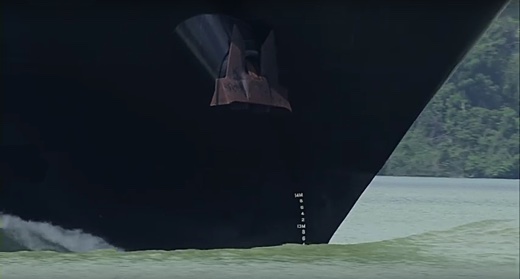
Image above: Still frame of ship bow plowing the ocean. From video "Sonic Sea" trailer below.

WHAT:
RIMPAC 2016 - The US Navy is sponsoring the armed navies of 24 countries to come to Hawaiian waters and practice naval war. They call these war exercises, RIMPAC, short for rim of the Pacific. These foreign navies will blast whale-killing active sonar, shoot missiles, shoot torpedoes, drop bombs, plant mines, sink ships, test new experimental weapons and otherwise harass, pollute and upset our ocean environment and the creatures who live in it. Oceans4Peace will sponsor teach-ins, a film series, contacts with decision makers and other public education events.

WHERE:
Around the Hawaiian Islands and the Pacific Missile Research Facility on Kauai.

WHEN:
June and July 2016

ACTION:
 Sign our petition to stop RIMPAC 2016
 "Oceans4Peace : Stop the Rim of the Pacific (RIMPAC) exercises"

To sign click here:
(https://www.change.org/p/oceans4peace-stop-the-rim-of-the-pacific-rimpac-exercises?recruiter=1616584&utm_source=share_petition&utm_medium=email&utm_campaign=share_email_responsive)

Oceans4Peace is sponsoring discussions, teach-ins, a film series and other public education events. See calendar below or go to(http://www.oceans4peace.org/page/page/8901763/2016-6.htm) or

RIMPAC IMPACT
Panel Discussion
Friday, June 17th 2016  6:00pm
Kapaa Library
Technology Effects on Whales - Kalasara Setaysha - Oceans4Peace
The Threats to Coral - Dr. Katherine Muzik - Marine Biologist NTBG
Expansion of US Militarism in the Pacific - Juan Wilson - Kauai Sierra Club

MOVIE SERIES
"Sonic Sea" A film about noise in the ocean, especially Navy sonar.
Thursday, June 23rd 6:00pm  2016
Koloa Neighborhood Center
Discussion with Gorden Labedz

"Sonic Sea" A film about noise in the ocean, especially Navy sonar.
Friday, June 24th 7:00pm 2016
Kapaa Library
Discussion with  Kalasara Setaysha

“Sonic Sea” A film about noise in the ocean, especially Navy sonar.
Sunday, June 26th 6 :00pm 2016
Princeville Neighborhood Center
Discussion with Rick Cooper

“Why We Fight”  A film about the US military.
Friday, July 1st 1016  6:30pn
Koloa Neighborhood Center
Discussion with Rick Cooper

"Oceans" Disney documentary film about the ocean.
Saturday, July 9th 1:00pm
Hanapepe Library
Discussion with Gorden Labedz

“Why We Fight”A film about the US military.
Sunday, July 10th 1:00pm
Kapaa Neighborhood Center
Discussion with Rick Cooper

“Why We Fight”  A film about the US military.
Friday, July 15th, 6:30pnm
Hanapepe Library
Discussion Rick Cooper

“Oceans”  Disney documentary film about the ocean.
Sunday, July17th 206 1:00pm
Kapaa Neighborhood Center
Discussion with Gorden Labedz

Oceans4Peace is a Coalition of Kauai Conservation and Social Justice groups whose Mission was to educate the general public about the adverse effects of the 2016 RIMPAC, Rim of the Pacific, Naval war exercises.

The Coalition continues to monitor the US Navy for abuses to the ocean, its inhabitants and ecosystem. With Hawaii the center of the US Naval Fleet and Kauai the center of Naval war research, our Coalition continues to update its educational Process.

Presently, the on-going threat to our Ocean is the increase of the US Naval presence in the Pacific, "the Pacific Pivot," especially in the new Marine Sanctuary of the Northwest Hawaiian Islands.

The Navy has excluded all human activity there, except their own. They admit to using mid frequency and low frequency active Sonar in this so-called 'Protected Area'. This extreme sound blasting Sonar has been shown to cause harm to all ocean life, especially to marine mammals that rely on hearing for their existence.

The Navy, in partnership with the South Korean and Japanese governments, continues to build military bases only a few hundreds of miles from China, at Jeju Island in South Korea and Oura Bay, Okinawa, Japan. Both projects necessitate environmental destruction on a massive scale. We can ill afford this military buildup or the arms race with China it will provoke.

Our 'Oceans 4 Peace Coalition' is seeking the real answers, which enable us to report the truth. This page will keep you updated on US Navy impacts on our Ocean.


Video above: Still frame of ship bow plowing the ocean. From video "Sonic Sea" trailer below. From (https://youtu.be/T-jabL64UZE).

Oceans4Peace supporting organizations
Kohola Leo (Whale Voice)
Kauai Alliance for Peace and Social Justice
Surfrider Foundation
Kauai Sierra Club


Video above: "RIMPACT IMPACT" film shown by Juan Wilson at Oceans4Peace Panel Discussion 6/7/14. From (http://youtu.be/NLZx9fg7Gvg).

See also:
Ea O Ka Aina: Oceans for Peace Pacific Pivot Panel 6/18/16
Ea O Ka Aina: Prepare for RIMPAC 2016 War in Hawaii 5/22/16
Ea O Ka Aina: Navy to "take" millions of mammals 5/17/16
Ea O Ka Aina: US court RIMPAC Impact decision 4/3/15
Ea O Ka Aina: RIMPAC 2014 Impact Postmortem 10/22/1
Ea O Ka Aina: RIMPAC 2014 in Full March 7/16/14
Ea O Ka Aina: 21st Century Energy Wars 7/10/14
Ea O Ka Aina: RIMPAC War on the Ocean 7/3/14
Ea O Ka Aina: Voila - World War Three 7/1/14
Ea O Ka Aina: The Pacific Pivot 6/28/14
Ea O Ka Aina: RIMPAC IMPACT 6/8/14
Ea O Ka Aina: RIMPAC Then and Now 5/16/14
Ea O Ka Aina: Earthday TPP Fukushima RIMPAC 4/22/14
Ea O Ka Aina: The Asian Pivot - An ugly dance 12/5/13
Ea O Ka Aina: Help save Mariana Islands 11/13/13
Ea O Ka Aina: End RimPac destruction of Pacific 11/1/13 
Ea O Ka Aina: Moana Nui Confereence 11/1/13
Ea O Ka Aina: Navy to conquer Marianas again  9/3/13
Ea O Ka Aina: Pagan Island beauty threatened 10/26/13
Ea O Ka Aina: Navy license to kill 10/27/12 
Ea O Ka Aina: Sleepwalking through destruction 7/16/12
Ea O Ka Aina: Okinawa breathes easier 4/27/12
Ea O Ka Aina: Navy Next-War-Itis 4/13/12
Ea O Ka Aina: America bullies Koreans 4/13/12
Ea O Ka Aina: Despoiling Jeju island coast begins 3/7/12
Ea O Ka Aina: Jeju Islanders protests Navy Base 2/29/12
Ea O Ka Aina: Hawaii - Start of American Empire 2/26/12
Ea O Ka Aina: Korean Island of Peace 2/26/12   
Ea O Ka Aina: Military schmoozes Guam & Hawaii 3/17/11
Ea O Ka Aina: In Search of Real Security - One 8/31/10
Ea O Ka Aina: Peace for the Blue Continent 8/10/10
Ea O Ka Aina: Shift in Pacific Power Balance 8/5/10
Ea O Ka Aina: RimPac to expand activities 6/29/10
Ea O Ka Aina: RIMPAC War Games here in July 6/20/10
Ea O Ka Aina: Pacific Resistance to U.S. Military 5/24/10
Ea O Ka Aina: De-colonizing the Pacific 5/21/10
Ea O Ka Aina: RIMPAC to Return in 2010 5/2/10
Ea O Ka Aina: Living at the Tip of the Spear 4/5/10
Ea O Ka Aina: Living at the Tip of the Spear 4/15/10
Ea O Ka Aina: Guam Land Grab 11/30/09
Ea O Ka Aina: Guam as a modern Bikini Atoll 12/25/09
Ea O Ka Aina: GUAM - Another Strategic Island 11/8/09
Ea O Ka Aina: Diego Garcia - Another stolen island 11/6/09
Ea O Ka Aina: DARPA & Super-Cavitation on Kauai 3/24/09
Island Breath: RIMPAC 2008 - Navy fired up in Hawaii 7/2/08
Island Breath: RIMPAC 2008 uses destructive sonar 4/22/08
Island Breath: Navy Plans for the Pacific 9/3/07
Island Breath: Judge restricts sonar off California 08/07/07
Island Breath: RIMPAC 2006 sonar compromise 7/9/06
Island Breath: RIMPAC 2006 - Impact on Ocean 5/23/06
Island Breath: RIMPAC 2004 - Whale strandings on Kauai 9/2/04
Island Breath: PMRF Land Grab 3/15/04  

.

Judgement against RIMPAC 2016


SOURCE: Koohan Paik (koohanpaik@gmail.com)
SUBHEAD: In April judge ruled Navy training in Pacific violates laws meant to protect marine life.

By Tom Hasslinger on 3 April 2016 for the Garden Island News -
(http://thegardenisland.com/news/local/govt-and-politics/ocean-impact/article_18c6f238-d9d1-11e4-bf36-1bec41fb1edd.html)


Image above: The Royal Australian Navy's first-of-class amphibious assault ship Canberra, during its March 2016 mission in Fiji will participate in Hawaii for RIMPAC 2016 exercise with integration USN's MV-22 Osprey, CH-53 Sea Stallion helicopter operations. From (http://www.janes.com/article/59239/ran-to-integrate-usn-s-mv-22-osprey-ch-53-sea-stallion-on-board-hmas-canberra-at-rimpac-2016).

The Navy has underestimated the threat maritime exercises and the use sonar poses on marine life around Hawaii and California, a federal judge ruled Tuesday.

U.S. District Judge Susan Oki Mollway in Hawaii concluded that the National Marine Fisheries Service violated environmental laws when it decided that the Navy’s training would have a “negligible impact” on whales, turtles, dolphins and other mammals.

The 66-page ruling said the Navy didn’t explore all possible safeguards to better protect mammals in the ocean, especially given the vast mileage of water that the military used to train.

“The court is saying that the Navy’s categorical and sweeping statements, which allow for no compromise at all as to space, time, species, or condition, do not constitute the ‘hard look’ required by NEPA,” Mollway wrote regarding the Navy’s stance that restrictions would hinder military practices.

“The Navy never explains why, if it can accommodate restrictions for humpback whales, it cannot accommodate restrictions for any other species.”
The ruling was praised by environmentalists.

“We’re not trying to stop all training and testing,” said David Henkin, the Earthjustice attorney representing several groups that filed the lawsuit. “But at the same time, it’s important to take the necessary steps to protect all marine life.”

Earthjustice is representing Conservation Council for Hawaii, the Animal Welfare Institute, Center for Biological Diversity and Ocean Mammal Institute challenging NMFS’s approval of a 5-year plan by the U.S. Navy for testing and training activities off Hawaii and Southern California. The groups have maintained that mammals are being unnecessarily harmed, in part, because the Navy doesn’t avoid “biologically sensitive areas.”

The National Environmental Policy Act requires federal agencies to consider a range of alternatives, including ones that could be pursued with less environmental harm, when embarking on operations.

Henkin said the Navy has access to 3.5 million square miles of the waters sweeping from California to Hawaii. Some select areas are particularly sensitive for sea life, such as whales.

For example, around 50,000 square miles off Hawaiian waters could be classified as sensitive grounds for marine life, and that size can be avoided while leaving plenty of sea for military operations.

“The court’s ruling recognizes that, to defend our country, the Navy doesn’t need to train in every square inch of a swath of ocean larger than all 50 United States combined,” Henkin said.

“If we can limit or prevent training in these small areas we can limit or prevent these deaths that occur,” he added. “It’s completely avoidable ... It’s not what you do, it’s how you do it.”

The Navy said it would evaluate the ruling before determining its next move and couldn’t comment on specifics.

“If the Navy cannot realistically train at sea, sailor’s lives and our national security will be at risk,” U.S. Pacific Fleet spokesman Lt. Cmdr. Nick Sherrouse wrote in response to the ruling. “It is essential sailors have realistic training that fully prepares them to fight tonight, if necessary, and have equipment that has been thoroughly tested before they go into harm’s way,”

What happens next is still to be determined. Exercises could be moved or stricter permitting regulations could be agreed to.

In the meantime, Henkin said he will seek a court order to ensure adequate protections are put in place while it settles out.

“We would invite the government to come to an agreement without a need for more (litigation),” he said. “One way or the other, we are going to do whatever we can to make sure there is adequate protection.”

Held every two years and hosted by the U.S. Pacific Fleet, Rim of the Pacific, or RIMPAC, is the world’s largest international maritime war exercise. In total, 22 nations, 49 surface ships, six submarines, more than 200 aircraft and 25,000 personnel participated in last year’s event from June 26 to Aug. 1.

It included live fire target practice, explosives, sonar and the sinking of the decommissioned USS Tuscaloosa 57 nautical miles northwest of Kauai.

The Navy says training will kill 155 whales over five years, but environmentalists say the numbers would be much higher. Some Kauai residents expressed concern when the training was here.
One of those citizens is Hanalei resident and marine biologist Terry Lilley.

He copied U.S. Congresswoman Tulsi Gabbard on dozens of emails and photos over the last year documenting what he says shows the serious damage being caused to Kauai’s nearshore marine environment, including green sea turtles, sharks, reefs and coral, by the Navy’s activities.

Gabbard, in turn, wrote a letter in October to Adm. Harry Harris Jr. of the United States Pacific Fleet inquiring about monitoring the effects of military operations on marine life.

“I am very pleased to see that the federal court looked at all of the data about the destruction of our reefs caused by the U.S. Navy war games and made the decision they did,” he wrote in an email to The Garden Island. “We now need to get the destructive activities stopped so we can start working on a massive study and coral reef restoration project.”

Sherrouse said the Navy has been training in the Hawaii and Southern California ranges for more than 60 years.

“This training and testing remains critical to the defense of the nation,” he said. “We are committed to meeting our national security mission and protecting marine life by using protective measures, working with regulatory agencies, and better understanding marine mammals through research.”
But the judge’s ruling stated the Navy doesn’t need all of the waters to still conduct its missions successfully.

She also noted the “stunning number of marine mammals” the Navy’s activities threaten with harm. The judge also found the Fisheries Service violated its legal duties to ensure Navy training would not push endangered whales and turtles to extinction.

“No restriction of any kind is even hypothesized,” Mollway wrote of the Navy’s stance. “Again, the breathtaking assertions allow for no limitation at all, but this makes no sense given the size of the ocean area involved.”


 No Scientific Evidence

SUBHEAD: Navy says military exercises not harmful to marine life, but others disagree.

By Chris D'Angelo on 21 November 2014 for the Garden Island News -
(http://thegardenisland.com/news/local/no-scientific-evidence/article_0006f856-713f-11e4-9ff7-6bf7648d8280.html)

The U.S. Pacific Fleet in Pearl Harbor says community concerns that the Rim of the Pacific maritime exercise and Kauai’s Pacific Missile Range Facility are negatively impacting marine life are unfounded.

In early October, after hearing from several constituents, Hawaii Congresswoman Tulsi Gabbard requested information about the Navy’s efforts to monitor the effects of RIMPAC and PMRF on the ocean and marine ecosystems.

“In response to concerns of your constituents, there has been no scientific evidence that RIMPAC 2014 or exercises at the Pacific Missile Range Facility (PMRF) have caused damage to marine life,” USPF Commander Adm. Harry B. Harris Jr. wrote in a response to Gabbard.

In his three-page letter, Harris discussed the aggressive steps taken by the Navy to avoid harming marine mammals, sea turtles and corals, through the use of protective measures during training, especially with sonar and explosives.

Harris also pointed out that the Navy funded over $300 million in independent research over the past 10 years, making it a world leader in marine mammal research and monitoring.

“The Navy works with regulatory agencies, using the best available science, to obtain necessary authorizations and continues to further our understanding of marine mammals through research and monitoring,” he wrote.

Others, however, say the military exercises are harming marine life.

Katherine Muzik, a local marine biologist, said it is proven — as written about in Joshua Horwitz’s book “War of the Whales” — that sonar is lethal to whales. It is only logical, she said, that it would also have deleterious, if not lethal, effects on invertebrates, including shrimp and coral, which rely on vibrations for detecting prey, escaping predators and reproducing.

“I would bet on my life that sonar is hurting other creatures,” she said. “We don’t have the proof, but the absence of proof doesn’t mean it’s an absence of fact.”

Muzik said that with so many factors already damaging the marine environment — warming ocean temperatures, acidification and pollution — for the U.S. military to insist on purposefully, knowingly and deliberately maiming and killing marine life in the name of practice is unacceptable and tragic.

In August 2013, a pair of environmental impact statements detailed that U.S. Navy training and testing activities could inadvertently kill hundreds of whales and dolphins — an injure thousands more — between 2014 and 2018. The studies included waters off the East Coast, the Gulf of Mexico, Southern California and Hawaii.

Most of the deaths — as many as 155 off Hawaii and Southern California — would come from detonating underwater explosives, while some could be caused by sonar testing or animals being struck by ships. In addition to deaths, the EIS report said the activities off Hawaii and Southern California could cause 2,039 serious injuries, 1.86 million temporary injuries and 7.7 million instances of behavioral change.

“I think it’s bogus when they say they have a lookout,” Muzik said. “I think the truth is there are animals there, they know there are animals there, and they are allowed to take them.”

Held every two years and hosted by the Pacific Fleet, RIMPAC is the world’s largest international maritime war exercise. In total, 22 nations, 49 surface ships, six submarines, more than 200 aircraft and 25,000 personnel participated in this year’s event, which lasted from June 26 to Aug. 1 and included live fire target practice and the sinking of the decommissioned USS Tuscaloosa 57 nautical miles northwest of Kauai.

The drills take place in the Hawaii Operating Area and several off-shore ranges, including PMRF.

Harris told Gabbard there are steps the Navy must take to minimize harm to the environment — per environmental laws such as the Marine Mammal Protection Act and the Endangered Species Act — during its trainings, including RIMPAC.

Before each RIMPAC, Harris wrote, the Navy briefs participating U.S. and foreign units about protective measures, as well as reminds service members to avoid interaction with sea turtles, Hawaiian monk seals, dolphins, coral reefs and Essential Fish Habitats.

Additionally, Navy officials complete Marine Species Awareness Training and units are required to report sonar use and submit daily marine mammal sighting reports.

Prior to and during training with sonar, the Navy uses trained, qualified lookouts to search the area for marine mammals, according to Harris. If one is sighted within 1,000 yards, sonar transmissions are reduced. Within 200 yards, sonar is shut down completely.

“Safety zones are also established to protect marine life from the effects of explosive and non-explosive munitions,” he wrote.


In an emailed statement Wednesday, Gabbard said she has been “deeply concerned about the scope of devastation” of Kauai’s coral reefs, which continue to suffer from an outbreak of black band coral disease. Over the past year, she said she has reached out to experts in marine biology, local and federal officials, and the U.S. military to ask about potential causes and how the disease can be stopped.

“The broader scientific community does not point to the U.S. Navy as the cause of this coral disease,” Gabbard wrote to The Garden Island. “Rather, experts agree it likely is a combination of runoff, growing population and development, and overfishing, among other cited causes.”

Gordon LaBedz of the Surfrider Foundation Kauai Chapter, which sued the Navy over the 2006 RIMPAC exercises, described Harris’ response letter as “100 percent predictable,” and said he puts the Navy right up there will the commercial fishing industry in terms of the world’s most environmentally destructive entities.

“In my 30 years of suing the Navy, I’ve never experienced them as good stewards of the environment,” he said.

As for Harris’ comments about there being no evidence, LaBedz said it bothers him. When a whale dies, it sinks. It doesn’t float on the surface where it can be found, he said.
In his letter, Harris also addressed a situation in July in which a 16-foot sub adult pilot whale washed ashore and died in Hanalei Bay. In response, the Navy conducted an aerial survey in accordance with the Pacific Fleet’s Stranding Response Plan.

While LaBedz said he is convinced that whale died as a result of sonar, Harris said, “To date, there is no evidence of a connection to Navy.”

When asked how someone would obtain the scientific evidence referenced by Harris, and what that evidence might be, or look like, Pacific Fleet spokesman Mark Matsunaga wrote, “The Navy uses the best available science in its environmental analysis and lists these references at the end of each resource section of our EISs,” and referred TGI to a series of websites, including www.hstteis.com.

See also:
Ea O Ka Aina: Prepare for RIMPAC War in Hawaii 5/22/16
Ea O Ka Aina: Navy to "take" millions of mammals 5/17/16
Ea O Ka Aina: US court RIMPAC Impact decision 4/3/15
Ea O Ka Aina: RIMPAC 2014 Impact Postmortem 10/22/1
Ea O Ka Aina: RIMPAC 2014 in Full March 7/16/14
Ea O Ka Aina: 21st Century Energy Wars 7/10/14
Ea O Ka Aina: RIMPAC War on the Ocean 7/3/14
Ea O Ka Aina: Voila - World War Three 7/1/14
Ea O Ka Aina: The Pacific Pivot 6/28/14
Ea O Ka Aina: RIMPAC IMPACT 6/8/14
Ea O Ka Aina: RIMPAC Then and Now 5/16/14
Ea O Ka Aina: Earthday TPP Fukushima RIMPAC 4/22/14
Ea O Ka Aina: The Asian Pivot - An ugly dance 12/5/13
Ea O Ka Aina: Help save Mariana Islands 11/13/13
Ea O Ka Aina: End RimPac destruction of Pacific 11/1/13 
Ea O Ka Aina: Moana Nui Confereence 11/1/13
Ea O Ka Aina: Navy to conquer Marianas again  9/3/13
Ea O Ka Aina: Pagan Island beauty threatened 10/26/13
Ea O Ka Aina: Navy license to kill 10/27/12 
Ea O Ka Aina: Sleepwalking through destruction 7/16/12
Ea O Ka Aina: Okinawa breathes easier 4/27/12
Ea O Ka Aina: Navy Next-War-Itis 4/13/12
Ea O Ka Aina: America bullies Koreans 4/13/12
Ea O Ka Aina: Despoiling Jeju island coast begins 3/7/12
Ea O Ka Aina: Jeju Islanders protests Navy Base 2/29/12
Ea O Ka Aina: Hawaii - Start of American Empire 2/26/12
Ea O Ka Aina: Korean Island of Peace 2/26/12   
Ea O Ka Aina: Military schmoozes Guam & Hawaii 3/17/11
Ea O Ka Aina: In Search of Real Security - One 8/31/10
Ea O Ka Aina: Peace for the Blue Continent 8/10/10
Ea O Ka Aina: Shift in Pacific Power Balance 8/5/10
Ea O Ka Aina: RimPac to expand activities 6/29/10
Ea O Ka Aina: RIMPAC War Games here in July 6/20/10
Ea O Ka Aina: Pacific Resistance to U.S. Military 5/24/10
Ea O Ka Aina: Guam Land Grab 11/30/09
Ea O Ka Aina: Guam as a modern Bikini Atoll 12/25/09
Ea O Ka Aina: GUAM - Another Strategic Island 11/8/09
Ea O Ka Aina: Diego Garcia - Another stolen island 11/6/09
Ea O Ka Aina: DARPA & Super-Cavitation on Kauai 3/24/09
Island Breath: RIMPAC 2008 - Navy fired up in Hawaii 7/2/08
Island Breath: RIMPAC 2008 uses destructive sonar 4/22/08
Island Breath: Navy Plans for the Pacific 9/3/07
Island Breath: Judge restricts sonar off California 08/07/07
Island Breath: RIMPAC 2006 sonar compromise 7/9/06
Island Breath: RIMPAC 2006 - Impact on Ocean 5/23/06
Island Breath: RIMPAC 2004 - Whale strandings on Kauai 9/2/04
Island Breath: PMRF Land Grab 3/15/04
.

Fukushima and Chernobyl

SUBHEAD: We continue to be damaged by these extremely cautionary nuclear catastrophes.

By Robert Snefjella on 28 May 2016 for Counter Currents -
(http://www.countercurrents.org/snefjella280516.htm)


Image above: Black plastic waste bags of nuclear waste from Fukushimadaiichi nuclear plant disaster in 2011 stacked five high at the perimeter surround an inner pile of chaotically placed bags. From (http://www.catchnews.com/india-news/keep-your-nuclear-power-mr-shinzo-abe-we-can-do-without-a-fukushima-1449883672.html).

With phenomenal ingenuity and extreme folly, technically-advanced humanity has managed to conceive and implement a technology that has done much harm to life, and will do much greater harm to life, and that even threatens our extinction.

Whether suddenly through nuclear war, or through a pernicious slow motion assault on life's wondrous, intricate, amazing inner workings and accurate reproductive capabilities, nuclear technology is inherently, inescapably, anti-life. Given that the rest of the marvels of creation – that which has so far survived us – is also along for the ride, it's not just about us.

One might wonder, if the rest of creation were capable of hope, if it would be clinging to the fading hope that humanity at this late hour would transform itself into a species characterized by a decisively dominant strain of sane, careful, sensible behavior, or, if it would be hoping for our demise, the sooner the better, come what may. If we are to extricate ourselves from the trap into which we have placed ourselves, it will take much more ingenuity, and much reduced folly.

This piece is an incomplete overview of our situation, intended to boost general understanding of these subjects. Some reflections on essential reforms close out the piece.

“[In 1936] ... [Fatu Hiva's ocean pools and shorelines] literally teemed with life.”

From the book Fatu-Hiva, By Thor Heyerdahl. (He lived on the Polynesian Island of Fatu-Hiva in 1936)

“[In 2015] … everything [flora and fauna] is missing!” [along the shorelines and in the tidal pools of British Columbia]

Dana Durnford's words, after his 15000 mile odyssey along the west coast of Canada in 2014 and 2015

The unprecedented mass mortality of much life in the North Pacific Ocean in recent years has been given inadequate coverage by corporate mass media, and has not gained widespread public awareness.

In local media close to the 'situation', there have been many reports of unusual numbers of deaths, of strange diseases, of mass disappearances of life forms. And sometimes these reports appear in national and international media. But such reports are typically brief, sporadic, disconnected from each other, and often narrowly focused.

Poorly represented has been the scale and breadth of the devastation: But then, no one knows just how many whales and sea lions and walrus and sardines and sea stars and mussels and sea urchins and sea birds, and countless other creatures large and small, have in recent years died, starved, disappeared, ‘melted away’ in the water, rotted on the shores. And we mustn't forget humans' industrial scale ocean 'harvest'.

But when one puts together the many reports, the scale of the disaster over recent years is pretty mind-boggling. Kelly Ann Thomas has compiled one such list. [1]

A few examples from my own notes:

From National Geographic online, 2015: “...a die off of sea stars...largest marine disease outbreak ever recorded....”; “... no one is sure what is causing it ….” “... we think there's [also] a wasting event going on with [sea] urchins.” [2]

California Senator Mike McGuire in 2015: “We are facing a fishery disaster ….” “... historic crisis [in] the salmon and crab fisheries.” [3]

On March 15, 2015, New Mexico State U. Online, asked what was killing Baja's marine animals, and reported decomposing gray whales, sea lions, dolphins, turtles, and birds on the beaches of Baja. [4]

Feb. 26, 2016 “Sardines off the West Coast [are forecast to be in 2016] 93% lower than in 2007.” [5]

National Geographic from Jan. 24, 2015 offers the headline: “Mass Death of Seabirds in Western U.S. is Unprecedented” [6]

From Alaska Dispatch news, January 29, 2016: “Scientists Think Gulf of Alaska's seabird die- off is biggest ever recorded”; “...staggering die-off … something is awry in the Gulf of Alaska ....” [7]

In August of 2014 large numbers of whales and common murres [ seabirds] were reported as dying along the Alaska coast. [8]

Alaska Dispatch News published an article on August 20, 2015, about the unusual number of dead whales being encountered. [9]

From the Toronto Globe and Mail, Aug. 12, 2013: “...sockeye salmon returns [to British Columbia] plunge to historic lows.” “... scientists don't know why the return numbers are so low.” [10]

From ENE news, citing a document from the Alaska Marine Science Symposium of Jan. 20-24, 2014: “During summer of 2011 it became evident to [Alaskan] coastal communities and wildlife management agencies that there was a novel disease outbreak occurring in several species of Arctic ice-associated seals. Gross symptoms included lethargy, no new hair growth, and skin lesions....”

The paper mentioned concerns that the Fukushima nuclear catastrophe in March of 2011 might be implicated. The pdf document that ENE cited appears to be no longer available on line. [11]

National Geographic in 2013 reported that the quantity of dead stuff on the Pacific Ocean floor had 'mysteriously exploded' recently in many locations. [12]

California Fish and Wildlife Director Chuck Bonham in 2015: “Something's going on in the oceans [that] doesn't fit our historical understandings .... numerous anomalies ….” [13]

From a May 24, 2015 Talk Radio Europe interview with experienced small-boat sailor Ivan Macfadyen, commenting on his voyage across the Pacific from Australia to Japan in 2013: “Ten years ago [on an identical route and at the same time of year]

I could catch fish every day.” Macfadyen noted that in 2003 there were lots of birds, dolphins, turtles, whales, sharks; [But in 2013] “The ocean is broken.” “... quite literally there isn't any fish. … [fish and other lifeforms] are just all gone.” [14]

And Macfadyen again, commenting on his 2013 voyage: “We [saw] a whale, … 1000 miles south of Japan … with like a big tumor on the side of its head ….” [15]

Japanese scientists in 2013 reported finding radioactive cesium, from the Fukushima nuclear catastrophe, in plankton [a basic part of the food chain of the ocean] at all ten places tested in the Pacific. [16]

Nature.com on Feb. 4, 2016, published a report by Japanese scientists that they had found on the Pacific coast of Japan a “decline in inter-tidal biota after … the Fukushima nuclear disaster.” “... the number of species and population densities in the inter-tidal zones were much lower at sites near … Fukushima.” [17]

The most revealing description of the situation on the Pacific coast of North America has been compiled by intrepid Canadian sailor and former diver Dana Durnford. In 2014 and 2015 he journeyed over 15000 miles by small boat to document the decimation of life in the tidal pools and along the shorelines of British Columbia.

Durnford took many thousands of photographs and filmed underwater, proving, in his own words, “just about everything [flora and fauna] is missing.”

Durnford also noted a very great decline in bird numbers, and in insects. Until recent years, the tidal pools and shorelines were home to diverse abundance: thousands of species of flora and fauna. [18]

Note that it has been two experienced sailors, Durnford and Macfadyen, independent human beings who love the ocean and who have witnessed the disaster in the Pacific at close quarters, who have given us especially compelling descriptions of the situation.

One might think that Durnford would have been lauded, especially in Canada, for his amazing determination to document, and to tell the world about, the situation along the Pacific shores. He has been largely ignored, when he isn't being vilified.

Latterly, he has had criminal charges brought against him in Canada, for criminal harassment. Here is one journalist's defense of Durnford. [19]

Marine scientists have seemed stumped to explain unprecedented mass mortality and disease in and around the North Pacific. The scientists typically vary from distraught perplexity to stabs in the dark: musings range from we don't know what's going on, to climate change, fungi, bacteria, viruses, over fishing, cyclical ups and downs, acidic water, domoic acid, warm water and cold water.

In fumbling for explanations for unprecedented recent death in the Pacific, there has been an obvious reluctance by scientists to assign significant suspicion to the unprecedented industrial/technological catastrophe which began in Japan at the Fukushima Dai-ichi nuclear reactor complex on the shores of the Pacific on March 11th of 2011.

Four large nuclear reactors were destroyed, melting down and blowing up, and have for over five years released massive amounts of dangerous radioactive elements into the biosphere.

A typical example of the marginal status given to Fukushima radiation: The Journal of Environmental Radioactivity, Feb. 2016: “... Fukushima-derived radionuclides [have been detected] in a variety of marine products harvested off the western coast of North America....” The abstract opined that the level of radioactivity found was not a health problem. [20]

Significant for what is happening now in the Pacific,a study published in 1971, authored by E. J. Sternglass, titled 'Fallout and Reproduction of Ocean Fish Populations', showed the huge impact that nuclear fallout from atomic bomb testing had on life in the oceans.

From the study's summary statement: “...very large declines of fish-populations after low-altitude nuclear tests … have been observed in the Atlantic and Pacific, strongly suggesting that the eggs of fish and the developing young are far more sensitive to internal radiation … than had been anticipated, very much as is the case of the human-embryo and fetus.” [21]

So what about Fukushima?

There have been various attempts to quantify the amount and types of radioactive elements that have been released from Fukushima into the biosphere, but these are all guesswork handicapped by an official and corporate policy dedicated to lying and censoring. [22]

Three reactors were destroyed by powerful explosions. [23]

The Fukushima Dai-ichi nuclear site contained in total over 4000 tons of highly radioactive nuclear fuel. [24] Reactor 3 at Fukushima Dai-ichi contained especially dangerous fuel rods, combining plutonium with uranium. Much material from the exploding reactors, including reactor 3, was ejected into the biosphere, some circling the planet. [25]

The total amount of radioactive cesium-137 alone, contained in the spent fuel assemblies at Fukushima, is estimated by Robert Alvarez, former Senior Policy Adviser at the US Department of Energy, in an extraordinary letter to the author of Allegedly Apparent Blog, Michael Van Broekhoven, to be roughly 85 times the amount released by Chernobyl. [26]

In desperation, a large amount of sea water was sprayed onto the wrecked reactors. It is questionable whether this did more harm than good. The creation of durable spherical radioactive clusters of materials – buckeyballs – has been reported to be among the fruits of this labor. Some highly radioactive water has been collected in many hundreds of steel tanks of dubious quality. Much water sprayed went wherever water was able to go.

But there is also a large natural flow of water under the destroyed reactors. Extremely radioactive material from the reactors has likely burned its way into the ground below the reactors, to a depth which is either unknown or if known we are not being told, adding to the radioactive contamination of guesstimated hundreds of tonnes of water daily discharging into the Pacific Ocean for near five years now. [26]

In Nov. 2014, for example, TEPCO admitted that 400 tons of radioactivity-contaminated water was reaching the Pacific daily, and that measures to prevent the discharge had been unsuccessful. [28]

It should be emphasized that TEPCO has earned a reputation for hiding and minimizing and distorting the actual situation. And the Japanese government has attempted quite successfully to suppress honest reporting of the situation at Fukushima.

The destroyed reactors continue, and will continue, far into the future, to contaminate the environment with dangerous radionuclides. There remain unapproachable areas, and horrific problems defying solution.

Desperately, millions of large plastic bags of questionable durability have been filled with radioactive material, and this massive effort has managed to temporarily confine a tiny fraction of the radioactive contamination emitted over the five-plus years since the catastrophe.

Robots sent in to inspect areas of high radioactivity have been destroyed by the radioactivity. The Japanese, five years into the catastrophe, are still trying to determine how to proceed. [29]

Arnie Gundersen in 2012 collected 5 random soil samples from Tokyo and all five were radioactive enough to be classified as nuclear waste, under United States standards. [30]

“... 70 percent of [Japan is contaminated by Fukushima radioactivity] … 20 percent [of Japan] including Tokyo, is contaminated with highly toxic radiation.” [31] [32]

But the worst may yet be to come. A German study has predicted that Strontium-90 levels would rise and remain at high levels for many years after a meltdown such as Fukushima, And there is evidence for ongoing out of control fission at the destroyed reactors: long after the initial melt down and explosions, short-lived radioactive iodine-131 has been found both in Japan and on the other side of the planet. [33]

Over the last months of 2015 and in 2016, Michael van Broekhoven's Allegedly Apparent Blog has shone a near solitary public light on evidence indicating that some globally significant nuclear catastrophe has occurred recently.

He also offers evidence that radiation monitors around the world are routinely used to hide, not reveal, high radiation readings, as well as evidence that the situation at, and radiation from, the nuclear catastrophe at Fukushima, far from winding down, may be worsening. His work deserves serious attention. [34]

The Fukushima catastrophe obviously merited, and now perhaps more than ever, merits extreme political, scientific, engineering, mass media and public attention, reflection, and concern, and our utmost intelligence in brainstorming; and, to what extent possible, an all out mitigation response.

But this has not happened. So, not surprisingly, countless people are not even aware of the Fukushima disaster. And of those who do know about it, many think that the problem has been resolved, or is not all that serious.

Nothing could be further from the truth.

It has not been easy, from the very beginning of the nuclear age, to find out what's actually going on with nuclear mishaps, generally, because dishonesty and censorship have been the default position for the nuclear military and nuclear industry since its inception.

So, for example, the World Health Organization, which cheerfully announced immediately after the beginning of the Fukushima catastrophe that no increased cancer risk was to be expected, made a secret agreement in 1959 with the nuclear lobby and promoter IAEA (International Atomic Energy Agency) to give the IAEA control over WHO pronouncements pertaining to radioactivity and human health. [35] Since the beginning of the atomic age, humanity has been the victim of both nuclear-related deception and radioactive contamination.

And what about the health impact from Fukushima on the Japanese people? In Sept. of 2015, the Asia-Pacific Journal published a study by Eiichiro Ochiai titled 'The Human Consequences of the Fukushima Dai-ichi Nuclear Power Plants Accidents'. [36]

Ochiai's document includes the important point that damage from chronic exposure to radioactivity is strongly related to whether that exposure is through internal contamination. This critical difference between internal and external exposure to radioactivity has been largely ignored by 'official' bodies and pronouncements and standards regarding the health impact of radiation.

Another key defect in the conventional depiction of the dangers of chronic radiation exposure is that genetic damage, reproductive problems, mutations, chromosomal abnormalities and the like – the entire spectrum of DNA damage, which may endure for generations – is largely ignored. [37]

Cancer risk is highlighted, then minimized. Little mention is made of the hundreds of other serious ailments which increased exposure to artificial radionuclides is implicated as contributing to.

From Ochiai's document: [“... as a result of the Fukushima accident”] “All indications are that incidence of many diseases is increasing not only in Fukushima but also all over Japan.” Ochiai shows charts based on data from Japanese hospitals for incidents of various diseases for the years 2010, 2011, 2012 and 2013.

At the Fukushima Prefectural Medical School, data is for the years 2010 to 2012. Here are the figures for 2010 (before Fukushima) compared to 2012 (two years after Fukushima) : cataracts up 227%; angina up 157%; bleeding in brain up 300%; lung cancer up 163%; esophagus cancer up 122%; stomach cancer up 129%; cancer in small intestine up 400%; colon cancer up 297%; prostate cancer up 300%.

Ochiai included data from fifteen Prefectures re thyroid cancer. Rates went up in all areas, with Japan as a whole having a 148% increase from 2010 to 2013. Incidents of myocardial infarction increased in all 13 prefectures listed; Japan as a whole 151%. Acute leukemia increased 142% overall. The author comments that his data represents only the “tip of the iceberg”.

On Oct. 15, 2015, Japanese Professor Toshihide Tsuda announced the results of an epidemiological study of thyroid cancer in Fukushima prefecture since the catastrophe, and described the increase as “drastic”. The increase was 20 to 50 times 'normal', depending on the specific area and amount of contamination, and this increase was far beyond what the WHO had predicted.

And based on the Chernobyl experience, cited below, an estimated 1000 additional thyroid problems can be expected for every cancer, as a result of heavy radioactive contamination. Tsuda pointed out that preventative iodine had not been given to vulnerable people after the Fukushima disaster, which might have prevented many of the subsequent thyroid problems. [38]

In an interview published Mar. 18, 2016 Arnie Gundersen of Fairewinds has disclosed that there has been “a huge spike in the death rates within Fukushima Prefecture for young children....” This information has been suppressed. [39]

One chronological retrospective on Fukushima is found at Modern Survival Blog. [40]

For extraordinary pertinent musical poetry from Japan, attend this video. [41]

Leaving Fukushima for the moment, what can we learn about the health repercussions from massive releases of artificial radioisotopes from the global nuclear catastrophe at Chernobyl in 1986?

An extremely disturbing and illuminating work on the effects of serious and chronic human-created radiation exposure is the detailed examination of the impact of the Chernobyl nuclear disaster in the book: 'Chernobyl: Consequences of the Catastrophe for People and the Environment'. [42]

The book has been largely ignored by corporate mass media, and when mentioned, attempts have been made to denigrate it, belittling its competence, methods, and conclusions. This denigration is due to the threat that the document poses to the nuclear delusion: The Chernobyl study is not a good news story.

The Chernobyl book above was based on approximately 5000 studies, but the authors point out that these were only a fraction of those available. Many of the studies were in the Russian language, and some have still not been translated.

The document notes that Chernobyl radiation harmed all life forms studied. And the authors assert that at the time of writing the document, the problems were increasing on the whole, not decreasing.

Here are a few examples of what was found:

Thirteen European countries had over half of their area contaminated, and some European countries have areas that remain contaminated, nearly thirty years later. For example, 10,000 farms in the United Kingdom were contaminated. [43] Four hundred million people live within significantly contaminated areas, and 5 million still live in areas of high contamination in Russia, Belarus and Ukraine.

The quantity of deposition of dangerous radioactive material varied greatly from place to place, over the entire northern hemisphere. Many different types of conglomerations of radioactive elements were emitted.

Marked increases in a myriad of non-malignant and malignant health problems, including damage to reproductive health and the immune system, have been observed and recorded in the populations exposed to Chernobyl contamination. Over vast areas and in diverse populations and in all age groups that experienced contamination, there has been greatly increased morbidity. In many instances this increase has worsened steadily over time.

Prior to Chernobyl, healthy children were the norm in all countries in question. After Chernobyl, especially in places of heavy contamination, healthy children became fewer, with some areas now reporting virtually no healthy children.

Contaminated areas of Belarus, Ukraine, and European Russia have seen the percentage of ‘practically healthy’ children reduced from 80 or 90% of the child population prior to Chernobyl, to less than 20% more recently.

Markedly higher death rates, reproductive disabilities, low birth weights, and a wide range of illnesses and diseases, and greatly increased numbers of invalid children, were documented in areas of serious contamination. There was a continuing deterioration in the health of children exposed to serious radiation, even from the late 1990s into the new millennium.

There were increases in stillbirths, miscarriages, infant mortality and congenital malformations in many countries following the Chernobyl disaster.

The hundreds of thousands of people – the ‘liquidators’ - who worked in close proximity to the reactor site in the attempt to mitigate the disaster; have experienced extreme decline of well being and greatly increased morbidity. For example, for the Ukraine among liquidators about one in twenty remained reasonably healthy by 2004, and those suffering chronic illness increased 600%.

Russian men, young and healthy prior to Chernobyl, and who participated in cleanup and mitigation efforts, suffered a severe decline in health, leaving only 2% healthy by 1992. By 2004 nearly two thirds of Russian liquidators were disabled.

Accelerated aging was documented in both children and adults living in heavily contaminated areas. Diseases of the blood, circulatory and lymphatic systems increased markedly in populations living in areas of radioactive contamination, as did increases of chromosomal aberrations, mutations, and Down syndrome.

Thyroid problems increased greatly, with 1000 thyroid problems for every thyroid cancer. The damage by Chernobyl radiation to the endocrine system was far greater than previously expected, with millions seriously affected. Immune system impairment strongly correlated with exposure to radiation.

Marked increases in respiratory system problems were documented. A wide range of reproductive system disorders increased greatly in heavily contaminated areas. Serious radiation exposure was strongly associated with impaired brain function and mental health problems.

There have been many surprises: for example, Cesium-137 has been far more persistent than predicted; hot particles are breaking down quickly into a surprising melange of radioactivity; Highly soluble Strontium-90 and Americium-241 are moving through the food chain much more rapidly than had been predicted.

Levels of contamination in plants vary widely, even within species. There was increased and widespread genetic damage, tumour-like growth, and mutation in many plant species in areas of high contamination as compared to areas of low contamination.

Since Chernobyl, in heavily contaminated areas, all resident animal species studied have exhibited increased genetic abnormalities and increased mortality, and generally, the same damage that humans have suffered. This will continue far into future.

In less than half a year after Chernobyl, in heavily contaminated areas, marine species had decreased by up to four fifths of their pre-catastrophe numbers. Bird populations in heavily contaminated areas were greatly reduced.

So where are we? Even without Chernobyl and Fukushima, we were not doing well, us talented, foolish, war-making humans. Neither to ourselves or the rest of life on the planet. The oceans would have been in trouble without Fukushima.

And on land all the creatures that compete in any way with us, or whose death profits us – the lions and tigers and bears and elephants and giraffes and gorillas, etc – would have been in trouble at our hands had we never gone down the cursed nuclear path.

The more fragile creatures, the butterflies and birds and bees and the rest, would be in trouble given a human globe-spanning culture that combines dirty technology and 'living better with chemistry' with a chronic inclination for war, greed, and a too general insensitivity to nature; even if we were without one nuclear bomb or reactor.

But the atomic bomb and the nuclear reactor have introduced a new deadly circumstance. We have been teetering on the edge of nuclear weapons being used in a cataclysmic war since shortly after the second world war.

And nuclear technology, which creates, and spread around the planet, countless new alien atoms that are inherently inimical to life, is also a pernicious step too far, even if nuclear war were to be averted permanently.

As adjuncts to the bomb, many hundreds of nuclear power plants, civilian and military, have been built. There have been catastrophic accidents, with many accidents larger and smaller covered up, and lied about.

Whether from sabotage, from negligence, from stupidity, from natural disasters, from engineering faults, from war, from major coronal ejections that periodically strike earth, more reactors will go badly wrong. And at the best of times, and chronically, as part of normal operating procedure, nuclear reactors contribute to increasing levels of artificial, inimical-to-life radionuclides in the biosphere. [44]

At the dawn of the possibility of a new benign-energy age, at that moment in history when we have created the basis of a transition to a relationship with the natural world that is predominantly respectful and careful, some countries are building new nuclear reactors.

Those hundreds of nuclear power plants already built are aging, deteriorating, often leaking unannounced radioactivity, becoming more and more susceptible to breakdown, and are ever-present terrorist targets; and some are being re-licensed for financial gain in rickety old age, when it had been previously announced they would be 'decommissioned'. [45]

And we still don't really know what to safely do with the highly radioactive results of running nuclear reactors. Fukushima and Chernobyl have been and remain and will continue to be catastrophic problems. But apart from those two majorly lethal conundrums, massive amounts of highly radioactive waste in thousands of locations remain a permanent disposal problem and danger.

Future generations has been given the unwelcome and unasked for task of guarding, paying for, dealing with, being injured by, and having their lives and prospects and social options lessened by this most hellish means by which water is boiled to make electricity for us, and by which nuclear weapons' essential needs are met.

So, wherein does our best chance lie of reducing the harm and risk of our nuclear folly? How do we provide the basis by which we could begin to dismantle our folly and reconstruct cultures that are viable.

Those iconic personages Albert Einstein and Dwight Eisenhower are among the many concerned people who have located hope for policy sanity in an informed public:

Einstein found our “only hope” [regarding nuclear technology] in “an informed citizenry” [that] “will act for life and not for death.”

Eisenhower offered that

“only an alert and knowledgeable citizenry can compel the proper meshing of the huge industrial and military machinery of defense with our peaceful methods and goals, so that security and liberty may prosper together.”

Note well: they did not base their hope on experts or oligarchs or generals or silly people who are enthralled by the illusion of their own extraordinary intelligence. They based hope on a well informed us.

Implied in Einstein and Eisenhower's hope is that the broad public, well informed, has a far greater potential repository of creativity and common sense and decency and such – beneficent functionality - than any cult, tribe, institution or faction thereof.

If indeed an informed public is essential, then modern mass media is largely a hope destroyer: the current use of mass media is largely as a 'public perception management' tool on behalf of demented control freaks and oligarchic wannabees; most mass media is used to brainwash, sell, propagandize, censor, mislead, confuse.

Much of so-called journalism is a real-journalism-free zone. This is lethally dysfunctional and must be overcome. Significant steps in the right direction can be taken via intelligent political initiative, mandating and giving financial and legal aid to priority-sensitive free and full discourse and unfettered information in media.

The real world is challenging enough at the best of times. It requires all the realism and intelligence and heart we can muster. We cannot attain a cultural predominance of sensible public policy via lies and censorship.

If we are to salvage any kind of reasonably benign and propitious human prospect, we must achieve a dominant public discourse which is integrity and forthrightness based. Such honesty is the nemesis of criminals and tyrants, but the indispensable basis for sound public and personal decisions. Again, a fully well informed public is our best chance.

And we might use direct democracy mechanisms – that is to say – a fully politically empowered public - to override the pernicious dysfunctions and corruptions of so many institutions. From Paul Craig Roberts' discerning perspective, every public and most private institutions in the United States are corrupt. [46] The same problem is commonplace in most other countries.

Often the basic source of dysfunction in institutions lies at the executive and managerial level, with political and corporate appointees serving agendas other than the broad public interest.

Direct democracy procedures can be used to set primary policies, select real good leaders to executive positions, and to monitor them, and to replace the inadequate or corrupt people that have been appointed or have wormed their way into so many positions of power.

Local and national direct democracy, informed by honest and free and full public discourse, offers the possibility of achieving genuine public-interest and planetary-interest cultural reform.

We might also begin what has become a more and more desperate journey towards cultural sanity by recognizing the artificiality of all financial barriers for undertaking a full effort to fix deadly problems, especially the nuclear one: unlimited credit is just sane policy away. If trillions can be handed to criminal and dysfunctional banks, trillions can be endowed for beneficent and necessary public and earthly purposes.

The current global financial system is in effect and in fact a criminal system which predominantly serves narrow private interests, and oligarchic agendas and enterprises; and is parasitic upon the people of the planet, and egregiously, tragically disabling of the human prospect. To transform the current global private-interest-enabling financial system into forms that function as in effect public utilities, serving broad human and earthly interests, is necessary and possible. [47]

Another essential reform is to place corporations under, not over, the public and earthly interest. It is self-destructive madness to allow the narrow interests of corporations to trump essential human needs, and the well being of the biosphere. And those individuals who guide corporations and may reap great financial gain and social and political influence through corporate power, are largely immune from paying an appropriate personal penalty for corporate crimes committed and harm done. This too can and must be corrected.

The over-riding need is to transition to a global diversity of cultures that have in common the attempt to function in harmony with each other and the biosphere: Good people, clean air, good nourishment, good water, respecting and caring about all life on the planet. [48]

If we can't achieve essential basic improvements, but cling to a culture of deception, criminality, brutality and dysfunction, then the horrors of the last generations, such as the first and second world wars, the horrors of the war of aggression inflicted upon the innocents of IndoChina, the 2011 destruction of beautiful Libya, Chernobyl's disabled children, the Fukushima catastrophe, a terribly harmed North Pacific, and many more already achieved large crimes and big sorrows, are prelude to even greater horror.

“The world is very different now. For man holds in his mortal hands the power to abolish all forms of human poverty and all forms of human life.” JFK, in his inaugural address.


Video above: A drone buzzes Fukushima temporary a seemingly endless storage facility for bags of nuclear waste shown on Russia Times. From (https://youtu.be/UCP7PFT9coU).


• Robert Snefjella is a retired organic farmer

Notes:

[1] http://www.globalresearch.ca/no-one-mentions-the-f-word-fukushima-the-die-off-of-marine-and-animal-life-in-the-north-pacific-ocean-scientists-refuse-to-admit-it/5474170?print=1

[2] http:news.nationalgeographic.com/2015/03/150401-urchins-sea-stars-monterey-bay-california-animals/

[3] http://www.pressdemocrat.com/news/5211805-181/scientists-and-lawmakers-foresee-grim?artslide=0

[4] http://fnsnews.nmsu.edu/whats-killing-bajas-marine-animals/

[5] http://www.seattletimes.com/seattle-news/environment/west-coast-sardine-populations-long-sinking-look-even-worse-in-forecast/

[6] http://news.nationalgeographic.com/news/2015/01/150123-seabirds-mass-die-off-auklet-california-animals-environment/

[7] http://www.adn.com/article/20160129/scientists-think-gulf-alaska-seabird-die-biggest-ever-recorded/

[8] http://www.aol.com/article/2015/08/21/dozens-of-whales-are-mysteriously-dying-off-the-coast-of-alaska/21225729/

[9] http://www.adn.com/article/20150820/mysterious-deaths-gulf-alaska-whales-trigger-stepped-investigation

[10] http://www.theglobeandmail.com/news/british-columbia/lake-babine-sockeye-fishery-at-risk-of-unprecedented-closure/article13715638/?service=print

[11] http://enenews.com/scientists-link-unusual-alaska-seal-deaths-fukushima-fallout-skin-lesions-hair-loss-lethargy-pulsed-release-built-radionuclides-set-free-ice-melted-discussion-wildlife-health-implications-due/

[12] http://voices.nationalgeographic.com/2013/11/22/sea-snot-explosions-feed-deep-sea-creatures/

[13] http://obrag.org/?p=103962

[14] https://www.youtube.com/watch?v=aQujxNTyO3Q&feature=youtu.be&t=855

[15] http://enenews.com/sailor-fukushima-impact-dead-thousands-miles-pacific-ocean-between-japan-talking-about-makes-feel-like-cry-birds-fish-sharks-dolphins-turtles-theyre-all-gone-audio

[16] http://www.japantimes.co.jp/news/2013/05/22/national/researchers-find-high-cesium-in-some-pacific-plankton/#.VtmYl_krJAm

[17] http://www.nature.com/articles/srep20416

[18] Dana Durnford's website: http://www.thenuclearproctologist.org/ https://www.youtube.com/watch?v=DLzbO6l4bfw for one of many podcasts. Durnford has not been hesitant to place primary blame on Fukushima for the massive death in the North Pacific.

[19] http://rense.com/general96/fukupolitical.html

[20] http://www.sciencedirect.com/science/article/pii/S0265931X15301405

[21] http://www.mindfully.org/Nucs/Fallout-Fish-Sternglass8oct71.html
[22] It is not known how much radioactivity was actually released in the first cataclysmic week at Fukushima Daiichi, and how much has been released since then over five years is again unknown. Official estimates are contaminated by secrecy and dishonesty. Independent estimates vary widely. Safe to say Fukushima has released far more radioactivity than Chernobyl, and hasn't stopped. For example, even early on, the unprecedented scale of the disaster was evident to many: http://enenews.com/experts-contamination-fukushima-worse-chernobyl-many-2051-goal-unrealistic-given-scale-catastrophe-will-be-alive-when-completed Here is agreenroad.blogspot's assessment, which includes more recent considerations: http://agreenroad.blogspot.ca/2013/05/fukushima-radiation-measured-in-pacific.html It should be noted that other nuclear power plants in Japan also had problems in March of 2011. http://enenews.com/us-commission-14-nuclear-reactors-at-4-sites-in-eastern-japan-were-affected-on-311-according-to-nisa-fukushima-daiichi-had-the-most-serious-damage-daini-onagawa-and-tokai-were-others

[23] It has been repeatedly reported that all the explosions at Fukushima were hydrogen explosions. But this is at best extremely dubious: In the cases of reactors 3 and 4, especially, the explosions were powerful enough to cause massive structural damage, including to heavily reinforced concrete walls. Here are photographs of the results: http://cryptome.org/eyeball/daiichi-npp/daiichi-photos.htm ; here is a link to a video of the explosion of reactor 3: https://www.youtube.com/watch?v=7naSc81WSqA Note the yellow flash near midpoint of video, and the enormous detonation force. Among many who consider the hydrogen explosion theory dubious, Japanese reactor designer Setsuo Fujiwara has been quoted as offering that the explosion at reactor 3 gives clear evidence of being a nuclear explosion: http://enenews.com/reactor-designer-it-was-a-nuclear-explosion-at-fukushima-unit-3-plutonium-was-scattered-after-blast-abc-theres-willful-denial-and-lying-going-on-here-even-at-the-highest-levels How Reactor 4, which was not running at the time, was destroyed by a massive explosion also remains unclear. So much has not been explained; so many lies told: The melt down of reactor cores has been blamed on the failure of back up generators, but that doesn't explain the failure of the emergency systems for circulating cooling water, which were steam driven and not dependent on electricity.

[24] http://www.zerohedge.com/article/amount-radioactive-fuel-fukushima-dwarfs-chernobyl

[25] http://www.washingtonsblog.com/2014/05/nuclear-fuel-fragment-fukushima-found-europe.html
http://blog.alexanderhiggins.com/2011/04/27/plutonium-levels-california-43-times-hawaii-11-times-highest-levels-20-years-20549/
http://nukeprofessional.blogspot.ca/p/uranium-aerosolized-into-atmosphere.html

[26] https://allegedlyapparent.wordpress.com/2014/11/09/one-year-ago-i-woke-up-in-fukushima-meanwhile-good-news-all-spent-fuel-removed-from-fukushima-daiichis-sfp-4/

[27] http://www.naturalnews.com/043464_Fukushima_nuclear_reactors_groundwater_contamination.html

[28] http://nuclear-news.net/category/2-world/asia/japan-asia/fukushima-2014/page/2/

[29] http://enenews.com/major-blow-fukushima-robot-loses-control-inside-reactor-moved-10-meters-before-failing-max-radiation-levels-doubled-2012-video

http://www.globalresearch.ca/containing-fukushima-is-beyond-current-technology-worldwide-radiation-is-the-unspoken-consequence/5441434?print=1 For a video of some of the millions of garbage bags see: https://www.youtube.com/watch?v=5ZI9xrqTByY For a rough outline of the attempt to achieve some manner of 'decommissioning' see http://export.gov/japan/build/groups/public/@eg_jp/documents/webcontent/eg_jp_085467.pdf

[30] http://enenews.com/gundersen-tokyo-soil-hot-be-shipped-radioactive-dump

[31] http://enenews.com/professor-it-is-true-that-about-70-of-japans-territory-is-polluted-with-radioactive-materials-from-fukushima-tokyo-contaminated-with-highly-toxic-radiation-experts-worried-about-the

[32] http://www.i-sis.org.uk/Tokyo_contaminated_and_not_fit_for_habitation.php

[33] link to German study in reference to Strontium-90: http://www.irpa.net/irpa8/cdrom/VOL.1/M1_97.PDF link to iodine 131 detection: http://optimalprediction.com/wp/iodine-131-detections-in-finland-and-norway-preceded-by-detections-in-japan/

[34] https://allegedlyapparent.wordpress.com/2016/05/09/eurdep-radnet-nullschool-fukushima-hanford-radiation-graphs-red-alert-situation/ See Broekhoven's urgent late May 2016 missives to the planet https://allegedlyapparent.wordpress.com/

[35] http://agreenroad.blogspot.ca/2014/05/who-is-iaea-what-does-iaea-do-who-funds.html For a lucid interview on WHO corruption re radioactive dangers: https://www.youtube.com/watch?v=ftU9BIclJrM To compound the difficulties of making sense of things nuclear, sudden high radioactivity readings around the planet often coincide with monitors being turned off and gaps in data, as independent sleuth Michael Van Broekhoven has repeatedly reported. https://allegedlyapparent.wordpress.com/2016/03/07/peculiar-radiation-spikes-in-europe-early-march-2016-suggest-mystery-radiological-emergency-is-ongoing/

[36] Eiichiro Ochiai also noted the consistent turning off of monitors in Japan to coincide with spikes in radioactivity. http://apjjf.org/-Eiichiro-Ochiai/4382

[37] http://www.counterpunch.org/2016/03/18/ts-not-just-cancer-radiation-genomic-instability-and-heritable-genetic-damage/

[38] http://japaneseperspective.com/pediatric-thyroid-cancer-after-fukushima-accident-press-conference-by-professor-toshihide-tsuda-at-foreign-correspondents-club-of-japan/

[39] http://www.fairewinds.org/podcast//put-on-a-happy-face-japan-speaking-tour-series-no-4-1

[40] http://modernsurvivalblog.com/nuclear/west-coast-usa-danger-if-japan-nuclear-reactor-meltdown/

[41] https://www.youtube.com/watch?v=Q5p283KZGa8&list=RDXk6Sy1cNgXo&index=4

[42] http://www.strahlentelex.de/Yablokov_Chernobyl_book.pdf

[43] http://www.bbc.com/news/uk-wales-17472698

[44] Dr. Dr. Gofman Professor Emeritus, and pioneer in nuclear physics, at the University of California, Berkley: "Licensing a nuclear power plant is in my view, licensing random premeditated murder.” http://www.ratical.org/radiation/inetSeries/nwJWG.html

[45] http://commondreams.org/views/2016/03/10/7-top-nrc-experts-break-ranks-warn-critical-danger-aging-nuke-plants And let us note well the illusion, more like the mad, irresponsible delusion, of being able to safely and competently store the dangerous radioactive materials for vast periods of time. Ask Hanford how it's doing with its never-ending story of gonna fix it tomorrow. Ask anyone else in more or less the same situation.

[46] http://www.paulcraigroberts.org/2014/08/27/americas-corrupt-institutions-paul-craig-roberts/

[47] http://www.globalresearch.ca/print-the-money-trumps-reckless-proposal-echoes-franklin-and-lincoln/5525191

[48] Radioactive hydrogen - tritium - does not good H2O/water make: https://toxnet.nlm.nih.gov/cgi-bin/sis/search/a?dbs+hsdb:@term+@DOCNO+6467

See also:
Ea O Ka Aina: Nuclear Power Zombies 5/12/16
Ea O Ka Aina: Fukushima radiation damages Japan 4/14/16
Ea O Ka Aina: Indian Point Nuclear Accident 3/5/16
Ea O Ka Aina: Big Fat Radioactive Lie 12/6/15
Ea O Ka Aina: San Onofre left radioactive debris 9/30/15
Ea O Ka Aina: Nuclear is not alternative energy 8/7/15
Ea O Ka Aina: Fukushima - the end of atomic power 3/13/15
Ea O Ka Aina: Molten Salt Nuclear Reactors 9/25/14
Ea O Ka Aina: The false science of science 9/2/14
Ea O Ka Aina: Nuclear Wasteland 8/6/14
Ea O Ka Aina: WIPP Worse than you think 5/21/14
Ea O Ka Aina: Fukushima - What me worry? 11/29/13
Ea O Ka Aina: Nuclear Power on the Run 8/18/13
Ea O Ka Aina: Five reactors shutdown by Sandy 10/30/12
Ea O Ka Aina: Ten Chernobyls enter Pacific 5/27/11

.