Showing posts with label Organic. Show all posts

Radical Community Agriculture

SUBHEAD: Reconnecting people to growing of their own food may prove to be a radical means of healing.

By Jared Spears on 22 July 2022 in Resilience -
(https://www.resilience.org/stories/2022-07-22/the-radical-roots-of-community-supported-agriculture/)
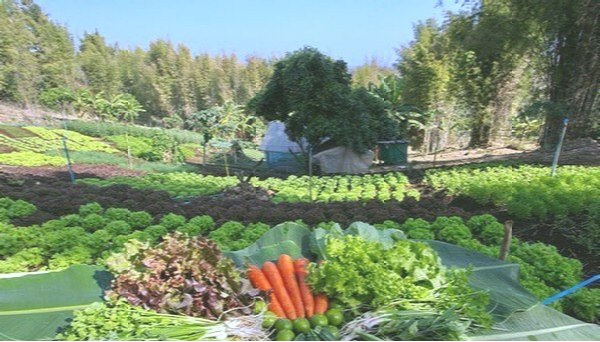

Image above: Photo promoting education in organic farming.  (https://www.bestcolleges.com/blog/organic-farming-degrees-careers/).

Community-Supported Agriculture (CSA) is one of those rare ideas which combine transformative potential with an elegant simplicity. The CSA model of funding and sustaining locally-rooted agriculture has grown exponentially around the globe over the past four decades. Since the first formal CSA at Robyn Van En’s Indian Line Farm in South Egremont, Massachusetts in the early 1980s, CSAs have become a household fixture across the US and elsewhere; the most recent estimate by the USDA (2012) counted approximately 13,000 CSA farms in the US alone.

The success of community-supported farming has coincided with rising demand for organic food since the late 1970s. But the model’s popularization has meant that, sometimes, CSAs can be misrepresented as ‘just another way’ for consumers to purchase fresh, seasonal food. Important elements embedded into the CSA model, such as that of shared risk among members, make the arrangement more than merely transactional. In fact, the origins of the CSA movement in America have radical roots, drawn from the prominent environmental movement and a subculture dissatisfied with the prevailing economic system.

A 1985 paper newly digitized from the Schumacher Center archive, “Community Supported Food Systems”, clarifies the deeper motivations which brought CSAs to the US in their present form. It is a timely reminder of the transformative potential the broader concept of Community Supported Industry still holds today – especially in light of our urgent need to dramatically reduce carbon emissions and foster resilience in our supply chains.

Given renewed interest in the concepts of local food security and food sovereignty as principles of climate action and economic justice, it is worth revisiting the transformative potential of the CSA model as grasped by those who first put the idea into action.

Importing the CSA model from Switzerland

The community-supported farming movement popularized in the 1980s had multiple antecedents around the globe. With examples of localized farming initiatives from Chile, to Japan, to rural Black communities in the Southern US, this movement may be best thought of as a spontaneous, distributed reaction to the conditions of globalized food markets. At the same time, growing concern around the health impacts of chemical pesticides, as well as the environmental costs of fossil fuel-based fertilizers, added impetus to the organization of organic farming at a more human scale.

That said, the formalized CSA model which subsequently spread across the US and beyond was pioneered in the Southern Berkshires, in the state of Massachusetts. And as the “Community Supported Food Systems” paper shows, its character was highly informed by models developed earlier in Switzerland. The ethos and organizing principles of these Swiss examples were documented and brought to Massachusetts by one Jan Vander Tuin.

Vander Tuin, a champion of pedal-powered transport and car-sharing, would later go on to make his mark advocating for appropriate technology in transportation. But before all that, he was a disillusioned farm laborer looking for alternatives. As Vander Tuin recalled in a 1992 article in RAIN Magazine, he went to Switzerland in the early ‘80s from the US having “felt burned economically… with an eye open for alternatives to market agriculture.” As he described the attraction of Switzerland at that time:

The early 1980’s were inspiring years for Swiss activists. The youth were rebellious, and citizens at large asked questions of the nation that epitomizes capitalism. I saw many evolving solutions to problems that I, coming from the States, had written off as unsolvable.”

After some time working first-hand on an organic farm outside Zürich, Vander Tuin was directed to a successful producer-consumer food co-op in Geneva, which had been inspired by the cooperative movement in Chile during the Allende administration. Vander Tuin called the project the most radical food co-op group he had ever encountered: it “addressed almost every problem I’d encountered in modern farming.” This project’s philosophy went beyond ecologically sustainable practices and pesticide-free produce, addressing the steep economic challenges faced by organic farming in an era of big, corporate agri-business. 

The basic notion that consumers personally cooperate with producers to fund farming in advance, he wrote “makes for more efficient use of land… and much less stress for farmers…” In short, Vander Tuin recognized that this model made organic farming for local consumption not just economical, but also more elegant and communitarian – in a word, more beautiful.

What drove Vander Tuin, as expressed in the paper, is “the feeling that existing food infrastructures are hopelessly entangled in the societal/cultural systems, especially the ‘free’ market.” Rather than wait for planners and experts, Vander Tuin noted how, in the Swiss examples, “concerned consumers and frustrated food workers” decided to provide responsibly-grown organic food for themselves. Shared values such as organic growing and energy-conscious distribution were identified from the outset. Everything down to how shares were calculated – based on the amount of produce the average non-vegetarian consumes per year – underscores the ambition for local self-reliance in food production.

The document also highlights a strong desire for economic fairness at every step in CSA practices. The costs of start-up investment and land would “ideally…be divided up equally (or by sliding scale).” 

 In the Swiss example, wages for farm labor were to be estimated at “the average wage of worker in region – not banker unfortunately” Vander Tuin added with a dose of humor. “The emphasis in all economic thinking,” it concludes, “was not to work the maximum profit principle but on the need/cost coverage principle. This meant more trust and more participation.”

Finding like minds in the Southern Berkshires

Vander Tuin documented these practices, eager to bring them back to the US for implementation. He caught wind of a group in the Southern Berkshires who had set up a sort of buying club for locally-grown produce, including a handful of local growers meeting the demand. The Self-Help Association for a Regional Economy (S.H.A.R.E.) was a community micro-loan program which grew out of the activities of the E.F. Schumacher Society (precursor to the Schumacher Center) in South Egremont. 

Vander Tuin became aware of the group, according to Schumacher Center co-founder Susan Witt, after reading a news article about their novel SHAREcropper initiative. Community-members would pool to list requests for locally grown produce in the SHARE newsletter, enabling them to identify farmers to grow the food locally. Those growers, in turn, secured demand for their crops in advance.

In other words, SHAREcroppers was managing, in an ad-hoc way, what Vander Tuin envisaged as a systematic alternative to corporate, mono-crop agriculture.

When Vander Tuin presented his proposal to members of S.H.A.R.E., they promptly sent him down to the road to meet one of their growers: Robyn Van En, who ran Indian Line Farm. Robyn not only held equally radical ambitions, but possessed the roll-up-her-sleeves attitude needed to make them a reality. With a community around them dedicated to the cause and willing to help see through the implementation, they could set to work.

Having moved to the Southern Berkshires several years earlier from California, Van En was pursuing her own alternative vision for growing at Indian Line. She brought deep ethical convictions about humanity’s relationship with nature to inform the early CSA movement. She later articulated the ‘Ideals of Community Supported Agriculture’ for a CSA manual in such terms:

Agriculture… is the mother of all our culture and the foundation of our well-being. Modern farming…driven by purely economic considerations, has driven the culture out and replaced it with business: agriculture has become agribusiness… Our ideals for agriculture come to expression in the biodynamic method of farming which seeks to create a self-sustaining and improving ecological system in which…everything has its place in the cycle of the seasons… The community involvement in the rhythms of the seasons and the celebrations connected with them will also enable us to find our proper spiritual connection to nature again.”

With a new agricultural ethic clear from the start, Van En also recognized early on a need for a new economic approach as well. As she later described: “I knew there had to be a better way…something cooperative, that allowed people to combine their abilities, expertise, and resources for the mutual benefit of all concerned.” 

 When S.H.A.R.E. members introduced her to Vander Tuin in 1985, they “only had to talk for a few minutes,” according to Van En, to know that what he’d brought back from Switzerland articulated just the sort of community framework she’d been looking for. As she later summarized:

The prices we pay for food may be cheaper than ever, but the hidden costs… are being paid [in other ways]. Unlike agribusiness, which has the motto: ‘The end (profits) justifies the means (exploitation)’, CSA’s motto is: ‘The means (community) assures the end (quality food).’”

Planting the seeds of the CSA movement

The group’s first venture in 1985 involved shares for apples and cider from the orchard adjacent to the present-day Schumacher Center. After the growing season, shareholders were invited to the autumn harvest in a spirit of celebration. (Vander Tuin reportedly even designed and built a pedal-powered cider press for the occasion). Producers and consumers were brought together in relationship with the land and its produce, creating space for community while proving the viability of the CSA model.

The following season, Indian Line Farm became the first fully-fledged CSA in the US. Credit for the success of the model in the Southern Berkshires goes to the many members of the community who supported Indian Line in various ways. 

But it was only the beginning for Van En: an educator by training, she would go on to become a tireless advocate of the CSA model and biodynamic farming and a vocal critic of industrialized agribusiness. The propagation of the CSA model across North America in the following decades owes much to Robyn’s conviction and endurance.

A final aspect of the CSA concept, originally outlined by Vander Tuin, remained only a theory until Indian Line Farm came on the market in 1998, one year after Van En’s untimely passing. At that time the Community Land Trust in the Southern Berkshires and two area farmers formed a partnership with a local Nature Conservancy chapter to purchase the farm. Placing the land into the Community Land Trust in perpetuity was yet another innovation. 

Effectively decommodifying the land on which community food was grown while permitting the leaseholder to own the value of improvements, the move made good on an idea which, in Vander Tuin’s original proposal, appeared speculative: “community influenced land stewardship in the form of a ‘Community Land Trust’,” he wrote, seemed “applicable and desirable” compared to “normal ‘property’ arrangements.”

Today, the CSA model articulated by Van En and Vander Tuin remains a vital, community-based alternative to the host of health, environmental, and economic issues posed by industrial agribusiness. No wonder that the growth of CSAs has reportedly surged since 2020. Growing healthy, ecologically-sound food locally is, for a multitude of reasons, the most economical way for a community to provide for this most elemental of needs. 

Cutting out intermediaries and import dependency is a cornerstone of community food security and food sovereignty, as marginalized communities around the country and the world increasingly recognize. Combined with agro-ecological farming methods, relocalized agriculture holds great potential in our efforts to address climate change: reducing carbon emissions and helping to sequester carbon already in our atmosphere. And by layering on the innovative Community Land Trust model, affordable access to farmland can be secured for future generations of growers as well.

At the most human level, reconnecting people around the growing of their own food may prove to be among our most effective means of healing our widespread sense of disconnection from nature and community. It offers the promise for any community to rediscover how working in harmony with nature, rather than merely seeking to exploit it, can be as economical as it is beautiful.


.
Why Permaculture Puts Food First

SUBHEAD: It teaches you to think ecosystemically: no waste; cyclical; nourishing body and soul; steady state.

By Albert Bates on 5 November 2018 for the Great Change -
(http://peaksurfer.blogspot.com/2018/10/why-permaculture-puts-food-first.html)


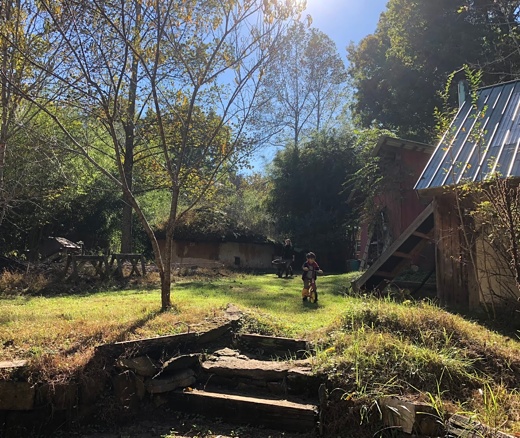
Image above: There are seven popular food crops in this photograph of The Farm. From original article.

When I teach permaculture, and now having done more than 50 full design courses, I try to de-emphasize gardening.

I do that because I know that most other Permaculture teachers do precisely the opposite; they begin with drawing a chicken and then make mandala gardens and herb spirals. I don’t usually do that because to me Permaculture is much more. It is a regenerative design science.

It teaches you to think ecosystemically: no waste; cyclical; nourishing body and soul; steady state. It applies to every aspect of your life, and of civilization; from how we brush our teeth to how we build our cities and exchange value for value.

But Permaculture is also about looking ahead, over the fence, up to the sky, into the forest, and observing the grander patterns.

Anyone who takes that kind of moment these days will be bound to notice phenological signs and portents, the uptick in unusual weather events, a spreading refugee crisis, and some really nasty resource wars appealing to our ethnic tribalism.
“The switch from growth to decline in oil production will thus almost certainly create economic and political tension.”
 — Colin Campbell and Jean Laherrére, Scientific American (1998)

These times have been long predicted, from Malthus’ and Arhennius’ calculations of population and carbon dioxide, to Limits to Growth, The Population Bomb, and now decades of reports from the UN Intergovernmental Panel on Climate Change. All of those, and more, are known knowns.

Kerry Emanuel told us about the hurricanes and superstorms in 1987. I predicted the spread of mosquitoes, ticks, and viruses in 1989.

In that same decade James Lovelock, Tim Lenton, Johan Shellnhuber and others were warning that after diverging 2º Celsius from the pre-industrial maxima the carrying capacity of global agriculture would no longer support more than two billion people, and possibly fewer than one billion.

Healthy humans cannot be decoupled from net photosynthetic productivity and that cannot be decoupled from favorable growing conditions; ie: the Holocene epoch of mild and predictable sunlight and rainfall over vast areas of favorable soil.

Last year, a distinguished group of scientists issued this warning:
… [B]iomass plantations with subsequent carbon immobilization are likely unable to “repair” insufficient emission reduction policies without compromising food production and biosphere functioning due to its space‐consuming properties. 
... the requirements for a strong mitigation scenario staying below the 2°C target would require a combination of high irrigation water input and development of highly effective carbon process chains. Although we find that this strategy of sequestering carbon is not a viable alternative to aggressive emission reductions, it could still support mitigation efforts if sustainably managed.
***
This leaves us with a rather clear, but hardly comforting overall conclusion: Holding the 2°C line seems only feasible if two sets of climate action work hand in hand. On the one hand, greenhouse gas emissions need to be reduced as early and as effectively as possible. 
In fact, an even more aggressive strategy than reflected by the [IPCC] RCP2.6 scenario should be pursued, aiming at the “induced implosion” of most fossil fuel‐driven business cases in the next couple of decades. 
On the other hand, CDR [carbon dioxide removal] can significantly contribute as a “supporting actor” of the mitigation protagonist, if it gets started and deployed immediately. This means that the biological extraction of atmospheric CO2 as well as the suppression of CO2 release from biological systems must draw upon all possible measures — whether they are optimal or not, whether they are high‐ or low‐tech. 
We therefore suggest fully exploring the pertinent options available now, which include reforestation of degraded land and the protection of degraded forests to allow them to recover naturally and increase their carbon storage, e.g., within the Bonn Challenge initiative or the New York Declaration on Forests. 
Further options range from up‐scaled agroforestry approaches to the application of biochar and various no‐tillage practices for food production on appropriate soils. 
Also, it becomes overwhelmingly evident that humanity cannot anymore afford to waste up to 50% of its agricultural harvest along various consumption chains or to go on operating ineffective irrigation systems.
All of those techniques —reforestation of degraded land, up‐scaled agroforestry, biochar, organic no-till, eliminating waste, and low-tech, broad dissemination — are the meat and potatoes of Permaculture.

In 2008, James Lovelock wrote:
Whatever we do is likely to lead to death on a scale that makes all previous wars, famines and disasters small. 
To continue business as usual will probably kill most of us during the century. Is there any reason to believe that fully implementing Bali, with sustainable development and the full use of renewable energy, would kill less? \
We have to consider seriously that, as with nineteenth century medicine, the best option is often kind words and pain killers but otherwise do nothing and let Nature take its course.

***

Had we heeded Malthus’s warning and kept the human population to less than one billion, we would not now be facing a torrid future. 
Whether or not we go for Bali or use geoengineering, the planet is likely, massively and cruelly, to cull us, in the same merciless way that we have eliminated so many species by changing their environment into one where survival is difficult.
Permaculture is not willing to go gentle into that good night. And this is why food is so core to its pedagogy.

As a movement it is training as many people as possible, from white-gloved suburbanites to war-ravaged refugees, how to garden.

It is showing, through gardening, not-merely self-sufficiency and survival in daunting times, but regeneration of soils, recapture of carbon, and ingenious means for restoring the natural balance that ultimately will be the way we end the crises we are now committed to experiencing.

And with any luck, we’ll also get to eat.


.

Breakfast with a dose of Roundup?

SUBHEAD: Weed killer is found in most of the oat cereals and granola bars tested, including some organic.

By Alexis Tempkin - Toxicologist on 15 August 2918 for EWG.org -
(https://www.ewg.org/childrenshealth/glyphosateincereal/#.W3con4WeGPX)


Image above: A child pouring Cheerios into a cereal bowl. From original article.

Popular oat cereals, oatmeal, granola and snack bars come with a hefty dose of the weed-killing poison in Roundup, according to independent laboratory tests commissioned by EWG.

Glyphosate, an herbicide linked to cancer by California state scientists and the World Health Organization, was found in all but two of 45 samples of products made with conventionally grown oats.

Almost three-fourths of those samples had glyphosate levels higher than what EWG scientists consider protective of children’s health with an adequate margin of safety. About one-third of 16 samples made with organically grown oats also had glyphosate, all at levels well below EWG’s health benchmark.

 Glyphosate does not belong in cereal. Act and urge the EPA to restrict pre-harvest applications of glyphosate and tell companies to identify and use sources of glyphosate-free oats.
 Report on samples tested indicates even organic oat products contained measurable amounts of glyphosate, but none were above the EWG's Health Benchmark of 160 parts per billion.
Samples Tested Conventional   Organic
Samples Tested 45   16
Glyphosate Detected 43   5
Detects above EWG’s Health Benchmark       31   0
Glyphosate is the active ingredient in Roundup, the Monsanto weed killer that is the most heavily used pesticide in the U.S. Last week, a California jury ordered Monsanto to pay $289 million in damages to a man dying of cancer, which he says was caused by his repeated exposure to large quantities of Roundup and other glyphosate-based weed killers while working as a school groundskeeper.

EWG tested more than a dozen brands of oat-based foods to give Americans information about dietary exposures that government regulators are keeping secret. In April, internal emails obtained by the nonprofit US Right to Know revealed that the Food and Drug Administration has been testing food for glyphosate for two years and has found “a fair amount,” but the FDA has not released its findings.

Each year, more than 250 million pounds of glyphosate are sprayed on American crops, primarily on “Roundup-ready” corn and soybeans genetically engineered to withstand the herbicide. But when it comes to the food we eat, the highest glyphosate levels are not found in products made with GMO corn.

Increasingly, glyphosate is also sprayed just before harvest on wheat, barley, oats and beans that are not genetically engineered. Glyphosate kills the crop, drying it out so that it can be harvested sooner than if the plant were allowed to die naturally.

Roundup was produced for decades by Monsanto, which this year merged with the German pharmaceutical company Bayer AG. In the case decided last week, the jury found that Monsanto knew for decades of the product’s hazards and not only failed to warn customers, but schemed to publicly discredit the evidence.

The California case that ended Friday was the first of reportedy thousands of lawsuits against Monsanto. These suits have been brought by farm workers and others who allege that they developed cancer from years of exposure to Roundup.

In 2015, the International Agency for Research on Cancer, part of the World Health Organization, reviewed extensive U.S., Canadian and Swedish epidemiological studies on glyphosate’s human health effects, as well as research on laboratory animals. The IARC classified the chemical as probably carcinogenic to humans, and has steadfastly defended that decision despite ongoing attacks by Monsanto.

In 2017, California listed glyphosate in its Proposition 65 registry of chemicals known to cause cancer. The state’s Office of Environmental Health Hazard Assessment, or OEHHA, has proposed a so-called No Significant Risk Level for glyphosate of 1.1 milligrams per day for an average adult of about 154 pounds. That level of exposure is more than 60 times lower than the safety level set by the Environmental Protection Agency.

California’s level represents an increased lifetime risk of cancer of one in 100,000 for an average adult. But for many cancer-causing drinking water contaminants, OEHHA’s lifetime risk factor is set at one in 1 million.

Additionally, because children and developing fetuses have increased susceptibility to carcinogens, the federal Food Quality Protection Act supports including an additional 10-fold margin of safety. With this additional children’s health safety factor, EWG calculated that a one-in-a-million cancer risk would be posed by ingestion of 0.01 milligrams of glyphosate per day.

To reach this maximum dose, one would only have to eat a single 60-gram serving1 of food with a glyphosate level of 160 parts per billion, or ppb. The majority of samples of conventional oat products from EWG’s study exceeded 160ppb, meaning that a single serving of those products would exceed EWG’s health benchmark.

As part of a glyphosate risk assessment, the EPA estimated potential highest dietary exposure levels for children and adults. The EPA has calculated that 1-to-2-year-old children are likely to have the highest exposure, at a level twice greater than California’s No Significant Risk Level and 230 times EWG’s health benchmark.

Studies suggest that glyphosate-sprayed crops such as wheat and oats are a major contributor to glyphosate in the daily diet. In EWG lab tests, 31 of 45 samples made with conventionally grown oats had 160 ppb or more of glyphosate.

The highest levels, greater than 1,000 ppb, were detected in two samples of Quaker Old Fashioned Oats. Three samples of Cheerios had glyphosate levels ranging from 470 ppb to 530 ppb. Twelve of the food samples had levels of glyphosate lower than EWG’s health benchmark, ranging from 10 ppb to 120 ppb. Only two samples had no detectable glyphosate.

Glyphosate was also detected at concentrations of 10 ppb to 30 ppb in five of 16 samples made with organic oats. The five samples came from two brands of organic rolled oats: Bob’s Red Mill and Nature’s Path.

A third brand of organic rolled oats and all other organic oat products tested did not contain detectable concentrations of glyphosate.

How does glyphosate get into organic foods? It could come from glyphosate drifting from nearby fields of conventionally grown crops, or by cross-contamination during processing at a facility that also handles non-organic crops. Nature's Path explains:
While organic farming certifications prohibit the use of glyphosate, organic products do not always end up completely free of glyphosate residue. While this news may come as disappointing, it is not entirely surprising. Glyphosate use has skyrocketed in the past decade, and it maintains the ability to adhere to water and soil particles long enough to travel through the air or in a stream to nearby organic farms.
The problem of glyphosate contamination of organic foods underscores the need to restrict pre-harvest uses of glyphosate and the need for more data on glyphosate levels in products, an area where U.S. federal agencies are falling short.

Two years ago, under pressure from the Government Accountability Office, the FDA began testing for glyphosate in a limited number of foods. At the 2016 North American Chemical Residue Workshop, an FDA scientist presented data showing that glyphosate has been detected in several oat-based food products.

After a Freedom of Information Act request by US Right to Know, earlier this year the FDA released documents that said the agency has found “a fair amount” of glyphosate in several processed foods. The results have not been released, but could be made public later this year or in early 2019.

In 2016, the non-profit Food Democracy Now tested for glyphosate in single samples of a variety of popular foods. “Alarming levels” of glyphosate were found in a number of cereals and other products, including more than 1,000 ppb in Cheerios. More recently, the Center for Environmental Health tested single samples of 11 cereal brands and found glyphosate levels ranging from about 300 ppb to more than 2,000 ppb.

EPA has denied that glyphosate may increase the risk of cancer, and documents introduced in the recent California trial showed how the agency and Monsanto worked together to promote the claim that the chemical is safe.

EWG has been urging the EPA to review all evidence linking glyphosate to increased cancer risk and other adverse health effects in human and animal studies. The EPA should limit the use of glyphosate on food crops, including pre-harvest application.

Oat-based foods are a healthy source of fiber and nutrients for children and adults, and oat consumption is linked to health benefits such as lowered cholesterol and decreased cardiovascular risk.

Parents should not have to wonder whether feeding their children these heathy foods will also expose them to a pesticide that increases the risk of cancer.

.

We Can't Do It Ourselves

SUBHEAD: Mostly we're locked into unsustainability by being connected to the grid, driving cars and eating meat.

By Kris DeDecker on 5 July 2018 for Low Tech Magazine -
(http://www.lowtechmagazine.com/2018/07/we-cant-do-it-ourselves.html)


Image above: Evening rush hour interstate traffic jam in Los Angeles. From (https://www.cnn.com/2018/02/27/americas/los-angeles-traffic/index.html).

How to live a more sustainable life? This question generates a lot of debate that is focused on what individuals can do in order to address problems like climate change.

For example, people are encouraged to shop locally, to buy organic food, to install home insulation, or to cycle more often.

But how effective is individual action when it is systemic social change that is needed? Individuals do make choices, but these are facilitated and constrained by the society in which they live.

Therefore, it may be more useful to question the system that requires many of us to travel and consume energy as we do.

Climate Change Policies

Policies to address climate change and other environmental problems are threefold: decarbonisation policies (encouraging renewable energy sources, electric cars, heat pumps), energy efficiency policies (decreasing energy input/output ratio of appliances, vehicles, buildings), and behavioural change policies (encouraging people to consume and behave more sustainably, for instance by adopting the technologies promoted by the two other policies).

The first two strategies aim to make existing patterns of consumption less resource-intensive through technical innovation alone. These policies ignore related processes of social change, which perhaps explains why they have not led to a significant decrease in energy demand or CO2-emissions.

Advances in energy efficiency have not resulted in lower energy demand, because they don’t address new and more resource-intensive consumption patterns that often emerge from more energy efficient technologies. [1] [2]

Likewise, renewable energy sources have not led to a decarbonisation of the energy infrastructure, because (total and per capita) energy demand is increasing faster than renewable energy sources are added. [3]

Consequently, the only way to reduce greenhouse gas emissions is to focus more on social change. Energy efficiency and decarbonisation policies need to be combined with “social innovation” if we want energy use and carbon emissions to go down.

This is where behavioural change policies come in. The third pillar of climate change policy tries to steer consumer choices and behaviours in a more sustainable direction.

Behavioural Change Policies

Instruments and policy packages designed to achieve behaviour change vary greatly, but most can be categorised either as “carrots, sticks, or sermons”. [4]

They can be economic incentives (such as grants for “green” products, energy taxes, soft loans), standards and regulations (such as building codes or vehicle emission standards), or the provisioning of information (more detailed energy bills, smart meters, awareness campaigns).

All these policy instruments are focused on what are thought to be the determinants of individual behaviours. [5-9] They assume that either individuals take rational decisions based on product price and information (the homo economicus model), or that behaviours are the outcomes of beliefs, attitudes and values (various value-belief models).

According to these dominant social theories, people engage in pro-environmental behaviour for self-interested reasons (because it is enjoyable or saves money), or for normative reasons (because they think it’s the right thing to do).

However, many pro-environmental actions involve a conflict between self-interested and normative reasons. Pro-environmental behaviour is often considered to be less profitable, less pleasurable, and/or more time-consuming.

Consequently, people need to make an effort to benefit the environment, and this is why, according to behavioural change researchers, pro-environmental values and attitudes are not necessarily matched by individuals’ behaviours – a phenomenon they call the “value-action gap”.

To close this gap, two strategies are proposed.

The first is to make normative goals more compatible with self-interested goals, either by decreasing the costs of pro-environmental actions, or by increasing the costs of harmful actions.

The second strategy is to strengthen normative goals, in the hope that people will engage in pro-environmental behaviour even if it is more expensive or effortful. This is usually pursued through awareness campaigns.

Individual Choice

However, the results of behavioural change policies have been disappointing so far. Two decades of climate-change related awareness campaigns have not decreased energy demand and carbon emissions in a significant way. The reason for this limited success is that existing attempts to change behaviour rest on a very narrow view of the social world. [10]

Behavioural change policies are based on the widespread agreement that what people do is in essence a matter of individual choice. [4] [11] [12] For example, whether people pick one mode of travel or another, is positioned as a matter of personal preference. [4] It follows that agency (the power to change) and responsibility for energy demand, consumption, and climate change are ultimately thought to lie within individual persons.

It is this concept of choice that lies behind strategies of intervention (persuasion, pricing, advice). Given better information or more appropriate incentives, “badly behaving” individuals are expected to change their minds and choose to adopt pro-environmental behaviours. [11]

Obviously, individuals do make choices about what they do and some of these are based on values and attitudes. For example, some people don’t eat meat, while others don’t drive cars, and still others live entirely off-the-grid.

However, the fact that most people do eat meat, do drive cars, and are connected to the electric grid is not simply an isolated matter of choice. Individuals do not exist in a vacuum. What people do is also conditioned, facilitated and constrained by societal norms, political institutions, public policies, infrastructures, technologies, markets and culture. [10] [13] [14]

The Limits of Individual Choice

As individuals, we may have degrees of choice, but our autonomy is always limited. [13] [14]

For example, we can buy a more energy efficient car, but we can’t provide our own cycling infrastructure, or make car drivers respect cyclists.

The Dutch and the Danish cycle a lot more than people in other industrialised nations, but that’s not because they are more environmentally conscious.

Rather, they cycle in part because there’s an excellent infrastructure of dedicated cycle lanes and parking spaces, because it is socially acceptable to be seen on a bike, even in office wear, and because car drivers have the skills and culture to deal with cyclists.

For example, Dutch drivers are taught that when they get out of the car, they should reach for the door handle using their right hand – forcing them to turn around so that they can see if there is a cyclist coming from behind.

Furthermore, in case of an accident between a car driver and a cyclist, the car driver is always considered responsible, even if the cyclist made a mistake.

Obviously, an individual in the UK or the US can decide to go cycling without this supporting infrastructure, culture, and legal framework, but it is less likely that large numbers of people will follow their example.

People in industrialised countries are often locked into unsustainable lifestyles, whether they like it or not. Without a smartphone and always-on internet, for example, it is becoming difficult to take part in modern society, as more and more daily chores depend on these technologies.

Once the connected smartphone is established as a ‘necessity’, an individual can still choose to buy an energy efficient device, but he or she can’t do anything about the fact that it will probably stop working after three years, and that it cannot be repaired.

Neither do have individuals the power to change the ever increasing bit rates on the internet, which systematically add to the energy use in data centers and network infrastructure because content providers keep “innovating”. [15]

An individual can try to consume as little as possible, but he or she shouldn’t expect too much help because the dominant economic system requires growth in order to survive.

Blaming Each Other

In sum, individuals can make pro-environmental choices based on attitudes and values, and they may inspire others to do the same, but there are so many other things involved that focusing on changing individual “behaviour” seems to miss the point. [4]

Trying to persuade people to live sustainably through individual behaviour change programmes will not address the larger and more significant structures and ideas that facilitate and limit their options.

In fact, by placing responsibility – and guilt – squarely on the individuals, attention is deflected away from the many institutions involved in structuring possible courses of action, and in making some very much more likely than others. [11]

The discourse of sustainable “behaviour” holds consumers collectively responsible for political and economic decisions, rather than politicians and economic actors themselves.

This makes pro-environmental “behaviour” policies rather divisive – it is the other individuals (for example meat eaters or car drivers) who are at fault for failing to consume or behave in line with particular values, rather than politicians, institutions and providers which enable unsustainable food and transport systems to develop and thrive.

As this example makes clear, individual behaviour change is not just a theoretical position, it is also a political position. Focusing on individual responsibility is in line with neoliberalism and often serves to suppress a systemic critique of political, economic and tech

Beyond Individual Behaviour

If significant societal transformations are required, it makes more sense to decenter individuals from the analysis and look at the whole picture.

Other approaches in social theory suggest that rather than being the expression of an individual’s values and attitudes, individual behaviour is in fact the observable expression of the social world, including socially shared tastes and meanings, knowledge and skills, and technology, infrastructure and institutions.

As such, behaviour is just the “tip of the iceberg”, and the effects of intervening in behaviour are limited accordingly.

A much better target for sustainability is the socially embedded underpinning of behaviour – the larger part of the iceberg that is under water. [13]

This might entail focusing not on individuals and choices but on the social organisation of everyday practices such as cooking, washing, shopping, or playing sports. How people perform these practices depends not only on individual choice, but also on the material, social and cultural context. [10] [13]

If social practices are taken to be the core units of analysis, rather than the individuals who perform them, it becomes possible to analyse and steer social change in a much more meaningful way. [10] [13]

By shifting the focus away from individual choice, it becomes clear that individual behaviour change policies only represent incremental, minimal or marginal shifts at the level of a practice. At the same time, it reveals the extent to which state and other actors configure daily life.

For example, the idea that a car equals personal freedom is a recurrent theme in car advertisements, which are much more numerous than campaigns to promote cycling.

And because different modes of transport compete for the same roadspace, it is governments and local authorities that decide which forms get priority depending on the infrastructures they build.

When the focus is on practices, the so-called “value-action gap” can no longer be interpreted as evidence of individual ethical shortcomings or individual inertia. Rather, the gap between people’s attitudes and their “behaviour” is due to systemic issues: individuals live in a society that makes many pro-environmental arrangements rather unlikely.

The New Normal

In conclusion, although individual behavioural change policies purport to address social and not just technological change, they do so in a very limited way.

As a result, they have exactly the same shortcomings as the other strategies, which are focused on efficiency and innovation. [2] Like energy efficiency and decarbonisation policies, behaviour change policies don’t challenge unsustainable social conventions or infrastructures.

They don’t consider wider-ranging system level changes which would radically transform the way we live – and that could potentially achieve much more significant reductions in energy use and greenhouse gas emissions.

For example, recycling garbage does not question the production of waste in the first place, and even legitimizes it. By diverting attention away from systemic issues that drive energy demand, behavioural change policies frequently reinforce the status quo. [11-13]

In contrast to policies aimed at individuals, policies that frame sustainability as a systemic, institutional challenge can bring about the many forms of innovation that are needed to address problems like climate change.

Relevant societal innovation is that in which contemporary rules of the game are eroded, in which the status quo is called into question, and in which more sustainable practices take hold across all domains of daily life. [11]

Social change is about transforming what counts as “normal” – as in smoke-free pubs or wearing seat belts. We only need to look back a few decades to see that practices are constantly and often radically changing. A systemic approach to sustainability encourages us to imagine what the “new normal” of everyday sustainability might look like. [13]

A sustainability policy that focuses on systemic issues reframes the question from “how do we change individuals’ behaviours so that they are more sustainable?” to “how do we change the way society works?”. This leads to very different kinds of interventions.

Addressing the sociotechnical underpinnings of “behaviour” involves attempting to create new infrastructures and institutions that facilitate sustainable lifestyles, attempting to shift cultural conventions that underpin different activities, and attempting to encourage new competences that are required to perform new ways of doing things. As a result of these changes, what we think of as individual “behaviours” will also change.

• This article was written for the UK's Demand Centre. Check out their movie series about the making and evolution of energy demand. 

References:

[1] Shove, Elizabeth. "What is wrong with energy efficiency?." Building Research & Information (2017): 1-11.

[2] Labanca, Nicola, and Paolo Bertoldi. "Beyond energy efficiency and individual behaviours: policy insights from social practice theories." Energy Policy 115 (2018): 494-502.

[3] De Decker, Kris. “How (not) to resolve the energy crisis.” Low-tech Magazine, 2009

[4] Shove, Elizabeth, Mika Pantzar, and Matt Watson. The dynamics of social practice: Everyday life and how it changes. Sage, 2012.

[5] Martiskainen, Mari. "Affecting consumer behaviour on energy demand." (2007).

[6] Steg, Linda, et al. "An integrated framework for encouraging pro-environmental behaviour: The role of values, situational factors and goals." Journal of Environmental Psychology 38 (2014): 104-115.

[7] Evans, Laurel, et al. "Self-interest and pro-environmental behaviour." Nature Climate Change 3.2 (2013): 122.

[8] Turaga, Rama Mohana R., Richard B. Howarth, and Mark E. Borsuk. "Pro‐environmental behavior." Annals of the New York Academy of Sciences 1185.1 (2010): 211-224.

[9] Kollmuss, Anja, and Julian Agyeman. "Mind the gap: why do people act environmentally and what are the barriers to pro-environmental behavior?." Environmental education research 8.3 (2002): 239-260.

[10] Hargreaves, Tom. "Practice-ing behaviour change: Applying social practice theory to pro-environmental behaviour change." Journal of consumer culture 11.1 (2011): 79-99.

[11] Shove, Elizabeth. "Beyond the ABC: climate change policy and theories of social change." Environment and planning A 42.6 (2010): 1273-1285.

[12] Southerton, Dale, Andrew McMeekin, and David Evans. International review of behaviour change initiatives: Climate change behaviours research programme. Scottish Government Social Research, 2011.

[13] Spurling, Nicola Jane, et al. "Interventions in practice: Reframing policy approaches to consumer behaviour." (2013).

[14] Mattioli, Giulio. "Transport needs in a climate-constrained world. A novel framework to reconcile social and environmental sustainability in transport." Energy Research & Social Science 18 (2016): 118-128.

[15] De Decker, Kris. "Why we need a speed limit for the Internet." Low Tech Magazine. (2015).
.

The next chapter of the Fall

SUBHEAD: We love fires. We must quench them. It’s a very tall order, but nevertheless, here ends the industrial revolution. 

By Patrick Noble on 12 March 2018 for Feasta -
(http://www.feasta.org/2018/03/09/the-great-agricultural-resettlement-or-the-next-chapter-of-the-fall/)


Image above: From original article. "Garden of Eden", by Izaak Van Oosten. See (https://upload.wikimedia.org/wikipedia/commons/d/da/Izaak_van_Oosten_-_The_Garden_of_Eden.jpg).

Here’s my own picture.

I am a farmer and that is where my world begins. What is an agriculture? I say it is a culture of cities, towns and villages, bridges, roads, canals, harbours – of trades’ people and the trades, which have been created by the specialized cultivation of fields.

The industrial revolution was a revolution within agriculture – germinated by fossil fuels, so that today, nearly every culture on Earth is an agriculture.

The farmer has a lot on her shoulders, because the greatest towering city, and all its goings-on, is utterly dependent on her crops – although in my Utopian picture, trades and pleasures of every kind bear their own egalitarian apportionment of the weight, so that the labors of fields gain new springs to their steps.

Farms disrupt natural systems. The more husbandries imitate and integrate with natural systems, so the less they disrupt – but still they will disrupt to some degree. Good husbandry reflects our ordered minds more than the complexities of nature. Nevertheless, it imitates, as best it can, the cyclic behaviors of organisms.

The highest crop yield will be achieved by the closest integration.

“You never enjoy the world aright, till you are clothed with the heavens and crowned with the stars”, wrote Thomas Traherne in the Seventeenth Century. To which the farmer pragmatically adds – and shod with soil fauna, shaded with green leaves, watered by clear springs and fed by lives we’ve fed in return.

I must note that true yield is output minus input – massive inputs massively reduce true yield, so that organic methods out-yield all others.

So, in attempting to do the best we can, we choose the least worst farming techniques. This is important to keep our humility and gratitude intact. It is also an important part of discussions on climate change.

There have been outrageous claims of carbon sequestration (so-called negative emissions) by a variety of farming techniques, such as grasslands, or organically-managed lands – or regularly-felled woodland, or coppice.

But the most these can achieve is a balance and that balance, given the flawed nature of all human practitioners is unlikely. As climate change accelerates and weather grows more unpredictable, so that balance will become still more unlikely.

Yet, we must grow food and timber. That is the dispensation – hunter-gatherers don’t need the dispensation, but we agriculturalists do. Claiming the dispensation, (for clearing natural forest) is a heavy responsibility.

We should call on it to the smallest degree we can. Some organic lobby groups claim that converting a lifeless cereal prairie to organic techniques will sequester tons of carbon as soil fauna returns. It is an arrogant claim and arrogance is a problem.

It is true that soil life will return – redressing a critical harm – but only to an optimum point, when the farmer can only do her best to maintain that near enough balance.

Organic, biodynamic, or perma-cultural methods do a fraction of the harm that so-called industrial techniques cause, but still, they disrupt natural systems – still, they create harm. Agriculture had disrupted for thousands of years before artificial fertilizers, pesticides, herbicides and fungicides existed, but the atmospheric/terrestrial balance remained unaffected.

Some ancient cultures have carelessly mined their own good soils to the point when all that would grow were a few twisted olive trees… (That’s another tale of the pillage of empire.)

We gratefully accept the linear gift of sunlight to heal the wounds in our flawed agricultural cycles. We can claim the food/timber dispensation and continue without guilt as we’ve done for several thousand years, but we cannot claim to be reversing climate change We can only claim to be doing less to cause climate change than some others.

To end our contribution to climate change we must stop burning both fossil mass and living mass (biofuels) and also leave as much as we can of Earth, untouched by agriculture. Climate has been changed by fire. We can only heal it by quenching the fire. Personal sequestration claims, presented to excuse personal fire, do real harm.

An organic grower once claimed his (enclosed) carbon-rich soils pardoned his twice-annual holiday flights. Pshaw! Such self-help nonsense can be found in popular, monk-pardoner carbon footprint calculators. It was also delusively applied to the convenient projections of the Paris Accord.

The dispensation for farming is the growing of food. There is no dispensation for fire. Energy opulent ways of life will destroy themselves. Even an imagined and perfectly balanced farming system with a thriving soil fauna will do nothing in itself to mitigate climate change.

It will have minimized its agricultural disruption as a contribution to climate change, but it cannot go further – towards negative emissions. We must remove the cause – we must end the burning – for cultivation, processing, transport, electricity generation and heat.

If you are a grower or woodsman, would you be happy to shoulder those so-called negative emissions, which are the foundation of the Paris Agreement? That’s what’s expected of us – are you confident enough to accept them, when considering the happiness of your children?

Perhaps you boast the sequestration power of extensive grasslands? Are you sure? Who told you so? Was it a lobby group for pasture-fed beef, or an organic, consumer lifestyle magazine?

Farmers, growers and lumberjacks are supposed to recognize bullshit when they see it. The bullshit is everywhere – from green sources too. This is urgent. There is very little time.

The catalyst of climate change could ferment a new agricultural revolution as we leave those millions of years of sequestered photosynthesis to lie quietly in their strata. Negative emissions? – there they are. Leave them to sleep.

Instead, we can re-learn our parts in nature – a curious, inspiring, daunting, sobering, intoxicating, fearful, delightful, difficult, liberating and hopefully possible journey. Perhaps rage at what we’ve done, combined with humility at what we must do, may propel our first and diffident steps. Those first steps are not into the Garden. We remain outside in the Fall. Our steps imprint.

Only our hunter/gatherer cousins can walk lightly enough to stay in that original home. All great religions and philosophies narrate stories of the Fall and evolve codes to manage the journey – because, it seems, we are never properly settled. Agriculture is never quite at home.

Although our great resettlement can only come about by a mass personal change of all we personages, nevertheless we are social beings and need a vision of the greater moral of how and why we change. It is useful to have Utopia as a measure.

Of course, in turn, Utopia must have nature as its measure. The flaw in Utopia is myself. What’s more – Utopia is not the Garden – It is the best of all settlements of the Fall.

As we head towards the Utopian (unattainable) landfall, natural truths will be revealed by our natural mistakes – without the mistakes, we don’t find the truths, or the new methods. In that respect, I can consider my naturally-flawed nature to be useful. We learn because of our flaws.

Humility is also useful. “Ne never had the apple – the apple taken been – ne never would our lady – have been heaven’s queen – so blessed be the time – the apple taken was – therefor may we sing – Deo gracias”, people sang as they danced in the Fourteenth Century. Yes. People danced to religious songs then.

They were called carols… Of course, we could compose a dancing song for many aspects of the Fall – of passages from the ease of hunter/gathering to the labours of fields. We yearn for the ease of the Garden. Since that cannot be, we do our best to find a working happiness.

Natural truth will partially escape both myself and my Agricultural Utopia – that’s why scientific hypotheses are always wrong – overturned by new hypotheses.

Today’s accepted and peer-reviewed hypotheses will also be wrong. They will have emerged through cracks in our perception that allow the new light in. They remain useful and they remain flawed. Deeper commons – inherited moral truths are unchanged from pre-history.

The rule of return is one. We cannot take from soil which feeds us without feeding it in return. Deeper, both inherited and bequeathed commons contain contracts with nature as well as social contracts.

That’s why as a farmer I can take the sequestration claims of this or that research paper with a pinch of salt. I am outside the Garden. I am in Agriculture and its commons and I struggle to maintain something like a balance.

I know it daily. I see it in the deepening or paling green of my crops – the colours reveal the intensity – the rise and fall of the flow of life. They often reveal the flaws in my husbandry.

There is no perfect agriculture.

No agriculture – no food, or timber system can achieve “negative emissions”.

To pull back from catastrophic climate change we must remove the cause – we must remove fire from our culture. The linear gift of sunlight heals some cracks in agricultural cycles, but it can do no more – the flaws are intrinsic to practitioners – to me.

We love fires. We must quench them. It’s a very tall order, but nevertheless, here ends the industrial revolution. Machines replaced people. Now people can replace machines. That looks arduous, but it also looks liberating. Growers can take it to their hearts.

•  Authors note – I can find no peer reviewed research to consolidate my claim that these (peer reviewed) hypotheses are false –

First, that with unchanged practices, we can harvest a crop (none land-use change), burn it, return nothing to the soil, and yet still receive the same yield and photosynthetic power from subsequent harvests – that is from arable crops and from woodland destined for biofuels. Yet that hypothesis is the foundation of the Paris Accord. The author is a farmer and can say that all farmers presented with that same hypothesis would know it to be nonsense. Farmers test the hypothesis season by season. If we return nothing to a harvested field but gas and ashes, the subsequent harvest will prove smaller. It is plain that its photosynthetic power will also diminish. Biomass of soil fauna (sequestration) will similarly shrink. Energy from sunlight – sugars and then starch is plainly insufficient to compensate. I propose that we should regard solar energy as a part of an undisturbed system in balance – create dis-balance and expect consequence. Life has expanded from a small beginning only to its optimum point.

Second – Other peer reviewed papers calculate regenerated soil carbon on a continuous upward curve, if organic, or agroecological techniques are well-applied – as though the curve can eventually reach so called, negative emissions. As an organic farmer of over forty years’ experience, I can say that this is not the case. Optimum balances will be reached and then with the best husbandry, can be maintained. That “best husbandry” is critical – human weakness, bad weather and so on will intervene. A near-enough balance is our best hope.


.

Farming for a Small Planet

SUBHEAD: Agroecology is aligned with nature and balances power relationships, from the village level upward.

By Frances Moore Lappé on 9 January 2018 for Local Futures -
(https://www.localfutures.org/farming-small-planet/)


Image above: Aerial view of a sustainable farming practice. From original article.

People yearn for alternatives to industrial agriculture, but they are worried. They see large-scale operations relying on corporate-supplied chemical inputs as the only high-productivity farming model.

Another approach might be kinder to the environment and less risky for consumers, but, they assume, it would not be up to the task of providing all the food needed by our still-growing global population.

Contrary to such assumptions, there is ample evidence that an alternative approach—organic agriculture, or more broadly “agroecology”—is actually the only way to ensure that all people have access to sufficient, healthful food. Inefficiency and ecological destruction are built into the industrial model.

But, beyond that, our ability to meet the world’s needs is only partially determined by what quantities are produced in fields, pastures, and waterways.

Wider societal rules and norms ultimately shape whether any given quantity of food produced is actually used to meet humanity’s needs. In many ways, how we grow food determines who can eat and who cannot—no matter how much we produce.

Solving our multiple food crises thus requires a systems approach in which citizens around the world remake our understanding and practice of democracy.

Today, the world produces—mostly from low-input, smallholder farms—more than enough food: 2,900 calories per person per day.

Per capita food availability has continued to expand despite ongoing population growth. This ample supply of food, moreover, comprises only what is left over after about half of all grain is either fed to livestock or used for industrial purposes, such as agrofuels.1

Despite this abundance, 800 million people worldwide suffer from long-term caloric deficiencies. One in four children under five is deemed stunted—a condition, often bringing lifelong health challenges, that results from poor nutrition and an inability to absorb nutrients.

Two billion people are deficient in at least one nutrient essential for health, with iron deficiency alone implicated in one in five maternal deaths.2

The total supply of food alone actually says little about whether the world’s people are able to meet their nutritional needs. We need to ask why the industrial model leaves so many behind, and then determine what questions we should be asking to lead us toward solutions to the global food crisis.

Vast, Hidden Inefficiencies
The industrial model of agriculture—defined here by its capital intensity and dependence on purchased inputs of seeds, fertilizer, and pesticides—creates multiple unappreciated sources of inefficiency.

Economic forces are a major contributor here: the industrial model operates within what are commonly called “free market economies,” in which enterprise is driven by one central goal, namely, securing the highest immediate return to existing wealth.

This leads inevitably to a greater concentration of wealth and, in turn, to greater concentration of the capacity to control market demand within the food system.

Moreover, economically and geographically concentrated production, requiring lengthy supply chains and involving the corporate culling of cosmetically blemished foods, leads to massive outright waste: more than 40 percent of food grown for human consumption in the United States never makes it into the mouths of its population.3

The underlying reason industrial agriculture cannot meet humanity’s food needs is that its system logic is one of disassociated parts, not interacting elements. It is thus unable to register its own self-destructive impacts on nature’s regenerative processes.

Industrial agriculture, therefore, is a dead end. Consider the current use of water in agriculture.

About 40 percent of the world’s food depends on irrigation, which draws largely from stores of underground water, called aquifers, which make up 30 percent of the world’s freshwater. Unfortunately, groundwater is being rapidly depleted worldwide.

In the United States, the Ogallala Aquifer—one of the world’s largest underground bodies of water—spans eight states in the High Plains and supplies almost one third of the groundwater used for irrigation in the entire country. Scientists warn that within the next thirty years, over one-third of the southern High Plains region will be unable to support irrigation.

If today’s trends continue, about 70 percent of the Ogallala groundwater in the state of Kansas could be depleted by the year 2060.4

Industrial agriculture also depends on massive phosphorus fertilizer application—another dead end on the horizon.

Almost 75 percent of the world’s reserve of phosphate rock, mined to supply industrial agriculture, is in an area of northern Africa centered in Morocco and Western Sahara.

Since the mid-twentieth century, humanity has extracted this “fossil” resource, processed it using climate-harming fossil fuels, spread four times more of it on the soil than occurs naturally, and then failed to recycle the excess.

Much of this phosphate escapes from farm fields, ending up in ocean sediment where it remains unavailable to humans.

Within this century, the industrial trajectory will lead to “peak phosphorus”—the point at which extraction costs are so high, and prices out of reach for so many farmers, that global phosphorus production begins to decline.5

Beyond depletion of specific nutrients, the loss of soil itself is another looming crisis for agriculture. Worldwide, soil is eroding at a rate ten to forty times faster than it is being formed.

To put this in visual terms, each year, enough soil is washed and blown from fields globally to fill roughly four pickup trucks for every human being on earth.6

The industrial model of farming is not a viable path to meeting humanity’s food needs for yet another reason: it contributes nearly 20 percent of all anthropogenic greenhouse gas emissions, even more than the transportation sector. The most significant emissions from agriculture are carbon dioxide, methane, and nitrous oxide.

Carbon dioxide is released in deforestation and subsequent burning, mostly in order to grow feed, as well as from decaying plants. Methane is released by ruminant livestock, mainly via their flatulence and belching, as well as by manure and in rice paddy cultivation.

Nitrous oxide is released largely by manure and manufactured fertilizers. Although carbon dioxide receives most of the attention, methane and nitrous oxide are also serious. Over a hundred-year period, methane is, molecule for molecule, 34 times more potent as a heat-trapping gas, and nitrous oxide about 300 times, than carbon dioxide.7

Our food system also increasingly involves transportation, processing, packaging, refrigeration, storage, wholesale and retail operations, and waste management—all of which emit greenhouses gases.

Accounting for these impacts, the total food system’s contribution to global greenhouse gas emissions, from land to landfill, could be as high as 29 percent. Most startlingly, emissions from food and agriculture are growing so fast that, if they continue to increase at the current rate, they alone could use up the safe budget for all greenhouse gas emissions by 2050.8

These dire drawbacks are mere symptoms. They flow from the internal logic of the model itself. The reason that industrial agriculture cannot meet the world’s needs is that the structural forces driving it are misaligned with nature, including human nature.

Social history offers clear evidence that concentrated power tends to elicit the worst in human behavior. Whether for bullies in the playground or autocrats in government, concentrated power is associated with callousness and even brutality not in a few of us, but in most of us.9

The system logic of industrial agriculture, which concentrates social power, is thus itself a huge risk for human well-being. At every stage, the big become bigger, and farmers become ever-more dependent on ever-fewer suppliers, losing power and the ability to direct their own lives.

The seed market, for example, has moved from a competitive arena of small, family-owned firms to an oligopoly in which just three companies—Monsanto, DuPont, and Syngenta—control over half of the global proprietary seed market.

Worldwide, from 1996 to 2008, a handful of corporations absorbed more than two hundred smaller independent companies, driving the price of seeds and other inputs higher to the point where their costs for poor farmers in southern India now make up almost half of production costs.10

And the cost in real terms per acre for users of bio-engineered crops dominated by one corporation, Monsanto, tripled between 1996 and 2013.

Not only does the industrial model direct resources into inefficient and destructive uses, but it also feeds the very root of hunger itself: the concentration of social power.

This results in the sad irony that small-scale farmers—those with fewer than five acres—control 84 percent of the world’s farms and produce most of the food by value, yet control just 12 percent of the farmland and make up the majority of the world’s hungry.11

The industrial model also fails to address the relationship between food production and human nutrition. Driven to seek the highest possible immediate financial returns, farmers and agricultural companies are increasingly moving toward monocultures of low-nutrition crops such as corn—the dominant US crop—that are often processed into empty-calorie “food products.”

As a result, from 1990 to 2010, growth in unhealthy eating patterns outpaced dietary improvements in most parts of the world, including the poorer regions. Most of the key causes of non-communicable diseases are now diet-related, and by 2020, such diseases are predicted to account for nearly 75 percent of all deaths worldwide.12

A Better Alternative
What model of farming can end nutritional deprivation while restoring and conserving food-growing resources for our progeny? The answer lies in the emergent model of agroecology, often called “organic” or ecological agriculture.

Hearing these terms, many people imagine simply a set of farming practices that forgo purchased inputs, relying instead on beneficial biological interactions among plants, microbes, and other organisms.

However, agroecology is much more than that. The term as it is used here suggests a model of farming based on the assumption that within any dimension of life, the organization of relationships within the whole system determines the outcomes. The model reflects a shift from a disassociated to a relational way of thinking arising across many fields within both the physical and social sciences.

This approach to farming is coming to life in the ever-growing numbers of farmers and agricultural scientists worldwide who reject the narrow productivist view embodied in the industrial model.

Recent studies have dispelled the fear that an ecological alternative to the industrial model would fail to produce the volume of food for which the industrial model is prized. In 2006, a seminal study in the Global South compared yields in 198 projects in 55 countries and found that ecologically attuned farming increased crop yields by an average of almost 80 percent.

A 2007 University of Michigan global study concluded that organic farming could support the current human population, and expected increases without expanding farmed land.

Then, in 2009, came a striking endorsement of ecological farming by fifty-nine governments and agencies, including the World Bank, in a report painstakingly prepared over four years by four hundred scientists urging support for “biological substitutes for industrial chemicals or fossil fuels.”13

 Such findings should ease concerns that ecologically aligned farming cannot produce sufficient food, especially given its potential productivity in the Global South, where such farming practices are most common.

Ecological agriculture, unlike the industrial model, does not inherently concentrate power. Instead, as an evolving practice of growing food within communities, it disperses and creates power, and can enhance the dignity, knowledge, and the capacities of all involved. Agroecology can thereby address the powerlessness that lies at the root of hunger.

Applying such a systems approach to farming unites ecological science with time-tested traditional wisdom rooted in farmers’ ongoing experiences. Agroecology also includes a social and politically engaged movement of farmers, growing from and rooted in distinct cultures worldwide.

As such, it cannot be reduced to a specific formula, but rather represents a range of integrated practices, adapted and developed in response to each farm’s specific ecological niche. It weaves together traditional knowledge and ongoing scientific breakthroughs based on the integrative science of ecology.

By progressively eliminating all or most chemical fertilizers and pesticides, agroecological farmers free themselves—and, therefore, all of us—from reliance on climate-disrupting, finite fossil fuels, as well as from other purchased inputs that pose environmental and health hazards.

In another positive social ripple, agroecology is especially beneficial to women farmers. In many areas, particularly in Africa, nearly half or more of farmers are women, but too often they lack access to credit.14

Agroecology—which eliminates the need for credit to buy synthetic inputs—can make a significant difference for them.

Agroecological practices also enhance local economies, as profits on farmers’ purchases no longer seep away to corporate centers elsewhere.

After switching to practices that do not rely on purchased chemical inputs, farmers in the Global South commonly make natural pesticides using local ingredients—mixtures of neem tree extract, chili, and garlic in southern India, for example. Local farmers purchase women’s homemade alternatives and keep the money circulating within their community, benefiting all.15

Besides these quantifiable gains, farmers’ confidence and dignity are also enhanced through agroecology. Its practices rely on farmers’ judgments based on their expanding knowledge of their land and its potential. Success depends on farmers’ solving their own problems, not on following instructions from commercial fertilizer, pesticide, and seed companies.

Developing better farming methods via continual learning, farmers also discover the value of collaborative working relationships. Freed from dependency on purchased inputs, they are more apt to turn to neighbors—sharing seed varieties and experiences of what works and what does not for practices like composting or natural pest control.

These relationships encourage further experimentation for ongoing improvement. Sometimes, they foster collaboration beyond the fields as well—such as in launching marketing and processing cooperatives that keep more of the financial returns in the hands of farmers.

Going beyond such localized collaboration, agroecological farmers are also building a global movement. La Via Campesina, whose member organizations represent 200 million farmers, fights for “food sovereignty,” which its participants define as the “right of peoples to healthy and culturally appropriate food produced through ecologically sound and sustainable methods.”

This approach puts those who produce, distribute, and consume food—rather than markets and corporations—at the heart of food systems and policies, and defends the interests and inclusion of the next generation.

Once citizens come to appreciate that the industrial agriculture model is a dead end, the challenge becomes strengthening democratic accountability in order to shift public resources away from it.

Today, those subsidies are huge: by one estimate, almost half a trillion tax dollars in OECD countries, plus Brazil, China, Indonesia, Kazakhstan, Russia, South Africa, and Ukraine.16

Imagine the transformative impact if a significant share of those subsidies began helping farmers’ transition to agroecological farming.

Any accurate appraisal of the viability of a more ecologically attuned agriculture must let go of the idea that the food system is already so globalized and corporate-dominated that it is too late to scale up a relational, power-dispersing model of farming.

As noted earlier, more than three-quarters of all food grown does not cross borders. Instead, in the Global South, the number of small farms is growing, and small farmers produce 80 percent of what is consumed in Asia and Sub-Saharan Africa.17

The Right Path
When we address the question of how to feed the world, we need to think relationally—linking current modes of production with our future capacities to produce, and linking farm output with the ability of all people to meet their need to have nutritious food and to live in dignity.

Agroecology, understood as a set of farming practices aligned with nature and embedded in more balanced power relationships, from the village level upward, is thus superior to the industrial model.

This emergent relational model offers the promise of an ample supply of nutritious food needed now and in the future, and more equitable access to it.

Reframing concerns about inadequate supply is only the first step toward necessary change. The essential questions about whether humanity can feed itself well are social—or, more precisely, political.

Can we remake our understanding and practice of democracy so that citizens realize and assume their capacity for self-governance, beginning with the removal of the influence of concentrated wealth on our political systems?

Democratic governance—accountable to citizens, not to private wealth—makes possible the necessary public debate and rule-making to re-embed market mechanisms within democratic values and sound science.

Only with this foundation can societies explore how best to protect food-producing resources—soil, nutrients, water—that the industrial model is now destroying.

Only then can societies decide how nutritious food, distributed largely as a market commodity, can also be protected as a basic human right.

This post is adapted from an essay originally written for the Great Transition Initiative.
Image:  TompkinsConservation.org

Endnotes
1. Food and Agriculture Division of the United Nations, Statistics Division, “2013 Food Balance Sheets for 42 Selected Countries (and Updated Regional Aggregates),” accessed March 1, 2015, http://faostat3.fao.org/download/FB/FBS/E; Paul West et al., “Leverage Points for Improving Global Food Security and the Environment,” Science 345, no. 6194 (July 2014): 326; Food and Agriculture Organization, Food Outlook: Biannual Report on Global Food Markets (Rome: FAO, 2013), http://fao.org/docrep/018/al999e/al999e.pdf.

2.
FAO, The State of Food Insecurity in the World 2015: Meeting the 2015 International Hunger Targets: Taking Stock of Uneven Progress (Rome: FAO, 2015), 8, 44, http://fao.org/3/a-i4646e.pdf; World Health Organization, Childhood Stunting: Context, Causes, Consequences (Geneva: WHO, 2013), http://www.who.int/nutrition/events/2013_ChildhoodStunting_colloquium_14Oct_ConceptualFramework
_colour.pdf?ua=1
; FAO, The State of Food and Agriculture 2013: Food Systems for Better Nutrition (Rome: FAO, 2013), ix, http://fao.org/docrep/018/i3300e/i3300e.pdf.

3.
Vaclav Smil, “Nitrogen in Crop Production: An Account of Global Flows,” Global Geochemical Cycles 13, no. 2 (1999): 647; Dana Gunders, Wasted: How America Is Losing Up to 40% of Its Food from Farm to Fork to Landfill (Washington, DC: Natural Resources Defense Council, 2012), http://www.nrdc.org/food/files/wasted-food-IP.pdf.

4.
United Nations Environment Programme, Groundwater and Its Susceptibility to Degradation: A Global Assessment of the Problem and Options for Management (Nairobi: UNEP, 2003), http://www.unep.org/dewa/Portals/67/pdf/Groundwater_Prelims_SCREEN.pdf; Bridget Scanlon et al., “Groundwater Depletion and Sustainability of Irrigation in the US High Plains and Central Valley,” Proceedings of the National Academy of Sciences 109, no. 24 (June 2012): 9320; David Steward et al., “Tapping Unsustainable Groundwater Stores for Agricultural Production in the High Plains Aquifer of Kansas, Projections to 2110,” Proceedings of the National Academy of Sciences 110, no. 37 (September 2013): E3477.

5.
Dana Cordell and Stuart White, “Life’s Bottleneck: Sustaining the World’s Phosphorus for a Food Secure Future,” Annual Review Environment and Resources 39 (October 2014): 163, 168, 172.

6.
David Pimentel, “Soil Erosion: A Food and Environmental Threat,” Journal of the Environment, Development and Sustainability 8 (February 2006): 119. This calculation assumes that a full-bed pickup truck can hold 2.5 cubic yards of soil, that one cubic yard of soil weighs approximately 2,200 pounds, and that world population is 7.2 billion people.

7.
FAO, “Greenhouse Gas Emissions from Agriculture, Forestry, and Other Land Use,” March 2014, http://fao.org/resources/ infographics/infographics-details/en/c/218650/; Gunnar Myhre et al., “Chapter 8: Anthropogenic and Natural Radiative Forcing,” in Climate Change 2013: The Physical Science Basis (Geneva: Intergovernmental Panel on Climate Change, 2013), 714, http://www.ipcc.ch/pdf/assessment-report/ar5/wg1/WG1AR5_Chapter08_FINAL.pdf.

8.
Sonja Vermeulen, Bruce Campbell, and John Ingram, “Climate Change and Food Systems,” Annual Review of Environment and Resources 37 (November 2012): 195; Bojana Bajželj et al., “Importance of Food-Demand Management for Climate Mitigation,” Nature Climate Change 4 (August 2014): 924–929.

9.
Philip Zimbardo, The Lucifer Effect: Understanding How Good People Turn Evil (New York: Random House, 2007).

10.
Philip Howard, “Visualizing Consolidation in the Global Seed Industry: 1996–2008,” Sustainability 1, no. 4 (December 2009): 1271; T. Vijay Kumar et al., Ecologically Sound, Economically Viable: Community Managed Sustainable Agriculture in Andhra Pradesh, India (Washington, DC: World Bank, 2009), 6-7, http://siteresources.worldbank.org/EXTSOCIALDEVELOPMENT/Resources/244362-1278965574032/CMSA-Final.pdf.

11.
Estimated from FAO, “Family Farming Knowledge Platform,” accessed December 16, 2015, http://www.fao.org/family-farming/background/en/.

12.
Fumiaki Imamura et al., “Dietary Quality among Men and Women in 187 Countries in 1990 and 2010: A Systemic Assessment,” The Lancet 3, no. 3 (March 2015): 132–142, http://www.thelancet.com/pdfs/journals/langlo/PIIS2214-109X%2814%2970381-X.pdf.

13.
Jules Pretty et al., “Resource-Conserving Agriculture Increases Yields in Developing Countries,” Environmental Science & Technology 40, no. 4 (2006): 1115; Catherine Badgley et al., “Organic Agriculture and the Global Food Supply,” Renewable Agriculture and Food Systems 22, no. 2 (June 2007): 86, 88; International Assessment of Agricultural Knowledge, Science and Technology for Development, Agriculture at a Crossroads: International Assessment of Agricultural Knowledge, Science and Technology for Development (Washington, DC: Island Press, 2009).

14.
Cheryl Doss et al., “The Role of Women in Agriculture,” ESA Working Paper No. 11-02 (working paper, FAO, Rome, 2011), 4, http://fao.org/docrep/013/am307e/am307e00.pdf.

15.
Gerry Marten and Donna Glee Williams, “Getting Clean: Recovering from Pesticide Addiction,” The Ecologist (December 2006/January 2007): 50–53,http://www.ecotippingpoints.org/resources/download-pdf/publication-the-ecologist.pdf.

16.
Randy Hayes and Dan Imhoff, Biosphere Smart Agriculture in a True Cost Economy: Policy Recommendations to the World Bank (Healdsburg, CA: Watershed Media, 2015), 9, http://www.fdnearth.org/files/2015/09/FINAL-Biosphere-Smart-Ag-in-True-Cost-Economy-FINAL-1-page-display-1.pdf.

17.
Matt Walpole et al., Smallholders, Food Security, and the Environment (Nairobi: UNEP, 2013), 6, 28, http://www.unep.org/pdf/SmallholderReport_WEB.pdf.

• Frances Moore Lappé is the founder of the Small Planet Institute, and the author or co-author of 19 books about world hunger, living democracy, and the environment, beginning with Diet for a Small Planet in 1971.
.