Bayer AG shares are down over 12% in European trading - the biggest drop since 2003 - after a U.S. jury found the RoundUp weed killer was a substantial factor in a California man's cancer. This is the second case that has gone against manufacturer Monsanto, acquired by Bayer last year.
On Tuesday, a federal court jury in San Francisco ruled unanimously for plaintiff DeWayne Johnson, in a lawsuit against Monsanto. Attorneys say the trial, which will determine in a second phase whether the company is liable and if so, for how much, could help determine the fate of hundreds of similar lawsuits.
The plaintiff's attorneys said he developed non-Hodgkin lymphoma after 26 years of regularly using Roundup to tackle weeds and poison oak, according to the Wall Street Journal. The active ingredient in Roundup and Ranger Pro is glyphosate, a herbicide.
Hardeman’s case is considered a “bellwether” trial for hundreds of other plaintiffs in the US with similar claims, which means the verdict could affect future litigation and other cancer patients and families. Monsanto, now owned by the German pharmaceutical company Bayer, is facing more than 9,000 similar lawsuits across the US.
The decision strikes another blow to the German pharmaceuticals group. In August, a jury ordered its Monsanto unit to pay $289 millionafter determining it failed to warn customers of the potential cancer risks of two of its weedkillers, Roundup and Ranger Pro. The verdict was cut to $78.5 million on appeal.
Analysts are broadly negative on the news, BUT appear to be buyers of any dip... and today's a big dip.
News is a “major blow,” according to Baader (buy, PT EU123), which says Bayer shares might move towards EU60 in the short-term. If stock falls toward 2018 lows, probability of Bayer becoming a target for activists or a takeover will increase.
Morgan Stanley (overweight, PT EU82) says there was “budding enthusiasm” among investors for either a potential “surprise” verdict in favor, or a hung jury, given multiple days elapsing during deliberations.
Overhang on Bayer shares “could be significant” as outcome was considered by some investors to be a potential bellwether for ~765 outstanding glyphosate cases, Goldman Sachs analyst Keyur Parekh (buy, PT EU78) writes.
Citi says “steady heads required” as >EU20b of litigation risk is already priced into the shares. Says legal checks instruct bank to be more focused on the upcoming Hall vs Monsanto trial being held in St Louis from April 1. St Louis result will better determine whether the estimate of a potential settlement liability of $1-6b needs to be refined.
Any extreme weakness is an opportunity to buy, according to Bernstein (outperform, PT EU86) as an ultimate liability well above the $5b is already “baked-in
Monsanto says studies have established that Roundup's active ingredient, glyphosate, is safe. It has appealed a separate U.S. court decision last year in favor of a man who used Roundup.
"We are disappointed with the jury's initial decision, but we continue to believe firmly that the science confirms that glyphosate-based herbicides do not cause cancer," Bayer said in a press release.
"Bayer stands behind these products and will vigorously defend them."
Image above: Store display of RoundUp for consumer use on home yards. From original article.
Another day, another lawsuit against global seed and chemical giant Monsanto Corporation. In a complaint filed Tuesday in federal court in Wisconsin, six consumers alleged that the company’s top-selling Roundup herbicide has been falsely promoted as uniquely safe when it actually can have profound harmful impacts on human gut bacteria critical to good health.
The lawsuit, which also names Roundup distributor Scotts Miracle-Gro Co. as a defendant, specifically alleges that consumers are being deceived by inaccurate and misleading statements made by Monsanto regarding glyphosate, the active weed-killing ingredient in Roundup.
Plaintiffs include residents of Wisconsin, Illinois, California, New York, New Jersey and Florida.
Glyphosate, which Monsanto introduced as an herbicide in 1974 and is widely used in growing food crops, has been promoted for years as a chemical that kills plants by targeting an enzyme that is not found in people or pets.
The lawsuit claims that assertion is false, however, and argues that research shows glyphosate can target an enzyme found in gut bacteria in people and animals, disrupting the immune system, digestion, and “even brain function.”
“Defendants repeat these false and misleading representations throughout their marketing, including in video advertisements produced for their websites and YouTube Channel,” states the lawsuit, which is filed in U.S. District Court for the Western District of Wisconsin.
Monsanto did not respond to a request for comment and neither did Scotts.
Monsanto is currently defending itself against nationwide claims that Roundup has caused hundreds of people to suffer from a type of blood cancer called non-Hodgkin lymphoma (NHL).
More than 1,100 plaintiffs have lawsuits pending in state and federal courts with many of the lawsuits combined in multidistrict litigation in federal court in San Francisco.
Those lawsuits were triggered by a 2015 decision by the World Health Organization’s International Agency for Research on Cancer (IARC) to classify glyphosate as a probable human carcinogen.
IARC said research showed an association between NHL and glyphosate, with limited evidence from epidemiology data collected on humans and stronger evidence seen in laboratory animals exposed to glyphosate.
The lawsuit filed in Wisconsin is markedly different from the Roundup cancer claims, though some of the same attorneys are involved in both lines of litigation.
Plaintiffs do not claim physical injury; rather they claim violations of trade and business practices laws, and allege Monsanto and Scotts were “unjustly enriched” as plaintiffs purchased and paid for more Roundup products than they would have in absence of the alleged false promotions. .
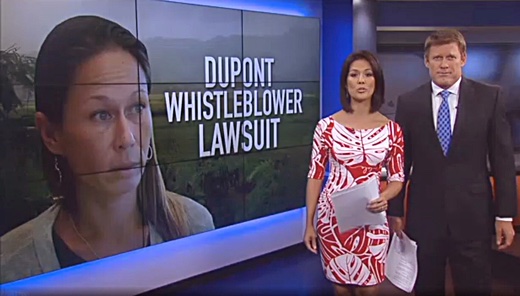
A former farm worker alleges in a lawsuit that a GMO seed company dangerously mishandled herbicides, potentially exposing the Waialua community.
Shannell Grilho said that DuPont Pioneer fired her and her husband Morgan Armitage about a year ago, after she raised questions about the company's spraying practices.
"They should not be able to do this to anyone," Grilho said. "We're still dealing with it now. We're trying. We got evicted from where we were living."
According to Grilho, the company sprayed its fields even on days when the winds exceeded safety rules. Pioneer's former Waialua farm is adjacent to Waialua High and Intermediate School and a nearby subdivision.
"You're talking about health, safety and welfare, hazardous chemicals. Not only are they worried about their co-workers who they supervise but they're worried about bringing this back to their children," said Michael Green, Grilho's attorney said.
Pioneer declined to respond to the specific allegations in the lawsuit but issued this statement: "We … (follow) rigorous safety protocols to ensure the safety of our employees and our neighbors."
Pioneer no longer uses those fields, but has operations in Kunia and on the Big Island.
According to Grilho's lawsuit, Pioneer sprayed its fields with herbicides such as Roundup and Honcho, using backpack sprayers and boom sprayers mounted on tractors. The sprayers are required to keep 500 feet away from workers.
But Grilho said sprayers sometimes came too close, forcing her to evacuate co-workers in a van to drive to a safer location.
She said that after she raised her concerns with a supervisor, she was reprimanded and was ordered to work in the fields.
She said she was given boots two sizes too big and was required to walk up to 50 acres a day, injuring her knee.
Two days before Christmas in 2015, she was fired. Her husband Morgan, a 13-year Pioneer employee, was terminated about a month later.
"This is only to make as much money DuPont can make, to get these crops done and get them sprayed. Everyday it's for the almighty dollar for them and the hell with the workers," Green said.
"This is disgusting of major corporations and it has destroyed this family financially. But they can't destroy their spirit."
Image above: Photo of giant march on Kauai in support of County Bill 2491 (adopted as Ordinance 960) to regulate restricted use pesticides in GMO fields. The bill addressed From (http://www.stoppoisoningparadise.org/).
The state has announced that it is (finally) taking some first steps to address our community's concerns about pesticide drift from large agri-chemical company operations in Hawaii.
In a joint press statement, the Hawaii Departments of Health and Agriculture described several initiatives recommended by the state/county sponsored Joint Fact Finding Group Report, including:
A $500,000 surface water quality study for Oahu and Kauai to evaluate whether pesticides are moving offsite at unacceptable levels.
A statewide pesticide use disclosure program (but only voluntary and partial)
A statewide buffer zone policy (details yet to be outlined)
While the State actions are slow and insufficient, they are a step in the right direction. HAPA Board President Gary Hooser believes, "the State should be commended for listening to our community and beginning to implement several key recommendations contained in both the JFF report and Bill 2491.
The disclosure and buffer zone components must be mandatory and should include all general use pesticides (such as glyphosate and bee-killing neonics) to be meaningful. However, the proposal as I understand it is a solid first step."
Fern Anuenue Rosenstiel, who helped with the development of Bill 2491 on Kauai, and has an environmental science degree, said, "After years of community action and concern it is a relief that the state is finally stepping up to their responsibility. It isn't enough, but it is a start. It is a step in the right direction."
A step closer to disclosure and a step towards better understanding the environmental impacts of this industry on our land, air and water."
These first steps are clearly a response to the movement for environmental justice that has been growing across Hawaii.
Make no mistake, none of this would have happened without people coming together -- in the streets, at the Capitol, and in county chambers -- to demand action and change. But our work is not done.
Contact the Governor's office today and thank him for these steps, but demand that:
the pesticide disclosure be mandatory & include all pesticides; and
buffer zones be mandatory and comply with the recommendations of the American Academy of Pediatrics and other health experts.
Island Breath Publisher's message to Governor Ige:
Aloha Governor Ige,
I fully supported Kauai Bill 2492 (Ordinance 960). I live on the westside of Kauai where the impact of pesticides is greatest.
• Friends of mine became sick in Kekaha and Waimea. Some of them in Waimea won a settlement in a class action suit against Pioneer for illnesses arising from repeated upwind spraying of pesticides drifting onto their land and into their homes.
• Waimea Middle School has its grounds adjacent to GMO fields and have had students hospitalized with respiratory difficulties.
• Unknown combinations of restricted use pesticides are are air sprayed at night on the Mana Plain fields adjacent to overnight camping sites at Polehale State Park.
The World Health Organization has identified glyphosate as a human carcinogen.Here in Hawaii we (including tourists) are unconsenting are guinea pigs in a giant laboratory experiment. Now that our counties are denied the right to protect us through regulation from this horror it is time for the state to take aggressive action.
We need regulation and restrictions on the GMO industry to make our water, soil and air safe. We need to use these agriculture lands for local food production, not pesticide dependent seed production for mainland big-ag.
Please support the proposals of the Hawaiian Alliance for Progressive Action.
The Environmental Protection Agency (EPA) is convening an advisory panel to review the science that links the main ingredient in the world's #1 herbicide with cancer.
But don't expect one of the last acts of the Obama administration to be to save US farmers and agricultural workers from the ravages of Non-Hodgkin lymphoma.
All signs point to EPA caving to Monsanto, the company that markets glyphosate in its flagship Roundup herbicide.
The saga started in 1985, when the EPA classified glyphosate as a possible human carcinogen, based on the presence of kidney tumors in male mice.
By 1991, the EPA had received enough pushback from Monsanto to reverse this decision.
In 2009, the EPA began its registration review of glyphosate, required once every 15 years for all pesticides.
In March 2015, the EPA was trying to wrap up that review when the World Health Organization's (WHO) International Agency for Research on Cancer assessed the carcinogenicity of glyphosate and determined that it was a probable human carcinogen. The EPA said it would consider the WHO finding in its own review of glyphosate.
In May 2016, the EPA "mistakenly" released an assessment of glyphosate that contradicted the World Health Organization's finding that the herbicide was a probable human carcinogen. The leak gave Monsanto ammunition in its fight to keep its profitable Roundup on the market. (In 2015, Monsanto made nearly $4.76 billion in sales and $1.9 billion in gross profits from herbicide products, mostly Roundup.)
After the leak, EPA tried to restore legitimacy to the process by insisting that it hadn't yet made a decision on glyphosate's carcinogenicity and convening a Scientific Advisory Panel to review the matter.
An analysis of the study by Food & Water Watch researcher Amanda Starbuck exposed several deficiencies in the science EPA used to reach its conclusion that glyphosate is not likely to be carcinogenic to humans:
More than half of the studies were submitted by the industry. The EPA looked at 131 studies to decide if Roundup causes cancer, but 71 were unpublished industry studies.
Independent studies were 30 times more likely to find glyphosate's toxicity than those from the industry -- but the EPA ultimately concluded that there was "no convincing evidence" of glyphosate's toxicity.
The EPA used a "weight of evidence" approach, which means that heavy industry slant overwhelmed the independent published findings -- including a study that linked glyphosate with the growth of breast cancer cells.
Jennifer Sass, senior scientist at the Natural Resources Defense Council's Health Program argues that the EPA's science is so poor that:
EPA violated its own Cancer Guidelines by dismissing evidence of non-Hodgkin's lymphoma (NHL) in people.
Even a meta-analysis of many epidemiologic studies that was sponsored by the agrochemical industry reported a statistically significant risk of NHL cancers when glyphosate-exposed individuals were compared with individuals never exposed to glyphosate. IARC's analysis reported similar results.
EPA's Cancer Guidelines are consistent with calling this "suggestive evidence of carcinogenic potential" for "evidence of a positive response in studies whose power, design, or conduct limits the ability to draw a confident conclusion."
Knowing that the EPA's weak science wasn't up to a serious review, CropLife, the trade association that lobbies on behalf of Monsanto and the rest of the pesticide industry, launched a campaign to discredit scientists chosen for the EPA's Scientific Review Panel.
CropLife succeeded in getting EPA to cancel the panel's October meeting, remove an esteemed epidemiologist from the panel, and reschedule the meeting for December 13-16.
The EPA has received 254,392 comments from the public in advance of the meeting.
Nearly all of the people who submitted comments support a finding that glyphosate is a probable carcinogen, including the 119,857 members of the Organic Consumers Association who signed a petition asking the EPA to follow the World Health Organization's finding.
Organizations that organized their members to submit public comments include Beyond Pesticides, Center for Biological Diversity, Center for Food Safety, Consumers Union, Food Democracy Now, Food & Water Watch, Friends of the Earth, Moms Across America, Natural Resources Defense Council, Pesticide Action Network North America, and U.S. Public Interest Research Group.
IARC Glyphosate & Cancer Report Link
SUBHEAD: Who publishes full probable human carcenoen report on Glyphosae.
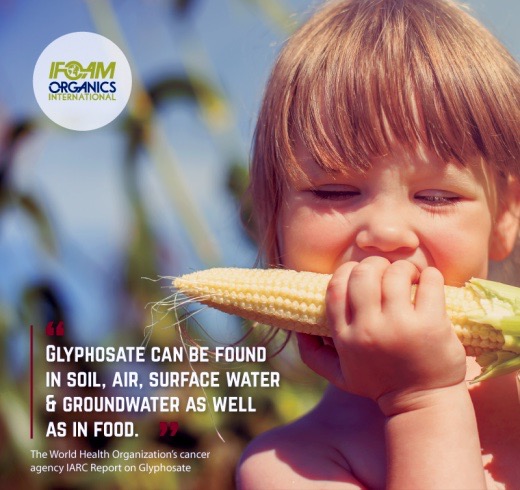
The World Health Organization’s cancer agency IARC has published the full report which caused a huge worldwide response, when they announced earlier this year that the World’s most sold herbicide, glyphosate, is a probable human carcinogen.
The assessment by the International Agency for Research on Cancer (IARC) of glyphosate, which is used in herbicides with estimated annual sales of USD 6 Billion, is of special concern to Monsanto, the company that brought glyphosate to market under the trade name Roundup in the 1970s.
The IARC reached its decision based on the view of 17 experts from 11 countries, who met in Lyon, France, to assess the carcinogenicity of 5 organophosphate pesticides.
Since the IARC report was released in March 2015 many countries have been looking at possible bans on glyphosate-based herbicides and Sri Lanka even announced a complete ban. Supermarkets across Europe have also removed glyphosate-based herbicides from their shelves.
Image above: Marestail "weed" growing up through GMO soybeans. From original article.
[IB Publisher's note: Somehow I got an email inviting me to visit the www.BigAg.com website. It seems that the site is pro GMO and pro Global Warming. Read below and think of these catastrophes as opportunities.]
Earlier this year, we reported that Marestail was an early concern for growers. Now that growing season is approaching its half way point growers are looking at soybean fields to find unwanted marestail plants competing with their crops. While marestail is not new to Midwest growers, herbicide-resistant marestail continues to spread. This is making it hard to control with glyphosate (RoundUp) alone.
CropLife Magazine is reporting that pending registration; Elevore herbicide will provide accurate control of many glyphosate- and ALS-resistant weeds which include marestail up to 8 inches tall. This herbicide is expected to control and suppress costly and high-anxiety weeds when applied as part of a grower’s burndown program before planting.
Elevore contains Arylex active, a new Group 4 growth regulator herbicide developed by Dow AgroSciences. Arylex works to control weeds from the inside out to provide thorough control of labeled weeds.
In field trials conducted by Dow AgroSciences, Elevore tank-mixed with 2,4-D (50% of ingredient of Agent Orange) delivered 97% control of glyphosate-resistant marestail when applied in a pre-plant burndown program.
Left abandoned, marestail can grow and consume a soybean field. According to Michigan State University, an estimated 83% of soybean yield is lost from 105 marestail plants per 10 square feet. According to Jeff Ellis, Ph.D., field scientist at Dow AgroSciences, he says that it’s important to control marestail early, before soybean plants begin to emerge, for maximum yield potential at the end of the season.
Once Elevore is registered, it will be labeled for application with commonly used residual and burndown tank-mix partners, including glyphosate and 2,4-D, up to 14 days before planting soybeans in the Midwest. Registration for Elevore is expected in 2017.
[BigAg Editor's note: Tim Marquis, head of Agriculture Solutions at Weather Decision Technologies (WDT) discusses the current and upcoming weather and how it has been affecting the growers and their crops.]
The USDA report that broke on June 30th brought with it bad news for growers; the 3rd largest crop ever planted and with it came a sharp decline in commodity prices. Growers are now hoping that a large scale drought will allow for prices to rally. However, growers are looking for the rally in all the wrong places.
I’ve seen a lot of tweets about the lack of rainfall in parts of Southern Iowa, eastern Nebraska and Kansas, and western South Dakota from growers. Everyone is hoping that drought impacts the crop, just not their fields so that prices may rise and they can take advantage of it. Many are hoping we have a summer like 2012.
A lot of growers are hoping for a 2012 type year in regards to drought. Comparing the 2012 Drought Monitor issued at the same time as this week’s, growers can hope for a drought, but this is not the forecast.
Whenever you wish for a forecast we call that “wishcasting” in the meteorological world. The facts don’t support the case for a large scale drought to hit. We are in much better shape this year than in 2012. In 2012, we saw 72% of the country in at least some form of drought at the same time. This year, only 43% of the country is in some form of drought.
More importantly, in 2012, 30% of the country was in a moderate to severe drought which was spread out over a large area compared to just 5% of the country this year and most of it is isolated to California.
We’re entering the part of the year where the Corn Belt receives large amounts of rainfall from squall lines. Last weekend it rained in Eastern Kansas and Missouri, where a stalled front produced widespread heavy rain which is typical of this time of year.
The longer range forecast, for July into August, is for warmer than normal temperatures across a widespread area.
It's rare, but agronomists may get a year where we can directly monitor the effect heat is going to have on the crop without drought over a large area.
All the more reason that this year, companies that serve agronomists and growers need to have access to high-resolution field level weather. Temperature, precipitation, and potential evapotranspiration are going to need to be monitored to identify areas that will have both heat and lack of rainfall, as well as which areas may just have high heat; especially during pollination.
The weather is going to vary strongly this year, especially with precipitation, but understanding where these areas are, can lead to better management practices.
For instance, growers who irrigate can mitigate heat stress during the R1 stage by applying a .2-.4" pass over their fields. Growers who don’t have irrigation need to pay close attention to nitrogen and phosphorous levels, and implement a fertility management program, as this can also mitigate the effect heat will have on the crop.
Are you feeling the effects of a drought or close to it? Post your thoughts in the forum!
The first of its kind – BigAg.com is a community-based website geared specifically toward producers with large commercial farming operations. It’s a place for anyone involved in production agriculture or large-scale operations to read articles relevant to their fields, learn about and discuss topics in our forum, interact with and learn from our social community of other Big Ag farmers as well as search for equipment – all on one site!
Fastline Publications launched the Big Ag catalog in 2011. This specialized catalog is delivered only to large-acre producers and features larger equipment and products necessary to run commercial operations. Readers love their Big Ag, but they want more. In response, Fastline developed BigAg.com. The Big Ag print catalog and online community strive toward the same goal of providing large-acre farmers the information they need to optimize their operation.
The term Big Ag means different things to different people. We aim to gather information from the best in the industry. We are proud of our Big Ag producers and the work they do to feed and fuel America and the world. We hope that BigAg.com provides information and a platform to help strengthen the Big Ag community.
California just dealt Monsanto a blow as the state’s Environmental Protection Agency will now list glyphosate — the toxic main ingredient in the U.S.’ best-selling weedkiller, Roundup — as known to cause cancer.
Under the Safe Drinking Water and Toxic Enforcement Act of 1986 — usually referred to as Proposition 65, its original name — chemicals that cause cancer, birth defects, or other reproductive harm are required to be listed and published by the state. Chemicals also end up on the list if found to be carcinogenic by the International Agency for Research on Cancer (IARC) — a branch of the World Health Organization.
In March, the IARC released a report that found glyphosate to be a “probable carcinogen.”
Besides the “convincing evidence” the herbicide can cause cancer in lab animals, the report also found:
“Case-control studies of occupational exposure in the U.S.A., Canada, and Sweden reported increased risk for non-Hodgkin lymphoma that persisted after adjustments to other pesticides.”
California’s decision to place glyphosate on the toxic chemicals list is the first of its kind. As Dr. Nathan Donley of the Center for Biological Diversity said in an email to Ecowatch,
“As far as I’m aware, this is the first regulatory agency within the U.S. to determine that glyphosate is a carcinogen. So this is a very big deal.”
Now that California EPA’s Office of Environmental Health Hazard Assessment (OEHHA) has filed its “notice of intent to list” glyphosate as a known cancer agent, the public will have until October 5th to comment. There are no restrictions on sale or use associated with the listing.
Monsanto was seemingly baffled by the decision to place cancer-causing glyphosate on the state’s list of nearly 800 toxic chemicals. Spokesperson for the massive company, Charla Lord, told Agri-Pulse that:
“glyphosate is an effective and valuable tool for farmers and other users, including many in the state of California. During the upcoming comment period, we will provide detailed scientific information to OEHHA about the safety of glyphosate and work to ensure that any potential listing will not affect glyphosate use or sales in California.”
Roundup is sprayed on crops around the world, particularly with Monsanto’s Roundup-Ready varieties — genetically engineered to tolerate large doses of the herbicide to facilitate blanket application without harming crops. Controversy has surrounded this practice for years — especially since it was found farmers increased use of Roundup, rather than lessened it, as Monsanto had claimed.
Less than a week after the WHO issued its report naming glyphosate carcinogenic, Monsanto called for a retraction — and still maintains that Roundup is safe when used as directed.
On Thursday, an appeals court in Lyon, France, upheld a 2012 ruling in favor of farmer Paul Francois, who claimed he had been chemically poisoned and suffered neurological damage after inhaling Monsanto’s weedkiller, Lasso. Not surprisingly, the agrichemical giant plans to take its appeal to the highest court in France.
It’s still too early to tell whether other states will follow California’s lead.
WHO "Glyphosate probable carcenogen"
SUBHEAD: The World Health Organization assessment was announced in March of this year.
The World Health Organisation’s cancer agency has declared the world’s most widely used weedkiller – glyphosate – a “probable human carcinogen” in a move that will alarm the agrochemical industry and amateur gardeners.
The assessment by the International Agency for Research on Cancer (IARC) of glyphosate, which is used in herbicides with estimated annual sales of USD 6 Billion, will be of special concern to Monsanto, the company that brought glyphosate to market under the trade name Roundup in the 1970s.
Over 80% of GM crops worldwide are engineered to be grown with the herbicide.
The IARC has no regulatory role and its decisions do not automatically lead to bans or restrictions, but campaigners are expected to use them to put pressure on regulators.
The IARC reached its decision based on the view of 17 experts from 11 countries, who met in Lyon, France, to assess the carcinogenicity of 5 organophosphate pesticides.
The IARC’s assessment of the 5 pesticides is published in the latest issue of The Lancet Oncology.
Europe is set to re-approve glyphosate this year.
Image above: Detail of aerial photo of beef feedlot. A recently released batch of aerial photographs by British artist Mishka Henner show that factory farming is taking its toll on our planet. In addition to producing nutrient-poor "food" rife with GMOs, these farms are literally carving swaths of death through the American landscape. Henner's shocking photos provide bird's eye proof of the destruction that follows when industrial beef farming moves into town. From (http://inhabitat.com/mishak-henners-apocalyptic-photos-show-how-factory-farming-is-destroying-the-american-landscape/mishak-henner-feedlot-photography-3/).
Two common Big Agriculture production practices -- feeding antibiotics to livestock and spraying herbicides on conventional crops -- each face condemnation from the environmental community.
And there's been plenty of new fodder in the last week: One study predicted that antibiotic use in livestock will soar by two-thirds globally from 2010 to 2030, and another declared that Monsanto's popular Roundup herbicide is "probably carcinogenic to humans."
The latest research may merge the herbicide and antibiotic battle lines. The use of common herbicides, such as Roundup, Kamba and 2,4-D, according to a study published on Tuesday, may help drive antibiotic resistance.
Antibiotic-resistant infections take the lives of more than 23,000 Americans every year. The World Health Organization and the U.S. Centers for Disease Control and Prevention are among major groups warning of the dire threat posed to public health. Antibiotic resistance stemming from overuse in livestock also is the target of a bill re-introduced in Congress on Tuesday.
Environmental health advocates predict the use of herbicides will continue to rise as farmers plant more genetically modified seeds engineered to survive weedkillers. The U.S. Environmental Protection Agency recently approved Enlist seeds, which are designed for use with a mix of 2,4-D and glyphosate, the chief ingredient in Roundup.
In some cases, combinations of herbicides and antibiotics in the new study made bacteria more susceptible to antibiotics, or had no effect. But more often, it had the opposite effect. If the disease-causing bacteria -- E. coli and salmonella -- were exposed to high enough levels of herbicide, the researchers found that the microbes could survive up to six times more antibiotic than if they hadn't been exposed to herbicide. They studied five common classes of the drugs: ampicillin, chloramphenicol, ciprofloxacin, kanamycin and tetracycline.
"In a sense, the herbicide is 'immunizing' the bacteria to the antibiotic," said Jack Heinemann, lead author of the study and researcher at the University of Canterbury in New Zealand. He noted that the levels of herbicide tested in the study were above legal limits for residues on food, but lower than what's commonly applied to commercial crops.
The new finding builds on emerging evidence that multiple environmental contaminants may play a role in the rise of antibiotic resistance. Swedish researchers reported in September that antibiotic residues and heavy metals in the environment -- even at "infinitesimally low" concentrations -- may team up to drive the growth of antibiotic resistance. In addition to metals potentially leaching into the environment from other industries, construction or health care facilities, some farmers use arsenic in animal feed and as a pesticide. Mercury can also contaminate fish meal, while copper is common in swine fodder.
"This could be an important contributor" to antibiotic resistance, Dan Andersson, lead author of that study and a microbiologist at Upsalla University in Sweden, told The Huffington Post in October.
Mark Silby, a biologist at the University of Massachusetts, Dartmouth, noted an "important parallel," between the heavy metal and herbicide studies. "Low-level antibiotics can be of considerable importance in the evolution of antibiotic resistance, by means which we may not be very good at anticipating," he said.
Most research in the past has looked at chemicals or other contaminants in isolation, rather than as the cocktail that typically lingers in the environment -- especially near farms -- and is enlisted in modern agricultural practices. Livestock feed, and the fields on which animals graze, may contain traces of antibiotics, herbicides and heavy metals.
Heinemann, too, emphasized that "combinations of exposures to what we think of as different kinds of chemicals can matter."
He also pointed to the core issue of the overuse of antibiotics in both medicine and agriculture. His team's study was published the same day that Rep. Louise Slaughter (D-N.Y.) re-introduced the Preservation of Antibiotics for Medical Treatment Act. The bill has the support of 50 city councils and more than 450 medical, consumer advocacy and public health groups.
"Right now, we are allowing the greatest medical advancement of the 20th century to be frittered away, in part because it's cheaper for factory farms to feed these critical drugs to animals rather than clean up the deplorable conditions on the farm," Slaughter, the only microbiologist in Congress, said in a statement Tuesday. "My legislation would save eight critical classes of antibiotics from being routinely fed to healthy animals, and would reserve them only for sick humans and sick animals."
The U.S. Food and Drug Administration offers voluntary guidance to the pharmaceutical industry on the use of antibiotics in livestock, including a request that drugmakers change their labels by December 2016 to exclude uses for growth promotion. The FDA hasn't imposed a ban or mandatory restrictions.
Advocates are not impressed, pointing to potential loopholes in the voluntary guidance.
Slaughter's bill has faced steep opposition since its first iteration in 1999. In the last Congress, according to a press release from her office on Tuesday, 82 percent of lobbying reports filed on her bill came from “entities hostile to regulation.”
Slaughter is among experts and advocates who largely blame the pressing public health problem on the routine administration of low doses of antibiotics to cattle, swine, chickens and other livestock. Just as an incomplete course of antibiotics can result in the rise of a more virulent infection in a person, this use in animals -- often to prevent the spread of disease or to simply promote growth -- means bacteria that can withstand the drugs will survive, reproduce and pass on their resistance to the next generation of bugs on the farm.
Food animals receive about 80 percent of the antibiotics sold in the U.S. Livestock antibiotics are thought to affect human health via multiple pathways: direct or indirect contact with food, water, air or anywhere urine or manure goes.
While some fast food brands and retailers have begun eliminating medically-important antibiotics from their supply chains, the agriculture industry maintains that its practices are critical for livestock health and not a significant contributor to the rise of antibiotic resistance. The Animal Health Institute, which represents pharmaceutical companies, suggested that the herbicide and heavy metal studies further support their case.
"These studies are further indications that antibiotic resistance is a very complex issue and there are non-antibiotic compounds that can select for resistance," Ron Phillips, vice president of legislative and legal affairs with the group, told HuffPost in an email. "That's why simple solutions will only waste resources while not addressing the real issue. We must address the issue of antibiotic resistance with careful, science-based" approaches.
Charla Lord, a spokeswoman for Monsanto, added that her company was taking a closer look at the "very complicated" study. She said more research is needed to identify what components in the herbicide may be linked to any effects.
Amy Pruden, an expert on antibiotic resistance at Virginia Tech, agreed that the studies "definitely complicate things" and add evidence that "it's not just antibiotics that contribute to the problem."
Pruden emphasized the need for "a really broad management plan that thinks comprehensively about all the things that contribute to the failure of antibiotic treatment." She noted that antibiotic overuse, including in livestock, is far from off the hook. "It's common sense that antibiotics themselves are the core issue," she said. "It's just that even if we cut way back on them, we still might have work to do and other things to think about."
Silby agreed. "Obviously, sick animals should be looked after appropriately, but the large-scale use of antibiotics as growth enhancers has almost certainly been a significant driver of antibiotic resistance."
[Source's note: The science, research and reactions to Roundup, Glyphosate and other toxins used by the Agrochemical Companies continue to emerge at an accelerating rate. Each day it grows increasingly clear that the health issues being experienced here on Kauai, and anywhere else where these poisons are being used, are directly correlated to to their use. Sri Lanka is the latest country to react to these devastating health issues. (please see article below). In fact studies just published by Doctors Stephanie Seneff of MIT and Anthony Samsell show correlations of 95% and above for many diseases and the use of glyphosate. Autism for example has a 98.6 % correlation which means that there is only a little over one percent chance that glyphosate is not a cause of this disease. Other diseases exhibiting these high correlation rates include Alzheimers, Liver disease and various cancers. As indicated in the article below, Kidney Disease is also now a proven result of exposure to glyphosate. Please keep Shining your Light on these issues in whatever way that you can. Educating the public is a critical step in this journey we share. Pass the information on to your lists. As we keep the flow going the world is gradually becoming a brighter place as illustrated in the article below which describes another set back for Monsanto and friends. Next steps from Kauai Rising will follow soon!!]
Sri Lanka has banned the sale of Monsanto's "Round Up" glyphosate herbicide after a study found that the herbicide is responsible for the increasing number of chronic kidney disease patients.
Minister off Special Projects S.M. Chandrasena said the decision to ban Glyphosate sales in the country has been taken on a directive of the President Mahinda Rajapaksa.
Addressing a media briefing, the Minister said several programs have been implemented to prevent the high occurrence of kidney disease among the farming community.
A new study published in the International Journal of Environmental Research and Public Health found a link between the herbicide known as Roundup and the fatal Chronic Kidney Disease of
Unknown origin (CKDu) affecting mostly, the rice farmers in Sri Lanka and several other countries.
The study found that while the weedicide itself is not nephrotoxic, when it combines with hard ground water containing metals such as cadmium and arsenic, either naturally present in the soil or added through fertilizer, glyphosate becomes extremely toxic to the kidney.
In recent years a significant increase in the number of CKD patients has been observed in some parts of the country, especially in North Central, North Western, Uva and Eastern Provinces.
According to the Minister a national program to prevent the kidney disease will be launched next Friday. The program will encourage the Sri Lankan farmers to produce and use organic fertilizer.
Dr. Channa Jayasumana of Rajarata University, the lead author of the study on glyphosate, told the national radio that paddy has been planted without the use of chemical fertilizer in an extent of 100 acres in the left bank of Rajanganaya and plans are underway to plant traditional paddy varieties in 5,000 acres of land in the right bank also.
The Ministry of Agriculture aims to cultivate paddy in 100,000 acres of land throughout the country in the Maha season using organic fertilizer.
Heavy use of the world's most popular herbicide, Roundup, could be linked to a range of health problems and diseases, including Parkinson's, infertility and cancers, according to a new study.
The peer-reviewed report, published last week in the scientific journal Entropy, said evidence indicates that residues of "glyphosate," the chief ingredient in Roundup weed killer, which is sprayed over millions of acres of crops, has been found in food.
Those residues enhance the damaging effects of other food-borne chemical residues and toxins in the environment to disrupt normal body functions and induce disease, according to the report, authored by Stephanie Seneff, a research scientist at the Massachusetts Institute of Technology, and Anthony Samsel, a retired science consultant from Arthur D. Little, Inc. Samsel is a former private environmental government contractor as well as a member of the Union of Concerned Scientists.
"Negative impact on the body is insidious and manifests slowly over time as inflammation damages cellular systems throughout the body," the study says.
We "have hit upon something very important that needs to be taken seriously and further investigated," Seneff said.
Environmentalists, consumer groups and plant scientists from several countries have warned that heavy use of glyphosate is causing problems for plants, people and animals.
The EPA is conducting a standard registration review of glyphosate and has set a deadline of 2015 for determining if glyphosate use should be limited. The study is among many comments submitted to the agency.
Monsanto is the developer of both Roundup herbicide and a suite of crops that are genetically altered to withstand being sprayed with the Roundup weed killer.
These biotech crops, including corn, soybeans, canola and sugarbeets, are planted on millions of acres in the United States annually. Farmers like them because they can spray Roundup weed killer directly on the crops to kill weeds in the fields without harming the crops.
Roundup is also popularly used on lawns, gardens and golf courses.
Monsanto and other leading industry experts have said for years that glyphosate is proven safe, and has a less damaging impact on the environment than other commonly used chemicals.
Jerry Steiner, Monsanto's executive vice president of sustainability, reiterated that in a recent interview when questioned about the study.
"We are very confident in the long track record that glyphosate has. It has been very, very extensively studied," he said.
Of the more than two dozen top herbicides on the market, glyphosate is the most popular. In 2007, as much as 185 million pounds of glyphosate was used by U.S. farmers, double the amount used six years ago, according to Environmental Protection Agency (EPA) data.
Image above:Vandana Shiva (R) at the Dinner Conference before addressing Kauai at the Peace & Freedom Convention Center. From original article.
Shiva connects addresses GMOs
The Kauai "Peace & Freedom" Convention Hall was standing room only as more than 1,100 people showed up Thursday night to hear a presentation by environmentalist Dr. Vandana Shiva.
“Your island is truth speaking to the world,” Shiva told the crowd to thunderous applause.
Joining Shiva as part of a three-day Hawaii SEED Tour was environmental attorney Andrew Kimbrell and Hawaiian rights activist Walter Ritte of Moloka‘i.
“Dr. Shiva is like the Dalai Lama of Agriculture,” Ritte said of the Indian philosopher, physicist, environmental activist and eco-feminist who has authored more than 20 books. As a leader in the International Forum of Globalization, Shiva fights for changes in the practices and paradigms of food, according to her biography.
Shiva met with residents of the Westside for dinner ahead of time to discuss a pending class action lawsuit over the continued experimental use of pesticides by biotech companies in the area.
Because of the experiments taking place with pesticides and genetically engineered seeds on the Westside of the island, Kaua‘i is considered ground zero internationally in the fight to stop biotech companies such as Monsanto, Dow, DuPont, Bayer and Syngenta from creating more products and patenting more seeds.
Organizers are also working to have Hawaii become the first state to label foods containing genetically modified organisms.
In assisting grassroots organizations in the green movement worldwide, Shiva has been featured in several documentaries and received the Right Livelihood Award and the Global 500 Award of the United Nations Environmental Program. She has been called one of the five most powerful women in Asia.
Along with Shiva was Andrew Kimbrell, who became the executive director of the International Center for Technology Assessment in 1994 and the executive director of the Center for Food Safety in 1997. As one of the leading environmental attorneys in the nation, he has authored several books on the environment, technology in society and food issues. In 1994, Utne Reader named him as one of the world’s leading visionaries.
Sponsored by Hawaii SEED, The Center for Food Safety and Navdanya, the evening discussing the elimination of genetically modified organisms, along with the labeling of GMO products, was the culmination of a three-day long Hawaii SEED Tour that had Shiva, Kimbrell and Ritte speaking to a sold out audiences at the University of Hawaii at Manoa and at the Kapolei Salvation Army Ray Kroc Center, along with legislative briefings and presentations in the State Capitol by Kaua‘i County Councilman Gary Hooser, Sen. Laura Thielen and others.
At the outset of the evening, vendors from around the island set up a seed giveaway featuring a local farming resource fair and silent auction to benefit Hawaii SEED.
Emceeing the Kaua‘i event was Nancy Redfeather of Kawanui Farm on the Big Island, who in her work as a teacher and gardener has helped create 65 school gardens through her work as program director for the Hawaii Island School Garden Network and is the director of the Hawaii Public Seed Initiative.
Opening the evening at the event were students from Kanu I Ka Pono New Century Public Charter School, who greeted the audience with chant and poetry.
“There’s room for man’s need, but not man’s greed,” said one Kanu I Ka Pono student in her poem, paraphrasing Mahatma Gandhi.
Up next was performer Makana, who played a modified version of his “We Are the Many” anthem advising the crowd to “Occupy GMO.” He also performed a new song titled, “The Story of the GMO,” which addresses the history of the anti-GMO movement and closed the evening with an untitled “Song for Vandana,” that he was inspired to write while listening to Shiva’s presentation.
In introducing Dr. Shiva, Redfeather said Dr. Shiva has trained more than 650,000 farmers in India and is advising Bhutan on how to be come the first wholly organic country in the world.
“I was told you were a very small island with a very small population. It doesn’t look like it when you stand in this hall,” she said.
She said that the myth was that spraying pesticides has lead to the rise of GMOs.
Dr. Shiva said farmers were told they would never have to spray again, “we known through the practice in the rest of the world that in fact the spray increases and you talk about it. The GMOs are not a safe alternative to poisons. They are pushed by the poison industry to increase poison sales and monopolize the seed industry.”
In discussing the 1984 Bhopal disaster, Dr. Shiva said 3,000 people died in a gas leak from a Union Carbide plant and more than 30,000 people have died since then. She said the disaster didn’t stop after the explosion “as generations being born today are being born crippled.”
She said Bhopal isn’t the only poison tragedy in India. She said 1,000 people died in the past couple years in “the endosulfan tragedy,” when thousands of people were sprayed with pesticides that went into water and wells.
Dr. Shiva said India’s Green Revolution started off with chemicals that were designed for killing people in times of war. After World War II, these companies then turned the chemicals into pesticides and now have become a biotech.
“The explosive factories were redesigned to create fertilizer,” Dr. Shiva said, noting that the Oklahoma bombing, the Oslo bombing and every bombing in India were created using fertilizer bombs.
“We delivered sacks and sacks of fertilizer to the Afghans and now they are making bombs,” she said of the Central Intelligence Agency providing fertilizer to the country. “A century of war making and destruction is behind this.”
Her research for the United Nations also uncovered that nerve gas was being modified into modern day pesticides.
She addressed her plans to organize new Nuremberg Trials to go after the companies making nerve gas to kill people during World War II that are still making chemicals today.
“We are going to organize new Nuremberg trials and bring together everyone that has been harmed in the name of agricultural progress,” she said.
Dr. Shiva went on to say she was at a conference where people were talking about making seed saving a crime. She said one of the big fights being faced is to prevent the criminalization of seed saving by farmers.
“How could it be that the death industry can recreate itself as the life sciences industry?” she asked, adding that the companies position themselves as patient and diagnostician for a problem, with the problem being farmers saving seeds.
She said that growing up, her family used the neem tree for pest control, which causes bugs to reproduce slower. She said the neem tree is called the “village farmer,” and has more than 1,000 uses.
After Bhopal, Dr. Shiva delivered neem trees to the area and made posters that read, “No more Bhopals. Plant a Neem.”
She discussed other biopiracy cases such as basmati rice, which RiceTec patented and claimed to have invented along with how worldwide trade impacts the industry.
“Everything comes from China,” Dr. Shiva said of the U.S. being in a negative trade balance. “Patented seeds and GMO crops are the only things leaving. You have become the nerve center for this destruction.”
In the end, though, Dr. Shiva said the biotech companies have left us with bug-resistant super pests and super wheats.
“The GMO emperor has no clothes,” Dr. Shiva said. “We have the clarity to speak truth. We do not recognize patents on life.”
Monopolies and monocultures go together and have reduced to just eight commodities including animal feed, biofuel and human food last. She said it wastes communities by destroying them and imposes uniformity along with shipping them in trucks.
“Food is a waste system. It wastes the Earth, it wastes communities, it wastes potential, they ship it thousands of miles in trucks,” she said.
“Bees usurp pollen, weeds steal sunshine … everyone is a thief in their world because they are the thieves,” Dr. Shiva said of what the biotech companies are telling the world, “This is not about technology. This is about conquest. That’s why every time a religion has conquered, they destroyed sacred shrines and put in churches.”
She said people should live by the tenets of Gandhi, including satyagraha meaning fight for truth; swaraj meaning self-organized freedom; and swadeshi, meaning self-making as a rule of freedom; and the concept of lifting up everyone including the most vulnerable.
In the end, Dr. Shiva called on Kaua‘i’s residents to work on feeding themselves.
“You have so much water and biodivesity here on the Garden Island that it should be a garden and in reality feeding itself.”
Wendell Berry once said, “To live, we must daily break the body and
shed the blood of Creation. When we do this knowingly, lovingly,
skillfully, reverently, it is a sacrament. When we do it ignorantly,
greedily, clumsily, destructively, it is a desecration. In such
desecration we condemn ourselves to spiritual and moral loneliness, and
others to want.”
Environmental attorney Andrew Kimbrell
shared Berry’s quotation with a standing room only crowd on the final
evening of the Hawaii SEED Tour event featuring Dr. Vandana Shiva
Thursday at the Kaua‘i War Memorial Auditorium (see Saturday’s online
edition for a full story about Shiva’s presentation).
Berry’s
quotation resonated the most during the evening, with Dr. Shiva also
paraphrasing it before announcing that she would return to Kaua‘i, “only
when you have driven those criminals off this island.”
Opening the event for Dr. Shiva Thursday night were Kimbrell and Hawaiian activist Walter Ritte.
In introducing Ritte, emcee Nancy Redfeather of Hawaii noted his work in 1975 reclaiming Kaho‘olawe from the U.S. military, which was using it for target practice.
She also recalled watching him and his two sons testify to stop a company from doing biological drug testing in Hawaii and how they successfully blocked the effort.
“On Moloka‘i, we are fiercely protective of our natural resources,” Ritte said. “We have a cash economy and a subsistence economy and we need both to survive.”
He said some islands have lost one of those economies and people get by on a cash economy.
On Moloka‘i, though, he said, “We fiercely protect the environment because that’s how we feed our family. The skills that allow us to harvest these resources and feed our families are traditional skills. Monsanto is the No. 1 problem we have right now.”
He said Native Hawaiians are asking him ‘We have sovereignty and rights to take of, why are you wasting your time on GMOs?’
For him, the answer boils down to food sustainability.
“If we are not going to learn how to feed ourselves, we are never going to be independent, self-sufficient and sovereign, never. Never,” he said.
Ritte described having the doors shut on protesters last year during an anti-GMO rally at the State Capitol.
“It was a horrible feeling,” Ritte said. “These elected officials have joined the corporations. They have declared a war on our environment and this island has the most to lose, because it is the most beautiful island in all of Hawai‘i. You have the most to protect.”
He said his job for the evening was to instill in the audience the idea that talk alone would not solve problems.
“If we don’t do anything, we are going to lose. We need you to participate in government,” Ritte said.
He praised the efforts of the Hawaii SEED leadership in getting people involved on both leading a three-mile march from UH to the Capitol on O‘ahu and in filling the entire facility on Kaua‘i.
“It’s these women who have all this energy and commitment. Holy burning on my ballbearings, I cannot keep up with this group,” Ritte said to applause. “The leadership right now coming from Kaua‘i is ahead of any other island. No other island can fill rooms like this. The leadership is coming from your island. You guys are in the lead, just like you were on the Superferry.”
Ritte also addressed the issue of the Public Land Development Corporation, calling on Gary Hooser to take the lead on making changes. With the changes in House leadership, Ritte said the doors are open to affecting change statewide.
Ritte said yesterday marked the 120th anniversary of the overthrow of the Hawaiian monarchy. He said the issue needs to be made pono, to be corrected in order to move forward.
“If you build the foundation of how we’re going to protect our environment, using the most powerful laws in the state, it’s not going to be just the Hawaiians rising up. It’s going to be all of us joining up and rising up together because of the love we have for future generations,” he said.
In thanking the crowd for allowing him to share his mana‘o, he said, “We are all here because we love our environment and we love our Islands. We need to protect them come hell or high water.”
Along with Shiva was Andrew Kimbrell, who became the executive director of the International Center for Technology Assessment in 1994 and the executive director of the Center for Food Safety in 1997. As one of the leading environmental attorneys in the nation, he has authored several books on the environment, technology in society and food issues. In 1994, Utne Reader named him as one of the world’s leading visionaries.
Kimbrell opened his talk by paying homage to emcee Nancy Redfeather and her work in the legislature and to Jeri Di Pietro, president of Hawaii SEED.
He shared a story about Walter Ritte after he stopped the genetic engineering of taro. A group was sitting around trying to figure out the next step and Kimbrell suggested the company might try to patent taro, to which Ritte replied, ‘They can’t patent my older brother!”
The next thing Kimbrell knew, Ritte and his Hawaiian warriors chained themselves to a building where the Regents for the University of Hawaii was meeting to give up the patents they had on taro, which ultimately they did.
“To my knowledge, it’s the only time a patent holder has ever given up a patent, particularly under the threat of imprisonment,” Kimbrell said. “They say if you want something done, give it to a busy man. I say if you want anything done, give it to this man.”
Kimbrell said he met Dr. Vandana Shiva in 1989 at the first global warming conference for NGOs. He said the “beauty and nobility of her presence” immediately drew him to her.
He said that during that first meeting, Dr. Shiva said that in India, her people “have for millennia lived, more or less, in harmony with the world, but here in the West, in less than 150 years, you’ve created almost a terminal threat to the planet. So from now on at this conference, why don’t we call you the underdeveloped world?”
Kimbrell fired off a long list of products his group has stopped, including the Flavor Savor genetically engineered tomato to wheat, alfalfa, sugar beets, slo mo grass, rice, even biopharmaceuticals.
“Monsanto can be stopped. We were outspent 20:1 by Monsanto and won,” Kimbrell said to applause, adding that it’s not a matter of “if we’re going to have labeling, but when.”
He described writing Proposition 37 in California, and how they lost the proposition 51 to 49. He said Monsanto spent $50 million and only won by a narrow margin.
“I love suing Monsanto,” Kimbrell said in discussing gene and patent cases heading to the U.S. Supreme Court. “It never stops them from being passive aggressive cause we just get to sue them.”
He noted there are five major companies equal to Monsanto including Dow Chemical, DuPont, Syngenta and Bayer.
The crowd loudly tried to correct him, shouting out “Pioneer!” to which Kimbrell reminded them that Pioneer is a subsidiary of DuPont.
Monsanto, DuPont and Syngenta own 51 percent of the world’s seeds, he said.
The seeds are designed to withstand huge applications of pesticides, which the same companies sell, Kimbrell said.
He said the Big 5 put out 115 million more pounds of pesticides and “we get rid of 40 million pounds of pesticides,” but it creates an adaptation of super weeds through survival of the fittest and weeds that can’t be killed with RoundUp.
Dow Chemicals said took over and created 2,4-D resistant crops.
“2,4-D is one of the elements in Agent Orange. So then they start a chemical arms race because Monsanto says they are going to go with Dicamba,” Kimbrell said, adding that these crops are currently up for USDA approval.
Kimbrell said Dicamba is one of the most terrifying weed killers as well because it volatilizes. “That means that under certain warm and wet conditions, it comes back up in a cloud after it’s been sprayed and can move miles over an organic farm and kill everything there. We’ve had conventional farmers say they don’t want this thing, so our work is not done.”
He went on to say “one of the most troubling things for me” is that the FDA is currently finalizing the approval of genetically engineered salmon.
“The salmon was originally engineered with human growth genes to make it grow larger, faster, and now they put some pout genes to do the same thing,” Kimbrell said.
He added that researchers said it would take a very small number of these salmon to decimate all salmon.
“Sixty fish like this, if they are released into a population of 60,000 native salmon, can cause extinction in thirty generations,” Kimbrell said.
He said there are about 45 days left for people to contact the FDA and tell them not to approve the fish.
Kimbrell added that 1.25 million people so far have signed a labeling petition asking President Obama to label GMO foods and said it is the largest response the FDA has ever had.
Based on the passion shown for the petition, Kimbrell encouraged the audience to have passion for their convictions.
“People who make war just for making war will fight for any side and quit when they want, but if you’re a lover … If you are a lover of seas, if you are a lover of lands, if you are a lover of rivers, if you are a lover of animals, then you will fight. You will fight for that. Lovers are the best fighters.”
Kimbrell once got called out for being against progress, but offered that the question needs to be “progress toward what?”
“The U.N. just came out with a report that said the way we are going to feed the world is not through genetic engineering, is not through toxic inputs, is not through pesticides, is not through the 2,4-D and the Dicamba and the RoundUp that is in the dust on Moloka‘i and hurting and killing children on this island. We know it’s the toxic herbicides.
That is not progress. That can never be progress,” Kimbrell said, adding the companies are destroying the Earth and making “zillions of dollars” in the process, all in the name of progress. “We’ll occupy progress,” he said.
He said biotech companies would like for people to remain passive consumers, but noted that Ritte said everyone is a creator capable of making decisions, “in the food we grow, the food we buy, the food we feed out children, the food we allow in our schools and in our communities is either going to progress this terrible mechanistic nightmare that’s now reached it’s endpoint in the actual engineering of the seed to be intolerant to these horrifying toxins and poisons or be organic and beyond, which is the fastest growing sector in American agriculture that is organic, local, appropriate scale, humane, socially just and biodiverse.”
Kimbrell encouraged the audience to be creators by getting involved to no longer be part of the desecration as described by Wendell Berry.
“Don’t just read a poem, write a poem. Don’t just listen to music, write music. Don’t just eat food, grow food. That’s the way to do it. Don’t just watch romantic movies, make love,” he said.
In the end, he encouraged the crowd to come together in the food movement.
“As you fight every battle here, I hope you all together, in cooperation, in love, can knowingly, skillfully, lovingly and most important reverentially, come together to create a new food future.”
"Chemical control is self-perpetuating, needing frequent and costly repetition."
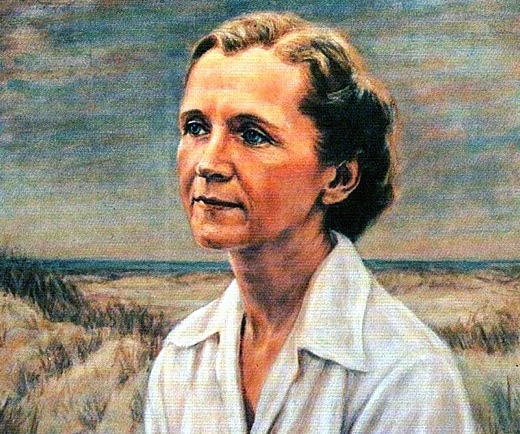
"This is not what Rachel Carson would have wanted for her 50th anniversary present." Mardi Mellon, senior scientist with the non-profit Union of Concerned Sciences, referred to the pending rollout of crops engineered to be resistant to "one, two, three, perhaps more herbicides."
The resultant "dousing" of crops with larger quantities of a multiple poisons, Mellon said, is not exactly the future Carson sought with the publication of her landmark book, "Silent Spring," on Sepember 27, 1962.
Thursday's anniversary comes as debate over the healthiness of conventional, genetically-modified foods has arguably reached record decibels -- thanks in part to the publication this month of two controversial studies. One concluded that organics offered no better nutritional value than conventional foods (IB Editior note: without taking into account the effects of pesticides nor genetic engineering); another suggested that genetically modified corn increased cancer in lab rats.
Lost in this debate, some experts said, is a more fundamental issue facing the food system and public health: a vicious cycle of chemical-dependency that we can't seem to break, even 50 years after Carson warned of the dangers of an arms race against nature we are destined to lose.
The marine biologist may have been among the first scientists to refer to the "pesticide treadmill," as well as to suggest that the chemical industry keeps it running by "pouring money into universities to support research on insecticides."
Many scientists repeat those insights today.
"Herbicide resistance is not new. We've been dealing with it for about 50 years," said Mike Owen, a weed expert at Iowa State University. "But every time we've ended up with resistance in particular weeds, industry would bring forward a new solution -- so it again became a non-problem." .
We invite articles submitted by our readers. You can add an article (subject to editorial approval) by emailing the Juan Wilson with what you want to post.
We will include your name as the author, or, if you are forwarding another's words, we will add you as the source.