Showing posts with label Bees. Show all posts

Balanced on the Equinox

SUBHEAD: We are  between two worlds - the darkness and the light - it is only through shadows that we can discern.

By Juan Wilson on 21 March 2019 for Island Breath -
(https://islandbreath.blogspot.com/2019/03/balanced-on-equinox.html)


Image above: A humming bird and honey bees drinking from a backyard fountain. From (https://imgur.com/gallery/2KD9o).

This website, IslandBreath.org, has been reporting on the negative impacts of human behavior in regards to the living world we inhabit. This includes phenomena like global warming, increased atmospheric carbon, rising oceans, over development, desertification, environmental collapse, extinctions, etc.

Some would say we have focused on negativity, or as some call it "doomster porn". I admit we are guilty as charged. We were hoping that we could turn the rudder of our "ship of fools" just a few degrees away from our courseof crashing on the rocks. We were 50 years too late to that party.

The Club of Rome (see https://www.clubofrome.org/) convened in 1970 to survey the future and laid out our options for surviving calamity. Some who read the grasped it's implications. Most ignored the implication.

Some were ahead of the curve and abandoned modernity early.

One was  Ted Kaczynski who quit as a professor of math at UC Berkley to live in a cabin the woods... and go mad -  fighting "The System" by becoming the "Unibomber"and using terrorism to solve the problems he percieved (see http://islandbreath.blogspot.com/2018/11/times-up-cease-and-desist.html).
Another way to go was the approach of Albert Bates who went off with a bunch of hippies to start the "The Farm" in Tennessee.
"In 1971, a caravan of 80 school buses and assorted other vehicles carrying 320 hippie idealists landed on a cattle farm in central Tennessee. They had a mission. The banner on their band bus read 'Out to Save the World!'"
The Farm still operated as a self sustained community.
"Today The Farm is home to a little over 200 people living on 3 square miles of forested highland with four generations of families and friends."For more see (see http://www.thefarm.org).
My point is that it is better to try and build a better place to live for as many living creatures near you as possible than to "fight the system" - and as it usually goes - either beat The System then become its replacement or to be beaten by it and lose everything.

Somewhere between the cracks you may be able to avoid The System and build a place for yourself that is under the radar and rich and green.

Then, if you're lucky, you might entice the wildness of Nature to be a partner in enriching the lives of those around you.

Here on Kauai, in Hawaii, we have been lucky enough to entice some forest around us and welcomed the bees, and hornets, and wasps, and moths, and butterflies and worms and grubs and chickens and mina birds, and parrots, and egrets et cetera, et cetera. In other words, the birds and the bees. The more the merrier as we hurtle towards our fate.

In fine arts chiaroscuro is the discipline of controlling light and dark to achieve an effect. Without light there is nothing to see, and without some darkness there is no shape or form. 

We are all in the business of painting our surroundings to achieve the reality we hope to live in. This moment in time, a solar equinox, is a time to focus on what we may actually accomplish with what is at hand. 

Visualize it and make it happen.   


.

RoundUp and honey bee decline

SUBHEAD: Millions of bees mysteriously disappeared, leaving farms with fewer pollinators for crops.

By Tyler Durden on 26 September 3018 for Zero Hedge -
(https://www.zerohedge.com/news/2018-09-25/weed-killer-linked-colony-collapse-disorder-honey-bees)

http://www.islandbreath.org/2018Year/09/180927roundupbig.jpg
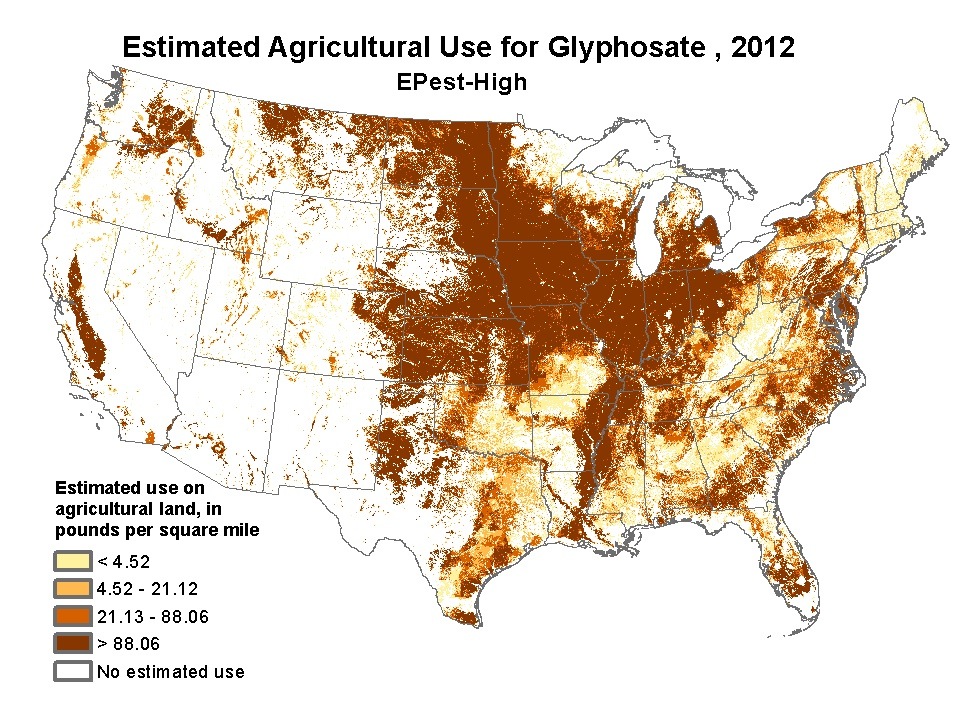
Image above: United State Geological Survey map of the continental states showing extent and intensity of the use of glyphsoates applied to cropland in 2012. Click to enlarge.  From (https://water.usgs.gov/nawqa/pnsp/usage/maps/show_map.php?year=2012&map=GLYPHOSATE&hilo=L).

Glyphosate, the world's most common weed killer, has caused significant concerns over its potential risk to human health, animals, and the environment for several decades. Earlier this month, a US court awarded a groundskeeper $289 million who claimed Bayer AG unit Monsanto's glyphosate-based weed-killers, including Roundup, gave him terminal cancer.

Now, a new report from PNAS alleges that glyphosate may be indirectly killing honey bees around the world, a threat that could potentially also leave a major mark on the global economy.
“We need better guidelines for glyphosate use, especially regarding bee exposure, because right now the guidelines assume bees are not harmed by the herbicide.
Our study shows that’s not true.” said Erick Motta, the graduate student who led the research, along with professor Nancy Moran.
UT News of The University of Texas at Austin says that glyphosate interferes with an important enzyme found in plants and microorganisms, but not in animals, it has long been assumed to be nontoxic to animals, including humans and bees.

However, the latest study reveals that by altering a bee’s gut microbiome — the ecosystem of bacteria living in the bee’s digestive tract, including those that protect it from harmful bacteria — glyphosate jeopardizes its ability to fight infection.

For this study, scientists exposed honeybees to glyphosate at normal levels found on farms. The researchers painted the bees' backs with colored dots so they could be tracked and later recaptured.

Three days later, they saw that the honeybees exposed to glyphosate suffered a significant loss of bacteria in their guts and were more susceptible to infection and death from harmful bacteria.
“Studies in humans, bees and other animals have shown that the gut microbiome is a stable community that resists infection by opportunistic invaders,” Moran said. “So if you disrupt the normal, stable community, you are more susceptible to this invasion of pathogens.”
In recent times, US beekeepers have reported a massive loss of bees or Colony Collapse Disorder (CCD). Millions of bees mysteriously disappeared, leaving farms with fewer pollinators for crops. Officials have been baffled, and the media has been quiet about the bee population collapse.

Explanations for the phenomenon have included exposure to pesticides or antibiotics, habitat loss, and bacterial infections. The latest study now adds herbicides to the list as a possible contributing factor.
“It’s not the only thing causing all these bee deaths, but it is definitely something people should worry about because glyphosate is used everywhere,” said Motta.
Among the nuts, almond growers have the largest need for bee pollination. Bee pollination is worth $15 billion to the US farming industry.

Any sharp change in global bee populations could affect the beef and dairy industries. Bees pollinate clover, hay, and other forage crops. As the bee population dwindles, it increases the cost of feedstock.

That forces inflation into beef and milk prices at the grocery store and ultimately hurts the American consumer. This could then lead to increased imports of produce from foreign countries where bee populations are healthy, further widening the trade deficit.

Couple this with the current trade war and this particular "black swan" - or rather "black bee" - problem, may be just the tipping point that finally forces the US economy to catch down to the rest of the world.


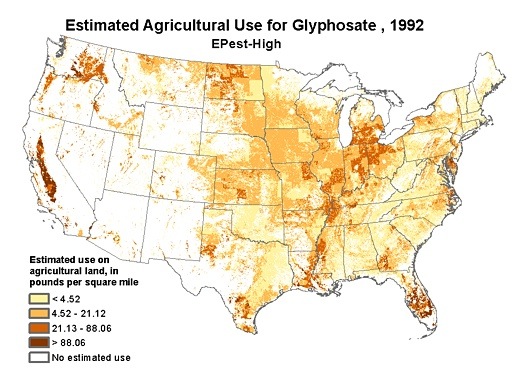
Image above: United State Geological Survey map of the continental states showing extent and intensity of the use of glyphsoates applied to cropland in 1992, twenty years earlier than map above. Note that  at that time the Central Valley in California was the densest and most intense use of glyphosates on food crops.  From (https://water.usgs.gov/nawqa/pnsp/usage/maps/show_map.php?year=1992&hilo=H&map=GLYPHOSATE).

See also:
Ea O Ka Aina: Bayer Beware! 9/11/18
Ea O Ka Aina: Side effect of Monsanto's Roundup 6/24/17
Ea O Ka Aina: Glyphosate harms gut enzyme 6/21/17
Ea O Ka Aina: RoundUp for Breakfast 4/20/16
Ea O Ka Aina: RoundUp carcenogenic in California 9/14/15
Ea O Ka Aina: Roundup Threatens Coral Reefs 12/30/14
Ea O Ka Aina: Word out on Roundup soaked wheat 11/24/14
Ea O Ka Aina: Gluten or Glyphosate Intolerance? 11/18/14
Ea O Ka Aina: Roundup and Lymphoma 6/10/14
Ea O Ka Aina: Roundup and human health 4/25/13
.

Hawaiian bees endangered species

SOURCE: Faith Harding (tophatandscarf@yahoo.com)
SUBHEAD: The decline of these bees could lead to the extinction of the native plants that rely upon them.

By Lauren McCauley on 1 October 2016 for Common Dreams -
(http://www.commondreams.org/news/2016/10/01/bees-peril-first-species-added-endangered-species-list)


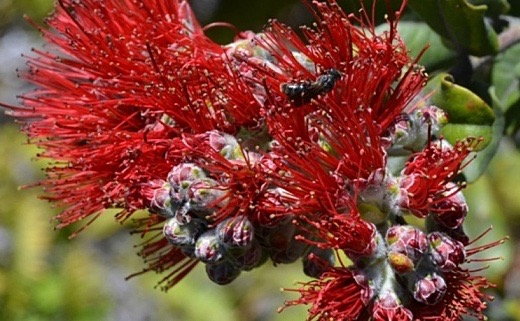
Image above: Hawaii's native yellow-faced bees are small and dark. This one is nestled inside the flower of ohi’a lehua, a native Hawiian shrub. Photo by Matthew Shepherd for the Xerces Society.From original article.

Listing comes amid a national crisis of declining bee populations, which is attributed to an array of causes, including habitat loss, and the widespread use of neonicotinoid pesticides.

Marking a troubling development in the crisis of pollinator decline, the first species of bees were added to the Endangered Species List.

The U.S. Fish and Wildlife Service (USFWS) announced the determined status on Friday for seven types of yellow-faced bees found in the Hawaiian islands.

It comes after a multi-year effort by the invertebrate conservation organization The Xerces Society to gain federal recognition and protection for the threatened bees.

Xerces communication director Matthew Shepard hailed the development as "excellent news for these bees," but added that "there is much work that needs to be done to ensure that Hawaii's bees thrive."

"Unfortunately," he lamented, "the USFWS has not designated any 'critical habitat,' areas of land of particular importance for the endangered bees."

The endangered genus, Hylaeus, commonly called yellow-faced, are the only genus native to Hawaii. Their failure comes amid a national crisis of declining bee populations, including colony collapse disorder, which is attributed to an array of causes, including habitat loss, infection, and the widespread use of neonicotinoid pesticides.

As Shepard wrote earlier, "Hawai'i's yellow-faced bees face many threats, from the loss of habitat due to land conversion, development, and recreation...to the negative impacts of nonnative species, such as wild pigs, bigheaded ants, and invasive plants. Climate change also poses a threat to small populations of these bees."

He further noted that the bees are "critical pollinators of many endangered native Hawaiian plants and the decline of these bees could lead to the extinction of the plants that rely upon them."

The announcement came a week after the USFWS proposed for protection the first bee in the continental U.S., the rusted patched bumble bee, typically found in the upper midwest and northeast.

See also:
Ea O Ka Aina: Morgan Freeman supports bees 9/30/16


.

Morgan Freeman supports bees

SOURCE: Katherine Muzik PHD (kmuzik@gmail.com)
SUBHEAD: Actor converts his 124 acre Mississippi ranch into a giant sanctuary for wild bees.

By Kate DiStacio on 30 September 2016 for Inhabitat -
(http://inhabitat.com/morgan-freeman-converts-his-mississippi-ranch-into-a-giant-sanctuary-for-wild-bees/)


Image above: Morgan Freeman on Tonight Show shortly after becoming a beekeeper. From original article.

Morgan Freeman has played so many roles during his long Hollywood career it’s difficult to keep track, but his newest role may prove to be his most important. The actor has turned his 124-acre Mississippi ranch into a sanctuary for wild bees, in an effort to help support population growth for the little pollinators.

Freeman started beekeeping in 2014 with 26 hives of buzzing babies, and he explained that tons of bee-friendly plants have been planted on his property.

Back in 2014, Freeman talked to Jimmy Fallon about his new hobby during an appearance on “The Tonight Show.”

Having taken up beekeeping just two weeks prior to the interview, the actor described how well he and his bees get along. The actor told Fallon that he doesn’t even need to wear a protective beekeeper’s suit or veil when tending to his precious pollinators, suggesting that he has reached a level of skill and ease akin to his on-screen performances.

Freeman didn’t start keeping bees because of a sweet tooth, but rather as a direct response to the mass bee die-offs that have been threatening the survival of wild bees for the past several years. The actor recognized the opportunity to make a difference through personal action, so he imported 26 hives full of bees from Arkansas and started feeding them sugar water.

Freeman said he doesn’t wear the beekeeper’s hat and veil because the bees do not sting him, joking that the protective gear is “for people who can’t resonate” with the bees. When Fallon suggested Freeman had become “at one with the bees,” the actor couldn’t help but agree.

It’s difficult to measure what kind of an impact Freeman’s efforts may have on the larger bee populations in North America, but his hobby is an inspiring gesture of goodwill toward those tiny living creatures that are often taken for granted.

See also:
Ea O Ka Aina: Bayer &  Syngenta Poisoning Bees 9/22/16

.

Bayer & Syngenta poisoning bees

SUBHEAD: Bayer and Syngenta criticized for secrecy after unpublished research linked high doses of their products to damage to bee colonies.

By Damian Carrington on 22 September 2106 for the Guardian -
(https://www.theguardian.com/environment/2016/sep/22/pesticide-manufacturers-own-tests-reveal-serious-harm-to-honeybees)


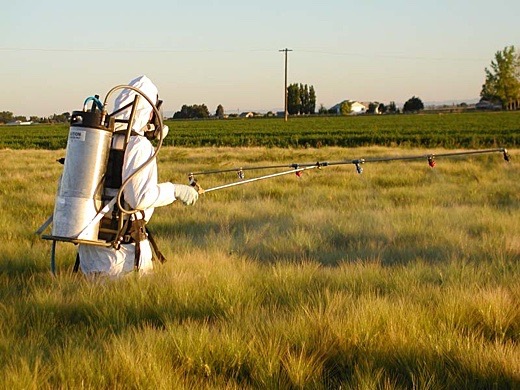
Image above: Man spraying barley with Syngenta's thiamethoxam. From (http://wrir4.ucdavis.edu/PHOTOS/CONDUCT/pages/Barley%20thiamethoxam%20ID.htm).

Unpublished field trials by pesticide manufacturers show their products cause serious harm to honeybees at high levels, leading to calls from senior scientists for the companies to end the secrecy which cloaks much of their research.

The research, conducted by Syngenta and Bayer on their neonicotinoid insecticides, were submitted to the US Environmental Protection Agency and obtained by Greenpeace after a freedom of information request.

Neonicotinoids are the world’s most widely used insecticides and there is clear scientific evidence that they harm bees at the levels found in fields, though only a little to date showing the pesticides harm the overall performance of colonies. Neonicotinoids were banned from use on flowering crops in the EU in 2013, despite UK opposition.

Bees and other insects are vital for pollinating three-quarters of the world’s food crops but have been in significant decline, due to the loss of flower-rich habitats, disease and the use of pesticides.

The newly revealed studies show Syngenta’s thiamethoxam and Bayer’s clothianidin seriously harmed colonies at high doses, but did not find significant effects below concentrations of 50 parts per billion (ppb) and 40ppb respectively. Such levels can sometimes be found in fields but concentrations are usually below 10ppb.

However, scientists said all such research should be made public. “Given all the debate about this subject, it is hard to see why the companies don’t make these kinds of studies available,” said Prof Dave Goulson, at the University of Sussex. “It does seem a little shady to do this kind of field study — the very studies the companies say are the most important ones — and then not tell people what they find.”

Prof Christian Krupke, at Purdue University in Indiana, said: “Bayer and Syngenta’s commitment to pollinator health should include publishing these data. This work presents a rich dataset that could greatly benefit the many publicly funded scientists examining the issue worldwide, including avoiding costly and unnecessary duplication of research.”

Ben Stewart, at Greenpeace, said: “If Bayer and Syngenta cared about the future of our pollinators, they would have made the findings public. Instead, they kept quiet about them for months and carried on downplaying nearly every study that questioned the safety of their products. It’s time for these companies to come clean about what they really know.”

Syngenta had told Greenpeace in August that “none of the studies Syngenta has undertaken or commissioned for use by regulatory agencies have shown damages to the health of bee colonies.” Goulson said: “That clearly contradicts their own study.”

Scientists also noted that the companies have been previously been critical of the research methods they themselves used in the new studies, in which bees live in fields but are fed sucrose dosed with neonicotinoids.

In April 2016, in response to an independent study, Syngenta said: “It is important to note that the colony studies were conducted by directly feeding colonies with spiked sucrose, which is not representative of normal field conditions.”

In 2014, commenting on another independent study, Bayer told the Guardian the bees “are essentially force-fed relatively high levels of the pesticide in sugar solutions, rather than allowing them to forage on plants treated with” pesticide.

“If someone had done this type of study and found harm at more realistic levels, the industry would have immediately dismissed it as a rubbish study because it was not what happens naturally to bees,” said Goulson. “So it is interesting that they are doing those kinds of studies themselves and then keeping them quiet.”

Utz Klages, a spokesman for Bayer, said: “The study [Bayer] conducted is an artificial feeding study that intentionally exaggerates the exposure potential because it is designed to calculate a ‘no-effect’ concentration for clothianidin.

lthough the colony was artificially provided with a spiked sugar solution, the bees were allowed to forage freely in the environment, so there is less stress — which can be a contributing variable — than if they were completely confined to cages. Based on these results, we believe the data support the establishment of a no-effect concentration of 20ppb for clothianidin.”

He said a public presentation would be made at the International Congress of Entomology next week in which the new results would be discussed.

A spokesman for Syngenta said: “A sucrose-based mechanism was used on the basis that it was required to expose bees artificially to thiamethoxam to determine what actual level of residue would exert a toxic effect.”

Given the lower concentration usually found in fields, he said: “The reported ‘no adverse effect level’ of 50ppb indicates that honey bee colonies are at low risk from exposure to thiamethoxam in pollen and nectar of seed treated crops. This research is already in the process of being published in a forthcoming journal and is clearly already publicly available through the FOI process in the US.”

Matt Shardlow, chief executive of conservation charity Buglife, said: “These studies may not show an impact on honeybee health [at low levels], but then the studies are not realistic. The bees were not exposed to the neonics that we know are in planting dust, water drunk by bees and wildflowers, wherever neonics are used as seed treatments. This secret evidence highlights the profound weakness of regulatory tests.”

Researchers also note that pollinators in real environments are continually exposed to cocktails of many pesticides, rather than single chemicals for relatively short periods as in regulatory tests.


.

Monsanto's Bizzaro World

SUBHEAD: How the most evil corporation in the world gets it completely backwards when it come to the truth.

By Juan Wilson on 13 August 2016 for Island Breath -
(http://islandbreath.blogspot.com/2016/08/monsantos-bizzaro-world.html)


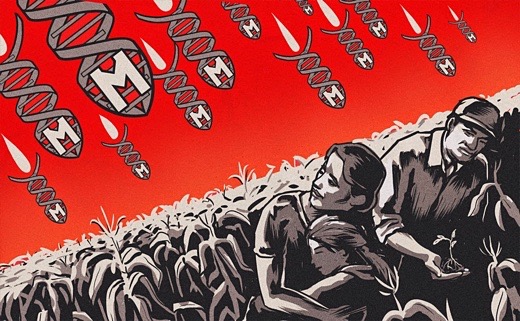
Image above: Monsanto's genetic hellstorm on food security and self reliance. From (http://www.activistpost.com/2015/05/shocker-court-document-asserts-hawaii.html).

About a week ago I was scrolling through an article at www.ZeroHedge.com for news few others are reporting. I was doing this through my iPod6 at 3:30am. That's when I usually gathering possible stories from various sites that are getting out at the start of business on the US East Coast.

ZeroHedge is a commercial site with plenty of ads inserted into each article. Often ads are targeted to you based on Google searches you might have done or purchases completed recently. But the ads in the article I was reading were from one company I have had no dealings with... MONSANTO... specifically from MonsantoHawaii.com.

The gist of the contents of the ads were public relations pitches for how many wonderful jobs Monsanto was bringing to Hawaii. How Monsanto was restoring the health of the agricultural industry in Hawaii.

These ads all included the images like one of a tall, young, healthy Hawaiian man standing among  green rows of crops as if it were a small healthy cornfield in Indiana. The pitch was mind boggling effort to show how Monsanto was either making a safe environment for bees; or encouraging biodiversity of the environment, or saving habitat for monarch butterflies.

Welcome to Monsanto's Bizzaro World where lies are the truth and the truth is a lie. The real truth is that Monsanto has had a deep public relations problem that goes back decades to the 1960's with the disaster with Agent Orange. These new internet ads are an attempt to whitewash the corporation's image once again, like it back in 2014 when the Saint Louis Dispatch reported:
It’s part of an effort at Monsanto to improve the St. Louis-based company’s image. Earlier this year the Harris Poll on corporate reputations ranked Monsanto third worst in the country, just behind BP.
One of the ads Monsanto produced was this television spot titled "Dinner's Ready: Let's Talk About Sustainable Food". Don Draper of Mad Men could not have done it better.

"It's time for a bigger discussion about sustainable food. Because growing enough for a growing world, and doing it in a sustainable way, requires a wide range of ideas and solutions. Pull up a chair. Be part of the conversation at Discover.Monsanto.com."


Video above: Monsanto's Dinner's Ready ad released November 5th 2014. From (https://youtu.be/c6hY5-zcC9g).

Here are some examples of pure bullshit from the MonsantoHawaii website:

THE  LIE

Monarch Butterflies Flourish at Monsanto Hawaii Farms
 (http://www.monsantohawaii.com/nggallery/thumbnails?p=2824)


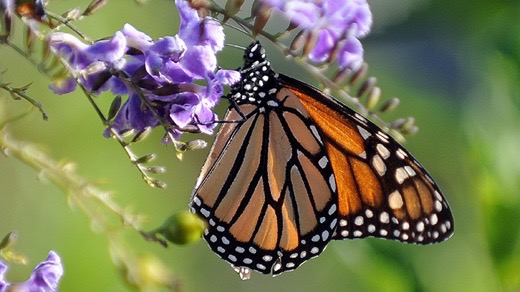
Image above: Stock photo of monarch butterfly from page of www.MonsantoHawaii.com.

Monsanto Hawaii farms have become havens for the monarch butterfly. Through Monsanto’s monarch butterfly program, nearly 100 thriving crown flower plants have been added to the Kunia and Molokai farms in an effort to increase the butterfly’s milkweed habitat and protect biodiversity.

THE TRUTH

Monsanto blamed for disappearance of monarch butterflies
(http://esearchspot.com/WP/monsanto-blamed-for-disappearance-of-monarch-butterflies/)


 As scientists continue to track the shrinking population of the North American monarch butterfly, one researcher thinks she has found a big reason it’s in danger: Monsanto’s Roundup herbicide.

On Wednesday, the World Wildlife Fund announced that last year’s migration – from Canada and the United States down to Mexico – was the lowest it’s been since scientists began tracking it in 1993. In November, the butterflies could be found on a mere 1.6 acres of forest near Mexico’s Monarch Butterfly Biosphere Reserve, a decline of more than 43 percent over the previous year.

Back in 1996, the insects could be found covering a span of 45 acres. Part of the decline can be attributed to illegal logging in Mexico that has decimated the butterfly’s natural habitat, as well as rising temperatures, which threaten to dry out monarch eggs and prevent them from hatching.

Now, though, biologist Karen Oberhauser of the University of Minnesota has also pinpointed the increased use of Monsanto’s Roundup herbicides in the United States and Canada as a culprit.

According to Oberhauser, the use of Roundup has destroyed the monarch butterfly’s primary food source, a weed called milkweed that used to be commonly found across North America.

As the agriculture industry boomed and farmers effectively eliminated the weed from the land in order to maximize crop growth, she was able to catalog a parallel decline in the butterfly’s population.

Speaking with Slate, Oberhauser said that when the milkweed population across the Midwest shrank by 80 percent, the monarch butterfly population decreased by the same amount. With some states such as Iowa losing more than 98 percent of their milkweed population – the weed doesn’t even grow on the edges of farmland anymore – the disappearance of the plant poses a huge risk to the insect’s survival.

“We have this smoking gun,” she told Slate. “This is the only thing that we’ve actually been able to correlate with decreasing monarch numbers.”

For its part, Monsanto noted that herbicides aren’t the only reason the monarch is dying. The company cited studies that showed the butterfly’s population in Michigan and New Jersey were not shrinking, though scientists have dismissed those studies since they focused on areas where milkweed was still prevalent.

Monsanto has come under fire before for the effects of its agriculture-oriented chemicals. As RT reported last year, studies linked Roundup’s main ingredient to diseases such as cancer, autism and Alzheimer’s. In spite of these findings, the Environmental Protection Agency ruled to raise the permissible level of the ingredient that can be found on crops.

Meanwhile, another report in October found a clear link between the pesticides sold by Monsanto in Argentina and a range of maladies, including higher risk of cancer and thyroid problems, as well as birth defects.

As for the plight of the monarch butterfly, the insect is still thriving in Hawaii and countries like Australia and New Zealand. In North America, Oberhauser believes the great migration can still rebound due to the monarch’s high fertility rates (a single female can lay up to 1,000 eggs throughout her life). For that to happen, however, scientists believe the US, Canada and Mexico will have to work together and draft a strategy that will help the insect safely make its way through the three countries.

“I think it’s past time for Canada and the United States to enact measures to protect the breeding range of the monarchs,” monarch expert Phil Schappert of Nova Scotia told the Washington Post“or I fear the spiral of decline will continue.”


THE  LIE

Monsanto Hawaii Provides a Prosperous Habitat for Bees
 (http://www.monsantohawaii.com/nggallery/thumbnails?p=2824)


Image above: Stock photo of honeybee from page of www.MonsantoHawaii.com.

Honey bees may be small, but they have a big job. Available year-round, honey bees are responsible for pollinating the widest range of crops than any other pollinator species. In fact, the honey bee is responsible for pollinating one-third of the world’s crops, including the fruits, vegetables and nuts we enjoy every day. The impact that this tiny creature has on farming and our food system is invaluable.

Monsanto Hawaii is committed to protecting the health of honey bees by taking into consideration the behavior and habitats of bee populations in our daily operations.


THE TRUTH

Monsanto RoundUp blamed for harming honey bees
(http://www.examiner.com/article/new-study-shows-honeybees-harmed-by-herbicide-used-on-gmo-crops)


Image above: Dead honey bee. (https://twitter.com/gmwatch/status/629261451052630016)

One of every three bites of food we eat is from a crop pollinated by honeybees.

Yet, over the past decade bee populations have been on a rapid decline. The National Agriculture Statistics Service has reported a drop in numbers from more than 5 million to less than 2.5 million honeybees. Scientists have dubbed the phenomenon Colony Collapse Disorder, or CCD, and have been searching frantically for a cause.

A new study shows that glyphosate, the active ingredient in Monsanto's Roundup herbicide, can disrupt learning behaviors in honeybees and severely impair long-term colony performance.

Glyphosate is commonly used in conjunction with genetically modified organisms, or GMOs, which have been engineered in a lab to survive massive applications of the herbicide. The most common herbicide-tolerant GMOs grown in the United States include corn, soy, and alfalfa. GMOs were first allowed into the food chain in the late 1990s.

With the ability to blanket their fields in glyphosate, many US farmers have abandoned hand-weeding and controlled applications of the herbicide altogether. This has lead to a 527 million pound increase in the use of the chemical over the past decade.

Glyphosate's toxicity is compounded by its persistence in the environment. Many studies show that glyphosate remains, chemically unchanged in the environment, for periods of up to a year.

Recent research suggests that even when glyphosate binds to soil particles, it will cyclically "desorb" or lose its attraction to soil and become active again. A study by the US Geological Survey found glyphosate in nearly 70% of rivers and streams they tested in the Midwest.

The scientists who conducted the new study used field-realistic levels of glyphosate, similar to what honeybees may encounter on a farm growing GMOs. They found that learning behavior and short-term memory retention decreased significantly compared with the control groups.

And since bees don't die immediately when exposed to glyphosate, they bring the chemical back to the hive, where larvae come into contact with it.

This means new bees will likely have lower overall foraging rates, which could have long-term negative consequences on colony performance. In fact, it could lead to the disappearance of the colony altogether.

Although the creation of GMOs was initially hailed as a way to increase crop production and feed a hungry world, the loss of pollinators like the honeybee will have disastrous effects on the global food supply.

According to the United Nations Environment Programme, of the 100 crops that provide 90% of the world's food supply, 71 are pollinated by bees. In the United States alone, the value of crops pollinated by honeybees is estimated to be worth more than $20 billion annually.

Commercial beekeepers across the country are suffering astronomical hive losses, severely crippling their ability to meet pollination needs for a variety of crops. In fact, beekeepers have reported average annual losses of 40-50%, with some as high as 100%.

Even as honeybee colonies collapse, the US Environmental Protection Agency is set to approve the use of a new combination of glyphosate with an even more powerful agrichemical known as 2,4-D. But instead of helping farmers meet increasing demand, expanded use of the chemical could backfire.

Without pollinators, the entire backbone of the US agricultural system would collapse, leaving grocery store shelves empty and residents without access to affordable, healthy food.

In many ways, the plight of the honeybee is a warning sign of the aftermath of chemically-intensive modern agriculture.

Beekeeper Zac Browning, whose commercial operation spans three states, laments that "we're just about tapped out."

"Without some real action we'll see this industry dwindle away."


THE  LIE

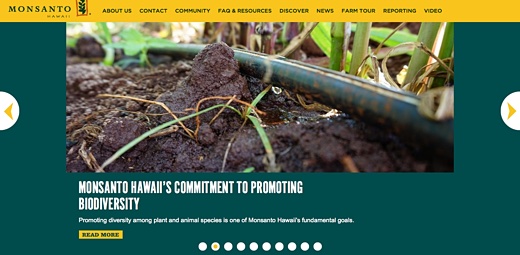
Monsanto Hawaii's Commitment to Promoting Biodiversity
 (http://www.monsantohawaii.com/monsanto-hawaiis-commitment-to-promoting-biodiversity/)


Image above: Incoherent photo of chemical drip system on page of www.MonsantoHawaii.com.

Promoting diversity among plant and animal species is one of Monsanto Hawaii’s fundamental goals. Short for biological diversity, biodiversity is the scientific term used to describe the variety of life on earth and the way that species interact with each other and their environment. Biodiversity ensures the viability of ecosystems, which satisfies life’s basic needs like food, water, fuel and shelter.

“Biodiversity is critical to the health and stability of our ecosystems,” said Dan Clegg, business and operations lead at Monsanto Hawaii. “As farmers, we are committed to collaborating with conservation entities and implementing programs that help our crops thrive by encouraging a diverse ecosystem of flora and fauna on our farms.”

A healthy ecosystem provides an environment that supports activities such as pollination, seed dispersal, climate regulation, water purification, nutrient cycling and management of pests. 


THE TRUTH

More Monsanto Herbicide = Less Biodiversity 
(http://www.ucsusa.org/food_and_agriculture/our-failing-food-system/genetic-engineering/increasing-herbicide-use.html#.V6-6oo4nqe8)


(http://stephennowers.photoshelter.com/image/I0000SeDdqKob2t0)


Monsanto’s proposed solution is to develop and seek regulatory approval for new engineered herbicide-tolerant crops to augment Roundup Ready crops. Predominant among these new engineered crops are those with resistance to two of the oldest herbicides, 2,4-D and dicamba.

These herbicides may be more harmful in some respects than glyphosate. Both become volatile after application, which means they can spread to nearby wild vegetation—important for biodiversity and natural pest control—and to other susceptible crops.

There is also evidence that 2,4-D may increase the risk of some types of cancer.

More Herbicide = Less Biodiversity = More Insecticide

Because of the volatilization problem, increased use of the old herbicides may also harm neighboring crops that are not resistant to them—including locally grown fruits and vegetables.

A recent article estimates that risk to plants surrounding sprayed fields is from 75 to 400 times greater for the older herbicides than for glyphosate.  The industry is working on formulations of these herbicides that may be less volatile, but that is unlikely to eliminate the problem—especially because the use of these herbicides is projected to increase tenfold.

Damage to plant biodiversity near crop fields may also reduce the abundance and diversity of beneficial organisms that thrive in those habitats (but not in monoculture crop fields). Recent research has shown that when agricultural landscapes are simplified by the reduction of plant and beneficial organism diversity, much more chemical insecticide is needed to control pest insects.

So if the volatilization problems are not eliminated, this “solution” to glyphosate resistant weeds may make matters worse, and may also lead to increased insecticide use—and possibly greater risk to people, especially farmers and farm workers.


.

Pesticides are killing bees in Greece

SUBHEAD: It seems that Greek people have a place in the colony collapse disorder puzzle, too.

By Maryam Henein on 2 August 2015 for TruthOut -
(http://www.truth-out.org/news/item/32138-bees-in-greece)
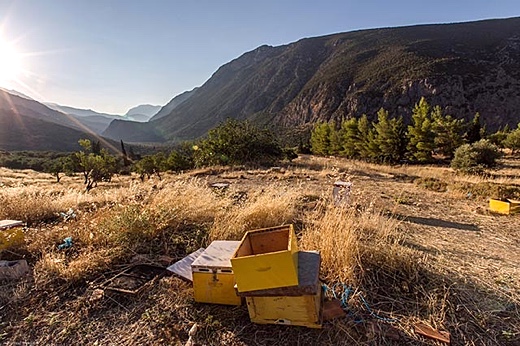

Image above: Abandoned bee hives boxes lay in the grass near an ancient trail that connected the port of ancient Kirra with the Oracle of Delphi. Photo by Jan Wellmann. From original article.

The hot topic across global financial markets at the moment is Greece. People there are experiencing monetary woes, but it seems like their honeybees aren't doing too well either. Systemic pesticides are increasingly causing bee losses, and many would argue that the country now suffers from colony collapse disorder as well.

The air smells of smoke and lemons, and the cicadas chirp steadily as I come upon 16 beehives clustered together in a dry field. What I've just discovered is mere steps away from Demokritos, the National Centre for Scientific Research in Athens, the largest multidisciplinary research institute in Greece. Every so often, pagoda, pine and olive trees sway gently in the breeze, but overall the climate in Attica, the historic region that encompasses the capital, is hot and arid.

The scent in the air is coming from lemon balm leaves, which associate researcher and apiculturist, Dr. Sofia Gounari, has placed in her smoker to calm the bees. It's an attractive aroma to the virgin sisters of toil because it's similar to the secretions they give off when communicating with one another, she explains. No wonder lemon balm's official name is Melissa officinalis; Melissa is Greek for "honeybee."

"In the past, beekeepers added lemon juice in melted wax to attract swarms," says the 52-year-old. Working at the Institute of Mediterranean Forest Ecosystems, Gounari has agreed to rendezvous with me as I explore the state of bees and beekeeping in Greece. It's the day of Greece's ultimately pointless referendum, and Gounari remarks that it's actually good to be in the bee yard today, thinking of nature rather than the country's future and the terms of Greece's EU bailout deal.

When I ask her if we can look at the bees, she expresses concern about my attire: a casual combination of shorts and a tank top.

But I assure her that I will be fine with only a veil and actually welcome a sting or two as I regard the venom as medicinal. I just don't like getting stung in the face since my face swells up beyond recognition.

With the help of a hive tool, she pries a few frames out so we can observe the capped brood and honey flow. She gestures for me to try some honey and before I gently poke my finger in the sticky wax, I silently thank the bees.

Unfortunately Gounari, who has been beekeeping for three decades, didn't harvest much honey this year due to bee losses.

"We've had a lot of problems with pesticides these last two years in all of Attica, mostly in the south," says Gounari, who also transported another 10 beehives on fir trees in Menalo Mountain in Central Peloponnesus. Incidentally, this year's crop from Menalo, near Tripoli, was the worst in many years, due to the poor weather in the mountains.

"Because of systemic pesticides?" I ask. She nods. The pesticides are just one of the challenges troubling beekeepers in Greece, who are struggling to carry on the country's ancient legacy of apiculture in the face of modern toxins.

The Ancient History of Beekeeping in Greece
Apiculture in Greece dates back to antiquity and is part of the country's legacy.

Legend has it that the Greek god of apiculture, Aristaeus, was the son of Apollo and the huntress Cyrene. According to Greek mythology, Aristaeus was born in the palaces of Libya, North Africa, where nurses dropped nectar and ambrosia on his lips, turning him into an immortal. Nymphs taught him useful arts and mysteries like how to curdle milk for cheese and tame the Goddess' bees to stay in hives.

In the ancient city of Knossos a sign reads: Pasi Theis Meli - "Honey Is Offered to All Gods." Honeybees were so revered that they were even etched on Greek coins.

In 322 BC, Aristotle, the Greek philosopher and scientist, was the first person recorded as having studied bees, and it is said that Pythagoras and his followers used honey as their main source of food. Meanwhile melikraton - a thick mixture of milk and honey that's been mentioned in the Odyssey - was viewed as sacred and imbibed on special occasions. The carved stone that channeled the vapors of the Oracle of Delphia was dome-shaped like a beehive, and legend even asserts that the second temple at Delphi was constructed entirely by bees.

Contemporary beekeepers in Greece are keeping alive the country's reverence for honey and hives. There are a total of 1.5 million beehives in all of Greece. In fact, the country ranks second in the world (after Hungary) when it comes to apicultural density: about 11.1 beehives per km.

Meanwhile, golden liquid flows in abundance in this country, free of genetic modification and gleaned from vast, uncultivated lands. All Greek honey is, by default, GMO-free, given that genetically modified crops are prohibited from being grown in the country.

And, I'd venture to say that every Greek home has honey. Greeks consume the largest amount of honey per person in all of Europe - 1.620 kg per year. The country produces about 15,000 to 16,000 tons of honey annually, making it the second-largest honey producer in Europe, after Spain.
"Honey is part of the Mediterranean diet," said Katerina Karatasou of the Federation of Greek Beekeepers' Associations. "It's a superfood with many advantages for health."

In Greece, more than 60 percent of the honey comes from pine and fir (pefko and  elato), and what is fascinating here is that an insect called Marchinalia hellenica feeds on the trees by sucking the sap, and then the excess sugary substances that are produced are then collected by bees (honeydew honey). Once processed by the bees, it is almost indistinguishable from other honey, apart from the ratio of different sugars, plus it has a stronger taste and darker color.

Another 10 percent of the country's honey comes from thyme, which is rich in copper and boron and considered to have tonic and antiseptic properties, wonderful for the prevention and fighting of infections from peptic and respiratory diseases.

The rest comes from chestnut, cotton, heather, oranges and a great variety of wild herbs and flowers. The aroma, the taste, and the viscosity of Greek honey are superb.

An Unexpected Effect of the Athens Olympics
Back in 2004, as Athens prepared to host the summer Olympics, organizers decided to go all out by importing Canary palm trees from North Africa for decoration and shade.

Unfortunately, the red palm weevil - an insect that slowly munches on the palm until it kills its host - hitched a ride to Greece as well. Soon after that a horticulturalist spotted the first unfamiliar weevil in a palm tree all the way in Hersonissos, Crete. By 2006, the red palm weevil had infested palm trees across Greece, from Crete to Rhodes to Attica and beyond.

As a result many hotels and municipalities went mad and started spraying chemicals at will, including neonics, Gounari said.

Eventually all the trees died, including many of the indigenous palm trees like the endangered Cretan Palm. But it got worse: The neonicotinoids also caused huge bee losses, especially to honey producers in the region of Attica. The die-off cost local beekeepers losses of around 50 percent.

"I lost many beehives from the spraying of palm trees with neonicotinoids in the area around the institute," Gounari said. "Now that all the trees are dead, there's some relief from the toxins directly in the city."

Greece Says "Oxi" to a Ban on Neonics
It's 2012, and based on an assessment by the European Food Safety Authority, the European Commission decides to temporarily restrict the use of three neonicotinoids - clothianidin, imidacloprid and thiamethoxam, which are considered harmful to bee health. At the time, 15 member states - including France and Germany - vote in favor of the restrictions, four abstain and eight vote against the ban, including the UK, Italy, Hungary and Greece.

"The Greek vote was a major disappointment to us and we fail to understand it," stated the Federation of Greek Beekeepers' Associations, which is made up of about 65 beekeeping associations.

According to Andreas Thrasivoulou, a professor of beekeeping at Aristotle University in Thessaloniki, the Ministry of the Environment was informed of the damage due to the use of the harmful pesticides by both professional and scientific organizations, as well as ordinary beekeepers and political parties.

"The ministry was fully aware of the problem," says Thrasivoulou. "However, instead of listening to us, they preferred to listen to the companies that produce the pesticides."

Undoubtedly, the decision had to do with dollar bills and keeping the pharmaceutical companies happy, says Gounari. Meanwhile, honeybees and human beings are defenseless victims of the profiteering of large agricultural companies.

"Not banning the pesticides does not help agriculture. It does not help biodiversity, it does not help humans and insects. No one benefits from bees dying," says Elena Danali of Greenpeace Greece.

To defend their position, sources from the Ministry of Agricultural Development maintained that the European Food Safety Authority report did not contain sufficient data and that a mass extinction of bees, due to the use of the specific systemic pesticides, had not been registered in Greece.

As far as data: Based on the results of more than 1,000 international studies, scientists with the Task Force on Systemic Pesticides have concluded that neonics are a major factor in bee mortality. The pesticides disorient the bees, making it more difficult for these flying insects to navigate, forage for pollen and reproduce in the hives.

In the end, a ban was instated for the treatment of seeds, soil (granules), and foliar applications for a period of two years on corn, cotton, sunflower and rapeseed, but not including individual use in gardens and orchards, e.g. oranges. It expired in December of 2014. Ironically, manufacturers Bayer and Syngenta are now suing the European Commission and asking for reimbursement for lost profits. (Because apparently a gazillion dollars just isn't enough.)

"We are also trying to defend our reputation, which was significantly harmed, particularly considering the significant investments we have made over a number of years in bee health and sustainable agriculture in general," added a Bayer company spokesman, defending the use of legal action for a temporary measure that has since expired.

Still, many groups are hoping to renew the ban, this time attempting to restrict all six systemic pesticides rather than the aforementioned three.

Unemployed Youth Turn to Beekeeping
Greece has an estimated 25,000 beekeepers; about 1,500 of them make their living solely from the trade while about 85 percent use it to supplement their income. Meanwhile, about 7,000 beekeepers own more than 150 hives.

According to Gounari, there's also been a wave of young adults taking up the profession, as of late.
"That's great," I respond with enthusiasm.

"No, it's not great," she interjects. "We have an economic crisis, and people think they can earn money easily because they've seen beekeepers go on TV, saying that you can collect 30 to 50 kilos of honey and sell it for 10 to 15 euros per kilo. Beekeeping is not easy and it's not for everyone. Money is not a reason to become a beekeeper."

Currently, the unemployment rate for Greek youth hovers around 53 percent, so naturally, some are seeking solutions in more creative ways, said Karatasou of the Federation of Greek Beekeepers' Associations. She tells wannabe beekeepers that they can't be allergic, they can't be afraid, and most importantly, they can't expect to make any money … at least not for the first three years in the business.

Beekeeping is indeed not easy. In Greece, beekeepers have to move their hives four to six times a year following the nectar or honeydew flow and the harvests are poor: 12-15 kilos on average, nothing near the 30-40 kilos we hear in other European countries.

Are Bee Deaths the Beekeepers' Fault?
Systemic pesticides, especially Gaucho (imidacloprid), have been used in Greece mainly on cotton, sunflower and oranges for the past five or six years. While varroa destructor, a parasitic mite that attacks honey bees, is certainly an issue, many contend that nicotine-based pesticides are the main problem, compromising the bees' immune system so that they cannot fend for themselves. (Incidentally while Greece's economy is anchored in tourism and shipping, its main exports are fish and cotton).

"We never had losses of more than seven to 10 percent, which is considered acceptable. But now with the advent of neonics, the losses have increased considerably, and they are high in specific periods of the year, not only just after winter," explains biologist and researcher Dr. Fani Hatjina of the Division of Apiculture, of the Hellenic Agricultural Organization DEMETER. Hatjina has been studying the effect of pesticides and bee losses since 2007.

Together with other researchers, she has concluded that imidacloprid in sub-lethal doses has a significant detrimental effect in different aspects of bees' physiology, behavior and health (e.g. in orientation, respiration, cardiac rhythm, food glands' size, thermoregulation, immune system and hygienic behavior).

Since the country has lost bees due to neonics, I asked whether beekeepers have witnessed colony collapse disorder (CCD).

"No, we don't have CCD, we have bad beekeepers," insists Gounari. While she agrees that neonics are slowly killing bees, she believes that the main issue is overworking the bees and abusing hives by treating them as a commodity.

Another beekeeper I spoke to claims Greece doesn't have colony collapse disorder because the country is still void of genetically modified foods.

This idea that beekeepers - rather than colony collapse disorder - are to blame for the rising losses in the bee population was also prevalent in France, circa 1995, and the United States, circa 2006. When bees in those countries first started dying en masse, the first culprit was the beekeeper.

Colony Collapse Disorder
Many beekeepers and scientists don't agree with Gounari about the cause of bee deaths in Greece.
"It's easy to assume that it's bad beekeepers, but there are signs of CCD. No doubt about that," says John Phipps, editor of The Beekeepers Quarterly. In 2010, Phipps went from 40 to 28 hives and has witnessed very unusual bee behavior as well as "typical signs of CCD," like abandoned hives, with only a small batch of brood left behind and sometimes a queen.

Hatjina has also gotten increased reports of colonies disappearing and the life spans of queen bees dropping to as low as two weeks, instead of two to three years, and these events are increasing year after year. However due to being short-staffed, she is unable to keep tabs on the losses. Her studies have also shown that when bees come into contact with neonics, they are more vulnerable to diseases such as Nosema and AFB.

One significant difference is that the failing hives in Greece can recover more easily than those in the United States because they can be easily moved to areas without poisons. Keep in mind that only 29 percent of Greece land is farmed. Greece doesn't have huge monocultures, so wild flora around the contaminated cultivations acts as a sort of 'saver' for the bees; therefore, sometimes the adverse effects are diluted. Hatjina's new research also shows that the colonies are trying to detoxify themselves. Their success depends of the dose of the neonicotinoid used.

With all this said, beekeepers can do a better job of keeping bees. While an increasing number of young and old beekeepers use nontoxic oxalic acids and essential oils against miticides, many others still use toxins such as pyrethroids, even though varroa mites have grown resistant to it. They are advised to follow proper instructions and only treat during brood-less periods, but still even limited use of the toxins filter into the wax and honey. Meanwhile, Phipps has noticed that many Greek beekeepers buy Chinese wax, because it's cheap.

Raising Consciousness on the Importance of Bees
During the last 10 years, official beekeeping seminars have proved very helpful in passing new knowledge and methodology to Greek beekeepers, says Hatjina.

Meanwhile, organizations like the Federation of Greek Beekeepers' Associations, the Division of Apiculture in Chalkidiki, and Greenpeace Greece are also actively attempting to link farmers with beekeepers and teach them about the detrimental effects of neonics and the importance of honeybees. But unfortunately, many are not so sympathetic to the cause. They don't realize the extent of the damage because the effects are sub-lethal.

"Unfortunately not all of them can hear that bees are the solution and not the problem," says Delani. "Some farmers, the more conventional ones, don't like bees or don't understand their vital role in pollination. … Of course, there are also organic and progressive farmers that are making positive contributions."

Greenpeace Greece also has a current campaign that aims to educate people about the importance of bees and the dangerous repercussions of systemic pesticides.
So it's not just about farmers and beekeepers.

"I think that people in Greece are aware that the honeybee is a central pillar of the ecosystem," says Karatasou.

It seems that Greek people have a place in the colony collapse disorder puzzle, too. Will the country befriend the bee? We'll have to wait and see.

.

Honeybee Enslavement

SUBHEAD: Honeybee collapse is the result of their enslavement of bees in industrial monoculture farms.

By Allan Christensenon 19 May 2015 for From Filmers to Farmers -
(http://fromfilmerstofarmers.com/blog/2015/may/honeybee-collapse-is-the-result-of-their-enslavement-in-industrial-monocultures/)


Image above: A monoculture of almond trees in California, where 90% of our almonds are grown. Photo by Steve Corey. From original article.

As you may have noticed, last week the media was once again filled with yet another round of collapsing honeybee stories, this time the coverage being about the loss of 42.1 percent of hives in the US over the past year, the second largest die-off on record.

As has been the recurring case though, thanks in part to beekeepers making splits with their hives (creating two hives out of one, in short), hive numbers have actually increased this year in comparison to last year's. This doesn't however mean that the honeybees' health is improving, a quote in the Washington Post giving a bit of the backstory.

What has emerged is a complex set of pressures on managed and wild bee populations that includes disease, a parasite known as the varroa mite, pesticides, extreme weather and poor nutrition tied to a loss of forage plants.

Well, yes and no. While Colony Collapse Disorder (CCD) is fortunately not being singled out this time as the sensationalist bogeyman, the beating around the bush still goes on, effectively clouding over the overarching issue (their poor nutrition is tied to more than just a loss of forage plants, while the "disease" they must deal with is more than just another checkbox on a list). In short, the core of the problem afflicting the majority of honeybees is that they are confined to living out their lives amongst fields of monocultures in the industrial agricultural system.

For starters, with the creation of monocultures encompassing hundreds and sometimes thousands of acres, farms are no longer able to provide the living environment necessary to maintain honeybee colonies, and in many cases even wild pollinators.


Although, say, a large blueberry "farm" may provide an immense supply of flowers for nectar and pollen, being a monoculture means that there is only one plant, and as this sole plant may only flower for a few weeks or even a few days of the year, this doesn't provide enough time for the honeybees to collect their needed supplies for the barren winter months.

Since these monoculture fields are essentially floral deserts for most of the year, to a large extent various native insects – wild pollinators – are similarly unable to exist amongst the dearth of flowers. In fact, there are now parts of China where bees have already gone extinct, requiring apple orchards to employ between twenty and twenty-five people to pollinate a hundred trees, something wild pollinators or a couple of hives worth of bees would normally be able to do.

But rather than being generally seen as an example of bad farming and something to rectify, these circumstances have resulted in a whole new industry of their own, for honeybee pollination has become big business indeed.

As stated by Jeff Pettis, head of the US federal government’s bee research laboratory in Beltsville, MD, and co-author of the recent beehive survey.

If beekeepers are going to meet the growing demand for pollination services, researchers need to find better answers to the host of stresses that lead to both winter and summer colony losses.

But here lies a large part of the problem. Owing to its status of quasi domestication (I say "quasi" since honeybees aren't really domesticated but rather retain their wildness while inhabiting artificial domains we provide for them), the honeybee has become an ideal pollinator to be shifted around in order to cater to the whims of monocultures. In fact, large beekeepers now make most of their money from "pollination services" rather than from sales of honey or other bee products.

In an area encompassing roughly 17,000 acres in the Fraser Valley of British Columbia, approximately one-fifth of the world's blueberries are grown requiring almost 70,000 hives for pollination, coming from all over B.C. and Alberta. That however pales in comparison to the massive mono-forest of roughly 600,000 acres in the central valley of California that grows about 82 percent of the world's almonds.

In three weeks of February every year, more than 1 million hives (of 2.74 million in the US, down from a peak of about 6 million in the 1950s) make their way from as far away as New England and thirty-eight states in total in order to pollinate the crop.


Image above: Beehives being transported by flatbed truck for pollination. Consider the wind and vibration of transporting a hive at 65mph on a worn-out interstate route. Photo by Robert Thomson. From original article.

Added to by hives flown in from Australia on 747 jumbo jets to supplement struggling hive numbers, what results is a massive bee slum where all sorts of microbes and parasites from around the country get passed around, the bees none the better for it all due to their already compromised immune systems. Why might they be compromised?

Stuck on a diet of almond nectar, or blueberry nectar, or whatever the next crop may be, while the individual nectar and pollen from these crops may be healthy forms of food, honeybees are forced to feed on a homogeneous diet – resembling one where humans eat only bananas for three weeks, then broccoli for one week, carrots for two weeks, and so on. The result is a kind of rotational mono diet that lacks the nutrition provided by a well-rounded diet, exacerbating the malnourished and weakened state that leaves honeybees more prone to disease.

As reported in the journal Bee Culture, a decline in plant diversity could very well be causing a... decline in bee populations. Honeybees that pollinate on a wider variety of plants have a more robust immune system than bees which pollinate on monocrops, even when the monocrops had higher protein content.

One result of all this is that honeybees in the industrial system are routinely treated with antibiotics to combat bacterial infections, to the extent that many bees carry antibiotic resistant bacteria in their guts.

As if that weren't all enough, the honeybees' two sources of food, nectar (which they transform into honey for storage purposes, and which provides them with minerals, vitamins and enzymes) and pollen (which is their excellent source of protein and other nutrients), are just as much a victim of the monoculture mind-set.

Because honey and pollen can command a pretty penny on the market, many beekeepers – particularly the larger ones – actually remove all the honeybees' stores of honey and pollen. Since this leaves the bees with nothing to survive on over the winter, their pollen is then replaced with soy patties, while their honey is swapped for a sugar syrup if not high fructose corn syrup.

Having had their wholesome nutrient-rich (albeit monoculture-sourced) honey and pollen supplemented or even taken away from them, the modern honeybee is often forced to live off a diet that not only puts stress on its digestive systems and compromises its immune systems, but whose equivalency for us humans would be called junk food.

On top of all that, not only then must honeybees cope and live amongst the insecticides necessary for monoculture "farms" and golf courses and suburban lawns and such (be they neonicotinoids or not), but because of their poor health, strips of insecticides are also commonly placed inside hives to kill off Varroa mites and other plagues, which honeybees are now too unhealthy to ward off. In case you need me to spell it out, insecticides kill insects, and yes, honeybees are in fact insects themselves.

So while there is no doubt that CCD and other sensationalist news stories have created the awareness that "like, gee whiz, bees are dying," it would certainly be fair to ponder whether they have done all that much to inform us of the greater problem honeybees – and wild pollinators – must attempt to live amongst.

But truth be told, they largely haven't, for what has instead resulted is an audience that has deferred to a phalanx of "experts," who in true superhero style are expected to save the day with an array of techno fixes that will vanquish CCD and other honeybee problems to the dustbin of history.
 
But in reality, CCD and much else that honeybees suffer from are actually symptoms of a much greater problem, the problem of industrial agriculture. As author Rowan Jacobsen put it in his excellent book Fruitless Fall: The Collapse of the Honeybee and the Coming Agricultural Crisis,

Until local agriculture replaces global agriculture, there will always be another parasite, another virus, another mysterious collapse.


.

Between pesticides and bee deaths

SUBHEAD: Federal scientists have reported harassment when their work conflicts with agribusiness interests.
 
By Raynard Loki on 5 May 2015 for Alternet -
(http://www.alternet.org/environment/usda-silencing-its-own-scientists-bee-killing-pesticide-research)


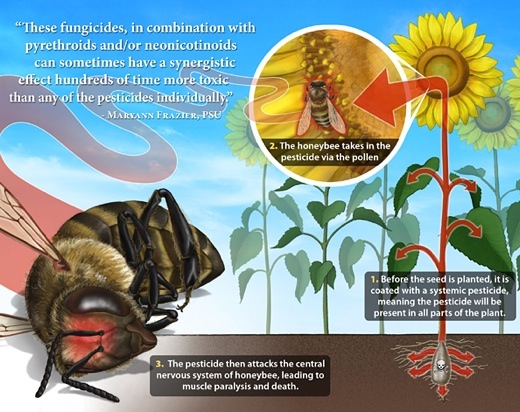
Image above: Illustration by Tony Links of neonicotinoid poisoning of bee. From (http://www.tonylinka.com/scientific/neonicotinoids.html).

Following reports that scientists at the United States Department of Agriculture are being harrassed and their research on bee-killing pesticides is being censored or suppressed, a broad coalition of farmers, environmentalists, fisheries and food-safety organizations urged an investigation in a May 5 letter sent to Phyllis K. Fong, USDA Inspector General.

"The possibility that the USDA is prioritizing the interests of the chemical industry over those of the American public is unacceptable," states the letter, which was signed by more than 25 citizens' groups concerned that a forthcoming report by the White House Task Force on Pollinator Health, which is co-chaired by the USDA, will be compromised.

The signatories include the American Bird Conservancy, Avaaz, Center for Biological Diversity, Center for Food Safety, Farmworkers Association of Florida, Food and Water Watch, Friends of the Earth, Green America, Organic Consumers Association and Sierra Club.

"It is imperative that the American people can trust that their government and its employees are serving their constituents and not the profits of private companies," they wrote. "All of the research that the USDA conducts must maintain scientific integrity and transparency to ensure it is guiding sound policy decisions."

The research in question centers on neonicotinoids, a nicotine-like class of insecticides that impair the neurological systems of insects and which studies have linked to die-offs of bees and monarch butterflies—two key pollinators—as well as birds.

Neonicotinoids have been strongly linked to honey-bee colony collapse disorder (CCD), a syndrome first observed in Germany that has been blamed for massive bee population declines across the globe. In 2013, certain neonicotinoids were banned by the European Union and a few non-EU nations.

The global food system relies on bees to pollinate at least 30 percent of the world's crops. Bees are responsible for pollinating a host of American crops, from apples and almonds to cantaloupes and cucumbers, impacting $15 billion a year in U.S. crops.

In March, Public Employees for Environmental Responsibility (PEER), an environmental activist group supporting local, state and federal researchers, filed a legal petition with the USDA seeking new rules meant to increase the job protection for government scientists and citing censorship and harassment. At least 10 USDA scientists have come under fire for research into farm chemical safety that conflicts with the interests of the agribusiness sector, according to PEER executive director Jeff Ruch.

"They have very little in the way of legal rights and have career paths that are extremely vulnerable," he said. He said the scientific work under scrutiny is the research into the effects of neonicotinoids and glyphosate, the key ingredient in Monsanto's popular Roundup herbicide, which the World Health Organization recently concluded likely causes cancer.

"Your words are changed, your papers are censored or edited or you are not allowed to submit them at all," a senior scientist at the USDA's Agricultural Research Service told Reuters.

“Censorship and harassment poison good science and good policy,” said Lori Ann Burd, environmental health director at the Center for Biological Diversity. "There’s no question that neonicotinoids are killing bees, and it’s long past time for our government to take action.

The European Union has already banned neonicotinoids. The reports that USDA is harassing and suppressing its scientists for doing their jobs instead of using their findings to protect our pollinators are extremely disturbing."

“How can the American public expect USDA to develop a federal strategy that will protect bees instead of pesticide industry profits if it is harassing and suppressing its own scientists for conducting research that runs counter to industry claims?" said Tiffany Finck-Haynes, food futures campaigner with Friends of the Earth.

In April 2014, the group released “Follow the Honey: 7 ways pesticide companies are spinning the bee crisis to protect profits,” a report documenting the deceptive tactics used by agrochemical companies to deflect blame from their chemicals to pollinator declines and stall governmental regulation on neonicotinoids.

The companies named in the report include U.S.-based Monsanto, Switzerland-based Syngenta and Germany-based Bayer, which patented the first commercial neonicotinoid, Imidacloprid, the world's most widely used insecticide.

"If USDA wants to employ a kill-the-messenger approach," said Finck-Haynes, "it will only delay critical action to address the bee crisis that threatens our nation’s food supply."

"It is imperative that the American people can trust that their government and its employees are serving their constituents and not the profits of private companies," they wrote. "All of the research that the USDA conducts must maintain scientific integrity and transparency to ensure it is guiding sound policy decisions."

The research in question centers on neonicotinoids, a nicotine-like class of insecticides that impair the neurological systems of insects and which studies have linked to die-offs of bees and monarch butterflies—two key pollinators—as well as birds. Neonicotinoids have been strongly linked to honey-bee colony collapse disorder (CCD), a syndrome first observed in Germany that has been blamed for massive bee population declines across the globe. In 2013, certain neonicotinoids were banned by the European Union and a few non-EU nations.

The global food system relies on bees to pollinate at least 30 percent of the world's crops. Bees are responsible for pollinating a host of American crops, from apples and almonds to cantaloupes and cucumbers, impacting $15 billion a year in U.S. crops.

In March, Public Employees for Environmental Responsibility (PEER), an environmental activist group supporting local, state and federal researchers, filed a legal petition with the USDA seeking new rules meant to increase the job protection for government scientists and citing censorship and harassment. At least 10 USDA scientists have come under fire for research into farm chemical safety that conflicts with the interests of the agribusiness sector, according to PEER executive director Jeff Ruch.

"They have very little in the way of legal rights and have career paths that are extremely vulnerable," he said. He said the scientific work under scrutiny is the research into the effects of neonicotinoids and glyphosate, the key ingredient in Monsanto's popular Roundup herbicide, which the World Health Organization recently concluded likely causes cancer.

"Your words are changed, your papers are censored or edited or you are not allowed to submit them at all," a senior scientist at the USDA's Agricultural Research Service told Reuters.

“Censorship and harassment poison good science and good policy,” said Lori Ann Burd, environmental health director at the Center for Biological Diversity. "There’s no question that neonicotinoids are killing bees, and it’s long past time for our government to take action. T

he European Union has already banned neonicotinoids. The reports that USDA is harassing and suppressing its scientists for doing their jobs instead of using their findings to protect our pollinators are extremely disturbing."

“How can the American public expect USDA to develop a federal strategy that will protect bees instead of pesticide industry profits if it is harassing and suppressing its own scientists for conducting research that runs counter to industry claims?" said Tiffany Finck-Haynes, food futures campaigner with Friends of the Earth.

In April 2014, the group released “Follow the Honey: 7 ways pesticide companies are spinning the bee crisis to protect profits,” a report documenting the deceptive tactics used by agrochemical companies to deflect blame from their chemicals to pollinator declines and stall governmental regulation on neonicotinoids.

The companies named in the report include U.S.-based Monsanto, Switzerland-based Syngenta and Germany-based Bayer, which patented the first commercial neonicotinoid, Imidacloprid, the world's most widely used insecticide.

"If USDA wants to employ a kill-the-messenger approach," said Finck-Haynes, "it will only delay critical action to address the bee crisis that threatens our nation’s food supply."

"It is imperative that the American people can trust that their government and its employees are serving their constituents and not the profits of private companies," they wrote. "All of the research that the USDA conducts must maintain scientific integrity and transparency to ensure it is guiding sound policy decisions."

The research in question centers on neonicotinoids, a nicotine-like class of insecticides that impair the neurological systems of insects and which studies have linked to die-offs of bees and monarch butterflies—two key pollinators—as well as birds.

Neonicotinoids have been strongly linked to honey-bee colony collapse disorder (CCD), a syndrome first observed in Germany that has been blamed for massive bee population declines across the globe. In 2013, certain neonicotinoids were banned by the European Union and a few non-EU nations.

The global food system relies on bees to pollinate at least 30 percent of the world's crops. Bees are responsible for pollinating a host of American crops, from apples and almonds to cantaloupes and cucumbers, impacting $15 billion a year in U.S. crops.

In March, Public Employees for Environmental Responsibility (PEER), an environmental activist group supporting local, state and federal researchers, filed a legal petition with the USDA seeking new rules meant to increase the job protection for government scientists and citing censorship and harassment.

At least 10 USDA scientists have come under fire for research into farm chemical safety that conflicts with the interests of the agribusiness sector, according to PEER executive director Jeff Ruch.

"They have very little in the way of legal rights and have career paths that are extremely vulnerable," he said. He said the scientific work under scrutiny is the research into the effects of neonicotinoids and glyphosate, the key ingredient in Monsanto's popular Roundup herbicide, which the World Health Organization recently concluded likely causes cancer.

"Your words are changed, your papers are censored or edited or you are not allowed to submit them at all," a senior scientist at the USDA's Agricultural Research Service told Reuters.

“Censorship and harassment poison good science and good policy,” said Lori Ann Burd, environmental health director at the Center for Biological Diversity. "There’s no question that neonicotinoids are killing bees, and it’s long past time for our government to take action. The European Union has already banned neonicotinoids.

The reports that USDA is harassing and suppressing its scientists for doing their jobs instead of using their findings to protect our pollinators are extremely disturbing."

“How can the American public expect USDA to develop a federal strategy that will protect bees instead of pesticide industry profits if it is harassing and suppressing its own scientists for conducting research that runs counter to industry claims?" said Tiffany Finck-Haynes, food futures campaigner with Friends of the Earth.

In April 2014, the group released “Follow the Honey: 7 ways pesticide companies are spinning the bee crisis to protect profits,” a report documenting the deceptive tactics used by agrochemical companies to deflect blame from their chemicals to pollinator declines and stall governmental regulation on neonicotinoids.

 The companies named in the report include U.S.-based Monsanto, Switzerland-based Syngenta and Germany-based Bayer, which patented the first commercial neonicotinoid, Imidacloprid, the world's most widely used insecticide.

"If USDA wants to employ a kill-the-messenger approach," said Finck-Haynes, "it will only delay critical action to address the bee crisis that threatens our nation’s food supply."

.

Honey Bees Project

SUBHEAD: Together, we can raise awareness of the plight of the honey bees and our very survival.

By Fred Dente on 18 February 2015 for BeeBuzz  -
(http://islandbreath.blogspot.com/2015/02/honey-bees-project.html)


Image above: Still frame from video below.

​​"Owed To The Honey Bees” is a happy love song to the Honey Bees and all of Nature. With that song as our soundtrack, we are making a music video designed to educate, entertain and inspire all of us to help protect our pollinators and Mother Earth. We will use social media and other outlets to distribute the music video, ensuring that it goes viral worldwide.

Our Mission:
Our goals are to make a state-of -the-art music video, and to educate, entertain and inspire communities and individuals to choose proactive solutions that create a healthy environment for Honey Bees and all pollinators.

Our Project:
We are seeking donations to enable us to create our music video, which we will distribute throughout the world using YouTube and various other forms of social media.


Video above: From (http://youtu.be/C7KLkrVzxt8).

Contact us:
Together, we can raise awareness of the plight of the Honey Bees and the vital impact that they have on our environment and our very survival. For information on how you can bee a volunteer, contact us.

Website:
wwwbeebuzz.org

Phone:
(808) 823-6293

Email:
info@beebuzz.org

US Mail:
The Honey Bees Project
3-2600 Kaumualii Hwy
Ste 1300 PMB #263
Lihue, HI ​96766-1695
.

An Unplanned Break

SUBHEAD: This story is no longer just about the bees, but also butterflies, and even people.

By Andy Russell on 26 August 2014 for Autonomy Acres -
(http://autonomyacres.wordpress.com/2014/08/26/an-unplanned-break-writers-block-and-the-art-of-extinction/)


Image above: GMOs threaten bees and butterflies (Essentially food and life as you know it). From (http://www.fabulousfoodlife.com/gmos-threaten-bees-butterflies-essentially-food-life-as-you-know-it/).

While the title of this essay may be tinted with a bit of doom and gloom, it is not as ominous as it sounds, and it is a fairly accurate description of the events and stories that follow.  For anyone who has followed this blog over the last five years may have noticed, I have gone through periods of consistent, productive writing, balanced out with dry periods of nothing but writers’ block growing up through the cracks of my mindscape.

While these droughts have been few for the most part, this last one has been pretty epic in scale!  The last time I sat down to write was back in February of this year when I continued with an ongoing series of essays about DIY homebrewing.

Since this last winter (the one filled with all of the Polar Vortexes) many things have happened here at the Dead End Alley Farm, and much of it would have made great copy for essays and DIY how – to’s here on the blog. I am not going to touch on everything, but I guess it is time for us to catch up on current events and happenings around the homestead and the world at large.

As I sit here in the afternoon shade with a cold beer in the outside office (a picnic table and some benches, and a hacked together arbor covered in wild grapes and honeysuckle) I am listening to one of the hens cluck away in pride or fear or some other emotion that only a chicken can know.  I can see bumble bees feeding on white clover and catnip, an overcast sky, and my old dog Harvey lying in the grass watching the world go by.

There are parts of our yard that are overgrown with weeds that should have been ripped from the ground long ago, and some of our apple trees (especially the big old one in back) are beginning to shed apples like drops of rain.  There is garlic hanging from the roof joists of my back deck and the tomato plants are overloaded with luscious fruit this year.

I have three hives of bees this season.  My pride and joy are the Carniolans that overwintered and have proven to be exceptional bees.  They are 3 deep with 2 honey supers (which translates to a very healthy colony that is making a lot of honey), a naturally mated queen (who may be the same one from last year, not real sure if they have swarmed or not this season) leads this tribe, and they are poised to enter this upcoming winter appearing very strong and healthy with adequate food supplies.

This spring I also purchased 2 packages of hybrid Buckfast bees that came up from Georgia.  Sadly one perished within the first week (dead queen), but the other one has shown to be a vigorous (if not a bit pissy) hive of bees.

At last check they were finishing up drawing out comb and making honey in 3 deep boxes which should be enough stores for winter. And throughout the early part of the year these Buckfast bees provided frames of brood and eggs to help strengthen my Carniolans, and have also helped out to create a third colony.

At the end of June I came across a local company, 4 Seasons Apiaries, that specializes in locally bred queens and nucs.  This is a huge deal for us in Minnesota, not only for the fact that it is hard to find northern bred queens anywhere, but because it was only 20 minutes from my house as the car drives.  I ended up purchasing a really dark queen for $28 and put together a split that was made up of two frames each of the Buckfasts and the Carniolans.

The jury is still out on how this hive is doing though.  The queen is laying eggs, there is brood (both capped and otherwise), and they are actually making quite a bit of honey, but their overall numbers seem low to me.  They will most likely be subsidized with honey from the Carniolans this winter in hopes that they will have enough food to survive the cold, dark days of the upper midwest winter.

While I cross my fingers in hopes that all 3 of my colonies will pull through and survive this upcoming winter, observation and common sense tell me that the likelihood of all 3 surviving is slim at best.  Current numbers from this last winters survival rate was anywhere from about 30-50%.  These are horseshit numbers when compared to 20-30 years ago when a beekeeper could expect close to 90% survival rate in their apiaries.

So the same story continues for the bees.  While the numbers of reported cases of colony collapse disorder have evened out (and possibly plateaued), bee losses continue throughout many parts of the world, but seem especially high here in America.

Why this is such a surprise to people baffles me.  Our modern – mono crop – anthropocentric ways of inhabiting this planet are not compatible with a diverse, living, natural world.  This story is no longer just about the bees, but also of the monarch butterfly, the oceans, the remaining old growth forests of the world, and even people.

Habitat destruction, climate change, slavery, edible-food-like-products engineered to grow with poison, industrial pollution, and profit – from – disease are all symptoms of the overarching cancer that is this modern day capitalist society. It has grown up around us over the last 300 years, the whole time was spent in a petrochemical party binge, and now that we are drying out we are starting to feel the hangover!

It is as simple as this – when the bees lose, we lose, and that is the road we are going down.  The world that we live in, regardless of your flavor of religion, or politics, or indifference is still ruled by cold hard facts established through observation and the scientific method.  The world is changing, mainly its’ climate, but also the make-up of its varied populations.

Every day the Earth loses another creature, another plant.  The last of manifest destiny is completing itself as the few remaining “wild” people are driven from their forest homes, and the blood of ethnic genocide still waters the tree of “Liberty” for those of us in the privileged world .

This spring my family experienced climate change first hand.  For some naive reason I thought we were insulated from climate change here in Minnesota, but was I wrong!

Starting towards the end of May and going through towards the end of June, we received upwards of 15 inches of rain for the month, with a lot of this rain coming in bursts of multiple inches in short periods of time.  At some point a sewer line about a block and a half away from my home could no longer keep up with the amount of stormwater entering the system and literally collapsed in on itself.

This blockage led to my whole neighborhoods’ sanitary sewers backing up and we had upwards of 14 inches of sewage water in our basements!

Lets just say it was a real shitty and smelly problem to clean up.  To add to the mess, the city that I live in is not claiming any real responsibility for the sewer collapsing.  They are saying that the amount of rain that we received is to blame (because no one could have predicted that we would ever get that much rain in such a small space of time), and it is not their problem that the sewer wasn’t designed to handle that much water.

This situation is a good illustration of the intersecting problems of failing infrastructure and its ability to deal with the symptoms of climate change.

Not only is it bad enough that our infrastructure is falling apart and failing throughout the country, climate change will only hasten the collapse of these systems that we take for granted.

As there is less and less money to spend on domestic infrastructure projects and basic preventative maintenance, and the ever increasing threats of unstable weather conditions loom closer on all of our horizons, our roads and sewers and all the other systems that make modern lifestyles possible will be challenged and frequently overcome by a force far greater than themselves.

What is the quick take away from this conversation?  That as we face the future of a world that struggles to adapt to a changing climate with far fewer cheap resources on hand to work with, we can no longer rely on the long term support of our governments to solve these problems or to even help clean up the messes that ensue.

Just think back to hurricanes Katrina or Sandy (or any number of other climate disasters that happen regularly around the world) and you have all the evidence that you need to show government ineptitude when a climate-crisis strikes.

Most of the collapse will be slow and unnoticeable except for those places directly affected by whatever natural disaster decides to strike next.  But with each changing season, and every new climate change induced disaster, bit by bit the comfort and convenience that we are used to will begin to erode away.

As long as we keep spending our resources, whether that be gold or oil, in a way that denies climate change and resource depletion, we will find ourselves in a world that is an empty shell of the one we now know.

If I were a religious man I may start praying extra hard right now, but thankfully I let science rather than superstition guide my life.  Critical observation and the ability to make rational decisions based on the facts is important.

Not just for a nation or a civilization, but also on the personal and family level.  I think if there is anything I have learned, is that when we can look at problems on multiple levels, do the research that is needed to educate ourselves on these problems, and then make decisions based on these observations to correct the problem, we can do a lot just in our own lives to change the course of events, and add a bit of resiliency and human spirit back into our everyday lives.

As briefly mentioned here in other posts, a year and a half ago I quit a long time job of mine in favor of one that affords me far more free time.

The trade off has been huge, and sometimes quite challenging.  This has been my second summer off, and my first full season as a partially self employed, full time stay at home dad.  It has probably been the most eye opening, and sometimes hardest role I have ever had to play.

Being use to the role as the main breadwinner in my family for so long and then giving up that economic control is not easy, but a lesson that I urge you to all try at some point in your life.  After these last few months of being at home with the kids, I have a far greater appreciation and respect for the work that my wife (as well as all you other moms out there!) has done over the last 8 years.

Child rearing is the hardest thing I have ever participated in, but I am glad that I have had the chance to dive in full time.

For me the hardest part has been balancing time between time actively spent with the kids, chores, and coordinating our CSA.  The CSA we run is small.  2 full shares, and 2, ½ shares, but it gave me a nice chunk of cash in the spring and early summer for things like groceries (I can’t grow cheese cake!) and gas money.

That cash is gone now, so my new endeavor is working on a business plan that expands out from the CSA in other directions to increase my summer cash flow for a few more months.

Eventually I hope to start making a bit of money by raising bees to sell, starting a small plant nursery, and I am also exploring some options for teaching classes.  Using outlets like the public library system, community education, and space at my local co-op,

I am hoping to put together a selection of classes that will include introductions to beekeeping and Permaculture, and also a tree grafting workshop each spring.  I am in the early phases of research and planning, but I hope to teach my first official tree grafting class this upcoming spring (contact me if you are interested in hosting a class).

I guess when I really sit down and think about it, my ultimate long term goal is to not have to ever work a full time job again, unless it is for myself.  I am not scared of hard work, but it comes back to the fact that I am no longer alright selling my time to some asshole when I am fully capable of doing something(s) I am passionate about and generate an income for myself at the same time.

Is this selfish?  Maybe, but I am okay with that as well.  I have begun to realize more than ever most people are just clueless drones.  Who after years of taking orders, and numbing themselves with TV, processed food, and fanatical beliefs in fairy tales can no longer truly take care of themselves or make desicions that impact their destiny.

As it stands, with humans being prisoners to their own creations and all,  I do not have a lot of hope for humanity right now.

If you follow David Holmgren’s work Future Scenarios, we are most likely entering into the Brown Tech future.  A world where we will continue draining the Earth of its fossil fuels, destroying the last of the wild lands, converting more and more  of that land to desertscapes of monocrops, and the further erosion of our shared cultural heritage, modern Homo Sapiens have perfected the art of extinction.

It is a bleak future.  One that leaves less and less room for those of us who seek freedom and justice.  It is a world that has been reduced to cultural poverty by traditions and tragedies alike.

It is a world where all life on Earth has been reduced to interchangeable and disposable parts in the pursuit of Progress.  It is a world filled with death and injustice, but it is also falling apart.

Whether humans can survive this collapse of our own making is yet to be determined.  It will be hard, but even the strongest rock is defeated by water and wind in the end.  It is in these cracks and fissures that we can seek our refuge.  The spots forgotten about and overlooked.  The areas where literal and figurative weeds grow.  The edges.  The TAZs where humanity still flourish.

Go on hikes.  Hunt mushrooms.  Raise bees.  Raise Kids.  Bake bread.  Love.  Hate.  Grow some carrots.  Chop some wood.  Pull some weeds.  Laugh.  Hug a puppy.  Cry.  Resist!  Grow.  Take a nap.  Rise up!  Read a book.  Lend a hand.   Take notes.  Have fun.  Fish.  Visit a friend.  Hug your mom.  Plant trees.  Be human….

.