DNC fixed race for Hillary

SUBHEAD: Leaked DNC emails confirm Democrats rigged primary, reveal extensive media collusion.

By Tyler Durden on 24 July 2016 for Zero Hedge -
(http://www.zerohedge.com/news/2016-07-23/leaked-dnc-emails-confirm-democrats-rigged-primary-reveal-extensive-media-collusion)
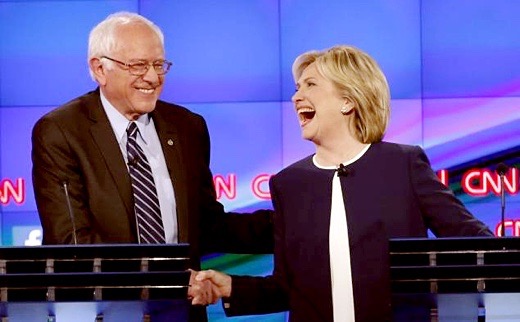

Image above: From (http://opportunitylives.com/bernie-aristotle-and-hillarys-email-oligarchy/).

There are three key findings to emerge from yesterday's dump of leaked DNC emails released by Wikileaks:
  • There had been a plot designed to smear Bernie Sanders and to hand the Democratic nomination to Hillary on a silver platter
  • There has been repeated collusion between the DNC and the media
  • There has been questionable fundraising for both Hillary Clinton and the DNC
First, a quick recap for those who missed the original report, yesterday Wikileaks released over 19,000 emails and more than 8,000 attachments from the Democratic National Committee. This is what the whistleblower organization reported:

WikiLeaks releases 19,252 emails and 8,034 attachments from the top of the US Democratic National Committee -- part one of our new Hillary Leaks series. The leaks come from the accounts of seven key figures in the DNC: Communications Director Luis Miranda (10770 emails), National Finance Director Jordon Kaplan (3797 emails), Finance Chief of Staff Scott Comer (3095 emails), Finanace Director of Data & Strategic Initiatives Daniel Parrish (1472 emails), Finance Director Allen Zachary (1611 emails), Senior Advisor Andrew Wright (938 emails) and Northern California Finance Director Robert (Erik) Stowe (751 emails). The emails cover the period from January last year until 25 May this year.d
Subsequently, the Romanian hacker known as Guccifer 2.0 (who has denied he works with the Russian government), who has already released hundreds of hacked DNC emails previously, told The Hill he leaked the documents to Wikileaks.

An initial read of the thousands of emails in the data dump reveals top officials at the Democratic National Committee privately plotting to undermine Bernie Sanders’s presidential campaign, confirming a long-running allegation by the Sanders campaign who has claimed that the DNC and Chairwoman Debbie Wasserman Schultz had tipped the scales in favor of Hillary Clinton during the party’s presidential primary. They also reveal instances of media collusion as well as various questionable instances of fundraising.
Plotting Against Bernie Sanders

In an email from early May, DNC CFO Brad Marshall wrote about a plot to question Sanders’s religion. While not naming the Vermont senator directly, it talks about a man of “Jewish heritage” Marshall believes to be an atheist. It makes reference to voters in Kentucky and West Virginia, two states that were holding upcoming primary elections. 

“It might may no difference, but for KY and WVA can we get someone to ask his belief. Does he believe in a God. He had skated on saying he has a Jewish heritage. I think I read he is an atheist. This could make several points difference with my peeps. My Southern Baptist peeps would draw a big difference between a Jew and an atheist,” the email says.
“AMEN,” DNC Chief Executive Officer Amy K. Dacey replied.

Marshall did not respond to a request for comment. But he did tell The Intercept, which first noticed the email, “I do not recall this. I can say it would not have been Sanders. It would probably be about a surrogate."

In an email that concerned Sanders out-polling Clinton in Rhode Island, where the state reportedly only had a fraction of voting stations open, one staffer took a contemptuous tone of Sanders’ supporters,  speaking about them more as a nuisance than an arm of the party. “If she outperforms this polling, the Bernie camp will go nuts and allege misconduct,” the staffer writes, “They’ll probably complain regardless, actually.”


Another email shows similar 'us and them' language being directed at Sanders supporters. “We have the Sanders folks admitting that they lost fair and square, not because we 'rigged' anything,” the email said. “Clinton likely to win the state convention with a slim margin and we'll send a release with final delegate numbers.”


An email titled 'Bernie narrative' sent by DNC National Press Secretary Mark Paustenbach to Miranda indicates that top officials in the party were trying to find an angle to disparage the Vermont senator in the media.

“Wondering if there's a good Bernie narrative for a story, which is that Bernie never ever had his act together, that his campaign was a mess,” Paustenbach wrote in the May 21 message. “Specifically, [Debbie Wasserman Schultz] had to call Bernie directly in order to get the campaign to do things because they'd either ignored or forgotten to something critical.”
“It's not a DNC conspiracy, it's because they never had their act together,” Paustenbach suggested.


Wasserman Schultz seemed to have already counted Sanders out of the race in a May 21 email, when there were still nine primaries to go. “This is a silly story,” the chairwoman said. “He isn't going to be president.”


In another email, Paustenbach informed her that Sanders campaign manager Jeff Weaver said the candidate should continue to the convention, Wasserman Shultz said: “He is an ASS,” referring to Weaver. The chairwoman made her opinion clear about Sanders in an message concerning the candidate alleging that the party hadn’t been fair to him.

“Spoken like someone who has never been a member of the Democratic Party and has no understanding of what we do,” she said.

Collusion with Clinton and the media
A communication from late May laid out the pros and cons of DNC Chairwoman Debbie Wasserman Schultz accepting an invitation to CBS’s 'Face the Nation', and indicated that the DNC was plotting its moves based on what would be amenable to Hillary Clinton’s presidential campaign.

Clinton campaign is a mess, they’re afraid of their own shadow and didn’t like that we engaged,” DNC communications director Luis Miranda wrote. “But they’ll be unhappy regardless, so better to get out there and do some strong pivots and land good punches on Trump. They can’t tell us NOT to do TV right now, we shouldn’t pull ourselves out until they actually do.”

“It’s clear that Bernie messed up and that we’re on the right side of history,” Miranda wrote in another bullet point, referring to the Nevada convention.

“Let's take this offline,” Wasserman Schultz said in response. “I basically agree with you."

Wasserman Schultz and Miranda brainstormed ideas to attack Sanders’ position on the Israel/Palestine conflict with her communications team in one thread, with Wasserman Schultz saying that "the Israel stuff is disturbing” in reference to Sanders’ platform committee appointees attempts to include language denouncing the occupation of Palestinian territory in the Democratic platform.

The chairwoman says that the idea “HFA,” or Hillary For America, originally proposed the idea of using Israel/Palestine as “an ideal issue to marginalize Sanders on,” suggesting that the DNC were exchanging communications about anti-Sanders strategies with the Clinton campaign.


The DNC also made a secret “agreement” with Kenneth Vogel, an influential report for Politico. An email from late April with the subject line "per agreement... any thoughts appreciated" shows that Vogel sent an advanced copy of a story about Hillary Clinton’s fundraising to the DNC even before his editor even saw it.


“Vogel gave me his story ahead of time/before it goes to his editors as long as I didn't share it,” DNC press secretary Mark Paustenbach wrote to  Miranda. “Let me know if you see anything that's missing and I'll push back.”

The published version of the story did not appear to have any significant edits from and was not favorable to the Clinton campaign, but the sending of a full, advanced copy to the subject of a story is considered to be a violation of journalistic ethics.

A source with familiar with the interaction between Politico and the DNC told RT America that the message was sent to officials to ensure accuracy in the story, and that it would have been difficult to ask for piecemeal clarifications due to its complexity. The “agreement,” in fact, referred to the DNC promising not to pass the story to a more favorable news outlet who might publish before  Politco.


Another email released in the Friday leak indicates that the DNC was in close contact with news websites on articles related to the Democratic Party. A Real Clear Politics article said that Sanders supporters were causing a lack of unity at the Nevada Democratic Convention.

“This headline needs to be changed,”  Wasserman Schultz wrote to Miranda.

“We need to push back... Patrice, what happened, DNC had nothing to do with this, right?” Miranda replied, referring to DNC Director of Party Affairs Patrice Taylor. Taylor responded saying that the article should be changed the event was run by the state party and the disorder “sounds like internal issues amount [sic] Sanders supporters.”

“Walter, please connect with Stewart and get him to push back,” Miranda wrote. The last email on the thread says: “Done. Article has been updated.”


Further evidence of the DNC's extensive "content control" over mass media was revealed when Wasserman Schultz sent an email to NBC anchor Chuck Todd with the subject line "Chuck, this must stop," and set up a time for the two to talk about MSNBC’s “Morning Joe” co-host Mika Brzezinski calling on Wasserman Schultz to step down.


In another email chain, Miranda said Brzezinski was willing to talk with Wasserman Schultz. "She's already served as a judge and jury without even bothering to talk to me. Not sure why I should trust having a conversation with her would make any difference. Or that she even matters, to be frank," Wasserman Schultz wrote back after a brief exchange.

In response to a New York Times story about Sanders's defiance in the wake May's unruly Democratic state convention in Nevada, Wasserman Schultz wrote: "Every time they get caught doing something wrong, they use the tactic of blaming me. Not working this time."

To be sure, there has been a long trail of instances that confirmed Wasserman Schultz's clear and repeated bias, as noted most recently in "DNC Head Threatened To Kick Michigan Mayor Out Of Debate For Cheering Bernie Sanders", however this is the first time primary sourced evidence has justified such allegations.

There seems to be clear bias in the aggregate as well. Searches of the database shows an apparent bias by DNC officials against Sanders just by how closely either campaign was monitored. A search of “Sanders supporters” yields 306 messages, while a search of “Clinton supporters” shows only 65 results. A search of “his campaign” yields 780 messages, while “her campaign” only brings up a paltry 120 results.

Questionable Fundraising
According to the Daily Beast, the DNC blocked Roy Black from hosting a potential Barack Obama fundraising event. Black is the lawyer of billionaire and level-three sex offender Jeffrey Epstein, after reports on Epstein’s trial from The Daily Beast and other outlets. The email states the DNC would still allow Black to donate and attend future events.

In an email thread from May 12th of this year, titled “Host for POTUS in Miami,” DNC finance assistant Karina Marquez originally asked the committee’s vetting team to “vet the following folks for POTUS please.” The list of six possible hosts for the event included Black and his wife Lea, who is a star on Real Housewives of Miami. 

“We were also asked to vet the following for POTUS hosting. The only issue is Roy Black,” DNC Deputy Compliance Officer Kevin Snowden wrote back. “New issues have come up since his last vet in February 2016.”

In a third email, DNC deputy finance director Laura Lopez clarified: “Roy Black has been submitted to potentially attend meetings with (Jim) Messina—there isn’t an event code yet. He and his wife co-hosted a fundraiser for POTUS in 2007, all the stories are new since then.” Messina is the CEO of the Messina Group political strategy firm and led President Obama’s reelection campaign in 2012.

“All the stories” refer to, in part, a 2011 Daily Beast investigation called “Behind Pedophile Jeffrey Epstein’s Sweetheart Deal” which was cited in a follow-up story in the New York Daily News, and other articles that are later embedded into the email thread. To close off the chain, White House political advisor Bobby Schmuck responded that he agreed with DNC compliance director Alan Reed. “No hosting, fine to attend,” he wrote.

President Obama attended a Miami fundraiser at the home of Robert Rubenstein, one of the five other names listed in the vetting email, on the weekend of June 3rd, and Black was allowed to attend.
Black’s client Epstein was convicted of soliciting sex from an underage girl in 2008 and paid out settlements to “scores of alleged victims who said he serially molested them."  President Bill Clinton was said to have flown on Epstein’s private jet, dubbed the “Lolita Express,” up to 26 times, sometimes eschewing Secret Service protection.


There were further revelations.
An internal email from DNC spokesman Eric Walker mocked a Buzzfeed news report analyzing the DNC and the Republican National Committee’s potentially weak cybersecurity.

Another email shows DNC staffers’ fake craigslist job posting made for women who wish to apply to jobs at one of Trump’s organizations. The fake position, titled a Honey Bunny, requires the prospective applicant to, among other tasks, refrain from gaining weight, be open to public humiliation and be alright with groping or kissing by her boss.

Another email between DNC national finance director Jordan Kaplan and DNC’s Northern California finance director Erik Stowe has Kaplan coarsely describing a conference call with President Barack Obama on National Small Business Week as related to “small business sh*t.”


With the leaks coming just days before the Democratic National Convention in Philadelphia it may reignite controversy over the DNC's handling of Sanders as well as media "objectivity" and Democrat fundraising, three of the most sensitive issue plaguing the Democratic party, and could potentially lead to an exodus of disappointed Bernie supporters into Trump's camp.


.

Tell Obama to veto GMO DARK bill

SUBHEAD: The Dark Act  bill is sitting on President Obama's desk waiting to be signed! This is our last chance!

By Staff on 22 July 2016 for Food Democracy Now -
(http://action.fooddemocracynow.org/sign/label_gmos_now_2016/)


Image above: Obama's promise to support GMO labeling. From Food Democracy Now.

Monsanto's DARK Act has landed on President Obama's desk 3 DAYS ago and he still hasn't signed it!

This outrageous bill has passed both the Senate and the House and the only thing standing in our way from it becoming the law of the land is President Obama actually signing the bill. The White House phones have been ringing off the hook for weeks as hundreds of thousands of Americans outraged over this terrible, unconstitutional bill have been voicing their opposition.

We need everyone who can act today to sign this letter or make a call to remind President Obama to stand up for the American people — It's time to put an end to the corporate corruption of our democracy and our food supply!

Tell President Obama to VETO Senate Bill 764 Monsanto's Corporate Coup and STAND UP for our basic rights and our democracy! The White House needs to hear from you today - CALL (202) 456-1111 or (202) 456-1414 -  Every voice counts!

While Congress has a long history of being in bed with Monsanto and the junk food companies, First Lady Michelle Obama planted an organic garden on the White House lawn and has tried to promote healthy food as a solution to our nation's growing obesity problem and to motivate children to eat healthier food.

Just as impressive, while on the campaign trail President Obama stood up to Big Food and told a group of Iowa farmers that if elected President he would actually label "genetically modified foods, because Americans should know what they're buying!"

We couldn't agree more! Which is why we're sending this email today to have your remind him of his courageous pledge to label GMOs foods back in 2007 - when most Americans had never even heard of Monsanto or GMOs!

We know, with everything happening in Washington DC it's easy to be cynical, but after he was elected, President Obama was asked if he'd actually follow through on his promise.

Obama's response was "Show me the Movement. Make me do it". And these past 7 years - that's exactly what We've done!

Please take a few seconds today and watch this historic 2007 video where a young Senator from Illinois made the first pledge of a Presidential candidate EVER to Promise to Label GMOs!

Now's the time Mr. President , stand up for ALL Americans and - VETO S. 764 - and help us win honest labels!

Rush an urgent message to President Obama to veto Monsanto's Corporate Coup S. 764 and TAKE A Stand for REAL GMO Labels! Every voice counts!

Please help us flood the White House with calls today (202-456-1111) asking Obama to stand with Americans who want real labels - Tell President Obama to veto S. 764.

Please SHARE this Important message to President Obama far and wide with friends and family today!
Facebook link here - (https://fdn.actionkit.com/go/2001)
And sign a White House Petition here: (http://action.fooddemocracynow.org/go/1999)

Now that both chambers of Congress have passed S. 764 aka Monsanto's Corporate Coup, the only thing left before it becomes law is it being signed by President Obama. And we need your help to make sure he understands this does not represent what 90% of the American public actually wants.

Republicans and Democrats have Climbed into Bed to Protect Monsanto and Big Food, but that doesn't mean that President Obama has to sign this terrible bill.

As a Constitutional law professor, President Obama knows better than anyone else how important it is to make sure that our laws are written fairly and properly protect the rights of the American public. It's time to end Monsanto's corruption of our democracy!

Tell President Obama to VETO S 764 and put an END to Monsanto's Corporate Coup! Every voice counts! (http://action.fooddemocracynow.org/sign/label_gmos_now_2016/)

The bill is now on President Obama's desk and could be signed into law at any moment! The White House needs to hear from you today!

Please share with your friends and call your Members of Congress today! Every voice counts!

Remember, democracy is like a muscle, either you use it or you lose it!


Video above: Obama's promise to support GMO labeling. From (https://youtu.be/zqaaB6NE1TI).

Additional Information:
1. "Show Me the Movement!", Center for a Livable Future, March 24, 2009
(http://action.fooddemocracynow.org/go/2002)
2. See how your Senator Voted on this procedural motion to Kill States’ Rights and Vermont’s Historic GMO Labeling Law!
(http://action.fooddemocracynow.org/go/1995)
3. “FDA concerned with GMO labeling 'compromise'”, The Hill, June 30, 2016
(http://action.fooddemocracynow.org/go/1981)
4. "What Senate Backers Aren't Saying About the GMO "compromise" bill", The Hill, July 1, 2016
(http://action.fooddemocracynow.org/go/1996)
5. Agribusiness: Money to Congress, OpenSecrets
(https://fdn.actionkit.com/go/1989)

.

Nationalism, Hitler, Nixon & Trump

SUBHEAD: Trump's words spread a sense of economic anxiety and national humiliation.

By Nadia Prupis on 22 July 2016 for Common Dreams -
(http://www.commondreams.org/news/2016/07/22/nixon-hitler-and-nationalism-donald-trumps-speech-triggers-alarm-bells)


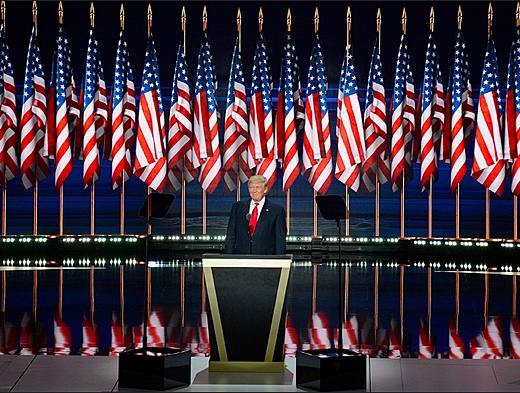
Image above: Donald Trump accepts the Republican nomination for president on July 21, 2016. From original article by (https://www.flickr.com/photos/disneyabc/27854803653/).

Trump's speech triggers alarm bells as he  "signals his determination to exploit fears of violence as part of crusade to seize the White House."

It's official. Donald Trump is the Republican nominee for president.

Reactions abounded late Thursday after the (racist, xenophobic, Islamophobic, and misogynistic) real estate mogul accepted the party's nomination in a rambling, hour-and-fifteen-minute long speech.

Some noted the parallels to Richard Nixon's infamous 1968 "law and order" speech; others pointed out the fascist undertones of Trump's declaration that "I alone can fix this." Few were thrilled that former KKK grand wizard David Duke praised the speech on Twitter.

As The Nation's John Nichols said Thursday night, the speech ultimately signaled Trump's "determination to exploit fears of violence as part of crusade to seize the White House from the Democrats."
Nichols wrote:
Richard Nixon accepted the Republican nomination for president on a Thursday night in the long hot summer of 1968 with a speech that signaled his determination to exploit fears of violence as part of crusade to seize the White House from the Democrats.

[....] The permissive '60s would end, Nixon argued, with the transition of power from a Democratic administration to a Republican who was prepared to crack down on violence.

"Tonight, it is time for some honest talk about the problem of order in the United States," declared Nixon in 1968.

"It is finally time for a straightforward assessment of the state of our nation," declared Trump in 2016.


"The most basic duty of government is to defend the lives of its own citizens. Any government that fails to do so is a government unworthy to lead," Trump told Republican delegates in 2016.


"When the nation with the greatest tradition of the rule of law is plagued by unprecedented lawlessness…then it's time for new leadership for the United States of America," Nixon told Republican delegates in 1968.
Trevor Timm made similar comparisons. In a column for the Guardian on Friday, he wrote:
The parallels with a man who presided over another era in which there were widespread allegations of police brutality and killings of unarmed African Americans seem compelling.


But if you take a detailed look back at Nixon's 1968 campaign for president, the analogy runs much deeper than his not-so-coded language attacking racial minorities. As each day passes, Trump's success looks more and more similar to Nixon's rise to power.
But the alarm bells did not stop with Nixon comparisons. On Twitter, prominent activist and Black Lives Matter co-founder Alicia Garza said, "I don't know what I'm watching right now but I imagine this is the kind of speech Hitler would make."

"When Trump says law and order what he means is shut down #BlackLivesMatter," she tweeted. "He meant law and order for whites, martial law for everyone else."
At The Root, Danielle C. Belton summed up:
Trump said, "[O]ur plan will put America first. Americanism, not globalism, will be our credo."


Mmm, nationalism. That's never caused any problems. I hate to bring up the "F" word, but what a fascist thing to say, future "Dear Leader."
Black Lives Matter co-founder Patrisse Cullors said in a statement issued Thursday, "The terrorist on our televisions tonight was Donald Trump. He pledged to fight for Americans, while threatening the vast majority of this country with imprisonment, deportation and a culture of abject fear. His doublespeak belies his true nature: a charlatan who will embolden racists and destroy communities of color. He is a disgrace.

White people of conscience must forcefully reject this hatred immediately."

Yet while the speech seemed "self-evidently absurd to liberal listeners," writes Richard Eskow of Campaign for America's Future, "it's likely to resonate very well among the white, largely male demographic his campaign has targeted."

Eskow noted the rhetorical trajectory of the speech, which "suddenly pivoted from real-world complaints" like poverty, unemployment, and crumbling infrastructure to "something much more abstract—and nationalistic," something that would appeal to his "decimated" base that is "desperate and frightened and looking for answers." Eskow wrote:
Trump spoke to their economic injuries in classic authoritarian style:
"Not only have our citizens endured domestic disaster, but they have lived through one international humiliation after another. One after another! We all remember the images of our sailors being forced to their knees by their Iranian captors at gunpoint."


For Trump, the sexualized image of humiliation—"to their knees"—is surely no accident. (Remember this?) Weimar Republic comparisons may come too cheaply, but this marriage of economic anxiety and national humiliation is strikingly reminiscent of someone else's rhetoric—and I think you know who I mean.
That's what makes Trump's core message—putting "America First"—so dangerous, Eskow says.
"At the mention of this phrase," Eskow writes, "born of anti-Semitism and unwillingness to fight Hitler's Germany, the crowd erupted in wild cheers: USA! USA!"

.

Trump's GOP party ruined by Cruz

SUBHEAD: An angry political scene at GOP convention like nothing  seen in a generation.

By Tyler Durden on 21 July 2016 for Zero Hedge -
(http://www.zerohedge.com/news/2016-07-21/cruz-fallout-extraordinary-scene-which-has-not-been-seen-generation)


Image above: Ted Cruz in speech that didn't endorse Trump for president at GOP national Convention. From (http://www.cnn.com/videos/politics/2016/07/21/wednesday-night-republican-national-convention-wrap-origwx-cm.cnn).

In some ways, the scandal that took place last night at the Republican national convention, was not a surprise.

Reportedly those who mattered, knew in advance what was coming.  As Bloomberg writes, earlier in the day, Trump campaign chairman Paul Manafort said he would be personally viewing the Cruz speech in advance.

"I'm comfortable that Senator Cruz is going to talk about his vision for America," Manafort said. "He'll give a sign of where he is on Donald Trump that will be pleasing to the Trump campaign and to  Republicans." Cruz told Trump two days ago he wouldn't be endorsing him Wednesday night, and that the Trump folks knew what to expect in his speech, according to Cruz strategist Jason Johnson.

This goes to a question Bloomberg posed shortly after the speech: "the problem for Trump wasn't just the lack of an endorsement from Cruz. The speech raised questions about why Trump -- who has campaigned on his extraordinary negotiating skills -- allowed Cruz to take stage."

"Wow, Ted Cruz got booed off the stage, didn't honor the pledge! I saw his speech two hours early but let him speak anyway. No big deal!" Trump said late Wednesday on Twitter.

However, for many when Ted Cruz decided to snub Donald Trump with his refusal to officially endorse the presidential candidate, it was a stunning surprise, and led the
crowd in Cleveland to erupt in a chorus of boos while the political media exploded.

Surprising or not, the outpouring of condemnations was fast and furious.

In Bloomberg's take of the night's events, Cruz, infamous in the Senate for a reputation of looking out only for himself, proved again that he was willing to go it alone as the party rallied around Trump during an evening of speeches from Republican heavyweights and some of its most ambitious politicians. 

Cruz's speech seemed to amount to a political bet that Trump will lose the election, and that opting not to throw his lot in with the nominee will preserve his fortunes in 2020. Unclear is whether the gambit will backfire on Cruz by prompting Republicans to blame him for refusing to get in line and help unite the party when it mattered most.
The Hill's take is even more dire: "The Republican National Convention careened off the rails here on Wednesday night as Ted Cruz refused to endorse Donald Trump from the stage and was met with deafening boos.  It was an extraordinary scene of disunity, the like of which has not been seen at a party convention in a generation.

The chaos on the convention floor — which included angry words of recrimination from prominent Republicans in the immediate aftermath — totally overshadowed Indiana Gov. Mike Pence’s acceptance of the GOP’s vice presidential nomination."
It also dealt a shattering blow to hopes on the part of the Trump campaign and the Republican National Committee that the GOP would unite here after a long and bitter primary season.
Roger Stone, a former advisor and longtime friend of Trump, called Cruz a “dumb son of a bitch” in a convention center interview with The Hill just after the Texan’s speech ended. Stone added that Cruz was “a despicable human being” and insisted that “no voter gives a crap about what Ted Cruz does — the only person this hurts is Ted Cruz.”

As we reported last night, in another sign of the dark tone of the night, security guards had to escort Ted Cruz’s wife out of the Quicken Loans Arena for her own safety. Former Virginia attorney general Ken Cuccinelli, a close Cruz confidant who was sitting with Heidi Cruz as her husband spoke, told reporters he saw Trump supporters threatening her. "People behind her were getting very ugly and physically approaching her and [Cruz's father] Rafael," he said. "It was not a pretty situation, and the decision was instantly made to not talk to media and get immediately out of the arena."

The key moments of Cruz’s speech, particularly his urging of attendees to “vote your conscience,” will be replayed endlessly on cable news for at least the next 24 hours. So too will the scenes that followed.

For those who missed it, things escalated fast: as the speech wound toward its conclusion and delegates realized that Cruz would make no endorsement, Trump loyalists sprang to their feet, shouting their displeasure.

Some people on the convention floor yelled “Lyin’ Ted” and “Go home!” while others gesticulated wildly. CNN’s Anderson Cooper said on-air that there were also reports “that Ted Cruz went up to one of the donor boxes and was accosted by Trump supporters yelling in his face. One person had to be apparently restrained because they were so angry."

The furor erupted just as the convention seemed to be recovering from the controversy over Melania Trump’s Monday address, which a Trump speechwriter admitted plagiarized from a 2008 Michelle Obama speech. The good news is that the Melania flap is now long forgotten, having been replaced by the Cruz-related uproar.

Within moments of the speech ending, big-name Republicans were excoriating Cruz. New Jersey Gov. Chris Christie, whom Trump had seriously considered naming as his running mate, told CNN’s Dana Bash that the Texas senator’s speech was “awful and selfish.

New York Congressman Peter King told NBC News that Cruz was “a fraud, he’s a liar, he’s self-centered and disqualified himself from ever being considered for president of the United States.”

It wasn't all criticism, however, and some defenders of Cruz emerged. Sen. Mike Lee of Utah, standing with his wife and the Utah delegation told The Hill, "People will have to speak for themselves. I personally don't do that. I don't boo people at my own political convention because they're not my candidate.

Former Speaker Newt Gingrich sought to calm the shocked crowd with his own speech before Pence appeared. Gingrich insisted that Cruz’s comments had been misunderstood.  But teleprompters in the arena included a line in Gingrich’s prepared remarks that he had to excise on the fly, since it had clearly been written under the assumption that Cruz would endorse Trump.  Ryan Lizza of The New Yorker reported that the line was “Senator Ted Cruz in particular made the key point that we need to elect the Trump-Pence Republican ticket.”

Pence emerged into an arena that was still unsettled by the Cruz shocker. He delivered a smooth speech that was punctuated by several moments of winning self-deprecation in its early stages.  At the conclusion Pence insisted that “We have but one choice and that man is ready, this team is ready, our party is ready, and when we elect Donald Trump the 45th president of the United States, together we will make America great again.”

At that point, Trump himself joined Pence on stage and embraced him, drawing roars of approval from the crowd.

But even the feel-good end to the night would not escape the shock of what had gone before.

As The Hill concludes, this was a night that shook the Republican Party badly — and caused undisguised jubilation among Democrats. Soon after Cruz finished speaking, a three-word tweet was published on Hillary Clinton’s account. “Vote your conscience,” it read.

.

Clinton's banking Buddy Kaine

SUBHEAD: Kaine signs letter to help big banks dodge risk management rules, and small banks avoid consumer protection.

By Zach Carter on 20 July 2016 for Huffington Post  -
(http://www.huffingtonpost.com/entry/tim-kaine-clinton-vp_us_578fc8e3e4b0bdddc4d2c86c)


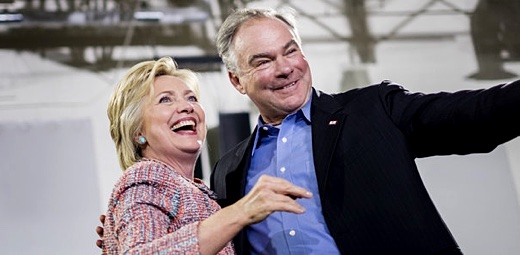
Image above: Looks like Kaine is taking selfie with Hillary Clinton at a recent Virginia rally. From original article).

Sen. Tim Kaine (D-Va.) is on Hillary Clinton’s short list of potential vice presidential nominees. He’s also actively pushing bank deregulation this week as he campaigns for the job.

Kaine signed two letters on Monday urging federal regulators to go easy on banks ― one to help big banks dodge risk management rules, and another to help small banks avoid consumer protection standards.

Presumptive Democratic presidential nominee Hillary Clinton is believed to be weighing Kaine among a handful of other potential VP choices. Her pick is widely viewed in Washington as a sign of her governing intentions. The former secretary of state has spent weeks attempting to woo progressive supporters of vanquished primary challenger Sen. Bernie Sanders (I-Vt.).

Choosing from one of the handful of names on her short list ― Sens. Elizabeth Warren (D-Mass.), Sherrod Brown (D-Ohio) or Jeff Merkley (D-Ore.), for instance ― would signal that her camp is taking progressive concerns seriously.

Kaine, by contrast, is setting himself up as a figure willing to do battle with the progressive wing of the party. He has championed the Trans-Pacific Partnership trade deal that both Sanders and Warren oppose, and he is now publicly siding with bank deregulation advocates at the height of Clinton’s veepstakes.

The big bank letter would help major firms including Capital One, PNC Bank and U.S. Bank, all of which control hundreds of billions of dollars in assets. Such large “regional banks,” Kaine writes, are being discriminated against based solely on the fact that they are so big. 

In a letter to Federal Reserve Chair Janet Yellen, Comptroller of the Currency Thomas Curry and FDIC Chair Martin Gruenberg, Kaine argues that it is unfair for these large banks to be required to calculate and report their liquidity ― a critical measure of risk ― on a daily basis. Kaine wants to change that reporting to once a month. Kaine, along with Sens. Mark Warner (D-Va.), Gary Peters (D-Mich.) and Robert Casey (D-Pa.), argues that bigger banks don’t necessarily carry bigger risks, and thus shouldn’t face more aggressive oversight. 

“This distinction is applied unevenly across regional institutions despite similar risk profiles, simply by virtue of an asset threshold,” the letter reads. Translation: just because they’re big, doesn’t mean they should be regulated more closely.

Kaine and his coauthors do draw an exception to this principle for “systemically important” banks ― a term that usually means the six largest banks in the country: JPMorgan Chase, Bank of America, Goldman Sachs, Morgan Stanley, Wells Fargo and Citigroup. These should be regulated closely. Firms controlling over $400 billion, not so much.

On the small bank side, Kaine pressed Consumer Financial Protection Bureau Director Richard Cordray to exempt “community banks and credit unions” from new rules. Doing so would leave these institutions, which include banks with up to $10 billion in assets, more lightly regulated than they were before the financial crisis. The letter, sent on Monday, was signed by 69 other senators.

Small banks were not, for the most part, involved in the subprime mortgage crisis. But many commit other consumer protection abuses. These violations do not spark massive financial downturns, but they can be real problems for the households that get ripped off. 

As Kaine joins the deregulatory fight, several other lawmakers are pushing the CFPB in the opposite direction. On Wednesday, 28 senators sent a letter to the agency urging them to toughen up their new rule against abusive payday lending. Kaine didn’t sign it.

A spokesperson for Kaine told HuffPost that Kaine is working on his own separate “Virginia-focused” letter on payday lending in support of the CFPB rule that he hopes will come out before the election.


 Kaine signals support for banks
 SUBHEAD: How Tim Kaine is signaling that he'll be 'an asset with banking interests on the fundraising trail'

By Deidre Fulton on 21 July 2016 for Common Dreams -
(http://www.commondreams.org/news/2016/07/21/hillary-clintons-top-vp-pick-lets-big-banks-know-hes-their-corner)

Sounding another alarm for progressives wary of the Democratic establishment's support for Wall Street, the man said to be leading the pack of potential Hillary Clinton running mates—Virginia Sen. Tim Kaine—has just this week sent a clear message to big banks: He's in their corner.

Kaine, who is reportedly Bill Clinton's favorite for the vice presidential slot, signed onto two letters on Monday pushing for financial deregulation—letters that show the Clinton camp "how Kaine could be an asset with banking interests on the fundraising trail," according to David Dayen at The Intercept on Wednesday.

The news should "disqualify" Kaine from the ticket, one prominent progressive group declared Thursday.

The first missive, signed by 16 Democrats and every Republican senator, calls on the Consumer Financial Protection Bureau (CFPB) to exempt community banks and credit unions from certain regulations.

As Dayen explains:
While this seems benign, tailoring rules that exempt large classes of financial institutions leaves consumers vulnerable to deceptive practices. A rule of this type could allow community banks and credit unions to sell high-risk mortgages or personal loans without the disclosure and ability to pay rules in place across the industry.
The second letter (pdf) deals with even bigger regional institutions, as it is aimed at helping "major firms including Capital One, PNC Bank and U.S. Bank, all of which control hundreds of billions of dollars in assets," according to the Huffington Post

Signed by Kaine and three other Democratic senators—Mark Warner (Va.), Gary Peters (Mich.), and Bob Casey (Pa.)—the letter to Federal Reserve Chair Janet Yellen, Comptroller of the Currency Thomas Curry, and Federal Deposit Insurance Corporation chair Martin Gruenberg "argues that it is unfair for these large banks to be required to calculate and report their liquidity―a critical measure of risk―on a daily basis," HuffPo's Zach Carter continues. 

"This distinction is applied unevenly across regional institutions despite similar risk profiles, simply by virtue of an asset threshold," the letter reads.

Or, as Carter puts it, translating the senators' bottom line: "just because they're big, doesn't mean they should be regulated more closely."

But in fact, Dayen points out, "[i]n an interconnected financial system, a large regional bank that gets into trouble has as much chance of creating ripple effects as a mega-bank. It's unclear why they should be exempted from regulations deemed appropriate for all facets of the financial sector."

On top of these salvos on behalf of the banking industry, the Huffington Post notes that Kaine did not sign onto a third letter sent Wednesday from 28 senators urging the CFPB to crack down on abusive payday lenders and in turn, protect consumers.

That all this took place while Kaine is presumably being vetted for VP "could show potential financial industry donors that he is willing to serve as an ally on their regulatory issues," Dayen wrote, especially because Clinton has been pushed to the left by Bernie Sanders on Wall Street.

Given existing concerns around Kaine's support for the Trans Pacific Partnership and other so-called "free trade" deals, plus his mixed record on reproductive rights and now new proof of his bending to bankers, it's no wonder RootsAction co-founder and Bernie Sanders delegate Norman Solomon told Common Dreams on Wednesday that choosing the Virginia senator or someone like him "would be a very pronounced middle finger to the 13 million people who voted for Bernie."

Indeed, in a press statement on Thursday, critics of the Democratic Party's superdelegate system said Kaine's position at the top of the VP list provides "a perfect example of why the party needs to create policies and pick candidates who reflect the will of the voters, not the will of elites and special interests that the superdelegate system has come to embody."

"Superdelegates are the embodiment of a system that is rigged in favor of the powerful at the expense of the powerless," said Maine state representative Diane Russell, who originated an amendment to abolish superdelegates that will be taken up by the DNC Rules Committee on Saturday, "and there isn't a more powerful industry in America than the big banks."

And Democracy for America executive director Charles Chamberlain said in a statement Thursday:
"Let's be really clear: It should be disqualifying for any potential Democratic vice presidential candidate to be part of a lobbyist-driven effort to help banks dodge consumer protection standards and regulations designed to prevent banks from destroying our economy."

See also:
Ea O Ka Aina: Clinton's GMO buddy Valsack 7/20/16

.

Clinton's GMO buddy Vilsack

SUBHEAD: Hillary has vetted Vilsack and is preparing public for GMO flack as Vise Presidential pick.

By Michael Shooltz & Juan Wilson on 20 July 2016 in Island Breath -
(http://islandbreath.blogspot.com/2016/07/clinton-favors-gmo-vilsack.html)


Image above: USDA head "Vilesack" met with Monsanto to discuss advances for 2016. From (http://naturalsociety.com/agriculture-secretary-tom-vilsack-meets-with-monsanto-to-discuss-agricultural-advances-for-2016/).

The current USDA head Thomas Vilsack is said to be Hillary Clinton's top choice for Vice President.

This is a guy who was voted "Governor of the Year" in 2001 by the GMO Industry when he was governor of Iowa. See (https://www.bio.org/media/press-release/iowas-vilsack-named-bio-governor-year).

As head of the USDA he has been a steadfast talking head for Monsanto and and the biotechnology-pesticide industry.

Under Vilsack's watch the US Department of Agriculture has been purchasing massive amounts assault rifles and ammunition. One might ask themselves why the USDA needs 7,000 assault rifles and over 300,000 rounds of ammunition. (http://modernfarmer.com/2014/09/usda-buying-submachine-guns/)

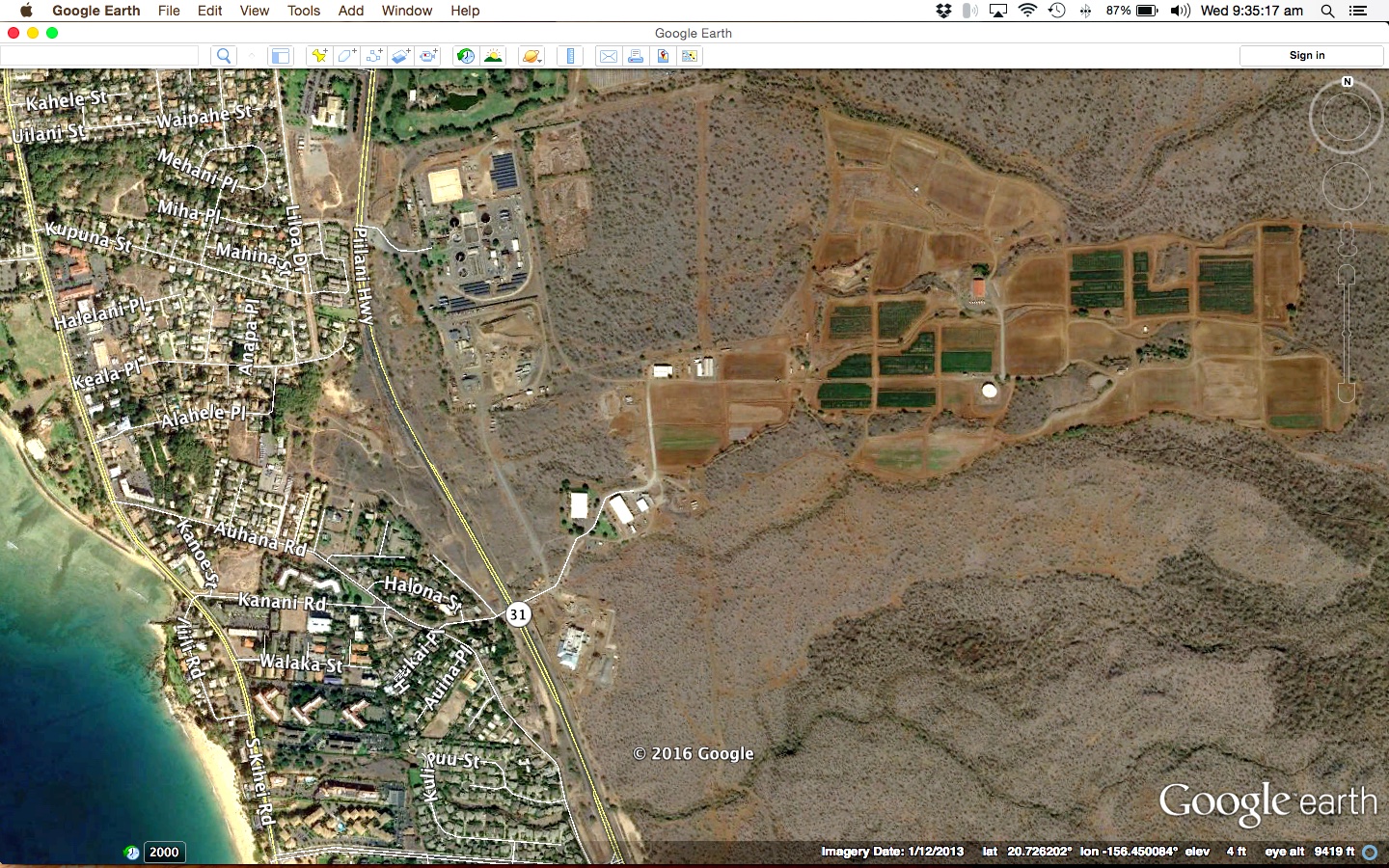
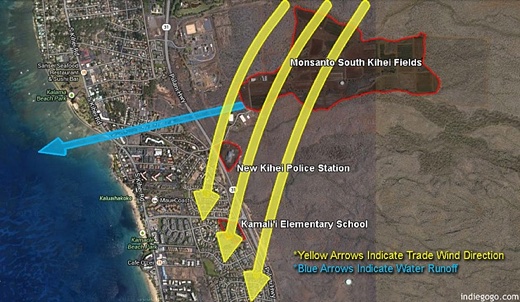
Under Vilsack, the USDA financed the massive new police headquarters on Maui in 2012, located at the front driveway of the 300 acre Monsanto Seed Farm in South Kihei at Piʻilani Promenade.

http://www.islandbreath.org/2016Year/07/160720googleearthbig.jpg
Image above: Overview of Kihei Police Station and Monsanto Headquarters. Click to see larger overview. From GoogleEarth.

Since when does the USDA finance the construction of Police Stations? See (USDA $17 million loan  to Maui County for Kihei  Police Station). Obviously, Monsanto wanted to have a fortress with armed guards protecting its offices and crop fields paid for by the public. Moreover,they wanted their site close to housing, shopping, schools and the best beaches on Maui.

Only trouble is the trade winds blow the dust of the dry uplands down into a densely populated area of Kihei and the runoff from the fields goes into the ocean at the nearby beaches.


Image above: Map of Monsanto area in Kihei, Maui. Red - Monsanto GMO fields, Police Station and Elementary School; Yellow - tradewind dust; Blue - GMO field runoff. From (http://www.mauigoodness.com/2014/10/20/hawaii-fight-gmos/).

Paired with Clinton (whose former law firm represents Monsanto),  Monsanto and friends would have the White House locked snugly in their pocket.
I continue to pray that somehow Bernie Sanders ends up our next President. Please join me in that prayer - Micahel Shooltz

I don't think there is any chance for Bernie, but Jill Stein in on the ballot in Hawaii for the Green Party - Juan Wilson
See also:
Ea O Ka Aina: Clinton's banking buddy Kaine 7/21/16
 .

8/13 Primary Elections on Kauai

SUBHEAD: Important primary election dates, information, and lists of candidates.

By Linda Pascatore on 17 July 2016 for Island Breath -
(http://islandbreath.blogspot.com/2016/07/813-primary-elections-on-kauai.html)


Image above: Hawaiians line up to vote for Bernie Sanders in Democratic Primary. From (http://www.leadertelegram.com/News/Daily-Updates/2016/03/27/Sanders-captures-two-states-Clinton-keeps-big-delegate-lead.html).

Early Walk In Voting for Primary: 1 August to 11 August 2016

Last day to request Mail in Ballot: 6 August 2016

Primary Elections: 13 August 2016 - Polls open 7am to 6pm

To register to vote, update existing voter registration, confirm voter address, and request to vote by mail, find your polling place, or view your ballot, go to: https://olvr.hawaii.gov/Default.aspx


On the front page of the primary ballot, you must first choose one political party or non-partisan, and then vote only for those candidates. Vote for only one candidate for the offices below:

Democratic Party: 
US Senator:

Christensen, Makani
Honeychurch, Tutz
Reeyes, Arturo
Schatz, Brian
Shiratori, Miles

US Representative, Second District
Chan Hodges, Shay
Gabbard, Tulsi

Hawaii State Senator:
Ahuna, Kanoe
Kouchi, Dan

Hawaii State Representative:
District 14:
Nakamura, Nadine
Rosenstiel, Fern Anuenue

District 15:
Oi, Tommy
Tokioka, James Kunane

District 16:
Morikawa, Dee


Republican Party:
US Senator:

Carroll, John
Gottschalk, Karla (Bart)
Pirkowski, Eddie
Roco, John P

US Representative, 2nd District:
Hafner, Eric
Kaaihue, Angela Aulani

State Representative, District 14:
Sandra Combs


State Representative, District 15: 
no candidate

State Representative, District 16:
Franks, Victoria (Vickie)


Libertarian Party:
US Senator:
Kokoski, Michael A


American Shopping Party:
US Senator:

Giuffre, John M (Raghu)


Constitution Party:
US Senator:
Allison, Joy J


Nonpartisan Ballot: 
US Representative, 2nd District:
Turner, Richard


On the back page of your ballot, you will find the non-partisan votes for Office of Hawaiian Affairs (OHA), Prosecuting Attorney, and County Council:

Kauai County Council:  (vote for not more than 7 candidates)
Apalla, Juno-Ann A
Bernabe, Matt
Brun, Arthur
Chock, Mason
Doctor Sparks, Norma
Fukushima, Richard S
Hooser, Gary L
Kagawa, Ross K
Kaneshiro, Arryl
Kawakami, Derek S K
Kualli, Kipukai
Rapozo, Mel
Yukimura, JoAnn A

Kauai County Prosecuting Attorney (both candidates advance to general election)
Lisa Arin
Justin Kollar

Office of Hawaiian Affairs (OHA): Hawaii Resident Trustee: (vote for one candidate)
Kahui, Bo V (Craig)
Lindsey, Robert K (Bob)
Trask, Mililani B

Molokai Resident Trustee: (vote for one candidate)
Flowers, Jerry (Manuwa)
Hanapi, Alapai
Machado, Colette (Pipi'i)

At large trustee: (vote for one candidate)
Akina, Keli'i
Anthony, Daniel K
Apoliona, Haunani
Crum, Couglas E
Kalima, Leona Mapuana
Makekau, Keali'i
Mossman, Paul Ledwith

.

Turkey's faked coup

SUBHEAD: Erdogan purges 20,000 as Europe voices concern Turkish coup was staged with "Prepared Arrest Lists".

By Tyler Durden on 18 July 2016 for Zero Hedge -
(http://www.zerohedge.com/news/2016-07-18/erdogan-purges-8000-cops-europe-voices-concern-coup-was-staged-prepared-arrest-lists)


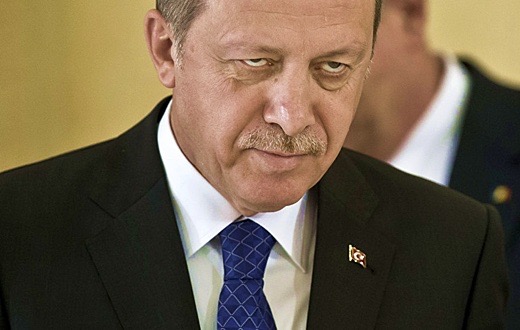
Image above: President Recep Tayyip Erdogan is now crushing all dissent in Tukey. From (http://www.nimble.news/former-miss-turkey-receives-14-month-prison-sentence-making-fun-president/).

Overnight Turkish president Erdogan's counter-coup witch hunt continued, when thousands of police officers were suspended on Monday, widening a systemic purge of Erdogan's enemies first in the armed forces and then judiciary after a failed military coup, now focusing on the interior police force, and raising concern among European allies that it was abandoning the rule of law.  

Turkey's state-run news agency says the nation has detained or suspended 20,000 personnel across the country, following Friday's foiled coup attempt. 
 
Anadolu Agency says a total of 8,777 employees attached to the ministry were dismissed, including 30 governors, 52 civil service inspectors and 16 legal advisers


Thirty regional governors and more than 50 high-ranking civil servants have also been dismissed, CNN Turk said. Thousands of members of the armed forces, from foot soldiers to commanders, were rounded up on Sunday, some shown in photographs stripped to their underpants and handcuffed on the floors of police buses and a sports hall. Several thousand prosecutors and judges have also been removed.

Bloomberg summarizes as follows: more than than 7,500, including more than 6,000 soldiers from various ranks detained by police, Turkish PM Binali Yildirim says in televised remarks. Those detained include 755 judges and prosecutors, 650 civilians and 100 police officers.

Separately, about 9,000 from the Interior Ministry, 3,00 judges and prosecutors and 1,500 staff members of Finance Ministry have been removed from duty.

In total, approximately 20,000 political opponents "purged" just days after the conclusion of the failed coup.

At the same time speculation that the terribly planned "coup" was anything but came from the European Commission itself. As Reuters adds, the swift rounding up of judges and others after a failed coup in Turkey indicated the government had prepared a list beforehand, according to EU commissioner dealing with Turkey's membership bid, Johannes Hahn, said on Monday.

"It looks at least as if something has been prepared. The lists are available, which indicates it was prepared and to be used at a certain stage," Hahn said. "I'm very concerned. It is exactly what we feared."

It is also exactly what Erdogan has expected and hoped for. And with broad western support for Erdogan over the weekend, his mission to concentrate all Turkish power in his own hands is now assured.

Meanwhile, Erdogan on Sunday told crowds of supporters, called to the streets by the government and by mosques across the country, that parliament must consider their demands to apply the death penalty for the plotters. "We cannot ignore this demand," he told a chanting crowd outside his house in Istanbul late on Sunday. "In democracies, whatever the people say has to happen."

Once again, Europe pushed back however, when Volker Kauder, parliamentary leader of German Chancellor Angela Merkel’s party bloc, said Turkey must obey the rule of law. “If the death penalty were to be decided, the negotiations would certainly be at an end,” Kauder says in ZDF television interview, referring to talks with the EU. “We mustn’t let it go unchallenged if the rule of law isn’t obeyed.”

Austrian Foreign Minister Sebastian Kurz also said it would be unacceptable for Turkey to reintroduce the death penalty, which it abolished in 2004.

Abolishing capital punishment was a prerequisite for talks with Turkey on membership of the European Union, to which it still aspires.

But... this is Turkey: the law is whatever Erdogan says it is.

Others also realized what they have done, but it was too late. EU foreign policy chief Federica Mogherini warned the Turkish government on Monday against taking steps that would damage the constitutional order.

"We were the first... during that tragic night to say that the legitimate institutions needed to be protected," she told reporters on arrival at an EU foreign ministers meeting, which was also to be attended by U.S. Secretary of State John Kerry.

"We are the ones saying today rule of law has to be protected in the country," she said in Brussels. "There is no excuse for any steps that take the country away from that."

Actually the excuse came and went over the weekend, when - with Europe's blessing - Erdogan not only repelled the fake coup, but also got a green light to crackdown on anyone who is even remotely critical of him.

And, oh yes, Erdogan still holds all the leverage: some two million Syrian refugees he can unleash on Europe at any moment he wishes.


Coup pilots could have killed Erdogan

SUBHEAD: "Why they didn't fire is s mystery" - Coup pilots had Erdogan's plane in their sights.

By Tyler Durden on 17 July 2016 for Zero Hedge -
(http://www.zerohedge.com/news/2016-07-17/why-they-didnt-fire-mystery-coup-pilots-had-erdogans-plane-their-sights-and-did-noth)

Looking back at the failed Turkish coup, one question that nobody has been able to answer is why, if the coup was indeed a serious attempt at government overthrow, did the organizers not do the first thing that military coups have done since time immemorial: either capture, or simply eliminate the existing ruler, the vacationing president Erdogan?

The following brief story will only add to the confusion (or maybe not).

As Reuters reports, at the height of the attempt to overthrow Turkish President Tayyip Erdogan, the rebel pilots of two F-16 fighter jets had Erdogan's plane in their sights. And yet he was able to fly on.
The government narrative, completely fabricated as it may be, is the following:
Erdogan said as the coup unfolded that the plotters had tried to attack him in the resort town of Marmaris and had bombed places he had been at shortly after he left. He "evaded death by minutes", the second official said.  

Around 25 soldiers in helicopters descended on a hotel in Marmaris on ropes, shooting, just after Erdogan had left in an apparent attempt to seize him, pro-government broadcaster CNN Turk said. Prime Minister Binali Yildirim had also been directly targeted in Istanbul during the coup bid and had narrowly escaped, the official said, without giving details.

Flight tracker websites showed a Gulfstream IV aircraft, a type of business jet owned by the Turkish government, take off from Dalaman airport, which is about an hour and a quarter's drive from Marmaris, at about 2240 GMT on Friday.  It later circled in what appeared to be a holding pattern just south of Istanbul, around the time when a Reuters witness in the airport was still hearing bursts of gunfire, before finally coming in to land.

It is what happened during Erdogan's trip that is confusing. Again from Reuters:
The Turkish leader was returning to Istanbul from a holiday near the coastal resort of Marmaris after a faction in the military launched the coup attempt on Friday night, sealing off a bridge across the Bosphorus, trying to capture Istanbul's main airport and sending tanks to parliament in Ankara.

A senior Turkish official confirmed to Reuters that Erdogan's business jet had been harassed while flying from the airport that serves Marmaris by two F-16s commandeered by the coup plotters but that he had managed to reach Istanbul safely.

"At least two F-16s harassed Erdogan's plane while it was in the air and en route to Istanbul. They locked their radars on his plane and on two other F-16s protecting him," a former military officer with knowledge of the events told Reuters.

"Why they didn't fire is a mystery," he said.
Actually, now that we have seen the unprecedented crack down on all political opponents including the start of what is set to be a historic witch hunt, it is no mystery at all.

.

Scientific education and stupidity

SUBHEAD: Cause and effect - scientific education may be a cause of political stupidity.

By John Michael Greer on 13 July 2016 for the Archdruid Report -
(http://thearchdruidreport.blogspot.com/2016/07/scientific-education-as-cause-of.html)

http://www.islandbreath.org/2016Year/07/160718tyson.jpg
Image above: Niel Degrasse Tyson defends Scientology and Bush administration science record for the DailyBeast. From (http://www.thedailybeast.com/articles/2015/03/31/neil-degrasse-tyson-defends-scientology-and-the-bush-administration-s-science-record.html).

While we’re discussing education, the theme of the current series of posts here on The Archdruid Report, it’s necessary to point out that there are downsides as well as upsides to take into account.

The savant so saturated in abstractions that he’s hopelessly inept at the business of everyday life has been a figure of fun in literature for many centuries now, not least because examples of the type are so easy to find in every age.

That said, certain kinds of education have more tightly focused downsides. It so happens, for example, that engineers have contributed rather more to crackpot literature than most other professions.

Hollow-earth theories, ancient-astronaut speculations, treatises arguing that the lost continent of Atlantis is located nearly anywhere on Earth except where Plato said it was—well, I could go on; engineers have written a really impressive share of the gaudier works in such fields.

In my misspent youth, I used to collect such books as a source of imaginative entertainment, and when the jacket claimed the author was some kind of engineer, I knew I was in for a treat.

I treated that as an interesting coincidence until I spent a couple of years working for a microfilming company in Seattle that was owned by a retired Boeing engineer.

He was also a devout fundamentalist Christian and a young-Earth creationist; he’d written quite a bit of creationist literature, though I never heard that any of it was published except as densely typed photocopied handouts—and all of it displayed a very specific logic: given that the Earth was created by God on October 23, 4004 BCE, at 9:00 in the morning, how can we explain the things we find on Earth today?

That is to say, he approached it as an engineering problem.

Engineers are trained to figure out what works. Give them a problem, and they’ll beaver away until they find a solution—that’s their job, and the engineering profession has been around long enough, and had enough opportunities to refine its methods of education, that a training in engineering does a fine job of teaching you how to work from a problem to a solution.

What it doesn’t teach you is how to question the problem. That’s why, to turn to another example, you get entire books that start from the assumption that the book of Ezekiel was about a UFO sighting and proceed to work out, in impressive detail, exactly what the UFO must have looked like, how it was powered, and so on. “But how do we know it was a UFO sighting in the first place?” is the one question that never really gets addressed.

It’s occurred to me recently that another specific blindness seems to be hardwired into another mode of education, one that’s both prestigious and popular these days: a scientific education—that is to say, a technical education in the theory and practice of one of the hard sciences.

 The downside to such an education, I’d like to suggest, is that it makes you stupid about politics.

Plenty of examples come to mind, and I’ll be addressing some of the others shortly, but the one I want to start with is classic in its simplicity, not to mention its simple-mindedness. This is the recent proposal by astronomer Neil deGrasse Tyson, which I quote in full:

Earth needs a virtual country: #Rationalia, with a one-line Constitution: All policy shall be based on the weight of evidence— Neil deGrasse Tyson (@neiltyson) June 29, 2016

That might be dismissed as just another example of the thought-curtailing properties of Twitter’s 140-character limit—if a potter makes pots, what does Twitter make?—except that Tyson didn’t say, “here’s the principle behind the constitution, details to follow.” That’s his proposed constitution in its entirety.

More precisely, that’s his sound bite masquerading as a constitution. An actual constitution, as anyone knows who has actually read one, doesn’t just engage in a bit of abstract handwaving about how decisions are to be made. It sets out in detail who makes the decisions, how the decision-makers are selected, what checks and balances are meant to keep the decision-makers from abusing their positions, and so on.

If Donald Trump, say, gave a speech saying, “We need a new scientific method that consists solely of finding the right answer,” he’d be mocked for not knowing the first thing about science. A similar response is appropriate here.

That said, Tyson’s proposal embodies another dimension of cluelessness about politics. Insisting that political decisions ought to be made exclusively on the basis of evidence sounds great, until you try to apply it to actual politics. Take that latter step, and what you’ll discover is that evidence is only tangentially relevant to most political decisions.

Consider the recent British referendum over whether to leave the European Union. That decision could not have been made on the basis of evidence, because all sides, as far as I know, agreed on the facts.

Those were that Britain had joined the European Economic Community (as it then was) in 1973, that its membership involved ceding certain elements of national sovereignty to EU bureaucracies, and that EU policies benefited certain people in Britain while disadvantaging others. None of those points were at issue.

The points that were at issue were values on the one hand, and interests on the other.

By values I mean judgments, by individuals and communities, about what matters and what doesn’t, what’s desirable and what isn’t, what can be tolerated and what can’t. These can’t be reduced to mere questions of evidence. A statement such as “the free movement of people across national borders is good and important” can’t be proved or disproved by any number of double-blind controlled studies.

It’s a value that some people hold and others don’t, as is the statement “the right of people to self-determination must be protected from the encroachments of unelected bureaucrats in Brussels.” Those values are in conflict with each other, and it was in large part over such values that the Brexit election was fought out and decided.

By interests I mean the relative distribution of costs and benefits. Any political decision, about any but the most trivial subject, brings benefits and has costs, and far more often than not the people who get the benefits and the people who carry the costs are not the same. EU membership for Britain was a case in point.

By and large, the affluent got the majority of the benefits—they were the ones who could send their children to German universities and count on border-free travel to holidays in Spain—and the working poor carried the majority of the costs—they were the ones who had to compete for jobs against a rising tide of immigrants, while the number of available jobs declined due to EU policies that encouraged offshoring of industry to lower-wage countries.

What made the Brexit referendum fascinating, at least to me, was the way that so many of the pro-EU affluent tried to insist that the choice was purely about values, and that any talk about the interests of the working poor was driven purely by racism and xenophobia—that is to say, values.

As I’ve noted here in numerous posts, the affluent classes in the industrial world have spent the last four decades or so throwing the working poor under the bus and then rolling the wheels back and forth over them, while insisting at the top of their lungs that they’re doing nothing of the kind.

Wage earners, and the millions who would be happy to earn a wage if they could find work, know better. Here in America, for example, most people outside the echo chambers of the affluent remember perfectly well that forty years ago, a family with one working class income could afford a house, a car, and the other amenities of life, while today, a family with one working class income is probably living on the street.

Shouting down open discussion of interests by insisting that all political decisions have to do solely with values has been a common strategy on the part of the affluent; the outcome of the Brexit referendum is one of several signs that this strategy is near the end of its shelf life.

In the real world—the world where politics has to function—interests come first. Whether you or I are benefited or harmed, enriched or impoverished by some set of government policies is the bedrock of political reality.

Evidence plays a role: yes, this policy will benefit these people; no, these other people won’t share in those benefits—those are questions of fact, but settling them doesn’t settle the broader question. Values also play a role, but there are always competing values affecting any political decision worth the name; the pursuit of liberty conflicts with the pursuit of equality, justice and mercy pull in different directions, and so on.

To make a political decision, you sort through the evidence to find the facts that are most relevant to the issue—and “relevant,” please note, is a value judgement, not a simple matter of fact.

Using the relevant evidence as a framework, you weigh competing values against one another—this also involves a value judgment—and then you weigh competing interests against one another, and look for a compromise on which most of the contending parties can more or less agree.

If no such compromise can be found, in a democratic society, you put it to a vote and do what the majority says. That’s how politics is done; we might even call it the political method.

That’s not how science is done, though. The scientific method is a way of finding out which statements about nature are false and discarding them, under the not unreasonable assumption that you’ll be left with a set of statements about nature that are as close as possible to the truth. That process rules out compromise.

If you’re Lavoisier and you’re trying to figure out how combustion works, you don’t say, hey, here’s the oxygenation theory and there’s the phlogiston theory, let’s agree that half of combustion happens one way and the other half the other; you work out an experiment that will disprove one of them, and accept its verdict. What’s inadmissible in science, though, is the heart of competent politics.

In science, furthermore, interests are entirely irrelevant in theory. (In practice—well, we’ll get to that in a bit.) Decisions about values are transferred from the individual scientist to the scientific community via such practices as peer review, which make and enforce value judgments about what counts as good, relevant, and important research in each field.

The point of these habits is to give scientists as much room as possible to focus purely on the evidence, so that facts can be known as facts, without interference from values or interests. It’s precisely the habits of mind that exclude values and interests from questions of fact in scientific research that make modern science one of the great intellectual achievements of human history, on a par with the invention of logic by the ancient Greeks.

One of the great intellectual crises of the ancient world, in turn, was the discovery that logic was not the solution to every human problem. A similar crisis hangs over the modern world, as claims that science can solve all human problems prove increasingly hard to defend, and the shrill insistence by figures such as Tyson that it just ain’t so should be read as evidence for the imminence of real trouble.

Tyson himself has demonstrated clearly enough that a first-rate grasp of astronomy does not prevent the kind of elementary mistake that gets you an F in Political Science 101. He’s hardly alone in displaying the limits of a scientific education; Richard Dawkins is a thoroughly brilliant biologist, but whenever he opens his mouth about religion, he makes the kind of crass generalizations and jawdropping non sequiturs that college sophomores used to find embarrassingly crude.

None of this is helped by the habit, increasingly common in the scientific community, of demanding that questions having to do with values and interests should be decided, not on the evidence, but purely on the social prestige of science.

I’m thinking here of the furious open letter signed by a bunch of Nobel laureates, assailing Greenpeace for opposing the testing and sale of genetically engineered rice. It’s a complicated issue, as we’ll see in a moment, but you won’t find that reflected in the open letter. Its argument is simple: we’re scientists, you’re not, and therefore you should shut up and do as we say.

Let’s take this apart a step at a time. To begin with, the decision to allow or prohibit the testing and sale of genetically engineered rice is inherently political rather than scientific. Scientific research, as noted above, deals with facts as facts, without reference to values or interests.

“If you do X, then Y will happen”—that’s a scientific statement, and if it’s backed by adequate research and replicable testing, it’s useful as a way of framing decisions. The decisions, though, will inevitably be made on the basis of values and interests.

“Y is a good thing, therefore you should do X” is a value judgment; “Y will cost me and benefit you, therefore you’re going to have to give me something to get me to agree to X” is a statement of interest—and any political decision that claims to ignore values and interests is either incompetent or dishonest.

There are, as it happens, serious questions of value and interest surrounding the genetically engineered rice under discussion. It’s been modified so that it produces vitamin A, which other strains of rice don’t have, and thus will help prevent certain kinds of blindness—that’s one side of the conflict of values.

On the other side, most seed rice in the Third World is saved from the previous year’s crop, not purchased from seed suppliers, and the marketing of the GMO rice thus represents yet another means for a big multinational corporation to pump money out of the pockets of some of the poorest people on earth to enrich stockholders in the industrial world.

There are many other ways to get vitamin A to people in the Third World, but you won’t find those being discussed by Nobel laureates—nor, of course, are any of the open letter’s signatories leading a campaign to raise enough money to buy the patent for the GMO rice and donate it to the United Nations, let’s say, so poor Third World farmers can benefit from the rice without having to spend money they don’t have in order to pay for it.

These are the issues that have been raised by Greenpeace among others. To respond to that with a straightforward display of the logical fallacy called argumentum ad auctoritatem—“I’m an authority in the field, therefore whatever I say is true”—is bad reasoning, but far more significantly, it’s inept politics.

You can only get away with that trick a certain number of times, unless what you say actually does turn out to be true, and institutional science these days has had way too many misses to be able to lean so hard on its prestige.

I’ve noted in previous posts here the way that institutional science has blinded itself to the view from outside its walls, ignoring the growing impact of the vagaries of scientific opinion in fields such as human nutrition, the straightforward transformation of research into marketing in the medical and pharmaceutical industry, and the ever-widening chasm between the promises of safety and efficacy brandished by scientists and the increasingly unsafe and ineffective drugs, technologies, and policy decisions that burden the lives of ordinary people.

There are plenty of problems with that, but the most important of them is political. People make political decisions on the basis of their values and their perceived interests, within a frame provided by accepted facts.

When the people whose job it is to present and interpret the facts start to behave in ways that bring their own impartiality into question, the “accepted facts” stop being accepted—and when scientists make a habit of insisting that the values and interests of most people don’t matter when those conflict, let’s say, with the interests of big multinational corporations that employ lots of scientists, it’s only a matter of time before whatever scientists say is dismissed out of hand as simply an attempt to advance their interests at the expense of others.

That, I’m convinced, is one of the major forces behind the widening failure of climate change activism, and environmental activism in general, to find any foothold among the general public.

These days, when a scientist like Tyson gets up on a podium to make a statement, a very large percentage of the listeners don’t respond to his words by thinking, “Wow, I didn’t know that.” They respond by thinking, “I wonder who’s paying him to say that?”

That would be bad enough if it was completely unjustified, but in many fields of science—especially, as noted earlier, medicine and pharmacology—it’s become a necessary caveat, as failures to replicate mount up, blatant manipulation of research data comes to light, and more and more products that were touted as safe and effective by the best scientific authorities turn out to be anything but.

Factor that spreading crisis of legitimacy into the history of climate change activism and it’s not hard to see the intersection.

Fifteen years ago, the movement to stop anthropogenic climate change was a juggernaut; today it’s a dead letter, given lip service or ignored completely in national politics, and reduced to a theater of the abusrd by heavily publicized international agreements that commit no one to actually reducing greenhouse gas emissions.

Much of the rhetoric of climate change activism fell into the same politically incompetent language already sketched out—“We’re scientists, you’re not, so shut up and do as you’re told”—and the mere fact that they were right, and that anthropogenic climate change is visibly spinning out of control around us right now, doesn’t change the fact that such language alienated far more people than it attracted, and thus helped guarantee the failure of the movement.

Of course there was a broader issue tangled up in this, and it’s the same one that’s dogging scientific pronouncements generally these days: the issue of interests. Specifically, who was expected to pay the costs of preventing anthropogenic climate change, and who was exempted from those costs?

That’s not a question that’s gotten anything like the kind of attention it deserves—not, at least, in the acceptable discourse of the political mainstream. We’ll be talking about it two weeks from now.

.

Federal Court slams Navy sonar

SOURCE: KAtherine Muzik PHD (kmuzik@gmail.com)
SUBHEAD: 9th District Court of Appeals rejects US Navy's rules on ocean sonar use.

By Staff on 16 July 2016 for the Associated Press -
(http://abcnews.go.com/US/wireStory/federal-appeals-court-rejects-navy-sonar-rules-40627158)


Image above: Orca jumps for joy. From original article.

A federal appeals court ruled Friday that the U.S. Navy was wrongly allowed to use sonar that could harm whales and other marine life.

The Ninth U.S. Circuit Court of Appeals reversed a lower court decision upholding approval granted in 2012 for the Navy to use low-frequency sonar for training, testing and routine operations.

The five-year approval covered peacetime operations in the Pacific, Atlantic, and Indian Oceans and the Mediterranean Sea.

The appellate panel sent the matter back to the lower court for further proceedings.

A message seeking comment from representatives of the U.S. Pacific Fleet in Honolulu was not immediately returned.

Sonar, used to detect submarines, can injure whales, seals, dolphins and walruses and disrupt their feeding and mating

The 2012 rules adopted by the National Marine Fisheries Service permitted Navy sonar use to affect about 30 whales and two dozen pinnipeds, marine mammals with front and rear flippers such as seals and sea lions, each year.

The Navy was required to shut down or delay sonar use if a marine mammal was detected near the ship. Loud sonar pulses also were banned near coastlines and in certain protected waters.

Environmental groups, led by the Natural Resources Defense Council, filed a lawsuit in San Francisco in 2012, arguing that the approval violated the Marine Mammal Protection Act.

The appellate court ruled 3-0 that the approval rules failed to meet a section of the protection act requiring peacetime oceanic programs to have "the least practicable adverse impact on marine mammals."

"We have every reason to believe that the Navy has been deliberate and thoughtful in its plans to follow NMFS guidelines and limit unnecessary harassment and harm to marine mammals," the appellate ruling said.

However, the panel concluded that the fisheries service "did not give adequate protection to areas of the world's oceans flagged by its own experts as biologically important," according to a summary accompanying the court's decision.

"The result is that a meaningful proportion of the world's marine mammal habitat is under-protected," according to the decision.

.