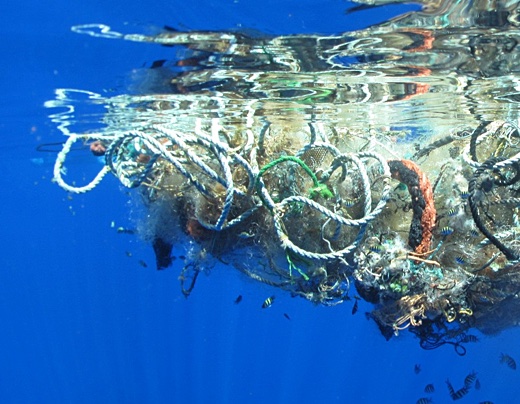
Fragile

SUBHEAD: To recover from ecological crisis, we must transform our who we are in relation to the Earth.

By Peter Reason on 31 May 2017 for Dark Mountain -
(http://dark-mountain.net/blog/fragile/)
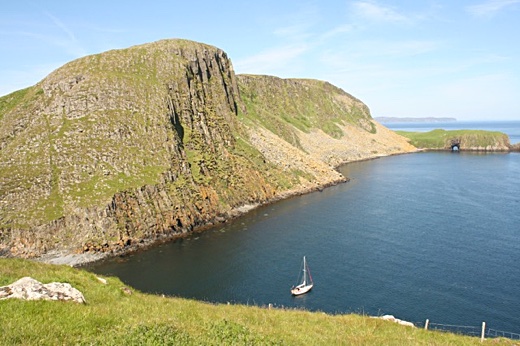

Image above: A small sailboat anchored in the lee of a small island east of Ireland. From original article.

[Dark Mountain Editor's note: ‘To recover from ecological crisis, we humans must transform our sense of who we are in relation to the Earth.’ In 2011 Peter Reason sailed his little yacht Coral from the south coast of England to the west coast of Ireland, a journey recorded in his book Spindrift: A Wilderness Journey at Sea. This week we bring you an excerpt from his latest book In Search of Grace: An Ecological Pilgrimage, which follows the further voyages of Coral to the far north of Scotland.]
 
I steered my little yacht Coral through the confused water of the tidal stream that poured out between Garbh Eilean and Eilean Mhuire. The calm pool opened in front of me, littered with specks of white as if some giant had cast handfuls of torn up paper across the surface.

Soon Coral was surrounded by puffins, with their startling white breasts, the distinctive markings around their eyes and brightly coloured beaks. The air was full of puffins too, so full they seemed more like a cloud of mosquitoes than a flock of birds.

I was in the final stages of my travels, which over two summers had taken me and Coral from the south coast of England, round the west coast of Ireland and through the Western Isles to the far north of Scotland, mainly single handed.

As I turned southward, I made for the small archipelago of the Shiant Islands, an isolated group, separated from Lewis by the Sound of Shiant, notorious for its strong tides, overfalls and underwater hazards.


I saw my travels as an ecological pilgrimage. There is a longstanding tradition in most human societies of making a journey, more or less arduous, away from the comforts of home in search of new insights and deeper understandings.

This practice may be as old as the human species: Mesolithic peoples in Europe certainly made long journeys to the sacred sites marked by stone circles; the Aboriginal people of Australia take extended walks along ‘songlines’, re-enacting the journeys of ‘creator-beings’ during the Dream Time.

The idea and practice of pilgrimage developed in a religious context. One thinks of the requirement of good Muslims to undertake the Hajj at least once in their lives; of the Christian pilgrimages of the Middle Ages and the continuing contemporary practices; of the vast numbers of Hindu devotees who travel to sacred sites on the River Ganges; and of Buddhists who walk the difficult path to circumnambulate Mount Kailash.

In its fullest sense, pilgrimage entails a long journey in search of qualities of moral or spiritual significance, a journey across both outer physical and inner spiritual landscapes. Pilgrims separate themselves from home and familiars, maybe joining a group of like-minded seekers and wearing special clothes or other marks to indicate their pilgrim status.

The pilgrimage journey offers a fluid and imaginative space between the everyday and the eternal, a liminal zone between body and soul, heaven and Earth, humanity and divinity. For it is not easy to move across the boundaries between these worlds when locked in the familiarity of the everyday.

Religious pilgrimages are taken to sacred sites in order to encounter a holy realm for worship and the affirmation of faith, in search of illumination and for healing.

As I conceive it, the ecological pilgrimage seeks a primal, heartfelt connection with the Earth itself and the community of life that has evolved on Earth.

It is also a celebration and an act of homage, honouring the Earth as the more-than-human world of which we are a part, existing for itself rather than for human use.

By taking the pilgrim away from the habits of civilization and by disrupting the patterns of everyday life, pilgrimage offers an opening to a different view of the Earth of which we are a part.


Before I left for Scotland, I read about the Shiant Islands and studied the sailing directions. I learned to pronounce the name properly, in one softened syllable: ‘Shant’.

The little archipelago is made up of three rugged islands: to the west Garbh Eilean and Eilean an Tighe are joined by a natural boulder isthmus; across an open pool to the northeast lies Eilean Mhuire.

Adam Nicolson, whose family have owned the islands for many years writes; 
‘The rest of the world thinks there is nothing much to them. Even on a map of the Hebrides the tip of your little finger would blot them out. But the Shiants… are not modest. They stand out high and undoubtable.’ 
Although keen to visit, I doubted whether it would be possible, for they are very exposed and offer little shelter. But it seemed I was lucky: the weather was quiet, with a smooth sea yet enough wind to sail.

Nevertheless, I approached them with caution, keeping an eye on the tidal streams and carefully noting landmarks.

Once I was safely in the pool and had got over the thrill of seeing so many puffins, I turned my attention to getting Coral settled.

The recommended anchorage is by the isthmus that connects Garbh Eilean and Eilean an Tighe.
This is protected from the prevailing westerly winds, but open to the light easterlies blowing that morning.

Since these volcanic islands rise abruptly from the seabed, the bottom shoals steeply and consists of boulders, so there is sediment of mud or sand into which the anchor can sink and get a good grip.

It took a little while before I was happy that the anchor was holding, with Coral tucked into the corner between the isthmus and the precipitous cliffs of Eilean an Tighe.

With Coral safely anchored, I could look around. I soon realised that there were nearly as many razorbills as puffins in the pool.

They are also auks, but rather bigger, distinguished by a black beak with a white line across it, joining a similar line across the face to the eye.

The razorbills seem on the whole less nervous than the puffins: I watched one swimming within a couple of yards of Coral, quite undisturbed as I moved about the deck.

When it decided to dive I was able to watch it turn tail up and, once underwater, open its wings to fly down beneath Coral’s keel, the bubbles of air around its feathers gleaming as they caught the sunlight.

Looking up again across the pool, I realized that there were tens of thousands of puffins and razorbills, for this is one of the major nesting places in the North Atlantic.

There were, of course, other birds: shags, black-backed gulls, kittiwakes, fulmars, guillemots, and the odd gannet.

For me the most impressive were the skuas, big, heavily built seabirds, brown, with two white stripes on their wing. Skuas are known as ‘kleptoparasites’ because of their habit of stealing food from other birds: I watched one attack a gull, hanging onto its wing as they tumbled together to the water to make it regurgitate its meal.

I am sure that given half a chance they would snatch a puffin chick, as would the big gulls. I imagined the links in the local food chain: marine plankton feeding sand-eels, sand-eels feeding baby birds and baby birds feeding skuas and gulls.

I spent the afternoon sitting in the cockpit watching the birds and enjoying the changing light. A few yachts visited, but none stayed for long; a couple of fishing boats chugged through the pool.

As the long northern evening drew in I began preparations for the night. The weather was calm enough for it to be safe to stay overnight at the islands, but I wanted to move to a more secure anchorage.

The dark cliffs and the stony isthmus looked too close, and if the anchor were to drag Coral would soon be ashore. Even if the light winds persisted through the night, it felt unseamanlike to sleep while she was anchored off a lee shore where there was poor holding.

So I hauled up the anchor and motored round the end of Eilean an Tighe to the western side of the isthmus. This anchorage is open to the swell of the Little Minch and disturbed by the tidal movement through the Sound of Shiant.

Despite this, with the light wind blowing Coral away from the islands, she felt safer. Two Danish yachts had already taken the best positions but I was able to find a spot where the anchor held closer inshore.

In the early evening the crews of the Danish yachts returned from their expeditions ashore, and soon there was a whiff of diesel and rattle of anchor chains as they left the anchorage and disappeared north round the end of Garbh Eilean.

With their departure I felt suddenly alone and vulnerable. I checked the forecast on my iPhone yet again, even though that meant waiting ages for the weak signal to load the page.

I looked again at the anchor chain – it was hanging almost vertical, I had plenty of scope out, so all was well there. I looked about me and consulted the chart to see how I would leave the anchorage in the dark if I needed to – there was sea room to the southwest.

There was no rational reason why I should not stay safely overnight, so I took myself in hand, sat down quietly, made myself breath properly and look out at the world around me rather than inwards to my anxieties. I might feel exposed, just a speck in a vast sky and expanse of sea, but I could relax and appreciate it.

The evening wore on, the light faded and I became enveloped in the quiet mystery of twilight. Coral pitched gently on the light swell. Little waves rolled continuously up to the stony shore and broke with a hollow crash on the boulders.

The mound of Garbh Eilean loomed above me, dark against the evening sky, the details of the basalt columns obscured. Nicolson’s little cottage on Eilean an Tighe stood out ghostly white, then, as the light faded away, merged with the hillside behind.

 Looking over Coral’s stern, past the line of rocks and islets that stretches toward the mainland, I searched the surface of the Sound for a glimpse of the flashing green light on the buoy that marks Damhag. All I could see was the grey sea and the distant hazy line of Lewis.

Through the evening the inexhaustible stream of puffins flew overhead; the skuas and black-backed gulls continued their patrols around the cliff tops. If I peered out to sea I could just make out the white flash of gannets on a late search for fish. I sat out late, enchanted by my surroundings while still feeling strangely vulnerable, reluctant to go to bed.


The word that keeps coming to my mind to describe this evening is ‘fragile’. It captures both the strength and the vulnerability of my situation, of the puffins and of the islands themselves. The Shiants are the nesting ground of one of the last flourishing populations for puffins: huge populations in Iceland and elsewhere have quite suddenly disappeared as climate change has brought warm waters that have disturbed the delicate ecological balance on which they depend.

The basalt columns that form the Shiant Islands appear strong and stable, but are weakly jointed; over time, wind and waves penetrate the joints, allowing large chunks to break away. And indeed of all of us, despite the veneer of civilization, are at root unprotected in a wild world and the wild universe.

Our attention has been drawn to the fragility of Planet Earth by the space program. Ever since the early Apollo missions, pictures of planet Earth from space have been widely available, starting with the most famous ‘Earth Rising’, taken as Apollo 8 emerged from behind the moon.


Image above: Earthrise on Christmas Eve 1968. This photo was taken in black and white from the Apollo Command Module orbiting the Moon. NASA has colorized it from available data. From (https://earthobservatory.nasa.gov/IOTD/view.php?id=82693).

This has been called ‘the most influential environmental photograph ever taken’. For, it is argued, now that humanity can see the Earth alone within the vast reaches of space, we will realise her beauty, fragility and significance and band together to protect and preserve her as our home.

Astronauts report that they spend much of their spare time on missions simply ‘Earthgazing’.

NASA engineer Nicole Stott tells us;
‘I think you start out with this idea of what its going to be like, and then when you do finally look at the Earth for the first time you’re overwhelmed by how much more beautiful it really is…’
Shuttle astronaut Jeff Hoffman goes further;
'Earth looks like a living, breathing organism, but it also at the same time looks extremely fragile’. 
And Ron Garon, who served on the International Space Station, remembers;
 ‘When we look down on the Earth from space we see this amazing, indescribably beautiful planet… It’s really striking and its sobering to see this paper thin layer and to realize that that little paper thin layer is all that protects every living thing on Earth from death’.
Edgar Mitchell, who was the Lunar Module pilot on Apollo 14 and the sixth person to walk on the moon, is one of many astronauts to reflect deeply on their experience. His view is that it is not just that you get see the beauty and fragility from space, but there is also a shift in consciousness which he describes a close to the ancient accounts of savikalpa samādhi.

There is as a direct experience of interconnection:
‘You see things as you see them with your eyes but you experience them emotionally and viscerally as ecstasy and a sense of total unity and oneness…
It’s rather clear to me as I studied this that is was not anything new, but was something that was very important to the way we humans were put together’.
I wonder if the experience of the astronauts was so very far from my own as I sat in the long northern twilight off the Shiant Islands: it was just this kind of direct interconnection that I was seeking on my ecological pilgrimage.

Of course, I am not among those who first saw Earth rising from behind the moon; I have not watched the shadow of night move across the face of the Earth; nor I have experienced the thin blue line of the biosphere clinging to the curve of the planet.

And yet, as Mitchell points out, the astronauts’ experience of oneness is nothing new. I think we may idealize their experience and in doing so see the capability of experiencing oneness as something special, something extraordinary, something for which we have to go outside the planet.

Maybe it is better to see it as a dimension of human consciousness that we modern humans have neglected and marginalised, rather than something only available from outer space.

Maybe a better way to celebrate the astronauts’ experience, the way that ‘Earth Rising’ might change human consciousnesses, the way it might kick-start a true environmental movement, is realise our own capacity for such experiences.

Zen masters teach us not to seek the extraordinary, not to look for special or ‘sacred’ places. To seek that seeking prevents us from seeing what is before our eyes – the specialness of the everyday, how everything rolls together in being and nonbeing, how we are every moment part of a living planet.

These are capabilities that we must bring back to ourselves, and not just to our pilgrimages into the wild, but into our homes, our gardens, our cities, the everyday world around us and our relationships with other humans.


As the darkness finally gathered off the Shiants and day finally rolled into night, my long watch was rewarded by the waxing crescent moon rising, a deep red, between the two dark humps of the islands. The overhead stream of puffins ceased, and I too was at last content to climb down the companionway and sleep.

[Dark Mountain Editor's note: In Search of Grace is the story of an ecological pilgrimage undertaken by the author from the south coast of England, round the west coast of Ireland to the far north of Scotland. It explores themes of pilgrimage, the overall pattern of separation from the everyday, venturing forth and returning home. It tells of meeting wildlife, visiting sacred places, confronting danger, expanding and deepening the experience of time, of silence, of fragility.
It will be published in October 2017 by Earth Books. You can read pre-publication reviews, more excerpts from the book and watch a video describing the journey here.]


.

Connecting the dots - Trump to Brexit

SUBHEAD: How our democracy was hijacked in America and Britain by friends of Donald Trump.

By  Carole Cadwalladr on 7 May 2017 for the Guardian -
(https://www.theguardian.com/technology/2017/may/07/the-great-british-brexit-robbery-hijacked-democracy)

http://www.islandbreath.org/2017Year/06/170603linksbig.jpg
Image above: Diagram of links between Trump, Steve Bannon, Cambridge Analytica and Aggregate IQ, Nigel Farage and Brexit. Click to embiggen. From original article.

A shadowy global operation involving big data, billionaire friends of Trump and the disparate forces of the Brexit campaign influenced the result of the EU referendum. As Britain heads to the polls again, is its electoral process still fit for purpose?

In June 2013, a young American postgraduate called Sophie was passing through London when she was called up by the boss of a firm where she’d previously interned. The company, SCL Elections, went on to be bought by Robert Mercer, a secretive hedge fund billionaire, renamed Cambridge Analytica, and achieved a certain notoriety as the data analytics firm that played a role in both Trump and Brexit campaigns. But all of this was still to come.

London in 2013 was still basking in the afterglow of the Olympics. Britain had not yet Brexited. The world had not yet turned.

“That was before we became this dark, dystopian data company that gave the world Trump,” a former Cambridge Analytica employee who I’ll call Paul tells me. “It was back when we were still just a psychological warfare firm.”

Was that really what you called it, I ask him. Psychological warfare? “Totally. That’s what it is. Psyops. Psychological operations – the same methods the military use to effect mass sentiment change. It’s what they mean by winning ‘hearts and minds’. We were just doing it to win elections in the kind of developing countries that don’t  have many rules.”

Why would anyone want to intern with a psychological warfare firm, I ask him. And he looks at me like I am mad. “It was like working for MI6. Only it’s MI6 for hire.

It was very posh, very English, run by an old Etonian and you got to do some really cool things. Fly all over the world. You were working with the president of Kenya or Ghana or wherever. It’s not like election campaigns in the west. You got to do all sorts of crazy shit.”

On that day in January 2013, Sophie met up with SCL’s chief executive, Alexander Nix, and gave him the germ of an idea.

“She said, ‘You really need to get into data.’ She really drummed it home to Alexander. And she mentioned to him a firm that belonged to someone she knew about through her father.”
Who’s her father?

“Eric Schmidt.”

Eric Schmidt – the chairman of Google?”
I had been speaking to former employees of Cambridge Analytica for months and heard dozens of hair-raising stories, but it was still a gobsmacking moment. To anyone concerned about surveillance, Palantir is practically now a trigger word.

The data-mining firm has contracts with governments all over the world – including GCHQ and the NSA. It’s owned by Peter Thiel, the billionaire co-founder of PayPal and major investor in Facebook, who became Silicon Valley’s first vocal supporter of Trump.

In some ways, Eric Schmidt’s daughter showing up and referring to Palantir is just another weird detail in the weirdest story I have ever researched.

A weird but telling detail. Because it goes to the heart of why the story of Cambridge Analytica is one of the most profoundly unsettling of our time. Sophie Schmidt now works for another Silicon Valley megafirm: Uber. And what’s clear is that the power and dominance of the Silicon Valley – Google and Facebook and a small handful of others – are at the centre of the global tectonic shift we are currently witnessing.

It also reveals a critical and gaping hole in the political debate in Britain. Because what is happening in America and what is happening in Britain are entwined. Brexit and Trump are entwined. The Trump administration’s links to Russia and Britain are entwined.

And Cambridge Analytica is one point of focus through which we can see all these relationships in play; it also reveals the elephant in the room as we hurtle into a general election: Britain tying its future to an America that is being remade - in a radical and alarming way - by Trump.

There are three strands to this story. How the foundations of an authoritarian surveillance state are being laid in the US. How British democracy was subverted through a covert, far-reaching plan of coordination enabled by a US billionaire.

And how we are in the midst of a massive land grab for power by billionaires via our data. Data which is being silently amassed, harvested and stored. Whoever owns this data owns the future.

My entry point into this story began, as so many things do, with a late-night Google. Last December, I took an unsettling tumble into a wormhole of Google autocomplete suggestions that ended with “did the holocaust happen”. And an entire page of results that claimed it didn’t.

Google’s algorithm had been gamed by extremist sites and it was Jonathan Albright, a professor of communications at Elon University, North Carolina, who helped me get to grips with what I was seeing. He was the first person to map and uncover an entire “alt-right” news and information ecosystem and he was the one who first introduced me to Cambridge Analytica.

He called the company a central point in the right’s “propaganda machine”, a line I quoted in reference to its work for the Trump election campaign and the referendum Leave campaign.

That led to the second article featuring Cambridge Analytica – as a central node in the alternative news and information network that I believed Robert Mercer and Steve Bannon, the key Trump aide who is now his chief strategist, were creating.

I found evidence suggesting they were on a strategic mission to smash the mainstream media and replace it with one comprising alternative facts, fake history and rightwing propaganda.


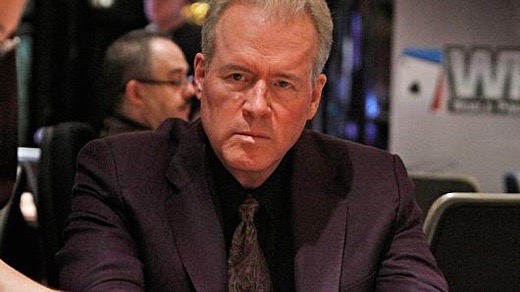
Image above: Robert Mercer in 2012 playing the World Poker Tour. From (http://www.cnbc.com/2014/11/07/robert-mercer-the-most-important-political-money-man-youve-never-heard-of.html).

Mercer is a brilliant computer scientist, a pioneer in early artificial intelligence, and the co-owner of one of the most successful hedge funds on the planet (with a gravity-defying 71.8% annual return). And, he is also, I discovered, good friends with Nigel Farage.

Andy Wigmore, Leave.EU’s communications director, told me that it was Mercer who had directed his company, Cambridge Analytica, to “help” the Leave campaign.

The second article triggered two investigations, which are both continuing: one by the Information Commissioner’s Office into the possible illegal use of data. And a second by the Electoral Commission which is “focused on whether one or more donations – including services – accepted by Leave.EU was ‘impermissable’”.

What I then discovered is that Mercer’s role in the referendum went far beyond this. Far beyond the jurisdiction of any UK law. The key to understanding how a motivated and determined billionaire could bypass ourelectoral laws rests on AggregateIQ, an obscure web analytics company based in an office above a shop in Victoria, British Columbia.

It was with AggregateIQ that Vote Leave (the official Leave campaign) chose to spend £3.9m, more than half its official £7m campaign budget. As did three other affiliated Leave campaigns: BeLeave, Veterans for Britain and the Democratic Unionist party, spending a further £757,750.

“Coordination” between campaigns is prohibited under UK electoral law, unless campaign expenditure is declared, jointly. It wasn’t. Vote Leave says the Electoral Commission “looked into this” and gave it “a clean bill of health”.

How did an obscure Canadian company come to play such a pivotal role in Brexit? It’s a question that Martin Moore, director of the centre for the study of communication, media and power at King’s College London has been asking too. “I went through all the Leave campaign invoices when the Electoral Commission uploaded them to its site in February.

And I kept on discovering all these huge amounts going to a company that not only had I never heard of, but that there was practically nothing at all about on the internet. More money was spent with AggregateIQ than with any other company in any other campaign in the entire referendum. All I found, at that time, was a one-page website and that was it. It was an absolute mystery.”

Moore contributed to an LSE report published in April that concluded UK’s electoral laws were “weak and helpless” in the face of new forms of digital campaigning.

Offshore companies, money poured into databases, unfettered third parties… the caps on spending had come off. The laws that had always underpinned Britain’s electoral laws were no longer fit for purpose. Laws, the report said, that needed “urgently reviewing by parliament”.

AggregateIQ holds the key to unravelling another complicated network of influence that Mercer has created. A source emailed me to say he had found that AggregateIQ’s address and telephone number corresponded to a company listed on Cambridge Analytica’s website as its overseas office: “SCL Canada”. A day later, that online reference vanished.

There had to be a connection between the two companies. Between the various Leave campaigns. Between the referendum and Mercer. It was too big a coincidence.

But everyone – AggregateIQ, Cambridge Analytica, Leave.EU, Vote Leave – denied it. AggregateIQ had just been a short-term “contractor” to Cambridge Analytica. There was nothing to disprove this. We published the known facts. On 29 March, article 50 was triggered.

Then I meet Paul, the first of two sources formerly employed by Cambridge Analytica. He is in his late 20s and bears mental scars from his time there. “It’s almost like post-traumatic shock. It was so… messed up. It happened so fast. I just woke up one morning and found we’d turned into the Republican fascist party. I still can’t get my head around it.”

He laughed when I told him the frustrating mystery that was AggregateIQ. “Find Chris Wylie,” he said.

Who’s Chris Wylie?

“He’s the one who brought data and micro-targeting [individualized political messages] to Cambridge Analytica. And he’s from west Canada. It’s only because of him that AggregateIQ exist. They’re his friends. He’s the one who brought them in.”

There wasn’t just a relationship between Cambridge Analytica and AggregateIQ, Paul told me. They were intimately entwined, key nodes in Robert Mercer’s distributed empire. “The Canadians were our back office.

They built our software for us. They held our database. If AggregateIQ is involved then Cambridge Analytica is involved. And if Cambridge Analytica is involved, then Robert Mercer and Steve Bannon are involved. You need to find Chris Wylie.”

I did find Chris Wylie. He refused to comment.

Key to understanding how data would transform the company is knowing where it came from. And it’s a letter from “Director of Defence Operations, SCL Group”, that helped me realise this. It’s from “Commander Steve Tatham, PhD, MPhil, Royal Navy (rtd)” complaining about my use in my Mercer article of the word “disinformation”.

I wrote back to him pointing out references in papers he’d written to “deception” and “propaganda”, which I said I understood to be “roughly synonymous with ‘disinformation’.” It’s only later that it strikes me how strange it is that I’m corresponding with a retired navy commander about military strategies that may have been used in British and US elections.

What’s been lost in the US coverage of this “data analytics” firm is the understanding of where the firm came from: deep within the military-industrial complex. A weird British corner of it populated, as the military establishment in Britain is, by old-school Tories.

Geoffrey Pattie, a former parliamentary under-secretary of state for defence procurement and director of Marconi Defence Systems, used to be on the board, and Lord Marland, David Cameron’s pro-Brexit former trade envoy, a shareholder.

Steve Tatham was the head of psychological operations for British forces in Afghanistan. The Observer has seen letters endorsing him from the UK Ministry of Defence, the Foreign Office and NATO.

SCL/Cambridge Analytica was not some startup created by a couple of guys with a Mac PowerBook. It’s effectively part of the British defence establishment. And, now, too, the American defence establishment. An ex-commanding officer of the US Marine Corps operations centre, Chris Naler, has recently joined Iota Global, a partner of the SCL group.

This is not just a story about social psychology and data analytics. It has to be understood in terms of a military contractor using military strategies on a civilian population. Us.

David Miller, a professor of sociology at Bath University and an authority in psyops and propaganda, says it is “an extraordinary scandal that this should be anywhere near a democracy. It should be clear to voters where information is coming from, and if it’s not transparent or open where it’s coming from, it raises the question of whether we are actually living in a democracy or not.”

Paul and David, another ex-Cambridge Analytica employee, were working at the firm when it introduced mass data-harvesting to its psychological warfare techniques. “It brought psychology, propaganda and technology together in this powerful new way,” David tells me.

And it was Facebook that made it possible. It was from Facebook that Cambridge Analytica obtained its vast dataset in the first place.

Earlier, psychologists at Cambridge University harvested Facebook data (legally) for research purposes and published pioneering peer-reviewed work about determining personality traits, political partisanship, sexuality and much more from people’s Facebook “likes”.

And SCL/Cambridge Analytica contracted a scientist at the university, Dr Aleksandr Kogan, to harvest new Facebook data. And he did so by paying people to take a personality quiz which also allowed not just their own Facebook profiles to be harvested, but also those of their friends – a process then allowed by the social network.

Facebook was the source of the psychological insights that enabled Cambridge Analytica to target individuals. It was also the mechanism that enabled them to be delivered on a large scale.

The company also (perfectly legally) bought consumer datasets – on everything from magazine subscriptions to airline travel – and uniquely it appended these with the psych data to voter files.

It matched all this information to people’s addresses, their phone numbers and often their email addresses. “The goal is to capture every single aspect of every voter’s information environment,” said David. “And the personality data enabled Cambridge Analytica to craft individual messages.”

Finding “persuadable” voters is key for any campaign and with its treasure trove of data, Cambridge Analytica could target people high in neuroticism, for example, with images of immigrants “swamping” the country. The key is finding emotional triggers for each individual voter.

Cambridge Analytica worked on campaigns in several key states for a Republican political action committee. Its key objective, according to a memo the Observer has seen, was “voter disengagement” and “to persuade Democrat voters to stay at home”: a profoundly disquieting tactic. It has previously been claimed that suppression tactics were used in the campaign, but this document provides the first actual evidence.

But does it actually work? One of the criticisms that has been levelled at my and others’ articles is that Cambridge Analytica’s “special sauce” has been oversold. Is what it is doing any different from any other political consultancy?

“It’s not a political consultancy,” says David. “You have to understand this is not a normal company in any way. I don’t think Mercer even cares if it ever makes any money. It’s the product of a billionaire spending huge amounts of money to build his own experimental science lab, to test what works, to find tiny slivers of influence that can tip an election.

Robert Mercer did not invest in this firm until it ran a bunch of pilots – controlled trials. This is one of the smartest computer scientists in the world. He is not going to splash $15m on bullshit.”

Tamsin Shaw, an associate professor of philosophy at New York University, helps me understand the context. She has researched the US military’s funding and use of psychological research for use in torture. “The capacity for this science to be used to manipulate emotions is very well established.

This is military-funded technology that has been harnessed by a global plutocracy and is being used to sway elections in ways that people can’t even see, don’t even realise is happening to them,” she says. “It’s about exploiting existing phenomenon like nationalism and then using it to manipulate people at the margins.

To have so much data in the hands of a bunch of international plutocrats to do with it what they will is absolutely chilling.

“We are in an information war and billionaires are buying up these companies, which are then employed to go to work in the heart of government. That’s a very worrying situation.”

A project that Cambridge Analytica carried out in Trinidad in 2013 brings all the elements in this story together. Just as Robert Mercer began his negotiations with SCL boss Alexander Nix about an acquisition, SCL was retained by several government ministers in Trinidad and Tobago.

The brief involved developing a micro-targeting programme for the governing party of the time.

And AggregateIQ – the same company involved in delivering Brexit for Vote Leave – was brought in to build the targeting platform.

David said: “The standard SCL/CA method is that you get a government contract from the ruling party. And this pays for the political work. So, it’s often some bullshit health project that’s just a cover for getting the minister re-elected. But in this case, our government contacts were with Trinidad’s national security council.”

The security work was to be the prize for the political work. Documents seen by the Observer show that this was a proposal to capture citizens’ browsing history en masse, recording phone conversations and applying natural language processing to the recorded voice data to construct a national police database, complete with scores for each citizen on their propensity to commit crime.

“The plan put to the minister was Minority Report. It was pre-crime. And the fact that Cambridge Analytica is now working inside the Pentagon is, I think, absolutely terrifying,” said David.


Image above: Steve Bannon in the East Room of the White House on February 15, 2017. Photo by Pete Marovich. From ((http://www.vanityfair.com/news/2017/04/steve-bannon-isnt-through-with-trump-yet).

These documents throw light on a significant and under-reported aspect of the Trump administration. The company that helped Trump achieve power in the first place has now been awarded contracts in the Pentagon and the US state department. Its former vice-president Steve Bannon now sits in the White House. It is also reported to be in discussions for “military and homeland security work”.

In the US, the government is bound by strict laws about what data it can collect on individuals. But, for private companies anything goes. Is it unreasonable to see in this the possible beginnings of an authoritarian surveillance state?

A state that is bringing corporate interests into the heart of the administration. Documents detail Cambridge Analytica is involved with many other right-leaning billionaires, including Rupert Murdoch. One memo references Cambridge Analytica trying to place an article with a journalist in Murdoch’s Wall Street Journal: “RM re-channeled and connected with Jamie McCauley from Robert Thomson News Corp office,” it says.

It makes me think again about the story involving Sophie Schmidt, Cambridge Analytica and Palantir. Is it a telling detail, or is it a clue to something else going on? Cambridge Analytica and Palantir both declined to comment for this article on whether they had any relationship.

But witnesses and emails confirm that meetings between Cambridge Analytica and Palantir took place in 2013. The possibility of a working relationship was at least discussed.

Further documents seen by the Observer confirm that at least one senior Palantir employee consulted with Cambridge Analytica in relation to the Trinidad project and later political work in the US. But at the time, I’m told, Palantir decided it was too much of a reputational risk for a more formal arrangement.

There was no upside to it. Palantir is a company that is trusted to handle vast datasets on UK and US citizens for GCHQ and the NSA, as well as many other countries.

Now though, they are both owned by ideologically aligned billionaires: Robert Mercer and Peter Thiel. The Trump campaign has said that Thiel helped it with data. A campaign that was led by Steve Bannon, who was then at Cambridge Analytica.

A leading QC who spends a lot of time in the investigatory powers tribunal said that the problem with this technology was that it all depended on whose hands it was in.

“On the one hand, it’s being done by companies and governments who say ‘you can trust us, we are good and democratic and bake cakes at the weekend’. But then the same expertise can also be sold on to whichever repressive regime.”

In Britain, we still trust our government. We respect our authorities to uphold our laws. We trust the rule of law. We believe we live in a free and fair democracy. Which is what, I believe, makes the last part of this story so profoundly unsettling.

The details of the Trinidad project finally unlocked the mystery that was AggregateIQ. Trinidad was SCL’s first project using big data for micro-targeting before the firm was acquired by Mercer. It was the model that Mercer was buying into.

And it brought together all the players: the Cambridge psychologist Aleksandr Kogan, AggregateIQ, Chris Wylie, and two other individuals who would play a role in this story: Mark Gettleson, a focus group expert who had previously worked for the Lib Dems. And Thomas Borwick, the son of Victoria Borwick, the Conservative MP for Kensington.

When my article linking Mercer and Leave.EU was published in February, no one was more upset about it than former Tory adviser Dominic Cummings, the campaign strategist for Vote Leave. He launched an irate Twitter tirade. The piece was “full of errors & itself spreads disinformation” “CA had ~0% role in Brexit referendum”.

A week later the Observer revealed AggregateIQ’s possible link to Cambridge Analytica. Cummings’s Twitter feed went quiet. He didn’t return my messages or my emails.

Questions had already been swirling about whether there had been any coordination between the Leave campaigns. In the week before the referendum, Vote Leave donated money to two other Leave groups – £625,000 to BeLeave, run by fashion student Darren Grimes, and £100,000 to Veterans for Britain, who both then spent this money with AggregateIQ.

The Electoral Commission has written to AggregateIQ. A source close to the investigation said that AggregateIQ responded by saying it had signed a non-disclosure agreement. And since it was outside British jurisdiction, that was the end of it. Vote Leave refers to this as the Electoral Commission giving it “a clean bill of health”.

On his blog, Dominic Cummings has written thousands of words about the referendum campaign. What is missing is any details about his data scientists. He “hired physicists” is all he’ll say. In the books on Brexit, other members of the team talk about “Dom’s astrophysicists”, who he kept “a tightly guarded secret”. They built models, using data “scraped” off Facebook.

Finally, after weeks of messages, he sent me an email. We were agreed on one thing, it turned out. He wrote: “The law/regulatory agencies are such a joke the reality is that anybody who wanted to cheat the law could do it easily without people realising.”

But, he says, “by encouraging people to focus on non-stories like Mercer’s nonexistent role in the referendum you are obscuring these important issues”.

And to finally answer the question about how Vote Leave found this obscure Canadian company on the other side of the planet, he wrote: “Someone found AIQ [AggregateIQ] on the internet and interviewed them on the phone then told me – let’s go with these guys. They were clearly more competent than any others we’d spoken to in London.”

The most unfortunate aspect of this – for Dominic Cummings – is that this isn’t credible. It’s the work of moments to put a date filter on Google search and discover that in late 2015 or early 2016, there are no Google hits for “Aggregate IQ”. There is no press coverage. No random mentions. It doesn’t even throw up its website. I have caught Dominic Cummings in what appears to be an alternative fact.

But what is an actual fact is that Gettleson and Borwick, both previously consultants for SCL and Cambridge Analytica, were both core members of the Vote Leave team.

They’re both in the official Vote Leave documents lodged with the Electoral Commission, though they coyly describe their previous work for SCL/Cambridge Analytica as “micro-targeting in Antigua and Trinidad” and “direct communications for several PACs, Senate and Governor campaigns”.

And Borwick wasn’t just any member of the team. He was Vote Leave’s chief technology officer.

This story may involve a complex web of connections, but it all comes back to Cambridge Analytica. It all comes back to Mercer.

Because the connections must have been evident. “AggregateIQ may not have belonged to the Mercers but they exist within his world,” David told me. “Almost all of their contracts came from Cambridge Analytica or Mercer. They wouldn’t exist without them.

During the whole time the referendum was going on, they were working every day on the [Ted] Cruz campaign with Mercer and Cambridge Analytica. AggregateIQ built and ran Cambridge Analytica’s database platforms.”

Cummings won’t say who did his modelling. But invoices lodged with the Electoral Commission show payments to a company called Advanced Skills Institute. It takes me weeks to spot the significance of this because the company is usually referred to as ASI Data Science, a company that has a revolving cast of data scientists who have gone on to work with Cambridge Analytica and vice versa.

There are videos of ASI data scientists presenting Cambridge Analytica personality models and pages for events the two companies have jointly hosted. ASI told the Observer it had no formal relationship with Cambridge Analytica.

Here’s the crucial fact: during the US primary elections, Aggregate IQ signed away its intellectual property (IP). It didn’t own its IP: Robert Mercer did. For AggregateIQ to work with another campaign in Britain, the firm would have to have had the express permission of Mercer.

Asked if it would make any comment on financial or business links between “Cambridge Analytica, Robert Mercer, Steve Bannon, AggregateIQ, Leave.EU and Vote Leave”, a spokesperson for Cambridge Analytica said: “Cambridge Analytica did no paid or unpaid work for Leave.EU.”

This story isn’t about cunning Dominic Cummings finding a few loopholes in the Electoral Commission’s rules. Finding a way to spend an extra million quid here. Or (as the Observer has also discovered) underdeclaring the costs of his physicists on the spending returns by £43,000.

This story is not even about what appears to be covert coordination between Vote Leave and Leave.EU in their use of AggregateIQ and Cambridge Analytica. It’s about how a motivated US billionaire – Mercer and his chief ideologue, Bannon – helped to bring about the biggest constitutional change to Britain in a century.


Image above: Donald Trump, in the White House Rose Garden announcing US exit from Paris Climate agreement on 2 June 2017. From (http://www.cnbc.com/2017/05/31/trump-paris-accord-exit-is-good-for-the-environment-commentary.html).

Because to understand where and how Brexit is connected to Trump, it’s right here. These relationships, which thread through the middle of Cambridge Analytica, are the result of a transatlantic partnership that stretches back years.

Nigel Farage and Bannon have been close associates since at least 2012. Bannon opened the London arm of his news website Breitbart in 2014 to support Ukip – the latest front “in our current cultural and political war”, he told the New York Times.

Britain had always been key to Bannon’s plans, another ex-Cambridge Analytica employee told me on condition of anonymity. It was a crucial part of his strategy for changing the entire world order.

“He believes that to change politics, you have to first change the culture. And Britain was key to that.

He thought that where Britain led, America would follow. The idea of Brexit was hugely symbolically important to him.”

On 29 March, the day article 50 was triggered, I called one of the smaller campaigns, Veterans for Britain. Cummings’s strategy was to target people in the last days of the campaign and Vote Leave gave the smaller group £100,000 in the last week. A small number of people they identified as “persuadable” were bombarded with more than a billion ads, the vast majority in the last few days.
I asked David Banks, Veterans for Britain’s head of communications, why they spent the money with AggregateIQ.

“I didn’t find AggegrateIQ. They found us. They rang us up and pitched us. There’s no conspiracy here. They were this Canadian company which was opening an office in London to work in British politics and they were doing stuff that none of the UK companies could offer.

Their targeting was based on a set of technologies that hadn’t reached the UK yet. A lot of it was proprietary, they’d found a way of targeting people based on behavioural insights. They approached us.”

It seems clear to me that David Banks didn’t know there might have been anything untoward about this. He’s a patriotic man who believes in British sovereignty and British values and British laws. I don’t think he knew about any overlap with these other campaigns. I can only think that he was played.

And that we, the British people, were played. In his blog, Dominic Cummings writes that Brexit came down to “about 600,000 people – just over 1% of registered voters”. It’s not a stretch to believe that a member of the global 1% found a way to influence this crucial 1% of British voters.

The referendum was an open goal too tempting a target for US billionaires not to take a clear shot at.

Or I should say US billionaires and other interested parties, because in acknowledging the transatlantic links that bind Britain and America, Brexit and Trump, so tightly, we also must acknowledge that Russia is wrapped somewhere in this tight embrace too.

For the last month, I’ve been writing about the links between the British right, the Trump administration and the European right. And these links lead to Russia from multiple directions. Between Nigel Farage and Donald Trump and Cambridge Analytica.

A map shown to the Observer showing the many places in the world where SCL and Cambridge Analytica have worked includes Russia, Lithuania, Latvia, Ukraine, Iran and Moldova. Multiple Cambridge Analytica sources have revealed other links to Russia, including trips to the country, meetings with executives from Russian state-owned companies, and references by SCL employees to working for Russian entities.

Article 50 has been triggered. AggregateIQ is outside British jurisdiction. The Electoral Commission is powerless. And another election, with these same rules, is just a month away. It is not that the authorities don’t know there is cause for concern.

The Observer has learned that the Crown Prosecution Service did appoint a special prosecutor to assess whether there was a case for a criminal investigation into whether campaign finance laws were broken.

The CPS referred it back to the electoral commission. Someone close to the intelligence select committee tells me that “work is being done” on potential Russian interference in the referendum.

Gavin Millar, a QC and expert in electoral law, described the situation as “highly disturbing”. He believes the only way to find the truth would be to hold a public inquiry. But a government would need to call it. A government that has just triggered an election specifically to shore up its power base. An election designed to set us into permanent alignment with Trump’s America.

Martin Moore of King’s College, London, pointed out that elections were a newly fashionable tool for would-be authoritarian states. “Look at Erdoğan in Turkey. What Theresa May is doing is quite anti-democratic in a way. It’s about enhancing her power very deliberately. It’s not about a battle of policy between two parties.”

This is Britain in 2017. A Britain that increasingly looks like a “managed” democracy. Paid for by a US billionaire. Using military-style technology. Delivered by Facebook. And enabled by us. If we let this referendum result stand, we are giving it our implicit consent.

This isn’t about Remain or Leave. It goes far beyond party politics. It’s about the first step into a brave, new, increasingly undemocratic world.

Key names

SCL Group
British company with 25 years experience in military “psychological operations” and “election management”.

Cambridge Analytica
Data analytics company formed in 2014. Robert Mercer owns 90%. SCL owns 10%. Carried out major digital targeting campaigns for Donald Trump campaign, Ted Cruz’s nomination campaign and multiple other US Republican campaigns – mostly funded by Mercer. Gave Nigel Farage’s Leave.EU “help” during referendum.

Robert Mercer

 US billionaire hedge fund owner who was Trump’s biggest donor. Owns Cambridge Analytica and the IP [intellectual property] ofAggregateIQ. Friend of Farage. Close associate of Steve Bannon.

Steve Bannon
Trump’s chief strategist. Vice-president of Cambridge Analytica during referendum period. Friend of Farage.

Alexander Nix
 Director of Cambridge Analytica and SCL Group.

Christopher Wylie
Canadian who first brought data expertise and microtargeting to Cambridge Analytica; recruited AggregateIQ.

AggregateIQ
Data analytics company based in Victoria, British Columbia, Canada. Worked for Mercer-funded Pacs that supported the Trump campaign. Robert Mercer owns AggregateIQ’s IP. Paid £3.9m by Vote Leave to “micro-target” voters on social media during referendum campaign. Outside British jurisdiction.

Veterans for Britain
Given £100,000 by Vote Leave. Spent it with AggregateIQ.
 

BeLeave
Youth Leave campaign set up by 23-year-old student. Given £625,000 by Vote Leave & £50,000 by another donor. Spent it with AggregateIQ.

DUP
Democratic Unionist Party of Northern Ireland. Spent £32,750 with AggregrateIQ.

Thomas Borwick
Vote Leave’s chief technology officer. Previously worked with SCL/Cambridge Analytica and AggregateIQ.

ASI Data Science
 Data science specialists. Links with Cambridge Analytica, including staff moving between the two and holding joint events. Paid £114,000 by Vote Leave. Vote Leave declared £71,000 to Electoral Commission.

Donald Trump
US president. Campaign funded by Mercer and run by Bannon. Data services supplied by Cambridge Analytica and AggregrateIQ.

Nigel Farage
Former Ukip leader. Leader of Leave.EU. Friend of Trump, Mercer and Bannon.

Arron Banks
Bristol businessman. Co-founder of Leave.EU. Owns data company and insurance firm. Single biggest donor to Leave – £7.5m.

Some names, ages and other identifying details of sources in this article have been changed
This article was amended on 20 May 2017 to remove a reference to eBay.

.

Time for new Climate Paradigm

SUBHEAD: We need citizens with individual and collective conscious self-limitation beyond domination and hierarchy.

By Yavor Tarinsky on 1 June 2017 for Resilience -
(http://www.resilience.org/stories/2017-06-01/climate-change-and-the-need-for-a-new-paradigm/)


Image above: Cistercian monks at work in wheat field. A detail from the Life of St. Bernard of Clairvaux, illustrated by Jörg Breu the Elder in 1500AD. From (https://commons.wikimedia.org/wiki/File:J%C3%B6rg_Breu_d._%C3%84._002.jpg#mw-jump-to-license).

We live in times where there seems to be a crisis in just about everything – from the so called financial sector, through the contemporary mass migratory processes, to the severe corrosion of the social fabric.

The ruling elites, devoted to the dominant doctrine of economism, advocate for the priority that should be given to the economy, many activists struggle for the humane treatment of migrants, while growing numbers of new age mysticists call for escapism and individual salvation.

One crisis in particular, however, is being unevenly neglected, in comparison with the above mentioned crises – the climate one. There is reason why this serious problem is being constantly postponed by those in seats of power.

Unlike the financial crisis, which offers a wide playground for different economic “shamans” to put forward their theories that do not leave the imaginary of economism, the climate change and the ongoing environmental degradation questions the contemporary dogmas of constant growth and domination, demanding solutions beyond them.

Surely there are international summits and agreements for tackling this problem, but their outcomes are nonbinding and often neglected in the expense of economic “prosperity”.

The climate crisis, as growing number of researches are revealing, will have us pay a dear cost for the wasteful and destructive lifestyle that capitalism promotes. It will even deepen the rest of the ongoing crises.

It is not yet completely clear what exact effects and processes will be triggered by the climate change, but it is increasingly clear that the results will not be favorable to us, unless we decide to change the contemporary dominant paradigm with a new one that will allow us to develop our potential inside the planetary limits.

Climate change and global poverty
Many reports[2] suggest that the ongoing climate change will lead to increasing levels of poverty.

Agriculture is of enormous importance for the countries of the south. It also is the main source of subsistence and sustainability for countless indigenous communities facing hostile private and state enclosure of commons. But it is also among the most sensitive to climate change due to its dependence on fragile weather conditions.

The rapid changes in these conditions will lead to food shortages. Due to climate change there already is a reduction of wheat and maize yields in tropical and temperate regions along with some rice and soybean crops.

Such shortages will lead to rising food prices that will hit the poorest the hardest, while making traditional and sustainable ways of life that do not depend on imports practically impossible. Reports[3} suggest that by the year of 2030 close to 100 million people will fall under the poverty line as a result of climate change.

Climate Refugees
The changes of the planetary climate will influence also the global migratory processes[4]. With the increasing temperatures and the rising sea levels (because of the melting Antarctic ice) many people (climate refugees) will be forced to leave their homes due to flooding or droughts.

Already there are examples of such cases. The Bangladesh’s Bhola Island in 1995 has been partially covered by the rising sea levels, leaving a half-million of its inhabitants homeless.

In another case the population of the island of Tuvalu has made an agreement with New Zealand so as the latter to accept its 11,600 citizens in case the country is submerged under water. Many coastal cities around the world are also vulnerable to sea level rise: Manhattan, New York; London, England; Shanghai, China; Hamburg, Germany; Bangkok, Thailand; Jakarta, Indonesia; Mumbai, India; Manila, Philippines; and Buenos Aires, Argentina.

Droughts and desert expansion are also being boosted by climate change. Countries in North Africa like Libya, Tunisia and Morocco each lose more than 1,000 square kilometers of productive land annually due to desertification.

The Gobi Desert in Asia is expanding with more than 3,600 square kilometers per year, forcing farmers and peasants to migrate to the overpopulated Chinese urban areas.

Unlike the refugees fleeing warzones, the climate (environmental) ones are not protected by international laws[5]. Thus the risks they face when migrating to foreign places are immensely greater. With the expected intensification of the climate change, we will see new phenomena and humanitarian crises because of the specificity of this new type of migratory waves.

Choosing a different paradigm
Climate change will deepen ongoing current crises. It has the potential to radically alter the face of the planet, making our future on it quite uncertain. In a sense it is a holistic crisis. Thus the climate crisis has an existential character that places us on a crossroad – to continue down the road we are currently on, or choose a different path.

That’s why conventional approaches like responsible parliamentarism and green capitalism seems out of place and offer no real solution to climate change.

It is the very logic of domination that is at the root of the contemporary dogma of endless economic growth, which is currently cutting the branch we are sitting on.

Murray Bookchin has profoundly demonstrated throughout his works how the domination of man over man strengthens the domination of man over nature and vice versa. To escape this vicious cycle, society has to abolish domination in all its forms, so crises like the climate one can be avoided.

This requires, however, moving beyond narrow environmentalism, limited to parliamentary lobbyism and green consumerism, because it focuses on specific by-products, rather than targeting the root of the problem that is domination. Instead a new holistic paradigm is needed, based on different logic and values, that can offer tangible imaginary significations to replace the dominant ones of today.

One such paradigm is the project of social and individual autonomy. It counters the contemporary organizational forms of hierarchy and domination with that of direct democracy. In this paradigm it is the citizens that democratically determine the laws and institutions under which they will live, rather than tiny elites.

Thus it directly challenges the domination of man over man, proposing instead the collective self-instituting of all men as equal citizens.

The deliberative nature of the project of autonomy also rejects the logic of endless economic growth. Contemporary capitalist societies do not recognize any limitations. There is no question of whether something should be done or created but only when and how.

The project of autonomy on the other hand entails democratic self-limitation, which overpasses narrow techno-science and places forward the political choice. It is about the citizenry democratically deciding what direction it would like its society to take. To decide to commit collective suicide or to find comfortable place within the given planetary boundaries.

Self-limitation does not mean imposition of austerity or retreat to primitivism but recognizing and determining certain limits, environmental as well as political. Thus the feeling of superiority over nature, promoted by the doctrine of endless economic growth, is being replaced by symbiotic stewardship, exercised collectively by all of society.

Conclusion
The unfolding climate crisis is a holistic crisis and as such it requires a holistic answer. It cannot be resolved by economic “experts”, professional environmentalists or political representatives. What the successful tackling of a crisis with such magnitude requires is radical paradigm change.

The emergence of citizens capable of individual and collective conscious self-limitation beyond domination and hierarchy is what such an alternative approach should entail.

This however can only be done by common people through opening spaces of participation and emancipation that can embed responsibility and autonomy in every sphere of human life.

Endnotes
[1] Dimitrios Roussopoulos in Political Ecology: Beyond Environmentalism (2015), New Compass Press, pp 117/131
[2] http://www.pbs.org/wgbh/frontline/article/un-report-climate-change-will-deepen-poverty-hunger/
[3] https://www.google.gr/amp/relay.nationalgeographic.com/proxy/distribution/public/amp/2015/12/151201-datapoints-climate-change-poverty-agriculture
[4] https://www.nationalgeographic.org/encyclopedia/climate-refugee/
[5] http://climate.org/climate-refugees-exposing-the-protection-gap-in-international-law/

.

Failing Trump spites our climate

SUBHEAD: “Make America Great Again” roughly translates to: “Don’t look to Washington for Help".

By Richard Heinberg on 2 June 2017 for Post Carbon Institute -
(http://www.postcarbon.org/failing-president-spites-climate/)


Image above: View of Trump's Ma-a-Lago Country Club as it will appear after inundation by rising Atlantic Ocean due to global warming caused by increased atmospheric CO2. From (https://www.commondreams.org/news/2017/04/27/what-it-will-look-when-new-orleans-new-york-city-and-mar-lago-disappear-under-rising).


There are a lot of things that make protecting Earth’s climate really hard. Like the fact that fossil fuels are so deeply embedded in our economy and way of life.

Or the fact that all policy makers, in every country and at every level of government, demand more economic growth (even though increasing the size of an economy leads to more energy and materials usage, and hence more carbon emissions).

Or the scary prospect of planetary feedbacks that might increase the scale of climate impacts far beyond scientists’ forecasts.

Add to that list one Donald J. Trump, the likely soon-to-be-indicted president of a nation that’s rapidly careening toward the fracturing of its financial system, the collapse of its geopolitical influence, and the evaporation of whatever ethical basis for world leadership it may ever have claimed.

It’s easy to be cynically dismissive of Trump’s just-announced exit from the 2015 Paris climate accord: the agreement wasn’t strong enough to actually achieve its goals, and Trump will likely be booted from office one way or another before the agreement withdrawal can take practical effect.

However, the symbolism is damning not just of him but of a huge swath of American political culture. Sad.

The one good thing that might emerge from this dreary development is a reinvigorated effort on the part of other nations—plus U.S. state and local governments—to engage in the necessary and inevitable transition away from fossil fuels.

Just as Donald Trump often makes policy decisions simply by noting what Barack Obama did, and then doing the opposite, untold millions worldwide are increasingly adopting a similar attitude toward Trump and his merry band of co-conspirators. If Trump hates climate action so much, there must be something good about it.

The best success stories about climate action never emerged from Washington.

They came instead from places like northern California, where citizens are creating their own nonprofit electric utility companies committed to expanding renewable energy; from Amsterdam and Copenhagen, which have spent decades minimizing the role of the automobile; and from countless villages throughout the Global South where cheap solar cells and LEDs are reducing the burning of biomass for light.

Read between the lines.

“Make America Great Again” roughly translates to: “Don’t look to Washington for examples, guidance, inspiration, or help—especially now. It’s up to you. Get to work!”

Thanks for upping our dedication and zeal, Mr. President.
 
See also:
Ea O Ka Aina: Germany can no longer rely on USA 5/28/17
Ea O Ka Aina: G7 Nations shun Trump 5/27/17
Ea O Ka Aina: Brexit - the system cannot hold 6/24/16

.

Derek Kawakami violated our trust

SUBHEAD: Kawakami should have reported his interest in a marijuana dispensary business as required.

By Editorial Board on 31 May 2017 for Civil Beat -
(http://www.civilbeat.org/2017/05/kauai-councilman-violated-the-publics-trust/)


Image above: Photo of Derrick Kawkami as he says 'I am my mother's son,' talking about how the lei given him by supporters reminds him of his mother, and how he misses not having her with the party.' We think he is a manipulative pol who we now know has been corrupted. From (http://thegardenisland.com/news/local/kawakami-tops-race-for-council/article_08e69100-a2fd-560e-b7d2-b83fa080107b.html).

Financial disclosures are, by their definition, somewhat tantalizing. They offer an inside glimpse into government officials’ personal finances, including their sources of income, their investments, their properties and the businesses in which they have a position or interest.

It’s interesting, for example, to explore the state Ethics Commission website and discover that state Sen. Laura Thielen owns from $50,000 to $100,000 in Microsoft stock.

These disclosures help to balance the scales of power in our democracy, ensuring that public servants remain just that — servants — and that we know and understand their motivations and conflicts of interest as best we can.

Given the importance of these required reports, then, it’s disappointing when government officials don’t disclose what they should.

Civil Beat’s Anita Hofschneider reported last week that Kauai County Council Chairman Derek Kawakami failed to disclose that he owns more than 14 percent of a company that’s trying to become licensed to grow and sell medical marijuana in Hawaii.

Asked about the oversight, Kawakami essentially shrugged his shoulders to Hofschneider, saying “there was nothing to disclose,” since his company, HK Medicinal, did not receive a permit from the Department of Health.

But HK Medicinal is still a functional, active company that is currently fighting in court to overturn the department’s decision. If it wins its appeal, it could end up growing and selling cannabis to thousands of patients on Kauai.

Given the ongoing legal battle, the potential for future business in a somewhat controversial industry and Kawakami’s growing involvement in the firm since the death of his father six months ago, Kawakami’s statement that “there was nothing to disclose” comes off as a total disregard for public accountability.

With all due respect to our local and state officials, it’s not up to them to decide what is and isn’t worthy of disclosure.

This is an important reminder since Wednesday is the deadline for state officials to file their annual financial disclosure statements, and June 30 is the deadline for gifts disclosure statements.

The state Ethics Commission tries to help officials determine what should and shouldn’t be disclosed. It offers regular training sessions, “quick guides” to explain the rules and regulations, and even an on-call lawyer who can answer questions confidentially over the phone or email.

If legislators or state officials have any confusion or doubts about whether something should be disclosed or not, they have easy access to help.

And it’s understandable that officials might need it. The bureaucratic red tape surrounding financial disclosures can be cumbersome. We imagine many officials feel both exposed and annoyed by the process.

But more often than not, it seems like politicians like Kawakami use that frustration as an excuse to gloss over their disclosures, as if no one will actually read or be interested in the details.

In addition to holding public servants accountable, these disclosures — or the lack of them — have a major effect on the public’s trust in government. As the Hawaii state ethics code explains it, all these rules and regulations matter “so that public confidence in public servants will be preserved.”

At the national level, we’ve seen what happens when that confidence erodes — currently, only 20 percent of Americans trust the federal government to do the right thing. Local governments have typically fared better, but oversights like Kawakami’s abuse that trust.

If we don’t demand better, our public servants will end up only serving themselves.


.

Back to the Future

SUBHEAD: But what may happen as things unfold is that you are trapped in place as well as time.

By Juan Wilson on 31 May 2017 for Island Breath -
(http://islandbreath.blogspot.com/2017/05/bck-to-future.html)


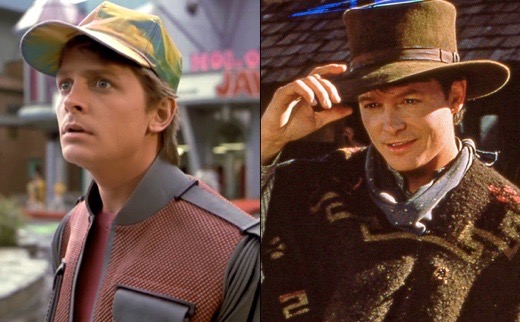
Image above: Michale J. Fox as Marty McFly, the 1985 time traveler as he appeared in 2015 (Back to the Future II) and in 1885 (Back to the Future III). Same guy - same place. From (http://ew.com/article/2015/10/21/back-to-the-future-2-versus-3/).

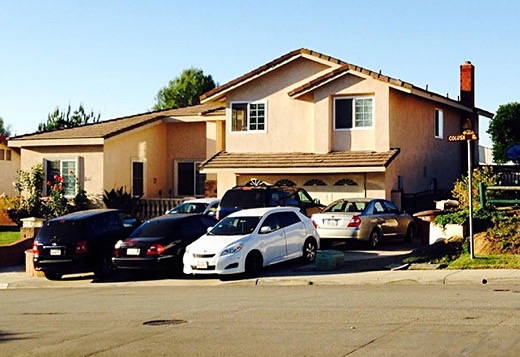
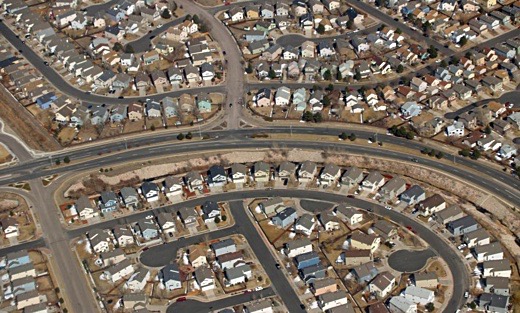
According to the US Census 26% of Americans described where they live as urban, 53% said suburban and 21% said rural. With what appears to be an approaching crunch on resources, energy, food and water availability it would be wise to evaluate where you want to be when the shit hits the fan.

In all likelihood the urban and suburban areas will be less hospitable than the rural areas not long after any significant interruption of truck, rail and sea transport takes place. Food security is an obvious vital requirement for living anywhere for a length of time.

It may be that cities will be serviced longer and better than suburbs. That's because of current arrangements of distribution networks from major hubs.

Urban centers won't have the food security they once enjoyed when the areas around them were filled with truck farms and dairies that were close by - but have since been converted to suburbs.

But, none the less, some, like Ugo Bardi think cities will do better than suburbs after the coming crash. See (http://islandbreath.blogspot.com/2017/05/american-way-of-life-is-negotiable.html). Some cities, like New York, secured vast water resources two centuries ago that could support millions on urban dwellers.

However, places like Phoenix and Los Angeles will not fair well as we regress into the 21st century. Their urban and suburban areas will suffer greatly.

Here in Hawaii we have the potential to weather the oncoming collapse better than most places. Although Oahu's population of almost one million is doomed if it had to rely on that island's resources, the outer islands still have low enough populations that Hawaii, on the whole, could feed and water its people.

Kauai Land Use Plan


Image above: Proposed Land Use Map for Kauai by Juan Wilson presented at the LEGS Sustainability Conference 10/13/07, and published by the Garden Island News in November. Click to enlarge. From (http://islandbreath.org/2007Year/20-HookahiKauai/0720-16LEGSLandUSePlan.html). See also (http://www.islandbreath.org/2007Year/071013LandUsePlan.pdf).

Over ten years ago I wrote about this future though the year 2050, here: (http://www.islandbreath.org/2006Year/22-future/0622-06Part_1_2050.html). I certainly got many things wrong in the view forward. I thought then that tourism would collapse in the near future... tourism (escapism) has never been bigger... yet I believe tourism is still about to fail. I also predicted many things that I thought would have already happened... and didn't. I wrote in the 2006 introduction:
Failure of the Suburban Dream
The sourness of the underlying US economy will be tasted for the first time by many who thought they were immune; they were living in the “non-negotiable life style” of America. But an economy with a foundation of building suburban sprawl and filling it with cheap plastic crap will soon seem quaint and naive.

Our efforts to forestall economic disaster with lower interest rates and taking on more debt will fail. The dollar will further erode as the Chinese and Japanese look at our economic death spiral and decide that it’s time to stop enabling us.

Bottom line: America is heading for an economic collapse worse that the crash of 1929. Many of the same elements of speculation and economic risk taking will be at play but the underlying failure of growth based economy in a world of finite resources will be clearer. There won‘t be an easy way out. Epochal change will be at hand.

The signs of the economic collapse of our growth economy are inescapable. The housing market is tanking. People are stretched too thin with too much debt. There will be mortgage failures. Credit cards bills will go unpaid. Chevy Suburbans will not be sold. Plasma HDTVs will never make it past the demo floor.

The crap could really hit the fan as early as the first half of 2007. It could coincide with the beginning of our exit from Iraq. And that does not mean we should stay there. The alternative to leaving Iraq and dealing with the aftermath is worse for America and the world.

If America, feeling cornered and hungering for a sense of power, chose to be lead by a charismatic fascist the damage would be incalculable. Self delusion might drive us to seek past glory. That leader is likely preach “It’s Not Twilight for America”. The hidden message being it is time to grab what we can from the world and bunker down for the end times.

But the world won‘t put up with that solution for long. Even as the only “superpower”, we had been fairly ineffective fighting people hand to hand in their own neighborhoods. Being in a bigger more widespread war with the world won’t save our idea of civilization.

Sustainable Self-Reliance Can Save Us
Let me say, before we begin, it is my opinion that many negative effects on the future could be controlled or modified by reasonable action today. These actions include increasing energy independence and greatly reducing consumption, achieving a moratorium on speculative development, reforesting mountain foothills, and becoming self sustaining on local food production.

But without a compelling reason (like economics) people are unlikely to make the changes in lifestyle necessary to avoid future trouble. Thus this cautionary tale may even be too optimistic.

In any case, with or without a fascist political sidetrack, America will face what much of the world already faces - at best dealing with self sufficiency and diminishing expectations - and at worst dealing with starvation and barbaric conditions. We can only hope that the effort to obtain sustainable self reliance reaches a level that preserves a fair amount of knowledge, culture, and civilization.
There is a case to be made for staying with Urban - if you are there already. Cities flourished in the past without automobiles or electric lights - even without running potable water and flush toilets.
That is if food and energy are going to be available at a reasonable level when the fossil fuel powered delivery system tanks.

My recommendation for the last decade has been that the State of Hawaii reevaluate it's Land Use. See my Garden Island News article from November 2007. (http://www.islandbreath.org/2007Year/20-HookahiKauai/0720-16LEGSLandUSePlan.html).

It made the point that currently there are four land use designations: Conservation (~47% of land), Agriculture (~47% of land), Urban (~5% of land) and Rural (~1%). I have no problem with Conservation being 47%, but Agriculture, in the form of sugarcane and pineapple plantations is all over. Note that depending on the source and time these percentages vary. Most agree that Urban and Rural make up about 10%.

A new designation should be created I call Forest land. That is land that has no residence or homesteading. Forest land would take the inland half of Agriculture for growing timber trees and food bearing trees that would be sustained indefinitely.  It would also have some pastoral and support hunting.

The lowland half of Agriculture would be converted to Rural Land. Rural Land would support homesteading and residential farms like what is currently done on Rural Land. That centers on growing food: fruit, market vegetable as well as traditional taro and rice. It also means raising horses, tending fish-farms and rearing egg laying and meat birds.

People sense time travel is not possible. We know we cannot go back. But Americans have always felt mobile and that were plenty of wide open space available. We were not trapped in place. There were always new new horizons, new fields to plow, new lakes to fish and new forests to hunt.

Well as the old real estate saying goes: "They aren't making land any more." In fact what's left is being devoured. So get to be where you want to ride out the future pronto. It will only be harder later, and you will need lots of practice up front to live in that future.

But what may happen as things unfold is that you are trapped in place as well as time. If that's the case you will have to make it happen where you are... even if you are in the suburbs or in town.

If you are trapped in place, yet imagine a rural homesteading, my advice is to start doing just that wherever you are. - again - you'll need all the practice you can get at any scale. In a dense suburban settings it is possible to grow a food forest and raised-bed garden.

And even if your a renter and do not control the land you live on, you may be able to convince a landlord of the advantage of cost-free fresh garden produce on his/her table.
.

American way of life is negotiable

SUBHEAD: Communism coming to the US brought by corporations and in the name of technological progress.

By Ugo Bardi on 29 May 2017 for Cassandra's Legacy -
(http://cassandralegacy.blogspot.com/2017/05/why-american-way-of-life-is-negotiable.html)


Image above: “Six cars for one driveway of this house every day. It’s not like they had a party… this is EVERY DAY! Who knows if they actually have more cars inside the garage?” – Jason in California. IB Publisher's note: Even here on the isolated tropical island of Kauai it is not unusual in crowded neighborhoods with small house lots with a two car driveway to find four cars in front of the house - One vehicle for every driving age individual living there. From (http://neighborshame.com/packed-driveway/).

In a previous post, I discussed the RethinkX report by James Arbib and Tony Seba on the future of transportation. The report discusses a technological revolution that would bring about a new concept: "Transportation as a Service" (TaaS) that will people to move mainly by using publicly available, driverless cars.

Many took the report (and my comments on it) as just another technofix aimed at keeping things as they are; business as usual. Indeed, the report, framed the "TaaS" concept in terms of economic growth. Nothing else is acceptable in the public debate, today.

So, it seems that few people realized what kind of sacred cow Arbib and Seba are planning to slaughter and serve as well cooked burgers. It is nothing less than the private car, the pivotal element of the American way of life (yes, exactly what George Bush 1st said "is not negotiable").

This idea is as far from business as usual as I can imagine, one of the most disruptive and revolutionary ideas that I came across in recent times. So, I think I can go more in depth into this subject and explain why it is so disruptive and revolutionary.

The growth in car ownership was the result of a political decision that most Western government took at some moment (Even Adolf Hitler did, at least in part). It was a decision that didn't have to be taken; for instance, the Soviet Government always discouraged private car ownership. But governments, although not benevolent organizations, are made of people and people can recognize a good business when they see it.


Image above: The Volkswagen Bug was introduced to America in the late 1940s but sales did not explode until the early 1960's when interest in the "big finned" gas guzzling Detroit "land yachts" waned.  In the background is a photo of Adolf Hitler inspecting a model of a 1939 VW Bug before World War II. From (http://www.calvertjournal.com/features/show/4235/soviet-mass-housing-novye-cheryomushki-belyayevo-suburbs)

More cars meant more highways, more bridges, more shopping centers, more housing developments, and more opportunities to build things. That meant a lot of money flowing. So, the explosive development of private motorization happened because it could happen.

But, in recent times, the trend is reversing. The number of cars per person and per household is going down. These data by Sivak (2015) seem to be the most recent ones available.

And it is not just the number of cars that's going down, also the number of miles driven per person or per car is falling. The trend is the same in many Western countries: we went through some kind of "peak car".

So, what's going on? One factor is that cars are becoming more expensive.

That's mainly because cars are becoming heavier and more complicated. Today, a classic Volkswagen Beetle would cost very little, possibly less than it did at the time of the great motorization growth of the 1950s. But no insurance company would want to insure it, and no government would provide a license plate for it: too noisy, unsafe, and polluting.

But the increasing cost of ownership is probably a minor factor in comparison to deeper changes that are taking place. The increasing social inequality that leads to a larger and larger fraction of people becoming poor or very poor. See below the behavior of the "Gini Coefficient", a measure of the inequality in society.

So, cars are more expensive and there are more poor people. No wonder that car ownership is going down: a gradually higher fraction of the population cannot afford cars any more.

We shouldn't be surprised: for most of humankind's history, most people would walk; only a few could afford horses or coaches. One car in every garage was a very peculiar phenomenon that couldn't possibly last for a long time and that won't probably ever be repeated in the future. But the end of the cycle may not be painless for many. If you live, or have lived, in a Western suburban area, you know what the problem is.


Image above: Aerial photograph of a Pheonix suburban development, that looks like a computer circuitboard, used as an example of a neighborhood that would make residents sick. From (https://motherboard.vice.com/en_us/article/how-doctors-are-finding-neighborhoods-that-make-their-patients-sick)

There you are: miles away from anything that's not other people's homes. Miles from your workplace, miles from the nearest supermarket, miles from the closest train station. No car means no job, no groceries, no place to go.

By far and large, most families living in Western suburbs still own at least one car. They have to, even though that means an increasingly heavy strain to the family's budget. But, as the current trends continue, there will come a moment in which owning a car will become a burden too heavy to carry for a non negligible fraction of the suburban population. Then what happens?

Well, there are several possible ways for people to cope: biking, carpooling, using donkeys, move to the city to live in a shack made of discarded cardboard containers or, simply, go zombie and die.

Cities are unlikely (to say the least) to establish conventional bus services for the citizens who find themselves stranded in the bloated suburbs: it would be awfully too expensive. So, as it happens in these cases, technological innovation is supposed to come to the rescue. And it does that with the concept of "TaaS" (Transportation as a Service).

It is, basically, a high-tech car rental service where you use a vehicle only when you need it, thanks to the technological marvels of Global Positioning Satellites, automated driving, and electric power.

It is not obvious that TaaS will be less expensive than car ownership in terms of dollars per mile. But, with TaaS, you don't have the fixed costs of owning a car: you can save money by reducing your travels to the bare minimum.

So, you can use TaaS to reach your workplace (if you still have a job) and to reach a supermarket to redeem your food stamps. For the rest of the time, you stay home and watch TV or use the social media. What else do you need?

Arbib and Seba have correctly described in their report how this phenomenon is not going to be gradual: it is going to be explosive. As car ownership goes down, the cost of cars will increase simply because of diminishing economies of scale. Add to it the decreasing profits of the oil industry and the whole thing is going to implode fast, generating a textbook example of the "Seneca Cliff".

By the end of the cycle, people (those who will survive the ordeal) might abandon the suburbs and move into high-rise apartment building that can be serviced by public transportation at reasonable costs. At this point, the American landscape could look much like that of the old Soviet Union.


Image above: The Moscow suburb of Novye Cheryomushki (New Cherry Town) is made up of Soviet style apartment blocks, in the style of French architect Le Corbusier. By 1991 75% of all Soviet housing was in this style of Industrialized housing. It was serviced by mass transit and walking paths, as few Soviet citizens could afford to operate a private car. From (http://www.calvertjournal.com/features/show/4235/soviet-mass-housing-novye-cheryomushki-belyayevo-suburbs)

Eventually, TaaS is just an example of the concept of the "Internet of Things" that's so fashionable nowadays. It means that you won't own things anymore: cars or whatever; you rent them. So, your refrigerator, your TV set, even your toaster, are not your property but of the corporations leasing them to you.

It looks like a good idea, because you can have the latest models and you don't have to worry about maintenance. At least as long as don't run out of credit, because, if you do, your toaster will refuse to toast your bread.

All this sounds like... well, you know what it sounds like. Would you have ever imagined that Communism would come one day to the US brought by corporations and in the name of technological progress? The "American way of life" really turns out to be negotiable.

.

The missing ocean plastic

SUBHEAD: Newly-evolved microbes may be breaking down ocean plastics more than we know.

By Michael LePage on 25 May 2017 for new Scientist -
(https://www.newscientist.com/article/2132650-newly-evolved-microbes-may-be-breaking-down-ocean-plastics/)


Image above: Plastic simply continues to evolve into new ecosystems. From (http://www.techtimes.com/articles/9538/20140702/plastic-debris-covers-88-percent-of-worlds-oceans-much-lower-than-expected-say-scientists.htm).

Plastic. There should be hundreds of thousands of tonnes of the stuff floating around in our oceans. But we are finding less than expected – perhaps because living organisms are evolving the ability to break it down.

Plastic production is rising exponentially, so ever more of it should be ending up in the oceans, says Ricard Sole, who studies complex systems at the Universitat Pompeu Fabra in Barcelona.

.
But surveys of areas where floating plastic accumulates, such as the North Atlantic gyre, are not finding nearly as much plastic as expected.

Mystery of the missing plastics

In fact, there’s only a tenth to a hundredth as much plastic as expected – and the amount of floating plastic does not appear to be increasing. “The trend should be there,” Sole says.

This lack of trend cannot be explained by physical processes, according to his team’s mathematical models. Instead, they propose that there has been a population boom in microbes that have evolved the ability to biodegrade plastic.

Other researchers agree that surveys are finding far less plastic in the oceans than expected. However, they say there are several other possible explanations for this “missing plastic”.

Surprisingly, even if ocean plastic is being degraded much faster than thought, it is not clear that this is a good thing. “It is difficult to say,” says Matthew Cole of Exeter University in the UK.

For instance, biodegradation could be speeding up the breakdown of large pieces of plastic into lots of very tiny pieces, which might have a greater overall impact.

Plastic also contains various additives that could get released and enter the food chain if the plastic part biodegrades, says environmental chemist Alexandra Ter Halle of the Laboratoire des IMRCP in France.

“To really tackle the plastic problem, we need to stop it getting into the oceans in the first place,” Cole says.

The ‘platisphere’

In theory it is possible that some microbes have evolved the ability to break down plastics. Studies by Linda Amaral-Zettler of the Netherlands Institute for Sea Research show that the microbes colonizing floating plastic are quite distinct from those in the surrounding water, and suggest some are feeding on pollutants.

In effect, the plastic is creating a whole new ecosystem that Amaral-Zettler and colleagues call “the plastisphere”.

But when Ter Halle looked at the DNA of the organisms on floating plastic in the North Atlantic, she didn’t find any microbes known to be capable of breaking down plastic. That could be because they have not yet been discovered of course – there could be millions of unknown microbes still.

Amaral-Zettler and Ter Halle think it is more likely that floating plastic is simply sinking to the seafloor as colonising organisms weigh it down, or breaking into such microscopic pieces that it is not being caught in the nets of research vessels. It could also be being swallowed by living organisms, or carried by currents to unexpected parts of the ocean.

The sinking explanation might also be compatible with his findings, says Sole. His study does not prove that microbes are metabolising plastic, but the lack of an upward trend can only be explained by a biological response that can increase in proportion to the amount of plastic.

If a physical process was responsible, there would still be an upward trend, he says.

It is possible that some plastic is being biodegraded, Amaral-Zettler says, but it could be over too long time-scale – a hundred years, say – to explain the missing plastic. And even if it is happening much faster, there would still be a problem.

Plastics are polluting every part of the ocean, from the beaches of remote islands to the deepest parts of the sea. Large pieces of plastic can accumulate in the stomach of animals such as turtles, which then starve to death.

While there may be less than expected, large amounts of floating plastic are found in the subtropical gyres where surface waters circle.

While terms such as the “Great Pacific Garbage Patch” conjure up visions of litter-covered seas, much of the floating plastic in the ocean consists of tiny pieces just a few millimetres wide or smaller, which are not obvious to the naked eye at all. Its impact on marine life is not clear, either.

Various schemes have been proposed to remove this plastic from the oceans, but trying to clean up the oceans is impractical, says Amaral-Zettler. “We need to look at prevention and reduction at the start.”

Journal reference: Biorxiv, DOI: 10.1101/135582

.

We cannot admit it's the Saudis

SUBHEAD: Trump ludicrously accuses Iran of being the source of most terrorism in the Middle East.

By Patrick Cockburn on 28 March 2017 for Strategic Culture -
(https://www.strategic-culture.org/news/2017/05/28/we-know-what-inspired-manchester-attack-we-just-wont-admit-it.html)


Image above: Armed police in aftermath of terrorist attack at the Manchester Arena after Ariana Grande concert. From (http://metro.co.uk/2017/05/23/fundraiser-started-for-homeless-man-who-held-dying-woman-in-manchester-attack-6655996/).

[IB Publisher's note: We also cannot believe that we created Al  Qaeda (and ISIS) by funding Osama Bin Ladin and the Mujahideen to thwart the Soviet Union in Afghanistan in the 1980's.]

In the wake of the massacre in Manchester, people rightly warn against blaming the entire Muslim community in Britain and the world. Certainly one of the aims of those who carry out such atrocities is to provoke the communal punishment of all Muslims, thereby alienating a portion of them who will then become open to recruitment by Isis and al-Qaeda clones.

This approach of not blaming Muslims in general but targeting “radicalisation” or simply “evil” may appear sensible and moderate, but in practice it makes the motivation of the killers in Manchester or the Bataclan theatre in Paris in 2015 appear vaguer and less identifiable than it really is.

Such generalities have the unfortunate effect of preventing people pointing an accusing finger at the variant of Islam which certainly is responsible for preparing the soil for the beliefs and actions likely to have inspired the suicide bomber Salman Abedi.

The ultimate inspiration for such people is Wahhabism, the puritanical, fanatical and regressive type of Islam dominant in Saudi Arabia, whose ideology is close to that of al-Qaeda and Isis. This is an exclusive creed, intolerant of all who disagree with it such as secular liberals, members of other Muslim communities such as the Shia or women resisting their chattel-like status.

What has been termed Salafi jihadism, the core beliefs of Isis and al-Qaeda, developed out of Wahhabism, and has carried out its prejudices to what it sees as a logical and violent conclusion.

Shia and Yazidis were not just heretics in the eyes of this movement, which was a sort of Islamic Khmer Rouge, but sub-humans who should be massacred or enslaved. Any woman who transgressed against repressive social mores should be savagely punished.

 Faith should be demonstrated by a public death of the believer, slaughtering the unbelievers, be they the 86 Shia children being evacuated by bus from their homes in Syria on 15 April or the butchery of young fans at a pop concert in Manchester on Monday night.

The real causes of “radicalisation” have long been known, but the government, the BBC and others seldom if ever refer to it because they do not want to offend the Saudis or be accused of anti-Islamic bias. It is much easier to say, piously but quite inaccurately, that Isis and al-Qaeda and their murderous foot soldiers “have nothing to do with Islam”. This has been the track record of US and UK governments since 9/11.

They will look in any direction except Saudi Arabia when seeking the causes of terrorism. President Trump has been justly denounced and derided in the US for last Sunday accusing Iran and, in effect, the Shia community of responsibility for the wave of terrorism that has engulfed the region when it ultimately emanates from one small but immensely influential Sunni sect.

One of the great cultural changes in the world over the last 50 years is the way in which Wahhabism, once an isolated splinter group, has become an increasingly dominant influence over mainstream Sunni Islam, thanks to Saudi financial support.

A further sign of the Salafi-jihadi impact is the choice of targets: the attacks on the Bataclan theatre in Paris in 2015, a gay night club in Florida in 2016 and the Manchester Arena this week have one thing in common. They were all frequented by young people enjoying entertainment and a lifestyle which made them an Isis or al-Qaeda target.

But these are also events where the mixing of men and women or the very presence of gay people is denounced by puritan Wahhabis and Salafi jihadis alike. They both live in a cultural environment in which the demonisation of such people and activities is the norm, though their response may differ.

The culpability of Western governments for terrorist attacks on their own citizens is glaring but is seldom even referred to. Leaders want to have a political and commercial alliance with Saudi Arabia and the Gulf oil states. They have never held them to account for supporting a repressive and sectarian ideology which is likely to have inspired Salman Abedi.

Details of his motivation may be lacking, but the target of his attack and the method of his death is classic al-Qaeda and Isis in its mode of operating.

The reason these two demonic organisations were able to survive and expand despite the billions – perhaps trillions – of dollars spent on “the war on terror” after 9/11 is that those responsible for stopping them deliberately missed the target and have gone on doing so.

After 9/11, President Bush portrayed Iraq not Saudi Arabia as the enemy; in a re-run of history President Trump is ludicrously accusing Iran of being the source of most terrorism in the Middle East.

This is the real 9/11 conspiracy, beloved of crackpots worldwide, but there is nothing secret about the deliberate blindness of British and American governments to the source of the beliefs that has inspired the massacres of which Manchester is only the latest – and certainly not the last – horrible example.

.