SUBHEAD: Some vital items you better have on hand to support the health of your chickens.
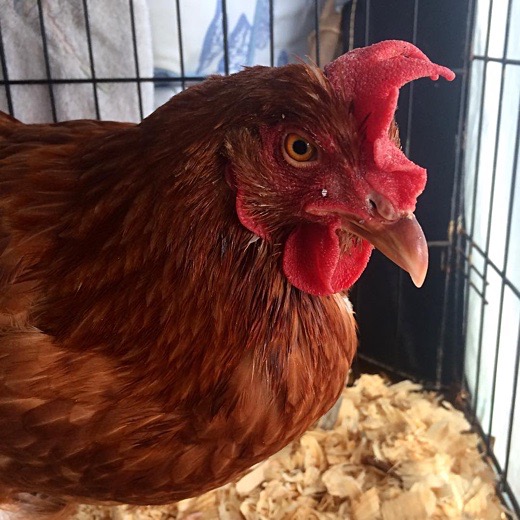
Image above: The hen Dazeywith droopy comb whose owner Natureloover could not save her. From (https://www.backyardchickens.com/threads/i-think-i-have-a-sick-hen-pale-and-droopy-comb.934754/).
By Juan Wilson on 7 June 2017 for Island Breath -
(http://islandbreath.blogspot.com/2017/06/chicken-first-aid.html)
We recently had an older hen pass away. Before she obviously appeared sick we noticed her comb was a little droopy. We've seen this before a few times. Most chickens that have displayed a droopy comb died within a week or so.
The hen Dazey, above, that looked like our chicken before she passed away. Dazey died after muchme effort by her owner, 'Natureloover' to test and treat her. As it turned out Dazey had peritonitis and lymphoma, she ended up losing almost all of her body weight because her food wasn't processing.
But droopy comb can be caused from many things including mites. It is a general sign that something is truly amiss with a chicken.
It is advised to make sure that the hen has not mites on her, and it is recommended worming her with a good broad spectrum wormer that gets more than just roundworm. Look at her stools to make sure there is no blood in them. Avitrol and Wormout gel are both very good. Here is a link: (http://planetpoultry.com.au/15-medications). From (backyardchickens.com/threads/i-think-i-have-a-sick-hen-pale-and-droopy-comb.934754/)
Below are communications between the owner Natureloover, owner of the hen Dazey and another online adviser from BackYardChicken.com

Image above: Dazey displaying advanced droopy comb towards the end of her life. From (https://www.backyardchickens.com/threads/i-think-i-have-a-sick-hen-pale-and-droopy-comb.934754/).
By Jessica W. on 29 May 2017 for Off Grid News -
(http://www.offthegridnews.com/how-to-2/chicken-first-aid-8-vital-items-you-better-have-on-hand/)
Standing at the kitchen counter, early on a Saturday morning, I caught a glimpse of a white blur, closely followed by a large black blur. Turning to look closer, I saw a black dog, not belonging to us, attacking my flock. I lost three to that attack, including our rooster.
Thankfully, one wise hen that was attacked did escape by taking refuge with our farm dog. She had a deep wound under her left wing that healed quite nicely after being cleaned and treated with ointment from our first-aid kit.
From frostbite to predator attacks, our flock has experienced a lot in a few short years. Having a basic first-aid kit — and the knowledge to use it — is essential on the homestead. Chickens will be injured from time to time. Sometimes they hurt each other, sometimes it is a predator attack that can leave them wounded, or perhaps it is just a routine illness.
Below you’ll find a list of basic supplies that any first-aid kit for chickens should have. As always, use caution when using any type of antibiotic or other medication and carefully read the instructions.
1. Disposable gloves
Protect your hands while keeping the wound area free from contaminants by having a supply of disposable gloves readily available. They also prevent infection from spreading and make clean up much easier.
2. Rubbing alcohol
A small bottle of rubbing alcohol is perfect for cleaning wounds.
Be careful not to get the liquid near the bird’s eyes. Hydrogen peroxide also can be used; however, it also kills healthy cells surrounding the wound, so it is best to use it for the initial cleaning.
3. Cornstarch
Cornstarch, styptic powder and Wonder Dust are all useful for stopping bleeding due to broken nails or minor wounds. A small pair of nail clippers to trim broken nails on the spot also should be included to keep them from being further torn.
4. Triple antibiotic ointment
When choosing an antibiotic ointment for your first-aid kit, pick one free of pain-relieving ingredients. The ointment is most useful for preventing infection in wounds and abrasions.
5. Petroleum ointment
Useful as a protectant, petroleum ointment is helpful to fend off frostbite on combs and wattles during extreme cold snaps. It also can be used to treat scaly leg mites. To do this, simply coat the leg with ointment once or twice a week until the leg scales once again lay flat.
6. Blu-Kote
An antiseptic spray, Blu-Kote masks the wound to prevent other hens from pecking at it. It also stops infection and can be used in combination with a triple antibiotic ointment for serious wounds. Carefully spray on affected area as needed. It may take multiple applications each day before the wound has healed sufficiently enough to deter pecking.
7. Oral syringe
For dispensing any liquid medications, an oral syringe is a must. Electrolyte solutions can be easily administered to aid ailing chickens with an oral syringe. For crop issues, specifically a compacted crop, a few drops of a vegetable oil can be given with an oral syringe to loosen and soften the mass, allowing it to pass freely from the crop.
8. Gauze wrap
Occasionally, a wing will be broken and need to be secured. Position the broken wing in a natural position on the bird’s side and wrap the body and wing with gauze to secure it in place. Broken legs can be splinted and wrapped with gauze as well. It is best to isolate the chicken to prevent further injury due to pecking.
Along with these specific supplies, general supplies such as cotton balls, small gauze pads and small scissors are all helpful in emergencies. Keeping all first-aid supplies in a portable kit allows you to easily treat injured chickens on the spot.
.
Image above: The hen Dazeywith droopy comb whose owner Natureloover could not save her. From (https://www.backyardchickens.com/threads/i-think-i-have-a-sick-hen-pale-and-droopy-comb.934754/).
By Juan Wilson on 7 June 2017 for Island Breath -
(http://islandbreath.blogspot.com/2017/06/chicken-first-aid.html)
We recently had an older hen pass away. Before she obviously appeared sick we noticed her comb was a little droopy. We've seen this before a few times. Most chickens that have displayed a droopy comb died within a week or so.
The hen Dazey, above, that looked like our chicken before she passed away. Dazey died after muchme effort by her owner, 'Natureloover' to test and treat her. As it turned out Dazey had peritonitis and lymphoma, she ended up losing almost all of her body weight because her food wasn't processing.
But droopy comb can be caused from many things including mites. It is a general sign that something is truly amiss with a chicken.
It is advised to make sure that the hen has not mites on her, and it is recommended worming her with a good broad spectrum wormer that gets more than just roundworm. Look at her stools to make sure there is no blood in them. Avitrol and Wormout gel are both very good. Here is a link: (http://planetpoultry.com.au/15-medications). From (backyardchickens.com/threads/i-think-i-have-a-sick-hen-pale-and-droopy-comb.934754/)
Below are communications between the owner Natureloover, owner of the hen Dazey and another online adviser from BackYardChicken.com
Hello, thank you in advance for any feedback! One of our hens, Dazey, was diagnosed with gastrointestinal infection and was on antibiotics for coccidious. Even though her stool was negative, she had the symptoms.. After nursing her back to health and finishing her antibiotics, we re-introduced her back to the flock. She was doing well, acting normal, very happy to be back home! Her comb was still very dry, but red. At the beginning of her illness, we noticed a single black dot on her comb, and now I am noticing some more, even smaller, dots. But she was still acting normal. Last night my mother gave them some mealworms (one of her favorite treats) and she didn't seem as interested as she normally would be. Not sure what her comb looked like yesterday as I wasn't around, but today it is very dark and droopy. She's eating and drinking normal. Please help!!! I am very worried about my sweet girl!!!
This is a photo of her before moving her back home with her flock.
Naturelooover
Welcome to BackYardChickens.com. How old is she, and where do you live--is it warm with mosquitoes out now, or wintertime? Can you post a picture of her now with the marks and dark comb? Since she had symptoms of an intestinal disease and was treated for cocci, what were her symptoms then? How does her comb feel now and does it empty by morning? What do her droppings look like? Can you try to add vitamins and electrolytes to her water, and add a little plain yogurt to her feed for probiotics (since she was on antibiotics?) Chickens can suffer from so many different illnesses, and they can also have internal laying problems which cause vague symptoms. Her darker comb may be significant that she is not getting enough oxygen to her heart, but pictures would be good.
Eggcessive
We live in NE Florida, warmest days are in the low 80s right now, coldest nights, low 50s. There haven't been a lot of mosquitoes. She will be three in March, we've had her since she was two weeks old. She was weak, had abdominal pain, diarrhea, and no appetite, her crop was soft, tail feathers were down, and she was very tired. Her stool was negative for worms or any parasites. She is very thin and slightly anemic. We gave her electrolytes in her water, I think it helped tremendously. I will add some to her water in the morning. I just went to check on her, and her comb is not as dark as I thought, but is still very unhealthy. It looks as if it has shrunk, it is very droopy, dry, and discolored. Here is a photo, I hope you can get a better visual.
Naturelooover
I am not a vet, but it's possible that she might be suffering from internal laying or egg yolk peritonitis. Whatever the problem, she looks cery ill. Her comb looks dry, and she could have a little peck mark or insect bite. I would try to make her as comfortable as possible, and try to get her to eat and drink. Bits of egg or runa, feed made liquid with water and plain yogurt are food for feeding sick hens. Keep her warm. Poultry NutriDrench or Poultry Cell are good vitamins with iron and minerals plus amino acids. Antibiotics are sometimes given for internal laying problems, but there is not a lot of success in treatment.
Eggcessive
Image above: Dazey displaying advanced droopy comb towards the end of her life. From (https://www.backyardchickens.com/threads/i-think-i-have-a-sick-hen-pale-and-droopy-comb.934754/).
By Jessica W. on 29 May 2017 for Off Grid News -
(http://www.offthegridnews.com/how-to-2/chicken-first-aid-8-vital-items-you-better-have-on-hand/)
Standing at the kitchen counter, early on a Saturday morning, I caught a glimpse of a white blur, closely followed by a large black blur. Turning to look closer, I saw a black dog, not belonging to us, attacking my flock. I lost three to that attack, including our rooster.
Thankfully, one wise hen that was attacked did escape by taking refuge with our farm dog. She had a deep wound under her left wing that healed quite nicely after being cleaned and treated with ointment from our first-aid kit.
From frostbite to predator attacks, our flock has experienced a lot in a few short years. Having a basic first-aid kit — and the knowledge to use it — is essential on the homestead. Chickens will be injured from time to time. Sometimes they hurt each other, sometimes it is a predator attack that can leave them wounded, or perhaps it is just a routine illness.
Below you’ll find a list of basic supplies that any first-aid kit for chickens should have. As always, use caution when using any type of antibiotic or other medication and carefully read the instructions.
1. Disposable gloves
Protect your hands while keeping the wound area free from contaminants by having a supply of disposable gloves readily available. They also prevent infection from spreading and make clean up much easier.
2. Rubbing alcohol
A small bottle of rubbing alcohol is perfect for cleaning wounds.
Be careful not to get the liquid near the bird’s eyes. Hydrogen peroxide also can be used; however, it also kills healthy cells surrounding the wound, so it is best to use it for the initial cleaning.
3. Cornstarch
Cornstarch, styptic powder and Wonder Dust are all useful for stopping bleeding due to broken nails or minor wounds. A small pair of nail clippers to trim broken nails on the spot also should be included to keep them from being further torn.
4. Triple antibiotic ointment
When choosing an antibiotic ointment for your first-aid kit, pick one free of pain-relieving ingredients. The ointment is most useful for preventing infection in wounds and abrasions.
5. Petroleum ointment
Useful as a protectant, petroleum ointment is helpful to fend off frostbite on combs and wattles during extreme cold snaps. It also can be used to treat scaly leg mites. To do this, simply coat the leg with ointment once or twice a week until the leg scales once again lay flat.
6. Blu-Kote
An antiseptic spray, Blu-Kote masks the wound to prevent other hens from pecking at it. It also stops infection and can be used in combination with a triple antibiotic ointment for serious wounds. Carefully spray on affected area as needed. It may take multiple applications each day before the wound has healed sufficiently enough to deter pecking.
7. Oral syringe
For dispensing any liquid medications, an oral syringe is a must. Electrolyte solutions can be easily administered to aid ailing chickens with an oral syringe. For crop issues, specifically a compacted crop, a few drops of a vegetable oil can be given with an oral syringe to loosen and soften the mass, allowing it to pass freely from the crop.
8. Gauze wrap
Occasionally, a wing will be broken and need to be secured. Position the broken wing in a natural position on the bird’s side and wrap the body and wing with gauze to secure it in place. Broken legs can be splinted and wrapped with gauze as well. It is best to isolate the chicken to prevent further injury due to pecking.
Along with these specific supplies, general supplies such as cotton balls, small gauze pads and small scissors are all helpful in emergencies. Keeping all first-aid supplies in a portable kit allows you to easily treat injured chickens on the spot.
.