Showing posts with label Public. Show all posts

Zuckerberg retreats some

SUBHEAD: Protesters Plotted "Border Wall" rally For at Zuckerberg's sprawling 100 million north shore Kauai property.

By Tyler Durden on 27 January 2017 for Zero Hedge -
(http://www.zerohedge.com/news/2017-01-27/zuckerberg-retreats-protesters-set-rally-border-wall-surrounding-his-hawaiian-estate)


Image above: During construction of the six foot high "Zuckerberg Zombie Wall" that blocked landscape and ocean view along a long stretch of main road that fronted Mark Zuckerberg's elitist retreat. It is as high as the County regulations permit. From (http://blogqpot.com/images/zuckerberg%20hawaii%20property%20wall).

Back in 2014 Mark Zuckerberg paid $100 million to purchase 700 acres of beachfront property on the North Shore of Kauai. The estate includes 1,000's of feet of pristine shoreline providing the perfect "safe space" for the 30-year-old Silicon Valley Billionaire and his family.

Unfortunately, there was just one little problem with the purchase...technically the sellers didn't own the title to all of that land due to the so-called Kuleana Act, a Hawaiian law established in 1850 that for the first time gave natives the right to own the land that they lived on.

So now, according to the Honolulu Star Advertiser, the Facebook billionaire sued a few hundred Hawaiians who still have legal-ownership claims to parts of his vacation estate through their ancestors. Per Yahoo Finance:
Three holding companies controlled by Zuckerberg filed eight lawsuits in local court on December 30 against families who collectively inherited 14 parcels of land through the Kuleana Act, a Hawaiian law established in 1850 that for the first time gave natives the right to own the land that they lived on.

The 14 parcels total just 8.04 of the 700 acres Zuckerberg owns, but the law gives any direct family member of a parcel's original owner the right to enter the otherwise private compound.
And while Zuckerberg's lawyer attempted to downplay the lawsuits as a common practice in Hawaii, we suspect the idea of defending your private property rights against one of the top 10 richest people in the world is somewhat intimidating and slightly less than "normal."
The quiet-title suits filed are designed to identify all property owners and give them the ability to sell their ownership stakes at auction, according to Keoni Shultz, an attorney representing Zuckerberg.

Because the ownership stakes are passed down and divided among family descendants by the state, many people don't realize they have a claim until action is taken against them in court.

“It is common in Hawaii to have small parcels of land within the boundaries of a larger tract, and for the title to these smaller parcels to have become broken or clouded over time," Shultz told Business Insider in a statement. "In some cases, co-owners may not even be aware of their interests.

Quiet title actions are the standard and prescribed process to identify all potential co-owners, determine ownership, and ensure that, if there are other co-owners, each receives appropriate value for their ownership share.”

Of course, the pompous dismissal of property rights isn't the only thing riling up Hawaiian natives regarding Zuckerberg's estate. As The Garden Island pointed out, residents are also slightly less than ecstatic about a massive, 6 foot rock wall erected around the estate and blocking the "view that’s been available and appreciative by the community here for years."

“The feeling of it is really oppressive. It’s immense,” Hall said. “It’s really sad that somebody would come in, and buy a huge piece of land and the first thing they do is cut off this view that’s been available and appreciative by the community here for years.”

"It’s hot behind that wall. Because it’s up on a berm, there’s not a breath of air on this side from the ocean,” Chantara said. “You take a solid wall that’s 10 or more feet above the road level; the breeze can’t go through.”

Another Kilauea resident, Donna Mcmillen, calls the wall a “monstrosity.”

"I’m super unhappy about that. I know that land belongs to Zuckerberg. Money is no option for him. I’m 5’8” and when I’m walking, I see nothing but wall,” Mcmillen said. “It just doesn’t fit in with the natural beauty that we have here. There are people on the island who money can pay for anything. These kind of things that they do take away what Kauai is all about.”
Over the past couple of weeks, intense public backlash over the lawsuit and "immense, oppressive" wall has caused Zuckerberg to backtrack on his plans. Earlier today he published a note to residents in The Garden Island announcing his intentions to drop his litigation saying that "upon reflection, it's clear we made a mistake."
We've heard from many in the community and learned more about the cultural and historical significance of this land. Over the past week, we've spoken with community leaders and shared that our intention is to achieve an outcome that preserves the environment, respects local traditions, and is fair to those with kuleana lands.

To find a better path forward, we are dropping our quiet title actions and will work together with the community on a new approach. We understand that for native Hawaiians, kuleana are sacred and the quiet title process can be difficult. We want to make this right, talk with the community, and find a better approach.

Upon reflection, I regret that I did not take the time to fully understand the quiet title process and its history before we moved ahead. Now that I understand the issues better, it's clear we made a mistake.

The right path is to sit down and discuss how to best move forward. We will continue to speak with community leaders that represent different groups, including native Hawaiians and environmentalists, to find the best path.

Beyond this process, we are also looking for more ways to support the community as neighbors. We have contributed to community organizations and will continue to do so. We work with wildlife experts to preserve endangered species. We hope to do much more in the future.

We love Kaua`i and we want to be good members of the community for the long term. Thank you for welcoming our family into your community.
But, a local farmer, Joe Hart says that Zuckerberg's retreat isn't sufficient and, as of now, vows that the mass protest planned for tomorrow will move forward as "people are furious down here with him."  Per McClatchey:
“People are furious down here with him,” Hart, a local farmer told Business Insider. “We just want to bring this issue to light. He’s made his money stealing everyone’s information, which we’ve let him do, but to come down here and start suing everyone, that’s not going to fly down here.”
Alas, in the end we're sure Zuckerberg will have his way.  After all, what fun is billions of dollars if you can't buy expansive swaths of entire states and trample on the private property rights of some little people?

See also:
Ea O Ka Aina: Zuckerberg sues Hawaiians 1/19/17


.

TPP secret Super Court

SUBHEAD: Financiers will use TPP court to bet on lawsuits against countries, while taxpayers foot the bill.

By David Dayan on 29 August 2016 for Huffington Post -
(http://www.huffingtonpost.com/entry/isds-lawsuit-financing-tpp_us_57c48e40e4b09cd22d91f660)


Image above: Still frame from anti TPP video below. From (https://www.youtube.com/watch?v=xXMJ-_93odY).

A secretive super-court system called ISDS is threatening to blow up President Barack Obama’s highest foreign policy priority.

Investor-state dispute settlement — an integral part of the Trans-Pacific Partnership trade deal — allows companies to sue entire countries for costing them money when laws or regulations change. Cases are decided by extrajudicial tribunals composed of three corporate lawyers.

Buzzfeed, in a multi-part investigation launched Sunday, called it “the court that rules the world.”

Although the ISDS process has existed for years, TPP would drastically expand it. The most common criticisms of the system are that it’s secret, that it’s dominated by unaccountable big-firm lawyers, and that global corporations use it to change sovereign laws and undermine regulations. That’s all true.
But here’s what most of the coverage and the critics are missing.

The ISDS system ― which is now written into over 3,000 international trade treaties, including NAFTA ― was designed to solve a specific problem.

When corporations invest abroad, they fear that their factories might be nationalized or their products expropriated by governments that also control the local courts. ISDS is meant to give companies confidence that if a country seizes their accounts or factories, they’ll have a fair, neutral place to appeal.

But instead of helping companies resolve legitimate disputes over seized assets, ISDS has increasingly become a way for rich investors to make money by speculating on lawsuits, winning huge awards and forcing taxpayers to foot the bill.

Here’s how it works: Wealthy financiers with idle cash have purchased companies that are well placed to bring an ISDS claim, seemingly for the sole purpose of using that claim to make a buck. Sometimes, they set up shell corporations to create the plaintiffs to bring ISDS cases.

And some hedge funds and private equity firms bankroll ISDS cases as third parties — just like billionaire Peter Thiel bankrolled Hulk Hogan in his lawsuit against Gawker Media.

It’s the same playbook that hedge funds were following when they bought up Argentine, Puerto Rican and other U.S. housing debt for pennies on the dollar. As The Huffington Post reported in May, the financiers were betting they could use lawsuits and lobbying to influence the political system in favor of the creditors like them and reap huge rewards.

Indeed, the damage of ISDS goes far beyond the money that investors manage to extract from public coffers and extends to the corruption of a political system by investors who buy off scholars, economists and politicians in pursuit of whatever policy outcome leads to a payoff.

And there’s nothing stopping plutocrats with agendas that go beyond profit-making from getting involved ― again the way Thiel did with Gawker. That alone changes the power dynamic: If you’re the government of Thailand, the billionaire you’re negotiating with has one extra threat at his disposal.

If these investors are able to cement ISDS as part of the Trans-Pacific Partnership, the opportunities for hedge funds to do what they’ve already done to Argentina will be endless ― possibly even in cities and states under financial pressure in the U.S., like Detroit and Illinois.

So-called third-party funding of “international arbitration against foreign sovereigns” has been expanding quickly, according to Selvyn Seidel, a pioneer in the litigation finance industry and now CEO of the advisory firm Fulbrook Capital Management.

“You can get an award for billions of dollars when that award would never come out in domestic law,” said Gus van Harten, a professor at Osgoode Hall Law School at York University in Toronto. “It’s just a jackpot for speculators.”

Here’s an example. In 2008, the Spanish government, under pressure from the eurozone to cut its budget during the financial crisis, began to reverse generous subsidies for solar energy. Spain reduced support for solar in stages. It changed the definition of its main solar incentive program in 2008, reduced the subsidies through two measures in 2010, placed a moratorium on subsidies for new solar plants in 2011, and added further restrictions in 2013.

Renewable energy activists could only shout into the air. But a group of investors hatched a plan.
Between November 2011 and December 2013, 22 different companies sued Spain in seven different cases over the subsidy changes – not in Spanish courts, but using ISDS.

RREEF, an investment fund subsidiary of Germany’s Deutsche Bank, and Antin, a private equity firm owned by French bank BNP Paribas, purchased their Spanish solar-thermal power plants in 2011, three years after the country began to roll back subsidies. But when they went to ISDS, they claimed they had expected subsidies to continue — not to continue declining.

“It feels like they acquired [the solar plants] in order to sue,” said Lora Verheecke, a campaigner for Corporate Europe Observatory, a Brussels-based research organization. Those two cases are still pending; a tribunal order allowed the RREEF case to advance in June.

The facts suggest that these investment funds made their purchases based not on the potential success or failure of the business they bought, not out of a concern for climate change and its consequences, but with the expectation that the Spanish government would continue its subsidy rollback, allowing the funds to sue in a special court unavailable to Spanish citizens. (To be fair, HuffPost can’t prove this to a certainty.)

ISDS represented the purpose of the investment ― or, to phrase another way, the use of ISDS was an asset-building strategy. Spain’s renewable energy subsidies have not been restored. Instead, a cash-strapped government is being forced to spend scarce resources defending a decision that was forced upon it.

Spain isn’t the only government defending these sorts of ISDS claims. Poštová Banka of the Czech Republic bought sovereign debt from Greece in early 2010, well after rating agencies had downgraded the nation’s bonds. Two years later, after European leaders forced a restructuring of all Greek government bonds, Poštová and its shareholder, Istrokapital of Cyprus, filed an ISDS claim, contending that the restructuring cost them millions.

Maybe Poštová bought the distressed bonds knowing that it could use arbitration as a fallback. Or maybe it bought the bonds with the intent to sue and gain a favorable return on its money through ISDS.

In several other cases, investors appeared to opportunistically purchase a company that had the ability to file an ISDS claim at exactly the right time.

In 2004, through one of its investment funds, the French bank Société Générale purchased a 50 percent stake in a public-private partnership to distribute electricity in the Dominican Republic. The purchase included intermediary companies from California, Delaware, Nevada and the Cayman Islands, and the corporate structure is nearly impossible to ascertain.

Because of the complex structure, the listed purchase price was only $2 U.S. (SocGen explained to arbitrators that it also arranged a “deferred purchase fee”). And the heart of the dispute ― the Dominican Republic’s alleged failure to pay negotiated compensation ― occurred years before SocGen made its purchase, according to the country, which argued SocGen was merely “buying a claim.”

Nonetheless, an ISDS tribunal ruled that “the principal objective of the transaction was the potential profitability of the investment.” It found that the Dominican Republic’s violations were ongoing and, through a settlement, awarded SocGen $26.5 million.

Since Greek and Roman times, the wealthy have placed bets on the outcomes of court cases. Under English common law, financing someone else’s lawsuit, known as champerty, was illegal. But the modern version of that, litigation finance ― which began in Australia in the 1960s ― has spread widely over the past two decades.

Investors seeking higher returns on their savings have looked to courtrooms instead of stocks or bonds, agreeing to bankroll cases and taking a portion of the cash awards if they win.

Third-party funding shields corporations from the upfront costs of litigation, making it easier to sue. Since companies generally don’t have to disclose that they’ve received third-party funding for an ISDS case, and since international arbitration usually proceeds in comparative secrecy, pursuing a claim through ISDS can shield companies from the public criticism that accompanies challenging a law in regular courts.

“You can actually ask for enormous amounts of money without anybody criticizing you,” said Verheecke of Corporate Europe Observatory.

With ISDS permitted under some 3,000 treaties, there are a huge number of opportunities to sue. And “unlike some other legal systems, the default remedy is a cash payment,” said Todd Tucker, a fellow at the Roosevelt Institute with a decade of experience researching trade and investment policy. The awards are also uncapped, meaning they can be enormous.

If a corporation sought damages on future profits in perpetuity and the arbitrators agreed, the sovereign would have no recourse. Dozens of cases have resulted in awards of over $100 million, according to a 2016 report from van Harten, the law professor.

Those possibilities have the ISDS claim-financing industry booming. Hedge funds, private equity firms and institutional investors are flocking to fund lawsuits as they would any other speculative asset, according to experts in the field. And the lack of transparency means that lawyers acting as arbitrators or advocates in one case could be unnamed investors in other cases, and nobody would ever know.

Defenders of ISDS argue that the outcome of any case is uncertain and that companies win only about one-quarter of the time. But that’s only the cases that have been publicly identified and it doesn’t include settlements, where the corporation can also extract a monetary award. If funding ISDS suits was really such a bad bet, the industry probably wouldn’t be expanding so quickly.

Fulbrook Capital Management’s primer on the litigation finance industry, updated this year, includes a section entitled “International, the name of the game.” It lists numerous big-city hubs for arbitration: London, New York, Paris, Toronto. About ISDS in particular, the primer reads, “Investment claims against Sovereigns are often subject to Treaty and, within the Treaty, subject to arbitration. This promotes investments. …

While investors are known to shy away from financing claims in ‘third world’ courts, particularly claims against the host court’s sovereign, they view international arbitration in a far more favorable light.”

Between 2009 and 2015, rulings in 16 ISDS cases have noted the existence of third-party funding, according to a report from Jean-Christophe Honlet, a partner at the global law firm Dentons. But the scale of third-party funding for ISDS cases is probably significantly larger than that number suggests.

The International Council for Commercial Arbitration suggests that at least 60 percent of ISDS cases “enquired about (but not necessarily sought or obtained) third-party funding before their cases were lodged.” Just this month, Canadian gold mining company Rusoro won a $1.2 billion claim against Venezuela that was “third-party funded,” according to Global Arbitration Review.

Burford Capital, Bentham IMF and Gerchen Keller are among the biggest litigation finance firms, working closely with these investors and specialized law firms to pursue commercial claims. Burford has publicly stated that it has tested ISDS cases.

While its chief marketing officer, Liz Bigham, would not reveal statistics on how many cases have been funded, she said via email, “Burford is a pioneer in the provision of arbitration finance and has been active in the field for well over a decade.”

She added that “commercial claimants involved in international disputes — as well as the law firms that serve them — see the tremendous benefits of shifting the significant cost and risk of pursuing claims off their own balance sheets.”

British law firm Freshfields is an adviser to Burford, and they have worked together on arbitration claims. Vannin Capital, another litigation funder, recently hired two Freshfields lawyers. The powerhouse law firm is one of the top three for ISDS cases, according to Corporate Europe Observatory.

The financing firms provide clients with a full litigation package at the outset, complete with what treaties to exploit and which law firms to hire. They even recommend arbitrators.

“Loads of law firms actually send alerts to clients,” said Verheecke. The alerts say “this country has just done this. It’s a good opportunity to sue.”

Often, the best country for international investors to sue is one that’s already in trouble. When a country uses emergency economic measures to protect its citizens, investors can argue that those measures conflict with an existing trade treaty. The subsequent flood of lawsuits can further hurt the country’s credit ratings and raise the cost of capital, while undermining its ability to attract future investment.

No country has been sued more in ISDS tribunals than Argentina. Of the 696 ISDS cases in the United Nations Conference on Trade and Development (UNCTAD) database, at least 59 were brought against that one country.

Since late 2001 and early 2002, when it defaulted on international debt and unpegged its currency from the U.S. dollar, Argentina has been forced to pay out $980 million in ISDS awards, in addition to the millions it spent to defend itself in arbitration.

Currently, some 60,000 bondholders are using ISDS to seek higher payouts on the value of Argentine debt. They claim they’re due $1 billion in lost profits because of the damaging effect of Argentine government policies.

Although bondholders are not traditional investors ― in the sense that they don’t actually build factories or sell services in a host country, they too have repeatedly used arbitration to get the highest returns on their debt purchases.

UNCTAD has warned that if those holding bonds that have lost value can access the ISDS back door to sue countries for monetary damages, then no country could ever escape its debt.


Video above: TPP establishes a global Corporate Supreme Court that is above the laws of Nations. From (https://www.youtube.com/watch?v=xXMJ-_93odY).


.

NextEra & Heco play the PUC

SOURCE: John Bond (ewabond@gmail.com)
SUBHEAD: Inexplicably, the Hawaii Consumer Advocate has given NextEra an opportunity to file more direct testimony.

By Henry Curtis on 21 August 2015 for Ililani Media -
(http://ililanimedia.blogspot.com/2015/08/salvaging-heco-nextera-train-wreck.html)


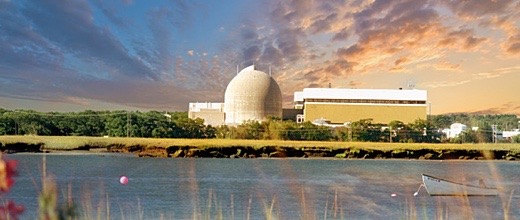
Image above: Photo shows signs of degrading concrete at the aging Seabrook power plant in New Hampshire operated by NextEra. They sold off $760 million of hydro-electric power owned by Seabrook upstream of its cooling water reservoir in order to "concentrate" on "areas with greater growth potential." From (http://enformable.com/2012/04/nextera-and-nrc-to-continue-monitoring-asr-degradation-at-seabrook-station-nuclear-power-plant/).

The Hawaii Public Utilities Commission (PUC) is conducting a contested case proceeding involving NextEra's proposed takeover of the Hawaiian Electric Companies (HECO and subsidiaries MECO and HELCO). The Consumer Advocate is by law a party to the proceedings. The Commission also granted party status to twenty nine intervenors, of whom one has withdrawn.

Twenty eight intervenors from all sectors of society submitted direct testimony in the merger proceedings. All of the intervenors asserted that NextEra's bid to takeover HECO is a bad deal as it is currently configured.

The intervenors include three levels of government (federal, state and county) and three utilities (water, gas and electric). The intervenors include a union, environmental and cultural groups, trade groups, and renewable and fossil fuel companies. (See analysis of testimony from Maui County, Hawaii County, Office of Planning, DBEDT, Department of Defense)

The Governor then asserted that the deal was bad. “We are taking the position that the merger as proposed at this point is unacceptable.”

Three weeks later the Consumer Advocate filed their testimony. Almost every news agency concluded that the Consumer Advocate agreed with all other consumers, the deal is bad. This blog asserted that the Consumer Advocate's testimony could be interpreted as laying out the path towards making the deal acceptable. (Consumer Advocate: Hedging their bets regarding the merger)

On August 31 NextEra will file their rebuttal testimony. By law they must restrict their filing to rebutting adversarial testimony. They may not file responses that supports or reinforces friendly testimony. They may not file new direct testimony.

On August 19, 2015, one month after the 28 intervenors filed their direct testimony, one week after the Consumer Advocate filed their direct testimony, and 12 days before NextEra has to file their rebuttal testimony, the Consumer Advocate has given NextEra an opportunity to file more direct testimony.

The Consumer Advocate is proposing a new procedural step, number five.

1
Applicants’ Direct Testimony
2
Intervenors Direct Testimony
3
Consumer Advocate’s Direct Testimony
4
Applicants’ Responsive (Rebuttal) Testimony
5
Applicants’ New Testimony

The Consumer Advocate wants NextEra CEO Jim Robo and Hawaiian Electric Industries CEO Constance "Connie" Lau to become witnesses.

"Mr. Robo possesses knowledge and information that only he can know and possess concerning the circumstances, events, rationale, and reasoning that resulted in NextEra deciding to acquire the Hawaiian Electric Companies.

Consequently, Mr. Robo, through his personal appearance and testimony, would provide information, evidence, and exchanges which are material and relevant to the issues and questions raised by the Commission."

"Constance H. Lau serves as the President and Chief Executive Officer of HEI. In her capacity as President and Chief Executive Officer of HEI, Ms. Lau made critical decisions that resulted in the merger agreement for acquisition of the Hawaiian Electric Companies by NextEra.

Accordingly, Ms. Lau possesses knowledge and information that only she can know and possess concerning the circumstances, events, rationale, and reasoning that resulted in NextEra’s decision to acquire the Hawaiian Electric Companies."

The Consumer Advocate is not asking for the right to file Information Requests upon two people with key knowledge of the proposed merger. Instead they are asking for the right "to take testimony."

"The Consumer Advocate hereby informs the Commission that it has provided written notice ...to James L. Robo and Constance H. Lau indicating the Consumer Advocate’s intent to take testimony by deposition upon oral examination.

The Consumer Advocate notes that the Commission’s rules do not provide specific procedures or guidance related to the taking of depositions, thus ...if the Commission deems necessary, the Consumer Advocate seeks an order requiring that the following individuals be made available for oral deposition."

On the one hand the two witnesses could reinforce what is already known. The deal is bad and should be rejected. But the record already contains tens of thousands of pages that comes to that conclusion. So say 28 intervenors and the Governor. Additional testimony is not needed.

Or the Consumer Advocate could be trying to find a way to salvage the deal.

Historically, in PUC administrative proceedings in which intervenors were permitted into a regulatory proceeding by the PUC, the Consumer Advocate has signed a settlement agreement with the utility prior to the Evidentiary Hearing. The Consumer Advocate and the utility have agreed not to question each others witnesses.

In many of these cases the Consumer Advocate has taken positions that appeared to be more hard-lined than the utility, that is, the utility position is more reasonable.

In this case, Robo and Lau would be entering direct testimony into the record after the deadline for the intervenors to file their testimony. It could either do little or could tilt the playing field against the public and interfere with the due process rights of intervenors.


$1 Billion hit seen for Ratepayers
SUBHEAD: Nextera using cost control gimmick to soak ratepayers in Hew Hampshire.

By Dave Solomon on 13 Janury 2015 for N.H. Union Leader - 
(http://www.unionleader.com/article/20150201/NEWS05/150209956/0/NEWS02)


Image above: NextEra's website's touched-up idyllic shot of their Seakbrook nuclear plant - the same kind of General Electric boiling water reactors that were built at Fukushima Daiichi, Japan and now poisoning the pacific Ocean.


New England ratepayers will soon be on the hook for a new transmission project that could cost as much as $1 billion when all costs are in, with two energy giants competing for the opportunity. In an unusual move for the regulated utility business, one has guaranteed to get the project done within its bid price, or make up the difference.

A decision by the organization that runs the New England power grid, ISO-NE, is due on February 18th, and the lobbying is reaching a fever pitch. New Hampshire and three other New England states recently urged ISO to consider the cost guarantee in its deliberations.

The upcoming decision on the Greater Boston and Southern New Hampshire Reliability Project is being carefully watched in the six-state region. The outcome could do more than decide who gets to build new and much-needed transmission lines, and collect a guaranteed return of about 10 percent in the process.

It could change the way transmission projects are evaluated to the benefit of ratepayers, according to a wide range of voices that have weighed in on the process.

In one corner stands PSNH owner Northeast Utilities, its partner National Grid, and their AC Plan (for alternating current).

In the other corner is the Florida-based challenger, Nextera - an outgrowth of Florida Power and Light - owner of the Seabrook Station nuclear power plant. Nextera has created a subsidiary - New Hampshire Transmission - to develop, build and manage their project, called SeaLink.

The AC Plan calls for new overhead lines in existing rights of way through Tewksbury, Andover and Dracut, Mass., and Pelham, Hudson, Windham and Londonderry; two new underground cables through several Massachusetts communities, including Boston; and upgrades to existing lines.

The SeaLink plan calls for 68 miles of direct current cable running mostly along the ocean floor, from Seabrook Station to the Mystic substation in Everett, Mass., with 18 miles of line on land buried underground and upgrades to existing lines.

Cost analysis in dispute
Whichever project is approved will be deemed necessary for grid reliability and could obtain property by eminent domain if necessary. But neither the AC Plan nor the Sea Link plan require land-taking, as one relies on existing rights of way and the other is under water or underground.

The biggest issue is cost. And on that score, things are not looking so good for the SeaLink proposal. An independent study of both proposals commissioned by ISO was released in November, and concluded the AC Plan would cost $510 million, compared to $770 million for SeaLink. Both require an additional $221 million in upgrades to existing transmission lines.

The ISO decision on such a project can be nuanced by various factors when the cost estimates are fairly close, according to ISO officials, but when the gap is so wide, cost becomes a pre-eminent factor.

In a letter to SeaLink in December, the ISO outlined eight different criteria it could use in evaluating the two projects, but then went on to say, "However, these factors are typically only utilized where costs are comparable. Where there is a significant cost gap, and each project addresses the identified needs, the ISO will normally make its determination ... based on estimated project costs."

The SeaLink team says the consultant's evaluation was flawed - that the AC Plan costs are under-stated and the SeaLink estimate inflated.

New Hampshire Transmission has taken the unusual step of guaranteeing in writing to ISO that it will build the SeaLink project for $679 million, and will take responsibility for every dime over that amount, according to Matt Valle, NHT president.

That's still more than the $510 million estimate for the AC Plan, but the folks at NHT are claiming it's unlikely the AC Plan will come in at that cost, given what they called a history of cost-overruns on transmission projects in New England.

Late last week, they presented ISO with an analysis of power line projects from 2004 through 2012, claiming that 11 projects by NU or National Grid estimated to cost a combined $2.2 billion ended up costing ratepayers $3.9 billion.

Cost-cap called gimmick
Spokesmen for NU and National Grid disputed that analysis. "We have no idea where those NHT numbers come from," they wrote in an email. "NHT has previously made statements and allegations based on their assumptions about our proposed solution that we have shown to be factually incorrect."

Whatever the cost overruns were, the ratepayers took the hit.

As long as regulators deem the costs were "prudent," utilities are free to exceed their estimates by any amount, and the result is reflected in rates. That puts all the risk on ratepayers, and none on the project builders, according to Valle.

"Until we put this offer on the table, customers were bearing the full risk of cost overruns," he said, "which we demonstrate in our analysis happens a lot in New England."

NU spokesman Martin Murray said the NU/National Grid consortium has no plan to put a cost-containment proposal on the table.

"We really think that this so-called cost cap that they have proposed is a gimmick or an artifice to distract from the fact that there is a quarter of a billion dollar price gap between the two sets of solutions," he said. "ISO doesn't have a process by which it can consider that sort of letter."

And that's the rub, according to a wide range of regulators and governmental officials at the local and state level who have weighed in on the process over the past year. (See related story)

"This idea of transmission projects having cost containment is not new in the industry," said Valle. "It's being done in California, New York and in the (13-state) PJM market. Entities are proposing cost-containment and have been selected on that basis. There is no gimmick here."

Michael Harrington, a former Public Utilities commissioner for New Hampshire and now a private energy consultant, has had a behind-the-scenes look at the transmission construction process, which he said is rife with cost overruns. "The estimates are routinely way short of actual costs and there is no penalty," he said. "It's a huge amount of money ... billions of dollars in New England."

.

Berkeley and Fukushima health risks

SUBHEAD: Berkeley official requests Health Department inform public of elevated risks from Fukushima contamination.

By Kriss Worthington on 3 December 2013 for Berkeley City Council -
(http://www.ci.berkeley.ca.us/Clerk/City_Council/2013/12Dec/Documents/2013-12-17_Item_50_Reduce_Fukushima_Daiichi.aspx)


Image above: Kriss Wothington (left) sits at Berkeley California City Council meeting in 2009 listening to testimony. From (http://www.sfgate.com/bayarea/article/Berkeley-City-Council-meetings-too-long-3242713.php).

[IB Publisher's note: Berkeley California City Council member Kriss Worthington has offered a resolution to be voted on17 Decmeber 2013.

It's purpose is to reduce Fukushima Daiichi nuclear contamination dangers by informing the public of radioisotopes in the ocean and atmosphere so as to determine risks and possible actions to be taken. To see original recommendation (http://www.ci.berkeley.ca.us/Clerk/City_Council/2013/12Dec/Documents/2013-12-17_Item_50_Reduce_Fukushima_Daiichi.aspx)]

RECOMMENDATION
Adopt a Resolution urging the United Nations to form an International Independent Commission of Experts (IICE) to formulate a plan to reduce the radiation being released from the crippled Fukushima Daiichi Nuclear Power Plant, and instructing the City’s Health Department to research and inform the public regarding elevated risk from seafood and other Pacific basin products, and to educate the population of Berkeley regarding specific treatments for radiation exposure and have in place emergency procedures to administer treatment, if necessary, to mitigate radiation exposure.

Copies of the resolution to be sent to the U.N. General Assembly, U.N. Secretary-General Ban Ki-moon, U.S. Ambassador to bthe U.N. Samantha Power President Barack Obama Senator Dianne Feinstein, Senator Barbara Boxer, Congresswoman and Representative to the 68th Session of the U.N. General Assembly Barbara Lee, and Governor Jerry Brown.

BACKGROUND
The March 11 2011 Tōhoku earthquake and tsunami crippled the Fukushima Daiichi Nuclear Power Plant. The meltdown of three of its reactors led to the release of large amounts of radiation.

Nearly three years after the disaster, radiation continues to be released from the plant. Storage tanks holding contaminated water have major leaks, releasing up to 300 tons of radioactive water a day. The Bay Area is situated directly east of Fukushima, causing radiation from the disaster to be detected in the region.

The radiation has raised concerns over contaminated food, whether it is fish in the ocean or food grown in the soil. The biodiversity of the Pacific Ocean is at risk if radiation continues to be released at its current alarming rate.

This leads to the proliferation of radiation in the food chain, eventually exposing humans. The Peace and Justice Commission unanimously approved (9-0-0) of a Resolution to

be presented to the City Council. In it, they urge that the United Nations create acommission that focuses on finding ways to reducing radiation being released from Fukushima Daiichi.

Finding a long term solution to end the leakage of radiation is needed to protect the environment and health.

Kriss Worthington
Councilmember, City of Berkeley, District 7
2180 Milvia Street, 5th Floor,
Berkeley, CA 94704
PHONE 510-981-7170
FAX 510-981-7177
kworthington@ci.berkeley.ca.us

[IB Publisher's note: Recently Fairfax, CA, a town near Berkeley, voted for a resolution for urgent international rescue at Fukushima Daiichi Nuclear Power Plant disaster.]

At the Fairfax California Town Council meeting on 4 December 2013 Council Member Lawrence Bragman said:
I did correspond with the Disaster Preparedness Office, locally, about any preventative measures — and the response was a resounding nothing.
I renewed my correspondence with them last week. I’ve yet to hear a response. […]
In the meantime, no one is monitoring radiation levels on the West Coast, and that is called for in this resolution. Government is not doing its job.

See also:
Ea O Ka Aina: Fukushima and Fairfax California 12/8/13
.

KIUC Special Public Meeting

SOURCE: Ken Taylor (taylork021@hawaii.rr.com)
SUBHEAD: A Spe­cial Pub­lic Meet­ing with the KIUC Board of Direc­tors has been sched­uled for Mon­day evening, Decem­ber 9th at 5pm.

By Jonathan Jay on 2 December 2013 for P2PKauai -
(http://p2pkauai.org/special-public-meeting-kiuc-dec-9th-5pm/)


Image above: Palatial headquarters of KIUC in Lihue. From (http://www.shioihawaii.com/commercial-industrial-portfolio).

WHAT:
KIUC Special Public Meeting on Fairness in Billing

WHEN:
Monday, December 9th, 2013 at 5:00pm

WHERE:
KIUC Headquarters
4463 Pahee Street, Suite 1
Lihue, Hawaii

A Spe­cial Pub­lic Meet­ing with the KIUC Board of Direc­tors has been sched­uled for Mon­day evening, Decem­ber 9th at 5pm. Mark your cal­en­dars for this impor­tant date! We need to flood this meet­ing with sup­port­ers for fair­ness in coop billing will­ing to testify!

Today, the spe­cific issue is fair­ness in billing for all mem­bers of our coop­er­a­tive, but the sub­text is a bat­tle for the heart and soul of the demo­c­ra­tic member-driven coop­er­a­tive YOU want to see on Kauai! Think it is only a dream that we could one day have a healthy func­tion­ing coop­er­a­tive that involves mem­bers in strate­gic deci­sions and respects the rights of all indi­vid­ual mem­bers? You can help make this dream come true! Plug into P2P today!

The stated pur­pose of this meet­ing is for mem­bers to respond and com­ment on the word­ing for the bal­lot lan­guage so KIUC can hear from the pub­lic what YOU think. KIUC needs to hear from mem­bers of the com­mu­nity that we want to see the indi­vid­ual prices of these new fees shown explic­itly on the ballot!

These NEW fees include a one-time set-up fee — rang­ing from $50.64 for res­i­den­tial accounts to $138.80 for busi­ness accounts — as well as a re-occurring monthly fee of $10.27 from all accounts to read the older meters! VOTE “NO” ON NEW FEES !! Mahalo for your participation!!

Click below for a map and direc­tions on how to get to:
KIUC HQ 4463 Pahee Street Suite 1, Lihue, Hawaii:

THE STATE'S ATTORNEY GENERAL
We shall be seeking clarification from the State's Attorney General about the legal accuracy of public statements made by KIUC CEO David Bissell, regarding the impact of the challenge of the board action, and the point of the election itself. 

Does the PUC ruling allow or require KIUC Management to charge these new monthly fees?  Bissell claims that KIUC is bound by law by the PUC to charge the re-occurring monthly fee of $10.27 to traditional meter holders, and is unable to suspend them even though the cooperative is presently re-evaluating whether or not this shall be co-op policy. 

If this is true, does Bissell then assert this would also still hold true after the successful outcome of the election where membership votes down the new surcharges?  If that is the case, then what is the election even for!??  Is KIUC management determined to move forward with the policy of charging new fees for old meters regardless of what the membership says?  The question then looms, who ultimately runs this co-op, the Membership or David Bissell? 

We should seek a statement from Bissell asking if the election doesn't go his way, does he intend to respect the wishes of the membership and stand down on the new surcharges, or will he continue to go it alone and continue charging the Membership?  Where does the buck stop?

Today the three 'Committee Members' of the petition met with a Committee from KIUC to discuss ballot language for the upcoming member-wide vote on the new fees for old meters, and a time-table for the special election which will be sometime in January, exact dates TBD.

Going in, we wanted ballot language that was simple, easy to understand, narrowly focused on the action the board took to approve new fees, and to say what those new fees were.  After about an hour of back and forth, we got three out of four.  Here is what we presently have:
"This ballot allows members of Kaua`i Island Utility Cooperative to approve or reject an action by KIUC Board of Directors.

On October 1st, the board of directors voted to charge service fees to those customers who chose not to use KIUC's "smart meter"

As a member of KIUC, do you approve of the board action?

Yes or No"
"As you can see, there is no mention of just how much the new fees are.  This is a problem.  KIUC management needs to hear from the public on this error of omission.  How can members be expected to vote on new fees if they don't know what they are?"

"KIUC needs to hear from members of the community that we want to see the individual prices of these new fees shown explicitly on the ballot. I hope many members of the community will come to the special public meeting and tell KIUC just that"

See also:
Ea O Ka Aina: KIUC Non-standard meter charge 12/2/13

.

Between a rock and a hard spot

SOURCE: Hope Kallai (lokahipath2@live.com)
SUBHEAD: Developer of 347 acre beachfront property offers public beach access leading to lava rocks.

By Leo Azambuja on 8 October 2013 for the Garden Island -
(http://thegardenisland.com/news/local/between-a-rock-and-a-hard-spot/article_9495d53a-2fe3-11e3-952e-001a4bcf887a.html)


Image above: Lava rock shoreline where public access would be provided at Waikape development. See image bekow for idea of length of sandy beach that will be available to residents of future luxury development. From original article.

A developer behind a 357-acre beachfront property in Waipake on Kauai’s North Shore wants to give the county public beach access as part of a trade off for a proposed residential project.

But the offer — called a grant of easement — doesn’t lead to a white, sandy beach. It goes straight to lava rocks.

Facing the Kauai County Council is the decision whether to accept the offer or try and negotiate with developer Falko Partners for a better access point.

“When I comment I’m going to the beach ... I don’t say I’m going to the rocks,” Moloaa resident Tim Kallai said at a meeting last week when the council took up the issue.

The council deferred making a decision on the matter until a site visit could be made.

The proposed public access to the stunning and remote Waipake Beach, just west of Larsen’s Beach, includes a mile-long walk from Koolau Road, which is OK with the nearby Kilauea Neighborhood Association.

But once reaching the shoreline, beachgoers would have to walk about 200 yards west following a narrow foot path with a 12-foot cliff to their left and lava rocks and the ocean to their right, which could present a potentially dangerous scenario during high-surf in the winter months.

Potential buyers for the 80 already-approved homes at the Kahuaina Plantation subdivision wouldn’t have the same problem. They would have straight access to Waipake Beach, a remote coastline frequented by monk seals, nesting turtles, endangered seabirds and occasional nudists.

Kallai’s concerns, as well as those from his wife, Hope Kallai, had much to do with safety as well as with the legality of Falko Partners having been granted years ago a subdivision on an agricultural parcel to allow 80 homesites to be developed.

A grant of easement is a trade off of sorts that the public gains from a development project.
Attorney Dennis Lombardi, representing Falko Partners, asked the council to accept the easement first, rather than holding the developer “hostage,” and then the two sides could work with providing an easier access point.

The council, however, deferred any decision to Nov. 13, pending a site visit. Council members wanted to find out if the landowner was willing to provide access over an existing foot path following the top of the beach rocks all the way to the sandy beach.

The Land and Farm website has the property listed for sale at $70 million.

“Fully entitled for up to 80 homesites with assigned tax IDs, Kahuaina Plantation is the result of a decade long entitlement effort. Low inventory, a rising market, and huge barriers to entry provide extraordinary investment returns,” states the Land and Farm website.

The Kauai County Council has delayed a decision on approving a proposed residential beachfront development on the island's north shore as it considers public access to a beach.

The Garden Island reports developer Falko Partners has offered access to Waipake Beach over 200 yards of narrow footpath with a 12-foot cliff on one side and lava rocks and ocean on the other.
Buyers for 80 already approved homes at Kahuaina Plantation subdivision would have straight access to the beach.

Hope Kallai attended a council meeting last week. She says the proposed easement is a safety problem.

Falko Partners attorney Dennis Lombardi urged the council to accept the easement and then work out easier access with developers.

Council members deferred a decision to Nov. 13 after a site visit.

Note on developer:
Falko Partners, Real Estate Management
Shawn Smith, Manager
PO Box 588
Kapaa, HI 96746
Phone: (808) 821-1781

[IB Publisher's note: Remember the Paapa Bay Road fiasco? Public right-of-way-access to Papaa Beach was confirmed and denied due to negligence by Kauai County. We've been through this too many times. Developer proposes to screw people on access to public beach -> Kauai Planning Department looks the other way -> beachfront in effect, becomes private property. The people of Kauai won't be fooled again.]

Island Breath: Paapa Beach Access 1/12/2004
Island Breath: Paapa Beach access Confirmed 6/4/04
Island Breath: Second Access to Paapa Beach 10/4/04


DLNR looks into Waipake Violations
 SUBHEAD: A possible violation of state law in Conervation District along shoreline is being investigated at Waipake Beach.

By Leo Azambuja on 9 October 2013 for the Garden Island -
(http://thegardenisland.com/news/local/dlnr-looking-into-possible-violations-at-waipake-beach/article_34ddd210-3127-11e3-ba6b-0019bb2963f4.html)


Image above: Tree subject to recent cutting along Waipake shoreline in Conervation District. Note long sandy beach available exclusively to future residents luxury development. From original article.

A possible violation of state law is being investigated at Waipake Beach.

Tennessee visitors Terry and Jim, who declined to provide their last name, said they were at Waipake Beach at around 2 p.m. Wednesday, when they witnessed a bulldozer clear several heliotrope trees and naupaka plants.

A site visit Thursday morning revealed fresh tractor tracks visible over the sand. The standing trees had branches cut off, tree trunk stubs were sticking out the ground and it appeared much of the naupaka had been cleared.

Developer Falko Partners owns a 357-acre agricultural parcel above Waipake Beach, which was approved for a subdivision eight years ago, and will eventually allow 80 homesites to be developed there.

About 25 acres of land immediately adjacent to Waipake Beach are zoned state conservation lands, according to maps at the county Real Property Tax Division.

Deborah Ward, spokeswoman for the state Department of Land and Natural Resources, said they sent a staff member to Waipake Monday to investigate the issue, and would notify The Garden Island later of any violation regarding the trees.

“If there is any violation, we will bring it to the land board,” said Ward, referring to the state Board of Land and Natural Resources, of which Shawn Smith, of Falko Partners, is Kauai’s representative.

.

No to the Horizontal Well

SUBHEAD: It's like opening a vein in Kauai and letting her bleed out. Written testimony against the Wai'ale'ale Horizontal Drilling Project goes on until 4/20.

[Note: The testimony in this article has been updated. There is a correction to the calculation of pressure of water in testimony below. The PSI at outlet of 24" pipe did not include reduction of pressure due to friction in the rock, which reduces the likely pressure from by almost an order of magnitude. Instead of a hundred atmospheres it is more likely to be dozens. this is in the range of the pressure anticipated by the proponents of the well. The testimonies below have been modified with that recalculation. Apologies are due for our mistake.]

By Juan Wilson & Arius Hopman on 11 April 2013 for Island Breath -
(http://islandbreath.blogspot.com/2013/04/no-to-horizontal-well.html)


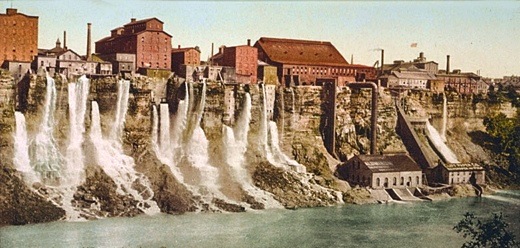
Image above:  Mills using the Niagara River to power, cool and wash their industrial processes. It seemed the right thing to do at the time. From (http://www.loc.gov/pictures/resource/cph.3g06887/).

Comments will be received during the meeting or may be made at (http://kahili.oceanit.com) or (ww.kauaiwater.org)on the link to the Kauai Water System Energy Conservation Project.

Deadline for comments is: April 20, 2013.

Testimony Opposing Wai'ale'ale Horizontal Drilling:

Testimony by Juan Wilson

THE DANGERS
The proposal to drill horizontally into the core of Kauai with a two foot diameter pipe to reach our central fresh water aquifer with a head of thousands of feet should be rejected as unnecessary and fraught with uncounted risks.

I concur with the testimony of Arius Hopman (see below) on the geology of Kauai and the estimate that several dozen atmospheres of pressure may be generated by the horizontal well project, depending on specific site used and the unknown rock formations the drilling will pass through.

My question, as an architect with four years study of structural engineering, is what safety systems are currently capable and included in the design of this project to handle a catastrophic failure of the equipment handing the force of the hydraulic pressures that may be encountered.

QUESTION: Specifically, how can the engineer's of this project demonstrate the safety of this project, particularly with a major tsunami or landslide driven earthquake knocking down the KIUC power grid, Hawaiian Telcom communication system, and taking out long sections of the Kuhio Highway in Wailua-Kapaa?

The engineer's guarantees are worth little on a project that has great complexities, with monumental forces in unserviceable areas.

In 2010 the Deepwater Horizon disaster at British Petroleum's Macondo well leaked millions of gallons of crude oil that has destroyed the aquatic environment of the Gulf of Mexico.  The spectacle of technological failure to cap that well for a protracted time was something
that should be remembered. The full force of the United States government and the richest corporations in the world were helpless to solve the problem at hand.

In 2011 the tsunami that destroyed that cooling pumps and flooded the backup generators at Fukushima Daiichi Nuclear Power Plant has resulted in a continuing discharge great quantities of highly radioactive water into the pacific Ocean to this day. In Hawaii, children under three years old have experienced a 16% increase of hypothyroidism since. The Tepco engineers have no solution in hand more than two years after the disaster. They just keep hosing down the rubble and letting the results enter our ocean.

HIDDEN AGENDA
As an architect and planner with more than thirty years experience, I can guarantee that the resulting energy and 8 million gallons a day is not a plan to simply lower the cost to the public of their electric and water bills. Quite the contrary, this is a plan to increase the population of the island of Kauai by about 50% (the number of people in the Wailua-Kapaa area that now use about that much water from existing wells).

This horizontal well project is the foundation of a real estate play. More suburbia, more shopping plazas, more car traffic, more Oahu. Kauai is not underdeveloped. If, as I see likely, we will soon have to be much more self-reliant and self-sufficient. As it is, Kauai cannot feed itself or provide the power it needs to even light our homes at night. But given its resources Kauai could get there. That certainly is not true of Oahu or even Maui to unsupportably large populations.  

We cannot add tens of thousands of people on this island and reach sustainability in Hawaii. As a planner I ask the proponents of this well project to demonstrate that real-estate speculation is not the driving motivation and goal of this water/energy plan.

QUESTION: Specifically, what exactly is in this plan that guarantees that the additional water and energy will be used only to reduce cost of utilities to the residents of Kauai, and not to allow speculators to develop large tracts of suburban sprawl that will increase traffic in the bottle-necked Kappa-Lihue corridor?

COMPOUNDING THE PROBLEM
The developers of this program have not demonstrated that their horizontal well project will not reduce the volume of water in the aquifer they intend to drill into. They cannot without drilling.

One thing is fairly certain. There is diminished rainfall to this aquifer in recent decades. Rain on Waialeale Mountain is down about 30%. That means less recharging of the aquifer over many years already. The future is looking worse. As the planet experiences global warming the cloud elevations will rise and much water will never be caught at the elevation of Waialelale. Moreover, the north-east Trade Winds have diminished and are expected by climate scientists to be reduced in the weather we will face in the future.

I ask the planners of this project to demonstrate that taking 8 million gallons a day from this aquifer will be made up by the rain expected to fall on Kauai in the future.

QUESTION: Specifically, what climate scientists have you consulted and what reports did they generate to provide support for a continued future replacement of water taken from our aquifer.

RECHARGING NOT DRAINING AQUIFER
The idea that Kauai has a great need for a hydro-electric generator of this kind and scale has not been demonstrated. There are better understood technologies available without the associated risks.

Throughout Hawaii there is great progress being made in providing alternative energy using photovoltaic panels.

Hawaii's generous tax break for PV installations along with the Federal program of tax incentives makes even modest home PV stand alone systems economical. Recently, PV hardware prices have dramatically dropped making PV systems with battery storage affordable for many. 

KIUC has finally adopted the course of using large PV systems with battery backup for stability and continuity of generating capacity. After completing the large installation adjacent to its main generating station at Port Allen, KIUC is moving quickly to adopt solar.

KIUC has identified a hydro-electric system with some potential and with far less unknown and unanticipated potential problems.

That technique is to use some solar PV energy to raise water from a lower reservoir to higher reservoir during daylight hours and then, at night, letting that water run downhill to a generator at the lower reservoir. This is water that would be somewhat "recycled".

There are some existing potential sites for such a system left over from the sugarcane industry, but even this reservoir based hydro-electric system has some problems. There are some non-GMO agricultural uses that would like to replace sugarcane and utilize those sites.

Certainly, food production is a more critical need in Hawaii than energy production. Hawaiians lived rich lives on these islands for a thousand years without electricity.

A water plan for Kauai should look to reforesting barren parts of the land that were stripped and used for sugarcane. The ditches of diverted water should be used to this end. The greening of the hillside helps hold the cloud cover and would recharge their aquifers. It would slow down the rush of fresh water off the island.

QUESTION: Specifically, I ask the planners of this project to detail how their horizontal well will recharge our aquifers and slow the movement of fresh water off Kauai?


Testimony by Arius Hopman


My name is Arius Hopman, I hold a degree in geology with honors, and have been a business owner on Kauai for 16 years and resident of Hawaii for 25 years. As a professional geologist, I find the proposed horizontal drilling with a 24 inch diameter pipe disturbing and unscientific. The consequences of such a project have not been properly thought out and are skewed towards profiteering. All Kauai residents need to become informed and ask all the serious questions before this project can proceed.

Introduction:
 the geology of the island is complex and the interior of Waiale'ale is not well understood. The permeable volcanic rocks extruded from the floor of the Pacific is magnesium and iron rich and flows into the dome-like volcanoes typical of these islands. Before the “hot spot” of liquid magma moves on, it pushes up with great pressure against the extruded dome, causing it to crack more or less vertically. The high pressure magma is then intruded from below into the cracks where it cools and solidifies into dykes. Because of the pressure, the rock in these dykes is much denser than the surrounding basalt, causing near water-impenetrable walls. Dykes can be seen in the Waimea Canyon criss-crossing the eroding walls. They extend three-dimensionally into the depth of the mountain.

Imagine hundreds of these near-impenetrable walls intersecting each other at all angles. With time, the basalt weathers and the dykes crack. Rainwater seeps in from above, filling both perched water tables and aquafers. Hundreds of springs develop where these water tables and aquifers come to the surface of the eroding island. Not much is known about the intricate hydrology in the heart of this island.

But not only are springs affected by the trapped water and the water-column pressure above the springs. There are "gaining" streams, which increase their flow from aquafers (ie.springs in-or near the streams), and "loosing" streams that seep water into the aquafers. Complexity is added by the many ditches, tunnels and wells drilled over time.

Alert:
Before we unbalance this complex hydrology, we need to understand much more carefully what the consequences are!

Add to this picture additional human elements, specifically special interests (ie. greed), that want to exploit public assets for private gain. Let us be clear from the start: all natural water on the island is a public resource. Only the public has the right to determine if- and how it is used. Neither the Department of Water, nor the State have any ownership of the public water. We, the citizens have elected and appointed our public servants to steward and malama all natural resources.

Any action taken must also consider the impact on our precious and fragile environment, especially now, during these decades of extended drought resulting from human-induced global warming: Rain catchment records show that the centuary-average annual rain at Waiale'ale was 423". But from 1995 to 2011 the average rainfall had dropped to 353"/year.

Alert: 
A University of Hawaii study concludes that Trade winds, that bring most of the rain, have decreased by 30%-40% over the last 40 years. This should be a wake-up call.

Questions:

---This decrease in annual railfall must be taken into account in our environmental assessment: To put it simply, our water supply is decreasing at an accelerated rate. Is this a wise time to tap and drain down our primary water supply?

--- Has the annual and/or dry season flow of all major streams and springs been measured and documented? Are these documents available to the public? If not, how can we insure that we are not destroying the natural flow of springs and streams by drilling and extracting?
---Does the effect of the extended drought show up in any of the recorded stream and spring flow rates?


---What contingency plan does the DOW have if springs and streams are negatively affected, either by drought or drilling?


---Do we plan to once again sacrifice the environment... especially during this drying trend!?


---Have we reached our "peak of water" as in many other parts of the world? If so, what is the most responsible decision, for the many future generations to come?


---What would the sustainable consumption of water look like on Kauai, and has sustainable consumption been taken into account?


---What are the economic pressures affecting this rush to drill?


---The average water consumption of the Kapa'a/Lihue population is 6 million gallons/day. A sudden influx of 8mm GPD would either waste water needlessly or cause a rapid flurry of development. Is development the hidden agenda behind the innocent-sounding proposal for hydro-electric generation?

---What additional environmental impacts would such a surge of development have on all aspects of Kauai life?

---Isn't water the primary tangible public asset in this project, and the hydraulic energy a mere byproduct?? Yet the spin is that we need "clean" hydraulic energy. Isn't that public deception?

---Does anybody know the hydrological water head (column of water), and therefore the water pressure at the proposed drilling source under the mountain? ---...And if not, how can one determine the volume of water exiting the pipe daily?

---On Big Island in one drilling, the water column was 2000 feet. A column of water 24 feet high is one atmosphere of pressure. How many atmospheres have been calculated here and what factors/assumptions that went into the calculation? Can we risk drilling before knowing?


--- A 24" diameter pipe at, say a column of water 2000 foot high... Isn't the estimated additional 8mmGPD (eight million gallons/day) outflow a considerable underestimate?


---It is estimated that the flow of water from the Makaleha Spring is approximately 1,000,000 gallons per day. Yet the cumulative opening at this spring is much less than 6 inches diameter, and more like 3 or 4 inches. Isn't a 24 inch pipe vastly oversized for the water needs of Kauai?

---How can the Kauai Department of Water, which is NOT a public service, but rather a semi-private hybrid, possibly make unbiased decisions in the service of Kauai residents? Please explain and pledge in detail. If this project is pono, this should be an easy task.

---IF NOT 100% PONO,shouldn't the DOW recuse itself from this project, or become a fully public service-oriented (not semi-private) County Department?

---Were studies of ground water samples that found atrozene and other chemicals in the samples initiated before or after the horizontal well project was conceived? Wouldn't such chemicals be the perfect excuse to "drill, baby, drill"?... Rather than take responsibility and clean up the mess the plantations and GMO Co's have left us?

---Have any developers/real estate agents been involved in any way in the planning of this project?

---What is the connection between this proposed project and the Public Land Development Corp.?

---Isn't this the perfect "back door" to PLDC-style development?

--- Who ultimately profits from this project? Detailed response requested.

---Is there transparency in all aspects of this project? Please answer.

---The cost of new water meters has skyrocketed in recent years. If there is a sudden rush of development, what happens to that cost and who profits?

---Are there any documents available to the public that outline all details, and future profits from this project?

See also:
Ea O Ka Aina: Scoping Meeting on Horizontal Well  4/2/13

.

PLDC effort has earned disrespect

SUBHEAD: Hawaii governor Abercrombie is sending DLNR chairperson Aila to try and sell the PLDC to the public.

By Andy Parx on 23 November 2012 for Parx News Daily -
(http://parxnewsdaily.blogspot.com/2012/11/what-you-want-baby-i-got-it-apparently.html)


Image above: Neil Abercrombie and William Aila tour Big Island. From (http://www.flickr.com/photos/neilabercrombie/5531393027/in/photostream/lightbox/).

Apparently opposition to the Public Lands Development Corporation (PDLC) has snowballed to the point where Governor Neil Abercrombie has, in a face saving operation, abandoned his paternalist patter of telling opponents they're too dumb to understand it all.

In a statement Friday, Abercrombie announced he would ask the PDLC board to abandon their rule-making for a spell until he can send his Department of Land and Natural Resources (DLNR) chief Bill Aila out into the community to give it the one last try before the legislature- now under new management in the house- starts the process to repeal Act 55.

The "dissidents" that have taken over the house are, for the most part, those who have said they would at least consider repeal, while the "out" faction is comprised, for the most part, of those who created the PLDC in the first place and have opposed repeal.

And in the senate even Sen. Donovan Del Cruz, who played a major role in sneaking the bill through in the first place, is- homana, homana, homana- making like Ralph Kramden as it becomes clear his latest get-rich-quick scheme has blown up in his face.

That has led some opponents to warn others to treat Aila with "respect" if we expect to see him take home a "no can" message. As former Senate Majority Leader and current Kaua`i Councilmember- elect Gary Hooser- a PLDC repeal proponent- advised in a post on Facebook today:
I think Director Aila would be willing to meet with most in the community unless there is some past history where the group or individuals have perhaps already burned bridges. Probably the best approach would be a request for a small group meeting with a list of specific concerns. Director Aila is probably not interested in meetings where mutual respect is not evident but my feeling is to take this as it appears to be on the surface which is a genuine attempt to resolve community concerns. I am not optimistic that the concerns can be resolved without legislative action and that action should start with a repeal IMHO.
Normally we might agree. But the utter "don't worry your pretty little head" disrespect exhibited by both Abercrombie and Aila so far hasn't exactly inspired opponents to try to make nice.

The problem with "respect" is that the very concept of the PDLC is disrespectful of the protections placed in the law over the course of decades to protect "public" lands from development. Whether in terms of environmental protections, transparency of process or the development of public lands without any deference to constitutionally-mandated "home rule," the very concept of the PLDC- essentially a handful of developers cut loose from following any of the rules- is a slap in the face to many... not to mention the fact that there are many who think most so-called "public" land was stolen from native Hawaiians to begin with.

Any attempts to circumvent current protections is a non-starter. As a matter of fact, there is nothing those who "support the concept of the PLDC" want to do that can't be done using the due processes currently in place.

If Aila comes to the community with that basic paternalistic disrespect of "oh- you just don't understand"- as he and Abercrombie have done over the past few months- they can't expect the very respect they won't show us.

The are many who have compared the PLDC to the Superferry in the fact that it is another state scheme being pushed down the throats of the neighbor islands- where much of the land in question is situated. If Aila and Abercrombie are wiser that a certain recently-defeated senate candidate they will be showing a lot more respect long before they ask for any from us.
.