Showing posts with label Fraud. Show all posts

Ugly Gerry font of voting districts

SUBHEAD: A computer font made out of the shapes of gerrymandered voting districts.

By Rusty Blazenhoff on 2 August 20129 for Boing Boing -
(https://boingboing.net/2019/08/02/gerry-is-an-ugly-font-made-fro.html)


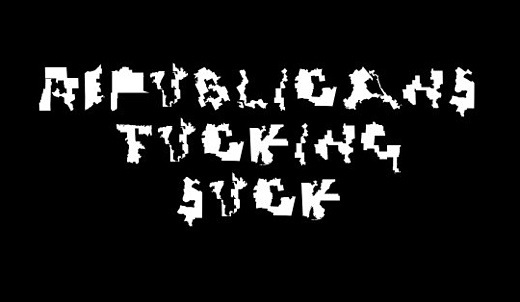
Image above: A message to Republicans on gerrymandering by someone using the UglyGerry type font. Of course Democrats have played their pert in this as well. From (https://pbs.twimg.com/card_img/1157070040816128006/gEPX-685?format=jpg&name=600x314).

Ooh, this is awesome. Activists have made a free font called Gerry that is made from the shapes of gerrymandered congressional districts. They encourage you to use it to write your representative.

The font’s creators, Ben Doessel and James Lee, made it to raise awareness and provide a method for disenfranchised voters to protest partisan gerrymandering. The duo, in a press release provided to the media, stated:
"After seeing how janky our Illinois 4th district had become, we became interested in this issue. We noticed our district’s vague, but shaky U-shape, then after seeing other letters on the map, the idea hit us, let’s create a typeface so our districts can become digital graffiti that voters and politicians can’t ignore."
For those unfamiliar with gerrymandering, it’s the process by which US voting districts use increasingly nonsensical borders to disenfranchise voters and limit who they can vote for by party lines instead of geography.

Congressional districts have a reputation for being downright ridiculous.
"North Carolina's 12th district resembled a severely broken snake until it was revamped in 2017. Pretty much all of Maryland's districts defy comparison to anything but abstract art. And then there are a few dozen districts that look like letters in the alphabet — so much so that an anonymous gerrymandering fighter turned them into a font.

A few of the letters in the Ugly Gerry typeface are a combination of side-by-side districts, while New York's 8th District is turned on its head to be both the "M" and "W" in the alphabet. But most of the districts don't even require much squinting to resemble letters, which are all downloadable in one file on UglyGerry.com."
From (https://theweek.com/speedreads/856423/someone-made-font-gerrymandered-congressional-districts)
http://www.islandbreath.org/2019Year/08/190803gerrybig.jpg
Image above: The alphabet made of gerrymandered US voting districts. From (https://www.uglygerry.com/) (https://twitter.com/UglyGerry). Click to enlarge.


.https://www.uglygerry.com/

Abracadabra!

SUBHEAD: And so - Shazzam! I give you the one-percenters! And a bankrupt United States of America.

By James Kunstler on 11 December 2017 for Kunstler.com -
(http://kunstler.com/clusterfuck-nation/abracadabra/)


Image above: Face of a slot machine dubbed "Money Magic!" From (http://www.slotsup.com/free-slots-online/money-magic-rival).

And so, as they say in the horror movies, it begins…! The unwinding of the Federal Reserve’s balance sheet.

Such an esoteric concept! Is there one in ten thousand of the millions of people who sit at desks all day long from sea to shining sea who have a clue how this works? Or what its relationship is to the real world?

I confess, my understanding of it is incomplete and schematic at best — in the way that my understanding of a Las Vegas magic act might be. All the flash and dazzle conceals the magician’s misdirection.

The magician is either a scary supernatural being or a magnificent fraud.

Anyway, the audience ‘out there’ for the Federal Reserve’s magic act — x-million people preoccupied by their futures slipping away, their cars falling apart, their kid’s $53,000 college loan burden, or the $6,000 bill they just received for going to the emergency room with a cut finger — wouldn’t give a good goddamn even if they knew the Fed’s magic show was going on.

So, the Fed has this thing called a balance sheet, which is actually a computer file, filled with entries that denote securities that it holds.

These securities, mostly US government bonds of various categories and bundles of mortgages wrangled together by the mysterious government-sponsored entity called Freddie Mac, represent about $4.5 trillion in debt.

They’re IOUs that supposedly pay interest for a set number of years. When that term of years expires, the Fed gets back the money it loaned, which is called the principal. Ahhhh, here’s the cute part!

You see, the money that the Fed loaned to the US government (in exchange for a bond) was never there in the first place. The Fed prestidigitated it out of an alternate universe. They gave this money to a “primary dealer” bank in exchange for the bond, which the bank abracadabraed up for the US Treasury. Well, not really.

In fact, the Fed just made a notation on the bank’s “reserve” account that the money from the alternate universe appeared there.

Somehow that money was sent via a virtual pneumatic tube to the US Treasury, where it was used to pay for drones to blow up Yemeni wedding parties, and for the Secret Service to visit pole dancing bars when the president traveled to foreign lands.

Here’s the fun part. The Fed announces that it is going to shed this nasty debt, at about $10 billion worth a month starting this past October. Their stated goal is to reach an ultimate wind-down velocity of $50 billion a month (cue laugh track).

If they ever get there (cue laugh track) it would take 20 years to complete the wind-down.

The chance of that happening is about the same as the chance that Janet Yellen will come down your chimney on December 24 with a sack-full of chocolate Bitcoins. But never mind the long view for the moment.

One way they plan to accomplish this feat is to “roll off” the bonds. That is, when the bonds mature — i.e. come to the end of their term — they will cease to exist. Poof!

Wait a minute! When a bond matures, the issuer has to send the principal back to the lender.

After all, the Fed lent the US Treasury X-billion dollars, the US Treasury paid interest on the loan for X-years, and now it has to fork over the full value of the loan (hopefully in dollars that have magically inflated over the years and are now worth less than when they were borrowed — another magic trick!). But that doesn’t happen.

Instead, when the theoretical principal is returned to the Fed, the Fed disappears the money, like the girl in a bikini onstage who enters the magician’s sacred box and vanishes.

Now you see her, now you don’t. The explanation, of course, might be that the money was never really there in the first place, so it makes sense to fire it back to the alternative universe it came from.

Well, uh, I guess….

The catch is: for a while it was here on earth and folks were doing stuff with it, such as the aforementioned drone strikes and pole dancers.

Not only that, but the “primary dealer” banks were allowed to loan out ten times the reserve minimum denoted on their Fed accounts for participating in the scheme. Who did they lend all that money to?

Apparently, a lot of it went to corporations who borrowed it at ultra-low interest rates in order to buy back their own stock, which paid dividends way higher than the interest rate they borrowed at to buy the stuff, and which also pumped up the share value of the stocks, which also happened to make the executives of the corporations way richer in terms of their stock options and bonuses (awarded for boosting the share value of the stock!).

And so, shazzam: I give you the one-percent! And a bankrupt United States of America.

And don’t even ask about all those bundles of janky Freddie Mac mortgages fobbed off on the Fed.

The reason they did that in the first place was because those mortgages weren’t being paid off, and the banks and insurance companies that held them were choking to death on them.

So they parked them in a crawl space under the Fed’s Eccles Building in Washington, hoping they would just turn to compost And guess what: they’re no more valuable now then they were then. File that one under Necrophilia.

.

Exxon must reveal CO2 research

SUBHEAD: A Massachusetts judge has refused to block the climate fraud investigation of Exxon.

By By David Hasemyer on 12 January 2017 for Inside Climate News -
(https://insideclimatenews.org/news/12012017/mass-judge-ruling-climate-investigation-exxon-tillerson)


Image above: An ice sculpture fashioned by protesters slowly melts outside the Exxon Mobil shareholders meeting in Dallas. From (https://thinkprogress.org/50-years-ago-big-oil-bragged-about-being-able-to-melt-glaciers-while-they-knew-about-climate-change-728efe887daa#.6d54cpe8f).

Exxon had fought state Attorney General Maura Healey's demand for documents about potential climate fraud, but a Massachusetts judge backs Healey's right to the probe.  


A Massachusetts Superior Court judge has refused to block the climate fraud investigation of ExxonMobil opened last year by state Attorney General Maura Healey.

The ruling Wednesday means Exxon must comply with Healey's civil investigative demand for company records. Healey requested the documents as part of an investigation to determine if Exxon misled consumers about the risks climate change posed to its business.

Exxon had argued Healey lacked the jurisdiction to pursue the investigation and maintained Texas was the proper venue for any legal action because the company is headquartered in Dallas.

But Judge Heidi Brieger disagreed.

"This matter involves the Massachusetts consumer protection statute and Massachusetts case law arising under it about which the Massachusetts Superior Court is certainly more familiar than would be a federal court in Texas," according to Brieger's ruling.

The parallel legal battle Exxon is waging in a federal court in Texas to derail Healey's investigation remains under way.

The Massachusetts court ruling affirms the authority of the attorney general to investigate fraud, said Chloe Gotsis, a spokeswoman for Healey.

"Exxon must now end its obstructive tactics and come clean about whether it misled Massachusetts consumers and investors about what it knew about climate change, its causes and effects," Gotsis said.

A spokesman for Exxon did not respond to a request for comment.

Healey opened the investigation in April under the state's consumer protection laws seeking documents back to 1976 related to Exxon's understanding of climate change and the effects it could have on its business.

The civil investigative demand—similar to a subpoena—included a request for documents detailing the company's decades of climate research, how it was preparing for sea-level rise and materials prepared for potential investors.

The demand also sought statements by Exxon officials, including by the company's then-chief executive, Rex Tillerson, who was questioned Wednesday about climate change during his Senate confirmation hearing to become secretary of state.

The company argued that Healey's investigation amounted to an "arbitrary and capricious" abuse of power and was politically motivated.

But the judge said that under state law Healey was empowered to open the investigation based on her belief that a person or company was engaged in unfair or deceptive business practices in the state and that she should have "broad access" to Exxon records to determine if there were any violations of law.

Brieger also rejected Exxon's contention that the company was targeted by Healey because of its views on global warming.

"The court finds that the Attorney General has assayed sufficient grounds her concerns about Exxon's possible misrepresentations to Massachusetts consumers—upon which to issue the CID," said the 14-page ruling.

"In light of these concerns, the court concludes that Exxon has not met its burden showing that the Attorney General is acting arbitrarily or capriciously toward it."

See also:
Ea O Ka Aina: Exxon - The Road not Taken 12/25/16

.

Trump's 'Hamilton' Tweetstorm

SUBHEAD: A rant calculated distraction from Trump University fraud settlement and appointment of monsters.

By Cory Doctorow on 20 November 2016 for Boing Boing -
(http://boingboing.net/2016/11/20/trumps-hamilton-tweetstorm.html)


Image above: Graffiti on wall titled "Tronald Dump" by Hansky. From Definition of "kakistocracy" below (http://boingboing.net/2016/11/20/word-of-the-day-kakistocracy.html).

DEFINITION: Kakistocracy n. (kak·is·toc·ra·cy / kækɪsˈtɑkɹəsi) Government by the worst persons; a form of government in which the worst persons are in power.
The term was first used around 1829 and was coined as an opposite to "aristocracy". It comes from the Greek "kakistos" or "worst", which is the superlative form of "kakos" or "bad". Switch the "k" to a "c" and you have the root of modern words like "cacophony".
But here's where it gets even more fun. "Kakos" is closely related to "Caco" or "defecate". As we saw above, it's essentially the same phonetic sounds and has similar modern words derived from it.
Kakistocracy [Michael Jurewitz/Jury.me]

Yesterday, Donald Trump's news cycle was dominated by two stories: first, that the president-elect of the United States of America had a well-developed sense of the sanctity of the theatre, such that any on-stage politicking shocked his conscience to the core; second, that he had settled a lawsuit over Trump University, handing $25,000,000 to people whom he had defrauded.

The Hamilton story certainly played well: it was above the fold on the New York Times print edition (the fraud story was below the fold).

If we attribute to Trump a measured media savvy, then we could call his twitterstorm a master-stroke of distraction at a moment when the press and the world could have been extremely interested in the news that the new president had paid $25 million in hush-money after a well-publicized fraud perpetrated against desperate American workers who were hoping to get retrained to survive in the new economy -- the very same people who are widely credited with handing Trump the election.


–– ADVERTISEMENT ––
There are other factors, of course: the Trump University settlement was the unspectacular end to a long, boring, rather technical story. The Hamilton story pitted the most successful musical in living memory against a self-described Christian warrior, and had a simple narrative that the Trumpian Twitter Army was able to boil down to two words.

Hilariously the Trumpkins believe that they are the "decorum" movement of the American body politic, which is why, of course, they voted for President Pussygrabber.

However, another thing we know about Trump is that he has the fragile ego of a hereditary American brahmin and the lack of self-control we associate with spoiled privilege.

During the debates, Clinton found it trivially easy to bait Trump into saying awful things in awful ways. His three a.m. twitterstorms about ex-beauty queens are the stuff of legend. If Trump isn't the embodiment of fragile white male mediocrity, a whiny nurser of petty grudges, then he's a master actor who should be trying out for the DC cast of Hamilton.

Assuming he is the fragile Special Snowflake he appears to be, he's in for a rough ride. He is the least popular American president in living memory, having lost the popular vote by an unprecedented 3-4 million votes.

Trump's political legitimacy turns on an obscure, centuries old, little-invoked technicality of the American political system that virtually no one understands. He is going to govern in the teeth of the kinds of disapprobation that is one step away from rotten-fruit throwing, the kind of mockery and continuous, all-sides bollocking that will make the GW Bush era look civil by comparison.

And if that's not something to look forward to, imagine what will happen when Trump makes his first state visits to places where the press much less deferential than the American media.

Rremember how America's right-wing culture warriors lost their shit when GW Bush talked to a skeptical journalist at the BBC? If there's one thing we know about the "Fuck Your Feelings/Suck It Up, Buttercup" crowd, it's that whiny little babies are mere millimeters under their skin.
There is an argument, though, that Trump’s inability to brook dissent, in a nation where more than 53 percent voted against him, could turn out to be a central issue during his strange presidency. His election with a minority of the nation’s votes, thanks to the “genius” of the electoral college system, matched with his obsessive need for approval through ratings and poll numbers, could make reminders of his unpopularity particularly powerful and important.

As more votes are being counted in states where he was trounced, like California, Trump’s share of the popular vote now stands at 46.7 percent and looks certain to fall further.

That means that, for all the talk of his election giving him a mandate to undo the accomplishments of President Obama, he takes office with the support of a minority of voters — having secured a lower share of the vote than even Mitt Romney did four years ago — and over the objections of an unprecedented majority of the country that views him negatively.

Holed up in his tower, Trump might be able to spend much of his time shutting out the reality of his unpopularity, but as a Twitter and cable-news addict, constantly monitoring the networks for material to shore up his ego, messages of dissent, particularly those as powerfully stated as the one from “Hamilton,” will no doubt continue to reach and unsettle him.
Trump Can’t Hear What the Cast of “Hamilton” Tried to Tell Him [Robert Mackey/The Intercept]


.

NextEra & Heco play the PUC

SOURCE: John Bond (ewabond@gmail.com)
SUBHEAD: Inexplicably, the Hawaii Consumer Advocate has given NextEra an opportunity to file more direct testimony.

By Henry Curtis on 21 August 2015 for Ililani Media -
(http://ililanimedia.blogspot.com/2015/08/salvaging-heco-nextera-train-wreck.html)


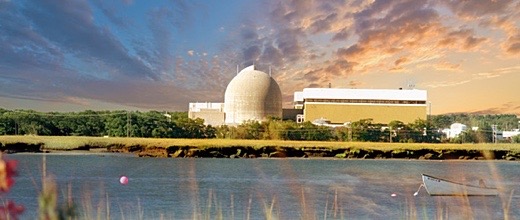
Image above: Photo shows signs of degrading concrete at the aging Seabrook power plant in New Hampshire operated by NextEra. They sold off $760 million of hydro-electric power owned by Seabrook upstream of its cooling water reservoir in order to "concentrate" on "areas with greater growth potential." From (http://enformable.com/2012/04/nextera-and-nrc-to-continue-monitoring-asr-degradation-at-seabrook-station-nuclear-power-plant/).

The Hawaii Public Utilities Commission (PUC) is conducting a contested case proceeding involving NextEra's proposed takeover of the Hawaiian Electric Companies (HECO and subsidiaries MECO and HELCO). The Consumer Advocate is by law a party to the proceedings. The Commission also granted party status to twenty nine intervenors, of whom one has withdrawn.

Twenty eight intervenors from all sectors of society submitted direct testimony in the merger proceedings. All of the intervenors asserted that NextEra's bid to takeover HECO is a bad deal as it is currently configured.

The intervenors include three levels of government (federal, state and county) and three utilities (water, gas and electric). The intervenors include a union, environmental and cultural groups, trade groups, and renewable and fossil fuel companies. (See analysis of testimony from Maui County, Hawaii County, Office of Planning, DBEDT, Department of Defense)

The Governor then asserted that the deal was bad. “We are taking the position that the merger as proposed at this point is unacceptable.”

Three weeks later the Consumer Advocate filed their testimony. Almost every news agency concluded that the Consumer Advocate agreed with all other consumers, the deal is bad. This blog asserted that the Consumer Advocate's testimony could be interpreted as laying out the path towards making the deal acceptable. (Consumer Advocate: Hedging their bets regarding the merger)

On August 31 NextEra will file their rebuttal testimony. By law they must restrict their filing to rebutting adversarial testimony. They may not file responses that supports or reinforces friendly testimony. They may not file new direct testimony.

On August 19, 2015, one month after the 28 intervenors filed their direct testimony, one week after the Consumer Advocate filed their direct testimony, and 12 days before NextEra has to file their rebuttal testimony, the Consumer Advocate has given NextEra an opportunity to file more direct testimony.

The Consumer Advocate is proposing a new procedural step, number five.

1
Applicants’ Direct Testimony
2
Intervenors Direct Testimony
3
Consumer Advocate’s Direct Testimony
4
Applicants’ Responsive (Rebuttal) Testimony
5
Applicants’ New Testimony

The Consumer Advocate wants NextEra CEO Jim Robo and Hawaiian Electric Industries CEO Constance "Connie" Lau to become witnesses.

"Mr. Robo possesses knowledge and information that only he can know and possess concerning the circumstances, events, rationale, and reasoning that resulted in NextEra deciding to acquire the Hawaiian Electric Companies.

Consequently, Mr. Robo, through his personal appearance and testimony, would provide information, evidence, and exchanges which are material and relevant to the issues and questions raised by the Commission."

"Constance H. Lau serves as the President and Chief Executive Officer of HEI. In her capacity as President and Chief Executive Officer of HEI, Ms. Lau made critical decisions that resulted in the merger agreement for acquisition of the Hawaiian Electric Companies by NextEra.

Accordingly, Ms. Lau possesses knowledge and information that only she can know and possess concerning the circumstances, events, rationale, and reasoning that resulted in NextEra’s decision to acquire the Hawaiian Electric Companies."

The Consumer Advocate is not asking for the right to file Information Requests upon two people with key knowledge of the proposed merger. Instead they are asking for the right "to take testimony."

"The Consumer Advocate hereby informs the Commission that it has provided written notice ...to James L. Robo and Constance H. Lau indicating the Consumer Advocate’s intent to take testimony by deposition upon oral examination.

The Consumer Advocate notes that the Commission’s rules do not provide specific procedures or guidance related to the taking of depositions, thus ...if the Commission deems necessary, the Consumer Advocate seeks an order requiring that the following individuals be made available for oral deposition."

On the one hand the two witnesses could reinforce what is already known. The deal is bad and should be rejected. But the record already contains tens of thousands of pages that comes to that conclusion. So say 28 intervenors and the Governor. Additional testimony is not needed.

Or the Consumer Advocate could be trying to find a way to salvage the deal.

Historically, in PUC administrative proceedings in which intervenors were permitted into a regulatory proceeding by the PUC, the Consumer Advocate has signed a settlement agreement with the utility prior to the Evidentiary Hearing. The Consumer Advocate and the utility have agreed not to question each others witnesses.

In many of these cases the Consumer Advocate has taken positions that appeared to be more hard-lined than the utility, that is, the utility position is more reasonable.

In this case, Robo and Lau would be entering direct testimony into the record after the deadline for the intervenors to file their testimony. It could either do little or could tilt the playing field against the public and interfere with the due process rights of intervenors.


$1 Billion hit seen for Ratepayers
SUBHEAD: Nextera using cost control gimmick to soak ratepayers in Hew Hampshire.

By Dave Solomon on 13 Janury 2015 for N.H. Union Leader - 
(http://www.unionleader.com/article/20150201/NEWS05/150209956/0/NEWS02)


Image above: NextEra's website's touched-up idyllic shot of their Seakbrook nuclear plant - the same kind of General Electric boiling water reactors that were built at Fukushima Daiichi, Japan and now poisoning the pacific Ocean.


New England ratepayers will soon be on the hook for a new transmission project that could cost as much as $1 billion when all costs are in, with two energy giants competing for the opportunity. In an unusual move for the regulated utility business, one has guaranteed to get the project done within its bid price, or make up the difference.

A decision by the organization that runs the New England power grid, ISO-NE, is due on February 18th, and the lobbying is reaching a fever pitch. New Hampshire and three other New England states recently urged ISO to consider the cost guarantee in its deliberations.

The upcoming decision on the Greater Boston and Southern New Hampshire Reliability Project is being carefully watched in the six-state region. The outcome could do more than decide who gets to build new and much-needed transmission lines, and collect a guaranteed return of about 10 percent in the process.

It could change the way transmission projects are evaluated to the benefit of ratepayers, according to a wide range of voices that have weighed in on the process.

In one corner stands PSNH owner Northeast Utilities, its partner National Grid, and their AC Plan (for alternating current).

In the other corner is the Florida-based challenger, Nextera - an outgrowth of Florida Power and Light - owner of the Seabrook Station nuclear power plant. Nextera has created a subsidiary - New Hampshire Transmission - to develop, build and manage their project, called SeaLink.

The AC Plan calls for new overhead lines in existing rights of way through Tewksbury, Andover and Dracut, Mass., and Pelham, Hudson, Windham and Londonderry; two new underground cables through several Massachusetts communities, including Boston; and upgrades to existing lines.

The SeaLink plan calls for 68 miles of direct current cable running mostly along the ocean floor, from Seabrook Station to the Mystic substation in Everett, Mass., with 18 miles of line on land buried underground and upgrades to existing lines.

Cost analysis in dispute
Whichever project is approved will be deemed necessary for grid reliability and could obtain property by eminent domain if necessary. But neither the AC Plan nor the Sea Link plan require land-taking, as one relies on existing rights of way and the other is under water or underground.

The biggest issue is cost. And on that score, things are not looking so good for the SeaLink proposal. An independent study of both proposals commissioned by ISO was released in November, and concluded the AC Plan would cost $510 million, compared to $770 million for SeaLink. Both require an additional $221 million in upgrades to existing transmission lines.

The ISO decision on such a project can be nuanced by various factors when the cost estimates are fairly close, according to ISO officials, but when the gap is so wide, cost becomes a pre-eminent factor.

In a letter to SeaLink in December, the ISO outlined eight different criteria it could use in evaluating the two projects, but then went on to say, "However, these factors are typically only utilized where costs are comparable. Where there is a significant cost gap, and each project addresses the identified needs, the ISO will normally make its determination ... based on estimated project costs."

The SeaLink team says the consultant's evaluation was flawed - that the AC Plan costs are under-stated and the SeaLink estimate inflated.

New Hampshire Transmission has taken the unusual step of guaranteeing in writing to ISO that it will build the SeaLink project for $679 million, and will take responsibility for every dime over that amount, according to Matt Valle, NHT president.

That's still more than the $510 million estimate for the AC Plan, but the folks at NHT are claiming it's unlikely the AC Plan will come in at that cost, given what they called a history of cost-overruns on transmission projects in New England.

Late last week, they presented ISO with an analysis of power line projects from 2004 through 2012, claiming that 11 projects by NU or National Grid estimated to cost a combined $2.2 billion ended up costing ratepayers $3.9 billion.

Cost-cap called gimmick
Spokesmen for NU and National Grid disputed that analysis. "We have no idea where those NHT numbers come from," they wrote in an email. "NHT has previously made statements and allegations based on their assumptions about our proposed solution that we have shown to be factually incorrect."

Whatever the cost overruns were, the ratepayers took the hit.

As long as regulators deem the costs were "prudent," utilities are free to exceed their estimates by any amount, and the result is reflected in rates. That puts all the risk on ratepayers, and none on the project builders, according to Valle.

"Until we put this offer on the table, customers were bearing the full risk of cost overruns," he said, "which we demonstrate in our analysis happens a lot in New England."

NU spokesman Martin Murray said the NU/National Grid consortium has no plan to put a cost-containment proposal on the table.

"We really think that this so-called cost cap that they have proposed is a gimmick or an artifice to distract from the fact that there is a quarter of a billion dollar price gap between the two sets of solutions," he said. "ISO doesn't have a process by which it can consider that sort of letter."

And that's the rub, according to a wide range of regulators and governmental officials at the local and state level who have weighed in on the process over the past year. (See related story)

"This idea of transmission projects having cost containment is not new in the industry," said Valle. "It's being done in California, New York and in the (13-state) PJM market. Entities are proposing cost-containment and have been selected on that basis. There is no gimmick here."

Michael Harrington, a former Public Utilities commissioner for New Hampshire and now a private energy consultant, has had a behind-the-scenes look at the transmission construction process, which he said is rife with cost overruns. "The estimates are routinely way short of actual costs and there is no penalty," he said. "It's a huge amount of money ... billions of dollars in New England."

.

Billionaires Doomsday Bunkers

SUBHEAD: The Vivos Corporation is selling "Genesis" survival real estate to the richest of the .01% who live in fear.

By Tyler Durden on 15 June 2015 for Zero Hedge -
(http://www.zerohedge.com/news/2015-06-14/doomsday-bunker-billionaires)


Image above: Residents can design and build their apartments to their own specifications.  From original article.

Two months ago we went inside the Fed's "doomsday" bunker: a 135,000 square foot facility built in 1969, and nestled inside Mount Pony, east of Culpeper, Virginia that housed some $4 billion in hard currency as well as the central hub of FedWire, the computer network which allows the nation’s banks to communicate and transfer funds.

It was meant to ensure that the US banking system could still function in the event there were still any banks left in the post-apocalyptic world, Culpeper Switch (officially the Federal Reserve System’s Communications and Records Center) was equipped with everything a Fed official would need to survive in the wake of a nuclear holocaust.

And yet, it was in a word, "spartan" even by 1970s standards. After all who wants to greet the post-nuclear holocaust world surrounded by sterile plastic, a Fed spreadsheet (which caused the nuclear holocaust in the first place) and all the cash in the world, especially since the only currency accepted is silver, gold and of course, lead (not to mention a bunker-full of voodoo economists).

Then along came Vivos, a company which specializes in creating the ultimate in luxurious Doomsday bunkers which, however, are not only for the world's richest, but also for those who Vivos founder, California entrepreneuer Robert Vicino, deems worthy: anyone can apply for a spot in the post-apocalypse world but only a select few will be admitted.

Until recently, the company's only community shelter product was Vivos Indiana, a shelter "strategically located in midwestern America", which the company describes as "one of the most fortified, nuclear hardened shelters within our network, located within a one-day drive from anywhere in the Midwest and the Eastern seaboard of America.   


Video above: Introductory film titled "Vivos Gennisis Tour" promoting doomsday bunker community. From (https://youtu.be/LjKAuB-dmAo).


Built during the Cold War to withstand a 20 megaton blast, within just a few miles, this impervious underground complex accommodates up to 80 people, for a minimum of one year of fully autonomous survival, without needing to return to the surface."

Like a very comfortable 4-Star hotel, this massive shelter is tastefully and comfortably furnished and decorated, completely outfitted, fully stocked with food, toiletries, linens, medical supplies, a one year supply of fuel, a deep water well, NBC filtration systems, geothermal heating and cooling, bedroom suites, full size showers and bathrooms, a theater area, dining area, lounge area, exercise equipment, kennels, a garden area for fresh vegetables, laundry area, abundant storage areas, ATV's, bicycles, tools, a workshop, security devices; and, just about everything else that may be needed to ride out virtually any catastrophic event. You only need to bring your personal clothing and medications. We've thought of everything else!

Far from any known nuclear targets, this shelter is also strategically located a safe distance away from the New Madrid fault line, the Mississippi River, and all oceans that might cause submersion as a result of a tsunami-type event.  The site is also surrounded by excellent farming, fishing, hunting and water resources.

It is for them, as well as for Europe's billionaires, where should a Grexit indeed take place and things quickly escalate, culminating in a way that nobody can anticipate, that Vivos has just opened its second major ultra-luxury bunker.

Vivos Europa One, dubbed "The Elite Shelter for the Privileged Few", which in addition to everything else even has what Vivos calls the "only private human DNA vault on Earth", which offers donors the opportunity to collocate their DNA not in just one place but two: in both the United States and Europe. "Both deep underground shelters offer virtually impervious protection in their hermetically sealed vaults." 

Whether stored for years, decades or more than a century, the Vivos Global Genome Vault pool will be a perpetual depository, preserving life on Earth as we know it.
Or rather, the DNA stored will be of those billionaires who are not only rich but megalomaniacal enough to believe they are worthy to be the template material of all future humans. Which means all of them.

And speaking of everything else, there is a lot. As the Mail reports, the Vivos Europa One shelter is located in Rothenstein, Germany and is one of the most fortified and massive underground survival shelters on Earth. Its 6000 inhabitants can live up to a year without leaving the luxury premises.

According to Forbes, the bunker was "originally built by the Soviets during the Cold War, this shelter was a fortress for military equipment and munitions. After the DDR was merged with Germany, the German government inherited this relic and intended to use it for the same purpose of weapons storage.

However, due to a law prohibiting the storage of ammunition near a major highway, the German Government soon realized they could not continue with their plans and decided to auction this 76 acre complex. A wealthy investor purchased the entire property, along with all of its improvements, both above and below ground."

That investor was Vivos' founder Robert Vicino whose "billionaire bunkers" are now on both continents, and who says “We are proud to bring this epic project forward in these increasingly dangerous times.”

The bunkers consists of a planned survival complex that is comparable to billionaire's mega-yacht or mansion - "but much bigger."

It boasts swimming pools, theaters, gyms, restaurants, custom apartments, outdoor space and helicopter service. And as one would expect, the bunker can withstand a nuclear blast, chemical agents, earthquakes, tsunamis, or another disaster. Unlike the Indiana complex where the cost is a relatively cheap $35,000 one time charge for adults, the Europea price list is still secret, although with the property valued at $1.1 billion, it is likely that the final price will be much higher. Underground shelter is currently in 'turnkey operational condition.'

Most importantly, in addition to paying a lot of money for the privilege of reserving a key for the luxurious doomsday bunker, residents will be accepted based on their 'skills' and 'talents.' It is unclear just which billionaire skills Vicinio deems critical for perpetuating humanity: being a legendary insider trader who pays off the government with Picasso painting, being the world's greatest crony capitalist, creating a criminal bank enterprise while scolding people for not being "rich enough", and so forth.

Some more details: the complex includes over 21,108 square meters (227,904 square feet) of secured, blast proof living areas and, an additional 4,079 square meters (43,906 square feet) of above-ground office and warehouse buildings, including a train servicing depot.

The typical chamber area is 5 meters wide (16.40 feet), by 6 meters tall (19.68 feet) and 85 meters (278.87 feet) long. Collectively there are over 5 kilometers (3.1 miles) of continuous tunnel chambers (equivalent to 71 Boeing 747’s fuselages stretched end to end). All shelter areas are located behind 3 separate nuclear blast and radiation proof vehicle entrances, and a number of other passages for access by people only.

Each of the three main tunnel entrances includes an outer security door system, followed by a 40 ton hydraulic truck access door with hardened steel rods which expand into the surrounding encasement, and a second set of massive steel doors providing an airtight seal shut, protecting against chemical, biological and gas intrusion.

The underground main traffic corridors are large enough to allow mechanical transportation of heavy equipment to almost any point within the complex.

Each family in the complex will be provided with a private 2,500-square-foot apartment, which they can design and build to their own specifications. They may decide to add a pool, a theater or a deluxe bathroom. They will also have access to a hospital area, several restaurants and a bakery.

Other common area amenities will include roadways, a wine cellar, prayer rooms, classrooms, a television station and a detention center.

Once each member’s private accommodations are completed, furnished and fully outfitted, their respective quarters will be locked and secured, limiting access to their families and staff prior to lockdown; while Vivos will operate and maintain all common areas (under and above-ground) pending a catastrophic event.

Members will arrive at their own discretion, prior to lockdown, landing their private planes at nearby airports. Vivos helicopters will then be deployed to rendezvous with each member group, and safely fly them back to the shelter compound, behind the sealed gates from the general public. Members will then enter the shelter and access their private quarters. Each family will pay a base amount for their respective living quarter’s area, along with their fair share of the ongoing stand-by costs for operational management, staffing, taxes, insurance, maintenance, utilities, and restocking as needed.

In short: a complete turnkey operation that every zombie in the post-apocalypse world will desperately try to penetrate and feast on the inhabitants.

And now, without further ado, here is how the world's richest will live in the real world version of the Walking Dead.

WELCOME TO VIVOS "EUROPA ONE GENESIS"  TOUR

With its rolling heels and stunning woodland, the village of Rothenstein looks like an unlikely location for the bunker.


The Rothenstein facility also boasts 43,906 square feet of above-ground space. Above, an outdoor power station.


Vivos Europa One shelter also features its own railway and helicopter service, which picks up residents from nearby airports.


Each family in the complex will be provided with a private 2,500-square-foot apartment. Above, a personnel entry door.


A drive-thru blast-proof door at the complex, which will likely be available only to the super-rich.


The personnel entry corridor inside the shelter. It's only missing a sign directing "THIS WAY TO THE SHOWERS".


Water treatment plant: It also has its own self-contained water and power generation system, as well as climate and ventilation systems.


The luxury shelter was originally built by the Soviets in the Cold War as a fortress for military equipment. Above, its engine room.


This photos shows a bedroom in the Vivos Europa One shelter, which is being dubbed the world's 'ultimate doomsday escape'


A dining room in the underground bunker


Other common area amenities will include roadways, a wine cellar and prayer rooms. Above, a theater 


The complex features all modern furnishings


Above, another living quarters


Alongside its catastrophe-proof features, the bunker will include a collection of zoological species and an artifact archive

.

Forward Guidance

SUBHEAD: The result of this guidance continues to be the mis-pricing of everything, especially the cost of money.

By James Kunstler on 7 April 2014 for Kunstler.com -
(http://kunstler.com/clusterfuck-nation/forward-guidance-2/)


Image above: Illustration of Janet Yellen at the wheel by Craig Stephens. From (http://www.scmp.com/business/economy/article/1330339/janet-yellen-set-be-us-federal-reserve-chief-driven-woman).

Guess what? There is none. Rather, the Federal Reserve practice of Delphically divulging its intentions ought to be understood as the master pretense of US economic life — the delusion that wise persons are actually in control of anything. 

The result of this guidance continues to be the mis-pricing of everything, especially the cost of money as represented in the operations of debt, and hence the value of everything denominated in money.

The interventions of our central bank have really been aimed at one objective: to compensate for the contraction of real wealth in an economy that replaced purposeful activity with Kardashian studies and tattoo art.  Purposeful economic activity provides surpluses that allow for the repayment of debt. 

Kardashian study and tattoo art lead to entropic entrapment, aka, a death spiral of culture and economy. That’s where we are at. The debt is now eating us alive, and the central bank trick of piling on additional debt to mask the failure of repaying old debt is losing  its palliative punch.

One big problem with the Fed’s policies is that the mis-pricing of everything ends up being expressed in the very statistics (GDP, unemployment, inflation) that are used to justify further interventions that produce ever deeper perversities. That is, the Fed distorts prices, which distort statistics used to make policy, which prompt the fed to ramp up policies that further distort prices, a dangerous recursive dynamic. 

Since prices are the basic information for running an economy, we end up in a situation where nothing really adds up. The antidote to that has been pervasive accounting fraud — the covering-up of mis-pricing, pretending that things add up when they don’t.

The poster child for that, of course, is the US government, the operations of which are so saturated in falsity that the inspectors general in every branch and agency might as well just fling linguini against the wall to arrive at whatever conditional reality suits their bosses. 

The pretense extends to the largest financial institutions including the TBTF banks (their vaults stuffed with the detritus of epic swindles), to the giant pension funds, which were among the chief victims of the swindling, to the corporations dedicated to producing this-and-that, whose cost structures are so fatally impaired by all the aforesaid mis-pricing and accounting fraud, that they must resort to massive stock share buy-backs to maintain the illusion of being going concerns, to the millions of ordinary households running on maxed-out plastic.

These perversities have been in force for five years now, and “folks” — to use our president’s fond locution for the diabetic masses — are beginning to get nervous about the five-year duration of the so-called bull market. 

This refers to the stock markets collectively, which have generally only gone up since 2009 in an economic environment that can only be called unconvincing. The word “bubble” is heard more and more in casual chatter. Events like Friday’s tanking of the NASDAQ put people in mind of the ominous Four Horsemen.

One thing we really do know, as good old Herb Stein put it, is that things go on until they can’t, and then they don’t. Sighs of relief were heaved all last week when it appeared that the Obama / Kerry response to doings in Ukraine amounted, more-or-less, to a policy that might be called “Oh… nevermind.” 

Personally, I’m relieved that our leaders decided not to start World War Three over that, since in the aftermath there might be no human historians left on planet earth to record our monumental stupidity for the cosmic annals — something for our successors, the sentient cockroaches, to meditate on. But a certain nagging emptiness remains in that void of initiative. 

The spring zephyrs are finally caressing the tender hills and vales of upstate New York. Something is in that wind. I think I scent revolution.

.

Superferry stationed in Japan

SOURCE: Brad Parsons (mauibrad@hotmail.com)
SUBHEAD: No it was necer a military vessel, but Navy to put former Superferry vessel into service in Japan. 

By Staff on 12 March 2014 for Pacific Business Journal -
(http://www.bizjournals.com/pacific/blog/morning_call/2014/03/navy-to-put-former-hawaii-superferry-vessel-into.html)

http://www.islandbreath.org/2014Year/03/140312guambig.jpg
Image above: The USNV Guam with a drab new paint job and prepared for duty in Japan soaking up nuclear radiation. Click to embiggen. From Brad Parsons.

[IB Editor's note: This Superferry (The Quam) and the USS Ronald Reagan (recently contaminated off the coast of Fukushima Daiichi) are two losers headed to be stationed in Japan. Is this revenge on the Japanese for fucking up the west coast of North America?]

The Alakai is a high-speed ferry built for the failed Hawaii Superferry.  The Navy, which acquired the Alakai and a second ferry named the Huakai about two years ago, plans to put one of the vessels into service in the Pacific to support Japan-based Marines.

The Navy is putting one of the two high-speed vessels built for the failed Hawaii Superferry into service in the Pacific to support Japan-based Marines, replacing another ferry called the WestPac Express.

Defense News reports the Navy has decided to count the former Hawaii ferry toward a battle force that has grown to 291, from 283, under a new system of counting ships.

Defense News reports the Navy initially said the two Hawaii Superferry vessels, the former Alakai and Huakai, would not be counted as part of the battle force because they were not outfitted to support a company combat team, but has since changed that decision.

The Navy acquired the two twin-hulled Hawaii Superferry vessels about two years ago from the U.S. Maritime Administration, and renamed them the USNS Puerto Rico and the USNS Guam.

More recently, the state of Hawaii last year auctioned off the barges built for the Hawaii Superferry, at a cost of $40 million, for $425,000 to a buyer from the Mainland, who is trying to resell the barges to another buyer before he moves them from Honolulu Harbor.

http://www.islandbreath.org/2007Year/20-HookahiKauai/0720-13WelcomeJumbo.jpg
Image above: Governor Linda Lingle as leader of the Unified Command greets passengers on the Superferry Alakai with Homeland Security detail (only there for your safety). Click to embiggen. Graphic by Juan Wilson from (http://www.islandbreath.org/2007Year/20-HookahiKauai/0720-13UnifiedCommand.html).

.

Banks are obsolete

SUBHEAD: This entire parasitic middleman sector can be eliminated to our advantage.

By Charles Hugh Smith on 19 February 2014 for Of Two Minds -

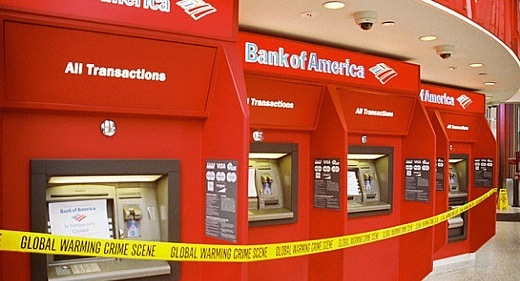
Image above: Bank of America ATMs closed as a Global Warming Crime Scene. From (http://wallstcheatsheet.com/stocks/heres-why-bofa-may-eliminate-this-profitable-banking-feature.html).

What else can we do with the $1.25 trillion we'll save by eliminating these obsolete financial middleman parasites? A lot.

Technology has leapfrogged the banking sector, rendering it as obsolete as buggy whips. So why are we devoting 9% of our economy to an obsolete parasite?Financial sector profits now total a staggering 4.5% of GDP (gross domestic product), while the expenses generated by financial churning account for another 4.5% of the economy.
Software and existing non-Wall Street/too-big-to-fail institutions could replace the entire Wall Street/banking sector and drop costs to .5% of GDP, saving us 8+% of our GDP ($1.25 trillion) that is currently siphoned off by parasitic middlemen. The banking sector is Exhibit A in the Middleman-Skimming Economy (February 11, 2014).

The pull of habit and propaganda is so strong that most people haven't even recognized that software and the Web can replace the entire financial/banking sector for a fraction of the cost of the current parasitic system, a system that (as we all know) has captured the regulatory and governance machinery of the central state, making a mockery of democracy.

The benefits of eliminating the financial/banking sector are immense and far-reaching.

What exactly do banks do? Banks perform these basic functions:
  1. They hold depositors' money.
  2. They act as a clearing house for payments, transferring funds from payor to payee.
  3. They issue loans on a fractional reserve basis, i.e. a few dollars in cash deposits supports $100 in loans.
  4. They originate and trade derivatives, run high-speed trading desks, operate various money-laundering and embezzlement schemes, influence elected officials with lobbying and campaign contributions and subvert both free market capitalism and democracy at every turn.
This entire parasitic middleman sector could be replaced with automated digital clearing houses and crowdfunded or non-bank loans. Why do we need banks to pay bills online? We don't; any clearing house could charge a small fee for the transaction.

Why do we need banks when loans can be crowdfunded? If we can invest money in start-ups via Kickstarter, Indiegogo, RocketHub, AngelList, etc., why can't we own a piece of someone's auto loan or home mortgage?

The web and software now enable the elimination of the entire middleman skimming operation of banking. Those with capital can invest that capital directly in loans that the investors choose. Risk is distributed throughout the system, and the process of verifying credit scores, income, valuations, assets, and so on--the building blocks of risk assessment and a market for debt and cash--can also be automated.

The entire notion that 100 savers put their money in a bank which then buys a mortgage with their savings and sells it as a security that supports a pyramid of derivatives is obsolete. Each saver can directly own (and sell on a transparent market) a piece of a mortgage, auto loan, business loan, etc. There is no need for a middleman banking sector at all--no skim, no concentration of risk, no opportunities for selling derivatives to unwary investors. All that goes away with the banking sector.

But what about holding deposits? We already have two institutions that could serve this role: credit unions and the post office. If those holding depositors' cash do not issue loans, they have no source of income to defray operating expenses. The solution is obvious: charge fees for holding deposits and payor-payee transactions.

If the fee structures are transparent, those who charge too much will disappear as customers go elsewhere. That's the purpose of transparent competition in an open marketplace.

Many other advanced nations have long combined postal and simple banking services: France and Japan come to mind. Here we have a postal service that is struggling to fund its operations in the era of email, and here we have millions of people who prefer to (or have to) do simple banking in person. There is no technical or administrative reason that the post office could not operate as it does in Japan, as a place to deposit funds (including auto-deposit of Social Security checks), take out cash, etc.

US Post Office Could Rack Up Billions By Offering Money Services--NPR (via Joel M.)

Please note that what I am suggesting is a transparent open market for these services provided by a range of enterprises and institutions. Assemble a marketplace of local credit unions, the post office, enterprises that handle payor-payee transactions such as Dwolla and PayPal, and you have a wide spectrum of choices to suit every need.

As for business loans: you can get small-business loans on PayPal right now. It's called Working Capital, and the borrower is given the total amount due right up front.

As for the commercial paper market: there is no technical reason why a transparent exchange couldn't enable borrowers and owners of capital to set short-term loan rates via transparent bidding with automated software.

The obsolescence of banking includes the Federal Reserve--the ultimate middleman skimming operation. But what about providing liquidity in credit panics? Well, to start with, once the banking sector is gone then the concentrations of risk and the obscuring of risk that go hand in hand with banking also disappear-- the forces that generate panics will have been dispersed. Those forces will have vanished along with the middleman financial sector that created all the risks, speculative excesses and panics. If there were a liquidity crisis, the Treasury could create and lend whatever funds were needed.

But what about manipulating interest rates and other forms of financial repression? Interest rates would be set by millions of borrowers and owners of capital in transparent transactions.

What about all those great investing services offered by big banks and Wall Street? As many have observed, automated index funds outperform 99% of fund managers over 10 year time frames. So Wall Street is also obsolete.

Once we get rid of these obsolete middleman parasites--Wall Street, the banking sector and the Federal Reserve--we have a delightful question to answer: what else can we do with the $1.25 trillion we'll save every year by eliminating these obsolete financial middleman parasites? A lot. 

See also:
Ea O Ka Aina: Out Middleman-Skimming Economy 2/11/14 
.

Burning Down the House

SUBHEAD: The Fed painted itself into a corner by making QE a permanent feature of the financial landscape.

By James Kunstler on 6 January 2014 for Kunstler.com -
(http://kunstler.com/clusterfuck-nation/forecast-2014-burning-down-the-house/)


Image above: Home burns during family photo-op. From (http://awkwardfamilyphotos.com/2011/06/25/saturday-night-special-burning-down-the-house/).

Many of us in the Long Emergency crowd and like-minded brother-and-sisterhoods remain perplexed by the amazing stasis in our national life, despite the gathering tsunami of forces arrayed to rock our economy, our culture, and our politics. Nothing has yielded to these forces already in motion, so far. Nothing changes, nothing gives, yet. It’s like being buried alive in Jell-O. It’s embarrassing to appear so out-of-tune with the consensus, but we persevere like good soldiers in a just war.

Paper and digital markets levitate, central banks pull out all the stops of their magical reality-tweaking machine to manipulate everything, accounting fraud pervades public and private enterprise, everything is mis-priced, all official statistics are lies of one kind or another, the regulating authorities sit on their hands, lost in raptures of online pornography (or dreams of future employment at Goldman Sachs), the news media sprinkles wishful-thinking propaganda about a mythical “recovery” and the “shale gas miracle” on a credulous public desperate to believe, the routine swindles of medicine get more cruel and blatant each month, a tiny cohort of financial vampire squids suck in all the nominal wealth of society, and everybody else is left whirling down the drain of posterity in a vortex of diminishing returns and scuttled expectations.

Life in the USA is like living in a broken-down, cob-jobbed, vermin-infested house that needs to be gutted, disinfected, and rebuilt — with the hope that it might come out of the restoration process retaining the better qualities of our heritage.

Some of us are anxious to get on with the job, to expel all the rats, bats, bedbugs, roaches, and lice, tear out the stinking shag carpet and the moldy sheet-rock, rip off the crappy plastic siding, and start rebuilding along lines that are consistent with the demands of the future — namely, the reality of capital and material resource scarcity. But it has been apparent for a while that the current owners of the house would prefer to let it fall down, or burn down rather than renovate.

Some of us now take that outcome for granted and are left to speculate on how it will play out. These issues were the subjects of my recent non-fiction books, The Long Emergency and Too Much Magic (as well as excellent similar books by Richard Heinberg, John Michael Greer, Dmitry Orlov, and others).

They describe the conditions at the end of the cheap energy techno-industrial phase of history and they laid out a conjectural sequence of outcomes that might be stated in shorthand as collapse and re-set. I think the delay in the onset of epochal change can be explained pretty simply.

As the peak oil story gained traction around 2005, and was followed (as predicted) by a financial crisis, the established order fought back for its survival, utilizing its remaining dwindling capital and the tremendous inertia of its own gigantic scale, to give the appearance of vitality at all costs.

At the heart of the matter was (and continues to be) the relationship between energy and economic growth. Without increasing supplies of cheap energy, economic growth — as we have known it for a couple of centuries — does not happen anymore. At the center of the economic growth question is credit. Without continued growth, credit can’t be repaid, and new credit cannot be issued honestly — that is, with reasonable assurance of repayment — making it worthless. So, old debt goes bad and the new debt is generated knowing that it is worthless.

To complicate matters, the new worthless debt is issued to pay the interest on the old debt, to maintain the pretense that it is not going bad. And then all kinds of dishonest side rackets are run around this central credit racket — shadow banking, “innovative” securities (i.e. new kinds of frauds and swindles, CDOs CDSs, etc.), flash trading, insider flimflams, pump-and-dumps, naked shorts, etc. These games give the impression of an economy that seems to work.

But the reported “growth” is phony, a concoction of overcooked statistics and wishful thinking. And the net effect moves the society as a whole in the direction of more destructive ultimate failure.

Now, a number of stories have been employed lately to keep all these rackets going — or, at least, keep up the morale of the swindled masses. They issue from the corporations, government agencies, and a lazy, wishful media. Their purpose is to prop up the lie that the dying economy of yesteryear is alive and well, and can continue “normal” operation indefinitely. Here are the favorites of the past year:
  • Shale oil and gas amount to an “energy renaissance” that will keep supplies of affordable fossil fuels flowing indefinitely, will make us “energy independent,” and will make us “a bigger producer than Saudi Arabia.” This is all mendacious bullshit with a wishful thinking cherry on top. Here’s how shale oil is different from conventional oil:
Good Old Days (1930's) These Days                    
Texas Well cost $400K (today's $)
Gushed Out of Ground
Produced 1000s of barrels a day
For Decades
Bakken Shale Oil Well $6-12M      
Requires Complex Fracking
Produces 100s of barrels a day
For a Few Years

  • A “manufacturing renaissance” is underway in the US, especially in the “central corridor” running from Texas north to Minnesota. That hoopla is all about a few chemical plants and fertilizer factories that have reopened to take advantage of cheaper natural gas. Note, the shale gas story is much like the shale oil story in terms of drilling and production. The depletion rates are quick and epic. In a very few years, shale gas won’t be cheap anymore. Otherwise, current talk of new manufacturing for hard goods is all about robots. How many Americans will be employed in these factories? And what about the existing manufacturing over-capacity everywhere else in the world? Are we making enough sneakers and Justin Beiber dolls? File under complete fucking nonsense.
  • The USA is “the cleanest shirt in the laundry basket,” “the best house in a bad neighborhood,” the safest harbor for international “liquidity,” making it a sure bet that both the equity and bond markets will continue to ratchet up as money seeking lower risk floods in to the Dow and S & P from other countries with dodgier economies and sicker banks. In a currency war, with all nations competitively depreciating their currencies, gaming interest rates, manipulating markets, falsely reporting numbers, hiding liabilities, backstopping bad banks, and failing to regulate banking crime, there are no safe harbors. The USA can pretend to be for a while and then that illusion will pop, along with the “asset” bubbles that inspire it.
  • The USA is enjoying huge gains from fantastic new “efficiencies of technological innovation.” The truth is not so dazzling. Computer technology, produces diminishing returns and unanticipated consequences. The server farms are huge energy sinks. Online shopping corrodes the resilience of commercial networks when only a few giant companies remain standing; and so on. Problems like these recall the central collapse theory of Joseph Tainter which states that heaping additional complexity on dysfunctional hyper-complex societies tends to induce their collapse. Hence, my insistence that downscaling, simplifying, re-localizing and re-setting the systems we depend on are imperative to keep the project of civilization going. That is, if you prefer civilization to its known alternatives.
Notice that all of these stories want to put over the general impression that the status quo is alive and well. They’re based on the dumb idea that the stock markets are a proxy for the economy, so if the Standard & Poor’s 500 keeps on going up, it’s all good. The master wish running through the American zeitgeist these days is that we might be able to keep driving to Wal-Mart forever.

The truth is that we still have a huge, deadly energy problem. Shale oil is not cheap oil, and it will stop seeming abundant soon. If the price of oil goes much above $100 a barrel, which you’d think would be great for the oil companies, it will crash demand for oil. If it crashes demand, the price will go down, hurting the profitability of the shale oil companies.

It’s quite a predicament. Right now, in the $90-100-a-barrel range, it’s just slowly bleeding the economy while barely allowing the shale oil producers to keep up all the drilling. Two-thirds of all the dollars invested (more than $120 billion a year) goes just to keep production levels flat. Blogger Mark Anthony summarized it nicely:
…the shale oil and gas developers tend to use unreliable production models to project unrealistically high EURs (Estimated Ultimate Recovery) of their shale wells. They then use the over-estimated EURs to under-calculate the amortization costs of the capital spending, in order to report “profits”, despite of the fact that they have to keep borrowing more money to keep drilling new wells, and that capital spending routinely out paces revenue stream by several times… shale oil and gas producers tend to over-exaggerate productivity of their wells, under-estimate the well declines…in order to pitch their investment case to banks and investors, so they can keep borrowing more money to keep drilling shale wells.
As stated in the intro, these perversities reverberate in the investment sector. Non-cheap oil upsets the mechanisms of capital formation — financial growth is stymied — in a way that ultimately affects the financing of oil production itself. Old credit cannot be repaid, scaring off new credit (because it is even more unlikely to be repaid).

At ZIRP interest, nobody saves. The capital pools dry up. So the Federal Reserve has to issue ersatz credit dollars on its computers. That credit will remain stillborn and mummified in depository institutions afraid of lending it to the likes of sharpies and hypesters in the shale gas industry.

But real, functioning capital (credit that can be paid back) is vanishing, and the coming scarcity of real capital makes it much more difficult to keep the stupendous number of rigs busy drilling and fracking new shale oil wells, which you have to do incessantly to keep production up, and as the investment in new drilling declines, and the “sweet spots” yield to the less-sweet spots or the not-sweet-at-all spots… then the Ponzis of shale oil and shale gas, too will be unmasked as the jive endeavors they are.

And when people stop believing these cockamamie stories, the truth will dawn on them that we are in a predicament where further growth and wealth cannot be generated and the economy is actually in the early stages of a permanent contraction, and that will trigger an unholy host of nasty consequences proceeding from the loss of faith in these fairy tales, going so far as the meltdown of the banking system, social turmoil, and political upheaval.

The bottom line is that the “shale revolution” will be short-lived. 2014 may be the peak production year in the Bakken play of North Dakota. Eagle Ford in Texas is a little younger and may lag Bakken by a couple of years. If Federal Reserve policies create more disorder in the banking system this year, investment for shale will dry up, new drilling will nosedive, and shale oil production will go down substantially. Meanwhile. conventional oil production in the USA continues to decline remorselessly.

The End of Fed Cred
It must be scary to be a Federal Reserve governor. You have to pretend that you know what you’re doing when, in fact, Fed policy appears completely divorced from any sense of consequence, or cause-and-effect, or reality — and if it turns out you’re not so smart, and your policies and interventions undermine true economic resilience, then the scuttling of the most powerful civilization in the history of the world might be your fault — even if you went to Andover and wear tortoise-shell glasses that make you appear to be smart.

The Fed painted itself into a corner the last few years by making Quantitative Easing a permanent feature of the financial landscape. QE backstops everything now. Tragically, additional backdoor backstopping extends beyond the QE official figures (as of December 2013) of $85 billion a month.

American money (or credit) is being shoveled into anything and everything, including foreign banks and probably foreign treasuries. It’s just another facet of the prevailing pervasive dishonesty infecting the system that we have no idea, really, how much money is being shoveled and sprinkled around. Anything goes and nothing matters.

However, since there is an official consensus that you can’t keep QE money-pumping up forever, the Fed officially made a big show of seeking to begin ending it. So in the Spring of 2013 they announced their intention to “taper” their purchases of US Treasury paper and mortgage paper, possibly in the fall.

Well, it turned out they didn’t or couldn’t taper. As the fall equinox approached, with everyone keenly anticipating the first dose of taper, the equity markets wobbled and the interest rate on the 10-year treasury — the index for mortgage loans and car loans — climbed to 3.00 percent from its May low of 1.63 — well over 100 basis points — and the Fed chickened out. No September taper. Fake out.

So, the markets relaxed, the interest rate on the 10-year went back down, and the equity markets resumed their grand ramp into the Christmas climax. However, the Fed’s credibility took a hit, especially after all their confabulating bullshit “forward guidance” in the spring and summer when they couldn’t get their taper story straight.

And in the meantime, the Larry-Summers-for-Fed-Chair float unfloated, and Janet Yellen was officially picked to succeed Ben Bernanke, with her reputation as an extreme easy money softie (more QE, more ZIRP), and a bunch of hearings were staged to make the Bernanke-Yellen transition look more reassuring.

And then on December 18th 2013, outgoing chair Bernanke announced, with much fanfare, that the taper would happen after all, early in the first quarter of 2014 ­— after he is safely out of his office in the Eccles building and back in his bomb shelter on the Princeton campus. The Fed meant it this time, the public was given to understand.

The only catch here, as I write, after the latest taper announcement, is that interest on the 10-year treasury note has crept stealthily back up over 3 percent. Wuh-oh. Not a good sign, since it means more expensive mortgages and car loans, which happen to represent the two things that the current economy relies on to appear “normal.” (House sales and car sales = normal in a suburban sprawl economy.)

I think the truth is the Fed just did too darn much QE and ZIRP and they waited way too long to cut it out, and now they can’t end it without scuttling both the stock and bond markets. But they can’t really go forward with the taper, either. A rock and a hard place. So, my guess is that they’ll pretend to taper in March, and then they’ll just as quickly un-taper.

Note the curious report out of the American Enterprise Institute ten days ago by John H. Makin saying that the Fed’s actual purchase of debt paper amounted to an average $94 billion a month through the year 2013, not $85 billion. Which would pretty much negate the proposed taper of $5 billion + $5 billion (Treasury paper + Mortgage paper).

And in so faking and so doing they may succeed in completely destroying the credibility of the Federal Reserve. When that happens, capital will be disappearing so efficiently that the USA will find itself in a compressive deflationary spiral — because that’s what happens when faith in the authority behind credit is destroyed, and new loans to cover the interest on old loans are no longer offered in the non-government banking system, and old loans can’t be serviced.

At which point the Federal Reserve freaks out and announces new extra-special QE way above the former 2013 level of $85 billion a month, and the government chips in with currency controls. And that sets in motion the awful prospect of the dreaded “crack-up boom” into extraordinary inflation, when dollars turn into hot potatoes and people can’t get rid of them fast enough.

Well, is that going to happen this year? It depends on how spooked the Fed gets. In any case, there is a difference between high inflation and hyper-inflation. High inflation is bad enough to provoke socio-political convulsion.

I don’t really see how the Fed gets around this March taper bid without falling into the trap I’ve just outlined. It wouldn’t be a pretty situation for poor Ms. Janet Yellen, but nobody forced her to take the job, and she’s had the look all along of a chump, the perfect sucker to be left holding a big honking bag of flop.

We’re long overdue for a return to realistic pricing in all markets. The Government and its handmaiden, the Fed, have tweaked the machinery so strenuously for so long that these efforts have entered the wilderness of diminishing returns. Instead of propping up the markets, all they can accomplish now is further erosion of the credibility of the equity markets and the Fed itself — and that bodes darkly for a money system that is essentially run on faith. I think the indexes have topped.

The “margin” (money borrowed to buy stock) in the system is at dangerous, historically unprecedented highs. There may be one final reach upward in the first quarter. Then the equities crater, if not sooner. I still think the Dow and S &P could oversell by 90 percent of their value if the falsehoods of the post-2008 interventions stopped working their hoodoo on the collective wishful consciousness.

The worldwide rise in interest rates holds every possibility for igniting a shitstorm in interest rate swaps and upsetting the whole apple-cart of shadow banking and derivatives. That would be a bullet in the head to the TBTF banks, and would therefore lead to a worldwide crisis. In that event, the eventual winners would be the largest holders of gold, who could claim to offer the world a trustworthy gold-backed currency, especially for transactions in vital resources like oil. That would, of course, be China.

The process would be awfully disorderly and fraught with political animus. Given the fact that China’s own balance sheet is hopelessly non-transparent and part-and-parcel of a dishonest crony banking system, China would have to use some powerful smoke-and-mirrors to assume that kind of dominant authority.

But in the end, it comes down to who has the real goods, and who screwed up (the USA, Europe, Japan) and China, for all its faults and perversities, has the gold.

The wholesale transfer of gold tonnage from the West to the East was one of the salient events of 2013. There were lots of conspiracy theories as to what drove the price of gold down by 28 percent. I do think the painful move was partly a cyclical correction following the decade-long run up to $1900 an ounce. Within that cyclical correction, there was a lot of room for the so-called “bullion banks” to pound the gold and silver prices down with their shorting orgy.

Numerous times the past year, somebody had laid a fat finger on the “sell” key, like, at four o’clock in the morning New York time when no traders were in their offices, and the record of those weird transactions is plain to see in the daily charts.

My own theory is that an effort was made — in effect, a policy — to suppress the gold price via collusion between the Fed, the US Treasury, the bullion banks, and China, as a way to allow China to accumulate gold to offset the anticipated loss of value in the US Treasury paper held by them, throwing China a big golden bone, so to speak — in other words, to keep China from getting hugely pissed off.

The gold crash had the happy effect for the US Treasury of making the dollar appear strong at a time when many other nations were getting sick of US dollar domination, especially in the oil markets, and were threatening to instigate a new currency regime by hook or by crook.

Throwing China the golden bone is also consistent with the USA’s official position that gold is a meaningless barbaric relic where national currencies are concerned, and therefore nobody but the barbaric yellow hordes of Asia would care about it.

Other nations don’t feel that way. Russia and Switzerland have been accumulating gold like crazy at bargain prices this year. Lat year, Germany requested its sovereign gold cache (300 tons) to be returned from the vaults in America, where it was stored through all the decades of the cold war, safe from the reach of the Soviets.

But American officials told the Germans it would take seven years to accomplish the return. Seven years ! ! ! WTF? Is there a shortage of banana boats? The sentiment in goldville is that the USA long ago “leased” or sold off or rehypothecated or lost that gold.

Anyway, Germany’s 300 tons was a small fraction of the 6,700 tons supposedly held in the Fed’s vaults. Who knows? No auditors have been allowed into the Fed vaults to actually see what’s up with the collateral. This in and of itself ought to make the prudent nervous.

I think we’re near the end of these reindeer games with gold, largely because so many vaults in the West have been emptied.

That places constraints on further shenanigans in the paper gold (and silver) markets. In an environment where both the destructive forces of deflation and inflation can be unleashed in sequence, uncertainty is the greatest motivator, trumping the usual greed and fear seen in markets that can be fairly measured against stable currencies.

In 2014, the public has become aware of the bank “bail-in” phenomenon which, along with rehypothication schemes, just amounts to the seizure of customer and client accounts — a really new wrinkle in contemporary banking relations.

Nobody knows if it’s safe to park cash money anywhere except inside the mattress.

The precedent set in Cyprus, and the MF Global affair, and other confiscation events, would tend to support an interest in precious metals held outside the institutional framework. Uncertainty rules.

Miscellany
I get a lot of email on the subject of Bitcoin. Here’s how I feel about it.

It’s an even more abstract form of “money” than fiat currencies or securities based on fiat currencies. Do we need more abstraction in our economic lives? I don’t think so. I believe the trend will be toward what is real. For the moment, Bitcoin seems to be enjoying some success as it beats back successive crashes. I’m not very comfortable with the idea of investing in an algorithm. I don’t see how it is impervious to government hacking.

In fact, I’d bet that somewhere in the DOD or the NSA or the CIA right now some nerd is working on that. Bitcoin is provoking imitators, other new computer “currencies.” Why would Bitcoin necessarily enjoy dominance? And how many competing algorithmic currencies can the world stand? Wouldn’t that defeat the whole purpose of an alternative “go to” currency? All I can say is that I’m not buying Bitcoins.

Will ObamaCare crash and burn. It’s not doing very well so far. In fact, it’s a poster-child for Murphy’s Law (Anything that can go wrong, will go wrong). I suppose the primary question is whether they can enroll enough healthy young people to correct the actuarial nightmare that health insurance has become.

That’s not looking so good either now. But really, how can anyone trust a law that was written by the insurance companies and the pharmaceutical industry? And how can it be repealed when so many individuals, groups, companies, have already lost their pre-ObamaCare policies? What is there to go back to?

Therefore, I’d have to predict turmoil in the health care system for 2014. The failure to resolve the inadequacies of ObamaCare also may be a prime symptom of the increasing impotence of the federal government to accomplish anything. That failure would prompt an even faster downscaling of governance as states, counties, communities, and individuals realize that they are on their own.

Sorry to skip around, but a few stray words about the state of American culture. Outside the capitals of the “one percent” — Manhattan, San Francisco, Boston, Washington, etc. — American material culture is in spectacular disrepair. Car culture and chain store tyranny have destroyed the physical fabric of our communities and wrecked social relations.

These days, a successful Main Street is one that has a wig shop and a check-cashing office. It is sickening to see what we have become. Our popular entertainments are just what you would design to produce a programmed population of criminals and sex offenders. The spectacle of the way our people look —overfed, tattooed, pierced, clothed in the raiment of clowns — suggests an end-of-empire zeitgeist more disturbing than a Fellini movie.

The fact is, it simply mirrors the way we act, our gross, barbaric collective demeanor. A walk down any airport concourse makes the Barnum & Bailey freak shows of yore look quaint. In short, the rot throughout our national life is so conspicuous that a fair assessment would be that we are a wicked people who deserve to be punished.

Elsewhere in the World 
Globalism, in the Tom Friedman euphoric sense, is unwinding. Currency wars are wearing down the players, conflicts and tensions are breaking out where before there were only Wal-Mart share price triumphs and Foxconn profits.

Both American and European middle-classes are too exhausted financially to continue the consumer orgy of the early millennium. The trade imbalances are horrific. Unpayable debt saturates everything. Sick economies will weigh down commodity prices except for food-related things. The planet Earth has probably reached peak food production, including peak fertilizer. Supplies of grain will be inadequate in 2014 to feed the still-expanding masses of the poor places in the world.

The nervous calm in finance and economies since 2008 has its mirror in the relative calm of the political scene. Uprisings and skirmishes have broken out, but nothing that so far threatens the peace between great powers.

There have been the now-historic revolts in Egypt, Libya, Syria, and other Middle East and North African (MENA) states. Iraq is once again disintegrating after a decade of American “nation-building.” Greece is falling apart. Spain and Italy should be falling apart but haven’t yet. France is sinking into bankruptcy.

The UK is in on the grift with the USA and insulated from the Euro, but the British Isles are way over-populated with a volatile multi-ethnic mix and not much of an economy outside the financial district of London. There were riots in — of all places — Sweden this year. Turkey entered crisis just a few weeks ago along with Ukraine.

I predict more colorful political strife in Europe this year, boots in the street, barricades, gunfire, and bombs. The populations of these countries will want relief measures from their national governments, but the sad news is that these governments are broke, so austerity seems to be the order of the day no matter what. I think this will prod incipient revolts in a rightward nationalist direction. If it was up to Marine LePen’s rising National Front party, they would solve the employment problem by expelling all the recent immigrants — though the mere attempt would probably provoke widespread race war in France.

The quarrel between China and Japan over the Senkaku Islands is a diversion from the real action in the South China Sea, said to hold large underwater petroleum reserves. China is the world’s second greatest oil importer. Their economy and the credibility of its non-elected government depends on keeping the oil supply up. They are a long way from other places in the world where oil comes from, hence their eagerness to secure and dominate the South China Sea.

The idea is that China would make a fuss over the Senkaku group, get Japan and the US to the negotiating table, and cede the dispute over them to Japan in exchange for Japan and the US supporting China’s claims in the South China Sea against the other neighbors there: Vietnam, Indonesia, Malaysia, and the Philippines.

The catch is that Japan may be going politically insane just now between the rigors of (Shinzo) Abenomics and the mystical horrors of Fukushima. Japan’s distress appears to be provoking a new mood of nationalist militarism of a kind not seen there since the 1940s. They’re talking about arming up, rewriting the pacifist articles in their constitution. Scary, if you have a memory of the mid-20th century. China should know something about national psychotic breaks, having not so long ago endured the insanity of Mao Zedong’s Cultural Revolution (1966-71).

So they might want to handle Japan with care. On the other hand, China surely nurtures a deep, deadly grudge over the crimes perpetrated by Japan in the Second World War, and now has a disciplined, world-class military, and so maybe they would like to kick Japan’s ass. It’s a hard one to call. I suspect that in 2014, the ball is in Japan’s court. What will they do? If the US doesn’t stay out of the way of that action, then we are insane, too.

That said, I stick by my story from last year’s forecast: Japan’s ultimate destination is to “go medieval.” They’re never going to recover from Fukushima, their economy is unraveling, they have no fossil fuels of their own and have to import everything, and their balance of payments is completely out of whack. The best course for them will be to just throw in the towel on modernity. Everybody else is headed that way, too, eventually, so Japan might as well get there first and set a good example.

By “go medieval” I mean re-set to a pre-industrial World Made By Hand level of operation. I’m sure that outcome seems laughably implausible to most readers, but I maintain that both the human race and the planet Earth need a “time out” from the ravages of “progress,” and circumstances are going to force the issue anyway, so we might as well kick back and get with the program: go local, downscale, learn useful skills, cultivate our gardens, get to know our neighbors, learn how to play a musical instrument, work, dine, and dance with our friends.

As it happens, the third in the series of my World Made By Hand novels, set in upstate New York in the post-collapse economy, will be published in September by the Atlantic Monthly Press. It’s a ripping yarn. Whether anyone will have enough money to buy a copy, I can’t predict. Happy 2014, Everybody!

.