Showing posts with label Housing Bubble. Show all posts

We likely missed an orderly collapse

SUBHEAD: If we knew better we'd have climbed down from our precarious perch when the housing bubble burst.

By Juan Wilson on 20 April 2017 for Island Breath -
(http://islandbreath.blogspot.com/2017/04/we-likey-missed-orderly-collapse.html)


Image above: Tankers and freighters are brought to the shores of Bangladesh to be taken apart for scrap metal and other valuables. If we only could do this with suburbia. From (https://www.pinterest.com/yolimk/shipbreakers/).

Back in September 2008 George W. Bush spoke the truth when he said of the US economy;
"If money isn’t loosened up, this sucker could go down.”
This was in reference to the unraveling of a $700 million bailout package. Had we accepted the ramifications of the collapse of the "fake" economy we had become dependent on at that time our losses would have been minimal to what we are facing now.

But that is not the way it went. In a matter of weeks Obama won the presidency and was "on board" with saving the USS Titanic. With Obama at the helm US debt went from $10 trillion to $20 trillion. All that debt was in order to keep the wheels on the bus after it went over the cliff.

Since most Americans are overweight children with an appetite for colorful noisy screens neither Bush nor Obama was ready to let Americans know that the party was already over and that they had to go home in the dark and awake the next morning as peasants.  

We had our chance to accept failure and deal with it before it meant losing the farm. The way it is going now, most Americans will be lucky to find a working farm and get a part time gig as a field hand.

ENTER TRUMP
Since 2011 the United States has reached its limit in borrowing money from the future several times. The U.S. Treasury Department's power to borrow money expired on 15 March 2017 and Congress will have to authorize moving on past $20 trillion in IOUs, or not be able to cover financial obligations like monthly Social Security checks. As Michael Snyder wrote in (http://theeconomiccollapseblog.com/archives/the-debt-ceiling-deadline-has-passed-and-now-the-biggest-test-of-donald-trumps-presidency-begins)
So now the federal government is not going to be able to go into any more debt until the debt ceiling is raised.  For the moment, the Trump administration can implement “emergency measures” to stay under the debt limit, but it won’t be too long before we get to a major crisis point because the federal government is quickly running out of cash.  Already, the U.S. Treasury has less cash on hand than Apple or Google, and that cash balance is going to keep on dropping until the debt ceiling is finally lifted.
Yes there is a little wiggle room in that there is some cash on hand once US borrowing stops, but that will be gone in weeks.

President Trump plans to bleed $15 trillion in new red ink over the next decade with military and infrastructure expenditures. That is unlikely to happen as planned, and there are real risks of an American—and a global—economic catastrophe.

WAKE UP CALL
Most Americans are in complete denial as to the dire straights we are in. Today Tyler Durden wrote at Zero Hedge: A Quarter Of Millennials Living At Home Neither Work Nor Study
At one point in time in America, living at home with mom and dad after crossing out of your teenage years and into your 20s was embarrassing and something that was generally avoided at all costs.  And while hard times come and go, 20-somethings who were forced back into their parents' care worked their tails off until they could save up enough money to once again regain their freedom.

But, these days millennials seem to be embracing the free room and board provided by their parents. According to Bloomberg, there are 2.2 million millennials.  A new study from the Census Bureau found roughly one-third of all millennials live at home with their parents and one-fourth of them can't be bothered with enrolling in school or finding a job.  Of those, 40% of them are already in their 30's -  predominantly white, male and no college experience.
It's time for these millennials to smell the smoke, get up from the PlayStation4 in the basement and go outside and help put out the fire. It is not for a lack of work that needs to be done that they are idle. That goes for the "better off" comfy life of many of the Baby Boomers and luckiest of the X-Geners too.
  • Get out of your car.  
  • Shutdown the entertainment system.
  • Turn off your iPhone.
  • Think and feel.
That may be all you will have time for if you don't start the process soon. If you reach "Think and Feel" move on to the advanced work of:
  • Find a place where there is water and one can grow food.
  • Join or make a community.
  • Master a useful trade.
  • Brace yourself. 
Understand that the "economic growth" con-job with all its utopian regalia of financial centers filled with avant garde art amidst prosperous city-living surrounded by suburbia and more distant McMansions is about to come apart like a plush carpet left in the rain. The "growth" fantasy is over but its dreamers and planners are not quite awake yet. But you are - and so, seek self-reliance, self-sufficiency and resilience.

SO WHAT'S THE PLAN?
Here on Kauai, Hawaii our dim witted county government has the gas peddle to the floor trying to awaken the "Growth Beast".

On a island that is about as sustainable as any county in the American Empire, they are proposing an update to our General Plan that will double the population in a generation, spreading suburban sprawl over what have been agriculture fields.

Do the words "self inflicted wound" mean anything to the greedy? They are not thinking past Amazon, Costco and Walmart as the source of life.

Some "forward" thinkers are looking to advanced Artificial intelligence and autonomous robotics to save the day. Humans could then have Universal Basic Incomes and Medicare for All and continue living in the basement... but why would an autonomous artificial intelligence put up with that waste of protoplasm and energy.

Considering the alternatives, forget that plan - go organic!

FACE SAVING WAR
A disorderly collapse is one thing - a nuclear war is another. Unfortunately for jingoistic leaders like Donald Trump, the only thing they find in their tool drawer is "WAR". If your only tool is a "hammer" everything is a "nail". If your only tool is "WAR" everybody is an "ENEMY".

It is vitally important to all life on Earth that World War Three is not the way The Donald saves face. Let's let him believe he invented the "New New Deal" and move on.
   
.
Unrest is the only Growth Industry

SUBHEAD: The entire politics-economics-media operation hasn't hidden its failed "Growth" model.

By Raul Ilargi Meijer on 1 February 2017 for the Automatic Earth -
(https://www.theautomaticearth.com/2017/02/unrest-is-the-only-growth-industry-left/)


Image above: Illustration for article on unsustainability. From (https://www.vision.org/visionmedia/social-issues-sustainable-society/50333.aspx).

Benoît Hamon won the run-off for the presidential nomination of the Socialist party in France last weekend. The party that still, lest we forget, runs the country; current president François Hollande is a Socialist, even if only in name, but he did win the previous election.

Hamon ran on a platform of shortening the workweek from 35 to 32 hours, legalizing cannabis and ‘easing’ the country into a universal basic income of €750/month per capita. He’s way left of Hollande, who has a hilariously low approval rating of 4%.

Hamon doesn’t appear to have much chance of winning the presidency in the two voting rounds taking place on April 23 and May 7, but we all know how reliable election predictions are these days, and in that regard France is as volatile as the next country.

With conservative runaway favorite François Fillon accused of having paid his wife $1 million for doing nothing and Marine Le Pen, already desperately short on funds, targeted by the EU over money, who knows what and who will decide the election?

Hamon may simply be the only one left standing on the day after the vote.

I bring up Hamon, about whom I know very little, not least because he was more or less a late minute addition to the field that was supposed to have been an easy win for his former boss Manuel Valls, I bring up Hamon because he confirms something I’ve been talking about for a while.

That is, the fact that ‘leftist France’ chooses to go even more left than expected, goes a way towards proving my ‘theory’ that voters in many if not most western countries will move away from their respective political centers, and towards extremes.

This is an inevitable consequence of traditional, less extreme, politicians and parties having all become clustered together in shapeless and colorless blobs in the center, both in the US and in most European countries, combined with the fact that all of their policies -especially economic ones- have spectacularly failed vast amounts of people (or voters, if you will).

The failure of their policies has been hidden from sight by interest rates squashed like bugs, ballooning central bank balance sheets, real estate bubbles, fabricated economic data, and fantasy stories in their media that seem(ed) to affirm the ‘recovery’ tales, but they all ‘forgot’ to -eventually- line up reality with the fantasies. They never made 99% of people actually more comfortable.

The entire politics-economics-media operation has failed because it was/is based on lies and fake news, meant to hide economic reality (i.e. negative growth), and this will have grave consequences.

People have started noticing this despite the official and media-promoted data. And they’re not going to “un-notice”. Not only don’t people -once they find out- like having been lied to for years, they dislike worsening living conditions even more.

And that’s all they get; the only people who get it better are the rich, because without that the machinery can’t continue pumping up the ‘official’ numbers.

And what do you get? People complain about Trump. And they focus on one of his -seemingly- crazy ideas: temporarily closing US borders to refugees from nations with large Muslim populations.

Which is a fine thing to resist, because yes, it’s a pretty silly idea, but why haven’t they paid similar attention to how they’ve been lied to for years on both the economy and on Syria, on how Obama became the Drone King and how many innocent people lost their lives because of that?!

To how favorite all-American gal Hillary screwed up Northern Africa when she declared "We Came We Saw He Died" and the death of Libya’s Gaddafi, who gave his country the highest living standards in the region, free education and free health care, but was murdered by Hillary’s US troops, co-created the chaos that led to so many people wanting to flee their homelands in the first place?

Why is that?

Why are there protests when people are halted at an American border crossing but not when American and British and French and Australian forces blow the very same people’s homes to smithereens?

Could that have something to do with where the protesters get their information?

With how much they know about what’s happening in the world before it reaches their doorsteps?

Yes, people are suffering, and it’s very unfair what’s happening to many caught in the Trump Ban, but does anyone really believe that that’s where it started, that this is the first time (or even a unique time) that protest is warranted, or more so? And if not, why is it happening?

Because people only notice stuff when it hits them in the face, I would presume, but who among the protesters would volunteer to agree they live their lives with blinders on?

Not many, I would venture. So why do we see what we do? Where were you when Obama ordered yet another child, a family, which hadn’t yet made it to a US airport but might as well have, to be collateral damage?

I get why you’re protesting the Trump ban, but I don’t get why that’s your prime focus. I am guessing that most of the protesters would not have voted Trump in the first place, and would have been much happier -to put it mildly- for Hillary to be president right now.

But if you would have paid attention in history class, you would know that it was Hillary who brought the refugees to your welcome mats to begin with.

Take it a step further, like to the January 21 women’s march, and you would realize that the vast majority of the refugees would have much preferred to stay where they grew up, where the women in their families, their sisters and aunts and daughters used to live.

Most of whom are gone now, they’re either dead or diaspora-ed to Jordan, Turkey, Alberta, Sweden, Greece. All on account of Obama and his crew. Who of course blamed it on Assad and Putin. “I killed 1000 children, but I had to because those guys are so dangerous….”

This generation of refugees, of the huddled masses that the Statue of Liberty is supposed to teach you about, didn’t come to America because it’s the promised land; they came because America turned their homeland into a giant pile of rubble surrounded by garbage heaps and minefields.

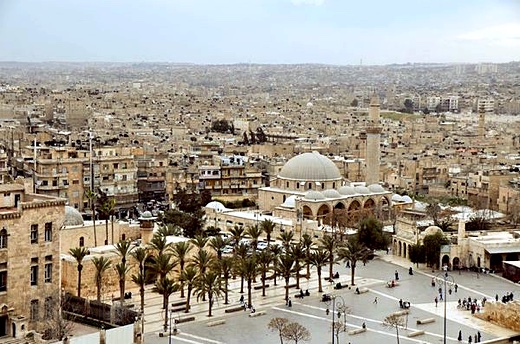
I don’t know if you’ve ever seen pictures of Aleppo before it was destroyed, but I dare you to tell me there is even one existing American city today that’s more beautiful than Aleppo was before Americans and their allies reduced it to dust.


Image above: This is Aleppo before America got involved in Syria. From original article.

There’s very little left of that beautiful city, with its highly educated people and their lovely happy children. And none of that has anything at all to do with Donald Trump!

I don’t want to give you pics of what Aleppo looks like now. I want you to remember how lovely it was before ‘we’ moved in, years go. Sure, what you hear and see in the west is that Assad and Putin are the bad guys in this story. But now that the US/EU supported ‘rebels’ are gone, dozens of schools are reopening, and medical centers, hospitals. Who are the bad guys now?

And yeah, Trump is an elephant, and elephants are always awkward and they’re messy and they tend to kick things over and when they make mistakes those tend to be huge, but how much valuable china does the US really have left anyway?

Isn’t it all perhaps just a sliver off target, the demos, the outrage and indignation? Is the idea that your army can destroy people’s living environments with impunity without you protesting in anything approaching a serious way, and that then you get to demand, through protest, that those same people are allowed entry into your country? That’s way too late to do the right thing.

I started out making the point that as our politico-economic systems are failing, voters will move away from the center that devised and promoted those systems, and that this will happen in many countries.

The US could have had Bernie Sanders as president, but the remaining powers in the center made that impossible. Likewise, many European countries will see a move towards either further left or further right.

Since the former is mostly dormant at best, while the latter has long been preparing for just such a moment, many nations will follow the American example and elect a right wing figurehead.

This will cause a lot of chaos, but that’s not necessarily a bad thing. People need to wake up and become active. The recent US demonstrations may be a first sign of that, even though they look largely out of focus.

More than anything else, people need a mirror, they need to acknowledge that because they’ve been in a state of mindless self-centered slumber for so long, they have work to do now.

And that work needs to consist of more than yelling at the top of your lungs that Trump and Le Pen and Wilders are such terribly bad people.

For one thing because that will only help them, for another because they were not the people who put you to sleep or were supporting mindless slaughter in faraway nations or were making up ‘official’ numbers as your economies were dumped into handbaskets on their way to hell.

So ask yourselves, why did you believe what Obama was saying, or Merkel, or Cameron, Sarkozy, Rutte, you name them, while you could have known they were just making it all up, if only you had paid attention?

Why? What happened?

Why did the term ‘fake news’ only recently become a hot potato, even though you’ve been bombarded with fake and false news for years? Is it because you were/are so eager to believe that your economy is recovering that any evidence to the contrary didn’t stand a chance?

If so, do realize that for many people that was not true; it’s why they voted for the people you now so despise. Is it perhaps also because you’re so eager to believe your ‘leaders’ do the right thing that you completely miss out on the fact that they’re not? And whose fault is that?

In yet another angle, people claim that the planet’s in great peril because Trump doesn’t ‘believe’ in climate change.

But it’s not Trump’s who’s the danger when it comes to climate change, you are, because you’re foolish enough to believe that things like last year’s infinitely bally-hood Paris Agreement (CON21) will actually ‘save’ something. That belief is more dangerous than a flat-out denial, because it lulls people into sleep, while denial keeps them awake.

It’s the idea that there’s still time to rescue the planet that’s dangerous, because it’s the perfect excuse to keep on doing what you were doing without having to feel too much guilt or remorse.

You’re not going to save a single species with your electric car or whatever next green fad there is, the only way to do that is through drastic changes to your society and your own behavior.

That’s not only true with respect to the climate, it’s just as valid with respect to the refugees on your doorstep. If you want to rescue them, and those who will come after them, the only thing that makes any difference is making sure the bombing stops, that the US and European war machines are silenced. If you don’t do that, none of these protests are of any use.

So sure, yeah, by all means, protest, but make sure you protest the real issues, not just a symptom.

That doesn’t mean you should shut the door in the face of these frail forms fainting at the door, that’s just insane, but it does mean that after welcoming your guests, you will also have to make sure what brought them there must stop.

If you stop killing and maiming these people, and help rebuild Aleppo and a thousand other places, they won’t need to come to your door anymore.

As for the political field, unrest will continue and grow because the end of economic growth means the end of centralization, and our entire world, politically, economically, what have you, is based on these two things. Today, unrest is the only growth industry left.

And it’s not going away anytime soon. It’s a new day, a new dawn, it’s just that unfortunately this is not going to be a pretty one.

Still, none of it is unexpected. The Automatic Earth has been saying for years, and with us quite a few others, that this was and is inevitable. Of course there are those who say that we cried wolf, but we’ll take that risk any day.

Saw a nice very short video of Mike Maloney saying in 2011 that Obama would have to double US debt between 2008 and 2016 just to keep the entire system from starting to collapse, running to stand still, Alice, Red Queen and all. And guess what?

There’s the recovery as it’s been sold to you. It’s all been borrowed, to the last penny. Will Donald Trump double US debt once again? Will the EU countries do the same? How about Japan and China?

And to think that federal debt isn’t even the worst threat, personal debt is, and so many of us carry so much of that, and try to pass off our mortgaged homes as assets, not debt. An increasingly desperate game on all fronts.

.

The deepening Deep State

SUBHEAD: It's part the massively growing “security” and surveillance matrix expanding since 9/11.

By James Kunstler on 5 December 2016 for Kunstler.com -
(http://kunstler.com/clusterfuck-nation/deepening-deep-state/)


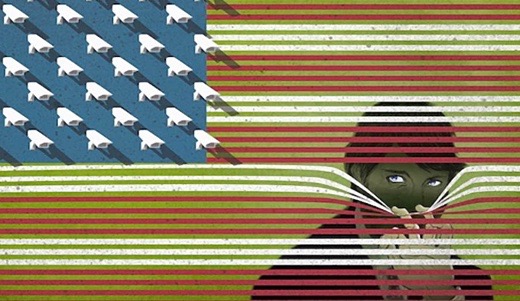
Image above: Americans have reason to fear their own government spying on what they say and think. From (http://www.theeventchronicle.com/news/north-america/conspiracy-vs-government-elite-propaganda-justifying-violent-repression/).

One amusing angle on the news media broadside about Russia “hacking” the US election is the failure to mention — or even imagine! — that the US incessantly and continually runs propaganda psy-ops against every other country in the world.

And I’m not even including the venerable, old, out-in-the-open propaganda organs like Voice of America and Radio Free Europe (reminder: the Iron Curtain came down a quarter century ago).

Do you suppose that nobody at Langley, or the Pentagon, or the NSA’s sprawling 1.5 million square foot Utah Data Center is laboring night and day to sow confusion among other societies to push our various agendas?

The main offensive started with The Washington Post’s publication on Nov 26 of “The List,” a story calling out dozens of blogs and web news-sites as purveyors of “fake news” fronting for Russian disinformation forces. The list included Zero Hedge, Naked Capitalism, and David Stockman’s blog.

There were several whack-job sites mixed in the list for seasoning — The Daily Stormer (Nazis), Endtime.com (Evangelical apocalyptic), GalacticConnection (UFO shit). The rest range between tabloid-silly and genuine, valuable news commentary. What else would you expect in a society with an Internet AND a completely incoherent consensus about reality?

Pretty obviously, the struggle between mainstream news and Web news climaxed over the election, with the mainstream overwhelmingly pimping for Hillary, and then having a nervous breakdown when she lost. Desperate to explain the loss, the two leading old-line newspapers, The New York Times and The Washington Post, ran with the Russia-Hacks-Election story — because only Satanic intervention could explain the fall of Ms. It’s-My-Turn / I’m-With-Her.

Thus, the story went, Russia hacked the Democratic National Committee (DNC), gave the hacked emails to Wikileaks, and sabotaged not only Hillary herself but the livelihoods of every myrmidon in the American Deep State termite mound, an unforgivable act.

Also interestingly, these newspapers and their handmaidens on TV, were far less concerned as to whether the leaked information was true or not — e.g. the Clinton Foundation donors’ influence-peddling around arms deals made in the State Department; the DNC’s campaign to undermine Bernie Sanders in the primaries; DNC temporary chair (and CNN employee) Donna Brazille conveying debate questions to HRC; the content of HRC’s quarter-million-dollar speeches to Wall Street banks. All of that turned out to be true, of course.

Then, a few weeks after the election, the US House of Representatives passed H.R. 6393, the Intelligence Authorization Act for Fiscal Year 2017. Blogger Ronald Thomas West reports:
Section 501 calls for the government to “counter active measures by Russia to exert covert influence … carried out in coordination with, or at the behest of, political leaders or the security services of the Russian Federation and the role of the Russian Federation has been hidden or not acknowledged publicly.”
The measure has not been passed by the Senate or signed into law yet, and the holiday recess may prevent that. But it is easy to see how it would empower the Deep State to shut down whichever websites they happened to not like.

My reference to the Deep State might even imply to some readers that I’m infected by the paranoia virus.

But I’m simply talking about the massive “security” and surveillance matrix that has unquestionably expanded since the 9/11 airplane attacks, creating a gigantic NSA superstructure above and beyond the Central Intelligence Agency, the Department of Defense’s DIA, and the hoary old FBI.

A little paranoia about the growing fascist behavior of the US government is a useful corrective to trends that citizens ought to be concerned about — for instance, the militarization of police; the outrageous “civil forfeiture” scam that allows police to steal citizens cash and property without any due process of law; the preferential application of law as seen in the handling of the Clinton Foundation activities and the misconduct of banking executives; the attempt to impose a “cashless society” that would herd all citizens into a financial surveillance hub and eliminate their economic liberty.

These matters are especially crucial as the nation stumbles into the next financial crisis and the Deep State becomes desperate to harvest every nickel it can to rescue itself plus the cast of “systemically important” (Too-Big-To-Fail) banks and related institutions like Fannie Mae and Freddie Mac, which are about to once again be left holding colossal bags of worthless non-performing mortgages, not to mention the pension funds and insurance companies that will also founder in the Great Unwind that is likely to commence as Trump hangs his golden logo over the White House portico.

.

Deja Vu All Over Again

SUBHEAD: Many institutions tried to bail themselves out from the real estate bust by doubling down on fracking.

By John Michael Greer on 17 December 2014 for the Archdruid Report -
(http://thearchdruidreport.blogspot.com/2014/12/deja-vu-all-over-again.html)


Image above: Illustration for "Beware of the Shale Gas Bubble" 2/20/13. From (http://priceofoil.org/2013/02/20/beware-the-shale-gas-bubble/).

Over the last few weeks, a number of regular readers of The Archdruid Report have asked me what I think about the recent plunge in the price of oil and the apparent end of the fracking bubble.

That interest seems to be fairly widespread, and has attracted many of the usual narratives; the blogosphere is full of claims that the Saudis crashed the price of oil to break the US fracking industry, or that Obama got the Saudis to crash the price of oil to punish the Russians, or what have you.

I suspect, for my part, that what’s going on is considerably more important. To start with, oil isn’t the only thing that’s in steep decline. Many other major commodities—coal, iron ore, and copper among them—have registered comparable declines over the course of the last few months.

I have no doubt that the Saudi government has its own reasons for keeping their own oil production at full tilt even though the price is crashing, but they don’t control the price of those other commodities, or the pace of commercial shipping—another thing that has dropped steeply in recent months.

What’s going on, rather, is something that a number of us in the peak oil scene have been warning about for a while now. Since most of the world’s economies run on petroleum products, the steep oil prices of the last few years have taken a hefty bite out of all economic activities.

The consequences of that were papered over for a while by frantic central bank activities, but they’ve finally begun to come home to roost in what’s politely called “demand destruction”—in less opaque terms, the process by which those who can no longer afford goods or services stop buying them.

That, in turn, reminded me of the last time prolonged demand destruction collided with a boom in high-priced oil production, and sent me chasing after a book I read almost three decades ago. A few days ago, accordingly, the excellent interlibrary loan service we have here in Maryland brought me a hefty 1985 hardback by financial journalist Philip Zweig, with the engaging title Belly Up: The Collapse of the Penn Square Bank.

PENN SQUARE
Some of my readers may never have heard of the Penn Square Bank; others may be scratching their heads, trying to figure out why the name sounds vaguely familiar. Those of my readers who belong to either category may want to listen up, because the same story seems to be repeating itself right now on an even larger scale.

The tale begins in the middle years of the 1970s, when oil prices shot up to unprecedented levels, and reserves of oil and natural gas that hadn’t been profitable before suddenly looked like winning bets.

The deep strata of Oklahoma’s Anadarko basin were ground zero for what many people thought was a new era in natural gas production, especially when a handful of deep wells started bringing in impressive volumes of gas.

The only missing ingredient was cash, and plenty of it, to pay for the drilling and hardware. That’s where the Penn Square Bank came into the picture.

The Penn Square Bank was founded in 1960. At that time, as a consequence of hard-earned suspicions about big banks dating back to the Populist era, Oklahoma state banking laws prohibited banks from owning more than one branch, and so there were hundreds of little one-branch banks scattered across the state, making a modest return from home mortgages, auto loans, and the like.

That’s what Penn Square was; it had been organized by the developer of the Penn Square shopping mall, in the northern suburbs of Oklahoma City, to provide an additional draw to retailers and customers. There it sat, in between a tobacconist and Shelley’s Tall Girl’s Shop, doing ordinary retail banking, until 1975.

In that year it was bought by a group of investors headed by B.P. “Beep” Jennings, an Oklahoma City banker who had been passed over for promotion at one of the big banks in town. Jennings pretty clearly wanted to prove that he could run with the big dogs; he was an excellent salesman, but not particularly talented at the number-crunching details that make for long-term success in banking, and he proceeded to demonstrate his strengths and weaknesses in an unforgettable manner.

He took the little shopping mall bank and transformed it into a big player in the Oklahoma oil and gas market, which was poised—or so a chorus of industry voices insisted—on the brink of one of history’s great energy booms.

Now of course this involved certain difficulties, which had to be overcome. A small shopping center bank doesn’t necessarily have the financial resources to become a big player in a major oil and gas market, for example.

Fortunately for Beep Jennings, one of the grand innovations that has made modern banking what it is today had already occurred; by his time, loans were no longer seen as money that was collected from depositors and loaned out to qualified borrowers, in the expectation that it would be repaid with interest. Rather, loans were (and are) assets, which could (and can) be sold, for cash, to other banks.

This is what Penn Square did, and since their loans charged a competitive interest rate and thus promised competitive profits, they were eagerly snapped up by Chase Manhattan, Continental Illinois, Seattle First, and a great many other large and allegedly sophisticated banks.

So Penn Square Bank started issuing loans to Oklahoma oil and gas entrepreneurs, a flotilla of other banks around the country proceeded to fund those loans, and to all intents and purposes, the energy boom began.

OIL BUBBLE
At least that’s what it looked like. There was a great deal of drilling going on, certainly; the economists insisted that the price of oil and gas would just keep on rising; the local and national media promptly started featuring giddily enthusiastic stories about the stunning upside opportunities in the booming Oklahoma oil and gas business.

What’s more, Oklahoma oil and gas entrepreneurs were spending money like nobody’s business, and not just on drilling leases, steel pipe, and the other hardware of the trade.

Lear jets, vacation condos in fashionable resorts, and such lower-priced symbols of nouveau richesse as overpriced alligator-hide cowboy boots were much in evidence; so was the kind of high-rolling crassness that only the Sunbelt seems to inspire. Habitués of the Oklahoma oilie scene used to reminisce about one party where one of the attendees stood at the door with a stack of crisp $100 bills in his hand and asked every woman who entered how much she wanted for her clothes: every stitch, then and there, piled up in the entry.

Prices varied, but apparently none of them turned down the offer.

It’s only fair to admit that there were a few small clouds marring the otherwise sunny vistas of the late 1970s Oklahoma oil scene. One of them was the difficulty the banks buying loans from Penn Square—the so-called “upstream” banks—had in getting Penn Square to forward all the necessary documents on those loans.

Since their banks were making loads of money off the transactions, the people in charge at the upstream banks were unwilling to make a fuss about it, and so their processing staff just had to put up with such minor little paperwork problems as missing or contradictory statements concerning collateral, payments of interest and principal, and so on.

Mind you, some of the people in charge at those upstream banks seem to have had distinctly personal reasons for not wanting to make a fuss about those minor little paperwork problems. They were getting very large loans from Penn Square on very good terms, entering into partnerships with Penn Square’s favorite oilmen, and in at least some cases attending the clothing-optional parties just mentioned.

No one else in the upstream banks seems to have been rude enough to ask too many questions about these activities; those who wondered aloud about them were told, hey, that’s just the way Oklahoma oilmen do business, and after all, the banks were making loads of money off the boom.

All in all, the future looked golden just then. In 1979, the Iranian revolution drove the price of oil up even further; in 1980, Jimmy Carter’s troubled presidency—with its indecisive but significant support for alternative energy and, God help us all, conservation—was steamrollered by Reagan’s massively funded and media-backed candidacy.

REAGANOMICS
As the new president took office in January of 1981, promising “morning in America,” the Penn Square bankers, their upstream counterparts, their clients in the Oklahoma oil and gas industry, and everyone else associated with the boom felt confident that happy days were there to stay.

After all, the economists insisted that the price of oil and gas would just keep rising for decades to come, the most business-friendly and environment-hostile administration in living memory was comfortably ensconced in the White House; and investors were literally begging to be allowed to get a foot in the door in the Oklahoma boom. What could possibly go wrong?

Then, in 1981, without any fuss at all, the price of oil and natural gas peaked and began to decline.

In retrospect, it’s not difficult to see what happened, though a lot of people since then have put a lot of effort into leaving the lessons of those years unlearnt. Energy is so central to a modern economy that when the price of energy goes up, every other sector of the economy ends up taking a hit. The rising price of energy functions, in effect, as a hidden tax on all economic activity outside the energy sector, and sends imbalances cascading through every part of the economy.

As a result, other economic sectors cut their expenditures on energy as far as they can, either by conservation measures or by such tried and true processes as shedding jobs, cutting production, or going out of business. All this had predictable effects on the price of oil and gas, even though very few people predicted them.

As oil and gas prices slumped, investors started backing away from fossil fuel investments, including the Oklahoma boom. Upstream banks, in turn, started to have second thoughts about the spectacular sums of money they’d poured into Penn Square Bank loans.

BOOM & BUST
For the first time since the boom began, hard questions—the sort of questions that, in theory, investors and bankers are supposed to ask as a matter of course when people ask them for money—finally got asked. That’s when the problems began in earnest, because a great many of those questions didn’t have any good answers.

It took until July 5, 1982 for the boom to turn definitively into a bust. That’s the day that federal bank regulators, after several years of inconclusive fumbling and a month or so of increasing panic, finally shut down the Penn Square Bank.

What they discovered, as they dug through the mass of fragmentary, inaccurate, and nonexistent paperwork, was that Penn Square had basically been lending money to anybody in the oil and gas industry who wanted some, without taking the trouble to find out if the borrowers would ever be able to repay it.

When payments became a problem, Penn Square obligingly loaned out the money to make their payments, and dealt with loans that went bad by loaning deadbeat borrowers even more money, so they could clear their debts and maintain their lifestyles.

The oil and gas boom had in fact been nothing of the kind, as a good many of the firms that had been out there producing oil and gas had been losing money all along. Rather, it was a Ponzi scheme facilitated by delusional lending practices.

All those Lear jets, vacation condos, alligator-skin cowboy boots, heaps of slightly used women’s clothing, and the rest of it? They were paid for by money from investors and upstream banks, some of it via the Penn Square Bank, the rest from other banks and investors.

The vast majority of the money was long gone; the resulting crash brought half a dozen major banks to their knees, and plunged Oklahoma and the rest of the US oil belt into a savage recession that gripped the region for most of a decade.

That was the story chronicled in Zweig’s book, which I reread over a few quiet evenings last week. Do any of the details seem familiar to you? If not, dear reader, you need to get out more.

DEJA VU
As far as I know, the fracking bubble that’s now well into its denouement didn’t have a single ineptly run bank at its center, as the Oklahoma oil and gas bubble did. Most of the other details of that earlier fiasco, though, were present and accounted for.

Sky-high fuel prices, check; reserves unprofitable at earlier prices that suddenly looked like a winning deal, check; a media frenzy that oversold the upside and completely ignored the possibility of a downside, check; vast torrents of money and credit from banks and investors too dazzled by the thought of easy riches to ask the obvious questions, check; a flurry of drilling companies that lost money every single quarter but managed to stay in business by heaping up mountains of unpayable debt, check.

Pretty much every square on the bingo card marked “economic debacle” has been filled in with a pen dipped in fracking fluid.

Now of course a debacle of the Penn Square variety requires at least one other thing, which is a banking industry so fixated on this quarter’s profits that it can lose track of the minor little fact that lending money to people who can’t pay it back isn’t a business strategy with a long shelf life. I hope none of my readers are under the illusion that this is lacking just now.
 
With interest rates stuck around zero and people and institutions that live off their investments frantically hunting for what used to count as a normal rate of return, the same culture of short-term thinking and financial idiocy that ran the global economy into the ground in the 2008 real estate crash remains firmly in place, glued there by the refusal of the Obama administration and its equivalents elsewhere to prosecute even the most egregious cases of fraud and malfeasance.

Now that the downturn in oil prices is under way, and panic selling of energy-related junk bonds and lower grades of unconventional crude oil has begun in earnest, it seems likely that we’ll learn just how profitable the fracking fad of the last few years actually was.

My working guess, which is admittedly an outsider’s view based on limited data and historical parallels, is that it was a money-losing operation from the beginning, and looked prosperous—as the Oklahoma boom did—only because it attracted a flood of investment money from people and institutions who were swept up in the craze.

If I’m right, the spike in domestic US oil production due to fracking was never more than an artifact of fiscal irresponsibility in the first place, and could not have been sustained no matter what. Still, we’ll see.

DAMAGE ASSESSMENT
The more immediate question is just how much damage the turmoil now under way will do to a US and global economy that have never recovered from the body blow inflicted on them by the real estate bubble that burst in 2008.

Much depends on exactly who sunk how much money into fracking-related investments, and just how catastrophically those investments come unraveled. It’s possible that the result could be just a common or garden variety recession; it’s possible that it could be quite a bit more.

When the tide goes out, as Warren Buffet has commented, you find out who’s been swimming naked, and just how far the resulting lack of coverage will extend is a question of no small importance.

At least three economic sectors outside the fossil fuel industry, as I see it, stand to suffer even if all we get is an ordinary downturn.

FIRST
 The first, of course, is the financial sector. A vast amount of money was loaned to the fracking industry; another vast amount—I don’t propose to guess how it compares to the first one—was accounted for by issuing junk bonds, and there was also plenty of ingenious financial architecture of the sort common in the housing boom. Those are going to lose most or all of their value in the months and years ahead.

No doubt the US government will bail out its pals in the really big banks again, but there’s likely to be a great deal of turmoil anyway, and midsized and smaller players may crash and burn in a big way. One way or another, it promises to be entertaining.

SECOND
The second sector I expect to take a hit is the renewable energy sector. In the 1980s, as prices of oil and natural gas plunged, they took most of the then-burgeoning solar and wind industries with them. There were major cultural shifts at the same time that helped feed the abandonment of renewable energy, but the sheer impact of cheap oil and natural gas needs to be taken into account.

If, as seems likely, we can expect several years of lower energy prices, and several years of the kind of economic downdraft that makes access to credit for renewable-energy projects a real challenge, a great many firms in the green sector will struggle for survival, and some won’t make it.

Those renewable-energy firms that pull through will find a substantial demand for their services further down the road, once the recent talk about Saudi America finds its proper home in the museum of popular delusions next to perpetual motion machines and Piltdown Man, and the US has to face a future without the imaginary hundred-year reserve of fracked natural gas politicians were gabbling about not that long ago.

Still, it’s going to take some nimble footwork to get there; my guess is that those firms that get ready to do without government subsidies and tax credits, and look for ways to sell low-cost homescale systems in an era of disintegrating energy infrastructure, will do much better than those that cling to the hope of government subsidies and big corporate contracts.

THIRD
The third sector I expect to land hard this time around is the academic sector. Yes, I know, it’s not fashionable to talk of the nation’s colleges and universities as an economic sector, but let’s please be real; in today’s economy, the academic industry functions mostly as a sales office for predatory loans, which are pushed on unwary consumers using deceptive marketing practices.

The vast majority of people who are attending US universities these days, after all, will not prosper as a result; in fact, they will never recover financially from the burden of their student loans, since the modest average increase in income that will come to those graduates who actually manage to find jobs will be dwarfed by the monthly debt service they’ll have to pay for decades after graduation.

One of the core reasons why the academic industry has become so vulnerable to a crash is that most colleges and universities rely on income from their investments to pay their operating expenses, and income from investments has taken a double hit in the last decade. First, the collapse of interest rates to near-zero (and in some cases, below-zero) levels has hammered returns across the spectrum of investment vehicles.

As a result, colleges and universities have increasingly put their money into risky investments that promise what used to be ordinary returns, and this drove the second half of the equation; in the wake of the 2008 real estate crash, many colleges and universities suffered massive losses of endowment funds, and most of these losses have never been made good.

Did the nation’s colleges and universities stay clear of the fracking bubble? That would have required, I think, far more prudence and independent thinking than the academic industry has shown of late.

Those institutions that had the common sense to get out of fossil fuels for ecological reasons may end up reaping a surprising benefit; the rest, well, here again we’ll have to wait and see.

My working guess, which is once again an outsider’s guess based on limited data and historical parallels, is that a great many institutions tried to bail themselves out from the impact of the real estate bust by doubling down on fracking.

If that’s what happened, the looming crisis in American higher education—a crisis driven partly by the predatory loan practices mentioned earlier, partly by the jawdropping inflation in the price of a college education in recent decades, and partly by rampant overbuilding of academic programs—will be hitting shortly, and some very big names in the academic industry may not survive the impact.

As Yogi Berra liked to point out, it’s hard to make predictions, especially about the future. Still, it looks as though we may be in the opening stages of a really ugly fiscal crisis, and I’d encourage my readers to take that possibility seriously and act accordingly.

See also:
Ea O KA Aina: The Oil Bubble Bursts 12/8/14
Ea O Ka Aina: Bubble About to Burst 10/22/12 

.

Plots for Princes

SUBHEAD: Big money is moving in on Kauai to make secure refuges for banksters and the elites.

By Juan Wilson on 18 November 2014 for Island Breath -
(http://islandbreath.blogspot.com/2014/11/plots-for-princes.html)


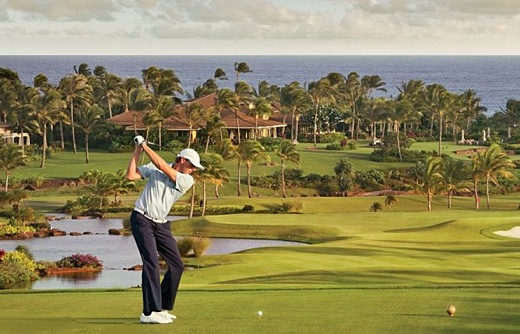
Image above: The golf course at Kukuiula near sunset. A come-on promo photo featured at Kukuiula real estate website. From (http://kukuiula.com/).

Here we go again. Undeveloped properties in desirable places are the target of people with money who want much more money. (see TGI article below)

How do make so much money out of land? You offer privacy, security exclusivity and pander to people with more money than they know what to do with.

Remember the Kukuiula Development Plan ranging east of Poipu Road to Spouting Horn. It was getting under way just about the time of the crash that started the ongoing Great Rcession of 2008. There were many unrealistic and unfunded schemes back then to cash in on real estate speculation.

Build it and They will Come
Kukuiula was one of the few that survived the real estate bubble pop. By "survived" I mean just barely. They didn't have the sales that they had expected but they had enough resources to go into hibernation.

The Kukuiula Development Company (and their partners DMB Associates of Scottsdale AZ) held onto their high prices and exclusivity figuring that eventually the those with millions to spend would come - they figured all they had to do was wait until the banksters have to flee Greenwich, Connecticut and Newport Beach, California. Half acre lots with 4,000 sqft house start about $6.5 million.

It must be getting close to that evacuation time for the 1% because the real estate bubble speculation money is starting to flow to our north shore from China.

Golf and Guards in the Tropics
The flaks are reving-up the propaganda machine favoring upscale development once more?

They describe their mission as stewardship of the land,  honoring the local culture, protecting the environment, resilience and sustainability.

When these developers talk about sustainability and stewardship of the land you have to realize that means maintaining chemically filled blue swimming pools and green Chem-Lawns. A horse pasture or cattle ranch is more sustainable.

What they really are offering is year round golfing, and maximum security in a tropical setting. These elite will be isolated from the ravages to come on the mainland. They will be safe from the burning brands and pitchforks when the system slumps in a steaming pile of decay.

Given the motivation for moving you can guess why the Princeville Airport is being upgraded. It's so rich people won't have to drive through the traffic in the "slums" of Lihue, Hanamaulu, Waipouli, Kapaa and Anahola to reach paradise. They can fly in from an international flight to Honolulu.

Private Property - No Trespassing
Moreover, don't be surprised to see ex Blackwater, Navy Seal and Secret Service agents relaxing in old Hanalei when off security duty protecting the elite at the new and even more private/secure Princeville Development.

One thing is clear - the access that regular people had to mauka and makai (the mountains and beaches of Kauai) had been greatly lessened since the plantation era days. Privatization is on a rampage cutting off most people's access to an important reason they live on Kauai.

We don't live here for the night life, high culture, or shopping opportunities. We live here because of the island itself and the people on it. The direction things are heading you'll only be able to drive to a shopping center, authorized county beach park or back home.  Everywhere else will be off limits.

Developing a Bunker Mentality
Many rich and famous have tried Kauai as a retreat to Paradise. What they soon find out is that there is nothing for them to do here. There is no Rodeo Drive or Fifth Avenue shopping. There are not dozens of first class entertainment venues to select from. The are only a handful of places they would even deign to eat at. Owning a Ferrari or Lamborghini on Kauai is like a bad joke. As a result, there is nowhere to go unless you get on a jet.  So goodbye sucker.

Of course, if things get shitty enough on the mainland the elite may come and stay anyway - Hell, the German elite did well enough in shabby Venezuela and Brazil.

One thing we local peons might hope for is if the 1% start a mass immigration to Kauai they may not put up with the a resurgence of the Hawaii Superferry carrying hundreds of cars a day to Kauai, or the PMRF military base making Kauai ground-zero for a direct nuclear strike, nor allowing chemical companies to endanger them with experimental pesticide spraying on the back of their mountain.

One can only hope.


Private Prince

By Chris D'Angelo on 14 November 2014 for the Garden Island -
(http://thegardenisland.com/business/local/private-prince/article_1cf55b48-6bd5-11e4-a4d3-d726cd16b77b.html)


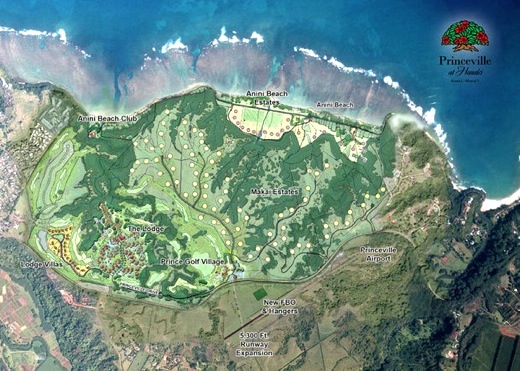
Image above: Plan for new Princeville Resort development of over 1000 acres. From original article.


A private 8,000-acre, 350-unit residential community will be developed over the next decade in the North Shore community of Princeville, with the Prince Golf Course as the centerpiece.

When finished, “Princeville at Hanalei” will have its own polo and beach clubs, lodge, nature trails, golf course, restaurants, airport, spa and more.


Jeff Stone, Hawaii landowner and founder of The Resort Group, unveiled details of the project during an exclusive interview with The Garden Island on Thursday.

“The idea is to create a private community where the members will agree to pay to be great stewards, to maintain the land,” he said.

Start to finish, The Resort Group and its new partner Reignwood International, an investment firm owned by billionaire Thai-Chinese businessman Chanchai Ruayrungruang, plan to spend at least $500 million on the project, according to Stone.

The resort community will be managed by Discovery Land Company, which operates 17 private projects around the country, including Montana’s exclusive Yellowstone Club ski resort, Makena on Maui and Kuki‘o on Big Island.

The Prince Golf Course is slated to close Dec. 31, with Discovery assuming management the following day. It is expected to reopen in mid-2016 following $50 million in renovations, including a brand new clubhouse and improved greens, fairways and cart paths.

Course renovations will be overseen by original architect, Robert Trent Jones, Jr. The overall layout will remain the same; however, Stone said the plan is to make the course easier and more playable.

Stone said the Prince is the best course in Hawaii, but cannot sustain itself without a resort community around it. For the last 10 years, he said it has been losing $3 million annually.

“It is magnificent,” Stone said of the Prince. “But there’s no one on it.”

By bringing in Discovery and establishing a private community, Stone plans to save it.

Discovery takes over management from Montage Golf, a division of Montage Hotels & Resorts, which will result in 58 employees being laid off Dec. 31. Stone said that while he doesn’t want to lose the employees, the course must remain closed between 12 and 18 months.

Discovery plans to employ about 250 people — more than four times the current labor force.
“It’s just a great opportunity to have Discovery as part of our community,” Stone said.

As for what it will cost to become a member of Princeville at Hanalei, Stone said fees will likely be comparable to the Yellowstone Club.

According to one CNBC report, membership at the Yellowstone Club costs an initial $300,000, plus annual dues of $30,000. Additionally, members must purchase a property, which start at $2.5 million for a condo and go up to more than $10 million for a ranch.

Stone said Phase II of the community master plan for Princeville Resort was initially approved for about 3,500 units. His plan for the private community is to start with 268 units and eventually reach 350.

Twenty “equestrian homes,” as Stone called them, will be built on 75 acres surrounding the now-abandoned but soon-to-be-reborn polo fields at Anini. Seventy-five homes, each on a 5-acre lot, will be located along the ridge. And an additional 173 units will make up what will be known as the Lodge Villas, located near the golf course.

A private Anini Beach Club will be located just inland from the western end of Anini Beach. Stone said plans also call for upgrades to the Princeville Airport, including rebuilding hangars and expanding the runway.

Stone said while the word “private” often leaves a bad taste in people’s mouths, there is nothing negative about the sustainable, low-density, one-of-a-kind resort community he has planned.
“How do we take this beautiful environment, lower the density to a density that fits with the vision of the North Shore?” he asked. “That’s what we’ve done.”

In 2005, The Resort Group, with Morgan Stanley as partner, acquired the 9,000-acre Princeville Resort from Japanese beer maker Suntory. The sale included the 252-room St. Regis resort (formerly The Princeville Hotel) now managed by Starwood, the Prince and Makai golf courses and club facilities, Princeville Tennis Club, Princeville Health Club and Spa, Princeville Shopping Center, Princeville Airport, Princeville Ranch and historic taro lands in Hanalei Valley.

During Phase 1 of the development, Stone led the $15 million renovation of the Makai Golf Course and its facilities, the update of Princeville Shopping Center, the $85 million renovation of St. Regis Princeville Resort, the $200 million construction of the Westin Princeville Ocean Resort Villas and the $10 million renovation of the Prince Golf Course.

In September, 1,103 acres of the Princeville Resort was acquired through a partnership between The Resort Group and Reighwood International, valued at $343 million. And earlier this month, Discovery Land Company was selected to manage the development.

“The Princeville lands are truly sacred, and we intend to develop them in a way that pays homage to their purity,” Discovery founder Michael S. Meldman said in a recent release.

“We are fortunate to be in partnership with The Resort Group and Reignwood, both of whom share our strong belief that responsible development draws inspiration from the environment and local customs of the property’s location.”


Thai-Chinese Businessman buys Princeville

By Duane Simogawa on 10 September 2014 for Pacific Business News -
(http://www.bizjournals.com/pacific/news/2014/09/10/billionaire-thai-chinese-businessman-buys-kauais.html)


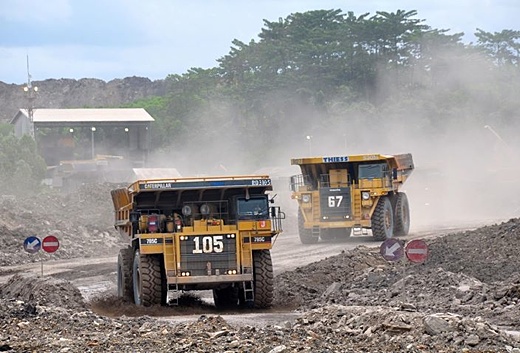
Image above: Photo of heavy duty earth moving trucks from Reignwood International's Facebook page. See (https://www.facebook.com/pages/Reignwood-International-Resources-Investment-Group-Co-Ltd/366759373338147).

Billionaire Thai-Chinese businessman Chanchai Ruayrungruang’s Reignwood International has purchased 1,103 acres at the Princeville Resort in Hanalei, including the Prince Golf Course, on the North Shore of Kauai for $343 million, the resort's master developer told PBN Wednesday.

Hawaii developer Jeff Stone’s The Resort Group, one of the largest resort development landowners in the state, confirmed the sale to PBN.

The sale signals one of the first major investments by Chinese investors in Hawaii, which up until now, was mostly just rumored to be in the works.

A company spokeswoman told PBN on Wednesday that no employees will be affected by the sale and that operations will continue as usual.

Stone, who is also master developer of the Ko Olina Resort in Leeward Oahu, will continue to manage the Kauai lands; Reignwood International is buying out Morgan Stanley as the finance partner.

Reignwood International, which has interests in consumer, lifestyle, industrial and financial products, will own and oversee the long-term development of Princeville Resort. The partnership between Stone and Ruayrungruang will manage the long-term planning and development aspects of Princeville lands.

Reignwood Group, the parent company of Reignwood International, was founded in Thailand in 1984 by Ruayrungruang, who has a net worth of $2 billion, according to Forbes.

In 30 years, Reignwood Group has grown into a multinational enterprise with diversified investments in key growth industries in Asia and around the world with branch offices in Singapore, Thailand, the United Kingdom, Canada and the United States.

“Hawaii’s culture has deep roots in Asian heritage as many of my good friends cherish the Islands and have made them their preferred vacation destination or home,” Ruayrungruang said. “We’re excited to be part of the Kauai and Hawaii communities. “The island’s natural beauty is spectacular, and its open countryside translates well to our sustainability goals for our communities.”

Ni Songhua, the London-based head of global investments and acquisitions for Reignwood, said the partnership underscores its long-term confidence in the state.

“We’re committed to preserving Princeville’s regal heritage and cultural roots,” he said. “We believe that Reignwood’s profound respect for Hawaiian history, along with our green vision for the future, will help to advance the long-term vision of Mr. Stone.”

The 9,000-acre Princeville Resort, once the site of sugar plantations and cattle ranches, became Hawaii’s first and largest master-planned community in the 1960s. The Resort Group and Morgan Stanley purchased Princeville in 2005 from Suntory, Japan’s largest beverage company.

Stone helped bring the St. Regis luxury brand to Hawaii, a pivotal component to securing the development of the Westin Princeville Ocean Resort Villas, and oversaw the renovation of Princeville’s Prince and Makai golf courses and its retail shopping center.

Annual operations at the resort currently support 2,500 jobs and generate $1 billion in economic impact to Kauai and the state, according to The Resort Group.

Beijing-based Reignwood Group, which is involved in 16 industries through its more than 60 subsidiaries around the world, is the distributor of Red Bull drinks in China, and just this past July, bought a stake in the producer of Vita Coco.

See also:
Ea O Ka Aina: Kukuiula Ghost Town 9/27/11
Ea O Ka Aina: Princeville Development 1/20/09
Island Breath:Annals of False Advertising - Kauai Lagoons  5/18/08
Island Breath: TGI #21 Koloa Monkeypods 1/11/08
Island Breath: Annuls of False Advertising - Kevin Showe 7/15/07
Island Breath: Koloa Landing 6/28/2007
Island Breath: Coconut Coast & Ko Olina Coast 6/1/2007


.

Heading towards the sidewalk

SUBHEAD: When the fracking bubble bursts we'll realize the universe is under no obligation to provide us will all the energy we want.

By John Michael Greer on 20 August 2014 for the Archdruid Report -
(http://thearchdruidreport.blogspot.com/2014/08/heading-toward-sidewalk.html)


Image above: Sad homeless man lying on sidewalk and smoking a cigarette. From (http://www.123rf.com/photo_7713105_sad-homeless-man-lying-on-sidewalk-and-smoking-cigarette.html).

Talking about historical change is one thing when the changes under discussion are at some convenient remove in the past or the future. It’s quite another when the changes are already taking place.

That’s one of the things that adds complexity to the project of this blog, because the decline and fall of modern industrial civilization isn’t something that might take place someday, if X or Y or Z happens or doesn’t happen; it’s under way now, all around us, and a good many of the tumults of our time are being driven by the unmentionable but inescapable fact that the process of decline is beginning to pick up speed.

Those tumults are at least as relevant to this blog’s project as the comparable events in the latter years of dead civilizations, and so it’s going to be necessary now and then to pause the current sequence of posts, set aside considerations of the far future for a bit, and take a look at what’s happening here and now. This is going to be one of those weeks, because a signal I’ve been expecting for a couple of years now has finally showed up, and its appearance means that real trouble may be imminent.

This has admittedly happened in a week when the sky is black with birds coming home to roost. I suspect that most of my readers have been paying at least some attention to the Ebola epidemic now spreading across West Africa.

Over the last week, the World Health Organization has revealed that official statistics on the epidemic’s toll are significantly understated, the main nongovernmental organization fighting Ebola has admitted that the situation is out of anyone’s control, and a series of events neatly poised between absurdity and horror—a riot in one of Monrovia’s poorest slums directed at an emergency quarantine facility, in which looters made off with linens and bedding contaminated with the Ebola virus, and quarantined patients vanished into the crowd—may shortly plunge Liberia into scenes of a kind not witnessed since the heyday of the Black Death.

The possibility that this outbreak may become a global pandemic, while still small, can no longer be dismissed out of hand.

Meanwhile, closer to home, what has become a routine event in today’s America—the casual killing of an unarmed African-American man by the police—has blown up in a decidedly nonroutine fashion, with imagery reminiscent of Cairo’s Tahrir Square being enacted night after night in the St. Louis suburb of Ferguson, Missouri.

The culture of militarization and unaccountability that’s entrenched in urban police forces in the United States has been displayed in a highly unflattering light, as police officers dressed for all the world like storm troopers on the set of a bad science fiction movie did their best to act the part, tear-gassing and beating protesters, reporters, and random passersby in an orgy of jackbooted enthusiasm blatant enough that Tea Party Republicans have started to make worried speeches about just how closely this resembles the behavior of a police state.

If the police keep it up, the Arab Spring of a few years back may just be paralleled by an American Autumn. Even if some lingering spark of common sense on the part of state and local authorities heads off that possibility, the next time a white police officer guns down an African-American man for no particular reason—and there will be a next time; such events, as noted above, are routine in the United States these days—the explosion that follows will be even more severe, and the risk that such an explosion may end up driving the emergence of a domestic insurgency is not small.

I noted in a post a couple of years back that the American way of war pretty much guarantees that any country conquered by our military will pup an insurgency in short order thereafter; there’s a great deal of irony in the thought that the importation of the same model of warfare into police practice in the US may have exactly the same effect here.

It may come as a surprise to some of my readers that the sign I noted is neither of these things. No, it’s not the big volcano in Iceland that’s showing worrying signs of blowing its top, either. It’s an absurdly little thing—a minor book review in an otherwise undistinguished financial-advice blog—and it matters only because it’s a harbinger of something considerably more important.

A glance at the past may be useful here. On September 9, 1929, no less a financial periodical than Barron’s took time off from its usual cheerleading of the stock market’s grand upward movement to denounce an investment analyst named Roger Babson in heated terms. Babson’s crime?

Suggesting that the grand upward movement just mentioned was part of a classic speculative bubble, and the bubble’s inevitable bust would cause an economic depression.

Babson had been saying this sort of thing all through the stock market boom of the late 1920s, and until that summer, the mainstream financial media simply ignored him, as they ignored everyone else whose sense of economic reality hadn’t gone out to lunch and forgotten to come back.

For those who followed the media, in fact, the summer and fall of 1929 were notable mostly for the fact that a set of beliefs that most people took for granted—above all else, the claim that the stock market could keep on rising indefinitely—suddenly were being loudly defended all over the place, even though next to nobody was attacking them.

The June issue of The American Magazine featured an interview with financier Bernard Baruch, insisting that “the economic condition of the world seems on the verge of a great forward movement.”

In the July 8 issue of Barron’s, similarly, an article insisted that people who worried about how much debt was propping up the market didn’t understand the role of broker’s loans as a major new investment outlet for corporate money.

As late as October 15, when the great crash was only days away, Professor Irving Fisher of Yale’s economics department made his famous announcement to the media: “Stock prices have reached what looks like a permanently high plateau.”

That sort of puffery was business as usual, then as now. Assaulting the critics of the bubble in print, by name, was not. It was only when the market was sliding toward the abyss of the 1929 crash that financial columnists publicly trained their rhetorical guns on the handful of people who had been saying all along that the boom would inevitably bust.

That’s a remarkably common feature of speculative bubbles, and could be traced in any number of historical examples, starting with the tulip bubble in the 17th century Netherlands and going on from there. Some of my readers may well have experienced the same thing for themselves in the not too distant past, during the last stages of the gargantuan real estate bubble that popped so messily in 2008.

I certainly did, and a glance back at that experience will help clarify the implications of the signal I noticed in the week just past.

Back when the real estate bubble was soaring to vertiginous and hopelessly unsustainable heights, I used to track its progress on a couple of news aggregator sites, especially Keith Brand’s lively HousingPanic blog.

Now and then, as the bubble peaked and began losing air, I would sit down with a glass of scotch, a series of links to the latest absurd comments by real estate promoters, and my copy of John Kenneth Galbraith’s The Great Crash 1929—the source, by the way, of the anecdotes cited above—and enjoyed watching the rhetoric used to insist that the 2008 bubble wasn’t a bubble duplicate, in some cases word for word, the rhetoric used for the same purpose in 1929.

All the anti-bubble blogs fielded a steady stream of hostile comments from real estate investors who apparently couldn’t handle the thought that anyone might question their guaranteed ticket to unearned wealth, and Brand’s in particular saw no shortage of bare-knuckle verbal brawls. It was only in the last few months before the bubble burst, though, that pro-bubble blogs started posting personal attacks on Brand and his fellow critics, denouncing them by name in heated and usually inaccurate terms.

 At the time, I noted the parallel with the Barron’s attack on Roger Babson, and wondered if it meant the same thing; the events that followed showed pretty clearly that it did.

That same point may just have arrived in the fracking bubble—unsurprisingly, since that has followed the standard trajectory of speculative booms in all other respects so far. For some time now, the media has been full of proclamations about America’s allegely limitless petroleum supply, which resemble nothing so much as the airy claims about stocks made by Bernard Baruch and Irving Fisher back in 1929.

Week after week, bloggers and commentators have belabored the concept of peak oil, finding new and ingenious ways to insist that it must somehow be possible to extract infinite amounts of oil from a finite planet; oddly enough, though it’s rare for anyone to speak up for peak oil on these forums, the arguments leveled against it have been getting louder and more shrill as time passes.

Until recently, though, I hadn’t encountered the personal attacks that announce the imminence of the bust.

That was before this week. On August 11th, a financial-advice website hosted a fine example of the species, and rather to my surprise—I’m hardly the most influential or widely read critic of the fracking bubble, after all—it was directed at me.

Mind you, I have no objection to hostile reviews of my writing. A number of books by other people have come in for various kinds of rough treatment on this blog, and turnabout here as elsewhere is fair play.

I do prefer reviewers, hostile or otherwise, to take the time to read a book of mine before they review it, but that’s not something any writer can count on; reviewers who clearly haven’t so much as opened the cover of the book on which they pass judgment have been the target of barbed remarks in literary circles since at least the 18th century.

Still, a review of a book the reviewer hasn’t read is one thing, and a review of a book the author hasn’t written and the publisher hasn’t published is something else again.

That’s basically the case here. The reviewer, a stock market blogger named Andew McKillop, set out to critique a newly re-edited version of my 2008 book The Long Descent. That came as quite a surprise to me, as well as to New Society Publications, the publisher of the earlier book, since no such reissue exists. The Long Descent remains in print in its original edition, and my six other books on peak oil and the future of industrial society are, ahem, different books.

My best guess is that McKillop spotted my new title Decline and Fall: The End of Empire and the Future of Democracy in 21st Century America in a bookshop window, and simply jumped to the conclusion that it must be a new release of the earlier book.

I’m still not sure whether the result counts as a brilliant bit of surrealist performance art or a new low in what we still jokingly call journalistic ethics; in either case, it’s definitely broken new ground. Still, I hope that McKillop does better research for the people who count on him for stock advice.

Given that starting point, the rest of the review is about what you would expect. I gather that McKillop read a couple of online reviews of The Long Descent and a couple more of Decline and Fall, skimmed over a few randomly chosen posts on this blog, tossed the results together all anyhow, and jumped to the conclusion that the resulting mess was what the book was about.

The result is quite a lively little bricolage of misunderstandings, non sequiturs, and straightforward fabrications—I invite anyone who cares to make the attempt to point out the place in my writings, for example, where I contrast catabolic collapse with “anabolic collapse,” whatever on earth that latter might be.

There’s a certain wry amusement to be had from going through the review and trying to figure out exactly how McKillop might have gotten this or that bit of misinformation wedged into his brain, but I’ll leave that as a party game for my readers.

The point I’d like to make here is that the appearance of this attempted counterblast in a mainstream financial blog is a warning sign. It suggests that the fracking boom, like previous bubbles when they reached the shoot-the-messenger stage, may well be teetering on the brink of a really spectacular crash—and it’s not the only such sign, either.

The same questions about debt that were asked about the stock market in 1929 and the housing market in 2008 are being asked now, with increasing urgency, about the immense volume of junk bonds that are currently propping up the shale boom.

Meanwhile gas and oil companies are having to drill ever more frantically and invest ever more money to keep production rates from dropping like a rock Get past the vacuous handwaving about “Saudi America,” and it’s embarrassingly clear that the fracking boom is simply one more debt-fueled speculative orgy destined for one more messy bust.

It’s disguised as an energy revolution in exactly the same way that the real estate bubble was disguised as a housing revolution, the tech-stock bubble as a technological revolution, and so on back through the annals of financial delusion as far as you care to go.

Sooner or later—and much more likely sooner than later—the fracking bubble is going to pop. Just how and when that will happen is impossible to know in advance. Even making an intelligent guess at this point would require a detailed knowledge of which banks and investment firms have gotten furthest over their heads in shale leases and the like, which petroleum and natural gas firms have gone out furthest on a financial limb, and so on.

That’s the kind of information that the companies in question like to hide from one another, not to mention the general public; it’s thus effectively inaccessible to archdruids, which means that we’ll just have to wait for the bankruptcies, the panic selling, and the wet thud of financiers hitting Wall Street sidewalks to find out which firms won the fiscal irresponsibility sweepstakes this time around.

One way or another, the collapse of the fracking boom bids fair to deliver a body blow to the US economy, at a time when most sectors of that economy have yet to recover from the bruising they received at the hands of the real estate bubble and bust.

Depending on how heavily and cluelessly foreign banks and investors have been sucked into the boom—again, hard to say without inside access to closely guarded financial information—the popping of the bubble could sucker-punch national economies elsewhere in the world as well.

Either way, it’s going to be messy, and the consequences will likely include a second helping of the same unsavory stew of bailouts for the rich, austerity for the poor, bullying of weaker countries by their stronger neighbors, and the like, that was dished up with such reckless abandon in the aftermath of the 2008 real estate bust.

Nor is any of this going to make it easier to deal with potential pandemics, simmering proto-insurgencies in the American heartland, or any of the other entertaining consequences of our headfirst collision with the sidewalks of reality.

The consequences may go further than this. The one detail that sets the fracking bubble apart from the real estate bubble, the tech stock bubble, and their kin further back in economic history is that fracking wasn’t just sold to investors as a way to get rich quick; it was also sold to them, and to the wider public as well, as a way to evade the otherwise inexorable reality of peak oil.

2008, it bears remembering, was not just the year that the real estate bubble crashed, and dragged much of the global economy down with it; it was also the year when all those prophets of perpetual business as usual who insisted that petroleum would never break $60 a barrel or so got to eat crow, deep-fried in light sweet crude, when prices spiked upwards of $140 a barrel.

All of a sudden, all those warnings about peak oil that experts had been issuing since the 1950s became a great deal harder to dismiss out of hand.

The fracking bubble thus had mixed parentage; its father may have been the same merciless passion for fleecing the innocent that always sets the cold sick heart of Wall Street aflutter, but its mother was the uneasy dawn of recognition that by ignoring decades of warnings and recklessly burning through the Earth’s finite reserves of fossil fuels just as fast as they could be extracted, the industrial world has backed itself into a corner from which the only way out leads straight down.

White’s Law, one of the core concepts of human ecology, points out that economic development is directly correlated with energy per capita; as depletion overtakes production and energy per capita begins to decline, the inevitable result is a long era of economic contraction, in which a galaxy of economic and cultural institutions predicated on continued growth will stop working, and those whose wealth and influence depend on those institutions will be left with few choices short of jumping out a Wall Street window.

The last few years of meretricious handwaving about fracking as the salvation of our fossil-fueled society may thus mark something rather more significant than another round of the pervasive financial fraud that’s become the lifeblood of the US economy in these latter days.

It’s one of the latest—and maybe, just maybe, one of the last—of the mental evasions that people in the industrial world have used in the futile but fateful attempt to pretend that pursuing limitless economic growth on a finite and fragile planet is anything other than a guaranteed recipe for disaster.

When the fracking bubble goes to its inevitable fate, and most of a decade of babbling about limitless shale oil takes its proper place in the annals of human idiocy, it’s just possible that some significant number of people will realize that the universe is under no obligation to provide us will all the energy and other resources we want, just because we happen to want them. I wouldn’t bet the farm on that, but I think the possibility is there.

One swallow does not a summer make, mind you, and one fumbled attempt at a hostile book review on one website doesn’t prove that the same stage in the speculative bubble cycle that saw frantic denunciations flung at Roger Babson and Keith Brand—the stage that comes immediately before the crash—has arrived this time around.

I would encourage my readers to watch for similar denunciations aimed at more influential and respectable fracking-bubble critics such as Richard Heinberg or Kurt Cobb. Once those start showing up, hang onto your hat; it’s going to be a wild ride.


.

China's Bubble of Millionaires

SUBHEAD: The recent bubble of millionaires in China may have such inequality as to bring down the system.

By William Pesek on 12 June 2014 for Bloomberg View -
(http://www.bloombergview.com/articles/2014-06-12/china-s-latest-bubble-millionaires)


Image above: A man on a cargo bike passes a Rolls Royce in China. From (http://www.bbc.com/news/world-asia-china-20024880).

Funny how everyone thought China would get old before it got rich. The opposite seems to be true.

A new Boston Consulting Group study shows America's lock on the most-millionaires title may be in jeopardy after a surge in Chinese wealth.

The Middle Kingdom surpassed Japan and Europe in the most recent survey, boasting 2.4 million millionaires. That's still far off the U.S.'s 7.1 million, of course. But the absence of transparency in China and the vast networks that exist to spirit wealth into bank accounts overseas makes it a sure bet BCG's figure is wildly conservative.

This should be good news for a Communist Party trying to transform "poor" China into a prosperous nation, right? In fact, this millionaire bubble is dangerous for two reasons. One, it's raising the odds of social instability. Two, as the ranks of those profiting from the status quo grow, there's even less impetus to restructure the economy.

The first risk is straightforward enough. Even if a few million are rolling in yuan (several million, more likely), most of China's 1.3 billion people aren't. Indeed, the gap between rich and poor is among the highest anywhere. Take China's Gini coefficient, an inequality measure in which 0 represents perfect equality, while 1 means wealth is in hands of one person. The United Nations warns that a score of more than 0.4 can cause socially instability. China's was 0.55 in 2010, up from 0.3 in 1980.

Creating an oligarchy wasn't Deng Xiaoping's plan when he initiated China's economic opening in 1979. Yet the combination of huge gains in gross domestic product and an opaque political system has fueled a robber-baron culture. This reality is coming to light at an awkward moment. Try as they might, Xi Jinping's army of Internet censors can't quell the anger lighting up chat rooms, microblog platforms and text-message systems.

In March, censors struggled to tamp down outrage over reports that ex-security chief Zhou Yongkang might have amassed an estimated $14.5 billion in ill-gotten gains. Nor could Beijing control the Bo Xilai narrative a year earlier. Authorities wanted the masses to be enraged by the Chongqing Communist Party chief's disloyalty to the memory of Mao Zedong.

But all Chinese could talk about was how a modestly paid civil servant was living the high life and sending his son to Harvard. Or how Bo's extended family, according to the New York Times, quietly amassed a $160 million fortune.

Such tales are toxic for a ruling party that's become communist in name only. Bloomberg's website has been offline in China since 2012 after an expose on the estimated $376 million amassed by Xi's own family. Average Chinese are becoming savvier about the insider trading, land grabs and old-fashioned rent seeking that enriches government officials and their cronies. They're starting to realize that the "Chinese Dream" President Xi waxes on about may hold true for the 1 percent only.
That's making Xi's reform drive even more difficult.

The BCG figures are a stark reminder of the roadblocks to expanding China's services sector and reducing the role of exports and excessive investment. Think about the nature of China's recent wealth gains. From the U.S. to Southeast Asia, wealth creation has been driven by stock-market rallies. In China, the windfall has been fueled by shadow-banking vehicles like trusts, the value of which surged 81.5 percent in 2013.

How does Xi rein in this financing monster when it's enriching the very people whose cooperation he needs to retool the economy? It's hard enough to tell Chinese to accept slowing growth. How does he tell fellow officials and well-connected power brokers that they must take a bath on their trust investments in order to limit broader risks to the financial system?

More likely, this huge vulnerability will go unchecked. Xi wants to pull off a Deng 2.0, setting China on a new, more sustainable growth path. But it's the millionaires who may ultimately decide if China stops borrowing and building its way to insolvency. And their ranks are swelling as we speak.

.

Saving the world with Egotecture

SUBHEAD: The Chinese air-conditioning billionaire with six months to make the tallest building and save the world.

By Oliver Wainwright on 12 June 2014 for the Guardian -
(http://www.theguardian.com/artanddesign/architecture-design-blog/2014/jun/12/ecopolis-china-billionaire-worlds-tallest-building-six-months)


Image above: Zhang Yue, looking hung-over, presents what will save the ecosystem of Earth... the tallest building in the world to be built in six months. From original article.

Zhang Yue was the first man in China to own a private jet, and his office is modelled on the Palace of Versailles. Now, he plans to save the planet by raising the world's tallest building in just six months. A new documentary goes behind the scenes of the great Chinese eco gold rush

“It's always said that the solution to environmental problems starts at the grass roots level,” says Chinese billionaire Zhang Yue, sitting in his office in Changsha, central China, in a building modelled on the Palace of Versailles. Out of the window extends a long ceremonial avenue, lined with ornamental box hedges and cypress trees, terminating in a replica of the Great Pyramid at Giza.

“I think that's a mistake. Rich people recognize environmental problems first. How can you wake up if your living standard is very poor? Only the richest of the rich, the smartest of the smart, the greatest of the great, wake up first.”

Zhang would know about such things. He was the first man in China to own a private jet, having made his millions selling air conditioning units, but at the age of 54 has now renounced his material possessions in favour of saving the planet. And his answer? Building the tallest building in the world in the fastest possible time: Sky City, a vertical metropolis of homes and hotels, schools and hospitals – along with indoor farms capable of feeding 20,000. To be finished by the end of this year, he hopes.

His crusade is brought to life in vivid detail in a new documentary by Finnish film-maker Anna-Karin Grönroos, showing at the ICA next week, which pitches his sky-high ambitions against an eco-plan of a very different kind.

Wandering the verdant Mentougou valley outside Beijing, looking like a lost Father Christmas, we meet the white-bearded Eero Paloheimo, a 77-year-old Finnish professor who has devoted the last 10 years to trying to realise his lifelong vision for a clean-tech “Eco Valley” in Europe, to no avail.

“It's all that red tape and bureaucracy that makes it so slow,” he bemoans. “But when I come here, it just takes a month to get off the ground.” Like many before him, he has tasted the dizzying pace of development of China, the can-do march of the bulldozers and cranes, and found it irresistible. What fails in Europe will surely work in China. “In crises, democracy is too slow a method,” he adds, giving the impression of a man who knows his time is running out. “And we are facing an urgent crisis.”

Drenched with pathos, the documentary follows the trials and tribulations of these two men, giving fascinating glimpses behind the scenes of the Chinese eco gold rush. There are already 200 so-called eco-city projects underway across the country, in a fast-paced scramble to house the billion people that will be living in cities within the next 15 years. And savvy businessmen like Zhang know that's where the money – and the all-important state approval – is going to come from.

We follow the bumbling Paloheimo as he attempts to win approval for his grand plan, attending conferences and trade shows and grappling with the Chinese way of doing business, like someone trying to use chopsticks for the first time. He presents fly-through animations of sparling white blobs emerging from the hillsides like futuristic fungal growths, a wealth-bringing zero-carbon Silicon Valley about which the local villagers couldn't be more excited.

Zhang, meanwhile, battles with the inevitable suspicion with which the international press receives a plan for the tallest, most environmentally-friendly building, built in less than a year, by an air-con tycoon who has never erected anything more than 30 storeys.


Image above: Rendering of completed Ecotopolis China. Looks a lot like Sky City (see below) or (http://theflyingtortoise.blogspot.com/2013/07/this-is-what-next-worlds-tallest.html) or Burj Khalifa already built in Dubai but dusted off for a new group of suckers. From (http://studyinchina.universiablogs.net/2013/10/29/chian-race-to-the-sky/) and reproportioned to proper height here.

There are rumours on the internet calling Sky City a bluff,” he tells a colleague in a heated meeting, as they plot a lavish launch party to win the support of politicians and suppliers. “People don't trust us anymore. Therefore we need to convince them with a ceremony.”

The saga ends just as the Sky City project begins on site, with a lavish ground-breaking party that has all the pomp and ceremony of a project that is doomed to remain a rendering. Sure enough, just a few weeks later, construction was suspended when the authorities declared it lacked the proper permits – not to mention the concerns over elevator design and fireproofing, wind-loading and ground subsidence.

Paloheimo, meanwhile, is confronted by a shock-dose of reality that could be seen a long time coming. Like finding the mythical end of the rainbow, it seems that those chasing the Chinese eco dream are all too often left to discover it is nothing but a flimsy mirage.

See also:
Ea O Ka Aina: One Building One City 5/14/13

.