Toward an Economy of Earth

SUBHEAD: I’ve taken responsibility for myself living in agrarian anarchy in a community at the edge of empire.  

By Guy McPherson on 2 February 2012 for Nature Bats Last - 
(http://guymcpherson.com/2012/02/toward-an-economy-of-earth/)

 
Image above: Hippy farm girl with staff of light. From (http://maryaseer.deviantart.com/art/hippy-farm-girl-106752302).
 
We need to develop a new economy because the current version is not working. The industrial economy is destroying every aspect of the living planet. And, as it turns out, we need a living planet for our own survival.

In this essay, I briefly describe the horrors of the current interconnected, globalized, planet-destroying house of cards. Then I articulate another way, which is not difficult to do: It would pose quite a challenge to come up with a worse way, and we have several models from which to choose. I will focus on two such models, agrarian anarchy and the post-industrial Stone Age.

What’s wrong?
Detailing all that is wrong with the industrial economy would require libraries full of books. The cryptic version includes, at a minimum, the following: (1) an industrial economy at the apex of western civilization, a set of living arrangements that transfers financial wealth from the poor to the wealthy; (2) human-population overshoot on an overcrowded planet; (3) runaway climate change on an overheated planet; and (4) wholesale destruction of the living planet. The latter brings an extinction rate of a few hundred species each day, along with destruction of potable water and living soil.

In short, as I wrote in the leading journal in my discipline, “the modern world essentially requires one to live immorally. There is no doubt that a society that enslaves, tortures, and kills people and abuses the lands and waters needed for the survival of our species and others is immoral, yet these actions are produced with stunning efficiency by the world’s industrial economy, as epitomized by American empire. Most people know that Big Energy poisons our water, Big Ag controls our food supply, Big Pharma controls the behavior of our children, Wall Street controls the flow of money, Big Ad controls the messages we receive every day, and the criminally rich get richer through exploitation of an immoral system. This is how America works. And, through it all, we think we live moral lives in the land of the free.”

It should be clear that the industrial economy is making us sick, mentally and physically, and also greatly reducing habitat for our species on Earth. As a result, I’m a big fan of terminating this set of living arrangements — that is, I’m a fan of terminating industrialized civilization — and replacing it with a more sane and durable set of living arrangements.

Alternatives
Alternatives abound, and generally rest along a continuum ranging from the current system to the post-industrial Stone Age. I will consider three points along the continuum: (1) the current system, which must be replaced if we are to persist as a species beyond a few decades, (2) agrarian anarchy, and (3) the post-industrial Stone Age.

The current system: industrial economy
The contemporary version of civilization is creating a dire set of predicaments: human-population overshoot, climate chaos, and an unparalleled extinction crisis. It is the primary problem we face. As such, I think it’s time to leave it behind before it leaves us. Considering the ongoing, accelerating collapse of the industrial economy and the virtual absence of national- or international-level discussion about mitigation, I strongly suspect our society is headed for the post-industrial Stone Age within a matter of years, not decades. But communities and the individuals comprising communities have the option of choosing between agrarian anarchy and the post-industrial Stone Age.

Agrarian anarchy
Anarchy assumes the absence of direct or coercive government as a political ideal, while proposing cooperative and voluntary association between individuals and groups as the principal mode for organizing society. This close-to-nature, close-to-our-neighbors approach was the Jeffersonian ideal for the United States, as evidenced by Monticello and the occasional one-liner from Thomas Jefferson. It was also the model promoted by Henry David Thoreau and, more recently, radical thinkers such as Wendell Berry (farmer, writer), Noam Chomsky (linguist, philosopher), Howard Zinn (recently deceased historian), and Tucson-based iconoclastic author Edward Abbey.

Consider, for example, a few well-known lines from Thomas Jefferson: (1) “The result of our experiment will be, that man may be trusted to govern themselves without a master”; (2) I would rather be exposed to the inconveniences attending too much liberty than to those attending too small a degree of it”; and (3) “When the people fear their government, there is tyranny; when the government fears the people, there is liberty.” Although Jefferson did not call himself an anarchist, his words and ideals indicate he strongly supported the rights and role of individuals, as well as a small government that minimally oversaw the citizenry. The Greco-Latin roots of anarchy suggest the absence of a ruler, which seems like a good idea to me.

Like Jefferson, Henry David Thoreau idealized an agricultural society that was close to nature. Thoreau was a staunch defender of agrarian anarchy, and he focused even more closely on the individual than did Jefferson: “That government is best which governs not at all; and when men are prepared for it, that will be the kind of government which they will have.” To my knowledge, no state governments believe we’ve yet reached that point.

Fast forward to the late twentieth century, and we find several other philosophers defending agrarian anarchy. Perhaps the best known examples are Wendell Berry, Noam Chomsky, and Howard Zinn, but the clearest voice for agrarian anarchy came from Edward Abbey in the years before he died in 1989: (1) “Anarchism is not a romantic fable but the hardheaded realization, based on five thousand years of experience, that we cannot entrust the management of our lives to kings, priests, politicians, generals, and county commissioners”; (2) “Anarchism is founded on the observation that since few men are wise enough to rule themselves, even fewer are wise enough to rule others”; and (3) “A patriot must always be ready to defend his country against his government.”

In my dreams, industrialized nations are headed for agrarian anarchy. Many countries have been there for years and can show us the way, if only we allow them. If a region never acquired ready access to cheap fossil fuels, agrarian anarchy was an obvious approach. How else but a strong sense of self-reliance and dependence on neighbors to grow and distribute all food locally? How else but reliance on those same traits to secure the water supply, and protect it from the insults of industry? How else to develop a human community dominated by mutual respect and mutual trust? Contrary to our current set of living arrangements, no currency is needed: barter fills the bill. Better yet, a gift economy is well-suited to agrarian anarchy.

Post-industrial Stone Age
The first two million years of the human experience, and the first few hundred thousand years for our own species, was spent with relatively small communities living close to the land that supported them. These humans knew each other and they knew the plants and animals with which they shared the area. They had minimal impact on the lands and waters that supported them. These humans spent a few hours each week doing what we call “work,” making sure the members of the community were well-hydrated, well-fed, and warm. This was a durable set of living arrangements, as characterized by its longevity and minimal impact on Earth.
 
We arrogantly and disparagingly refer to this time as the Stone Age.

The first civilization arose a few thousand years ago. Civilization is characterized by cities. In other words, civilization is defined by by human populations too large to be supported in the local area. Cities require use of clear air, clean water, and healthy food from adjacent wildlands, as well as materials to ensure body temperature is maintained at about 37 C. In exchange, cities export dirty air, polluted water, and garbage to outlying areas. Most civilized people think this is a wonderful exchange, although it is unsustainable by definition because there are limits on nature’s abundance.

The current version of civilization, the world’s industrial economy, is the least sustainable model to date, in part because it requires growth for its survival: Civilizations, like organisms, grow or die. This finite planet cannot support infinite growth.

The world’s industrial economy mainlines ready supplies of inexpensive crude oil. The lifeblood of western civilization, cheap oil infuses our daily lives. Petroleum products transport us easily and conveniently, thus allowing for exchange of materials and ideas. Without inexpensive crude oil to deliver water, food, and building materials, the world’s industrial economy declines.

Each of the six worldwide economic recessions since 1972 was preceded by a spike in the price of crude oil, and the days of cheap oil are behind us. At the global level, peak extraction of crude oil occurred in May 2005. A modest decline in available crude oil, coupled with increased industrialization in lesser-developed countries such as China, India, and Brazil, indicates further spikes in the price of oil lie in our future. That the world has nearly a trillion barrels of crude oil remaining to exploit hardly matters:

The price of oil is key to growth of the industrial economy. There is little doubt that future spikes in the price of oil will prove sufficient to terminate the industrial economy, taking us on a one-way trip to the post-industrial Stone Age. Already, expensive oil is overwhelming the ability of central banks and central governments to provide the illusion of economic growth by printing fiat currency. As nearly occurred in 2008 in the wake of oil priced at $147.27 per barrel, western civilization faces an abrupt termination in the face of expensive crude oil.

It is unclear what the future holds. I suspect completion of the ongoing collapse of the industrial economy will engender short-term but large-scale mortality of humans. Shortly thereafter, all “renewable” energy systems will fail because they depend heavily on maintenance and support from oil-driven industries. The batteries associated with most home-based PV solar and wind-energy systems have a life of a decade or so.

When collapse of the industrial economy is complete and is followed by inability to generate electricity via “renewable” systems, it seems humans will be forced to live — yet again — close to our neighbors and close to the natural systems that allow for our survival. That is, we’ll be immersed in the post-industrial Stone Age, albeit with plenty of technology that was not present during the Neolithic period. The simplest of these technologies, including knives and jars, will be readily usable for a long time. The more complex technologies, especially those relying on electricity, will fade quickly from our memories.

An economy based on gift exchange
The current version of the industrial economy has most people obsessed with the tertiary economy (symbolic, green pieces of paper and magnetized particles on hard drives). A few thoughtful individuals focus instead on the secondary economy (the items we use in our daily lives), which rests firmly on the foundational but rarely contemplated primary economy.

The primary economy is comprised of the raw materials we use to survive, and perhaps even thrive. Faith in the symbols characterizing the tertiary economy will be lost when people recognize there are too few items of use (secondary economy) and too few underlying materials (primary economy). One result will be a profound loss of power in the symbols.

An economy based on exchange of gifts worked for the first two million years of the human experience and, due to collapse of the industrial economy certain to result from ongoing decline of fossil-fuel energy, we’re headed toward a similar set of circumstances. We would do well to allow history to serve as a guide to our fossil-fuel-free future.

Our current monetary system is based on faith in symbols and it appears to give us something for nothing. Instead, it steals our sense of community.

People with an abundance of paper wealth have no need to build their human community. Their wealth allows them to buy goods and services, so they need not know the names of the people providing the services. Ditto for the names of the plants, animals, soils, and water providing the services on which we depend for our survival.

On the other hand, financially poor people depend heavily on their neighbors. The rural poor recognize that those neighbors include non-humans as well as humans. True community is woven from gifts, and the gifts come from the lands and waters that support us, as well as from our human neighbors.

A personal example
I had the brass ring. And I let it go. My parents were lifelong educators. So are my only brother and my only sister. Among them, only I reached the pinnacle of the educational world: I was a tenured full professor by the age of 40. I walked away from that life, which I loved, an act that made most people think I’d lost my mind. I walked away after trying to change the morally bankrupt system in which we are immersed when I realized the system was changing me, and not for the better.

I let go of the brass ring after I realized the first step toward destroying this irredeemably corrupt system is to leave it. Because I was born into captivity and assimilated into the normalcy bias of a world gone bonkers, I left later than I should have, and long after I realized the immorality of the system.

A large part of this delay resulted from my inability to identify where and how to leave the system. I had come to see the industrial economy at the apex of western civilization as a horrific system but, because it was the only system I ever knew, I didn’t know how to escape it. Finally, after several years of thought and a few aborted attempts to reach escape velocity, my wife and I developed a set of living arrangements on a small property with another small family where we try to model agrarian anarchy.

When I finally tossed aside the brass ring, I worked cooperatively with others to develop to transition toward a gift economy embedded in agrarian anarchy. I live in a small, sparsely populated valley where gifts are the rule, not the exception. I share a small property with a small family of humans, as well as goats, ducks, chickens, and gardens.

We have attempted, and continue to attempt, to develop a durable set of living arrangements with particular attention to securing potable water, healthy food, appropriate body temperature, and a decent human community. Living in agrarian anarchy in a human community at the edge of empire, I’ve taken responsibility for myself and my neighbors, human and otherwise.

This way of living is far superior to my former life. I drink pure water extracted from a local well with PV solar and hand pumps. I eat healthy, whole foods, much of which is grown on this property. I burn no fossil fuels during my daily life in a well-insulated, off-grid home. I know my neighbors, human and otherwise, and they know me.

Finally, very late in an unexamined life, I came to see the horrors of the way we live, and I let go. Please join me.

 .

PMRF missiles destroying us

SUBHEAD: Speakers on Kauai & Oahu, 2/18 -21 on impacts of Missile Defense in the Pacific, Asia, and the World  

By Raymond Catania on 4 February for Island Breath - (http://islandbreath.blogspot.com/2012/02/pmrf-missiles-destroying-us.html)

Image above: Illusration for Joan Conrow article "Pumping Up PMRF" for Honolulu Weekly in 2oo7. From (http://honoluluweekly.com/cover/2007/11/pumping-up-pmrf-2).
 
WHAT:
Impacts of Missile Defense on democracy, culture and the environment in the Pacific, Asia, and the World.

WHO:  
Bruce Gagnon, Coordinator of the Global Network Against Weapons and Nuclear Power in Space (http://www.space4peace.org/), an Air Force Veteran, and member of Maine Veterans for Peace.  
Dave Webb, National Chair of the UK Campaign for Nuclear Disarmament (http://www.cnduk.org/), a former space physicist for the UK Ministry of Defence and a recipient of the Pax Christi Award.  
Lynda Williams, Physics Educator at Santa Rosa Junior College in California and a board member of the Global Network Against Weapons and Nuclear Power in Space. She is also a singer and songwriter.  

WHERE AND WHEN:  
Kauai Event: Free Public Forum: Impacts of Missile Defense in the Pacific, Asia, and the World: PMRF Missiles Destroy Environment, Democracy, and Cultures Kapaa Library, Tuesday February 21, 2012, at 6:30pm Moderated by Koohan Paik

Oahu Events: Free Public Forum:
Along the Axis of Peace: Global Resistance to U.S. Military Bases and Space-based Weapons Art Auditorium, UH Manoa, February 18, 2012, 7:00 - 9:oo pm This event also features Jamie Oshiro, activist with the Hawaii Okinawa Alliance, a group that conducts education and action in solidarity with anti-bases struggles in Okinawa as well as Hawaii. Moderated by Kyle Kajihiro, Hawaii Peace and Justice (http://hawaiipeaceandjustice.org/), and DMZ Hawaii/Aloha Aina (http://www.dmzhawaii.org/).  

Mini-Conference on Oahu:
"Growing Our Resistance to .S. Military Bases and Space -based Weapons" Honolulu Friends Meeting House, February 20, 2012, 9:00 am to 4:00 pm. $10 covers lunch and materials, registration required, space limited. To register contact info@hawaiipeaceandjustice.org or call 808-988-6266. This day long mini-confab will be an opportunity for local and international activists to engage in more in-depth dialogue about peace and demilitarization issues and struggles. It is also a chance to develop ideas for greater international collaboration.  

SPONSORED BY:  
On Kauai:
The Kauai Alliance for Peace & Social Justice, co-sponsored by the International Forum on Globalization. Contact Ray Catania. Phone 822-7646 or e-mail may11nineteen71@gmail.com
 On Oahu:
Hawaii Peace & Justice, Contact Kyle Kajihiro at 808-988-6266 or e-mail info@hawaiipeaceandjustice.org. UH event also sponsored by University of Hawaii at Manoa Department of English, Department of American Studies, and Department of Political Science, the Global Network Against Weapons & Nuclear Power in Space, DMZ-Hawaii / Aloha Aina.  

MORE:  
The role of the U.S in the new world corporate order is going to be to export security. that means endless wars and weapons in space. How will we ever end America's addiction to war and violence as long as our communities are dependent on military spending for jobs? Bruce Gagnon From Vandenberg, California to Kwajalein Atoll, from Kauai to Jeju Island, from Okinawa to the UK, the U.S. global network of military bases and space-based weapons systems seeks to attain 'full spectrum dominance' over the planet. But grassroots movements are resisting through dynamic local-global networks of solidarity. We are happy to host leaders of this growing international movement and we look forward to sharing their good work with the public.

Kyle Kajihiro. After Hawaii, the visiting Global Network Against Weapons and Nuclear Power in Space delegation will proceed to Jeju Island, South Korea, where the annual conference of the network will take place amidst intense protests against a proposed naval base. For more information, visit: Global Network Against Weapons and Nuclear Power in Space (http://www.space4peace.org/) .

California offers Smart Meter Opt Out

SOURCE: Ken Taylor (taylork021@hawaii.rr.com) SUBHEAD: Smart meters, cellphone towers and wi-fi will be a controversy until medical research catches up with reality. By Mike Ludwig on 3 February 2012 for TruthOut - (http://truth-out.org/smart-meter-scoop-california-utility-launches-opt-out-program/1328294529) Image above: Do you want 37 microwave transmitters against your bedroom wall. From (smartmeters.webbery.net/2011/08/do-you-want-37-microwave-transmitters-up-against-your-bedroom-wall).

In response to heated opposition from consumers and activists, state regulators ruled on Wednesday that residential customers of California's PG&E utility company can choose not to have controversial smart meters installed in their homes, but it's going to cost them some extra fees.

Haven't heard of smart meters? Think of gas or electric meter combined with a smart phone, but there are no apps to download. Smart meters use wireless signals that automatically send energy usage information on regular intervals to the utility company. Utility companies in 25 states are working to integrate the new technology.

The Obama administration's 2009 stimulus package included $4.9 billion to develop a "smart" energy grid, a project the green-tech savvy state of California quickly jumped on board. Proponents claim the smart meters are as safe as other wireless devices and will help consumers and society save money and energy, but a growing grassroots movement claims smart meters pose privacy and health risks.

After hearing heated testimony from consumers, the California Public Utility Commission (PUC) ruled that smart meters will not be mandatory, but those who wish to opt out must pay a one-time fee of $75 and a monthly fee of $10. Residents in a program for low-income consumers will pay an initial $10 fee and $5 each month.

Smart meter opponents were seeking the right to opt out, but the fees angered some opponents who claim smart meters make them sick, and the fees amounted to extortion, according to The San Francisco Chronicle.

The fees cover costs the smart meters would have eliminated, such as sending workers to take readings.

Grassroots groups across the country, including Stop Smart Meters in California, are fighting smart meters tooth and nail. They dispute the potential benefits of smart meters and claim that it's risky to live with an ever-present wireless system that produces electromagnetic radiation.

Others are concerned about civil liberties issues and say that allowing utility companies to continuously monitor energy usage is an invasion of privacy.

Truthout doesn't take corporate funding - this lets us do the brave reporting and analysis that makes us unique. Please support this work by making a tax-deductible donation today - click here to donate.

According to the Stop Smart Meters web site, "thousands of people have complained of tinnitus, headaches, nausea, sleeplessness, heart arrhythmia, and other symptoms after a 'smart' meter was installed." The web site tracks 49 local governments in California that are seeking a moratorium on their installation until more information is available.

As the world is quickly becoming more connected by wireless communications, scientists are racing to study potential health problems related to radiofrequency electromagnetic radiation, which is created by wireless networks, smart meters and cell phones.

Last year, World Health Organization (WHO) classified radiofrequency electromagnetic radiations as a "possible" carcinogen based on limited evidence that cell phones may cause certain types of brain cancer. There is no conclusive evidence that wireless devices are carcinogenic, but the WHO said scientists should continue to study potential health risks.

The American Board of Environmental Medicine, a group of scientists that first warned the public about Gulf War Syndrome and other environmental diseases, has called for a moratorium on smart meters until more research can be completed. In a letter to the California PUC, the group claimed that "the widespread, chronic, and essentially inescapable extremely-low frequency and radiofrequency exposure of everyone living near a smart meter" warrants a moratorium until medical concerns are addressed by further research.

We cannot always choose when we are exposed to wireless signals, but at least some energy consumers in California will not be forced to live with another source of constant electromagnetic radiation. As the smart grid spreads across America and Europe, smart meters - along with Wi-Fi in schools and cell phone towers - will continue to be a source of controversy until medical research catches up with technological innovation and the public's fears.

.

Mayor puts KPD brass on leave

SUBHEAD: Horsesh*t of a different color - Stumblebums, troglodytes and mental midgets - Oh my. By Andy Parx on 3 February 2012 for Parx News Daily - (http://parxnewsdaily.blogspot.com/2012/02/horsesht-of-different-color.html) Image above: Asst Chief Asher (center left) and Chief Perry (center right) answer questions about KPD heavy weapons at Kukui Grove Mall in 2010. From (http://thegardenisland.com/news/local/article_ded16138-6182-11df-978b-001cc4c03286.html). Those are just some of the words that come to mind over Mayor Bernard Carvalho Jr.'s "Goo-goo-ga-joob" response to charges he had no authority to place Kaua`i Police Department (KPD) Chief Darryl Perry on leave yesterday- an action reportedly taken after Assistant Chief Roy Asher and Ale Quibilan were the subject of a "creating a hostile work environment" complaint from- guess who- Officer Darla Abbatiello-Higa. "Creating a hostile work environment" has cost the county millions and these guys are apparently still at it. "Un-freakin'-believable," as one former Kaua`i official repeatedly yelled into the phone last night. Perhaps the best line we heard yesterday came from "KPD Blue" author Anthony Sommer who wrote, regarding Carvalho, "maybe he just wants to keep the tradition of 'every Kauai mayor gets to fire one police chief' alive." But if Asher and Quibilan are Neanderthals, it pales in comparison to Carvalho's "I am the Eggman, They are the Eggmen, I am the Walrus" statement that somehow the county charter gives him the right to place Chief Perry on leave. Though he cites charter section 7.05, that section has 13 different provisions in it. But assuming the first one is the one to which he refers, it plainly begins with the phrase "unless otherwise provided" which, although Carvalho and real mayor Beth Tokioka disingenuously and conveniently chose not to read this part, means that the operable section, 11.04 supersedes 7.05(A). That's the section that says the police commission is the body empowered to hire and fire the chief and therefore apparently to whom he is responsible. But not only is Carvalho tone deaf to the limits of his own authority, he apparently hasn't read the sunshine law either. In his "statement" he explained that he contacted the chair and vice chair of the police commission and apparently discussed the matter with them. Since the mayor sits as a non-voting "ex-officio" member of all boards and commissions, this is a blatant violation of prohibitions on more than two members of a board discussing matters that are before that board, outside of a duly agendaed meeting. The matter is on the police commission's agenda for a special "executive session" meeting next Tuesday. Oh- and one last thing. Though the county has been tight-lipped about the type of leave Perry and the two assistant chiefs have been forced to take, one report may indicate it's not just some routine, non-disciplinary type. Today's pay-walled Honolulu Star Advertiser reports that "(a)ll three were ordered to turn in their equipment." You don't take away an officer's- or especially a chief's- gun and badge without some serious wrong-doing behind the action. Another question that comes up is why if, as reported, the complaint against Asher was filed last October 24, it did not show up on the October, November, December or January police commission meeting agendas. It just goes to show how seriously the county continues to take charges like this. We haven't been directly privy to the information that apparently came from either Abbatiello-Higa or Perry or both but it certainly wouldn’t be being spread by almost every media outlet in the state unless the source was unimpeachably "close to Abbatiello-Higa" or "has direct knowledge of the investigation" as they have characterized their source. But the real issue is that even after efforts by current Councilmember Tim Bynum and former Councilperson Lani Kawahara to put an end to the sexual harassment that pervades the county offices, it continues. A letter from the two dated October 13, 2010 states that the county "has repeatedly failed to respond appropriately to allegations of sexual harassment and a hostile work environment." Yet the Carvalho administration hasn't done a thing other than have a few "training sessions." Many of the harassers- even some of those that cost the county big bucks- are still on the job in positions that actually ARE under the direct supervision of the mayor. Funny how he's willing to butt in where he's apparently forbidden by law to do so but when it comes to his own hand-picked cronies it's a "hand-off" policy that pervades. If we didn't know better, we might think there was some kind of corruption going on in the administration. .

Monsanto suppresses GMO labeling

SUBHEAD: Washington state legislators in both the House and Senate Ag committees want no GMO labeling.  

By Randy Ananda on 2 February 2012 for Activist Post -  
(http://www.activistpost.com/2012/02/monsanto-funded-legislators-suppress.html)

 
Image above: Logo for Just Label It! From (http://marycrimmins.com/just-label-it).

 If Washington State’s GMO-label bills, HB 2637 and SB 6298 don’t get voted out of committee by Friday at 5 pm, they’re dead, which is exactly what Monsanto-funded legislators on both the House and Senate Ag committees want.

The Senate’s Agriculture and Water & Rural Economic Development committee chair, Democratic Sen. Brian Hatfield, and two Republicans, Sens. Jim Honeyford and Mark Schoesler, have all taken money from Monsanto, reports the Organic Consumers Assn.

“Committee Chair Hatfield denies taking campaign cash from Monsanto, saying the Organic Consumers Fund is making ‘wild claims,’ even though anyone can see the public record of these contributions by entering ‘Monsanto’” at this search link in the Contributor Name box. Sucks to be caught lying in public, but when a public servant does, that man ought to step down or recuse himself from the vote. That’s what someone with morals would do, anyway. “If he’s willing to lie about being sold-out to Monsanto, don’t believe him when he says,

‘The truth is, this bill does not have the votes to pass out of committee.’ It’s more likely that he’s blocking the vote to protect Monsanto because the bill WOULD pass,” says OCA.

The House Committee on Agriculture & Natural Resources also has two politicians sucking on Monsanto: the committee chair, Democratic Rep. Brian Blake and Republican Rep. Joel Kretz. Last week, two public hearings on the GMO-label bills were packed, with OCA transporting 50 people to each of them. You can watch the full Senate Ag hearing on the 26th here, and the House Ag hearing on the 27th here.

Residents are urged to write and call their state representatives and senators, asking them to co-sponsor HB 2637 and SB 6298. Folks are also asked to contact these members of the agricultural committees if you live in their districts, urging passage of the bills out of committee.

In related news: Kentucky takes on Big Ag in S.B. 47, a raw milk bill that would allow direct sales from farm to consumer as long as the milk and milk products are clearly labeled “Ungraded raw milk” or “Produced with ungraded raw milk.” Kentuckians should take immediate action by calling the Legislative Research Commission (LRC) and leaving a message in support of S.B. 47 for the full Senate and your senator at 1-800-372-7181. On Feb. 1, the bill was “passed over and retained in the Orders of the Day,” meaning the bill is being reworked before being submitted to the Senate for a vote.

While there is opposition to the bill, the latest version (which LRC has not posted) includes clarification about buying clubs, farmshares and herdshares, related to poultry and livestock, as well as direct sales of raw milk and raw milk products from farm to consumer. You can read more about SB 47 at Food Freedom.

On Feb. 1, the Vermont House passed H.R. 13, a resolution declaring the inalienable right of all Vermonters to save and grow seeds. Last year, Vermont passed a raw milk bill allowing direct sales from farm to consumer. It’s also looking to label GMOs.

 “Local Food is Homeland Security,” says Jessica Bernier of Vermont Coalition for Food Sovereignty. There’s also a move afoot to get Monsanto lobbyist Michael R. Taylor fired from the FDA.

The California Department of Food and Agriculture organized the Small Herd Dairy Working Group to meet with stakeholders. At the Dec. 17 meeting, the Food Rights Coalition proposed new rules for very small dairies, exempting them from the onerous rules and laws in place, which were written with a one-size-fits-all mentality.

The Coalition is looking to ensure the continued flow of organic, raw milk for its customers without undue interference from state regulators. You can read more about this at Civil Eats.

At least 15 states currently have GMO-label bills pending: Alaska, California, Connecticut, Hawaii, Iowa, Illinois, Maryland, North Carolina, New York, Oregon, Rhode Island, Tennessee, Vermont, Washington, and West Virginia. You can read more about these and other food freedom bills at the OCA’s current legislation page.

 .

Greeks fight to stay with Euro

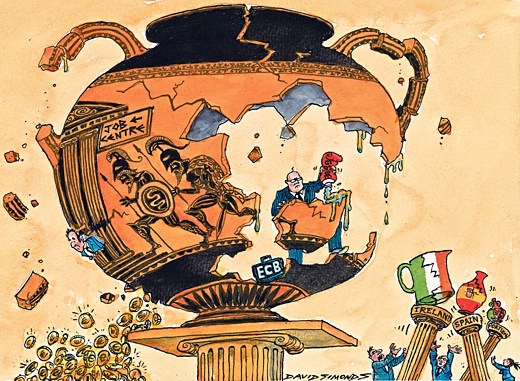
SUBHEAD: Greece seen as struggling to avoid default even after expected second rescue package passes. By Jonathan Stearns on 3 February 2012 for Bloomberg News - (http://www.bloomberg.com/news/2012-02-02/greece-seen-as-struggle-even-after-2nd-rescue.html) Image above: Cartoon of Greek debt crisis by Dave Simonds. From (http://www.guardian.co.uk/business/2011/jun/12/greece-could-pay-heavy-price-eurozone-reckless-banks).

Greece’s fight to win its second international bailout may only open a new chapter in its struggle to remain in the euro area.

The rescue plan, which European officials and Greek creditors say may be wrapped up in coming days, includes a loss of more than 70 percent for bondholders in a voluntary debt exchange and loans likely to exceed the 130 billion euros ($171 billion) now on the table.

That won’t stanch the bleeding, say economists including Holger Schmieding of Berenberg Bank in London. Greece will be saddled with too much debt, too little growth and too large a budget hole to do without even more money that euro nations led by Germany are increasingly reluctant to offer, they say.

“Greece is in deep trouble,” Schmieding said in a Jan. 30 report. “The current Greek adjustment program is failing. Excessive austerity, a lack of supply-side reforms, administrative incompetence and political deadlock have pushed the Greek economy into an apparent death spiral. More of the same will not work.”

As Greek officials negotiate with representatives of the so-called troika -- the European Commission, the European Central Bank and the International Monetary Fund -- Deutsche Bank AG Chief Executive Officer Josef Ackermann may travel to Athens this weekend for talks over a swap involving Greek debt with a face value of about 200 billion euros.

Greek Prime Minister Lucas Papademos said today the country is close to completing the bailout talks.

‘Final Phase’

“We are in the final phase of this very critical process to shape a new financing program for Greece and to complete the loan agreement which will lighten the burden of public debt and ensure funding for years to come,” Papademos said in a statement posted on his website.

The euro is headed for a weekly decline against all of its 16 major peers. It rose 0.2 percent to $1.3169 at 11:45 a.m. in London. The yield on Germany’s benchmark 10-year bond fell 1.5 basis points to 1.84 percent, while the yield on Italian 10-year bonds declined 2 basis points to 5.58 percent.

Creditors are prepared to accept an average coupon of as low as 3.6 percent on new 30-year bonds in the exchange, said a person familiar with the talks, who declined to be identified because a final deal hasn’t been struck yet. The aim is to cut Greece’s debt load to 120 percent of gross domestic product by 2020 from 162 percent in 2011. The alternative is an uncontrolled default that may lead to deeper losses and ripple effects throughout Europe.

Agreement Seen

An agreement could be reached “in the coming weeks, maybe days,” said Ackermann, also chairman of the Institute of International Finance. The group, based in Washington, has more than 450 financial firms as members and is representing private creditors in the talks.

Meantime, the finance ministers of the AAA-rated euro countries -- Germany, Luxembourg, the Netherlands and Finland -- are set to meet today in Berlin to discuss options.

“We can’t pay into a bottomless pit,” German Finance Minister Wolfgang Schaeuble said yesterday. “Greece needs a new program, there’s no question about that, but Greece must create the conditions for it.”

Greece remains in intensive care more than two years after triggering Europe’s debt crisis, testing the patience of other European Union nations. Last November, when discussing the Greek situation, French President Nicolas Sarkozy and German Chancellor Angela Merkel for the first time raised the prospect of a country’s exit from the euro.

Contagion

Failure to control Greece’s troubles helped to push Ireland and Portugal into rescue programs, to raise borrowing costs for Italy and Spain, to embroil the European Central Bank in a controversial program of sovereign-bond purchases and to prompt Standard & Poor’s to strip France of its top credit rating.

Greece has lagged behind budget targets set when it won an initial, taxpayer-funded rescue of 110 billion euros in May 2010, prompting euro-area threats to cut off aid and hastening a German push to make bondholders contribute. The country is in its fifth year of recession, with a budget deficit still close to 10 percent of gross domestic product and unemployment of around 18 percent.

Bond Payment

Facing a 14.5 billion-euro bond payment on March 20 and general elections as soon as April, Papademos’s caretaker government must heed familiar calls by the euro area and the IMF for tighter austerity to complete the talks on a second aid package. The demands are also for lower wage costs and the deregulation of professions including lawyers and truck drivers.

The cuts risk triggering a “social explosion,” Hieronymos II, the head of Greece’s Orthodox Church, said in a statement posted on the website of the Archdiocese of Athens.

“We are being asked to take even larger doses of a medicine that has proven to be deadly and to undertake commitments that do not solve the problem, but only temporarily postpone the foretold death of our economy,” the Archbishop said.

Greece will default on its debt and is likely to leave the euro, Nobel economics laureate Paul Krugman said yesterday at a conference in Moscow.

“The Greek situation is essentially impossible,” Krugman said. “They will default on their debt. In fact they already have. The question is whether they will also leave the euro, which I think at this point is more likely than not.”

.

Feds Threaten Hawaiian Sovereignty

SOURCE: Ken Taylor (taylork021@hawaii.rr.com)
SUBHEAD: The Whale Sanctuary regulation changes means Hawaiian waters resources are under Federal control.  

By Lyn McNutt on 31 January 2012 in Island Breath -
(http://islandbreath.blogspot.com/2012/02/feds-threaten-hawaiian-sovereignty.html)


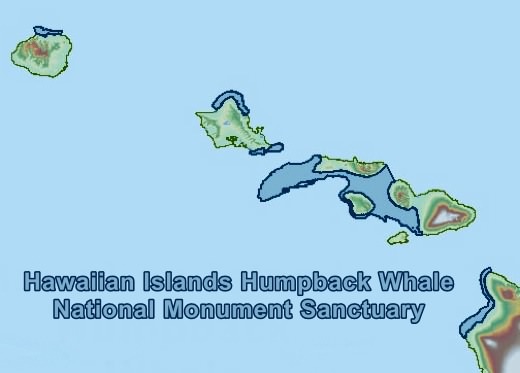
Image above: Detail of map of the waters of the Hawaiian Islands Humpback Whale National Monument Sanctuary.
From (http://sanctuaries.noaa.gov/library/imast_gis.html).

There have been changes proposed to the Humpback Whale Sanctuary that will immensely increase the power of the Federal government in Hawaiian waters, taking away the State's jurisdiction to its own waters. This takes the rights of Hawaiian residents (1.4 M) and places them at the whim of the "American people" in general, some 300-400 Million of them. This is very troubling due to the way that the National Marine Sanctuary Act and the Endangered Species Act function.

People are being lead to believe that Hawaiian peoples' rights will somehow be preserved after these changes, but my experience of how the Federal system of regulatory laws works leads me to believe that expanding any authority of the Federal government within the sanctuary can lead to very undesirable consequences (see review of compact agreement below). Currently Hawaiian Islands Humpback Whale National Monument Sanctuary (HIHWNMS) Act says:
"Sanctuary resource means any humpback whale, or the humpback whale’s habitat within the Sanctuary."
Keep in mind that whales do NOT come here to feed, so they do not compete with native Hawaiian species for resources. This is the proposed change:
"Sanctuary resource means any living or non-living resource of the National Marine Sanctuary that contributes to the conservation, recreational, ecological, historical, research, educational, or aesthetic value of the Sanctuary, including, but not limited to, the substratum of the area of the Sanctuary, other submerged features and the surrounding seabed, carbonate rock, corals and other bottom formations, coralline algae and other marine plants and algae, marine invertebrates, brine-seep biota, phytoplankton, zooplankton, fish, seabirds, sea turtles and other marine reptiles, marine mammals and historical resources."
Please NOTE that there is NO MENTION of subsistence use. In other words. everything will belong to the Feds.
The key wording in the HIHWNMS Act is this:
'The purpose of the regulations in this subpart is to implement the designation of the Hawaiian Islands Humpback Whale National Marine Sanctuary by regulating activities affecting the resources of the Sanctuary"
Therefore under the current definition of "Sanctuary resources", the sanctuary's mandate is limited to "humpback whales or the humpback whale's habitat". Under the ecosystem based management method "resources" means...

EVERYTHING INCLUDING ROCKS, WHAT IS UNDER ROCKS, AND EVERY LIVING THING IN THE WATER AND SEABIRDS ABOVE THE WATER'S SURFACE

...becomes subject to protection and regulation. Please, consider the longterm consequences of this change for the people of Hawaii. With the Federal laws as currently enforced, and the agreements in place, there really is no protection (see below) 

Notes on the Compact Agreement with the State of Hawaii and NOAA 

Please note in the agreement that NOAA, through the Sanctuary Act "has been vested with the jurisdiction and authority to protect and manage the resources of this sanctuary in trust for the People of the United States and is specifically charged with implementation of the policy of the United States". (bold lettering is mine). There is your catch because the policies of the United States may not be consistent with the laws or regulations or needs of the state of Hawaii. This allows NOAA to bring in a whole slew of federal rules and policies INCLUDING the new National Ocean Policy (remember, we have no exemptions or Strategic Plan under that policy---what goes for the Mainland goes for us, too). Section IV (D) States clearly that NOAA and the State will collaborate, but the management of the Sanctuary falls under the laws in the National Marine Sanctuary Act. In Section IV (D) (2) it says that...
"To the extent permitted by law, there shall be mutual agreement regarding enforcement policies and priorities."
The main title of that section indicates that the "law" is the "National Marine Sanctuary Act, the Sanctuary Management Plan, and MOAs, and protocols developed thereunder". ALL of these will trump the State, so beware. The agreement keeps saying that nothing will happen without the signature of the Governor, but when it comes to the Governor proposing changes (section IV (H) it says "...NOAA shall initiate the Federal rule promulgation process required to make revisions requested by the Governor..." Here is where the Endangered Species Act and other federal laws will come in. NOAA consistently "outvoted" the state in the Northwest Hawaiian Islands, and overrode the State's veto of several items related to several different species, the monk seal in particular (V. Alter, Stanford Law School, April 2006, available on request).

 It also does NOT say that fishing will not be regulated (it never mentions subsistence fishing, by the way). It says fishing is currently not included, unless DLNR implements new regulations. So, all they have to do is ask the State... and the State has a dismal record here.

  Also, the National Marine Sanctuary Act says that the Feds have the authority to "take over" if they feel that the State is not enacting laws and regulations that are effective enough. The Endangered Species Act permits the Federal Government to regulate the State's treatment of endangered species.  

So it goes back to the Federal Law trumping State law if there is a conflict in the goals of the Management Plan, and then National Marine Fisheries Service (NMFS) is the agency that will decide what needs to be done, all within the authority of the Sanctuary Act and the Endangered Species Act, under the new National Ocean Policy.

Section IV M gives NMFS oversight of all the resources for the Federal Government in the Sanctuary through "implementation of the management plan" and gives them the authority to "evaluate the effectivenedss of existing management efforts in achieving those abjectives and policies including whether additional measures (e.g. regulations or critical habitat) to protect the humpback whale or its habitat are needed)"

 OK, now substitute the word "monk seal" or "coral" for humpback whale in that sentence, and you will see that NMFS will have the authority to enact anything that they feel necessary under the ESA through the management plan and into the Sanctuary as part of the National Marine Sanctuary Act and this agreement. It also says that NOAA will "fully involve and consult with the State". It does not say that they are obligated to listen to the State. Section IV (A) says that the State doesn't relinquish its right to "title or authority to manage and regulate submerged lands, resources, or activities..." but the next two sections go on to say that the Governor agrees to put state owned lands into the Sanctuary system, and that the Sanctuary Management Plan (and therefore the laws of the Sanctuary Act) will apply throughout the ... "Sanctuary, including the portion of the Sanctuary within the seaward boundary of the State."

MOAs and Compact Agreements with references to external documents are really tricky. I used to run into the same thing with all the Space Station agreements, etc. This Agreement looks OK on the surface, since whales don't compete for resources here. Whales DO NOT EAT while they are here. Keeping this agreement in place and giving the Sanctuary the authority to add additional species that might compete for resources, such as the monk seal, would be a real mistake. They will have to create a new agreement. Stand firm on this.
.

Death of Abundance - Birth of Auserity

SUBHEAD: Significant risks are ahead for those assuming cheap central bank credit is a good thing. By Liz Capo McCormick on 1 Febuary 2012 for Bloomberg News - (http://www.bloomberg.com/news/2012-02-01/gross-says-witnessing-death-of-abundance-birth-of-austerity.html) Image above: Abandoned sign for the Jackpot Motel in Las Vegas, Nevada. From (http://www.flickr.com/photos/nainokin/6768931087/lightbox). Bill Gross said the zero-bound interest rate policies embraced by central banks including the Federal Reserve may end up killing as opposed to creating credit and developed economies may suffer accordingly. While recent actions by policy makers provide assurances that short and intermediate U.S. bond yields may not change for years, any potential for price appreciation is limited, Gross, who runs the world’s biggest bond fund, wrote today in a monthly investment outlook released on Newport Beach, California-based Pacific Investment Management Co.’s website. “Monetary and fiscal excesses carry with them explicit costs,” Gross wrote.
“My intent really is to alert you, the reader, to the significant costs that may be ahead for a global economy and financial marketplace still functioning under the assumption that cheap and abundant central bank credit is always a positive dynamic.
The Fed purchased $2.3 trillion of debt in two rounds of quantitative easing known as QE1 and QE2 as part of its efforts to support the world’s biggest economy. Policy makers last month said they plan to keep their benchmark interest rate near zero until at least the end of 2014. Fed Chairman Ben S. Bernanke said following the central bank’s Jan. 25 meeting that he’s considering another program of debt purchases if it appears the recovery isn’t progressing. Death of Abundance Zero-bound interest rates don’t always force investors to take more risk by purchasing stocks or real estate, Gross said. When investors are more concerned about the return of, rather than returns on, their money, the liquidity being provided by central bankers can instead be “trapped” in a mattress, bank account or Treasury bills, he wrote. “We are witnessing the death of abundance and the borning of austerity, for what may be a long, long time,” Gross said. Gross boosted the proportion of U.S. government and Treasury debt in the $244 billion Total Return Fund to 30 percent of assets in December, the highest since November 2010, according to a report placed on the company’s website. His fund has returned 6.57 percent in the past year, beating 53 percent of its peers, according to data compiled by Bloomberg. It gained 2.58 percent over the past month, beating 99 percent of peers. Benchmark 10-year yields rose two basis points, or 0.02 percentage point, to 1.82 percent at 7:58 a.m. in New York, according to Bloomberg Bond Trader prices. The rate slid to 1.79 percent yesterday, approaching the record low of 1.67 percent set Sept. 23. Pimco, a unit of the Munich-based insurer Allianz SE, managed $1.35 trillion of assets as of September. .

Texas & Moscow Burning

SUBHEAD: Top climate scientist says heat waves in Texas and Moscow caused by global warming.  

By Brian Merchant on 1 February 2012 for TreeHugger -  
(http://www.treehugger.com/climate-change/top-climate-scientist-says-heat-waves-texas-moscow-caused-global-warming.html)

 
Image above: Photograph by Frank Cianciolo of McDonald Observatory in Texas fire during August 2011. From (http://motleynews.net/2011/09/01/photos-of-texas-fires).
 
Most climate scientists are beyond reluctant to attribute a specific weather event to global warming. But NASA's Dr. James Hansen and two of his colleagues from the Goddard Institute of Space Studies have released a paper linking the heat waves in Moscow and Texas to human-induced climate change. It's an unusual step, and one that could have major implications on how we view changing weather patterns in a world that scientists agree is heating up.
Inside Climate News has the story:
Most scientists are careful not to link specific weather events to climate change trends, but NASA's James Hansen and two colleagues from the NASA Goddard Institute for Space Studies and Columbia University have taken that plunge. They've gathered data they say shows that the 2011 Texas and Oklahoma heat wave—as well as a deadly Moscow heat in 2010—were "a consequence of global warming because their likelihood was negligible prior to the recent rapid global warming.
Image above: Tall trees burning in one of hundreds of Russian wildfires in August 2010. From (http://news.nationalgeographic.com/news/2010/08/photogalleries/100810-russian-wildfires-heat-wave-moscow-smoke-world-pictures/#/russia-wildfires-smoke-deaths-trees-burning_24439_600x450.jpg).

Now, if you follow climate change in the news at all, you're likely aware of how scientists typically discuss global warming in relation to drought, floods, or other extreme weather events. To reflect the science as accurately as possible, they usually equivocate, and say something along the lines of:
"Well, we can't conclusively say that any one weather event is caused by climate change, but events like this are what we're likely to see more frequently in a warming world."
If Dr. Hansen and his colleagues can indeed prove that a particular weather event would not have occurred in a world where the concentration of greenhouse gases was not so high in the atmosphere, it would have profound implications indeed. Not just for science, but for the public. If laypeople could clearly understand which sort of extreme weather events are being caused by a world that has warmed over an entire degree due to industrial activity, they may be more inclined to approve of public policy designed to mitigate those events.
Time will tell if Hansen's assertions are accepted by the scientific community—he remains one of the most respected scientists in the field, and his peers say that cursory overviews of this most recent paper reveal that the data is solid. If he's right, he may well change the way that we think about global warming and extreme weather.

See also:
Ea O Ka Aina: Arizona burns into New Mexico 6/12/11
Ea O Ka Aina: Texas' Martian Landscape 10/17/11
Ea O Ka Aina: Rick Perry denies Texas is toast 10/1/11
Ea O Ka Aina: Russian Global Warming Crisis 8/5/10
Island Breath: The Dead Zone 2/7/06 .

Recovery of the Human

SUBHEAD: The greatest challenges ahead of us as the Industrial Age ends is rediscovering our own humanity. By John Michael Greer on 1 February 2012 for the Archdruid Report - (http://thearchdruidreport.blogspot.com/2012/02/recovery-of-human.html) Image above: From (http://www.chilloutpoint.com/featured/human-and-robots-visions-of-the-future.html). The myth of the machine, the theme of last week’s Archdruid Report post, has implications that go well beyond the usual terms of discussion in the peak oil scene. One of those implications, which I mentioned briefly last week, unfolds from the way that so many people who are concerned about peak oil fixate obsessively on the hope that some kind of machine will solve the problem. There are at least three ways in which this fixation gets in the way of any meaningful response to the end of the age of cheap abundant energy. The first, of course, is that peak oil isn’t a problem, because by definition a problem at least potentially has a solution. Peak oil has no solution. That’s true in the narrow sense of the term—no possible turn of events will allow industrial civilization to extract a limitless supply of crude oil from a finite planet—and it’s becoming increasingly clear that it’s just as true in the broad sense—no other energy source can provide anything close to the torrent of cheap, highly concentrated energy that petroleum provided to industrial society during the last century. Peak oil is thus a predicament rather than a problem, since nothing we or anyone else can do will make it go away. Instead, we and our descendants down through the millennia to come will have to live with the reality of a world much less lavishly stocked with concentrated energy sources than the one our ancestors inherited a few short centuries ago. The task awaiting us and our descendants is that of finding creative and humane responses to that implacable reality. To that challenging and rewarding task, in turn, the current obsession with fantasies of salvation via machine offers no help at all. Quite the contrary, by distracting attention from the adjustments that will have to be made, the obsession makes the work ahead of us more difficult than it has to be. The second sense in which the obsession with machines gets in the way of a useful response to the predicament of peak oil is that it pushes responsibility for doing something onto someone else. I sincerely doubt that any of my readers have any influence worth noting over the decisions involved in building giant wind turbines, say, or developing thorium reactors, or turning some substantial fraction of Nevada into one giant algal biodiesel farm. This makes it easy to insist that steps like these are the appropriate response to the coming of peak oil, since the people doing the insisting don’t have to follow through on the insistence; it’s all somebody else’s job. No doubt the sheer convenience involved in this approach has much to do with its popularity, but there’s another factor involved. An enormous amount of rhetoric about the future these days starts from the assumption that the lifestyles of the middle classes in today’s industrial societies are normal, and ought to be available indefinitely—at least to those same middle classes. Now in fact there’s nothing normal at all about the pampered and privileged lives of today’s middle classes; from strawberries in midwinter to vacations in the tropics, those lives are full of the most absurd sort of extravagance, and only a civilization surfing the tsunami of cheap energy that ours gets from fossil fuels could convince itself that such habits are anything else. Still, those who have access to such things are predictably unwilling to let go of them, and insisting that it’s someone else’s job to come up with a way to keep them around is one way to express that unwillingness—at least for the moment. The downside of depending on someone else to do that or any other job, of course, is that dependence always has a political cost. Frank Herbert’s classic SF novel Dune has one character explain this to another with commendable precision: "Once men turned their thinking over to machines in the hope that this would set them free. But that only permitted other men with machines to enslave them." The same dynamic is present whenever people allow themselves to become dependent on machines, for reasons that follow from the points made last week. Power exerted through a machine is defined purely by I-It relationships; the only way to relate to a machine is to compel and control it, and (not, please note, "or") to be compelled and controlled by it.. That defines the direct relation of person to machine, but it also tends to define the indirect relation of person to person when a machine is the medium. The logic here is straightforward: a machine can only transmit those aspects of relationship that require no inner life to communicate, since a machine has none. The more thoroughly an interaction between people is reshaped for machine processing, therefore, the more completely any potential for I-Thou relationship is filtered out of the interaction. It’s possible for a relationship between people that passes through a machine to avoid being flattened out into a relationship of compulsion and control, but it takes work, and tends to be most successful when the people in question also have interactions that aren’t dependent on machines. The more that human life and human interactions are defined by machines, the more difficult this tends to become—and of course it’s not incidental that people who want to compel and control, or to be compelled and controlled, can do that easily enough without going to the trouble that’s involved in sustaining an I-Thou relationship in a world of machines. Carry this logic out to its natural endpoint and you get the total erasure of all human values that Jacques Ellul anatomized in The Technological Society, a system in which every relationship is forced into the Procrustean bed of mechanism because anything else would be inefficient. Ellul assumed that this trend was inescapable, but then he was a man of his own time, and the first faint shockwaves of the end of the age of abundance apparently slipped past him unnoticed. Other social critics who commented on the same thing—Lewis Mumford and C.S. Lewis are among those I’ve mentioned in earlier posts—assumed, along the same lines, that only a sustained effort to oppose the rule of mechanism could halt the march of society toward a future of inhuman efficiency. What very few thinkers of their generation grasped was the extent to which the myth of the machine misstated the source of the power that machines had during the twentieth century. What made industrial society so powerful in their day wasn’t any particular strength or virtue in the cult of mechanism itself, or in the habits of thinking that an obsession with mechanism made popular for a time; it was simply that during a relatively brief window of historic time, the amount that could be done by machines powered by fossil fuels, and following the internal logic of machinery, was vastly greater than the amount that could be done by humans powered by human energy sources, and following their own internal logic. That window of time is coming to an end around us right now, and the third sense in which an obsession with machines gets in the way of a useful response to the predicament of peak oil unfolds from that fact. Those people who are rushing around trying to find a mechanical answer to peak oil are jumping aboard a bandwagon when the horse pulling it has just fallen over dead. Lacking the cheap, abundant, highly concentrated energy that only fossil fuels can provide, complex machines are by and large much less efficient than human beings, and the obsession with machines is therefore a habit of thought that’s well past its pull date. It’s hard to think of anything that flies in the face of contemporary attitudes more comprehensively than the suggestion that human beings are more efficient than machines under any circumstances at all. Still, if you consider the whole system upon which each of the two depends, the superiority of the human is easy to see. Behind the machine—almost any machine in the modern industrial world—stands a sprawling infrastructure that depends on constant inputs of energy: not just energy in general, either, but very large quantities of cheap, concentrated energy fitting precise specifications. That energy powers the machine, to be sure, but it also manufactures it, keeps spare parts in stock, and powers and supplies the huge networks that make it possible for the machine to do what it does. A laptop computer all by itself is an oddly shaped paperweight; to make it function at all, you have to add electricity, and thus the entire system that produces the electricity and keeps it flowing; to make it more than a toy, you need the internet, and thus a far more complex system, which among other things uses a vast amount of additional energy; and of course to produce the laptop, the electrical grid, and the internet in the first place, counting all the products and services needed by all the economic sectors that contribute to their manufacture and functioning, you need a fairly large proportion of the entire industrial economy of the modern world. Human beings do not suffer from the same limitations. A human being all by herself is capable of meeting her essential operating needs in a pinch, using only the very diffuse energy sources and raw materials available in a natural environment; a few dozen human beings, given suitable knowledge and skills, can support themselves comfortably over the long term on a tribal-village level, using the same diffuse energy sources; a few thousand human beings subject to all these limits can create a civilization. In a world without vast amounts of cheap energy, human flexibility and creativity consistently beats mindless mechanical rigidity. That’s why, for example, the ancient Greek inventors who created the steam turbine and crafted highly efficient gearing systems didn’t launch the industrial revolution two thousand years early; the recognition that fossil fuels existed in enough quantity to power steam engines, drive gear trains and replace human labor with mechanical force was missing, and without that, Hero of Alexandria’s steam turbine and the Antikythera device’s clockwork mechanism could never be anything more than clever toys. A society used to turning as much of its work as possible to machines faces a similar failure of understanding when the fuel for the machines runs short. The missing piece in the present case, though, is the extraordinary potential for productive and creative work that exists within human beings. Machines fill so potent a role in our emotional lives that most people in the modern industrial world shy away from the thought of doing much of anything without them. Even if we could count on a limitless supply of cheap energy, this would be an embarrassing dependency—a shiny high-tech crutch is still a crutch, after all. A limitless supply of cheap energy, though, is exactly what we can’t count on, and so what would otherwise be merely an embarrassment is shaping up to be a lethal liability. Thus one of the greatest challenges ahead of us as the age of abundance ends is nothing less than the rediscovery of the possibilities of our own humanity. The work that needs to be done—and in an epoch of decline, there will be plenty of that—will have to be done with the capacities woven into the human body and mind, along with those additional capacities that can be developed in both by training and practice. The effort that nowadays gets poured into teaching people how to manipulate machines will need to be redirected into teaching them how to bring out the creative and productive capacities in themselves. That can’t be done effectively, please note, by trying to manipulate them like so many machines, or by teaching them to manipulate themselves in the same manner; I-It relationships do very poorly at directing human productive and creative powers. It will require instead the ability to understand human beings as human beings rather than inconveniently squishy bipedal machines, and the capacity to enter into I-Thou relationships, that has always defined good teachers and good leaders. Less than a hundred years ago, the sort of awareness I’m suggesting here was a common response of people across the industrial world to the mechanization of everyday life, and less than forty years ago a revival of that same approach—the human potential movement of the Seventies—achieved a not inconsiderable success before it was stomped by the same backlash that flattened the industrial world’s last real attempt to turn aside from the mess it’s made for itself. The recognition that the potential within the individual human being is the industrial world’s most thoroughly wasted and neglected resource has surfaced at intervals straight through the history of industrialism, and been hurriedly swept back under the rug time and again. Go back to the origins of contemporary industrial society in the scientific revolution, in fact, and you can trace the same opposition in the tangled conflicts by which the first versions of modern science seized the cultural conversation of their time from the remnants of Renaissance humanism and set our civilization on the path to its current predicament. There are immense issues involved in a recovery of the human, a refocusing of attention toward what human beings can do with their own innate possibilities and potentials for learning and away from the quest to replace as many human functions as possible by this season’s crop of computerized gimmickry. I’ve touched on a few of those issues in the sequence of posts on magic that appeared here in the last months of 2011, and plan on bringing up others here and there in the months to come. For now, what I hope to get across is the core idea that the most important resources we have left at this point, the most promising potentials for a response to the end of the age of cheap abundant energy, are not machines, or potential sources of fuel, or anything else outside the individual human being. Even considering that thought, as I’ve suggested, flies in the face of deeply rooted prejudices. Point out, for example that a human mind with appropriate training can remember impressive amounts of data—there was once an entire system of mind training, the Art of Memory, designed to make this possible—and most people will come up with any number of reasons why some kind of remembering machine is a better idea. In a world with drastically limited supplies of concentrated energy and far too many urgent uses for those supplies, a system of training that can take care of the need to remember data without adding to the demand for electricity, spare parts, or the like is pretty clearly the better idea, but that recognition can only happen once people step outside the myth of the machine. There are any number of other examples of things that human beings can do, or can learn to do, that will fill essential needs in a deindustrializing or fully deindustrialized world, when permanent shortages of concentrated energy suitable for powering machines makes the vast majority of today’s technology useless except as scrap. A significant number of them are still being practiced, or—like the Art of Memory—can be revived with relative ease from written sources dating from the Renaissance or, in some cases, more recently still. A great many more will need to be invented, or reinvented, in the years ahead. The supposedly serious thinkers of our time are unlikely to contribute anything to that task; in contemporary industrial civilization, as in every other human culture, the basic qualification that makes thinkers respectable is an unthinking acceptance of the basic myths of their era. Nowadays, the myth of progress is one of those basic myths, and the myth of the machine stands right beside it. The myth of progress is coming to pieces around us as I write this. The myth of the machine will follow it in due time. In the interval before they dissolve and are replaced by narratives better suited to the needs and possibilities of the deindustrial age, there is a great deal that can be done to begin the rediscovery of the human, to preserve those teachings from the past that can fill critical needs in the future, and to sketch out the first rough drafts of new disciplines that will apply the creative and productive possibilities of the individual to the challenges ahead. How that might be done—well, I hope to talk about that, among other things, in posts to come. .

Bill to end HECO Monopoly

SUBHEAD: HECO should be taken apart. However a single preferred means of alternative energy with statewide rates is unrealistic. By Mr. Ed on 31 January 2012 via email - (mred@charleneongreen.org) Image above: Traditional Parker Brothers' Monopoly cards. From (http://www.etsy.com/listing/81160060/vintage-monopoly-game-cards-supplies). Many of you may have seen By Alan Yonan’s Star Advertiser story, “Breaking Down HECO” in Monday’s paper. An excerpt of the story is here unless you have paid access to the paper on-line:

As the state shifts its focus to renewable energy, a new bill seeks to restructure the utility and make room for competition.

State lawmakers have introduced a host of bills in the new legislative session aimed at keeping pace with Hawaii's rapidly evolving energy sector, including one proposal that would force Hawaiian Electric Co. out of the power generation business and have it focus strictly on delivering electricity to customers.

The bill restructuring HECO (HB 2400) also calls for the utility to set a single electricity rate across the three counties it serves, and prioritizes geothermal as the state's preferred alternative energy source to replace fossil fuels.
The article is all about HB2400, the deregulation bill that will finally end HECO’s stranglehold on our electric rates and our energy future after 100 years in existence, level the playing field, stabilize, and eventually lower electric rates across all islands. http://www.capitol.hawaii.gov/session2012/bills/HB2400_.pdf The bill is scheduled to be heard on Thursday, 02-02-12 10:00 AM in conference room 325. Other related bills pertaining to geothermal energy, HB2689, HB2690, and HB2691 will be heard at 9 AM. Please note that on-line testimony must be received a full 24 hours prior to the hearing at http://www.capitol.hawaii.gov You must first register by clicking on the Register link in the upper right corner of the page. Registration is simple. It required your name, email address, and a password. You will receive an email message with a link to confirm registration. You can then Sign In at the top right corner of the page by entering your email address and password. Once signed in, just click the orange Submit Testimony button, enter HB2400 in the box, and press the Submit button. Fill in requested information and press Submit Testimony button below the privacy statement. [Editor's note: IB testimony read; Only my finding multiple small scale solutions to alternative energy will we move forward. Depending on unsustainable future financing for large scale solutions is illusionary. HECO is standing in the way of the future.]
By Charlene on 23 January 2012 for CharleneOnGreen.org - (http://charleneongreen.org/news/807-hawaii-rep-denny-coffman-deregulation-seeks-to-end-hecos-monopoly.html)

Hawaii Resident, Mr. Ed, applauds Representative Denny Coffman of the Big Island who introduced the most important and historic piece of legislation since Hawaii became a state on January 23, 2012. A bill to deregulate Hawaii's electric utility industry, a bill to end Hawaiian Electric's monopolistic stranglehold on our electric rates and our energy future and to stabilize, unify, and ultimately to lower electric rates across the state.

Mr. Ed writes...

The future of your children and grandchildren, and their ability to live a good life in Hawaii instead of being forced to live on the mainland, are at stake.

HB2400 Report Title: Electric Public Utilities; Operations; Rates; Energy Sources

Description: Limits the operations of any electric public utility. Requires acquisition of electricity by a power purchase agreement with an unaffiliated entity. Requires utility to purchase lowest cost non-fossil fuel generated electricity prior to purchasing fossil fuel generated electricity. Requires PUC to establish a statewide electricity rate. Exempts IRC section 501(c) (12) utilities. Prioritizes geothermal as a replacement for fossil fuel. Effective 1/01/15.

The 27 page bill states in part: "Notwithstanding any other law to the contrary, no electric utility company shall own or operate both the means of producing electricity and the means of conveying, transmitting, delivering, or furnishing electricity to the public."

http://www.capitol.hawaii.gov/session2012/bills/HB2400_.pdf

Let it be known that HECO is already ramping up its unlimited financial resources to stop this bill dead in its tracks so it can maintain its stranglehold on YOUR escalating electric bills and on Hawaii’s energy future, and to continue to burn oil for another 20 years to maintain its profits at the expense of Hawaii's people and its unique environment.

It is up to each and every electric ratepayer in Hawaii to make sure that Hawaiian Electric fails in its attempt to crush this bill, and that it gets passed by both House and Senate and signed into law by the Governor this year.

The public will have the opportunity to submit testimony by email or in person to support passage of this bill. Additional information will be forthcoming once hearings are scheduled.

Please call you senators and representatives to support this bill.

http://www.capitol.hawaii.gov/members/legislators.aspx?chamber=all

Please note that the on-line petition against HECO et al. is more about ending the HECO monopoly through deregulation with the help of the Federal Trade Commission than it is about the HECO-Aina Koa Pono biofuel fiasco last year so please reconsider signing the petition here:

http://www.change.org/petitions/end-hawaiis-electric-utility-monopoly-for-lower-rates-clean-energy

The future of your children and grandchildren, and their ability to live a good life in Hawaii instead of being forced to live on the mainland, are at stake.

The petition will remain on-line throughout February for additional signatures, but the petition, along with signatures, HB2400, and a cover letter, will be mailed to the Federal Trade Commission next week. Additional electronic copies will go to other key government agencies in Washington, including the White House.

Take Care, Mr. Ed

P.S. Hawaii Representative Coffman also introduced other bills related to geothermal energy.

2039 - Hawaii State Planning Act;Renewable Energy; Public Land Trust, Geothermal - Amends the Hawaii state planning act to include promoting the development of geothermal energy resources that are located on public trust land as a source of firm power to achieve state energy objectives.

2041 - Electricity; Non-fossil fuel; Geothermal; Power Purchase Agreements - Prohibits exclusivity or curtailment provisions in power purchase agreements between an electric utility and producers of electricity generated from geothermal steam or non-fossil fuel sources.

2043 - PUC - Development of renewable Energy Sources - Requires the PUC to direct electric utilities to place special emphasis on utilizing renewable energy sources when crafting integrated resource plans.

2261 - Environmental Response; Energy; and Food Security Tax - Requires that an unspecified sum be expended each year on researching viable geothermal resource subzone locations

.

Fracking, Schmacking

SUBHEAD: How important will fracking be during next election? Not very, if natural gas stays cheap.  

By John Laumer on 31 January 2012 for TreeHugger - 
  (http://www.treehugger.com/energy-policy/how-important-will-fracking-be-during-election-season-not-very-if-natural-gas-stays-cheap.html)

 
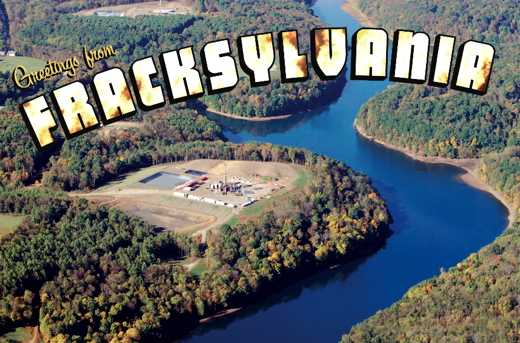
Image above: Hydraulic fracturing, or fracking, involves drilling deep into the earth and injecting a high pressure mix of water, sand and chemicals to fracture shale rock in order to release pockets of trapped gas. The mix is toxic. From (www.owsstopfracking.org).
 
Looking toward the coming elections, will the practice of hydraulic fracturing drive poliitcal debate? Will it bring voters out? President Obama, in his latest State of the Union speech, promoted increased development of natural gas, which infers more fracking. Pure political genius.

Counter-intuitive, though
Just days after the President's SOTUS speech, the US Energy Information Agency (EIA), a trusted clearinghouse for accessing national and state-level energy data, projected just 6 years worth of natural gas reserves in Marcellus Shale formations. The Big M comprises a big chunk of what must have underlined the Obama-cited, industry-derived estimate of a 100 year reserve. Matt recently compared that estimate to the far-lower USEIA estimate in There's Much Less Shale Gas Available in US Than Previously Thought .

It's inconceivable that the White House was not briefed on the coming USEIA 6-year estimate as the SOTU speech was being prepared. On that basis, I assume that throwing out the 100-year reserve estimate was a calculated political choice.

Monkey trap
The 100-year reserve estimate from Obama's SOTU speech was good bait for a political monkey trap. Were Republicans to attack the President for overstating shale gas reserves (as he did), they would risk angering campaign donors and flatter environmentalists: missteps that would never be taken.

Obviously Republicans can't praise Obama for a positive characterization of natural gas reserves because, well, Republicans don't do that.

This same trap catches environmental activists who might be insensitive to how important it is to keep natural gas prices low, thus driving coal out of the power-making business. (See Related post on left of your screen for explanation.)

The 100-year reserve estimate positioned President Obama to gain the favor of independent voters, and then some. Everyone likes cheap heating fuel for the furnace and petrochemical manufacturers like it for manufacturing inputs.

The President's 'green base' is a very small fraction of all likely voters. As important, it looks as if many a dedicated green blogger and activist didn't bother to vote in the last mid-terms -- seemingly typical of young, politically independent, yet environmentally committed people -- and I expect them to stay away from the election booth this fall, as well.

Caveat: at the well head and beyond 
Marcellus Shale states where fracking is most controversial are New York, Pennsylvania (the 'swinger'), and West Virginia.

Neighboring states of Ohio and Maryland are contemplating bans on disposal of fracking wastewater generated outside their own borders. Makes sense, because they get none of the job and fee benefits. There are other large gas shale formations in Texas and Oklahoma but the oil and gas industry rules politics, thereabout. In total, then, fracking in the shale seems to be an issue in only for a select few states. Only one Marcellus State is a swing state -- critical to sway independent voters in.

The recent blessing of ultra-cheap natural gas, on the other hand, is a wonder for everyone, even though it may last but one Presidential term or so!

It is plausible but unlikely that unpleasant developments could lead to an increase in both the price of natural gas and polarization of the jobs-versus-environmental impact debate. There are early signs of this in New York state.

At the grass roots, TH blogger Sarah Hodgdon points out that in New York State lawn signs are changing
"In the next county over, most of the signs used to say Friends of Natural Gas," says Kate. "Now, they say Friends of Clean Water. Once the community started a dialogue and a coalition, they were able to work out what was really important to them -- their water."
For every one of the unanswered legal and technical questions about fracking that gets a bad headline, odds increase that the glory days of fracking are over and that natural gas prices will rise.
Would this happen before the fall election? Have a look at the questions below and see what you think.
  1. To what extent might fracking-associated earth tremors rupture natural gas well seals or caps, increasing the potential for water-well and indoor air pollution?
  2. Is the Federal Mineral Leasing Act of 1920, an unconstitutional infringement on States' rights, to the extent that potential adverse impacts of gas extraction may extend to adjacent private properties?
  3. Did fracking fluids ever contain industrial waste mixtures which, if pumped into the ground for non-gas production purposes, would have been regulated as hazardous waste?
  4. Is the potential for radon intrusion into homes commensurate with methane intrusion? (See Related post on methane intrusion, to left of your screen.)
  5. Once groundwater is tainted by fracking, will that contamination be continuous for many years; or, does that pollution abate quickly? Can a half-life be estimated for critical constituents?
For my money, #5 is the big one. If folks are filling their homes with radon when they shower and fill the tea kettle, there will be hell to pay in Congress and the courts.


.

Desert Prince beats Obama

SUBHEAD: Abu Dhabi's crown prince installs solar panels on his roof, beats White House to the punch.  

By Brian Merchant on 31 January 2012 for TreeHugger -  
(http://www.treehugger.com/renewable-energy/abu-dhabis-crown-prince-installs-solar-panels-his-roof-beats-white-house-punch.html)

 
Image above: President Jimmy Carter presenting solar (hot water) panels on White House in 1976. They were removed by Reagan and refused by Obama when offered by Bill McKibben. From (http://arttattler.com/commentaryoutofgas.html).

 
The oil-rich emirate of Abu Dhabi is vying to become a leader in the clean energy industry. So it's no surprise that its leader, the Crown Prince Mohammed bin Zayed bin Sultan Al Nahyan, is engaging in such symbolic displays as installing solar panels on the roof of his Court. What is a little surprising is that he beat out the White House in doing so.

If you'll recall, the Obama administration made a pledge to install solar panels on the White House roof over a year ago now—but so far, nada.

So perhaps this news will light a proverbial fire under its you-know-what to get things moving. Here's Construction Week Online (via Green Prophet):
The Court of HH Mohammed bin Zayed bin Sultan Al Nahyan, the Crown Prince of Abu Dhabi, has been equipped with solar power, the company behind the installation said on Tuesday.
The Gulf International Trading Group said it had completed the installation of photovoltaic panels on the roof of the building in record time and successfully linked the project to Abu Dhabi’s Department of Electricity and Water Authority’s main generator.
The project was completed with the guidance of Masdar, Abu Dhabi's clean energy company. And of course, 350.org, the Bill McKibben-led group that spearheaded the effort to get solar panels back on the White House, is all over this:
"the crown prince of the oil-rich gulf state of Abu Dhabi has beaten Obama to the punch and installed a solar array in record-time on the roof of his court. Not only are these photovoltaics fully operational, but the electricity they produce also feed into Abu Dhabi's national grid ... If oil-rich Abu Dhabi can symbolically commit to renewable energy, one is left to wonder why the White House cannot follow through with its promise?
Obama spoke out in support of clean energy in his recent State of the Union Address. Perhaps he'd like to follow the crown prince's lead and put his money where his mouth is?

See also:
Ea O Ka Aina: Obama rebuffs McKibbon 9/11/10

Ea O Ka Aina: Green Citadel in the Desert 9/25/10 .