Showing posts with label Sacred Place. Show all posts

Hawaiians fight Mauna Kea telescope

SUBHEAD: Native Hawaiians say "If not now, when will we stand to protect our sacred lands?" 

By Amy Goodman on 22 July 2019 for Democracy Now!-
(https://www.democracynow.org/2019/7/22/mauna_kea_thirty_meter_telescope_resistance#transcript)
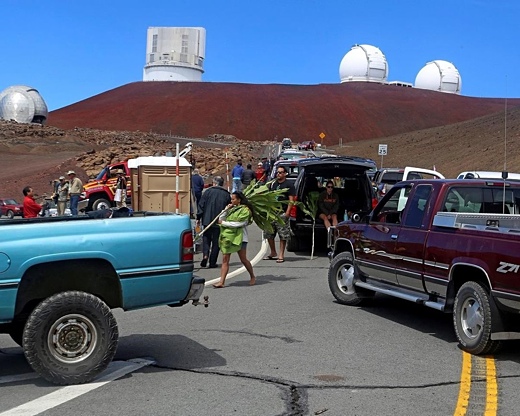

Image above: From the Honolulu newspaper The Star labeled "Hawaiian activists prepare convoys ton convoys to proposed telescope site. From (https://images.thestar.com/nOL4rf4iZSFiR1QqCmEx-tahjR8=/1086x869/smart/filters:cb(1563118201053)/https://www.thestar.com/content/dam/thestar/news/world/us/2019/07/14/hawaiian-activists-prepare-for-mauna-kea-telescope-convoys/HIHIO301-413_2018_164051.jpg).

A historic indigenous resistance is unfolding on the Big Island of Hawaii, where thousands have descended on Mauna Kea, a sacred Native site, to defend it from the construction of a $1.4 billion telescope.

Scientists say the Thirty Meter Telescope will help them peer into the deepest corners of space, but indigenous resisters say the construction was approved without their consent and will desecrate their sacred lands.

Last week, police arrested 33 people — most of them Hawaiian elders — as they blocked a road to prevent work crews from reaching the site of the telescope being planned atop Mauna Kea.

And on Sunday, demonstrators reported that more than 2,000 people had gathered at the access road to stop construction. We speak with Pua Case, an indigenous organizer and activist defending Hawaii’s Mauna Kea.

TRANSCRIPT

AMY GOODMAN: The Filipino-Hawaiian musician Kalani Pe’a, who’s been at the protests that we’ll be talking about now. This is Democracy Now!

I’m Amy Goodman, as we go to Hawaii’s Big Island, where growing protests are heading into a second week against the construction of a massive telescope on top of Mauna Kea, a dormant volcano, sacred Native site, that’s become a flashpoint of indigenous resistance.

On Sunday, demonstrators reported more than 2,000 people had gathered at an access road to stop construction on Hawaii’s highest peak from starting.

Last week, police arrested 33 people, most of them Hawaiian elders, as they blocked a road to prevent work crews from reaching the site of the Thirty Meter Telescope being planned atop Mauna Kea.
HAWAIIAN ELDER: We have a right to worship god in the environment of our belief. Respect it!
AMY GOODMAN: Just hours after the arrests, Hawaii’s Democratic Governor David Ige signed an emergency order granting police more power to clear the way for construction equipment.
GOV. DAVID IGE: This afternoon, I signed an emergency proclamation for the situation on Mauna Kea. Since Monday, protesters have illegally occupied roads and highways. … We do believe that this emergency proclamation gives law enforcement the additional tools that they need to continue to work to keep the people safe.
AMY GOODMAN: Activists say construction of the telescope was approved without consulting the local Native community. The protests build on decades of indigenous resistance in Hawaii. This week, the Hawaii County Council plans to vote on a resolution, quote, “strongly urging” Governor Ige and Mayor Harry Kim to honor a request for a 60-day moratorium on the construction.

For more, we go to Hawaii’s Big Island, where we’re joined by Pua Case, an indigenous organizer, one of the leading activists defending Hawaii’s Mauna Kea.

Welcome to Democracy Now! It’s great to have you with us, Pua. If you can describe for us where you are and just tell us what is happening? Who is building, or attempting to build, this telescope? And why are the indigenous people of Hawaii so concerned?

PUA CASE: Aloha Mai Kako. ‘O Pua Case ko’u inoa. ‘O Mauna a Wakea ko’u mauna.Aloha, everyone. My name is Pua Case. Mauna Kea is my mountain. I’m reporting from a hunter’s check-in station, at a place called Pu’u Huluhulu, which is right across the street of the access road leading up to Mauna Kea.

Mauna Kea is a sacred mountain for us here in Hawaii. Mauna Kea is genealogically linked to the Native people of these lands. Mauna Kea is known as our kupuna, our ancestor, our teacher, our protector, our corrector and our guide.

And so, for the last 10 years, we have held off the project of the building of an 18-story telescope on the top of our mountain, near the summit, on a pristine area called the northern plateau, over our water aquifer and the source of water for much of this island.
Those who are partnering in this project are Canada, China, India, Japan and the United States in the area of California, with the largest single donor being the Gordon and Betty Moore Foundation in Palo Alto.

So, why we are standing for this mountain is quite simple, Amy. And thank you for having me on the show. If I could put it very simply, I would say, if we don’t stand for the most sacred, what will we stand for? And if not now, when will we stand?

So, we are making a stand as not just Native people and not just the local community, but really a worldwide community, because there are so many similarities. There are Native people everywhere around the world standing for their mountaintops, for their waters, for their land bases, their oceans and their life ways. We are no different than them.

But because Mauna Kea is the highest mountain in the world from seafloor, and, spiritually speaking, there are reasons that Mauna Kea is connected to many different mountains around the world, and the integrity and the essence of water in our spirituality, is why we must not allow 18 stories to be built on the northern plateau of our mountain.

It is the one too many and the one too big. And we have said no for the last 10 years and have been successful so far in stopping the project.

AMY GOODMAN: Now, the foundation gave money to Caltech, is that right, Pua?

PUA CASE: Yes, it is.

AMY GOODMAN: And who was consulted? Why do they have rights to this mountain?
PUA CASE: The university —

AMY GOODMAN: There are other telescopes there, is that right?

PUA CASE: Yes, there are other telescopes on the summit of the mountain. The University of Hawaii has the lease on the summit of the mountain until 2033. So, from the late 1960s, there have been smaller telescopes built on the mountain. And, you know, Amy, you have to understand, and I’m explaining to the world community right now, it would take a whole semester course to try to explain why 13 telescopes are now sitting at the top of the mountain.

What I can say is that for many of our people, my grandparents’ generation and my parents’, as well, you know, there comes — in that time period, you don’t even know if you have the ability to stop something like that. We were in a time period where people would say, “Oh, they’re just going to build it anyway.”

And a lot of times, we were not even aware that building was occurring on the summit. And so, for a lot of different reasons, 13 telescopes sit on the summit of Mauna Kea.

The 18-story Thirty Meter Telescope cannot possibly fit on the mountain. The desecration, the construction and the destruction of the northern plateau is just something that cannot be allowed on our sacred mountain. As I said before, it’s the one too many and the one too big.

So, what I will say is, the University of Hawaii initiated the permit on behalf — the permit application on behalf of the countries, because most of the countries are already up on the mountain in those 13 other telescopes. Only China and India are not on the mountain at this time.

AMY GOODMAN: We heard that the National Guard might be called in. You have the Hawaii governor, David Ige, issuing an emergency order granting police more power to clear the way for construction equipment. He says that the protesters are dangerous. Can you talk about what you expect to happen today? First, I want to go to an activist speaking last week during a news conference.

PUA CASE: Sure.
KAHO’OKAHI KANUHA: And I reaffirm to each and every maka’i, each and every police officer, each and every individual who’s going to come and attempt to get us out of the way, we will stand, and we will stand in Kapu Aloha. We are committed. We are absolutely committed to peace, peaceful protest, nonviolent action. We are not wavering from that. And so, to the maka’i, I ask you folks to make that same commitment, because you guys are not my enemy. None of you are my enemy. Our enemy is this illegal occupying state, that continues to deny the rights of Kanaka, who continue to treat us as a nonexistent, dead people. Eka Lahui, are we dead?
PROTESTERS: A’ole
KAHO’OKAHI KANUHA: Are we dead?
PROTESTERS: A’ole!
KAHO’OKAHI KANUHA: We’re alive.
AMY GOODMAN: That, an activist at a news conference last week. So, talk about the governor’s charges and also where the Honolulu mayor stands.

PUA CASE: That young activist is one of our organizers. That’s Kaho’okahi Kanuha. And his words exemplify the stance that we were taking on the day that the law enforcement came in to the access road area.

And what I want to preference — preface this with is, who would ever think — and that’s what I spoke to the maka’i, or the law enforcement, about as they stood there, some of them in full riot gear with their batons, many of them either our relatives or Native Hawaiians, who are put in a very difficult position to have to stand there and possibly arrest us, and, certainly, the possibility of harm.

So, what I said to them that day was, who would ever think — who would ever think that in Hawaii, I, as a middle school teacher and just the daughter of ranchers that come from this area — and many of us, you know, we are just — we are mothers and fathers. We are aunties and uncles. We are elders, and we are youth.

And being so passionate about what is left of our culture, our sacred places and our life ways — that we would find ourselves standing in the middle of the street facing armed officers with only our Kapu Aloha, or the manner in which we stand, our code of conduct, integrity, standing in the way that our ancestors would expect and command of us, in nonviolence, no resistance, facing our relatives. And so that that in itself is very difficult.

So, Governor Ige, our governor, did issue a state of emergency at the end of that day, after 33 of our elders were arrested because they had made a stand, and they are still sitting in those chairs ’til today, make a stand to block that access road, because that is the only way that the machinery will be able to go up the mountain. So, what I want to —

AMY GOODMAN: Pua, I wanted to —

PUA CASE: — have — yes?

AMY GOODMAN: I wanted to read from the Honolulu Star-Advertiser, the local paper.
PUA CASE: Sure.

AMY GOODMAN: It says, “The Gordon and Betty Moore Foundation in 2007 committed $200 million to the California Institute of Technology and the University of California toward TMT’s construction. Gordon Moore is a leader in the semiconductor industry and co-founder of Intel Corp., creator of the world’s first microprocessor.”

You have what happened yesterday at Standing Rock, the Standing Rock Sioux tribal members gathering at the epicenter of the Dakota Access pipeline to show solidarity with you, with Native Hawaiians, who are opposing the construction of this huge telescope at Mauna Kea. Can you compare what’s happening right now to what took place in Standing Rock? Do you see similarities?

PUA CASE: You know, I certainly can, because I was at Standing Rock twice. And so were a large number of our people here. When Standing Rock occurred, we already had a relationship with the leadership of both Sacred Stone Camp and Standing Rock. And, in fact, the first day, when we took that stance, when the elders sat there and chose to block the road, the first caller that we had that morning to bless our day was LaDonna Brave Bull Allard.

So, we have a very close relationship to our relatives, because we are both standing for what is sacred: water. We are standing for the water from our mountain, and they, of course, are standing for their water.

The similarities are astounding, some of them being you have a small space with a large amount of people that cannot help themselves but be there, because for those of us who are either struggling, who have lost so much, when we see the opportunity to assist and support relatives who are going through the same thing, we will do everything in our power to either be there or assist in some way from afar.

So, many, many of our relatives from Standing Rock have pledged to be here, if we put the call out. So, the camaraderie, the alliances, the networking and the relationships that you create when you stand on each other’s front lines is something that is binding. We make a commitment to each other.

Right now we have not put out that call, because we went from 30 people, when we started last Friday — we are up to about 3,000 people. So, at this point, we have not put a call out to anyone anywhere other than Hawaii. However, we are finding each day that relatives from all around the world are finding their way here, even though that call out has not been made.

AMY GOODMAN: And do you expect the National Guard to come out today?

PUA CASE: The National Guard is here, yes. When Governor Ige did issue the state of emergency that allowed for the deployment of the National Guard, we know that they have been flying in. We know that they are housed very close to where we are, because the Pohakuloa military base is just miles down the road.

I can’t tell you what will happen today, to be quite honest. It changes every second of the day. I’m not sure we are aware of what is going to happen. We just remain on alert. We remain vigilant, 24 hours.
We are actually located in a parking lot, which has become a sanctioned sanctuary and safe place for us, and along the sides of a road in lava fields.

So, that’s where we differ from Standing Rock. We don’t have the kind of infrastructure here to create a large camp, except to be right in the elements, in the lava, and in the parking lot across from the access road.

We know that the National Guard is here. We know that a large amount of law enforcement is here, as well. And again, I have to emphasize that we are people, just people. We are not trained. We are not armed. We come from all walks of life. We are Native people. We are local residents. We are visitors. But we have made a commitment.So, what I would like to share, just as an example of how it is here —

AMY GOODMAN: We just have 30 seconds, Pua.

PUA CASE: Oh, I’m sorry. So, what I would like to say, in ending, if we have 30 seconds left, is I want to thank the worldwide community for standing with us. And so, what we are asking is that you go to Actions for Mauna Kea Facebook page.

You can find all the information about us. Thank you to everyone around the world, and to you, Amy, for allowing us to voice what is happening here in Hawaii. We are proud people. We are standing for what we have left. And —

AMY GOODMAN: Pua —

PUA CASE: Mahalo.

AMY GOODMAN: Pua, I want to say thank you for joining us. I’d like to ask you to stay to the top of the hour to do Part 2 of this interview, where you can explain further why you are taking this stand. I want to thank you, Pua Case, indigenous organizer defending Hawaii’s Mauna Kea.

She is there at the access road with so many others, who are trying to prevent the Thirty Meter Telescope, or TMT, from being built at the summit of Mauna Kea, the largest mountain in the world, a volcano. Thank you so much for being with us from Hawaii.

See also:
Mauna Kea telescope protest - Ea O Ka Aina 2 April 2014
Ige listens to Hawaii - Ea O Ka Aina 8 April 2015
Education and the Mountain - Ea O Ka Aina 15 April 2015
Eight arrested on Mauna Kea - Ea O Ka Aina 10 September 2015
No permit for TMT on Mauna Kea - Ea O Ka Aina 3 December 2015

.
Montana oil & gas leases cancelled

SUBHEAD: Blackfeet Tribe swayed the Interior Department to cancel the leases in Badger-Two Medicine River area .

By Elizabeth Shogren on 11 January 2017 for High Country News -
(http://www.hcn.org/articles/interior-cancels-oil-and-gas-leases-in-montanas-badger-two-medicine)


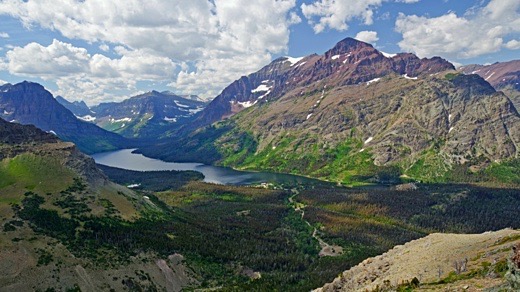
Image above: Blackfeet sacred land in the 170121saceedBadger - Two Medicine River area. From (http://grist.org/article/oil-and-gas-leases-canceled-on-blackfeet-sacred-land-in-montana/).

This story was originally published by High Country News and is reproduced here as part of the Climate Desk collaboration.

Wednesday morning, as John Murray drove north from his home on the Badger-Two Medicine River to his job as the historic preservation officer for the Blackfeet Tribe, the mountains glowed red. His wife, who drove with him, commented on their beauty.

Murray, 69, noted with deep satisfaction that for the first time in more than 30 years, there are no more oil and gas leases up there.

For thousands of years, the area was home to the Blackfeet, and Murray has spent decades fighting a collection of oil and gas leases sold for $1 an acre by the Reagan administration without consulting the tribe. On Tuesday, Interior Secretary Sally Jewell canceled the last two leases in the area known as Badger-Two Medicine, which now is part of the Lewis and Clark National Forest.

“The cancellation of the final two leases in the rich cultural and natural Badger-Two Medicine Area will ensure it is protected for future generations,” Jewell said in a statement.

The landscape just outside of Glacier National Park where the prairies meet the mountains is sacred to the Blackfeet. “This area is like a church to our people,” Harry Barnes, chair of the Blackfeet Nation Tribal Business Council, said in a statement. “We’ve lived for 30 years under the threat that it might be industrialized, and we’re extremely grateful that this cloud is finally lifted.”

Anthropological studies have found hundreds of artifacts in the area, but it’s the landscape itself that is most treasured by the Blackfeet, Murray says.

That landscape also is extremely important to conservation groups because it provides crucial habitat for grizzlies, mountain lions, bighorn sheep, mountain goats, and the other fauna that roam between Glacier, the Bob Marshall Wilderness, and the Blackfeet Reservation.

Hunting and fishing groups laud the area as unmatched for elk hunting and wild trout fishing. But conservationists who worked to preserve it say it was the Blackfeet that swayed the Interior Department to cancel the leases.

The decision comes as the Obama administration has sided with tribes in other recent decisions.

The U.S. Army Corps of Engineers early last month suspended an easement necessary to finish the construction of the Dakota Access Pipeline, pending a deeper environmental assessment and consultation with the tribe. On Dec. 28, President Obama created two national monuments after intense campaigns by Native Americans: Bears Ears in Utah and Gold Butte in Nevada.

The hard-fought victory for Badger-Two Medicine comes at a time Murray sees as a renaissance for the Blackfeet people. The tribe also negotiated an important water settlement with state government, which Congress finally approved last month.

Now that the leases have been canceled, the tribe is looking forward. “Our next move is to be more proactive in what happens in the Badger-Two Medicine,” Murray says. Specifically, the tribe is advocating for the Lewis and Clark National Forest to stop allowing cattle grazing and instead reintroduce buffalo.

In November, Interior announced that Devon Energy had agreed to the cancellation of its 15 leases in the Badger-Two Medicine region. But another company, Solonex LLC, is fighting the earlier cancellation of its lease in the same area. That dispute, which is currently in front of a federal court, tempered the celebration of the Blackfeet’s long-awaited victory.

Michael Jamison, Glacier program manager for the National Park Conservation Association, first protested the leases as a college student some 30 years ago. Through the years, he has learned from Blackfeet elders why the landscape is so important to them.

“Their future success as a people is rooted in hanging on to who they are culturally,” Jamison said. “They need something firm underfoot if they’re going to succeed in stepping into the future.”


.

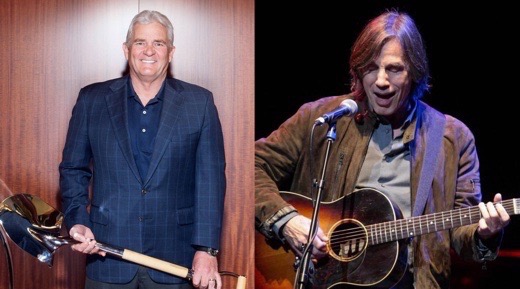
Jackson Browne vs DAPL owner

SUBHEAD: Jackson Browne told Kelcy Warren of Energy Transfer Partners, "I Don't play for oil!"

By Amy Goodwin on 5 November 2106 for Democracy Now! -
(http://www.democracynow.org/2016/11/3/i_do_not_play_for_oil)


Image above: Kelcy Warren with shovel on left and Jackson Browne with guitar. From original article.

When Kelcy Warren owner of Energy Transfer Partners is not building pipelines, he runs a small record label that puts out folk music.

In December of 2013, Kelcy Warren’s record label, Music Road Records, released the album Looking into You: A Tribute to Jackson Browne. It was a passion project spearheaded by Kelcy Warren himself, a longtime fan of Browne’s. 

In a press release for the album, Warren is quoted as saying, "I don’t know of anybody that admires Jackson more than me. We really had fun with this, and I’m very proud of the final product—it brings joy to an industry that tends to sap it out of me!" he said.

Jackson Browne is now one of 13 musical artists who signed on to a letter to Kelcy Warren vowing to no longer play in Warren’s Cherokee [Creek] Music Festival or participate in Music Road Records recordings.

In a statement released to Indian Country Today Media Network, Jackson Browne also pledged to donate the money he’s received and will receive from the album to tribes opposing the pipeline.

Jackson Browne writes, quote, "I did not know anything about Kelcy Warren’s other business as the production of this album went forward.

Although as a music publisher there is no legal way to deny permission to a record company to cover a song that has been previously published, I could have dissuaded the artists from appearing on this record had I known." Browne goes on to say, "I do not play for oil interests.

I do not play for companies who defile nature, or companies who attack demonstrators with trained attack dogs and pepper spray.

I certainly would not have allowed my songs to be recorded by a record company whose owner’s other business does what Energy Transfer Partners is allegedly doing—threatening the water supply and the sacred sites of indigenous people," he wrote. Those are the words of Jackson Browne.

Other musicians speaking out against the pipeline include Emily Saliers and Amy Ray, better known as the folk duo the Indigo Girls, who are now banding together to confront Kelcy Warren and help stop the pipeline. We’re going to go to break, and when we come back, the Indigo Girls are with us in studio. But we’re going to play, at our break, Jackson Browne.

Jackson Browne is just announcing that he is going to be playing on the Standing Rock Reservation, just as the Indigo Girls did. He’ll be playing at the Prairie Knights Casino on the reservation on—I think it’s November 27th, Sunday night of Thanksgiving weekend.

The concert organizers say the event will bring awareness to the fight against the pipeline and help the spirits up of the resistance camps. The event is open to the public and kicks off concerts that the Native Children’s Survival plan to do at the camps to support Standing Rock.

Among those who will be performing are Bonnie Raitt. Let’s go to Jackson Browne and then the Indigo Girls.
 
In fact, in one of his statements, Jackson Browne said, "I intend to support public resistance to the Dakota Access pipeline as much as I can. To quote a song of mine:
Which side? 
The corporations attacking the natural world, drilling and fracking, who do it with the backing of the craven and corrupt?
Or the ones who fight for the earth with all their might, and in the name of all that's right, confront and disrupt?


Video above: Amy Goodman story on Jackson Browne and Kelcy Warren. From (http://www.democracynow.org/2016/11/3/i_do_not_play_for_oil).

See also:
Democrcy Now: The Indigo Girls Boycott of DAPL Owner's Music Festival
Ea O Ka Aina: World responds to NoDAPL protests 11/5/16
Ea O Ka Aina: NoDAPL victory that was missed 11/5/16
Ea O Ka Aina: DAPL hid discovery of Sioux artifacts 11/5/16
Ea O Ka Aina: Dakota Access Pipeline will leak 11/5/16
Ea O Ka Aina: Route of the Dakota Access Pipeline 11/4/16
Ea O Ka Aina: Sanders calls for stopping DAPL 11/4/16
Ea O Ka Aina: Obama hints at DAPL rerouting 11/3/16
Ea O Ka Aina: New military attack on NODAPL 11/3/16
Ea O Ka Aina: How to Support NoDAPL 11/3/16
Unicorn Riot: Tweets from NoDAPL 11/2/16
Ea O Ka Aina: Standing Rock & the Ballot Box 10/31/16
Ea O Ka Aina: NoDAPL reclaim new frontline 10/24/16
Ea O Ka Aina: How far will North Dakota go? 10/23/16
Ea O Ka Aina: Amy Goodman "riot" charge dropped 10/17/16
Ea O Ka Aina: Amy Goodwin to face "Riot Charge" 10/16/16
Ea O Ka Aina: Shutdown of all tar sand pipelines 10/11/16
Ea O Ka Aina: Why Standing Rock is test for Oabama 10/8/16
Ea O Ka Aina: Why we are Singing for Water 10/8/16
Ea O Ka Aina: Labor's Dakota Access Pipeline Crisis 10/3/16
Ea O Ka Aina: Standing Firm for Standing Rock 10/3/16
Ea O Ka Aina: Contact bankers behind DAPL 9/29/16
Ea O Ka Aina: NoDAPL demo at Enbridge Inc 9/29/16
Ea O Ka Aina: Militarized Police raid NoDAPL 9/28/16
Ea O Ka Aina: Stop funding of Dakota Access Pipeline 9/27/16
Ea O Ka Aina: UN experts to US, "Stop DAPL Now!" 9/27/16
Ea O Ka Aina: No DAPL solidarity grows 9/21/16
Ea O Ka Aina: This is how we should be living 9/16/16
Ea O Ka Aina: 'Natural Capital' replacing 'Nature' 9/14/16
Ea O Ka Aina: The Big Difference at Standing Rock 9/13/16
Ea O Ka Aina: Jill Stein joins Standing Rock Sioux 9/10/16
Ea O Ka Aina: Pipeline temporarily halted 9/6/16
Ea O Ka Aina: Native Americans attacked with dogs 9/5/16
Ea O Ka Aina: Mni Wiconi! Water is Life! 9/3/16
Ea O Ka Aina: Sioux can stop the Pipeline 8/28/16
Ea O Ka Aina: Officials cut water to Sioux 8/23/16    

.

World responds to NoDAPL protest

SUBHEAD: Communities across the globe mobilize to support effort against Dakota Access Pipeline.

By Candice Bernd on 5 November 2016 for Truth Out -
(http://www.truth-out.org/news/item/38252-communities-across-the-globe-mobilize-to-support-nodapl-and-you-can-too)


Image above: Activists with the FANG Collective lock down at a TD Bank in Providence, Rhode Island to protest the bank's role in funding the Dakota Access pipeline, October 20, 2016. Photo by Pia Ward. From original article.

Since last Thursday's violent clash in which 141 Indigenous Water Protectors were arrested, marked with numbers and put into dog-kennel-like holding cells after defending land directly in the route of the Dakota Access pipeline, activists from across the US and around the world have responded with a groundswell of actions in solidarity.

These actions have strategically targeted the Dakota Access pipeline's funders, as well as law enforcement agencies sending resources and personnel to brutalize Indigenous resisters and allies.

Isabella Zizi, who is of the northern Cheyenne, Arikara and Muscogee Creek nations protested at Citigroup's headquarters in San Francisco on Monday. "I wanted to let those out in Standing Rock know that we are supporting them even if we can't make it out [to North Dakota]," Zizi told Truthout.

"We will do anything that we can to be in solidarity with them."

A global outcry has followed an attack on Native Water Protectors gathered on 1851 Oceti Sakowin treaty land north of the Standing Rock Sioux reservation on Thursday, October 27. More than 200 law enforcement officers from seven different states and National Guard personnel used flash grenades, bean bag launchers, pepper spray and long range acoustic devices, and even allegedly fired live ammunition on Indigenous Land Defenders protecting sacred burial grounds.

Officials charged one Native Water Protector with attempted murder after the October 27 standoff, even as Morton County Sheriff Kyle Kirchmeier said he could not confirm Land Defenders fired shots during Thursday's raid.

President Obama has since said that the Army Corps of Engineers is considering rerouting the pipeline -- slated to carry Bakken crude from North Dakota through South Dakota, Iowa and to an Illinois distribution center -- after last week's escalated crackdown.

"We're monitoring this closely," President Obama told NowThis. "My view is that there is a way for us to accommodate sacred lands of Native Americans. And I think that right now the Army Corps is examining whether there are ways to reroute this pipeline."

But only hours after the president's comments on Dakota Access, the US Army Corps of Engineers ordered North Dakota police to move in and arrest Indigenous Water Protectors and demolish a makeshift bridge they built over a creek to reportedly gain access to private land where the latest round of construction is occurring. Police used tear gas and rubber bullets against Native Land Defenders this week.

In the face of this advancing construction, Native communities and activists around the world are taking bold action in solidarity with those at Standing Rock.

Since Thursday's police sweep, activists in the US and abroad have strategically targeted the powerful interests bankrolling the pipeline by locking themselves down inside banks, protesting the pipeline's billionaire backers, rallying at city halls to protest public resources and police personnel being sent to suppress Native Water Protectors, speaking out online by "checking in" at Standing Rock on Facebook, and donating money to the protesters' legal fund and to cover other expenses.

Activists have also targeted President Obama and Democratic presidential nominee Hillary Clinton, with Native youth flooding Clinton's campaign headquarters in Brooklyn to demand she oppose the pipeline on the day of the mass arrests at Standing Rock.

There were also demonstrations to demand the pipeline's cancellation near a Clinton presidential campaign fundraiser with President Obama in Beverly Hills on October 24.

Investigations by LittleSis and Food and Water Watch reveal that 38 banks have extended more than $10.25 billion in loans to fund the Energy Transfer group of companies behind the pipeline, which include Energy Transfer Partners, Energy Transfer Equity, Sunoco Logistics and Dakota Access LLC.

 Additionally, Canada's largest pipeline company, Enbridge, with the Texas-based Marathon Petroleum Corporation put down $2.6 billion last month to become joint stakeholders of 49 percent of the Dakota Access pipeline. Phillips 66 also owns a 25 percent stake in the pipeline.

Seventeen major banks are backing Dakota Access LLC directly with a $2.5 billion credit line to build the pipeline. Major funders include Citibank, Wells Fargo, BNP Paribas, SunTrust, Royal Bank of Scotland, Bank of Tokyo-Mitsubishi, Mizuho Bank, TD Securities, ABN AMRO Capital, DNB First Bank, ICBC London, SMBC Nikko Securities and Société Générale.

After the Red Warrior Camp at Standing Rock (Sacred Stone and Oceti Sakowin are among the other camps), put out a call for solidarity actions last Thursday, protests have unfolded in the US and abroad. In Canada, on Friday night, Indigenous resisters from the Kahnawake Mohawk nation shut down a highway bridge leading to Montreal.

In Kingston, Ontario, on Saturday, several TD Bank ATMs were smashed with hammers and spray-painted with "NO DAPL." In New Zealand, the Indigenous Māori people have been expressing support by posting videos of a traditional Māori war dance called the "haka" to a Facebook group called "Haka with Standing Rock."

In the US, several protests at banks funding the pipeline have led to arrests of Native activists and their allies.

In San Francisco on Monday, 12 activists with Diablo Rising Tide were arrested at the Citigroup bank headquarters after shutting down the elevators that lead to the bank's corporate offices to protest its role as the lead arranger and lender to the Dakota Access pipeline.

More than 50 people protested in front of the bank, including Zizi, who organizes with Idle No More SF Bay.

"Personally, it is affecting me because my relatives do live in [the Fort Berthold reservation in North Dakota], which is literally right in the area where the Bakken oil is being extracted and pulled out by the oil trains and all. It's really heartbreaking to see my relatives and all the tribes and all the people having to deal with that."

That same day in Salt Lake City, eight people were arrested after chaining themselves together at a downtown Wells Fargo location, demanding the bank cancel its investment in Dakota Access.

"What [those at Standing Rock] are doing for us, putting their bodies on the line and standing there with no weapons, peacefully being Water Protectors, we want them to know that we hear them.

We're here. That's why we did what we did," said Carol Surveyor, who was at the Wells Fargo protest Monday and is Navajo/Diné. She cited the 2015 Gold King Mine wastewater spill's effect on the Navajo Nation's water as a personal motivation to act in solidarity with Standing Rock. "I know what happens to a town, to these communities, when they go into a panic when their water is contaminated," she said.

Surveyor, who has traveled to Standing Rock, told Truthout that several activists involved with the bank action also staged a sit-in at city hall in Salt Lake City on Tuesday, aiming to pressure city officials to pass a resolution that would formally express the city's support for the Standing Rock Sioux and their struggle against the pipeline.

In other cities, activists protested their local police departments' complicity in the violence being enacted against resisters at Standing Rock.

More than 1,000 people demonstrated at the Minneapolis city hall on Friday, October 28, to protest the deployment of Hennepin County police to brutalize Native Water Protectors. The rally led to a sit-in at the office of Sheriff Rich Stanek, who has sent county deputies to Standing Rock.

On Thursday, protesters in Austin, Texas, gathered outside the Texas Parks and Wildlife Headquarters to demand that Energy Transfer Partners CEO Kelcy Warren step down or be removed from the state's Parks and Wildlife Commission. They cited Warren's appointment by Gov. Greg Abbot as a conflict of interest.

Warren gave more than $500,000 to Abbott during his gubernatorial campaign, and a combined $30,000 to Abbot's 2006 and 2010 campaigns for state attorney general, according to the Texas Ethics Commission.

"I wonder if the Texas Parks and Wildlife scientists would be as amenable [to oil and gas development] if they weren't pressured by the [industry reps on the] commission," said Lori Glover, an organizer and cofounder of Defend Big Bend, which is fighting another Energy Transfer Partners pipeline, the Trans-Pecos, through the state's Big Bend region.

"There have been so many pipeline explosions over the past few years, yet [the commission] continues to say that there's no problem, and gives out these [oil and gas] permits and allows these things to happen."

The Austin rally also addressed the Houston-based Apache Corporation's plans to drill for oil and gas around West Texas' serene Balmorhea State Park and its well-known spring-fed pools.

"The significance of what's happening [in Standing Rock] is no different than when they marched into my family's home at bayonet point, took them away from their dinner tables, told them 'Grab what you can.

You're out of here. You're going to Oklahoma,'" said Neta Rhyne, who is a Cherokee descendent of the Trail of Tears, and is fighting to save the Balmorhea springs. "But I think there's a new awakening.

People are getting tired of it. They're realizing the impact that this is going to have on future generations."

Native Water Protectors and allied protesters jumped on an opportunity to confront Warren directly during the quarterly commission meeting Thursday, as the commission weighed a proposal to run six pipelines through the wildlife management area in the state.

After taking heat from several Indigenous leaders and environmentalists, Warren agreed to meet with Native leaders of the Society of Native Nations to discuss the desecreation of Native burial sites after one of the group's members, Pete Hefflin, asked him directly about the issue.

The two exchanged contact informration, and Warren later recused himself from the vote on the proposal.

Other recent actions included lockdowns in Providence, Rhode Island, where two people blocked the entrance to a TD Bank branch and corporate office; Mount Laurel, New Jersey, where four people were arrested after sitting-in at TD Bank's corporate headquarters there; and Philadelphia, where 25 people sat-in at a TD Bank ATM lobby.

Protests at banks funding the pipeline and at corporate headquarters of companies directly behind the pipeline have jumped off in cities across the country in recent months, including large demonstrations in New York City, where on Tuesday, dozens of activists disrupted morning commutes by blockading the Grand Central Terminal before marching to the offices of JP Morgan and Bank of America.

Other large demonstrations have erupted in Chicago, St. Louis, Dallas, Houston, New Haven and elsewhere.

Last weekend, more than a million people "checked in" to Standing Rock on Facebook, in an overwhelming display of online solidarity and an attempt to confuse police efforts to monitor which individuals are at the resistance camps in Standing Rock.

Meanwhile, hundreds of people have showed their support online by contributing to the camps' legal funds and donating to pay for expenses at the Standing Rock camps.

In one way or another, these communities are responding directly to the Red Warrior Camp's call for solidarity actions in the aftermath of last Thursday's police sweep.

The statement asks allies to travel directly to Standing Rock if they can, as advancing police forces and winter weather have made sustaining the encampment increasingly difficult.

The camp asks allies who can't be present at Standing Rock to take escalated action against strategic targets by going to NoDAPLSolidarity.org and registering within the global solidarity network to target local Army Corps, banks, pipeline companies, corporations and elected officials responsible for the pipeline with nonviolent direct action.

 Lastly, the statement asks allies to send donations to the official Red Warrior Camp Fund and Official Legal Fund. The Sacred Stone Camp is also accepting donations at the Official Sacred Stone Camp Fund.

Other ways to help include calling elected officials, such as North Dakota Gov. Jack Dalrymple, the Morton County Sheriff's Department, the Army Corps of Engineers and the White House, and staying vocal on social media.

"I can't physically go to North Dakota, but I wanted to still be an ally in this movement, in this fight, by taking direct action locally," said Laura Borth, who was arrested after locking down at a TD Bank in Providence, Rhode Island.

"It's more than just a climate change issue or a climate justice issue, it's about this violence and oppression that's been facing Indigenous people for years in our country."

See also:
Ea O Ka Aina: NoDAPL victory that was missed 11/5/16
Ea O Ka Aina: DAPL hid discovery of Sioux artifacts 11/5/16
Ea O Ka Aina: Dakota Access Pipeline will leak 11/5/16
Ea O Ka Aina: Route of the Dakota Access Pipeline 11/4/16
Ea O Ka Aina: Sanders calls for stopping DAPL 11/4/16
Ea O Ka Aina: Obama hints at DAPL rerouting 11/3/16
Ea O Ka Aina: New military attack on NODAPL 11/3/16
Ea O Ka Aina: How to Support NoDAPL 11/3/16
Unicorn Riot Tweets NoDAPL 11/2/16
Ea O Ka Aina: Standing Rock & the Ballot Box 10/31/16
Ea O Ka Aina: NoDAPL reclaim new frontline 10/24/16
Ea O Ka Aina: How far will North Dakota go? 10/23/16
Ea O Ka Aina: Amy Goodman "riot" charge dropped 10/17/16
Ea O Ka Aina: Amy Goodwin to face "Riot Charge" 10/16/16
Ea O Ka Aina: Shutdown of all tar sand pipelines 10/11/16
Ea O Ka Aina: Why Standing Rock is test for Oabama 10/8/16
Ea O Ka Aina: Why we are Singing for Water 10/8/16
Ea O Ka Aina: Labor's Dakota Access Pipeline Crisis 10/3/16
Ea O Ka Aina: Standing Firm for Standing Rock 10/3/16
Ea O Ka Aina: Contact bankers behind DAPL 9/29/16
Ea O Ka Aina: NoDAPL demo at Enbridge Inc 9/29/16
Ea O Ka Aina: Militarized Police raid NoDAPL 9/28/16
Ea O Ka Aina: Stop funding of Dakota Access Pipeline 9/27/16
Ea O Ka Aina: UN experts to US, "Stop DAPL Now!" 9/27/16
Ea O Ka Aina: No DAPL solidarity grows 9/21/16
Ea O Ka Aina: This is how we should be living 9/16/16
Ea O Ka Aina: 'Natural Capital' replacing 'Nature' 9/14/16
Ea O Ka Aina: The Big Difference at Standing Rock 9/13/16
Ea O Ka Aina: Jill Stein joins Standing Rock Sioux 9/10/16
Ea O Ka Aina: Pipeline temporarily halted 9/6/16
Ea O Ka Aina: Native Americans attacked with dogs 9/5/16
Ea O Ka Aina: Mni Wiconi! Water is Life! 9/3/16
Ea O Ka Aina: Sioux can stop the Pipeline 8/28/16
Ea O Ka Aina: Officials cut water to Sioux 8/23/16    


.

DAPL hid discovery of Sioux artifacts

SUBHEAD: Dakota Access Pipeline company under scrutiny over sacred artifacts in oil pipeline's path.

By Steve Levin on 4 November 2016 for the Guardian -
(https://www.theguardian.com/us-news/2016/nov/05/dakota-access-oil-pipeline-native-american-artifacts-discovered?CMP=Share_iOSApp_Other)


Image above: The Dakota Access pipeline construction site. Local tribes fear it will contaminate drinking water. Photograph byJosh Morgan. From original article.

North Dakota regulators accuse company of failing to disclose the discovery of Native American symbolic stones on a site where construction was planne.

North Dakota regulators are filing a complaint against the oil company building the Dakota Access pipeline for failing to disclose the discovery of Native American artifacts in the path of construction.

The allegations mark the state’s first formal action against the corporation and add fuel to the claims of the Standing Rock Sioux tribe, which has long argued that the $3.7bn pipeline threatens sacred lands and indigenous cultural heritage.

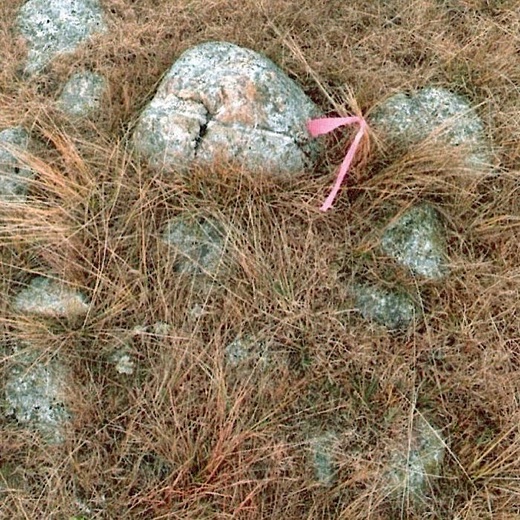
Julie Fedorchak, chair of the North Dakota public service commission, told the Guardian that on 17 October, pipeline officials found a group of stone cairns –symbolic rock piles that sometimes mark burial grounds – on a site where construction was planned.


Image above: The stone cairns, which can sometimes mark burial grounds. Photograph by North Dakota public service commission. From original article.

The firm, however, failed to notify the commission, in violation of its permit, and only disclosed the findings 10 days later when government workers inquired about it, she said.

“I was very disappointed,” said Fedorchak. “We found out from our inspectors. Who knows when we would’ve found out?

The rebuke is significant given that public officials in North Dakota have repeatedly criticized Native American leaders protesting against the pipeline and have gone to great lengths to protect the construction sites from demonstrations.

The commission will file a complaint this week and the company could face a maximum fine of $10,000 per day for the 10 days without a disclosure, according to Fedorchak.

Native American protesters, who call themselves “water protectors”, said a reprimand from regulators was too little too late and lamented that the state had consistently failed to work with the tribe to prevent the destruction of sacred burial grounds and historic artifacts.

“They are digging up our sites. They are not following the law,” said LaDonna Brave Bull Allard, a Standing Rock Sioux tribe member and founder of the Sacred Stone camp, which activists formed in the spring to fight the pipeline.

Over the last week, construction of the 1,172-mile pipeline – which would carry 470,000 barrels a day from North Dakota to Illinois – has gotten very close to the Missouri river where the tribe fears it would contaminate the regional drinking water.

Indigenous activists, who have faced Mace, rubber bullets, mass arrests and questionable jail conditions, say the project has already bulldozed sacred grounds.

Energy Transfer Partners, the company behind the pipeline, did not respond to a request for comment on Friday, but a lawyer for the firm claimed in a letter to the commission that the construction crew rerouted around the cairn artifacts and filed a report with the state historic preservation office.

The attorney further claimed that the failure to disclose the findings to the commission was due to the fact that the company was busy coordinating a site visit for public officials.

“What we’re concerned about is transparency,” said Fedorchak.

President Obama recently said the US government was exploring ways to reroute the pipeline, but said he would “let it play out for several more weeks”. Indigenous leaders have urged him to permanently save the native lands and surrounding areas from further destruction.

Cheryl Angel, a Sicangu Lakota tribe member who helped organize the first Standing Rock camp, said she has personally seen what appear to be indigenous artifacts in the line of construction and that she believes the pipeline operators have intentionally hidden discoveries of sacred sites and knowingly destroyed them.

“It’s a tremendous blow to our history. They are trying to erase our existence,” said Angel, 56. “That’s a blatant disregard for our culture. That hurts when someone purposefully tries to erase you as people from … the land we’ve occupied for centuries.”

Allard said she suspected the state might be taking action against the company simply because there is now international attention on the conflict.

“They have no choice now, because the world is watching.”

Given the extent to which the government has allowed the pipeline to rapidly progress, Angel said she did not believe regulators wanted to help preserve artifacts.

“It’s almost as if they are working hand in hand with the oil company to go ahead and let them start drilling.”

See also:
Ea O Ka Aina: Dakota Access Pipeline will leak 11/5/16
Ea O Ka Aina: Route of the Dakota Access Pipeline 11/4/16
Ea O Ka Aina: Sanders calls for stopping DAPL 11/4/16
Ea O Ka Aina: Obama hints at DAPL rerouting 11/3/16
Ea O Ka Aina: New military attack on NODAPL 11/3/16
Ea O Ka Aina: How to Support NoDAPL 11/3/16
Unicorn Riot Tweets NoDAPL 11/2/16
Ea O Ka Aina: Standing Rock & the Ballot Box 10/31/16
Ea O Ka Aina: NoDAPL reclaim new frontline 10/24/16
Ea O Ka Aina: How far will North Dakota go? 10/23/16
Ea O Ka Aina: Amy Goodman "riot" charge dropped 10/17/16
Ea O Ka Aina: Amy Goodwin to face "Riot Charge" 10/16/16
Ea O Ka Aina: Shutdown of all tar sand pipelines 10/11/16
Ea O Ka Aina: Why Standing Rock is test for Oabama 10/8/16
Ea O Ka Aina: Why we are Singing for Water 10/8/16
Ea O Ka Aina: Labor's Dakota Access Pipeline Crisis 10/3/16
Ea O Ka Aina: Standing Firm for Standing Rock 10/3/16
Ea O Ka Aina: Contact bankers behind DAPL 9/29/16
Ea O Ka Aina: NoDAPL demo at Enbridge Inc 9/29/16
Ea O Ka Aina: Militarized Police raid NoDAPL 9/28/16
Ea O Ka Aina: Stop funding of Dakota Access Pipeline 9/27/16
Ea O Ka Aina: UN experts to US, "Stop DAPL Now!" 9/27/16
Ea O Ka Aina: No DAPL solidarity grows 9/21/16
Ea O Ka Aina: This is how we should be living 9/16/16
Ea O Ka Aina: 'Natural Capital' replacing 'Nature' 9/14/16
Ea O Ka Aina: The Big Difference at Standing Rock 9/13/16
Ea O Ka Aina: Jill Stein joins Standing Rock Sioux 9/10/16
Ea O Ka Aina: Pipeline temporarily halted 9/6/16
Ea O Ka Aina: Native Americans attacked with dogs 9/5/16
Ea O Ka Aina: Mni Wiconi! Water is Life! 9/3/16
Ea O Ka Aina: Sioux can stop the Pipeline 8/28/16
Ea O Ka Aina: Officials cut water to Sioux 8/23/16   
.

How to support NoDAPL

SUBHEAD: Six things you can do to help the Water Protectors trying to stop the Dakota Access Pipeline.

By Sandra Song on 31 October 2016 for Paper Mag -
(http://www.papermag.com/how-to-support-nodapl-protestors-2072880726.html)


Image above: Poster supporting Standing Rock Sioux fight against oil pipeline and protection of Missouri River. From (http://justseeds.org/solidarity-with-standing-rock/).

As you probably know by now, the Standing Rock Sioux have been engaged in a protest against the construction of the controversial Dakota Access Pipeline, which will destroy sacred sites, and pose a huge ecological risk that extends to potentially poisoning their water supply.

There's a lot that's fucked about this situation, including the social and racial dynamics surrounding its approval, the arrests of hundreds of peaceful protesters and the geo-targeting of prayer camps by the Morton County Sheriff's Department via Facebook check-ins (which is probably why you've seen all your friends checking in).

But it's also been difficult to figure out how to help activists and show support for the protest, thanks to what many are calling a media blackout by several major news networks. So in lieu of traveling to North Dakota to protest alongside the Standing Rock Sioux, we've rounded up five of the most effective ways of helping the #NoDAPL protestors right now.

1. Donate money & supplies to the Sacred Stone Camp

You can contribute money to the protester camp's official GoFundMe account, which will go toward purchasing water, food, propane, blankets and other supplies. Checks, cash or supplies (an extensive list of what they need is here) can also be sent through the mail to:

Sacred Stone Camp, P.O. Box 1011, Fort Yates, ND 58538
OR
202 Main Street, Fort Yates, ND 58538

Alternatively, you can also supplies via the group's Amazon WishList.

2. Donate to the Standing Rock Sioux

The Standing Rock Sioux are currently soliciting donations for legal, sanitary and emergency purposes. You can either donate via their PayPal account or by mailing checks (payable to Standing Rock Sioux Tribe - Donations) to:

Standing Rock Sioux Tribe, Attention: Donations, PO Box D, Building #1, North Standing Rock Avenue, Fort Yates, ND 58538

3. Donate to the Sacred Stone Legal Defense Fund

Protesters have also set up a legal defense fund to help defray the legal bills of those involved in the protests. To save the group processing fees, you can also donate directly to their PayPal account at freshetcollective@gmail.com.

4. Call the people in power

You can call the people who have the ability to do something.

Jack Dalrymple, Governor of North Dakota
701-328-2200

Army Corps of Engineers (demand to reverse the permit):
202-761-5903

The executives at Energy Transfer Partners, the company building the pipeline.

Lee Hanse - Executive Vice President
(210) 403-6455

Glenn Emery - Vice President
(210) 403-6762

Michael (Cliff) Waters - Lead Analyst
(713) 989-2404

5. Sign White House petition to stop aggression NoDAPL
You can sign anti DAPL here (https://petitions.whitehouse.gov/petition/stop-violent-military-intervention-against-peaceful-water-protectors-north-dakota-nodapl) Previous petition to stop pipeline is over.

6. Donate to Standing Rock's Health Clinic

As brought to our attention by BrokeAssStuart, UCSF's Do No Harm Coalition is setting up the Mni Wiconi (Water is Life) Health Clinic, which is a free, integrative and volunteer-based clinic that seeks to provide care to everyone in the Standing Rock Sioux reservation.

They are currently raising funds to open the doors, obtain equipment and medications -- an essential component of the protests as there is no local healthcare access for the people assembled at Standing Rock. Donate here (https://crowdfund.ucsf.edu/project/2913)

See also: 
Unicorn Riot Tweets NoDAPL 11/2/16
Ea O Ka Aina: Standing Rock & the Ballot Box 10/31/16
Ea O Ka Aina: NoDAPL reclaim new frontline 10/24/16
Ea O Ka Aina: How far will North Dakota go? 10/23/16
Ea O Ka Aina: Amy Goodman "riot" charge dropped 10/17/16
Ea O Ka Aina: Amy Goodwin to face "Riot Charge" 10/16/16
Ea O Ka Aina: Shutdown of all tar sand pipelines 10/11/16
Ea O Ka Aina: Why Standing Rock is test for Oabama 10/8/16
Ea O Ka Aina: Why we are Singing for Water 10/8/16
Ea O Ka Aina: Labor's Dakota Access Pipeline Crisis 10/3/16
Ea O Ka Aina: Standing Firm for Standing Rock 10/3/16
Ea O Ka Aina: Contact bankers behind DAPL 9/29/16
Ea O Ka Aina: NoDAPL demo at Enbridge Inc 9/29/16
Ea O Ka Aina: Militarized Police raid NoDAPL 9/28/16
Ea O Ka Aina: Stop funding of Dakota Access Pipeline 9/27/16
Ea O Ka Aina: UN experts to US, "Stop DAPL Now!" 9/27/16
Ea O Ka Aina: No DAPL solidarity grows 9/21/16
Ea O Ka Aina: This is how we should be living 9/16/16
Ea O Ka Aina: 'Natural Capital' replacing 'Nature' 9/14/16
Ea O Ka Aina: The Big Difference at Standing Rock 9/13/16
Ea O Ka Aina: Jill Stein joins Standing Rock Sioux 9/10/16
Ea O Ka Aina: Pipeline temporarily halted 9/6/16
Ea O Ka Aina: Native Americans attacked with dogs 9/5/16
Ea O Ka Aina: Mni Wiconi! Water is Life! 9/3/16
Ea O Ka Aina: Sioux can stop the Pipeline 8/28/16
Ea O Ka Aina: Officials cut water to Sioux 8/23/16 
.

Militarized police raid NoDAPL

SUBHEAD: Sioux say that "with state police protecting Dakota Access Pipeline that Obama's words are meaningless."

By Lauren McCauley on 29 September 2016 for Common Dreams -
(http://www.commondreams.org/news/2016/09/29/over-20-arrested-after-militarized-police-raid-nodapl-prayer-ceremony)


Image above: "Roughly 150 peaceful Water Protectors gathered for prayer near construction sites of the Dakota Access Pipeline...and were met with a heavy show of force by authorities." said Rob Wilson, the photographer. From original article.

Twenty-one water protectors were arrested in North Dakota on Wednesday after a military-style raid interrupted a peaceful prayer ceremony at a Dakota Access Pipeline (DAPL) construction site.

Hundreds of demonstrators have been taking part in the prayer ceremony in recent days, according to the Red Warrior Camp, traveling to sacred sites that are being threatened by the pipeline construction, beginning Tuesday with the ancestral site where private security guards unleashed attack dogs on unarmed protesters earlier this month.

Construction was halted Tuesday as a result of the peaceful demonstration. On Wednesday, police helicopters and a circling crop-duster followed the caravan of cars south of Mandan, North Dakota.


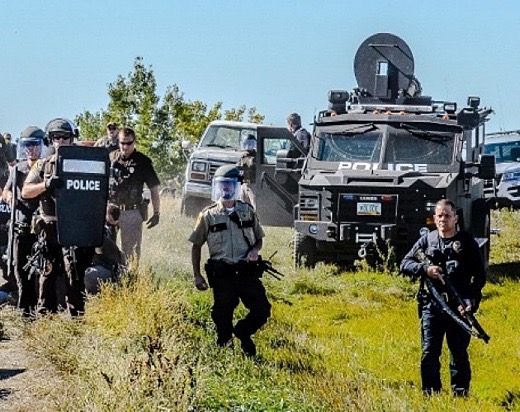
Image above: Police with military automatic assault rifles stand near Mrap vehicle of the kind of bomb proof vehicle developed to fight "terrorists" in Iraq and Afghanistan now in use by US domestic police forces. From video by UnicornRiot.Ninja.

According to the independent journalism outfit Unicorn Riot, which has been reporting live on the Dakota Access protest from the camps, after praying at the second site, "a large amount of police vehicles arrived and blockaded the only exit on the public road leading to the DAPL work site."
Unicorn Riot continued:
Dozens of militarized police with shotguns appeared with a Bearcat armored vehicle as well as a [Mine-Resistant Ambush Protected vehicle, also known as an MRAP]. The Bearcat was also brought out by police at yesterday’s action, but the MRAP, a larger tan colored armored vehicle, had not been seen at any DAPL sites until today.
After blockading the exit points, police vehicles sped across open fields towards the crowd of protectors as they left the site. Several arrests were made, as police brandished loaded shotguns, and assault rifles. The latest information we gathered is that there were up to 21 arrests.
The Sacred Stone Camp has started a legal defense fund to support those arrested and others involved in the direct action campaign.

Though images and videos of the raid were shared widely on social media, as others noted, there was no corporate media coverage of the arrests.


Video above: Water Protectors pray at construction site, met with Police armor and automatic weapons. From UnicornRiot.Ninja (https://vimeo.com/184774821).

See also:
Ea O Ka Aina: Stop funding of Dakota Access Pipeline 9/27/16
Ea O Ka Aina: UN experts to US, "Stop DAPL Now!" 9/27/16
Ea O Ka Aina: No DAPL solidarity grows 9/21/16
Ea O Ka Aina: This is how we should be living 9/16/16
Ea O Ka Aina: 'Natural Capital' replacing 'Nature' 9/14/16
Ea O Ka Aina: The Big Difference at Standing Rock 9/13/16
Ea O Ka Aina: Jill Stein joins Standing Rock Sioux 9/10/16
Ea O Ka Aina: Pipeline temporarily halted 9/6/16
Ea O Ka Aina: Native Americans attacked with dogs 9/5/16
Ea O Ka Aina: Mni Wiconi! Water is Life! 9/3/16
Ea O Ka Aina: Sioux can stop the Pipeline 8/28/16
Ea O Ka Aina: Officials cut water to Sioux 8/23/16 
.

"No DAPL!" Solidarity Grows

SUBHEAD: Over 1,200 museum directors, archaeologists, anthropologists, and historians speak against Dakota Access Pipeline.

By Andrea Germanos on 21 September 2016 for Common Dreams -
(http://www.commondreams.org/node/103997)


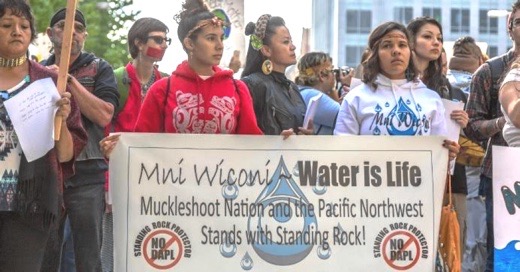
Image above: Demonstrators hold sign reading "Mni Wiconi - Water is Life: Muckleshoot Nation and Pacific Northwest Stands with Standing Rock! No DAPL" Photo by John Duffy. From original article.

What the Standing Rock Sioux are going through is just one example of a systemic and historical truth around how extractive and polluting infrastructure is forced upon Native communities," said James Powell, former president and director of the Los Angeles County Natural History Museum and former president of the Franklin Museum of Science.

The significance of the cultural artifacts along the pipeline's proposed route is simply too great to sacrifice for a fossil fuel pipeline that would threaten not only these artifacts, but also land, water, tribal sovereignty, and the climate.

Standing with the Standing Rock Sioux, over 1,200 museum directors, archaeologists, anthropologists, and historians—people "familiar with the long history of desecration of Indigenous People's artifacts and remains worldwide"—have written to the Obama administration to denounce "further irreparable losses" that would accompany completion of the controversial Dakota Access Pipeline.

Spearheaded by The Natural History Museum, the letter, sent this week to President Barack Obama, the U.S. Department of Justice, the Department of the Interior, and the Army Corps of Engineers, notes the destruction caused earlier this month by the company behind the pipeline, Energy Transfer Partners, when it razed recently discovered burial sites, prayer sites, and other artifacts.

It "adds yet another injury to the Lakota, Dakota, and other Indigenous Peoples who bear the impacts of fossil fuel extraction and transportation," the letter states.

Indeed, stated signatory James Powell, former president and director of the Los Angeles County Natural History Museum and former president of the Franklin Museum of Science, "What the Standing Rock Sioux are going through is just one example of a systemic and historical truth around how extractive and polluting infrastructure is forced upon Native communities."

"It is long past time for us to abandon fossil fuel projects that harm Native communities and threaten the future of our planet," he added.

The water protectors fighting the pipeline, which would stretch over 1,100 miles from the Bakken fields in North Dakota to southern Illinois have already seen an outpouring of solidarity in the U.S. and beyond.

And though on September 9th the administration called for a temporary pause to the construction—a decision recently affirmed by a federal appeals court—the pipeline's "future is far from certain," and there's been no commitment from the Army Corps to make a full environmental impact statement.

From the letter:
Many of us put countless hours into developing the Native American Graves Protection and Repatriation Act (NAGPRA) to prevent burial desecration of this type, yet the pipeline was approved without a full Environmental Impact Statement (EIS), and the cultural resources survey did not involve proper consultation with the Standing Rock Sioux Tribe and other tribes in the region.

The destruction of these sacred sites adds yet another injury to the Lakota, Dakota, and other Indigenous Peoples who bear the impacts of fossil fuel extraction and transportation. If constructed, this pipeline will continue to encourage oil consumption that causes climate change, all the while harming those populations who contributed little to this crisis.

We call on the federal government to abide by its laws and to conduct a thorough environmental impact statement and cultural resources survey on the pipeline’s route, with proper consultation with the Standing Rock Sioux Tribe. We stand with the Standing Rock Sioux Tribe and affirm their treaty rights, tribal sovereignty, and the protection of their lands, waters, cultural and sacred sites, and we stand with all those attempting to prevent further irreparable losses.
Of course, Powell and the other signatories may not be the usual band of suspects one expects to hear from regarding a fossil fuel infrastructure project—and that's noteworthy.

"The signers of this letter are far from your typical activists," said Beka Economopoulos, director of The Natural History Museum. "It speaks to the critical nature of this issue that museum directors and scientists, who don't often engage in political struggle, have made the decision to raise their voices about the Dakota Access pipeline. The significance of the cultural artifacts along the pipeline's proposed route is simply too great to sacrifice for a fossil fuel pipeline that would threaten not only these artifacts, but also land, water, tribal sovereignty, and the climate."

Writing this week about the fight to stop the pipeline, environmental activist and essayist Chip Ward posited that "America's Manifest Destiny, that historic push across the Great Plains to the Pacific (murdering and pillaging along the way), seems to be making a return trip to Sioux country in a form that could have planetary consequences."

"Perhaps it's time to finally listen to and learn from people who lived here sustainably for thousands of years. Respecting Sioux sovereignty and protecting the sacred sites of tribes in their own co-managed national monument could write the next chapter in our American story, the one in which the Indians finally get to be heroes and heroines fighting to protect our way of life as well as their own," Ward wrote.

The full letter can be seen here.

See also:
Ea O Ka Aina: This is how we should be living 9/16/16
Ea O Ka Aina: 'Natural Capital' replacing 'Nature' 9/14/16
Ea O Ka Aina: The Big Difference at Standing Rock 9/13/16
Ea O Ka Aina: Jill Stein joins Standing Rock Sioux 9/10/16
Ea O Ka Aina: Jill Stein supports Standing Rock Sioux 9/10/16
Ea O Ka Aina: Pipeline temporarily halted 9/6/16
Ea O Ka Aina: Native Americans attacked with dogs 9/5/16
Ea O Ka Aina: Mni Wiconi! Water is Life! 9/3/16
Ea O Ka Aina: Sioux can stop the Pipeline 8/28/16
Ea O Ka Aina: Officials cut water to Sioux 8/23/16
 .