Showing posts with label Urban. Show all posts

Buffalo rising from the ashes

SUBHEAD: One of its suburban neighborhoods ends its dependence on coal for energy.

By Eliziabeth McGowen on 11 July 2017 for Grist -
(http://grist.org/justice/a-working-class-buffalo-suburb-retired-a-coal-plant-the-right-way/)
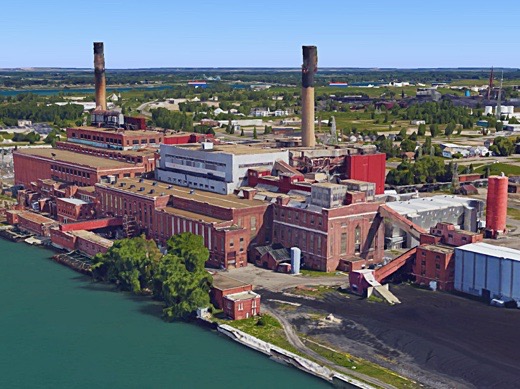

Image above: The retired coal burning Huntley Generating Station on the banks of the Niagara River. From original article.

Sixteen months ago, the coal-fired Huntley Generating Station, which sits on the banks of the Niagara River, stopped producing power for first time since World War I.

Erie County lost its largest air and water polluter. But the town of Tonawanda, a working class Buffalo suburb 13 miles downstream of America’s most storied waterfalls, also lost its biggest taxpayer.

The impact of Huntley’s decade-long slowdown — and finally shutdown — hit this upstate New York community like a punch to the gut.

In just five years, between 2008 and 2012, Huntley’s pre-tax earnings tumbled by $113 million as it operated far below capacity, translating into a combined revenue hit of at least $6.2 million to the town, county, and local school district. That precipitous decline came when state education funds were also shrinking. Belt-tightening wasn’t enough; 140 teachers lost their jobs. Three elementary schools and one middle school closed their doors.

Rebecca Newberry, a 35-year-old former bartender and LGBT-rights activist, saw her home town facing the same fate that has befallen so many other Rust Belt communities that fell on hard times following an industrial exodus. She was determined not to let it happen to the place where she grew up. And she was fortunate enough to find a diverse group of allies who were willing to fight for their survival.

By combining the resources of her nonprofit, the Clean Air Coalition of Western New York, with area labor unions and other community groups, Newberry helped to hatch a plan for Tonawanda’s next chapter — and provide an inclusive, equitable template for other blue-collar towns facing the loss of dirty energy jobs and other polluting industries. (The jargony term for this in advocacy circles is “just transitions.”)

The group that Newberry helped form would come to be known as the Huntley Alliance. The partnership convinced New York lawmakers to provide Tonawanda with a temporary cash infusion to sustain the town as it reinvents its tax base — the first time a state has offered a financial cushion to a community that was financially reliant on a coal-fired power plant.

“It was a trauma when Huntley finally announced it was closing,” Newberry says, “so we had to come at this from a place of healing. Our goal was to stop the bleeding to the industrial and public sectors.

“Always, our key question is: How are we going to take care of our people?”

Team of rivals

Tonawanda, a Native American word meaning swift waters, was founded by white settlers in 1836. East of the railroad tracks that run north from Buffalo to Niagara Falls, the 20-square mile town has nearly 73,000 residents and is known for its top-flight paramedic service.

But west of the tracks, it’s anything but quaint. Huntley and 50-plus industrial facilities coexist within a three-mile radius, mingled with older homes and trailer parks. Big grinding trucks assault the ears, and the air carries a distinct petroleum-rubber-chemical-exhaust stink.

The energy giant NRG purchased Huntley in 1999. Although the oldest current coal-fired unit dates back to 1942, the facility’s steam-generating history stretches back to World War I. NRG retired half of the plant’s 760-megawatt capacity in 2006 and 2007, with a corresponding drop in tax revenue.

In the fall of 2013, Peter Stuhlmiller, president of the Kenmore-Tonawanda Teachers Association, reached out to Richard Lipsitz, president of the local AFL-CIO chapter, to figure out how to save the community’s schools. They were soon joined by Newberry’s coalition, the Sierra Club, and trade unions representing steelworkers and Huntley employees.

“This country has a very poor record of rescuing communities built up around coal and heavy industries,” Lipsitz says. “Our goal was to stabilize the economy and provide income for a town that needed it desperately.”

Although their goal was the same, the various factions in the early Huntley Alliance had different priorities. The united front fell apart when a local Sierra Club member organized a protest calling for Huntley’s closure — with some demonstrators wearing union shirts. Labor leaders felt the rally threatened the livelihoods of the 70-plus remaining NRG employees. Finger-pointing ensued, and the plant’s union walked away from the nascent alliance.

Then the whole effort collapsed.

Newberry’s Clean Air Coalition didn’t join the Big Green’s call for Huntley’s closure — although it harangued other major polluters along the industrial waterfront during its decade of existence. The group’s leaders saw no need: The coal plant’s obsolescence seemed imminent with cheap natural gas flooding U.S. markets.

To motivate the Huntley Alliance to regroup, Newberry circulated preliminary results of a study her 200-member nonprofit commissioned. “Given that the plant is located in a region with substantial excess capacity for at least the next decade, the Huntley units appear ripe for retirement,” the Institute for Energy Economics and Financial Analysis concluded in a 24-page report released in January 2014.

That sobering prediction did the trick, ending the alliance’s six-month hiatus. Newberry — who ascended to the top job at the Clean Air Coalition in 2015, four years after being hired — insisted that workers couldn’t be left behind. It became the group’s guiding principle and managed to hold together unlikely allies. Teachers rubbed shoulders with steelworkers and teamsters. Male-dominated trade unions listened to women’s ideas. Labor and Big Green found common ground.

“Going through this helps me to visualize that we can do better as a society,” Newberry says. “We don’t always have to be fighting with one another.”

At least 1,500 members of the steelworkers union live in the Tonawanda area, many drawing paychecks at employers such as Tonawanda Coke, 3M, DuPont, and Sumitomo Rubber. They backed the alliance’s focus on job retention and creation, because they feared property taxes would spike after Huntley’s shutdown — to make up for lost revenues from the plant. That could spook existing employers and repel potential newcomers.

“We want to make sure there are good, clean, high-road, family-sustaining jobs that improve the quality of life,” says Dave Wasiura, the union’s organizing coordinator for the area.

Retired teacher Diana Strablow, a member of both the Sierra Club and Newberry’s group, was initially frustrated that the dangers of climate change sparked by coal-fired power plants weren’t the alliance’s number one priority. But Newberry helped her understand how a stumble by Huntley could mean a fall for her entire community.

“I was the angry environmentalist,” Strablow says. “I’ve learned we need to take care of both our workers and our environment.”

Don’t ask. Tell.

Once reunited, the Huntley Alliance needed clear goals — specifically ones that met the needs of the town’s residents. Through a series of listening sessions, door-to-door surveys, and voter-registration drives, the partnership channeled the hopes and anxieties of hundreds of residents. The wish list that emerged included keeping schools intact, creating good-paying jobs, expanding the tax base, and improving public health and the environment.

Those desires would be compiled with proposals and needs of businesses and other stakeholders into Tonawanda Tomorrow, a succinct blueprint for the town’s trajectory. A final version was released in June.

It was a tall order, so the alliance set about lobbying New York state legislators for “gap funds” to keep the town afloat during its transformation. After all, Newberry reasoned, Huntley had supplied electricity far beyond Tonawanda’s borders. Rather than asking lawmakers to find money for them, Newberry and her colleagues combed through the state’s budget themselves and compiled a list of potential funding pots to draw from.

By August 2015, when NRG announced Huntley’s impending retirement, a Democrat-majority State Assembly and a Republican-controlled Senate had already voted to back the alliance’s brainchild. When the 102-acre power plant went offline seven months later, the framework was in place for $30 million.

Cynthia Winland, a planning specialist at Chicago’s Delta Institute, praised New York legislators for being brave enough to act on Tonawanda’s financial request. Her sustainable solutions nonprofit helped assemble the town’s blueprint.

“If a state as geographically, politically, and economically complicated as New York is capable of this,” Winland says, “then other states can look for parallels.”

This spring, legislators expanded the Huntley-inspired measure — in part due to Governor Andrew Cuomo’s announcement last year that New York would strive to be coal-free by 2020. The gap fund’s budget ballooned from $30 million to $45 million, its availability was extended from five to seven years. (It now covers communities with plants powered by any fuel source.)

The initial funding makes Tonawanda’s post-Huntley metamorphosis viable, Newberry says, adding that the two-year extension “gives us the extra breathing room we will need.”

The fund so far has shored-up the school system — which is no longer hemorrhaging teachers — stopped electricity bills from skyrocketing, and kept the budget for the prized paramedic unit intact.

David Schlissel, a coauthor of the 2014 report questioning the Huntley Generating Station’s viability, emphasized that the alliance’s proactive approach and the New York legislature’s response offer a vital lesson for the rest of the country.

“Instead of spending millions on propping up coal plants,” Schlissel says, “we need to spend money to help communities make an economic transition.”

The Huntley Alliance took its cues from other communities forced to evolve beyond heavy industry. Members traveled as close as Appalachia and as far as Germany, where they were amazed to witness how the German government funded worker retraining programs and recycled old production plants, as renewables supplanted fossil fuels.

“That gave us hope that a cleaner environment can be achieved in Tonawanda without leaving broken workers behind,” Newberry says.

Back home, the alliance’s efforts also benefitted from a $160,000 grant from an Obama administration initiative to help communities distressed by the demise of coal. President Trump proposed defunding the program in his 2018 budget.

Not another Bethlehem Steel

Even with all the planning, the Huntley station’s idle smokestacks cause jitters among Tonawandans who have watched the 1,000-acre Bethlehem Steel plant idle in Lackawanna, 20 miles to the south, for three and a half decades. References to the hulking carcass send shivers down the spine of Tonawanda Town Supervisor Joseph Emminger.

“We are not going to have another Bethlehem Steel here,” he declares.

County and town planners view the reinvention of the Huntley site as a vital part of transforming 2,300-plus brownfield acres into greener ventures. Recent cleanups have allowed existing companies, such as Sumitomo Rubber, to expand and invited in newer industries, such as solar technology and warehousing operations.

“It’s a 20-year-long, step-by-step process,” says Erie County Director of Business Assistance Ken Swanekamp. “We’re doing it one project at a time.”


.

Okay given to destroy Paradise

SUBHEAD: Hokua Place in Kapaa is part of the transformation of Kauai into Maui on its way to Oahu.

By Gabriela Taylor on 8 June 2017 in Island Breath -
(http://islandbreath.blogspot.com/2017/06/okay-given-to-destroy-paradise.html)


Image above: Pedestrians negotiate heavy traffic on Kuhio Highway on east side of Kauai. Photo by Dennis Fujimoto. From (http://thegardenisland.com/news/local/govt-and-politics/no-quick-fix-in-sight/article_231bd83a-ce09-11e4-8a79-5bcc80de101c.html).

[IB Publisher's note: Gabriel had this article published in the Garden Island News.]

After receiving hundreds of public testimonies against approval for “Urban” up zoning of 97 acres behind Kapaa Middle School, called Hokua Place, Planning Commissioners, unfortunately overturned the sensible decision of the Planning Dept. (PD) to keep the land zoned “Agriculture (AG.)”.

By the time we reached the fourth iteration of the Draft General Plan, it was assigned yet another zoning category, "Neighborhood General", which is really "Urban Light" in disguise.

Additionally, Kapaa would change from the destination “Small” to a “Large Town Place Type”.
This means that up to 780 dwellings at Hokua Place would be built in an overly congested area, where traffic jams are common. See: General Plan Update website: http://www.plankauai.gov.

A friend just told me that he got stuck in gridlock when vehicles in the traffic circle came to a standstill for15 minutes. Add about 1500 cars generated from Hokua Place to that route and you have perpetual gridlock.

If that isn’t disaster enough, imagine Kuhio Highway when 2,500 cars will be added to the Kapaa Crawl by three, already approved, hotels ready to go up in the Wailua corridor: Two will be behind Longs, plus the one at the site of the old Coco Palms.

If it’s approved, our precious island home would soon become another Maui. I read letters in TGI and also hear from visitors who won’t return to Kauai because of the debilitating traffic.

Reasons For Stopping Hokua Place Development
  1. Drowning in Traffic? The only road construction the state has slated for the next couple of years in the Kapaa area is an additional lane on the mauka side of Kuhio Highway between the Bypass Rd. and traffic light in front of Coco Palms.

    Yes, there’s long line of south bound daytime traffic backed up against that light now. But don’t forget that an equal jam of north bound traffic, inches through Wailua and Kapaa, in the afternoon.

    The county also has given the green light to build more housing in Kapahi and promote retail commerce, as well. Initially, the PD said that most housing would be focused in Lihue where plans are to permit residents to build an ADU next to their homes. Sadly, they abandoned plans to spare Kapaa from overdevelopment, despite traffic and diminishing quality of life.

    Affordable Housing a Hoax? I recently learned that the huge Subdivision under construction at the cutoff from the highway to Hanamaulu Town, has no affordable housing.
  2. Affordable Housing was mandated by law in 2008 to be at least 30% of new subdivisions. But guess what? Not one affordable tract has been built on Kauai since then. Even 30% is a joke when you find out that 70% of dwellings are way outside the range of what locals can afford. And to hammer that home, please note that the Median Home price on Kauai is $730,000.

    That explains why 45% of Kauai homes are purchased by mainlanders or foreigners. If up zoned, Hokua Place buildout would have to include 234 affordable multifamily dwellings and the remaining would be 546 single houses. Who will buy those homes priced from $650.000 to Learn more $950,000? Clearly, such homes will attract more mainlanders and foreigners here.
     
  3. Hokua Place negates food sustainability. Ag. land is meant to grow food, not houses. Given buildings, pavement and GMO fields on Kauai, agricultural production land opportunities are slowly eroding. It’s clear that with 90% of our food imported here, we must grow much more food to become sustainable.
WHAT:
Last Public Hearing for Planning Commission re General Plan Update (for the next 20 yrs).

WHEN:
Tuesday the 13th June 13, at 9am

WHERE:
Kauai County Building Meeting Room 2A/2B (adjacent to the DMV)
4444 Rice Street in Lihue, Kauai, Hawaii

DEADLINES:
I implore you to help save our rural life style. Please come with written testimony (12 copies) presented to the Planning Commission hearing  on Tuesday June 13th, or email your testimony to Kauai Planning Department by Monday June 12th. noon.

Email address for testimony is plankauai@kauai.gov.

If we let developers suck the soul out of this tiny island where nature is our treasure, we have have not only failed our children, but we have failed Kauai. Let’s stop Hokua Place as well as stop any permitting of additional resorts on Kauai, and make Affordable Housing a priority. Enough is enough! See you Tuesday at the hearing!

See also:
Ea O Ka Aina: Kauai Nui Kuapapa 5/14/17
Ea O Ka Aina: Occupying the Coco Palms 3/30/17
Ea O Ka Aina: Kauai County "Keep it Rural" 11/17/16
Ea O Ka Aina: Kauai General Plan Update 9/3/16
Ea O Ka Aina: Will developers write Kapaa’s future? 5/6/16 
Ea O Ka Aina: Kauai Plan Disappoints 12/9/15
Ea O Ka Aina: Hokua Place comment deadline 5/28/15
Ea O Ka Aina: Coco Palms good to go 3/11/15
Ea O Ka Aina: Lihue Loss of Vision 9/5/14
Ea O Ka Aina: Tax Donkey Purgatory - Lima Ola 7/18/14
Ea O Ka Aina: Annals of pure bullshit - Coco Palms 6/22/14 
Ea O Ka Aina: Coco Palms Travesty 8/10/13  
Ea O Ka Aina: Review 2000-2020 Kauai General Plan 4/2/09
Island Breath: Kauai Sustainable Land Use Plan 11/1/07
Island Breath: LEGS Sustainability Conference 10/13/07
Existing Kauai County General Plan 2000-2020 1999
.

China's suicidal food strategy

SUBHEAD: Their $450 billion farm plan will determine our fate - namely depending on GMO's and Big Ag.

By Nathaniel Johnson on 30 September 2016 for Grist -
(http://grist.org/food/chinas-450-billion-farm-plan-could-determine-our-fate/)


Image above: Woman carrying fertilizer to field in traditional rural China. From original article.

[IB Publisher's note: If this article is correct, we think this is exactly the wrong strategy going forward. Expanding the use of artificial fertilizer, pesticides, GMO monoculture, heavy fossil fuel ag equipment, large scale farm dependency will result in ecosystem disaster and more global warming. The Chinese have spent for than a generation moving people from small low-tech self sufficient rural farming areas to polluted urban manufacturing centers. The Chinese have bought Syngenta to "catch up" with America's GMO powered suicidal race to the bottom.]
 
Four hundred and fifty billion dollars. That’s the amount of money Chinese officials recently announced they would invest to improve the country’s farms over the next four years.

That isn’t just a big number — it’s a redonkulously humongous number. Compare it to the new $3 billion Chan Zuckerberg Initiative (that’s Zuckerberg of Facebook wealth and fame) that aims to treat or prevent all diseases by 2100. Or the record $4.6 billion that U.S. investors crowed about pouring into ag startups last year.

Take those massive efforts and multiply them 100-fold, and then we’re in the same range as this proposed Chinese investment.

The Agricultural Development Bank of China has created a fund to loan out at least that much money by 2020, according to state media. Experts that I talked to are skeptical — China has announced it would spend big money before and followed through with just a fraction — but even a fraction of $450 billion could be transformative.

China’s choices, not to put too fine a point on it, will determine the fate of the world. If China were to follow the same path as the United States and Europe, by using inefficient fossil fuels to lift its 1.3 billion people to a comfortable standard of living, it could be pumping 30 gigatons of greenhouse gases into the atmosphere by 2030 — that’s three times as much as the whole world emits now.

As the country feeding the largest population in the world, China’s policies on fertilizer use, genetically modified seed research, and agricultural regulations will matter to us all.

So where will all that money go, and what impact could it have on sustainability? I asked some experts on China ag policy for their theories.

Geopolitical strategists have long understood that the stability of a nation depends on its ability to keep its citizens fed: Military might depends on agricultural might, hence the old saying, “an army marches on its stomach.”

Historically, China has tried grow enough grain to feed itself, but it has scaled back its self-sufficiency goals and, in the last decade, the country has allowed food imports to surge in.

But it’s been trying to mount a counteroffensive on a different front, buying farmland and agribusinesses in other countries (like the pork company Smithfield from the United States).

Some of these newly announced loans could finance further expansion abroad. But recent signals from Chinese officials suggest they are focused less on controlling land these days, and more on controlling seeds.

Last year, the Chinese government announced its intentions to become a leader in the genetically engineered crop market. “We cannot lag behind others in the GMO research. Our GMO market should not be saturated by foreign brands,” said agriculture official Han Jun.

China sees control of its food as a matter of national security, said Scott Rozelle, who studies Chinese agricultural policy at Stanford. And it’s hard to control your food if you rely on foreign countries for your seed.

The world got a major hint that China has been trying to catch up with American seed companies in 2012, when the FBI caught three men trying to smuggle corn kernels from Iowa fields into China.

As journalist Ted Genoways wrote in his telling of the story: “The Department of Justice maintains that China is quietly permitting and even encouraging companies to steal American agricultural secrets right out of the ground.”

Then this year, the China National Chemical Corporation sought to gain a foothold in the seed industry by paying $43 billion to purchase the Swiss seed company Syngenta. That acquisition might be part of the $450 billion pot, said Elizabeth Economy, a China expert at the Council on Foreign Relations.

China says it can produce more food and reduce the environmental pressure of farming by breeding better seeds. One of the chief complaints of the anti-GMO movement is that the food system is increasingly controlled by a few profit-driven companies.

It’ll be interesting to see what a communist GM seed company — that is, a company primarily beholden to government interests rather than shareholder profits — engineers.

There may not be many more huge dams or long irrigation canals to be built in China, Rozelle said, but there are several ways in which the country could bring its farming practices up to date.
“They recognize that their agriculture is enormously inefficient, and they want to fix that,” Economy said.

The primary inefficiency is the amount of fertilizer that Chinese farmers use — more than twice as much as their U.S. counterparts. That fertilizer washes off the fields and pollutes waterways. It turns into nitrous oxide gas and warms the earth.

Most significantly, it takes lots energy to make nitrogen fertilizer. Improving fertilizer efficiency could reduce China’s total carbon emissions by as much as 6 percent, according to one study. That’s much as all the emissions from Switzerland. Six percent matters when, as Ben Adler points out, we get excited by a 1-2 percent decline in emissions.

China is moving quickly from a system of growing a few head of livestock at a time in backyards to concentrated animal feeding operations. CAFOs may be big and stinky, but when you are raising twice as many pigs as there are Americans, you need to capture their poop and keep it from running into the rivers.

We’ve seen disgusting examples of CAFO manure lagoons rupturing into rivers here in the United States, but those catastrophes are nothing compared to the pollution catastrophe that you’d have if there were no attempt to control the feces.

If you look at the amount of fertilizers and pesticides to feed each person, U.S. farms were dirtiest in the mid 1970s, and they’ve been improving since then. By spending this money, China potentially could jump past our dirtiest phase.

This announcement also could be a nod to people living in the countryside. “President Xi Jinping has long been accused of completely neglecting rural China,” Rozelle said. The government may be seeking to show that it has money for rural areas by announcing this massive agricultural loan package.

That might not be the best approach if China really wants to increase rural incomes and clean up the environment, according to Economy. “China will often look to technology as a cure-all,” she said.

.

Farmer's guide to Political Season

SUBHEAD:  The rhetoric of conservatism and liberalism mean less and less to the rural life we live. 

By Brian Miller on 28 February 2016 for Winged Elm Farm -
(http://www.wingedelmfarm.com/blog/2016/02/28/a-farming-guide-to-the-political-season/)


Image above: Donald Trump speaks in Knoxville, Tenn. on Nov. 16, 2015 and Hillary Clinton speaks in Grinnell, Iowa on Nov. 3, 2015. From (http://abcnews.go.com/Politics/david-axelrod-trump-defeated-handily-clinton-general-election/story)

Monday night we spent a couple of hours loading yearling wethers. They were destined for the slaughter the following morning. A fairly straightforward operation, Cindy pointed and I grabbed, hoisting the hundred-pound castrated ram lambs off their feet, the two of us then carrying them out of the barn. A better chute system would help, but we work with what we have today.

Wednesday night, in a rain just above freezing and a mud just below boot tops, we loaded a hog also earmarked for slaughter. We slid and stumbled in the muck, cursed and shot accusatory looks, then laughed with relief when she finally walked onto the trailer unassisted.

Thursday night, during a late season arctic blast, our newest sow farrowed 11 healthy piglets. We provided her an ample bedding of hay in an improvised stall in an open shed, adding a sheet of plywood to block the brutal north wind and a heat lamp for warmth, and, beyond providence, we trusted in the maternal instincts of an experienced mother to keep the newborns comfortable and well fed.

By Saturday the late-winter chill had begun to abate, and we were gifted with a rare sunny day and highs around 50 degrees. I spent the day crossing the smaller lamb paddocks on foot, oversowing a mix of oats, rye, and turnip seed that will hopefully provide some fast-growing early-spring forage for the sheep.

Early afternoon I took a break to help Cindy welcome 20 guests from the area Master Gardeners club. They were on hand to conduct a pruning practice in our half-acre orchard, which had been seriously neglected since the last big pruning two years ago — a pruning that is needed annually. In a short couple of hours, armed with pruning knives, loppers, and tree saws, the crew had cut away the deadwood, the water sprouts, and a host of unwanted branches.

Pruning crew gone, we retired to the front porch for a beer with friends, who afterward pitched in and helped with chores, then we all caravanned to another farm and joined in unloading some newly arrived weanling pigs.

I find that as the years go by, the rhetoric of conservatism and liberalism mean less and less to the life we live. Rhetoric aside, no candidate or party speaks for the rural farms or communities. Left or right the language is of the city: eternal growth and happy days (past, present, or future).

As a farmer I know a couple of truths. First, that the manure I sling has real value. Second, that growth is a part of a larger cycle and is never eternally sustained; that the wheel turns and winter always follows spring, summer, and fall.

So, green grass must be carefully harvested and stored. Orchards must be pruned of deadwood, a diseased peach tree ruthlessly cut down and burned. Lambs serve a purpose and must be sold and eaten when that day comes. Sows will farrow, cute piglets will grow to 300 pounds before being butchered, and gardens will be tilled, planted, harvested, and prepared for the fallow months.

Manure needs to be conserved and used with care. Seed must be sown in order to grow. Resources must be nurtured. Infrastructure must be repaired and improved. And it is partnership and cooperation, not partisanship, that sustain connections in a rural community and on a farm.

And if adequately prepared for, the winter is traversed relatively unscathed into spring.
.

Homeless Urban Survival

SUBHEAD: This is how to survive in a settled urban area if you lose everything, including your home.

By Nomad on 15 October 2015 in SHTF Plan -
(http://www.shtfplan.com/headline-news/this-is-how-to-survive-if-you-lose-everything-including-your-home_10152015)


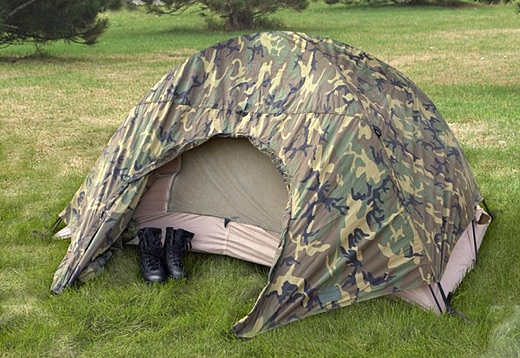
Image above: Used U.S. Marine combat tent for sale on line is sold out today. From (http://www.sportsmansguide.com/product/index/used-us-marines-combat-tent?a=220668).

Practical Tips And Advice Derived From Personal Experience

These days, “survivalism” has come to mean preparing for great events like nuclear holocaust or total government collapse. But disaster may come on a much more personal level. Individuals can suffer catastrophe as surely as nations can. When they do, it can be even more distressing because individuals feel alone in their suffering.

I am talking about personal financial ruin and homelessness. Thousands of people across North America, indeed the world, have already experienced it following bankruptcies and foreclosures.

Whole families have been evicted from their homes, some quite forcibly. We see dozens of tent cities appearing across America, and more people ordering storage containers to live in.

What we don’t see are the “hidden homeless” – those forced to survive by couch-surfing or moving back in with family. If 47 + million Americans now live below the poverty line, that means 47 + million who are either homeless or in imminent danger of becoming so. And the number is still growing.

When I lost my own job a while ago, I was not overly concerned. I had enough savings to live on for over a year. Then the economy self-destructed. It became exceedingly difficult to score a job interview, let alone an actual job.

As the months of unemployment dragged on, my savings dwindled until I was forced for the very first time to consider homelessness as a real possibility.

What would I do if worse came to worst? How would I live? Not being a “rugged” or “street-smart” person at all, I knew from the outset that I could not follow the prevailing wisdom of living as the homeless do and trying to blend in with them.

Sleeping in bus shelters, eating from dumpsters, and staying in homeless shelters was not for me. I feel that joining the homeless population, as many recommend, severely limits your options, especially if you hold out any hope of ever rejoining society.

My only survival experience comes from camping and backpacking. I’ve survived for days or weeks with just the supplies on my back. So I tried to adapt that same knowledge to an urban environment, envisioning a new kind of “home-free” lifestyle.

I prefer to call it “distributed living” or being an “urban nomad” because it lets you have most of life’s necessities, just not all in one place. It’s based on the backpacking model of carrying everything you need with you and being self-sufficient. It does require some resources and preparation.

A plan like this must be undertaken before you actually become homeless, when you still have some money and credit to draw on.

Fortunately, homelessness is more easily anticipated than some other disasters. You often can see it coming months in advance. But even those who do may prefer to live in denial. You may think it cannot happen to you.

But it has already happened to thousands who thought it could never happen to them either. Nobody plans to end up in a homeless encampment. But lately, this is where more and more of the former middle-class are landing. Even many famous celebrities have had periods of homelessness.

If you’re one of the lucky few who have nothing to worry about financially, remember that poverty is not the only cause of homelessness. Things like chemical spills, radiation leaks, brush fires, mudslides, arson, water main breaking, and civil unrest could all force you from your home as surely as mounting debt can.

Natural disasters can strike anyone at any time. Hurricane Katrina rendered an entire city’s population homeless within hours. So have tornadoes in America’s heartland and nuclear meltdown in Japan. In such situations, people with vehicles and bug out bags ready will be survivors. Everyone else will be refugees.

With that in mind, the following suggestions should be helpful to many, whether facing imminent homelessness or not. They can also be used in partial disaster scenarios where much of society still functions, with only some residents being displaced.

SHELTER
Obviously this is the main problem faced by the homeless. Those who stay in the city are restricted by laws against putting up any kind of temporary shelter. This is why the homeless are so often seen huddling in doorways, alcoves, tunnels, etc.

Many cities have outlawed sleeping outdoors, which gives police the power to harass anyone they see lying down with their eyes closed. In fact, as long as you can be seen by anyone at night, your safety is at risk.

Homeless shelters may be no better. Filled with drugs and mental illness, they can be more dangerous than the streets, and many transients know enough to avoid them. Similar problems exist in tent cities. Diseases and parasites can easily spread when many people, all with poor hygiene, live close together.

Wooded areas appear safer and can be found throughout cities in the form of ravines, forests, valleys and parks. Some homeless build shelters there using tarps, plywood, cardboard boxes, or whatever else they can find.

This may work for a while. But authorities keep tabs on these encampments and sooner or later come to take them down. Also, any shelter can be a target for thieves and squatters when you’re not there. Its mere presence during the day tells everyone that homeless person is living there.

I get around these problems by using a relatively inexpensive “pop-up" camouflage dome tent found online. A pop-up tent can be set up and taken down extremely fast, with very little effort. The idea is to find a secluded area in the woods or a local park, put up the tent at sunset, and then take it down again at or before sunrise the next morning.

There is no campsite for anyone to find because it does not exist during the day. This is also known as stealth camping and many long-distance cyclists use it to avoid staying in motels. They camp on public or private land and take off before anyone knows they were there.

Your safety will come from being totally hidden. For anyone to see you sleeping at night, they would have to enter the forest after dark, leave the path at the right spot, and see through your camouflage. Even in broad daylight, a camo tent amid foliage is hard to spot. I have spent several nights in city parks using this method and haven’t yet been detected.

A tent is one of the best possible temporary shelters you can use and gives a sense of security, even if it is mostly psychological. It does need a relatively flat, clear area of ground to be set up, so scout locations before you need them and clear them of debris before nightfall.

An even smaller shelter that fits practically anywhere is the bivy sack – essentially a zippered bag just large enough for your body, made of waterproof, breathable material. Some fold down to the size of a water bottle. A bivy will keep you dry and sheltered but won’t have room for anything else, like changing clothes. Some come with a framework that holds the fabric away from your face for some breathing room.

Satellite images on Google Maps are great for finding dense woods in your area. You want areas that are more “wild” and overgrown, not those which are obviously mowed and well maintained by the parks department(though if you are very diligent about always taking your tent down at sunrise, you should have no problems either way).

Find spots which are totally hidden from both the trail and the street. At the same time, they should not be too far from places you want to go during the day. Eventually you will have memorized a few ideal spots around the city and can rotate between them so that you never camp in the same place too long.

I use a heavy camouflage tarp as a groundsheet, protecting the tent floor from sharp debris. This can double as a cover for your gear, keeping it dry and hidden in the forest while you go about your daily business.

Do not try to weather a serious storm in a tent. At such times, train stations, bus stations and airports are better choices. They are open24 hours a day and are designed for people to wait in, with ample seating, bathrooms, snack bars, and sometimes wi-fi.

In bad weather, some people will be sleeping in their seats or on the floor due to transit delays, and you can blend in with them. Keep a travel book from the library across your chest or some old boarding passes sticking out of your pocket.

If you are in an airport with multiple terminals, change terminals every so often. Lingering in one place too long may attract the attention of security(though I have heard of one woman living for months at the airport before anyone caught on). Hospital waiting rooms may be almost as good.

CLOTHING
As an urban nomad, pick your outfit very carefully. It must not only protect you from the elements and carry what you need it to carry but also fit into an urban setting without looking odd. In my opinion, black should be the color of all your items, including bags.

Black looks right at home in the city, can go longer between washings without looking dirty, makes your bags and pockets look smaller despite being packed with stuff, and will render you practically invisible at night. My all-black outfit consists of:
  • waterproof hiking shoes
  • paratrooper or cargo pants (lots of pockets)
  • alternate pair of waterproof pants
  • turtleneck
  • hoodie sweater
  • expedition vest filled with pockets
  • waterproof coat with hood
  • baseball cap with built-in LEDs (like the Panther Vision power cap, for hands-free lighting)
Add to this a week’s worth of clean socks and underwear, as well as duplicate pants and hoodie so you’ll still have something to wear when doing laundry. In cold weather, I add wool socks, thermal insoles, wool turtleneck, wool long underwear, waterproof mitts, and a balaclava.

BAGS
Huge packs made for backpacking may look odd in the city. I use a large size army surplus ALICE pack to carry bulky items such as sleeping bag and sleeping pad, with tent strapped to the outside.

Choose a backpack that places the weight on your hips, not your shoulders, as the ALICE does. Urban commuter bags and messenger bags also work well for the city. You should be able to carry everything yourself when you need to.

At other times, leave some of it stored or hidden and carry only what you need for that day. As backpackers know, the level of fitness required to carry everything you need on your back is not inconsiderable. So get in shape.

A compression sack may help fit everything in. Used by the army, this is a sack meant to be carried inside your pack.

Fill it with compressible items (usually sleeping bag and clothes), then squeeze everything down, usually by sitting on it. At the same time, tighten all the straps around the sack. It will retain its smaller size until opened again.

HYGIENE
Besides clothing, this is the other area that gives homeless people away. Though cities are filled with public bathrooms, it is hard to find one private enough to do anything more than use the toilet and wash your hands.

So I recommend carrying a collapsible pail (found at camping stores) and a magnetic mirror (from a school supply store or dollar store).

Collapsible pails fold down flat to take up very little space in your pack. Fill one with warm water from the sink and bring it into one of the stalls. Set the pail atop the toilet tank or hang it from something if possible.

Stick your magnetic mirror to the stall wall and use the pail as your sink. Now you can shave, brush teeth, and scrub your armpits in relative privacy.

Avoid bathrooms frequented by the homeless which tend to be the filthiest and most dangerous (eg. those in subways, public squares, certain restaurants, etc.). Clean, even elegant restrooms can be found in upscale shopping centers, colleges, theaters, airports, office buildings… places the homeless generally avoid. In hot weather, it may be possible to bathe in the same lakes and rivers where people go swimming.

When only a hot shower will do, visit a gym, YMCA, or university athletic center for the day, all of which have well appointed locker rooms. Fitness centers on college campuses may just be the cheapest, cleanest and safest, and are usually open to the public.

A year’s membership will likely cost less than one month of rent, and may include perks like free wi-fi, towel service and a locker. It also provides a place to work out, rest, and socialize. Keeping suit clothes in your locker will allow you to go for job interviews. Beaches and campgrounds are other places to look for showers.

The travel section of dollar stores is a good place to pick up lightweight hygiene products like mini shampoo, mouthwash and toothpaste. Don’t forget plastic containers for your soap and toothbrush, and pill boxes to carry aspirin, vitamins, and any medication you need.

I keep all toiletries in a mesh bag which lets them air out after use. Replace your regular towel with a small, super absorbent one from a backpacking store.

A battery-powered travel razor will let you shave just about anywhere, any time. Get one that runs on AA batteries as opposed to a plug-in rechargeable. Look for any way to save space, for instance using a bottle of camping soap also as dishwashing liquid and shampoo.

Facial cleansing cloths, wet naps, and hand sanitizer can keep you clean without water. If given any at a restaurant, save them until needed. Use those wet naps on your armpits and groin if necessary, where bacteria flourish.

Use a high SPF sunscreen to avoid the telltale sunburn that many homeless people have. And if the look suits you, shave your head and forget about all the maintenance that comes with having hair.

Always practice good hygiene and grooming, not just for your own health but to keep blending in with civilized society. If you look and smell like a bum, you will find many doors closed to you.

FOOD
The homeless survivalist does not have the option of storing food long-term or buying in bulk. You can only stockpile what you can carry – which amounts to maybe a week’s worth of sustenance at most. Peanut butter is an excellent choice, being easy to carry and eat, high in calories and protein, and needing no refrigeration. Trail mix is another.

There’s a lot of energy in nuts and seeds, and most of these mixes now come in resealable bags. Think like a backpacker, keeping heavy items like canned goods to a minimum and removing any unnecessary packaging from foods to make them lighter.

Dried (dehydrated) foods are the lightest. Foods that are simple, won’t spoil quickly, and require little to no cooking are well suited for the urban nomad: think beef jerky, granola bars, raisins and other dried fruits, corn chips, banana chips, buns, bagels, raisin bread, peanuts, instant soups, etc. Again, dollar stores are good places to procure these items cheaply.

Because your diet is sure to drop in quality, take a multivitamin daily as well.

Carry your food in a reusable cloth shopping bag and you will simply look as though you’ve just been grocery shopping. Also keep a length of rope in this bag for hanging it from a tree when in the forest. Never keep food in your tent or your pockets at night, especially in city parks teeming with raccoons.

You should still have some means of cooking food. Needless to say, a big open fire in the woods would give away your presence. My personal choice was a Jet boil propane stove, with an Emberlit stove as backup.

The Jet boil may be the fastest, most efficient means of boiling water outside, making it good for preparing instant foods and purifying water. The Emberlit stove is a wood stove. It folds flat, taking up almost no space in a pack, and its fuel is essentially free. It lets you cook with a very small fire well suited to stealth camping.

Look into the ultra-light, compact kitchen utensils that backpackers use. Such products are designed to fit inside each other and take up minimum space. I fit my two stoves, fuel canisters, two bowls, pot, mug, cutlery, can opener, and even a Steripen water purifier into a bag less than 9” wide by 11” tall.

Cities usually have places to fish. Take advantage of this free food source by carrying a compact fishing rod. The smallest rods fold down almost to the size of a pen.

For tackle, all you really need are a couple of floats, some hooks, sinkers, and a lure or two, all of which will fit in the palm of your hand.

Add a package of scented Power bait, or some similar product, to always have bait on hand. Look for live bait beneath fallen and rotting logs, or use pieces of food like bread or corn.

I’ve heard you can cook and eat practically anything that walks on land or flies. But be very careful with plants and eat only those you can positively identify as safe. (The color illustrations of plants in the pocket version of The SAS Survival Guide can help with this.)

WATER
This should be the least of your worries. Drinking water is readily found throughout cities. You should carry at least one 1L water bottle andget in the habit of topping it up every time you come to a tap or drinking fountain.

Once you get used to water, you need never pay money for drinks again.

In the woods, large rivers are the preferred water source and you’ll want to camp near one if possible. A fast moving stream will be cleaner than a pool of standing water.

Of course any water drawn from such a source must first be purified, just like in the wilderness. That means boiled, filtered, or treated with tablets or UV light.

Water purification tablets (easily found at camping stores) are the easiest way to treat water without additional apparatus. River water should never be your first choice for drinking, but is good to have nearby when you run out of water collected from the city.

Remember that almost all purification methods will remove the biological pathogens but not the chemical pollutants.

If rain is forecast, leave your collapsible pail outside to collect it. This water will not have to be purified.

INTERNET
Internet access is essential even when homeless. It is how you will look for jobs, send resumes, learn survival tips, and keep in contact with the wider world.

You may even use it to earn money directly, using something like Amazon Mechanical Turk, or to offer your goods and services on EBay or Craigslist (the “gigs” section of Craigslist contains short-term odd jobs that pay cash).

Under normal circumstances, this would hardly be enough to live on. But without rent or utilities to pay, the economics of a nomadic lifestyle are somewhat different.

Fortunately there are more and more places to use the Internet for free, especially if you can provide your own laptop, iPad or netbook. Find out all the freewi-fi zones in your vicinity. There will be some in places you never knew or expected.

Large district libraries and reference libraries can be ideal. There you can find computers, cubicles, outlets to plug into, and some portable chairs to sit in all day. (Note: When using public wi-fi, always use a Virtual Private Network or VPN, like the free service Hotspot Shield, when entering passwords.)

The online environment looks the same whether you are homeless or not, and so can be a source of comfort and consistency as your living conditions change. When immersed in online activities, it almost doesn’t matter where you are.

Even a homeless person can spend the day playing online games, watching shows, listening to music, writing a blog, and reading the news, much like a normal person would. If you have the need and the money, consider a rugged computer like the Panasonic Toughbook.

Able to withstand drops and freezing temperatures, with a waterproof keyboard that glows in the dark, this laptop line is practically built for homelessness.

RADIO
You should have a radio, like any survivalist. The lightest might be something like an armband radio for joggers, with readout showing the time and an alarm. Use it to check weather reports daily, and choose your attire and shelter areas accordingly.

TELEPHONE
Cellphones make having your own phone number as an urban nomad very easy. Remember to charge it and your other wireless devices whenever you come across an available outlet.

MAIL
If you need to receive mail, one choice is renting a PO Box. There are also services that can provide you with a real street address if you want people to think you have one. You will get an address like “99 Paladin Street #1” where the number actually refers to your box. This is useful when you have to give your home address to obtain services.

This is the essence of “distributed living” – your shelter in one area, your shower in another, your mailbox in yet another. All are components of your “home”, you just need to travel a bit to get to each one.

TRANSPORTATION
Your own two feet may serve as your primary mode of transport. For this reason, don’t skimp on your footwear and make sure it fits perfectly.

If you can still afford gas, auto repairs, parking and insurance, then by all means keep your vehicle as both transportation and shelter.

If not, consider a bicycle as a substitute. Having a bike makes everything seem much closer than if you were walking, and will expand your range considerably.

I already cycle everywhere and now prefer it to the often poor and overcrowded public transit system.

Add a Bob Yak trailer, or almost any child bicycle trailer, and you can bring all your survival supplies with you. Some child trailers turn into strollers when detached from the bike. You can then push your belongings along the sidewalk in something a little more stylish than a shopping cart.

WINTER
Not everyone will have concerns about winter, depending on where they live. For me, the problem of surviving a Canadian winter without a heated shelter must be treated with deadly seriousness. Many homeless people die on the streets of cold countries every year.

Throughout Europe, we have just seen how extreme cold can strike even in unlikely places and kill hundreds without warning. Without going into all the details of winter survival, here are some tips:

You must test out your cold weather gear before trusting your life to it. For example, camp out in the backyard during a deep freeze. Winterized sleeping bags have temperature ratings but their effectiveness varies depending on the user’s own body heat, metabolism, and clothing. Sit in the park for several hours in your full winter outfit to see if it’s enough.

The amount of insulation needed for sitting still in the cold is greater than what people typically wear for dashing from one heated structure to another. Dress in layers and always cover your head, even when sleeping. Wool is arguably the best material as it insulates so well, even when wet.

A sleeping pad is just as essential as a sleeping bag. This item is easy to overlook, but without it you will get cold no matter how great your sleeping bag is. The ground has a way of conducting the heat right out of a warm body. (For the same reason, never sit directly on the ground without a thermal cushion like hunters use or some such insulating barrier.)

The warmest sleeping pads are also the bulkiest and cannot be carried inconspicuously. I chose to focus on the smaller self-inflating pads and get the one with the highest ‘R-value (insulation rating) I could find. Without a sleeping pad, you will have to sleep on cardboard or newspapers just like the homeless do, or use pine boughs when in the wilderness.

From what I’ve seen, gadgets like electric sleeping bags and propane space heaters are not practical or effective. And building a fire is usually out of the question. So you will be relying on your own body heat for warmth. Don’t lose it by leaving your shelter at night. If you have to relieve yourself, use a bottle instead. Study the survival tactics of winter campers and arctic explorers.

Anything that does not take well to freezing – laptops, cell phones, water bottles – should share the sleeping bag with you, down near your feet. Some winter sleeping bags have extra room at the bottom for this purpose.

If you fill your water bottle with hot water before retiring, it will help warm you. Use extra layers of shelter if you have them. For example, using a bivy sack inside a tent may seem redundant but it will increase your bag’s effectiveness against the cold. So will using a tent inside a larger structure.

FURTHERREADING
The U.S. Army Survival Handbook adequately covers the wilderness side of homeless survival. It takes into account the soldier’s need for stealth and concealment when stuck in enemy territory.

Where other survival books tell how to remain visible and attract the attention of search parties, this one shows how to conceal your presence, move stealthily over terrain, and to build fires and shelters so that they cannot be spotted by the enemy. (For our purposes, “enemy” can refer to anyone – police, park rangers, security guards, neighborhood watch, etc. – who tend to make life extra difficult for the homeless.)

This no-nonsense guide also has surprising and innovative ways to treat your own injuries and illnesses in the field using common materials.

CONCLUSION
Thanks to odd jobs, credit cards and help from relatives, I remain housed for now. But the threat of homelessness still looms large. My debts are such that I do not know exactly where I will be living three months from now. But even if homelessness never strikes, I won’t regret the time and money spent preparing for it.

The increased confidence and peace of mind have been worth it. I know that, whether housed or not, life will go on.

Even the idea of spending winter without a permanent shelter is no longer unthinkable, and that is an amazing thing. Preparing for homelessness has incidentally prepared me for other scenarios, like the furnace breaking down or a sudden evacuation. And I can go camping or backpacking at a moment’s notice.

Homelessness has to be one of the gloomiest things to think about, let alone prepare for. But realize that not thinking or preparing will make the reality of it worse. If you do find yourself out on the street, having a plan of where to go, what to do, and what to take with you can make all the difference.

If it helps, don’t think of yourself as homeless but as a nomad practicing an alternative lifestyle.

Without such an attitude or plan, you will start to resemble the typical bums who wander without direction or purpose. Who have nowhere to go, nothing to do, and nothing to hope for. Homelessness does not have to look like that.

Develop the skills of the urban nomad and practice distributed living. Keep your basic needs met and your mind clear, and you can always live a dignified existence whatever your situation may be.

.

Retrotopia - Scent of ink on paper

SUBHEAD: I was thinking about the book and newspaper I’d read, and the difference between the fragmentary bits of information I was used to.

By John Michael Greer on 14 October 2015 for the Archdruid Report -
(http://thearchdruidreport.blogspot.com/2015/10/retrotopia-scent-of-ink-on-paper.html)


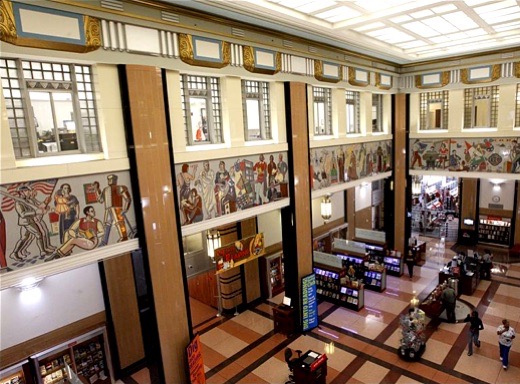
Image above: Photograph in the Toledo Blade of the interior of the Toledo Public Librabry main branch after a renovation in 2001. From (http://www.toledoblade.com/local/2013/09/01/2001-overhaul-provided-major-boost-for-Main-Library.html).

[Author's note: This is the sixth installment of an exploration of some of the possible futures discussed on this blog, using the toolkit of narrative fiction. Our narrator, roaming the streets of the capitol of the Lakeland Republic, visits a newsstand and a public library, and discovers that information and knowledge are two different things.]

I swung past my hotel, dropped off the shopping bag with my bioplastic clothes, and went back out onto Toledo’s streets. That makes it sound easier than it was; some kind of event—a wedding reception, I guessed from the decor—was getting started in one of the second floor ballrooms, and the lobby and the sidewalk outside were both crammed with people in formal wear heading in. It took some maneuvering to get through it all, but after not too many minutes I was strolling up an uncrowded sidewalk toward the unfinished white dome of the Capitol.

The Legislative Building back home in Philadelphia doesn’t have a dome. It’s an angular blob of glass and metal, designed by I forget which hotshot European architectural firm, and when it opened twenty-two years ago you could hardly access the metanet at all without being barraged by oohs and ahs about how exciting, innovative, and futuristic it was. You don’t hear much of that any more.

They’ve spent twenty-two years now trying to get the roof to stop leaking and coming up with workarounds for all the innovative features that didn’t turn out to work too well, and the design looks embarrassingly dated these days, the way avant-garde architecture always does a couple of decades down the road. I was curious to see what the Lakeland Republic had done instead.

It took two blocks to get to a place where I had a clear view of the building, and when I did, I wasn’t in for any particular surprise. They’d modeled it on state capitol buildings in the old Union, with a tall white dome in the center above the rotunda and the big formal entrance, with a wing for each house of the legislature on either side.


Image above: Flag of the Lakeland Republic as described in original article.

The Lakeland Republic flag—blue above and green below, with a circle of seven gold stars for the seven states that joined together at Partition—fluttered from a flagpole out front.

Long rows of windows on each wing showed that there was plenty of room for offices and meeting rooms along with the legislative chambers. The walls were white marble with classical decor, and the peaked roofs to either side of the dome didn’t look as though they were likely to leak much. I thought about what the banker had said about history, and kept going.

Another block brought me to an open storefront with a big gaudy handpainted sign above it yelling KAUFER’S NEWS in big red letters. Down below were more newspapers and magazines—the kind that are printed on paper—than I’d ever seen in one place. I remembered what Melanie Berger had said about newspapers, and decided to check it out.

Inside, magazines lined the three walls and newspapers filled a big island unit in the middle. Signs with bright red lettering on the island unit gave me some guidance: one yelled TOLEDO PAPERS, another LR PAPERS, and a third FOREIGN PAPERS. That narrowed it down a bit, but there were still fifteen different newspapers in the Toledo section.

The proprietor was sitting on a tall stool next to the entrance. She was a scruffy-looking woman in her thirties with blonde hair spilling out from under a floppy cap, wearing an apron with KAUFER’S NEWS printed on it that had seen many better days. By the time I turned toward her, she’d already unfolded herself from the stool and came over. “Can I help you?”

“Please,” I said. “I’m new in town and I don’t know the local papers.”

“No problem.” She pointed to the stacked newspapers. “The Blade and the Journal are the two dailies—the Blade’s the paper of record, the Journal’s the community paper and a lot more lively. The rest of ‘em are weeklies—neighborhood, ethnic, religious, what have you. The Blade’s a buck twenty-five, the Journal’s seventy-five cents, the others are twenty-five, except for the Wholly Toledo—that’s the arts and nightlife rag and doesn’t cost a thing.”

It’s always amused me that everywhere in the former United States, the basic unit of the local currency is still called a buck—that’s true even in California, where what trade goes on around the edges of the civil war is mostly in Chinese currency when it isn’t just barter. I pulled out a couple of Lakeland bills, and got that day’s Toledo Blade and the latest Wholly Toledo. “Thanks,” I said.

“Sure thing.” She turned to another customer who had a magazine open. “You want to read that, Mac, you gotta buy it. This ain’t the library, you know.”

The other guy looked sheepish, closed the magazine, paid for it and left the newsstand. “Speaking of which,” I said, “how do I get to the library from here?”

“Two blocks that way, hang a left, three blocks straight ahead and you’re there.”

I thanked her again, tipped her one of the quarters she’d given me in change, and left.

The library wasn’t first on my list, though. The Blade had a couple of articles on the front page I wanted to read. The wind was picking up, so the idea of plopping down on one of the park benches out in front of the Capitol didn’t particularly appeal; the question in my mind was where indoors I could sit down and read the thing.

As it happened, I’d gone less than a block when I passed a little hole-in-the-wall café, and in the window seat was an old brown-skinned woman in a heavy wool coat with a cup of coffee in her hand and a copy of the Journal open in front of her.

I took the hint, ducked inside, and a couple of minutes later was perched on a slightly rickety chair with a cup of coffee and the front page of the Blade to keep me company.

The lead article was on the political crisis that had blown up that morning. I’d guessed that the paper would have more details than you’d find in the 140-character stories you get from most metanet news sites, and I was right; for that matter, it had more detail than what you saw on the old internet, back in the day. I’d seen classified briefing papers on political issues that didn’t cover as much ground.

By the time I’d finished the first paragraph I knew the basics—the group that was threatening to bolt out of Meeker’s coalition was the Social Alternative party, and the issue was whether lowering the tariff on three industrial metals counted as a government subsidy for technology—but the rest of the story, part of it on the front page and part of it back in the middle of the first section, filled in the details: who was backing the tariff reduction, who was opposing it, what the various arguments were, what the upper house of the legislature and the justices of the Constitutional Court had to say, and so on.

By the time I’d finished reading it I had a pretty fair snapshot of the way politics worked in the Republic.

The other article that caught my eye was a follow-up piece on the destruction of the Progresso IV satellite a week before. That was news, and not just for spaceheads, since it was the first satellite to get taken out by orbital junk in a midrange orbit, and it was big enough that its fragments could turn into a real problem for other satellites in that range.

The article quoted the head of the Brazilian space agency and an assortment of experts, with opinions ranging from sanguine to sobering.

None of the facts were new to me—I’d been following the satellite situation since my first stint in government a dozen years back—but the story put it all into context effortlessly in a page and a half of newsprint, all the way from the first warnings back in the 1970s, through the slow motion Kessler-syndrome disaster that got going in low earth orbit in 2029, to the increasing pace of satellite failures in geosynchronous orbits in the last half dozen years. Since the 2030s, I knew, the midrange orbits had gotten pretty crowded; the last thing anybody needed was a Kessler syndrome there, too.

I got a refill of my coffee, flipped through the rest of the paper. The business section was going to take careful study, I saw that at a glance.

Some of it was pretty straightforward—several counties issuing bonds, commodity prices in the Chicago exchange veering this way and that, and two full pages that looked like ordinary stock market data, except that I didn’t know any of the companies that were listed—but some of it was right out there in left field.

The one that stuck in my mind was a corporation that was being wound up: not going bankrupt, being bought, or any of the other ways that corporations die back home, but winding up its affairs, distributing its remaining assets, and closing its doors. I shook my head, kept reading.

The sports section seemed pretty much normal, except that I didn’t know any of the teams and there were a lot of them, enough that I wondered whether every middle-sized town in the Lakeland Republic had its very own.

The arts and entertainment section in back had everything from concerts to theater listings to a page of radio programs. I nodded, slid the paper into one of the big outside patch pockets of my raincoat, paid my tab and headed out into the fading afternoon light.

The library was easy enough to find. It was a big two-story brick building with arched windows and a wide porch over the entrance, and a couple of cloth banners out front with CAPITOL BRANCH—TOLEDO PUBLIC LIBRARY on them.

The lobby was spacious, with a bulletin board full of flyers. To the left, the door was propped open, and I heard a woman’s voice telling some kind of story about a mole and a water rat; a glance upward met the sign saying CHILDREN’S ROOM. I turned right, and went through the door into what I hoped was the adult section.

It didn’t take me long to figure out that I’d guessed right, even though it didn’t look like any library I’d ever seen. Instead of rows of long bare tables studded with keyboards and screens, it had shelves upon shelves upon shelves of printed books, more of them than I think I’d ever seen in one place before.

Tables and chairs clustered in the middle of the room, with people sitting bent over books, and over toward the windows were a few sofas and overstuffed chairs with their own contingent of readers. Heavy carpet covered the floor and a historical mural covered the vaulted ceiling, spanning the distance from the native tribes on one end to a half-built Capitol on the other.

I really had no idea what to make of it all. In place of the clatter of keys and the babble of voices that gave the libraries I knew their soundtrack, the room was as hushed as a funeral parlor. I watched one of the patrons go up to the big desk where the librarians stood to ask a question, and the conversation that followed took place in murmurs. Lacking anything better to do, I crossed the room to the shelves of books.

There was some kind of numerical code on the spines of the books, which didn’t tell me much of anything, but from the titles I figured out quickly enough that numbers in the low three hundreds, or at least these numbers, had to do with politics. I pulled out a couple of books, glanced at them, and was about to go to another shelf when I spotted a slim volume titled Changing Tiers.

I pulled the book out, opened it, and found that it was exactly what I’d guessed, a guide for Lakelanders who were moving from one county to another at a different tier. I paged through it for a few minutes, decided that I needed to read it, and went looking for a free chair.

I realized pretty quickly that I’d found the book I needed, because it started out with a chapter on the history of the tier system, and that gave me the key to the whole arrangement. During the Second Civil War, the book explained, the states that became the Lakeland Republic got pounded most of the way back to the Stone Age by Federal airstrikes and two years of town-by-town fighting.

When Washington finally fell and the fighting ended, nearly every bit of infrastructure in those states—roads, railways, power grids, water and sewer systems, you name it—was in ruins, and once Partition and the beginning of the debt crisis put paid to the last hope of a fast recovery, Lakelanders had to figure out how to rebuild and how to pay for it.

The differences of opinion were drastic enough, and funds and other resources short enough, that the provisional government decided to make each county responsible for deciding what kind of infrastructure it wanted, and taxing itself to pay the costs.

From that beginning, over a decade or so of contentious local decisions and gradual rebuilding, the tier system evolved. A second chapter sketched out the legal framework—certain clauses in the constitution and its amendments, two important decisions by the Constitutional Court, and the laws that regulated what counties could and couldn’t do, and what they could and couldn’t enforce.

It was all very clear, and I got out my notebook and filled most of four pages with notes. More to the point, I ended up with some sense of the logic of the tier system and the reasons why it made sense to Lakelanders.

By the time I’d finished those two chapters the last daylight was gone and the window in front of me looked out on a night scene lit by streetlamps and occasional windows. I decided not to read the rest of the book, put it back in its place on the shelves, and headed out into the cold wind.

I don’t get lost easily, or I’d probably have ended up wandering off in some random direction until I could find a cab or something. As it was, I wasn’t sure of my bearings until I got within sight of the Capitol. The sidewalks were anything but deserted—I gathered that Toledo had a lively nightlife scene—but I didn’t pay a lot of attention to the people I passed just then.

I was thinking about the book I’d read and the newspaper in my pocket, and the difference between the fragmentary bits of information I was used to getting off short squibs on the metanet and the knowledge-in-context I’d gathered from the longer, more context-rich pieces I’d just taken in. It was a sobering comparison. I decided I’d have to check out Lakeland schools and colleges, and see if the difference applied there as well.

When I got to the hotel where I was staying, though, I had to pay attention, because there was no way in; the crowd from the wedding reception was out in front, lining a narrow path from the door to the edge of the sidewalk, where an ornate horsedrawn carriage waited. I didn’t have too much trouble figuring out what was about to happen, so I stood there on the outer edge of the crowd, waiting for the happy couple.

Some of the guests had taken the time to put on coats and hats before heading out into the night air, and I blended in well enough that a young woman pushing her way through the crowd handed me a little bag of rice to throw. I took it, amused, and waited with the rest.

A few minutes later, the guests of honor came out—two young men in their early twenties, laughing and holding hands and obviously very much in love. I pelted them with rice along with everyone else, and stood there while they climbed into the carriage and waved.

The driver snapped his reins and the horses broke into a smart trot; the usual cheering and waving followed, and away they went.

The crowd began to scatter. I turned toward the door and found myself facing the pianist who’d been playing in the hotel restaurant during lunch that same day. Of course he didn’t know me from George Washington’s off ox; he turned to go back inside, and since that was the way I was headed, too, I followed him.

The lobby wasn’t too bad, but the stair was a river of people headed for the doors, and so the pianist and I ended up standing next to each other at the foot of the stair, waiting for the crowd to pass by and let us through.

“That was pretty good jazz you were playing,” I said to him, “here at lunchtime.”

He gave me a startled look. “Thank you!” Then: “You’re one of Sandy’s political friends?”

“No, just staying here at the hotel.” He nodded, and I went on. “You play anywhere else?”

“Yeah, this is just my day gig. Friday and Saturday nights I’m at the Harbor Club downtown.” He reached into his jacket, pulled out a little rectangle of stiff paper and handed it to me. I realized after a blank moment that it was an old-fashioned business card. Fancy script spelled out:

Sam Capoferro
and his Frogtown Five

Down below in little print was contact info.

“Show that at the door and there’s no cover charge,” he told me. “See you there sometime.”

A gap opened up in the crowd, and he headed up the stair. I pocketed the business card and waited for another opening.

See also:
Ea O Ka Aina: Retrotopia Part 1 - Dawn Train from Pittsburgh 8/27/15
Ea O Ka Aina: Retrotopia Part 2 - View from a Moving Window 9/2/15
Ea O Ka Aina: Retrotopia Part 3 - A Cab Ride in Toledo 9/9/15
Ea O Ka Aina: Retrotopia Part 4 - Public Utilities, Private Good 9/23/15
Ea O Ka Aina: Retrotopia Part 5 - A Change of Habit 10/1/15 
Ea O Ka Aina: Retrotopia Part 7 - A Question of Subsidies 10/21/15
.

Retrotopia - A Change of Habit

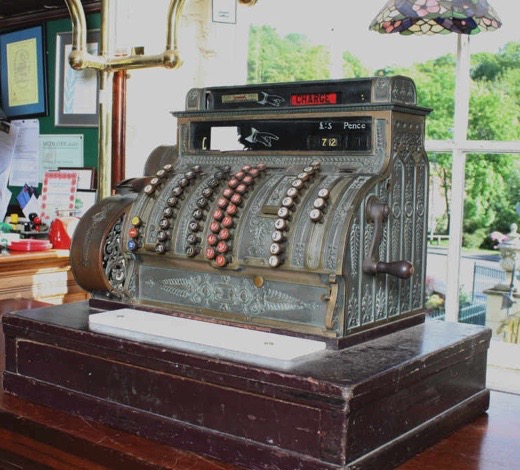
SUBHEAD: He rang up the sale on some kind of mechanical cash register and wrote out a bill of sale by hand.

By John Michael Greer on 30 September 2015 for the Archdruid Report -
(http://thearchdruidreport.blogspot.com/2015/09/retrotopia-change-of-habit.html)


Image above: Working early brass National Cash Register for sale online for $1,950. From (http://www.andythornton.com/en-UK/products/architectural-antiques/vintage-props/atvmbra3730/early-20th-century-brass-cash-register).

I went back to the hotel for lunch. The wind had picked up further and was tossing stray randrops at anything in its path; my clothing was waterproof but not particularly warm, and I frankly envied the passersby their hats.

For that matter, I wasn’t happy about the way that my bioplastic clothes made everyone give me startled looks. Still, it was only a block and a half, and then I ducked back inside the lobby, went to the glass doors to the restaurant, stepped inside.

Maybe a minute later I was settling into a chair in a comfortable corner, and the greeter was on his way back to the door, having promised the imminent arrival of a waitress.

Stray notes of piano music rippled through the air, resolved themselves into an unobtrusive jazz number. It took me a moment to notice that the piano was actually there in the restaurant, tucked over in a nook to one side.

The player was a skinny kid in his twenties, Italian-American by the look of him, and he was really pretty good. Some musicians play jazz laid-back because the fire’s gone out or they never had any in the first place, but now and again you hear one who’s got the fire and keeps it under perfect control while playing soft and low, and it’s like watching somebody take a leisurely stroll on a tightrope strung between skyscrapers.

This kid was one of those. I wondered what he’d sound like with a bunch of other musicians and a room full of people who wanted to dance.

As it was, I leaned back in the chair, read the menu and enjoyed the music and the absence of the wind. The waitress showed up as prophesied, and I ordered my usual, soup and sandwich and a cup of chicory coffee—you can get that anywhere in the post-US republics, just one more legacy of the debt crisis and the hard years that followed. I know plenty of people in Philadelphia who won’t touch the stuff any more, but I got to like it and it still goes down easier than straight coffee.

Lunch was good, the music was good, and I’d missed the lunch rush so the service was better than good; I charged the meal to my room but left a tip well on the upside of enough. Then it was back outside into the wind as the kid at the piano launched into a take on “Ruby, My Dear” that wouldn’t have embarrassed a young Thelonious Monk.

I had plenty of questions about the Lakeland Republic, some things that I’d been asked to look into and some that were more or less a matter of my own curiosity, and sitting in a hotel restaurant wasn’t going to get me any closer to the answers.

Outside there were still plenty of people on the sidewalks, but not so many as earlier; I gathered that lunch hour was over and everyone who worked ordinary hours, whatever those were here, was back on the job.

I went around the block the hotel was on, noting landmarks, and then started wandering, lookng for shops, restaurants, and other places that might be useful during my stay: something I like to do in any unfamiliar city when I have the chance.

There were plenty of retail businesses—the ground floor of every building I passed had as many as would fit—but none of them were big, and none of them had the sort of generic logo-look that tells you you’re looking at a chain outlet.

Everything I knew about business said that little mom-and-pop stores like that were hopelessly inefficient, but I could imagine what the banker I’d talked with would say in response to that, and I didn’t want to go there.

The other thing that startled me as I wandered the streets was how little advertising there was. Don’t get me wrong, most of the stores had signage in the windows advertising this or that product or doing the 10% OFF THIS DAY ONLY routine; what was missing was the sort of corporate display advertising you see on every available surface in most cities.

I’d figured already that there wouldn’t be digital billboards, but there weren’t any billboards at all; the shelters at the streetcar stops didn’t have display ads all over them, and neither did the streetcars; I thought back to the morning’s trip, and realized that I basically hadn’t seen any ads at all since the train crossed the border.

I shook my head, wondered how the Lakeland Republic managed that, and then remembered the notebook in my pocket and put my first note into it: Why no ads? Ask.

I was maybe six blocks from the hotel, by then, looping back after I’d checked out the streets on the west side of the capitol district, and that’s when I tore my shoe. It was my own fault, really.

There was a cluster of moms with kids in strollers heading down the sidewalk, going the same direction I was but not as fast. I veered over to the curb to get around them, misjudged my step, and a sharp bit of curbing caught the side of my shoe as I stumbled and ripped the bioplastic wide open.

Fortunately it didn’t rip me, but I hadn’t brought a spare pair—these were good shoes, the sort that usually last for a couple of months before you have to throw them out. So there I was, looking at the shredded side of the shoe, and then I looked up and the first store I saw was a shoe store, I kid you not.

I managed to keep the ripped shoe on my foot long enough to get in the door. The clerk, a middle-aged guy whose hair was that pink color you get when a flaming redhead starts to go gray, spotted me and started into the “Hi, how can I help you?” routine right as what was left of the shoe flopped right off my foot.

He started laughing, and so did I; I picked the thing up, and he said, “Well, I don’t need to ask that, do I? Let’s get you measured and put something a little less flimsy on your feet.”

“I take a men’s medium-large,” I said.

He nodded, and gave me the kind of look you give to someone who really doesn’t get it. “We like to be a little more precise here. Go ahead and have a seat.”

So I sat down; he took the remains of the shoe and threw it away, and then proceeded to use this odd metal device with sliding bits on it to measure both my feet. “9D,” he said, “with a high arch. I bet your feet ache right in the middle when you’re on ‘em too long.”

“Yeah,” I said. “I take pills for that.”

“A good pair of shoes will do a better job. Let’s see, now—that’s business wear, isn’t it? You expect to do a lot of walking? Any formal or semi-formal events coming up?” I nodded yes to each, and he said, “Okay, I got just the thing for you.”

He went away, came back with a box, and extracted a pair of dark brown leather shoes from it. “This brown’ll match the putty color of those clothes of yours pretty well, and these won’t take any breaking in. Let’s give it a try.” The shoes went on. “There you go. Walk around a bit, see how they feel on you.”

I got up and walked around the store. My feet felt remarkably odd. It took me a moment to realize that this was because the shoes actually fit them. “These are pretty good,” I told him.

“Beat the pants off the things you were wearing, don’t they?”

“True enough,” I admitted. He rang up the sale on some kind of old-fashioned mechanical cash register and wrote out a bill of sale by hand; I paid up and headed out the door.

Half a block down the same street was a store selling men’s clothes. I went in, and came out something like an hour later dressed like one of the locals—wool jacket, slacks and vest, button-up cotton shirt, and tie, with a long raincoat over the top, and my ordinary clothes in a shopping bag.

I’d already more than half decided to pick up something less conspicuous to wear before my shoe got torn, and money wasn’t a problem, so

I bought enough to keep me for the duration of my stay, and had everything else sent back to the hotel; the bill was large enough that the clerk checked my ID and then called the bank to make sure I had enough in my account to cover it. Still, that was the only hitch, and quickly past.

From the clothes store I headed back the way I’d come, turned a corner and went three blocks into a neighborhood of narrow little shops with hand-written signs in the windows. The sign I was looking for, on the recommendation of the clothes store clerk, was barely visible on the glass of a door: S. EHRENSTEIN HABERDASHER.

I went in; the space inside was only about twice as wide as the door, with shelves packed with boxes on both walls and a little counter and cash register at the far end.

S. Ehrenstein turned out to be a short wiry man with hair the color of steel wool and a nose like a hawk’s beak. “Good afternoon,” he said, and then considered me for a moment. “You’re from outside—Atlantic Republic, or maybe Upper Canada. Not Québec or New England. Am I right?”

“Atlantic,” I said. “How’d you know?”

“Your clothes and your shoes are brand new—I’d be surprised if you told me you’ve been in ‘em for as much as an hour. That says you just came from outside—that and no hat, and five o’clock shadow this early in the day; I don’t know why it is, but nobody outside seems to know how to get a proper shave. The rest, well, I pay attention to lots of little things. How’d you hear about my shop?”

I told him the name of the clothing store, and he nodded, pleased. “Well, there you are. That’s Fred Hayakawa’s store; his family’s been in the business since half an hour before Eve bit the apple, and his clerks know a good hat, which is more than I could say for some. So are you in business, or—”

“Politics,” I said.

“Then I have just the hat for you. Let’s get your head measured.” A measuring tape came out of his pocket and looped around my head. “Okay, good. Seven and a quarter, I should have in stock.” He ducked past me, clambered onto a stepladder, pulled down a box. “Try it on. The mirror’s there.”

With the hat on, my resemblance to a minor character from a Bogart vid was complete. “Absolutely classic,” the haberdasher said from behind me. “Fedoras, homburgs, sure, they’re fine, but a porkpie like this, you can wear it anywhere and look real classy.”

“I like it,” I agreed.

“Well, there you are. Let me show you something.” He took the hat, slipped a cord out from under the ribbon. “In windy weather you put this loop over your coat button, so you don’t lose it if it blows off. If I were you I’d do that before I set one foot outside that door.”

I paid up, accepted the business card he pressed on me, and got the loop in place before I went back outside. The wind had died down, so the hat stayed comfortably in place—and the adverb’s deliberate; it kept my head warm, and the rest of the clothes were pleasant in a way that bioplastic just isn’t.

You know what it’s like when some annoying noise is so much part of the background that you don’t notice it at all, until it stops, and then all of a sudden you realize just how much it irritated you? Getting out of bioplastic was the same sort of thing.

In most countries these days, everything from clothes to sheets to curtains is bioplastic, because it’s so cheap to make and turn into products that the big corporations that sell it drove everything else off the market years ago. It’s waterproof, it’s easy to clean—there’s quite a litany, and of course it was all over the metanet and the other media back when you could still buy anything else.

Of course the ads didn’t mention that it’s flimsy and slippery, and feels clammy pretty much all the time, but that’s the way it goes; what’s in the stores depends on what makes the biggest profit for the big dogs in industry, and the rest of us just have to learn to live with it.

The Lakeland Republic apparently didn’t play by the same rules, though. The embargo had something to do with it, I guessed, but apparently they weren’t letting the multinationals compete with local producers.

The clothes I’d bought were a lot more expensive than bioplastic equivalents would have been, and I figured it would take trade barriers to keep them on the market.

I kept walking. Two blocks later, about the time I caught sight of the capitol dome again, I passed a barbershop and happened to notice a sign in the window advertising a shave and trim. I thought about what S. Ehrenstein had said about a proper shave, laughed, and decided to give it a try.

The barber was a big balding guy with a ready grin. “What can I do for you?”

“Shave and trim, please.”

“Your timing’s good. Another half hour and you’d have to wait a bit, but as it is—” He waved me to the coatrack and the empty chair. “Get yourself comfy and have a seat.”

I shed my coat, hat, and jacket, and sat down. He covered me up with the same loose poncho thing that barbers use everywhere, tied something snug around my neck, and went to work. “New in town?”

“Just visiting, from Philadelphia.”

“No kidding. Welcome to Toledo. Here on business?” Instead of the buzz of an electric trimmer, the clicking of scissors sounded back behind my right ear.

“More or less. I’ll try to talk to some people up at the Capitol, make some contacts, ask some questions about the way you do things here.”

“Might have to wait a day or two, according to the papers. Did you hear about this latest thing?”

“Just that there’s some kind of crisis.”

The scissor-sound moved around the back of my head from right to left. “Well, sort of. Tempest in a teapot is more like it. Something in the budget bill for next year set off the all-out Restos, and so one of the parties that’s had Meeker’s back says they’ll bolt unless whatever it is gets taken out.”

“Restos?”

“You don’t have those out your way, do you? Here the two political blocs are Conservatives and Restorationists; Conservatives want to keep things pretty much the way they are, Restos want to take things back to the way they used to be. Okay, lay your head back.”

I did, and he draped a hot damp towel over the lower half of my face, then went back to trimming. “Used to be about half and half, but these days the Restos have the bigger half—all the rural counties going to lower tiers, and so on.”

“Hmm?” I managed to say.

“Oh, that’s right. You probably don’t know about the tiers.”

“Mm-mh.”

“It works like this. There are five tiers, and counties vote on what tier they want to be in. The lower the tier, the lower your taxes, but the less you get in terms of infrastructure and stuff. Toledo’s tier five—we got electricity, we got phones in every house, good paving on the streets so you can drive a car if you can afford one, but we pay for it through the nose when it comes to tax time.”

“Mm-hmm.”

He took off the towel, started brushing hot lather onto my face. “So tier five has a base date of 1950—that means we got about the same sort of services they had here that year. The other tiers go down from there—tier four’s base date is 1920, for tier three it’s 1890, tier two’s 1860, and tier one’s 1830. You live in a tier one county, you got police, you got dirt roads, not a lot else. Of course your taxes are way, way down, too.”

He put away the brush, snapped open an old-fashioned straight razor, and went to work on my stubble. “That’s the thing. Nobody’s technology gets a subsidy—that’s in the constitution. You want it, you pay all the costs, cradle to grave.

You don’t get to dump ‘em on anybody else. That’s what the Restos are all up in arms about. They think something in the budget is a hidden subsidy for I forget what high-tier technology, and that’s a red line for them.”

“Mm-hmm,” I said again.

“They’ll get it worked out. Go like this.” He drew his lips to one side, and I imitated the movement. “Meeker’s handled that sort of thing more’n a dozen times already—he’s good. If we let our presidents have second terms he’d get one. Now go like this.” I moved my lips the other way.

“So they’ll drop whatever it is out of the budget, or put in a user fee, or come up with some other gimmick so that everybody’s happy. It’s not a big deal. Nothing like the fight over the treaty, or the time ten years ago when Mary Chenkin was president, when the Restos wanted to get rid of tier five, just like that. That was a real donnybrook. This close to the Capitol, you better believe I got to hear all sides of it.”

He finished shaving, washed the last bits of soap off my face with another hot wet towel, then splashed on sone kind of bay-scented aftershave that stung a bit. A brush darted around my shoulders, and then he took off the neckcloth and the poncho thing. “There you go.”

I got up, checked the trim in the big mirror on the wall, ran my fingers across my cheek; it was astonishingly smooth. “Very nice,” I said. While I got out my wallet, I asked the barber, “Do you think Toledo’s ever going to go to a lower tier?”

“People are talking about it,” he said. “I mean, it’s nice to have some of the services, but then tax time comes around and everyone says ‘Ouch.’ Me, I could live with tier four easy, and my business—”

He gestured at the shop. “Other than the lights, might as well be tier one. A lot of businesses run things that way—it just makes more sense.” He handed me my change with a grin. “And more money.”

See also:
Ea O Ka Aina: Retrotopia Part 1 - Dawn Train from Pittsburgh 8/27/15
Ea O Ka Aina: Retrotopia Part 2 - View from a Moving Window 9/2/15
Ea O Ka Aina: Retrotopia Part 3 - A Cab Ride in Toledo 9/9/15
Ea O Ka Aina: Retrotopia Part 4 - Public Utilities, Private Good 9/23/15
Ea O Ka Aina: Retrotopia Part 6 - The Scent of Ink on Paper 10/14/15
Ea O Ka Aina: Retrotopia Part 7 - A Question of Subsidies 10/21/15

.