Showing posts with label Private Property. Show all posts

Zuckerberg retreats some

SUBHEAD: Protesters Plotted "Border Wall" rally For at Zuckerberg's sprawling 100 million north shore Kauai property.

By Tyler Durden on 27 January 2017 for Zero Hedge -
(http://www.zerohedge.com/news/2017-01-27/zuckerberg-retreats-protesters-set-rally-border-wall-surrounding-his-hawaiian-estate)


Image above: During construction of the six foot high "Zuckerberg Zombie Wall" that blocked landscape and ocean view along a long stretch of main road that fronted Mark Zuckerberg's elitist retreat. It is as high as the County regulations permit. From (http://blogqpot.com/images/zuckerberg%20hawaii%20property%20wall).

Back in 2014 Mark Zuckerberg paid $100 million to purchase 700 acres of beachfront property on the North Shore of Kauai. The estate includes 1,000's of feet of pristine shoreline providing the perfect "safe space" for the 30-year-old Silicon Valley Billionaire and his family.

Unfortunately, there was just one little problem with the purchase...technically the sellers didn't own the title to all of that land due to the so-called Kuleana Act, a Hawaiian law established in 1850 that for the first time gave natives the right to own the land that they lived on.

So now, according to the Honolulu Star Advertiser, the Facebook billionaire sued a few hundred Hawaiians who still have legal-ownership claims to parts of his vacation estate through their ancestors. Per Yahoo Finance:
Three holding companies controlled by Zuckerberg filed eight lawsuits in local court on December 30 against families who collectively inherited 14 parcels of land through the Kuleana Act, a Hawaiian law established in 1850 that for the first time gave natives the right to own the land that they lived on.

The 14 parcels total just 8.04 of the 700 acres Zuckerberg owns, but the law gives any direct family member of a parcel's original owner the right to enter the otherwise private compound.
And while Zuckerberg's lawyer attempted to downplay the lawsuits as a common practice in Hawaii, we suspect the idea of defending your private property rights against one of the top 10 richest people in the world is somewhat intimidating and slightly less than "normal."
The quiet-title suits filed are designed to identify all property owners and give them the ability to sell their ownership stakes at auction, according to Keoni Shultz, an attorney representing Zuckerberg.

Because the ownership stakes are passed down and divided among family descendants by the state, many people don't realize they have a claim until action is taken against them in court.

“It is common in Hawaii to have small parcels of land within the boundaries of a larger tract, and for the title to these smaller parcels to have become broken or clouded over time," Shultz told Business Insider in a statement. "In some cases, co-owners may not even be aware of their interests.

Quiet title actions are the standard and prescribed process to identify all potential co-owners, determine ownership, and ensure that, if there are other co-owners, each receives appropriate value for their ownership share.”

Of course, the pompous dismissal of property rights isn't the only thing riling up Hawaiian natives regarding Zuckerberg's estate. As The Garden Island pointed out, residents are also slightly less than ecstatic about a massive, 6 foot rock wall erected around the estate and blocking the "view that’s been available and appreciative by the community here for years."

“The feeling of it is really oppressive. It’s immense,” Hall said. “It’s really sad that somebody would come in, and buy a huge piece of land and the first thing they do is cut off this view that’s been available and appreciative by the community here for years.”

"It’s hot behind that wall. Because it’s up on a berm, there’s not a breath of air on this side from the ocean,” Chantara said. “You take a solid wall that’s 10 or more feet above the road level; the breeze can’t go through.”

Another Kilauea resident, Donna Mcmillen, calls the wall a “monstrosity.”

"I’m super unhappy about that. I know that land belongs to Zuckerberg. Money is no option for him. I’m 5’8” and when I’m walking, I see nothing but wall,” Mcmillen said. “It just doesn’t fit in with the natural beauty that we have here. There are people on the island who money can pay for anything. These kind of things that they do take away what Kauai is all about.”
Over the past couple of weeks, intense public backlash over the lawsuit and "immense, oppressive" wall has caused Zuckerberg to backtrack on his plans. Earlier today he published a note to residents in The Garden Island announcing his intentions to drop his litigation saying that "upon reflection, it's clear we made a mistake."
We've heard from many in the community and learned more about the cultural and historical significance of this land. Over the past week, we've spoken with community leaders and shared that our intention is to achieve an outcome that preserves the environment, respects local traditions, and is fair to those with kuleana lands.

To find a better path forward, we are dropping our quiet title actions and will work together with the community on a new approach. We understand that for native Hawaiians, kuleana are sacred and the quiet title process can be difficult. We want to make this right, talk with the community, and find a better approach.

Upon reflection, I regret that I did not take the time to fully understand the quiet title process and its history before we moved ahead. Now that I understand the issues better, it's clear we made a mistake.

The right path is to sit down and discuss how to best move forward. We will continue to speak with community leaders that represent different groups, including native Hawaiians and environmentalists, to find the best path.

Beyond this process, we are also looking for more ways to support the community as neighbors. We have contributed to community organizations and will continue to do so. We work with wildlife experts to preserve endangered species. We hope to do much more in the future.

We love Kaua`i and we want to be good members of the community for the long term. Thank you for welcoming our family into your community.
But, a local farmer, Joe Hart says that Zuckerberg's retreat isn't sufficient and, as of now, vows that the mass protest planned for tomorrow will move forward as "people are furious down here with him."  Per McClatchey:
“People are furious down here with him,” Hart, a local farmer told Business Insider. “We just want to bring this issue to light. He’s made his money stealing everyone’s information, which we’ve let him do, but to come down here and start suing everyone, that’s not going to fly down here.”
Alas, in the end we're sure Zuckerberg will have his way.  After all, what fun is billions of dollars if you can't buy expansive swaths of entire states and trample on the private property rights of some little people?

See also:
Ea O Ka Aina: Zuckerberg sues Hawaiians 1/19/17


.

Zuckerberg sues Hawaiians

SUBHEAD: Mark Zuckerberg sues to keep local landowners off right-of-way through his 700 acre Kauai estate.

By Maya Kosoff on 19 January  2017 for Vanity Fair -
(http://www.vanityfair.com/news/2017/01/mark-zuckerberg-sues-to-keep-native-hawaiians-off-his-kauai-estate)


Image above: Mark Zuckerberg and his wife on either side of young woman surfer on Kauai. From (http://usuncut.com/news/mark-zuckerberg-suing-force-native-hawaiians-off-ancestral-land-build-island-resort/).

The Facebook billionaire isn’t exactly endearing himself to his neighbors.
Mark Zuckerberg, the co-founder of the world’s largest social network, would just like some privacy.

In the past year alone, the 32-year-old billionaire spent $30 million to buy up the four homes surrounding his Palo Alto abode, only to demolish them, and later built a six-foot-tall wall around his 700-acre plot of land in Hawaii, to the chagrin of his Kilauean neighbors.

Now, Zuckerberg is seeking additional peace and quiet, this time by filing a series of lawsuits against several hundred people—some of whom are dead—who own or have claims to the land Zuckerberg purchased on the island of Kauai for more than $100 million in 2014.

Last year, onstage at Facebook’s annual F8 developer conference, Zuckerberg decried the isolationism sweeping the country, taking an unsubtle jab at a certain presidential candidate’s plan to wall off Mexico from the United States. “I hear fearful voices calling for building walls and distancing people they label as others,” he intoned. “Instead of building walls, we can build bridges.”

Those words apparently don’t apply to Zuckerberg, who reportedly wants to create a secluded sanctuary where he will have exclusive rights to every one of its 700 acres.

According to the Honolulu Star-Advertiser, which first reported the news on Wednesday, Zuckerberg has filed a set of lawsuits with Hawaii's state Circuit Court, seeking to identify the owners of land on his property, so that he may force a sale of those properties.

The Star-Advertiser reports that nearly 300 people could claim ancestral ownership of small pieces of land on Zuckerberg’s property, and Zuckerberg’s legal team has spent a year and a half trying to identify those individuals.
There are about a dozen small pieces of land contained within Zuckerberg’s enormous estate that are owned by other people, the Star-Advertiser reports. These native Hawaiian families currently have the right to “traverse the billionaire’s otherwise private domain.”

But because of Hawaii’s “quiet title” law, Zuckerberg may be able to appear before a judge, who will determine rightful land ownership. The land can ultimately be auctioned off if co-owners can’t agree to terms, in which case, Zuckerberg, who made almost $5 billion in the first two weeks of the year, could easily buy them out.

On Thursday, Zuckerberg posted a statement on Facebook in response to what he called “misleading” stories about the lawsuits. “To find all these partial owners so we can pay them their fair share, we filed what is called a ’quiet title’ action,” Zuckerberg said. “For most of these folks, they will now receive money for something they never even knew they had. No one will be forced off the land.

We are working with a professor of native Hawaiian studies and long time member of this community, who is participating in this quiet title process with us. It is important to us that we respect Hawaiian history and traditions.”
The lawsuits come at an odd time for Zuckerberg. The young Facebook C.E.O. has been meticulous about his own self-image, hiring a professional photographer and employing a team of about a dozen people to comb through and delete negative comments from his Facebook posts. He’s also remained largely apolitical, even as he has fueled speculation about his political ambitions.

He has pledged to donate the vast majority of his wealth to his own philanthropic organization, and recently hired a prominent White House alum to help run it. He has defended keeping Trump donor and surrogate  

Peter Thiel on Facebook’s board, and after the election said on Facebook that he was feeling “hopeful” about the future. The incoming president, he noted diplomatically, reminded him of “all the work ahead of us to create the world we want for our children.”
Even so, he can’t help but to be drawn into the muck himself. When Zuckerberg tried to depoliticize Facebook’s news feed last year, by replacing its human editorial team with an algorithm, Facebook only endured more criticism as hoax and fake political news stories filled up users’ feeds.

Zuckerberg’s recent plan to fight fake news—empowering users to flag misleading stories and enlisting third-party fact-checkers to provide additional context—only generated more controversy. Conservatives accused Facebook of censorship, with the Daily Caller, among other conservative outlets, dismissing Facebook’s fact-checkers as “liberal.”
Still, Zuckerberg is treading lightly, and working diligently to expand his coalition. On Tuesday night, Facebook threw an inauguration party in Washington, D.C. with the Daily Caller, which was sponsored by the oil giant BP.

Zuckerberg recently began a 50-state talking tour, making his first stop in Texas this week, where he met police officers, pressed hands, and helped build a community garden.

The resulting photos looked campaign-ready, if and when Zuckerberg is ready to exercise the new clause in his contract that will allow him retain control of Facebook if he takes a leave of absence to serve in a government position or office.

Suing to keep native Hawaiians off his 700-acre estate, however, suggests Zuckerberg still has a ways to go before he’s campaign-ready himself.

As Donald Trump knows, there’s a fine line between being a man of the people and appearing out of touch.
This story has been updated to include a statement from Mark Zuckerberg.
.

EPA vs Pflueger and other violators

SOURCE:  Michael Guard Sheehan (mailto:hanaleirivermichael@gmail.com)
SUBHEAD: EPA closes Pflueger case on Kauai but ignores other owner's environmental violations.

By Dean Higuchi on 24 August 2016 for the EPA.gov -
(https://www.epa.gov/newsreleases/epa-closes-pflueger-stormwater-case-after-successful-restoration-kauai-property)


Image above: This photo from 2004 was taken prior to environmental damage caused by this unauthorized grading and landscaping by retired car dealer James Pflueger on his Pila’a property. From (http://www.staradvertiser.com/breaking-news/pfluegers-environmental-repairs-on-kauai-shoreline-meets-epa-muster/).

Editorial comment  by Michael Guard Sheehan:
This case is a tragic case of selective enforcement against one man while surrounding him were numerous persons and politicians doing far worse to the Environment with their own illegal digging and construction in Habitats for Endangered Species. Instead of self-congratulatory news releases, your organization should be shamefully quiet and reflective.

The U.S. Environmental Protection Agency announced the successful conclusion of its case against James Pflueger for construction activities that damaged his former property and the beach and coral reefs at Pila’a on Kauai. The consent decree settling the Clean Water Act violations was closed after Pflueger stabilized and restored the slopes and streams.

“Thanks to the work completed under this settlement, this once-degraded land has a healthy population of native trees and shrubs and restored stream channels,” said Alexis Strauss, EPA’s Acting Regional Administrator for the Pacific Southwest. “With continued care by the new owners, these restoration efforts can be sustained for the future.”

EPA initiated its case after Pflueger conducted extensive grading and construction at the 378-acre coastal site without obtaining necessary Clean Water Act permits. Those activities included excavating a hillside to expose a 40-foot vertical road cut, grading a coastal plateau, creating new access roads to the coast, and dumping dirt and rock into three perennial streams. As a result, massive discharges of sediment-laden stormwater flowed to the ocean at Pila’a Bay in November 2001.

The settlement required Pflueger to build a wall to stabilize the road cut adjacent to the shoreline, remove dam material in streams, install erosion controls on roadways and trails, terrace slopes to slow runoff, use native plants to control erosion, and control invasive plants and animals on the property. He was also required to reconstruct natural rock-lined stream beds and reestablish native plants along the banks.

The 2006 stormwater settlement was the largest for federal Clean Water Act violations at a single site, by a single landowner, in the United States. Pflueger paid $2 million in penalties to the State of Hawaii and the United States, and was expected to spend approximately $5.3 million to conduct the required restoration efforts.

The State of Hawaii was a co-plaintiff in EPA’s case against Pflueger, and the settlement was joined by the Limu Coalition and Kilauea neighborhood organizations, which had also filed a lawsuit against Pflueger.

EPA and local community organizations involved in the settlement conducted oversight inspections throughout a ten-year restoration effort that was slowed by funding obstacles and the necessity of adapting the restoration projects to changing field conditions.

.

What's a forest worth?

SUBHEAD: When we fail to measure the economic value of nature, we treat it as expendable.

By Laurie Mazur on 4 March 3016 for Mongabay -
(http://news.mongabay.com/2016/02/whats-that-forest-worth-disaster-assistance-finally-takes-nature-into-account/)


Image above: A Rim Fire in the Stanislaus National Forest in California that began on Aug. 17, 2013. Photo by U.S. Forest Service. from original article.

  • A backyard shed gets destroyed by fire, that’s a $2,000 loss. But when 77,000 acres of Yosemite National Park are reduced to smoking embers? Nada.
  • It was only after calculating the dollar value of the forests destroyed by a 400-square mile swath of California near Yosemite in 2013 that Governor Jerry Brown was able to secure federal funds to help the state and its residents cope with the loss.
  • Fast forward to 2016, when the U.S. Department of Housing and Urban Development (HUD) awarded $1 billion to 13 communities through the National Disaster Resilience Competition — and actually required applicants to calculate the value of nature and other non-traditional benefits in their proposals.
 If a tree falls in the forest, what does it cost?

From the perspective of federal disaster assistance, the answer traditionally has been “not much.” But now — thanks to improved number-crunching — the federal government is taking nature into account when it tallies the cost of disasters.

And, even more importantly, it is recognizing the value of nature — forests, wetlands, parks — in preventing or mitigating disasters.

Remember the Rim Fire, which incinerated a 400-square mile swath of California near Yosemite in 2013? When the state of California first asked the Federal Emergency Management Agency (FEMA) for a “major disaster” declaration, it was turned down. Why? Because most of the damage was inflicted on forests, rather than man-made structures — and there was no way to put a price-tag on that loss.

Just think: a backyard shed gets destroyed by fire, that’s a $2,000 loss.

But when 77,000 acres of Yosemite National Park are reduced to smoking embers? Nada.
Enter Earth Economics, an independent non-profit that helps decision makers assess the financial value of natural systems. The group’s economists looked at the services the forest provided — filtering drinking water for the City of San Francisco, preventing floods, sequestering carbon, providing recreational opportunities — and calculated the dollar value of what was destroyed by the fire.

Armed with those numbers, Governor Brown appealed FEMA’s decision — and won.

Fast forward to 2016. The once-radical notion of valuing nature’s services is now more widely accepted by the federal government. Recently, the U.S. Department of Housing and Urban Development (HUD) awarded $1 billion to 13 communities through the National Disaster Resilience Competition (NDRC) — and actually required applicants to calculate the value of nature and other non-traditional benefits in their proposals.

The competition asked applicants to use a holistic benefit-cost analysis developed by Earth Economics with support from The Kresge Foundation, which incorporates natural ecosystems’ value and services, long-term environmental sustainability, and community benefits such as health and employment. Earth Economics provided training, tools, and resources throughout the competition to help applicants calculate those values.

“The Earth Economics team helped us to capture the full range of benefits of the Community and Watershed Resilience Program, including the tremendous ecological benefits that it will provide not just to Tuolumne County, but to the State as a whole,” said Louise Bedsworth, Deputy Director of the California Governor’s Office of Planning and Research.

The winning proposals all make use of natural systems to build resilience to climate change impacts and other disasters. For example:
  • A California county that was devastated by the Rim Fire received an NDRC grant to restore the health of its forests and watershed, generate energy and support the rural community.
  • Lower Manhattan, which was inundated by Superstorm Sandy, got funding to construct a coastal protection system that includes much-needed green space.
  • In Hurricane Katrina-pummeled New Orleans, the Gentilly neighborhood won a grant to restore coastal wetlands and build water-absorbing parks and green streets.
Recognizing the value of nature and other overlooked social and economic benefits simply drives better decision making, according to David Batker of Earth Economics, who helped coach a number of the NDRC’s winning applicants.

“Benefit-cost analysis that includes nature helps us make smarter investments at federal, state, and local levels,” said Batker. “We owe it to ourselves and future generations to use this tool to identify the best, most robust and resilient investments.”

Indeed, investing in nature produces a bigger bang for the buck. For example, on a good day, the Lower Manhattan greenway is a park and bike path; on a bad day, it protects the city by absorbing potentially deadly storm surges. That is more than you can say for most single-purpose “gray” infrastructure, such as concrete levees.

Investing in natural infrastructure is a good way to get the most from taxpayers’ money, says Harriet Tregoning, Principal Deputy Assistant Secretary for HUD’s Office of Community Planning and Development.

“We are learning together about how to encourage a broader range of benefits from every federal dollar that gets expended,” Tregoning said during an announcement of the NDRC winners.
Valuing nature may seem like a no-brainer to many; the majestic forests of Yosemite obviously have tremendous value. But, too often, our public policies are structured by rules developed back when natural resources seemed inexhaustible. As the economists say, “you get what you measure.”

When we fail to measure the economic value of nature, we treat it as expendable. That is why the United States — one of the most resource-rich countries in the world — is now running an ecological deficit, according to the Global Footprint Network.

So, nature counts for more than pretty postcards and vacations. New tools to measure the dollars-and-cents impact of nature help planners, officials and taxpayers make the wisest choices for both the planet’s people and the natural systems that support them.

.

The Commons is the Future

SUBHEAD: The falsity of the state/private dilemma can also be seen from the symbiotic-like relationship between the two.

By Yavor Tarinski on 20 January 2016 for Geo Coop -
(http://www.geo.coop/story/commons-future)


Image above: A kind of Commons. The Flemingdon Health Centre community garden. Photo by Laura Berman. From (http://greenfusestock.photoshelter.com/image/I0000ChNcdGVaK74).
People called commons those parts of the environment for which customary law exacted specific forms of community respect. People called commons that part of the environment which lay beyond their own thresholds and outside of their own possessions, to which, however, they had recognized claims of usage, not to produce commodities but to provide for the subsistence of their households.”~Ivan Illich 1

Introduction

In their book The Economic Order & Religion (1945), Frank H. Knight and Thomas H. Merriam argue that social life in a large group with thoroughgoing ownership in common is impossible 2. William F. Lloyd

and later Garret Hardin, in the same spirit, promoted the neo-Malthusian 3 term “Tragedy of the Commons” 4 arguing that individuals acting independently and rationally according to their self-interest behave contrary to the best interests of the whole group by depleting some common-pool resources.

Since then, the thesis that people are incapable of managing resources collectively, without control and supervision by institutions and authorities separated from the society, have successfully infiltrated the social imagination.

Even for large sections of the Left, managing resources in common is viewed as utopian, and therefore they prefer to relegate the possibility to the distant future. Instead of embracing the commons today, they linger between variations of private and state-based forms of property 5. This maintains the supposed dilemma of private/state management of common-pool resources, which leads to the marginalization of alternative approaches.

A great many voices trying to break with this private/state dichotomy have always been always present, and are currently growing in numbers. For autonomists Michael Hardt and Antonio Negri, this is a false dilemma. According to them:
The seemingly exclusive alternative between the private and the public corresponds to an equally pernicious political alternative between capitalism and socialism. It is often assumed that the only cure for the ills of a capitalist society is public regulation and Keynesian and/or socialist economic management; and, conversely, socialist maladies are presumed to be treatable only by private property and capitalist control. Socialism and capitalism, however, even though they have at times been mingled together and at others occasioned bitter conflicts, are both regimes of property that excluded the common. The political project of instituting the common...cuts diagonally across these false alternatives 6
The falsity of the state/private dilemma can also be seen from the symbiotic-like relationship between the two supposed “alternatives”. Author and activist David Bollier points at the historic partnership between the two 7. According to him, the markets have benefited from the state’s provisioning of infrastructure and oversight of investment and market activity, as well as the state’s providing of free and discounted access to public forests, minerals, airwaves, research dollars and other public resources.

On the other hand, the state depends upon markets as a vital source of tax revenue and jobs for people – and as a way to avoid dealing with inequalities of wealth and social opportunity, which are two politically explosive challenges.

At first sight, it seems like we are left without a real option, since the two “alternatives” we are being told that are possible “from above” are pretty much leading to the same degree of enclosure as we saw earlier in history, the beneficiaries of which were a few elites.

But during the last several years, the paradigm of “the commons” has emerged from the grassroots as a powerful and practical solution to the contemporary crisis, and a step beyond the dominant dilemma. This alternative is emerging as a third way, since it goes beyond the state and the “free” market and has been tested in practice by communities in the past and the present.

The logic of the commons

The logic of the commons goes beyond the ontology of the nation-state and the “free” market. In a sense it presupposes that we live in a common world that can be shared by all of society without some bureaucratic or market mechanisms to enclose it. Thus, with no enclosure exercised by external managers (competing with society and between each other), the resources stop being scarce since there is no more interest in their quick depletion.

Ivan Illich notes that when people spoke about commons, they designated an aspect of the environment that was limited, that was necessary for the community's survival, that was necessary for different groups in different ways, but which, in a strictly economic sense, was not perceived as scarce 8.
 The logic of the commons is ever-evolving and rejects the bureaucratization of rights and essences, though it includes forms of communal self-control and individual self-limitation. Because of this, it manages to synthesize the social with the individual.

The commons can be found all around the world in different forms: from indigenous communities resisting the cutting of rainforests and Indian farmers fighting GMO crops to open source software and movements for digital rights over the internet. The main characteristics that are found in each one of these examples are the direct-democratic procedures of their management, open design and manufacturing, accessibility, and constant evolution.

The commons have their roots deep in antiquity, but through constant renewal they are exploding nowadays, adding to indigenous communal agricultural practices new 'solidarity economic' forms as well as high-tech FabLabs, alternative currencies and much more. The absence of a strict ideological frame enhances this constant evolution.

The logic of the commons is deeply rooted in the experience of Ancient Athens. The Greek-French philosopher Cornelius Castoriadis describes this time as a period during which a free public space appeared 9. Castoriadis depicts it as a political domain which 'belongs to all' (τα κοινα – the commons in Greek). The ‘public’ ceased to be a ‘private’ affair – i.e. an affair of the king, the priests, the bureaucracy, the politicians, or/and the experts. Instead decisions on common affairs had to be made by the community.

The logic of the commons, according to the anthropologist Harry Walker 10, could also be found in the communities of Peruvian-Amazonia, for whom the most desirable goods were not viewed as rival goods - in contrast with modern economics, which assumes that if goods are enjoyed by one person, they can't be enjoyed by another. The Peruvian-Amazonian culture was focused on sharing and on the enjoyment of what can be shared rather than privately consumed.

Swiss villages are a classic example of sustainable commoning. Elinor Ostrom shed light on this with her field research in a particular area of Switzerland 11. In the Swiss village in question, local farmers tend private plots for crops but share a communal meadow for herd grazing.

Ostrom discovered that, in this case, an eventual tragedy of the commons (hypothetical overgrazing) is being prevented by villagers maintaining a common agreement that one is only allowed to graze as many cattle as they can take care of during the winter months. This practice dates back to 1517.

There are other practical and sustainable examples of effective communal management of commons that Ostrom discovered in the US, Guatemala, Kenya, Turkey, Nepal and elsewhere.Elinor Ostrom visited Nepal in 1988 to research the many farmer-governed irrigation systems 12.

The management of these systems was done through assemblies of local farmers held annually and also informally on a regular basis. Thus agreements for using the system, its monitoring and sanctions for transgression were all created on a grassroots level.

Ostrom noticed that farmer-governed irrigation systems were more likely to produce not in favor of markets, but for the needs of local communities: they grow more rice and distribute water more equitably. She concluded that although the systems in question vary in performance, few of them perform as poorly as the ones provided and managed by the state.

One of the brightest contemporary examples for reclaiming the commons is the Zapatista movement. In 1994, the Zapatistas revolted against the North American Free Trade Agreement (NAFTA) that was seeking the complete enclosure of common-pool resources and goods that were vital for the livelihood of indigenous communities. Through the Zapatista uprising, the locals reclaimed their land and resources, and have successfully managed them through a participatory system based on direct democracy for more than 20 years.

The digital commons, on the other hand, includes wikis, such as Wikipedia, and open licensing organizations such as the Creative Commons and many others. Social movement researcher Mayo Fuster Morell defines them as "information and knowledge resources that are collectively created and owned or shared between or among a community that tend to be non-exclusive, that is, be (generally freely) available to third parties. Thus, they are oriented to favor use and reuse, rather than to exchange as a commodity. Additionally, the community of people building them can intervene in the governing of their interaction processes and of their shared resources." 13

In other words, the logic of the commons is to strive towards inclusiveness and collective access to resources, knowledge and other sources of collective wealth, which necessarily requires the creation of socially active and devoted stewards of these commons.

This means a radical break with the currently dominant imagery of economism, which views all human beings simply as rational materialists, always striving at maximizing their utilitarian self-interest. Instead it implies the radical self-instituting of society to allow its citizens to directly manage their own commons.

The commons as model for the future

A main characteristic shared between different cases of commoning is grassroots interactivity. The broad accessibility of such resources, and their ownership being held in common by society, presupposes that their management is done by society itself.

Thus state involvement is incompatible with such a broad popular self-management, since statist forms imply the establishment of bureaucratic, managerial layers separated from society. That is, the commons go beyond (and are often even detrimental to) various projects for nationalization.

The same goes for the constant neoliberal efforts to enclose what is still not privatized. Against these, social movements across the globe rose up during the last couple of years with alternative proposals including - in one form or another - a wide project of direct democracy. Such a project inevitably includes every sphere of social life, and that goes for the commons as well.


A holistic alternative to the contemporary system, that incorporates the project of direct democracy and the commons, can be drawn from the writings of great libertarian-socialist theorists like Cornelius Castoriadis and Murray Bookchin. The proposals developed by the two thinkers offer an indispensable glimpse at how society can directly manage itself without and against external managerial mechanisms.

As we saw in the cases presented above, the commons require coordination between the commoners so eventual "tragedies" can be avoided. But for many, like Knight and Merriam, this could only possibly work in small-scale cases. This pessimism has led many leftists to instead support different forms of state bureaucracy in managing the commons in the name of society, as the lesser evil.

In his writings, Castoriadis repeatedly repudiated this hypothesis, claiming instead that large-scale collective decision-making is possible with a suitable set of tools and procedures. Rejecting the idea of one "correct" model, his ideas were heavily influenced by the experience of Ancient Athens. Drawing upon the Athenian polis, he claimed that direct citizen participation was possible in communities of up to 40,000 people 14.

On this level, communities can decide on matters that directly affect them in face-to-face meetings (general assemblies). For other matters that also affect other communities, revocable, short-term delegates could be elected by the local assemblies to join regional councils. Through such horizontal flow of collective power, common agreements and legal frameworks could be drawn to regulate and control the usage of commons.

Similar is the proposal made by Murray Bookchin. Also influenced by the ancient Athenian experience, he proposed the establishment of municipal face-to-face assemblies, connected together in democratic confederations, making the state apparatus obsolete.

According to Bookchin, in such a case the control of the economy is not in the hands of the state, but under the custody of "confederal councils", and thus, neither collectivized nor privatized, it is common 15.

Such a "nestedness" does not necessarily translate into hierarchy, as suggested by Elinor Ostrom and David Harvey 16, at least if certain requirements are being met. As is the case in many of the practical examples of direct democracy around the world, the role of the delegates is of vital importance, but is often neglected.

Thus their subordination to the assemblies (as the main source of power) has to be asserted through various mechanisms, such as short term mandates, rotation, choosing by lot, etc. All of these mechanisms have been tested in different times and contexts and have proven to be an effective antidote to oligarchization of the political system.

Through such networking and self-instituting, much can be done by the establishment and direct control of commons by many communities that depend on them. Another element that could supplement the propositions, described above, is the so-called "solidarity economy".

Spreading as mushrooms, different collective entities in different forms are rapidly spreading across Europe and other crisis-stricken areas (like South America) allowing communities to directly manage their own economic activities in their favour.

Such merging will allow society to collectively draw the set of rules on which to regulate the usage of commons, while solidarity economic entities, such as co-operatives and collectives, will deal with commons' direct management. These entities are being managed directly and democratically by the people working in them, who will be rewarded in a dignified manner for their services by the attended communities.

On the other hand, the public deliberative institutions should have mechanisms for supervision and control over the solidarity economic entities, responsible for the management of commons, in order to prevent them from enclosing them.
 
One example for such merging has occurred in the Bolivian city of Santa Cruz, where the water management is organized in the form of a consumer co-operative 17.

It has been functioning for more than 20 years, and continues to enjoy a reputation as one of the best-managed utilities in Latin America. It is being governed by a General Delegate Assembly, elected by the users. The assembly appoints senior management, over whom the users have veto rights, thus perpetuating stability. This model has drastically reduced corruption, making the water system work for the consumers.

Such a merger between the commons and the co-operative production of value, as Michel Bauwens and Vasilis Kostakis suggest 18, integrates externalities, promotes the practice of economic democracy, produces commons for the common good, and socializes knowledge.

The circulation of the commons would be combined with the process of co-operative accumulation on behalf of the commons and its contributors. In such a model, the logic of free contribution and universal use for everyone would co-exist with a direct-democratic networking and co-operative mode of physical production, based on reciprocity.

Conclusion

The need for recreating the commons is an urgent one. With global instability still on the horizon and deepening, the question of how we will share our common world is the thin line separating the dichotomous world of market barbarity and bureaucratic heteronomy, and a possible world based on collective and individual autonomy. As Hannah Arendt suggests 19:
The public realm, as the common world, gathers us together and yet prevents our falling over each other, so to speak. What makes mass society so difficult to bear is not the number of people involved, or at least not primarily, but the fact that the world between them has lost its power to gather them together, to relate and to separate them. The weirdness of this situation resembles a spiritualistic séance where a number of people gathered around a table might suddenly, through some magic trick, see the table vanish from their midst, so that two persons sitting opposite each other were no longer separated but also would be entirely un­related to each other by anything tangible.
The paradigm of the commons, as part of the wider project of direct democracy, could play the role of the trick of the vanishing table, separating us, but simultaneously creating strong human relationships, based on solidarity and participation.

And for this to happen, social movements and communities have to reclaim, through the establishment of new networks and the strengthening of already existing ones, the public space and the commons, thus constituting coherent countervailing power and creating real possibilities of instituting, in practice, new forms of social organization beyond states and markets.

Notes and References
  1. Ivan Illich. Silence is a Commons, first published in CoEvolution Quarterly, 1983
  2. Deirdre N. McCloskey. The Bourgeois Virtues, The University of Chicago Press, 2006. p. 465
  3. Malthusianism originates from Thomas Malthus, a nineteenth-century clergyman, for whom the poor would always tend to use up their resources and remain in misery because of their fertility. (Derek Wall. Economics After Capitalism, Pluto Press, 2015. p.125)
  4. The concept was based upon an essay written in 1833 by Lloyd, the Victorian economist, on the effects of unregulated grazing on common land and made widely-known by an article written by Hardin in 1968.
  5. As Theodoros Karyotis demonstrates in his article Chronicles of a Defeat Foretold, published in ROAR magazine, Issue #0 (2015), pp 32-63
  6. Michael Hardt & Antonio Negri. Commonwealth, The Bleknap Press of Harvard University press, 2011. p. ix
  7. David Bollier & Silke Helfrich. The Wealth of the Commons, The Commons Strategy Group, 2012. In Introduction: The Commons as a Transformative Vision
  8. Ivan Illich. Silence is a Commons, first published in CoEvolution Quarterly, 1983
  9. Cornelius Castoriadis in “The Greek Polis and the Creation of Democracy” (1983), The Castoriadis Reader (1997), Ed. David A. Curtis. p. 280
  10. http://bollier.org/blog/anthropologist-harry-walker-lessons-amazonian-commons
  11. http://www.onthecommons.org/magazine/elinor-ostroms-8-principles-managing-commmons
  12. Elinor Ostrom in Nobel Prize lecture Beyond Markets and States: Polycentric Governance of Complex Economic Systems (2009)
  13. http://whatis.techtarget.com/definition/digital-commons
  14. Cornelius Castoriadis in “Democracy and Relativism”, 2013. p.41
  15. Cengiz Gunes and Welat Zeydanlioglu in “The Kurdish Question in Turkey”, Routledge, 2014. p.191
  16. For example Ostrom in Beyond Markets and States: Polycentric Governance of Complex Economic Systems (2009) and Harvey in Rebel Cities (2012. p.69)
  17. http://siteresources.worldbank.org/INTWSS/Resources/WN5cooperatives.pdf
  18. http://peerproduction.net/issues/issue-7-policies-for-the-commons/peer-reviewed-papers/towards-a-new-reconfiguration-among-the-state-civil-society-and-the-market/
  19. Hannah Arendt. The Human Condition, The University of Chicago, second edition, 1998, p.53.

.

Adjusting to a Finite Planet

SUBHEAD: Today's interpretation of the 5th Amendment on the "Taking" of private property is a threat to the planet.

By Erik Zencey on 11 March 2015 in the Daly News -
(http://steadystate.org/adjusting-the-fifth-to-a-finite-planet-part-1/)


Image above: The shoreline in Mahaulepu near Waiopili Stream. Grove Farms and Hawaii Dairy Farm corporation (controlled by billionaire Pierre Omidyer) plan to develop a commercial mega-dairy operation that will threaten this delicate ecosystem aquifer with tons of urine and fecal matter runoff every day. As it Waiopili Stream is the most contaminated with entero coccus bacteria tracked by the Surfrider Kauai organization. Is it the right of the private property owner to make money in this way? Photo by Juan Wilson.

Infinite-Planet Thinking is deeply embedded in our political economy. It’s there in the expectation that investments will pay off at a continually compounding rate [1]. It’s there in the unquestioned consensus among elected officials that economic growth is always good–that it can’t possibly ever be uneconomic [2] growth, costing us more in lost natural and social capital than we gain from additional consumption.

It’s there in expressions of concern that some key indicator–housing purchases or starts, car sales, or purchases of other durables–has failed to rise from year to year or quarter to quarter. In a steady state, sustainable economy suited to the planet we actually inhabit, indicators like those wouldn’t rise continually. (Most would fall considerably before leveling off, because policy would promote durability and repairability [3], and manufacturers would be given incentives to use modular construction that would allow regular updating of only those components that need it.) Automobile sales would decline steadily [4], because a sustainable civilization would invest in mass transit and rapid inter-city rail, turning the private automobile into a major expense that most of us would willingly do without.

One less-obvious place that infinite planet thinking clashes with reality is in American Constitutional law, particularly the case law that has amplified one particular clause of the Fifth Amendment: the clause that forbids government from taking private property for public use without “just compensation.”

The harms that the Fifth Amendment’s Takings Clause was intended to prevent were familiar to American colonists, as Britain had forced them to bear the costs of war (French and Indian, the Revolution itself) by quartering troops in private homes and by seizing without payment horses, wagons, farm produce, and silage. For a century and a half after the ratification of the Constitution, the Takings Clause was construed to apply only to that kind of physical invasion of property or a taking of title.

Thus, in 1915, when the City of Los Angeles expanded its boundaries and enclosed an existing brickyard that was then held to be in violation of nuisance laws and attendant zoning regulations, no compensation was due to the owner whose operations had been summarily shut down (Hadachek v. Sebastian [5]). No physical encroachment, no loss of title, no taking.

That interpretation was overturned in 1922, in Pennsylvania Coal v. Mahon, in which the Supreme Court held that a regulatory change could constitute a taking if the regulations go “too far” in limiting uses of the property.

How far is too far?

The court had difficulty saying. Over time, one sturdy guide emerged: following its decisions in Penn Central Transportation Co. v. New York City (1978) and Kaiser Aetna v. United States (1979), and using language first proposed in a 1967 law review article [6], the court is most likely to find that a regulatory taking has occurred if a property owner has reasonable, investment-backed expectations [7] to develop the property in ways that new regulation forbids, and no other avenue of development or use is likely to provide a similar return.

A full-scale review and critique of Takings case law from a steady state, finite planet perspective would be useful, but no scholar has yet done such thing. Among the trends visible in Takings case law is this one: in a crowded world that lacks ecological resilience, some acts that would otherwise pass for private become decidedly public in their character and consequence. Thus, a person who plants ornamental cedar trees can see them condemned as public nuisances, and cut without compensation, if they carry a form of tree disease fatal to nearby apple orchards (Miller v. Schoene, 1928).

A property owner who wants to fill in a wetland to build a house finds that he can’t–and that he should have known that when he bought the property (Claridge v. New Hampshire Wetlands Board, 1984).

 Whether a man can build houses on land he owns becomes a matter of public interest if the land happens to be environmentally sensitive barrier island, newly protected by coastal zoning laws (Lucas v. South Carolina Coastal Council, 1992). And whether the owner of an auto parts store can expand her building is not simply a private decision if the addition would encroach on greenspace the town plan identifies as both a future bikeway and an environmentally useful drainage swale (Dolan v. City of Tigard, 1994).

The problem: under current interpretations of the Takings Clause, ecologically wise decisions about wetlands, barrier islands, and drainage swales require financial compensation to landowners affected by them, making preservation of ecosystem services prohibitively expensive. In Lucas and Dolan, the public was required to compensate the landowner at market prices for preventing the socially undesirable construction.

A spate of hurricanes [9] has shown how valuable barrier-island ecosystem services [10] can be. If the public has to buy those services back, parcel by parcel, at market prices, suffering the billion-dollar property losses brought by storms begins to look like the least-cost option.

This perverse situation follows logically from the infinite-planet assumptions that lie behind our Anglo-Saxon tradition of property law. An infinite planet has ecosystem services galore–so much that loss of services from any single ecosystem leaves “enough, and as good” remaining. The words are English philosopher John Locke’s, who held that individuals have a right to take from the commons only if their taking meets this proviso.

But Locke went on to argue that once money is invented, private appropriation for sale to others leads to economic growth, which can go on forever, releasing us from this limit. “He, that incloses Land and has a greater plenty of the conveniencys of life from ten acres, than he could have from an hundred left to Nature, may truly be said, to give ninety acres to Mankind.”

Locke is all too obviously an infinite planet thinker [11]. Our property law, built on his precepts, finds that a taking occurs when public authority preserves environmental values from private development. We need to reset the Fifth Amendment’s default and run it the other way, to hold that a taking occurs when property owners deprive their fellow citizens of ecosystem services.

Anyone who proposes to develop a plot of land should be required to show that the loss of ecosystem services to the public will be insignificant–that the proposed act meets Locke’s original criterion. If it doesn’t, the property owner should be required to pay the cost of mitigation, or of ecosystem restoration elsewhere, or of providing equivalent services from built capital.

Unfortunately, this is just the line of development the Roberts court foreclosed in its 2013 decision in Koontz v. St. Johns River Water Management District [12], the latest in the Court’s infinite-planet Takings tradition. (As Donella Meadows once wryly noted [13], if you want to know where the leverage points are in a complex system, look for where the system’s power is pushing hard in exactly the wrong direction.)

If no equivalent mitigation or replacement is possible, and if there is a reasonable, science-backed expectation that loss of those particular ecosystem services would diminish human wellbeing, then the public has legitimate authority to prevent the destruction of those services without providing compensation.

To argue differently is to argue that title to property conveys the right to hold civilization hostage. It’s to argue that if the public wants to secure the blessings of ecosystems to future generations, they’ll have to pony up and buy their children’s future from private owners, parcel by parcel, at current market rates.

That’s not only unrealistic and intergenerationally unjust, it risks the loss of civilization in order to protect the property interests of individuals within that civilization. That’s a very odd thing to do.
Next: three paths forward.


Article printed from Center for the Advancement of the Steady State Economy: http://steadystate.org
URL to article: http://steadystate.org/adjusting-the-fifth-to-a-finite-planet-part-1/
URLs in this post:

[3] policy would promote durability and repairability: http://www.eesc.europa.eu/?i=portal.en.press-releases.29603

[4] decline steadily: http://www.cnu.org/node/5500

[10] valuable barrier-island ecosystem services: http://www.chnep.org/2013agendas/CAC4-17-13_EcosystemServicesReport.pdf

[12] Koontz v. St. Johns River Water Management District: http://www.lexology.com/library/detail.aspx?g=fb794def-e8a7-4ccb-b518-da9776e10305

.

Haleakala Trail is public land

SUBHEAD: Jury finds that the Hawaiian public owns and has always owned the Haleakala Trail.

By Staff on 23  April 2014 for Path Maui -
(http://pathmaui.org/jury-finds-that-the-state-owns-and-has-always-owned-the-historic-haleakala-trail/)

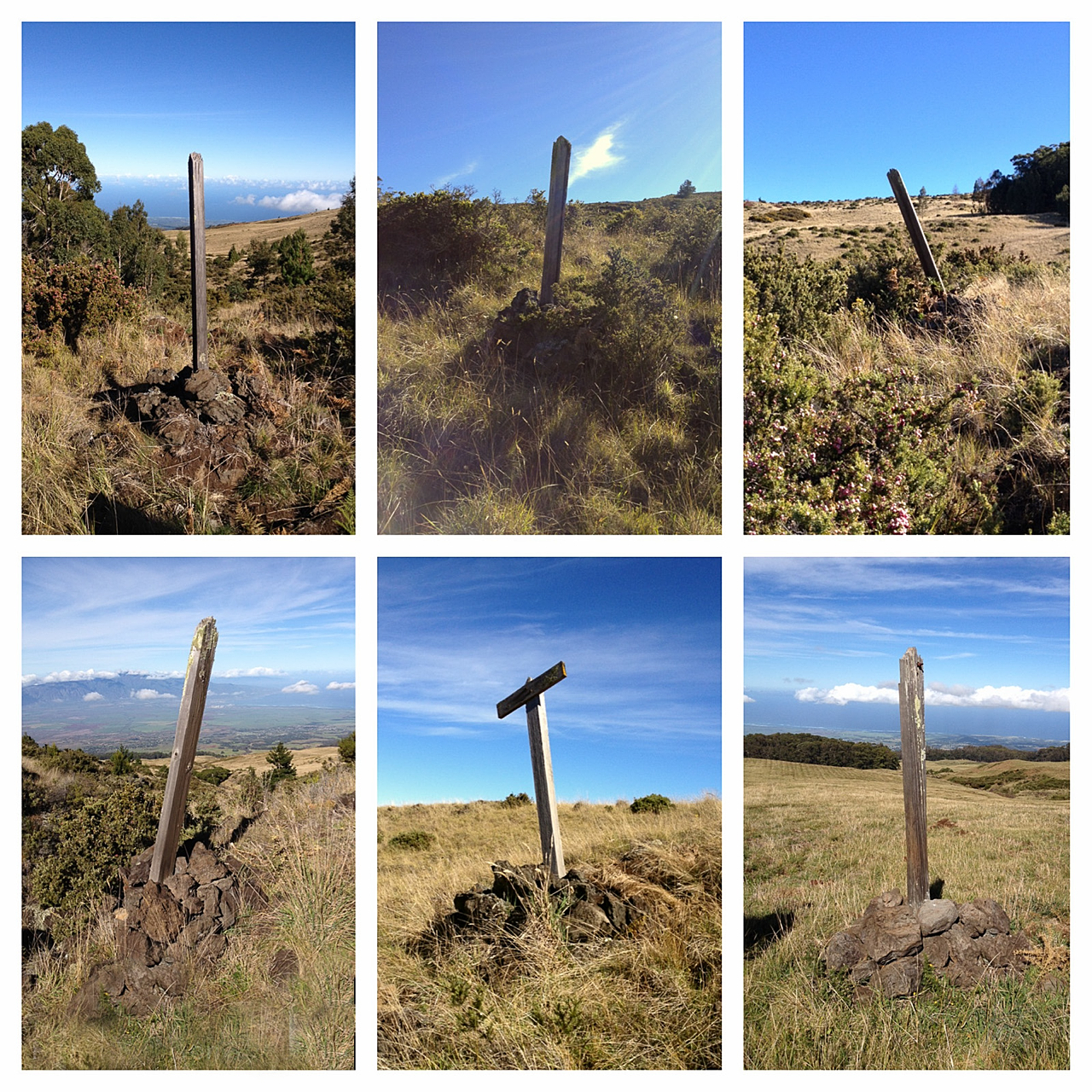
http://www.islandbreath.org/2014Year/04/140427trailmarksbig.jpg
Image above: Some Haleakala Trail guideposts that guided the way for thousands over many years. From original article. Photos by Shannon Berkowitz on 12/15/13from original article. Clock to embiggen.

On Wednesday, after a long fourteen day jury trial before Judge Cardoza in the Maui Circuit Court, a jury returned a verdict in favor of the State of Hawaii (State) and plaintiffs Public Access Trails Hawaii (PATH), David Brown, Ken Schmitt, and Joe Bertram III, who are the lead plaintiffs in a class action on behalf of all pedestrians in Hawaii.

The jury found that the State owns—and has always owned—the historic Haleakala Trail. The jury also dismissed Defendant Haleakala Ranch Company (HRC)’s competing claim to ownership of Haleakala Trail, which the State and plaintiffs have long alleged was based on no evidence or law.

David Brown, executive director of PATH and one of the lead plaintiffs in the case, said that the jury verdict was “monumental and ground-breaking.” “The court victory today should be celebrated by anyone who wants to recognize, preserve and protect Hawaii’s unique and rich cultural past, including Hawaii’s historical trails,” Brown explained.

Ken Schmitt, another lead plaintiff, added that although Hawaii has many laws that protect the public’s interest in Hawaii’s historic trails, including the Highways Act of 1892, which places trails in the public trust, the political reality in Hawaii is that trails are often neglected and ignored.

Schmitt reiterated the importance that this jury verdict had, and in particular applauded the State’s active role in defeating dubious claims of ownership to historical Hawaiian trails.

At trial, the State and plaintiffs presented evidence showing public use and government ownership of Haleakala Trail, including documents from the Hawaii State archives, government maps, newspapers, legislative journals, and travel narratives including those from Mark Twain, Jack London and Isabella Bird.

There was also expert testimony from Anthony Crook, a professional surveyor, Doris Moana Rowland, the Na Ala Hele State title abstractor, and Richard Stevens, Ph.D., a world historian and expert trail researcher.

Brown said that the jury really connected with the story that the State and plaintiffs presented at trial. The evidence at trial demonstrated that Haleakala Trail was a continuation of a long-established native Hawaiian trail, which connected to an overland pass across East Maui through Haleakala Crater. Westerners began ascending Haleakala Trail long before the Mahele of 1848.

Later, the government significantly improved Haleakala Trail through two major public work projects, by the Kingdom of Hawai‘i in 1889 and by the Territory of Hawai‘i in 1905. In 1905, a Maui News article celebrated the improvements to Haleakala Trail, trumpeting that:
 “It will be of general interest to the people of the Islands to learn that the Haleakala trail is now completed to the top of the crater... Come one; come all: and view this the grandest sight of Maui.” 

Also, in 1905, guideposts were placed along the trail at approximately every 500 feet. Schmitt explained that many of these guideposts still stand today and were crucial pieces of evidence for the jury to consider.

Brown said that the next and final phase of the trial will determine the issues remaining in the case—namely historic preservation of Haleakala Trail and securing meaningful public access. Emphasizing the importance of this final phase of trial, Brown explained,
“We have a moral obligation to protect Hawai‘i’s past, including its rich history of trails. The longer we wait to protect Hawai‘i’s cultural legacy, the greater the risk it will be lost forever for generations to come.”

PATH is a 501(c)(3) public charity. Its mission is “building community ties by connecting people and places through trails, urban paths and bikeways.” PATH’s website is www.pathmaui.org, and the organization also maintains Facebook and Twitter accounts. At trial, PATH was represented by attorneys Tom Pierce, Peter Martin and Hayden Aiuli.
 PATH is requesting continued financial support from the public to protect the historic Haleakala Trail, as well as general supporters and members. Charitable donations are fully tax-deductible and may be made to:

 2525 Kahekili Highway
Wailuku, Hawaii 96793.

To contact the organization, send an email to pathmaui@gmail.com.

See also:
Ea O Ka Aina: The Ala Loa Trail 4/10/14
View of Lepeuli Beach from the Ala Loa Trail on Kauai's Koolau northshore.
Ea O Ka Aina: Trails and Tribulations 2/26/13
They walked from their settlements in Lepeuli to other Kauai ahupua'a along the ala loa trail, a lateral, coastal trail that runs along near the sea.

Ea O Ka Aina: Mokoaa Bay Ranch For Sale 6/24/11
Moloaa Bay Ranch Is For Sale!! Let the buyer be aware of the Alaloa Trail. By Hope Kallai on 23 June 2011 for Free Larson's ...

Ea O Ka Aina: Illegal fence blocks Lepeuli beach 6/14/11
We believe this fence is in the Conservation District and blocks the lateral coastal Alaloa. This project is federally funded through NRCS EQIP ...

Ea O Ka Aina: Not Saved from Paradise Ranch 1/21/11Paradise Ranch began installing fenceposts in the middle of the ancient coastal Alaloa on 1/19/11, as part of their cattle pasture expansion ...

Ea O Ka Aina: Kaakaaniu Beach in Danger 11/10/09
Blue lines are Na Ala Hele & Na Alaloa paths (l. and r.). Yellow is existing cattle fence above the albatross nesting areas. Source Juan Wilson.

Ea O Ka Aina: OHA against Lepeuli changes 5/9/10 Moreover, there seems to be disagreement between the applicant and the community regarding the exact location of the alaloa...


Ea O Ka Aina: Keep Kaakaaniu Beach Access 10/29/09
Exhibit D in the CDUA notes the State of Hawaii's claims of ownership of the historic coastal trail – the Hawaiian Alaloa.


.

Hawaiian civil liberties theatened

SOURCE: John Bond (ewabond@gmail.com)
SUBHEAD: The governor or mayor shall be the sole judge of any danger that would constitute a state of emergency.

By Lisa Davidson on 21 April 2014 for Hawaii State Minority -
(Ihttp://senateminority.wordpress.com/2014/04/21/bill-will-compromise-civil-liberties/)


Image above: Military personnel at the state capital in Honolulu, Hawaii. From original article.


Despite a long list of good intentions and numerous supporters, House Bill 849 is a dangerous bill.

Darryl Oliveira, Director of the County of Hawaii’s Civil Defense Agency, presented testimony in support, arguing that the bill will provide more power to the counties and clarify the powers of the Governor and Mayors,
 “simplify the law by placing all emergency management authorities in one chapter of the HRS, and establish the Emergency Specialist Reserve Corps (ESRC), a low-cost surge staff to assist state and local government during emergencies … recruited from community members … fully trained and ready to respond during a disaster.”

The Chair of Maui’s County Council, Gladys C. Baisa, added her support, mentioning that:
 “During a time of crisis, no other level of government has better access to critical real-time information than the county … The proposed measure will provide the mayors specific, important powers.” Also, “Civil Defense” is updated to the more contemporary “Emergency Management.” (“Out of the 54 states and territories, only Hawaii uses ‘civil defense…’”) 

William F. Anonsen, Chair of the Civil Defense Advisory Council, pointed out that the new bill updates HRS 127 (Disaster Relief) and HRS 128 (Disaster Emergency Act), which are actually over 60 years old … “written primarily to deal with Post World War II-Cold War nuclear attack threats and civil unrest.”

Also, Hawaii’s population then was less than half of what it is today. Anonsen added,
“Emergency Management is a top priority for the State of Hawaii, given our isolation and vulnerability to a myriad of potential threats both natural and man-made.”

The dangers inherent in the bill are the overly broad definitions of emergency powers. Elaine Dunbar of Lihue defined these as “sweeping powers … if it becomes law it can present seriously harmful repercussions with no recourse to undo in the likely event it is abused.”

Her father was a JAG Officer with the Pentagon, her mother a WAVE and Executive Secretary for a U.S. Congressman, and her brother a former Navy SEAL. She remarked that;
“They did not serve the U.S. government to live to see these types of acts with the potential for so much harm and annihilation of their children’s rights nor those of any others’ children.” 
She added,
“I sincerely believe there are far too many dangerous sections in the bill that need to have closer scrutiny. It is a long draft and maybe there has not been enough time for legislators to give it the attention it requires.” 
 She commented also that the “Preliminary or interlocutory injunctions and temporary restraining orders” should read “Injunctive relief.” Her closing quote:
“There are sections in this that have nothing to do with emergencies or national disasters and are simply power grabs. Legislation this broad needs more time. Please defer.”

Edward T. Teixeira, the former vice director of civil defense, strongly opposes the bill, calling it a,
 “rushed and desperate attempt to reform the state civil defense system by a name change … There are other parts of the proposed bill that address many other critical functions and responsibilities, which should be studied carefully. Passing this bill out of your committee without a thorough review by your committees will be a disservice to the people of the State.”

Specifically, civil liberties may not be observed if an emergency is declared; compulsory immunizations and quarantines can be required; personal property can be “redistributed;” electronic media transmissions can be suspended; even county laws can be suspended. If someone is accused of “hoarding,” all emergency supplies may be taken by the government.

The governor can declare any person, place, or situation a “public nuisance,” authorizing entry to private property without the owner’s permission. Any members of the military or National Guard who are called to assist civil authorities “engaged in emergency functions” can’t be held responsible, criminally or civilly for damage caused “in pursuance of duty …” The public right to gather may be restricted. Forced evacuations are permitted.

 “The governor or mayor shall be the sole judge” of any danger that would constitute a state of emergency.

And during a state of emergency, the governor or mayor can take over any private property they choose to requisition; if the owner is unwilling to accept the compensation value offered, that person will be penalized by a 25% reduction in the compensation amount. If any person violates any emergency rule, they will be fined not more than $5,000, imprisoned for not more than one year, or both.

Then there is an extensive section defining theft and property crimes. Theoretically a hungry person who picks a mango from someone else’s tree can be accused of criminal property damage in the first degree. This section seems to favor the wealthy and persons with extensive property.

Hawaii residents can only hope that some of these issues will be edited and clarified in conference committee, as the resulting chaos could be catastrophic.

.