Showing posts with label Tragedy. Show all posts

Weird Days

SUBHEAD: A list of some of the odd experiences of disasters in my lifetime.

By Juan Wilson on 15 April 2020 for Island Breath -
(https://islandbreath.blogspot.com/2020/04/weird-days.html)
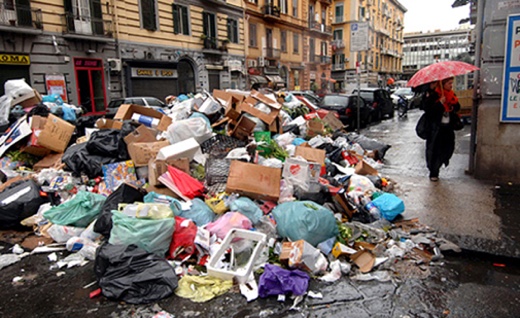

Image above: Photo of garbage piled into street in Manhattan, NY, during 1968 garbage strike. From (https://accesscities.org/nycrfei-pilot-for-public-realm-refuse-and-recyclingsolutionsrequest-for-expressionsof-interest-rfei/).

These are weird days and they seem to be leading to a major reset of life on Earth. The lists below are calamities I have lived through or witnessed through media in my lifetime.

Personally Experienced
Cuban Missile Crisis 1962 (We thought World War 3 was at hand)
(https://en.wikipedia.org/wiki/Cuban_Missile_Crisis)

North East Blackout 1965 (lived in Boston. People thought WW3 had begun)
(https://en.wikipedia.org/wiki/Northeast_blackout_of_1965)

NYC Garbage Strike 1968 (Lived in Lower East side. Garbage up past windows slid into streets)
(https://untappedcities.com/2015/02/11/today-in-nyc-history-the-great-garbage-strike-of-1968/)

OPEC Oil Embargo 1973 (A few people were shot to death for jumping long lines at gas stations)
(https://en.wikipedia.org/wiki/1973_oil_crisis)

Iran US Embassy Crisis 1979 (I lived in Iran 1975-76 and saw what preceded revolution)
(https://en.wikipedia.org/wiki/Iran_hostage_crisis)

Witnessed Through Mass Media
Exxon Valdis Oil Spill 1989 (Effects included the deaths as many as 250,000 seabirds)
(https://en.wikipedia.org/wiki/Exxon_Valdez_oil_spill)

Bangladesh Cyclone 1991 (over 135,000 people killed) 
(https://en.wikipedia.org/wiki/1991_Bangladesh_cyclone)

World Trade Center Attack 2001 (over 2,700 people killed)
(https://en.wikipedia.org/wiki/September_11_attacks)

Tohoku Earthquake & Tsunami 2011 (over 15,000 people killed)
(https://en.wikipedia.org/wiki/2011_Tōhoku_earthquake_and_tsunami)

When you look at the numbers of fatalities the World Trade Center collapse was not nearly as lethal as the other disasters listed above. But maybe it was so traumatic for Americans because it was a disaster created by humans intentionally and involved a symbol of American prowess. It was also witnessed live in the streets of New York and by millions on television.

Simultaneously Experiencing
Corona Virus Pandemic 2020 & Worldwide Economic Collapse 2020

These current disasters are interrelated and will transform the world in ways that will be in Nature's interest and ultimately our human interest. It's past time for a reset.


.

Notes on Heartache and Chaos

SUBHEAD: It’s not so hard to meet heartache and chaos in this world, and yet love and beauty still abide.

By James Kunstler on 2 June 2018 for Kunstler.com-
(http://kunstler.com/clusterfuck-nation/notes-heartache-chaos/)


Image above: Detail of poster illustration for "A Natural History of the Carnivores". From (https://retrieverman.net/2015/11/03/the-velvet-claw-on-youtube/).


I was interviewing a couple of homesteaders on an island north of Seattle at twilight last night when they noticed that the twelve-year-old family dog, name of Lacy, had not come home for dinner as ever and always at that hour.

A search ensued and they soon found her dead in the meadow a hundred feet behind the house with two big puncture wounds in her body. Nobody had heard a gunshot. We’d just been talking inside and a nearby window was open.

They suspect the dog met up with a black-tailed deer buck out there and was gored to death. We hadn’t heard a yelp, or anything. A week ago, an eagle got one of their geese, and some land-based monster got its companion just the other day.

Nature is what it is, of course, and it’s natural for human beings to think of its random operations as malevolent. That aspersion probably inclines us to think of ourselves as beings apart from nature (some of us, anyway).

We at least recognize the tragic side of this condition we’re immersed in, and would wish that encounters between its denizens might end differently — like maybe that two sovereign creatures meeting up by sheer chance on a mild spring evening would exchange pleasantries, ask what each was up to, and go on their ways.

Malevolent nature visited me the night before, back home in upstate New York. Something slit the screened window of my henhouse, got inside, and slaughtered two of my birds.

Big Red was missing altogether except for a drift of orange feathers. I found Little Blue just outside in a drift of her own feathers, half-eaten.

I suspect a raccoon got them, slitting the window screen cleverly with its dexterous hand-like paws — yes, so much like our own clever hands. (In classic after-the-fact human style, I fortified the window with steel hardware cloth the next day.)   

It’s the time of year when the wild critters of field and woodland are birthing their young and anxious to procure food for them. Who can blame them for that. Chicken is an excellent dish. I eat it myself, though never my own hens.

 I actually rescued Little Blue from the clutches of a red-tailed hawk last year as the hawk struggled to get airborne with her and let go as I screeched at it. Blue recovered from the talon punctures and had a good year — one good year on this earth with all its menace, when it is not busy being beautiful.

I worry about my chickens inordinately, though my friends who’ve been immersed in country doings much longer than me find this ludicrous.

Despite our yearnings and pretenses to bethink ourselves specially holy beings, we’re specialists at carnage when we’re not composing string quartets or carrying out God’s work on Wall Street.

The next morning, I motored down Interstate 5 to the Seattle airport to board a giant aluminum and plastic simulacrum of a bird for a rapid journey to Oakland, California.

The fantastic violence of an interstate highway is hard to detect when A) you’re hermetically sealed in the capsule of your rent-a-car, and B) when you’ve been driving on interstate highways so many years that it seems like a normal human environment.

And the fury of a jet airplane rending the fabric of the sky is hardly noticeable when you’re in seat 21-D being served iced drinks and pretzels. Somewhere in this universe — maybe everywhere in it — a skeptical intelligence may be wondering at our doings here.

Something lethal is waiting out there to get you and me, too — some carnivore perhaps, a one-celled demon, a venture capitalist with a snootful of Cabo Wabo “thick cut” tequila behind the wheel of a Chevy Tahoe.

It’s not so hard to meet heartache and chaos in this world, and yet love and beauty still abide. Treasure them when you find them. They explain everything.

[IB Publisher's note: Over time We've come to sense that James H. Kunstler has a bit of misogynous and racial bias in his understanding of people. We try to make posts to this website that do not display that side of his world. Noe the less, we still find his observations of American suburban auto-centric life, with its self denial and absurdities, a penetrating vision.]


.

COP21 should include "Grieving"

SUBHEAD: Grieving is not surrender but an acceptance of what can’t be changed and a commitment to what can be accomplished.

By Robert Jensen on 30 November 2015 for TelesurTV -
(http://www.telesurtv.net/english/opinion/A-Missing-Item-on-the-COP21-Climate-Agenda-Grieving-20151130-0022.html)


Image above: Photograph of the "Plain Radical" Jim Koplin in middle age. From (http://healingourworldandourselves.org/robert-jensen/).

This 21st round of the U.N. Conference of Parties (COP21) hopes for an agreement on reducing greenhouse gas emissions to hold the global temperature increase to 2 degrees Celsius above pre-industrial levels.

That’s an ambitious goal, mocked by some as idealistic, but there’s nothing wrong with ambition yoked to ideals. Still, goals also must be realistic, consistent with the laws of physics and chemistry, and honest about the possibilities within, and the impediments created by, the world’s economic and political systems.

Here’s one of the toughest parts of those realities we have to grapple with: Even if leaders produce a serious agreement with enforcement mechanisms, we will not be living in the same kind of world in which people created those social systems. The consequences of human recklessness define our future.

Even if pledges for emission reductions being discussed by world leaders were to be achieved, we are going to see potentially catastrophic global warming by the end of this century, and likely far earlier.

The scientific community’s consensus on climate change includes not only models about what likely will happen if we don’t curtail emissions, but the extent of the warming already locked in by past emissions and the intensifying effects of climate feedback loops.

Grieving is not surrender but an acceptance of what can’t be changed and a commitment to what can be accomplished, within limits the ecosphere sets.

And climate disruption is only one part of the story of ecological degradation. Predictions are a fool’s game, but look at any critical measure of the health of the ecosphere on which our lives depend—groundwater depletion, topsoil loss, chemical contamination, increased toxicity in our own bodies, the number and size of “dead zones” in the oceans, accelerating extinction of species and reduction of biodiversity—and ask a simple question: Are we heading in the right direction?

Whether or not we want to confront any of this politically, many people have at least a visceral sense of what is coming. If we want to begin shaping a livable future, we should start grieving, collectively, for what we have lost and likely will lose.

Grieving is not surrender but an acceptance of what can’t be changed and a commitment to what can be accomplished, within limits the ecosphere sets. We understand the importance of such grieving in personal contexts, when we lose loved ones, and now we need to apply it to the planet, together.

My friend Jim Koplin was the first person I knew who had faced these realities, decades ago, long before these crises were headline news. Jim was radicalized by the social movements of the 1960s and shaped by his rural roots in the dirt of the Depression-era farm on which he was born.

As he focused on social justice, critiquing the domination/subordination dynamic at the heart of exploitation within the human family, he was increasingly more alarmed about the effects of humans’ attempts to dominate the larger living world.

Because he refused to turn away from reality, later in his life Jim confided to his friends, “I wake up every morning in a state of profound grief.”

Jim wasn’t unhappy with his life or depressed. His grief, not only for people suffering but also for the destruction of the living systems of the world, didn’t lead him to retreat. Until he died at 79, Jim was actively engaged in political projects, public education efforts, and community organizing.

His capacity to face difficult truths was a source of strength, and so important to me that after his death I wrote a book about him, Plain Radical, offering his wisdom to those who never met him.

Jim helped me understand that there are no solutions to multiple, cascading ecological crises if we insist on maintaining the high-energy/high-technology existence lived in much of the industrialized world (and desired by many currently excluded from it).

Even many tough-minded activists willing to challenge unjust concentrations of wealth and power are reluctant to let go of a commitment to this so-called “lifestyle,” which has not produced a culture of life but a kind of death cult, a society that values cheap pleasures and cheap toys more than healthy people and a healthy planet.

When we refuse to grieve for what is passing away, we are more likely to cling irrationally to ways of living that cannot be sustained. When we cannot acknowledge the deep sorrow of what is lost, we scramble to hide from the reality of the loss and perpetuate the illusion that we can continue on this course.

That’s why a collective grieving process should be a priority for us all, helping us let go of the delusion that we can maintain unsustainable systems.

The technological fundamentalists—those who believe we can defy all limits and invent our way out of any crisis—will tell us we need to use our imaginations. I agree, but our task is not to imagine a narcissistic science-fiction future. A decent human future—perhaps the possibility of a human future at all—depends on our ability to imagine a new relationship to the larger living world.

• Robert Jensen is a professor in the School of Journalism at the University of Texas at Austin and board member of the Third Coast Activist Resource Center in Austin. He is the author of Plain Radical: Living, Loving, and Learning to Leave the Planet Gracefully (Counterpoint/Soft Skull, 2015).

That's all Folks!

SUBHEAD: Lest some colleague accuse me of burying the lead, here it is up front - I’m leaving Truthdig.

By Peter Z. Scheer on 1 March 2015 for TruthDig -
(http://www.truthdig.com/report/item/thats_all_folks_20150301)


Image above: Porky Pig bids "adieu" for Looney Tunes. From (https://www.pinterest.com/pin/363665738630869742/).

Lest some colleague accuse me of burying the lead, here it is up front: I’m leaving Truthdig.

In case you don’t know me, I’m the managing editor, which means I more or less run the show. (Truth is, our talented staff does most of the hard work.) I feel strange about leaving. Roll with me—I have some things to get off my chest.

When I started this job nine or so years ago, George W. Bush was in his second term and the U.S. was plainly stuck in two costly, deadly, seemingly endless wars. America was torturing people.

Our government routinely lied about pretty much everything. Bush’s attorney general, who tried to eliminate all traces of marijuana and boobies from the national landscape, was replaced by a guy who was somehow worse.

The people of New Orleans were drowning and waiting to be saved by the horse enthusiast who was in charge of FEMA. In those times, running Truthdig was a lot easier. The targets were clearly marked.

In a period when the press at large had mostly failed in its duty, Truthdig would avoid quibbling about the obvious and dig for lesser-known truths about the day’s events. We would mine these truths from experts, on-the-ground reports and the small crevices of the Internet and broadcast them as far as our readers, friends and online allies would carry them.

Now, as I write this, an original print of Shepard Fairey’s “Hope” poster sits behind me, Barack Obama’s eyes overseeing everything I type. How appropriate given what we now know about the NSA. I cannot think of a greater disappointment than President Obama—like so many millions of other Americans, I completely fell for it.

I remember sitting in a Nevada home surrounded by volunteers from California, Chicago and elsewhere. Among those migrants were disaffected Republicans who may have more clearly recognized a fellow traveler in the candidate. I thought then that they were the dupes. I was wrong.

Regardless, we were united by a common desire for profound change, and we seemed to have found a vehicle for it in Obama. Of course he would go on to squander it all. Truthdig covered the hell out of Obama’s fall from grace. It wasn’t easy, or popular.


Bush, Dick Cheney and Donald Rumsfeld—these had been natural villains for us to pick on. Obama turned out to be an American tragedy. I think of all the young Obama volunteers sleeping in their cars and on couches, sacrificing their time, comfort, energy and zeal for the man.

He marched them from a mountaintop of idealism into a cynical swamp. In doing so, he destroyed my generation’s faith in the political process. It won’t come back. I keep the poster of the young, idealized Obama to remind me not of the man but of the hope—raw and addictive and now gone.

As the Obama years were getting underway, terror raged—not in the form of a missile, bomb or hijacked airplane but of a financial system that apparently still gets to do whatever the fuck it wants. I remember Paul Krugman saying that if the stimulus package was not twice the size of what was being offered, America would end up with a slow, Japanese-style recovery that would take a decade or more.

He was right, obviously. Through its timidity, the government crushed my generation’s belief in the economy: Jobless and with few prospects, we were forced to go back to live with our parents ... unless their homes had been foreclosed.

The Occupy movement restored, for a wonderful moment, the flicker of hope, until some mostly Democratic mayors helped snuff it out. That was a great story to cover. Less so drones, extrajudicial assassinations and mass deportations, including those of refugee children.

Obama’s legacy, as he so often reminds us, is that Detroit—the city bankrupt and the U.S. auto industry now owned in part by Fiat—still kind of makes cars, albeit in Mexico. Also, we have a somewhat reformed health care system, of which I am admittedly a beneficiary.

Don’t get me started on the national security state. It is baffling to me to think that Richard Nixon’s presidency was brought down by a burglary, while the NSA and other intelligence agencies continue to stampede the Constitution without repercussion.

They want to know who you are, what you do, what you say and what you think, and will put you in prison if you dare let anyone know the full extent of what they’re up to. That’s America now, and the collective reaction is “Meh.”

Where does that apathy come from? Some people blame America’s young, but these kids live on a planet that is melting and they exist under a government whose only accountability is to billionaires. Is it apathy, or resignation?

A woman I met while I was at KPFK in Los Angeles one day to broadcast the “Truthdig Radio” show turned to me in tears. She had done the math and figured out she would never be able to pay off her student loans. She begged me to do something about it. Me? Me.

The exaggerated power of the blog had become her last, best hope. I promised to try, but never really did. So before I go, let me venture into the area that so worried her.

Allen Ginsberg wrote in the 1950s, “I saw the best minds of my generation destroyed by madness, starving hysterical naked. ...” I, too, have seen the best minds of my generation go to waste, but not all of these people are starving.

On the contrary, many are doing very well by suckling at the teat of corporate America as they tithe to the student-loan sharks, hoping to hold on to some security in an increasingly frightening world. People in their 20s and 30s no longer have the luxury of “finding themselves,” as their parents used to call it.

The late billionaire Steve Jobs told the assembled graduating students of Stanford University just two years before the nation’s economic collapse, “You’ve got to find what you love.” Because, he elaborated, “the only way to do great work is to love what you do.”

I have two friends who would like to be artists. Instead, one is now a graphic designer, the other makes Internet ads. I have a friend who loves to act; he’s a lawyer. Journalism is now a training camp for PR. The best mathematicians go to work for Wall Street investment firms.

Many of these people are shackled to what is estimated by the Consumer Financial Protection Bureau to be $1.2 trillion in student loan debt. By law, they are not allowed to default. In 1972, the year Jobs dropped out of college, the average annual cost for a four-year education, including fees, room and board, was $2,031, according to the Digest of Education Statistics.

 In 2013 it was $23,872. That’s an increase of more than 1,100 percent. Reed College, which Jobs attended for six months, now costs $59,960 a year for tuition, room and board, a figure greater than the net worth of the typical American household. Not including books, transportation and other expenses, that’s $239,840 for a bachelor’s degree, which is significantly less valuable in the marketplace now than it was in 1972.

And so artists become decorators, anthropologists join global marketing firms and documentarians make crap about Hitler and interplanetary aliens for the History Channel.

These are the lucky ones, the ones who have good jobs and can live well as they lose their creative ambition. There are millions more who must choose between rent and food, who are forced to toil more for fewer dollars and less opportunity.

Let’s think about the long-term consequences of a culture’s failure to value historians, philosophers, artists, musicians, writers and teachers. This attitude and the burden imposed by the student loan system ensure our social slide from passionate to pacified.

We’re taking a generation of educated, potentially independent thinkers and turning it into an organ of multinational corpulence. One day we’ll all wake up to our morning news sponsored by Chevron, eat our sodium flakes and have Siri walk the dog, and no one will remember the name Allen Ginsberg.

.

Greek Tragedy

SUBHEAD: Man commits suicide on front Greek Parliament after pension was looted by the banksters. By Ashvan Pandurangi on 5 April 2012 for the Automatic Earth - (http://theautomaticearth.org/Finance/thoughts-on-the-suicide-in-greece.html) Image above: An Greek Orthodox priest holds a religious ceremony at the spot where a man committed suicide in Athens Wednesday. From (http://www.ottawacitizen.com/news/modern+Greek+tragedy/6413191/story.html).

As most people are already aware, a 77-year old man in Greece blew his brains out in front of the Greek Parliament yesterday in protest of the government's current euro-centric policies. In terms of social unrest, this event was neither surprising nor very exceptional, compared to what has already happened and what will happen in the near future. I have never understood why people take their own lives to get across a sociopolitical message, and I imagine I never will. But that's exactly what Dimitris Christoulas did, and his message was heard loud and clear.

“The Tsolakoglou (WWII Nazi quisling style) government has annihilated all traces for my survival, which was based on a very dignified pension that I alone paid for 35 years with no help from the state. And since my advanced age does not allow me a way of dynamically reacting (although if a fellow Greek were to grab a Kalashnikov, I would be right behind him), I see no other solution than this dignified end to my life, so I don’t find myself fishing through garbage cans for my sustenance. I believe that young people with no future, will one day take up arms and hang the traitors of this country at Syntagma Square, just like the Italians did to Mussolini in 1945″” - translation of Dimitris Christoulas suicide note. (http://www.4thmedia.org/2012/04/05/greek-pensioners-last-words-greek-governments-fate-similar-to-mussolini/)

Sometimes, a prevalent reaction to an event like this is to make it into a bigger deal than it really should be, and to idolize the person at the center of it. Other times, we become very skeptical of both the man and his message simply because we feel it is necessary to counteract the media fanfare. We want to pretend that we are taking a cold, hard, objective look at something that is inherently emotional in nature. What struck me today when reading Ambrose Evans-Pritchard's reaction was the following passage:

Europe's poignant wake-up call

His suicide note refers to the Quisling regime of George Tsolakoglou under Axis occupation in World War Two.

Needless to say, it is loose talk to compare the Greek technocrat premier Lucas Papademos in any way to Nazi puppets. He is an honourable man, broadly supported by the Greek people, appointed by the Greek president under legitimate – though dubious – constitutional procedure, doing the best as he sees it for his country.

It is equally loose talk to compare the democratic, well-intentioned Germany of 2012 with the rabble of gangsters who hijacked the Weimar state in 1933. Germany's Angela Merkel too is doing what she thinks to be the best for both her country and for Europe (and which I think is deeply misguided, especially for Germany itself)

Is that really what was contained in this man's last message to his fellow Greeks - a bunch of "loose talk"? Can we really say, at this point in time, that people like Papademos are not puppets of a supranational banking elite that is just as malicious and destructive as the Third Reich? I think not. In fact, I think that most of the evidence points towards the accuracy of Christoulas' comparison. And, as someone who was actually alive during the Nazi occupation of Greece, I don't believe that he would ever make such comparisons "loosely".

Analysts such as Pritchard (though he is certainly not alone) would like to draw a fine line between the atrocities of WWII and those that are occurring now. They back away from any and all implications that there is any malicious intent on the part of Euro-centric governments, politicians and officials. But, the results of these peoples' policies are so obviously destructive to the populations of Europe and beneficial to a small minority of corporate banking elites, that it becomes almost ridiculous to think that they don't know exactly whose bread they are buttering with their policy agendas.

That's not to say that they don't believe those policies are what's best for their countries or for Europe as a whole. But who really cares what the Eurocrats believe in their own manipulated minds? They are wrong. Hitler also believed that his fascist policies were best for his country, Europe and humanity as a whole, but he too was dead wrong. So getting back to Christoulas - we shouldn't dwell too much on the fact that he blew his brains out, but rather the message that he left behind him. It was not "loose talk" or irrational comparison - it was the unadulterated and uncomfortable truth of Europe's existence circa 2012.

.