Showing posts with label Fermentation. Show all posts

Making Friends with Microbes

SUBHEAD: Interview with Eva Bakkaeslitt on the importance of fermenting food in a low-tech future.

By Mark Watson on 12 January 2018 for Dark Mountain-
(http://dark-mountain.net/blog/dark-kitchen-making-friends-with-microbes/)


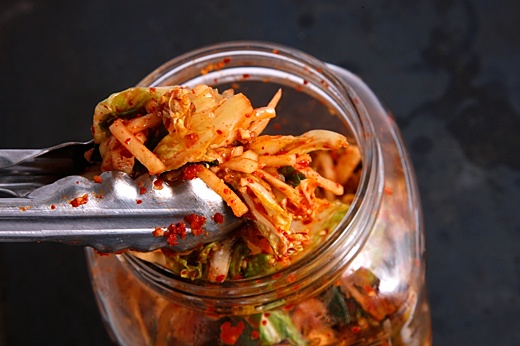
Image above: From original article.

This week Dark Mountain continues its Dark Kitchen exploration of food and eating in times of collapse. For our second course in the series Mark Watson interviews Norwegian artist Eva Bakkeslett about the ancient and modern language of fermentation.

‘It’s the next big thing,’ said Alexis, and handed me a jar of home-made kimchi.

‘Is it safe to eat?’ I asked, nervously peering into the pungent and compelling Korean ferment.

It was a very modern reaction: industrially processed, refrigerated, microbe-free and squeaky clean (dead) is good. Everything else is dangerous.

For thousands of years the arts of fermentation have transformed and preserved raw food in cultures across the world. Yet even though some of our strongest and most loved flavours – coffee, chocolate, cheese, salami, olives, as well as soy, miso and tempeh, wine and beer – are still alchemized via the life-death-life process of bacteria and yeasts, live, fizzing vegetables can be a challenge.

It was reading Sandor Katz’s encyclopaedic The Art of Fermentation that turned things around and got me hooked, with its hands-on approach to reviving the practice of fermenting just about everything.

The house started filling up with bubbling Kilner jars of fruit and flowers and vegetables –mead elixirs in the summer, kimchi in the winter – as my distrust gave way to bold, and delicious, experimentation.

Eva Bakkeslett is an artist, teacher and microbial cultural revivalist from Northern Norway. I came across her work with sourdough cultures and kefir in Lucy Neal’s Playing for Time: Making Art as if the World Mattered. Later we met and she gave me some Ivan Chai (an intense black tea of fermented rosebay willowherb leaves) made by wildcrafting colleagues in Russia.

I wanted to ask Eva about how she got into fermentation and microbes, and how they relate to current planetary, ecological and social conditions. 

MW: What’s going down in your ‘dark kitchen’ right now, Eva?

EB: Well, I’m tending to about six different ferments, so loads of little creatures are living on my kitchen bench: very old Scandinavian rømmekolle ferments, various kombuchas, Bulgarian yoghurts, kefir from the Caucasus, and an amazing sourdough from Russia. I’ve also started fermenting earth, using a Japanese composting method called bokashi, where you add microbes to your food waste. It speeds up the process and you get great compost for growing vegetables.

I started with bread. I always say the bread was talking to me. Fermenting bread has a very quiet language of its own. Put your ear against the rising dough and you hear these clicks and bubbles. I really wanted to learn about this extraordinary language. I wanted to befriend these guys. So it all started through language.

When I was growing up we fermented milk and bread, so when I started discovering the bacterial processes behind it I didn’t really have to overcome any distrust. I just remember being delighted at discovering this community of microbes I could make friends with.

I started making kombuchas and vegetable ferments, then explored the rather funky outer edges, like fermented shark in Iceland or kimchi with fish. That really tests the friendship – can I really be friends with somebody, you know, that funky?

MW: In Playing For Time you discuss rootlessness, and the relationship between place, belonging and fermentation. How can remembering the stories behind fermentation reconnect us?

EB: For some years now I’ve been exploring this yoghurt-like Norwegian milk ferment called rømmekolle. In my childhood everybody fermented it – in certain areas people wouldn’t have survived without it.

And the culture that develops between the place where the bacteria come from, and the material you ferment, in this case milk, and the humans that then share the culture, makes you very rooted to a particular place.

We now know from neuroscience research that there’s a huge connection between the bacterial flora in our guts and the way we think… so if everybody in a particular village is eating the same rømmekolle, you’re sharing that microbial community within your bodies; people would somehow be bonded through bacterial flora within a community, and to the place. And this was happening all over the world.

Also, people would closely guard their ferments and bring them wherever they went. A family from Finland emigrating to America, say, would dry their milk cultures on handkerchiefs, put them in their pockets and set off. When they settled, they’d put their handkerchiefs in milk and revive the bacterial culture.

Nowadays, with everyone constantly moving around and not connecting to places, we often feel fragmented. One way of rooting yourself is to befriend the local bacteria by growing vegetables and connecting with the soil. Ferment those vegetables and you’ll definitely communicate with the microorganisms in that particular place!

And the further you go into it the more you get excited about the taste, texture, colour – all the aesthetic elements of food and place. It’s a very rooting experience, as well as an antidote to industrialised food with its processed salts, fats and sugars: you start reconnecting and engaging with your food, the seasons – and time.

Fermentation has its own world and time-frame, and it can really help move you out of the hyped-up, driven pace of the modern world. You don’t even have to think about it. The relationship with the microbes just has that effect on you.

When people say they don’t have time for sourdough bread-making, I tell them it’s about working with time, replacing one way of thinking about time with another.

I see three elements to fermentation – time, conditions and ingredients – and the balance between those three. A vegetable ferment going for six months can be super-strong, a six-day one will be very mild. Time sits in the taste. It’s implied and embodied in the ferment and your experience of it.

Like growing vegetables, where you can’t rush your carrots, you can’t work against the fermentation process, you have to work with it. You heighten your awareness of what’s happening and your relationship with time changes. It roots you in the fabric of life.

MW: How can we learn from microorganisms?

EB: Bacteria communicate with each other with an incredible alertness, and they’re like magicians of adaptation. The hundreds of thousands of members in a culture communicate through this language called quorum sensing. And if something’s not working they’ll suddenly take a different course.

At an earlier time on the planet, bacteria eliminated all their food resources. They had to invent a way of processing the sun and transforming it into a new life substance through photosynthesis. I feel we can learn a lot from them, because we’re very set in our ways. It takes humans a long time to change.

MW: Right now we seem to need more time to get back on track with the planet, but don’t seem to have that much time. Can humans both bring time into the way we go about things and change swiftly enough? Also, so many of our collective stories seem outdated and resistant to change. Does fermentation have a story to counterbalance that?

EB: Well, we’re generally so removed from natural processes and going so fast, it seems almost impossible to slow down to a pace where we can have a natural relationship with time.

But I think through a close relationship to bacteria and to our earth, without us thinking that we have to change, it will happen naturally, through gentle action and collective absorption. If you create those relationships.

I’m fascinated by the sharing aspect of fermentation, when people give cultures to each other – especially through milk ferments and sourdough. There’s the sharing of the physical substance with the bacteria, which keeps it going, along with the sharing of cherished knowledge.

With that goes the sharing of stories, which accumulate within the bacterial cultures as people form their own relationship to them.

Somebody gives you some, and it already has a story; it enriches your life, and another layer of story is added to it. These stories create a different bond between people, the bacteria, and the Earth itself.

Fermentation is a beautiful way of transforming the way we live and communicate with each other. It’s an incredible thing that happens when your kefir is thriving, producing more and more grains, and you’re thriving from it, and so you go and meet your neighbor and tell them about kefir. Or like me you incorporate it into art events and share it publicly with people.

My favorite Christmas card this year was from a lady who came to an event I held in England in 2012. I gave her some of an old Romanian yoghurt culture that had travelled to a little Jewish café in New York. She’s been cultivating it ever since, and there it was in the photo, sitting amongst her Christmas decorations!

MW: What kind of art do you do with fermentation?

EB: A recent exhibition I gave in Bodø in Norway was with rømmekolle. It had disappeared, but I managed to find some eventually and I’m cultivating and sharing it now in all my events. I gathered archive photographs of people’s relationship to their milk animals.

Milk can have a bad reputation nowadays, but many people have traditionally had a close relationship not only with their cows, but also reindeer, buffalo, goats and sheep. The modern milk industry is another chapter entirely.


Image above: A photo of the historic social culture of consuming rømmekolle. From original article.

The rømmekolle culture was very sociable. On Sundays people would share a huge pot up in the mountains dressed in their finery. I interviewed old people about their relationship to this ferment for a radio program and video. So I’m bringing rømmekolle into the public sphere through these stories.

This exhibition included a bucket of worms with scrap food and a video camera and microphone attached. You could hear the worms talking – they have an amazing language, and when they’re happy they talk a lot. So I’m sharing the wonderful world of fermentation in a bucket, in the production of earth through worms.

I often do talks about bacterial connections, starting with when the Earth was formed, and about bacterial language – these always include some physical fermentation of milk or vegetables. I’ve also held a festival of different bread traditions. It takes different forms.

MW: It’s a lot about what’s worth keeping, isn’t it, particularly now when so many things are disappearing? A kind of cultural preservation.

EB: When you pay attention to these bacterial processes, you see we have to get to the roots in order to go forward. It’s like etymology. Often a word will go astray and start taking on a totally different meaning. But once you start looking at the roots of the word you realise there’s something fundamental in here that’s been lost. The bacterial world teaches me a lot about the way forward, because it has so much to do with the essence of life. So that’s the preservation part for me, more to do with not losing contact with the processes of life than preservation.

People often go ‘Eeeugh!’ when they see a bucket of compost, or smell one of my stronger ferments. Many people live in a very clean bubble where life processes can’t come in. I think it’s really important to stick our fingers in the earth, and for our kids to as well.

I bought a piss bucket recently and shocked my family: ‘You’re not going to make us piss in that are you?’ they cried. ‘Well, yeah,’ I said, ‘because piss is an amazing fertiliser, and nowadays we just think it’s something horrible and smelly. But it’s a life-giving property, right here in our system, and we just waste it.’ I want to bring back into the life-cycle all those vital things we just keep getting rid of.

I like this idea of the uncivilised. Many young people who come to my events are fed up with modern lifestyles. They’re get really excited about hands-on life processes like fermenting. When I get overwhelmed by the horrors of our fragmented world, I remember so many people have a real need for uncivilising, for seeing a different way. Things have been sterile for too long – we need to get grimy again.

MW: What about the future? Given our bodies are host to so many microbes, might we be our own microbial revolutions?

EB: Well, the current misuse of Earth and its resources is leading us to disaster. But many small groups of people are experimenting in living and doing things differently. They don’t believe in the predominant systems and want to uncivilise themselves. So from that disaster a lot of social fermentation is happening, bubbling in the corners, creating another type of atmosphere, temperature and timeframe for other things to blossom and thrive.

And I think learning about fermentation and bacterial communication, and exploring the way bacteria have adapted and survived, is a huge beginning.

The word culture comes from the Latin cultivare: to prepare the ground for something to grow. The word is used for everything now, including TV shows. But its original meaning implies a sense of mutual nurturing: we prepare the ground and the ground gives to us. And of course bacteria is alive, and makes up the earth, and us.
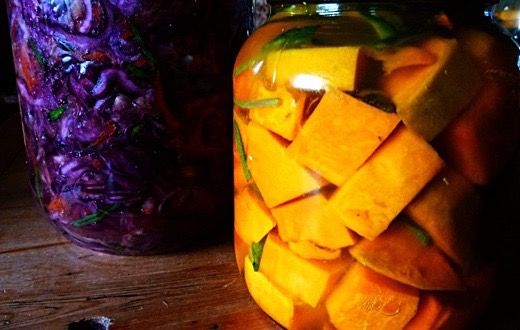

Image above: Squash and Red Cabbage kimchis in jars. From original article.
A Red Cabbage Kimchi ‘Slaw’ 

INGREDIENTS (Organic, local and home-grown vegetables if available) 
1 small red cabbage or ½ large one
1 large carrot
Japanese or daikon radish (mooli), equivalent size to carrot (optional)
Handful chives or small bunch spring onions
½ cup sea salt (not table salt)
5 cups filtered water (ratio = 1 part salt to 10 parts water) 
1 small or ½ large pear, peeled, seeded, chopped
2 garlic cloves, peeled,  roughly chopped
1 thumb ginger, peeled, cut into small chunks
1 or 2 fresh red chillies, deseeded if too hot
1 tablespoon raw organic cane sugar OR 1 tablespoon RAW honey
½ – 1 small cup stock: liquid from 5-6 shitake mushrooms soaked in warm water plus 1 level teaspoon kelp powder (optional)
1 dessert spoon Korean red pepper flakes/chilli flakes OR level teaspoon smoked paprika powder

Note: for some ferments I omit the red pepper/chilli flakes/paprika, and use one or two homegrown ‘Ring of Fire’ chillies in the sauce This gives just the right heat, definitely hot without going into overburn! 

METHOD
Chop/shred red cabbage. Remove hard center and keep intact for use as plug in the jar.

Place shredded cabbage in a bowl with water and sea salt. Stir and put plate on top of the bowl so all cabbage is submerged. Weight plate down with something heavy. Soak for 2 hours (at least), stirring and turning the cabbage thoroughly a few times.

Meanwhile soak five or six shitake mushrooms in warm water for 20 minutes.

Julienne carrot and daikon/mooli. (I often soak the carrots with the cabbage in the salt water.)

Rinse cabbage a few times and let drain in a colander.

In a liquidiser/food processor place pear, roughly chopped garlic, sugar/raw honey, chives/onion, ginger and mushroom and kelp stock (without the mushrooms). Blend to smooth sauce.

Place prepared vegetables in a bowl, pour the sauce on top and add red pepper flakes/smoked paprika. Gently and thoroughly mix in all the ingredients.

Place ‘kimchi slaw’ in a clean jar (mason jars are great) and push down firmly. Fold a few outer leaves of the cabbage and cover the slaw. At this point you can put the cabbage heart on top to hold the vegetables down further. The vegetables should be submerged under the liquid. Close the jar, or cover with a cloth.

IMPORTANT: Keep in a cool visible place. If you’ve put the top on, you must burp the jar frequently to prevent it exploding — seriously! You can start to eat this delicious ‘slaw’ after three days. Mine rarely last longer than a week before they are eaten up!
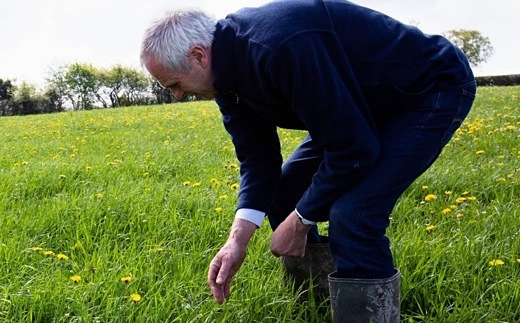
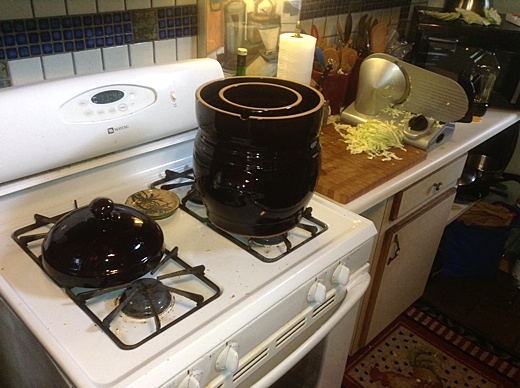
Images: Eva giving a workshop on the art and culture of viili, Finish live yoghurt, at Halikonlahti Green Arts in Salo, Finland  (photo: Tuula Nikulainen); pumpkins, kefir and kombucha in Eva’s kitchen (photo: Eva Bakkeslett); sharing rømmekolle in the snow, northern Norway, 1940s (archive photograph); fermenting pumpkin and red cabbage kimchi (photo: Mark Watson); Mark shaking it up at a raw food demo, Bungay Suffolk (photo: Josiah Meldrum)

Eva Bakkeslett is an artist, filmmaker, curator and cultural activist exploring the potential for social change through gut feelings and gentle actions. She creates spaces and participatory experiences that challenge our thinking and unravels new narratives that connect us to the earth as a living organism. Eva lives in North Norway and shows, lectures and performs her work worldwide. evabakkeslett.com
Mark Watson connects people, plants and places through walks, talks, teas, meads.

and other ferments. He has led medicine plant walks at Dark Mountain gatherings, and demonstrated how to make mead in five minutes at the launch of
Dark Mountain: Issue 8. As well as proofreading and downshifting, he is also part of the Dark Mountain production team and writes an occasional blog, Mark in Flowers. 

See also:
Ea O Ka Aina: Nutrition  (continuing)
Ea O Ka Aina: Advantages of decay in food system 2/23/17
Ea O Ka Aina: Jalapeño, Cilantro, Carrot Kraut 7/10/16
Ea O Ka Aina: Making sauerkraut at home 2/18/14
Ea O Ka Aina: "Sauerkimchi" Recip 3/14/14
Ea O Ka Aina: Fermaculture! 4/29/13
Ea O Ka Aina: Right Livlihood 10/19/12
Ea O Ka Aina: Fermenting Sauerkraut 6/23/12
Ea O Ka Aina: Green Papaya Sauerkraut 10/14/09


.
Advantages of decay in food system

SOURCE:  Andy Kass (a_kass@yahoo.com)
SUBHEAD: Vietnam's low-tech food delivery takes advantage of decay and fermentation.

By Aaron Vansintjan on 20 February 2017 for Low Tech Magazine -
(http://www.lowtechmagazine.com/2017/02/vietnams-low-tech-fermentation-food-system-takes-advantage-of-decay.html)


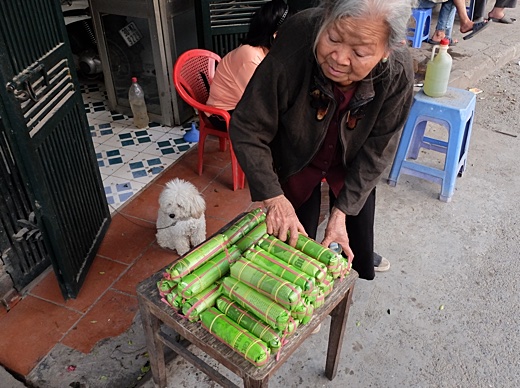
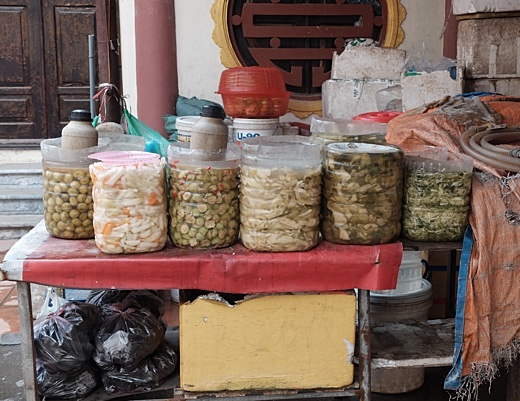
Image above: A stall selling homemade dưa chua in a Hanoi market. Photo by Aaron Vansintjan From original article.

The food system in the industrialized world is based on mass-production, global distribution, and constant refrigeration. It requires many resources and produces a lot of food waste.

In a tropical climate, everything decays faster. Bread gets soft and mushy, milk spoils, the walls get moldy just months after a layer of fresh paint. Food poisoning is a constant concern. The heat and moisture make for an ideal breeding ground for bacteria and fungi.

In this environment, you’d think people would be wary of any food product that smells funny. But in tropical Vietnam, food can get pretty pungent.

Take mắm tôm, a purplish paste made of fermented pureed shrimp. Cracking open a jar will result in a distinct smell of ‘there’s something wrong here’ with hints of marmite to whelm through the whole room. You have chao, a stinky fermented tofu, which was so rank that the smallest bite shot up my nose and incinerated my taste buds for an hour (‘Clears the palate!’ said the waiter encouragingly).

Consider rượu nếp, which is sticky rice mixed with yeast and left to ferment for several days ‘in a warm place’ — i.e. the counter.

The result is a funky-smelling desert—literally rice left to rot until it turns in to a sweet wine pudding. On the 5th of May of the lunar calendar, Vietnamese people will eat rượu nếp in the morning to celebrate ‘inner parasite killing day’. Bonus: day-drunk by the time you arrive at work.

We shouldn’t forget Vietnam’s world-famous fish sauce — nước mắm — made from diluted fermented fish, a flavour that many people around the world continue to find totally intolerable.

In Vietnam, putrefaction is accepted as a part of life, even encouraged. But fermentation in Vietnam isn’t just an odd quirk in a tropical diet.

To understand why fermentation is so integral to Vietnamese culture, you have to consider how it is embedded within people’s livelihoods, local agricultural systems, food safety practices, and a culture obsessed with gastronomy; where food is seen as a social glue.

And when you bring together all these different puzzle pieces, an enchanting picture emerges: one in which fermentation can be a fundamental component of a sustainable food system.

Unlike many high-tech proposals like ‘smart’ food recycling apps, highly efficient logistics systems, and food packaging innovations, fermentation is both low-tech and democratic—anyone can do it. What’s more, it has low energy inputs, brings people together, is hygienic and healthy, and can reduce food waste.

Rotting Food can be Safe and Healthy

At the entrance of a market in Hanoi, a woman with a dưa chua stand tells us that making ‘sour vegetables’ is easy: you just add salt to some cabbage and let it sit for a couple of days. As we talk, several customers come by, eager to scoop some brine and cabbage into a plastic bag. Worried that we’re discouraging her customers, she shoos us away. She isn’t lacking business.

Is fermentation really so effortless? The short answer is yes. Many recipes will call for two things: water and salt. At just a 1:50 ratio (2%) of salt to food, you can create an environment undesireable for all the bad bacteria and encourage all the good ones. Sauerkraut, kimchi, fish sauce, sriracha, and kosher dill pickles—are all made according to this principle.

Yet other types of fermentation are a bit more complicated. They call for sugar (e.g. wild fermented alcohol like ethiopian honey wine), yeast starters (rượu nếp, most wines and beers), special fungi (tempeh, miso), or some kind of combination of fungi, bacteria, salt, or sugar (kombucha).

Yet others are simpler: to make cooking vinegar, just let that bottle of bad wine sit for a couple of days, and to make sourdough, just mix water and flour and leave it on your counter.

All in all, fermentation is just controlled decay: your most important ingredient is time. This can sound like a bit too much, too fast. Take the woman I met at the entrance of the market. Her dưa chua, while in great demand, looks like wilted cabbage, soppy, floating in murky brine.

Some bubbles are forming on the edges of the plastic container—for the trained eye a sign of an active fermentation process, but for the uninitiated, an alarm bell.

There’s no use beating about the bush. That dưa chua is in fact rotting in a very similar way that a peat swamp is constantly rotting, belching large doses of methane into the world. What’s happening is an anaerobic fermentation—that is, without significant amounts of oxygen.

This absence of oxygen and the high levels of salt creates an environment supportive to several bacteria that also find their home in our own digestive systems.

Those bubbles forming in the container are by-products of these bacteria: CO2 and methane. The bacteria also lower the pH and start breaking down raw food—essentially pre-digesting it for you.

And, once the pH goes down even lower, you’ve created a monster so voracious that no other fungus, bacteria, or parasite with bad intentions will dare to enter its domain. So yes, it’s rotting just like a stinky swamp, and that’s a good thing.


Image above: A woman sells nem chua — raw fermented pork—outside her house. Photo by Aaron Vansintjan From original article.

It’s a good thing especially in a climate like that of Vietnam. Every fermentation is a small victory against the constant war against heat and humidity, which destroys all edibles in its path.

Instead of eating raw cabbage and risking death by a thousand E. Coli, you can eat fermented cabbage and know, for a fact, that it won’t have you hunkering by the toilet bowl any time soon.

Not only that, but eating fermented food has significant health benefits. You might’ve noticed the new fad of ‘pro-biotic’—well all that really means is that the product contains some kind of active bacterial culture that looks like the flora in your own stomach.

That would include, not just Go-gurt, Yoplait, Chobani, and Danone, but also several kinds of cheese, pickles, beer, and just about any other fermented product.

Eat about a tablespoon of any of these at the end of every meal, and you inoculate your stomach with a fresh batch of microbes that help you digest—all the more necessary when we eat antibiotics in our meat and bland diets of white bread and peanut butter, and drink chlorine in most municipal water systems.

Further, products like fish sauce and shrimp paste provide many impoverished Vietnamese with micro-nutrients, B-12 vitamin, proteins, and omega 3 fatty acids—comprising a significant part of people’s nutritional requirements. For a country that still remembers hunger and starvation, this is no small fry.

After several months of studying Hanoi’s food system and the people who make their living off of it, Vân (my Vietnamese collaborator) and I are starting to see some patterns.

A Diverse Food System

In the same market we talk to a vegetable vendor. Real estate in the neighborhood is getting more expensive, rents are going up. She’s having a hard time making ends meet.

On her street many elderly have sold their farmland—which they used to grow vegetables and decorative flowers—and now, unemployed, they spend their time selling home-made fermented vegetables out of their front door.

In the same neighborhood, we meet Tuan, an elderly woman growing vegetables in the banks of a drained pond. She rarely goes to the market—she can grow much of her own food in this little patch. We ask her if she ever ferments her vegetables.

Of course, but she doesn’t sell them—they’re just for herself and her family.

After several months of studying Hanoi’s food system and the people who make their living off of it, Vân (my Vietnamese collaborator) and I are starting to see some patterns.

In Western countries, the food system is shaped a bit like an hourglass: industrial farmers send their food to a supplier, who then engages with a handful of supermarket companies, who then sell to consumers.

In Vietnam, on the other hand, it looks more like an intricate web: wholesale night markets, mobile street vendors, covered markets, food baskets organized by office workers with family connections to farmers, guerilla gardening on vacant land.

Food is grown, sold, and bought all over the place, and supermarkets are just a small (albeit growing) node in the complex latticework. Most people still get food at the market, but many also source their food from family connections.


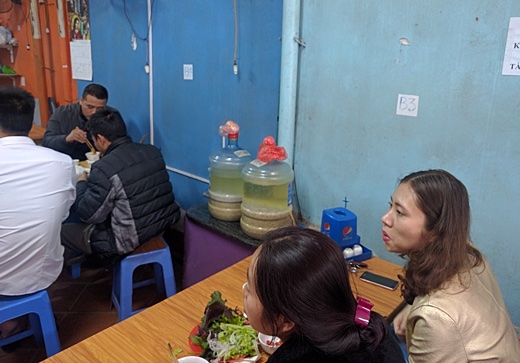
Image above: From jugs a restaurant offers home brewed rượu men, Vietnamese rice wine. Photo by Aaron Vansintjan From original article.

In Vietnam, many people might have one ‘profession’, but when you ask a bit more questions it’ll turn out that they have half a dozen other jobs for ‘extra income’. There’s a generalized ‘hustle’: everyone is a bit of an entrepreneur.

After talking with Tuan for several hours, we learned that she has, throughout her long life, fished, grown vegetables, corn, and fruit trees, sold rice noodles, bread, ice cream, roses, and silk worms. Now, aged 68, she grows decorative peach trees and grows vegetables when she can.

With an economy just decades shy of a highly regulated communist regime where the only food you could get was through rations, and the memory of famine still fresh in people’s mind, this is entirely understandable: with a finger in every pot, you can just about manage to survive. These two factors, a highly distributed food system and diversified livelihoods, make for a fertile environment for fermentation practices. 

With easy access to wholesale produce, many can turn to small-scale fermentation to compliment their income—or, in the case of Tuan, to spend less on food at the market.

Preserving the Harvest, Bringing People Together

Vietnam hosts both the Red River delta and the Mekong delta—two of the most productive agricultural regions in the world. The heat and the vast water supply allow some areas of Vietnam to have three full growing seasons.

That means three harvests, and that means lots of food at peak times, and sometimes so much that you can’t eat it all. That’s another bonus of fermentation: if your food system is local, you’re bound to stick to seasonal consumption.

But by fermenting your harvest you can eat it slowly, over a long time period. It’s this principle that underlies much of fermentation culture in East Asia.

Take kim chi, a spicy fermented cabbage from Korea. Traditionally, the whole village would come together to chop, soak, salt, and spice the cabbage harvest every year. Then, these mass quantities of salted spicy cabbage were stored in large earthenware pots underground—where cooler temperatures lead to a more stable fermentation process.

As a result, you can have your cabbage all year. If you want a localized food system, you need to be able to store your food for long periods. Fermentation makes that possible.

Fermentation is also social. Fermenting large batches of summer’s bounty typically requires hours of chopping—the more the merrier. And chopping is the perfect time for sharing cooking tips, family news, and the latest gossip. In South Korea, now that kim chi production has been largely industrialized, people try to relive the social aspect of making it through massive kim chi parties in public spaces.

In a country like Vietnam, where a traditional food system still exists for a large part, fermentation remains embedded in social relations. Relatives and neighbors constantly gift each other fermented vegetables, and many dinners end with a batch of someone’s home brewed rice wine—rượu men. Fermentation lends itself well to a gift economy: there is pride in your own creation, but there is also no shame in re-gifting. And because of its low costs, anyone can take part in it.

Gastronomy, Tested with Time

It is a bit disingenuous to caricature Vietnam’s food culture as obsessed with rotting, and suggest that this is largely the result of a tropical climate. Rather, what we’re dealing here is difference in taste: what may seem strange and pungent to one culture is highly appreciated in another.

In fact, one of the greatest impressions I have of Vietnamese culture is its deep appreciation for gastronomy: subtle, complex flavors, considered textures, modest spicing and well-balanced contrasts define Vietnamese cuisine.

Fermentation is a crucial part of this culture: the art of fermentation requires paying attention to how flavours change as food transforms, understanding these chemical shifts and using them to achieve a desired affect.

It’s also clear that Vietnamese gastronomy is popular: it takes place in street food stalls, run by enterprising matriarchs, constantly experimenting with modern products and traditional flavors. It is cheap and, to ensure customer loyalty, it is surprisingly hygienic.

Street vendors rarely have fridges, nor do they have large cooking surfaces, dishwashing machines, or ovens. By and large, they make do with some knives, two bowls to wash fresh vegetables in, a large pot, a frying pan, coals or gas burners and — for products that may go bad during the day — fermentation. Having limited access to capital and consumer electronics, these vendors — most often women — ply their trade in a way that has stood the test of time.

They know the rules of hygiene and food safety, and, because they have to be careful with their money, they know exactly what kinds of food will go bad, and what kinds of food can be preserved.

In doing so, they practice a food culture that has been passed down through generations—to a time before fridges, a global food system powered by container shipping, factory trawlers, and produce delivered to far-off markets by airplane.

While modern technology has provided many benefits for our diets, there are many innovations from the past that have been abandoned as the global food system was transformed by the availability of cheap fuel. One such innovation was the fish sauce industry that flourished during Ancient Roman times.

For Romans, fermenting fish was a crucial aspect of a low-tech and seasonally-bound food system. In fact, it so happens that research now suggests Vietnamese fish sauce may actually have its origins in the Roman variant produced over 2,000 years ago.

Today, however, fermentation doesn’t fit so easily within the global food system. Harold McGee at Lucky Peach tells the story of how canned products were notoriously difficult to transport in the newly industrialized food system of the 19th century.

Apparently, until the 20th century, metal cans would regularly explode, sending shrapnel and preserved tuna flying through the decks of transport ships. This was due to heat-resistant bacteria, which continued fermenting the product long after it was heat-treated.

The solution was to subject the canned product to high temperatures over a long period of time, killing all remaining cultures, in turn changing their flavor. But in the case of fermented food, the problem has not gone away: if you want it to be actively fermenting, transporting it will risk explosions on the high seas. But heating stops the fermentation process, and kills its unique flavor.

It’s for this reason that products like kim chi, kombucha, and sauerkraut often have to be produced locally, despite increasing global demand. In some way, fermentation belies the industrial food system: the fact that it is alive means that it doesn’t quite fit in. You either have to kill it, thereby change it, or it will keep bubbling through the cracks.

A Low-tech Food System is Possible

Fermentation cultures in Vietnam give us a glimpse of what an alternative food system might look like, one that is both decentralized and doesn’t depend on high inputs of fossil fuel energy to preserve food, high waste, and high-tech. Why does this matter? Well, in a world facing climate change, we need a low-impact food system, and fast.

But there are other reasons: with increasing concern over the health side effects of common chemicals such as BPA, found in almost all cans and pasta sauce jars, people are looking to safer kinds of preservation, which aren’t killing them and their families slowly.

And with the rise of the local food and food sovereignty movements, many are realising that we need food systems that support everyone: from small farmers to low-income families.

Because of its low investment costs, fermentation lends itself well to supporting small businesses, allowing them to take advantage of seasonality while practicing a time-tested low-tech method of food preparation. Today, in response to increasing food insecurity, we are hearing increasing calls for a smarter, more efficient food system.

Proposals such as intensive hydroponic and vertical farming, big data-powered logistics systems, smart agriculture technologies, and food waste recycling apps clog the news.

But we already have a low-tech innovation that works very well. Fermentation, because it is accessible to everyone, because of its low energy requirements, and because it fits right in to a more sustainable food system, should not be abandoned in the search for global food security.


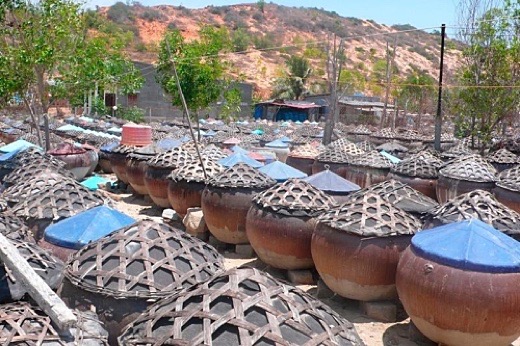
Image above: A fish sauce factory in Vietnam. Photo by Mui Ne info & events. From original article.

It’s easy to get the impression that we live in a world of scarcity, where there just isn’t enough food to go around, and food production all around the world is limited by technological backwardness. On the other hand, many of us are more and more concerned with the increasing problem of food waste in Western food systems.

We seem to live in a world of both scarcity and abundance at the same time.

Food fermentation is a strange thing: it inverts what many regard as waste and turns it into a social, living, edible object. As a friend of mine once said, if you have too many grapes, you make wine. If you have too much wine, you throw a party. If you still have too much wine, you make vinegar.

Fermentation turns scarcity and abundance on its head, belying easy categories of what is waste and what is too much.

Sustainability advocates worry a lot about making the ‘supply chain’ more ‘efficient’ — that is, increasing profits margins while making sure all food reaching consumers in a perfectly fresh state.

Instead, we could consider taking advantage of decay. This isn’t hard: you just have to add some salt and water. We’ve done it for thousands of years, and, if we follow the example of food cultures like those in Vietnam, we can do it again.
.

Jalapeño, Cilantro, Carrot Kraut

SUBHEAD: I love fermented carrots, and I think adding the jalapeños and cilantro will give them a heck of a punch.

By Jason Weisberger on 9 July 2016 for Boing Boing -
(http://boingboing.net/2016/07/09/jalapeno-cilantro-carrot-kra.html)


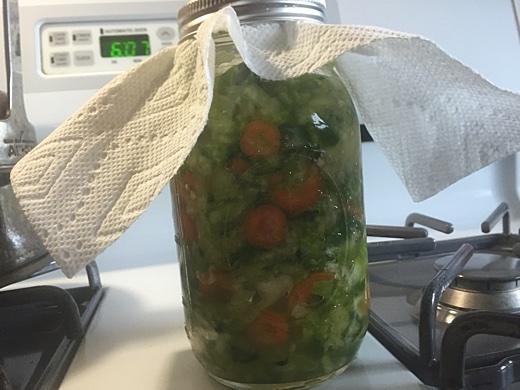
Image above: Fermenting kraut with paper towel seal on Ball jar. From original article.

Hanging out with Mark and Xeni has led to the development of a 'fermenting shelf' in my pantry.

It all started for me with Xeni recommending a Picklemeister jar for fermenting things in. A few totally failed experiments later, and then some good sauerkraut and I was hooked.

A week or so ago, Mark instagrammed a photo of some kraut he'd just put up and I was left staring at huge pile of vegetables from my CSA. I decided to start fermenting.

I've got some plain -- just the cabbage -- sauerkraut going, intending to try to make a sauerkraut soup with it, and I've started some other more flavorful jars. I still use Xeni's Picklemeister but for smaller, widely varied batches I've just been using wide-mouth Ball Jars. The one I'm most excited about is full of jalapeño, cilantro, carrot kraut.
Recipe:
  • 1 medium green cabbage
  • 4 medium jalapeño peppers
  • A couple carrots
  • 1 small bunch cilantro
  • 1 Tbs Kosher or Sea Salt, not iodized
  • Maybe some water and some more salt
  • 1 wide-mouth quart Ball Jar
Wash your hands.

Rinse the cabbage. Remove the other 2-3 leaves from the cabbage whole, set aside. Shred the cabbage. I'm from southern California and no one needs to tell me how to shred, but if you need help, Boing Boing never seeks to disappoint. Set the shredded cabbage into a large bowl.

Slice the jalapeños into rounds. You can cut them into strips, instead of rounds, facilitating the removal of seeds and membranes if you lack the chutzpah to just put them in the bowl. Similarly cut the carrots, and put them in the bowl. I feel there is something wrong with cutting the peppers into strips, and the carrots into rounds, however. Stay consistent with shape! Do not mess with my OCD!

Sprinkle slightly less than 1 Tbs of coarse salt over the mix. Toss the mix and salt around a bit.

Rinse, or wash your hands.

Smash the cut veggies together with your hands repeatedly. Treat the assortment of plant matter as if it were someone you wanted to teach a lesson to, but not permanently disfigure or damage. Smash! Smash! Smash! After 7-10 minutes of free therapy, you should have a soggy pile of leaves 'n stuff, with a good amount of salty plant juice at the bottom of your bowl. Get your Ball Jar.

I wash mine on the hot/sterilize cycle in my dishwasher, and then use them. You want the jars to be clean. Freshly washing them out with hot, soapy water and rinsing will likely be just fine. I do not worry about any sort of fermentation lock, but there are some great options for Ball jars. Pack the vegetable matter into the jar.

When you reach the bottom of the shoulder of the jar, stop and smash it all down one more time so you've got 1/2 cm of space or so below the shoulder of the jar. You should have left over veggie mix. I find that making a little extra ensures I've got enough brine to cover. Pour the brine over the cabbage leaves, and tap the jar a few times to get all the air bubbles out/voids filled with brine.

Trim one of the reserved cabbage leaves, and use it to cover the smashed vegetable mix, pushing it down into the brine. The idea is to use the cabbage leaf to hold the mix all under the brine. Once thats in place, I take a paper towel and screw the outside of the Ball jar lid down over it. The paper towel keeps dust and bugs out, while letting the fermenting mass off gas.

Should you not have enough brine just mix 1 tsp of salt with 1 cup of water. It'll be MORE than plenty. Idea, however, is not to add water without keeping the salinity up. The saline water helps keep bad bacterias and yeasts from taking over the fermentation.

Wait 7-10 days and taste it. If you obsessively check your fermenting kraut, like I do, you can mash it down to make sure all the vegetable matter is submerged in brine, stuff that pokes out can encourage bad bacterial growth. Likely, it'll all be fine. When fermenting always go with the old "Relax, have a home-brew" approach.

I love fermented carrots, and I think adding the jalapeños and cilantro will give them a heck of a punch.

See also:
Ea O Ka Aina: Good, Good, Good, Good Bacteria 6/7/15
Ea O Ka Aina: "Sauerkimchi" Recipe 3/14/14
Ea O Ka Aina: Fermaculture! 4/29/13
Ea O Ka Aina: Fermenting Sauerkraut 6/23/12
.

Good, Good, Good, Good Bacteria

SUBHEAD: Fermented foods are healthy low-energy users – they require no cooking or refrigeration.

By Elisabeth Wiknler on 29 May 2015 for Sustainable Food Trust -
(http://www.resilience.org/stories/2015-06-04/good-good-good-good-bacteria)


Image above: Step in a recipe for fermented kimchee. From (http://www.chow.com/recipes/29505-basic-napa-cabbage-kimchi-kimchee).

Recent research on the role of bacteria suggests we need a radical rethink about what makes us healthy. Thanks to advances in genetic sequencing, scientists are starting to discover, categorise and understand the importance of the vast universe of microbial organisms that live invisibly on, in and around us.

In May, results from studies conducted by Tim Spector, professor of genetic epidemiology at King’s College London, showed that a ten-day diet of junk food caused the loss of 1,300 species of beneficial bacteria in the intestines. Professor Spector said: “Microbes get a bad press, but only a few of the millions of species are harmful, and many are crucial to our health.”

Instead of bacteria being our deadly foe, it turns out the vast majority are really our best friends – and our oldest. According to the Human Microbiome Project, our ‘live-in’ molecules – the single cell organisms including bacteria and fungi that are neither plant nor animal but in a category of their own – have evolved symbiotically with us and our pre-historic ancestors since time began.

Like the best of relationships, we are inter-dependent. We provide energy via food to our single-cell friends: in return they perform a myriad of life-giving activities.

As it is in our gut, so it is in the soil. The idea articulated by SFT director Patrick Holden that healthy topsoil thrives because of microbial activity – functioning in a similar way to human digestion – illustrates the interconnectedness of everything. In the dark of topsoil, microscopic microbes perform vital tasks to maintain the health of soil life. Meanwhile, in the dark of our digestive system, trillions of tiny microbes are likewise busy keeping our bodies healthy.

The role of beneficial bacteria is multi-functional. A key role of both soil and gut bacteria is digestion. These beneficial bacteria break down nutrients into digestible forms that can be assimilated by the plant’s roots, or the gut lining in our intestines, enabling both plants and humans to thrive. As well as bacteria being an essential component of digestion, beneficial bacteria also help to repel disease and are a key component of a healthy immune system.

The number of microorganisms living invisibly in the world is mind-boggling: one teaspoon of rich garden soil can hold one billion bacteria along with fungi and other microorganisms. As for the bacteria in a symbiotic relationship with us, the majority live in the walls of our intestines. This community of diverse bacterial species, called the gut microbiome, weighs about two kilos.

There is a clear analogy between soil and human digestion and, according to nutritionist and author Daphne Lambert, there is also a direct relationship. In her soon-to-be-published book Living Food: A Feast of Soil and Soul, she traces the origins of soil eating for health, drawing on recent studies to argue for increased exposure to soil to build immunity.

She writes, “Today our food industry kills off these organisms and together with our excessively clean households this means few if any of these soil-based organisms manage to find their way into the human digestive system.”

According to Lambert there is evidence to suggest that the ingestion of soil-based organisms from a vibrant, healthy soil enhance the functioning of our gastrointestinal tract. But our modern lifestyles break the link between healthy soils and healthy humans, with less people than ever before working on the land and every last trace of soil washed off the vegetables we buy.

But what about the scary bugs? Small children are naturally drawn to soil but it’s usually us adults who start freaking out about the dirt. Take heart that the benefit of handling soil far outweighs the risks. First, the good bacteria outnumber the bad. Second, we develop the capacity to deal with the bad ’uns by the very practice of being exposed to microbes in the first place.

First proposed in 1989, the hygiene hypothesis in medicine shows that we do small children a disservice by keeping them in a sterile environment. Getting down and dirty is how our immune system learns to defend us from disease.

Children who develop healthy immune systems in this way will doubtless be better able to resist infections. However, a word of caution: a great deal of our soil has had its inherent health degraded by intensive agricultural methods and intensive farms can be breeding grounds for dangerous bacteria such as E.coli O157, so hand washing hygiene is called for in some situations.

Ideally, we should be able to ditch our antibacterial cleaners too. Rather than obliterating all bacteria, we could take a leaf out of traditional Asian cultures and clean our houses with a fermented solution of probiotics that feeds good bacteria, which then eat up the bad smells, dirt and grease caused by harmful bacteria.

Yet, in our spoiled and imperfect world there will be exceptions here too, and caution is needed, especially when preparing chicken, which is so often a source of campylobacter infections.

Good bacteria in food
Just as we can colonise our homes and soil with good bacteria, so we can restore health to our gut.

When it comes to the human diet, nutritional therapists commonly agree that the best way to create good gut bacteria via what we eat is to eat more as our ancestors ate and adopt a three-step approach: reduce sugar, raise fibre and eat fermented foods.

Take sugar first. Or rather don’t! Bad bacteria feed on sugar and they start complaining when they don’t get it. Based on a review of recent scientific literature, US researchers found that gut microbes may cause us to crave the very nutrients they need to grow, by releasing signaling molecules into our system.
You can diminish bad bacteria by giving your good bacteria a boost with prebiotics, or fibre on which good bacteria feed. As Lambert explains:
“The intestine lacks the enzymes necessary to break down oligosaccharides so they move through to the colon where they serve as food for beneficial existing bacteria so they grow and multiply, squeezing out bad bacteria. Oligosaccharides are found in many foods but there is a major one for each season: onions in winter, asparagus in spring, leeks in summer, and Jerusalem artichokes in autumn. Nature really has got it right.”
Finally, fermented foods are important. Bacteriology may be in its infancy, but, according to author and food campaigner Michael Pollan, every traditional food culture has fermented food in its diet. Think sauerkraut, chocolate, tamari and kimchi.

“Fermented foods not only produce amazing tastes, they also increase nutrients,” says Lambert, who also runs fermentation workshops. “Growing colonies of microbial cultures makes nutrients more available, and also increases them, including vitamins and especially Vitamin B.”

Fermented foods are low-energy – they require no cooking or refrigeration. By preserving summer foods throughout long winters or saving food from decomposition in tropical heat, humans have survived inhospitable climates. Captain Cook famously took sauerkraut (fermented cabbage) to reduce scurvy on his sea voyages.

Most bacteria are notoriously hard to culture in a petri dish, so our knowledge of bacteria’s many uses is still severely limited. One of the most widely known bacteria is Lactobacillus acidophilus – the Latin for acid-loving milk bacterium – which predigests food, transforming, for instance, milk into yogurt.

“The more foods you eat that aid digestion the better, and in many cases these foods are beneficial because of bacteria,” says Lambert. “It is about understanding our relationship with bacteria – not annihilating them. By declaring war on bacteria, we are declaring war on life itself.”

Currently being crowdfunded at Unbound, Living Food: a Feast for Soil and Soul celebrates a gastronomy that is good both for human and planetary health. The following extract features two recipes from a collection of more than 70.

Fermented vegetables
Cabbage is cheap to buy. Once fermented, it adds complex and delicious flavours – one of the joys of life.

Sauerkraut
3 medium-size white cabbage heads (about 2 kilos)
1 four-litre clean glass jar
2–3 tablespoons sea salt
Shred the cabbage and place it in a large metal bowl. Sprinkle over one tablespoon of salt and pound gently with a wooden rolling pin to help pull the water out of the cabbage. Cover with a cloth and leave overnight. The next morning, place about two inches of cabbage into the glass jar and press firmly down, sprinkle with a little salt and repeat until the jar is full. As you layer up you can add spices and herbs to flavour.

Firmly compress the layers of cabbage. Place a weight on top like a jam jar filled with water to make sure the cabbage is completely submerged by the brine (if necessary add a little water). Cover with a cloth to protect from flies. Every day, push the cabbage gently down. Let the jar sit at room temperature. After a week the cabbage has fermented sufficiently to be eaten, but you can leave it for a further couple of weeks. If you are not going to eat the cabbage straight away, fit with a lid and store in a cool, dry place where the tangy flavour will continue to develop. Once you start eating the cabbage, keep it in the fridge.

Fermented grains
Many grains in different parts of the world are made more digestible through fermentation: in Japan the soya bean is fermented into traditional fermented foods such as tempeh, soy sauce and miso.

In Africa, millet is fermented for several days to produce a sour porridge called ogi, and in India rice and lentils are fermented for at least two days before making idli and dosas. Corn was fermented before using in Mexico, and throughout Europe grains used to be soaked overnight in soured milk ready to make porridge in the morning.

It’s very easy to start soaking grains and this simple process is an enormous aid to digestion. Soak your chosen grain in water for a minimum of eight hours at room temperature. You can assist the process by adding a little fermented (sauerkraut) vegetable juice or yogurt.

Fermented whole oat porridge
By fermenting the whole oat grouts before cooking, the flavour of the porridge is enhanced, the grains are more digestible and there is greater nutrient bioavailability.

Place oat grouts (whole oats) in a bowl, just cover with water and leave at room temperature for two days. You can leave for longer if you choose to create a more intense acidic flavour. To assist the process, add a tablespoon of sauerkraut juice, apple cider vinegar or kefir to the water.

Strain the oats, saving the soak water, then simply eat the grains as they are with soaked nuts and seeds and seasonal fruits. Alternatively, you can cook the grouts, either in the soak liquid or fresh water, depending on your flavour preference. Gently heat the oats and cook very slowly until thick and creamy. Add a pinch of salt and serve with whatever you fancy.

.

Soil is the stomach of the plant

SUBHEAD: The soil surrounding a plant’s root zone is effectively its digestive system, or ‘stomach’.

By Patrick Holden on 17 April 2015 for Sustainable Food Trust -
(http://sustainablefoodtrust.org/articles/soil-stomach-plant/)


Image above: Photo of author Patrick Holden on the soil by Steph French from original article.

I am a long-standing farmer and representative of the organic movement, but it is only recently that I have come to see just how much microbiology permeates every aspect of our lives.

Although theoretically and mechanistically I knew this a long time ago, and was aware of the importance of soil biology and mycorrhizal fungi, it was only in 2012 that it really began to dawn on me how understanding the intimate, biological and symbiotic processes involved in my own digestion sheds light on the equivalent processes taking place in the soils of my farm.

In 2012 I heard a conference speech by Patricia Quinlisk, Head of Public Health in Iowa, about the remarkable recovery rate – up to 80% – of patients with digestive infections after they had received fecal microbiota transplants. Where antibiotics had been detrimental to their health, introducing healthy bacteria from stools had restored their colonic microflora.

It was through understanding that the human body is a biome – by definition, a large, naturally occurring community of flora occupying a major habitat – that I realised the full meaning of soil life and how interconnected it is to all other ecosystems.

The dark mysterious world of soil biology is rarely brought to the daylight of people’s understanding, even in the organic movement, due to the assumption that this is reserved for the in-depth investigations of soil scientists.

The attention to soil during this International Year of Soils and the Berlin Global Soil Week 2015 will hopefully bring some of the fascinating discoveries of soil science to wider public awareness. However, if we understand this science only in terms of the earth beneath our feet, we miss out on seeing the awe-inspiring interconnectivity of soil with the rest of life.

Parallel digestive systems
The key concept that has changed my thinking on farming is to understand that the soil surrounding a plant’s root zone is effectively its digestive system, or ‘stomach’. Building on this parallel, my body breaks down the food I eat in an internal and, mainly, but not exclusively, anaerobic process that involves symbiotic communities of bacteria, which occupy the stomach, small intestine and large intestine.

Nutrients are absorbed through the huge surface area of villi lining the gut, a process that is mirrored in the soil, although with plants the absorption is outside-in rather than inside-out. It is in this sense that the soil and its bacterial and fungal community can be seen as analogous to an external stomach of a plant, since these organisms, including a network of mycorrhizal fungi, play a central role in breaking down organic matter into absorbable nutrients, which are available to plants through their large surface area of root systems.

Although these processes in the body and in the soil function differently, there is a fundamental link – the digestive system. This system refines and transforms the material from one organism, which occupies a low place in the food chain, to nourish another, further up the ladder.

Through digestion, organic materials are broken down and transformed into new life forms: the soil biome nourishes the plant through complex digestive processes in the topsoil and rhizosphere, and the plant matter in turn becomes animal flesh as it is transformed through another biome, in this case an internalized gut. The health of all these interconnected organisms is, therefore, centrally dependent on the health of their digestive processes.

The secret world of microbes
At the microbiological level, there is something utterly compelling about the digestive process. This microscopic world opens up a new dimension of understanding in relation to the health connections between the life of the soil and the organisms that live inside our bodies.

In the human gastrointestinal tract, approximately 1.5kg–2kg of non-human life forms, mostly beneficial bacteria and also other microorganisms, help with the process of digestion, enabling the subsequent absorption of short-chain fatty acids, while living off the energy produced by the fermentation of undigested carbohydrates.

As well as digestion, microbes perform various other vitally important roles in regulating the immune system and preventing colonisation by pathogens. The study of microorganisms, through research such as the Human Microbiome Project, has opened up new doors for understanding health. Similarly, the Earth Microbiome Project is systematically characterizing the microbial diversity across the planet.

Even mainstream soil scientists are now beginning to present us with a new and clear message that microorganisms are crucial for soil health – even though we are only just coming to realise how important they are also for our own health.

The layer of healthy topsoil, thriving with microorganisms, which covers much of the land’s surface, is in effect a vast digestive system – the collective stomach of all plants, breaking down soil nutrients into bio-available forms that plants can absorb.

The rhizosphere, or root ball, is the gut of the plant and the zone where plant roots and soil organisms interact in a whole variety of biotic, symbiotic and pathogenic relationships to enable these organisms to do their work.

Plants secrete weak acids to dissolve minerals in the soil then draw these back up in solutions. They also secrete a portion of their photosynthetic energy through their roots as chemical exudates in the form of carbohydrates and proteins, which attract and stimulate the growth of bacteria and fungi.

Without the presence of microorganisms, the mechanics of the digestive system can still function to a certain degree. Purging our intestines of microorganisms through antibiotic use will not stop us from digesting food, just as bypassing the soil ecosystem through using chemical fertilizers or hydroponics will still stimulate plant growth. However, the long-term vitality and health of plants, animals and people is centrally dependent on the presence and diversity of microorganisms, in the soil and gut respectively.

Soil microbial communities are considered the most biodiverse in the world and it is estimated that a single teaspoon of garden soil may contain thousands of species, a billion individuals and one hundred metres of fungal networks.

However, only 1% of microbes that live in the rhizosphere have so far been identified by scientists due to difficulties in getting them to grow in the laboratory. “We know more about the stars in the sky than about the soil under our feet,” says US microbiologist Elaine Ingham.

Despite the lack of scientific knowledge of the specificities of soil microorganisms, the impacts of destroying soil biodiversity by failing to maintain sufficient organic matter, the overuse of chemicals and heavy tillage are obviously detrimental for soil health and fertility.

Microbiomes as the key to good health
The biodiversity of the organisms in our guts is also crucial for maintaining health. In the human microbiome, this is determined by the specific condition of each section of gastrointestinal tract. However, the compositions of microbial communities are different among people, because the ecological conditions of individual intestines are distinct depending on age, body condition, diet, lifestyle, geography and cultural traditions.

Gut microbiomes are unique to each person – a kind of microbial fingerprint. Modern diets with high sugar content and processed foods, along with increased antibiotic use, have been shown to be detrimental to gut microbiota, which, conversely, can be improved through diets that feed the microorganisms that keep our guts healthy.

The realisation that when I eat I am not actually directly feeding myself but a diverse community of microorganisms upon which I depend for my health, has drastically changed my perception of how my interventions as a farmer can have a similar effect on the soils over which I have temporary stewardship.

Every action, from crop rotation and feeding soil bacteria and fungi with composts or manures, to aeration and careful timing of grazing and cultivation, has the capacity to enhance or diminish soil life.

This new understanding has been mirrored in the scientific community. Until very recently, the mainstream understanding of food and agriculture has been through the lenses of reductionist chemistry and engineering, while biology has been largely sidelined or ignored.

The popularized ‘microbe revolution’ and increased scientific research in microbiology has put the spotlight on linking an understanding of the human biome with the microbial life in soil. However, as with all scientific advances, there are different ways of interpreting and using this knowledge for both the good and ill health of the planet.

If we consider the ‘nature as teacher route’ when feeding the soil with compost, we literally feed it with living food that contains a whole range of bacteria and fungi. This starkly contrasts to the biotechnology route in which synthetically bred microbial solutions are being hailed as the manufactured probiotics of the plant world, which aim to increase chemical fertiliser uptake.

Similarly, if we eat patented synthetically manufactured probiotics, we bypass the diversity and potency of eating living foods such as fermented foods. For example, it has been shown that one 16-ounce serving of sauerkraut is equal to eight bottles of high potency probiotics!

We need to be really open to all scientific and technological advances, yet remain extremely vigilant of the purposes they serve. There is huge potential for harnessing new knowledge in ways that can help us address the ecological crisis, yet there is also the danger of exploitation by vested interests, which view nature’s capital as a resource to be exploited.

My personal soil challenge is to continue to explore how an understanding of soil, in all its extraordinary dimensions, can inform my future farming practices and deepen my relationship with soil in a way that increases its health.

Every farming practice has an impact and every day, as a farmer, I have the possibility of deepening my knowledge, perhaps simply by walking on the earth and learning through my feet.

Through doing so I am increasing my intuitive understanding of the consequences of my actions on the soil.

.

"Sauerkimchi" Recipe

SUBHEAD: Do you like sauerkraut and kimchi? Here's a halfbreed. Salty, sour, spicy, hot, garlicky and fermented.

By Juan Wilson on 14 March 2014 for Island Breath -
(http://islandbreath.blogspot.com/2014/03/sauerkimchi-recipe.html)


Image above: Jarred sauerkimchi after two weeks of fermentation. Photo by Juan Wilson.

This is my first experience on the way to possibly making traditional kimchi. But my take on kimchi is from the point of view of liking sauerkraut. By that I mean I like the variety of fermented vegetables in kimchi. I also like the peppery, garlicky aspect.

However, I am not a complete fan yet. I do not like the sweetness or fishiness of kimchi... at least not yet.  So this recipe I tried is basically my sauerkraut recipe (http://islandbreath.blogspot.com/2014/02/making-sauerkraut-at-home.html), but with the addition of more vegetables (daikon, chayote, carrots) and more spices (garlic, ginger, hot pepper).

Instead of fermenting this for four weeks, as I have with sauerkraut,  I let this sit for just two weeks. This was impart because the odors emanating from under the crock lid told me something special was happening.

More so than with the cabbage alone, this mix was off-gassing sooner and more sharply. The heavy crock lid gets gently lifted a bit out of its water filled channel by a blurpy pop of gas and then subsides. it's fart-like. Let me just say you would not want a six quart crock of this mix this going off in you kitchen. Thankfully, mine was out on the lanai with plenty of fresh air.

Once "harvested" the odor was not a problem to me. In fact I like it.

I find flavor of this sauerkimchi is quite different and more delicious than my regular kraut. It is not only sour and salty with the liveliness of fermentation, but also spicy, peppery, garlicky, and something else hard to describe.

This time chayote and Hawaiian pepper was the only vegetables from our garden but we are growing cabbage, carrots. I will likely experiment with our bok choy and start some daikon.

Special flavors to me are the subtle distinctions of the daikon and chayote.

Maybe next time I'll add some chopped calamari or shrimp.


Image above: I cleaned and cored the cabbage for my SauerKimchi just like I do for sauerkraut. From (http://islandbreath.blogspot.com/2014/02/making-sauerkraut-at-home.html).


"SauerKimchi Recipe"

INGREDIENTS:
3 large white cabbages (1.5# each)
2 large chinese daikon radishes (3/4# each)
2 large chayote
3 large carrots

4 cloves of garlic
1/4 cup sea salt
2 tsps ginger powder
2 tsps dried red pepper
1/2 tsp of Hawaii red pepper sauce (see below)
1/4 cup raw vinegar
5 glasses filtered water (8 oz each)

STEPS:
Clean all vegetables.
Remove soft outer cabbage leaves. Shred cabbage.
Slice across daikon 1/8" thrick, then quarter.
Slice chayote 1/8" thrick, then halve,  cut out seed.
Scrape carrots. Slice carrots 1/8" thick.
Peel four cloves of fresh garlic. Shop fine.
Mix all vegetable in crock.

Add all spices and mix into vegetables.
Add water and vinegar and mix into crock.
Let sit in hermetically sealed crock in shaded spot for two weeks.

Move fermented results from crock into one quart canning jars.
Be careful not spill or waste fluids.
Fill vegetable filled jars to top with fermenting fluid.
Seal and keep in shaded ventilated area.

Yielded 6 quarts.
Started 2/26/14. Harvested 3/12/14


Image above: This is the crock and slicer I use to shred cabbage. See Ea O Ka Aina: Making sauerkraut at home for details about equipment.

To make Hawaiian red pepper sauce I take the small (1/2"-1")  triangular peppers when they are red on the bush. I snap of the green stems and rinse them. I put them in a jar and cover them with extra virgin olive oil and add a few tablespoons of organic raw vinegar (Bragg's).  I gently mix in a few teaspoons of sea salt (white Hanapepe Salt Pond variety).

I rarely eat or even disturb the peppers. I dip the tip of a fork or knife into the oil and sprinkle a bit on what I'm going to eat.  A few drops can transform a  plate of food.

This stuff can lasts forever in a closed jar. I keep adding peppers and the oil, vinegar and salt until the peppers disintegrate. Then I start over.

See also:
Ea O Ka Aina: Making sauerkraut at home 2/17/14
Ea O Ka Aina: Fermaculture! 4/28/13
Ea O Ka Aina: Fermenting Sauerkraut 6/23/12
Ea O Ka Aina: Green Papaya Sauerkraut 10/14/09


.