Birthday Card

SUBHEAD: The distant roar you hear today is neither Nascar nor Niagara. It's the sound of institutions crashing.  

By James Kunstler on 4 July 2011 for Kunstler.com - 
  (http://kunstler.com/blog/2011/07/birthday-card.html)

 
Image above: From (http://www.pixeljumpers.com/2010/10/05/nascar-the-game-2011-screens-and-trailer).

Do you, too, sense the dread abiding in our annual celebration of national wonderfulness? Outside today's barbeque bubble the dark shapes of wild events loom, exciting primal fears of unresolved woe and travail. Yesterday, I saw a man on a back street of a small town with spider webs tattooed on his elbows and a screaming skull on the back of his neck. America, meet your new normal: a citizenry of exterminating angels.

Our political exertions mean nothing to them. They think Ronald Reagan was the offspring of John Wayne and Minnie Mouse and the House of representatives is a reality TV show about home improvement. Once they are on the loose, even Rush Limbaugh and other like-minded jingo creeps of the airwaves will despair.

Old Allen Ginsburg got it right fifty years ago: "America, go fuck yourself with your atom bomb," he said. Even back then, in the age of purple people eaters and the weird neutered figure of Ozzie Nelson lurking in kitchen with nothing to do but drink endless cups of coffee, all was not so well.

Freedom to cruise for burgers turned out to be a pretty trashy thing, considering all the blood and sacrifice that preceded those days of fun in the California sunshine. Look at California now: Nathanial West Meets Aztlan (coming soon on home video). Who put that locust in my burrito?

Do you ever wonder what Mr. Jefferson would think looking around Virginia today? All those farms of his sturdy yeomanry turned to tract McHousing for lobbyists from pharmaceutical industry; the Beltway traffic at Tysons Corner; the Richmond International Speedway. 
I'd like to take ole Tom to Nascar on the Fourth of July to meet the futurity of 1776, put him on a seat right behind the crash barrier, stick a long-neck in his left hand, a cheese-steak in the other, and one of those hats crafted of flattened beer cans on his philosophy-filled noggin.

What would he make of the celebrity drivers in their logo-covered jumpsuits, not to mention the activity to which they dedicate their youthful energies: roaring around an oval circuit in flame-spewing carriages. 
There was no analog for this is Tom's time, except perhaps the alter-pieces of Hieronymus Bosch - and there was no color lithography in those days, so he may well never have actually seen that particular depiction of hell.

I'm sure the speedway spectacle would drive him batshit. Five minutes into a Sprint Cup heat, Tom runs shrieking to the piers of Norfolk in search of a passage to France....

Science knows: not all experiments come out the way you expect. Here you have the North American continent, filled with untold natural riches, splendid waterways, six feet of loam on the trackless prairie, timber galore, gold, silver, borax, buffalo, passenger pigeons innumerable darkening the skies! All in all, a pretty high-percentage deal.

And it took only a couple of hundred years to turn it into a set of interconnected parking facilities, that is, to fuck it up royally (even though we are officially opposed to royalty). Too bad none of the Founding Fathers was a traffic engineer. He might have advised against recent developments.

And now the experiment is foundering. It's been nice not thinking about it so much for a day or two. I spent one afternoon canoeing down a local trout stream called the Battenkill.

Even this will be impossible in a few years, because you need a couple of cars to do it - one at the put-in and one at the take-out. So it is not that far removed from Nascar, really. And the darn canoe itself is made of some rubberoid petroleum derivative So shame on me.

All I can say is they weren't selling cheese steaks and beer can hats along the bank and the ospreys do not wear the Budweiser logo on their under-wings. It was shockingly beautiful along the river.

I thought about all the people battling their way hopelessly on the I-30 freeway through Dallas, or the I-405 in L.A., or the I-85 in Atlanta and almost squeezed out a few crocodile tears for them. When "this sucker goes down," in the immortal words of a recent former president, we'll all fall pretty hard, wherever we may live. I wish I knew what the hell we are really celebrating today.

Surely many in this nation see an approach to an abyss. I wish we could get our heads together before it gets here or we get there. There is so much to do besides what we are busy doing now, keeping a set of stupid rackets spinning just because they are our rackets and we're used to them.

Among other things, in case you haven't noticed, money is going extinct. The distant roar you hear today is neither Nascar nor Niagara. It's the sound of institutions crashing. I guess, like Scarlett O'Hara, we'll think about it tomorrow. Happy Fourth of July everybody. Happy birthday, America.
.

Happy Serfdom Day!

SUBHEAD: Happy Fourth of July. Enjoy it while it lasts. And maybe save some for your kids. By Ilargi on 4 July 2011 for the Automatic Earth - (http://theautomaticearth.blogspot.com/2011/07/july-4-2011-serfdom-day.html) Image above: 2011 July 4th celebration in Waxhaw, North Carolina. From (http://www.waxhaw.com/index.asp?Type=B_BASIC&SEC={54FC3820-1D60-4B8F-A7BB-DC726C2B31A4}). Independence, right? Fireworks and all, fighter jet fly-overs. Boy, are we ever free! Got to wonder, though, how much longer these celebrations make any sense. See, in Greece they're fast losing their freedom and independence. The country may still be a sovereign nation in name, but are the Greeks still a sovereign people? According to Erik Kirschbaum at Reuters, Eurogroup chairman Jean-Claude Juncker thinks not:
Greek sovereignty to be massively limited: Juncker
Greece faces severe restrictions on its sovereignty and must privatize state assets on a scale similar to the sell off of East German firms in the 1990s after communism fell [..] "The sovereignty of Greece will be massively limited," he told Germany's Focus magazine in the interview released on Sunday, adding that teams of experts from around the euro zone would heading to Greece. [..] The Greek parliament voted on Thursday to set up a privatization agency under austerity plans agreed with the European Union and IMF which have provoked violent protests on the streets of Athens. Greeks are acutely sensitive to any infringement of their sovereignty or suggestions of foreign "commissars" getting involved in running the country. "One cannot be allowed to insult the Greeks. But one has to help them. They have said they are ready to accept expertise from the euro zone," Juncker said. Athens must sell off five billion euros in state assets this year alone or risk missing targets set under its EU/IMF program, which could cut off its funding needed to keep the government running and avoid a debt default. A repeat of Germany's Treuhand experience may prove bitter for Greeks, who are already suffering soaring unemployment as a recession drags into its third year. Once the world's biggest holding company, Treuhand was supposed to sell off state property at a profit but closed its books with a huge deficit and a legacy of bitterness among the legions of workers whose jobs it destroyed. Four million Germans were employed by Treuhand-owned companies in 1990 but only about 1.5 million jobs were left in 1994 when the agency closed. Instead of reaping profits to be distributed to all east Germans, as it was designed to do, it ran up debts of 270 billion marks ($172 billion) in the fire sale of assets.
To call Treuhand an abject failure would be a gross understatement. Still, Juncker cites it as an example for Greece. Lovely. Well, to be honest, it was a failure only for the people. Not for banks and industries. Viewed from that angle, it all makes sense. As does openly stating that Greece will be massively limited in its sovereignty. It all depends whose interests you're protecting, after all. And no, we're not just talking Greece here. From the Guardian:
Sell, sell, sell: everything must go in great fire sale
Greece Europe's most ambitious sell-off is taking place in its most indebted nation: Athens plans to sell €50bn (£45bn) of state assets by 2015. Looking at the sales list, it seems that very little has been left off the table. The government's stakes in the ports of Piraeus and Thessaloniki, 39 airports, a state lottery, a horse-racing concession, a casino, a national post office, two water companies, a nickel miner and smelter, hundreds of miles of roads, a telecoms operator, shares in two banks, electricity and gas monopolies and thousands of hectares of land, including coastal stretches, are among the host of assets on offer.[..] Ireland The national airline, ports, power stations and even the Irish National Stud, which hosted a visit by the Queen in May, face being broken up or sold off under plans to get Ireland out of the red. A government-commissioned review of state assets published in April said privatisation could raise about €5bn for the cash-strapped country. [..] Spain The world's biggest annual lottery payout, Spain's famous Christmas El Gordo (Fat One), spreads joy to tens of thousands of winners – but the biggest winners of all may soon be investors who snap up part of the state company behind the lottery. [..] Some 30% of the state lottery will be sold as the organisation behind the 151-year-old El Gordo becomes what may be the world's biggest listed gambling company, valued at up to €25bn. The company recorded €3bn net profit in 2009 on sales of €9.8bn – meaning the sell-off will reduce treasury income by about €1bn a year. RBS recently won a contract to run the privatisation of up to 49% of Spain's airports authority, AENA, which has a book value of €2.6bn. The government also plans to auction off Madrid's Barajas airport and Barcelona's El Prat by the end of the year. Reform of the country's savings banks means that many will also soon be seeking stock market listings. [..] Portugal Neighbouring Portugal is in even starker need of money after accepting a €78bn bailout. On Thursday, the newly elected centre-right prime minister, Pedro Passos Coelho, announced a rush sale of state holdings in the utility company Energias de Portugal and the power-grid operator REN by October. Passos Coelho recently told the Financial Times that he wanted to sell off up to 49% of water utilities as well as several state media interests, reportedly including television and radio channels, plus the national news agency Lusa. The state airline TAP and the airport owner ANA – which runs airports in Lisbon, Faro, Oporto and the Azores – are also due to be sold along with the insurance business of the state-run bank CGD [..] Britain The coalition government in Westminster is in the process of selling off the 49% state stake in the air traffic control service Nats, decommissioned naval ships and its own collection of fine wine. In the March budget the chancellor, George Osborne, set a target of raising £2bn from asset sales to finance the Liberal Democrat's idea for a green investment bank. The bulk of that is coming from the sale of its remaining stake in Nats and the Tote, the government-owned bookmakers. The private bookmakers Betfred have been chosen to buy the Tote for a reported price of £200m. [..]
By the way, Richard Milne at the Financial times reports that S&P have said the Greek bailout will be declared a default (credit event) anyway:
S&P threatens Greece with default
French and German banks’ plan to roll over their holdings of Greek debt suffered a huge blow on Monday as Standard & Poor’s, the credit rating agency, said the move would amount to a default. The proposal to provide up to €30bn ($43.6bn) in financing for Greece had been made conditional on rating agencies not downgrading Greece’s debt. But S&P said in a statement early on Monday that any rollover would be a “distressed” transaction and thus lead to Greece’s rating being lowered to selective default. Such a move all but scuppers the rollover proposal in its current form. It is also likely to further heighten European scrutiny and scepticism of rating agencies, who are blamed by some for stoking the eurozone debt crisis as well as having missed the causes of the 2008 financial crisis. The euro erased all its gains against the dollar and European markets were seen opening lower on Monday morning on the news. S&P said both proposals put out by the French banking federation last week – and broadly endorsed by both German banks and other global financial institutions – would amount to a default.
That would indeed seem to be the only logical conclusion. But the IMF and ECB may have more up their sleeves yet. The best way to look at the bailout plan, meanwhile, is provided by Wolfgang Münchau at the Financial Times:
The Greek rollover pact is like a toxic CDO
It was always clear that European politicians would ultimately end up trying a complex debt product to solve the crisis. If you want to “kick the can down the road”, as the wearily favourite metaphor of the crisis goes, if you want to obfuscate facts and circumvent rules, then a variant of a collateralised debt obligation seems the perfect choice. I wonder what took them so long. I have no space for a large drawing with lots of boxes and arrows to explain the complexity of the vehicle, through which eurozone governments want to involve the private-sector banks in its next loan package. So here is my best attempt in words: if you own a Greek bond that matures by June 2014, you keep 30 per cent of the redemption as cash, and roll over 70 per cent into a 30-year Greek government bond. The Greeks will have to pay an annual coupon, or interest rate, of between 5.5 per cent and 8 per cent. The precise rate will depend on future economic growth. Of the money received, Greece will lend on 30 per cent to a special purpose vehicle, another well-known construction from the subprime mortgage crisis. The SPV invests into AAA-rated government or agency bonds, and issues a 30-year zero coupon bond. The purpose of this is to guarantee the principal of the 30-year Greek government bond that you just bought. With this construction, the downside to your losses is limited. Depending on how some of the parameters of this agreement evolve, you will probably make a small loss, relative to the par value of your holding. If you are lucky, you might come out positive. You will probably not be lucky. But you will still be better off than if you sold today, or if Greece were to default. More important, the accounting rules allow you to pretend that you are not making any losses at all. If this was any other field of human activity, you would go to jail if you accepted, let alone made such an indecent offer. [..]
So when everybody sells everything, where do we draw the line between a sovereign nation and one that is "occupied"? It's hard to say, granted, but I would think that a people that wants to be in charge of its own destiny would want to always retain control of its transport and energy infrastructure: roads, waterways and ports, energy sources and supplies, etc. Control over health care services and schools seems obvious too, if you want to be and feel independent. And we haven't even mentioned land yet. The prevailing ideology, however, has become the privatization of everything that's not bolted down (and even then...) The underlying notion, of course, is that private business is more efficient than government in running all sorts of services. Whether that's true or not is up for debate, but there's another factor at play as well: private businesses are run for profit, and profit implies growth. The question than must be asked if we really want our hospitals and prisons to be run as growth industries. After all, that would at some point necessarily mean we need more sick people, and more criminals. Yeah, you're right, that does look a lot like what we already have in the US, doesn't it? And while the examples above deal with European nations selling off their goodies, the same happens stateside of course. Individual states, as well as counties and municipalities, are auctioning off roads and buildings as fast as they can, in desperate and doomed attempts to make budgets whole. Just like Greece does. All while awaiting the economic recovery that never seems to come, or not quick enough, or not enough enough. The problem is that this economy, these economies, will never recover. They will never return to where they once were. They won't even return to where they are now. Because there is so much debt all around, and our leaders refuse to let the institutions that incurred it pay the bill, there's a huge amount of downside waiting for us. And selling off what should have been our children's inheritance is not going to change that. It will only make their lives that much harder. They will indeed not be sovereign people, they will not hold control over their own societies. And they will therefore have no reason left to celebrate their Independence Day. They will be serfs. Debt slaves. The gutting of societies and their independence is not new by any stretch of the imagination. The gutting of our present societies, too, started a long time ago, with the ideas propagated by Milton Friedman and his Chicago School criminal racket. What cannot, however, be put at Friedman's feet, is the devastation to the world we live in caused by the derivatives trade. And that, to repeat myself, is where today's real danger lies. I'll leave you with something that Chris Whalen wrote on the topic two weeks ago. Happy Fourth of July. Enjoy it while it lasts. And maybe save some for your kids. .
.

Happy Independence Day!

SUBHEAD: As an indigenous person, I'm found guilty of sleeping on my ancestral land without getting a permit.  

By Joan Conrow on 1 July 2011 for Kauai Eclectic - 
(http://kauaieclectic.blogspot.com/2011/07/musings-promises-and-promises.html)

 
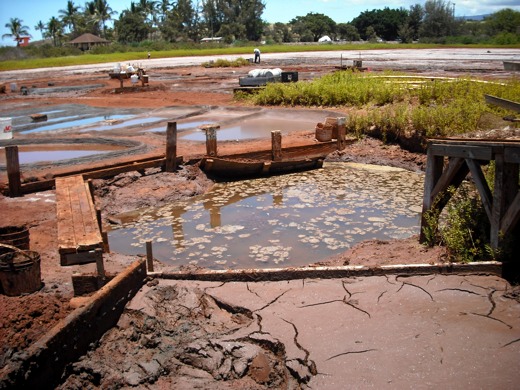
Image above: Hawaiians making salt the old fashioned way in 2009. Salt Pond Beach Park is in the background. Photo by Juan Wilson.

As we head into the Fourth of July weekend, with America noisily celebrating itself as the supposed “land of the free and home of the brave,” it’s easy to forget about the indigenous people who were deprived of their land so the U.S could make a nation.

But yesterday, that issue came again to the forefront when several members of the Reinstated Government of Hawaii were sentenced for “camping without a permit” for sleeping overnight on so-called "ceded lands" at Salt Pond Beach Park while holding their national elections.

They pled no contest, and Judge Trudy Senda required them to pay $10 fines after listening intently, and apparently with interest, to their statement (emphasis in the original):
Your Honor, I stand before this Court as an indigenous person in Hawai`i, found guilty of sleeping on my ancestral land without getting a permit from the government that occupies us.
By now it is well known, even to this prosecutor, that the land and the very sovereignty of the Kingdom of Hawai`i was stolen from my ancestors a little over one hundred years ago. Normally after such a crime we would expect an apology and restitution.
But those normal expectations have only been half met. The United States has apologized for stealing our land, and they have promised to return both land and sovereignty. But I stand before you today not having land returned to me, but being fined for simply sleeping on our land that has not been returned yet.
How can this be consistent with that apology? How can the prosecutor actually ask you to make me pay the State of Hawai`i, when even the State has apologized for taking our land and has promised to return the same?
I’m sure the State feels generous in asking that we only pay $10 fines. I want to say on record that there is nothing generous about fining indigenous peoples for sleeping in occupied territory without asking permission of the occupying forces.
Also, Your Honor, I want you to know that we were not just fooling around at Salt Pond that day. We were engaged in organizing our Nation, conducting citizenship drives and voting for our elected officials in our indigenous Nation, the Reinstated Hawaiian Kingdom.
In December of last year, President Obama signed a Declaration of the United Nations, further promising rights to indigenous peoples such as myself. This United Nations Declaration is now the law of the international community and the United States.
The Declaration says, and I quote, Article 3 Indigenous peoples have the right to self-determination. By virtue of that right they freely determine their political status and freely pursue their economic, social and cultural development.
Article 4 Indigenous peoples, in exercising their right to self-determination, have the right to autonomy or self-government in matters relating to their internal and local affairs, as well as ways and means for financing their autonomous functions.
Article 5 Indigenous peoples have the right to maintain and strengthen their distinct political, legal, economic, social and cultural institutions, while retaining their right to participate fully, if they so choose, in the political, economic, social and cultural life of the State.
Article 20 Indigenous peoples have the right to maintain and develop their political, economic and social systems or institutions, to be secure in the enjoyment of their own means of subsistence and development, and to engage freely in all their traditional and other economic activities."
Article 26
1. Indigenous peoples have the right to the lands, territories and resources which they have traditionally owned, occupied or otherwise used or acquired.
2. Indigenous peoples have the right to own, use, develop and control the lands, territories and resources that they possess by reason of traditional ownership or other traditional occupation or use, as well as those which they have otherwise acquired.
3. States shall give legal recognition and protection to these lands, territories and resources.
Such recognition shall be conducted with due respect to the customs, traditions and land tenure systems of the indigenous peoples concerned. Article 33 1. Indigenous peoples have the right to determine their own identity or membership in accordance with their customs and traditions. This does not impair the right of indigenous individuals to obtain citizenship of the States in which they live.
2. Indigenous peoples have the right to determine the structures and to select the membership of their institutions in accordance with their own procedures. In closing, I have pled no contest to these charges because I cannot afford to contest them, and for no other reason.
This prosecution, however small, is just one more violation of our rights as indigenous people, and one more example of law enforcement’s reluctance to give real meaning to what your government promises and promises, but never delivers. Thank you. .

"Merciless Indian Savages"

SUBHEAD: The damaging three words of the American Declaration of Independence.  

By Alison Owings on 3 July 2011 for Huffington Post - 
(http://www.huffingtonpost.com/alison-owings/a-radical-suggestion-exci_b_888897.html)

 
Image above: Photo portrait of native American Whirling Horse. From (http://www.ioffer.com/i/whirling-horse-american-indian-close-up-8x10-old-photo-144415375).

When I moved to San Francisco decades ago, I was invited to any number of July 4th gatherings. They all had two things in common. First, they were freezing. What was with this fog? Second, at someone's suggestion - I think mine, but cannot claim authorship for sure - we started reading the Declaration of Independence out loud. I had a World Almanac that contained a copy.

Yes, the New York Times prints a full page version of the original, but those old f's for s's, among other stumbles, made us choose more modern type. Our tradition was to set out the picnic stuff, run back to the car for another jacket or sweater, maybe a hat or gloves, then, once the shivering merriment was underway, pull out the Almanac, and open it to the Declaration.

We took turns, each person reading a paragraph or two, or part of one, depending on such factors as the reader's dramatic interpretation inclination, or shyness.

Then the reader would pass the book to the next person. I really liked doing this - if not then, when? - but the tradition took place years before I started working on my book, Indian Voices: Listening to Native Americans and, well, I was not paying a lot of attention to certain phrases. My Euro-centric background was just fine with Th. Jefferson's prose. So much of it was thrilling.
"He has plundered our Seas, ravaged our Coasts ..."
Whew! "... circumstances of Cruelty and Perfidy" what rhythm, what cadence, I thought. Eventually, however, we get to "domestic Insurrections amongst us," and here it comes, the phrase that distresses me so much after spending close to a decade meeting, and listening to, Native Americans, that I can barely stand to read it, nor type it.
"... the merciless Indian Savages." 
 Say what?

From the elegantly-quotable Jefferson? Yes.
"... the merciless Indian Savages, whose known Rule of Warfare, is an undistinguished Destruction, of all Ages, Sexes and Conditions."
While Native Americans celebrate this 4th of July weekend, probably with hotdogs and fireworks, and possibly a powwow (as far as I know, the day has not attained the level of dislike or dismissal in Indian country that there is towards Columbus Day), I wonder whether we might all read the Declaration of Independence out loud, consider what that three word phrase wrought, not to mention the words about "undistinguished Destruction."

Destruction of who by whom? Native people, among others, may ask. The words themselves are so savage, it is a wonder to me that there had already been a celebration of Thanksgiving.

 .

Kauai Radiation Count

SOURCE: Brad Parsons (mauibrad@hotmail.com)
SUBHEAD: Kauai radiation monitors detect radiation spike from Fukushima fallout.  

By Tim Flanegan on 23 June 2011 for Hawaii News Daily -  
(http://hawaiinewsdaily.com/2011/06/kauai-radiation-monitors-detect-possible-fukushima-fallout/)

 
Image above: Painting by Arthur Beaumont of "The Cross Spikes Club" (1946). It was an improvised bar, one of the only places where the men detonating atomic bombs in the Pacific could find entertainment on Bikini Island. From 
 (http://www.history.navy.mil/ac/bikini/bikini6.htm).

Yesterday, June 22nd, our network’s Monitoring Station on the island of Kauai, within the Hawaiian island chain, broadcast yet another Radiation Alert over the Network, at 8:08 A.M. local time – a 3 minute surge of 209, 456, and 186 CPM (Counts per Minute) respectively, accompanied by a generally elevated level leading up to that, and followed by another blip at 2:52 P.M.

The Kauai station indicates it was raining at the time, so we believe the precipitation brought down Fukushima fallout from the atmosphere.

This detection follows a similar, sustained elevated radiation level from the Kauai station on June 10th. Other than this, since the nuclear disaster in Japan, the stations on our Network that we believe to have detected Fukushima radiation in significant and noticeable levels have been limited to a couple of high altitude stations in Colorado, and an obvious one in Japan itself.

So the question is, “What is so special about the Kauai station?“. In answer, I think we what have here is “the perfect storm“:
  • First, of all the US stations on our network, Kauai is about the closest to Japan, some 3,500 miles away (Anchorage, AK is, too). And as mentioned before, within the Hawaiian chain, Kauai is the “remote outpost” farthest north and west toward Japan, as compared to our stations on Maui and the Big Island. Having said this, while proximity is important, weather patterns are of at least equal importance when considering radiation fallout.
  • The Kauai station, situated on the north shore in the community of Princeville, is in a very rainy place, getting about 60 to 80 inches per year. Some other parts of the island are in a rain shadow.
  • The radiation detector on the Kauai station is an external probe model, and the wand itself is mounted outdoors, protected under the overhanging eaves of the structure, but readily available to ”sniff” the air, which in this case is often quite wet and occasionally contaminated, apparently.
  • The Geiger-Mueller tube used in the probe is of the same pancake design as in the Inspector line of instruments, with a nominal 2″ diameter, finished out with a thin mica end window, categorizing this as an ultra-sensitive Geiger counter capable of detecting low levels of Alpha and Beta radiation, along with Gamma radiation.
So there is your “perfect storm” – in relatively close proximity, amidst a rainy environment, set up for outdoor monitoring, and using an ultra-sensitive detector.

The next order of business is to place additional monitoring stations around Kauai, in both high rainfall and rain shadow areas to provide confirming readings and to test out some of the theories offered above. We also need to correlate detections with weather patterns and movements of the jet stream, combined with any verifiable “releases” of radiation from Fukushima.

Kauai Spike not Solar Flare  
By Sdelear on 24 June 2011 for the DailyKos -  
(http://www.dailykos.com/story/2011/06/24/988341/-Fukushima:-Hawaii-Rad-Spike-not-a-Solar-Flare)
 
A couple weeks ago I wrote about a radiation spike detected with the http://www.radiationnetwork.com/ monitoring station in Hawaii. At the time a number of commentators indicated that the spike might be a solar flare. On June 22 monitoring equipment in Hawaii picked up a second radiation spike:
Yesterday, June 22nd, our network’s Monitoring Station on the island of Kauai, within the Hawaiian island chain, broadcast yet another Radiation Alert over the Network, at 8:08 A.M. local time – a 3 minute surge of 209, 456, and 186 CPM (Counts per Minute) respectively, accompanied by a generally elevated level leading up to that, and followed by another blip at 2:52 P.M
At the time of the report, no major solar flare activity was impacting the Earth. http://www.spaceweather.com/...
Radiation network gives some indication why this particular station is picking up fallout.
So the question is, “What is so special about the Kauai station?“. In answer, I think we what have here is “the perfect storm“:\
• First, of all the US stations on our network, Kauai is about the closest to Japan, some 3,500 miles away (Anchorage, AK is, too). And as mentioned before, within the Hawaiian chain, Kauai is the “remote outpost” farthest north and west toward Japan, as compared to our stations on Maui and the Big Island. Having said this, while proximity is important, weather patterns are of at least equal importance when considering radiation fallout.
• The Kauai station, situated on the north shore in the community of Princeville, is in a very rainy place, getting about 60 to 80 inches per year. Some other parts of the island are in a rain shadow.
• The radiation detector on the Kauai station is an external probe model, and the wand itself is mounted outdoors, protected under the overhanging eaves of the structure, but readily available to ”sniff” the air, which in this case is often quite wet and occasionally contaminated, apparently.
• The Geiger-Mueller tube used in the probe is of the same pancake design as in the Inspector line of instruments, with a nominal 2″ diameter, finished out with a thin mica end window, categorizing this as an ultra-sensitive Geiger counter capable of detecting low levels of Alpha and Beta radiation, along with Gamma radiation.
So there is your “perfect storm” – in relatively close proximity, amidst a rainy environment, set up for outdoor monitoring, and using an ultra-sensitive detector.
After a little digging around on the radiation network site it seems like that is a spike to 4.56 microsev/hour. For comparison, if that were a sustained reading (which it isn't) residents of Hawaii would receive (4.56 * 24 * 365 / 1000 =) 39.95 milisieverts a year. That is twice the "safe" level of 20 milisieverts used by the Japanese government to define it's evacuation area. I should stress though that one three minute peak reading is not a sustained background count.

The bottom line though is this, we should not have to rely on volunteer station reporting readings in CPM to discover what is going on in Hawaii. The EPA should set up a mobile Radnet detector near this station and make results available in a reporting format understandable to the general public.

See also:
Island Breath: Navy Plans for the Pacific 9/3/07
Island Breath: Radiation detected at Pohakuloa 5/1/07


.

US Debt Crush

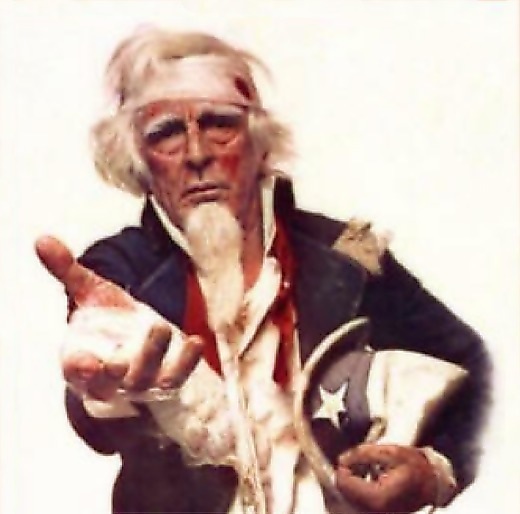
SUBHEAD:Tensions rise on Capitol Hill as America runs out of money on August 2nd. By Dominick Rushe 3 July 2011 in the Guardian - (http://www.guardian.co.uk/business/2011/jul/03/tensions-rise-america-runs-out-of-money) Image above: From (http://www.homeownershiprevolution.com/).

Not so long ago, the Onion, America's satirical "newspaper", ran a story about what had happened to the real Barack Obama. You know, the one who was all about change and "the audacity of hope". Apparently, he had been kidnapped by an imposter bent on destroying the president by turning him into a "wishy-washy loser". But with another election looming, and a new financial crisis brewing across the Atlantic, the old Obama seems to be back.

By 2 August the US must raise the legal limit on its $14.3 trillion debt or face dire consequences, and Republicans and Democrats have been locked in battle on Capitol Hill. With the crunch deadline approaching, Obama hit out at Republicans last week, saying they favoured corporate jet owners over children and the elderly. Those high-flying fat cats got six mentions in a speech that set out the president's combative stance.

"Before we ask our seniors to pay more for healthcare, before we cut our children's education, it's only fair to ask an oil company or a corporate jet owner that has done so well to give up that tax break that no other business enjoys," Obama said.

The Republicans came back just as hard. Fired up by rightwing, Tea Party-backed newcomers, the Republicans now control the House of Representatives. House speaker John Boehner said Obama was "sorely mistaken" if he believed he could muster enough votes to raise the debt ceiling and raise taxes. "The votes simply aren't there, and they aren't going to be there," Boehner warned. So bad have things got that the politicos are working tomorrow, on 4 July, the Independence Day holiday.

All this political posturing is about to have very serious consequences, according to economists. Some are predicting a second recession if it doesn't get sorted out soon. But, as the deadline approaches, both sides seem, if anything, to be toughening their stance.

It takes two votes to keep America's finances running: one vote to pass budget bills, another to borrow the money. There have been plenty of rows about the borrowing limit in the past. But after conditions are imposed and compromises reached, the limit has always been raised before the US treasury ran out of cash. This year may be different. With US debt at levels unseen in 60 years, Republicans are insisting on at least $2tn (£1.25tn) in spending cuts over 10 years and no tax increases.

If a deal cannot be reached before 2 August, the treasury says it will be forced to default on its debts. No one knows quite what that means yet. Will it choose to stop paying interest, a move that could trigger a global financial crisis? Or will pensioners, soldiers, contractors and other government workers find Uncle Sam welching on his bills?

Either way, economist argue, already jittery financial markets could go into meltdown. "When you start to voluntarily jeopardise the perceived integrity of your government in financial markets, you are creating long-term difficulties. People are never going to forget this," said David Levy, chairman of the Jerome Levy forecasting centre.

Last week 235 senior economists wrote to Washington's bigwigs, warning: "Reaching the limit on total outstanding debt could force a dramatic and sudden cut in federal spending that would destroy jobs and threaten the recovery."

Mark Zandi, chief economist at Moody's Analytics, said: "Our biggest problem now is the fragile nature of the recovery. Confidence is lacking. If anything goes off track, people freeze." He predicts that if the row continues on into July, financial markets – distracted in recent weeks by the shenanigans in Greece – will start to get more and more unsettled. "If we get to August, things will get a lot worse."

Even if an agreement cannot be reached, the US could afford to pay interest on its debts. Of every dollar the US spends, about 60 cents comes from revenues, such as taxes, and 40 cents is borrowed money. If the US gets to August and has not raised its borrowing limits, it will have to decide where to cut that 40 cents. Not paying the interest on its loans is a "nightmare scenario", says Paul Ashworth, chief US economist at Capital Economics. Markets could go haywire, with global consequences.

But the interest rate payments probably amount to 5-10 cents of that dollar, Ashworth calculates. "Even with 60 cents you could pay that. But that means massive cuts to the rest of spending. Contractors, social security, unemployment, tax rebates. Spending in the overall economy would plummet, with severe consequences."

According to the Washinton-based Bipartisan Policy Centre, if an agreement is not reached soon, the US will no longer be able to pay all its bills somewhere between 2 August and 9 August. The consequences would be immediate and "harrowing". Federal spending would have to be reduced by as much as 44% for the remainder of the month as the treasury prioritises payments to remain under the debt limit. Choices would have to be made between paying $49.2bn in social security benefits, $34.6bn in defence spending, and $12.8bn in unemployment benefits. Rating agencies, having already threatened to downgrade US debt, would probably do so. Double-dip recession, here we come.

With so many lining up to paint such a nightmarish picture, it's a wonder the political elite is not lining up to call for a solution.

"All we need now is an agreement on a broad outline on reductions in the deficit," said Zandi. "The election is the referendum on how to achieve that goal."

With 17 months still to go, that election has already begun. The reinvigorated Obama is up there championing pensioners against the jet set; his Tea Party haters are calling for greater responsibility and an end to Obama's "socialism". By the time summer hits its height, the consequences of this spat could be felt around the world.

.

KIUC Ferc Flim Flam

SUBHEAD: The $325-400,000 we stand to lose in a "no" vote is peanuts compared to the cost of a "yes" vote down the road.  

By Andy Parx on 30 June 2011 for Parx News Daily - 
  (http://parxnewsdaily.blogspot.com/2011/06/following-money.html)

 
Image above: A reproportioned photo of Kauai's Secluded Falls. From Apollo Kauai masthead (http://apollokauai.wordpress.com).

 In addition to our wholesale advocacy of a "no" vote on this FERCin' mess KIUC has gotten us into with their capitulation to Free Flow Partners' (FFP) extortion, we've been doing quite a bit of retail, taking a slew of phone calls from people for whom computers are anathema- all essentially asking "WTF?". Many just want an answer as to whether to vote "no" or "yes." But far more have read both the newspaper articles and the ballot itself along with KIUC's unbelievably slanted voters' guide. Under "your no vote means" the guide makes the claim that:
The contracts with FFP will be terminated, and all preliminary permits will revert back to FFP. This will make progress on hydro in the near term very difficult and more expensive, and more than $325,000 in contractual obligations will be due to FFP.
Even those that have read both our coverage and Joan Conrow's awesome Honolulu Weekly article and meticulously researched and presented Gold Diggers (parts 1 and 2) blog posts have asked an important question. Basically they ask "well, yes- the whole deal stinks and we should never have entered into any deal with FFP. But now that we have we stand to lose $325,000 (some reports claim it's as high as $400,000) which will inevitably show up on our bill. And we will have paid that money and not be any closer to hydroelectric power project development. Shouldn't I vote 'yes?'"

The answer to the first part is that while yes, it will cost hundreds of thousands to cancel the deal with FFP, many have not heard or glossed over a quote from Conrow's Honolulu Weekly piece which says that: 
 Bissell said no specific price was placed on the applications, which were purchased as part of a larger consulting contract. The utility has refused to disclose the full value of the contract, which includes an incentive for delivering completed projects, but KIUC attorney David Proudfoot said FFP will be paid “several million dollars if none go past the first stage." 
Given the opposition to FERC and the likelihood that, with the state's long-standing opposition and threats to sue, we will never proceed to full FERC licensing. What a yes vote means is that, although we'll have to forfeit the $325K we'd potentially be throwing away a lot more. As Conrow concluded in her second Gold Digger post:
In its permitted applications, FFP states, “The studies will be financed by the applicant.” No mention is made of KIUC. For each project, FFP estimates the cost of doing all the first-year studies — the feasibility stuff — at $100,000. The rest of the work — consultations, developing a notice of intent and pre-application document, and beginning scoping activities — is estimated to “not exceed $500,000." So even if FFP were to take all six projects all the way up to the license application, it would cost no more than $3.6 million. KIUC won’t tell us exactly what we’re paying, but KIUC attorney David Proudfoot told us at the June 4 community meeting that FFP will be paid “several million dollars if none go past the first stage.” Several is defined as “more than or three but not many.” So it sounds like we’re paying close to, if not more than, the full estimated price for bringing all six projects through the first stage, even though KIUC CEO David Bissell and some Board members have acknowledged that some of the projects will never get off the ground.
On top of that, FFP will get an incentive for delivering completed projects. The second question is a bit trickier but perhaps more revealing. The reason why KIUC says it is going through the FERC is that there is no state process for developing hydro. But we must remember a couple of things.

What many including petition initiator Adam Asquith have said, is that what we should have done- and should do- is to go to the state and say "we want to do hydroelectric projects and want to work with the state to establish a system for development and introduce and pass enabling legislation and eventually administrative rules so that we can develop environmentally and culturally sensitive and water-wise projects into the future.

And, as a matter of fact, a good place to start is the KIUC ballyhooed flow chart that FERC has already developed for public participation and alter it for our unique water laws. Certainly we're not the only ones in the state who want to develop hydropower. HELCO has the same renewable energy portfolio requirements as KIUC for the other islands.

If and when they wake up to the insanity of their "Big Wind" project and the fact that it is doomed to failure, hydroelectric is probably the next best technology in terms of cost of both development and future rates. But whether through pure laziness, corruption or pure stupidity the KIUC board of directors and administrative staff seems hell bent on committing us to a costly and widely-opposed way of going about it- one that, even if it were to succeed, would still leave us without a simpler, less costly statewide system for the next round of hydroelectric development.

The $325-400,000 we stand to lose in a "no" vote is peanuts compared to the cost of a "yes" vote down the road. Whether as a way to say no to FERC or to, in fact, SAVE us money, a "no" vote is the best option to get us out of this mess that the board of KIUC has gotten us into. That and remembering this fiasco during the next KIUC board of directors election.

See also:  
Ea O Ka Aina: Say NO! to KIUC/FFP Deal 6/13/11


 .

Impossible & Inevitable

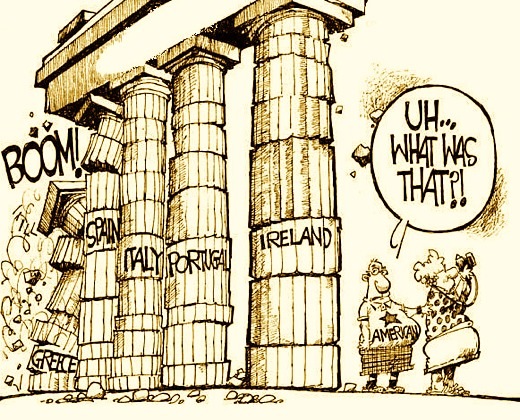
SUBHEAD: Greek debt restructuring is not a fire sale, but a "professionally managed privatisation plan". By Ilargi on 30 June 2011 for Automatic Earth - (http://theautomaticearth.blogspot.com/2011/06/june-30-2011-impossible-and-inevitable.html) Image above: From (http://www.ivorydome.us/2010/05/coming-to-a-wallet-near-you). There are 39 airports, 850 ports, railways, motorways, sewage works, a couple of energy companies, banks, defence groups, thousands of acres of land for development, casinos and Greece's national lottery. All these things are for sale in Greece. As part of the IMF/ECB/EU bailout deal Athens voted in this week, this wholesale firesale of what amounts to something close to an entire public economy, is supposed to bring in €50 billion ($72 billion). And what will Greece be left with afterwards? They’d better come up with something good, because estimates are that the firesale will fall short by some 75%. Kerin Hope, Ralph Atkins and Gill Plimmer in the Financial Times:
Greece faces 'fire sale' shortfall
The austerity measures call for an independent privatisation agency to be established within weeks to handle a programme of disposals, including the sale of strategic stakes in state- owned utilities and leases in state-owned property for tourist development. Independent research suggests, however, that Greece will struggle to raise much more than a quarter of the €50 billion it needs from the assets sales and privatisations unless it adds more prime land and cultural heritage to its sales list. Only €13bn of assets are ready to sell, leaving a €37bn shortfall, says a study by the Privatisation Barometer, a Milan-based institute sponsored by Fondazione Eni Enrico Mattei and KPMG. This includes €6.6bn from offloading stakes in 15 listed groups and an "optimistic" €7bn from the sale of 70 unlisted groups, where the yields are more difficult to assess. "At this stage, no one really knows what Greece Inc is worth, but it’s clear that it will fall short," said Bernardo Bortolotti, a corporate finance professor at the University of Turin who produced the analysis.
Greece Inc. Put up for sale by a bunch of foreign governments and creditors and a government made up of domestic elites. Something here stinks. Did the IMF, ECB and EU really have no idea at all that the firesale sale profits would be far short of €50 billion? And if they did, which looks far more likely, what does that tell us? And what happens after that disppointing sale? First, back to the reasons behind the expected firesale shortfall. Rupert Neate for the Guardian:
Debt-laden Greece finds no buyers in 'fire sale' of national assets
Nikos Stathopoulous, managing partner of BC Partners, which has invested more than €3.5bn in Greece, said investors are put off by bureaucracy, strong unions, corruption and a lack of transparency. "Even in the good times Greece is not a country that attracts investment. Foreign investors don't want to invest in a country where there is no flexibility in hiring and firing people," he said. "You don't want to invest in a country in which you wake up and a new law has been passed which totally undermines and destroys the value of the investment you've just made." Stathopoulous said investors were finding it very hard to assess the risk of investing into Greece, which means assets "will be priced at lower than they are worth, lower than the Greek government, and even the European Union, expects". Aref Lahham, managing director and founding partner of Orion Capital Managers, said most private equity firms would not buy Greek assets because the "risks are too high". He added: "I think people will not buy those assets, that is the sad truth." [..] Lahham said Greece's ambition to sell €15bn of assets by 2012 and the full €50bn by 2015 meant there was not enough time to carry out due diligence properly. "I simply do not believe the timescale. I'm afraid it is not going to happen within times - I'm afraid it is a fire sale." Christodoulakis denied that the hastily arranged sell-off was a fire sale, preferring to describe it as a "professionally managed privatisation plan". "We may sell them cheaper than [during normal conditions] but we will devote the funds to buying back debt, that means we are going to buy it back when it is cheaper." When a fellow Greek interrupted to say the sell-off was "destroying our country", Christodoulakis said there was "no point crying over spilt milk" and told his countryman to "try and be optimistic".
Well, we stand corrected. It's not a fire sale, but a "professionally managed privatisation plan". Yeah, exactly. That's what stinks here. isn't it? That's where that familiar smell comes from. It has the fingerprints of the IMF all over it. All the way back to the economic warfare the institution initiated in South America, Asia, Eastern Europe, and everywhere it goes. Greece has become the next chapter in Naomi Klein's The Shock Doctrine. Some of the faces at the IMF may have changed, but the blueprints for these kinds of operations are still the same; if anything, they've become even more perfected. Teams of economic hitmen and henchmen are sent into a country to sell everything that isn't nailed down to the highest bidder, but for the lowest price. In order to achieve the last bit, all you need to do is write an agreement that is one on one contingent on an unrealistically high estimate of a group of assets, make sure their sale falls short of that estimate, and send in the hitmen again. And then you rinse and repeat until everything has been sold off. In Greece's case, it's all transport infrastructure first, because you know nobody really wants it, hence the sale price will be much lower than what the agreement called for, and in subsequent auctions you pick up the Acropolis and other national treasures. Meanwhile, you raise taxes as much as you can, and then come back to do it again, while the public sector is gutted, along with health care, education and all those useless non-profitable parts of a society that benefit the people instead of the banks. Talking about banks, do we all still realize that all this is done to pay off debts to international banks that in many if not most cases would not even exist anymore if not for the tax revenues paid by the people of Greece, the rest of Europe, the US etc.? Or have we come to believe in "the recovery", do we now think it's real? The reason the stock markets are up after the Greek austerity vote is that the IMF has managed yet another step in yet another step financial coup, and this one inside the European Union, no less. That offers great prospects for other weaker parts of Europe. If they can do it in Greece, they can do it in Ireland, Portugal, Spain, Italy. Unless people in one of these countries say NO, and a lot louder than the Greeks have done. These things are set-ups. They have nothing to do with saving countries or their economies. They are plans to do the exact opposite: rape and pillage entire economies for the benefit of financial institutions. Read The Shock Doctrine, if you haven't yet, or re-read it if you have, and the patterns become grindingly clear. The Lex team at the Financial Times may have put it best: Greece is -being- required to "carry out the impossible in order to stave off the inevitable". And it's required to do that on purpose. Thing is, Greece is by no means the first country where the Milton Friedman Chicago School's predatory "economic theories" wreak havoc and spill untold amounts of blood in the streets. It is the first in Europe, though. They're getting ever closer to what has always been the ultimate goal: remake America in the vein of their cannibalistic insanity. .

Obama DOJ & medical marijuana

SUBHEAD: With its medical marijuana memo the US DOJ is cracks down on marijuana providers.  

Ryan Grim on 1 July 2011 for Huffington Post -  
(http://www.huffingtonpost.com/2011/07/01/medical-marijuana-memo-doj_n_888995.html)


Image above: Logo on a medical marijuana identification card. From (http://m.podbean.com/podcast-detail?pid=46715).


Medical marijuana advocates are pushing back against a new Justice Department threat to raid and prosecute medical pot shops even in states where the drug is legal.

During the 2008 campaign, Obama promised to end such raids, which were commonplace under the Bush administration. Once he took office, the Justice Department, citing that campaign pledge, issued a memo that instructed federal law enforcement officials to back off. If a person was in compliance with state and local laws, the memo instructed, just let them be.

The new memo, from Deputy Attorney General James M. Cole, purports to provide "guidance" on the previous memo, but reads more like a warning shot to medical marijuana shops. The previous memo, Cole writes, "advised that it is likely not an efficient use of federal resources to focus enforcement efforts on individuals with cancer or other serious illnesses who use marijuana as part of a recommended treatment regimen consistent with applicable state law, or their caregivers."

But it might be an efficient use of resources to target the people who sell medical pot to the very people Cole says should be shielded from federal assault. "The term 'caregiver' as used in the memorandum meant just that: individuals providing care to individuals with cancer or other serious illnesses, not commercial operations cultivating, selling or distributing marijuana," he adds.

So using the product within state laws is okay. Growing it or selling it within state laws is not.

Cole's characterization of his new memo as a simple clarification of the original memo downplays the radical departure it represents. The original memo clearly attempted to distinguish between pot shops that operated within state laws and those that bent or broke it. "[P]rosecution of individuals with cancer or other serious illnesses who use marijuana as part of a recommended treatment regimen consistent with applicable state law, or those caregivers in clear and unambiguous compliance with existing state law who provide such individuals with marijuana, is unlikely to be an efficient use of limited federal resources," the landmark 2009 memo read. "On the other hand, prosecution of commercial enterprises that unlawfully market and sell marijuana for profit continues to be an enforcement priority of the Department."

Pot shop owners and advocates are apoplectic. "Cancer patients are going to have to grow their own product or buy it on the street somewhere," said Aaron Smith, executive director of the National Cannabis Industry Association, which represents Big Pot in Washington.

Smith said he doubted that any shops would close their doors in the face of the threat. "I don't think anybody's going to close down as a result of the memo. People are nervous, but this industry -- particularly look at California, which bloomed pretty quickly during the Bush administration, when there were weekly raids."

Tom Angell, a spokesman for Law Enforcement Against Prohibition, said that "by threatening to raid state-legal and regulated compassion centers, the Obama administration is causing more patients -- and more tax-free money -- to be diverted to the violent black market, where drug cartels and gangs battle it out for profits."

Angell suggested letting cash-strapped states tax the legal sales instead. "Letting states go ahead and enact the compassion centers their lawmakers voted to create means that distribution will be controlled and safer, and plus it means that states can take in new tax revenue to help plug deficit problems," he said. "It is incumbent upon states to stand up to the federal government in the face of this belligerent federal threat letter."

Steve DeAngelo, owner of Harborside Health Center, a medical cannabis shop I profiled in the book "This Is Your Country On Drugs," said that one consequence of the new memo is the psychological trauma it will cause seriously ill people who wonder where they'll get medical pot if their shop closes down. "When things like this happen, they really send a shock through the patient community, which is vulnerable and shaky," DeAngelo said.

He also pointed to the lost jobs and tax revenue. A recent report found that the legal marijuana business registered $1.7 billion in sales the last year. The new policy would cost "tens of thousands of legal jobs, taking away hundreds of millions in tax revenue, giving 1.7 billion dollars to the cartels, and the patients go from situation where they buy tested marijuana from people with a background check, to dealing with people on the street corner," DeAngelo said.

It could have political consequences too, said DeAngelo, noting Colorado's importance to Obama's reelection. The state has a popular and booming medical marijuana trade.

Colorado, California, New Mexico and Maine have state-regulated medical marijuana shops that the memo appears to target. Oregon, Washington, Montana, Michigan, Nevada and Michigan operate in more of a grey area but boast medical pot shops. Other states and the District of Columbia are in the process of writing regulations to allow dispensaries.

DeAngelo said that he raised money for Obama in 2008, but was thinking of voting for a Republican such as Ron Paul in 2012. Either way, he said, he's not closing Harborside. "We made our decision five years ago when we opened our doors, come hell or high water," he said. "They can come close me down, but I will not do it voluntarily under any circumstances whatsoever."

Read the full memo:
June 29, 2011
MEMORANDUM FOR UNITED STATES ATTORNEYS
FROM: James M. Cole Deputy Attorney General
SUBJECT: Guidance Regarding the Ogden Memo in Jurisdictions Seeking to Authorize Marijuana for Medical Use
Over the last several months some of you have requested the Department's assistance in responding to inquiries from State and local governments seeking guidance about the Department's position on enforcement of the Controlled Substances Act (CSA) in jurisdictions that have under consideration, or have implemented, legislation that would sanction and regulate the commercial cultivation and distribution of marijuana purportedly for medical use.

Some of these jurisdictions have considered approving the cultivation of large quantities of marijuana, or broadening the regulation and taxation of the substance. You may have seen letters responding to these inquiries by several United States Attorneys. Those letters are entirely consistent with the October 2009 memorandum issued by Deputy Attorney General David Ogden to federal prosecutors in States that have enacted laws authorizing the medical use o f marijuana (the "Ogden Memo").

The Department of Justice is committed to the enforcement of the Controlled Substances Act in all States. Congress has determined that marijuana is a dangerous drug and that the illegal distribution and sale o f marijuana is a serious crime that provides a significant source o f revenue to large scale criminal enterprises, gangs, and cartels. The Ogden Memorandum provides guidance to you in deploying your resources to enforce the CSA as part of the exercise of the broad discretion you are given to address federal criminal matters within your districts.

A number of states have enacted some form of legislation relating to the medical use of marijuana. Accordingly,the Ogden Memo reiterated to you that prosecution of significant traffickers of illegal drugs, including marijuana, remains a core priority, but advised that it is likely not an efficient use of federal resources to focus enforcement efforts on individuals with cancer or other serious illnesses who use marijuana as part of a recommended treatment regimen consistent with applicable state law, or their caregivers. The term "caregiver" as used in the memorandum meant just that: individuals providing care to individuals with cancer or other serious illnesses, not commercial operations cultivating, selling or distributing marijuana.

The Department's view of the efficient use of limited federal resources as articulated in the Ogden Memorandum has not changed. There has, however, been an increase in the scope of commercial cultivation, sale, distribution and use of marijuana for purported medical purposes. For example, within the past 12 months, several jurisdictions have considered or enacted legislation to authorize multiple large-scale, privately-operated industrial marijuana cultivation centers. Some of these planned facilities have revenue projections of millions of dollars based on the planned cultivation of tens of thousands of cannabis plants.

The Ogden Memorandum was never intended to shield such activities from federal enforcement action and prosecution, even where those activities purport to comply with state law. Persons who are in the business of cultivating, selling or distributing marijuana, and those who knowingly facilitate such activities, are in violation of the Controlled Substances Act, regardless of state law. Consistent with resource constraints and the discretion you may exercise in your district, such persons are subject to federal enforcement action, including potential prosecution.

State laws or local ordinances are not a defense to civil or criminal enforcement of federal law with respect to such conduct, including enforcement of the CSA. Those who engage in transactions involving the proceeds of such activity may also be in violation of federal money laundering statutes and other federal financial laws.

The Department of Justice is tasked with enforcing existing federal criminal laws in all states, and enforcement of the CSA has long been and remains a core priority.

cc: Lanny A. Breuer Assistant Attorney General, Criminal Division B. Todd Jones United States Attorney District of Minnesota Chair, AGAC Michele M. Leonhart Administrator Drug Enforcement Administration H. Marshall Jarrett Director Executive Office for United States Attorneys Kevin L. Perkins Assistant Director Criminal Investigative Division Federal Bureau of Investigations
.

Halfway There

SUBHEAD: Take the quiet and peace you can find and cherish it. Be sure to plan a way to find more where ever you are.  

By Juan Wilson on 1 July 2011 for Island Breath - 
(http://islandbreath.blogspot.com/2011/07/halfway-there.html)


Image above: The hand of Tara Nevins, of Donna the Buffalo, on the concertina at the Great Blue Heron Music Festival. Photo by Juan Wilson.


The year 2011 is half over and were on the back straightaway and heading for the third turn. We're on the mainland and when this morning is over my wife Linda and I will be heading over to the Great Blue Heron Music Festival (http://www.greatblueheron.com) in Sherman, New York.

It's mostly old time music, zydeco, folk, world and tunes that could (if needed) be played acoustically. It's on for three days and nestled in rolling hills and woodlands and surrounded by Amish farms.

Being at the Heron allows us to escape the predominant culture's expression of subliminal violence that is the Fourth of July weekend.

Every year that midyear celebration of patriotic militarism returns with the ritual charring of meat, waving of flags and setting off explosions. Whoopie!

The fact is there is not a whole lot to celebrate in much of America. Floods, fires, draught, and poverty seem to be spreading without control as the social fabric shreds and disintegrates.

 In the last few days the state New York declared fracking for natural gas a good thing while th entire state of Texas was declared a natural disaster area... And don't forget the state Minnesota was shut down at midnight last night.

 The second half of this year should be a corker. Greece is waiting in the wings to default as the Middle East continues to roil. Take the quiet and peace you can find and cherish it. Be sure to plan a way to find more where ever you are.

 .

Libertarian camp breakfast

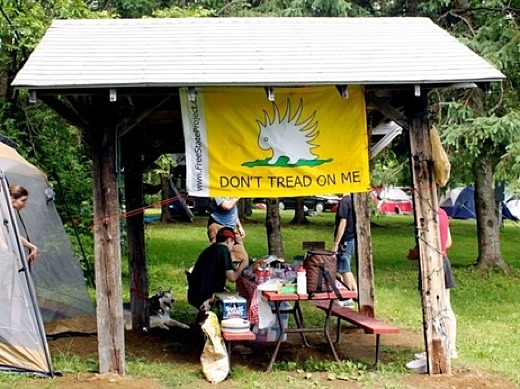
SUBHEAD: Those that try to live for even a short while without government find its harder than they expected. By Robert Smith on 1 July 2011 for NPR - (http://www.npr.org/blogs/money/2011/07/01/137534361/breakfast-at-libertarian-summer-camp) Image above: Camping out at the libertarian Porcupine Freedom Festival. From original article.

Last weekend, a group of libertarians and anarchists gathered in the woods of northern New Hampshire for the annual Porcupine Freedom Festival, aka PorcFest.

I went up for breakfast.

Lucky for me, George Mandrik has brought along 150 lbs. of bacon, which he's selling out of a tent to finance his trip to the festival. He does this thing where he weaves 10 pieces of bacon into what he calls "a little blanket," and cooks the whole thing up.

I tell him that I want to experience a government-free breakfast, and George makes his best pitch. He tells me proudly that, although he makes his living cooking, he has no permit to sell food. He's never been inspected. And he does not pay taxes. "I don't want them in my business at all," he says of the government. "If somebody wants to buy my food, it's between me and them." But of course no government means no official inspection stating that George washes his hands or that he keeps his bacon cold. As I'm asking about food safety, we are interrupted by another customer, who happens to have a handgun strapped to his belt.

"We'll regulate him," he says. "If he poisons me, I won't buy his food. And he'll be done."

The marketplace here is booming. Hundreds of people have shown up to spend the week. Many are drawn here by the Free State Project, which is trying to get libertarian-leaning folks to move to New Hampshire. You can buy just about anything you want at PorcFest — food, drugs, bootleg cigarettes or alcohol. And you don't even need U.S. government currency to do it. Someone shows me a cash register stocked with tiny pieces of silver and gold. Trying to give up the U.S. dollar means a lot of extra math. You hear it all day long. How much is silver? How many grams in an ounce? It's 8:30 in the morning, in the woods, and people are checking the precious metal prices on their cell phones. I go directly to the source. Down the hill, Ron Hellwig has set up a bank and a mint on a folding table. Ron has invented these neat little laminated cards that contain strips of silver. He has basically created a silver-based currency with different denominations — 1 gram, 5 grams, etc. I give him a $20 bill and get about 10 grams of silver in exchange. Then I head back to George's for a cup of coffee and a bacon-weave omelet. Cost: Five grams of silver. But as George is making the omelets I spot something. His eggs come in big racks approved by the USDA. And the propane he's using to cook the omelet — didn't someone have to pay gas taxes on that? "Unfortunately, it's impossible to live completely state free," George says. When I'm ready for dinner, I bring what's left of my silver currency to the Thai food tent on the other side of the campground. But the guy just shakes his head. He only takes the round silver coins, not the laminated strips of silver I have. It's my final lesson. There are no guarantees in a free market.

.

New York Governor sells soul

SUBHEAD: Gov. Cuomo lifts moratorium on fracking in much of state outside NYC drinking water supply. By Matthew McDermott on 1 July 2011 for TreeHugger - (http://www.treehugger.com/files/2011/06/new-york-governor-partially-lift-moratorium-fracking.php) Image above: Effort to extend NY moratorium on fracking failed in June 2011. From (http://inhabitat.com/nyc/ny-aims-to-extend-ban-on-fracking-for-another-year/).

Win some, (partially, maybe) lose some: As New Jersey bans fracking, the political signs are pointing to New York governor Andrew Cuomo lifting the existing de facto state ban on fracking.

According to the New York Times state officials are maintaing the ban on hydraulic fracturing in the watershed of New York City (a large area of upstate New York) and in the watershed for Syracuse, but would allow fracking to take place outside of those areas.

[Editor's note: The affected are mostly the farms and woodlands of the wide Southern Tier of western New York state that includes rural Amish country and small cities such as Jamestown, and Olean. This will transform much of western NY into something like the mountain top removal area of West Virginia.]

When the official notification will take place is at this time unknown, but the state Department of Environmental Protection is planning to release its fracking survey soon.

In fact, the governor's office is keeping mum on the issue, with a spokesman saying that speculation on when or if the ban might be lifted is "baseless" and "premature".

So speculating more, based on this report of what might happen:

The good news is that the watershed of millions of people will be protected. Phew. One major concern dealt with. The bad news is that the local water supply, food supply and safety, and air quality in those areas opened up to fracking would still solidly be at risk. Opposition to fracking is unlikely to be diminished.

.

Hawaii's Three Native Orchids

SUBHEAD: Story of successful efforts to cultivate and outplant Hawaii's rarest native orchid. \

By Jon Letman on 1 July 2011 in Civil Beat - 
  (http://www.civilbeat.com/articles/2011/07/01/11915-hawaiis-three-native-orchids)

 
Image above: Native Hawaiian orchid from slideshow in original article.

 Hawaii is often associated with brightly colored orchids. But most are commonly cultivated commercial varieties strung into lei, sold in nurseries and used for decoration and landscaping.

In fact, Hawaii has only three native orchids: Anoectochilus sandvicensis, Liparis hawaiensis and Platanthera holochila. All three species grow in the highest reaches of the islands’ forests and bogs, but it is the Platanthera, also called the fringed orchid, that is the rarest of them all.

Noteworthy is the fact that this orchid’s closest relative is another Platanthera species native to the Aleutian Islands, which is where some researchers believe the Hawaiian species may have its origins, possibly transported to Hawaii as seeds stuck to migrating golden plovers or similar birds.


While Platanthera once grew on Kauai, Oahu, Molokai and Maui (though never recorded on Lanai, Kahoolawe, Niihau or Hawaii Island), until very recently, only around two dozen wild plants on Molokai, seven on Maui and just one known plant on Kauai remained.

Steve Perlman, a veteran research biologist with the National Tropical Botanical Garden on Kauai, has been working with this rarest of Hawaiian orchids since first encountering the plant near Mt. Waialeale in 1977. 

Perlman has thoroughly researched the history of this orchid and has documented the collection records of Platanthera on Kauai from botanist William Hillebrand’s collection in the 1880s to those of V. Knudsen and J.M. Lydgate and, between 1909 and 1919, by C.N. Forbes and J. Rock. Collections were also made by R. Fosberg and H. St. John on Oahu as late as 1938, but then nothing was found until Perlman and Pieter van Royen, of Bishop Museum, found Platanthera again in 1977.

Since that time Perlman has been gathering seeds (an orchid seed is tiny, scarcely larger than lint) and sending them to nurseries and labs in the hope that they can be successfully propagated in order to infuse new life into the plant’s dwindling population. Despite the efforts of many, however, no one had ever successfully grown the Platanthera orchid from seeds ― until Perlman connected with botanist Dr. Lawrence Zettler, director of the Orchid Recovery Program at Illinois College.

Using seeds Perlman had collected from plants on Molokai and Kauai, Zettler began the long, arduous task of trying to grow new plants. The biggest hurdle to overcome, Zettler learned, was that this particular orchid required the presence of a specific mycorrhizal fungus in the soil. Experiments in 2003 first yielded positive results but with a fungus from Florida that could not be introduced to Hawaii.

As ongoing experimentation by Zettler continued to show promise, Perlman and colleagues from the Plant Extinction Prevention program on Maui and Kauai continued collecting seeds. On Kauai, there was only a single known individual in a remote bog in the Alakai Swamp.

In 2011, in what is a major victory for plant conservation in Hawaii and for all orchid enthusiasts, Zettler returned to Hawaii carrying 91 seedlings grown in sterile medium. They were divided to be grown in nurseries on Kauai, Oahu and Maui and outplanted in a fenced exclosure on Kauai and inside The Nature Conservancy’s Kamakou Preserve. Additional plans are being made to reintroduce Platanthera seedlings to Oahu, where it is believed to be extinct in the wild.
DISCUSSION: The story of orchids in Hawaii is a dramatic story of the attempt to preserve native species. What do you think about the efforts of scientists? What questions do you have? Join the conversation. .

UK PR downplays Fukushima

SOURCE: Brad Parsons (mauibrad@hotmail.com) SUBHEAD: UK officials launched a PR campaign to ensure Fukushima did not derail plans for nuclear power. By Rob Edwards on 30 June 2011 for the Guardian - (http://www.guardian.co.uk/environment/2011/jun/30/british-government-plan-play-down-fukushima) Image above: The Hartlepool Nuclear Power Plant in Britain. From (http://www.freefoto.com/preview/13-09-13/British-Energy-Hartlepool-Nuclear-Power-Station).

British government officials approached nuclear companies to draw up a co-ordinated public relations strategy to play down the Fukushima nuclear accident just two days after the earthquake and tsunami in Japan and before the extent of the radiation leak was known.

Internal emails seen by the Guardian show how the business and energy departments worked closely behind the scenes with the multinational companies EDF Energy, Areva and Westinghouse to try to ensure the accident did not derail their plans for a new generation of nuclear stations in the UK.

"This has the potential to set the nuclear industry back globally," wrote one official at the Department for Business, Innovation and Skills (BIS), whose name has been redacted. "We need to ensure the anti-nuclear chaps and chapesses do not gain ground on this. We need to occupy the territory and hold it. We really need to show the safety of nuclear."

Officials stressed the importance of preventing the incident from undermining public support for nuclear power.

The Conservative MP Zac Goldsmith, who sits on the Commons environmental audit committee, condemned the extent of co-ordination between the government and nuclear companies that the emails appear to reveal.

"The government has no business doing PR for the industry and it would be appalling if its departments have played down the impact of Fukushima," he said.

Louise Hutchins, a spokeswoman for Greenpeace, said the emails looked like "scandalous collusion". "This highlights the government's blind obsession with nuclear power and shows neither they, nor the industry, can be trusted when it comes to nuclear," she said.

The Fukushima accident, triggered by the Japan earthquake and tsunami on 11 March, has forced 80,000 people from their homes. Opinion polls suggest it has dented public support for nuclear power in Britain and around the world, with the governments of Germany, Italy, Switzerland, Thailand and Malaysia cancelling planned nuclear power stations in the wake of the accident.

The business department emailed the nuclear firms and their representative body, the Nuclear Industry Association (NIA), on 13 March, two days after the disaster knocked out nuclear plants and their backup safety systems at Fukushima. The department argued it was not as bad as the "dramatic" TV pictures made it look, even though the consequences of the accident were still unfolding and two major explosions at reactors on the site were yet to happen.

"Radiation released has been controlled – the reactor has been protected," said the BIS official, whose name has been blacked out. "It is all part of the safety systems to control and manage a situation like this."

The official suggested that if companies sent in their comments, they could be incorporated into briefs to ministers and government statements. "We need to all be working from the same material to get the message through to the media and the public.

"Anti-nuclear people across Europe have wasted no time blurring this all into Chernobyl and the works," the official told Areva. "We need to quash any stories trying to compare this to Chernobyl."

Japanese officials initially rated the Fukushima accident as level four on the international nuclear event scale, meaning it had "local consequences". But it was raised to level seven on 11 April, officially making it a major accident" and putting it on a par with Chernobyl in 1986.

The Department for Energy and Climate Change (DECC) has released more than 80 emails sent in the weeks after Fukushima in response to requests under freedom of information legislation. They also show:

• Westinghouse said reported remarks on the cost of new nuclear power stations by the deputy prime minister, Nick Clegg, were "unhelpful and a little premature".

• The company admitted its new reactor, AP1000, "was not designed for earthquakes [of] the magnitude of the earthquake in Japan", and would need to be modified for seismic areas such as Japan and California.

• The head of the DECC's office for nuclear development, Mark Higson, asked EDF to welcome the expected announcement of a safety review by the energy secretary, Chris Huhne, and added: "Not sure if EDF unilaterally asking for a review is wise. Might set off a bidding war."

• EDF promised to be "sensitive" to how remediation work at a UK nuclear site "might be seen in the light of events in Japan".

• It also requested that ministers did not delay approval for a new radioactive waste store at the Sizewell nuclear site in Suffolk, but accepting there was a "potential risk of judicial review".

•  The BIS warned it needed "a good industry response showing the safety of nuclear – otherwise it could have adverse consequences on the market".

On 7 April, the office for nuclear development invited companies to attend a meeting at the NIA's headquarters in London. The aim was "to discuss a joint communications and engagement strategy aimed at ensuring we maintain confidence among the British public on the safety of nuclear power stations and nuclear new-build policy in light of recent events at the Fukushima nuclear power plant".

Other documents released by the government's safety watchdog, the office for nuclear regulation, reveal that the text of an announcement on 5 April about the impact of Fukushima on the new nuclear programme was privately cleared with nuclear industry representatives at a meeting the previous week. According to one former regulator, who preferred not to be named, the degree of collusion was "truly shocking".

A spokesman for the DECC and BIS said: "Given the unprecedented events unfolding in Japan, it was appropriate to share information with key stakeholders, particularly those involved in operating nuclear sites. The government was very clear from the outset that it was important not to rush to judgment and that a response should be based on hard evidence. This is why we called on the chief nuclear inspector, Dr Mike Weightman, to provide a robust and evidence-based report."

A DECC source played down the significance of the emails from the unnamed BIS official, saying: "The junior BIS official was not responsible for nuclear policy and his views were irrelevant to ministers' decisions in the aftermath of the Japanese earthquake."

Tom Burke, a former government environmental adviser and visiting professor at Imperial College London, warned that the British government was repeating mistakes made in Japan. "They are too close to industry, concealing problems, rather than revealing and dealing with them," he said.

"I would be much more reassured if DECC had been worrying about how the government would cope with the $200m-$300m of liabilities from a catastrophic nuclear accident in Britain."

The government last week confirmed plans for eight new nuclear stations in England and Wales. "If acceptable proposals come forward in appropriate places, they will not face unnecessary holdups," said the energy minister, Charles Hendry.

The NIA did not comment directly on the emails. "We are funded by our member companies to represent their commercial interests and further the compelling case for new nuclear build in the UK," said the association's spokesman.

"We welcome the interim findings of the independent regulator, Dr Mike Weightman, who has reported back to government that UK nuclear reactors are safe."

.