Showing posts with label Mahaulepu. Show all posts

Hawaii Dairy Farm permits revoked

SOURCE: Ken Taylor (littlewheel808@gmail.com)
SUBHEAD: Judge Randall Valenciano revokes all HDF permits and approvals for big dairy farm  in Mahaulepu.

By Bridget Hammerquist on 25 March 201 for Friends of Mahaulepu
(http://islandbreath.blogspot.com/2017/03/hawaii-dairy-farm-permits-revoked.html)
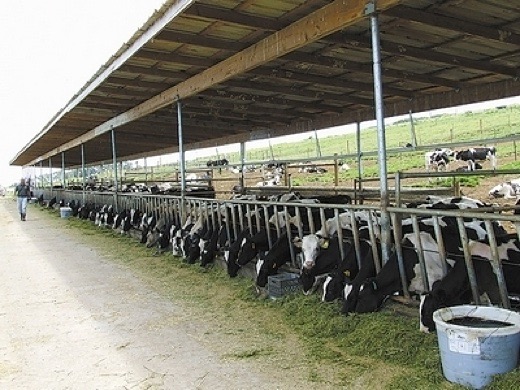

Image above: Big Island Dairy in Ookala, Hawaii, has had trouble with brown manure smelling water in the village about a mile below site. From (http://hdoa.hawaii.gov/blog/main/bidairyopenhouse/).

It was not a good week for Hawaii Dairy Farms. On Monday, March 20, 2017, the Department of Health released its list of State water bodies that are identified as impaired pursuant to Federal Mandate.

Because of chronic high bacteria and turbidity, the State has included the Waiopili Stream on the 303 (D) impaired list.  As such, greater precautions must be taken to protect the Waiopili and avoid further contamination by additional pollutants.

On Tuesday afternoon, 3/21/2017, Judge Randall Valenciano, Presiding Judge of the State Environmental Law Court, granted the Motion for Summary Judgement filed by Kawailoa LLC, the owners of the Grand Hyatt Spa and Resort.

Judge Valenciano stated that his ruling was based on Hawaii Dairy Farms failure to comply with State Law and complete and Environmental Impact Assessment prior to seeking permits or approvals from Government agencies.

He cited to a number of Supreme Court decisions when he ruled that Hawaii Revised Statute Section 343 required HDF to obtain the information at the earliest possible date so that Officials could be properly informed before there were any approvals or permits issued.

The Judge explained that to provide Officials with information after the fact was nothing less than an after the fact rationalization for a decision made absent compliant with the Law.


In a recent letter to the editor, FOM presented strong evidence of why HDF's industrial dairy would cause irreparable harm and serious risks to our water quality if allowed to operate at Maha`ulepu.

Brown water plume indicator of trouble

By Bridget Hammerquist on 18 March 2017 in Garden Island News
(http://thegardenisland.com/news/opinion/guest/brown-water-plume-indicator-of-trouble/article_060e1f62-7276-5945-a775-0759b7ec0741.html)


Recent high fecal bacteria results detected by DOH at 12 locations, beginning at the top of HDF’s site, down to the ocean, confirm that adding cows and untreated manure cannot be good. As reported by TGI, an extensive ditch network drains HDF’s site to the ocean via the Waiopili.


Why were these test results so significant, because after millions of gallons of rainfall the dilution did not take care of the pollution? The greatest pollution was found in the center of the HDF property. There is little question about the severity of this pollution.

In July of 2016, the EPA told the Department of Health that warning signs “must” be posted because of significant health risks.

In comments to TGI, HDF suggests that community resources would be better spent to determine the cause of the pollution than objecting to HDF. The community does not have access to the dairy site and its resources do not compare to HDF billionaire owner, Pierre Omidyar.

Rather, why isn’t billionaire owner of Grove Farm, Steve Case and lessee, Omidyar and HDF, using their resources to determine the cause of the extreme pollution on their property?

HDF’s position that its dairy would improve water quality boggles the mind. How could a large animal operation, with untreated waste left where if falls or sprayed onto pastures from their effluent holding ponds, improve the quality of water?

Many observed and photographed the brown plume running from the Waiopili, traveling with the current to Shipwreck, Brenneke and onto Poipu Beach. View photos at friendsofmahaulepu.org. Imagine if that plume had been carrying bacteria from millions of pounds of wet manure.

Initially, HDF reported that their cows would weigh 1,210 pounds and produce 143 pouds of wet manure daily. In a recent “Update” to DOH, HDF revised each cow’s expected weight to 1,200 pounds and waste to 90 pounds daily.

HDF’s starting herd of 699 would produce 1.9 million pounds of wet manure monthly. If they expand the herd to 2,000, the waste would triple. HDF feels the public should look at their industrial dairy as beneficial. Really?

Is HDF’s dismay at public reaction real or feigned? Several recent letters to the editor reveal a clear objection to HDF’s industrial dairy, location. Nothing could have underscored this better than the recent winter storm.

According to NOAA, Mahaulepu weather station registered 4.85 inches, March 1-2. The USGS rainfall calculator shows this added at least 75,600,000 gallons of water to the Valley floor (75 times the capacity of HDF’s effluent ponds).

In speaking with their hydrologist, NOAA confirmed that the 75-plus million gallons did not include considerable runoff from the adjacent Haupu Ridge, which HDF admits drains onto their site (FEIS Vol. 2, pdf page 273-278).

HDF proposes an earthen containment berm with vegetation. What will that create? A pool of manure and urine on top of our aquifer? What doesn’t leach into the ground water will drain into the ocean as the recent storm clearly showed.

If HDF’s FEIS proved the safety of its operation, why was it withdrawn? FOM’s data confirms: It is unsafe and a critical risk to our drinking water and the ocean to add animal manure to this valley. The natural drainage of the valley, its springs, streams and high water table make containment of dairy waste impossible.


Note the following coverage
Tonight at 9:00 and 10:00 PM, Hawaii News Now, KGMB and KHNL, will report on the Big Island residents of O`okala now suffering from the very health and environmental risks predicted by FOM's scientific testing and research. Attached to this email is a two page compilation of the DOH inspection findings after multiple visits to O`okala between June 30, 2014 and December 2016.

Despite all the findings outlined in the attached, DOH has taken no action against the Big Island industrial dairy in O`okala, and instead, concluded that there was "no definitive evidence" that the Big Island Dairy was responsible for the brown manure smelling water in the village about a mile below.

Bridget Hammerquist, President
Friends of Maha’ulepu
P.O. Box: 1654
Koloa, HI 96756
friendsofmahaulepu.org
(808)742-1037
 

.

Brown plume at HDF dairy site

SUBHEAD: Runoff from Waiopili Stream already highest in enterococcus bacteria count on Kauai.

By Bridget Hammerquist for The Garden Island on 18 March 2017
(http://thegardenisland.com/news/opinion/guest/brown-water-plume-indicator-of-trouble/article_060e1f62-7276-5945-a775-0759b7ec0741.html)


Image above: Still frame of video showing the mouth of the Waiopili Stream in Mahaulepu running brown. rom (http://friendsofmahaulepu.org/additional-videos/).

[IB Publisher's note: The Surfrider Kauai Blue Water Task Force regularly measures bacterial counts at sites across Kauai. Typically Waiopili Stream in Mahaulepu has highest enterococcus bacterial counts of any site. For example the March 11 report read a one day reading of  6,402.8 bacteria per 100ml of water whereasWaiohai Surf in Poipu had a 2.3 bacteria per 100ml. Having no dairy farm in Mahaulepu is a no brainer.]

On March 11th, 2017, TGI reported “High bacteria counts in Waiopili Stream raise questions about dairy.” Recent high fecal bacteria results detected by DOH at 12 locations, beginning at the top of HDF’s site, down to the ocean, confirm that adding cows and untreated manure cannot be good. As reported by TGI, an extensive ditch network drains HDF’s site to the ocean via the Waiopili.

Why were these test results so significant, because after millions of gallons of rainfall the dilution did not take care of the pollution? The greatest pollution was found in the center of the HDF property. There is little question about the severity of this pollution. In July of 2016, the EPA told the Department of Health that warning signs “must” be posted because of significant health risks.

 In comments to TGI, HDF suggests that community resources would be better spent to determine the cause of the pollution than objecting to HDF. The community does not have access to the dairy site and its resources do not compare to HDF billionaire owner, Pierre Omidyar. Rather, why isn’t billionaire owner of Grove Farm, Steve Case and lessee, Omidyar and HDF, using their resources to determine the cause of the extreme pollution on their property?

HDF’s position that its dairy would improve water quality boggles the mind. How could a large animal operation, with untreated waste left where if falls or sprayed onto pastures from their effluent holding ponds, improve the quality of water?

Many observed and photographed the brown plume running from the Waiopili, traveling with the current to Shipwreck, Brenneke and onto Poipu Beach. View photos at friendsofmahaulepu.org. Imagine if that plume had been carrying bacteria from millions of pounds of wet manure.

 Initially, HDF reported that their cows would weigh 1,210 pounds and produce 143 pouds of wet manure daily. In a recent “Update” to DOH, HDF revised each cow’s expected weight to 1,200 pounds and waste to 90 pounds daily. HDF’s starting herd of 699 would produce 1.9 million pounds of wet manure monthly. If they expand the herd to 2,000, the waste would triple. HDF feels the public should look at their industrial dairy as beneficial. Really?

Is HDF’s dismay at public reaction real or feigned? Several recent letters to the editor reveal a clear objection to HDF’s industrial dairy, location. Nothing could have underscored this better than the recent winter storm. According to NOAA, Mahaulepu weather station registered 4.85 inches, March 1-2. The USGS rainfall calculator shows this added at least 75,600,000 gallons of water to the Valley floor (75 times the capacity of HDF’s effluent ponds).

In speaking with their hydrologist, NOAA confirmed that the 75-plus million gallons did not include considerable runoff from the adjacent Haupu Ridge, which HDF admits drains onto their site (FEIS Vol. 2, pdf page 273-278).

HDF proposes an earthen containment berm with vegetation. What will that create? A pool of manure and urine on top of our aquifer? What doesn’t leach into the ground water will drain into the ocean as the recent storm clearly showed.

If HDF’s FEIS proved the safety of its operation, why was it withdrawn? FOM’s data confirms: It is unsafe and a critical risk to our drinking water and the ocean to add animal manure to this valley. The natural drainage of the valley, its springs, streams and high water table make containment of dairy waste impossible.

• Bridget Hammerquist is president of Friends of Maha‘ulepu.

.

Good news for Mahaulepu ecosystem

SOURCE: Ken Taylor (littlewheel808@gmail.com)
SUBHEAD: Friends of Mahaulepu have gained standing in case against Hawaii Dairy Farm.

By By Bridget Hammerquist on 3 December 2016 in Island Breath -
(http://islandbreath.blogspot.com/2016/12/good-news-for-mahaulepu-ecosystem.html)


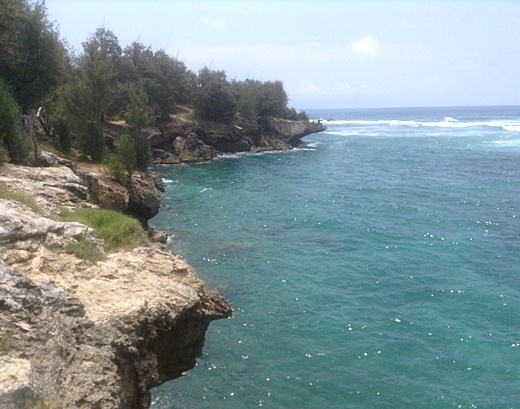
Image above:  Dramatic view from Mahaulepu shoreline hike with the Sierra Club. Photo by Juan Wilson.

Friends of Mhaulpe (FOM) was interviewed for coverage tonight by both KGMB-Hawaii News Now and KITV. Apparently we are going to be covered several time this evening and here's why:

Judge Kobayashi finally issued her ruling, an Order on the Summary Judgement Motions that were argued 9/12/2016. As you may recall, each of the Defendants (Ulupono Initiative, Hawaii Dairy Farms and Grove Farm's Mahaulepu Farms LLC) filed a Summary Judgement Motion seeking a Court Order to Dismiss FOM's Clean Water Act Complaint on the ground that FOM had no standing to file such a claim.

Judge Kobayashi denied the Defendants' Motion and found that Friends of Maha'ulepu does have standing and our Clean Water Act Case was validly filed.

FOM filed its Summary Judgement Motion on the ground that the evidence of Clean Water Act Violations is sufficiently clear that the court could make findings of fact in favor of FOM by way of  Summary Judgement, saving the need to prove those facts at trial. In fact, the Judge did just that.

Attached is a copy of FOM's Press Release with a link to Judge Kobayashi's Order/Decision. Watch for us on TV tonight. For those who are unable to view it, we will try to capture a link and forward it in our next hui news letter.

We will be going to trial but the issues to be proven are limited to the likely discharge as a result of their violations and the damages. The Judge found for us on three quarters of our complaint.

Thanks to all of our generous supporters who have funded this effort. Our attorneys did an exceptional job. Any donations you can make between now and the end of the year will make certain we are adequately funded (see GoFundMe/Mahaulepu link) for the upcoming trial, attorney fees and expert witness fees and costs.

Contact:
Bridget Hammerquist
Friends of Mahaulepu
P.O. Box: 1654
Koloa, HI 96756
www.friendsofmahaulepu.org
(808)742-1037

See also:
Ea O Ka Aina: Mahaulepu Dairy Farms Draft EIS 5/26/16
Ea O Ka Aina: Hawaii Dairy Farm faces lawsuit 6/3/15
Ea O Ka Aina: Fed up with factory farming 3/25/15
Ea O Ka Aina: NZ dairy model isn't Mahaulepu 3/10/15 
Ea O Ka Aina: Ugly show at the Cow Palace 3/1/15  
Ea O Ka Aina: Dairy polluted groundwater 1/17/15
Ea O Ka Aina: No Moo Poo in Mahaulepu 10/27/14
Ea O Ka Aina: Hawaii Dairy Farm Factsheet 10/11/14 
Ea O Ka Aina: Disquiet over CAFU in Mahaulepu 9/16/14
Ea O Ka Aina: Kauai Grassfed Dairy Fraud 4/13/14 
.
.

Mahaulepu Dairy Farm draft EIS

SOURCE: Rayne Raygush (rayneraygush@aol.com)
SUBHEAD: The contents of HDF's draft willbe released to the public 0n 8 June 2016.

By Bridget Hammerquist on 26 May 2016 for Friends of Mahauelepu
(http://islandbreath.blogspot.com/2016/05/mahaulepu-dairy-farm-draft-eis.html)


Image above: Arial view of Mahaulepu Valley. In foreground is the stunning shoreline. Behind it the area of the proposed industrial dairy farm. From (http://www.outsideonline.com/1897836/best-beach).

On 26 May 2016, HDF (Hawaii Dairy Farm) filed its Draft EIS (Environmental Impact Statement) for their proposed industrial dairy operation in Mahaulepu Valley.  The contents of HDF's draft will not be released to the public until June 8, 2016.  It will then be posted on DOH's (Department of Health's) website and will be sent to all who receive the DOH Environmental Newsletter.

It is hard to believe that any responsible farming operation would propose to add tons of bacteria laden manure, when the water quality testing run at Mahaulepu Beach and in the stream, on water that drains from the proposed farm property, has shown chronic, persistent pollution with high fecal bacteria counts from March, 2014 to the present.

These high bacteria counts and elevations in nitrates have been confirmed by multiple sources over the past two years: DOH, Honolulu Lab, USGS (US Geographical Service) and Surfrider Kauai's Blue Water Task Force.

In complete disregard for the risks to our drinking water and the recreational waters of Maha'ulepu Beach, HDF insists on proceeding even though the current source of pollution is unknown.

As many of you know, FOM (Friends of Mahaulepu) conducted its own site inspection on March 29 & 30 of 2016.  Our experts are finalizing their site inspection report.  Their findings will soon be made available to HDF and the public.  Thus far we have been told they are very confident that the information obtained establishes that Maha'ulepu Valley is not a safe location for any operation dealing with large amounts of manure.

FOM will hold public meetings to assist individuals who want to file a response to HDF's Draft EIS.  All responses will be due within 45 days of the June 8, 2016 public release.

For those who weren't able to attend, the YouTube link that follows shares the island wide meetings which recently occurred.  You may want to hear the comments of guest speaker Paul Cienfuegos who discussed community rights ordinances that have successfully banned harmful corporate operations in over 200 communities throughout the U.S.


Video above: We Love Kuai"presentation by Paul Cienfuegos. From (https://youtu.be/yR-HnUIEroU).


Video above: Full Presentation of "We Love Kauai" by Friends of Mahaulepu. From (https://youtu.be/z1ejsjOczVY).

See also:
Ea O Ka Aina: Hawaii Dairy Farm faces lawsuit 6/3/15
Ea O Ka Aina: Fed up with factory farming 3/25/15
Ea O Ka Aina: NZ dairy model isn't Mahaulepu 3/10/15 
Ea O Ka Aina: Ugly show at the Cow Palace 3/1/15  
Ea O Ka Aina: Dairy polluted groundwater 1/17/15
Ea O Ka Aina: No Moo Poo in Mahaulepu 10/27/14
Ea O Ka Aina: Hawaii Dairy Farm Factsheet 10/11/14 
Ea O Ka Aina: Disquiet over CAFU in Mahaulepu 9/16/14
Ea O Ka Aina: Kauai Grassfed Dairy Fraud 4/13/14 
.

Hawaii Dairy Farm faces lawsuit

SUBHEAD: Friends of Mahaulepu attorney says Clean Water Act violated by activities of HDF.

By Brittany Lyte on 3 June 2015 for the Garden Island -
(http://thegardenisland.com/news/local/hdf-faces-lawsuit/article_603afbae-150d-5463-a27a-ffb6bb7fd575.html)

http://www.islandbreath.org/2015Year/06/150603mahaulepubig.jpg
Image above: A pristine beach at Mahaulepu that is threatened by the Hawaii Dairy Farm operation. Photo by Juan Wilson. Click to embiggen

Oregon-based environmental attorney Charlie Tebbutt on Monday filed a lawsuit alleging violations of the federal Clean Water Act on the part of those behind a proposed dairy in Mahaulepu Valley.

The suit claims the backers of Hawaii Dairy Farms — a proposed $17.5 million, 576-acre operation — have and continue to violate federal water regulations by installing irrigation systems, wells and water troughs without a state stormwater construction permit.

Specifically, the suit alleges that these ongoing construction activities are “reasonably likely to cause discharges of pollutants,” including dirt, debris, sewage sludge, rock and sand, into Waiopili Stream and other nearby waterways.

“The fact that HDF is publicly saying one thing while violating the law by undertaking construction activities is a sign that this company is willing to do anything to try and get its way, and that is certainly not the way to proceed in Kauai,” Tebbutt said.

Tebbutt is representing the nonprofit group Friends of Mahaulepu in its fight to stop HDF, a company backed by eBay Founder Pierre Omidyar’s Ulupono Initiative. The suit also names Mahaulepu Farm among the illegal “dischargers.”

Amy Hennessey, HDF’s spokeswoman, has said the only activity taking place on the site is the growing and mowing of grass for pasture and the installation of water quality monitoring wells and fencing. All pasture cultivation activities, including the installation of an irrigation system, are authorized under the Natural Resources Conservation Service Conservation Plan and are not subject to National Pollutant Discharge Elimination System requirements because they are for agricultural purposes, she said.

“We believe this suit is without merit and a regrettable waste of the community’s resources,” Hennessey said in a prepared statement. “It is unfortunate that Friends of Mahaulepu group is using litigation instead of conversation to address its concerns about Hawaii Dairy Farms’ planned pasture-based dairy.”

HDF filed an application for a stormwater permit in September 2014, but did not complete the permit process after the company decided to first conduct a voluntarily Environmental Impact Statement prior to construction, Hennessey said.

The application lapsed due to inactivity, she said. HDF has filed a new application to restart the process.

“While Hawaii Dairy Farms does have its building permits from the County of Kauai, we are demonstrating good faith by not moving forward with construction until after the completion of the EIS,” Hennessey said. “As the first pasture-based dairy in the state, Hawaii Dairy Farms has encountered new, unique situations in the regulatory process. This uncharted path has led Hawaii Dairy Farms to work closely with the federal, state and county governments to ensure adherence to all regulatory standards.”

The lawsuit comes 60 days after FOM filed a notice of intent to sue the defendants for launching preliminary site construction projects without a stormwater National Pollutant Discharge Elimination System permit.

Bridget Hammerquist, president of FOM, said the group is committed to protecting the Mahaulepu area from pollutants.

“FOM is supportive of safe agriculture that does not risk the public’s health or threaten the environment, but this proposal not only threatens the Mahaulepu area, but is operating in disregard for the law already,” she said in a prepared statement. “The harm and further degradation of one of Kauai’s most revered locations must be stopped.”

The lawsuit states that HDF’s preliminary construction work, including grading and excavating, is a likely source of the pollution ending up in Waiopili Stream, which flows off Grove Farm land and enters the ocean near Makauwahi Cave Reserve and downhill from the proposed dairy site.

Recent testing has shown it is Kauai’s most polluted stream — of several that continuously fail to meet state water quality standards.

Bacteria tests conducted by Surfrider Foundation’s Kauai Chapter found that pollution levels in the stream are 275 times higher than the bacteria limits set by the government, according to data released by the ocean protection group. Test results from nearby waters where the stream meets the sea are nearly 17 times greater than state and federal limits, the data shows.

Surfrider and FOM mailed a petition last month to the Department of Health and its Environmental Health Administration calling for the stream to be listed as an impaired waterway under the Federal Water Pollution Control Act. They also requested public health warning signage.

“FOM has previously offered to sit down with HDF to discuss the foolishness of the proposal to put 2,000 head of cattle in the Mahaulepu Valley,” Tebbutt said.

FOM is not the only entity that has taken legal aim at HDF.

Kawailoa Development, LLP, owner of the nearby Grand Hyatt Kauai Resort and Spa and the Poipu Bay Golf Course, filed suit against HDF in 5th Circuit Court last July, claiming its business, recreational, environmental and aesthetic interests would be adversely affected should the dairy move into the neighborhood.

In light of public concern surrounding the project, HDF agreed in November to move forward with a voluntary Environmental Impact Statement — one demand of Kawailoa’s complaint.

Hennessey said HDF’s consultants are working on the draft EIS statement and plan to share the document for public comment this summer.

Fed up with factory farming

SUBHEAD: Is factory farming destroying the planet? These five films have an answer!

By Beth Kelly on 25 March 2015 for Island Breath -
(http://islandbreath.blogspot.com/2015/03/fed-up-with-factory-farming.html)

http://www.islandbreath.org/2015Year/03/150325hdfbig.jpg
Image above: What does factory farming look like on Kauai? It might look like a milk factory dairy. Like the Pierre Omidyer proposed Hawaii Dairy Farm in Mahulepu Valley. To get an idea of HDF's impact we have superimposed a image of the Aurora "Organic" Dairy Farm (in Boulder, Colorado) over the red line boundary of HDF.  We used GoogleEarth and an mirror image of an aerial photo of the AODF andadjusted the scale and perspective as best we could. From (http://www.cornucopia.org/horizon-factory-farm-photo-gallery/aurora-factory-farm-photo-gallery/). See also (http://www.auroraorganic.com/). Graphics by Juan Wilson. Click to embiggen.

Food is something that we take for granted in the modern world. We go to huge grocery stores, buy incredible amounts of food, and don't give much more thought to it. We might even assume that idyllic farmers are working hard to grow and harvest the best quality and most nutritious food possible. The problem is that this assumption is quite naïve.

Modern agriculture is about as far from this rustic portrait of a small family farm as possible. Farm operations today are more like an industrial factory that cranks out food on an assembly line. Health and nutrition are often sacrificed in favor of efficiency and profits.

A number of recent documentaries expose the harmful effects of agribusiness and factory farming. Here are five documentaries that lift the curtain and show us behind the scenes of modern agriculture:

More Than Honey (2012)

Video above: Official Trailer for movie "More than Honey". From (https://youtu.be/2NT05qEJxUk).

This film takes a close look at bees and their relationship with humankind. It examines a wide variety of honeybee colonies in California, Switzerland, Australia, and China in an attempt to discern what factors account for the widespread decline of the bee population due to colony collapse. More Than Honey suggests that modern chemical pesticides play a large role in destroying bee populations and discusses the dire consequences if bees should become extinct. Viewers rave about the film's breathtaking cinematography, as it is a visually stunning film with a well-told story.


Farmageddon (2011)

Video above: Trailer for movie "Farmageddon" From (https://youtu.be/IH_my56FkuQ).

This film is a wake up call for those who are unaware of the way the Federal Government acts against smaller farmers all over America. It details the way that small organic farmers producing healthy and nutritious foods are systematically harassed by the United States government. This harassment is motivated by the influence that large corporate agribusinesses have on the government. By raising awareness of these issues, people will protest the dominance of big business in agriculture and give small family farms a new future.


Food, Inc. (2008)

Video above: Official trailer for "Food Inc." From (https://youtu.be/5eKYyD14d_0).

A penetrating look at the industrialized production of food in the United States, this film shows that both animal and plant farming produces food that is not only unhealthy and harmful to the environment, but abuses and oppresses both animals and human employees. The companies that claim to take care of our needs are actually exploiting us for gain. Food, Inc. insists that we can make a difference. By changing our buying practices and voting, we can let these money-hungry companies that we want change.


King Corn (2007)

Video above: Trailer for King Corn. From (https://youtu.be/Pr5HQrgg9mM). See full length film here (http://www.filmsforaction.org/watch/king_corn_2007/).

Two college friends go on journey through the American food supply. They begin by moving from Boston to Iowa, where they farm one acre of corn. Along the way, they examine how government subsidies create incentives to overproduce corn as well as the consequences of this overproduction. The two also show the prominence of high fructose corn syrup as a cheap food ingredient and the problems this causes for the American diet. The film chronicles the plight of small family farms that cannot compete against the huge agribusinesses that control the industry.


Crude Impact (2006)

Video above: Trailer for "Crude Impact". From (https://youtu.be/EwyAA2Zt8CI). See full length film here (https://vimeo.com/33552646).

Our modern society is powered almost exclusively by fossil fuels. Crude Impact takes a critical look at an environmental crisis that is being created by this reliance, spreading awareness to energy and gas companies, major corporations, and the general public who seek to find solutions for this crisis. From global warming to overpopulation, this film takes a hard look at the way using fossil fuels affects human culture. It also examines the issue of “peak oil.” As demand for energy increases, supplies of fossil fuels will dwindle. The resulting exponential rise in the cost of energy could be devastating. The film also examines some potential solutions that would mitigate this disaster.


These films challenge us to critically examine where our food comes from. When we have the facts, we can call for change, seek out healthy alternatives, and use our purchasing power to demand the production of healthy food. In addition, we can call upon our leaders to change the system for the better and pay more attention to the sources of our food. Otherwise, we may jeopardize our health and our environment all for the sake of “good-tasting” food.

See also:
Ea O Ka Ania: NZ dairy model isn't Mahaulepu 3/9/15

.

NZ dairy model isn't Mahaulepu

SUBHEAD: No parallels between New Zealand and the heavy, poorly drained clay soils close to the sea at Mahaulepu.

By David Collison on 9 March 2015 in the Garden Island News -
(http://thegardenisland.com/news/opinion/guest/new-zealand-model-isn-t-mahaulepu/article_4b948be8-c618-11e4-9d23-3fff691ff905.html)


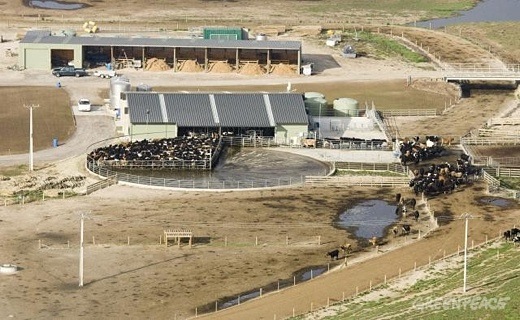
Image above: Taupo, central North Island, New Zealand. Landcorp, a government owned company, currently converting Tahorakuri Forest into large-scale intensive dairy farms. Even in New Zealand big dairy operations are not sustainable. From (http://www.greenpeace.org/new-zealand/en/campaigns/climate-change/smart-farming/liability/).


I was born and raised on a New Zealand dairy farm in the Waikato area of the North Island. For the final few years on the property, I managed the total operation.

I am somewhat confused by the oft-quoted statement, “the New Zealand model,” in regards to the proposed Hawaii Dairy Farm operation at Mahaulepu. Another well-known quotation is “the devil is in the details,” and there seems from press releases to be a dearth of details I would consider relevant.
I am not accusing the developer of ignorance but it appears they are convinced the residents of Poipu and Koloa have it in abundance.

New Zealand is approximately 1,000 miles long and there is no doubt that it is possible to have a “town supply” dairy farm supplying fresh milk from one end of New Zealand to the other — just as it is anywhere in the world, given enough money. However, a successful grass-fed dairy herd requires frequent light rain, well-drained fertile soil and adequate sun without great extremes of temperature.

There are only two main areas in New Zealand that qualify and these are the Waikato area around the city of Hamilton and the Taranaki area around the city of New Plymouth. These two areas are probably the most intense grass-fed dairy areas in the world.

Forty years ago we milked a total of approximately 200 cows plus an average “dry stock” level of 60 heifers and selected calves — all on 163 acres. No stock feed of any type was imported onto this Waikato farm and I’m told these figures have improved since then.

However, that climate is ideal for growing nutrient-rich grass — parti-cularly clovers which replenish the nitrogen in the soil.

These are also grasses that will not grow adequately in a tropical climate. The area is also well away from salt breezes which can burn these grasses, and of course the farm consisted of gently rolling, well-drained soil.

To be successful, the cows need to be highly efficient at converting grass to milk and modern cows are a product of many decades of scientific selective breeding largely employing artificial insemination. All this is in an environment, that has, due to the number of livestock involved, veterinary, research and other support of all types, second to none in the world.

So far, I see almost no parallels between New Zealand and the heavy, poorly drained clay soils close to the sea at Mahaulepu.

As stated, high-producing dairy cows are very efficient at converting grass to milk. Much grass and many gallons of water are daily consumed at one end and waste in the form of manure and urine is ejected at the other. Twice a day, many quarts of high-quality milk are available at the cow’s udder.

To get grass into the cows, three methods can be employed, depending on the weather.
A. In fine weather, the cows walk to and from the milking facility to the grass, where it is processed through the cow.

B. If there is a danger of causing too much mud, the grass can be harvested with a forage harvester and brought to the cows.

C. A combination of both A and B.
All this grass consumed, unfortunately, also transfers fertility from the soil, and means must be employed to return as much manure as possible to the fields.

Given the density of livestock on what is potentially a very muddy area during long wet spells, I would presume there will be adequate concrete “hard standing areas,” as well as this obvious requirement around the milking facility. As has been pointed out from many previous letters, there will be a large accumulation of manure and urine.

In the A option, 80 percent will be deposited on each field. There will still need to be a method to collect and regularly spread the balance accumulated around the milking facility. In the B option, this operation becomes a major exercise. And the C option, of course, would be something in between.

Any such intensive dairy operation requires rotational grazing — that is where the cows are moved on a daily basis from one field to the next to allow grass to recover and be ready for the next cycle.

If cows are allowed to create too much mud while in the field during very wet weather in such poor draining clay soils, grass will be slower to recuperate. After each grazing the deposited manure must also be spread (by tractor and chain harrows) so that accumulated deposits are not too deep for grass to grow through or the grass will die.

Given the money available, the initial proposed stocking rate should be feasible but as I have tried to explain above, the area is far from ideal. Additional stocking rates will, of course, only exacerbate the problems.

As a permanent resident of Poipu adjacent to the Grand Hyatt, I have major concerns.
1. Those of us who have been brought up around livestock are used to animal smells. Those whose lifestyles subject them to perhaps only vehicle exhaust fumes at worst and the scents of flowers and trees at best, will most likely find any smells emanating from the farm highly objectionable. To say there will be no smells, irrespective of wind direction, is delusional.

2. If the cow manure is not spread while fresh, the smell becomes much more pronounced and certainly objectionable to even those with less acute olfactory senses.

3. In the 25 years I have resided in the area, we have experienced heavy periods of rain at times that would almost certainly, despite all precautions, cause discharge of unacceptable pollutants into the ocean.

4. Items 1, 2 and 3 will also certainly impact my property values and those of my neighbors as well as detrimentally affecting the tourist industry of the area which is, of course, one of the primary engines of Kauai’s economy.

.

No Moo Poo in Mahaulepu

SUBHEAD: A video of the public meeting on the proposed Hawaii Dairy Farm impacts to Mahaulepu, Kauai.

By Staff on 25 October 2014 for Friends of Mahaulepu -
(http://friendsofmahaulepu.org/)


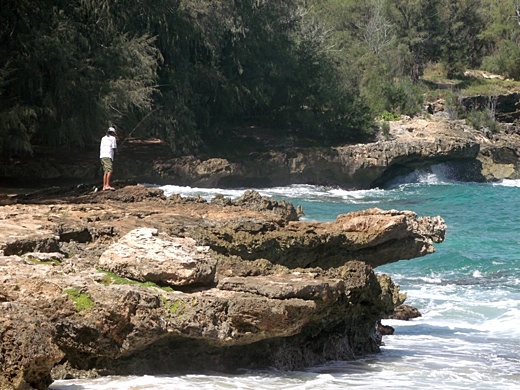
Image above: Man fishing along the shoreline of Mahaulepu. Photo by Juan Wilson 6/12/13.

Friends of Mahaulepu brought together experts in several fields to talk about the facts about Hawaii Dairy Farm on 10/23/14. See the video of the meeting below.

Friends of Mahaulepu is comprised of a group of concerned citizens (local and beyond) who are contributing their time and talents to protect the natural beauty of this pristine coastal valley.

Our latest challenge has been responding to the proposed large industrial scale dairy, operated by Hawaii Dairy Farms (HDF), that wants to bring 2,000 dairy cows to a 582 acre parcel less than a mile from the coastline. The white sand beaches and coral reefs of Maha’ulepu are currently free of any development.

The proposal to operate a large industrial dairy, where 2,000 cows will be grazed on just 24 acres per day (83 cows per acre), will result in at least 200,000 lbs. of manure and 16,000 gallons of urine being left daily on the clay soils found on the farm site.

The grave concern for the Friends of Mahaulepu, is the risk to the ecosystem and all of the protected and endangered species- many of them endemic- who make their home there.

The waterways too, are at risk, both streams and ocean, from pollutant runoff when either irrigation or heavy rains fall on the farm’s clay soils.

Also at risk, is the health of the visitors and residents who enjoy fishing, swimming, and surfing in the area adjacent to the farm, and may be exposed to harmful bacteria from the cattle’s waste. We have been working diligently to persuade authorities and HDF, that starting with a smaller scale operation would best protect Mahaulepu, since HDF is unable to identify any dairy operation in the United States that even comes close to the stocking and grazing density that they are proposing.

HDF’s proposal is based on a New Zealand model, which is not nearly as dense as the operation they plan for the Garden Island of Kauai.

Unfortunately, the very dairy model they claim to emulate, has been found responsible for a nationwide pollution problem in New Zealand. We need all the help we can get to scale this operation down and assure that HDF doesn’t cause irreparable damage to Kauai.


Video above: Created by Robert Zelkovsky. A record of the public meeting on the proposed Hawaii Dairy Farm in Mahaulepu. From (http://youtu.be/O5jO1qi7H78).
.

Hawaii Dairy Farm Factsheet

SOURCE: Diane de Vries (diane.e.devries@gmail.com)
SUBHEAD: HDF’s sole owner is Pierre Omidyar, through his venture capital company: Ulu’pono Initiative.


By Staff on 4 October 2014 for Friends of Mahaulepu -
(http://friendsofmahaulepu.org/hawaii-dairy-farms-critical-facts/)


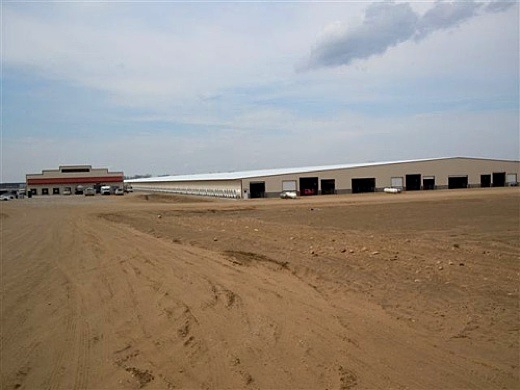
Image above: Portion of New Chester Dairy for 4,000 cows in Grand Marsh, Wisconsin. Note the use of sand to suppress and manage cow waste at this mega-dairy. From website of cow restraint and dairy accessories. (http://www.freudenthalmfg.com/stalls/freestalls_dogbone.html).

Hawaii Dairy Farms is slated to be located in the Mahaulepu area of Kauai on a 582-acre pasture parcel of Important Agricultural Land (IAL) leased from Grove Farm. The overall design and construction is being done in partnership with Dairy SolutioNZ, Ltd., a consortium of New Zealand’s top dairy industry companies, and local business partners.  Jim Garmatz, a dairyman with more than 25 years experience, will manage dairy operations.
  1. HDF, misrepresented critical facts to State and County:
    • HDF’s plan stated the farm soil had a high clay component, easily compacted and very hard (HDF Plan pg 7). Later, when discussing pasture irrigation and the management of urine and manure deposits, HDF described the soil as “free draining volcanic soil” (HDF Plan pg. 51 & 93). See Exhibit 1.  After being called on it by members of the public, HDF has finally tested their proposed farm’s soil and now reports the soil is nearly all clay. Water will pool on it as will waste and thus be subject to runoff and discharge to the ocean. HDF reports that there will be rapid run off after the clay soil receives in excess of 1/5 inch of rain per hour. (See table on pg 14, HDF’s new CNMP)

    • HDF tested and confirmed soil type only after April, 2014. They had already determined their herd size, without regard for the soil’s ability to produce the grass crop that the cows would need or the soils ability to absorb the waste dropped by the cows. Both their original and new plan call for all waste to remain on the farm but there was no testing of their soil beforehand to confirm that their soil type would support their plan to be a zero waste elimination dairy (one that keeps the waste on the pastures and use what falls elsewhere on the farm).

    • HDF’s original distributed Fact Sheet stated “NRCS permit- Completed.”

    • In fact, NRCS (National Resource Conservation Services) does not issue permits.

    • HDF reported the storm risk in 24 hours over the past 25 years as 6.6 inches (HDF Plan, pg 18 re: the milking parlor roof). See Exhibit 2. The actual 24hr/25yr rain event in Maha’ulepu (per US Weather Service) = 9.7 inches.

    • After residents obtained US Weather Service records and sent them to the State, HDF’s new plan calculates the 24hr/25yr rain event in excess of 10 inches.

    • When discussing effluent pond management, HDF reported the multiple day rainfall risk as 1.89 inches per day, 8 inches below the US Weather Service records (HDF Plan pg 87). In so doing, HDF understated the risk of waste runoff.  See Exhibit 2.

    • 25 year plan, required by State, should have included Hurricane event (Iniki-1992).

    • HDF does not have an emergency plan for a 25 year storm event.

    • Per HDF, their Plan emulates the ‘successful’ Dairy Farm model in New Zealand (NZ).

      HDF failed to disclose the NZ dairies have caused nationwide environmental pollution: http://www.pce.parliament.nz/assets/Uploads/PCE-Water-quality-land-use-web-ammended.pdf

    • HDF plans to graze with a stocking density (cows per acre) greater than any other US dairy.

    • HDF refers to their proposed operation as “Hawaii’s first grass fed dairy”. In addition to their new CNMP, they even make that claim in a full page ad in the most recent issue of Kauai Family:“Located in Maha’ulepu, the farm will be Hawaii’s first grass fed dairy.” See Exhibit 3.  In fact, their plan still calls for 6.6 pounds grain feeding per cow/per milking daily. Their ad ignores Mauna Kea Moo, a Big Island grass fed dairy. It also ignores the definition of “grass fed” per the USDA: Grass (Forage) FedGrass and forage shall be the feed source consumed for the lifetime of the ruminant animal, with the exception of milk consumed prior to weaning. The diet shall be derived solely from forage consisting of grass (annual and perennial), forbs (e.g., legumes, Brassica), browse, or cereal grain crops in the vegetative (pre-grain) state. Animals cannot be fed grain or grain byproducts and must have continuous access to pasture during the growing season. Hay, haylage, baleage, silage, crop residue without grain, and other roughage sources may also be included as acceptable feed sources. Routine mineral and vitamin supplementation may also be included in the feeding regimen. If incidental supplementation occurs due to inadvertent exposure to non-forage feedstuffs or to ensure the animal’s well being at all times during adverse environmental or physical conditions, the producer must fully document (e.g., receipts, ingredients, and tear tags) the supplementation that occurs including the amount, the frequency, and the supplements provided.


    • HDF’s plan states they will be a zero waste dairy, no manure or urine to leave the farm. However, HDF does not disclose the volume of manure and urine to be deposited daily by the 1800 + cow herd (approx. 200 tons manure and 10,400 gallons urine/day).
    • HDF has no plan for preventing waste run off during rain storms, a high risk considering farm’s clay based soil and volume of waste.|
    • HDF’s initial plan submitted without a drainage study or hydrologic model. Large sections of current plan have been redacted by HDF, claiming confidentiality.
    • When asked about emergency/backup plan for overflow or discharge of waste, HDF representatives said “We’ll just deal with it when it happens.”
    • HDF plans on spraying fields with waste water collected from cow waste dropped in milking parlor (approx. 10% of daily waste) washed into effluent collection ponds. (New Plan redacts nearly all discussion of effluent pond management)
    • HDF did not disclose manufacturer’s warning against spraying from their planned overhead irrigation system when winds exceeding 10 mph (a frequent occurrence in Maha’ulepu Valley).
    • HDF’s new Plan reports “The average local temperature is in the ideal 43 and 70 degrees Fahrenheit range for Kikuyu”.   See Exhibit 4.  All who live here know that statement is false. The actual average air temperatures in Maha’ulepu range between 69-77 degrees Fahrenheit. In the summer months, however, there are many days in Maha’ulepu in the high 80’s and even a few in the low 90’s. Kikuyu grass is not reported to grow well in the actual temperature ranges of Maha’ulepu.
    • HDF distributed fliers and said their milk would be good for Kaua’i’s children. HDF, however, has contracted to ship all milk from Kauai, selling it to Meadow Gold for process and sale. Once sold to Meadow Gold, distribution will be determined by Meadow Gold.
    • On the grass feed for the cows, HDF stated they consulted with Chin Lee, PhD, University of Hawaii, published grass and grazing specialist. However, when contacted, Dr. Lee said he had “NOT” been a consultant for HDF.  See Exhibit 5.
    • When residents asked about the type of grass for grazing, HDF said that there were four types of kikuyu grass and that they “would have to check with their expert, Dr. Lee.” When Dr. Lee was contacted, he advised there are “129 varieties of kikuyu grass, and that he did not know what HDF was planting.”  See Exhibit 5.
    • HDF’s plan for the 582 acre farm designates approx 476 acres for grazing (120 three to four acre fenced paddocks). HDF’s 1800+ cow herd will be divided into mobs of 300-330 using 6 fenced paddocks per day.
    • In response to a series of hypothetical questions about a dairy operating on 582 acres, its potential grass yield as feed for a herd and advisable stocking density (cows per acre), Matt Stevenson, Certified Professional in Range Management of UH- CTAHR responded that the maximum herd size should be about 378 lactating cows for a 580 acre farm. “580 acres x 7500 lbs/acre = 4.35 million lbs available forage per year total assuming, unrealistically, uniform production, no droughts, and no pests/diseases…This is not a recommendation for any particular property.” See Exhibit 6. His response is very balanced with clear statements that more information is necessary but the best management practices he applied do not come close to supporting even the initial 880 pregnant cows that HDF plans to import.
    • Mauna Kea Moo, a new Big Island dairy, will have 200 dairy cows and 100 beef cattle on 1,400 acres. They plan to produce milk and cheese. That dairy was five years in planning and has four + acres for every cow, much like most U.S. grass fed dairies except in areas where there are long winters prompting grass fed dairies to provide even more acreage per cow.

  2. HDF’s sole owner is Pierre Omidyar
    Through his venture capital company: Ulu’pono Initiative.

  3. The total farm size is 582 acres
    In Maha’ulepu Valley, home to multiple endangered species.

  4. Planned Herd Size: 1,880-2,000 cows

  5. Planned Farm Development:
    • 476 acres committed to grazing (120 fenced paddocks)
    • 106 acres devoted to milking parlor, calving barn, effluent ponds, raceways, drainage ditches, office buildings, sheds, overhead irrigation system pump stations, etc.

  6. Grazing patternRotational grazing 300-330 cows per 3+ – 4+ acre paddock, moved at 24 hour intervals.

  7. 1880-2000 head to use 6 paddocks per 24/hr interval.

  8. There will be no shelter facility for the cows.

  9. Cows will sleep on the paddocks On which they graze and where their waste is dropped.

  10. Cow waste production per cow per day: 100-120 lbs manure; 6-8 gallons of urine (total herd waste: 200,000+ lbs. manure and 16,000 gallons of urine per day). In their newest CNMP, HDF has redacted all information about daily waste production and refuses to disclose to the public how their manure, urine, and effluent pond will be managed.State Permit Status: State Permits and approval of the new Plan is pending review by Department of Health (DOH).

  11. State Permit Status:
    State Permits and approval of the new Plan is pending review by Department of Health (DOH). HDF Ads suggest that their operation is already approved. See Exhibit “3.” A grading and grubbing exemption was issued March 17th, 2014 after HDF presented their flawed Plan to West Kauai Soil and Water Conservation Districts (WKS&WCD), a volunteer board unfamiliar with industrial dairy operations and animal waste management. HDF Plan was found deficient by the DOH. HDF has resubmitted a revised CNMP to the DOH. HDF marked their most recent Plan “Confidential.” The DOH forwarded the plan to the Attorney General for review to determine whether HDF can legally keep the facts of their plan from the public. Parts of the new Plan have been released but HDF has redacted large parts of the plan claiming confidentiality.

  12. Federally Listed Threatened or Endangered species at risk:
    Hawaiian Duck, Nene Goose, Hawaiian Owl, Hawaiian Coot, Common Moorhen, Hawaiian Stilt, Newell Shearwater Birds, Blind Cave Spider, Monk Seals, Sea Turtles, and multiple plant species.

  13. There are two bills, one before the US House
    HB 3131: Introduced by Tulsi Gabbard, Colleen Hanabusa, and others and one before the Senate, SB 618,  introduced by Brian Schatz, asking for Special Resource Study, the second step in consideration for designating Maha`ulepu and surrounding areas as a National Preserve.

  14. The National Parks Service released its  reconnaissance study:
    A beautiful tribute to Maha’ulepu and well worth reviewing: www.nps.gov/pwr/upload/mahaulepu_final.pdf
.