Showing posts with label PUC. Show all posts

Bad Energy in Hawaii

SUBHEAD: Hawaii Public Utility Commission reality check in post HECO-NextEra merger environment.

By Henry Curtis on 26 May 2016 for Ililani Medoa -
(http://www.ililani.media/2016/05/puc-reality-check-post-heco-nextera.html)


Image above: Hawaiian Electric Industries President and CEO Connie Lau stands with Jim Robo, CEO of NextEra Energy announcing takeover plan in January. From (http://www.bizjournals.com/pacific/news/2016/01/11/nextera-s-purchase-of-hawaiian-electric-won-t.html).

[IB Publisher's note: The PUC and Hawaii Electric Industries have been pulling the state in the wrong direction for some time. Bringing in cut-throat NextEra energy company and importing Liquid Natural Gas (LNG) from fracked wells in British Colombia and Alberta is not a solution to an energy problem but a boondoggle and risk to the environment of Hawaii.]

Bloomberg News announced on May 24 that NextEra Energy Inc.’s proposed $4.3 billion takeover of Hawaiian Electric Industries Inc. is looking increasingly less likely as the company gets a new chance to buy Oncor Electric unit of Energy Future Holdings Corp, the largest power distributor in Texas.

Hawaiian Electric Industries CEO Connie Lau, HEI Chief Financial Officer James Ajello, and the then NextEra Vice Chairman and CFO Moray Dewhurst offered contradictory statements and testimony regarding the $90-95 million breakup fee that NextEra may pay to HEI if the deal is not approved by June 3, and NextEra were to walk away from the deal.

The money would go to HEI and its shareholders, not HECO and its ratepayers.

The breakup language is an extremely complex document written by lawyers.

The Hawaii Public Utilities Commission was widely expected to issue a decision in the late summer or fall of 2016. PUC staff lawyers, economists and accountants are pouring through the 110,000-page record

With the announcement of the potential breakup, the PUC can suspend their analysis for a few weeks to see if the breakup really happens.

During the next few weeks the PUC can put greater effort on two major efforts underway:
  • The evaluation of the HECO Companies Power Supply Improvement Plans (PSIPs) which state alternative plans for the utility between now and 2045.
  • PUC's Distributed Energy Resources (DER) Working Group which is seeking to advise the Commission on ways of increasing rooftop solar penetration, while accounting for interconnection standards, safety, reliability, and rate structures.
The Commission can also focus on the HECO dockets opened in the last six months which have yet to really start.

Issue
Docket
HECO`s Utility-Scale Community-Based Renewable Energy Application
2015-0389
A HECO-designed special time-of-use rate structure for the Department of Education
2015-0410
HECO Companies Demand Response Program
2015-0412
An updated Power Purchase Agreement between HECO and the 200MW AES coal-burning facility in Campbell Industrial Park
2016-0007
HELCO purchase of Hamakua Energy Partners generator
2016-0033
HECO`s proposed $736.0 million Smart Grid (which includes ten inter-related and/or independent subcomponents
2016-0087
HECO`s proposal to import largely fracked Liquefied Natural Gas (LNG) from British Columbia at a cost of $459.3 million
2016-0135
HECO`s request for a waiver from Competitive Bidding for a new Kahe generation facility
2016-0136
HECO`s proposed $859.0 million Kahe Power Plant
2016-0137


The PUC “regulates 1625 entities, which includes all chartered, franchised, certificated, and registered public utility companies that provide electricity, gas, telecommunications, private water and sewage, and motor and water carrier transportation services in the State.”

Earlier this month, Sandwich Isles Communications and Pa Makani LLC, dba Sandwich Isles Wireless filed applications with the PUC to renew their Annual Certification as an Eligible Telecommunications Carrier.

For the past two decades the Hawai`i Department of Hawaiian Home Land has given the politically connected Sandwich Isles, the exclusive rights to provide phone service for new customers on Hawaiian Home Lands.

The Federal Communications Commission provided Sandwich Isles, $830 per customer per month from the Universal Service Fund to subsidize phone service.

Earlier the year Federal Judge Susan Oki Mollway gave Sandwich Isles President Albert S.N. Hee a 46-month sentence for providing “false” salaries to family members, college tuition for his children, family vacations, massages and dozens of other personal expenses. Al Hee is the brother of former State Senator Clayton Hee.


HECO to import Canadian LNG


SUBHEAD: research confirms a link between fracking and almost every large induced earthquake in B.C.

By Henry Curtis on 25 May 2016 for Ililani Medoa -
(http://www.ililani.media/2016/05/heco-proposal-to-import-canadian-lng-is.html)


Image above: A LNG tanker ship at port. From (http://www.marinetraffic.com/en/photos/of/ships/shipid:370522/#forward).

Hawaiian Electric Company has signed a Fuel Supply Agreement with Fortis Hawaii Energy Inc., a subsidiary of Fortis Inc., headquartered in Newfoundland, Canada.

The gas would be exported from their facility on Tilsbury Island in British Columbia.

The facility is about twenty miles north of the U.S. Border and twenty miles south of Vancouver. The deal must be approved by the Public Utilities Commission.

Importing LNG would require a vast infrastructure overhaul. HECO asserted they will need to spend $859 million building the new Kahe generator facility and another $459.3 million on the LNG system.

Ronald Cox, HECO`s Vice President for Power Supply, submitted testimony in the LNG application which stated that the importation of LNG has a double condition, requiring approval of both the HECO-NextEra merger and the Kahe combined cycle facility.

HECO asserted that LNG “burns cleaner,” and it is “the lowest cost alternative for compliance with future environmental regulatory requirements.”

Life of the Land became the first group to file a Motion to Intervene in the proceedings. Their 383-page motion detailed the problems from importing gas from British Columbia.

CBC News reported that the British Columbia Oil and Gas Commission confirmed the 4.4-magnitude earthquake in 2014 was "triggered by fluid injection during hydraulic fracturing," making it one of world's largest earthquakes ever triggered by the controversial fracking process."

Canadian Earthquakes are different from American Earthquakes according to a scientific article in the current issue of Seismological Research Letters, published by the Seismological Society of America.
“In the central United States, most induced seismicity is linked to deep disposal of coproduced wastewater from oil and gas extraction.

In contrast, in western Canada most recent cases of induced seismicity are highly correlated in time and space with hydraulic fracturing, during which fluids are injected under high pressure during well completion to induce localized fracturing of rock.

Furthermore, it appears that the maximum-observed magnitude of events associated with hydraulic fracturing may exceed the predictions of an often-cited relationship between the volume of injected fluid and the maximum expected magnitude.”

Canada’s #1 national newspaper, the Globe and Mail, reported that the report “looked at 12,289 fracking wells and 1,236 waste-water wells in an area along the B.C.-Alberta border.” The regulating agency responded, “the BC Oil and Gas Commission says the research does not raise any safety concerns.”

"There's bad news and good news when it comes to fracking and earthquakes in Western Canada, according to new research from a paper co-authored by a Geological Survey of Canada scientist,: according to CNC News.

"The new research confirms a definitive link between hydraulic fracturing and almost every large induced earthquake recorded in B.C. and Alberta's oil and gas patches since 1985.

In other words, scientists now have evidence that 90 per cent of seismic events over magnitude 3.0 that shook the region were triggered by crews fracking for oil and gas underground."

The Council of Canadian Academies published “Environmental Impacts of Shale Gas Extraction in Canada: The Expert Panel on Harnessing Science and Technology to Understand the Environmental Impacts of Shale Gas Extraction.”

The report was misrepresented in HECO`s application which basically asserted that the analysis found no problem. Actually the 292-page report found a lack of data and analysis.

The report noted that Canada is “the world’s third-largest natural gas producer, fourth-largest exporter, and possessing vast shale gas resources of its own, Canada has a major stake in this new source of energy."

“The Council of Canadian Academies was asked by the federal Minister of Environment to assemble an expert panel to assess the state of knowledge about the impacts of shale gas exploration, extraction, and development in Canada.

In response, the Council recruited a multidisciplinary panel of experts from Canada and the United States to conduct an evidence-based and authoritative assessment supported by relevant and credible peer reviewed research.

As with all Council panels, members were selected for their experience and knowledge, not to represent any particular stakeholder group. The report does not include recommendations, since policy prescription falls outside the Council’s mandate.”

The Report detailed the nature of the shale deposits and the problems that exist.

"The rapid expansion of shale gas development in Canada over the past decade has occurred without a corresponding investment in monitoring and research addressing the impacts on the environment, public health, and communities."

"The primary concerns are the degradation of the quality of groundwater and surface water (including the safe disposal of large volumes of wastewater); the risk of increased greenhouse gas (GHG) emissions (including fugitive methane emissions during and after production), thus exacerbating anthropogenic climate change; disruptive effects on communities and land; and adverse effects on human health.

Other concerns include the local release of air contaminants and the potential for triggering small- to moderate-sized earthquakes in seismically active areas."

"These concerns will vary by region. The shale gas regions of Canada can be found near urban areas in the south and in remote regions in the northwest, presenting a large diversity in their geology, hydrology, land uses, and population density."

"The phrase environmental impacts from shale gas development masks many regional differences that are essential to understanding these impacts.”

The Pembina Institute was formed following the 1981 Lodgepole sour gas accident in Alberta, which killed two people and polluted the air for weeks. A small group of rural Albertans came together to secure tougher regulations for drilling sour gas wells, and later went on to form the Pembina Institute.

"We conclude that natural gas has a role to play in a world that avoids 2°C of warming, but that role is unlikely to materialize unless shaped by strong climate change policies in the jurisdictions that produce and consume the gas. Because these policies are not currently in place, claiming that natural gas, and specifically LNG from BC, is a climate solution is inaccurate."

The British Columbia government believes greenhouse gas “targets for 2020 will be extremely difficult to meet.” Therefore, provincial standards have been abandoned and instead future national standards will apply.

Climate Change News reported earlier this year that “British Columbia’s carbon pollution is going up while five other Canadian provinces are bringing their greenhouse gas emissions down.”
The Convention on Wetlands, called the Ramsar Convention, is an intergovernmental treaty that provides the framework for national action and international cooperation for the conservation and wise use of wetlands and their resources.

Among the 2,240 Ramsar Sites located around the world are Kawai Nui and Hamakua Marsh on Windward O`ahu and the lower Fraser River Delta. The Fortis facility at Delta on Tilsbury Island, British Columbia site is wholly within the lower Fraser River Delta Ramsar site. This site will be expanded to handle exports to Hawai`i.

A report by geoscientist David Hughes asserted that it includes “poisoned water wells, containment ponds that leaked their deadly post-fracking contents into rivers killing fish, and municipal wastewater plants damaged by the industry's corrosive wastewater.”

The report notes fracking occurs in “nearly 90 per cent of all new gas wells in B.C.”

.
Attack against Hermina Morita

SUBHEAD: Governor Neil Abercrombie plays politics with Hawaii electric monopoly and PUC future. 

By Henry Curtis on 11 March 2014 for Ililani Media -
(http://ililanimedia.blogspot.com/2014/03/the-attack-against-hermina-morita.html)


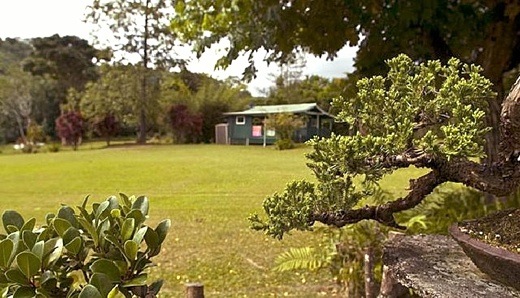
Image above: One of two cabins owned by Morita that are for rent in Hanalei Valley. From (http://www.flipkey.com/hanalei-cottage-rentals/p326827/).

  • Probe targets Hanalei B&B: PUC chair’s North Shore vacation spot built in protected wetlands. (The Garden Island, March 11, 2014)
  • Targeted Enforcement Is this targeting of Morita a political hit? (KauaiEclectic, March 11, 2014)

Hermina “Mina” Morita was elected to the State House in 1996. In her re-election campaign in 1998 the Honolulu Star Bulletin described her as “a staunch environmentalist and opponent of commercial boating in the Hanalei River.”

From 1999 to 2011 Morita chaired the House Energy and Environmental Protection Committee.

In 2011 Governor Abercrombie appointed Mina Morita as Chair of the Public Utilities Commission; to serve out the last three years of Les Kondo’s six year term.

In 2008 Hanalei River boatyard owner Mike Sheehan reportedly filed an “anonymous” complaint against Lance Laney and his wife Hermina Morita.

On August 20, 2013 Gov. Neil Abercrombie appointed Patricia W. Sheehan, the ex-wife and current business partner of Mike Sheehan to the Hawaiian Homes Commission.

In October 2013 Honolulu attorney Les Iczkovitz, representing unnamed Hanalei residents, wrote a letter to Gov. Neil Abercrombie and DLNR Director William Aila, regarding whether Lance Laney and his wife Hermina Morita were engaged in illegal affairs.

“If Ms. Morita and Mr. Laney actually built an illegal second residence, in the middle of a wetland on their property, without proper permits, so close to Hanalei River, one might suspect that this illegal building may have contributed to the 1995 flood event, and the ongoing breaching of the stream bank,” Iczkovitz wrote.

In a December 16, 2013 letter, William Aila wrote a letter to Mr. and Mrs. Laney which outlined the state’s allegations.

Starting in December Mike Sheehan sent out email blasts accusing Morita and Laney of operating an “illegal B&B.”

KauaiEclectic blogger Joan Conrow wrote that the anonymous complaint to DLNR probably came from Mike Sheehan.

On January 3, 2014 DLNR sent a certified letter to Laney and Morita in which they were notified of the violation.

In January rumors began to circulate about Morita not being reappointed to the Public Utilities Commission.

On January 22, 2014 Ililani Media, backed by four independent sources, broke the story that Governor Abercrombie had decided not to reappoint Hermina Morita to the Public Utilities Commission for a term ending in June 2020.

On January 22, 2014 Ililani Media wrote a column about the career of Hermina "Mina" Morita.

In early February Hermina Morita began to confide in people that the Governor had decided to give her the position of Director of the Office of Environmental Quality Control (OEQC).

On February 22, 2014 Civil Beat became the second media outlet to write that Morita was not going to be reappointed to the PUC.

“Word has it that Mina was offered the ‘soft landing’ of running the Office of Environmental Quality Control if she agreed to step down as PUC chair. But when Mina declined, Rep. Jessica Wooley was sent instead to the political version of Siberia and another way was found to tighten the screws on Mina,” according to KauaiEclectic blogger Joan Conrow.

On February 24, 2014 Babes Against Biotech announced on their Facebook page that Governor Abercrombie had decided to appoint State Representative Jessica Wooley to be head of the Office of Environmental Quality Control (OEQC).

On March 6, 2014 the Governor confirmed the Babes Against Biotech announcement with the issuance of a press release announcing that Jessica Wooley would be the new OEQC Director.

As KauaiEclectic pointed out, operating an illegal Transient Vacation Rental (TVR) unit was not a concern when Morita was first appointed PUC Chair, nor when the Governor named Mike Wilson to the Hawaii Supreme Court.

Furthermore, there are several major illegal rental units on conservation land in Haena and other areas near Hanalei that are also not being targeted.

KauaiEclectic wrote, “It looks like Kauai's Mina Morita, chair of the Public Utilities Commission, is the target of a political hit.”

According to The Garden Island, the complaint against Morita and Laney will be brought before the BLNR at their March 28, 2014 hearing.


Image above: The other of two cabins owned by Morita that are for rent in Hanalei Valley. From (http://www.flipkey.com/hanalei-cottage-rentals/p326827/).

From the cottage rental website comes this:

The Hanalei Taro Patch Cottages are located on three acres of land at the end of Ohiki Road in the Hanalei Homesteads. The land is zoned as conservation land and is further designated in the Protective Subzone. There appear to be no other vacation rentals within the Hanalei Homesteads. The units start at $130 per night.
  • Two Secluded cottages nestled in the Serene setting of peaceful Hanalei Valley
  • Total serenity & beauty surround you in these two Hawaiian style cottages: Rainbows, Waterfalls & lush tropical foliage abound
  • Hale Lii & Hale Nui: both studio cottages : large lanais where you can relax sipping a cocktail or morning coffee while gazing at the beauty of the Hanalei mountains
  • Hike Nature Conservation land right outside the cottages
  • Queen beds, kitchens, lovely outside showers, wireless & more

The fabled Hanalei Valley is one of the most revered and treasured of all the valleys on Kauai; a place where the sacred Taro plant has been cultivated for eons. Today still, the Taro is grown and harvested in the valley and these two cottages are the only ones in the valley.

Feel the mana (grace) and beauty of this timeless place; travel back in time to a gentler, slower pace, truly relax.

We have been blessed to live on this land for over 30 years. We now offer our two cottages so that guests may come and experience the beauty and peace of the land. Yet it is only 5 minutes to Hanalei bay and the other gorgeous beaches of Kauai’s North Shore. PUC chairwoman investigated for illegal rental operation - Hawaii News - Honolulu Star-Advertiser

http://www.staradvertiser.com/news/breaking/20140311_PUC_chairwoman_investigated_for_illegal_bed_and_breakfast_operation.html?id=249573021


In 2008 Hanalei River boatyard owner Mike Sheehan reportedly filed an “anonymous” complaint against Lance Laney and his wife Hermina Morita.

On August 20, 2013 Gov. Neil Abercrombie appointed Patricia W. Sheehan, the ex-wife and current business partner of Mike Sheehan to the Hawaiian Homes Commission.

As KauaiEclectic pointed out, operating an illegal Transient Vacation Rental (TVR) unit was not a concern when Morita was first appointed PUC Chair, nor when the Governor named Mike Wilson to the Hawaii Supreme Court.

Furthermore, there are several major illegal rental units on conservation land in Haena and other areas near Hanalei that are also not being targeted.

KauaiEclectic wrote, “It looks like Kauai's Mina Morita, chair of the Public Utilities Commission, is the target of a political hit.”


Neil Abercrombie and Mina Morita
By Ed Wagoner on 17 March 2014 in Island Breath - 
(http://islandbreath.blogspot.com/2014/03/attack-against-hermina-morita.html)

What all this means is that DLNR and the Governor knew about this issue before he appointed her as PUC Chairperson, and the issue was obviously not a big deal or he would not have appointed her.

Now that the Governor is facing public and legislative scrutiny and opposition to his decision to not reappoint her and probably just replace her with a more HECO friendly Chairperson who will rubber stamp whatever HECO wants approved, the issue is suddenly a big deal. It is nothing more that a political fabrication to discredit her in the face of public and legislative support to give him a "way out", an excuse to ignore the support she has been given.

Ms. Morita attended and spoke at a recent Kaneohe Sustainability Conference where she also received support from those in attendance. If the Governor dares not to reappoint her before her term expires on June 30, then he will simply "tighten the noose around his own neck" and pay the price for his inaction on election day.

Some members of the legislature seem to think that she has not done enough to support the people this past year, that she has not been aggressive enough. She could be more aggressive by ending decoupling that is strongly opposed by Hawaii County, was also strongly opposed by former PUC Commissioner and now Executive Director of the state Ethics Commission, Leslie Kondo, and is opposed by ALL ratepayers. Decoupling does nothing for ratepayers but everything for HECO, guaranteeing it a steady stream of profits.

She certainly pissed off the Governor for rejecting HECO's biofuel application with Aina Koa Pono (AKP) not just once, but twice, on Sep. 29, 2011, and Dec. 23, 2013. I'll bet those rejections left the Governor foaming at the mouth for her continued defiance of his orders for her  to protect and support HECO instead of supporting the ratepayers.

She is certainly doing a much better job supporting the ratepayers than the useless, worthless, toothless DCA that supports the HECO monopoly 110% like it did to the bitter end of the HECO-AKP biofuel application in 2011. If it were not for Charlene On Green exposing the fraudulent nature of that application,

I do not believe the PUC would have rejected it. HECO black balled her for daring to speak out against its power on her radio show and tried to push her out of Hawaii. Well guess what, folks, HECO failed. She is stronger and more resilient than Goliath and is getting settled down in Hawaii quite nicely now. She is here to stay.

Let us not forget that Chair Morita's hands are tied behind her back by the very agreement that is at the heart of our breach of public trust lawsuit, the 2008 Lingle-HECO HCEI agreement. Without that agreement, she could be much more aggressive and effective in protecting ratepayers from HECO's abuse of power.

The Governor refuses to rescind that agreement because it protects HECO and gives it carte blanche to do whatever it pleases as a self-regulated monopoly. He unequivocally supports the HECO monopoly instead of the ratepayers.

He ran for Governor on an energy platform on which he called out the company for its abuse of power, and then did nothing the past 4 years to implement any part of the policy. He is in collusion with the monopoly to help it continue fleecing and raping and defrauding the ratepayers every and any way it can. He is not a leader; he is a follower.

I therefore say to you, Governor Abercrombie in particular, and to the legislature AND news media in general, let he who is without sin cast the first stone against Chair Morita's reappointment.

I'll bet many of you, especially you, Governor, have skeletons lurking in your closets ready to be leaked to the press at the appropriate time as a political vendetta by someone who wants to "get even" or just by someone who is fed up with your political shenanigans and wants to blow the whistle on you for the public good.

How about all the "alleged" extortion that I keep hearing about going on behind the scenes by members of the legislature seeking campaign money in return for killing a bill or moving one forward?

If true, then I say, shame on the guilty ones for having such mediocre ethical standards.

A legislative aide on the House side told me by phone last year that the public may think bribery is the problem, but she said no, the real problem is extortion. Perhaps Mr. Kondo would like to begin a state ethical investigation into such allegations. Maybe someone will be willing to come forward as a whistleblower.

In my book of life, ethical standards of many politicians are mediocre at best. Most are in the game for what they can get out of it, not for what they can do to serve the people who elected them. Their motto is: Ask not what we can do for your financial stability, but what you can do for our financial stability.

I think it is time for Ms. Morita to tell her side of the story. How about it Ms. Morita?

The time has come for the Governor to announce her reappointment or suffer the consequences of his inaction on election day.

Let Governor Abercrombie who is without sin cast the first stone against her reappointment.

.

A letter to Abercrombie on HEI

SUBHEAD: It is antithetical to free enterprise to a have a monopoly with a guaranteed profit at the expense of consumers.

By edward J, Wagner on 20 December 213 in Island Breath-
(http://islandbreath.blogspot.com/2013/12/a-letter-to-abercrombie-on-hei.html)


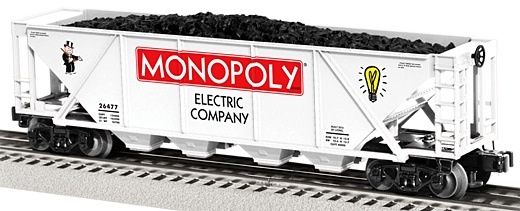
Image above: The Lionel toy train Electric Monopoly Car. From (http://www.legacystation.com/LionelToyTrains/display_product_OFGT26477_26477-Monopoly-Electric-Company.html).

Dear Governor Abercrombie,

As the primary plaintiff in John Carroll's class action lawsuit against you AND the State of Hawaii, and on behalf of all Hawaii ratepayers in this class action, I submit to you the following questions for response prior to the opening of the 2014 Legislative session.

First a little background information to set the stage.

You ran for Governor on an energy platform in which you called out the HECO monopoly for its abuse of power and promised bold action to reign in those abuses.

According to your stated energy policy as a newly elected Governor,

"We have a regulatory system and a utility monopoly that were built for a time and public purpose that are in the past. If we do not fundamentally change our approach, we will not reach our goals."

Hawaii’s boundless renewable energy potential is bottlenecked in our archaic utility structure. Their monopolistic control is often at odds with the public interest in the world beyond fossil fuels. Democratizing energy requires the creation of a free market in energy so that we can deploy clean energy sources and our entrepreneurs can create new jobs.

I now ask you to answer the following questions.

1)
Please explain the following statement from HECO today, December 20.  Is this statement the result of its continuing incompetence in moving Hawaii forward to a clean energy future?  Is it just its continued stonewalling to give the PUC more time to approve its biofuel project with Aina Koa Pono so it can declare that geothermal development is no longer needed? Is it the result of HECO’s inability or lack of expertise to evaluate the bids because the technology is too complex for its feeble mindset?
"After careful review of all geothermal bids, Hawaii Electric Light has determined that none of the submitted bids sufficiently met both the low-cost and technical requirements of the Geothermal RFP. We are currently working with the Independent Observer to develop a request that will be sent to the bidders. The request will give the bidders the opportunity to provide additional information so that we can make an informed decision that is in the best interests of our customers and residents and that meets the goals of the Geothermal RFP. These goals include lowering customer bills, reducing our dependence on fossil fuels, allowing for continued integration and management of intermittent renewable resources, maintaining reliability of service, and protecting the health and safety of the public and environment. We appreciate the efforts the bidders have made to date and look forward to working with them and the Independent Observer on next steps."
2)
Do you agree or disagree with the following statement by retired Senator Fred Hemmings? Please justify your response if answering No.
"HEI is Hawaii's most egregious monopoly. It is antithetical to free enterprise to a have a monopoly with a guaranteed profit at the expense of consumers. Our Electricity is the nations highest priced hovering around 200% above the national average. HEI has made Hawaii the most dependent state on fossil fuels. HEI utility lines are a blight on the landscape. HEI executives are amongst the highest compensated in Hawaii. HEI invests excess profits in other business including over seas ventures. The solution is to break up the monopoly for the benefit of consumers."
3)
Residents of Oahu, Molakai, and Maui are discussing plans to form a utility cooperative or municipal utility. Larry Ellison wants to convert Lana'i into a model for sustainability. Kauai KIUC is NOT a true cooperative. It is owned by Touchstone Energy, a profit-making corporation.

The state Legislature has discussed the conversion of the utility monopoly to a consumer owned grid for 30 years. HECO's Robbie Alm stated on January 29 that HECO will cooperate fully with the Legislature in that conversion. Both the Legislature and US Congress can repeal the HECO non-exclusive franchise.

Will you therefore support this public utility model by asking the Legislature to draw up conversion plans and pass a conversion bill that you will sign in 2014? If not, why not? Under what circumstances will you support such a conversion?

4)
Did you know that residents of Hawaii in the beginning of the 20th century were just as opposed to having an electric utility monopoly as our residents today? Did you know that 4 days before the overthrow of the Hawaiian Monarchy, Queen Liliuokalani signed a law to nationalize the electric utility? Did you know that the PUC was established in 1913 with a mandate to protect residents from ever having an electric utility monopoly?  Why then have you not called for ending the HECO monopoly as part of your stated energy policy?

5)
Do you agree or disagree with the following statement that appeared in a 2001 Honolulu Weekly article entitled "HECO - Wired to the Past? If not, why not?

You bring in any engineer from any big utility company on the Mainland, and they're horrified at what the system looks like, at the technology they use and at what it costs. It's appalling," says Al Hee, president of Waimana Enterprises Inc., a locally based energy company that proposed private, small-scale power plans that have been opposed by HECO.

Before answering, you should know that the grid is literally crumbling beneath our roads and sidewalks. I personally have had 10 extended power failures on my street since February 5, and such power failures are bound to occur more frequently across Oahu and neighbor islands as the grid deteriorates further.

In the USA, all states abide by the North American Reliability Standards, except Hawaii. Hawaii is "exempted" just as it was "exempted" in the 2008 Lingle-HECO HCEI agreement from the protections of the federal PURPA law that polices energy 'monopoly' corporations.

Since Hawaii has no reliability standards, then there is no way our State can hold HECO to standards of reliable service for ratepayers & our State energy security.

According to page 43 of the same 2008, maintaining and upgrading the electric grid is essential to supporting reliable, renewable energy.

Where in HECO's 5 year IRP plan does the company state that upgrading the grid is even on the table? The company talks about advanced metering and upgrading in-house technology, but not the grid itself. Is HECO unwilling to upgrade the grid because it knows that it will bankrupt the company?

Ratepayers have paid surcharges for years to maintain and upgrade the grid. Yet, the company is demanding that ratepayers now pay more money for upgrades, essentially paying twice. Where did all the money go, if not set aside in a fund for grid upgrades? Did it go to excessive executive compensation and excessive dividends?

6)
Describe how the HECO companies have complied with the PUC's directive regarding the Integrated Resource Planning (IRP).

How has the State addressed the failing of HECO to address the directive to develop an Action Plan that governs how the utility will meet energy objectives and customer energy needs consistent with state energy policies and goals, while providing safe and reliable utility service at reasonable cost.

7)
How do you justify your inaction when some residents are burning candles at night and cooking with wood because they can not afford electricity? Two homes have burned down as a result. One resident even chained himself to the HELCO front door to protest high electric rates. Senator Solomon submitted petition signatures to you. How do you respond to residents who are making hard choices between paying for food, medicine, school supplies and paying for electricity, when the utility monopoly pays both excessive executive compensation and excessive dividends?

8)
Please explain how you can allow the utility to suddenly crush the solar industry in order to establish itself as a monopoly in renewable energy, starting with the building of the largest solar farm in the state? Would not adding solar to every commercial and residential rooftop in the state be a more effective use of valuable land resources AND cool rooftops in the process? How truthful has HECO been the past 5 years regarding the amount of solar electricity it can safely accept on the grid?

9)
Explain why have you not rescinded the 2008 Lingle-HECO agreement, knowing full well that it only intent was and still is to support, protect and perpetuate the archaic utility monopoly and its profits to the detriment of our economy, our planet, and our residents? Pope Francis calls it the idolatry of money.

Sincerely yours,


Edward J. Wagner


.

KIUC Non-standard meter charge

SUBHEAD: Charging users of standard meters extra for readings they never had to pay for before.

By Larry Arruda on 1 December 2013 in the Garden Island -
(http://thegardenisland.com/news/opinion/mailbag/letters-for-sunday-dec/article_4bf2e58e-5a4a-11e3-953c-0019bb2963f4.html)


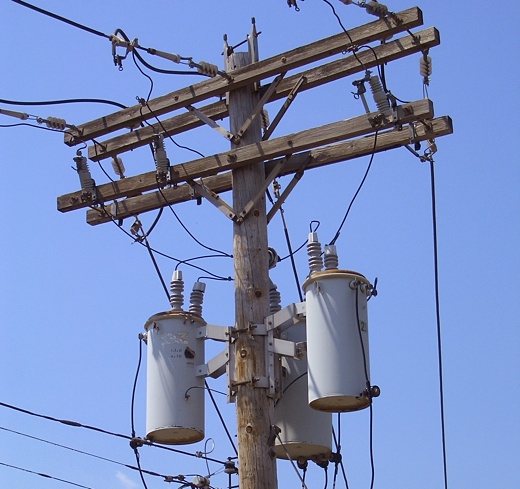
Image above: Truly an ugly business. From (http://commons.wikimedia.org/wiki/File:Utility_pole_transformers.jpg).

KIUC wants to impose a fee on those 3,000 members that chose to opt out of the smart meter program. The board claims that it costs the membership $340,000 per year to now read the meters of those 3,000 members. They are calling it an “extra cost.”

That is a very deceitful term being used by the board, and by the writers for The Garden Island newspaper.

The cost to read the meters has always been included in the price we pay for our electricity. Therefore, the cost to read fewer meters is not an extra cost. Now that they have found a way to allegedly save some of that cost, it is arrogant and deceptive to try to make 3,000 co-op members pay for reading their meters again.

We already pay for it in our outrageous electrical rates. I don’t believe anyone has seen a decrease in their rates after the installation of the 27,000 smart meters. In fact, I would suggest, rather than make the 3,000 members pay “extra” for reading their old style meters, why not give a “discount” to those that allowed KIUC to install the “smart” meters on their homes and businesses.

Now that would be fair.

$63,000 to have an election to let 30,000 members vote on whether or not the $340,000 annual cost is to be shared equally amongst all 30,000 members or to be paid for entirely by just the 3,000 members. Now, doesn’t that seem a little unfair? Is that not a “vote by the majority to impose a burden on the minority?” Unconstitutional?

By the way, why didn’t we have an election to decide on whether we should spend $11 million on a “smart meter” program to begin with?

Perhaps a good business plan would have been to first explain and demonstrate the advantages of the smart meter and then offering the membership the option of accepting the installation of a smart meter, in return for a discount on their electric rates, rather than offering the option to decline.

In closing, I must once again ask, what happened to the $3.4 million per year that it was costing KIUC to read the old meters ?


SUBHEAD: This is a letter I am preparing for KIUC regarding charges for reading the meter on my house.

By Juan Wilson on 1 December 2013 in Island Breath -
(http://thegardenisland.com/news/opinion/mailbag/letters-for-sunday-dec/article_4bf2e58e-5a4a-11e3-953c-0019bb2963f4.html)

Aloha KIUC Customer Service;

I have been told my next KIUC bill will include a charge of $10.27 for a "Non-Standard Meter Monthly Charge". You stated to the Hawaii PUC that the cost of a non-standard meter reading. I urged KIUC not to move to Smart Meters and chose not to have a Smart Meter installed on my house. I will not pay that portion of my future KIUC bills.

One reasonable alternative might be that I read the meter myself every month and send you the information (on a form of your choosing - like HECO has done). You can come once a year to verify the meter reading and charge me $10.27.

There is another alternative.

A little research indicates that it cost on average about $350 to buy and install one Smart Meter. As I understand it, without a vote by your co-op members, you spent $11million (with 30,000 meters that would be $366 per installed meter). To me that indicates KIUC is $366 ahead on costs generated by my not having a Smart Meter.

My alternative to reading the meter myself is this:

When I get a bill with a $10.27 "Non-Standard Meter Monthly Charge"  I will do the following.

I will deduct the $10.27 charge from the approximately $366 KIUC saved by not providing me with a meter and not having to install it. I intend to deduct that charge from my bill until $366 "credit" exhausted. That will approximately 36 months from now.

When that $366 balance is exhausted I request that KIUC shut off power to my residence.

When the power is shut off I insist that KIUC remove its meter from my home as well as the transmission cable attached to the house.

Mahalo for your time and attention to this matter.

See also:
Ea O Ka Aina: KIUC Special Public Meeting 12/2/13

.

KIUC Meter Fee Vote

SOURCE: Jonathan Jay (jjkauai@gmail.com)
SUBHEAD: KIUC receives validated member petition challenging non-smart meter fees, and will have board vote on issue.

By Staff on 13 November 2013 for KIUC -
(http://kauai.coopwebbuilder.com/content/kiuc-receives-member-petition-challenging-meter-fees)


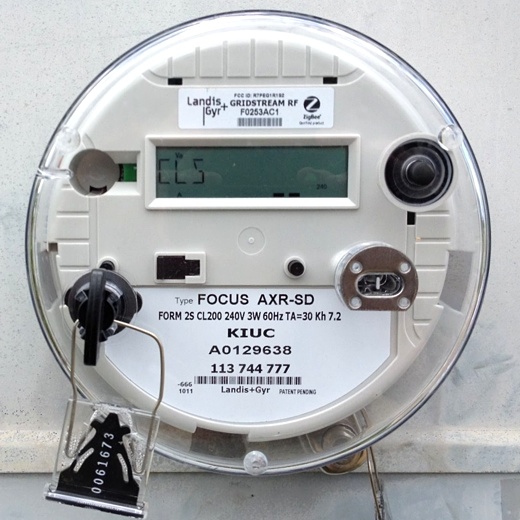
Image above: The Landis & Gyr Focus smart meter comes in several models, the Focus AXR-SD model that is pictured above is equipped with a remote disconnect switch. From (http://stopkiuc.com/2012/05/kiuc-creates-fear-and-confusion/).

Kauai Island Utility Cooperative (KIUC) has determined that a petition submitted by members challenging an action of the board of directors has a sufficient number of signatures to be considered a “qualified petition” as defined by Board Policy 32.

Board policy enables petitioners who gather at least 250 valid signatures to put to a member vote any action of the elected, 9-member cooperative board.

The action being challenged is the board’s vote on Oct. 1 to set fees for reading and servicing the meters of customers who have chosen not to use KIUC’s wireless “smart meter.” About 10 percent of KIUC’s 30,000 customers have opted out of the smart meter program.

On Oct. 31, the Hawaii Public Utilities Commission approved the fees proposed by KIUC, describing them as “reasonable.” The fees took effect on Nov. 4.

“The decision by the board was about fair cost recovery for our members – reading those old meters costs money,” said David Bissell, president and CEO of KIUC. “The petitioners are challenging this approach. So now the members will decide whether those who opted out of a smart meter should pay or if all the members should pay.”

Customers without a smart meter pay $10.27 per month for the extra costs of manually reading and servicing the old meters. Spreading the cost to all customers works out to just under $1 a month.

Within 15 days, a committee of the board of directors will meet with members of the petitioning group to discuss the method of submitting the challenged action to the members for a vote and to develop the wording of the ballot.

The process will follow the steps outlined in Board Policy 32, which can be found at http://website.kiuc.coop/content/board-policies.

See also:
Ea O Ka Aina: Anti smart-meter charge petition 10/27/13
Ea O Ka Aina: Letter & Petition to KIUC 10/15/13
Ea O Ka Aina: KIUC, PUC & Opt-Out Charge 10/12/13
.

Letter and Petition to KIUC

SUBHEAD: Residents seek fairness and to protect privacy rights in regarding KIUC Smart Meters.

By Douglas Wilmore on 15 October 2013 in Island Breath -
(http://islandbreath.blogspot.com/2013/10/letter-and-petition-to-kiuc.html)


Image above: Illustration of Smaug, the gold hording dragon from "The Hobbit". in From (http://www.pdfreportage.co.uk/2012/12/let-down-of-the-year/).

Dear Honorable Members the Public Utilities Commission (PUC) of the State of Hawaii:

I am responding to the request submitted by the Kauai Island Utility Cooperative (KIUC) on October 3, 2013, which seeks to implement its proposed; (1) Non-Standard Meter Set-Up Charge and (2) Monthly Non-Standard Meter Charge. I have been a participating member of the cooperative since its inception and have observed the utility while it has evolved over the years.

Background
KIUC was formed 2002 after being approved by the PUC. In its initial comments, the PUC noted that moving from a private company to a cooperative format should reduce costs of electricity to the residents of Kauai. That has not proven to be the case, and in fact the PUC approved a rate increase several years ago.

Because of the high costs of electricity on the island and the inability of the utility to reduce these burdensome charges, coop members have sought ways to reduce their electrical bill. As a result rooftop solar has become quite popular along with erection of some small wind generators. The commercial sector has also participated in this movement. Approximately ten large organizations provide 70% of the income for KIUC, and at least 5 of these groups are participating in major programs to generate some or all of their own power.

Thus KIUC is facing a shrinking demand for its product because it has failed to remain competitive. The utility needs to transform itself to insure long-term stability. Until this is recognized by the board and management and a new business plan is initiated the utility will make every attempt to increase its income. These changing economic dynamics may be the basis for the request from KIUC to increase payment from a subclass of coop members, who have opted out from having smart meters.

Fairness in Recovery of Full Costs
Several factors need to be considered in the “recovery of full costs” as provided in guidelines from the PUC. According to the initial KIUC press release, the smart meter project cost was based on 33,000 users with an estimated cost of $11,000,000.

One half of the money was provided by KIUC with the remainder provided by a grant from the Department of Energy. Therefore, the $5,500,000 provided by KIUC general funds split between 33,000 users means that each smart meter cost a utility member $151.51 plus a very small amount in Federal taxes. (In recent news articles the number of users eligible to receive smart meters has been reduced to 30,000).

About 10% or 3,000 coop members do not have smart meters and I am one of them. Thus individuals in the non-smart meter group have each paid about $150 through KIUC general funds for a smart meter but have received nothing. This totals to almost one-half million dollars paid by the op-out group with no goods or services provided by KIUC.

Moreover, in the future we will be contributing through our bills into general funds to support the costs of upkeep, maintenance and function of the entire smart meter program, services which we do not use, or benefit from.

Now, KIUC wants us to pay an extra $10.27 a month to read our meters, while we are also supporting the costs of running and maintaining the smart meter program which reads the smart meters. Thus, we are paying to support the effort of the smart meter group but management and the board does not want the utility to support reading the meters of the op-out coop group through use of its general funds.

There are several solutions to resolve this apparent inequitable biased approach. First, KIUC could refund or credit each of the non-smart meter accounts for the cost of a smart meter, an item which we have paid for but have received nothing in return.

Secondly, an objective third party could determine the per capita costs of operating the smart meter program and that amount could be subtracted monthly from each of our electric bill. This would create two separate groups, each class of users supporting their own billing and operating system and paying for their own costs. This would seem to satisfy some of KIUC’s intensions.

But is would not satisfy KIUC’s ultimate objective which is to derive more income from the group who opted out of installing smart meters. They might argue that all members work collectively in this cooperative, and that each individual must support the activities of the entire group, whether there is individual gain or not.

The 10% op-out group was given the opportunity to participate and for what ever reason they did not avail themselves of this “exciting new technology”. They now must support the near-total group effort--- in which 90% of the coop member are participating--- and suffer this economic disadvantage because of their own decision.

Finally, KIUC might also suggest that it is unable to credit accounts and resolve billing inequities with two member groups because these manipulations would be too complicate.

But if the 10% op-out group is financially supporting the other 90% of members to read their meters, shouldn’t the 90% then reciprocate by supporting the remaining 10% to read their non-smart meters? After all, this is a cooperative and there should be equality in terms of benefits receive by all members, not just benefits to the 90%. To not act in this manner creates a two-class system that is layered with discrimination and places individuals in the op-out group at a major economic disadvantage.

This 10% of members have already been economically disenfranchised by paying for a program that do not favor and have received no goods or services in return. They have saved the utility money by not having to buy 3,000 smart meters and pay for installment costs.

To place an additional monthly cost on these individuals establishes a punitive two class system, compounds the previous economic penalties which have been exerted on the group and counters the Federal law which demands that equality must be maintained within the utilities’ membership.
 
If costs are to be recovered by the utility, each individual member must contribute equally to these costs, just like each individual member has supported the smart meter program, whether they like it or not. This is not only fair but it is compatible with Federal law outlining equality of members. Moreover, it is consistent with the previous Federal court ruling related to this case, which will be subsequently discussed.

The Issue of Privacy
Electric utilities face decrease demand for the electricity they produce because of the growing use of user owned solar. Electrical utilities are shrinking financially. This fact has caused great concern in the industry and with their investors.

As a result utilities are seeking new avenues of revenues. The smart electrical grid provides such a new economic opportunity, for the utility can now sell information concerning home activity acquired from each individual customer. Smart meters monitor the use of all major appliances in the home and determine to some extent how they are used. Calibrated meters can determine oven temperature and duration of use and thus provide a list of the types of food prepared in the home.

Smart meters determine television usage time and some meters can even report on the specific television program an individual is watching. Other information such as when a person is in the home or away and when a person is sleeping are simple monitoring parameters obtained from these devices.

Spokespersons for Cisco, a major software and chip producer, speculates that the quantity of traffic on the smart electrical grid will be greater then that seen on the Internet. A California utility has devoted its entire research budget to develop programs to maximize the capture of such information and enhance crosstalk between the computers in the utility and the individual meter.  Utilities are anxious to sell their smart grid information to retailers, manufactures, insurance companies and law enforcement groups.

For more information on this subject please see: “Smart metering and privacy, a report to the Colorado PUC”, http://www.takebackyourpower.net/news/2012/10/14/confirmed-smart-meter-data-shared-far-and-wide/, http://www.smartgridtoday.com/articles/10030-pge-smart-grid-director-describes-efforts-to-mine-data?v=preview and review selected articles in the marketing magazine entitled Smart Grid Today.

When KIUC initiated its smart meter program it issued an edict that all coop members and customers were required to use smart meters. Inquiries were made regarding this requirement but no one in the utility would speak with coop members.

As a result, a lawsuit was filed by Adam Asquith against KIUC regarding his privacy rights as they related to smart meters (Adam Asquith vs. Kauai Island Utility Cooperative, U.S. District Court, Civil No. 12-00134HG-rlp). After deliberation a Federal judge negotiated a settlement in favor of Mr. Asquith, determining that a smart meter could only be placed on his property with his consent. When the Federal law of equality was applied, all KIUC members became covered by this determination.

In the final phases of the hearing with Mr. Asquith and the lawyer

 representing KIUC, the Federal judge said, “I think that
10 you may be able to work out some wording with the idea that
11. Mr. Asquith will possibly reserve the right to go to court,
12. should there be an attempt to charge him for not having a smart
13; meter, and then the issues would be before the court at that
14. point in time and there would be more information about how the
15. process is working and whether or not the privacy issues are
16. real privacy issues. And it might never come to pass because
17. the PUC may decide that it's not worth X amount of money, or

IB it's sufficiently few people that it really doesn't matter.” (Copied from Court Records, page 26).

The U.S. Constitution guarantees privacy in the home. It is clear that smart meters violate this privacy. The Supreme Court has already ruled that the use of thermal imaging to locate a person in the home is a violation of the 4th Amendment. A similar opinion was rendered by the court concerning the attachment of GPS devices to track cars, which requires a warrant in a criminal case. These cases show that the court has imposed restriction on the use of technology when invading individual privacy.

The right for the individual to determine privacy in the home, a Constitutional guarantee, has been confirmed by the ruling of the Federal judiciary in the Asquith case and this guarantee is not contingent on a monthly payment of $10.27 or any other transaction or condition.

Because of the illegality of the requests for payment by KIUC, which violate our guaranteed Constitutional rights, this proposal should be denied.

Is the proposed tariff on 10% of the KIUC members punitive?

At the end of each month a small rather old gasoline powered pickup truck drives onto my property. The engine is left to idle while a KIUC employ enters the back door of my home to read my electrical meter. This scene is the anthesis of what is now proposed in the new KIUC ten-year plan, which states it intends to reduce costs and carbon output of the utility in the coming years.

This scene also forms the basis for the KIUCs inflated economic proposal of a $10.27 monthly charge for meter reading for 10% of the cooperative members. If this per deem costs were applied to the entire KIUC membership, the total for meter reading would be $3,697,200/ year which is about 10 times more then actual expenditures budgeted for meter reading before the installation of smart meters.

Are there alternative, less expensive approaches to read electrical meters? First, the utility could average 3 or 6-month periods and read the meters at longer intervals, only a few times a year, thus greatly reducing costs. The CEO of the utility says this cannot be done because of the “volatility of fuel costs”. However, with 90% of the coop members on smart meters their meters could be read weekly or bi-weekly if necessary to accommodate cash flow if volatility in oil prices occurred. The 10% of co-opted individuals could receive average statements over a fixed period of time, which would greatly reduce meter reading and reduce costs.

Secondly, coop members could simply call in their meter reading at the end of the month. This exercise would be similar to what I perform when I call into the pharmacy to renew a prescription at no extra cost. I dial the pharmacy number, punch in the number on the prescription bottle and a recorded voice tells me when the drugs will be ready.

Many individuals have cell phones so a dated picture of the meter could be taken at the end of the month and sent to the computer at the utility for analysis and billing. For those technically challenged, a simple post card could be provided to communicate the meter reading and date.

All these approaches have been tested and used by utilities throughout the country. It is unclear why KIUC is so regressive as to use its antiquated highly expensive carbon producing little truck methodology. Is KIUC so far out of touch with modern communication and cost efficient management that it has to rely on this approach? If so the PUC should consider an intervention with the utility to educate the board and up grade management concerning 21st century cost-effective business practices.

If this is not the case, do the requests for these exceedingly high charges against a class of coop members represent a draconian means of economic punishment for those 3,000 individuals who didn’t conform to KIUC wishes? If this is the case then KIUC should be fined and restitution should be made to the damaged parties.

Conclusion
A variety of argument have been presented to demonstrate that the request for a meter instillation fee and a monthly payment for those individuals who opted out of the smart meter program is not fair, violates Federal law of equality, disregards member’s Constitutional rights of privacy and would create a class of members who would sustain a long-term economic disadvantage.

I submit that for these reasons the two requests for additional charges submitted by KIUC should categorically be denied by the PUC.

Respectively submitted,
Douglas Wilmore


Help us influence the Hawaii PUC on request by KIUC from PUC to charge customers for having non-smart meter:

To download a copy of KIUC Member Petition click here.
To download a copy of KIUC Non-Member Petition click here.

Mail filled-out petitions to:

Jonathan Jay
5956 Lokelani Road
Kapa`a HI 96746-9714

See also:
Ea O Ka Aina: KIUC, PUC & Opt-Out Charge 10/12/13


.

KIUC, PUC & Opt Out Charge

SUBHEAD: Open letter to Hawaii PUC concerning KIUC request to charge fees for Smart Meter Opt out.

By Ray Songtree on 12 October 2013 in Island Breath -
(http://islandbreath.blogspot.com/2013/10/kiuc-puc-opt-out-charge.html)


Image above: Illustration by David Dees of privacy invasion by smart-meters linking to what goes in your home. From (http://www.a-w-i-p.com/index.php/2013/08/08/washington-thinks-you-are-stupid).

Dear PUC Administrators,

My name is Ray Songtree.  I've lived on Kauai for twenty years now. I am age 60 with a 7 year old daughter.  I've worked with my hands all my life and am now finishing a book on globalization.

As I understand it, two years ago KIUC had five meter readers that serviced roughly 30,000 meters.  The budget of KIUC in last two years hasn't deleted these positions and now we don't need to hire new people to do 1/10th of the work, that is, service only 3000 original "opt out"  meters.

If KIUC needs $336,000/year to service 3000 meters, does that mean they needed $3,360,000 two years ago to service 30,000 meters?

Did they save millions of dollars since putting in some new hardware???

Of course not.   Their proposed new fee is absurd and unfair.

(As a side note to how crooked our KIUC is, they are suggesting that a new supervisor will be needed to watch over the new meter reader and new collection rep for the 3000 opt-out meters, as if this protocol hasn't been going on continuously for 10 years.  And this supervisor will need a salary of $47,000!    --- "FTE Supervisor @25% or 0.25 FTE Total Annual Incremental Labor Costs   $47,655." ---   They are saying they need someone getting $200,000 a year to spend two hours every day supervising two other people!  Does that sound like responsible prudent management?  It does not to us!)

We, who don't want the new smart meters, are not getting any new service.  Our old meter reader service and billing service never stopped from two years ago. So why a new charge?  The meter reader never stopped working! They don't need to be rehired or retrained..

Also, KIUC will never be able to prove that those with 'smart meters' are saving any money.  It is reverse.  "Smart" meter users are using expensive meters that will need replacing every 5 years, and expensive infrastructure that also will need upgrading constantly in a salty air environment.  These smart meter users will also be responsible for many liability issues and insurance to cover these issues, notably insurance against lawsuits for health and privacy.

The insurance policies are designed to protect KIUC against accidents, not against lawsuits from it's own members. The health lawsuits will probably bankrupt KIUC and that is why the insurance companies will balk.  But then the members won't sue themselves, so the Board Members will probably be isolated and lose everything they have.  We who opted-out won't be responsible for any of this liability because we opted-out.  So how in the world, should those who opt-out of all these expenses, need to pay more?  Do you think any court would side against us?

This proposed $54 switch back charge and $10.27 monthly charge is all about punishing we opt-out folks for not conforming. It is a dishonest scam.  PUC can just look at the nickels and dimes of my argument and see something dishonest is being pushed, and as you well know, we have a history of this with KIUC, beginning with the way it was created in the buy out of Kauai Electric.

Let's not forget the same attorney, now retired David Proudfoot,  who represented "his clients" against the people of Kauai, stayed at KIUC for ten years to create the non-transparent and secretive corporate culture there, so that unlike State sunshine laws, we are kept in the dark.  We have never even got to see the exact terms of the Federal Grant!  We can't even record public Board meetings!

Why? Because Proudfoot trained the Board to be afraid of it's own members because Proudfoot was hiding something, and KIUC was built on that secrecy. The big secret Proudfoot was hiding was that the Coop principles are lip service, just "aspirations" in his words.  The big secret is KIUC, as now structured, is not a transparent, member run coop.  Every impediment to real participation has been put in place to keep knowledge and decisions secretive and centralized.

We are organizing a petition now for a special meeting to question the Board proposal to you for this charge. It is in our coop charter, and is the most important, and in fact ONLY, check and balance tool we as members have to use. Please do not sabotage this.  We are already contemplating hiring an attorney to sue PUC if you deprive us of this check and balance action in running our own coop.

And we will design the lawsuit to seek relief for damages.  I am not being belligerent here, I'm just saying, if PUC does not respect the checks and balances built into our coop laws and jumps the gun and overrides us, we will protect our rights and you will pay.  You can regard this letter then as a legal notice.  Please cease and desist.

Now, back to a more congenial tone....  We now have experts on Kauai regarding the lack of wisdom of smart grid.  We welcome you to come to Kauai and talk to us. We welcome you.  We can educate you, as it is a convoluted story which began almost a century ago with the Technocracy movement.  It is a global program that has zero to do with market demand.  It is about control, not service.  It has nothing to do with being Green. That was just an advertising gimmick.

Globalists who want centralization and control then use industry, who is blind to anything except their own bottom line. The story of smart grid is confused by industry advertising campaigns that includes misstating many facts, so that basic knowledge sounds very different than what people would be concerned about, if it was stated in another way.  That is, the risks have been erased by double speak and subterfuge.

We have experts here now, and in a day long clinic can bring any of you up to speed on what is going on globally with smart meters and the technology.  Please note, the world is waking up.  I-phones are giving people headaches.  People are noticing. There are smart meter and EMF awareness groups in every country now, and in the US, in every state and large city, and we are connected and on fire.  We aren't going away.  We are spreading real research.

We have better EMF reading instruments than KIUC does, and know more about it.  EMF dangers are increasing. Autism and many metabolic diseases are increasing. We won't go away.  We care about our kids and grand kids.  We know about organizations like (www.bioinitiative.org)

Dear, Administrators... Please note that Germany is now saying Smart Grid is NOT cost effective.
---  State Secretary Kapferer:
"The findings show that we in Germany need to design our roll-out of smart metering systems in a targeted fashion which meets the needs of our energy reforms; generalised approaches are unsuitable. 

We are now reviewing whether the study's recommendations can be implemented. We have set up a working group with the Federal Network Agency on the financing mechanism to clarify the possibility of building them into our system. The main principle here is to keep energy affordable for the consumer."
The study shows that the costs of a smart metering system clearly exceed the average potential savings for final consumers with low annual consumption levels. It would therefore be disproportionate and economically unreasonable to require all consumers to install such meters."
See (http://www.bmwi.de/EN/Press/press-releases,did=588354.html)

In my opinion, PUC needs to be on right side of history or you will be on wrong side.

I do think you should consider this German statement very seriously and rethink your support of Smart Grid.  KIUC made a mistake in accepting this grant. The Board could actually sue the Feds for providing propaganda instead of downside risk disclosures.  But the Board and CEO were bought off is the sad truth.  The funds from Grant help them pay themselves outrageous salaries and benefits NOT befitting a small island community.  Flying to DC stroked the ego of someone who should have known better.  But he is not a local.  He really has never arrived.

Activists here warned the CEO and Board of KIUC two years ago.  The warning was straight up, in newspapers, in front of County Council, at Board meetings.

The truth has energy.  Not electric energy, but spiritual energy.  And people are attracted to the energy of the truth.  That is why 10% have opted out and I promise, a lot more will when they see the petition.  You might know that over 4,000 people marched to protest the chemical company GMO research practices here last month.  I'm sure you remember how KIUC spent our money to fund their side of the FERC issue in the ballot the petitioners brought about (!), and this pissed off a lot of people.  Well all those people will come on board with this new petition. We all know each other here.  This isn't Honolulu.  I promise this smart meter issue is just getting warmed up.  I wouldn't get burnt if I were you.

Three-thousand households here on Kauai did not opt out because of irrational fear, but because they studied the facts and could see KIUC never had studied the facts and still has no interest in the facts.

With respect and support,

Ray Songtree

.

KIUC Shocking Reversal

SUBHEAD: KIUC was set up as a coop needing PUC regulation and under the Sunshine Law. What happened?

By Andy Parx on 7 April 2013 for Parx News Daily -
(http://parxnewsdaily.blogspot.com/2013/04/shocking-reversal.html)


Image above: Because of his nose, Pinocchio can only tell the truth to Jiminy Cricket. From (http://basictrainingacademy.wordpress.com/2012/05/31/obsession-motivation/).

Another chapter from the "are you gonna believe me or your lyin' eyes" department today from an otherwise, or maybe we should say formerly, unimpeachable source.

In a letter-to-the-editor of today's local Kauai newspaper, former long-time Honolulu Advertiser Kaua`i Bureau Chief Jan TenBruggencate, who is now the Vice Chairman of the Kauai Island Utilities Cooperative (KIUC) Board of Directors, excoriates columnist Walter Lewis for a piece published in the paper on Friday.

In it Lewis basically describes how a bill headed for apparent passage in the 2013 state legislature would, in his estimation, allow KIUC to get out from under regulation by the Public Utilities Commission (PUC).

He leads his column by saying:
The state legislature is currently considering two companion bills — HB 815 and SB 1045 — which could remove the Public Utilities Commission (PUC) from much or all of its regulatory function as to cooperatives.
He goes on to say how basically KIUC doesn't act like a co-op, something we've covered extensively in this space, and cites many of the known debacles like the FERC, federally-controlled hydroelectric projects as well as pointing out many potential benefits of PUC oversight.

But in a colorful and many times personal attack on Lewis, TenBruggencate say that it is not true of the bill and that Walter, as usual in TenBruggencate's view, has it all wrong. Rather he says:
The bills take away no authority, and indeed give the PUC new authority over KIUC. That includes the authority to protect consumers by exempting KIUC from expensive regulatory dockets that don’t apply to cooperatives.
So who is right?

Well, as an aside, we must point out first that of course it would "take away no authority" if indeed "regulatory dockets don't apply to cooperatives."

But to directly address the conflict, maybe the "description" of the bill will tell us. The official "description" of SB1045 SD1 HD2 says that it:
Authorizes the Public Utilities Commission to waive or exempt an electric cooperative operating in the State from compliance with the provisions of chapter 269, Hawaii Revised Statutes, as well as any other applicable charters, franchises, rules, decisions, orders, or any other laws.
Sounds clearly like Lewis has it right. Although if our "aside" is any indication there may be some wordsmithing going on in TenBruggencate's letter that could obscures the facts.

We would also add something that TenBruggencate might not know but that Lewis, who was one of those most responsible for saving members up to $80 million in the lead-up to the purchase of the utility, seems to have forgotten.

One of the other proposals at the time that Citizens' Utilities was trying to sell "Kauai Electric" was that, rather than setting up a co-op the county would set up a government owned and run utility. As a matter of fact, the Kauai County Charter contains a section, passed by voters, on how a "Municipal Power Authority (MPA)" would work.

But one of the reasons the co-op idea won out was that decision makers with the county, specifically County Council Chair at the time Kaipo Asing and then-Mayor Marianne Kusaka, together extracted a promise from the co-op's organizing board that they would abide by two things. The first was that they would adhere to the provisions of the State Sunshine law which an MPA would have had to do.

The second was to put themselves under the control of the PUC.

The first never happened. Like a promised beach access that is fenced as soon as the construction of a development is finished, the Sunshine Law provision was obliterated when the by-laws replaced the articles of incorporation. But nobody noticed because the "nit-pickers" were too busy going over so many other details of the purchase, using their time to follow the money rather than the process.

Actually the group of infamous council curmudgeons led by legendary activist Ray Chuan. appropriated the name at the time when they were disparagingly given it by Kusaka for what she called the "nit-picking" the of the deal, nit-picking which later led up to the revised price.

And now the part of about the putting themselves under PUC regulation is about to be eliminated like the fence that goes up across the beach access when the development is sold... no matter what our good friend Jan says and how much virtual spittle he got on his letter.

Unless there's some provision in the current text of the bill itself to reverse 180 degrees the purpose/description, something we can't find but which would make the bill invalid at any rate because a bill is supposed to reflect it's original description, it appears that the one who has a "gross misunderstanding" is our good friend Jan, not Walter of whom we are more often critical than anything else... unless that is there are some clever semantics going on on the part of our pal with the skilled pen.

We invite you to read the bill and both Lewis' and TenBruggencate's opposing "opinions" and decide.

It feels funny for the "Rabid Reporter" to be criticizing the great mainstream, "objective" journalist but apparently there seems to be a "fiduciary matter" that has turned the worm.

As they say, you're entitled to your own opinions but not your own facts; the description of the bill seems to indicate that this time for once it's Walter who has a firm handle on those nasty little facts.
.

A PV on every roof

SUBHEAD: Convince our PUC to achieve energy security for Hawaii via distributed affordable photo-voltaic with battery backup.

By Ed Wagner on 7 April 2013 in Island Breath -
(http://islandbreath.blogspot.com/2013/04/a-pv-on-every-roof.html)


Image above: A standalone 110v power station with 60amp-hours of storage that can be rolled anywhere rubber wheels can go to provide electrical power. From (http://www.ar15.com/archive/topic.html?b=10&f=18&t=638426).

I signed a petition to Hermina Morita, Chair, PUC, Hawaii State House, and The Hawaii State Senate.

Please consider signing this petition from Ulrich Bonne, Ph.D., Chemical Physicist, Energy Consultant and Analyst from Kailua Kona.

http://signon.org/sign/energy-security-for-hawaii?source=s.em.mt&r_by=1305201

His own website has more detailed information.

http://alohafuels.pbworks.com/

Thanks,

Ed

[IB Editor's note: I began by journey to energy independence from KIUC with a Xantrex Xpower 1500 like the one pictured above in 2006. There are cheaper ways of putting together a system, but you have to know something about the subject ahead of time. The virtue of the Xpower 1500 is that you don't have to know anything about PV and battery storage to get started. It is an easy entry to creating and managing your very own powerplant.Even though the old 60amp storage is pau, the unit still in service providing lighting to our kitchen and guest bathroom but now attached to two deep-cycle marine batteries with 230 amp-hours of storage at Walmart's for $114 each.]

.

KIUC leading Hawaii

SUBHEAD: Kauai Island Utility Company is blazing ahead of rest of state on renewable energy contribution.

By Sophie Cocke on 12 October 2012 for Civil Beat - 
 (http://www.civilbeat.com/articles/2012/10/12/17359-kauai-utility-blazes-ahead-on-renewable-energy/)


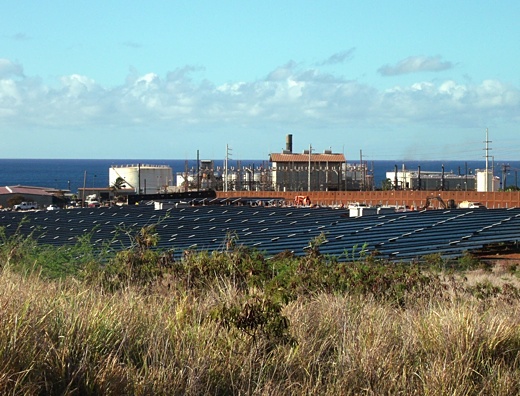
Image above: KIUC Port Allen power generating station sits makai of Alexander & Baldwin solar farm. All photos by Juan Wilson.

Kauai’s small, member-owned electric utility is quickly becoming a leader when it comes to renewable energy.

By the end of 2014, the Kauai Island Utility Cooperative expects to be generating 35 percent of its energy from sources such as solar, biomass and hydroelectric. That's quite a switch from 2008, when it was generating more than 90 percent of its energy from imported oil, according to a report filed with the Hawaii Public Utilities Commission.

Not only will its 33,000 customers benefit from more stable electricity rates, the utility says, but electricity costs are expected to be less than that from oil-fired generation. Currently, island residents are paying more than three times the national average and some of the highest rates in the state. A typical residential bill averages about $200 a month, according to utility data.

This week, the utility announced that a $90 million biomass plant designed to burn woodchips was set to break ground in early 2013. Green Energy Team, based in Anahola, just received a $73 million loan from the U.S. Department of Agriculture which will allow the plant near Koloa to move forward.

The plant is expected to account for about 11 percent of the island’s electricity needs. Residents can expect to save between $70 to $190 a year on their electric bill because of the project, which will offset 3.7 million gallons of imported oil, according to state regulatory filings.


Image above: Hoku Solar constructing solar power array stretching from Port Allen to Eleele. All photos by Juan Wilson.

“Things have suddenly, surprisingly started coming together on a number of fronts in recent weeks,” Jim Kelly, a KIUC spokesman, said in an email. “The Green Energy project was close to dead many times in the past few years because of financing issues but the developer hung in and voila, it’s a go.”

The biomass plant will be located in the same area where Green Energy Team will be harvesting trees to use as feedstock, eliminating the need to truck in the woodchips.

The company is targeting invasive albizia trees that are on the 64-acre lot. In their place, the company plans to plant a range of trees. By cutting them in a special way, the trees will regrow faster, shortening the harvesting time to four and a half years, according to Eric Knutzen, co-founder of Green Energy.

In addition to the biomass plant, the utility is moving forward on large-scale solar projects. An array owned by Alexander & Baldwin Solar is expected to be online by the end of this year. Another project being developed by REC Solar in Anahola on homestead lands is expected to be completed by the end of 2014, and the electric utility is expected to announce another utility-scale project in the coming weeks.

Combined, the solar projects are anticipated to account for nearly 50 percent of energy use during the daytime.

"They are definitely leading the pack," said Drew Bradley, a sales manager at REC Solar. "It would be nice to see other utilities following along and getting on board."

For more of this article visit Civil Beat (http://www.civilbeat.com/articles/2012/10/12/17359-kauai-utility-blazes-ahead-on-renewable-energy/). 


Image above: New PV solar panels in front of Chevron Port Allen fuel depot and KIUC diesel generator exhaust stacks. All photos by Juan Wilson.


.