Showing posts with label Diet. Show all posts

Eat less - Live longer

SUBHEAD: The secret to a long healthy life is to seriously reduce caloric intake of food.

By Alex Riley on 1 June 2017 for The BBC -
(http://www.bbc.com/future/story/20170601-the-secret-to-a-long-and-healthy-life-eat-less)
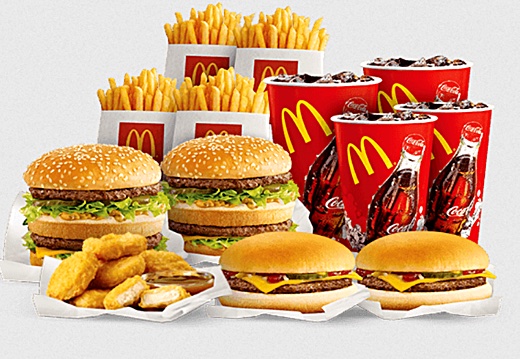

Image above: The Dinner Box Strategy - McDonald's profits from selling an insane amount of food For $9.99.From (http://www.businessinsider.com/mcdonalds-dinner-box-strategy-2014-6).

Permanently cutting the daily calories you consume may turn out to have a profound effect on your future life, according to some tantalising scientific studies.

In a restaurant setting sometime in the not-too distant future, a man and a woman are on their first date. After the initial nerves subside, all is going well.

The man is 33, he says, has been single for most of those years, and, although he doesn’t mention it, knows he is looking to settle down and have a family. The woman replies that she is 52, has been married, divorced, and has children in their early 20s. He had no idea – she looked his age, or younger.

This is a dream of Julie Mattison from the National Institute on Ageing (NIA) in the United States. She envisions a time when chronological age ticks by with every year, but biological age can be set to a different timer, where elderly doesn’t mean what it does now.

It sounds far-fetched, but our society has already made great strides towards that goal, thanks to advances in medicine and improvements in healthy living. In 2014, for instance, the United States Health Interview Survey reported that 16% of people aged between 50 and 64 were impaired every day with chronic illness. Three decades earlier that number was 23%.

In other words, as well as benefiting from longer lifespans, we are also experiencing longer “healthspans” – and the latter is proving to be even more malleable. To paraphrase and update a speech from John F Kennedy given at the first White House Conference on Ageing in 1961, life can indeed be added to years, rather than just years added to life.

Healthspan is proving to be even more malleable than lifespan. 


So, what do we need to do to enhance the length and quality of our lives even more? Researchers worldwide are pursuing various ideas, but for Mattison and colleagues, the answer is a simple change in diet.

They believe that the key to a better old age may be to reduce the amount of food on our plates, via an approach called “calorie restriction”. This diet goes further than cutting back on fatty foods from time-to-time; it’s about making gradual and careful reductions in portion size permanently.

Since the early 1930s, a 30% reduction in the amount of food consumed per day has been linked to longer, more active lives in worms, flies, rats, mice, and monkeys. Across the animal kingdom, in other words, calorie restriction has proven the best remedy for the ravages of life. And it’s possible that humans have just as much to gain.

The idea that what a person eats influences their health no doubt predates any historical accounts that remain today. But, as is often the case for any scientific discipline, the first detailed accounts come from Ancient Greece.

Hippocrates, one of the first physicians to claim diseases were natural and not supernatural, observed that many ailments were associated with gluttony; obese Greeks tended to die younger than slim Greeks, that was clear and written down on papyrus.

Spreading from this epicentre of science, these ideas were adopted and adapted over the centuries. And at the end of the 15th Century, Alvise Cornaro, an infirm aristocrat from a small village near Venice in Italy, turned the prevailing wisdom on its head, and on himself.

If indulgence was harmful, would dietary asceticism be helpful? To find out, Cornaro, aged 40, ate only 350g (12oz) of food per day, roughly 1000 calories according to recent estimates. He ate bread, panatela or broth, and eggs.

For meat he chose veal, goat, beef, partridge, thrush, and any poultry that was available. He bought fish caught from the local rivers.

Restricted in amount but not variety, Cornaro claimed to have achieved “perfect health” up until his death more than 40 years later.

Although he changed his birthdate as he aged, claiming that he had reached his 98th year, it is thought that he was around 84 when he died – still an impressive feat in the 16th Century, a time when 50 or 60 years old was considered elderly.

In 1591, his grandson published his posthumous three-volume tome entitled “Discourses on the Sober Life,” pushing dietary restriction into the mainstream, and redefining ageing itself.

With an additional boost of health into the evening of life, the elderly, in full possession of their mental capacities, would be able to put decades of amassed knowledge to good use, Carnaro claimed. With his diet, beauty became the aged, not the youthful.

Cornaro was an interesting man but his findings are not to be taken as fact by any branch of science. Even if he was true to his word and did not suffer ill health for nearly half a century, which seems unlikely, he was a case study of one – not representative of humans as a whole.

But since a foundational study in 1935 in white rats, a dietary restriction of between 30-50% has been shown to extend lifespan, delaying death from age-related disorders and disease. Of course, what works for a rat or any other laboratory organism might not work for a human.

Long-term trials, following humans from early adulthood to death, are a rarity. “I don’t see a human study of longevity as something that would be a fundable research programme,” says Mattison. “Even if you start humans at 40 or 50 years old, you’re still looking at potentially 40 or 50 more years [of study].”

Plus, she adds, ensuring that extraneous factors – exercise, smoking, medical treatments, mental wellbeing – don’t influence the trial’s end results is near impossible for our socially and culturally complex species.

That’s why, in the late 1980s, two independent long-term trials – one at NIA and the other at the University of Wisconsin – were set up to study calorie restriction and ageing in Rhesus monkeys. Not only do we share 93% of our DNA with these primates, we age in the same way too.

Slowly, after middle age (around 15 years in Rhesus monkeys) the back starts to hunch, the skin and muscles start to sag, and, where it still grows, hair goes from gingery brown to grey. The similarities go deeper.

In these primates, the occurrence of cancer, diabetes, and heart disease increases in frequency and severity with age. “They’re an excellent model to study ageing,” says Rozalyn Anderson, a gerontologist from the University of Wisconsin.


Image above: A young rhesus monkey eats while riding the back of its mother. From original article.

Sherman is the oldest Rhesus monkey ever recorded, nearly 20 years older than the average lifespan for his species in captivity 

And they’re easy to control. Fed with specially made biscuits, the diets of the 76 monkeys at the University of Wisconsin and the 121 at NIA are tailored to their age, weight, and natural appetite.

All monkeys receive the full complement of nutrients and minerals that their bodies crave. It’s just that half of the monkeys, the calorie restricted (or CR) group, eat 30% less.

They are far from malnourished or starving. Take Sherman, a 43-year-old monkey from NIA. Mattison says that since being placed on the CR diet in 1987, aged 16, Sherman hasn’t shown any overt signs of hunger that are well characterised in his species.

Sherman is the oldest Rhesus monkey ever recorded, nearly 20 years older than the average lifespan for his species in captivity. As younger monkeys were developing diseases and dying, he seemed to be immune to ageing. Even into his 30s he would have been considered an old monkey, but he didn’t look or act like one.

The same is true, to varying extents, for the rest of his experimental troop at NIA. “We have a lower incidence of diabetes, and lower incidence of cancer in the CR groups,” says Mattison. In 2009, the University of Wisconsin trial published similarly spectacular results.

Not only did their CR monkeys look remarkably younger – with more hair, less sag, and brown instead of grey – than monkeys that were fed a standard diet, they were healthier on the inside too, free from pathology. Cancers, such as the common intestinal adenocarcinoma, were reduced by over 50%.

The risk of heart disease was similarly halved. And while 11 of the ad libitum (“at one’s pleasure,” in Latin) monkeys developed diabetes and five exhibited signs that they were pre-diabetic, the blood glucose regulation seemed healthy in all CR monkeys. For them, diabetes wasn’t a thing.

Overall, only 13% of the monkeys in the CR group had died of age-related causes in 20 years. In the ad libitum group, 37% had died, nearly three times as many. In an update study from the University of Wisconsin in 2014, this percentage remained stable.

The results show that ageing itself is a reasonable target for clinical intervention and medical treatment – Rozalyn Anderson 


“We have demonstrated that ageing can be manipulated in primates,” says Anderson. “It kind of gets glossed over because it’s obvious, but conceptually that’s hugely important; it means that ageing itself is a reasonable target for clinical intervention and medical treatment.”

If ageing can be delayed, in other words, all of the diseases associated with it will follow suit. “Going after each disease one at a time isn’t going to significantly extend lifespan for people because they’ll die of something else,” says Anderson. “If you cured all cancers, you wouldn’t offset death due to cardiovascular disease, or dementia, or diabetes-associated disorders. Whereas if you go after ageing you can offset the lot in one go.”

Eating less certainly seemed to help the monkeys, but calorie restriction is much tougher for people out in the real world. For one, our access to regular, high-calorie meals is now easier than ever; with companies like Deliveroo and UberEats, there is no longer a need to walk to the restaurant anymore. And two, gaining weight simply comes more naturally to some people.

“There’s a huge genetic component to all of this and its much harder work for some people than it is for others to stay trim,” says Anderson. “We all know someone who can eat an entire cake and nothing happens, they look the exact same. And then someone else walks past a table with a cake on it and they have to go up a pant size.”

Ideally, the amount and types of food we eat should be tailored to who we are – our genetic predisposition to gaining weight, how we metabolise sugars, how we store fat, and other physiological fluxes that are beyond the scope of scientific instruction at the moment, and perhaps forever.

But a predisposition to obesity can be used as a guide to life choices rather than an inevitability. “I personally have a genetic history of obesity running through my family, and I practice a flexible form of caloric restriction,” says Susan Roberts a dietary scientist at Tufts University in Boston.

“I keep my BMI at 22, and [have calculated] that that requires eating 80% of what I would eat if my BMI was at 30 like every other member of my family.”

Roberts stresses that it isn’t hard – she follows her own weight management programme using a tool called iDiet to help her eat less but avoid feeling hungry or deprived of enjoyment. If this wasn’t possible, she adds, she wouldn’t practise calorie restriction.

Not only has Roberts seen the problems of obesity first-hand in her family, she knows the benefits of CR better than most. For over 10 years she has been a leading scientist in the Comprehensive Assessment of Long-Term Effects of Reducing Intake of Energy trial, also known as Calerie.

Over two years, 218 healthy men and women aged between 21 and 50 years were split into two groups.  In one, people were allowed to eat as they normally would (ad libitum), while the other ate 25% less (CR). Both had health checks every six months.

Unlike in the Rhesus monkey trials, tests over two years can’t determine whether CR reduces or delays age-related diseases. There simply isn’t enough time for their development. But the Calerie trials tested for the next best thing: the early biological signs of heart disease, cancer, and diabetes.

Published in 2015, the results after two years were very positive. In the blood of calorie-restricted people, the ratio of “good” cholesterol to “bad” cholesterol had increased, molecules associated with tumour formation – called tumour necrosis factors (TNFs) – were reduced by around 25%, and levels of insulin resistance, a sure sign of diabetes, fell by nearly 40% compared to people who ate their normal diets. Overall, the blood’s pressure was lower.

Significant health benefits may be garnered in an already healthy body, but further trials are needed.

Admittedly, some benefits may come from weight-loss. Earlier trials from Calerie had included people that were obese as well as those with a healthy body mass index (BMI) of 25 or below, and slimming down would have certainly improved the welfare of the heavier participants.

“One thing that’s been very clear for a long time is that being overweight or obese is bad for you,” says Roberts. Diseases and disorders previously thought to be age-associated diseases are now popping up in the obese population, she adds.

But the latest results suggested that significant health benefits can be garnered in an already healthy body – a person who isn’t underweight or obese. That is, someone whose BMI lies between 18.5 and 25.

Despite these results, evidence from further trials will be needed before someone with an already healthy BMI should be advised to reduce their calorie intake. (And anyone wanting to change their diet would be advised to consult a medical professional beforehand.)

In the meantime, the scientists will be hoping that their rhesus macaques may help us to understand exactly why calories restriction may have these effects. With nearly 30 years of data on lives and deaths, and blood and tissue samples, from nearly 200 monkeys, the work at NIA and the University of Wisconsin aim to shine a light into the black box of calorie restriction, illuminating just how it delays ageing.

With less food, is the metabolism forced to be more efficient with what it has? Is there a common molecular switch regulating ageing that is turned on (or off) with fewer calories? Or is there an as of yet unknown mechanism underpinning our lives and deaths? The importance of monkeys like Sherman far outspans their lives.


Image above: Old and obese people finding pleasure at an ice cream store. From original article.

Calorie restriction may be one of the most promising avenues for improving health and how long it lasts in our live.

Answers to such questions might be long in coming. “If I cloned 10 of myself and we all worked furiously, I don’t think we’d have it solved,” says Anderson. “The biology is inordinately complicated.”

It’s a worthwhile undertaking – understand how CR works and other treatments could then be used to target that specific part of our biology. Ageing could be treated directly, that is, without the need of calorie restriction. “And I think that’s really the golden ticket,” says Anderson.

Although lacking a neat explanation, calorie restriction is one of the most promising avenues for improving health and how long it lasts in our lives. “There was nothing in what we saw that made us think caloric restriction doesn’t work in people,” says Roberts, from the Calerie trial.

And, unlike drug-based treatments, it doesn’t come with a long list of possible side effects. “Our people were not hungrier, their mood was fine, their sexual function was fine. We looked pretty hard for bad things and didn’t find them,” says Roberts.

One expected issue was a slight decrease in bone density that is often tied to gradual weight loss, says Roberts. But as a precaution, volunteers were provided with small calcium supplements throughout the trial.

Even with such promising findings, “this [the Calerie trial] is the first study of its kind, and I don’t think that any of us would feel confident in saying, ‘okay, we’re going to recommend this to everyone in the world,’” says Roberts.

“But it’s a really exciting prospect. I think that delaying the progression of chronic diseases is something that everyone can get behind and get excited about, because nobody wants to live life with one of those.”

.
Growing better bush beans

SUBHEAD: Advice for germinating, planting and growing better runner, or snap beans.

By Kristen Duever on 9 June 2017 for Off Grid News -
(http://www.offthegridnews.com/survival-gardening-2/6-secrets-to-growing-better-bush-beans/)


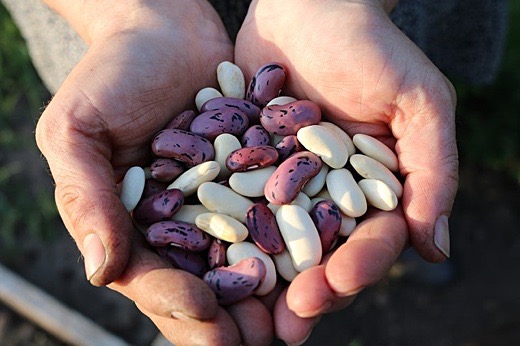
Image above: A handful of bush, or runner beans. From original article.

Also known as snap beans for their distinct “snapping” sound when ripe, bush beans are the most popular home-grown beans for novice and expert gardeners alike. They also are easy to grow.

As an added bonus, these plants tend to ripen all at once, which means you’ll have a large number of beans and you won’t have to keep guessing if the plant is going to produce. This can make it easier to freeze or can the vegetables.

Interested in giving bush beans a try in your garden this summer? Follow these tips:

1. Make sure it’s warm
Beans love warm – even hot — weather. While they can grow in poor soil conditions, they cannot grow when it’s cold or the region is still experiencing frost at night.

If you jumped the gun and planted before it was warm enough, that doesn’t mean the crop is ruined, but beans planted in cold soil just don’t grow as fast; it also makes them prone to rot or various diseases found in soil.

2. Soak the seeds
If you are looking for an even faster turnaround time, try placing the seeds in water overnight before planting. The seeds will swell up with water and they’ll be ready to germinate, meaning you will get your beans even faster.

3. Water, water, water
Beans grow better with a good water supply, but they don’t do so well when the soil is too wet or doesn’t drain properly. To ensure the soil drains properly and your beans don’t rot, use organic material, like compost, before you plant the beans. After the plants have started sprouting, allow them to dry out – just a bit – before watering again.

4. Place them close together
Unlike other plants, bush beans can be planted close together, without impact to the growing process. When the bean plants begin to sprout, they will form a canopy of shade over the soil, keeping it cool. That then will deter weeds from growing, which ultimately will provide you with a much better crop.

5. Pick a new spot
Gardeners who have grown beans for years often will recommend not growing beans in the same spot two seasons in a row. Beans are very vulnerable to soil-borne diseases, so crop rotation helps. You also will stop the formation of diseases.

6. Get the weeds out
Bean plants tend to have shallow roots when compared to weeds, which means they won’t get the nutrients from the soil when weeds have deeper roots and hog all the nutrients. For this reason, it is recommended to keep your bean garden well-weeded so the plants stay healthy and will produce.


Video above: A video about germinating, planting and growing runner beans. From (https://youtu.be/zUeJH3_qesk).

See also:
Ea O Ka Aina: Open Source Seeds 5/2/17

.

The Okinawan Diet

SUBHEAD: People in southernmost Japan have the longest average lifespans on Earth.

By Shereen Lahman MS on 23 March 2017 for Very Well -
(https://www.verywell.com/the-okinawan-diet-2507127)


Image above: Seaweed and sesame seeds top an example of Okinawan Diet. From original article.

[IB Publisher's note: Okinawa is at a latitude just a few degrees above Kauai. Much that is grown there can be grown here. While we agree with possible health advantages of the Okinawan Diet we have some reservations. We are primarily we are concerned that food grown in Japan that may have been contaminated with radiation from the Fukushima Daiichi nuclear catastrophe be avoided. Certainly seaweed grown in the possible path of radioactive discharge into the ocean from the Fukushima reactor cores on the eastern shore of Japan should not be consumed. The Fukushima Prefecture was dedicated to farming and fishing and those activities have continued. Some of the food produced there has been shipped to other locations and used as source locations. Be wary of the source.]

Okinawa is a region in the southernmost part of Japan where inhabitants have traditionally had the longest lifespans on earth. While there are probably many reasons for those long lifespans, there's a good chance their typically healthy diet play some part.

The Okinawan diet is made up mostly of vegetables and legumes, especially soy. It's low in calories and fat, and high in complex carbohydrates.

Most of those carbohydrates come from vegetables, with only a small amount of grains or seeds, and no sugar or refined sweets. There is only a little bit of red meat and a minimal amount of dairy. Fish is consumed in moderation, and alcohol consumption is limited to an occasional drink.

Typical foods in this diet include sweet potatoes, soy, bitter melon, shiitake mushrooms, burdock, jasmine tea, seaweed, and a fascinating array of herbs and spices. Here are a few that you should be able to buy in most grocery stores or Asian markets:

Sweet Potatoes
In the past, less affluent Okinawans ate sweet potatoes. Lots and lots of sweet potatoes. Rice, especially white rice, was more expensive and therefore a bit of a status symbol: it was something consumed only by the wealthier folks. The neat thing about sweet potatoes is they are nutrient-dense and rich in vitamins A and C, calcium and potassium.

They're also high in fiber and contain vitamin E.

Soy
The traditional Okinawan diet includes soy in the form of miso paste and tofu. Soy is an excellent source of plant protein, and it provides the bulk of the protein in the Okinawa diet. Soy also contains phytochemicals called flavonoids and phytoestrogens, which may have health promoting qualities.

Bitter Melon
Bitter melon is a gourd that's also known as goya, goo-fa or ku gua. It's used in salads, stir-fried meals and can be made into juice or tea. It's high in fiber and vitamin C, plus it has some beneficial phytochemicals. It may be difficult to find bitter melon in your local grocery store, but Asian food markets probably carry it.

Shiitake Mushrooms
These large mushrooms are found in many types of Asian cooking. They're nutritious, and they might have some health benefits that could impact your immune system and help regulate cholesterol. You can find these mushrooms in the produce section of most grocery stores, or they may be found in the canned vegetable aisle.

Seaweed
Kombu, hijiki, and mozuku are seaweeds commonly used in Okinawa. They're often served with noodles, in salads, in stir-fries, and with vegetables. Seaweed is high in iodine, folate, calcium, iron, magnesium and astaxanthin. It's not easy to find these types of seaweed in a typical grocery store, but you may be able to find nori, which is sold in thin sheets, and sometimes used when preparing sushi.

Herbs and Spices
Some of the seasonings used in this diet have a potential for health benefits and add flavor without adding any calories.

They include turmeric, mugwort, Okinawan peppers, and fennel seeds.

Why the Diet May Work
The Okinawan diet is low in calories and high in fiber, so it can help you lose or maintain weight, which is essential for avoiding chronic diseases like cardiovascular disease, diabetes and some forms of cancer.

You could say the Okinawan diet is an anti-inflammatory diet, which can help to reduce the risk of those chronic diseases for a number of reasons:

Low fat (especially saturated fat), but still high in omega-3 fatty acids. At least some forms of saturated fats can increase inflammation and omega-3's tend to reduce inflammation.

Low in refined carbohydrates (like sugar), so it doesn't have a big impact on your blood sugar levels. That's good because blood sugar spikes could contribute to a pro-inflammatory state in your body that increases the risk of chronic disease and inflammation.

High in vitamins C, E and A, and phytochemicals. These nutrients work as antioxidants to protect your cells from free radical damage (things like smoke, pollution, rancid fats and oils and so on). These nutrients might help to reduce inflammation.

The main negative I can see with this diet is that it tends to be high in sodium. If you're on a salt-restricted diet, please speak to your doctor before adding in some of the sodium-rich foods like miso, salted fish or soy sauce (even reduced sodium soy sauce is high in sodium). It's possible that the abundance of fruits and vegetables high in potassium and calcium counteracts the sodium, but I wouldn't risk it.

This diet is very low in red meat, eggs, and poultry. That's okay because you can still get enough protein from soy and fish. But it also has very few grains, even whole grains, and it's very low in dairy products. You can get enough nutrition without those food groups, but it's difficult to follow a diet that's so restrictive.

You don't have to follow the Okinawan diet religiously to see some benefit: Some of these components could be incorporated into your diet:
  • Eat more vegetables, preferably the ones that are deep green or brightly colored. The star of the Okinawa diet is the sweet potato. They're easy to find at any grocery store (although they may be mislabeled as yams).
  • Choose soy and soy foods. Try adding tofu to a stir-fry or switch from dairy milk to soy milk.
  • Swap out your red meat for a serving of fish. Or better yet, up your intake of legumes.
  • Add mushrooms to your meals. Try different varieties like shiitake, oyster, and King trumpet mushrooms. They're delicious and can be used in place of meat as the focus of a meal.
Source:
Willcox DC, Willcox BJ, Todoriki H, Suzuki M. "The Okinawan diet: health implications of a low-calorie, nutrient-dense, antioxidant-rich dietary pattern low in glycemic load." J Am Coll Nutr. 2009 Aug;28 Suppl:500S-516S.
.

Advantages of decay in food system

SOURCE:  Andy Kass (a_kass@yahoo.com)
SUBHEAD: Vietnam's low-tech food delivery takes advantage of decay and fermentation.

By Aaron Vansintjan on 20 February 2017 for Low Tech Magazine -
(http://www.lowtechmagazine.com/2017/02/vietnams-low-tech-fermentation-food-system-takes-advantage-of-decay.html)


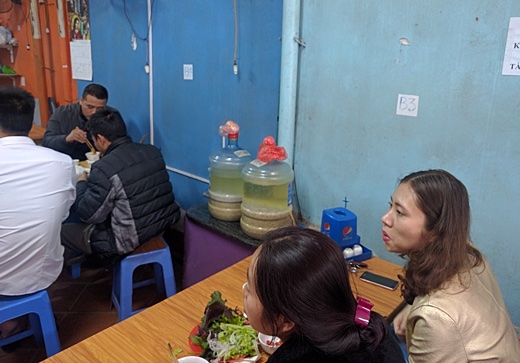
Image above: A stall selling homemade dưa chua in a Hanoi market. Photo by Aaron Vansintjan From original article.

The food system in the industrialized world is based on mass-production, global distribution, and constant refrigeration. It requires many resources and produces a lot of food waste.

In a tropical climate, everything decays faster. Bread gets soft and mushy, milk spoils, the walls get moldy just months after a layer of fresh paint. Food poisoning is a constant concern. The heat and moisture make for an ideal breeding ground for bacteria and fungi.

In this environment, you’d think people would be wary of any food product that smells funny. But in tropical Vietnam, food can get pretty pungent.

Take mắm tôm, a purplish paste made of fermented pureed shrimp. Cracking open a jar will result in a distinct smell of ‘there’s something wrong here’ with hints of marmite to whelm through the whole room. You have chao, a stinky fermented tofu, which was so rank that the smallest bite shot up my nose and incinerated my taste buds for an hour (‘Clears the palate!’ said the waiter encouragingly).

Consider rượu nếp, which is sticky rice mixed with yeast and left to ferment for several days ‘in a warm place’ — i.e. the counter.

The result is a funky-smelling desert—literally rice left to rot until it turns in to a sweet wine pudding. On the 5th of May of the lunar calendar, Vietnamese people will eat rượu nếp in the morning to celebrate ‘inner parasite killing day’. Bonus: day-drunk by the time you arrive at work.

We shouldn’t forget Vietnam’s world-famous fish sauce — nước mắm — made from diluted fermented fish, a flavour that many people around the world continue to find totally intolerable.

In Vietnam, putrefaction is accepted as a part of life, even encouraged. But fermentation in Vietnam isn’t just an odd quirk in a tropical diet.

To understand why fermentation is so integral to Vietnamese culture, you have to consider how it is embedded within people’s livelihoods, local agricultural systems, food safety practices, and a culture obsessed with gastronomy; where food is seen as a social glue.

And when you bring together all these different puzzle pieces, an enchanting picture emerges: one in which fermentation can be a fundamental component of a sustainable food system.

Unlike many high-tech proposals like ‘smart’ food recycling apps, highly efficient logistics systems, and food packaging innovations, fermentation is both low-tech and democratic—anyone can do it. What’s more, it has low energy inputs, brings people together, is hygienic and healthy, and can reduce food waste.

Rotting Food can be Safe and Healthy

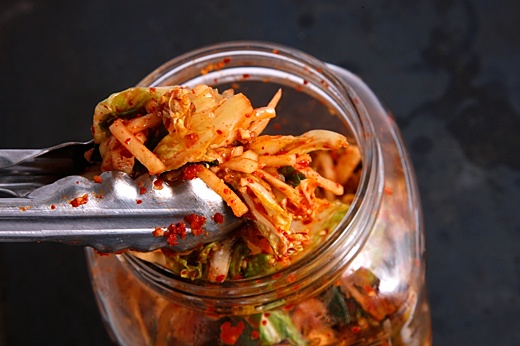
At the entrance of a market in Hanoi, a woman with a dưa chua stand tells us that making ‘sour vegetables’ is easy: you just add salt to some cabbage and let it sit for a couple of days. As we talk, several customers come by, eager to scoop some brine and cabbage into a plastic bag. Worried that we’re discouraging her customers, she shoos us away. She isn’t lacking business.

Is fermentation really so effortless? The short answer is yes. Many recipes will call for two things: water and salt. At just a 1:50 ratio (2%) of salt to food, you can create an environment undesireable for all the bad bacteria and encourage all the good ones. Sauerkraut, kimchi, fish sauce, sriracha, and kosher dill pickles—are all made according to this principle.

Yet other types of fermentation are a bit more complicated. They call for sugar (e.g. wild fermented alcohol like ethiopian honey wine), yeast starters (rượu nếp, most wines and beers), special fungi (tempeh, miso), or some kind of combination of fungi, bacteria, salt, or sugar (kombucha).

Yet others are simpler: to make cooking vinegar, just let that bottle of bad wine sit for a couple of days, and to make sourdough, just mix water and flour and leave it on your counter.

All in all, fermentation is just controlled decay: your most important ingredient is time. This can sound like a bit too much, too fast. Take the woman I met at the entrance of the market. Her dưa chua, while in great demand, looks like wilted cabbage, soppy, floating in murky brine.

Some bubbles are forming on the edges of the plastic container—for the trained eye a sign of an active fermentation process, but for the uninitiated, an alarm bell.

There’s no use beating about the bush. That dưa chua is in fact rotting in a very similar way that a peat swamp is constantly rotting, belching large doses of methane into the world. What’s happening is an anaerobic fermentation—that is, without significant amounts of oxygen.

This absence of oxygen and the high levels of salt creates an environment supportive to several bacteria that also find their home in our own digestive systems.

Those bubbles forming in the container are by-products of these bacteria: CO2 and methane. The bacteria also lower the pH and start breaking down raw food—essentially pre-digesting it for you.

And, once the pH goes down even lower, you’ve created a monster so voracious that no other fungus, bacteria, or parasite with bad intentions will dare to enter its domain. So yes, it’s rotting just like a stinky swamp, and that’s a good thing.


Image above: A woman sells nem chua — raw fermented pork—outside her house. Photo by Aaron Vansintjan From original article.

It’s a good thing especially in a climate like that of Vietnam. Every fermentation is a small victory against the constant war against heat and humidity, which destroys all edibles in its path.

Instead of eating raw cabbage and risking death by a thousand E. Coli, you can eat fermented cabbage and know, for a fact, that it won’t have you hunkering by the toilet bowl any time soon.

Not only that, but eating fermented food has significant health benefits. You might’ve noticed the new fad of ‘pro-biotic’—well all that really means is that the product contains some kind of active bacterial culture that looks like the flora in your own stomach.

That would include, not just Go-gurt, Yoplait, Chobani, and Danone, but also several kinds of cheese, pickles, beer, and just about any other fermented product.

Eat about a tablespoon of any of these at the end of every meal, and you inoculate your stomach with a fresh batch of microbes that help you digest—all the more necessary when we eat antibiotics in our meat and bland diets of white bread and peanut butter, and drink chlorine in most municipal water systems.

Further, products like fish sauce and shrimp paste provide many impoverished Vietnamese with micro-nutrients, B-12 vitamin, proteins, and omega 3 fatty acids—comprising a significant part of people’s nutritional requirements. For a country that still remembers hunger and starvation, this is no small fry.

After several months of studying Hanoi’s food system and the people who make their living off of it, Vân (my Vietnamese collaborator) and I are starting to see some patterns.

A Diverse Food System

In the same market we talk to a vegetable vendor. Real estate in the neighborhood is getting more expensive, rents are going up. She’s having a hard time making ends meet.

On her street many elderly have sold their farmland—which they used to grow vegetables and decorative flowers—and now, unemployed, they spend their time selling home-made fermented vegetables out of their front door.

In the same neighborhood, we meet Tuan, an elderly woman growing vegetables in the banks of a drained pond. She rarely goes to the market—she can grow much of her own food in this little patch. We ask her if she ever ferments her vegetables.

Of course, but she doesn’t sell them—they’re just for herself and her family.

After several months of studying Hanoi’s food system and the people who make their living off of it, Vân (my Vietnamese collaborator) and I are starting to see some patterns.

In Western countries, the food system is shaped a bit like an hourglass: industrial farmers send their food to a supplier, who then engages with a handful of supermarket companies, who then sell to consumers.

In Vietnam, on the other hand, it looks more like an intricate web: wholesale night markets, mobile street vendors, covered markets, food baskets organized by office workers with family connections to farmers, guerilla gardening on vacant land.

Food is grown, sold, and bought all over the place, and supermarkets are just a small (albeit growing) node in the complex latticework. Most people still get food at the market, but many also source their food from family connections.


Image above: From jugs a restaurant offers home brewed rượu men, Vietnamese rice wine. Photo by Aaron Vansintjan From original article.

In Vietnam, many people might have one ‘profession’, but when you ask a bit more questions it’ll turn out that they have half a dozen other jobs for ‘extra income’. There’s a generalized ‘hustle’: everyone is a bit of an entrepreneur.

After talking with Tuan for several hours, we learned that she has, throughout her long life, fished, grown vegetables, corn, and fruit trees, sold rice noodles, bread, ice cream, roses, and silk worms. Now, aged 68, she grows decorative peach trees and grows vegetables when she can.

With an economy just decades shy of a highly regulated communist regime where the only food you could get was through rations, and the memory of famine still fresh in people’s mind, this is entirely understandable: with a finger in every pot, you can just about manage to survive. These two factors, a highly distributed food system and diversified livelihoods, make for a fertile environment for fermentation practices. 

With easy access to wholesale produce, many can turn to small-scale fermentation to compliment their income—or, in the case of Tuan, to spend less on food at the market.

Preserving the Harvest, Bringing People Together

Vietnam hosts both the Red River delta and the Mekong delta—two of the most productive agricultural regions in the world. The heat and the vast water supply allow some areas of Vietnam to have three full growing seasons.

That means three harvests, and that means lots of food at peak times, and sometimes so much that you can’t eat it all. That’s another bonus of fermentation: if your food system is local, you’re bound to stick to seasonal consumption.

But by fermenting your harvest you can eat it slowly, over a long time period. It’s this principle that underlies much of fermentation culture in East Asia.

Take kim chi, a spicy fermented cabbage from Korea. Traditionally, the whole village would come together to chop, soak, salt, and spice the cabbage harvest every year. Then, these mass quantities of salted spicy cabbage were stored in large earthenware pots underground—where cooler temperatures lead to a more stable fermentation process.

As a result, you can have your cabbage all year. If you want a localized food system, you need to be able to store your food for long periods. Fermentation makes that possible.

Fermentation is also social. Fermenting large batches of summer’s bounty typically requires hours of chopping—the more the merrier. And chopping is the perfect time for sharing cooking tips, family news, and the latest gossip. In South Korea, now that kim chi production has been largely industrialized, people try to relive the social aspect of making it through massive kim chi parties in public spaces.

In a country like Vietnam, where a traditional food system still exists for a large part, fermentation remains embedded in social relations. Relatives and neighbors constantly gift each other fermented vegetables, and many dinners end with a batch of someone’s home brewed rice wine—rượu men. Fermentation lends itself well to a gift economy: there is pride in your own creation, but there is also no shame in re-gifting. And because of its low costs, anyone can take part in it.

Gastronomy, Tested with Time

It is a bit disingenuous to caricature Vietnam’s food culture as obsessed with rotting, and suggest that this is largely the result of a tropical climate. Rather, what we’re dealing here is difference in taste: what may seem strange and pungent to one culture is highly appreciated in another.

In fact, one of the greatest impressions I have of Vietnamese culture is its deep appreciation for gastronomy: subtle, complex flavors, considered textures, modest spicing and well-balanced contrasts define Vietnamese cuisine.

Fermentation is a crucial part of this culture: the art of fermentation requires paying attention to how flavours change as food transforms, understanding these chemical shifts and using them to achieve a desired affect.

It’s also clear that Vietnamese gastronomy is popular: it takes place in street food stalls, run by enterprising matriarchs, constantly experimenting with modern products and traditional flavors. It is cheap and, to ensure customer loyalty, it is surprisingly hygienic.

Street vendors rarely have fridges, nor do they have large cooking surfaces, dishwashing machines, or ovens. By and large, they make do with some knives, two bowls to wash fresh vegetables in, a large pot, a frying pan, coals or gas burners and — for products that may go bad during the day — fermentation. Having limited access to capital and consumer electronics, these vendors — most often women — ply their trade in a way that has stood the test of time.

They know the rules of hygiene and food safety, and, because they have to be careful with their money, they know exactly what kinds of food will go bad, and what kinds of food can be preserved.

In doing so, they practice a food culture that has been passed down through generations—to a time before fridges, a global food system powered by container shipping, factory trawlers, and produce delivered to far-off markets by airplane.

While modern technology has provided many benefits for our diets, there are many innovations from the past that have been abandoned as the global food system was transformed by the availability of cheap fuel. One such innovation was the fish sauce industry that flourished during Ancient Roman times.

For Romans, fermenting fish was a crucial aspect of a low-tech and seasonally-bound food system. In fact, it so happens that research now suggests Vietnamese fish sauce may actually have its origins in the Roman variant produced over 2,000 years ago.

Today, however, fermentation doesn’t fit so easily within the global food system. Harold McGee at Lucky Peach tells the story of how canned products were notoriously difficult to transport in the newly industrialized food system of the 19th century.

Apparently, until the 20th century, metal cans would regularly explode, sending shrapnel and preserved tuna flying through the decks of transport ships. This was due to heat-resistant bacteria, which continued fermenting the product long after it was heat-treated.

The solution was to subject the canned product to high temperatures over a long period of time, killing all remaining cultures, in turn changing their flavor. But in the case of fermented food, the problem has not gone away: if you want it to be actively fermenting, transporting it will risk explosions on the high seas. But heating stops the fermentation process, and kills its unique flavor.

It’s for this reason that products like kim chi, kombucha, and sauerkraut often have to be produced locally, despite increasing global demand. In some way, fermentation belies the industrial food system: the fact that it is alive means that it doesn’t quite fit in. You either have to kill it, thereby change it, or it will keep bubbling through the cracks.

A Low-tech Food System is Possible

Fermentation cultures in Vietnam give us a glimpse of what an alternative food system might look like, one that is both decentralized and doesn’t depend on high inputs of fossil fuel energy to preserve food, high waste, and high-tech. Why does this matter? Well, in a world facing climate change, we need a low-impact food system, and fast.

But there are other reasons: with increasing concern over the health side effects of common chemicals such as BPA, found in almost all cans and pasta sauce jars, people are looking to safer kinds of preservation, which aren’t killing them and their families slowly.

And with the rise of the local food and food sovereignty movements, many are realising that we need food systems that support everyone: from small farmers to low-income families.

Because of its low investment costs, fermentation lends itself well to supporting small businesses, allowing them to take advantage of seasonality while practicing a time-tested low-tech method of food preparation. Today, in response to increasing food insecurity, we are hearing increasing calls for a smarter, more efficient food system.

Proposals such as intensive hydroponic and vertical farming, big data-powered logistics systems, smart agriculture technologies, and food waste recycling apps clog the news.

But we already have a low-tech innovation that works very well. Fermentation, because it is accessible to everyone, because of its low energy requirements, and because it fits right in to a more sustainable food system, should not be abandoned in the search for global food security.


Image above: A fish sauce factory in Vietnam. Photo by Mui Ne info & events. From original article.

It’s easy to get the impression that we live in a world of scarcity, where there just isn’t enough food to go around, and food production all around the world is limited by technological backwardness. On the other hand, many of us are more and more concerned with the increasing problem of food waste in Western food systems.

We seem to live in a world of both scarcity and abundance at the same time.

Food fermentation is a strange thing: it inverts what many regard as waste and turns it into a social, living, edible object. As a friend of mine once said, if you have too many grapes, you make wine. If you have too much wine, you throw a party. If you still have too much wine, you make vinegar.

Fermentation turns scarcity and abundance on its head, belying easy categories of what is waste and what is too much.

Sustainability advocates worry a lot about making the ‘supply chain’ more ‘efficient’ — that is, increasing profits margins while making sure all food reaching consumers in a perfectly fresh state.

Instead, we could consider taking advantage of decay. This isn’t hard: you just have to add some salt and water. We’ve done it for thousands of years, and, if we follow the example of food cultures like those in Vietnam, we can do it again.
.

GMO Labeling Flimflam

SUBHEAD: Text of GMO label bill includes a definition of bioengineering that critics disagree with.

Read more here: http://www.miamiherald.com/news/politics-government/article87197417.html#storylink=cpy

By Lindsey Wise on 1 July 2016 for Miami Herald -
(http://www.miamiherald.com/news/politics-government/article87197417.html)


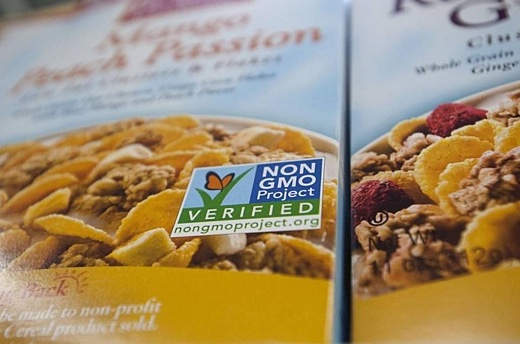
Image above: Some packaged foods are voluntarily labeled as being free of GMO at the Sacramento Natural Foods Co-Op in Sacramento on Sept. 18, 2012. From original article.

[IB Publisher's Note: This bill is what used to be called "The Big Runaround". It's a bunch of bullshit to avoid dealing with the real problem - in fact it's to avoid even admitting there is a problem. Note that meat is not included in the labeling bill. This is significant because virtually all commercial food used to raise farm fed beef, pork, chicken and fish relies on GMO corn for feed.   The American Bread Basket has been totally taken over by genetic modification of seeds, dependence on pesticides, reliance on synthetic fertilizer and other environmentally destructive practices. Big Ag is approaching a dead end. They know they are doomed... especially if the public comes to realize what  they are doing to our food.] 
Polls show Americans find the idea of "Frankenfoods" unappetizing and are open to labels identifying which products contain genetically modified ingredients. But some in the scientific community say GMOs are safe. And some anti-hunger advocates say the science behind them can help deliver nourishment to millions living in poverty.
- Randall Benton The Sacramento Bee.
A bill to create the first nationwide labeling standard for genetically modified foods is getting push-back from consumer advocates alarmed that its language could exempt a vast majority of foods made with genetic engineering.

“There may be no genetically engineered food that we commonly eat that’s actually covered by this law as it’s currently written,” said Jean Halloran of Consumers Union, the policy arm of Consumer Reports. “I have to think that that’s a drafting error, but nobody’s said they’re going to fix it.”

The bipartisan compromise bill, negotiated last month by the Republican chairman of the Senate Agriculture Committee, Pat Roberts of Kansas, and the panel’s top Democrat, Sen. Debbie Stabenow of Michigan, is on the verge of passing the U.S. Senate this month. Next it will go to the U.S. House of Representatives, where it’s expected to face little resistance.

The bill would require producers to identify foods that contain genetically modified ingredients with text on packages, a symbol or a link to a website with a QR code, a bar code that can be scanned on a smart phone.

But the legislation contains several sentences that “raise confusion,” according to a June 27 memo to lawmakers from the Food and Drug Administration, which has long maintained that GMOs are safe to eat, and therefore do not need to be labeled.

In the memo, the FDA noted that one paragraph in the Roberts-Stabenow bill narrowly defines bioengineered food as containing “genetic material,” which could exclude many products made from bioengineered crops, such as refined sugars, oils and starches.

The bill’s language also would limit coverage to foods where the genetic modification “could not otherwise be obtained through conventional breeding or found in nature,” a standard that could be hard to prove, the agency said.

Halloran said consumer groups are scrambling to bring lawmakers attention to these concerns before an expected vote July 13.

“It was brought forward so quickly without a hearing or much review, and it took us a while to tussle through what it actually says, so I think it hasn’t gotten the kind of serious scrutiny that it needs,” she said.

A coalition of nearly 70 consumer groups and organic farming associations has sent a letter urging senators to oppose the legislation, calling it “a non-labeling bill under the guise of a mandatory labeling bill.”

The letter estimates that 99 percent of all GMO food ultimately could be exempt from labeling since the bill leaves it up to a future Secretary of Agriculture to decide how much GMO content in a food qualifies it for labeling. “If that secretary were to decide on a high percentage of GMO content, it would exempt virtually all processed GMO foods,” the letter said.

Consumer advocates also object to the lack of consequences for companies that fail to properly label their products and the fact that the labels themselves won’t necessarily have to contain the words “GMO,” “genetically modified” or “biotechnology.”

Roberts defended the bill in a statement on Friday.

“All bioengineered food crops currently on the market are captured by the definition of ‘bioengineering,’ ” he said.

Whether that definition also captures refined sugars, oils and other products made from genetically engineered crops, will be determined through rule-making by federal agencies that implement the legislation, said Meghan Cline, a spokeswoman for the Senate Agriculture Committee.

Roberts also took issue with consumer advocates’ criticism that the compromise bill released on June 23 had not been subject to public hearings or testimony.
“We held a hearing last October that covered all facets of agriculture biotechnology, including labeling,” Roberts said. “To say we have not been transparent in this process is simply incorrect.

Myself, and members of the Agriculture Committee, have listened to constituents from all sides of this debate and crafted the best piece of legislation that allows farmers to keep using safe technology on the farm while satisfying consumers’ (desire) to know what’s in their food.”
The bill is likely to pass in the Senate, where it received 68 votes to overcome a procedural hurdle on Wednesday.

“This is a good, bipartisan, commonsense way to set a national standard — it’ll give certainty to consumers, and to our producers, without stigmatizing the important use of science,” said Sen. Claire McCaskill of Missouri, a Democrat who plans to vote for the bill.

For those opposed to the Roberts-Stabenow bill, the fight has taken on particular urgency because the federal legislation would nullify any state laws that require GMO labeling.

The first such law in the nation went into effect in Vermont on July 1.

Fresh off the campaign trail, Vermont Sen. Bernie Sanders has vowed to do everything he can to defeat the Roberts-Stabenow bill.

From the steps of the statehouse in Montpelier, Vermont, on Friday, Sanders said he and other members of Congress would not allow Vermont’s law to be overturned by bad federal legislation.
Sanders said the Roberts-Stabenow bill “would create a confusing, misleading and unenforceable national standard” for GMO labeling.

The major agribusiness and biotech companies “do not believe people have a right to know what’s in the food they eat,” Sanders said. “That is why they have spent hundreds of millions of dollars in lobbying and campaign contributions to overturn the GMO right-to-know legislation that states have already passed and that many other states are on the verge of passing.”


Voluntary GMO labeling grows

SUBHEAD: Campbell's, is calling on the federal government to create a mandatory labeling law.


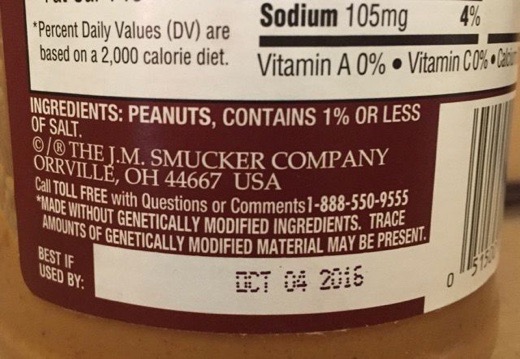
Image above: "MADE WITHOUT GENETICALLY MODIFIED INGREDIENTS> TRACE AMOUNTS OF GENETICALLY MODIFIED MATERIAL MAY BE PRESENT". If this is the case of many food products the truth about GMO ingredients will be fuzzy around the edges.  From original article.

It's been less than a month since the Senate stopped an anti-GMO labeling act from becoming law which would have banned individual states from requiring GMO labeling on foods. Since the law did not pass, it looks like Vermont's GMO labeling law will be enacted as planned this July.

The law will require food manufacturers that use GMOs in their foods to label them as such if the foods are sold in Vermont. This creates a problem for the food manufacturers. Do they create one label for Vermont and another label for the rest of the country? What happens if a second state creates a law that require different wording than Vermont's? Do the food manufacturers now have to have three different labels?

That problem could be solved by the federal government creating a standard that requires clear, mandatory labeling on the package. Earlier this year Campbell's broke with the rest of the major food manufacturers and called on the federal government to create a standard for the entire U.S. Campbell's made this announcement before the Senate voted down the anti-GMO labeling bill, in hopes to avoid a "patchwork of state-by-state labeling laws" that they believe would create consumer confusion.

Other big food manufacturers must have been hoping for the Senate to pass the law, but planning for its defeat. In the days following the defeat, several of them made announcements that they would begin to label foods with GMOs, even though they stand by the safety of genetically modified ingredients.

Just two days after the bill failed to gain the votes it needed to pass, General Mills announced it would begin to label GMOs on all its products, not just the ones in Vermont. The company announced they would label nationally because labeling products just in one state would cost consumers too much money. In the next week or two after that, several other companies made similar announcements.

On March 22, ConAgra said it's urging Congress to pass a national solution to GMO labeling as quickly as possible. Until then it will begin to nationally label GMOs because state-by-state labeling laws would cause "significant complications and costs for food companies."

On March 23, Kellogg's released a statement from North American President Paul Norman who said the company would like a federal solution, but until then "in order to comply with Vermont’s labeling law, we will start labeling some of our products nationwide for the presence of GMOs beginning in mid-to-late April. We chose nationwide labeling because a special label for Vermont would be logistically unmanageable and even more costly for us and our consumers."

Mars also has an undated statement on its website in response to the Vermont law. "To comply with that law, Mars is introducing clear, on-pack labeling on our products that contain GM ingredients nationwide."

Only one of these five big food companies, Campbell's, is calling on the federal government to create a mandatory labeling law. The federal or national solution that General Mills, ConAgra and Kellogg's would like is not necessarily a mandatory labeling law. A national solution that would satisfy them would be the same national solution that was in the anti-GMO labeling bill that was struck down — one where the government sets standards for voluntary labeling and states would not be allowed to legally require labeling.

Until we have a national, mandatory GMO labeling law, the possibility of big food companies adding these voluntary labels to their packaging while continuing to pour money into fighting labeling laws is very real. For those who want GMO labels on all foods to be on them indefinitely, the fight is not over yet.

.

Why we're so unhealthy

SUBHEAD: The sickening stranglehold Corporate America and government agencies have on our diet and health.

By Charles Hugh Smith on 29 April 2016 for Peak Prosperity -
(http://www.peakprosperity.com/blog/98031/why-were-so-unhealthy)


Image above: Illustration on how free-standing emergency rooms are gouging the public. From (http://www.dmagazine.com/publications/d-ceo/2016/may/freestanding-emergency-rooms).

That America is in the throes of a systemic health crisis can no longer be denied. According to the U.S. Department of Health And Human Services, more than two-thirds (68.8 percent) of adults are overweight or obese.  Overweight is typically defined as a body-mass index (BMI) of 25 or higher.
 A BMI of 24.9 is not exactly featherweight; I would have to add 30 pounds to reach a BMI of 24.9.

The health risks of being overweight or obese include:
  • type 2 diabetes
  • heart disease
  • high blood pressure
  • nonalcoholic fatty liver disease (excess fat and inflammation in the liver of people who drink little or no alcohol)
  • osteoarthritis (a health problem causing pain, swelling, and stiffness in one or more joints)
  • some types of cancer: breast, colon, endometrial (related to the uterine lining), and kidney
  • stroke
Since the early 1960s, the prevalence of obesity among adults more than doubled, increasing from 13.4 to 35.7 percent in U.S. adults age 20 and older.  (Source)

The Journal of the American Medical Association (JAMA) reported in 2015 that roughly half of all adult Americans are diabetic or prediabetic (also called metabolic syndrome).

If we add up everyone in America who is either suffering from or at risk of lifestyle-related diseases such as heart disease, diabetes and lifestyle-related types of cancer, it’s clear this is an unprecedented national health crisis that has no easy or cheap medical fix.

Why have we become so unhealthy?

The answers come thick and fast. We are more sedentary as most work is now white-collar; the foods low-income people can afford are unhealthy; children now spend time playing digital games rather than playing outside; serving sizes of sodas and other high-calorie/low nutrition beverages have ballooned; people buy more convenience and fast foods and prepare fewer meals at home, and so on.

Two things are clear: there is no one solution to the epidemic of lifestyle-related diseases. Limiting sodas in schools and demanding better labeling of food are examples of reforms that are well-intended, but have so far had little effect on the expanding waistlines of Americans or their ill-health.

The second is expressed by the Chinese proverb: “Diseases enter through the mouth,” i.e. disease is a result of what we eat and drink. Since what we eat has an enormous impact on our health, if we want to tackle our health crisis in a manner that get results, we must start with what we eat and how our food is grown, processed and prepared.

Once we start examining our diet, we have to examine where our food comes from, how it is grown/raised and how it is processed for consumers.

A second Chinese proverb explains why we must start with diet: “When you’re thirsty, it’s too late to dig a well.”  If we want to avoid lifestyle illnesses, we must start pursuing a new way of growing and preparing food now, not after we’re already ill.

The long lists of contributory factors to our growing ill-health distract us from the real source of our national health crisis: our food/illness/healthcare system is sick, and so it’s no wonder we’re sick, too.  The only possible result of our unhealthy food/illness/healthcare care system is ill-health.

Understanding the Food / Illness / Healthcare System
To understand why this is so, we must start with the fact that we live in a highly centralized government/private-sector system that limits our choices to maximize the profits of corporate cartels.

Big Agriculture, Big Oil-Ag Chemicals, Big GMO seeds (Monsanto et al.), Big Processed Foods, Big Supermarkets, Big Fast Food, Big Healthcare (what I have called sickcare for many years, because profits flow not from keeping us healthy via prevention but from keeping us alive when we’re suffering from chronic lifestyle illnesses) and last but not least Big Pharma, which is happy to provide medications that costs tens of thousands of dollars per patient per year to address the symptoms of lifestyle diseases rather than the causes, which trace back to what we eat and how we live.

Once you hear an alternative account of how we could be raising food and delivering it to consumers to prepare at home, you grasp the sickening stranglehold Corporate America and government agencies have on our food, diet and the resulting epidemic of ill-health.

I was fortunate to attend a permaculture conference, 'Better Soil, Better Food...A Better World' at Tara Firma Farms in Petaluma, California this past weekend that Adam Taggart (co-founder of Peak Prosperity) was responsible for producing.

Joel Salatin (author of nine books, including Everything I Want To Do Is Illegal: War Stories from the Local Food Front and head farmer at Polyface Farms, Virginia), Paul Kaiser (Singing Frogs Farm, Sonoma, California), Toby Hemenway (author of Gaia's Garden: A Guide to Home-Scale Permaculture, 2nd Edition), and Robb Wolf (author of The Paleo Solution: The Original Human Diet) were on hand to explain the connections between the way our food is grown, processed and distributed and our ill-health.

Though these connections are common sense—we all know about garbage in, garbage out—the linkage between our extractive, monoculture agriculture and all the other subsystems of food and health remains opaque to most Americans.

Centralized Systems Are Hijacked By Those Who Profit Most From Them


Centralized systems are inevitably hijacked by vested interests in a way that is simply not possible in highly decentralized systems.  Powerful vested interests rig centralized systems to protect and extend their privileges and profits.  This dynamic is a positive (self-reinforcing) feedback loop: the greater the centralization, the greater the influence of vested interests, who increase the centralization that benefits them.

Though it is poorly understood by conventional economists and political scientists, centralization makes it inevitable that the interests that benefit most from centralization (corporations) will serve their self-interests by gaining control of centralized power via lobbying and political contributions.

Once entrenched interests have purchased influence over politicians and regulatory agencies, they use the power of centralized government to limit competition by erecting regulatory barriers.  The regulatory system is soon approving whatever reaps the most profit for the big corporations and restricting alternatives to corporate products.

Before centralized federal and state government agencies and big corporations became dominant, decentralized family-owned farms and grocery stores were the norm. Anyone seeking to control the entire sector faced an essentially impossible task.

Now, a handful of corporations control key sectors of the food/healthcare complex: seeds, chemical fertilizers, processing of food into consumer products, distribution to consumers via grocery chains and the fast-food industry, and the healthcare/pharmaceutical sectors.

This concentration of power over our food and health is presented as the lowest-cost and most efficient system possible: concentrated ownership and control, we’re told, enables vast economies of scale that lower the cost to consumers. While this might be true of grains, it is not true of healthcare.

And since food and health are causally connected, we have to consider the total system costs: not just the cost at the grocery store or fast-food outlet, but the eventual costs of low-quality food and an unhealthy diet.

Once we consider total system costs, we have to include healthcare: the American healthcare system is the most expensive per capita on the planet, over-delivering costly (and often questionable or needless) tests, procedures and medications, and under-delivering affordable preventative care and well-being.

While it’s impossible to break out the eventual system costs of poor diet, the preponderance of lifestyle-related diseases that end up being treated suggest the percentage of healthcare related to diet and lifestyle (fitness, sufficient sleep, etc.) is substantial.

Though the mainstream media paints skyrocketing healthcare costs as the result of costly new technologies and drugs, the unspoken reality is that higher costs also reflect cartels being able to raise prices without fear of competition and the declining health of Americans.

Though the naked eye could not possibly discern the consequences of this monoculture mode of growing tomatoes, studies have found that each acre of tilled bare soil loses tons of topsoil to erosion of wind and rain every year.

As for the nutritional content of the tomatoes: as an experiment, we took some of the fallen tomatoes home to see if they ever ripened enough to become soft. They never did; they remained hard and tasteless, even in a bowl of fruit that naturally emitted ripening ethylene.

What was the nutritional content of this tasteless product of monoculture? Only a lab test could tell, but it was a good bet the nutritional content was as poor as the taste.

These indestructible tasteless tomatoes were undoubtedly bred to become tomato sauce in some distant processing plant, bound for wholesalers and retailers who end up taking most of the consumers’ dollar.

It Doesn’t Have To Be This Way

It doesn’t have to be this way. Regenerative agricultural practices actually build soils rather than strip-mining them. Consumer-supported agriculture (CSA) cuts out the corporate middlemen and delivers high-quality food directly to consumers.

If we consider that Americans throw away 40% of all food they purchase, it’s not hard to see another option: waste nothing and spend the savings on higher quality food.

High-quality vegetables can be grown in cities, lowering cost and raising access (see: A guerilla gardener in South Central L.A.)

My time this past weekend with Joel Salatin, Toby Hemenway and the folks from Singing Frogs Farm was filled with compelling yet practical steps each of us can and should take in our lives to take more control over our health -- in ways that are easy, enjoyable and result in big improvements to our quality of life.

.

Food sustainability is complex

SUBHEAD: Some say grazing livestock, and the high-quality food they produce should play a key role.

By Peter Mundy on 19 February 2016 for Sustainable Food Trust -
(http://sustainablefoodtrust.org/articles/sustainability-is-complex-there-is-no-single-diet-solution/)


Image above: Photo of free range sheep from article "Steps to Sustainable Livestock", in Nature Magazine, 6 march 2014 - Volume 507. From (http://www.nature.com/news/agriculture-steps-to-sustainable-livestock-1.14796).

[IB Publisher's note: Not all would agree that meat should play a major role in sustainable food production. Some would argue no meat is best. They might argue that this article is merely propaganda and public relations for the meat industry. But free-range herds of grass feeding ungulates were part of the natural world long before humans - and predators helped to keep those herds healthy. Early humankind evolved as hunter-gatherers. We eat local beef.  Here on Kauai grass fed beef is available in some supermarkets from Aakukui and Makaweli ranch (among others). Because we live on the south shore we shop for grass fed beef at Kukiula Store in Koloa, Medeiros Farms in Kalaheo, or Ishihara Store in Waimea.]

We face huge challenges in feeding the world sustainably. But one thing is certain: grazing ruminant livestock – and the high-quality food they produce – can and should play a key role.

With ongoing reports and media headlines about the negative impacts of livestock – particularly beef cattle – on the environment and our health, this might seem like an unscientific statement.

After all, livestock are now widely considered to be unsustainable.

So it might come as a surprise to know this support for grazing ruminants was one of the key conclusions from the first International Conference on Steps to Sustainable Livestock – a ground-breaking multi-disciplinary event involving leading scientists working to find solutions for global food security, hosted by the Global Farm Platform and;University of Bristol Cabot Institute in Bristol, on 12th-15th January, 2016.

Over the three-day conference, more than 50 scientists presented the stark realities of industrial livestock production and the challenges we face in feeding the world: the significant direct and indirect greenhouse gas (GHG) emissions; the widespread erosion and degradation of soils; the localized environmental pollution from concentrated output of fecal waste; and the human health threats posed by widespread farm antibiotic abuse.

The list goes on.

With the ever-increasing demand for meat and livestock products from a rising global population, it’s easy to think that ending all forms of livestock production – and adopting a plant-based diet – is the only answer.

But it’s not.

We’ve said it many times before, but the scientific evidence presented at the Steps to Sustainable Livestock conference confirmed that grazing ruminant systems (in other words, managing cattle, sheep, goats and bison on pasture) can not only help feed the world sustainably, but also provide a number of important environmental and societal benefits.

Perhaps the most immediate take away from the Steps to Sustainable Livestock conference was that industrial grain-based livestock production is simply no longer justifiable – and may even be morally suspect.

With over 800 million people on this planet going to bed hungry, and more mouths to feed every day, there was a near unanimous agreement at the conference that governments urgently need to pursue a ‘food not feed’ strategy, reserving prime agricultural land for growing human food – not livestock feed.

Livestock currently consume around 70% of grains used by developed countries, and a staggering one-third (or 795 million tons) of all grain grown in the world, meaning that industrially raised grain fed animals are competing directly with hungry human beings for food. The very same concerns apply to the policy of using prime agricultural land to grow crops for biofuel.

Underpinning the Steps to Sustainable Livestock conference is the knowledge that ruminant animals have evolved the unique ability to convert high-cellulose plant materials (read grass and forage) that humans cannot eat into high quality meat and milk that we can, thereby allowing us to produce food from marginal land we could not otherwise use to grow crops.

But the benefits of grazing ruminants do not end at utilizing vast areas of marginal land to produce much-needed food.

Grazing livestock are also a vitally important source of high-quality, protein-rich and nutrient-dense food.

While no one can deny the excessive global consumption of industrially produced grainfed meat is simply unsustainable (not to mention bad for our health), researchers at the Steps to Sustainable Livestock conference praised the “extraordinary merits” of animal-sourced foods, arguing that modest quantities of high-quality pastured meat and dairy products (as part of a balanced diet) offer significant health benefits, providing a vital source of lean protein, healthy fats – such as omega-3s and CLAs – plus a smorgasbord of micro-nutrients essential for health, such as iron, magnesium and selenium.

Changes in animal food consumption patterns have already had notable health impacts, with one researcher suggesting that a diet lacking the key micro-nutrients found in plentiful supply in livestock products (and milk) is resulting in serious emerging health problems – even in high-income countries.

We learned that grazing livestock systems result in many environmental positives – from improved biodiversity (above and below the ground) to the role of well-managed pasture and grassland as carbon sinks. While it is true that grazing ruminants produce significant levels of methane, researchers at the Steps to Sustainable Livestock conference argued that we must stop comparing livestock systems on methane emissions alone.

Instead, we need to consider all GHG emissions and environmental impacts associated with all stages of any given production system – including the potential for well-managed grazed pasture to sequester significant levels of atmospheric carbon dioxide.

New research is already investigating the potential of alternative livestock diets to significantly reduce the amount of methane emitted, including new plant varieties and dietary supplements, while new livestock breeding strategies utilizing geonomics (not genetic engineering) can also aid the selection for positive methane emission traits.

Potential solutions are emerging fast but we urgently need more research and support to encourage adoption of such practices at the farm and policy level.

Reflecting the multi-disciplinary and holistic nature of the conference, we were also reminded that animal health and welfare is directly related to our future food security.

While welfare concerns might seem secondary to matters like maximizing animal productivity to feed a growing global population, researchers pointed out that healthy animals are productive animals and produce healthy, nutritious food.

Conversely, unhealthy animals are not only less productive (and inevitably require routine drugs like antibiotics to maintain productivity), but can present a real disease risk to humans – as we are now learning at great societal cost.

The quest for sustainable food production is highly complex and there will be no one-size-fits-all solution.

Indeed, the necessary solutions will inevitably be highly complex, multi-faceted and site-specific: it comes down not simply to what you eat, but fundamentally how it is farmed.

There is no single diet solution for everyone, and consuming nutritionally appropriate levels of pasture-raised livestock products as part of a healthy, balanced diet with plenty of sustainably produced vegetables and fruits is not just an acceptable option, it’s a vital one.

And while developed nations urgently need to reduce the production and consumption of unsustainable, low-welfare, intensively raised livestock products and highly processed foods (there’s a good chance many of us would feel a lot better for it), it is clear from current science that pasture-based livestock systems will not only continue to supply high-quality, nutritious food to global populations, but can help protect and enhance key ecosystem services and mitigate anthropocentric GHG emissions.

The International Conference on Steps to Sustainable Livestock marks a very important step towards sharing best practice on optimizing the sustainable use of livestock in many regions of the world, and challenging the industrial farming paradigm.

As an organization that supports sustainable livestock farmers, it was refreshing and reassuring to hear that leading scientists from across the world believe that sustainably managed livestock have an important role to play in feeding the world, and to know that AWA’s farm standards already represent among the most sustainable methods available.

Read the original collaborative article, published in Nature Journal in 2014, that spawned the Global Farm Platform – and subsequently the recent International Conference on Steps to Sustainable Livestock.

.

Sexy Fungus

SUBHEAD: Women who sniff this Hawaiian mushroom that grows in lava have spontaneous orgasms.

By Mark Frauenfelder on 13 October 2015 for Boing Boing -
(http://boingboing.net/2015/10/13/this-tropical-mushroom-gives-w.html)


Image above: Dictyophora mushroom that can produce sexual arousal in human women. From original articla.

A study from the International Journal of Medicinal Mushrooms reports that Dictyophora, a mushroom that grows on lava flows, induces spontaneous orgasms in about 1/3 of the woman who sniff it. From Wikipedia:
According to a 2001 publication in the International Journal of Medicinal Mushrooms, the smell of the fresh fungus can trigger spontaneous orgasms in human females. In the trial involving 16 women, 6 had orgasms while smelling the fruit body, and the other ten, who received smaller doses, experienced physiological changes such as increased heart rate.

All of the 20 men tested considered the smell disgusting. According to the authors, the results suggest that the hormone-like compounds present in the volatile portion of the gleba may have some similarity to human neurotransmitters released in females during sexual activity. The study used the species found in Hawaii, not the edible variety cultivated in China.

.

Good, Good, Good, Good Bacteria

SUBHEAD: Fermented foods are healthy low-energy users – they require no cooking or refrigeration.

By Elisabeth Wiknler on 29 May 2015 for Sustainable Food Trust -
(http://www.resilience.org/stories/2015-06-04/good-good-good-good-bacteria)


Image above: Step in a recipe for fermented kimchee. From (http://www.chow.com/recipes/29505-basic-napa-cabbage-kimchi-kimchee).

Recent research on the role of bacteria suggests we need a radical rethink about what makes us healthy. Thanks to advances in genetic sequencing, scientists are starting to discover, categorise and understand the importance of the vast universe of microbial organisms that live invisibly on, in and around us.

In May, results from studies conducted by Tim Spector, professor of genetic epidemiology at King’s College London, showed that a ten-day diet of junk food caused the loss of 1,300 species of beneficial bacteria in the intestines. Professor Spector said: “Microbes get a bad press, but only a few of the millions of species are harmful, and many are crucial to our health.”

Instead of bacteria being our deadly foe, it turns out the vast majority are really our best friends – and our oldest. According to the Human Microbiome Project, our ‘live-in’ molecules – the single cell organisms including bacteria and fungi that are neither plant nor animal but in a category of their own – have evolved symbiotically with us and our pre-historic ancestors since time began.

Like the best of relationships, we are inter-dependent. We provide energy via food to our single-cell friends: in return they perform a myriad of life-giving activities.

As it is in our gut, so it is in the soil. The idea articulated by SFT director Patrick Holden that healthy topsoil thrives because of microbial activity – functioning in a similar way to human digestion – illustrates the interconnectedness of everything. In the dark of topsoil, microscopic microbes perform vital tasks to maintain the health of soil life. Meanwhile, in the dark of our digestive system, trillions of tiny microbes are likewise busy keeping our bodies healthy.

The role of beneficial bacteria is multi-functional. A key role of both soil and gut bacteria is digestion. These beneficial bacteria break down nutrients into digestible forms that can be assimilated by the plant’s roots, or the gut lining in our intestines, enabling both plants and humans to thrive. As well as bacteria being an essential component of digestion, beneficial bacteria also help to repel disease and are a key component of a healthy immune system.

The number of microorganisms living invisibly in the world is mind-boggling: one teaspoon of rich garden soil can hold one billion bacteria along with fungi and other microorganisms. As for the bacteria in a symbiotic relationship with us, the majority live in the walls of our intestines. This community of diverse bacterial species, called the gut microbiome, weighs about two kilos.

There is a clear analogy between soil and human digestion and, according to nutritionist and author Daphne Lambert, there is also a direct relationship. In her soon-to-be-published book Living Food: A Feast of Soil and Soul, she traces the origins of soil eating for health, drawing on recent studies to argue for increased exposure to soil to build immunity.

She writes, “Today our food industry kills off these organisms and together with our excessively clean households this means few if any of these soil-based organisms manage to find their way into the human digestive system.”

According to Lambert there is evidence to suggest that the ingestion of soil-based organisms from a vibrant, healthy soil enhance the functioning of our gastrointestinal tract. But our modern lifestyles break the link between healthy soils and healthy humans, with less people than ever before working on the land and every last trace of soil washed off the vegetables we buy.

But what about the scary bugs? Small children are naturally drawn to soil but it’s usually us adults who start freaking out about the dirt. Take heart that the benefit of handling soil far outweighs the risks. First, the good bacteria outnumber the bad. Second, we develop the capacity to deal with the bad ’uns by the very practice of being exposed to microbes in the first place.

First proposed in 1989, the hygiene hypothesis in medicine shows that we do small children a disservice by keeping them in a sterile environment. Getting down and dirty is how our immune system learns to defend us from disease.

Children who develop healthy immune systems in this way will doubtless be better able to resist infections. However, a word of caution: a great deal of our soil has had its inherent health degraded by intensive agricultural methods and intensive farms can be breeding grounds for dangerous bacteria such as E.coli O157, so hand washing hygiene is called for in some situations.

Ideally, we should be able to ditch our antibacterial cleaners too. Rather than obliterating all bacteria, we could take a leaf out of traditional Asian cultures and clean our houses with a fermented solution of probiotics that feeds good bacteria, which then eat up the bad smells, dirt and grease caused by harmful bacteria.

Yet, in our spoiled and imperfect world there will be exceptions here too, and caution is needed, especially when preparing chicken, which is so often a source of campylobacter infections.

Good bacteria in food
Just as we can colonise our homes and soil with good bacteria, so we can restore health to our gut.

When it comes to the human diet, nutritional therapists commonly agree that the best way to create good gut bacteria via what we eat is to eat more as our ancestors ate and adopt a three-step approach: reduce sugar, raise fibre and eat fermented foods.

Take sugar first. Or rather don’t! Bad bacteria feed on sugar and they start complaining when they don’t get it. Based on a review of recent scientific literature, US researchers found that gut microbes may cause us to crave the very nutrients they need to grow, by releasing signaling molecules into our system.
You can diminish bad bacteria by giving your good bacteria a boost with prebiotics, or fibre on which good bacteria feed. As Lambert explains:
“The intestine lacks the enzymes necessary to break down oligosaccharides so they move through to the colon where they serve as food for beneficial existing bacteria so they grow and multiply, squeezing out bad bacteria. Oligosaccharides are found in many foods but there is a major one for each season: onions in winter, asparagus in spring, leeks in summer, and Jerusalem artichokes in autumn. Nature really has got it right.”
Finally, fermented foods are important. Bacteriology may be in its infancy, but, according to author and food campaigner Michael Pollan, every traditional food culture has fermented food in its diet. Think sauerkraut, chocolate, tamari and kimchi.

“Fermented foods not only produce amazing tastes, they also increase nutrients,” says Lambert, who also runs fermentation workshops. “Growing colonies of microbial cultures makes nutrients more available, and also increases them, including vitamins and especially Vitamin B.”

Fermented foods are low-energy – they require no cooking or refrigeration. By preserving summer foods throughout long winters or saving food from decomposition in tropical heat, humans have survived inhospitable climates. Captain Cook famously took sauerkraut (fermented cabbage) to reduce scurvy on his sea voyages.

Most bacteria are notoriously hard to culture in a petri dish, so our knowledge of bacteria’s many uses is still severely limited. One of the most widely known bacteria is Lactobacillus acidophilus – the Latin for acid-loving milk bacterium – which predigests food, transforming, for instance, milk into yogurt.

“The more foods you eat that aid digestion the better, and in many cases these foods are beneficial because of bacteria,” says Lambert. “It is about understanding our relationship with bacteria – not annihilating them. By declaring war on bacteria, we are declaring war on life itself.”

Currently being crowdfunded at Unbound, Living Food: a Feast for Soil and Soul celebrates a gastronomy that is good both for human and planetary health. The following extract features two recipes from a collection of more than 70.

Fermented vegetables
Cabbage is cheap to buy. Once fermented, it adds complex and delicious flavours – one of the joys of life.

Sauerkraut
3 medium-size white cabbage heads (about 2 kilos)
1 four-litre clean glass jar
2–3 tablespoons sea salt
Shred the cabbage and place it in a large metal bowl. Sprinkle over one tablespoon of salt and pound gently with a wooden rolling pin to help pull the water out of the cabbage. Cover with a cloth and leave overnight. The next morning, place about two inches of cabbage into the glass jar and press firmly down, sprinkle with a little salt and repeat until the jar is full. As you layer up you can add spices and herbs to flavour.

Firmly compress the layers of cabbage. Place a weight on top like a jam jar filled with water to make sure the cabbage is completely submerged by the brine (if necessary add a little water). Cover with a cloth to protect from flies. Every day, push the cabbage gently down. Let the jar sit at room temperature. After a week the cabbage has fermented sufficiently to be eaten, but you can leave it for a further couple of weeks. If you are not going to eat the cabbage straight away, fit with a lid and store in a cool, dry place where the tangy flavour will continue to develop. Once you start eating the cabbage, keep it in the fridge.

Fermented grains
Many grains in different parts of the world are made more digestible through fermentation: in Japan the soya bean is fermented into traditional fermented foods such as tempeh, soy sauce and miso.

In Africa, millet is fermented for several days to produce a sour porridge called ogi, and in India rice and lentils are fermented for at least two days before making idli and dosas. Corn was fermented before using in Mexico, and throughout Europe grains used to be soaked overnight in soured milk ready to make porridge in the morning.

It’s very easy to start soaking grains and this simple process is an enormous aid to digestion. Soak your chosen grain in water for a minimum of eight hours at room temperature. You can assist the process by adding a little fermented (sauerkraut) vegetable juice or yogurt.

Fermented whole oat porridge
By fermenting the whole oat grouts before cooking, the flavour of the porridge is enhanced, the grains are more digestible and there is greater nutrient bioavailability.

Place oat grouts (whole oats) in a bowl, just cover with water and leave at room temperature for two days. You can leave for longer if you choose to create a more intense acidic flavour. To assist the process, add a tablespoon of sauerkraut juice, apple cider vinegar or kefir to the water.

Strain the oats, saving the soak water, then simply eat the grains as they are with soaked nuts and seeds and seasonal fruits. Alternatively, you can cook the grouts, either in the soak liquid or fresh water, depending on your flavour preference. Gently heat the oats and cook very slowly until thick and creamy. Add a pinch of salt and serve with whatever you fancy.

.