Showing posts with label Seed Banking. Show all posts

Arctic seed vault meltdown

SUBHEAD: Arctic Doomsday Seed Vault imperilled by unanticipated global warming. Who knew?

By mary Papenfuss on 20 May 2017 for Huffington Post -
(http://www.huffingtonpost.com/entry/seed-vault-flooded_us_5920d547e4b034684b0cda63)


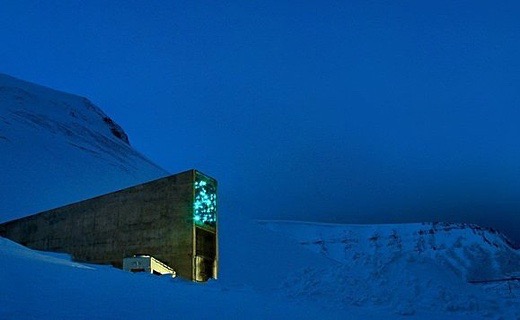
Image above: The entrance of the “last-chance” food source was flooded recently. From original article.

Flooding caused by climate change has hit the Global Seed Vault, which holds samples of the world’s seeds in the event of an apocalyptic catastrophe.

The seeds weren’t damaged, but the entryway of the vault flooded when nearby permafrost melted. Engineers are now designing plans to shore up protections at the storage facility.

The vault has been described as the “Noah’s Ark” of seeds and a last chance for the world to regenerate if the worst happens. Built into a hillside in the Norwegian archipelago of Svalbard, it was established in 2008 as a fail-safe protection for food sources and stores packets of dried and frozen seeds from around the world that can last hundreds of years.

The melting occurred during the recent extraordinarily warm Arctic winter but, since the facility was designed to require little monitoring and is unstaffed, officials just discovered it. Now the Norwegian government, which owns the vault, and Statsbygg, the agency that runs the facility, will closely monitor it for threats from climate change.

“It was not in our plans to think that the permafrost would not be there and that it would experience extreme weather like that,” Statsbygg spokeswoman Hege Njaa Aschim told The Guardian. “It was supposed to [operate] without the help of humans, but now we are watching the seed vault 24 hours a day.”

Workers used pumps to remove the standing water and will waterproof walls and build drainage ditches to deal with runoff from melting permafrost.

Officials chose the location because they believed the permafrost there was permanent. But in a worrying sign that world-threatening change may be inescapable anywhere on the planet, the permafrost melted for the first time in recorded history.

See also:
Ea O Ka Aina: Seeds Surviving Climate Change 11/10/10

.

Seeding the Future

SUBHEAD: One of the few defenses local indigenous people have against big-ag GMO capitalism.

By Michael Meurer on 18 February 2017 for Truth Out -
(http://www.truth-out.org/news/item/39526-seeding-the-future-against-destructive-neoliberal-capitalism)


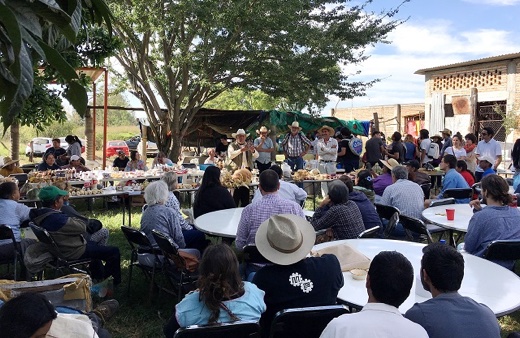
Image above: Speakers at a seed exchange near the Río Santiago in México share planting tips. Photo by Michael Meurer. From original article.

There was much bluster about US job losses under NAFTA in the 2016 election, but walking along the banks of the Río Santiago in the pueblo of Juanacatlán, Mexico, the larger impact of the agreement immediately becomes a searing reality. One's eyes and skin burn after only a few minutes' exposure to the toxic spray and sulfurous stench as foaming waves of chemical pollution cascade over a once pristine falls known only a few decades ago as the Niagara of Mexico.

The pollution, which includes large concentrations of arsenic, cadmium, zinc and other heavy metals used in electronics fabrication, is partly driven by unregulated NAFTA and domestic manufacturing, and also by toxic runoff from export-oriented agribusiness that, unlike traditional campesino farming, relies heavily on chemical fertilizers and pesticides. Fusion magazine dubbed the Santiago the "river of death." Vice magazine describes it as a "toxic hell" that caused 72 deaths in 2015 alone.

Compliance with barely existent environmental regulations in Mexico is voluntary under NAFTA, something that is rarely mentioned in the US. NAFTA's Chapter 11 even allows foreign corporations to sue the Mexican government for imposing regulations they consider to be unfair or burdensome.

On November 20, 2016, Mexico's Revolution Day, I was invited by my friend Miyuki Takahashi, a native Mexican-Japanese doctor who runs the educational Jardín de Vida project (Garden of Life) in Juanacatlán, to accompany her and nearly 400 residents from towns and villages located near the river as an independent journalistic observer during a protest against its poisoning.

The protest action was organized in part by Un Salto de Vida (USV), or A Leap of Life, a civic organization formed by local farmers near the town of Salto, which is across the river from Juanacatlán.

After the protest, we were invited to the 14th annual reunion and seed exchange organized by USV and the local Jalisco chapter of the Red de Alternativas Sustenables Agropecurias (RASA), or Network of Sustainable Agricultural Alternatives, made up of small farmers who live along the Santiago watershed. They come together annually to celebrate the culture of sacred corn, water and trees and to "sow seeds of rebellion," per the email recap to attendees, on which they graciously copied me.

About 80 small farmers met this year in Juanacatlán to share success stories from their use of heirloom seeds that have often been in their families for generations.

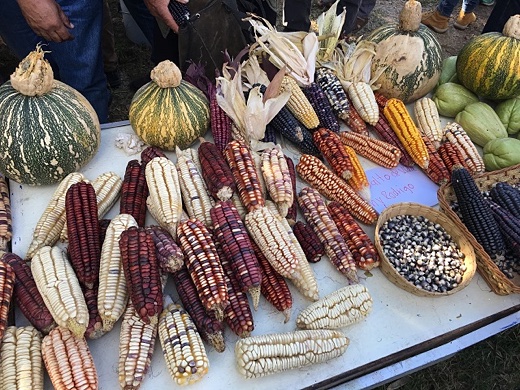
The focus was corn (maíz), which is a historic and sacred staple crop of Mexican rural culture that has been undercut by mass imports of subsidized, genetically modified corn from the US since NAFTA was signed in 1994.

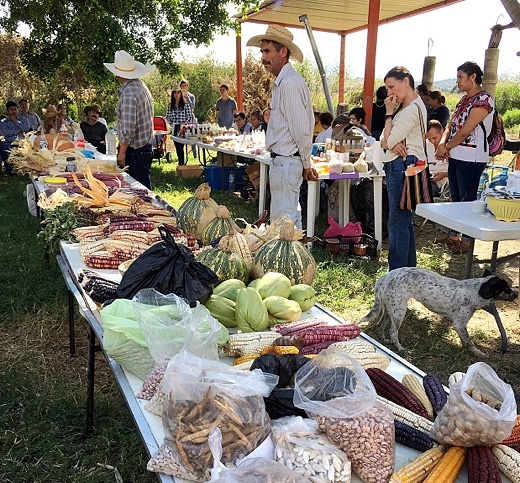
After many speeches, attendees spent several hours exchanging heritage seeds and talking, then shared a meal of roasted pig, beans, organic corn and rice.

One of the speakers, a young man named Alan Carmona Gutiérrez who is a cofounder of USV, gave a speech that started with this remarkable statement: "Seeds are the arms that can win the war against capitalism." ("Las semillas son las armas que pueden ganar la guerra contra capitalismo.")

Alan did not mean capitalism in the abstract. He meant the kind of capitalism that has made the 433-kilometer (269-mile) Río Santiago one of the most lethally toxic and polluted waterways in the world, and that under NAFTA forced Mexico to amend its constitution to allow foreign land ownership. This change opened small landholders, upon whom organic crop diversity depends, to the whims of banks and foreign creditors. These campesinos had been deeded their property for life by the constitution of 1917. NAFTA wiped that legal protection away with the stroke of a pen, leading to a doubling of export farming by large-scale agribusiness by 2015.

Out of necessity, campesinos in nearly every state in Mexico are quietly and irrevocably walking away from this lethal model to create their own alternatives. Small local seed exchanges, such as the one in Juanacatlán, happen across Mexico every year, unheralded by the media. USV, RASA and other farmers' groups like them are engaged in a cooperative, ongoing initiative called the "National Campaign in Defense of Mother Earth and the Territory." The USV announcement of the seed exchange states the goals of this national campaign:
It will not be ideologies that guide us but the desire for freedom, common sense, the sun, the moon and the wind. Against their technology is the knowledge of our ancestors. Against their factories are our spaces for the reproduction of life. Against their repression is our organization.

It is time to exchange our seeds and sow the land with the nobility and tenacity of those who love their mother, it is time to share our knowledge with the transmission of our collective memory of our identities and to recover our own lives, to be guardians and warriors who strive to forge together the world we want, here and now, today and forever.
They fight for all of us, not just themselves, and with good reason. According to the Center for Food Safety, just five companies -- Monsanto, DuPont, Syngenta, Dow and Bayer -- account for 62 percent of world seed sales. As Rachel Cernansky recently reported, these same companies own multi-decade patents on many varieties of crop seeds for staple agricultural items found in daily diets worldwide. Alan is not exaggerating at all when he says that seeds are the new arms in the fight for sustainable democratic self-governance.


Image above: A table at a seed exchange near the Río Santiago in México displays heritage seeds. Photo by Michael Meurer. From original article..

Micro and Macro Hope
The seed exchange along the Río Santiago is one of many similar experiences with local micro-initiatives that I have encountered during my travels. Having seen these kinds of localized efforts in the US, Europe and Latin America, I knew that a connecting mechanism was still badly needed, something beyond corporate social media platforms, which are essentially large-scale data mining operations.

Enter VIC (Vivero de Iniciativas Ciudadanas/Nursery of Citizen Initiatives), a new open source, Creative Commons project that is finding, mapping and connecting local micro-initiatives, such as Alan's USV. Their work reveals some of the most hopeful signs I have seen that underneath the media radar, people are taking matters into their own hands, reinventing and rebuilding civic life.

VIC was started by a group of architecture and urban design students in Madrid who won an open bid by the city government to design and build a memorial in honor of 191 victims of the horrific terrorist bombings at the central Atocha Train Station in 2004.

The resulting memorial is a 36-foot-tall glass cylinder that is illuminated from below at night. Floating inside the cylinder is a colorless film that is inscribed with thousands of messages of condolence from citizens of Madrid that visitors see in lighted motion above them.

In addition to allowing citizens to become a living, interactive part of the memorial, the messages provide an illuminating glimpse of an alternative city that is vibrantly alive with unsuspected interconnections and pulsing with an underground civic life that no one knew existed.

This brilliant memorial eventually led to the VIC initiative, which is focused on developing and disseminating what Medialab-Prado calls "collective intelligence for real democracy" ("Inteligencia colectiva para una democracia real.").

Medialab-Prado is an award-winning "citizen laboratory" funded by the City of Madrid for the production and dissemination of citizen-driven projects that embody collaborative cultural exploration using digital networks. VIC's work mirrors and expands this sensibility, and it has now spread across Spain and Latin America, while I am helping with political and academic introductions in the US.

VIC's deceptively simple and powerful central idea, which is both diagnostic and descriptive, is to find and map local citizen-driven initiatives at the micro level and to connect them at the macro level, with all information available interactively to the public under Creative Commons licensing.

The micro-initiatives that are being mapped have always existed. They are what might be called the non-monetized social economy, and VIC field work over the past decade shows that their numbers increase during times of economic or social duress.

What has been missing among the motive elements of the non-monetized economy is rigorous diagnostic analysis, mapping of interrelationships, mutual awareness of other civic actions and an easy, collaborative, citizen-managed way to connect, collaborate and endure.

In spite of the formal analytic rigor they bring to their work, VIC members and their network of collaborators across Europe and the Americas often talk in a language that seems vital and primal compared to the stilted, scripted jargon of the neoliberal media. There is incessant discussion about honoring the "affective environment" of particular social-political projects, of "doing politics with pleasure" in "open spaces of unforeseen possibility," etc.

Their sources of inspiration are too eclectic to be pigeonholed ideologically. I would describe the underlying beliefs as forming a non-ideological politics of joy, collaboration and discovery, but undergirded by rigorous diagnostic research and hard data.

Paul Hawken, a long-time advocate of natural capitalism (an imperfect concept that nevertheless has value) once described the hundreds of thousands of citizen's initiatives across the world as "humanity's immune response to resist and heal political disease, economic infection and ecological corruption."

Despite the eloquence of Hawken's description, it lacks a deeper diagnostic understanding of motive force and a clear means for interconnection and collaboration. VIC social mapping and diagnostics, along with their highly collaborative open methodology, have the potential to solve this problem.

During just one afternoon amid a 12-day series of Open Labs fora titled "Cities that Learn" ("Ciudades que Aprenden") held from November 28-December 9, 2016, at the National Library in Mexico City, 10 initiatives were showcased to reflect the characteristics of thousands of similar micro-initiatives VIC has mapped in Mexico, Argentina, Colombia, Uruguay, Ecuador, Brazil and Spain over the past decade.

I watched the presentations for all 10 of these beautiful citizen's initiatives, which ended in a candlelit singalong in the library's grand, open-air Octavio Paz salon. The leaders of these projects are working, often with very little funding, to improve and democratize education, public transportation, public art, historic cultural preservation and much more. And now, in a wonderful development, they are tangibly connected to one another with common open-source tools.


Image above: Varietal heirloom corn is displayed at the 14th annual seed exchange along the Río Santiago in México. Photo by Michael Meurer. From original article.

Rebuilding Civic Life
Civic life worldwide has been in decline for decades. From the publication of the original Bowling Alone thesis by Robert Putnam in 1996, to Planet of Slums, Mike Davis's survey of global shantytowns in 2006, there is an enormous and growing body of academic literature and field work documenting a radical decline in the range, variety and frequency of the kinds of free civic associations that used to bring people together face-to-face to solve community problems, teaching tolerance, civility and political maturity in the process.

Open-source projects, such as VIC alone cannot rebuild this lost civic life. But they can provide a connecting vision, a model, inspiring examples, tools and social mapping for those who are already doing so. As VIC member and cofounder Javier Esquillor explained to me recently over dinner in Guadalajara, this kind of social mapping and open source collaboration could even reinvent tourism as a force for civic good.

The UN World Tourism Organization estimates that more than 1.1 billion people traveled internationally in 2015. Ignoring questions about ecological impact, the UN celebrates this tourism as a great economic stimulus and simply makes tepid recommendations that encourage tourists to "buy local."

Yet, what if a billion people wandering aimlessly around the planet with their tourist guides and selfie sticks were instead empowered to connect with people running local micro-initiatives in areas of mutual interest? The municipal government of Madrid is already using VIC maps as their official city tourist-map-cum-guide.

Having the Courage to Dream
Civic life cannot flourish in an atmosphere of dread over the future. In order to thrive politically, we need dreams, romance, entertaining stories, a bold and engaging vision of a just and sustainable future that is still anchored in our collective history, cultural diversity and the courage to pursue these things most passionately when it is hard. In a world filled with corporate propaganda and miserabilist doomsayers on both the left and right, the joy of doing so is proportionate to the challenge.

Like all newborns, the emerging open-source civic movement that reflects this hopeful sense of experimentation and possibility is tiny and fragile.

But it is also scalable because it is focused on empowering actions and initiatives that are already organically embedded in, or growing out of, the non-monetized part of people's daily lives worldwide. It therefore has the potential over time to reimagine and recreate an open, collaborative civic society of sufficient strength and diversity to dramatically expand the range of what is politically possible.

The destructive ethos of rapacious, late-stage neoliberalism and its regime of globalized capital is not inevitable. In many ways, it exhibits signs of imminent collapse and derangement.

Like the Soviet regime symbolized by the Berlin Wall, what seems insurmountable one day can collapse the next. But that collapse started years earlier with small local civic movements among workers and citizens in Poland, Czechoslovakia and across the Eastern Bloc. Former Polish President Lech Walesa called it the "Power of the Powerless."

Although the technological and social environments are very different today, the world is at a similar crossroads against an oppressively monolithic neoliberal economic philosophy that is losing both its ability to adapt and the reluctant faith of its population.

In this crisis of political legitimacy, the success of the open-source civic movement exemplified by VIC and the enormous potential of hundreds of thousands of micro-initiatives with the ability to connect worldwide, take on a much greater sense of urgency. They may soon be required to engage at a higher level.

.

Growing wheat intolerance

SUBHEAD: Bread has been at the heart of human history for 10,000 years. Only recently are people intolerant to it.

By Vaness Kimball on 30 january 2015 for Sustainable Food Trust -
(http://sustainablefoodtrust.org/articles/growing-intolerance-happened-wheat/)


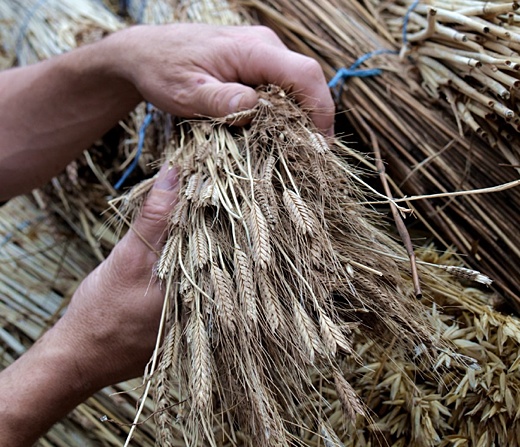
Image above: Detail of photo of John Letts displaying a variety of wheat he has grown. From original artilce.

Bread has always been at the heart of human history – we’ve been baking it for the best part of 10,000 years. But over the past decade there has been an explosion of people reporting problems with eating it.

How could wheat, a staple food that has sustained humanity for so long, have suddenly become a threat to our health? What’s happened to wheat that is causing the increase in digestive disorders? And can we get back to the bread we ate for millennia without becoming wheat intolerant?*

The story that lies behind our problem with bread is a sad one. In the space of one century we abandoned both the flavour and nutrition of our most basic food in favour of producing vast amounts of cheap industrial loaves.

The impact of the Industrial Revolution

Bread remained almost unchanged for thousands of years. Then, from the late 1850s to the 1960s, every aspect of it changed. We didn’t just change the way we made it – we altered it to the point that our bodies no longer recognised the ingredients. A combination of the Industrial Revolution and the hybridisation of wheat fundamentally changed the nature of the flour we use for baking.

The problems we now face can be traced back to the middle of the 19th century, when Gregor Mendel developed what are now known as the laws of biological inheritance, or hybridisation.

This revolutionary technique was quickly applied to wheat, but the grain was hybridised and developed not for its flavour, but for increased yields and levels of gluten. In doing so, we lost both taste and nutrition in our flour at an incredible speed. In just a few decades the gene pool was narrowed from thousands of varieties of to less than a hundred. It was the start of a monoculture.

Wheat didn’t just change in its genetic make-up. Towards the end of the 19th century there was also a major change in the way grain was processed and turned into flour. Up until this point all flour had been stone ground, a process that retained the wheat germ and its oils. This flour was fresh and had to be consumed quickly before the oils became rancid.

With the invention of the roller mill, wheat was ground with steel cylinders instead of stone. This very efficiently eliminated the germ – the richest part of the grain, containing proteins, vitamins, lipids and minerals. While the roller mill removed the most nutritious part of the grain, it produced white flour at high speed that could be stored for months on end without spoiling.

Additionally, as harvesting became increasingly mechanised, scientists developed wheat with shorter stems to accommodate the machines. Its root systems were also shorter and the gluten structure increasingly strong, giving modern bread its characteristic fluffy texture.

As wheat changed during the Industrial Revolution, the yeasts we use also underwent rapid scientific advancements. In 1876, two brothers, Charles and Max Fleischmann, launched their new, manufactured yeast at the Centennial Exposition in Philadelphia. By the 1930s, commercial yeast was firmly established as a household essential.

In the 1940s, as the United States entered the war, Fleischmann Laboratories were still leading the way in yeast development. They discovered and then manufactured Active Dry Yeast®, specifically so that the troops could enjoy home-baked bread. Scientists went on to develop highly active dry yeasts that were capable of raising dough up to 50% faster than regular yeasts.

In 1961, this leap lead to what many consider to be the low point of bread making: the arrival of the high volume Chorleywood baking process. This industrial method of factory-produced bread prioritised the speed and cost of production at the expense of flavour and texture.

The industrial process has been blamed for much of today’s wheat intolerance, as it produces bread that is full of enzymes and preservatives. But laying all the blame on the manufacturing oversimplifies the problem, given that the grains themselves have changed. The problem is not just how we make the bread, but also the kind of wheat we use to make it.

As a specialist sourdough breadmaker, I have researched into old varieties of grains, to better understand their nutritional value and impact on digestion. My work introduced me to miller John Letts, who grows heritage grains in Oxfordshire, and as I began baking with his flour I realised the true social, environmental and health cost of industrial bread production.

I began to bake sourdough bread using Einkorn and Emmer flours, and soon discovered that in contrast to modern wheat bread, the ancient grains have a deep nutty, sweet flavour and make robust loaves with great crust and light chewy interiors.

John Letts is a Canadian born archaeo-botanist who, for the past 25 years, has been growing and milling many of the heritage variety grains that have long since disappeared from industrial agricultural systems.

John’s dedication and passion is evident from the moment you meet him. In the garden behind his workshop are dozens of trial beds. The one that was looking the most lush was a gluten-free perpetual rye. John explained that heritage seeds are not like today’s varieties, which create a monoculture.

John blends literally hundreds of different genetically diverse varieties, so if one particular kind doesn’t fare well in a particular spot, then another will. It’s a robust system, and one that, given the climate challenges we face, could well provide the answer to growing environmental problems, helping to build resilience in agriculture. Sowing a genetically diverse mix of seed also ensures that there is always a crop, because when one variety fails due to a virus or lack of rain, another will survive.

Old varieties have genetically evolved to grow on marginal land and are more likely to survive drought as they have longer roots so can seek moisture from deeper soil. These extensive root systems, which go down over a metre, also give them better access to micro-nutrients in the soil and the flour is more nutritious a result. This is aided by the mycorrhiza, microscopic fungi in the soil, which facilitate access to these trace minerals.
 
The absence of chemical fertilizers in much heritage grain production could well be the missing piece of the jigsaw puzzle. Most heritage grain is grown organically. Further, there is scientific evidence suggesting that varying levels of sulphur and nitrogen fertiliser can change the proteins in wheat, and proteins are at the heart of many allergies. One study found that increasing the level of nitrogen fertiliser directly resulted in increased levels of gliadin, a type of gluten protein that appears to cause the most allergic sensitivities. Chemical fertilisers also destroy the mycorrhiza fungi, which support the nutritional value of ancient grains.

Different types of wheat also have different numbers of chromosomes and there is evidence that these minute differences in chromosomes may be at the root of many digestive problems. There is wide anecdotal evidence that heritage flour is more easily tolerated than modern varieties, and there is compelling evidence from several studies to back up these claims, showing that older varieties of wheat, which have fewer chromosomes, also tend to have lower levels of gliadins.

The hybridisation of wheat and increased gluten percentages have undoubtedly contributed to the ever-increasing number of intolerances. But looking at the full picture, can we ignore the possibility that there is a connection between the massive increase in use of chemical fertilizers in the past 70 years and the significant increase in both gluten sensitivity and gluten allergies in the same period? Might it have contributed to the difficulty of digesting bread? Looking more closely at digestibility in bread, and why sourdough is important in this, could provide some insight – so keep an eye out for the next article exploring what makes sourdough bread more nutritious than yeasted bread and why it is easier to digest.

• Vanessa Kimbell teaches at The Sourdough School in Northamptonshire
• John Letts Lammas Fayre Flour is available from www.bakerybits.co.uk 

*For the purpose of this article it is important to differentiate between intolerance, allergy and coeliac disease. An intolerance is generally a digestive malaise, with symptoms that can include headaches, nausea, irritability, bloating or IBS symptoms, whereas in cases of coeliac disease, the immune system mistakes substances found inside gluten as a threat to the body and attacks them, causing damage to the surface of the small bowel (intestines) and disrupting the body’s ability to absorb nutrients from food. Any form of wheat still contains gluten so it is strongly advised that coeliacs do not consume gluten.

.

Hudson Valley Seed Library

SUBHEAD: An interview with heritage seed bank founder Ken Green.

By Nasimeh Bahrayni-Easton on 20 December 2014 for Shareable -
(http://www.shareable.net/blog/interviewed-ken-greene-of-hudson-valley-seed-library)


Image above: Greene with Vandana Shiva, renowned environmental activist. Photo from Hudson Valley Seed Library and in original article.

In 2004, Ken Greene was working as a librarian in Gardiner, New York when he decided to go beyond the bounds of his own personal garden and take his passion for seed saving into a more public, community-based arena.

He began the Hudson Valley Seed Library (HVSL) out of the Gardiner Public Library, initially just adding the seed varietals to the library catalog as another item that patrons could "check out."

For four years, Greene ran the HVSL out of that location, but in 2008 he and his business partner Doug Muller moved the HVSL onto a farm in Accord, New York where it has remained ever since. Nowdays, the library catalog is online, the team has grown to include a dozen or so others in addition to Ken and Doug, and the library's membership boasts over 1,000 farmers and gardeners.

Shareable caught up with Greene to talk about his organization's roots, his passion for stories, and the future of seed libraries.

SHAREABLE: What inspired Hudson Valley Seed Library?
Ken Greene: I had become a seed saver in my own garden after learning about some of the global seed issues including loss of genetic diversity and consolidation of seed resources by the biotech industry. I wanted to make a small difference by taking responsibility for our local seeds and making sure they were preserved and protected.

But that didn't feel like I was doing enough, I wanted to find a way to share the seeds, and seed saving skills, with more people in my community. The more hands and gardens the seeds pass through, the more alive and protected they are for the future. I began to see seeds as having much in common with books- especially books in a library.

My deep appreciation for libraries and new-found passion for seeds were starting to become one. I began to see every seed was a story and felt the stories were meant to be shared. Growing a seed meant growing its story and keeping it alive. I saw that libraries keep stories alive by sharing them. So, adding seeds to the library catalog seemed logical, necessary, and important.

Just as our library was making out-of-print books available to the community, we could also make heirloom seeds, many under the threat of extinction, continually available. Just as we were keeping ideas, imagination, and stories alive by sharing them in print, we could keep the genetics and the cultural stories of seeds alive by sharing them.

 Just as we trusted our patrons to bring back the books they checked out so that they could continue to be shared, I wondered if we could count on gardeners to save some seeds from the plants they grew to return to the library, keeping the seeds alive and creating regionally adapted varieties.

What was the community response? 
Initially people were confused about seeing seeds available to check out in the library. Luckily, the library director, Peg Lotvin, and a local farm intern who was one of the founders of BASIL, a Bay Area seed exchange, were very enthusiastic about the idea.

Over time with meetings, workshops, and putting in a seed garden around the flag pole on the front lawn, the seed library became an appreciated part of the public library- and the first of its kind in the country.

The year before I quit my job to farm seed full time we had about 60 active members in the seed library. The next year, when my partner Doug and I put the library idea online, we had 500 members.

Today we have a full seed catalog that anyone can buy homegrown, independent, organic seed from and we have an active seed saving community of over 1200 gardeners and farmers who participate in our "One Seed, Many Gardens" online seed library program.


A three pound heirloom tomato.  Credit: HVSL Facebook

Other than seed preservation, what other roles does the HVSL play in the community?
I never would have imagined that our tiny seed library would grow into a full-fledged seed company and take over my life! I'm now on the Board of Directors for the Organic Seed Alliance, give lectures and teach workshops about seeds all over the country, and we are the largest producer of Northeast grown and adapted seeds in the country.

What draws you personally to seed preservation?
I love nurturing our plants through their full life-cycles and sharing the joy, magic, and abundance of seeds with others. More than preservation, I'm drawn to the idea that plants are always changing, just as we are. In order to keep these seeds alive and in the dirty hands of caring growers we need to allow them to change with us.

HVSL also does lovely art commissions for its seed packets. What's the story behind that?
I believe that artist are cultural seed savers and seed savers are agri-cultural artists. I came up with the idea of working with artists after collecting antique seed catalogs to research what varieties were being grown in our region 50-100 years ago. These old catalogs are full of art- no photographs.

Just as I want to keep the tradition of saving seeds by hand, I wanted to find a way to continue the beautiful and compelling tradition of illustrated catalogs- but in a more contemporary way. Our packs help remind us that seeds are not just a commodity to be bought and sold- they are living stories. The diversity of the artwork on our packs (each one is by a different artist) celebrates the diversity of the seeds themselves.


Seed packets from the seed library.  Credit: HVSL Facebook.

A New York Times article about HSVL says you collect “cultural stories” as well as seeds. Can you speak a little more about that?
Every seed is a story. Actually, every seed is many stories. Genetic stories, human stories of travel, tragedy, an spirit. Some seed stories are tall tales, myths, or very personal stories from recent generations. We share many of these stories on our website as well as the stories of how we grow and care for the seeds in our catalog.

That article states that many of your members live in New York City.  Why do you think it's important to offer your services to cities?
Many of the gardeners (and farmers!) who grow with our seeds do live in urban areas. There are more urban growers of all kinds- rooftops, containers, community gardens- than ever before. Finding the right varieties to grow in the many micro-climates that urban gardeners experience means searching out a diversity of seed sources.

Conventionally bred seeds are meant to be grown on large industrial and chemical based farms. The heirloom and open-pollinated seeds in our catalog have more flexibility, resiliency, and the most potential for adapting to urban growing environments.

What does the future look like for HVSL - and for seed libraries in general?
Over time the Hudson Valley Seed Library has become a mission-driven seed company. Our seed library model has changed to better focus on sharing high-quality seed.

We based the new model on the popular “Community Reads” or “One Book, One Town” reading programs organized by book libraries all over the country where the whole town reads one book. By encouraging every member in the Seed Library to grow the same variety in the same season, we’ll be able to teach everyone how to grow, eat, and save seeds from the varieties.

We connect all of our gardens into one big seed farm--growing enough seeds of each year's Community Seed variety to share with friends, family, and our communities. Enough to last. We've also begun training small-scale farmers on how to integrate seed saving into their food farm systems- the more local seeds the better!

On another note, your farm used to be a Ukrainian summer camp?!
The land we live on and grow on is shared by a community of friends. Originally a Catskill "poor-man's" resort with a hotel, boarding houses, kitchen building, ball room and more, the property was bought by a Ukrainian cultural camp in the late 60s.

Our group bought it from adults who had been campers here. We're fixing up what we can save, tearing down and salvaging the structures we can't save, building soil, growing seeds, and preserving the wildness of the surrounding woods.


The Seed Library farm.  Credit:  HVSL Facebook.

Do you have any advice for anyone who might want to start a seed library in their own community?

Yes! Mainly- there is no one thing that is a seed library. There are now over 300 seed libraries, seed swaps, seed exchanges, and community seed banks all over the country. Each one is different from the next.

I recommend starting with a simple seed swap to see who in your community is interested in gardening and seeds and then letting the group develop their own way of sharing seeds and their stories. I help communities develop community seed saving groups and there are many more resources out there than there were 10 years ago when I started the Hudson Valley Seed Library.

And lastly, what is your favorite or most interesting new plant?
Always the hardest question! I love all of the 400 varieties in our catalog for different reasons. We have cultivated and wild flowers, vegetables, culinary and medicinal herbs, and some oddities just for fun.

For food I'm most excited about our Panther Edamame- a black open-pollinated nutty-flavored edamame that we grow in partnership with the Stone Barns Center.

For cultivated flowers I'm in love with Polar Bear Zinnia- a creamy white flower, for wild flowers I'm proud to now offer Milkweed to help stem the near extinction of Monarch Butterflies, and for herbs I love Garlic Chives which make the most amazing Kimchi.

You can connect more with the Hudson Valley Seed Library via their website or facebook.

.

Seed Libraires and the Law

SUBHEAD: Setting the record straight on the legality of local seed libraries and exchanges.

By Janelle Orsi & Neil Thapar on 11 August 2014 for NewDream.org -
(http://www.newdream.org/blog/seed-libraries-take-on-the-law)


Image above: The Seed Library of Los Angeles is open for business on 18 February 2012 . From (https://en.wikipedia.org/wiki/File:Openforbusiness.jpg).

After the Pennsylvania Department of Agriculture cracked down on a community seed library, hundreds of seed libraries in the U.S. are suddenly wondering if they are breaking the law. According to PA regulators, in order to give out member-donated seeds, the Simpson Seed Library in Cumberland County would have to put around 400 seeds of each variety through prohibitively impractical seed testing procedures in order to determine quality, rate of germinability, and so on.

The result of the PA crackdown is that the library can no longer give out seeds other than those which are commercially packaged.

Quite ironically, this is in the name of “protecting and maintaining the food sources of America.” In this news article that went viral, regulators cited, among other things, that “agri-terrorism is a very, very real scenario.” In reality, seed libraries have emerged in an effort to protect our food sources and to ensure access to locally adapted and heirloom varieties.

The public’s access to seeds has been narrowing ever since 1980, when the Supreme Court ruled that a life-form could be patented. Since then, large seed companies have shifted away from open-pollinated seeds to patented hybridized and genetically-engineered varieties.

The companies generally prohibit farmers from saving and replanting the seeds, requiring that farmers buy new seed each year. In response to this trend, seed libraries give members free seeds and request that members later harvest seed and give back to the library in the future, thereby growing the pool of seeds available to everyone.

Seed Law Basics
It’s important to set the record straight about the legalities of seed libraries. Let’s begin with the basics: In every state, there are laws requiring seed companies to be licensed, test seeds, and properly label them. At the federal level, there is a comparable law governing seed companies that sell seeds in interstate commerce.

All of these laws exist for good reason: If a tomato grower buys 10,000 tomato seeds, the grower’s livelihood is on the line if the seeds turn out to be of poor quality or the wrong variety.

Seed laws, like other truth-in-labeling laws, keep seed companies accountable, prevent unfair competition in the seed industry, and protect farmers whose livelihoods depend on access to quality seeds. The testing and labeling of the seeds also helps to prevent noxious weeds and invasive species from getting into the mix.

In some states, the licensing, labeling, and testing laws only apply if you sell seed. In other states, such as California, the laws apply if you even offer seeds for barter, exchange, or trade. How do you define words like sell, barter, exchange, and trade? And how do they apply to seed libraries? Read on if you are ready to venture into interesting legal grey areas.

In at least one state (yup, Pennsylvania), even supplying seeds make you subject to at least some regulation. But the Pennsylvania seed law is about to be put to the test, and we think that regulators should have read their law more carefully.

Using the Letter of the Law
When you see a law enforced unfairly, read the letter of the law and see if you can find holes in it. Found one!

In Pennsylvania, supplying seed might make you subject to the requirement to get a license, which involves filling out a form and paying an annual $25 fee (Section 7103, Chapter 71 of PA Consolidated Statutes). However, the sections of the law (7104, 7105, etc.) that mandate testing and labeling only apply if you sell seed. Not “supply,” but “sell!”

Has anyone in Pennsylvania noticed this nuance since the whole kerfuffle with Simpson Seed Library began? Seed libraries in Pennsylvania could perhaps test this: Fill out the license form, pay the $25 fee, and continue to operate as usual.

If the PA Department of Agriculture demands testing and labeling of seeds, a seed library could try holding its ground until the regulators see their own error or until a court makes a determination that the library is not “selling” seeds.

(Note: We’re not giving legal advice here! Get legal advice from a PA lawyer, because breaking this law the first time could result in up to 90 days of prison time, and breaking it the second time can result in up to two years.)

Working Within Grey Areas
California and other states define “sell” to include exchange, barter, or trade. This broad definition helps to ensure that people can’t sidestep regulation simply because they aren’t using dollars to bargain. Bargaining is a key concept in all of this.

We have innumerable regulations designed to temper the potential harms that arise when people bargain in the context of commerce. Merchants have an incentive to seek high prices and to reduce their costs in order to get more.

When people transact within the “get more” frame of mind, it is far more likely they will cut corners, disregard risks, be careless, mislead people, and so on. That’s why regulations apply when people sell things, but rarely when people give things.''

Seed libraries have a “give more” frame of mind, which motivates the libraries to do right by their members and the community. They ask people to donate seed back to the library, but do so with the goal of giving away more seed. The letter of the law doesn’t tell us that seed libraries are clearly exempt from regulation, but the spirit of the law does.

When the application of a law is unclear, we must go deeper to hone our legal arguments. Although the libraries both give and receive seeds, there’s a strong argument that they do not, in fact, exchange seed in the way the California regulation envisions.

To find solid legal ground for this argument, seed libraries can borrow legal arguments from time banks. A time bank is an organization through which members do favors for one another and award one another a “time dollar” or “time credit” for every hour of service. People can use their time credits to reward favors they receive from other members of the network.

The IRS has acknowledged in private letter rulings that this activity is distinct from that of a barter exchange for two primary reasons:
  1. the giving and receiving of favors happens informally, meaning that people get no contractual right to have their favor returned, and

  2. the exchanges are non-commercial, as demonstrated by the fact that everyone’s hour is valued equally, meaning that people are not bargaining for services at market rate.

Similarly, seed libraries generally give and receive seeds on an informal basis, meaning that neither the library nor its members have a right or requirement to give seed. Members likely have a sense of responsibility to give back to the seed library, but the library cannot force them to do so. In addition, seed libraries give and receive seeds on a non-commercial basis.

People neither pay money for seeds, nor do they measure the value of seeds they give in proportion to what they get. You can learn more the about nuanced differences between giving, swapping, exchanging, and selling here and here.

Note that it’s important for seed libraries to ensure that their policies, languaging, and practices reflect what we’ve described in the above paragraph.

If the library makes people feel as if they are required to give seed later on or if the library is counting seeds in order to keep score somehow, then the library might actually come under the regulations. We have seen at least one seed library that has members sign a contract indicating that the member “shall” or “agrees to” donate twice the amount of seed that they checked out. This is risky.

We suggest that all seed libraries review their documents and revise paperwork in order to simply collect information from members about what kind of seed they received, what they are donating, their experience with the plant, and so on.

Crowdsourcing a Seed Law Library
Drawing upon the spirit of reciprocity that motivates seed libraries, we’d like to urge readers to take 30 minutes and give back by doing research on other states’ seed laws.

We’ve created a Hackpad where anyone can add links to state seed laws, copy and paste in key provisions, and add your comments and questions. Wanna take a crack at it? It’s very empowering to learn how to find and navigate laws.

The American Seed Trade Association compiled a list of state seed laws, but many of the links are broken, so you may need to access the laws by navigating through state agricultural codes. Commonly, state seed laws live in two places: 1) state statutes created by legislators, and 2) regulations created by the state department of agriculture. You need to review both.

We Still Need to Change These Laws!
Even though we have arguments that seed libraries are not subject to state and federal testing and labeling requirements, it would be ideal for our laws to say this explicitly. No matter what state you are in, you could look on either end of the political spectrum and probably find a legislator who would be sympathetic to these issues. You could ask a legislator to introduce a bill that has simple language such as:

“Notwithstanding any other provision of this [law, act, chapter, article], Seed Libraries shall be exempt from all licensing, testing, labeling, and other requirements of this [law, act, chapter, article]. ‘Seed Library’ shall be defined as a nonprofit, cooperative, or governmental organization that donates seed and receives donations of seed.”

Depending on how much discretion your state department of agriculture has with regard to the crafting of regulations, you could, instead, simply ask the department to amend the regulations.

Also, we recommend that seed libraries and other advocates write letters to the Association of American Seed Control Officials (AASCO), a national membership organization comprised of state seed regulatory officials. Among other activities, AASCO developed and maintains the Revised Uniform State Seed Law, the model law on which many states’ seed laws are based.

If AASCO were to expressly exempt seed libraries from regulation, several states would likely follow suit, since they often adopt wholesale AASCO’s recommendations. AASCO’s membership directory also contains mailing and email addresses for seed regulators in each state, so we recommend that everyone write to them as well.

If we change laws to create a clear legal space for seed libraries, we should perhaps also do so for small-scale seed enterprises. If current law requires a seed business to test 400 seeds of each variety, this privileges large seed companies, and effectively blocks farmers from starting small seed enterprises.

Further, the scale of operation should make a difference when it comes to achieving the goals of these laws. If a package of 100 seeds ends up being of poor quality or if it contains noxious weeds, the harm to the grower or to society is much lower than if the packet contained 10,000 seeds.

Likewise, seed sales that are conducted direct-to-consumer within a small geographic area present minimal risk of introducing new invasive or noxious species. Thus, when we change the laws, we should also create exemptions and lower compliance hurdles for seed enterprises that sell seeds in small quantities, direct-to-consumer, and/or within a confined region.

In the big picture, laws should not try to protect citizens from all imaginable harms nor should laws overreach into all areas of our lives. Every law requires a balancing act. Although driving a car is quite dangerous, people are allowed to do it, because society has decided that the benefit of mobility outweighs the risk of harm.

Similarly, during times of food insecurity, climate disruption, and genetic consolidation of the sources of our food (seeds!), the benefit of seed libraries is enormous as compared to the potential harm of a seed packet gifted within a community. Let’s make sure our laws get with the times!

• This article was written by Janelle Orsi and Neil Thapar of the Sustainable Economies Law Center, with input from Neal Gorenflo of Shareable, and Sarah Baird of the Center for a New American Dream.

.

Time of the Seedbearers

SUBHEAD: If some achievements of our age are to be carried forward then the time of the seedbearers has arrived.

By John Michael Greer on 30 April 2014 for the Archdruid Report -
(http://thearchdruidreport.blogspot.com/2014/04/the-time-of-seedbearers.html)
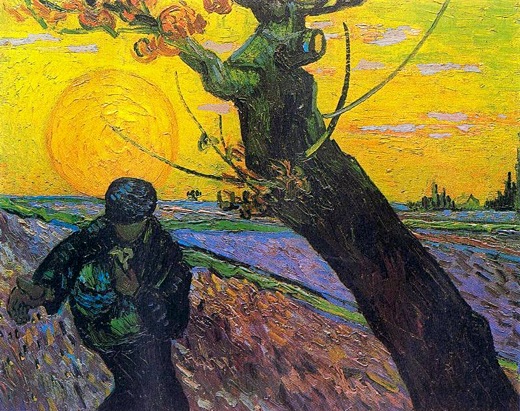

Image above: "The Sower" by Vincent Van Gogh, 1888. From (http://www.escuelagabrielarcan.com.ar/?attachment_id=670).


Myths, according to the philosopher Sallust, are things that never happened but always are. With a few modifications, the same rule applies to the enduring narratives of every culture, the stories that find a new audience in every generation as long as their parent cultures last.

Stories of that stature don’t need to chronicle events that actually took place to have something profoundly relevant to say, and the heroic quest I used last week to frame a satire on the embarrassingly unheroic behavior of many of industrial civilization’s more privileged inmates is no exception to that rule.

That’s true of hero tales generally, of course. The thegns and ceorls who sat spellbound in an Anglo-Saxon meadhall while a scop chanted the deeds of Beowulf to the sound of a six-stringed lyre didn’t have to face the prospect of wrestling with cannibalistic ogres or battling fire-breathing dragons, and were doubtless well aware of that fact.

 If they believed that terrible creatures of a kind no longer found once existed in the legendary past, why, so do we—the difference in our case is merely that we call our monsters “dinosaurs,” and insist that our paleontologist-storytellers be prepared to show us the bones.

The audience in the meadhall never wondered whether Beowulf was a historical figure in the same sense as their own great-grandparents. Since history and legend hadn’t yet separated out in the thinking of the time, Beowulf and those great-grandparents occupied exactly the same status, that of people in the past about whom stories were told.

Further than that it was unnecessary to go, since what mattered to them about Beowulf was not whether he lived but how he lived. The tale’s original audience, it’s worth recalling, got up the next morning to face the challenges of life in dark age Britain, in which defending their community against savage violence was a commonplace event; having the example of Beowulf’s courage and loyalty in mind must have made that harsh reality a little easier to face.

The same point can be made about the hero tale I borrowed and rewrote in last week’s post, Tolkien’s The Lord of the Rings. Frodo Baggins was no Beowulf, which was of course exactly the point, since Tolkien was writing for a different audience in a different age.

The experience of being wrenched out of a peaceful community and sent on a long march toward horror and death was one that Tolkien faced as a young man in the First World War, and watched his sons face in the Second. That’s what gave Tolkien’s tale its appeal: his hobbits were ordinary people facing extraordinary challenges, like so many people in the bitter years of the early twentieth century.

The contrast between Beowulf and The Lord of the Rings is precisely that between the beginning and the zenith of a civilization. Beowulf, like his audience, was born into an age of chaos and violence, and there was never any question of what he was supposed to do about it; the only detail that had to be settled was how many of the horrors of his time he would overcome before one of them finally killed him.

Frodo Baggins, like his audience, was born into a world that was mostly at peace, but found itself faced with a resurgence of a nightmare that everyone in his community thought had been laid to rest for good.

In Frodo’s case, the question of what he was going to do about the crisis of his age was what mattered most—and of course that’s why I was able to stand Tolkien’s narrative on its head last week, by tracing out what would have happened if Frodo’s answer had been different.

Give it a few more centuries, and it’s a safe bet that the stories that matter will be back on Beowulf’s side of the equation, as the process of decline and fall now under way leads into an era of dissolution and rebirth that we might as well call by the time-honored label “dark age.” For the time being, though, most of us are still on Frodo’s side of things, trying to come to terms with the appalling realization that the world we know is coming apart and it’s up to us to do something about it.

That said, there’s a crucial difference between the situation faced by Frodo Baggins and his friends in Middle-earth, and the situation faced by those of us who have awakened to the crisis of our time here and now. Tolkien was a profoundly conservative thinker and writer, in the full sense of that word. The plot engine of his works of adult fiction,

The Silmarillion just as much as The Lord of the Rings, was always the struggle to hold onto the last scraps of a glorious past, and his powers of evil want to make Middle-earth modern, efficient and up-to-date by annihilating the past and replacing it with a cutting-edge industrial landscape of slagheaps and smokestacks.

It’s thus no accident that Saruman’s speech to Gandalf in book two, chapter two of The Fellowship of the Ring is a parody of the modern rhetoric of progress, or that The Return of the King ends with a Luddite revolt against Sharkey’s attempted industrialization of the Shire; Tolkien was a keen and acerbic observer of twentieth-century England, and wove much of his own political thought into his stories.

The victory won by Tolkien’s protagonists in The Lord of the Rings, accordingly, amounted to restoring Middle-Earth as far as possible to the condition it was in before the War of the Ring, with the clock turned back a bit further here and there—for example, the reestablishment of the monarchy in Gondor—and a keen sense of loss surrounding those changes that couldn’t be undone.

That was a reasonable goal in Tolkien’s imagined setting, and it’s understandable that so many people want to achieve the same thing here and now: to preserve some semblance of industrial civilization in the teeth of the rising spiral of crises that are already beginning to tear it apart.

I can sympathize with their desire. It’s become fashionable in many circles to ignore the achievements of the industrial age and focus purely on its failures, or to fixate on the places where it fell short of the frankly Utopian hopes that clustered around its rise.

If the Enlightenment turned out to be far more of a mixed blessing than its more enthusiastic prophets liked to imagine, and if so many achievements of science and technology turned into sources of immense misery once they were whored out in the service of greed and political power, the same can be said of most human things.

 “If it has passed from the high and the beautiful to darkness and ruin,” Tolkien commented of a not dissimilar trajectory, “that was of old the fate of Arda marred.”

Still, the window of opportunity through which modern industrial civilization might have been able to escape its unwelcome destiny has long since slammed shut.

That’s one of the things I meant to suggest in last week’s post by sketching out a Middle-earth already ravaged by the Dark Lord, in which most of the heroes of Tolkien’s trilogy were dead and most of the things they fought to save had already been lost. Even with those changes, though, Tolkien’s narrative no longer fits the crisis of our age as well as it did a few decades back.

Our Ring of Power was the fantastic glut of energy we got from fossil fuels; we could have renounced it, as Tolkien’s characters renounced the One Ring, before we’d burnt enough to destabilize the climate and locked ourselves into a set of economic arrangements with no future...but that’s not what happened, of course.

We didn’t make that collective choice when it still could have made a difference: when peak oil was still decades in the future, anthropogenic climate change hadn’t yet begun to destabilize the planet’s ice sheets and weather patterns, and the variables that define the crisis of our age—depletion rates, CO2 concentrations, global population, and the rest of them—were a good deal less overwhelming than they’ve now become.

As The Limits to Growth pointed out more than four decades ago, any effort to extract industrial civilization from the trap it made for itself had to get under way long before the jaws of that trap began to bite, because the rising economic burden inflicted by the ongoing depletion of nonrenewable resources and the impacts of pollution and ecosystem degradation were eating away at the surplus wealth needed to meet the costs of the transition to sustainability.

That prediction has now become our reality. Grandiose visions of vast renewable-energy buildouts and geoengineering projects on a global scale, of the kind being hawked so ebulliently these days by the prophets of eternal business as usual, fit awkwardly with the reality that a great many industrial nations can no longer afford to maintain basic infrastructures or to keep large and growing fractions of their populations from sliding into desperate poverty.

The choice that I discussed in last week’s post, reduced to its hard economic bones, was whether we were going to put what remained of our stock of fossil fuels and other nonrenewable resources into maintaining our current standard of living for a while longer, or whether we were going to put it into building a livable world for our grandchildren.

The great majority of us chose the first option, and insisting at the top of our lungs that of course we could have both did nothing to keep the second from slipping away into the realm of might-have-beens. The political will to make the changes and accept the sacrifices that would be required to do anything else went missing in action in the 1980s and hasn’t been seen since.

That’s the trap that was hidden in the crisis of our age: while the costs of transition were still small enough that we could have met them without major sacrifice, the consequences of inaction were still far enough in the future that most people could pretend they weren’t there; by the time the consequences were hard to ignore, the costs of transition had become too great for most people to accept—and not too long after that, they had become too great to be met at all. .

As a commentary on our current situation, in other words, the story of the heroic quest has passed its pull date. As I noted years ago, insisting that the world must always follow a single narrative is a fertile source of misunderstanding and misery.

Consider the popular insistence that the world can grow its way out of problems caused by growth—as though you could treat the consequences of chronic alcoholism by drinking even more heavily!

What gives that frankly idiotic claim the appeal it has is that it draws on one of the standard stories of our age, the Horatio Alger story of the person who overcame long odds to make a success of himself. That does happen sometimes, which is why it’s a popular story; the lie creeps in when the claim gets made that this is always what happens.

When people insist, as so many of them do, that of course we’ll overcome the limits to growth and every other obstacle to our allegedly preordained destiny out there among the stars, all that means is that they have a single story wedged into their imagination so tightly that mere reality can’t shake it loose.

The same thing’s true of all the other credos I’ve discussed in recent posts, from “they’ll think of something” through “it’s all somebody else’s fault” right on up to “we’re all going to be extinct soon anyway so it doesn’t matter any more.”

Choose any thoughtstopper you like from your randomly generated Peak Oil Denial Bingo card, and behind it lies a single story, repeating itself monotonously over and over in the heads of those who can’t imagine the world unfolding in any other way.

The insistence that it’s not too late, that there must still be time to keep industrial civilization from crashing into ruin if only we all come together to make one great effort, and that there’s any reason to think that we can and will all come together, is another example.

The narrative behind that claim has a profound appeal to people nowadays, which is why stories that feature it—again, Tolkien’s trilogy comes to mind—are as popular as they are.

It’s deeply consoling to be told that there’s still one last chance to escape the harsh future that’s already taking shape around us. It seems almost cruel to point out that whether a belief appeals to our emotions has no bearing on whether or not it’s true.

The suggestion that I’ve been making since this blog first began eight years ago is that we’re long past the point at which modern industrial civilization might still have been rescued from the consequences of its own mistakes.

If that’s the case, it’s no longer useful to put the very limited resources we have left into trying to stop the inevitable, and it’s even less useful to wallow in wishful thinking about how splendid it would be if the few of us who recognize the predicament we’re in were to be joined by enough other people to make a difference.

If anything of value is to get through the harsh decades and centuries ahead of us, if anything worth saving is to be rescued from the wreck of our civilization, there’s plenty of work to do, and daydreaming about mass movements that aren’t happening and grand projects we can no longer afford simply wastes what little time we still have left.

That’s why I’ve tried to suggest in previous posts here that it’s time to set aside some of our more familiar stories and try reframing the crisis of our age in less shopworn ways.

There are plenty of viable options—plenty, that is, of narratives that talk about what happens when the last hope of rescue has gone whistling down the wind and it’s time to figure out what can be saved in the midst of disaster—but the one that keeps coming back to my mind is one I learned and, ironically, dismissed as uninteresting quite a few decades ago, in the early years of my esoteric studies: the old legend of the fall of Atlantis.

It’s probably necessary to note here that whether Atlantis existed as a historical reality is not the point.

While it’s interesting to speculate about whether human societies more advanced than current theory suggests might have flourished in the late Ice Age and then drowned beneath rising seas, those speculations are as irrelevant here as trying to fit Grendel and his mother into the family tree of the Hominidae, say, or discussing how plate tectonics could have produced the improbable mountain ranges of Middle-earth. Whatever else it might or might not have been, Atlantis is a story, one that has a potent presence in our collective imagination.

Like Beowulf or The Lord of the Rings, the Atlantis story is about the confrontation with evil, but where Beowulf comes at the beginning of a civilization and Frodo Baggins marks its zenith, the Atlantis story illuminates its end.

Mind you, the version of the story of Atlantis I learned, in common with most of the versions in circulation in occult schools in those days, had three details that you won’t find in Plato’s account, or in most of the rehashes that have been churned out by the rejected-knowledge industry over the last century or so.

First, according to that version, Atlantis didn’t sink all at once; rather, there were three inundations separated by long intervals. Second, the sinking of Atlantis wasn’t a natural disaster; it was the direct result of the clueless actions of the Atlanteans, who brought destruction on themselves by their misuse of advanced technology.

The third detail, though, is the one that matters here. According to the mimeographed lessons I studied back in the day, as it became clear that Atlantean technology had the potential to bring about terrifying blowback, the Atlanteans divided into two factions: the Children of the Law of One, who took the warnings seriously and tried to get the rest of Atlantean society to do so, and the Servants of the Dark Face, who dismissed the whole issue.

I don’t know for a fact that these latter went around saying “I’m sure the priests of the Sun Temple will think of something,” “orichalcum will always be with us,” “the ice age wasn’t ended by an ice shortage,” and the like, but it seems likely. Those of my readers who haven’t spent the last forty years hiding at the bottom of the sea will know instantly which of these factions spoke for the majority and which was marginalized and derided as a bunch of doomers.

According to the story, when the First Inundation hit and a big chunk of Atlantis ended up permanently beneath the sea, the shock managed to convince a lot of Atlanteans that the Children of the Law of One had a point, and for a while there was an organized effort to stop doing the things that were causing the blowback.

As the immediate memories of the Inundation faded, though, people convinced themselves that the flooding had just been one of those things, and went back to their old habits. When the Second Inundation followed and all of Atlantis sank but the two big islands of Ruta and Daitya, though, the same pattern didn’t repeat itself; the Children of the Law of One were marginalized even further, and the Servants of the Dark Face became even more of a majority, because nobody wanted to admit the role their own actions had had in causing the catastrophe. Again, those of my readers who have been paying attention for the last forty years know this story inside and out.

It’s what happened next, though, that matters most. In the years between the Second Inundation and the Third and last one, so the story goes, Atlantis was for all practical purposes a madhouse with the inmates in charge.

Everybody knew what was going to happen and nobody wanted to deal with the implications of that knowledge, and the strain expressed itself in orgiastic excess, bizarre belief systems, and a rising spiral of political conflict ending in civil war—anything you care to name, as long as it didn’t address the fact that Atlantis was destroying itself and that nearly all the Atlanteans were enthusiastic participants in the activities driving the destruction.

That was when the Children of the Law of One looked at one another and, so to speak, cashed out their accounts at the First National Bank of Atlantis, invested the proceeds in shipping, and sailed off to distant lands to become the seedbearers of the new age of the world.

That’s the story that speaks to me just now—enough so that I’ve more than once considered writing a fantasy novel about the fall of Atlantis as a way of talking about the crisis of our age. Of course that story doesn’t speak to everyone, and the belief systems that insist either that everything is fine or that nothing can be done anyway have no shortage of enthusiasts. If these belief systems turn out to be as delusional as they look, though, what then?

The future that very few people are willing to consider or prepare for is the one that history shows us is the common destiny of every other failed civilization: the long, bitter, ragged road of decline and fall into a dark age, from which future civilizations will eventually be born.

If that’s the future ahead of us, as I believe it is, the necessary preparations need to be made now, if the best achievements of our age are to be carried into the future when the time of the seedbearers arrives.

.
12th Kauai Seed & Plant Exchange

SUBHEAD: A fun community event with live music and food too, highly recommended!

By Blake Drolsen on 21 September 2013 in Island Breath -
(http://islandbreath.blogspot.com/2013/09/12th-kauai-seed-plant-exchange.html)


Image above: Poster created to promote this From ().

WHAT:
12th Biannual Kauai Community Seed and Plant Exchange

WHEN:
Sunday, September 22nd, 2013 from Noon to 5:00pm

WHERE:
Kalihiwai Food Forest & Community Garden
Wai Koa Plantation
Kalihiwai Ridge
Kahiliholo Road (one half mile)

CONTACT:
Phone: (808) 652 - 4118
We wanted to remind everyone  that the 12th Biannual Kauai Community Seed and Plant Exchange is this coming Sunday, starting at Noon, going till 5pm.  This is a great community event and is a great way to get a head start on your fall planting with seeds and cuttings provided by the community, all for free!

Fun community event with live music and food too, highly recommended!

It will take place at the Kalihiwai Food Forest & Community Garden, one half mile up Kahiliholo Road at Wai Koa Plantation, on Kalihiwai Ridge.

For more information.... Call 652 - 4118 or go to http://ribg.org/rbg/?p=1654

Hope to see you there!  Come by the GMO-Free Kaua'i table and say hello.

Voices From the Trees
By Staff at Regenerations International Botanical Garden
(http://ribg.org/rbg/?p=1654)

The 12th Biannual Kauai Community Seed & Plant Exchange will be celebrated on Sunday, September 22nd from noon ‘til 5pm at the Kalihiwai Food Forest & Community Garden, one half mile up Kahiliholo Road at Wai Koa Plantation, on Kalihiwai Ridge, Halele`a. Aloha `āina, music, food, and a wealth of seeds and plants will be enjoyed by all.

Kauai is leading the way toward food self-sufficiency by establishing a community food forest near Kilauea. This 2 acre project is only 9 months old, but has already developed an overhead canopy and is producing an inspiring variety of fruits, veggies, and root crops.

Dozens of volunteers have contributed their ideas and hard work to create this food ecosystem. The project is a creative experiment in community solution-making and the inherent balance and resilience of natural ecosystems.

The experiences that people have had developing and caring for the forest have already been life-changing, and the exchange will feature several food foresters speaking about their personal journeys into a new relationship with the land and each other. Tours of the forest, explaining the various methods and plants used, will be offered by members of the Food Forest Stewardship Circle.

Regenerations Botanical Garden, which organizes the event, is also proud to introduce the public to the new site of its permanent headquarters, located adjacent to the food forest and community garden.

The 2 acre Regenerations Seed Center will be a simple yet comprehensive facility for growing, processing, storing, and distributing island adapted crops and other essential biodiversity for remediating and enhancing natural agricultural ecosystems.

The Center will be designed and built with permaculture principles and methodology, providing many opportunities for creative hands-on learning. Once complete, the Center will be a regional training destination for seed production and stewardship of plant and soil resources by local communities.

Early check-in of plant material begins at 12 noon. Those bringing seeds and plants are requested to bring only GMO-free, pest-free, non-invasive material. Participants will fill out a label that identifies the type of seed or plant they are donating, its qualities, and location where it was grown. All seeds and plants will be given freely or traded.

The exchange will take place after the 2pm blessing. Speakers will begin at approximately 3 pm, followed by music by Malama Pono Allstars. Everyone is encouraged to attend; even if you have no plants or seeds to give away, there will be plenty to receive and share. Please leave your doggy friends at home. To find out more or for volunteer opportunities visit ribg.org or call 652-4118.

This event is the result of a remarkable collaboration by many Kau`i individuals and organizations, including Regenerations Botanical Garden and Kauai Community Seed Bank, GMO-Free Kauai, Malama Kauai, The Sanctuary of LUBOF, Food Forest Stewardship Circle, Kalihiwai Community Gardeners, KKCR Kauai Community Radio, Akamai Backyard, Heaven on Earth Starts, Kauai Beekeepers Association, and `Ohana o Kauai.

CONTACT:
Jill Richardson
PO Box 1137,  Kilauea, HI 96754-1137
Phone (808) 652-4118
jr@ribg.org
Regenerations Botanical Garden
www.ribg.org

See also:
Ea O Ka Aina: 4th Seed & Plant Exchange 9/28/09
Ea O Ka Aina: 3rd Seed & Plant Exchange 2/21/09
Island Breath: 2nd Seed & Plant Exchange 9/15/08
Island Breath: 1st Seed & Plant Exchange 2/28/08


.

11th Biannual Seed-Plant Exchange

SUBHEAD: Regenerations Botanical  Garden presents the Kauai Community Seed & Plant Exchange.

By Juan Wilson on 5 March 2013 for Island Breath -
(http://islandbreath.blogspot.com/2013/03/11th-biannual-seed-plant-exchange.html)


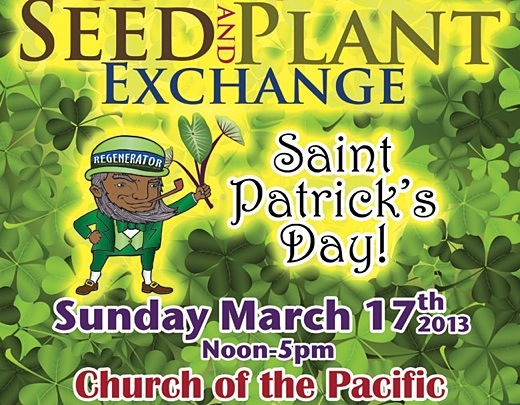
Image above: Detail of poster for 11th Annual Kauai Community Seed & Plant Exchange. Clikc to enlarge for print.

Kaua`i gardeners and planters are invited to get lucky at the 11th bi- annual Seed and Plant Exchange this St Patricks Day. This free event is on March 17th from 12-5 pm at the Church of the Pacific in Princeville. Please bring GMO free, pest free, non-invasive seeds, cuttings and plants to share with others.

WHAT:
Bring and take free seeds and plants at this community exchange.

WHEN:
Saint Patrick's Day
Sunday, March 17th, 2013
from noon to 5:00pm

WHERE:
Church of the Pacific
5-4280 Kuhio Highway
Princeville, Kauai, Hawaii

SCHEDULE:
Registration Noon-1:45pm
Pule (prayer) 2:00pm
Keynote 3-4:00pm
"Shoulders of Our Ancestors" by seedsman Forest Shomer

ALSO:
Live music and All Kauai Luau

CONTACT:
Jill Richardson
PO Box 1137,  Kilauea, HI 96754-1137
Phone (808) 652-4118
jr@ribg.org
Regenerations Botanical Garden
 www.ribg.org

See also:
Ea O Ka Aina: 4th Seed & Plant Exchange 9/28/09
Ea O Ka Aina: 3rd Seed & Plant Exchange 2/21/09
Island Breath: 2nd Seed & Plant Exchange 9/15/08
Island Breath: 1st Seed & Plant Exchange 2/28/08

.

Seed Saving Workshop

SUBHEAD: Get hands-on experience in the methods you need to successfully grow, harvest, save, and share your own garden seed.

By Patti Valentine on 3 November 2012 for Regenerations Botanical Garden -
(http://ribg.org/regenerations_botanical_garden/Home.html)


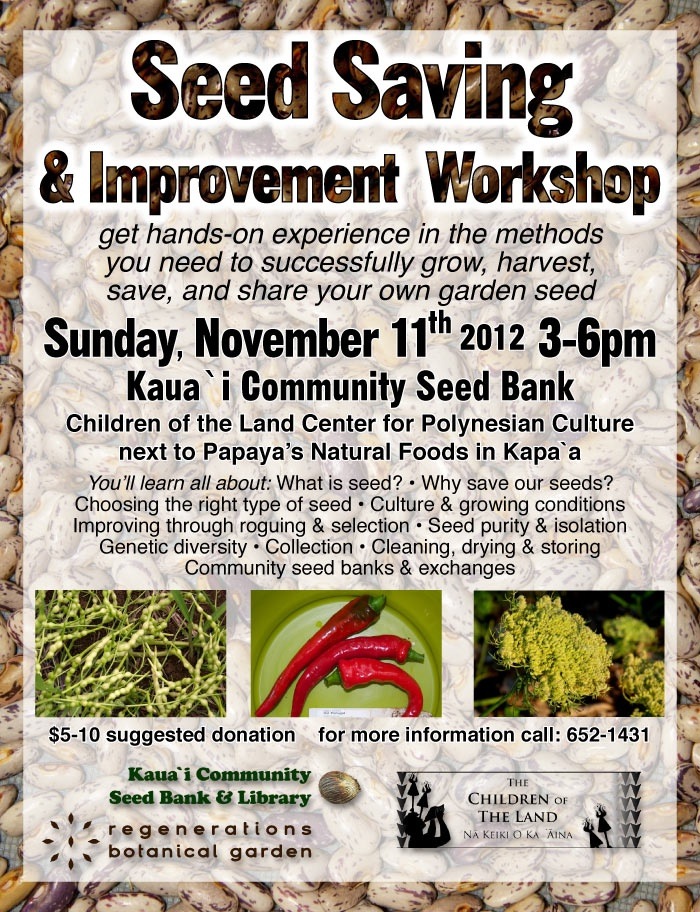
Image above:Detail of aanouncment for Seed Saving Workshop. Click to enlarge for whole poster,

WHAT:
Seed Saving Workshop

WHEN:
Sunday, November 11th from 3:00-6:00pm

WHERE:
The Children of the Land Center
next to Papaya’s Natural Food
Waipouli Shopping Center
4-831 Kuhio Highway in Kapaa.

INFO:
Call Patti at (808) 652-0433

Regenerations Botanical Garden is offering their Seed Saving Workshop on Sunday, November 11 from 3-6 pm at the Kauai Community Seed Bank & Library, located in The Children of the Land Center next to Papaya’s Natural Foods in the Waipouli Shopping Center (4-831 Kuhio Highway) in Kapaa.

Get hands-on experience in the methods you need to successfully grow, harvest, save, and share your own garden seed.

Topics include: the importance of saving seed; how to choose seeds worth saving; seed purity and isolation; genetic diversity; cleaning, drying and storing; community seed banks.

Suggested donation $5-10
Gardening books and Seed Saving Kits will be available.


.

Free Seed & Plant Exchange

SOURCE: Richard Diamond (kauaimuse@gmail.com)
SUBHEAD: The 9th biannual exchange is on April 1st at Children of the Land in Kapaa.  

By Jill Richardson on 22 March 2012 for in Island Breath
  (http://ribg.org/regenerations_botanical_garden/Home.html)

 
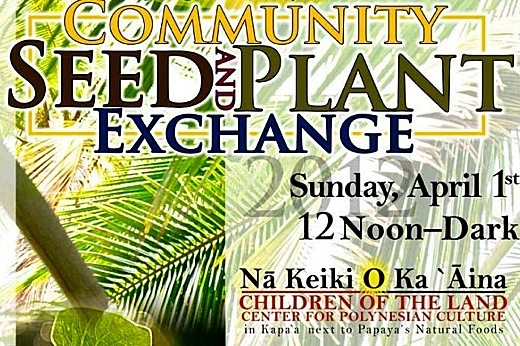
Image above: Detail of poster for 9th Biannual Seed & Plant Exchange. From original article.  

WHAT:
Free Seed & Plant Exchange. Bring what you grow your plants from and find new seeds and plants for your garden. Most plants are food plants, but others are welcome too.
 

WHEN: Sunday, April 1st 2012 from noon to dark.  

WHERE:
Children of the Land Center Kauai Village Shopping Center
Next to Papaya's Natural Foods
4-831 Kuhio Hwy #332, Kapaa

CONTACT:
Jill Richardson

Email: jr@ribg.org
Regenerations Botanical Garden
Phone: 808-652-4118 
 www.ribg.org

In January Kaua'i Community Seed Bank and the Regenerations office moved to a new home in the Children of the Land Center for Polynesian Culture (Nā Keiki o Ka 'Aina) in downtown Kapa`a. This is a great move for us in a number of ways.

The values and vision of both organizations are in strong alignment, and we're delighted to interact on a daily basis and also work together on various projects and programs. The new seed bank facility has upgraded cold storage equipment and a more functional working space to improve our seed-saving capabilities and better accommodate the processing and cataloging of new accessions.

The new location, next to Papaya's in the Kauai Village Shopping Center in Kapa'a, is more centrally located and accessible to you. We plan to use our new position to facilitate the easy exchange of seed and plant material along with related books, information, and knowledge and ways to share group or individual activities and services.

We look forward to seeing you and welcome your thoughts on the most meaningful way for you to interface with us. How can we best work together to support and inspire the care-taking and cultivation of a diversity of island-adapted plants that will ensure a resilient and healthy future? How can we help you to malama the 'aina?

The seed bank and office are open every Thursday 9am – 5pm. If you have seed material to share please call ahead to ensure we are prepared to receive it and if you would like to volunteer, please call to make arrangements.

To celebrate, we're holding the the 9th Biannual Kaua`i Community Seed and Plant Exchange at the Center on Sunday, April 1st from noon–dark. Admission is free. Participants are asked to bring non-invasive, non-GMO, pre-cleaned, insect and disease free cuttings, potted plants, and seeds to share freely.

Seed and plant check-in is from noon-2pm; presentations on the seed bank will happen from 2-2:45 pm; the pule, and exchange will follow at 3pm. Live music by Malama Pono Alstars from 3-5, then Cook Islands/Tahitian drumming begins at 5, followed by fire dancing and poi ball performance at the Center's outdoor stage. The seed lab will be open with hands-on activities. Come early to enjoy information booths, demonstrations, and live music.

You can download seed & plant check-in cards here to fill out before you arrive.
.