Why Growth Won’t Return - Food

SUBHEAD: Food producers’ ability to meet growing needs is being strained by rising human population.  

By Richard Heinberg on 10 March 2011 in Post Carbon Instutite -
(http://www.postcarbon.org/article/272062-earth-s-limits-why-growth-won-t-return)

 
Image above:Photo of women on food line. From (http://hillary.foreignpolicy.com/posts/2010/08/24/clinton_and_irish_foreign_secretary_to_host_food_conference).
 
This article is the fourth excerpt from Chapter 3 of Richard Heinberg’s new book ‘The End of Growth’, which is set for publication by New Society Publishers in September 2011. In the previous installment, Richard discusses water as one of the various factors external to financial and monetary systems that is effectively choking off efforts to restart growth. Below, Richard discusses the role of FOOD as a limitation to economic growth. 

Chapter 3, Part 1.
Chapter 3 Part 3.
Access previous chapters here.
In addition to water, people need food for their very existence. Thus food is also essential to economic growth.

Problems with maintenance of far-flung and intensive food production systems played a role in the collapse of previous civilizations, including the Roman Empire.[1] Mesopotamia, the green and lush center of the Sumerian and Babylonian civilizations, was largely turned to desert as a result of soil erosion. The Mayan civilization likewise succumbed to declining food production, according to recent archaeological research.[2]

Industrial societies have skirted what would otherwise have been limiting factors to food production using irrigation, new crop varieties, fertilizers, herbicides and pesticides, and mechanization—as well as expanded transport networks that allow local abundance to be shared globally.

In terms of productivity, 20th century agriculture constituted an unprecedented story of success: grain production increased an astounding 500 percent (from under 400 million tons in 1900 to nearly two billion in 2000). This achievement mostly depended on the increasing use of cheap and temporarily abundant fossil fuels.[3]

At the beginning of the 20th century, most people farmed and agriculture was driven by muscle-power (animal and human). Today in most countries, farmers make up a much smaller proportion of the population than was formerly the case and agriculture is at least partly mechanized.

Fuel-fed machines plow, plant, harvest, sort, process, and deliver foods, and industrial farmers typically work larger parcels of land. They also typically sell their harvest to a distributor or processor, who then sells packaged food products to a wholesaler, who in turn sells these products to chains of supermarkets or restaurants.

The ultimate consumer of food is thus several steps removed from the producer, and food systems in most nations or regions have become dominated by a few giant multinational seed companies, agricultural chemicals corporations, and farm machinery manufacturers, as well as food wholesalers, distributors, and supermarket and fast-food chains.

Farm inputs have also changed. A century ago, farmers saved seeds from year to year, while soil amendments were likely to come from the farm itself in the form of animal manures. Farmers only bought basic implements, plus some useful materials such as lubricants. Today’s industrial farmer relies on an array of packaged products (seeds, fertilizers, pesticides, herbicides, feed, antibiotics), as well as fuels, powered machines, and spare parts. The annual cash outlays for these can be daunting, requiring farmers to take out substantial loans.

The path to our current food abundance was littered with incidental costs, most borne by the environment. Agriculture has become the single greatest source of human impact upon the planet as a result of soil salinization, deforestation, loss of habitat and biodiversity, fresh water scarcity, and pesticide pollution of water and soil.[4]

Fertilizer use worldwide increased 500 percent from 1960 to 2000, and this contributed to an explosion of “dead zones” in seas and oceans, upsetting a process of nutrient cycling that has existed for billions of years.[5]

There have been some environmental improvements to agriculture in recent years: U.S. farming is more energy efficient than it was a couple of decades ago, fertilizer use has declined somewhat, and more effort goes toward soil conservation. But in general, and especially on the global scene, as food production has grown, so have environmental impacts.[6]

Now, further expansion of the food supply appears problematic. World grain production per capita peaked in 1984 at 342 kg annually. For many years production has not met demand, so the gap has been filled by dipping into carryover stocks; currently, less than two months’ supply remains as a buffer.[7]

The challenges to increasing production come from several directions simultaneously: water scarcity (see above), topsoil erosion (we are “mining” topsoil with industrial agriculture at almost four times the rate we are mining coal—over 25 billion tons per year versus 7 billion tons), declining soil fertility, limits to arable land, declining seed diversity, increasing requirements for inputs (pests are developing resistance to common pesticides and herbicides, requiring larger doses), and, not least, increasing costs of fossil fuel inputs.[8]

But as the energy required to run the food system becomes more costly, food is increasingly being used to make energy: Many governments now offer subsidies and other incentives for turning biomass—including food crops—into fuel. This inevitably drives up food prices. Even non-fuel crops such as wheat are affected, as farmers replace wheat fields with more profitable biofuel crops like maize, rapeseed, or soy.

Mineral depletion is also posing a limit to the human food supply. Phosphorus is often a limiting factor in natural ecosystems; that is, the supply of available phosphorus limits the possible size of populations in those environments. That’s because phosphorus is one of the three major nutrients required for plant growth (nitrogen and potassium are the other two). Most agricultural phosphorus is obtained from mining phosphate rock: organic farmers use crude phosphate, while conventional industrial farms use chemically treated forms such as superphosphate, triple superphosphate, or ammonium phosphates.

Fortunately, phosphorus can be recycled, as the Chinese did in their traditional food-agriculture systems, where human and animal wastes were returned to the soil. But today vast amounts of what might otherwise be valuable soil nutrients are flushed down waterways, and wind up being deposited at the mouths of rivers.[9]

In 2007, Canadian physicist and agricultural consultant Patrick Déry studied phosphorus production statistics worldwide using Hubbert linearization analysis (a technique used to forecast oil depletion rates) and concluded that the peak of phosphate production has been passed for both the United States (1988) and for the world as a whole (1989).

Déry looked at data not only for phosphate that is currently commercially minable, but for reserves of rock phosphate of lower concentrations; he found—no surprise—that these would be more costly to exploit from economic, energetic, and environmental standpoints.[10] Déry’s conclusions are echoed in a recent report by Britain’s Soil Association.[11]

There are three main solutions to the problem of Peak Phosphate: composting of human wastes, including urine diversion; more efficient application of fertilizer; and farming in such a way as to make existing soil phosphorus more accessible to plants.

Food supply challenges extend from farms to the world’s oceans. Fish like cod, sardines, haddock, and flounder have been favorites for decades in Europe and North America, but many of these species are now endangered. Global marine seafood capture peaked in 1994.

An international group of ecologists and economists warned in 2006 that the world will run out of wild seafood by 2048 if steep declines in marine species continue at current rates. They noted that as of 2003, 29 percent of all fished species had collapsed, meaning they were at least 90 percent below their historic maximum catch levels. The rate of population collapses continues to accelerate. The lead author of the group’s report, Boris Worm, was quoted as saying, “We really see the end of the line now. It’s within our lifetime.

Our children will see a world without seafood if we don’t change things.”[12] According to a more recent study, many types of fish have great difficulty recovering even if over-fishing stops. After 15 years of conservation efforts, many stocks had barely increased in numbers. Cod, for example, failed to recover at all.[13]

Here, then is the overall picture: Demand for food is slowly outstripping supply. Food producers’ ability to meet growing needs is increasingly being strained by rising human populations, falling freshwater supplies, the rise of biofuels industries, expanding markets within industrializing nations for more resource-intensive meat and fish-based diets; dwindling wild fisheries; and climate instability. The result will almost inevitably be a worldwide food crisis sometime in the next two or three decades.[14]

The challenges to increasing global food production or even maintaining current rates are linked not only with the other problems discussed in this chapter (changing climate, energy resource depletion, water scarcity, and mineral depletion) but also with the problems discussed in Chapter 2: Modern agriculture requires a system of credit and debt.

Unless farmers can obtain credit, they cannot afford increasingly expensive inputs. Food processors and wholesalers likewise require access to credit. Thus a prolonged credit crisis could devastate the world’s food supply as dramatically as any imaginable weather event.

The solution often proposed to these daunting food system challenges is genetic engineering. If we can splice genes to make more productive crop varieties, more nutritious foods, plants that can grow in saltwater, fish that grow faster, or grains that can fix atmospheric nitrogen the way legumes do, then we could reduce the need for freshwater irrigation, nitrogen fertilizers, and overfishing while growing more food and nourishing people better.

It sounds too good to be true—and probably is. In reality, most currently patented plant genes merely confer resistance to insect pests or proprietary herbicides; the promise of more nutrient-rich crops and of nitrogen-fixing grains is still years from realization.

 Meanwhile, the designer-gene seed industry continues to depend on energy-intensive technologies (such as chemical fertilizers and herbicides), as well as centralized production and distribution systems, along with financial systems based on credit and debt.

So far, gene splicing in food plants has succeeded mostly in generating enormous profits for an increasingly centralized corporate seed industry, and more debt for farmers. As for gene-altered fish, ecologists warn that while these are meant to be raised in enclosed areas, if even a few accidentally escaped into the wild they could quickly displace remaining related wild populations and upend fragile and already compromised ecosystems.[15]

It’s worth noting that for the past few decades a vocal minority of farmers, agricultural scientists, and food system theorists including Wendell Berry, Wes Jackson, Vandana Shiva, Robert Rodale, and Michael Pollan, has argued against centralization, industrialization, and globalization of agriculture, and for an ecological agriculture with minimal fossil fuel inputs.

Where their ideas have taken root, the adaptation to Peak Oil and the end of growth will be easier. Unfortunately, their recommendations have not become mainstream, because industrialized, globalized agriculture has proved capable of producing larger short-term profits for banks and agribusiness cartels.

Even more unfortunately, the available time for a large-scale, proactive food system transition before the impacts of Peak Oil and economic contraction arrive is gone. We’ve run out the clock.

References
1. In his book, Dirt, David Montgomery makes a powerful case that soil erosion was a major cause of the Roman economy’s decline. David Montgomery, Dirt: The Erosion of Civilizations, (Berkeley and Los Angeles: University of California Press, 2007).
2. T. Beach et al., “Impacts of the Ancient Maya on Soils and Soil Erosion in the Central Maya Lowlands,” Catena 65, no.2 (February 28, 2006), 166-178.
3. Richard Heinberg and Michael Blomford, The Food and Farming Transition, Post Carbon Institute, 2009, available online http://www.postcarbon.org/report/41306-the-food-and-farming-transition-toward.
4. Jonathan Foley, “The Other Inconvenient Truth: The Crisis in Global Land Use,” Yale Environment 360, posted October 5, 2009.
5. “World Fertilizer Consumption,” spreadsheet for “Food and Agriculture,” Earth Policy Institute Data Center, posted January 12, 2011, http://www.earth-policy.org/data_center/C24; Robert J. Diaz et al., “Spreading Dead Zones and Consequences for Marine Ecosystems,” Science 321, no.926 (2008).
6. David Tilman et al., “Agricultural Sustainability and Intensive Production Practices,” Nature 418 (August 8, 2002), 671-677.
7. Scott Kilman and Liam Pleven, “Harvest Shocker Rattles Wall Street,” The Wall Street Journal, October 9, 2010.
8. Food and Agriculture Organization of the United Nations, “Protect and Produce: Restoring the Land,” in Dimensions of Need–An Atlas of Food and Agriculture (Rome: FAO, 1995); Leo Horrigan, Robert S. Lawrence, and Polly Walker, “How Sustainable Agriculture Can Address the Environmental and Human Health Harms of Industrial Agriculture,” Environmental Health Perspectives 110, no.5 (May, 2002).
9. Patrick Déry and Bart Anderson, “Peak Phosphorus,” The Oil Drum, posted August 17, 2007, www.theoildrum.com/node/2882.
10. Patrick Déry, Pérenniser l’agriculture, Mémoire pour la Commission Sur l’Avenir de l’Agriculture du Québec, GREB, April 2007.
11. A Rock and a Hard Place: Peak Phosphorus and the Threat to our Food Security, (Bristol UK: Soil Association, 2010).
12. Juliet Eilperin, “World’s Fish Supply Running Out, Researchers Warn,” The Washington Post, November 3, 2006.
13. Corinne Podger, “Depleting Fish Stocks,” BBC World Service, posted August 29, 2000.
14. Julian Cribb, The Coming Famine: The Global Food Crisis and What We Can Do to Avoid It, (Berkeley and Los Angeles: University of California Press, 2010).
15. R.D. Howard, J.A. DeWoody, and W.M. Muir, “Transgenic Male Mating Advantage Provides Opportunity for Trojan Gene Effect in Fish,” Proceedings of the National Academy of Science 101, no.9 (February 19, 2004), 2934-2938. See also: Ea O Ka Aina: Why Gowth Won't Return - Water 3/5/11 .

Watch out Main Street!

SUBHEAD: Most people today don't remember Woolworth's and the other five-&-dime stores that used to populate small town America.  

By Matthew Boyle on 9 March 2011 for Bloomberg News - (http://www.bloomberg.com/news/2011-03-09/wal-mart-will-break-ground-on-express-small-stores-in-arkansas-next-week.html)'

 
Image above: F. W. Woolworth's sold everything, and was (in)famous for its lunch counters. This store is in Greenboro, North Carolina, store, and was the site where sit-ins began at the lunch counter in 1960 that led to the black civil rights movement in America. From (http://www.flickr.com/photos/14080191@N06/2413578519).

Wal-Mart Stores Inc. will next week start building its first Express stores, a format less than a tenth the size of an average supercenter, according to building permits obtained by Bloomberg News. The world’s largest retailer will begin construction March 16 on a 14,400-square-foot store in Gentry, Arkansas, a town of 3,158 about 20 miles (32 kilometers) southwest of the company’s Bentonville headquarters, according to the permits.

While Wal-Mart has kept details of the new stores a closely guarded secret, Steve Restivo, a company spokesman, confirmed the location of the store openings and the timing in an e-mail. Work on similar stores in nearby Prairie Grove and Gravette will also start over the next two weeks, said town officials. The new stores will feature a pharmacy and groceries section. “Wal-Mart’s U.S. store fleet is designed for yesterday’s retail wars,” Craig Johnson, president of Customer Growth Partners in New Canaan, Connecticut, said in an interview.

“If they want to capture their rightful share of today’s shopping trips they have to have a smaller format. God bless supercenters, but they are not designed to get in and out of within five minutes.” Chief Executive Officer Mike Duke is seeking new avenues for growth in the U.S. as comparable-store sales in Wal-Mart’s namesake stores have fallen for seven straight quarters. The retailer plans to open as many as 40 smaller units this year in rural and urban areas, and executives said last month that the first Express store would open as early as May.

‘Thousands of Opportunities’ U.S. chief Bill Simon has said that “there are hundreds, if not thousands of opportunities in the U.S.” for stores smaller than the retailer’s supercenters, which accounted for 76 percent of Wal-Mart’s U.S. locations as of Jan. 31. The Express stores, concrete square boxes with metal roofs, will cost $1.2 million to build and sit on lots just under 5 acres, according to building permits filed in Gentry and Prairie Grove, which has a population of 4,380.

The stores will have 75 parking spaces, a pharmacy and three or four checkout counters, said Jackie Baker, Prairie Grove’s building and planning director. Wal-Mart supercenters average 185,000 square feet with about 142,000 items, according to the company website. Supercenters typically have as many as 800 parking spaces, according to research from UBS AG.

Dozen Aisles
Sections for fresh produce, refrigerated foods and frozen items will go down one side and along the back of the Express store, Baker said in an interview. The store will have about a dozen aisles, according to Gentry city superintendent David McNair.

It’s not clear from the planning materials how much of the product assortment will be groceries compared with general merchandise. Groceries accounted for 51 percent of Wal-Mart’s $258 billion in sales in the U.S. in fiscal 2010, according to company filings. McNair said that when he first saw the layout earlier this year, Wal-Mart’s sponsorship of the project was not disclosed, with the plans calling the project simply a “Retail Store.”


“I only learned two weeks ago that it was Wal-Mart,” McNair said in an interview. “People said it may be a Target, or Wal-Mart, or Walgreen’s. Everyone had their own pet theory.” Wal-Mart has tried smaller stores before. In 1998, the company launched Neighborhood Market, a 42,000-square-foot food- and-drugstore combination that did not deliver the return on investment provided by its supercenters, according to Maggie Gilliam, president of retail consulting firm Gilliam & Co.

Greatest Retail Concept “
Large stores are inherently more profitable than small ones,” said Gilliam, who is based in New York. “The supercenter is one of the greatest retail concepts ever created by mankind.” In 2008, Wal-Mart rolled out the Marketside concept in Arizona, stores of 15,000 square feet that focused on fresh food and prepared meals.


In 2009, the company converted two Neighborhood Market stores in Houston and Phoenix into Hispanic- themed grocery stores called Supermercado de Walmart, offering sweet breads and fresh corn tortillas. As of Jan. 31, Wal-Mart had two Supermercados, four Marketside stores and 182 Neighborhood Markets. Internationally, Wal-Mart operates a broad range of smaller stores, particularly in Latin America. Simon has said that Wal-Mart’s smaller U.S. stores will draw upon what the retailer has learned abroad.

See also:
Island Breath: Little Box Stores 5/3/07  

.

Fast Crash?

SUBHEAD: If oil supply declines quickly, how do we deal with it?  

By Gail Tverberg on 9 March 2011 in Our Finite World -  
(http://ourfiniteworld.com/2011/03/09/if-oil-supply-declines-quickly-how-do-we-deal-with-it/#more-1595)


Image above: Daniel Boone escorting settlers through the Cumberland Gap by George Caleb Bingham 1851-52. From (http://woodsrunnersdiary.blogspot.com/2010/01/long-term-wilderness-survival-18th.html).

 
We don’t know precisely how oil supply will work out, but if it declines quickly, we need to think about how we can deal with such an outcome. A quick decline could come if some combination of events starts oil production on a downward spiral.

For example, Middle Eastern revolutions could take a significant amount of production off-line. As a result, oil prices could spike, leading to recession and debt defaults in many countries. The resulting financial crisis could make it difficult to maintain the current level of international trade, and could lead to a sharp reduction in oil supply within a few years because repair parts and international expertise needed for extraction drops off greatly.

This might be described as an application of Liebig’s Law of the Minimum. Oil is present, but various above-ground issues interfere with its production. Declining energy return on energy invested (EROI) will tend to make the situation worse, because it will tend to keep oil prices high and raise the need for investment capital. There is a possibility that lack of capital and failing international trade will also cause interference with the production of electricity, natural gas, coal, and uranium. Most of what we have been told are renewables (solar PV, large wind, electric cars) likely will cease to be manufactured in such a situation, since their production depends on the availability of fossil fuels.

We don’t know if such an adverse situation will arise, but if such a situation is even a possibility, it seems as though it should affect our approach to transition. The ideas I would suggest for dealing with this adverse situation are the following:
1. Resetting our view of the world to match what people historically have had. 2. Planning for the basics, to the extent we can. 3. Living life now as fully and completely as we can, since we really don’t know how bad the decline will be.
While this whole approach may be shooting too low, I think it can be a useful exercise for reshaping our thinking. People throughout the ages have lived without fossil fuels, and many have lived happy fulfilling lives, in spite of their circumstances. If our circumstances actually turn out better than this, everything will seem better in comparison.

1. Resetting our view of the world to match what people historically have had.
We now expect a life expectancy of about 78 years. This is wonderful, but far in excess of what people historically have experienced. Wikipedia shows that before modern times, average lifespans at birth were in the range of 25 to 30 years. I am sure that some people lived to the age of 60 or 70, but these were the exception, rather than the rule.

Perhaps we need to start thinking about things differently–how much better we have it than people without fossil fuels have historically had it. In comparison to this yardstick, most of us have lived as long as people have in the past have lived. However long that we are able to live in excess of non-fossil fuel averages can be thought of as a gift.

We live in large heated homes, eat food imported from around the world, listen to televisions and the radio, use the Internet, talk on the telephone, and drive cars. Before fossil fuels, people didn’t do any of these things. Perhaps some had heated homes, but these were very small homes, with limited heat. They sang songs, played musical instruments, visited with each other, and played various types of games. A few lucky ones might have had books, but not most.

2. Planning for the Basics
The major areas of basics that a person needs to think about are:
1. Water supply 2. Food supply 3. Transportation
Transportation is in some sense the easiest. The basic transportation mode is walking, and most of us have walking available, without doing anything special. It isn’t perfect, but throughout the life of the planet, it is pretty much what most people have used for transportation.

In areas where water is available for transport, small sail boats or row boats are also fairly easy options, without requiring too much in the way of resources. There are fancier methods of transportation, but these are the basics. They are cheap, and don’t require much investment.

Water, unless we can depend on city water, depends on some method of making water gathered as rainwater, or from shallow wells, or from streams, potable. One historical method has been to drink hot beverages (such as tea), so that water is cooked before eating. Another historical method has been to make some type of alcoholic beverage, and mix it with water, to kill microbes.

These approaches don’t get rid of pollutants, so somehow we need to work around this issue. Charcoal filters would seem to be possible with local materials. Another approach would be to only use water from less-polluted sources–something that is difficult with so many people on the planet.

Regarding gathering water supply, one approach that has been used in the past is gathering run-off water from tile roofs, and storing it in cisterns. It would be possible to start building more water catchment systems, since they are likely to be sustainable with local materials.

Food is more complicated. We know that people around the world, and throughout the ages, have eaten a wider variety of foods than we do now. Foods that we would consider unpalatable for food, such as acorns, have been eaten. Kudzu, a plant that many of us in the US South would consider a weed, seems to have many valuable purposes, including use as a food.

Many of the world’s people eat insects of various kinds. Rodents have also been used a food source. Also, parts of animals that we would not think of as a food source can be used for food. For example, Google shows many recipes for blood soup, using blood from various types of animals. My guess is that the people who are able to adapt to the new environment will be ones who are most flexible in adapting to the use of more diverse food sources, to supplement others.

With respect to cultivated foods, in an environment without fossil fuels, we will need foods that require very little in the way of outside inputs. In a way, what we want is “weedy” versions of plants–ones that eagerly reproduce on their own and do not have precise fertilizer and water requirements. Rotation, and growing among plants with complementary needs, should be able to handle most of their requirements.

Similarly, we want to raise animals that are basically animals that could live in the wild in the area where they are grown, so that there is not significant need for heat, non-local foods, and other inputs that will be difficult to provide. Animals will most likely need to be raised in small groups, by individual households, to prevent the spread of disease.

There may be a few things that we can carry over. Clearly, hand tools such as knives are helpful. Some recent inventions, such as solar hot water heating and solar ovens for cooking, may continue to be useful. If metal that we have today that is no longer needed can be reprocessed, it may serve to be a source of tools for the future. I would expect mining of all types to drop dramatically, without fossil fuels.

Relearning old techniques for making ropes and knots may be helpful, as may relearning many other technologies (such as for cloth and paper making) which were used in the past without fossil fuels, but are not used now. Technologies such as small wind turbines for pumping water and water mills for grinding grain may also be helpful.

3. Living life now as fully and completely as we can, since we really don’t know how bad the decline will be.
Fortunately, declines don’t happen overnight. Even a fast decline will take place over a period of years, since we have clothing and machinery that can continue to be used, at least until it breaks and cannot be repaired. Hopefully, local production chains will stay in place, even as international production chains start breaking.

There are many things we can do now while we have a chance–for example, talk with friends and relatives on the phone or over the Internet, even if we don’t have funds to go see them in person. We can help others in ways that our skills permit–perhaps teach English as a second language to a neighbor, or help take care of a neighbor’s child, when the parents are not available. Some of us may feel inclined to work on developing a transition to a much lower type of economy–but probably not everyone.

Sitting around and obsessing about what may happen in the future does no one any good. A person may want to have a little food and water on hand, because of the possibility of temporary outages, but it is not clear how much good huge hoarding will do. What a person really needs is an ongoing supply of the basics required for living, and this is likely to be a challenge. Hoarding is likely to encourage others to attack you, to take what you do have, so is not necessarily as helpful as it looks.

All of us are going to die at some point. We don’t know when. In a sense, this really hasn’t changed. Our challenge is to live the best life we can, in the time we have remaining.


.

Why cheap energy Is a bad thing

SUBHEAD: Drive down oil consumption with higher taxes. Stretch out limited supply for best purposes.  

By Jean Laherrère on 9 March 2011 in The Nation -  
(http://www.thenation.com/video/159001/jean-laherrere-why-cheap-energy-bad-thing) 


Image above: A 2004pink Hummer H1 turbodiesel 4wd at the beach. From (http://news-cars-en.blogspot.com/2011/01/hummer-h1.html).

In this tenth video in the series “Peak Oil and a Changing Climate” from The Nation and On The Earth Productions, petroleum geophysicist and author Jean Laherrère explains that we are in the current energy crisis not only because fuel is running out, but because it's cost is too cheap. Laherrère, a former TOTAL oil company employee, used his insider knowledge to co-author a game-changing 1998 article, "The End of Cheap Oil," which studied oil depletion based on the most accurate database of the world’s oilfields at the time. The article's findings were not reassuring.

Many European countries have responded to the impending fuel crisis with taxes on energy, driving down consumption with higher prices. But the US hasn't followed their lead, and the consequences may be disastrous for our collective future. “We have been living for the last 10,000 years with open space," Laherrère explains. When you have a problem, ‘go west,’ open space. There is no 'west' to go anymore. We have reached the end of the world limit."


Video above: Presentation by Jean Laherrre. From (http://www.youtube.com/watch?v=xxqJyHaJRqo).
.

Eco-Farming Feeds the World

SUBHEAD: "Agroecology seeks to improve the sustainability of agroecosystems by mimicking nature instead of industry".

By Paula Crossfield on 9 March 2011 in Huffington Post -
(http://www.huffingtonpost.com/paula-crossfield/un-ecofarming-feeds-the-world_b_833340.html)


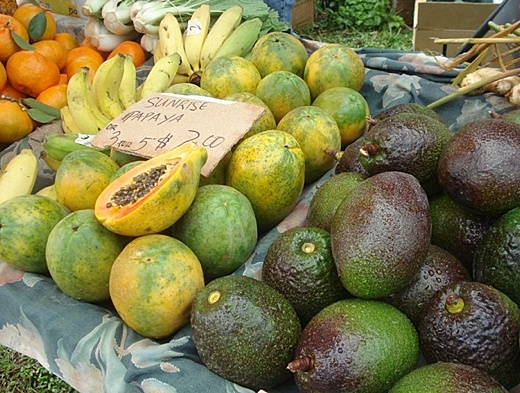
Image above: Organic fruit at Kauai farmer's market. From (http://theessenceofblogging.blogspot.com/2010/12/hawaiian-soul-journ-part-iii-after.html).

 
For years now, the most-asked question by detractors of the good food movement has been, “Can organic agriculture feed the world?” According to a new United Nations report, the answer is a big, fat yes.

The report, Agro-ecology and the Right to Food, released yesterday, reveals that small-scale sustainable farming would even double food production within five to 10 years in places where most hungry people on the planet live.

“We won’t solve hunger and stop climate change with industrial farming on large plantations,” Olivier De Schutter, UN Special Rapporteur on the right to food and author of the report, said in a press release. “The solution lies in supporting small-scale farmers’ knowledge and experimentation, and in raising incomes of smallholders so as to contribute to rural development.”

The report suggests moving away from the overuse of oil in farming, a problem that is magnified in the face of rising prices due to unrest in the Middle East. The focus is instead on agroecology, or eco-farming. “Agroecology seeks to improve the sustainability of agroecosystems by mimicking nature instead of industry,” reads a section.

The report shows that these practices raise productivity significantly, reduce rural poverty, increase genetic diversity, improve nutrition in local populations, serve to build a resilient food system in the face of climate change, utilize fewer and more locally available resources, empower farmers and create jobs.

Of 57 impoverished countries surveyed, for example, yields had increased by an average of nearly 80 percent when farmers used methods such as placing weed-eating ducks in rice patties in Bangladesh or planting desmodium, which repels insects, in Kenyan cornfields. These practices were also cost effective, locally available and resulted from farmers working to pass on this knowledge to each other in their communities.

While the report admits that agroecology can be more labor-intensive because of the complexity of knowledge required, it shows that this is usually a short-term issue. The report underscores that agroecology creates more jobs over the long term answering critics who argue that creating more jobs in agriculture is counter-productive. “Creation of employment in rural areas in developing countries, where underemployment is currently massive, and demographic growth remains high,” states the report, “may constitute an advantage rather than a liability and may slow down rural-urban migration.”

Mark Bittman put it aptly in his column on the UN report at the New York Times, saying:
Agro-ecology and related methods are going to require resources too, but they’re more in the form of labor, both intellectual–much research remains to be done–and physical: the world will need more farmers, and quite possibly less mechanization.

This is not the first time such a report has declared more productive ways to feed the world other than leaving that important task to large corporations. In April 2008, the IAASTD report (the International Assessment of Agricultural Knowledge, Science and Technology for Development)-which was supported by the World Bank, the UN Food & Agriculture Organization and the World Health Organization, among others, with the participation of over 60 world governments and 400 experts-found that not only would industrial food production not be able to feed the world in the long term, but the practices being employed are actually increasing hunger, exhausting resources and exacerbating climate change. However, the U.S., under the Bush Administration, was one of the countries that decided not to endorse the findings.

Though agroecological farming has benefits for industrialized countries too, both reports focus largely on what to do in the least-developed nations on the globe. The status quo for U.S. foreign policy in agriculture up until now has been to leverage our political muscle to force countries to except our subsidized crops, even if it meant destroying local agricultural economies. (Former President Bill Clinton apologized for this policy last year, saying that it has “failed everywhere it’s been tried,” and “we should have continued to work to make sure [Haiti] was self-sufficient in agriculture.”) Will the Obama Administration be more receptive to these findings and could there be a change in the way we work with other countries in our support for agriculture?

Looking back at this (proudly pro-business) administration’s follies in hiring a pesticide lobbyist as our Agricultural Trade Representative, maintaining the USDA in the confusing role of promoting and regulating agriculture, and focusing on “improved seeds,” which usually means funding for the development of genetically modified crops for poor countries and you might be discouraged.

But De Schutter argues that real change to improve the livelihoods of rural farmers requires governments to be on board. “States and donors have a key role to play here,” he said. “Private companies will not invest time and money in practices that cannot be rewarded by patents and which don’t open markets for chemical products or improved seeds.” In other words, feeding the worlds hungry should not be left to the market alone.

The report makes these specific recommendations for governing bodies:
  • making reference to agroecology and sustainable agriculture in national strategies for the realization of the right to food and by including measures adopted in the agricultural sector in national adaptation plans of action (NAPAs) and in the list of nationally appropriate mitigation actions (NAMAs) adopted by countries in their efforts to mitigate climate change;
  • reorienting public spending in agriculture by prioritizing the provision of public goods, such as extension services, rural infrastructures and agricultural research, and by building on the complementary strengths of seeds-and-breeds and agroecological methods, allocating resources to both, and exploring the synergies, such as linking fertilizer subsidies directly to agroecological investments on the farm (“subsidy to sustainability”);
  • supporting decentralized participatory research and the dissemination of knowledge about the best sustainable agricultural practices by relying on existing farmers’ organizations and networks, and including schemes designed specifically for women;
  • improving the ability of producers practicing sustainable agriculture to access markets, using instruments such as public procurement, credit, farmers’ markets, and creating a supportive trade and macroeconomic framework.
The report also gives recommendations for donors seeking to decrease hunger and improve rural livelihoods and for research organizations.

You can read the full report here [PDF]

See also: Ea O Ka Aina: Small organic farms are sustainable 3/9/11 

.

Interview with Ellen LaConte

SUBHEAD: Eco-economies are local and regional, place-based, functionally self-reliant, interdependent, mutually supportive, regenerative, restorative and resilient.  

By Robert Jensen on 8 March 2011 in Energy Bulletin -  
(http://www.energybulletin.net/stories/2011-03-08/listening-life-it%E2%80%99s-too-late-interview-ellen-laconte)

   
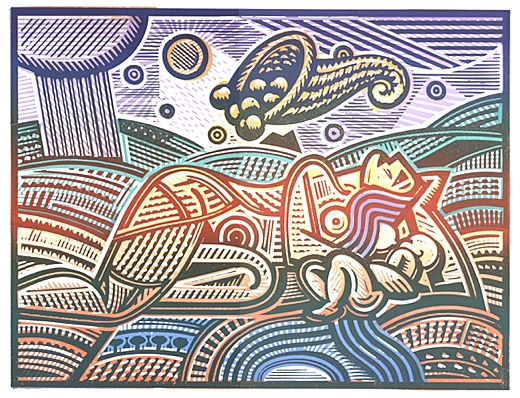
Image above: "Mother Earth" by Stephen Alcorn (2005). From (http://www.alcorngallery.com/Folklore/Folklore_display.php?i=4).
 
People of conscience face two crucial challenges today: (1) Telling the truth about the dire state of the ecosphere that makes our lives possible, no matter how grim that reality, and (2) remaining committed to collective action to create a more just and sustainable world, no matter how daunting that task. It’s not an easy balancing act, as we struggle to understand the scope of the crisis without giving into a sense of hopelessness.

Ellen LaConte’s new book, Life Rules (http://www.ellenlaconte.com/life-rules-the-book), is a welcome addition to the growing literature on these crises. The subtitle -- Why so much is going wrong everywhere at once and how Life teaches us to fix it -- captures the spirit of the book. LaConte offers an unflinching assessment of the problems and an honest path to sensible action. In an interview, I asked her to elaborate on her background and path to the insights of the book.

Robert Jensen: For me, your book came out of nowhere. I had never read an article by you or heard your name. So, as I read Life Rules and was so impressed with the breadth and depth of your analysis, I found myself wondering, “Who is she and where does she come from?”

Ellen LaConte: The short answer is that I’ve worked for almost 40 years as an old-school print writer and editor, mostly for small magazines, about organic gardening and farming, appropriate technologies, organizational communications, homesteading, history, education, alternative economics, evolution, democracy theory and practice, complex systems. I’m a generalist and seem instinctively to synthesize and simplify big ideas like those in Life Rules.

I like living a small-scale, small-pond, hands-on, quiet life. I had a paternal grandmother who lived on the remains of what had been a family farm in Pennsylvania Dutch country outside Lancaster and maternal grandparents who had a half-acre or so in north Baltimore that was dominated by my grandfather’s vegetable and fruit gardens.

I adored hanging out with him while he made compost, taught me about worms and ants and the living soil, talked to me non-stop about what he was doing and why. He was one of J.I. Rodale’s first fanatics (http://www.rodaleinstitute.org/history). I also grew up surrounded with books and magazines, was bookish pretty much from the start. I learned to love hand tools -- my grandfather had a workshop full of them -- and what was called “handiwork.”

My childhood was a perfect set up for the homesteading/owner-built/simplicity/self-reliance movement that in the 1970s -- when I was in my 20s -- seemed to me the most appropriate response to present and promised oil shortages, and a saner and more spiritually sound and grounded response to future shock than the globalized hi-tech, expansive, consumptive, grab-and-get one that also was popular in the ‘70s. It also suited my somewhat reclusive, contemplative nature.

Though my childhood was churched, Protestant, I didn’t really enter onto any kind of serious spiritual study or path until I was in my late 30s. I suppose I’d call myself a Tao, Zen and Sufi influenced Christian with decided mystical leanings. I somehow missed the 1960s, both the protest and the flower-power/drugs/sex/rock-and-roll parts. I don’t like crowds, noise, confrontation or argument. I lack both irony and edge, or maybe what’s called “edginess.” It’s my nature to want to fix things, smooth them over when possible, broker agreement or simply yield.

RJ: You say you don’t like confrontation or argument, but your book is a radical analysis, and you obviously realize that many -- maybe most -- people will argue with its thesis.

EL: I prefer writing about my convictions and worldview rather than explaining or arguing about them in real time. I don’t have a podium-proselytizing personality. Argument, even the constructive kind, is often reactive and impulsive. I’m emotionally impulsive enough by nature that I’ve learned -- or tried to learn -- that one ought to rein in one’s impulses and emotions about things as important as convictions.

The cartoon character Linus from “Peanuts” said, “I love mankind, it’s people I can’t stand.” I’m the flip side: I love people, it’s humanity I have a hard time with. I’ve always preferred and been fortunate to be able to work alone or with or for just one or two people. This, and my general disinterest in and ignorance about politics, seem contradictory for someone writing about community and democracy and promoting a deep Green movement. But it’s why I’ve been able to write about those things.

RJ: It does appear to be a contradiction. I assume you are suggesting that there are many different ways to contribute to making a better world. 

EL: I spoke recently to a college Philosophical Society about the book. I told them that it seemed to me that to love wisdom, to be philosophical in the truest sense, meant to be to some degree detached from day-to-day events, from immediate things. Not to be disinterested or unaffected, but less buffeted or influenced and consumed by them.

One of the reasons I could synthesize so much of what’s going wrong in the world now is that I’ve had time, as well as the calling and inclination, for it. I could stand back, meditate, read, engage in independent research, wait for understanding to come, question conventional assumptions, including my own, and look almost leisurely for the largest context in which we humans live our lives, which would be the context that should guide how we live our lives and deal with the Critical Mass of crises we presently face.

Given how caught up I get in other people’s lives, if I’d been busy organizing, protesting, working full tilt and full time, trying to respond to the needs and input of multiple colleagues, I’d have had less mental space and stamina to do that. I’d never arrived at the simple but elemental understanding that Life rules, we don’t.

RJ: Please explain that title. Do you mean that Life -- something bigger than us -- rules? Or that we need to follow Life’s rules? 

EL: Yes, both. The largest context -- the largest high-functioning complex system within which we live our lives -- is not the nation, nation-state system or global economic system but Life itself, the whole-earth, emergent and self-maintaining system of natural communities and ecosystems. That system, the ecosphere, teaches us the physical laws, the relationships and behaviors discovered in physics, biology and ecology and exemplified by the so-called “mystical” spiritual teachers, that we have to obey if we want to remain viable as a species.

We aren’t the ultimate authority, and none of the systems we’ve created possess ultimate authority. It’s Life that has created the physical conditions that make it possible for us to exist. We depend on Life for our lives. More specifically, we depend on Life as we know it for our lives, for the climate, resources, natural communities, and ecosystems that provide us with what we need to live.

Life has encoded in every other-than-human species a sort of protocol or blueprint of economic rules for survival, a set of behaviors and relationships that allow Life as we know it to live within earth’s means, to be long-term sustainable. In the physical/material realm on this planet, Life calls the shots. Life rules, we don’t. Other species have no choice but to obey those economic rules. We alone have a choice.

And lately, as a species living under the influence of a global economy that has, in the vernacular, gone viral, we’ve chosen pridefully and foolishly to break all the rules. The way we live in the present Global Economic Order -- capital G, capital E, capital O -- isn’t sustainable. It’s pathological. It works at cross purposes to everything small g, e and o -- “geo,” everything earthy. In particular, the GEO works at cross purposes to Life.

RJ: That sounds simple, almost simplistic, pointing out that humans live within an ecosphere that is governed physical laws and not limitless. But all around us in the First World is evidence of a society out of balance, apparently seized with the belief that we can defy ecological limits indefinitely.

EL: If you condense the 100,000 years or so that Homo sapiens sapiens, humans like us, have been around into the 24 hours of one day, the Global Economic Order has been in existence for less than a minute. We can live without a GEO, but we can’t live without or apart from Life as we know it. So we have two choices: We can forego our present economic model and choose to learn and obey Life’s economic rules.

Or we can choose not to. In which case Life will rule us out, adapt to our trespasses like an apple tree adapting to a lightening strike, and get on with its experiment in creating and sustaining more life just fine without us. Life rules, we don’t.

RJ: You suggest that because of the way the GEO works, we are close to a Critical Mass. What do you mean by that term?

EL: There’s actually a pretty good explanation for the now almost total disconnect between our perception of reality and our actual reality, between our sense as a species of being larger than Life and the inarguable fact that we are dependent on it for our very existence. Actually there are a couple of explanations.

One is money. Since we use money -- or its funny-money kin, such as credit and its ever-funnier-money kin like default swaps -- to acquire the things we need and want, we don’t provide those things for ourselves, we’ve lost track of where the things we need and want actually come from. We have little or no knowledge of the sources of our provisions or the damage done to living systems by the way we acquire them and the amounts of them we acquire.

We’ve put our faith in the economy’s ability to deliver what we need to us, so long as we have enough money. Money has come between us and substantial things -- the real goods, resources and ecosystem services that we actually need to live. Money has kept us from seeing the truth of our circumstances, which is that soon there will be insufficient fossil fuels, plastics, clean fresh water, forests, living soil, grains, seafood, congenial and predictable climate, functioning governments. You name it, we’ll run short of it ad infinitum.

Another explanation for our ignorance of the reality of our present circumstances is that most people have never heard of or taken seriously the limiting factor on a finite planet called “carrying capacity” -- the number of a species or a collection of species that an ecosystem can support long-term without suffering damage in excess of what the ecosystem itself can repair. In accounting, exceeding carrying capacity is called going bankrupt. That’s where we’re headed environmentally as well as financially right now. But most of us don’t realize that’s where we are yet because in those previous 23 hours and 59 minutes of human history we’ve either had more places -- more “New Worlds” to move to, conquer and plunder -- or new technologies that would do a better job of plundering the places we were in to provide for us.

We have just recently -- in, say, the last 30 seconds of that last most recent minute of human history -- hit that point in our global economic assault on living things and living systems both human and natural, that there’s no going back. We have just hit what I call Critical Mass, which is the name I’ve given what others are calling collapse, the tipping point, the long emergency, or bottleneck. It’s my name for our previously latent and slowly unfolding, now rapidly worsening planetary equivalent of HIV/AIDS.

RJ: That analogy to HIV/AIDS runs throughout the book, which may strike some as an odd comparison. Can you explain that?

EL: Critical Mass names a syndrome of converging, mutually-reinforcing environmental, economic, political and social crises that we think about and try to address as if they were separate and unrelated, but they are not. They are symptoms of one disease, a viral, a pathological global economy that is undermining the ability of human and natural communities -- Earth’s equivalent of an immune system -- to provide for, protect, defend and heal themselves the same way HIV undermines the ability of our immune systems to protect and heal us.

There are two pages in the book that compare HIV and the GEO, characteristic for characteristic, and the similarities are startling and frightening. I think we are presently at the HIV stage of the disease; it hasn’t quite yet become full-blown planetary AIDS. But I insist in the book that doing more of what we’ve been doing to exceed Earth’s physical means as well as our own fiscal ones -- in other words, trying to heal and grow the very kind and scope of economy that caused this disease -- is akin to injecting a patient who already has HIV with more HIV. That’s precisely what we’re doing.


RJ: From the diagnosis, I want to go back to the treatment plan, and your assessment of where the solutions to Critical Mass might be worked out. 

EL: Since all economies depend on earth and Life as we know it consistently and continuously delivering the goods -- resources, ecosystem services like living soils, pollination, marine fisheries, oxygen, carbon sequestration, air filtration, sufficient clean fresh water, a habitable, predictable climate -- then it seems to me the treatment plan has to be one that doesn’t exceed earth’s means of supporting us, doesn’t run against Life’s grain, and doesn’t compromise the health of the living systems. And the only examples of how to do that come from Life itself.

I argue in the book -- with support from geneticists, microbiologists, evolutionary theorists, and paleobiologists -- that the oldest and first living things, single-celled entities like bacteria, spent the first 2 billion years learning how to provide for themselves in ways that would be sustainable over the long term. When they did learn it -- after nearly putting themselves and the Life experiment on Earth out of business -- Life locked in, genetically encoded, what they’d learned.

Simply put, after going global and inducing the equivalent of our present Critical Mass three times, bacteria adopted a sort of Ten Commandments of Sustainability that can be synthesized for our purposes as five new behaviors. They went 5D: they downsized, diversified, decarbonized, dematerialized and, most importantly, they organized themselves in ways that are profoundly democratic.

Over the past 2 billion years, other-than-human living things have mastered the arts of solar energetics, recycling, sharing and interdependence, self-regulation, self-limitation, restrained competition, cooperation and collaboration, grassroots organization, self-governance, ecosystem management and -- this is profoundly important for us -- community building. Life is a cross-species, communitarian phenomenon. Their organically democratic eco-economies are local and regional, place-based, functionally self-reliant, interdependent, mutually supportive, regenerative, restorative and resilient.

The salient point is that Life and only Life can teach us how to live eco-logically, within Earth’s means. If we learn what Life teaches us and create lifeways that mimic Life’s ways, we can survive this round of Critical Mass we’ve induced and manage to avoid inducing it again. Janine Benyus wrote a book called Biomimicry that reported on and inspired a movement to copy, for example, the ways other species and living systems produce what they need sustainably. You could call what I’m suggesting in Life Rules radical or full-bore biomimicry.

RJ: Given how detached most of the contemporary world is from understanding, let alone mimicking, the natural world, is this realistic?

Adopting Life’s rules will require, of course, a huge transformation of the ways we think about our place in the community of living things and the ways we live. My book offers three chapters of examples of what we can do and some communities are already doing, if in a very preliminary way. We’ll need to revise what education is for, what needs to get taught and where, when and how learning needs to occur. I would suggest again that Life is the primary teacher, its economic, production, consumption, relational and organizational rules the curriculum.

The particular ecosystems -- the geographic places -- we live in and are presently destroying are the classrooms. And as Post-Carbon Institute Senior Fellow Richard Heinberg proposed in Powerdown, the most important and hardest lesson we will need to learn as a species is self-limitation. Where material consumption is concerned, “less is best” will absolutely have to replace “wars for more” as our collective ethical prime directive.

The good news is, if we take our cues from Life, if we decide to transform our ways of living and providing for ourselves, we don’t need governments as we know them or any sort of global agreement or institutions to begin and to succeed. Sustainability is by nature a grassroots undertaking. Both the learning and the mimicking can, and must, be engaged in particular places with the natural and human communities that live in those places. Life’s a collection of local phenomena, a community of communities, as John Cobb and Herman Daly propose in their books, for example, For the Common Good. If we need a goad to transformation, there’s this one: If we don’t choose to transform ourselves and our lifeways, Life will force us to. Life rules, we don’t, and Life will not hesitate to rule harshly and even rule us out.

RJ: Does that mean we have ugly times ahead of us?

EL: While there’s no reason to believe we will engage in this transformation willingly or that there will not be violence on the way to Life-likeness, a lot of communities around the country and in other countries have already begun to explore and experiment with aspects of Life’s Protocol for Economic Survival, though they don’t have my name for it yet.

The relocalization, Transition Town, post-carbon, 350.org, local currency, slow food, ecozoic and new economics movements, for example, all teach and apply one or more of Life’s lessons. Paul Hawken’s team at the WiserEarth website is creating a data base of information about organizations involved in movements like these. They’ve accounted for around 125,000 and think there may be twice that many. Hawken suggests we think of these organizations and their members as anti-bodies helping healing the planet’s immune system of this AIDS-like, economically induced disease I call Critical Mass. These organizations and movements represent a starting point.

But a viable treatment plan for this virulent, life-threatening, economically-induced syndrome of crises cannot engage in just one or two or even three of the 5Ds, and cannot engage in them scattershot or only to a degree that doesn’t upset business as usual. Eco-logic requires that we incorporate, integrate, and practice all of Life’s rules, that we stop behaving as if we were larger than or apart from Life and become constructive participants in it.

RJ: It seems clear that the kind of change you describe as necessary is not possible within capitalism and that capitalism is a serious impediment to such change. Earlier you said we have to “forego our present economic model,” but not all the movements and experiments you mention are anti-capitalist. How do you negotiate that?

EL: I kept religion, politics, parties, personalities and “ism” analysis pretty much out of the book in order not to allow any of those divisive topics to set up straw figures and distract readers from the central point: By present economic methods and models, we are living beyond earth’s means. I suggest in the book that unregulated, growth-dependent capitalism only appears to succeed because it has been enabled by the mechanisms of globalism to have the whole earth at its disposal and by the machinations of the Powers to make grab-and-get/pillage-and-plunder its operating principles.

Once it has been globalized, the one thing a capitalist economy can’t be is not-global. And as a globalized phenomenon, it cannot help but exceed earth’s means of supporting it. It is the globalization of the capitalist -- and, I would add, colonialist -- industrial economy that is doing-in Life as we know it. And as I also suggest in the book, the system is too big not to fail since the resource base -- or, to retrieve my HIV/AIDS analogy, the host planet -- it depends on is finite. When AIDS sufficiently ravages a human patient’s body, the virus dies along with the patient. Consequently, along with ecosystems, species, human and natural communities, human lives, quality of life, and Life as we know it -- the global capitalist economy itself is in its terminal stages.

Taking on capitalism head on would have gotten up the backs of too many potential readers. And while they might waste time arguing the merits of capitalism or arguing the possibility of no-growth capitalism, they cannot successfully argue the merits of a globalized economic system of any kind. Globalized bartering or socialism or communism would equally challenge the earth’s human and natural communities and the biosphere’s functioning. Kirkpatrick Sale and E.F. Schumacher had it right: Scale matters and where sustainability is an issue, which in the matter of human survival it is, small is not only beautiful but self-limiting, survivable, and sustainable.

So, no, not all the movements and examples I mention in the book are anti-capitalist. The measure of an experiment’s success is not that it is anti-capitalist but that it works in harmony with living systems, and in the ways that living systems work. An experiment need not be in and of itself the cure for Critical Mass but is exemplary of one or more elements of Life’s Economic Protocol for Survival, which as I’ve said, would lead us to integrate and obey all of Life’s rules.

Doing that would automatically move us away from capitalism as we know it and probably from any conceivable model of capital as an economic end-all and be-all. Provisions themselves are what we need to live, not the funny-money with which we presently purchase them if we are lucky enough to have any.
 
RJ: Perhaps that is the bottom line: What we need to live. Perhaps that’s an appropriate last question. What do you, Ellen LaConte, need to live?

EL: Much less than I presently have and very much less than is currently available to me if I were willing to use credit to acquire it. Like everyone else, I need food, clean air and water, clothing, some sort of shelter, preferably warm in winter, occasional medicine or medical care, spiritual and physical exercise, colleagues, friends, family, if possible books, lots of quiet, a garden to work in, woods and wild not too far off. To love and be loved. To carry no debt. To believe there is some sort of livable, desirable future for the next seven generations. I’ve been fortunate never to lack for these.

To be happy, I need good work to do, work that I feel is, in my late mentor Helen Nearing’s terms, “contributory.” (See a review of LaConte’s book about Nearing, On Light Alone, http://www.yesmagazine.org/issues/sustaining-watersheds-of-the-pacific-n...)
I have, in addition, most of what most middle and upper-middle class Americans have.

My partner and I have a house that in absolute terms is bigger and less efficient than I’d like, a car, the usual appliances (though we are not appliance or gadget sophisticates), a computer, a television, arts and entertainment if I choose to access them, electricity, running water, public services (for the time being), air-conditioning, various kinds of insurance, every kind of retail outlet you can think of within five miles or so, most of which I never patronize. I do not need these things, but I have them. Or, more accurately, they and the economic system of which they are the accoutrements have me.

Thus, I need periodically to contemplate what I have that I don’t need, what harm having it causes and whether I’m willing to discomfort myself and my partner enough to un-have it, or at least some of it.

.

The happiest guy in America

SUBHEAD: Meet Alvin Wong, a oriental, senior, self-employed, jewish, Hawaiian.  

By Kim Corollo on 8 March 2011 for ABC News -  
(http://abcnews.go.com/Health/happiest-person-america-hawaiian-alvin-wong-fits-gallup/story?id=13087258)

 
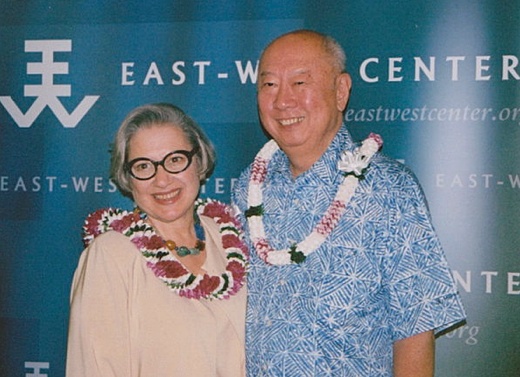
Image above: Alvin Wong and his wife Trudy Schandler-Wong at East-West Center in Honolulu. From (http://www.nytimes.com/imagepages/2011/03/06/HAPPY.html).


Alvin Wong always considered himself a happy guy.

"I get up in the morning and say, 'I'm very fortunate. I'm living in Hawaii, doing what I want to do,'" Wong said.

But when Wong, 69, learned he is the exact statistical composite of the happiest person in America, he wasn't sure what to think.

"When The New York Times called and read off all the information about who this person is, I asked if it was a practical joke."

According to the Gallup-Healthways Well-Being Index, the happiest person in America is a tall, Asian-American male 65 or older, a resident of Hawaii who's married with children, religious (observant Jews score highest), owns a business and earns more than $120,000 a year -- in other words, it's Alvin Wong to a tee.

"A person fitting the happiest profile is likely to have high optimism, good emotional health with little anger, depression, and stress, and no underlying chronic illnesses. This person is likely to eating right and exercise regularly, while working in a supportive environment with good access to affordable fresh fruits and vegetables, a safe place to exercise, and good access to health care. The person is also likely to be older and better established with enough money to live comfortably," said John Harris, vice president of Innovations at Healthways.

Wong, who owns a health care management firm, and said owning his own business has different stresses, such as not knowing whether clients will stick with him, but overall, it's very satisfying.

"I enjoy doing stuff for myself and seeing the fruits of my labor," he said.

Back in 2008, Gallup, a firm known for its research polls; and Healthways, a company focusing on research aimed at improving overall health and lowering associated costs, started calling thousands of Americans a night. They asked questions about six different dimensions of well-being: a basic evaluation of life, emotional and physical health, work environment, engaging in a healthy lifestyle and whether access to basic health services is available.

They then developed a well-being index for each state and each congressional district.

Data from the 2010 index show that Hawaii had the highest well-being score and West Virginia had the lowest.

After ABC News requested a statistical profile of the saddest person in America, Healthways found just about the polar opposite of Alvin Wong in every way: a woman between the ages of 45 and 64 who lives in the Huntington, West Virginia area, has an annual household income of less than $1,000 a month and is likely unemployed and looking for work. She is of "other" ethnicity, meaning a Pacific Islander, a native Hawaiian, a Native American or a person of mixed race. She is also separated with no children.

"West Virginia ranks at the bottom in almost every domain," said Nikki Duggan, Director of Well-Being Operations and Analytics at Healthways.

"Our goal was to measure health in a way that's very different than what's historically done," said Healthways Chief Executive Officer Ben Leedle. "Along with Gallup, we saw a more holistic definition, including not just the physical dimension of health, but the emotional and social dimension of health."

Among the most notable trends the data show is that satisfaction at work decreased between 2008 and 2010.

"We're very concerned about that domain," said Harris. "With the economy and other factors, people are becoming less happy at work, and that can have a very big effect on communities and the global market."

In addition to the economy, Healthways hopes the data bring help bring about major changes in policy in other areas, like education and health.

"These are causal data. These are the things that cause disease," said Leedle. "We believe that healthier people cost less and perform better."

The vast majority of Americans fall somewhere between the two emotional extremes. For people who want to move a bit closer to the happy side, Wong has some simple advice.

"There are always tough times. You get through it by realizing it's happened, laughing at the situation and finding a way to fix it. I've lived my whole life with humor in it."

[IB Editor's note: This may only be true if Honolulu continues to be assisted by a "Marshal Plan" of support from mainland America. Once the banks are closed, shelves are empty, and pumps are dry, Alvin may not be so happy.]
.

Small scale farms are sustainable

SUBHEAD: UN study finds organic outperform conventional farms where the hungry live, especially in unfavorable environments. By Matthew McDermot on 8 March 2011 for Treehugger - (http://www.treehugger.com/files/2011/03/small-scale-sustainable-agriculture-double-developing-nations-food-10-years.php) Image above: Harvesting organic vegetables on small Indian farm. From (https://picasaweb.google.com/lh/photo/dQf7hhNLQmVAxsETO224ag).

Both the United Nations and TreeHugger have been saying something like this for some time, so I won't go into every detail of the report, but here's the gist of what UN Special Rapporteur Olivier De Schutter just told the UN Rights Council about the impact that small-scale sustainable agriculture can have on food production and alleviating poverty in many developing nations (emphasis is mine):

To feed 9 billion people in 2050, we urgently need to adopt the most efficient farming techniques available. Today's scientific evidence demonstrates that agroecological methods outperform the use of chemical fertilizers in boosting food production where the hungry live -- especially in unfavorable environments.

De Schutter went added,

To date, agroecological projects have shown an average crop yield increase of 80% in 57 developing countries, with an average increase of 116% for all African projects. Recent projects conducted in 20 African countries demonstrated a doubling of crop yields over a period of 3-10 years.

Conventional farming relies on expensive inputs, fuels climate change and is not resilient to climatic shocks. It simply is not the best choice anymore today.

Here's more: Olivier De Schutter, and his report Report submitted by Special Rapporteur on the right to food, Olivier De Schutter

Take that Bill Gates...

More on Sustainable Agriculture: The World Needs a Farming Revolution! Declares UN Report Stopping Deforestation, Greening Agriculture Better Than Carbon Capture & Storage: UNEP .

Wa`a Moloka`i

SUBHEAD: The Permaculture Research Institute will conduct courses on Molokai to achieve food security through restoration of ahupuaa systems.

 By Nichole Ross on 9 March 2011 in Permaculture RI - 
  (http://permaculture.org.au/2011/03/09/waa-molokai-island-sized-food-security-through-a-21st-century-living-canoe)

 
Image above: Partial ahupuaa map of Molokai by Juan Wilson for WesPac. From (http://www.islandbreath.org/mokupuni/mokupuni.html).
 
Food security and canoes go hand-in-hand in Hawaii. When the Hawaiian Islands were first settled around 750 A.D., and for many generations after that, Polynesian voyagers stocked their massive double-hauled canoes with specific crops necessary for colonization. While a wide variety of plants and trees were already growing when early settlers arrived, the food plants that we have come to know as “traditional” were not.

Vine cuttings, root stock, crowns, sprouts, slips, shoots and seeds all had to be carefully prepared, packed and loaded into canoes for long journeys across the unforgiving Pacific Ocean if settlers were to be able to survive on the new land.


For this reason, these basic staples are known today as “canoe plants”. They include such plants as taro, sweet potato, yam, banana, sugar cane, breadfruit and coconut. Upon arrival, using only primitive tools, Hawaiian gardeners planted these staples among the islands, using a highly advanced type of horticulture that included irrigation from streams, terracing, mulching and use of green manure. As a result, over time, the `aina (land) became momona (abundant) with all the food (and medicinal plants) the people needed for survival. This was particularly true for the Island of Molokai, which was so plentiful with food it became known as the “breadbasket” of Hawaii, providing a surplus that was shared with the other islands.

Unfortunately, after years of abuse of the land and removal of existing vegetation, much of Molokai’s momona has been lost. Left behind are barren slopes that slowly erode and blanket another source of food, the reefs below. On any given day, when driving along the south shore reef, this can be seen as a 10-mile expanse of milk chocolate waters.

On the upside, the majority of people living on the island still get much of their protein sources through subsistence – fishing and hunting deer, wild boar and goats. However, like the other Hawaiian Islands, Molokai is still relying significantly on imports from the U.S. mainland and elsewhere, brought in twice a week on barges. If the barges stop coming one day, there is only an estimated seven days’ worth of food on grocery store shelves for all of Hawaii. This fact alone makes the need for food security a top priority.

Fortunately, Hawaiians are a tough, resourceful and amazingly determined people — particularly those who live on Molokai. There, a group of key community leaders have banded together with the intention to heal the land and work toward food security. Because of Molokai’s small size and rural isolation, the island has remained relatively pristine from exposure to many of the plant diseases and pests that plague the other islands. This makes Molokai an ideal place to begin re-stocking the land as a central food source.

With the aid of permaculture training, melded together with traditional Hawaiian gardening, the people of Molokai are determined to reclaim the title of `aina momoma by becoming a living arc or canoe, that will preserve its indigenous culture and serve as a polycultured plant source for all of Hawaii and the Pacific. Molokai will grow all varieties of canoe plants together with other tropical foods, such as papaya, mango, avocado, guava, citrus, etc.… It will be this mix of traditional and non-traditional plants and trees that will make it most appropriate and resilient for modern and future food security.

In the Fall of 2010, the Permaculture Research Institute USA sponsored 20 local students for 5 weeks of training in four key Permaculture courses (PDC, Practicum, Teacher Training and Earthworks). Local organizations Sustainable Molokai and the Alu Like Ho`ala Hou Program hosted the courses. The goal of the extensive training was to prepare the group to begin replanting the island. Recently, we have been invited back to help them set up nursery stocks that will be used in these island-wide replanting efforts. As a result, we are offering a 4-day training, starting April 11, on “Plant Propagation and Seed Saving” (http://permaculture.org.au/coursedetail.php?page_id=195&scheduleid=281&classname=Plant%20Propagation%20and%20Seed%20Saving%20Course,%20Hawaii)

This course will cover key plant propagation techniques, including from seed, layering, grafting, cuttings; seed collection, saving and starting; nursery management; and making soil mixes. During our island-wide gathering efforts, we will also be documenting details of our sources to begin creation of an up-coming local plant database. After the course, students will lead community collection and propagation efforts around the island. As they begin to create sufficient nursery stock, re-vegetative work will begin, including restoration of model ahupua`a systems (known as ohana systems in permaculture).

If you are interested in taking this course and helping in this historical effort, please visit PRI USA course listings for more information. PRI USA is also offering a two-day Swale Practicum (http://permaculture.org.au/coursedetail.php?page_id=195&scheduleid=282&classname=Swale%20Practicum,%20Hawaii) following the Plant Propagation Course.

The Empire Strikes Out

SUBHEAD: Sooner than you might think the tweets and the video feeds will cease and the screen will go dark. By Dmitry Orlov 8 March 2011 in ClubOrlov - (http://cluborlov.blogspot.com/2011/03/empire-strikes-out.html) Image above: Internet down again in Libya. From (http://compushot.blogspot.com/2011/03/libyas-internet-down-again.html).
Tunisia, Egypt, Libya... now, children, one of these things is not like the others. That's right, Libya wasn't, and to a considerable extent still isn't, run by a dictator who happens to be a Western stooge. Say what you want about him, Muammar Gaddafi is a phenomenon. Compared to his inimitable, flamboyant persona, Tunisia's unimpressive Zia El Abidine ben Ali and Egypt's viciously thick Hosni Mubarak are ciphers. Yes they are all dictators, but look at the region and ask yourself: Who isn't? Even the Roman Senate used to elect a dictator in times trouble; when isn't it a time of trouble in this region?
Gaddafi eschews the notions of the nation state, of Arab nationalism, and of electoral democracy. He forbids political parties. He is tribal; he espouses Islamic socialism, and his idea of democracy is one where tribal elders bring requests and grievances to him, and he gets to dispense largesse and pass judgment. He fancies himself a sort of king: a “king of kings.” He likes all kinds of African tribes, not just Arab ones; he is all about African unity in the face of Western oppression. He probably wouldn't mind ruling them all. He is, unarguably, green.
While Western leaders were surprised by the Tunisian revolt, and weren't at all sure about the Egyptian one (only eventually settling on the idea that Mubarak must go), they absolutely knew from the outset that leaving Gaddafi in power would take the political and economic disaster that this revolutionary trend already portends and raise it to the Nth power. Gaddafi had to go, and so vague noises were made about automatic support for any sort of disrespect the tribes that are not completely aligned with him could muster. They seem to have miscalculated rather badly, and now we are witnessing a series of embarrassing vignettes such as the instantaneous leaking of Obama's “super-secret” request to the Saudis to help Libyan rebels, or the recent British diplomatic “mission” which invaded with weapons and explosives and was apprehended by the rebels, who are no doubt starting to feel that this particular revolutionary exercise is not going too well for them. It was a mistake to treat Libya as a country, where protesters have rights. Libya is special. You have to go very far back in history to find something similar. Perhaps Carthage, which came quite close to sacking Rome and redirecting the flow of world history, is something of a North African analogy.
Gaddafi's niche in the pantheon of national leaders who dared oppose the US—where he stands alongside Fidel Castro, Hugo Chavez, Kim Jong Il and Mahmud Ahmadinejad—is enough to warrant his removal and conversion of Libya into a NATO-bombed defunct narco-state like Kosovo or Afghanistan, but on top of that his brand of political philosophy, which he termed jamāhīriyyah (translated as “state of the masses”) might actually stand a chance in many collapsing nation states beyond Libya. The revolutions now spreading around the world are essentially bread riots: the disastrous harvests due to heat waves and floods around the world, caused by the accelerating onset of global warming, have caused food prices to spike. It is rather unusual for democracy (of the legalistic Western kind) to succeed where stomachs are empty. One normally expects a beer putsch or two, a Kristallnacht and perhaps a Reichstag on fire. Gaddafi's socialist islamic tribalism may succeed as more and more nation states turn into failed states, as national borders dissolve, and inter-ethnic conflicts and makeshift allegiances erase all the nice straight lines so carefully drawn on maps by colonizing Westerners. For all these reasons, Gaddafi must be deposed. The question is, can the West still rise to the occasion, or is it too internally conflicted, senile and broke? A little bit of time will tell.
I don't think we are talking about an extended period of time. Just this slight Libyan kerfuffle has pushed oil prices over the threshold which the International Energy Agency has recently defined as the threshold beyond which Western economies crumble, which is when oil expenditure consumes over 5% of GDP. [The original idea, by the way, belongs to François Cellier, who used it to explain the financial crisis of 2008. The wheels of international agencies grind slowly.] This crumbling process will redirect all remaining energies (physical as well as mental) inward, to prevent or contain internal revolt, with precious little to spare for Libya or any other foreign adventure. For a little while yet we will get to watch the world burn on a variety of fashionably small electronic devices. But sooner than you might think the tweets and the video feeds will cease and the screen will go dark, as it already has in Libya. After that you'd have to go there yourself to find out what's happening. Yes, unimaginable horrors are afoot, and you can't do a damned thing about them. You might do better for yourself and your family by taking advice from Voltaire's Candide, and just cultivate your own garden. I am not a religious man, but I do sometimes like quoting the gospel (or in this case, two gospels—Matthew 8:22 and Luke 9:60):
“...let the dead bury their own dead.”
.

We’re taking the planet with us

SUBHEAD: Elites turn citizens into serfs and the natural world into a wasteland for profit.

By Chris Hedges on 7 March 2011 in Truthdig - 
  (http://www.truthdig.com/report/item/this_time_were_taking_the_whole_planet_with_us_20110307)

 
Image above: "The Ruins of Kom Ombo" by David Roberts (1838). From (http://www.travellersinegypt.org/archives/2005/02/david_roberts.html).

I have walked through the barren remains of Babylon in Iraq and the ancient Roman city of Antioch, the capital of Roman Syria, which now lies buried in silt deposits. I have visited the marble ruins of Leptis Magna, once one of the most important agricultural centers in the Roman Empire, now isolated in the desolate drifts of sand southeast of Tripoli.

 I have climbed at dawn up the ancient temples in Tikal, while flocks of brightly colored toucans leapt through the jungle foliage below. I have stood amid the remains of the ancient Egyptian city of Luxor along the Nile, looking at the statue of the great Egyptian pharaoh Ramesses II lying broken on the ground, with Percy Shelley’s poem “Ozymandias” running through my head:
“My name is Ozymandias, king of kings: Look on my works, ye Mighty, and despair!” Nothing beside remains. Round the decay Of that colossal wreck, boundless and bare The lone and level sands stretch far away.
Civilizations rise, decay and die. Time, as the ancient Greeks argued, for individuals and for states is cyclical. As societies become more complex they become inevitably more precarious. They become increasingly vulnerable. And as they begin to break down there is a strange retreat by a terrified and confused population from reality, an inability to acknowledge the self-evident fragility and impending collapse.

The elites at the end speak in phrases and jargon that do not correlate to reality. They retreat into isolated compounds, whether at the court at Versailles, the Forbidden City or modern palatial estates. The elites indulge in unchecked hedonism, the accumulation of vaster wealth and extravagant consumption. They are deaf to the suffering of the masses who are repressed with greater and greater ferocity. Resources are more ruthlessly depleted until they are exhausted. And then the hollowed-out edifice collapses.

The Roman and Sumerian empires fell this way. The Mayan elites, after clearing their forests and polluting their streams with silt and acids, retreated backward into primitivism. As food and water shortages expand across the globe, as mounting poverty and misery trigger street protests in the Middle East, Africa and Europe, the elites do what all elites do. They launch more wars, build grander monuments to themselves, plunge their nations deeper into debt, and as it all unravels they take it out on the backs of workers and the poor.

The collapse of the global economy, which wiped out a staggering $40 trillion in wealth, was caused when our elites, after destroying our manufacturing base, sold massive quantities of fraudulent mortgage-backed securities to pension funds, small investors, banks, universities, state and foreign governments and shareholders.

The elites, to cover the losses, then looted the public treasury to begin the speculation over again. They also, in the name of austerity, began dismantling basic social services, set out to break the last vestiges of unions, slashed jobs, froze wages, threw millions of people out of their homes, and stood by idly as we created a permanent underclass of unemployed and underemployed. The Mayan elite became, at the end, as the anthropologist Ronald Wright notes in “A Short History of Progress”:
“… extremists, or ultra-conservatives, squeezing the last drops of profit from nature and humanity.”
This is how all civilizations, including our own, ossify and die. The signs of imminent death may be undeniable. Common sense may cry out for a radical new response. But the race toward self-immolation only accelerates because of intellectual and moral paralysis. As Sigmund Freud grasped in “Beyond the Pleasure Principle” and “Civilization and Its Discontents,” human societies are as intoxicated and blinded by their own headlong rush toward death and destruction as they are by the search for erotic fulfillment.

The unrest in the Middle East, the implosion of national economies such as those of Ireland and Greece, the increasing anger of a beleaguered working class at home and abroad, the growing desperate human migrations and the refusal to halt our relentless destruction of the ecosystem on which life depends are the harbingers of our own collapse and the consequences of the idiocy of our elite and the folly of globalization. Protests that are not built around a complete reconfiguration of American society, including a rapid dismantling of empire and the corporate state, can only forestall the inevitable.

We will be saved only with the birth of a new and militant radicalism which seeks to dethrone our corrupt elite from power, not negotiate for better terms. The global economy is built on the erroneous belief that the marketplace—read human greed—should dictate human behavior and that economies can expand eternally. Globalism works under the assumption that the ecosystem can continue to be battered by massive carbon emissions without major consequences.

And the engine of global economic expansion is based on the assurance that there will always be plentiful and cheap oil. The inability to confront simple truths about human nature and the natural world leaves the elites unable to articulate new social, economic and political paradigms. They look only for ways to perpetuate a dying system.

Thomas Friedman and the array of other propagandists for globalization make as much sense as Charlie Sheen. Globalization is the modern articulation of the ancient ideology used by past elites to turn citizens into serfs and the natural world into a wasteland for profit.

Nothing to these elites is sacred. Human beings and the natural world are exploited until exhaustion or collapse. The elites make no pretense of defending the common good. It is, in short, the defeat of rational thought and the death of humanism. The march toward self-annihilation has already obliterated 90 percent of the large fish in the oceans and wiped out half of the mature tropical forests, the lungs of the planet. At this rate by 2030 only 10 percent of the Earth’s tropical forests will remain.

 Contaminated water kills 25,000 people every day around the globe, and each year some 20 million children are impaired by malnourishment. Carbon dioxide in the atmosphere is now above the 350 parts per million that most climate scientists warn is the maximum level for sustaining life as we know it.

[Editor’s note: The preceding sentence has been revised since this article was first published here.]

 The Intergovernmental Panel on Climate Change estimates that the measurement could reach 541 to 970 ppm by 2100. At that point huge parts of the planet, beset with overpopulation, droughts, soil erosion, freak storms, massive crop failures and rising sea levels, will be unfit for human existence. Jared Diamond in his essay “The Last Americans” notes that by the time Hernan Cortés reached the Yucatán, millions of Mayan subjects had vanished. Diamond writes"
“Why,” did the kings and nobles not recognize and solve these problems? A major reason was that their attention was evidently focused on the short-term concerns of enriching themselves, waging wars, erecting monuments, competing with one another, and extracting enough food from the peasants to support all these activities.
“Pumping that oil, cutting down those trees, and catching those fish may benefit the elite by bringing them money or prestige and yet be bad for society as a whole (including the children of the elite) in the long run,” Diamond went on.

“Maya kings were consumed by immediate concerns for their prestige (requiring more and bigger temples) and their success in the next war (requiring more followers), rather than for the happiness of commoners or of the next generation.

Those people with the greatest power to make decisions in our own society today regularly make money from activities that may be bad for society as a whole and for their own children; those decision-makers include Enron executives, many land developers, and advocates of tax cuts for the rich.” It was no different on Easter Island.

The inhabitants, when they first settled the 64-square-mile island during the fifth century, found abundant fresh water and woods filled with the Chilean wine palm, a tree that can reach the size of an oak. Seafood, including fish, seals, porpoises and turtles, and nesting seabirds were plentiful. Easter Island’s society, which split into an elaborate caste system of nobles, priests and commoners, had within five or six centuries swelled to some 10,000 people.

The natural resources were devoured and began to disappear. “Forest clearance for the growing of crops would have led to population increase, but also to soil erosion and decline of soil fertility,” Paul Bahn and John Flenley write in “Easter Island, Earth Island.”

“Progressively more land would have had to be cleared. Trees and shrubs would also be cut down for canoe building, firewood, house construction, and for the timbers and ropes needed in the movement and erection of statues. Palm fruits would be eaten, thus reducing regeneration of the palm. Rats, introduced for food, could have fed on the palm fruits, multiplied rapidly and completely prevented palm regeneration.

The over exploitation of prolific sea bird resources would have eliminated these for all but the offshore islets. Rats could have helped in this process by eating eggs. The abundant food provided by fishing, sea birds and rats would have encouraged rapid initial human population growth.

Unrestrained human population increase would later put pressure on availability of land, leading to disputes and eventually warfare. Non-availability of timber and rope would make it pointless to carve further statues.

A disillusionment with the efficacy of the statue religion in providing the wants of the people could lead to the abandonment of this cult. Inadequate canoes would restrict fishing to the inshore waters, leading to further decline in protein supplies. The result could have been general famine, warfare and the collapse of the whole economy, leading to a marked population decline.” Clans, in the later period of the Easter Island civilization, competed to honor their ancestors by constructing larger and larger hewn stone images, which demanded the last remnants of the timber, rope and manpower on the island. By the year 1400 the woods were gone.

The soil had eroded and washed into the sea. The islanders began to fight over old timbers and were reduced to eating their dogs and soon all the nesting birds. The desperate islanders developed a belief system that posited that the erected stone gods, the moai, would come to life and save them from disaster. This last retreat into magic characterizes all societies that fall into terminal decline. It is a frantic response to loss of control as well as despair and powerlessness.

This desperate retreat into magic led to the Cherokee ghost dance, the doomed Taki Onqoy revolt against the Spanish invaders in Peru, and the Aztec prophecies of the 1530s. Civilizations in the last moments embrace a total severance from reality, a reality that becomes too bleak to be absorbed. The modern belief by evangelical Christians in the rapture, which does not exist in biblical literature, is no less fantastic, one that at once allows for the denial of global warming and of evolution and the absurd idea that the righteous will all be saved—floating naked into heaven at the end of time.

The faith that science and technology, which are morally neutral and serve human ambitions, will make the world whole again is no less delusional. We offer up our magical thinking in secular as well as religious form. We think we have somehow escaped from the foibles of the past. We are certain that we are wiser and greater than those who went before us. We trust naively in the inevitability of our own salvation. And those who cater to this false hope, especially as things deteriorate, receive our adulation and praise.

We in the United States, only 5 percent of the world’s population, are outraged if anyone tries to tell us we don’t have a divine right to levels of consumption that squander 25 percent of the world’s energy. President Jimmy Carter, when he suggested that such consumption was probably not beneficial, became a figure of national ridicule. The worse it gets the more we demand illusionary Ronald Reagan happy talk.

Those willing to cater to fantasy and self-delusion are, because they make us politically passive, lavishly funded and promoted by corporate and oligarchic forces. And by the very end we are joyfully led over the cliff by simpletons and lunatics, many of whom appear to be lining up for the Republican presidential nomination. “Are the events of three hundred years ago on a small remote island of any significance to the world at large?” Bahn and Flenley ask.
“We believe they are. We consider that Easter Island was a microcosm which provides a model for the whole planet. Like the Earth, Easter Island was an isolated system. The people there believed that they were the only survivors on Earth, all other land having sunk beneath the sea. They carried out for us the experiment of permitting unrestricted population growth, profligate use of resources, destruction of the environment and boundless confidence in their religion to take care of the future. The result was an ecological disaster leading to a population crash. ... Do we have to repeat the experiment on this grand scale? Do we have to be as cynical as Henry Ford and say ‘History is bunk’? Would it not be more sensible to learn the lesson of Easter Island history, and apply it to the Earth Island on which we live?”
Human beings seem cursed to repeat these cycles of exploitation and collapse. And the greater the extent of the deterioration the less they are able to comprehend what is happening around them. The Earth is littered with the physical remains of human folly and human hubris.

We seem condemned as a species to drive ourselves and our societies toward extinction, although this moment appears be the denouement to the whole sad show of settled, civilized life that began some 5,000 years ago. There is nothing left on the planet to seize.

We are now spending down the last remnants of our natural capital, including our forests, fossil fuel, air and water. This time when we go down it will be global. There are no new lands to pillage, no new peoples to exploit. Technology, which has obliterated the constraints of time and space, has turned our global village into a global death trap. The fate of Easter Island will be writ large across the broad expanse of planet Earth.

 .