Showing posts with label iwi. Show all posts

Secret Navy land deal in Ewa

SUBHEAD: Navy refuses native Hawaiian practitioner rights in secret Ewa, Oahu, land transfer. Complaint filed with state and federal agencies.

By Michael Lee on 6 September 2015 in Kanahili Blogspot -
(http://kanehili.blogspot.com/2015/09/navy-refuses-native-hawaiian-rights.html)
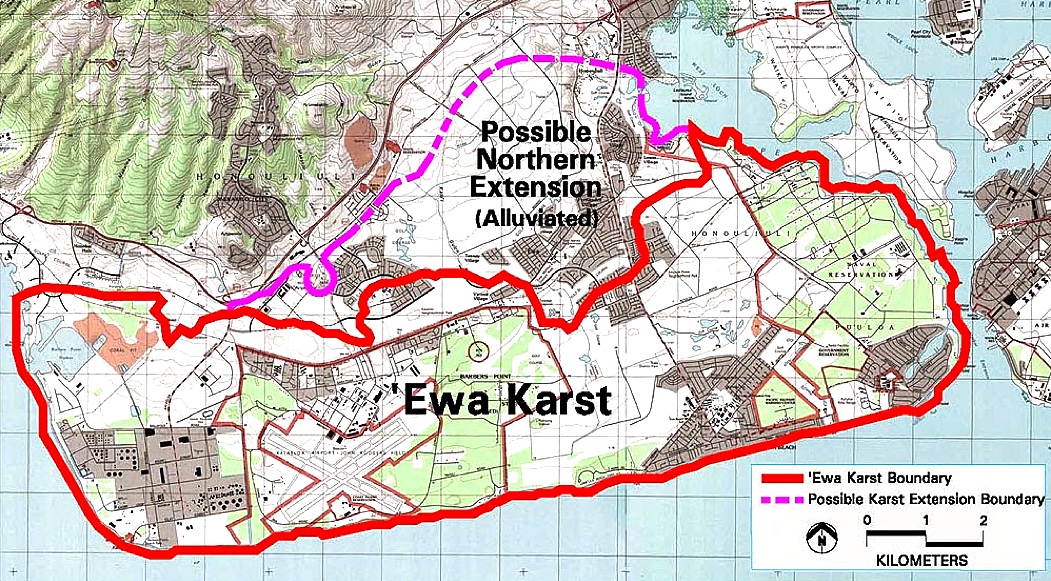
http://www.islandbreath.org/2015Year/09/150906mapbig.jpg
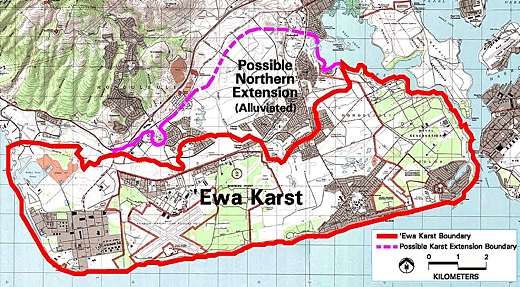
Image above: Area of the Ewa karst west of Pearl Harbor. Note multiple military and industrial installations already impacting this sensitive unique environment. Click to embiggen. From original article..

With regards to the secretive Navy land transfer of many parcels of lands which exist on the plain of Kaupe’a and Kanehili, Honouliuli ahupua’a moku of Ewa, identified previously as the former Navy Barbers Point Air Base and today is called Kalaeloa.

As a recognized Native Hawaiian cultural practitioner in Honouliuli, Ewa, by the Board of Land and Natural Resources, the 1st Circuit Court, Intermediate Court of Appeals, as a HART Programmatic Agreement Consulting Party, as a Navy KREP PV Farm Consulting Party, as well as a recognized cultural descendant on April 14, 2010 by the O’ahu Island Burial Council to ancestral native Hawaiian remains within and surrounding the Navy lands of Barbers Point, Iroquois Point and West Loch, I provide the following statement:

I must rely upon vigilant protection of my religious, traditional and customary Native Hawaiian practices, cultural and natural resources or I and the Hawaiian people will lose them forever.

As the kahu, or keeper, of the iwi kupuna in this area, as recognized by the Oahu Island Burial Council and State of Hawaii Historic Preservation Division, it is my responsibility to ensure the protection and safety of all the ancestral bones and funerary objects within in this area of my responsibility. I can and have filed lawsuits and won when my cultural rights have been damaged and violated.

I have to ask: Why was I not consulted in this land transfer which directly concerns my cultural practice and the tens of thousands of iwi kapuna in the Leina a ka uhane that I have responsibility to protect?

I am also an Hawaiian astronomer or star priest called Papakilohoku recognized by the Honolulu City Council with an Honorary Certificate and also very recently consulted by astronomy organizations on the Big Island regarding native Hawaiian astronomy.

All this background gives me standing concerning the Federally recognized Hawaiian Traditional Cultural Property (TCP) in Honouliuli called the Leina a ka Uhane, a very sacred spiritual leaping place for souls of the deceased returning to their ancient homeland.

This major wahi pana (sacred place) was Federally recognized by the HART Rail Project in a 2012 published series of documents as a Section 106 requirement to identify Ewa Plain Honouliuli TCP’s.

The Leina a ka Uhane TCP is clearly within the same ancient area known as the Plain of Kanehili and Plain of Kaupe’a, connected by the important ancient Hawaiian trail system within Honouliuli-Ewa identified by the 1825 Malden Trails map. All of this was also well identified in numerous Navy base closure documents and maps produced in 1979 through 2001.

Leina a ka Uhane in Kanehili is a sacred burial area for iwi kupuna in the tens of thousands. There is no excuse for the Navy land transfer to completely ignore all of this Federally produced Leina a ka Uhane TCP documentation and not consult with the most qualified and widely recognized resident Kahu in Honouliuli, Ewa.

The Navy lands being transferred are only minutes away from where I live and I have walked through it many times. The presence of burial sites, ancient habitation sites and the spirits of my ancestors is very real there and these spirits of the iwi kupuna call to me for their protection to prevent their desecration.

Burials in the Plains of Kanehili and Kaupe’a areas using the native Hawaiian Trails drawn by Malden in 1825 and subsequently documented by archeologists for the Navy in detailed archeological reports as on the Barbers Point Navy Base and Ewa Marine Air Base cannot be denied. These are facts but the Navy is intentionally ignoring them in the land transfer.
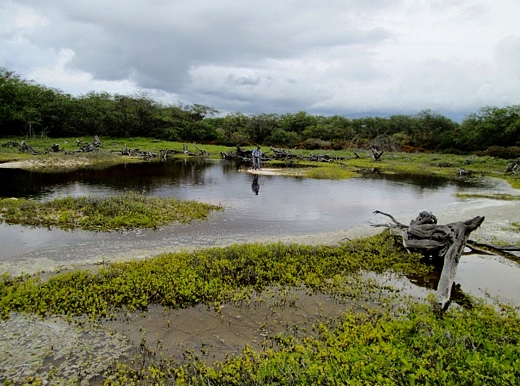

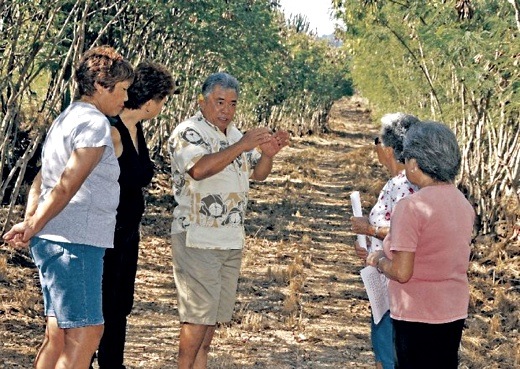
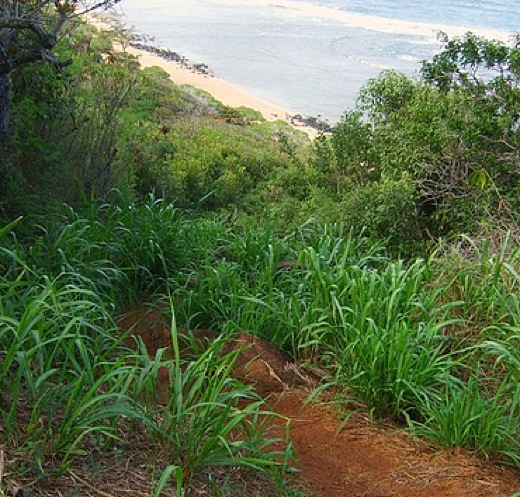
Image above: Wetlands on the Ewa Karst are delicate and of sacred importance to Hawaiian culture. From original article.

The ancient Hawaiian trails running from Honouliuli to Ewa, Palehua, Kualaka’i and One’ula are very key components for understanding the cultural history of the Honouliuli ahupua’a. Portions of these trails still exist through the Plains of Kaupe’a and Kanehili, in the foothills by Makakilo which was a major Papakilohoku star priest observation place, and in the documented archeological trails and iwi kupuna Karst burial areas which exist in the Barbers Point Navy lands being transferred.

This Navy land transfer is an attempt to evade native Hawaiian cultural rights as specified in numerous State and federal laws protecting native Hawaiian culture.

The US Navy is intentionally allowing, by their secrecy and lack of consultation with the most qualified local native Hawaiian residents, this most significant sacred cultural landscape in the Hawaiian Islands. This lack of cultural respect has and will cause great emotional and spiritual harm to not only myself, but to thousands of the cultural descendants of the iwi kupuna buried in there. This harm extends to the spiritual well-being of the entire Native Hawaiian lahui as well.

As a long time kahunalapa’auokekaiolimu, or Native Hawaiian practitioner of limu medicine, I have standing under Hawaii law protecting Native Hawaiian cultural practitioners and I am recognized in the Hawaii First Circuit Court in cases for the Honouliuli area and in Federal Court as the Hawaiian Cultural Practitioner of sea medicine on the Big Island in Kohala in the Kona Blue v. Kahea Kohala fishery's case in 2011.

The entire Plain of Kaupe’a and Kanehili are entirely ancient coral limestone reef with thousands of caves and sinkholes. This is a well documented fact by the Navy’s own base closure archeologists.

Fresh water flows through an extensive network of underground interconnected Karst caverns and channels from the mountains to the sea in the Plain of Kaupe’a and Kanehili which contains the nutrients that feed our eco-system food chain.

The Honolulu City Council passed unanimously in 2012 the Ewa Plain Trails resolution giving my cultural practice further standing in Honouliuli by advocating the protection of the 1825 Malden Trails (ancient Hawaiian trails) and Ewa Karst water system which is an ancient limestone reef wetlands water system.

I believe it is my duty as a native Hawaiian cultural practitioner to state that we cannot afford any more of these losses and developments must adhere to state and federal laws. This is also a Hawaii Public Trust Interest as stated in the Hawaii State Constitution. The State of Hawaii is mandated to protect this resource- caves, karst, underground streams and rivers under Statute 6D 1-10, Article 11, Section 7 State Constitution.
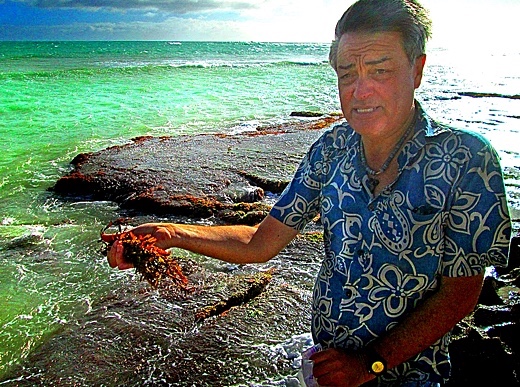

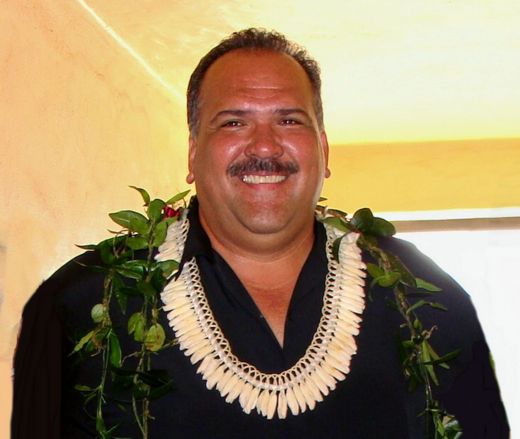
Image above: Author Michael Lee at shoreline of Ewa Karst holding native seaweed. From original article.

Native Hawaiian TCP’s do not follow any exact linear, circular or simple place box format like a TMK. They can cover a large area, vary in depth and width and are often linked together by trails, caves, ponds and canoe landings. The land and the people are one.

Access to and protection of native cultural sites and ecosystems is a cornerstone of recognized cultural practice in Hawai‘i. When a sacred place, native species or critical ecosystem is lost, a wahi pani or wahi kapu is erased from the landscape, the words and traditions associated with them are also lost.

Native Hawaiian rights: Article XII Section 7 of the Hawaii Constitution states, "The State reaffirms and shall protect all rights, customarily and traditionally exercised for subsistence cultural and religious purposes and possessed by ahupua'a tenants who are descendants of native Hawaiians prior to 1778."


CONTACT:
Michael Lee
91-1200 Keauniu Drive, Unit 614,
Ewa Beach, Hawaii 96706
kanehilivideos@gmail.com


.

Wailua Burial Site Conviction

SUBHEAD: The prosecution of Alalem for protecting iwi underscores the misdirected priorities of our state laws.

 By Ray Catania on 19 July 2012 for Island Breath - 
  (http://islandbreath.blogspot.com/2012/07/wailua-burial-site-conviction.html)

Image above: James Alalem dislplaying typical stone that was used to mark the outline of a body at a burial site. From (http://thegardenisland.com/james-wailua-jpg/image_b144e8c1-94d7-5aa6-8c27-33c3ae2c8a0c.html).

A presentation and discussion will take place at the Kapaa Public Library on August 2nd, 2012 from 6:30 - 9:30pm. Wailua heiau caretaker James Alalem was arrested and found guilty for interfering with the construction the Kuhio Highway over the Wailua River.

At the time he was trying to protect iwi (interred remains of Hawaiians) in a culturally sensitive area of a sacred Hawaiian site. Alalem will make a presentation of the issues surrounding the events in which he and Kaiulani Eddens were arrested and tried.

Alalem contends that the proceedings in Judge Valenciano's state court were unfair and that he was methodically stifled at every turn from presenting his case by the State's Prosecuting Attorney and the judge. Video footage used against James Alalem and Kaiulani Eddens will be shown.  

WHAT:
Presentation, discussion and video showing concerning arrests at Wailua iwi site.  

WHEN:
August 2nd, 2012 from 6:30-9:30pm  

WHERE:
Kapaa Public Library 4-1464 Kuhio Highway, Kapaa (808) 821-4422

 CONTACT:
Raymond Catania 634-2737 or 635-0835 or email may11nineteen71@gmail.com.

Jury finds Alalem Guilty

A jury found a Wailua man guilty Tuesday of stopping a DLNR construction dig for the Kaumuali‘i Comfort Station project near kupuna burials at Kaumuali‘i Park and Old Smith Landing in Wailua.
James Lee Alalem, 55, of Wailua, will face sentencing on Sept. 27 for obstruction of government operations of the Department of Land and Natural Resources. It is a misdemeanor offense.

Chief Judge Randal Valenciano presided over the two-day trial in which Alalem represented himself. The court appointed Warren Perry as stand-by counsel to consult with the defendant on proceedings.
Deputy County Prosecuting Attorney John Murphy said the case was about someone making a decision to cross the line and stop a government operation. He told the jury they must base their decision on the law and not on an emotional connection to a cultural issue or pity for the defendant doing what he believed was right.

The prosecution produced two DLNR officers who said Monday that they arrested the defendant after he crossed the construction barrier and stopped operations on April 28, 2011.

Holly McEldowney, acting administrator of the State Historic Preservation Division, testified Tuesday that planning for the comfort station started in 2005 following a federal mandate that required conversion of existing wastewater systems. She said that proper permitting was acquired at all levels and that the county did not require an environmental impact study for this project.
An on-site archaeologist and cultural monitor were present during test digging and spotted burials and artifacts more than 50 years old in the project area in 2005, 2010 and 2011.

McEldowney said when that happens, DLNR stops work immediately, as required, to consult with the Kaua‘i-Ni‘ihau Island Burial Council. She said that the council recommended to the State Historic Preservation Division that the burials be kept in place.

McEldowney said the council approved the burial treatment, and a redesign in 2006 to avoid above- or below-ground disturbance of burials and cultural deposits. Work was done to determine if there was any known lineage of the burials.

Before the trial began, Valenciano informed both attorneys that evidence and questioning could not involve the issue of nationalism or sovereignty. He said the court would not decide the legitimacy of citizenship to any group or kingdom, but would view anyone living in the state as being subject to state laws.

The judge referred to a May decision of the Hawai‘i Supreme Court, in upholding an Appeals Court decision of a 2004 case involving Lloyd Pratt. The Native Hawaiian claimed he is entitled to live as a caretaker of sites without a permit in the Na Pali Coast State Wilderness Park.

Alalem said after the trial that his testimony and questions of witnesses were limited because of the court’s tight focus on the incident.

He said that it did not allow him to expand on his motivation to protect ancestral graves that led to the charge.
The defense witnesses included Punilei Joseph Manini, who presented claims that the land was deeded to ancestors by King Kamehamea III and should not be considered state lands. His replies were stopped short for relevance with objection from the state.

Another witness, Waldeen Palmeiro, was asked to describe her monitoring activity at the site. She responded that there were discoveries before and after the arrest incident, and that around six burials were unearthed at the site.

Palmeiro’s replies were largely stricken as not responsive to questions.

The jury also viewed a video of the incident. The video depicted Alalem and Ka‘iulani Denelyn Edens, 49, of Kapa‘a, crossing into the construction area where activity stopped. The video showed Alalem standing in the bucket of a backhoe until he was arrested by DLNR officers with assistance from the Kaua‘i Police Department.

A jury found Edens guilty of obstruction in February. She was sentenced in April to 40 minutes time served and fined $250.

Edens said at her sentencing that she was moved to act but that it was not a sovereignty issue.
Outside the courthouse, Alalem said that if any good comes from this case, it would be to wake up more people to learn about their culture and to honor their ancestors.

“I am not sorry that I stood up for those who cannot stand up for themselves,” Alalem said.

Abberation of Justice  

Commentary by Kip Goodwin on 19 July 2012 in The Garden Island -
(http://thegardenisland.com/news/opinion/guest/james-alalem-trial-was-aberration-of-justice/article_d47aceb0-d186-11e1-90e2-001a4bcf887a.html)
 
The problematic outcome in the trial of James Alalem, prosecuted for his action to protect iwi, underscores the misdirected priorities of state laws that are supposed to protect cultural sites. It also demonstrates a dilemma faced by the judicial branch when administrative failures are laid on its doorstep.

The crime Mr. Alalem was accused of has a narrow focus: “interfering with a government operation.” The overriding issue was, of course, that a backhoe, with the blessing of the county and state, was digging up Hawaiian graves to make way for an outhouse leachfield, and Mr. Alalem objected.
In making the case for the state, County Deputy Prosecuting Attorney John Murphy held to the parameters of the charge, bringing Department of Land and Natural Resources (DLNR) enforcement officers and the administrator of the State Historical Preservation Division (SHPD) to the witness stand to establish prior permitting process and Mr. Alalem’s role in what happened on April 28, 2011.

For his part, Mr. Alalem’s defense was to tell the jury what his motive was that day, through the sworn testimony of himself and his two witnesses. Judge Randal Valenciano was adamant in not allowing this to happen. Mr. Alalem’s presentation over 76 minutes (including a 12-minute recess) was interrupted 42 times, either by an objection from the prosecuting attorney, sustained by the judge, or the judge cutting Mr. Alalem short and calling the attorneys (and Mr. Alalem) to a private conference, or the judge interrupting the witnesses and telling the jury to disregard their testimony as being “not responsive.” Mr. Alalem’s defense was never entered into testimony.

If the judge allows into evidence the motive for Mr. Alalem’s actions, the jury must be allowed to consider that evidence in their deliberation, i.e. the iwi and cultural desecration. That would give the jury cause for acquittal, and if that happened it could lead to open ended legal challenges to rules regarding burial sites of iwi and artifacts. Presumably Judge Valenciano, appointed to the bench by pro-development Gov. Linda Lingle, did not want that outcome emanating from his courtroom.
Certainly judges must have latitude to run their courtroooms as they see fit, because an independent judiciary is a cornerstone of constitutional democracy. And the law addressing interference in government operations is necessary to maintain and improve infrastructure.

So the open question, and the reason Mr. Alalem’s trial was an aberration of justice, is why the court was constrained by the law as written from addressing the overriding problem, which is the injustice of those laws that convey the most precious ground any people anywhere can possess, the gravesites of their ancestors, to private and public developers.

The most dispiriting result of this sorry event is that many on Kaua‘i feel even more disenfranchised. So before it happens again, and Kaua‘i’s much-promoted aloha spirit is demeaned in another confrontation with hypocrisy, those state agencies, the DLNR and SHPD, need to re-invent themselves to reflect the mission for which they were established. And elected officials should respond to the peoples’ concerns about burial site protection. A declaration from Mayor Bernard Carvalho Jr. and Gov. Neil Abercrombie would be a good start.

.

Hapa Trail is State Owned

SUBHEAD: It is a good time to let the DLNR revisit this issue, after Lingle's laura Theilen is gone and under Abocrombie's new chairperson pick, William Aila.  

By Paul Curtis on 11 December 2010 for Garden Island News -  
(http://thegardenisland.com/news/local/article_380d2a08-05bf-11e0-a69f-001cc4c002e0.html)

 
Image above: Teddy Blake explains some of the historical aspects of Hapa Trail. Photo by Dennis Fujimoto from original article.

Fifth Circuit Judge Randal Valenciano on Tuesday ruled the state owns the historic Hapa Trail on the South Shore.

For years the county had claimed ownership, even to the point of approving a controversial breach of the trail to allow access to a residential subdivision in Po‘ipu.

While the case of citizens suing the county and other entities claiming that allowance of access was illegal appears to be out of court for now, attorneys on both sides of the dispute are still at odds over what Valenciano’s rulings actually mean.

Deputy County Attorney Ian Jung said Valenciano dismissed the lawsuit, Theodore K. Blake versus the County of Kaua‘i Planning Commission et al. But David Kimo Frankel, staff attorney of the Native Hawaiian Legal Corporation representing Koloa resident Blake, said he isn’t sure if he needs to appeal Valenciano’s decision because he’s not sure the judge actually dismissed the lawsuit.

State court records show Valenciano made three decisions on several motions brought in the civil case:

— Hapa Road is a state road;

— No final agency action has happened (Frankel said that means no final subdivision approval has been issued, a statement disputed by Jung);

— The court does not have subject matter jurisdiction as to all counts (Jung reads that to mean case dismissed; Frankel disagreed).

Valenciano told Linda Chow, state deputy attorney general representing DLNR, to prepare the orders.

Chow could not be reached for comment by press time.

Stacey Wong, Knudsen Estate trustee, said he was told by his attorney, Honolulu-based Michael Tom, not to discuss the matter with the media.

Tom could not be reached by telephone or e-mail. Blake deferred comment to Frankel.

Contacted parties all agreed that any request by Knudsen, developer of the Village at Po‘ipu subdivision, to breach Hapa Trail must now be made to DLNR.

Hapa Trail is a non-vehicular extension of the county’s Hapa Road that runs from St. Raphael Church to its terminus at Po‘ipu Road.

That breach represents the only vehicular access to the subdivision to hook up with Kiahuna Plantation Drive. No direct access to Po‘ipu Road is allowed.

“The judge ruled that because the state of Hawai‘i did not yet grant an easement over Hapa Road Mr. Blake’s claims were not ripe,” Jung said in an e-mail.

“The judge further ruled that given the state of Hawai‘i is the owner of Hapa Road the Knudsen Trust will have to pursue obtaining an easement from the Board of Land and Natural Resources or reconfigure the roadway lots,” he said.

Frankel basically agrees with those two claims.

“The Village at Po‘ipu Phase One subdivision approval remains valid,” Jung said.

Frankel disputes that statement, saying final subdivision approval has not been issued, something he said Valenciano concurred with in his second ruling on 11 motions that had been filed in the case.

Others named as defendants in the suit are the County of Kaua‘i Planning Department, former Planning Director Ian Costa, the state Department of Land and Natural Resources, Laura Thielen as former DLNR and state Board of Land and Natural Resources chair, and the Eric A. Knudsen Trust, owner of the land on the makai side of the trail.

Blake’s lawsuit contends that:

— The process of considering the Village at Po‘ipu development proposal violated the state public-trust doctrine;

— In the process of considering the trust’s application for final subdivision approval of phase one of the development, defendants failed to thoroughly investigate and protect Native Hawaiian rights;

— Defendants failed to comply with the requirements of state administrative rules governing the review process the state DLNR State Historic Preservation Division is to follow in making comments to state and county agencies on entitlements affecting historic properties;

— The development threatens to cause irreparable injury to burial sites and other historic sites;

— Defendants failed to comply with the objectives, policies and guidelines of certain state law, specifically the protection, preservation and restoration of historic and prehistoric resources in the coastal-zone-management area that are significant to Hawaiian history and culture;

— A supplemental environmental impact statement is required to address a plan to cross Hapa Trail with a street.

While defendant Blake on advice of Frankel would not talk about Tuesday’s court action, Louie Abrams, president of the Koloa Neighborhood Association, would.

“We had some strong opposition to the breach of Hapa,” he said, and voiced those concerns to the Planning Commission repeatedly.

When the commission denied the breach would do irreparable damage and approved permits for the development, Blake sued.

At issue are Native Hawaiian customary, cultural and gathering rights, and preservation of a unique archaeological and agricultural area that archaeological experts said is one of a kind in all the Pacific Rim, said Abrams.

SHPD had no idea it was a historic road, said Abrams. If SHPD knew it was a historic road maybe they should have fought for trail protection, he added.

Abrams said it is “distressing” that a lot of volunteer work on a traffic-circulation system for the Koloa and Po‘ipu areas might be all for naught if the trust is allowed to build a vehicular road over the top of Hapa Trail.

“We were trying to designate it as a trail” because when the county Department of Public Works hears the word “road” they start making plans to allow subdivisions to use the road for access purposes, he said.

“We really see this as a very important matter for this community” in terms of traffic and pedestrian circulation, said Abrams.

“Now maybe we have a foothold, somebody to listen to us,” he said.

“Nobody figured out that Hapa was a historic road until two months before permits were issued. Even we didn’t know it was a historic road then.”

The late Dorothy Tao and the late Grace Blake wanted the road and trail preserved, he said.

“It is not settled and it is not clear. There’s hope,” said Abrams, adding that the association is seeking grants for mapping of important sites. “Otherwise those sites will just sit, or get bulldozed.

“I was ready to give up, and Hapa was really the only identity that this community has,” he said.

.

Lepeuli, Koolau Ahupuaa, Kauai

SUBHEAD: Re-location of cattle fence to avoid 3 Re-Burials by CDUA Permit Application 3525 DOCARE KA 09-12 in Lepeuli.

 
Image above: Existing path down to Lepeuli (Larson's) Beach.  

By Hope Kallai on 30 June 2010 for Island Breath -
(http://islandbreath.blogspot.com/2010/07/lepeuli-koolau-district-kauai.html)

The County Council is considering acquiring a new (very steep) easement at Lepeuli to Larson's Beach - instead of maintaining the (gradual) existing 10 foot wide County Right Of Way. Please voice your comments to the Council or the Mayor and attend next week's county council meeting on Wednesday July 7 at 8:30 am. Below is the text of a letter I sent regarding this issue to the Office of Hawaiian Affairs.
Clyde Nāmu'o Chief Executive Officer Office of Hawaiian Affairs 711 Kapi'olani Blvd., Suite 500 Honolulu, HI 96813 Phone: (808) 594-1835 Fax: (808) 594-1865 email: info@oha.org Aloha no Mr. Nāmu'o and OHA: I am sorry to keep contacting you about the federally funded Paradise Ranch project Lepeuli.
There are many mis-conceptions and inaccuracies that need consideration. SHPD has ruled "No Affect" to Historic Properties without considering the continual Hawaiian habitation (including kuleana with houselots) of this ahupua`a for many hundreds of years. SHPD has failed to consider the Hawaiian presence of habitation sites, and social constructs of schools, churches, stores, and cemeteries as well as proto-historic sugar plantation era developments including roads, ditches, flumes and railroads and the beach house of luna C. David Larsen.
Cattle have caused the exposure of 3 individuals' remains from Lepeuli. SHPD has re-interred these 3 people into the area which will be a federally subsidized cattle pasture. When asked by BLMR Representative Dr. Sam Gon if the fence could be re-located mauka of the reburial site, they answered that they have not been asked to do that. From the minutes of the BLNR meeting of May 13, 2010: The existence of and the location of the re-burials was not included in the original CDUA documents. The exact fenceline location was not included in the CDUA documents until well after the closing date for comments.
There is no known burial treatment plan nor recommendation to avoid the planned ripping, pitting and soil contouring of the area of these reinterrments. Can OHA please request that the fenceline be located mauka of the re-burial site of 3 individuals (by SHPD) so the commercial cattle operation will not deposit manure on these graves? It is unconscionable to allow this federally funded project to enable manure deposition on human remains. A burial treatment plan (with proper map) should include avoidance of machinery and herbicides in this area.
This project needs full consideration by a Cultural Impact Assessment. Lepeuli is a treasure of cultural and environmental resources and deserves scrutiny, respect, and protection. Thank you for your immediate response to this request. The reconsideration time for the CDUA permit is closing soon.
Mahalo in advance for speaking for the `iwi kupuna of Lepeuli.

Hope Kallai
Malama Moloa`a
POB 655 Kilauea, HI 96754
Lokahipath2@live.com

.

Mayor, Bless the Carvalho Curve

SUBHEAD: Our mayor could simply ask HIDOT to nudge the highway centerline mauka off the beach. Why doesn't he?

  Image above: Bernard Carvalho at Saint Francis Home Care Services. From (http://www.stfrancishawaii.org/Pages/Welcome.aspx

By Juan Wilson on 10 June 2010 -

Jonathan Jay, and I, have submitted a plan to improve the alignment of the highway centerline of the highway section that passes in front of Wailua Beach. Jonathan pushed through an idea that the highway could be re-engineered to miss the beach.

I helped out with a handy reference book titled "Highway Curves" for calculating continuous curves and their tangencies. The new plan was derived from the engineering drawings of the highway created by the HIDOT's highway consultant. The match lines at both ends of of the project were left intact and all re-alignment was done within the existing 77 foot wide state highway right-of way.

The change in highway curve did not require narrowing the highway lanes or creating a variable radius curve. What the new curve achieves is allowing a 10 wide right-of-way for the bike path to exist mauka (inland) of the existing stone wall separating the beach from the existing highway. This new alignment would have zero footprint on the sand. It would also be further inland at about 14" higher elevation than the currently planned curve.

This alignment will result in less excavation and probably less disturbance of iwi (archeological human bones). This new alignment will cost no more money than recalculating the placement of pins to locate construction a few feet.

 The Garden Island reported 6/9/10 that the Native Hawaiian challenge to halt the highway widening has been dismissed (see below). The project is going ahead. Therefore, now is the time (the only time) to put this plan in action.
• The plan has been submitted to the HI DOT representative Ray McCormick in Puhi. DOT agrees that it is feasible, but does not initiate this sort of change on its own. • The plan has also been submitted to the Kauai County Council at the request of Chair Kaipo Asing. I am not aware that any action has been taken by the Council. • The plan has been submitted to Kauai Mayor Bernard Curvalho through his assistant Gary Heu. No response has been received from the mayor's office.
The mayor is the power player in this situation. That is why Jonathan titled his design effort the Carvalho Curve. We believe at this time the mayor can use his office to request of the HIDOT to follow the new curve and not force the bike path onto the sand of Wailua Beach. He can be a hero at little political cost. I suspect now that some people really do not care if the "problem" of desecrating the sand can be avoided. Why else ignore the solution.

Road widening project may proceed Image above: Waldeen K. Palmeira, of Wailua, sits near site of highway widening process. From original TGI article. Photo be Dennis Fujimoto. By Paul Curtis on 9 June 2010 in The Garden Island News - (http://thegardenisland.com/news/local/govt-and-politics/article_019676ee-739a-11df-8224-001cc4c03286.html) Fifth Circuit Judge Kathleen Watanabe on Tuesday dismissed a citizen challenge of the planned widening of Kuhio Highway in Wailua.
Waldeen K. Palmeira of Wailua argued state and federal authorities failed to follow their rules regarding consulting Native Hawaiian cultural practitioners before allowing the project to go forward, and that she is sure ancient Hawaiian burials exist along the road-widening route.
Watanabe said that without testimony from witnesses who have knowledge of the suspected burials, she had no choice but to grant the state Department of Transportation’s motion for summary judgment, effectively giving the project the green light to proceed and ending the legal matter unless Palmeira appeals the decision.
Palmeira and the Native Hawaiian Legal Corporation had sought a preliminary injunction and summary judgment in October 2009, saying an environmental impact statement is necessary before the project should be allowed to proceed.
The state motions were to dismiss the lawsuit for lack of merit or, in the alternative, to grant summary judgment in favor of the state, either of which would effectively allow the project to proceed.
The $33 million project is planned to widen Kuhio Highway to four lanes from Kuamo‘o Road to the Kapa‘a bypass road, using federal funds that will lapse if not encumbered by Sept. 30, the end of the federal fiscal year, said William Wynhoff, state deputy attorney general representing DOT.
Palmeira asked for a continuance of the Tuesday hearing, citing her own health issues, but Watanabe denied that last-minute motion, Wynhoff objecting to the motion saying even another one-month delay would likely kill the project.
At the April hearing on the matter Palmeira fired her NHLC attorneys, and on Tuesday struggled to make her case without legal representation.
She requested the continuance to find new representation and because of her health issues.
Wynhoff said the narrow area to be used for the road-widening has already been “fully developed,” and Palmeira’s assertion that the road would be built over a graveyard “is just not so.”
“If we do find bones they’re going to be treated sensitively,” he said. “We might encounter some bones.”
Because the project is adjacent to one of the island’s busiest highways, it is not expected to significantly affect any traditional cultural practices or important cultural areas, said Wynhoff.
Palmeira disagreed, saying the area is the richest cultural and political center on the island, has been for 200 years, and is home to the only known named burial site, a place that translates from Hawaiian as “burials in the sand.”
Palmeira said that site extends from the fishponds at the old Coco Palms Resort to the ocean at Wailua Beach.
“The state is breaking the law on this one,” she said, adding that the shallow depth of the archaeological excavations conducted for the state by Cultural Surveys Hawai‘i failed to discover any human remains, known as “iwi kupuna.”
“They did not look good enough. I feel the entire process has been wrong,” Palmeira said.
Watanabe, who like Wynhoff patiently waited during most of Palmeira’s pauses due to her unfamiliarity with the pleadings bearing her name, finally scolded Palmeira for her rudeness for interrupting both Wynhoff and Watanabe repeatedly during the proceedings.
Watanabe said there was a “clear disconnect” between the written filings and Palmeira’s oral arguments, and that the state has conducted a thorough investigation across the narrow project corridor that has been a transportation route for vehicles including trains for over a century.
Use of ground-penetrating radar and other technologies revealed no bones, and neither did an environmental assessment, Watanabe said.
There are six undisputed facts which led to Watanabe’s decisions, she said:
— Summary judgment is allowed based on the facts and factors of the case;
— The state Department of Land and Natural Resources’ State Historic Preservation Division has jurisdiction over inadvertent discoveries of Native Hawaiian human remains;
— The Kaua‘i Ni‘ihau Island Burial Council has jurisdiction over known burial remains;
— The state has strict rules where graves are concerned;
— There are no known burial sites or remains in the project site, though some may be discovered during construction;
— Palmeira lacks any specific knowledge of graves in the project site, but two people Palmeira said have knowledge of graves in the project site were not present in court Tuesday and are not named or referenced in any of Palmeira’s pleadings.
If burials are discovered during construction, state laws will be followed for disposition of bones, said Watanabe.
“I do sympathize with Ms. Palmeira and what she’s trying to do, but the court has to act on matters of law,” said Watanabe, adding after making her rulings that Palmeira should work with the state Legislature to toughen burial-discovery laws.
Brennon Morioka, DOT director, has repeatedly said state officials felt the suit was without merit. DOT has met all state statutory requirements for proceeding with the project, he has said, and information contained in the state EA shows all necessary due diligence was done and statutory requirements met.
.

Bikepath should be here!

SUBHEAD: It is not too late to do the right thing with the bike path through Wailua, keep it off the beach!

By Judy Dalton & Brad Parsons on 6 December 2009 in Island Breath - 
(http://islandbreath.blogspot.com/2009/12/bikepath-should-be-here.html)


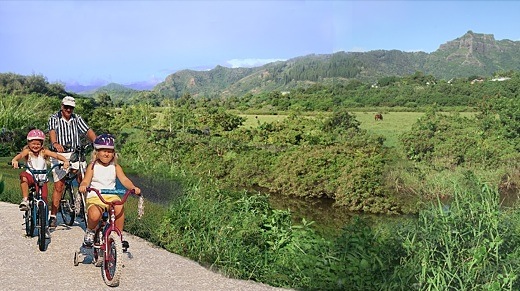
Image above: Computer graphic collage by Juan Wilson from photos by Brad Parsons. Image titled "View of mauka route for Bikepath along the existing road following the canal."
 
 Aloha friends of Kaua'i, On Monday evening, December 7th, the fate of one of the island's most notable beaches will be at stake - Wailua Beach. Building a 14 feet wide boardwalk to serve as a recreational multi-use/bike path will put the beach at unnecessary risk. Hawai'i is losing and will continue to lose many of its beaches erosion and sea level rise.

Imposing a structure on the beach at Wailua will stress the natural beach process and eventually threaten its existence. We must ask ourselves, "Am I willing to sacrifice a beach so I can ride my bike on it?" Wailua Beach, also known as Mahunapu`uone (meaning "the sand dunes that conceal the bones"), is considered by the Hawaiians to be the most culturally, historically and spiritually significant not only on Kauai, but in the Hawaiian Island chain.

Building a boardwalk on the beach would be a profound insult to the Native Hawaiians. Why would development here be considered when it has become very evident that it would be hurtful to so many people who want to keep the beach intact and protect the iwi of their ancestors? At this point, it appears that the county is planning to build the path on Wailua Beach, despite recommendations by the Office of Hawaiian Affairs to keep it off the beach unless large numbers of people attend the meeting and ask the Mayor to change his mind.

New information shows the importance of protecting the beach and respecting the mana`o of the Hawaiian kupuna, which was mis-interpreted by The Path consultants. There is a very viable alternative to the path being on the sandy beach at Wailua, which was included in the Environmental Assessment (EA). It's a mauka route on an existing road along a scenic canal behind Coco Palms, on land belonging to the county. There seems to be some confusion and misunderstanding about the path alternatives and the assumptions/questions below which are clarified by the responses.

1. "If the mauka route is chosen that would cause an additional highway crossing, wouldn't it?"

NO! BOTH THE BEACH ROUTE AND THE MAUKA ROUTE WOULD CROSS KUHIO HIGHWAY THE SAME NUMBER OF TIMES.

The only difference is that the highway crossing on the beach route would be at Lanikai Street, and the highway crossing on the mauka route would be at the existing light at Kuamo'o Road. In addition,

IF THE ROUTE ON WAILUA BEACH IS USED, A NEW TRAFFIC LIGHT ON THE HIGHWAY WOULD BE ADDED at Lanaikai Street causing more stop and go in this congested section of the highway.

2. "The beach route would provide access to the beach access." There is ALREADY access to the beach. The two parking lots presently located on either end of the beach will continue to exist if either route is chosen.

 3. "I'm not sure if I want to walk or ride a bike on a path along a canal." BOTH routes go along the canal. The beach route, continuing north along Papaloa Road, turns on Lanikai Street crosses the highway, where a new traffic light would have to be added. It then cuts across land on the mauka side of the highway and along the canal following it on to Foodland. The mauaka route would go alongside the canal starting from a road behind Coco Palms and continue to Foodland, as well. See pictures of the scenic canal route behind Coco Palms at end of this letter.

 4. "Wouldn't it hold up completion of the path if the mauka route is used?" No. Since the mauka route was listed in the EA as one of the alternate routes, getting it approved would take could take just 2 or 3 months and cause no delay in the overall project. The path can't connect to points south until the bridge over Wailua River is completed which will take at least a year. 5. "If the road behind Coco Palms is used it would cause more disturbance to burials."

No, the Wailua Drainage Canal roadway is an ALREADY EXISTING ROAD behind Coco Palms connecting Kuamo'o Road with Haleilio Road and was used by cars for several years. The section of path coming off the bridge would go cross the highway at Kuamo'o Road and continue along the road (which is being widened) to connect with the mauka route and avoids disrupting cultural sites in the area. By not placing the path on the beach it prevents disturbing cultural sites on the beach while keeping the beach intact in its natural state.

The recent letter from the State Historic Preservation Dept states that cultural sites would be affected, yet those sites are actually a considerable distance away from the mauka path. Their letter stands in sharp contrast with OHA's letter. 6. "The path on the beach would be on dirt and not sand, right?" No. The path on the beach would be on top of flat sand dunes, currently covered with plants. The sand dunes are vital to preservation of the beach as they store sand for future beach replenishment. 7. "Upon crossing Haleilio Road, the mauka path would displace people living in their homes." Not so.

There's one house on commercial property that's been for sale over a year and unoccupied. There are two additional empty lots to obtain easements that are also for sale. 8. "We will lose the $4.2 million incentive money if we don't put the path on the beach."

Not true, provided the money is used anywhere on Phase 3 by March 2, 2010 as confirmed by the Department of Transportation. For more photos of the alternative path route mauka of the old Coco Palms Hotel see: http://www.flickr.com/photos/21400600@N03/sets/72157622826153697/show

If you want to protect Wailua Beach and support native Hawaiian culture, please come out on Monday, December 7th at 6:00pm at the Kauai Peace & Freedom Convention Center on Hardy Street in Lihue.

To read a request from kanaka maoli to attend the meeting, visit: http://www.kaieie.org/Wailuanuiahoano_GreatSacredWailua.html

See also:
Ea O Ka Ania: Last Chance For Wailua 12/2/09