Apocalypse Soon

SUBHEAD: Has civilization passed the environmental "Point of No Return"?

 By Madhusree Mukerjee on 23 April 2012 for Scientific American - (http://www.scientificamerican.com/article.cfm?id=apocalypse-soon-has-civilization-passed-the-environmental-point-of-no-return)


Image above: An Emergencies Ministry firefighter trying to extinguish a forest blaze near the Novovoronezh Nuclear Power Plant in Russia. From original article.


Although there is an urban legend that the world will end this year based on a misinterpretation of the Mayan calendar, some researchers think a 40-year-old computer program that predicts a collapse of socioeconomic order and massive drop in human population in this century may be on target. Remember how Wile E. Coyote, in his obsessive pursuit of the Road Runner, would fall off a cliff? The hapless predator ran straight out off the edge, stopped in midair as only an animated character could, looked beneath him in an eye-popping moment of truth, and plummeted straight down into a puff of dust. Splat! Four decades ago, a Massachusetts Institute of Technology computer model called World3 warned of such a possible course for human civilization in the 21st century.


In Limits to Growth, a bitterly disputed 1972 book that explicated these findings, researchers argued that the global industrial system has so much inertia that it cannot readily correct course in response to signals of planetary stress. But unless economic growth skidded to a halt before reaching the edge, they warned, society was headed for overshoot—and a splat that could kill billions.

Don't look now but we are running in midair, a new book asserts. In 2052: A Global Forecast for the Next Forty Years (Chelsea Green Publishing), Jorgen Randers of the BI Norwegian Business School in Oslo, and one of the original World3 modelers, argues that the second half of the 21st century will bring us near apocalypse in the form of severe global warming.

Dennis Meadows, professor emeritus of systems policy at the University of New Hampshire who headed the original M.I.T. team and revisited World3 in 1994 and 2004, has an even darker view. The 1970s program had yielded a variety of scenarios, in some of which humanity manages to control production and population to live within planetary limits (described as Limits to Growth). Meadows contends that the model's sustainable pathways are no longer within reach because humanity has failed to act accordingly.

Instead, the latest global data are tracking one of the most alarming scenarios, in which these variables increase steadily to reach a peak and then suddenly drop in a process called collapse. In fact, "I see collapse happening already," he says. "Food per capita is going down, energy is becoming more scarce, groundwater is being depleted."

Most worrisome, Randers notes, greenhouse gases are being emitted twice as fast as oceans and forests can absorb them. Whereas in 1972 humans were using 85 percent of the regenerative capacity of the biosphere to support economic activities such as growing food, producing goods and assimilating pollutants, the figure is now at 150 percent—and growing.

Randers's ideas most closely resemble a World3 scenario in which energy efficiency and renewable energy stave off the worst effects of climate change until after 2050. For the coming few decades, Randers predicts, life on Earth will carry on more or less as before. Wealthy economies will continue to grow, albeit more slowly as investment will need to be diverted to deal with resource constraints and environmental problems, which thereby will leave less capital for creating goods for consumption. Food production will improve: increased carbon dioxide in the atmosphere will cause plants to grow faster, and warming will open up new areas such as Siberia to cultivation.

Population will increase, albeit slowly, to a maximum of about eight billion near 2040. Eventually, however, floods and desertification will start reducing farmland and therefore the availability of grain. Despite humanity's efforts to ameliorate climate change, Randers predicts that its effects will become devastating sometime after mid-century, when global warming will reinforce itself by, for instance, igniting fires that turn forests into net emitters rather than absorbers of carbon. "Very likely, we will have war long before we get there," Randers adds grimly. He expects that mass migration from lands rendered unlivable will lead to localized armed conflicts.

Graham Turner of Australia's Commonwealth Scientific and Industrial Research Organization fears that collapse could come even earlier, but due to peak oil rather than climate change. After comparing the various scenarios generated by World3 against recent data on population, industrial output and other variables, Turner and, separately, the PBL Netherlands Environmental Assessment Agency, conclude that the global system is closely following a business-as-usual output curve. In this model run the economy continues to grow as expected until about 2015, but then falters because nonrenewable resources such as oil become ever more expensive to extract. "Not that we're running out of any of these resources," Turner explains.

"It's that as you try to get to unconventional sources such as under deep oceans, it takes a lot more energy to extract each unit of energy.
To keep up oil supply, the model predicts that society will divert investment from agriculture, causing a drop in food production. In this scenario, population peaks around 2030 at between seven and eight billion and then decreases sharply, evening out at about four billion in 2100.

Meadows holds that collapse is now all but inevitable, but that its actual form will be too complex for any model to predict. "Collapse will not be driven by a single, identifiable cause simultaneously acting in all countries," he observes. "It will come through a self-reinforcing complex of issues"—including climate change, resource constraints and socioeconomic inequality. When economies slow down, Meadows explains, fewer products are created relative to demand, and "when the rich can't get more by producing real wealth they start to use their power to take from lower segments." As scarcities mount and inequality increases, revolutions and socioeconomic movements like the Arab Spring or Occupy Wall Street will become more widespread—as will their repression.

Many observers protest that such apocalyptic scenarios discount human ingenuity. Technology and markets will solve problems as they show up, they argue. But for that to happen, contends economist Partha Dasgupta of the University of Cambridge in the U.K., policymakers must guide technology with the right incentives.

As long as natural resources are under-priced compared with their true environmental and social cost—as long as, for instance, automobile consumers do not pay for lives lost from extreme climatic conditions caused by warming from their vehicles' carbon emissions—technology will continue to produce resource-intensive goods and worsen the burden on the ecosystem, Dasgupta argues. "You can't expect markets to solve the problem," he says. Randers goes further, asserting that the short-term focus of capitalism and of extant democratic systems makes it impossible not only for markets but also for most governments to deal effectively with long-term problems such as climate change.

"We're in for a period of sustained chaos whose magnitude we are unable to foresee," Meadows warns. He no longer spends time trying to persuade humanity of the limits to growth. Instead, he says, "I'm trying to understand how communities and cities can buffer themselves" against the inevitable hard landing.
.

Fleeing Vesuvius

SUBHEAD: How we can bring the world out of the mess in which it finds itself.

 By Tuhi-Ao Naily on 16 April 2012 for Fleeing Vesuvius - 
  (http://fleeingvesuvius.org/2012/04/16/how-we-can-bring-the-world-out-of-the-mess-in-which-it-finds-itself)

   
Image above: Vista in Urewera National Park in New Zealand. An area where a Maori independence movement exists. From (http://news.tangatawhenua.com/archives/16101).
 
Tenei te mihi ki te maunga, ki nga awa, ki te Moana-nui-a-Kiwa. Ki taku hapori me toku whanau: he mihi mahana. Ki o matou tupuna: haere, haere, haere atu ra ki Hawaiki-nui, ki Hawaiki-roa, ki Hawaiki-pamamao. Ki o matou uri: e mahi ana matou mo koutou, ake ake ake.

I have tried to write this article many times in the past three to four years. I have changed dramatically in that time, from a full-on, full-time city activist to a rural… well, I don’t know what to call myself now but whatever I am becoming, I feel way more grounded and as if I’m making a real difference, finally, without running away to the hills. 

People used to bemoan the lack of privacy in small villages yet now we live in a global village that can record and make accessible our every comment to whomever, forever. Once we had freedom to fully participate in important decision-making; now our lives are run by the exploiting capitalist class and more and more of us are forced into the rat-race, living in giant, toxic, concrete jungles just to survive. How many feel useful or happy? How many have real community or even remember what it’s for? 

In considering the mess of the world, I find it easiest to write about my personal journey, not because I want to talk about myself but because I find the personal easier for people to relate to and because it gives context to my points of view. 

My father’s parents were Maori farmers from Taranaki. In the great urban drift of the 1950s my dad moved to Wellington to study and work. My mother is a second-generation pakeha ‘New Zealander’. My father died young, when I was almost seven, so my mother has worked full-time as a secondary teacher (and solo mum for several years) since a few months after my father’s death. 

Both my parents were passionate about spending time in nature and discussing current affairs. It must have rubbed off because I ended up studying environmental sciences at university. When I finished there I did some volunteer work with NGOs, trying to get a foot in to some paid work. It proved fruitless and instead I found some activist groups – people I could work with rather than for. 

I started off volunteering in a small group working on rainforest protection but in the late ’90s that global campaign was coming to an end. Other groups were working on animal rights, stopping the expansion of roads through communities and stopping the war in Iraq. I was involved with those groups for a while and eventually came upon anarchism and the politics of free people governing themselves non-hierarchically. 

At one point I traveled the globe, documenting the causes of the world’s problems and the awesome solutions communities were creating. That film’s still not done because in the following years my life became activism instead. My fellow activists became my friends. We would set up and manage new groups and projects, organize protests, guerrilla garden, yell at weapons conference-goers, occupy mountaintops destined to become open-pit coalmines and lock ourselves to buildings. 

We squatted in houses, ate dumpster food and cycled, walked and hitched the country. I wore lots of patches and badges for a while. I even tried to be vegan for a couple of years. There were lots and lots of meetings. Our activist ‘scene’ grew quite large for a time and we started to talk about creating a community to support one another, about building a future together. That was when it all started falling apart. 

Creating a self-sufficient, committed community in the city would involve purchasing, at great expense, land that had been stolen from Maori, renting from unreliable property investors or squatting rare sites until we were moved on. Then there were the politics of just getting along while trying to be as radically progressive as possible, and the problem of who was in or not given that we lived in one of the most transient cities in the country and some people had strong ideas of what type of people they wanted to live and work with. It was a nightmare and delusional to say the least.
On top of that, we kept losing. The tipping point was when I and several others were raided by police and jailed for a month facing serious charges.

Those few weeks in jail were stark and I never want to go back, but it opened my eyes to a world I had never seen, a world occupied mostly by society’s rejects: Maori, Polynesian, the poor, drug addicts, prostitutes, gangs. My sheltered little self-righteous activist world seemed a joke, a choice in which I didn’t really think and work strategically to help create a better world. I’d been leading a privileged life that meant little to these people in the ‘real world’. On a personal level I also realized my own fragility: the fear of being trapped and having no future. My mother’s continual warnings of self-care and being more aware of the reality of others living on this planet finally made sense.

For a long time I had wanted to leave the city and live on some land where I could grow food and enjoy the beautiful things of this planet such as forests and rivers – while still actively working for a better world for everyone. I had also wanted to go back to where my dad’s whanau were, to my turangawaewae. I don’t remember any words but somehow he must have fed into my subconscious when I was young, the need to care for our land as kaitiaki.

My partner and I wrote a letter to someone we knew who lived in my kui’s papakainga asking if we could move there for a while and live in my tent. After a short but anxious wait, we received his reply: he had asked the kaumatua and they were happy for us to come. We packed our bags, my tent and the dog and hitched our way there. We planned to stay for two months. Almost four years later we are still here, raising our young son. We have helped kickstart a community movement against several giant petroleum companies and our corrupt government, and we’re helping rebuild a self-sufficient village. Beyond the occasional self-doubt and frustration with life, I’m happy.

Why did I tell you all that? Throughout my years of trying to work out solutions for this mess we’re all in, I realized that it’s only through finding real community that we can truly have the grounding, collective wisdom and strength in numbers to resist the shitty things in this world such as capitalist corporations and corrupt governments with their systems of exploitation and inequality.

The only problem with this picture is that to find that community I had to find the land to which those people were dedicated. That might not seem like a problem until you think about where most people on this planet now live – not on their own land, or land that could support a community, but in cities. That was the problem when my activist friends and I tried to become a community from within a city. It was impossible to decide to move to some land because everyone wanted something different or they had no means of getting there anyway. 

I am privileged to have found land and a community to live with. I did not need money to move here and if I didn’t whakapapa to this people I might have struggled to be accepted here and particularly to be able to speak in meetings – although I know of many rural Maori and non-Maori intentional communities desperately in need of people to come and live with them. I am also privileged because of the sacrifices my people made to keep and maintain the land against years of muru raupatu, poverty, corruption and depression. 

But living here has not come without lots of hard work. I’ve had to bite my tongue and listen and watch and learn. I’ve had to work with criticism, suspicion and little support. I’ve had to face my shyness and prejudices to get along with people who are at first glance very different from me and to learn a new language and culture. The speed and arrogance of the city took a long time to get out of my bones but they had to go so that I could merge with this place and these people. I still have a lot more work to do on that front but things are already far better than what I had in the city.

And what now of the ‘activism’? A few months ago we were forced to take on about 15 massive petroleum corporations who had been given government permits and council consent to mine throughout our region, on- and off-shore. 

Prior to moving here, I would have formed a small group and we would have gone out and protested, but not this time. We took it to our community first. We debated the issue, got to the guts of it and came out in strong opposition, together. We then took it to the next community along the coast and to other communities across the country. We formed a small group to put the issue in the media and debate it publicly and we now have many hundreds of people whom we can call on for support.

For my first time ever, we have the media almost completely on our side. Perhaps it’s a fluke; perhaps it’s timing, with increased awareness of climate change and of the massive scale of the industry expansion. But maybe it’s because we are changing the way we approach the situation.
We’re not just rushing out and saying, “Oy, you suck, go away”. We’re not going out as radical activists but as ordinary local people who care deeply about the place we call home and we’re saying, “Hey, this is our place you’re threatening and there’s heaps of us and we’re organizing and networking and we’re going to stand up to you to protect it as best we can. We’re going to win over your workers, your voters, your suppliers, your families and your markets. It’s going to cost you and your shareholders aren’t going to like that.”

The main difference though is that I’m not thinking antagonistically. I’m thinking about disempowered communities and empowerment. It’s not How can we fight them? but How can we become more powerful so that they can’t hurt us? Focusing on building allies, not enemies, is a tactic I saw being used successfully by Dine and Hopi in Arizona who forced out a mining company recently after years of polluting and resource theft. So far it’s working well for us here.

Another thing I’ve learned is to not act morally superior. Our group was recently called “philosophically opposed to fossil fuels” by a petroleum PR guy. A few years ago I might not have realized the detriment of this label. Nowadays I try to ground my politics in the real issues that mean something to most people. Rather than say fossil fuels are bad, for example, I say we’re using them up way too much and too fast for the planet to cope and for our children to live well. I find this approach much more acceptable and engaging. 

I also try not to be judgmental – I was always being accused of this and rightly so. The problems of the world are collective so individual solutions are not going to work. Being vegan or refusing to drive for example can just make our lives more difficult while the problems don’t lessen. We should do what we feel capable of on an individual level but the real challenge is changing society and that can’t be done by judging people and making them feel bad. That doesn’t mean being falsely nice to people but trying to understand the bigger things that stop us all from living within the planet’s means, whether it’s social pressures, poverty or just habits that are scary or hard to break.

So I am now involved in rebuilding our papakainga to be self-sufficient and environmentally sustainable. We have a few community gardens that are providing fresh organic food for several families and large hui year-round. We are working on renewable energy systems. We have our water supply secured. We are fencing and replanting streams. We are farming. We are repairing buildings and cleaning up the land. We are starting fundraising businesses to employ whanau and we have set up a monthly hauora. People are also moving home. But most importantly, the community is coming together for the first time in decades and discussing longheld hurts and fears and coming out better at the other end. I am honored to be here in these inspiring times.

I reflect on things often. There are a few things that stand out since my homecoming as feeding this change. The first are tikanga maori and rongo. I would translate tikanga maori as finding and following the natural law that maintains balance between all things – between tangata and whenua, atua and wairua. It starts with discovering and knowing whakapapa, our inseparable connection to all things, to our tupuna and to our uri. Coming home has reconnected me. 

Rongo I would translate as peace: life without war, time to cultivate crops, gather food, study the world around us, care for ourselves and to bear and nurture children. It’s been good for me to step out and have some rongo time to ground me and remind me again what we’re struggling for.

The next is good leadership – based on tikanga maori and rongo. Leadership doesn’t have to be hierarchical but it needs to help others grow. The practice of humility, patience, wise speech, calmness, honesty, respect and the ability to truly hear others and understand them is an amazing skill that I see amongst some people in my community. I honor that wise leadership and attempt to follow and walk alongside them in my own infant-like, clumsy way. I’ve got a long way to go still but I feel like I’ve finally found the right path.

Ki nga morehu.
Ko te po te kaihari i te ra.
Ko te mate te kaihari i te oranga.

.

How to germinate your seeds

SUBHEAD: The understanding of the requirements of successfully germinating from seeds is essential.  

By Chuck Barr on 24 February 2012 for Restoration Seeds -  
(http://www.restorationseeds.com/blogs/news/5788237-how-to-germinate-your-seeds)


Image above: Illustration of "The Seed" by Pawel Jonca. From (http://forsythkid.com/2010/03/15/3240) and (http://www.coolshowcase.com/the-seed/).
 
Germinating Your Seeds is Fun and Easy. Methods vary by plant type. Seeds of annual plants have a shallow dormancy and do not need a winter to germinate, they only live one season. Annuals generally are buried to a depth equal to the size of the seed in moist well drained soil. Some, like tomatoes and peppers, require warm soil or a heat mat to germinate. Instructions to start each seed variety are shown on our web site and on each seed packet.

Perennial Seeds Need a Winter
Long-lived perennial plant seeds have mechanisms to prevent germination until conditions are right for successful growing. Perennial seeds go dormant over the winter and then need their dormancy broken in the spring. The techniques below are for perennial seeds only, do not use these techniques on annual or bi-annual vegetable, herb or flower seeds.

In the wild, dormancy is broken by spending time in the ground through the winter so that its hard seed coat is softened by frost and weathering. This cold moist period triggers the seed's embryo to grow and eventually break though the softened seed coat in its search for the sun and nutrients.

Scarification
Some seeds require scratching or nicking the hard seed coat to allow moisture to enter the seed to begin germination. This mimics natures weathering or the gnawing of rodents. Medium to larger seeds can be nicked with a knife, filed or rubbed with sandpaper. Rub smaller seeds between sandpaper or emery paper. Hobby rock tumblers can be used to scarify larger seed volumes. Abrade only the outer coating, embryos should not be cracked or damaged to remain viable. Commercial nurseries scarify using solutions of sulfuric acid.

Hot water scarification is somewhat easier. Place seeds in an almost boiling pot of water at about 180˚F. Allow the seeds to soak until the water cools to room temperature. Remove the seeds and sow, scarified seeds do not store well. Toss the seeds that float if viable seeds sink for that variety.

Some seeds have a double dormancy requiring both scarification first followed by cold stratification. Others such as Black Cohosh require both warm and cold stratification. See a varieties' growing instructions for its scarification and stratification requirements.

Cold Stratification
There are six methods of stratification: cold water soaking, refrigeration, fall sowing, winter solstice sowing, outdoor treatment, and snow planting. Time to stratify seeds varies by species, though in most cases storing damp seeds at 39 to 40˚F (4 to 5˚C) for two to three months is sufficient. Try different methods. Split your seed packet between different methods, start dates or stratification lengths.

Cold Water Soaking
This method works best for medium and larger seeds a few weeks before last frost. You are trying to imitate snowmelt. Place seeds in a small jar and fill with cold water. Viable seeds should sink, although this is not true for all seeds. Many flat seeds or seeds with edges float. Change water daily, your are trying to wash germination inhibitors in the seed. Sow after two weeks. You can also try putting seeds in a small muslin bag and suspending them in the toilet tank. What could be easier, automatic rinsing.

Refrigeration
Wet with liquid kelp solution and ring out extra strong paper towel, fold in half. Liquid kelp is not necessary but it helps germination. Place seeds on half and fold again, press gently between your hands to get seeds in contact with the towel. Place inside plastic bag. Avoid thick walled freezer bags, they do not breath. Label with variety and date. Store for two to three months depending on the variety. Check for moisture and rotting periodically. If seeds get brown spots and smell musty, they are rotting and should be tossed. Plant after three months whether germinated or not.

The advantage of the paper towel method is that you can seed if the seeds are germinating. If germinated, cut paper towel and place on soil, keep moist. You can place seeds in bagged flats in sterile planting medium but the flats or pots take up more room in your refrigerator.

Fall Sowing
Direct sowing in the garden or pots in the Fall is the traditional method in Europe. This method naturally exposes perennial seeds to winter conditions. Be sure to stake where you sow and date. Wood popsicle sticks fade and rot over the winter. Use larger stakes, plastic stakes written with a black Sharpie last the longest. Plant at a depth appropriate for the variety. Seeds requiring light to germinate, just press on the surface.

Winter Solstice Sowing
A variation of Fall sowing is planting later in the winter starting with the Winter Solstice on up to February. This method takes full advantage of winter cold and spring heaving and the growing energy of the earth as days lengthen. This works well for hard to start seeds like Good King Henry, we direct sow once in each month from November through March to find the right stratification window. In our zone 7b, mid-December was the proper sowing time to germinate Good King Henry.

Direct sow in place or sow in well drained flats. Do not use soil from your yard, it is usually compacted and hard for the seeds to break through. If necessary, screen soil through 1/4" or 1/2" hardware cloth and supplement over half with loamy compost or peat moss. Some cover their flats with plastic with holes or screens to let snow. Make this a part of your annual Winter Solstice celebration. You can soak medium to larger seeds overnight to aid germination. For seeds that sink, floating seeds are not viable, again this varies by seed type. If seeds do not require light to germinate, sprinkle with dry soil to cover.

The harder your winter the later you can plant. If you have hard winters and it is very cold out, 30˚F (0˚F), put your seeds in the fridge for two weeks before sowing outside to reduce the shock.

Outdoor Treatment
This is our preferred method. This method is a variation of the bagged paper towel method but takes advantage of the fluctuating Winter and Spring temperatures. Instead of putting your bags in the refrigerator, place them outside away from direct light. We put them on the North side of our farm house. Be sure seeds are protected from rodents. This method generally has a higher germination rate than the steady temp refrigerator method. If you plan to use this method and purchase your seeds after mid-February, you should wait until the following year to germinate them because you need cold late winter temperatures. Photo right: Anise Hyssop growing through the paper towel. The roots had already started growing through the towel in the bag so we just planted the paper towel and will separate as they get established.

Snow Planting
This one is for the kids. After a heavy snow, go outside and broadcast your seeds on the snow where you want them to grown preferably over a prepared garden bed. Have a snowball fight or toss snow over the seeds so birds do not eat them all. This method works best for varieties that can handle cold but do not require cold stratification such as hardy annuals, biennials or short lived perennials.

Surface Sowing
Keep your surface sown seeds moist until the plants are established. If direct sown seeds dry out in your climate from sun or wind, try covering with a single layer of burlap, light colored cotton sheet or half an inch of loose grass clippings. Remove burlap or sheet after germination. Shading with a window screen or white row cover above them the first season will help prevent drying in hot climates. You can also cover with clear plastic until germination to retain moisture but be careful not to overheat. As soon as sprouts appear, again remove covering.

Some Need Light
Some seeds require light to germinate, sow these seeds on the surface and gently press into contact with the soil. Seeds requiring light to germinate will be indicated both in the growing instructions and will have a sowing depth of "surface". Good growing from Restoration Seeds.
 .

Permaculture - Use of Space

SUBHEAD: Part 6 of a 6 part series on Permaculture Design Guidelines.  

By Birgit Bradtke in Tropical Permaculture in 2010 -
(http://www.tropicalpermaculture.com/permaculture-design-principles-6.html


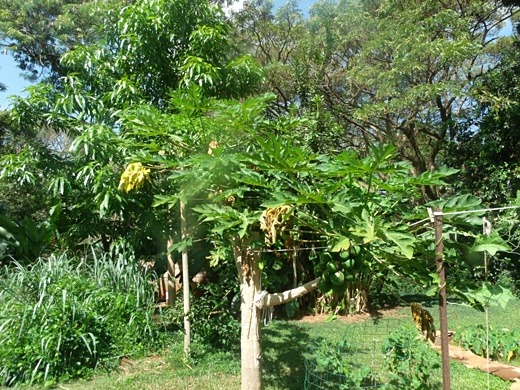
 Image above:In this backyard photo are in foreground a papaya trees with tomato plant below. Midrange another papaya is growing over an immature lime tree (that will mature after the papaya is gone. And below that young lime tree is a clutch of comfrey standing only 8" high. In the background mango and macadamia tree grow above haliconia. A lychee tree to far right (and beyond) towers over some Hawaiian pepper bushes and a taro bed. In the far distance is a towering monkeypod tree.
 
One of the permaculture design principles is to use as little space as possible. There are several reasons for this.

The less space you use the more natural environment is left untouched. Permaculture tries to interfere as little as possible with nature. (Of course, if we want to grow gardens and food we have to interfere somewhat...)

Even if you have a very small garden, by using it efficiently you can grow a year round supply of fresh herbs and vegetables and set some space aside for wildlife.

There is another advantage to smaller scale designs. They are a lot more time and energy efficient. Why travel across many acres every day when you can grow the same amount of crops in a fraction of the area?

You can minimize the space you use and maximize your harvest by using techniques like "stacking" and "guild planting".

Permaculture Design - Stacking

Stacking means to utilize vertical space. If you look at forests, in particular rainforests, you can see that there are many layers of plants stacked on top of each other (of course they all have their roots in the ground).

There are the low ground covers and creepers, then the herbs and grasses, then shrubs and smaller trees, and at the top the tall giants. Vines and climbers are rambling over everything as well. And they all occupy the same space on the ground.

When you read about permaculture you will sooner or later come across the term "food forest". Permaculture looks at how nature does it and tries to mimic that strategy. However, most gardens and farms devote any one area to only one crop. That's a waste of space and resources.

Take onions and carrots for examples. Most people would plant either one or the other in a bed/row. But they can occupy the same space.

Onions sit half above the ground, and their roots are very shallow, spreading out around the bulb. They mine only the surface for nutrients. And have a look at their leaves: they are poking straight up. Plenty of light left for others...

Carrot roots go straight down. Carrots don't care if the surface of the soil is already occupied by the onions. They find their food deeper down. And the big feathery carrot leaves make use of all the sunlight that otherwise would just heat up and dry out the soil.

Another classic example are sweet corn, beans and cucumbers. The tall corn acts as a trellis for the beans, and the cucumbers ramble over the ground. Three crops can grow in the space of one.
There is usually lots of light left under and around fruit trees. Utilize that space and grow something, like perennial herbs or low shrubs. Make extensive use of trellises and other structures. Let things grow up rather than have them spread out.

You will be surprised how much food you can fit into the smallest garden.

Permaculture Design - Guild Planting

Guild planting is a permaculture design term for stacking and planting different species together to make the maximum use of vertical space and of the resources available (nutrients, water, light). Permaculture guilds also use the concepts of companion planting and crop rotation.
There are so many benefits to guild planting, apart from the efficient use of space, that the topic of permaculture guilds deserves its own page. (Coming soon).

Permaculture Design - When You Get Started

There is one more aspect to permaculture design scale that I would like to talk about, and that is the scale of your design when you start out.

The biggest mistake that beginners make is to try to do too much at once. A huge vegetable plot is dug up and money is spent on seeds and seedlings, but the initial enthusiasm without exception exceeds the available time and energy by far!

There isn't enough time to mulch everything properly so the weeds move in and take over. There isn't enough compost available, or enough time to spread it, so the vegetables struggle. Sickly vegetables attract bugs and diseases. Of course the weeds don't care, they are still doing well...

The result is a neglected and overgrown garden, a frustrated gardener, and the common misconception that growing fruit and vegetables is just too much work and too hard.
Yes, design and plan your whole permaculture garden. Absolutely. Think it all through. But don't do it all at once. Start small. And most importantly, start right on your door step.

Remember the permaculture zoning principle? Start in zone 1 with one garden bed. Select a few species that are easy to grow, well suited to your conditions and that you love eating. If you use that space well you can grow a lot on a square meter or two.

Once you see it's all going well and you have time left over start the next project. And then the next, and the next...

See, once an area of your permaculture garden is well established it doesn't take up much time. If you designed it right it will mostly look after itself. It's only the initial set up that takes some time and energy.

One well looked after small garden bed on your door step will supply you with a lot more produce than a huge and neglected vegetable plot at the back of your garden.

Start small, and start on your door step, and you will enjoy a big harvest.

See also:
Ea O Ka Aina: Permaculture 1 - Growing Zones 3/22/10
Ea O Ka Aina: Permaculture 2 - Multiple Functions 3/29/10
Ea O Ka Aina: Permaculture 3 - Relative Location 5/24/12
Ea O Ka Aina: Permaculture 4 - Problems into Solutions 5/24/12
Ea O Ka Aina: Permaculture 5 - Design Diversity 5/24/12

.

Permaculture - Design Diversity

SUBHEAD: Part 5 of a 6 part series on Permaculture Design Guidelines.  

By Birgit Bradtke in Tropical Permaculture in 2010 - 
(http://www.tropicalpermaculture.com/permaculture-design-principles-5.html

 
 Image above: The area behind our house was mostly bananas. They exhausted the soil. We located bananas to another area and now have taro, cassava, yacon, papaya trees and a young avocado. In the distance is a starfruit tree. Photo by Juan Wilson 

Permaculture design aims for as much diversity and variety as possible. It is the exact opposite to conventional agriculture, which relies on huge monocultures and struggles with all the associated problems.

To mix and match as many different plants as possible has many advantages:
  • Different plants have different nutrient requirements. Put the right species together and you can fit a lot more plants into a small space without depleting the soil.
  • Different plants also have different shapes and heights, and different light requirements. You can fit a lot more plants into the space you have available than you might think possible...
  • Pests and diseases are often very specific in what they like. Having all the same plants growing together makes it easy for the bugs to find them (you're basically putting on a big feast for them), and it makes it easy for diseases to spread.
  • In a mixed and varied garden diseases rarely get a foothold. They can only move between related plants, so just don't plant too many of the same plants next to each other. Mix and spread them around.
  • Some bugs identify the plants they like by their look. If you mix say your cabbages with taller herbs and flowers and spread them around the garden they are much harder for cabbage moths to find. Moths can not recognize the cabbage as easily if it hides amongst dill and carrots and marigolds.
  • Any strong smelling herbs will confuse insects that find their food by scent.
  • If you keep the bugs searching for their favourite plants a lizard or bird can get the bugs before the bugs get your best broccoli.
  • Beneficial insects have different food requirements altogether. Obviously they don't live off your vegetables or they wouldn't be beneficial insects but bad bugs, right? So you need other plants as well.
  • The more different species you mix in with your food crops and the more native species you manage to fit in your garden, the more local wildlife and beneficial insects will take up residence.
  • Lizards, frogs, birds and good bugs all help keeping things like bad bugs and snails under control.
  • Some plants from different species really like growing together and benefit each other. I'm sure you heard of companion planting. Permaculture designs make use of those connections.
  • There are many different varieties of individual vegetables. Some tomato varieties are particularly nice for eating fresh, some are good for bottling. Some varieties fruit earlier, some later. Mix them and you will have a longer tomato season.
  • Every variety has slightly different preferences regarding soil and climate. Some may do better in your garden than others. Some are resistant to certain diseases. It's worth tracking down the old heirloom varieties and planting two or three different kinds rather than relying on just one species.
  • Mix in some deep rooted plants to capture the nutrients that leach past the reach of the more shallow rooted vegetables. That way nothing gets wasted.
And that are just some of the benefits of diversity in your garden. The more variety a design has, the more successful and stable the system will be.

Have a look at nature, a forest, a wildflower meadow, a wetland... There is no single area that has only one plant species. It's always a mixture of species that are suited to the conditions and support each other.

I think the hardest thing to do when starting with permaculture design is to let go of the idea that a food or vegetable garden has to be a separate plot, away from the rest of the garden, that things have to grow in rows or in their allotted beds, that the orchard is a different part again and has only fruit trees... and so on and so forth.

Forget all that. It doesn't make sense!
Permaculture design is not about making a vegetable garden. It's about integrating food plants into your garden while creating a healthy and balanced ecological system. Because it's the much smarter and easier way to grow fruit and vegetables.

I don't have a vegetable garden. I do have a kitchen garden though. It's the area of my garden that is closest to my kitchen door, hence I call it my kitchen garden, which sounds nicer than zone 1. (That would be the proper permaculture term, but I'm not that hard core).

Sure, all my most used herbs and vegetables grow in that kitchen garden area, saves me running around more than necessary.

But there are also a few native trees that are always full of birds. There are flowers that I grow just for the sake of having pretty flowers, a beautifully scented vine climbing up one veranda post, some shrubs with berries that the birds like, some wildflowers that I leave alone to do what they like, two smaller fruit trees...

It wouldn't make sense to separate the food plants from the others. It works a lot better like this, for the vegetables, the birds and for me.

See Also:
Ea O Ka Aina: Permaculture 1 - Growing Zones 3/22/10
Ea O Ka Aina: Permaculture 2 - Multiple Functions 3/29/10
Ea O Ka Aina: Permaculture 3 - Relative Location 5/24/12
Ea O Ka Aina: Permaculture 4 - Problems into Solutions 5/24/12
Ea O Ka Aina: Permaculture 5 - Design Diversity 5/24/12
Ea O Ka Aina: Permaculture 6 - Use of Space 5/24/12 .

Permaculture - Problems to Solutions

SUBHEAD: Part 4 of a 6 part series on Permaculture Design Guidelines.  

By Birgit Bradtke in Tropical Permaculture in 2010 -
(http://www.tropicalpermaculture.com/permaculture-design-principles-4.html
   
Image above: The Opiuma tree (Pithecellobium dulce) is one I take down if its growing nearby. It thrives in Hanapepe Valley and in ten years can be a problem. Although it is a nitrogen fixer it is parasitic. Like Kiawi (Prosopis pallida) it grows without hindrance of grazing animals because of its dangerous thorns. But it is a weak soft wood that grows fast and relies on other trees to support it (like our mango or macadamia trees). Instead of hauling of the downed trunks to our "Green Slash" station nearby, I pile them up. They make an effective fence to keep the horses out of the garden areas and if high and dense enough can discourage wild pigs. However the piles of soft wood decompose quickly and becomes a host for a variety of small critters and mulch for other plants. Soon enough it enriches soil. We also use the medium size branches in the fire pit. Photo by Juan Wilson.

"You don't have a snail problem, you have a duck deficiency!"

That is this permaculture principle in a nutshell, summed up in one of Bill Mollison's most popular quotes.

If you see yourself confronted with a perceived problem, why not try and look at the situation from a different angle? Is there any way to use it to your advantage?

A common example for this permaculture principle, one that you will find cited in many permaculture books, is that low lying spot at the bottom end of your garden.

You know, the spot that's always muddy, where the water just won't drain away and you just can't get the lawn grass to grow...

You have the perfect location for a pond, or a bog garden with swamp plants. Thought about growing watercress, water chestnuts, or kangkong (a tropical water spinach)? How about iris, primulas and lilies? Many flowers are suited to boggy spots. The ducks you are getting for eggs and to clean up your snails will love it, too.

Got an ugly wall? If it gets sunlight it will help you to grow frost sensitive species outside their range. The wall stores the heat from the sun over night and keeps your lemon or avocado tree warm. You can hide the ugliness behind some heat loving trellised fruit.

So the builders left a pile of rubble behind? Any chance of turning it into a rock garden? Throw on some soil, collect a few better looking rocks to place on top of the rubble, and look for plants that like to grow on rocks. Now you have a feature instead.

When the builders cleared the area for my house, they left behind a huge pile of dead shrubs, trees, and grass mixed with soil. I don't own any machinery to remove it and didn't want to hire any. I just asked them to push it out of the way a bit, towards the other side of what would become the driveway.

Then I planted a circle of coconut palms around it. (I live in a warm climate, you can use species suited to your conditions). I left an opening wide enough to back a trailer into it, and invited all neighbours to dump their "garden refuse" there, instead of burning it or taking it to the rubbish tip. (Yes, that's what they usually do with it.) One massive compost pile...

I continue to use this area for bulky prunings, whole trees or branches and similar stuff. Saves me cutting it up or shredding it.

The palms are thriving and I never have to mulch or fertilize them.

I later interplanted them with suitable shrubs and flowers and more. (Heliconias, turmeric, papayas, sweet potato, guavas...)

You can't see the pile anymore.  

Everything is thriving and I never did any work other than stick cuttings or tubers in the ground and throw a few seeds around...

The inside is now totally sheltered from any winds and is always very humid because of the thick vegetation. I'm going to grow rambutans there. That's a tree that thinks my climate is not tropical enough. Well, inside my coconut circle it is! Everybody is happy.

The permaculture principle of turning problems into solutions goes hand in hand with one of the main ideas at the core of permaculture: working with nature rather than against it.

There is no point in trying to create a lush tropical garden if you live in a desert climate. There are stunning succulents to add aesthetic appeal, and many useful plants that get by with very little water, like dragon fruit and pineapple, to name two delicious examples.

Don't waste your money, time and energy by trying to force something that nature never intended to happen.

Look creatively at what you already have. Try to see the benefits and look at ways to use the situation to your advantage.

What I like best about this permaculture principle is that it applies to the rest of our life as well. Next time you face a problem remember this principle and search for the good in the situation. It's always there, all it takes is the willingness to see it.

See Also:
Ea O Ka Aina: Permaculture 1 - Growing Zones 3/22/10
Ea O Ka Aina: Permaculture 2 - Multiple Functions 3/29/10
Ea O Ka Aina: Permaculture 3 - Relative Location 5/24/12
Ea O Ka Aina: Permaculture 4 - Problems into Solutions 5/24/12
Ea O Ka Aina: Permaculture 5 - Design Diversity 5/24/12
Ea O Ka Aina: Permaculture 6 - Use of Space 5/24/12

 .

Permaculture - Relative Location

SUBHEAD: Part 3 of a 6 part series on Permaculture Design Guidelines.  

By Birgit Bradtke in Tropical Permaculture in 2010 -
(http://www.tropicalpermaculture.com/permaculture-design-principles-3.html


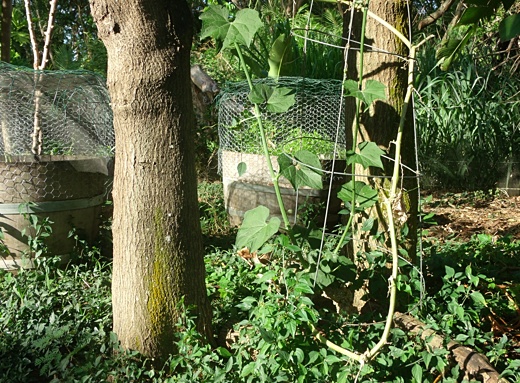
Image above: The tree Haole Koa (Leucaena leucocephala) is considered a weed tree in Hawaii. They rarely get more than an inch or two in trunk diameter. I removed many of the immature trees, but left several in certain places. The oldest of these trees are about 25 years old and are as big as 10" in diameter. They grow easily in the dry clay of Hanapepe Valley. As mature trees they provide a light shade that helps delicate leafed food plants (in wooden tubs) and on the ground keep from burning. They also provide support for chayote and other climbing food plants. The haole koa helps them with its efficient nitrogen fixing. When its life cycle is over its a handy source of dense, hard, firewood. I've noticed that our young hens when first out of the coop seem to relish the tiny leaves of young haole koa they can reach. Photo by Juan Wilson.
 
The permaculture principle of relative location is where that whole permaculture design thing starts to come together.

Here we look at the location of your garden elements in relation to each other. The aim is to place the elements in your permaculture garden so that one fulfills the needs of the other. It's all about connections.

If there is a task in your garden that is laborious, repetitive, or in any other way not much fun, there is probably a better way of doing it, or arranging for nature to do it for you.

The easiest way to explain this is again with examples:

On the previous page I looked at the multiple functions of each permaculture design element, and for an example I used one of my compost piles. Now let's look at how relative location makes the most of those functions and saves me a lot of time and work:

Whenever I start a new compost pile I put it under one of my favorite fruit trees, under the edge of the canopy.

Every time it rains, valuable nutrients get washed out of the pile. It's the same effect that you use when making compost tea by soaking compost in water. Instead of that valuable liquid fertilizer being lost in the ground, the tree will take it up and thrive (the edge of the canopy is where most of a tree's feeder roots are located).  

I saved myself fertilizing the tree.

I use a circle of wire mesh to enclose my compost piles (it's flexible, can easily be moved and doesn't rot). Because the pile sits on the edge of the canopy, the outside gets enough light to grow plants. I usually grow a couple of tomato plants on that side.  

I just saved myself building a tomato trellis AND fertilizing the tomato.

Of course the tomato will help itself to all the goodness in the compost.
When I empty the compost bucket onto the compost pile I pick the tomatoes that are ready.  

Just saved myself an extra trip into the garden.

When the tomato plant is finished I pull it up and throw it on the compost.  

Saved myself another trip.

To return for a second to the multiple functions:
The tomato plant...
  • gives me tomatoes,
  • gives my chickens the odd bug eaten or rotten tomato (which they love),
  • shields the ugly compost pile from view (a loaded tomato bush is much prettier),
  • shades the sunny side of the compost pile, you don't want a compost pile to dry out,
  • and in the end it provides nutrients for the tree when it is turned into compost.
The tree...
  • shades the compost pile and prevents it from drying out,
  • salvages the nutrients that leach out of the pile, and turns them into leaves that will eventually turn into mulch on the ground,
  • is home to lots of birds that help with insect control, so I end up with more tomatoes than the chickens get.
The tree, compost pile and tomato bushes in this example all work together and look after one another, and that means less work for me.

Remember, I'm so intrigued with permaculture design because I'm lazy. All I do in the end is pick what I need for my pasta sauce and salad. I only wish I could find somebody to cook it for me!

Here is some more permaculture design inspiration:
Herbs like dill and coriander attract predatory insects ("good bugs" that eat the "bad bugs"). Those herbs also self seed every year, so they are great for growing under fruit trees. They don't need to grow in rows there, you can let them self seed.  

That's one less task for you.

The good bugs, which love the flowers of the herbs, will save you spraying, and nobody likes spraying.

My kitchen garden is located between the house and the chicken pen. I collect garden refuse on one way (chickens love caterpillar riddled greens), and on the way back I pick the salad for dinner, (caterpillar free leaves, the chickens and me usually end up going halves that way).

Grow messy fruit trees inside the chicken yard. Pick what you want, and don't worry about the rest. Saves on feeding the chickens, there's no need to clean up fallen fruit and no need to fertilize the tree.

The chickens take care of all that.

I put my bird bath where I can see it from the kitchen sink. Doing the dishes is one task that I haven't managed to outsource to some garden creature yet, so anything that makes it more pleasant needs to be done.

Making the gardener happy is an important function of garden elements too!

Let me repeat my opening statement. If there is a task in your garden that is laborious, repetitive, or in any other way not much fun, there is probably a better way of doing it, or arranging for nature to do it for you.

The list above gives examples for permaculture design in bigger gardens, but even if yours is much smaller, this should get you started thinking in the right direction.

Can you see how, if you think things through ahead, everything can beautifully work together so you have less work?

Make yourself a cup of tea, sit down in your favorite garden chair, (that's what gardening is all about) and brainstorm some outsourcing strategies.

See also:
Ea O Ka Aina: Permaculture 1 - Growing Zones 3/22/10
Ea O Ka Aina: Permaculture 2 - Multiple Functions 3/29/10
Ea O Ka Aina: Permaculture 3 - Relative Location 5/24/12
Ea O Ka Aina: Permaculture 4 - Problems into Solutions 5/24/12
Ea O Ka Aina: Permaculture 5 - Design Diversity 5/24/12
Ea O Ka Aina: Permaculture 6 - Use of Space 5/24/12 .

Drier Tropics Ahead

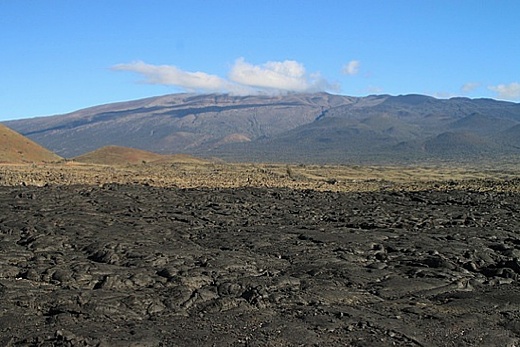
SUBHEAD: Man-made pollution is shifting the tropics and sub-tropics to the poles. By Mat McDermott on 23 May 2012 for TgreeHugger - (http://www.treehugger.com/climate-change/man-made-pollution-shifting-topics-and-sub-tropics-poleward.html) [IB Editor's note: This is particularly bad news for Hawaii. If global warming reduces rain to our archipelago there will be no where to import it from. We will become a rock.] Image above: Mount Mauna Kea on the Big Island as seen from Saddle Road. From (http://blog.travelpod.com/travel-photo/drfumblefinger/1/1299533075/mauna-kea-from-saddle-road.jpg/tpod.html).

We've reported before on how climate change is expanding the tropics and sub-tropical zones towards the poles. Now there's some new research showing how man-made pollution, such as black carbon soot, is contributing to this poleward shift.

Think Progress reports on a new study, published in Nature:

Black carbon aerosols and tropospheric ozone, both man-made pollutants emitted predominantly in the Northern Hemisphere's low- to mid-latitudes, are most likely pushing the boundary of the tropics further poleward in that hemisphere.

This expansion of the tropics has been happening at a rate of 0.7° latitude per decade.

As for the potential impact of this, lead author Robert Allen says:


If the tropics are moving poleward, then the sub-tropics will become even drier. If a poleward displacement of the mid-latitude storm tracks also occurs, this will shift mid-latitude precipitation poleward, impacting regional agriculture, economy, and society.

For example, the southern portions of the United States may get drier if the storm systems move further north than they were 30 years ago. Indeed, some climate models have been showing a steady drying of the subtropics, accompanied by an increase in precipitation in higher mid-latitudes. The expansion of the tropical belt that we attribute to black carbon and tropospheric ozone in our work is consistent with the poleward displacement of precipitation seen in these models.

If there's some good news in this, it's that reducing black carbon soot is increasingly on the international agenda, and that compared to other climate pollutants its effects are very short-lived once the source of the pollution is eliminated.

.

Decadal Nuclear Meltdowns

SUBHEAD: Statistically there will be another nuclear reactor meltdown about every ten years.  

By Brian Merchant on 23 May 2012 for TreeHugger -  
(http://www.treehugger.com/energy-disasters/coming-years-nuclear-meltdowns-occur-200-times-more-often-thought-report.html)

 
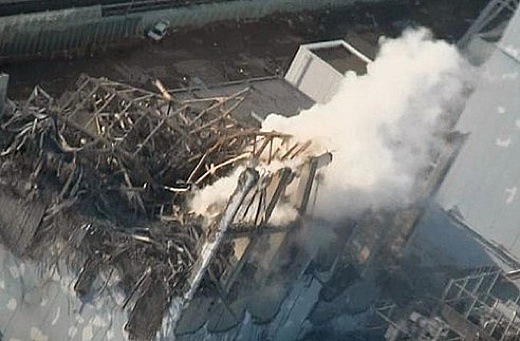
Image above: Radioactive steam plumes off the wreckage of Fukushima Daiichi #3 Reactor. From original article.

Headline got your attention, didn't it? If it didn't, I can only assume you're the most hardened, apocalypse-embracing survivalist on the blogosphere. As for the rest of us, the prospect seems terrifying, at least at first. A new report from the Max Planck Institute has determined that going forward, we're likely to see many more severe accidents at nuclear reactors than we'd previously anticipated.

As in, some 200 times more often that previously calculated. But don't bolt for the fallout shelter just yet; there are caveats aplenty to consider here.

Here's Science Daily parsing the findings:
Catastrophic nuclear accidents such as the core meltdowns in Chernobyl and Fukushima are more likely to happen than previously assumed. Based on the operating hours of all civil nuclear reactors and the number of nuclear meltdowns that have occurred, scientists at the Max Planck Institute for Chemistry in Mainz have calculated that such events may occur once every 10 to 20 years (based on the current number of reactors) -- some 200 times more often than estimated in the past. The researchers also determined that, in the event of such a major accident, half of the radioactive caesium-137 would be spread over an area of more than 1,000 kilometres away from the nuclear reactor.


Obviously, that "200 times more" figure is an upgrade from a super-conservative estimate, one made by the US Nuclear Regulatory Committee in 1990. In reality, it means we should gear up for another Fukushima every decade or so. With 440 nuclear reactors worldwide, and 60 more waiting in the wings, MPIC has determined that further meltdowns are imminent, just a matter of time. Which is a little foreboding, to say the least—and nothing stirs the popular imagination like nuclear disaster.

But perhaps it's not time to panic. Two other reports released recently—one from the UN and one from the World Health Organization—show that the radiation released wasn't as bad as previously feared. None of the deaths from the struggle to secure Fukushima's reactors were from radiation, for instance.

Nature reports that the WHO's "preliminary estimate of the radiation dose received by the public ... is mostly good news — the doses are very low, and very few cancers would be expected as a result." And ABC notes that in the UN's "124-page report, it added that neighboring countries had levels similar to normal background radiation and for the rest of the world there was some minor exposure through food," while there were some areas in Japan where radiation was just above cancer-causing levels.

Both reports seem to confirm that the radiation released in the wake of the disaster haven't led to the far-reaching impacts feared at the time of the catastrophe. Each ought to bolster the arguments of those like George Monbiot, the environmentalist who famously endorsed nuclear power after deeming the disaster relatively benign, who wrote in his controversial column at the time: "I would prefer to see the entire sector shut down, if there were harmless alternatives. But there are no ideal solutions ... Atomic energy has just been subjected to one of the harshest of possible tests, and the impact on people and the planet has been small."

With that in mind, the question becomes this: are we willing to suffer a nuclear meltdown every 10-20 years in exchange for carbon-free power? Remember, climate change is accelerating, China is still building coal plants—yet activists still hone in on nuke stations. I'm no great lover of nuclear: it's expensive, creates a toxic waste problem, and is, yes, more dangerous than other energy sources on the menu. But the transition to renewables is already taking far too long, and coal plants kill far more people each and every day than Fukushima did all told. Coal—which is the prime driver for climate change—should be the public enemy number one, even if it is less frightening on a visceral level.

It might sounds callous, and there's no doubt that what happened at Fukushima was a great tragedy, but a coldly pragmatic prognosis might be that the world can possibly absorb a handful more nuclear disasters—but not a continued reliance on coal.
.

Eco Warriors Arise!

SUBHEAD: We are either threatening the planet, or finding ways to a sustainable and a just future.

By Vandana Shiva on 23 May 2012 for The Asian Age -  
(http://www.asianage.com/columnists/eco-warriors-arise-128)

 
Image above: Jumbo container ships are the means of spreading corporate globalization. From (http://www.ibtimes.com/articles/269773/20111219/globalization-vote-today-american-people-ok.htm).  

In June 2012, world leaders along with thousands of participants from governments, NGOs and environmental groups as well as the private sector will come together in Rio de Janeiro in Brazil for Rio+20, 20 years after the Earth Summit was organized by the UN in 1992, to address urgent ecological challenges such as extinction of species, erosion of biodiversity and climate change. The Earth Summit gave us two significant international environmental laws — the United Nations Convention on Biological Diversity (UNCBD) and the United Nations Framework Convention on Climate Change (UNFCCC). It also gave us the Rio principles, including the precautionary principle, and the “polluter pays” principle.

The world has changed radically since 1992 and, sadly, not for the better. Ecological sustainability has been systematically sacrificed for a particular model of economy, which itself is in crisis.
The year 1995 saw a tectonic shift in values guiding our decisions together with a shift with regard to those who make those decisions. It was the year the World Trade Organization (WTO) was established. Whereas the Rio principles — shaped by ecological movements, ecological science and by sovereign governments — were informed by values of ecological sustainability, social justice and economic equity across and within the countries, the WTO introduced the paradigm of global corporate rule, changing the values and structures of governance and decision-making through free trade agreements between nations.

Conservation of the earth’s resources and equitable sharing were over the years replaced by greed and the grabbing and privatization of resources across the globe. Sustainable economies and societies were replaced by non-sustainable production systems and a relentless drive to spread the virus of consumerism. Decision-making moved into the hands of global corporations, both directly and indirectly. It is, therefore, not surprising that when we meet at Rio+ 20, the ecological crisis is deeper than what it was at the time of the Earth Summit.

While the corporations wrote the rules of WTO and global free trade, they also subverted the environmental rules that were supposed to regulate their commercial activities to ensure sustainability. They have mutated environmental laws that were supposed to regulate commerce into laws for commercialising and commodifying the earth’s resources and ecological functions. They have subverted the Climate Treaty (derived from UNFCCC) and the Biodiversity Convention (UNCBD).

Instead of polluters paying and being regulated at the national and international level to stop pollution, the biggest atmospheric polluters who have contributed most to climate change are laying the rules on how to deal with climate change. The biotechnology industry that has caused genetic pollution by releasing genetically engineered organisms into the environment is laying down the rules on how to manage biodiversity and govern biosafety. The attempt to introduce Brai, the Biotechnology Regulatory Authority of India, is an example of this.

The original objective of the Climate Treaty was to put in place legally binding emission reduction targets for the historical polluters, who in the pre-globalization era were concentrated in the rich industrial North. The treaty was destroyed in 2009 at the Climate Summit in Copenhagen by an attempt to replace it with a non-binding Copenhagen Accord. The Kyoto Protocol of 1997 had introduced emissions trading, which, in effect, meant that the polluter got paid, not punished. The big industrial polluters were first paid by allowing them to get private rights to our atmospheric commons. Then the polluters got paid by making profits through carbon trading. Profits increased and emissions also increased. Climate chaos is worse today than it was in 1992. And the polluters look for new avenues to make money and grab resources. Now they want to commodify the ecological functions and services that nature provides. This will be the big climate debate in Rio+20.

The objective of Climate Treaty was the conservation of biodiversity and its sustainable and equitable use. That objective has been subverted and is being increasingly replaced by objectives of trade in genetic resources, profits and privatization. The Nagoya Protocol on Access to Genetic Resources and Benefit Sharing, adopted in 2010, restricts access only to global players, ignoring the access of local communities. It treats as utilization only utilization for research and commerce, ignoring the survival needs of local communities. It is, in fact, legalized biopiracy as it enables transfer of genetic wealth from local communities to global corporations. It undermines the biodiversity economies and cultures that have conserved biodiversity and are necessary for conserving it for the future.

In both the Climate Treaty and the Biodiversity Convention, trade and commerce is replacing conservation and eroding the commons. Rights of corporations are edging out the rights of people.
And this change in values, from conserving and sharing to exploiting and privatising, is justified in the name of economic progress and economic growth. Yet, the economic paradigm for which the earth and the society are being pillaged and destroyed is itself in deep crisis. Look at the number of farmers committing suicides and hunger and malnutrition in India.

A paradigm shift is desperately needed. And it will not come from those who have created the crisis and who are looking for new ways to extend the life of the greed economy by commodifying and privatizing all life on earth. They will come to Rio+20 to paint the “greed economy” green, and call it the “green economy”. And they will have powerful governments on their side.

Movements for ecological sustainability, social justice and deep democracy will come to Rio+20 with another paradigm — one centered on the rights of mother earth, the rights of future generations, of women, indigenous communities and farmers. It is this epic contest between a destructive and dying outmoded paradigm and a life-enhancing emergent paradigm that will be the most significant aspect of Rio+20. The outcome of this contest will determine the future of humanity.

None of us are immune from the crisis or the response to it. None of us are bystanders. We are all immersed in the processes that are either threatening the planet and our own future, or finding creative ways to shape a sustainable and a just future. Every day is an earth summit in our lives. And each of us is negotiating our collective fate on earth.

• Vandana Shiva is a philosopher, environmental activist, and eco feminist.Shiva, currently based in Delhi, has authored more than 20 books and over 500 papers in leading scientific and technical journals.She was trained as a physicist and received her Ph.D. in physics from the University of Western Ontario, Canada. She was awarded the Right Livelihood Award in 1993. She is the founder of Navdanya http://www.navdanya.org


.

Night Thoughts in Hagsgate

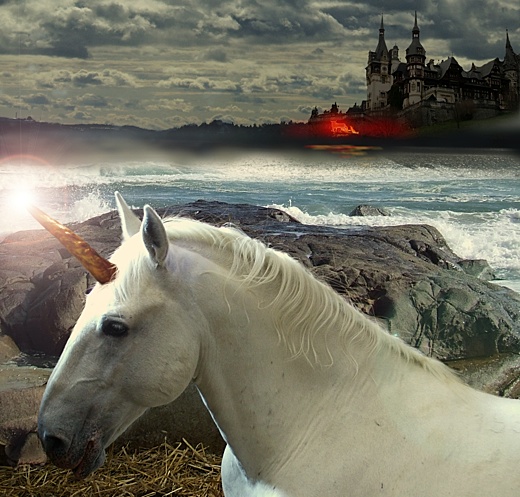
SUBHEAD: There’s the choice: share the feast and share the fall, or wake up and walk away. Which will you do? By John Michael Greer on 23 May 2012 for the Archdruid Report - (http://thearchdruidreport.blogspot.com/2012/05/night-thoughts-in-hagsgate.html) Image above: The Last Unicorn before the end of Hagsgate. From (http://www.blackmagicmarkers.com/images/photoshoppery/The%20Last%20Unicorn.jpg).
There are times, at least for me, when the fate in store for industrial society can be seen with more than the usual clarity. I’m thinking just now of the time I looked out a train window and saw an abandoned factory, not yet twenty years old, with foot-high saplings rising incongruously from the gutter around the roof; or of another time, in a weekend flea market here in Cumberland, when I found a kid’s book on space travel I’d loved as a child, flipped through the pages, and found myself face to face with the gap between the shining future we were supposed to have by now and the mess that was actually waiting for us when we got here.
I’m pondering another of those moments now, but the trigger this time isn’t a trackside glimpse or a memento in a repurposed warehouse. It’s the current flood of news stories, opinion pieces, and public statements by pundits of various kinds, all focused on one theme—the supposed irrelevance of peak oil.
Those of my readers who have managed to miss that torrent so far may find it helpful to spare a glance at this typical example of the species, which was forwarded to me by one of this blog’s readers (tip of the archdruidical hat to Hereward). The author, Timothy Worstall, is a senior fellow at the Adam Smith Institute in London, and a specialist in rare earth elements; he starts off by complaining that he doesn’t understand peak oil, goes on to demonstrate that fact in impressive detail, and finishes up with the sort of whopper that normally earns an F on a freshman paper in Geology 101. No, Mr. Worstall, kerogen shales such as the Green River formation are not at all the same thing as oil-bearing shales such as the Bakken formation, and nobody yet has a viable way to extract oil from kerogen shales; I trust you provide better information to clients who ask your advice about rare earth elements.
I wish I could say that this is an extreme example, but it’s not. Worstall has at least grasped the fact that peak oil has to do the rate at which oil can be produced, which is more than most critics of the concept manage, and his confusion between kerogen shales and oil-bearing shales—though it could have been cleared up by five minutes of research—is common among people who are poorly informed about petroleum geology. Look at other efforts to dismiss peak oil and you’ll find worse. The question I’d like to raise is why this outpouring of misinformation and denial happens to be in full flood right now.
It’s a very odd time for peak oil to be dismissed, all things considered. Back in the late 1990s, when the first peak oil researchers began to exchange data and forecasts, several leading figures in the newborn movement made very straightforward predictions about what was going to happen. They predicted that global production of crude oil would peak in the near future, and decline thereafter; they predicted that this would cause the price of oil and petroleum products to skyrocket, imposing severe costs on the global economy and triggering economic contraction; some, though this was controversial, predicted that attempts to replace petroleum with alternative energy sources would fail because of net energy and other noneconomic factors.
These assertions were rejected with quite some heat by the few people outside the scene who bothered to notice. Critics of peak oil insisted, first, that increasing demand for petroleum would make additional capital available for the hunt for new oil fields, which would of course be found, and thus allow petroleum production to grow indefinitely; second, that if the price of oil did rise sharply, that would simply make other energy sources viable, releasing a flood of energy onto the market that would drive prices back down; and third, that human ingenuity, the free market, or some other allegedly omnipotent force would certainly be able to find limitless new energy resources and prove all the pessimists wrong.
A decade and a half later, it’s instructive to see how those predictions turned out. The short form is that the peak oil researchers were correct while their critics were shoveling smoke. The production of crude oil peaked in 2005; the price of oil spiked to levels that pundits insisted it could never reach, and has moved raggedly upward since the initial spike and crash to today’s value well above $100 a barrel; the global economy proceeded to lurch into serious trouble, and remains in a state of perpetual crisis that nobody in charge seems to be able to understand or fix; and a series of boomlets in hydrogen, ethanol, algal biodiesel and other much-hyped alternative energy sources rose and crashed as it turned out that no matter what oil cost, they cost more.
The current bubble in shale gas is to some extent an exception to that last rule, but it’s hardly the bonanza that the media likes to claim. Partly, shale gas production is simply a side effect of the fact that natural gas liquids, which occur in some shale gas deposits, can be sold as a petroleum substitute at very good prices; partly, shale gas has morphed in recent years into what Wall Street aficionados call a pump-and-dump operation—a bit of dubious marketing in which operators boost the price of a stock, then sell it at the inflated price to suckers, who are sure the price will go up further and are therefore left holding the bag when it goes down instead. (I trust none of my readers have put their life savings into shale gas companies.)
Still, there’s another factor to the shale gas bubble, and also to the boom in oil-bearing shale that has filled so many glowing headlines in recent years, and will fill so many gloomy headlines a few years further on. Both are being ballyhooed as game-changing breakthroughs, even though they’re nothing of the kind—hydrofracturing ("fracking") has been a common practice for forty years, and the Bakken shale was discovered long ago. The fracking boom is simply one of the many ways in which the world is scraping low-grade fuels out of the bottom of the barrel, just as peak oil researchers have predicted it would. Their breakthrough status is entirely a product of hype. Behind that hype, I’ve come to think, and the comparable hype that surrounded the hydrogen economy, corn ethanol, and all the other failed pseudosolutions to our predicament, lies a very specific motive: the desire to find some reason, however fatuous, to insist that it’s all right to keep on wallowing in the benefits of today’s wildly unsustainable energy and resource consumption, instead of getting ready for the far less lavish world that’s going to follow in short order.
That motive shapes a dizzyingly large share of the collective conversation of our time. Consider the book review I critiqued in last week’s post. One of the bits of rhetoric the reviewer used to dismiss my suggestion that social change has to be founded in personal change was the claim that "you can’t end rape [just] by not raping anyone." Perhaps so, but as one of my readers pointed out (tip of the archdruidical hat here to Ozark Chinquapin), someone who claimed to oppose rape would normally be expected to demonstrate that commitment by, at the very least, not raping anyone; an antirape movement that claimed that rapes committed by its members didn’t matter, because it was working to end rape everywhere, would rightly be dismissed as an exercise in extreme hypocrisy. Yet you’ll hear the identical logic from people in a good deal of the environmental movement, who insist that they can’t be bothered to lighten the burden their lifestyles place on the planet because they’re going to save the Earth all at once.
Work out the practical implications of that argument, in other words, and it amounts to a justification for clinging to the comforts and privileges of the modern industrial lifestyle even at the expense of one’s supposed ideals. That’s also the implication of the denunciations of peak oil I discussed at the beginning of this post, of course, and there are plenty of other ways of cloaking that same desire. Whether you expect solar power, thorium reactors, algal biodiesel or some other exciting new energy source to save the day; whether you anticipate the imminent arrival of the Rapture, the Singularity, the Space Brothers, a world-ending cataclysm, or a great leap of consciousness to some higher plane; or whether you simply tell yourself, as so many Americans do these days, "I’m sure they’ll think of something"—if you look at that belief honestly, dear reader, doesn’t it work out to an excuse that lets you claim that it really is okay for you to keep enjoying whatever you see as your share of the goodies churned out by the industrial machine?
It’s here, in turn, that I glance down and see the void opening up beneath the foundations of that same machine—and it’s also here that I find myself remembering a harrowing detail from one of the favorite books of my teen years, Peter Beagle’s brilliant fantasy The Last Unicorn.
I’m not even going to try to sketch out the plot of the book as a whole. The point that’s relevant here centers on a place, the town of Hagsgate, and its people, who are very rich. They live in the kingdom ruled by King Haggard, the villain of the story; they profit mightily from his rule, and are exquisitely careful not to notice anything that bears too closely on the terrifying evil that lies at the heart of his realm. They are also, as it happens, under a witch’s curse.
It occurs to me that some of my readers may not be familiar with the structure and function of curses. (What do they teach children these days?) The sort of thing you get in bad modern remakes of fairy tales, where someone inoffensive gets burdened with a dire fate that would not otherwise befall them, is strictly amateur stuff. Professionals know that the curses that matter are the kind that unfold by their own inexorable logic from the actions and attitudes of the accursed. The witch or wizard who finds it necessary or appropriate to pronounce a curse doesn’t have to make anything happen; he or she simply says aloud the unmentionable realities of the situation, states the necessary consequences, and leaves. The efforts of the accursed to avoid falling victim to the curse, without actually changing the things that make the curse inevitable, then proceed to drive the curse to its fulfillment.
The witch who cursed Hagsgate was a thoroughly competent professional. Here’s what she said:
You whom Haggard holds in thrall,
Share his feast and share his fall.
You shall see your fortune flower
Till the torrent takes the tower.
Yet none but one of Hagsgate town
May bring the castle swirling down.
You’ll notice that, like any good curse, this one includes an escape hatch: skip Haggard’s feast and you skip the fall, too. Beagle’s story doesn’t mention anyone who used the escape hatch, but there will have been somebody. There always is; whether we’re talking about Númenor, the City of Destruction, the warren of the shining wire, or some other place where a curse is at work, someone’s going to walk away. That sounds very heroic in retrospect, but that’s not the way it works in practice. In practice, those who walk away are as often as not weeping hysterically, torn between the fear of giving up everything they know and the knowledge that leaving is the only choice left for them, and trying without much success not to listen to the taunts or feel the stones flung by those who stay behind.
If, as Ursula LeGuin says in one of her best stories, they seem to know where they are going, it’s because "anywhere but here" is an easy course to chart at first. Mind you, some never even make it out the city gates; some come stumbling back to town a few days or weeks or years later; some are never seen again, and pebbles will grow into moss-covered boulders before anybody finds out exactly what happened to them; still, there’s always one, or a few, or nine tall ships sailing from Andunië with stormwinds howling in the rigging, who leave and do something less foredoomed with their lives.
It’s the ones who stay behind, though, who are more relevant to the point I want to make. It’s very easy to stay behind. Early on, when walking away is an easy thing, the threat of the curse is so far off that it’s seductive to think you can stay in Hagsgate for just a little while longer and still escape. Later on, you’ve come to enjoy the practical benefits that being a citizen of Hagsgate has to offer; you’ve got personal and financial ties to the place, and so you come up with ornate theories packed with dubious logic and cherrypicked data to convince yourself that the curse isn’t real or that it will only affect other people. As the curse begins to work, in turn, you start making excuses, insisting that you did everything you could reasonably be expected to do, and it’s all somebody else’s fault anyway. Finally, when the full reality of your fate stares you in the face and your last chance of escape is almost gone, comes the terrible temptation to treat the price you’re about to pay as a measure of the value of what you’ve gotten by staying in Hagsgate, and you cling to it ever more frantically as it drags you down.
Now of course a witch didn’t actually put a curse on industrial society—at least, if one did, I haven’t heard about it—but fairy tales keep their hold on our collective imagination because they contain a wealth of valid wisdom, wrapped up in a compact and memorable form. To say that there’s a curse on industrial society is simply to use an archaic metaphor for a point I’ve been discussing in these essays since The Archdruid Report began six years ago, which is that the consequences of industrial society’s mismanagement of its relations with the planet will not go away just because we don’t want to deal with them. That metaphor has a range of relevant features, and one of them is that any effective response to the curse—or, if you will, the predicament of our time—has to begin by taking stock of the ways that each of us, as individuals, contributes by our own attitudes and actions to the mess we’re in, and then making appropriate changes.
After six years, I shouldn’t even have to say that daydreaming about running off to some conveniently unaffordable eco-homestead in the country doesn’t count. Unless you’re in a position to do that, and the vast majority of us aren’t, that’s simply another evasion. What’s required instead is the less romantic but far more productive task of adapting in place: figuring out how, living where you live now, you can place much less of a burden on the biosphere, and help other people do the same thing. It probably has to be said that perfection isn’t a reasonable expectation here—there’s a long learning curve, and our culture and built environment place significant obstacles in the way—but a great deal can be done nonetheless That can easily lead into activism of various kinds, for those who feel called to do that specific kind of work; it can also lead in plenty of other constructive directions.
Still, that’s not a popular message just now, and I’m guessing that it’s going to become a great deal more unpopular as industrial civilization stumbles deeper into crisis. It doesn’t require a witch’s curse to make people cling frantically to exactly those things that are destroying them and their future, just the psychology of previous investment and a few other standard self-defeating habits of the human mind. Still, there’s the choice: share the feast and share the fall, or wake up and walk away. Which will you do?
.