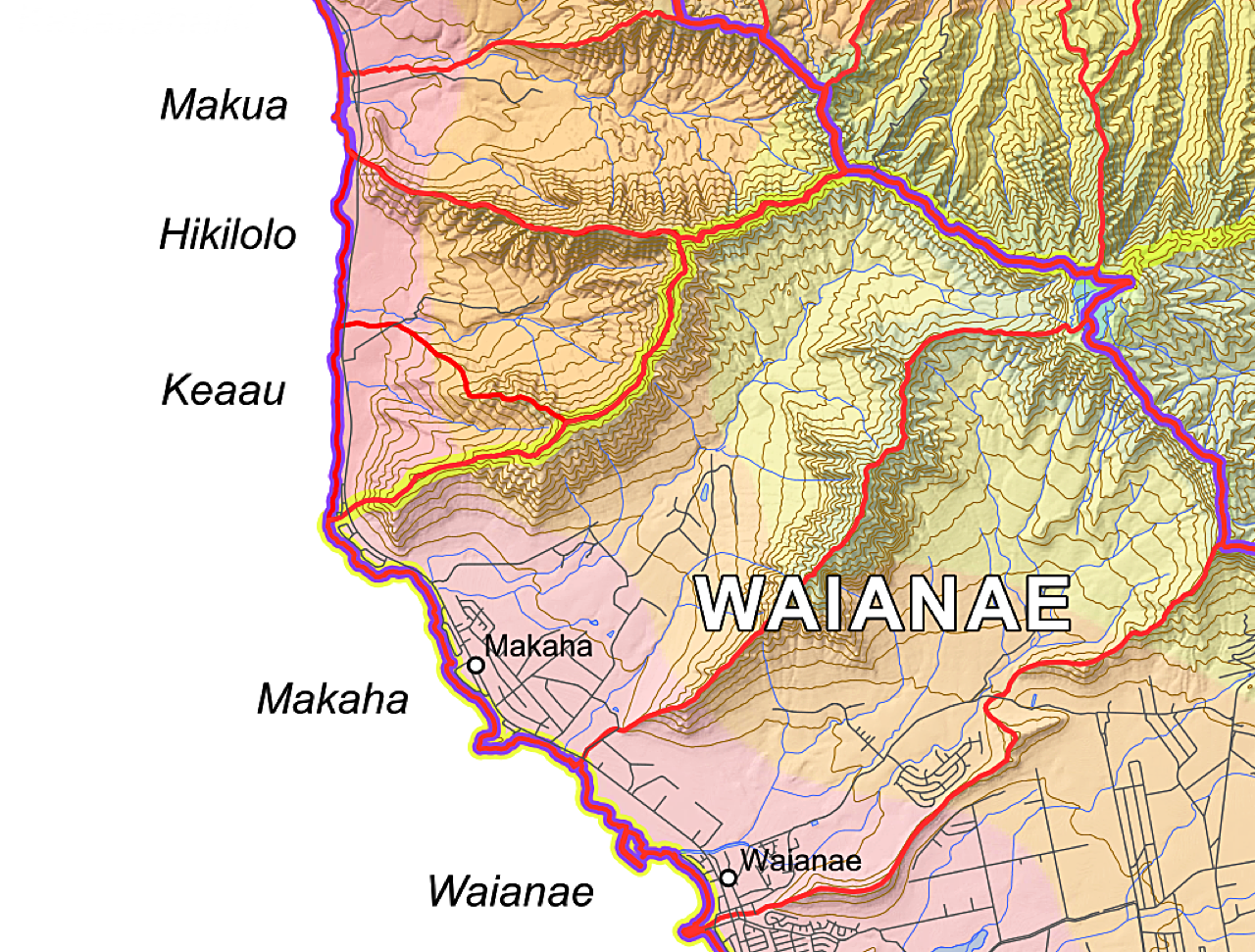
SUBHEAD: Fearing future development of a valley rich with Hawaiian history, community members want preservation.
By Blaze Lovell on 31 July 2017 for Civil Beat -
(http://www.civilbeat.org/2017/07/the-fight-to-save-ancient-hawaiian-archeological-sites/)
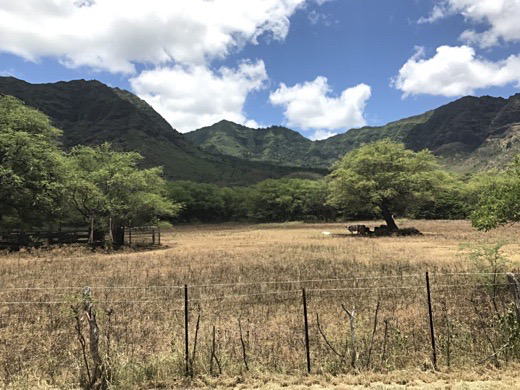
Image above: Tim Pickering, the owner of about 400 acres in Ohikilolo Valley. He said there are no plans now to develop the land. From original article.
This is a fight to save ancient Hawaiian archeological sites. Fearing future development of a Leeward valley rich with cultural history, some community members are pushing for preservation.
Glen Kila’s family has defended parts of the Waianae Coast from development for generations. The family traces its genealogy to the aboriginal inhabitants of the area.
They consider one of their most sacred sites to have been under threat by foreign developers and mainland owners since the 1980s.
Now, luxury developments in nearby Makaha have spawned a new round of worries that this area in Kea’au Valley, known as Ohikilolo, may face a similar fate if nothing is done to preserve the land.
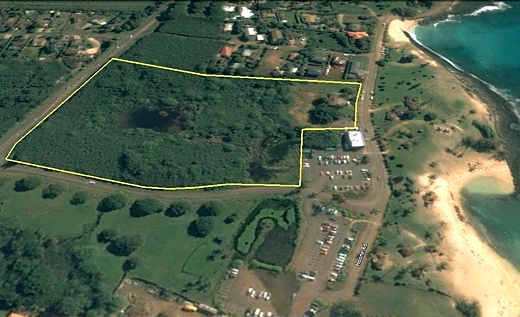
More than 600 acres of former ranchland in Ohikilolo have been eyed at various times as a possible landfill, golf course and luxury subdivision.
What is so important about this valley?
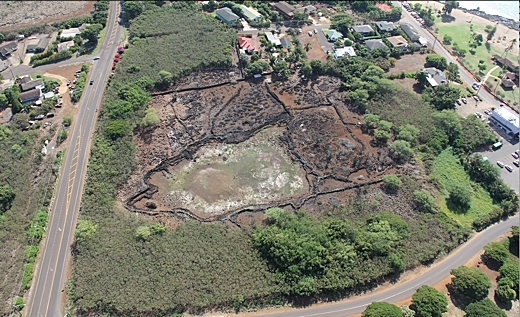
Drivers passing by the ranchland just off Farrington Highway see just trees and possibly some cows grazing in a field. But beneath the brush hides the densest collection of archeological sites on the island, according to an archeological study conducted in 1992.
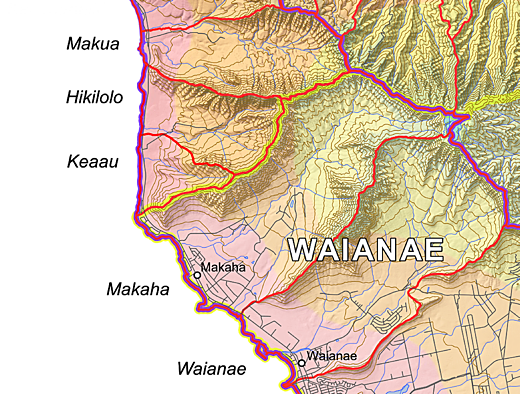
Image above: Detail part of of Moku & Ahupuaa map of leeward Oahu showing ahupuaa areas of Waianae including Keaau and Hikiolo done by Juan Wilson. Click to enlarge. From (http://www.islandbreath.org/hawaiinei/M6Oahu/M6OahuRasterFile.png).
The study was originally done for a proposed golf course, and researchers recorded 461 sites in just 60 acres of the valley.
What may look like piles of rocks to some people are actually the remains of a once-vibrant community that existed more than 1,500 years before the time of Kamehameha I.
Kila, a former teacher and principal on the Waianae Coast, is spearheading a movement to turn Ohikilolo into an area for kanaka maoli (Native Hawaiians) to practice their culture as well as a place for the public to learn about that culture.
“There’s a lot of history that hasn’t been shared … right now we are releasing it so that we can protect the land,” Kila said.
Other community members, including state Sen. Maile Shimabukuro, are on board with the idea of trying to preserve Ohikilolo.
Most of the land is owned by the Pickering family of Arizona, and any push toward creating a state conservation district in Ohikilolo would require approval by the state Board of Land and Natural Resources and cooperation from the family.
One of the family members, Tim Pickering, told Civil Beat that there are currently no plans to develop the area.
As a first step, community members have asked Shimabukuro to request that the state conduct a study that not only considers the archeological sites in the area, but also analyzes how those sites relate to Hawaiian culture. Such a study could be used to recommend the property to the National Registry of Historic Places.
Sacred Lands
The aboriginal families of the Waianae Coast considered Ohikilolo to be part of Kanehunamoku — the sacred lands of Kane, the Hawaiian sun deity.
They believe that in this valley, the first human, La’ila’i, was born. In the Kumulipo, the Hawaiian creation story, La’ila’i becomes the mother of the Hawaiian race.

Image above: From ().
Ohikilolo and the rest of the Kea’au Valley represent a complete ahupua’a, a land district stretching from the mountains to the sea.
Residents of each ahupua’a depended on the others for survival. Coastal dwellers would often trade their fish to valley residents for taro or sweet potatoes, for instance.
“It was a living community made of Native Hawaiians that took care of the land,” Kila said.
In Ohikilolo, the people adhered to the concept of Ka’anani’au — meaning to manage the beauty of time — that regulated land areas through wet and dry seasons.
Kila says the archeological sites could demonstrate the interplay between Native Hawaiian religion and culture. The 1992 study found tools for agriculture and fishing, rock piles that may have once been heiau (Hawaiian temples), foundations for dwellings and walls to divert water for farming.
“The archaeological remains here may be the last representative of a complete prehistoric settlement system on leeward Oahu,” the report said.
After being deeded to a servant of Kamehameha I, spending much of its history as a ranch, and getting glances from a Japanese corporation for a golf course and the city for a dump, parts of Ohikilolo became the property of the Pickerings.
Residents On The Lookout
Cynthia Rezentes, Nanakuli-Maili Neighborhood Board chairwoman, said possible development in Ohikilolo by the Pickerings has been an issue for seven years. In 2007, Robert Pickering acquired 735 acres of land in Ohikilolo and the surrounding area for $3.8 million, according to property documents.
Around 2010, the Pickerings first had the idea to put a luxury housing development on the property, Rezentes said.
Tim Pickering told Civil Beat that the land was never developed because he couldn’t find any investors nor could he negotiate retrofitting the area with roads and adding sewer lines. Pickering hasn’t filed for any building permits or conditional use permits on the agricultural land.
Residents were worried when they recently found a $3.5 million real estate listing from Chaney Brooks & Co. for the 60 acres that includes most of the archeological sites, but representatives of the real estate company told Civil Beat that the listing is from about six years ago and the property is no longer on the market.
In the time that Pickering had the property on the market, even creating a website to try to sell it himself, he only had one person who ever contacted him about it, but that “faded pretty fast,” he said.
“It’s just staying the way it is,” Pickering said. Development “wouldn’t happen for a long time if it happens at all.”
In March, residents worried that Makaha La, another development, would stretch into Ohikilolo.
But Tom Tisher, a real estate agent working with Makaha La, said that the new subdivision would be in Makaha, not Ohikilolo.
The potential for development of Ohikilolo still troubles some community members.
“It’s a waiting game to see whether or not they want to package something again,” Rezentes said. “But they need the draw. If you can get investors to tap into something like this you can potentially build something.”
Hiking To A Temple
On a recent weekend, Chris Oliveira took a small group of hikers up a Makaha hillside to a sacred site. The people of Waianae have traditionally been stubborn, said Oliveira, Kila’s nephew.
In fact, while other Hawaiians were converting to Protestantism, many who lived in Waianae became Catholic. Stories tell of the people’s ancestors being so bold as to call the fire goddess Pele a malihini — a foreigner, he said.
From the road, the hillside wouldn’t necessarily catch anyone’s eye. But the terraces are actually man-made retaining walls stacked to create a temple out of the mountain.
Hawaiians “believed that the preservation of land is more important than the ambitions of man,” Oliveira said. “You see constructions that add to the already natural surroundings … Who could build a bigger temple than this?”
The temple has been ravaged by time and desecrated by a large water pipe that once ran across the hill, Oliveira said.
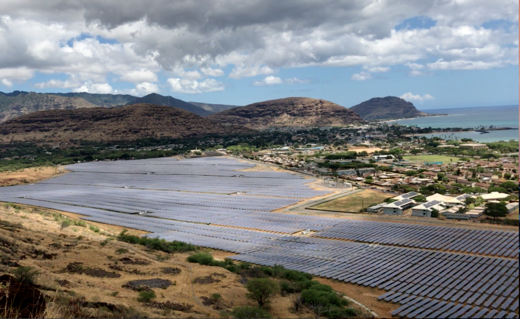
Image above: About 200 acres, parts of which contain burial sites and petroglyphs, are being used for a solar farm. From original article.
Next to the temple is a large solar farm covering burial sites and petroglyphs.
A solar farm and other military developments such as the Kaena Point Satellite Tracking Station and U.S. Army practice range in Makua Valley are just a few in a long line of developments that have covered up the history of the Waianae Coast, Kila said.
In World War II, the beach fronting Pokai Bay became a recreational center for military officers.
Kila’s relatives once owned portions of that land and refused to leave. They were onipa’a, he said — stubborn. When they resisted, the military shut off their water and electricity and moved them away in trucks.
In the 1960s, much of the coast was designated for hotel developments. Many landowners, including Kila’s family, stood to gain financially if they sold out to would-be hotel and condo builders, Kila said.
Pokai Bay was supposed to become a yacht harbor for residents who would have moved into condos along the coast. The development would have destroyed a heiau that is still used for cultural practices and ceremonies today, Kila said.
Kila’s family went door to door along the coast to convince property owners, as well as legislators who originally backed developers, to block the proposals. It worked. Now, the only buildings near Pokai Bay are the military recreational center, several small home and one apartment building.
The World As A Canoe
When Kila was being taught by his elders, no videotaping or even writing was allowed. Stories, prayers and chants needed to be remembered and passed on orally.
In addition, public sharing of their cultural practices was forbidden.
They were even reluctant to reveal the location of many sites for fear they would be destroyed.
He’s more open now, however, and wants to fight further development by educating the public on the cultural significance of different areas.
“We believe that by preserving Ohikilolo, not developing it, and expanding it as an educational system, the whole world can learn about who we are as human beings and our relationship with the ‘aina,” Kila said.
Kila and Oliveira run the Marae Ha’a Koa, a cultural learning center in Waianae. Its focus is the “preservation and perpetuation of the rich cultural heritage of the Waianae Coast,” according to its website.
Oliveira has taken the helm of education efforts on culture and regularly takes community members to historic sites. He also has authored several children’s books on Native Hawaiian culture.
Kila said his kuleana, or responsibility, is to pass on his knowledge; Oliveira’s is to spread, chronicle and contextualize it.
In the 1992 study, researchers recommended that the area surveyed in Ohikilolo should be recommended to the National Registry of Historic Places. The study was only done on about 60 acres of the Pickerings’ land, and some community members think more archeological sites exist in other areas of the valley.
To eventually protect the entirety of the valley, Kila has suggested the state conduct a Traditional Cultural Properties study.
TCPs go beyond analyzing physical features and include the cultural significance of an area.
Shimabukuro said she will contact the Historic Preservation Division of the state Department of Land and Natural Resources to see what can be done to begin the TCP process.
Community members have requested that she also ask for access to Ohikilolo for cultural practices.
Shimabukuro, who has been involved with preserving Ohikilolo since earlier this year, said that eventually she, and others in the community, want the land to be designated as a conservation district.
The state law for creating a conservation subzone in Ohikilolo includes cooperating with the landowner as well as creating maps and conducting additional studies of the area, according to state documents.
Because of its archeological sites, Ohikilolo could be eligible for the highest conservation subzone, protective, which would effectively ban most development there.
“This world is one canoe. If we jump up and down in a canoe, it hulis. It turns over, and we all perish,” Kila said. “We can’t have people hurting it or one group of people jumping up and down and turn the world into nothingness.”
Read the 1992 archeological study below.
(http://www.documentcloud.org/documents/3899943-Kea-au-Valley-Study-1992.html#document/p1)
• Blaze Lovell is an intern for Civil Beat and a senior at the University of Nevada Las Vegas. He was born and raised on Oahu and graduated from Pearl City High School.
.
By Blaze Lovell on 31 July 2017 for Civil Beat -
(http://www.civilbeat.org/2017/07/the-fight-to-save-ancient-hawaiian-archeological-sites/)
Image above: Tim Pickering, the owner of about 400 acres in Ohikilolo Valley. He said there are no plans now to develop the land. From original article.
This is a fight to save ancient Hawaiian archeological sites. Fearing future development of a Leeward valley rich with cultural history, some community members are pushing for preservation.
Glen Kila’s family has defended parts of the Waianae Coast from development for generations. The family traces its genealogy to the aboriginal inhabitants of the area.
They consider one of their most sacred sites to have been under threat by foreign developers and mainland owners since the 1980s.
Now, luxury developments in nearby Makaha have spawned a new round of worries that this area in Kea’au Valley, known as Ohikilolo, may face a similar fate if nothing is done to preserve the land.
More than 600 acres of former ranchland in Ohikilolo have been eyed at various times as a possible landfill, golf course and luxury subdivision.
What is so important about this valley?
Drivers passing by the ranchland just off Farrington Highway see just trees and possibly some cows grazing in a field. But beneath the brush hides the densest collection of archeological sites on the island, according to an archeological study conducted in 1992.
Image above: Detail part of of Moku & Ahupuaa map of leeward Oahu showing ahupuaa areas of Waianae including Keaau and Hikiolo done by Juan Wilson. Click to enlarge. From (http://www.islandbreath.org/hawaiinei/M6Oahu/M6OahuRasterFile.png).
The study was originally done for a proposed golf course, and researchers recorded 461 sites in just 60 acres of the valley.
What may look like piles of rocks to some people are actually the remains of a once-vibrant community that existed more than 1,500 years before the time of Kamehameha I.
Kila, a former teacher and principal on the Waianae Coast, is spearheading a movement to turn Ohikilolo into an area for kanaka maoli (Native Hawaiians) to practice their culture as well as a place for the public to learn about that culture.
“There’s a lot of history that hasn’t been shared … right now we are releasing it so that we can protect the land,” Kila said.
Other community members, including state Sen. Maile Shimabukuro, are on board with the idea of trying to preserve Ohikilolo.
Most of the land is owned by the Pickering family of Arizona, and any push toward creating a state conservation district in Ohikilolo would require approval by the state Board of Land and Natural Resources and cooperation from the family.
One of the family members, Tim Pickering, told Civil Beat that there are currently no plans to develop the area.
As a first step, community members have asked Shimabukuro to request that the state conduct a study that not only considers the archeological sites in the area, but also analyzes how those sites relate to Hawaiian culture. Such a study could be used to recommend the property to the National Registry of Historic Places.
Sacred Lands
The aboriginal families of the Waianae Coast considered Ohikilolo to be part of Kanehunamoku — the sacred lands of Kane, the Hawaiian sun deity.
They believe that in this valley, the first human, La’ila’i, was born. In the Kumulipo, the Hawaiian creation story, La’ila’i becomes the mother of the Hawaiian race.
Image above: From ().
Ohikilolo and the rest of the Kea’au Valley represent a complete ahupua’a, a land district stretching from the mountains to the sea.
Residents of each ahupua’a depended on the others for survival. Coastal dwellers would often trade their fish to valley residents for taro or sweet potatoes, for instance.
“It was a living community made of Native Hawaiians that took care of the land,” Kila said.
In Ohikilolo, the people adhered to the concept of Ka’anani’au — meaning to manage the beauty of time — that regulated land areas through wet and dry seasons.
Kila says the archeological sites could demonstrate the interplay between Native Hawaiian religion and culture. The 1992 study found tools for agriculture and fishing, rock piles that may have once been heiau (Hawaiian temples), foundations for dwellings and walls to divert water for farming.
“The archaeological remains here may be the last representative of a complete prehistoric settlement system on leeward Oahu,” the report said.
After being deeded to a servant of Kamehameha I, spending much of its history as a ranch, and getting glances from a Japanese corporation for a golf course and the city for a dump, parts of Ohikilolo became the property of the Pickerings.
Residents On The Lookout
Cynthia Rezentes, Nanakuli-Maili Neighborhood Board chairwoman, said possible development in Ohikilolo by the Pickerings has been an issue for seven years. In 2007, Robert Pickering acquired 735 acres of land in Ohikilolo and the surrounding area for $3.8 million, according to property documents.
Around 2010, the Pickerings first had the idea to put a luxury housing development on the property, Rezentes said.
Tim Pickering told Civil Beat that the land was never developed because he couldn’t find any investors nor could he negotiate retrofitting the area with roads and adding sewer lines. Pickering hasn’t filed for any building permits or conditional use permits on the agricultural land.
Residents were worried when they recently found a $3.5 million real estate listing from Chaney Brooks & Co. for the 60 acres that includes most of the archeological sites, but representatives of the real estate company told Civil Beat that the listing is from about six years ago and the property is no longer on the market.
In the time that Pickering had the property on the market, even creating a website to try to sell it himself, he only had one person who ever contacted him about it, but that “faded pretty fast,” he said.
“It’s just staying the way it is,” Pickering said. Development “wouldn’t happen for a long time if it happens at all.”
In March, residents worried that Makaha La, another development, would stretch into Ohikilolo.
But Tom Tisher, a real estate agent working with Makaha La, said that the new subdivision would be in Makaha, not Ohikilolo.
The potential for development of Ohikilolo still troubles some community members.
“It’s a waiting game to see whether or not they want to package something again,” Rezentes said. “But they need the draw. If you can get investors to tap into something like this you can potentially build something.”
Hiking To A Temple
On a recent weekend, Chris Oliveira took a small group of hikers up a Makaha hillside to a sacred site. The people of Waianae have traditionally been stubborn, said Oliveira, Kila’s nephew.
In fact, while other Hawaiians were converting to Protestantism, many who lived in Waianae became Catholic. Stories tell of the people’s ancestors being so bold as to call the fire goddess Pele a malihini — a foreigner, he said.
From the road, the hillside wouldn’t necessarily catch anyone’s eye. But the terraces are actually man-made retaining walls stacked to create a temple out of the mountain.
Hawaiians “believed that the preservation of land is more important than the ambitions of man,” Oliveira said. “You see constructions that add to the already natural surroundings … Who could build a bigger temple than this?”
The temple has been ravaged by time and desecrated by a large water pipe that once ran across the hill, Oliveira said.
Image above: About 200 acres, parts of which contain burial sites and petroglyphs, are being used for a solar farm. From original article.
Next to the temple is a large solar farm covering burial sites and petroglyphs.
A solar farm and other military developments such as the Kaena Point Satellite Tracking Station and U.S. Army practice range in Makua Valley are just a few in a long line of developments that have covered up the history of the Waianae Coast, Kila said.
In World War II, the beach fronting Pokai Bay became a recreational center for military officers.
Kila’s relatives once owned portions of that land and refused to leave. They were onipa’a, he said — stubborn. When they resisted, the military shut off their water and electricity and moved them away in trucks.
In the 1960s, much of the coast was designated for hotel developments. Many landowners, including Kila’s family, stood to gain financially if they sold out to would-be hotel and condo builders, Kila said.
Pokai Bay was supposed to become a yacht harbor for residents who would have moved into condos along the coast. The development would have destroyed a heiau that is still used for cultural practices and ceremonies today, Kila said.
Kila’s family went door to door along the coast to convince property owners, as well as legislators who originally backed developers, to block the proposals. It worked. Now, the only buildings near Pokai Bay are the military recreational center, several small home and one apartment building.
The World As A Canoe
When Kila was being taught by his elders, no videotaping or even writing was allowed. Stories, prayers and chants needed to be remembered and passed on orally.
In addition, public sharing of their cultural practices was forbidden.
They were even reluctant to reveal the location of many sites for fear they would be destroyed.
He’s more open now, however, and wants to fight further development by educating the public on the cultural significance of different areas.
“We believe that by preserving Ohikilolo, not developing it, and expanding it as an educational system, the whole world can learn about who we are as human beings and our relationship with the ‘aina,” Kila said.
Kila and Oliveira run the Marae Ha’a Koa, a cultural learning center in Waianae. Its focus is the “preservation and perpetuation of the rich cultural heritage of the Waianae Coast,” according to its website.
Oliveira has taken the helm of education efforts on culture and regularly takes community members to historic sites. He also has authored several children’s books on Native Hawaiian culture.
Kila said his kuleana, or responsibility, is to pass on his knowledge; Oliveira’s is to spread, chronicle and contextualize it.
In the 1992 study, researchers recommended that the area surveyed in Ohikilolo should be recommended to the National Registry of Historic Places. The study was only done on about 60 acres of the Pickerings’ land, and some community members think more archeological sites exist in other areas of the valley.
To eventually protect the entirety of the valley, Kila has suggested the state conduct a Traditional Cultural Properties study.
TCPs go beyond analyzing physical features and include the cultural significance of an area.
Shimabukuro said she will contact the Historic Preservation Division of the state Department of Land and Natural Resources to see what can be done to begin the TCP process.
Community members have requested that she also ask for access to Ohikilolo for cultural practices.
Shimabukuro, who has been involved with preserving Ohikilolo since earlier this year, said that eventually she, and others in the community, want the land to be designated as a conservation district.
The state law for creating a conservation subzone in Ohikilolo includes cooperating with the landowner as well as creating maps and conducting additional studies of the area, according to state documents.
Because of its archeological sites, Ohikilolo could be eligible for the highest conservation subzone, protective, which would effectively ban most development there.
“This world is one canoe. If we jump up and down in a canoe, it hulis. It turns over, and we all perish,” Kila said. “We can’t have people hurting it or one group of people jumping up and down and turn the world into nothingness.”
Read the 1992 archeological study below.
(http://www.documentcloud.org/documents/3899943-Kea-au-Valley-Study-1992.html#document/p1)
• Blaze Lovell is an intern for Civil Beat and a senior at the University of Nevada Las Vegas. He was born and raised on Oahu and graduated from Pearl City High School.
.