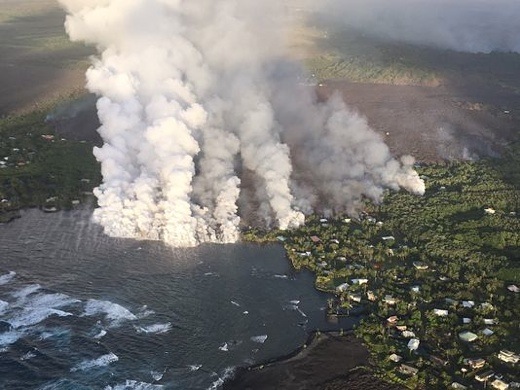
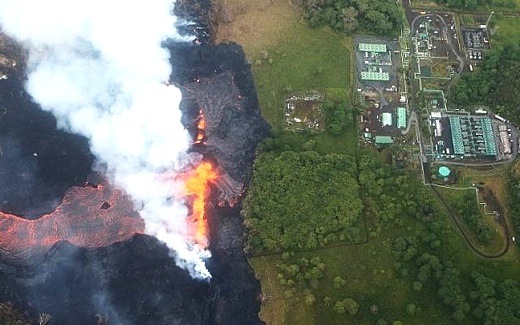
SUBHEAD: Advice for survivors - Find a place with soil and a source of water.
By Juan Wilson on 19 August 2018 for Island Breath -
(http://islandbreath.blogspot.com/2018/08/get-of-grid-now.html)
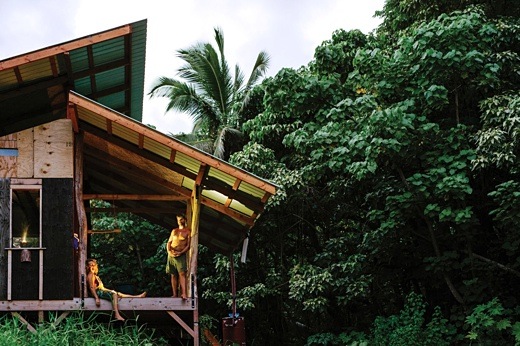
Image above: Living off grid in Hawaii is likely our future. From (https://www.hawaiibusiness.com/off-the-grid-2/).
We got an email from Ed Wagner, on Oahu, this morning. It read:
It is quite possible that fracking at the Kilauea geothermal site may have triggered or exacerbated volcanic activity currently reeking havoc on the Big Island. See Kilauea Volcanic Update (http://islandbreath.blogspot.com/2018/06/kilauea-volcano-update.html) 6/5/18. It is certain that fracking on the mainland has caused earthquakes and other underground disturbances in places where those events are rare or unheard of.
My response to Ed was:
Our modern dependence on industrialization has been an environmental disaster. And more recently our dependence on "high tech" telecommunication, computerization, and electronic record keeping has made us vulnerable to a devastating collapse with even a short discontinuity of the grid.
The long term "solution" for Hawaii is getting off the grid and growing our own food. However, unfortunately, we have overpopulated the islands. Since 1950 the population has tripled from 500k to 1.5 million.
Oahu alone has almost a million people. The outer islands may only be able to absorb a fraction of that number to achieve a sustainable population distribution across the archipelago.
As our resource consuming civilization winds down we will have to make uncomfortable adjustments or suffer worse - catastrophic collapse.
As of now, with our heads buried in the 18 cubic foot fridge looking for a frozen snack while the AC chills the room and the flatscreen cable channel fills the room with false adventure we seem on track to go down with the grid once the fuel tanks are empty.
Advice for survivors: Find a place with soil and a source of water. Know your neighbors; Plant fruit trees; Grow food; Raise hens; Catch fish; Produce some energy; Gather tools; Make things; Trade things. Be happy!
See also:
Ea O Ka Aina: Kilauea Volcano Update 6/5/18
Ea O Ka Aina: Mistakes to avoid going off-grid 1/9/16
Ea O Ka Aina: Failing to live Off-Grid 1/3/16
Ea O Ka Aina: Living off-grid becoming illegal 11/7/15
Ea O Ka Aina: Off Grid living is illegal 1/26/15
Ea O Ka Aina: Kicking the KIUC habit 5/1/14
Ea O Ka Aina: Hawaii utilities fighting customers 1/6/14
Ea O Ka Aina: Off-grid handcrafted life 12/5/13
Ea O Ka Aina: KIUC afraid of residential PV 10/8/13
Ea O Ka Aina: Fracking Hawaii 1/31/13
Ea O Ka Aina: Island Breath is off the Grid 7/6/12
Ea O Ka Aina: Off-Grid Night Lighting 8/14/09
Ea O Ka Aina: Rural, not Suburban, Kauai 4/2/09
Island Breath: Solar Energy - A case study 5/12/04
.
By Juan Wilson on 19 August 2018 for Island Breath -
(http://islandbreath.blogspot.com/2018/08/get-of-grid-now.html)
Image above: Living off grid in Hawaii is likely our future. From (https://www.hawaiibusiness.com/off-the-grid-2/).
We got an email from Ed Wagner, on Oahu, this morning. It read:
Aloha Kakou,
Isn't it time for the Hawaii Public Utility Commission to shut down the only coal plant in the state of Hawaii (on Oahu) owned and operated by AES Corporation and move toward geothermal energy and a hydrogen economy ASAP?
Original Business Insider 1912 story about coal predicting future climate change. See (https://www.businessinsider.com/newspaper-in-1912-linked-coal-to-climate-change-2018-8).
The video is at bottom of above story in case you missed it from my last email. The video shows bubbles of methane gas leaking from Alaska lakes and a demonstration of its flammability.
Northern Alaskan lakes are leaking a greenhouse gas that's 84 times more potent than carbon dioxide.
Mahalo,I agree with Ed on closing down the AES coal plant, but strongly object to moving further into producing "grid" energy with geothermal. See Fracking Hawaii by Henry Curtis (http://islandbreath.blogspot.com/2013/01/fracking-hawaii.html) from 1/30/2013.
Ed Wagner
It is quite possible that fracking at the Kilauea geothermal site may have triggered or exacerbated volcanic activity currently reeking havoc on the Big Island. See Kilauea Volcanic Update (http://islandbreath.blogspot.com/2018/06/kilauea-volcano-update.html) 6/5/18. It is certain that fracking on the mainland has caused earthquakes and other underground disturbances in places where those events are rare or unheard of.
My response to Ed was:
Aloha Ed,
I'd say geothermal is a fracking disaster.
Yes coal is to be stopped, but so is diesel and biomass grid based "solutions". It's time to get off the grid and out of the cars.
That's where we are going anyway. Might as well have a headstart on our real future.Hawaiians lived on these islands without a power grid or industrialization for over 500 years (see "When did Polynesians settle in Hawaii"). More than that, they thrived without metal or a even written language.
Juan Wilson
Our modern dependence on industrialization has been an environmental disaster. And more recently our dependence on "high tech" telecommunication, computerization, and electronic record keeping has made us vulnerable to a devastating collapse with even a short discontinuity of the grid.
The long term "solution" for Hawaii is getting off the grid and growing our own food. However, unfortunately, we have overpopulated the islands. Since 1950 the population has tripled from 500k to 1.5 million.
Oahu alone has almost a million people. The outer islands may only be able to absorb a fraction of that number to achieve a sustainable population distribution across the archipelago.
As our resource consuming civilization winds down we will have to make uncomfortable adjustments or suffer worse - catastrophic collapse.
As of now, with our heads buried in the 18 cubic foot fridge looking for a frozen snack while the AC chills the room and the flatscreen cable channel fills the room with false adventure we seem on track to go down with the grid once the fuel tanks are empty.
Advice for survivors: Find a place with soil and a source of water. Know your neighbors; Plant fruit trees; Grow food; Raise hens; Catch fish; Produce some energy; Gather tools; Make things; Trade things. Be happy!
See also:
Ea O Ka Aina: Kilauea Volcano Update 6/5/18
Ea O Ka Aina: Mistakes to avoid going off-grid 1/9/16
Ea O Ka Aina: Failing to live Off-Grid 1/3/16
Ea O Ka Aina: Living off-grid becoming illegal 11/7/15
Ea O Ka Aina: Off Grid living is illegal 1/26/15
Ea O Ka Aina: Kicking the KIUC habit 5/1/14
Ea O Ka Aina: Hawaii utilities fighting customers 1/6/14
Ea O Ka Aina: Off-grid handcrafted life 12/5/13
Ea O Ka Aina: KIUC afraid of residential PV 10/8/13
Ea O Ka Aina: Fracking Hawaii 1/31/13
Ea O Ka Aina: Island Breath is off the Grid 7/6/12
Ea O Ka Aina: Off-Grid Night Lighting 8/14/09
Ea O Ka Aina: Rural, not Suburban, Kauai 4/2/09
Island Breath: Solar Energy - A case study 5/12/04
.