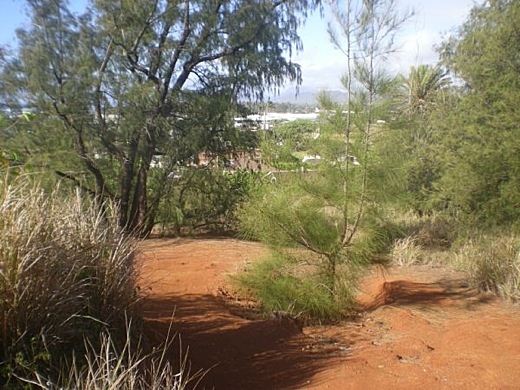
SUBHEAD: HILT is partnering with land owners who share the goal of preserving something that, once lost, won’t come again.
By Jon Letman on 20 January 2013 for Civil Beat -
(http://www.civilbeat.com/voices/2013/01/17/18094-why-we-need-to-save-land/)
Image above: Logo for the Hawaiian Islands Land Trus.t From (http://www.hilt.org/cruise-for-conservation-a-special-invitation-for-you/).
No matter where in Hawaii, we’re never more than a couple dozen miles from the water’s edge. All of us — all 1.37 million —live in close proximity on eight, and for most of us, just four islands.
Land is limited in Hawaii and open, undeveloped land even more so. Once open spaces are developed, there’s usually no turning back. Critical wildlife habitat, home to native plants and animals found nowhere else on earth; land that can be used by farmers and ranchers to produce food; ancient landscapes that sustained Hawaiian people and are home to important cultural resources; and beautiful, scenic places where wilderness remains the dominant force, all require open land.
Large land owners, both public and private, frequently transform wild spaces through development and yet they can, and increasingly are, open land’s greatest ally. By partnering with a land trust these owners can help save land.
Two years ago, four separate land trusts — Oahu Land Trust, Maui Coastal Land Trust, Kauai Public Land Trust and Hawaii Island Land Trust — merged to form the Hawaiian Islands Land Trust (HILT). Its purpose is simple: to protect and conserve land by ensuring places that could potentially be developed, subdivided or forever altered, are kept open and whole in perpetuity. Resources, beyond a property’s real estate development potential, are protected to preserve native habitat, cultural assets and agricultural and recreational value. HILT aims to prevent exactly what Joni Mitchell wrote about during her first visit to Hawaii: “paving paradise to put up a parking lot.”
In cooperation with land owners (participation is always voluntary), HILT helps establish conservation and agricultural easements that limit a property’s development potential, thus lowering the resale value of the land and also reducing property taxes that might otherwise force owners to sell or divide their property. These easements are donated to HILT in perpetuity irrespective of who owns the land itself. It is the responsibility of the land trust to protect and enforce the conservation obligations of the easement.
On Kauai, where I live, HILT has four protected land sites but has identified others on the east side and south shore which remain wild today, but, without a concerted effort to protect them, might not tomorrow.
Recently I had the opportunity to visit one of these sites on the north shore of Kauai. Guided by Jennifer Luck, HILT’s Kauai director, we took a walk through the conservation easement at Waiakalua, an 18-acre site that includes wildlife habitat, archaeological remains and largely undisturbed coastline.
Upon our arrival we were greeted by a steely-eyed nene which honked in warning, telling us to steer clear of a nesting Laysan albatross a dozen yards away near the edge of a cliff. We assured the nene that we intended no harm, but the bird wasn’t cutting us any slack—honk! honk! honk! stay back! — it seemed to say, and we did.
The short walk down to the beach led past remnant rock walls which Luck said may have once been used for growing taro. Nearby, just outside the easement, Luck explained, was a large heiau. Walking through a coastal stand of leafy false kamani trees with albatross soaring overhead, we emerged at a beautiful, empty beach. Off shore, large winter waves churned tumultuously.
It was impressive to find such a beautiful, wild place, tucked just out of view and seemingly forgotten by time where nature was left largely untouched, but which remained so, not simply by chance, but because of the conservation commitment of HILT and its land owner partners.
HILT currently has 21 protected lands (over 17,500 acres statewide) that range from less than one acre to the largest site Ulupalakua Ranch—over 11,000 acres—on Maui. They work with conservation-minded landowners like Maui rancher Sumner Erdman and farmer Richard Ha, owner of Hamakua Springs Country Farms on the Big Island. Both men recognize that increasing population pressures and soaring tax burdens threaten open land and associated ways of life. Working with HILT allows their families to continue to ranch and farm in an economic environment that might otherwise force them to sell, develop or divide their properties.
While HILT does protect some mauka forest land, the bulk of their work covers land that sustains people, be it agricultural and recreational, cultural and historical, or beautiful park lands and scenic corridors that make the simple act of moving from one part of an island to another not just a drive or a commute, but a journey through places of legendary beauty.
Preserving Hawaii’s open spaces need not be political or divisive according to HILT incoming board president and chef Peter Merriman. He says people from a broad range of backgrounds with different interests can all recognize the value in keeping open space for the future. This is especially true as we aspire to break our dependency on imported food. After all—no land, no farms. No farms, no food.
One of the biggest challenges of doing this type of work is just letting people know that such land preservation options even exist. HILT spreads the word through events like its upcoming Buy Back the Beach benefit luau on Maui and the Wild & Scenic film festival on Kauai this April.
Meanwhile, the Hawaiian Islands Land Trust is partnering with land owners who share the goal of preserving something that, once lost, won’t come again in the lifetime of our children or their children’s children.
• Jon Letman is an independent journalist on Kauai. He writes about politics, society and the environment in the Asia-Pacific region and beyond. Find him on Twitter @jonletman
.
By Jon Letman on 20 January 2013 for Civil Beat -
(http://www.civilbeat.com/voices/2013/01/17/18094-why-we-need-to-save-land/)
Image above: Logo for the Hawaiian Islands Land Trus.t From (http://www.hilt.org/cruise-for-conservation-a-special-invitation-for-you/).
No matter where in Hawaii, we’re never more than a couple dozen miles from the water’s edge. All of us — all 1.37 million —live in close proximity on eight, and for most of us, just four islands.
Land is limited in Hawaii and open, undeveloped land even more so. Once open spaces are developed, there’s usually no turning back. Critical wildlife habitat, home to native plants and animals found nowhere else on earth; land that can be used by farmers and ranchers to produce food; ancient landscapes that sustained Hawaiian people and are home to important cultural resources; and beautiful, scenic places where wilderness remains the dominant force, all require open land.
Large land owners, both public and private, frequently transform wild spaces through development and yet they can, and increasingly are, open land’s greatest ally. By partnering with a land trust these owners can help save land.
Two years ago, four separate land trusts — Oahu Land Trust, Maui Coastal Land Trust, Kauai Public Land Trust and Hawaii Island Land Trust — merged to form the Hawaiian Islands Land Trust (HILT). Its purpose is simple: to protect and conserve land by ensuring places that could potentially be developed, subdivided or forever altered, are kept open and whole in perpetuity. Resources, beyond a property’s real estate development potential, are protected to preserve native habitat, cultural assets and agricultural and recreational value. HILT aims to prevent exactly what Joni Mitchell wrote about during her first visit to Hawaii: “paving paradise to put up a parking lot.”
In cooperation with land owners (participation is always voluntary), HILT helps establish conservation and agricultural easements that limit a property’s development potential, thus lowering the resale value of the land and also reducing property taxes that might otherwise force owners to sell or divide their property. These easements are donated to HILT in perpetuity irrespective of who owns the land itself. It is the responsibility of the land trust to protect and enforce the conservation obligations of the easement.
On Kauai, where I live, HILT has four protected land sites but has identified others on the east side and south shore which remain wild today, but, without a concerted effort to protect them, might not tomorrow.
Recently I had the opportunity to visit one of these sites on the north shore of Kauai. Guided by Jennifer Luck, HILT’s Kauai director, we took a walk through the conservation easement at Waiakalua, an 18-acre site that includes wildlife habitat, archaeological remains and largely undisturbed coastline.
Upon our arrival we were greeted by a steely-eyed nene which honked in warning, telling us to steer clear of a nesting Laysan albatross a dozen yards away near the edge of a cliff. We assured the nene that we intended no harm, but the bird wasn’t cutting us any slack—honk! honk! honk! stay back! — it seemed to say, and we did.
The short walk down to the beach led past remnant rock walls which Luck said may have once been used for growing taro. Nearby, just outside the easement, Luck explained, was a large heiau. Walking through a coastal stand of leafy false kamani trees with albatross soaring overhead, we emerged at a beautiful, empty beach. Off shore, large winter waves churned tumultuously.
It was impressive to find such a beautiful, wild place, tucked just out of view and seemingly forgotten by time where nature was left largely untouched, but which remained so, not simply by chance, but because of the conservation commitment of HILT and its land owner partners.
HILT currently has 21 protected lands (over 17,500 acres statewide) that range from less than one acre to the largest site Ulupalakua Ranch—over 11,000 acres—on Maui. They work with conservation-minded landowners like Maui rancher Sumner Erdman and farmer Richard Ha, owner of Hamakua Springs Country Farms on the Big Island. Both men recognize that increasing population pressures and soaring tax burdens threaten open land and associated ways of life. Working with HILT allows their families to continue to ranch and farm in an economic environment that might otherwise force them to sell, develop or divide their properties.
While HILT does protect some mauka forest land, the bulk of their work covers land that sustains people, be it agricultural and recreational, cultural and historical, or beautiful park lands and scenic corridors that make the simple act of moving from one part of an island to another not just a drive or a commute, but a journey through places of legendary beauty.
Preserving Hawaii’s open spaces need not be political or divisive according to HILT incoming board president and chef Peter Merriman. He says people from a broad range of backgrounds with different interests can all recognize the value in keeping open space for the future. This is especially true as we aspire to break our dependency on imported food. After all—no land, no farms. No farms, no food.
One of the biggest challenges of doing this type of work is just letting people know that such land preservation options even exist. HILT spreads the word through events like its upcoming Buy Back the Beach benefit luau on Maui and the Wild & Scenic film festival on Kauai this April.
Meanwhile, the Hawaiian Islands Land Trust is partnering with land owners who share the goal of preserving something that, once lost, won’t come again in the lifetime of our children or their children’s children.
• Jon Letman is an independent journalist on Kauai. He writes about politics, society and the environment in the Asia-Pacific region and beyond. Find him on Twitter @jonletman
.