SUBHEAD: “You. Ain’t. Drilling!” yelled Louise Sausen of Haena, an outspoken opponent of the project.
By Chris D'Angelo on 29 January 2014 for The Garden Island -
(http://thegardenisland.com/news/local/no-well-no-way/article_35a5079e-88ad-11e3-a2b4-0019bb2963f4.html)

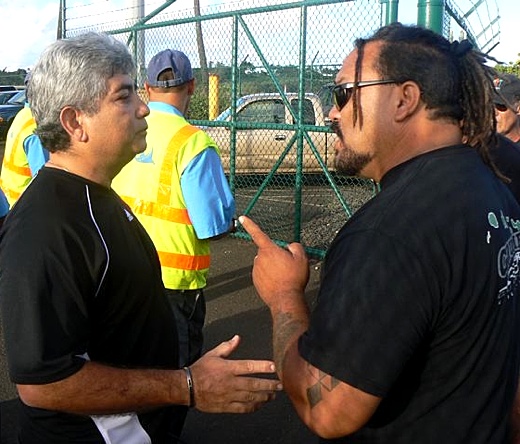
Image above: Dayne Aipolani of The Polynesian Kingdom of Atooi speaks with facilitator Diane Zachary during the public meeting on the Kahili Horizontal Directional Drilled Well Project. From original article. Photo by Deniis Fujimoto.
Officials with the Kauai Department of Water came out Monday in hopes of discussing the cost-savings analysis report for the Kahili Horizontal Directional Drilled Well Project.
They never got a chance.
Instead, the aggressive crowd of more than 100 that showed up ran the show, forcing facilitators to shut down the meeting before it even started and sending a loud-and-clear message back to the DOW and its Board of Water Supply.
“You. Ain’t. Drilling!” yelled Louise Sausen of Haena, an outspoken opponent of the project.
Monday’s meeting was the latest speed bump in the saga surrounding the estimated $60 million project, which proposes drilling a 12,000-foot-long, high-elevation well in one of four locations near Mount Kahili. DOW says the project would allow the department to access high-level water, and that the cost of doing so would be made up in savings over the next 25 years.
But community members — at least those in attendance Monday — aren’t interested.
Echoing previous meetings, some voiced concerns about disrupting Kauai’s sacred mountains. Others said the proposal is an attempt to take water rights from the people of Hawaii.
“If you drill this, we’re going to prosecute you,” said Kekaha resident Dayne Aipoalani, who said he’s the Alii Nui (high chief) of the Polynesian Kingdom of Atooi.
Since he started working on the project, DOW Acting Manager and Chief Engineer Kirk Saiki said people often approach him with two questions.
First, why is the department doing the project? He said the DOW has a responsibility, and obligation, to look for new water sources.
“It could be as simple as, you know, knowing where we have productive wells and drilling other wells, or it could be complicated like this project,” he said. “But that’s part of what we do. We go and we identify potential sources.”
The second question usually asked of Saiki, he said, is whether the DOW is actually going to drill the well?
In September, the board unanimously voted that the DOW’s contractors get started on an economic feasibility study, one that would justify moving forward with a full-scale environmental impact statement.
Now that the study is complete, Saiki said it is up to the department and board to decide whether to proceed with the EIS.
If they don’t, the project would be suspended.
“Right now, all we’re doing is looking at the project on paper,” Saiki said. “Are we going to drill the well? I don’t know. We haven’t determined that.”
His comment sent the meeting into a downward spiral, with community members shouting over one another.
“We’re telling you you’re not,” Sausen said. “You’re not drilling the well.”
“No wells!” another woman shouted.
At the beginning of the meeting, facilitator Diane Zachary, president of the Kauai Planning and Action Alliance, attempted to set some ground rules, including keeping comments to the cost-savings analysis report — which the department never actually presented — and being respectful of each other.
“I know that you’ll do that,” Zachary said.
She was wrong. Voices raised. Threats were made.
At one point, Aipoalani jumped out of his seat and approached the front of the room, questioning who Zachary, Saiki and others really were.
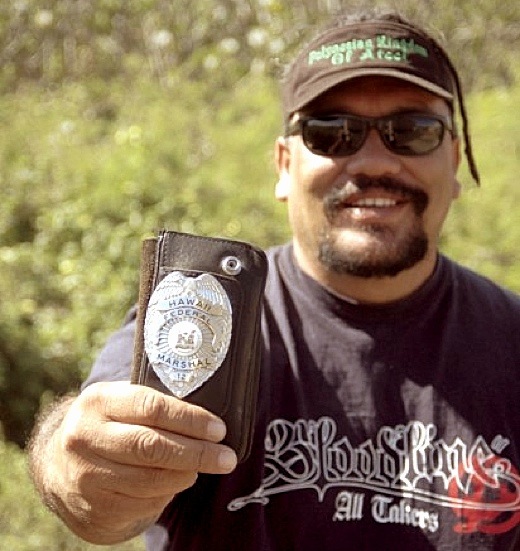
“I don’t recognize you guys on this land,” he said. “We in charge of this land, not you guys. You know who I am? I’m Alii Nui … You guys don’t have our permission. OK? We going to protect this, whatever it takes. You guys can call you guys’ police, you guys’ DLNR. But they gonna have to come see me, and us. We are the federal marshals of Hawaii. We going to protect all this.”
Then Zachary asked whether anyone in the room actually came to hear about the cost-savings report.
“No!” echoed through the room.
Shortly after, a representative of the Kingdom of Atooi posed his own question: “How much of you guys want to shut this project down?”
Cheers of approval filled the Kappa Middle School cafeteria, while rain poured down outside.
“That’s what we came to tell you,” Sausen said. “No drilling. Period. Sorry, it ain’t gonna happen.”
Finally, with emotions running high and no police officers to keep the situation under control, a visibly shaken Zachary closed the meeting, drawing cheers from the crowd.
But not before Aipoalani got a final say.
“It’s not funny. It’s not funny being desecrated in these lands. It’s not funny being oppressed. It’s not funny when you don’t listen to us,” he said. “If you don’t hear us, you will never hear our children. That’s why today we stand for our children and our people.”
Kauai County Councilwoman JoAnn Yukimura said she attended the meeting hoping to learn about the report and project.
“Although I wasn’t able to stay for the whole thing, what I saw made me very sad because it looked like a community that was not able to talk civilly and with aloha about a very important issue,” she said.
In an emailed statement Tuesday, Saiki said the DOW was “disappointed” that it did not receive public comments on the cost-savings report.
“However, we do take what was said at the meeting seriously and we are willing to meet with individuals who are open to sharing their cultural knowledge and concerns with us,” he said. “We want to remind the public that the project is still in the preliminary stage and input is very important.”
No other public outreach meetings on the report have been scheduled and it is unclear whether the cost-savings analysis will be on the agenda for the board’s Feb. 27 meeting.
The 28-page report, released last month and prepared by Plasch Econ Pacific LLC, “evaluates the costs of various water-source alternatives,” according to a DOW release. Those alternatives include continuing to supply water from the current water-supply system, with no significant changes or upgrades, modifying the Waiahi Water Treatment Plant by adding a solar farm and related improvements to reduce energy costs and moving forward with the horizontal well.
Of the three alternatives, the report found that the well project would be the least expensive.
.
By Chris D'Angelo on 29 January 2014 for The Garden Island -
(http://thegardenisland.com/news/local/no-well-no-way/article_35a5079e-88ad-11e3-a2b4-0019bb2963f4.html)
Image above: Dayne Aipolani of The Polynesian Kingdom of Atooi speaks with facilitator Diane Zachary during the public meeting on the Kahili Horizontal Directional Drilled Well Project. From original article. Photo by Deniis Fujimoto.
Officials with the Kauai Department of Water came out Monday in hopes of discussing the cost-savings analysis report for the Kahili Horizontal Directional Drilled Well Project.
They never got a chance.
Instead, the aggressive crowd of more than 100 that showed up ran the show, forcing facilitators to shut down the meeting before it even started and sending a loud-and-clear message back to the DOW and its Board of Water Supply.
“You. Ain’t. Drilling!” yelled Louise Sausen of Haena, an outspoken opponent of the project.
Monday’s meeting was the latest speed bump in the saga surrounding the estimated $60 million project, which proposes drilling a 12,000-foot-long, high-elevation well in one of four locations near Mount Kahili. DOW says the project would allow the department to access high-level water, and that the cost of doing so would be made up in savings over the next 25 years.
But community members — at least those in attendance Monday — aren’t interested.
Echoing previous meetings, some voiced concerns about disrupting Kauai’s sacred mountains. Others said the proposal is an attempt to take water rights from the people of Hawaii.
“If you drill this, we’re going to prosecute you,” said Kekaha resident Dayne Aipoalani, who said he’s the Alii Nui (high chief) of the Polynesian Kingdom of Atooi.
Since he started working on the project, DOW Acting Manager and Chief Engineer Kirk Saiki said people often approach him with two questions.
First, why is the department doing the project? He said the DOW has a responsibility, and obligation, to look for new water sources.
“It could be as simple as, you know, knowing where we have productive wells and drilling other wells, or it could be complicated like this project,” he said. “But that’s part of what we do. We go and we identify potential sources.”
The second question usually asked of Saiki, he said, is whether the DOW is actually going to drill the well?
In September, the board unanimously voted that the DOW’s contractors get started on an economic feasibility study, one that would justify moving forward with a full-scale environmental impact statement.
Now that the study is complete, Saiki said it is up to the department and board to decide whether to proceed with the EIS.
If they don’t, the project would be suspended.
“Right now, all we’re doing is looking at the project on paper,” Saiki said. “Are we going to drill the well? I don’t know. We haven’t determined that.”
His comment sent the meeting into a downward spiral, with community members shouting over one another.
“We’re telling you you’re not,” Sausen said. “You’re not drilling the well.”
“No wells!” another woman shouted.
At the beginning of the meeting, facilitator Diane Zachary, president of the Kauai Planning and Action Alliance, attempted to set some ground rules, including keeping comments to the cost-savings analysis report — which the department never actually presented — and being respectful of each other.
“I know that you’ll do that,” Zachary said.
She was wrong. Voices raised. Threats were made.
At one point, Aipoalani jumped out of his seat and approached the front of the room, questioning who Zachary, Saiki and others really were.
“I don’t recognize you guys on this land,” he said. “We in charge of this land, not you guys. You know who I am? I’m Alii Nui … You guys don’t have our permission. OK? We going to protect this, whatever it takes. You guys can call you guys’ police, you guys’ DLNR. But they gonna have to come see me, and us. We are the federal marshals of Hawaii. We going to protect all this.”
Then Zachary asked whether anyone in the room actually came to hear about the cost-savings report.
“No!” echoed through the room.
Shortly after, a representative of the Kingdom of Atooi posed his own question: “How much of you guys want to shut this project down?”
Cheers of approval filled the Kappa Middle School cafeteria, while rain poured down outside.
“That’s what we came to tell you,” Sausen said. “No drilling. Period. Sorry, it ain’t gonna happen.”
Finally, with emotions running high and no police officers to keep the situation under control, a visibly shaken Zachary closed the meeting, drawing cheers from the crowd.
But not before Aipoalani got a final say.
“It’s not funny. It’s not funny being desecrated in these lands. It’s not funny being oppressed. It’s not funny when you don’t listen to us,” he said. “If you don’t hear us, you will never hear our children. That’s why today we stand for our children and our people.”
Kauai County Councilwoman JoAnn Yukimura said she attended the meeting hoping to learn about the report and project.
“Although I wasn’t able to stay for the whole thing, what I saw made me very sad because it looked like a community that was not able to talk civilly and with aloha about a very important issue,” she said.
In an emailed statement Tuesday, Saiki said the DOW was “disappointed” that it did not receive public comments on the cost-savings report.
“However, we do take what was said at the meeting seriously and we are willing to meet with individuals who are open to sharing their cultural knowledge and concerns with us,” he said. “We want to remind the public that the project is still in the preliminary stage and input is very important.”
No other public outreach meetings on the report have been scheduled and it is unclear whether the cost-savings analysis will be on the agenda for the board’s Feb. 27 meeting.
The 28-page report, released last month and prepared by Plasch Econ Pacific LLC, “evaluates the costs of various water-source alternatives,” according to a DOW release. Those alternatives include continuing to supply water from the current water-supply system, with no significant changes or upgrades, modifying the Waiahi Water Treatment Plant by adding a solar farm and related improvements to reduce energy costs and moving forward with the horizontal well.
Of the three alternatives, the report found that the well project would be the least expensive.
.