Death of Sprawl Confirmed

SUBHEAD: Sustainable towns better protect local food and water while reducing pollution and CO2 emissions.  

By Warren Karlenzig on 10 April 2012 in Energy Bulletin -  
(http://www.energybulletin.net/stories/2012-04-10/death-sprawl)


Image above: Weeds have taken over a row of vacant, unfinished new homes Tuesday, Feb. 17, 2009 in Gilbert, Arizona. AP Photo by Matt York . From original article From (http://anti-union.blogspot.com/2009/03/this-is-from-boston.html).
 
The United States has reached an historic moment. The exurban development explosion that defined national growth during the past two decades has come to a screeching halt, according to the latest US Census figures. Only 1 of the 100 highest-growth US communities of 2006—all of them in sprawled areas—reported a significant population gain in 2011, prompting Yale economist Robert Shiller to predict suburbs overall may not see growth “during our lifetimes.”

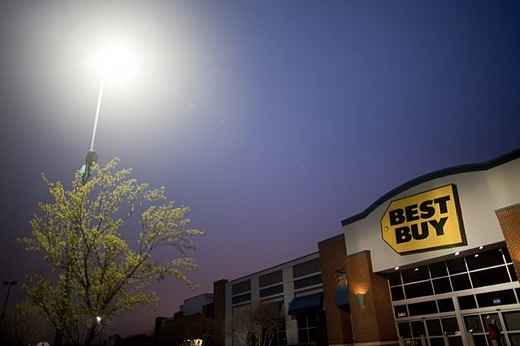
We are simultaneously witnessing the decline of the economic sectors enabled by hypergrowth development: strip malls and massive shopping centers, SUVs and McMansions. The end of exurban population growth has been accompanied by steep economic decline in real estate value, triggering a loss of spending not only in construction, but also home improvement (Home Depot, Best Buy) and numerous associated retail sectors that were banking on the long-term rising fortunes of “Boomburbs.”

The fate of these communities has been so dire that for the first time in the United States suburbs now have greater poverty than cities.

In 2009, I attributed the financial crash in these car-based communities to economic factors perpetrated by the higher gas prices that had first started showing impacts in late 2006 and peaked in 2008. Others including The Brookings Institution’s Christopher Leinberger, and William Frey, along with NRDC’s Kaid Benfield have pointed to longer term demographic shifts and societal desires toward renting in denser mixed-use neighborhoods. The looming specter of excess greenhouse gases may also be playing a role in the marked reduction of driving among younger Americans (16-39 year olds), who increasingly prefer to live where they can walk or bike to their local store, school or cafĂ©.

The “Death of Sprawl” chapter I wrote that was published by the Post Carbon Institute in 2009 (and in the Post Carbon Reader in 2010) provided a case study on Victorville, California. Located 75 miles outside Los Angeles, Victorville’s rise and crash epitomized the hangover of the go-go sprawl era.

During the financial system’s Derivative Daze, Victorville grew from 64,000 in 2000 to more than 108,000 by 2005: no-money-down-housing developments and “liar loans” fueled speculative investments that pumped up the desert city’s average home value to almost $350,000. The large numbers of workers that moved to Victorville had to commute long hours before dawn and after dark to get to work in Los Angeles, without the benefit of local public transit. There are still few options for those who wish to walk or bicycle to stores, jobs, schools or local amenities, and the average near 100 degree summer temperatures make such endeavors foolhardy.

When gas prices began to go up in 2006, real estate sales in the region began to dry up as people ran for the exits. As the doors slammed shut, foreclosures in California’s Inland Empire (Victorville and other parts of California’s sprawling San Bernardino and Riverside counties), Las Vegas and Florida began to trigger a nationwide real estate meltdown.

To stick with our illustration, Victorville houses plummeted from an average of nearly $350,000 in 2006 to $125,000 by late 2009. Likewise, new home permits in Victorville went from 7964 in 2004-06 down to 739 in 2008-10: a drop of more than tenfold! The average home sale now brings around $110,000, less than a third of 2005-2006 prices.

Institutional investors and homebuyers alike have avoided for the past five years the nation’s scores of Victorvilles; the new data and pronouncements by experts such as Shiller, author of The S&P/Case-Shiller Home Price Index, likely put the last nails in the coffin of speculative, auto-dependant sprawl.

Recent US Census data confirms that the future of the United States is no longer about an economy based on the false and dangerous pretenses of unfettered greenfield development, with its unhealthy and climate-destructive sprawl-scape of fast food, big box retail and freeway-bred exurbs. National policies and investments should strengthen and improve existing cities and suburbs, including transit infrastructure, building retrofitting, clean energy, walkability, bicycle networks and neighborhood redesign–all areas where quality local job and community engagement opportunities can flourish.

We’ve known for some time that planning for more sustainable metros, both cities and suburbs, makes better sense in terms of protecting local food, water and land resources, as well as in reducing pollution and carbon emissions. Now we know that such actions have been proven to make much better short-term economic sense, while acting as tangible investments for the long term.

Warren Karlenzig is president of Common Current, a global consultancy for sustainable urban planning and development. Originally article published in (http://commoncurrent.com/flow/2012/04/10/census-and-experts-confirm-death-of-sprawl-in-us). 

.

Drones in Our Skies

SUBHEAD: What can they see and what purpose will they be used for? Should we be concerned? Hell yes!  

By AP Staff on 10 April 2012 in the Garden Island News -  
(http://thegardenisland.com/news/state-and-regional/hawaii-can-t-use-k-drone-for-harbor-security/article_c259f3b2-a96b-50b6-beb3-a62baf1f71ac.html


Image above: A Predator B unmanned aircraft lands after a mission at the Naval Air Station last November in Corpus Christi, Texas. From article below.
 
A $75,000 unmanned drone aircraft sits unused in a Honolulu state office. [IB Editor's note: Of course we have no idea what US military and intelligence agencies might be doing already with stealthy drones in Hawaii. At $75k the drone the state of Hawaii bought was much less capable than a Predator ($4.5million) but it's the thought that counts.] That's because state Department of Transportation officials never checked to make sure the aircraft could be flown around Honolulu Harbor.


Hawaii News Now (http://bit.ly/IqcREL ) reports the state purchased the drone with a $1.4 million federal grant to install high-tech security measures at the harbor, where more than 90 percent of the state's merchandise arrives every year.

The drone was supposed to be used to transmit aerial video of harbor facilities. But state Department of Transportation spokesman Dan Meisenzahl says it turns out the harbor falls within restricted airspace. He says the state made an unfortunate mistake.

The state harbors division hopes to partner with another state or county agency that can use the drone for surveillance.


Drones Over America  

By WHYY Staff on 12 March 2012 for NPR -  
(http://www.npr.org/2012/03/12/148293470/drones-over-america-what-can-they-see)
 
Unmanned aircraft systems, or drones, have long played a role in military operations. But imagine thousands of drones flying over U.S. skies — something we may see in just a few years. In February, President Obama signed an aviation bill requiring the Federal Aviation Administration to make plans to integrate drones into American airspace.

On Monday's Fresh Air, John Villasenor, a senior fellow at the Brookings Institution and a professor of electrical engineering at UCLA, explains what these drones will be able to see and how they work. He also talks about the privacy and national security concerns raised by using drones for surveillance purposes.

Villasenor tells Dave Davies that drones, which are currently in use over the U.S. border with Mexico, have an endless list of non-military uses, from providing overhead surveillance for police departments to spotting wildfires and monitoring illegal border crossings.

Drones could also be used commercially by real estate firms to get overhead images of a property, by surveyors and cinematographers, and even by paparazzi trying to fly over celebrity homes, says Villasenor.

"That is going to be certainly some of the tests of what the limits are going to be provided by [paparazzi]," he says. "The paparazzi will want to use drones if they can, and obviously that's going to raise some very significant questions."

One question about drone usage obviously concerns privacy. In 1986, the Supreme Court ruled that police officers who used a small single-engine airplane to spot hidden marijuana plants in someone's backyard in California did not violate the Fourth Amendment because they were in "public navigable airspace in a physically non-intrusive manner."

"Now if you take that ruling and apply it to a world in which there are hundreds or thousands of drones, that obviously gives rise to some very significant concerns," says Villasenor. "If you interpret that ruling by itself, as things stand today, that would certainly suggest that people would have a fair amount of latitude to make observations using drones."

But several rulings involving what can be observed from outside a property to look inside a property may also apply, says Villasenor. He points to the 2001 case Kyllo v. United States, in which the Supreme Court ruled that the use of a thermal imaging device to monitor heat radiated from inside someone's home without a search warrant violated the Fourth Amendment.

"There's a very interesting piece of language in that ruling that when you map it to drones is really interesting," he says. "[It says] 'Where, as here, the government uses a device that is not in general public use to explore details of the home that would previously have been unknowable without physical intrusion, the surveillance is a search.' One of the interesting phrases in that language is 'not in general public use.' If we fast-forward two or three years from now, when drones are in public use, does that change the legal foundation for what you can and can't observe from the outside of a home that would have been previously unknowable without physical intrusion?"


Drones as civilian weapons platforms 

SUBHEAD: Trends indicate that domestic use of drones will lead to an surveillance tyranny keeping us in an electronic concentration camp.


By John Whitehead on 2 July 2012 for the Rutherford Foundation - 

   
Video above: John Whitehead presentation on drones used for electronic tyranny. From (http://youtu.be/31gpH6BgPOs).
 
The U.S. government has a history of commandeering military technology for use against Americans. We saw this happen with tear gas, tasers and sound cannons, all of which were first used on the battlefield before being deployed against civilians at home. Now, as John Whitehead reveals in this week's vodcast, the drones—pilotless, remote controlled aircraft that have been used in Iraq and Afghanistan—are coming home to roost.
.

Big Brother's new home

SUBHEAD: The NSA is building the country's biggest domestic and international spy center.

By James Bamford on 15 March 2012 for Wired Magazine -
(http://www.wired.com/threatlevel/2012/03/ff_nsadatacenter/all/1)


Image above: Big Brother's new headquarters - the NSA's Utah Data Center in Bluffdale under construction. From original article.

The spring air in the small, sand-dusted town has a soft haze to it, and clumps of green-gray sagebrush rustle in the breeze. Bluffdale sits in a bowl-shaped valley in the shadow of Utah’s Wasatch Range to the east and the Oquirrh Mountains to the west. It’s the heart of Mormon country, where religious pioneers first arrived more than 160 years ago. They came to escape the rest of the world, to understand the mysterious words sent down from their god as revealed on buried golden plates, and to practice what has become known as “the principle,” marriage to multiple wives.

Today Bluffdale is home to one of the nation’s largest sects of polygamists, the Apostolic United Brethren, with upwards of 9,000 members. The brethren’s complex includes a chapel, a school, a sports field, and an archive. Membership has doubled since 1978—and the number of plural marriages has tripled—so the sect has recently been looking for ways to purchase more land and expand throughout the town.

But new pioneers have quietly begun moving into the area, secretive outsiders who say little and keep to themselves. Like the pious polygamists, they are focused on deciphering cryptic messages that only they have the power to understand. Just off Beef Hollow Road, less than a mile from brethren headquarters, thousands of hard-hatted construction workers in sweat-soaked T-shirts are laying the groundwork for the newcomers’ own temple and archive, a massive complex so large that it necessitated expanding the town’s boundaries. Once built, it will be more than five times the size of the US Capitol.

Rather than Bibles, prophets, and worshippers, this temple will be filled with servers, computer intelligence experts, and armed guards. And instead of listening for words flowing down from heaven, these newcomers will be secretly capturing, storing, and analyzing vast quantities of words and images hurtling through the world’s telecommunications networks. In the little town of Bluffdale, Big Love and Big Brother have become uneasy neighbors.

The NSA has become the largest, most covert, and potentially most intrusive intelligence agency ever.

Under construction by contractors with top-secret clearances, the blandly named Utah Data Center is being built for the National Security Agency. A project of immense secrecy, it is the final piece in a complex puzzle assembled over the past decade. Its purpose: to intercept, decipher, analyze, and store vast swaths of the world’s communications as they zap down from satellites and zip through the underground and undersea cables of international, foreign, and domestic networks.

The heavily fortified $2 billion center should be up and running in September 2013. Flowing through its servers and routers and stored in near-bottomless databases will be all forms of communication, including the complete contents of private emails, cell phone calls, and Google searches, as well as all sorts of personal data trails—parking receipts, travel itineraries, bookstore purchases, and other digital “pocket litter.” It is, in some measure, the realization of the “total information awareness” program created during the first term of the Bush administration—an effort that was killed by Congress in 2003 after it caused an outcry over its potential for invading Americans’ privacy.

But “this is more than just a data center,” says one senior intelligence official who until recently was involved with the program. The mammoth Bluffdale center will have another important and far more secret role that until now has gone unrevealed. It is also critical, he says, for breaking codes.

And code-breaking is crucial, because much of the data that the center will handle—financial information, stock transactions, business deals, foreign military and diplomatic secrets, legal documents, confidential personal communications—will be heavily encrypted. According to another top official also involved with the program, the NSA made an enormous breakthrough several years ago in its ability to cryptanalyze, or break, unfathomably complex encryption systems employed by not only governments around the world but also many average computer users in the US. The upshot, according to this official: “Everybody’s a target; everybody with communication is a target.”

For the NSA, overflowing with tens of billions of dollars in post-9/11 budget awards, the cryptanalysis breakthrough came at a time of explosive growth, in size as well as in power. Established as an arm of the Department of Defense following Pearl Harbor, with the primary purpose of preventing another surprise assault, the NSA suffered a series of humiliations in the post-Cold War years. Caught offguard by an escalating series of terrorist attacks—the first World Trade Center bombing, the blowing up of US embassies in East Africa, the attack on the USS Cole in Yemen, and finally the devastation of 9/11—some began questioning the agency’s very reason for being.

In response, the NSA has quietly been reborn. And while there is little indication that its actual effectiveness has improved—after all, despite numerous pieces of evidence and intelligence-gathering opportunities, it missed the near-disastrous attempted attacks by the underwear bomber on a flight to Detroit in 2009 and by the car bomber in Times Square in 2010—there is no doubt that it has transformed itself into the largest, most covert, and potentially most intrusive intelligence agency ever created.

In the process—and for the first time since Watergate and the other scandals of the Nixon administration—the NSA has turned its surveillance apparatus on the US and its citizens. It has established listening posts throughout the nation to collect and sift through billions of email messages and phone calls, whether they originate within the country or overseas. It has created a supercomputer of almost unimaginable speed to look for patterns and unscramble codes. Finally, the agency has begun building a place to store all the trillions of words and thoughts and whispers captured in its electronic net. And, of course, it’s all being done in secret. To those on the inside, the old adage that NSA stands for Never Say Anything applies more than ever.

When construction is completed in 2013, the heavily fortified $2 billion facility in Bluffdale will encompass 1 million square feet.
A swath of freezing fog blanketed Salt Lake City on the morning of January 6, 2011, mixing with a weeklong coating of heavy gray smog. Red air alerts, warning people to stay indoors unless absolutely necessary, had become almost daily occurrences, and the temperature was in the bone-chilling twenties. “What I smell and taste is like coal smoke,” complained one local blogger that day. At the city’s international airport, many inbound flights were delayed or diverted while outbound regional jets were grounded.

But among those making it through the icy mist was a figure whose gray suit and tie made him almost disappear into the background. He was tall and thin, with the physique of an aging basketball player and dark caterpillar eyebrows beneath a shock of matching hair. Accompanied by a retinue of bodyguards, the man was NSA deputy director Chris Inglis, the agency’s highest-ranking civilian and the person who ran its worldwide day-to-day operations.

A short time later, Inglis arrived in Bluffdale at the site of the future data center, a flat, unpaved runway on a little-used part of Camp Williams, a National Guard training site. There, in a white tent set up for the occasion, Inglis joined Harvey Davis, the agency’s associate director for installations and logistics, and Utah senator Orrin Hatch, along with a few generals and politicians in a surreal ceremony. Standing in an odd wooden sandbox and holding gold-painted shovels, they made awkward jabs at the sand and thus officially broke ground on what the local media had simply dubbed “the spy center.” Hoping for some details on what was about to be built, reporters turned to one of the invited guests, Lane Beattie of the Salt Lake Chamber of Commerce. Did he have any idea of the purpose behind the new facility in his backyard? “Absolutely not,” he said with a self-conscious half laugh. “Nor do I want them spying on me.”

For his part, Inglis simply engaged in a bit of double-talk, emphasizing the least threatening aspect of the center: “It’s a state-of-the-art facility designed to support the intelligence community in its mission to, in turn, enable and protect the nation’s cybersecurity.” While cybersecurity will certainly be among the areas focused on in Bluffdale, what is collected, how it’s collected, and what is done with the material are far more important issues. Battling hackers makes for a nice cover—it’s easy to explain, and who could be against it? Then the reporters turned to Hatch, who proudly described the center as “a great tribute to Utah,” then added, “I can’t tell you a lot about what they’re going to be doing, because it’s highly classified.”

And then there was this anomaly: Although this was supposedly the official ground-breaking for the nation’s largest and most expensive cybersecurity project, no one from the Department of Homeland Security, the agency responsible for protecting civilian networks from cyberattack, spoke from the lectern. In fact, the official who’d originally introduced the data center, at a press conference in Salt Lake City in October 2009, had nothing to do with cybersecurity. It was Glenn A. Gaffney, deputy director of national intelligence for collection, a man who had spent almost his entire career at the CIA. As head of collection for the intelligence community, he managed the country’s human and electronic spies.

Within days, the tent and sandbox and gold shovels would be gone and Inglis and the generals would be replaced by some 10,000 construction workers. “We’ve been asked not to talk about the project,” Rob Moore, president of Big-D Construction, one of the three major contractors working on the project, told a local reporter. The plans for the center show an extensive security system: an elaborate $10 million antiterrorism protection program, including a fence designed to stop a 15,000-pound vehicle traveling 50 miles per hour, closed-circuit cameras, a biometric identification system, a vehicle inspection facility, and a visitor-control center.

Inside, the facility will consist of four 25,000-square-foot halls filled with servers, complete with raised floor space for cables and storage. In addition, there will be more than 900,000 square feet for technical support and administration. The entire site will be self-sustaining, with fuel tanks large enough to power the backup generators for three days in an emergency, water storage with the capability of pumping 1.7 million gallons of liquid per day, as well as a sewage system and massive air-conditioning system to keep all those servers cool. Electricity will come from the center’s own substation built by Rocky Mountain Power to satisfy the 65-megawatt power demand. Such a mammoth amount of energy comes with a mammoth price tag—about $40 million a year, according to one estimate.

Given the facility’s scale and the fact that a terabyte of data can now be stored on a flash drive the size of a man’s pinky, the potential amount of information that could be housed in Bluffdale is truly staggering. But so is the exponential growth in the amount of intelligence data being produced every day by the eavesdropping sensors of the NSA and other intelligence agencies. As a result of this “expanding array of theater airborne and other sensor networks,” as a 2007 Department of Defense report puts it, the Pentagon is attempting to expand its worldwide communications network, known as the Global Information Grid, to handle yottabytes (1024 bytes) of data. (A yottabyte is a septillion bytes—so large that no one has yet coined a term for the next higher magnitude.)

It needs that capacity because, according to a recent report by Cisco, global Internet traffic will quadruple from 2010 to 2015, reaching 966 exabytes per year. (A million exabytes equal a yottabyte.) In terms of scale, Eric Schmidt, Google’s former CEO, once estimated that the total of all human knowledge created from the dawn of man to 2003 totaled 5 exabytes. And the data flow shows no sign of slowing. In 2011 more than 2 billion of the world’s 6.9 billion people were connected to the Internet. By 2015, market research firm IDC estimates, there will be 2.7 billion users. Thus, the NSA’s need for a 1-million-square-foot data storehouse. Should the agency ever fill the Utah center with a yottabyte of information, it would be equal to about 500 quintillion (500,000,000,000,000,000,000) pages of text.

The data stored in Bluffdale will naturally go far beyond the world’s billions of public web pages. The NSA is more interested in the so-called invisible web, also known as the deep web or deepnet—data beyond the reach of the public. This includes password-protected data, US and foreign government communications, and noncommercial file-sharing between trusted peers. “The deep web contains government reports, databases, and other sources of information of high value to DOD and the intelligence community,” according to a 2010 Defense Science Board report. “Alternative tools are needed to find and index data in the deep web … Stealing the classified secrets of a potential adversary is where the [intelligence] community is most comfortable.” With its new Utah Data Center, the NSA will at last have the technical capability to store, and rummage through, all those stolen secrets. The question, of course, is how the agency defines who is, and who is not, “a potential adversary.”

Once it’s operational, the Utah Data Center will become, in effect, the NSA’s cloud. The center will be fed data collected by the agency’s eavesdropping satellites, overseas listening posts, and secret monitoring rooms in telecom facilities throughout the US. All that data will then be accessible to the NSA’s code breakers, data-miners, China analysts, counterterrorism specialists, and others working at its Fort Meade headquarters and around the world. Here’s how the data center appears to fit into the NSA’s global puzzle.

1 Geostationary satellites

Four satellites positioned around the globe monitor frequencies carrying everything from walkie-talkies and cell phones in Libya to radar systems in North Korea. Onboard software acts as the first filter in the collection process, targeting only key regions, countries, cities, and phone numbers or email.

2 Aerospace Data Facility, Buckley AF Base, CO

Intelligence collected from the geostationary satellites, as well as signals from other spacecraft and overseas listening posts, is relayed to this facility outside Denver. About 850 NSA employees track the satellites, transmit target information, and download the intelligence haul.

3 NSA Georgia, Fort Gordon, Augusta, GA

Focuses on intercepts from Europe, the Middle East, and North Africa. Codenamed Sweet Tea, the facility has been massively expanded and now consists of a 604,000-square-foot operations building for up to 4,000 intercept operators, analysts, and other specialists.

4 NSA Texas, Lackland Air Force Base TX

Focuses on intercepts from Latin America and, since 9/11, the Middle East and Europe. Some 2,000 workers staff the operation. The NSA recently completed a $100 million renovation on a mega-data center here—a backup storage facility for the Utah Data Center.

5 NSA Hawaii, Oahu

Focuses on intercepts from Asia. Built to house an aircraft assembly plant during World War II, the 250,000-square-foot bunker is nicknamed the Hole. Like the other NSA operations centers, it has since been expanded: Its 2,700 employees now do their work aboveground from a new 234,000-square-foot facility.

6 Domestic listening posts

The NSA has long been free to eavesdrop on international satellite communications. But after 9/11, it installed taps in US telecom “switches,” gaining access to domestic traffic. An ex-NSA official says there are 10 to 20 such installations.

7 Overseas listening posts

According to a knowledgeable intelligence source, the NSA has installed taps on at least a dozen of the major overseas communications links, each capable of eavesdropping on information passing by at a high data rate.

8 Utah Data Center, Bluffdale, UT

At a million square feet, this $2 billion digital storage facility outside Salt Lake City will be the centerpiece of the NSA’s cloud-based data strategy and essential in its plans for decrypting previously uncrackable documents.

9 Multiprogram Research Facility, Oak Ridge, TN

Some 300 scientists and computer engineers with top security clearance toil away here, building the world’s fastest supercomputers and working on cryptanalytic applications and other secret projects.

10 NSA headquarters, Fort Meade, MD

Analysts here will access material stored at Bluffdale to prepare reports and recommendations that are sent to policymakers. To handle the increased data load, the NSA is also building an $896 million supercomputer center here.
Before yottabytes of data from the deep web and elsewhere can begin piling up inside the servers of the NSA’s new center, they must be collected. To better accomplish that, the agency has undergone the largest building boom in its history, including installing secret electronic monitoring rooms in major US telecom facilities. Controlled by the NSA, these highly secured spaces are where the agency taps into the US communications networks, a practice that came to light during the Bush years but was never acknowledged by the agency.

The broad outlines of the so-called warrantless-wiretapping program have long been exposed—how the NSA secretly and illegally bypassed the Foreign Intelligence Surveillance Court, which was supposed to oversee and authorize highly targeted domestic eavesdropping; how the program allowed wholesale monitoring of millions of American phone calls and email. In the wake of the program’s exposure, Congress passed the FISA Amendments Act of 2008, which largely made the practices legal. Telecoms that had agreed to participate in the illegal activity were granted immunity from prosecution and lawsuits. What wasn’t revealed until now, however, was the enormity of this ongoing domestic spying program.

For the first time, a former NSA official has gone on the record to describe the program, codenamed Stellar Wind, in detail. William Binney was a senior NSA crypto-mathematician largely responsible for automating the agency’s worldwide eavesdropping network. A tall man with strands of black hair across the front of his scalp and dark, determined eyes behind thick-rimmed glasses, the 68-year-old spent nearly four decades breaking codes and finding new ways to channel billions of private phone calls and email messages from around the world into the NSA’s bulging databases. As chief and one of the two cofounders of the agency’s Signals Intelligence Automation Research Center, Binney and his team designed much of the infrastructure that’s still likely used to intercept international and foreign communications.
He explains that the agency could have installed its tapping gear at the nation’s cable landing stations—the more than two dozen sites on the periphery of the US where fiber-optic cables come ashore. If it had taken that route, the NSA would have been able to limit its eavesdropping to just international communications, which at the time was all that was allowed under US law. Instead it chose to put the wiretapping rooms at key junction points throughout the country—large, windowless buildings known as switches—thus gaining access to not just international communications but also to most of the domestic traffic flowing through the US. The network of intercept stations goes far beyond the single room in an AT&T building in San Francisco exposed by a whistle-blower in 2006. “I think there’s 10 to 20 of them,” Binney says. “That’s not just San Francisco; they have them in the middle of the country and also on the East Coast.”

The eavesdropping on Americans doesn’t stop at the telecom switches. To capture satellite communications in and out of the US, the agency also monitors AT&T’s powerful earth stations, satellite receivers in locations that include Roaring Creek and Salt Creek. Tucked away on a back road in rural Catawissa, Pennsylvania, Roaring Creek’s three 105-foot dishes handle much of the country’s communications to and from Europe and the Middle East. And on an isolated stretch of land in remote Arbuckle, California, three similar dishes at the company’s Salt Creek station service the Pacific Rim and Asia.

The former NSA official held his thumb and forefinger close together: “We are that far from a turnkey totalitarian state.”
Binney left the NSA in late 2001, shortly after the agency launched its warrantless-wiretapping program. “They violated the Constitution setting it up,” he says bluntly. “But they didn’t care. They were going to do it anyway, and they were going to crucify anyone who stood in the way. When they started violating the Constitution, I couldn’t stay.” Binney says Stellar Wind was far larger than has been publicly disclosed and included not just eavesdropping on domestic phone calls but the inspection of domestic email. At the outset the program recorded 320 million calls a day, he says, which represented about 73 to 80 percent of the total volume of the agency’s worldwide intercepts. The haul only grew from there. According to Binney—who has maintained close contact with agency employees until a few years ago—the taps in the secret rooms dotting the country are actually powered by highly sophisticated software programs that conduct “deep packet inspection,” examining Internet traffic as it passes through the 10-gigabit-per-second cables at the speed of light.

The software, created by a company called Narus that’s now part of Boeing, is controlled remotely from NSA headquarters at Fort Meade in Maryland and searches US sources for target addresses, locations, countries, and phone numbers, as well as watch-listed names, keywords, and phrases in email. Any communication that arouses suspicion, especially those to or from the million or so people on agency watch lists, are automatically copied or recorded and then transmitted to the NSA.
The scope of surveillance expands from there, Binney says. Once a name is entered into the Narus database, all phone calls and other communications to and from that person are automatically routed to the NSA’s recorders. “Anybody you want, route to a recorder,” Binney says. “If your number’s in there? Routed and gets recorded.” He adds, “The Narus device allows you to take it all.” And when Bluffdale is completed, whatever is collected will be routed there for storage and analysis.
According to Binney, one of the deepest secrets of the Stellar Wind program—again, never confirmed until now—was that the NSA gained warrantless access to AT&T’s vast trove of domestic and international billing records, detailed information about who called whom in the US and around the world. As of 2007, AT&T had more than 2.8 trillion records housed in a database at its Florham Park, New Jersey, complex.

Verizon was also part of the program, Binney says, and that greatly expanded the volume of calls subject to the agency’s domestic eavesdropping. “That multiplies the call rate by at least a factor of five,” he says. “So you’re over a billion and a half calls a day.” (Spokespeople for Verizon and AT&T said their companies would not comment on matters of national security.)

After he left the NSA, Binney suggested a system for monitoring people’s communications according to how closely they are connected to an initial target. The further away from the target—say you’re just an acquaintance of a friend of the target—the less the surveillance. But the agency rejected the idea, and, given the massive new storage facility in Utah, Binney suspects that it now simply collects everything. “The whole idea was, how do you manage 20 terabytes of intercept a minute?” he says. “The way we proposed was to distinguish between things you want and things you don’t want.” Instead, he adds, “they’re storing everything they gather.” And the agency is gathering as much as it can.
Once the communications are intercepted and stored, the data-mining begins. “You can watch everybody all the time with data- mining,” Binney says. Everything a person does becomes charted on a graph, “financial transactions or travel or anything,” he says. Thus, as data like bookstore receipts, bank statements, and commuter toll records flow in, the NSA is able to paint a more and more detailed picture of someone’s life.

The NSA also has the ability to eavesdrop on phone calls directly and in real time. According to Adrienne J. Kinne, who worked both before and after 9/11 as a voice interceptor at the NSA facility in Georgia, in the wake of the World Trade Center attacks “basically all rules were thrown out the window, and they would use any excuse to justify a waiver to spy on Americans.” Even journalists calling home from overseas were included. “A lot of time you could tell they were calling their families,” she says, “incredibly intimate, personal conversations.” Kinne found the act of eavesdropping on innocent fellow citizens personally distressing. “It’s almost like going through and finding somebody’s diary,” she says.

In secret listening rooms nationwide, NSA software examines every email, phone call, and tweet as they zip by.
But there is, of course, reason for anyone to be distressed about the practice. Once the door is open for the government to spy on US citizens, there are often great temptations to abuse that power for political purposes, as when Richard Nixon eavesdropped on his political enemies during Watergate and ordered the NSA to spy on antiwar protesters. Those and other abuses prompted Congress to enact prohibitions in the mid-1970s against domestic spying.

Before he gave up and left the NSA, Binney tried to persuade officials to create a more targeted system that could be authorized by a court. At the time, the agency had 72 hours to obtain a legal warrant, and Binney devised a method to computerize the system. “I had proposed that we automate the process of requesting a warrant and automate approval so we could manage a couple of million intercepts a day, rather than subvert the whole process.” But such a system would have required close coordination with the courts, and NSA officials weren’t interested in that, Binney says. Instead they continued to haul in data on a grand scale. Asked how many communications—”transactions,” in NSA’s lingo—the agency has intercepted since 9/11, Binney estimates the number at “between 15 and 20 trillion, the aggregate over 11 years.”

When Barack Obama took office, Binney hoped the new administration might be open to reforming the program to address his constitutional concerns. He and another former senior NSA analyst, J. Kirk Wiebe, tried to bring the idea of an automated warrant-approval system to the attention of the Department of Justice’s inspector general. They were given the brush-off. “They said, oh, OK, we can’t comment,” Binney says.

Sitting in a restaurant not far from NSA headquarters, the place where he spent nearly 40 years of his life, Binney held his thumb and forefinger close together. “We are, like, that far from a turnkey totalitarian state,” he says.

There is still one technology preventing untrammeled government access to private digital data: strong encryption. Anyone—from terrorists and weapons dealers to corporations, financial institutions, and ordinary email senders—can use it to seal their messages, plans, photos, and documents in hardened data shells. For years, one of the hardest shells has been the Advanced Encryption Standard, one of several algorithms used by much of the world to encrypt data. Available in three different strengths—128 bits, 192 bits, and 256 bits—it’s incorporated in most commercial email programs and web browsers and is considered so strong that the NSA has even approved its use for top-secret US government communications. Most experts say that a so-called brute-force computer attack on the algorithm—trying one combination after another to unlock the encryption—would likely take longer than the age of the universe. For a 128-bit cipher, the number of trial-and-error attempts would be 340 undecillion (1036).

Breaking into those complex mathematical shells like the AES is one of the key reasons for the construction going on in Bluffdale. That kind of cryptanalysis requires two major ingredients: super-fast computers to conduct brute-force attacks on encrypted messages and a massive number of those messages for the computers to analyze. The more messages from a given target, the more likely it is for the computers to detect telltale patterns, and Bluffdale will be able to hold a great many messages. “We questioned it one time,” says another source, a senior intelligence manager who was also involved with the planning. “Why were we building this NSA facility? And, boy, they rolled out all the old guys—the crypto guys.” According to the official, these experts told then-director of national intelligence Dennis Blair, “You’ve got to build this thing because we just don’t have the capability of doing the code-breaking.” It was a candid admission. In the long war between the code breakers and the code makers—the tens of thousands of cryptographers in the worldwide computer security industry—the code breakers were admitting defeat.

So the agency had one major ingredient—a massive data storage facility—under way. Meanwhile, across the country in Tennessee, the government was working in utmost secrecy on the other vital element: the most powerful computer the world has ever known.

The plan was launched in 2004 as a modern-day Manhattan Project. Dubbed the High Productivity Computing Systems program, its goal was to advance computer speed a thousandfold, creating a machine that could execute a quadrillion (1015) operations a second, known as a petaflop—the computer equivalent of breaking the land speed record. And as with the Manhattan Project, the venue chosen for the supercomputing program was the town of Oak Ridge in eastern Tennessee, a rural area where sharp ridges give way to low, scattered hills, and the southwestward-flowing Clinch River bends sharply to the southeast. About 25 miles from Knoxville, it is the “secret city” where uranium- 235 was extracted for the first atomic bomb. A sign near the exit read: what you see here, what you do here, what you hear here, when you leave here, let it stay here. Today, not far from where that sign stood, Oak Ridge is home to the Department of Energy’s Oak Ridge National Laboratory, and it’s engaged in a new secret war. But this time, instead of a bomb of almost unimaginable power, the weapon is a computer of almost unimaginable speed.

In 2004, as part of the supercomputing program, the Department of Energy established its Oak Ridge Leadership Computing Facility for multiple agencies to join forces on the project. But in reality there would be two tracks, one unclassified, in which all of the scientific work would be public, and another top-secret, in which the NSA could pursue its own computer covertly. “For our purposes, they had to create a separate facility,” says a former senior NSA computer expert who worked on the project and is still associated with the agency. (He is one of three sources who described the program.) It was an expensive undertaking, but one the NSA was desperate to launch.

Known as the Multiprogram Research Facility, or Building 5300, the $41 million, five-story, 214,000-square-foot structure was built on a plot of land on the lab’s East Campus and completed in 2006. Behind the brick walls and green-tinted windows, 318 scientists, computer engineers, and other staff work in secret on the cryptanalytic applications of high-speed computing and other classified projects. The supercomputer center was named in honor of George R. Cotter, the NSA’s now-retired chief scientist and head of its information technology program. Not that you’d know it. “There’s no sign on the door,” says the ex-NSA computer expert.

At the DOE’s unclassified center at Oak Ridge, work progressed at a furious pace, although it was a one-way street when it came to cooperation with the closemouthed people in Building 5300. Nevertheless, the unclassified team had its Cray XT4 supercomputer upgraded to a warehouse-sized XT5. Named Jaguar for its speed, it clocked in at 1.75 petaflops, officially becoming the world’s fastest computer in 2009.

Meanwhile, over in Building 5300, the NSA succeeded in building an even faster supercomputer. “They made a big breakthrough,” says another former senior intelligence official, who helped oversee the program. The NSA’s machine was likely similar to the unclassified Jaguar, but it was much faster out of the gate, modified specifically for cryptanalysis and targeted against one or more specific algorithms, like the AES. In other words, they were moving from the research and development phase to actually attacking extremely difficult encryption systems. The code-breaking effort was up and running.

The breakthrough was enormous, says the former official, and soon afterward the agency pulled the shade down tight on the project, even within the intelligence community and Congress. “Only the chairman and vice chairman and the two staff directors of each intelligence committee were told about it,” he says. The reason? “They were thinking that this computing breakthrough was going to give them the ability to crack current public encryption.”

In addition to giving the NSA access to a tremendous amount of Americans’ personal data, such an advance would also open a window on a trove of foreign secrets. While today most sensitive communications use the strongest encryption, much of the older data stored by the NSA, including a great deal of what will be transferred to Bluffdale once the center is complete, is encrypted with more vulnerable ciphers. “Remember,” says the former intelligence official, “a lot of foreign government stuff we’ve never been able to break is 128 or less. Break all that and you’ll find out a lot more of what you didn’t know—stuff we’ve already stored—so there’s an enormous amount of information still in there.”

The NSA believes it’s on the verge of breaking a key encryption algorithm—opening up hoards of data.
That, he notes, is where the value of Bluffdale, and its mountains of long-stored data, will come in. What can’t be broken today may be broken tomorrow. “Then you can see what they were saying in the past,” he says. “By extrapolating the way they did business, it gives us an indication of how they may do things now.” The danger, the former official says, is that it’s not only foreign government information that is locked in weaker algorithms, it’s also a great deal of personal domestic communications, such as Americans’ email intercepted by the NSA in the past decade.

But first the supercomputer must break the encryption, and to do that, speed is everything. The faster the computer, the faster it can break codes. The Data Encryption Standard, the 56-bit predecessor to the AES, debuted in 1976 and lasted about 25 years. The AES made its first appearance in 2001 and is expected to remain strong and durable for at least a decade. But if the NSA has secretly built a computer that is considerably faster than machines in the unclassified arena, then the agency has a chance of breaking the AES in a much shorter time. And with Bluffdale in operation, the NSA will have the luxury of storing an ever-expanding archive of intercepts until that breakthrough comes along.

But despite its progress, the agency has not finished building at Oak Ridge, nor is it satisfied with breaking the petaflop barrier. Its next goal is to reach exaflop speed, one quintillion (1018) operations a second, and eventually zettaflop (1021) and yottaflop.

These goals have considerable support in Congress. Last November a bipartisan group of 24 senators sent a letter to President Obama urging him to approve continued funding through 2013 for the Department of Energy’s exascale computing initiative (the NSA’s budget requests are classified). They cited the necessity to keep up with and surpass China and Japan. “The race is on to develop exascale computing capabilities,” the senators noted. The reason was clear: By late 2011 the Jaguar (now with a peak speed of 2.33 petaflops) ranked third behind Japan’s “K Computer,” with an impressive 10.51 petaflops, and the Chinese Tianhe-1A system, with 2.57 petaflops.

But the real competition will take place in the classified realm. To secretly develop the new exaflop (or higher) machine by 2018, the NSA has proposed constructing two connecting buildings, totaling 260,000 square feet, near its current facility on the East Campus of Oak Ridge. Called the Multiprogram Computational Data Center, the buildings will be low and wide like giant warehouses, a design necessary for the dozens of computer cabinets that will compose an exaflop-scale machine, possibly arranged in a cluster to minimize the distance between circuits. According to a presentation delivered to DOE employees in 2009, it will be an “unassuming facility with limited view from roads,” in keeping with the NSA’s desire for secrecy. And it will have an extraordinary appetite for electricity, eventually using about 200 megawatts, enough to power 200,000 homes. The computer will also produce a gargantuan amount of heat, requiring 60,000 tons of cooling equipment, the same amount that was needed to serve both of the World Trade Center towers.

In the meantime Cray is working on the next step for the NSA, funded in part by a $250 million contract with the Defense Advanced Research Projects Agency. It’s a massively parallel supercomputer called Cascade, a prototype of which is due at the end of 2012. Its development will run largely in parallel with the unclassified effort for the DOE and other partner agencies. That project, due in 2013, will upgrade the Jaguar XT5 into an XK6, codenamed Titan, upping its speed to 10 to 20 petaflops.

Yottabytes and exaflops, septillions and undecillions—the race for computing speed and data storage goes on. In his 1941 story “The Library of Babel,” Jorge Luis Borges imagined a collection of information where the entire world’s knowledge is stored but barely a single word is understood. In Bluffdale the NSA is constructing a library on a scale that even Borges might not have contemplated. And to hear the masters of the agency tell it, it’s only a matter of time until every word is illuminated.


.

Training for supression of Americans

SUBHEAD: It is evident the military is being prepared to use whatever force is necessary to maintain control of US citizens.  

By Staff on 10 April 2012 for SHTF Plan -  
(http://www.shtfplan.com/headline-news/military-drills-is-the-army-preparing-for-a-martial-law-scenario-in-united-states-latest-photos_04102012)


Image above: The soldiers assigned to 3rd Squadron, 38th Cavalry Regiment, 201st Battlefield Surveillance Brigade conduct civil disturbance training in preparation domestic unrest. Note, besides riot helmets and shields they carry automatic rifles.From (http://theintelhub.com/2012/04/09/us-army-preparing-for-martial-law-scenario-in-us-civil-disturbance-and-mock-riot-drills-in-washington/).

The military is actively preparing to deploy in the United States of America if called on to do so. We can be fairly certain that the military drills described below are for domestic implementation and not for controlling civil disobedience and riots in far-off lands like Iraq or Afghanistan. The plans and training have been in place for years.

As defined by the National Defense Authorization Act, the United States homeland is now a battlefield, which means the military will have jurisdiction in any situation that is deemed an event of national significance.

Once activated, the entire country will fall under the control of the Commander In Chief and operate under emergency legislation that includes but is not limited to detainment and imprisonment of suspects without due process for indefinite periods of time, elimination of the right to assemble and protest freely, seizure of resources that include food, farm equipment, and skilled individuals for the purpose of conscription labor. The laws have been passed, the military has been trained, the ammo has been ordered. Make no mistake, the US government is ready to act swiftly and with impunity.

The following is reprinted with permission from The Intel Hub.

For years the alternative media has warned about the US military possibly being used against the American people in a time of economic collapse or any sort of martial law scenario.

Drills such as Vigilant Guard 2010 have brought widespread attention to the fact that portions of our own military are training to take on crowds of American citizens demanding food and Constitutional rights in a time of crisis.

Now, a new release by the website Public Intelligence, once again confirms that as recently as February and March of 2012, US troops at Joint Base Lewis-McChord in Washington were conducting training scenarios for a civil disturbance domestic quick reaction force.

A series of photos of the drills shows US troops with crowd control riot shields on the opposite side of actors portraying what can only be described as American citizens.

“The following photos are from March and February of this year and were taken at Joint Base Lewis-McChord, Washington. The first four photos from March depict riot control training for a “domestic quick reaction force” that would aid in civil disturbances.

The second set of photos from February depict the 67th Military Police Company that typically mans the area’s Regional Correctional Facility attempting to quell riots among “restless prison inmates” that have created a disturbance, wrote Public Intelligence in a blog post that accompanied the photos.
 
Image above: , Soldiers hold their line in efforts to control a riot of American civilians during training, March 13, at Joint Base Lewis-McChord, in the state of Washington. From (http://theintelhub.com/2012/04/09/us-army-preparing-for-martial-law-scenario-in-us-civil-disturbance-and-mock-riot-drills-in-washington/).

In a post on the U.S. Army’s 5th Mobile Public Affairs Detachment’s Facebook page the drill was somewhat explained:
JOINT BASE LEWIS-McCHORD, WASH. – The Soldiers in a closed formation bang their batons in cadence against their shields as an angry mob approaches.
“When I initially picked up my shield, the thought of the movie 300 was the first thing that came to mind,” said Spc. Kyle Wilhelmi.
Teams of Soldiers assigned to 3rd Squadron, 38th Cavalry Regiment, 201st Battlefield Surveillance Brigade conducted civil disturbance training here March 13. The Soldiers, though not quite Spartans, are effectively training to hold their line and successfully control crowds if called upon for a civil disturbance.
Soldiers with shields, batons and rifles pushed through and maintained a dominant stance against a mob of about 40 civilians. The riot escalated as the crowd began throwing snowballs, slurred profanity and made offensive gestures at the Soldiers. The more forceful members of the mob charged the Soldiers but were easily pushed back, as many often fell to the icy surface.
Consider this:
The Department of Homeland Security, the USDA, and the FBI have ALL purchased or are set to purchase over 750 million rounds of .40 caliber hollow point ammo while at the same time portions of the US Army are directly training for crowd control within the United States.


.

Criminalaization of Homelessness

SUBHEAD: A federal report condemns criminalization of homelessness by municipal ordinances.

 By Larry Geller on 10 April 2012 for Disappeared News - 
  (http://www.disappearednews.com/2012/04/federal-report-condemns-criminalization.html)

 
Image above: Homeless campers have built a village on the sidewalk between busy King Street and Stadium Park in Honolulu .From (http://www.civilbeat.com/articles/2011/11/24/14005-city-to-sweep-homeless-from-stadium-park/).
 
A new federal report just issued by the U.S. Interagency Council on Homelessness and the U.S. Department of Justice: Searching Out Solutions: Constructive Alternatives to the Criminalization of Homelessness takes aim at municipalities that have attempted to deal with homelessness by criminalizing the homeless.

The report begins:
In recent years, the United States has seen the proliferation of local measures to criminalize “acts of living” laws that prohibit sleeping, eating, sitting, or panhandling in public spaces. City, town, and county officials are turning to criminalization measures in an effort to broadcast a zero-tolerance approach to street homelessness and to temporarily reduce the visibility of homelessness in their communities. Although individuals experiencing homelessness should be afforded the same dignity, compassion, and support provided to others, criminalization policies further marginalize men and women who are experiencing homelessness, fuel inflammatory attitudes, and may even unduly restrict constitutionally protected liberties. Moreover, there is ample evidence that alternatives to criminalization policies can adequately balance the needs of all parties. Community residents, government agencies, businesses, and men and women who are experiencing homelessness are better served by solutions that do not marginalize people experiencing homelessness, but rather strike at the core factors contributing to homelessness.
In a short list, the report highlights these criminalization strategies:
  • Legislation that makes it illegal to sleep, sit, or store personal belongings in public spaces
  • Ordinances that punish people for begging or panhandling in order to move people who are poor or homeless out of a city or downtown area
  • Local measures which ban or limit food distribution in public places in an attempt to curb the congregation of individuals who are homeless
  • Sweeps of areas in which people who are homeless are living in order to drive them out of those areas
  • Selective enforcement of neutral laws such as jaywalking, loitering, and open container laws against people who are homeless
  • Public health ordinances related to public activities and hygiene (e.g. public urination) regardless of whether public facilities are available
Although the report does not name states or municipalities, it is possible to see “Honolulu” if you read carefully between the lines. The city recently passed a law that has resulted in the confiscation of the property of those living on the streets. And although Honolulu has not passed an ordinance prohibiting offering food in public places as have some other cities, our curiously un-liberal governor and the former homeless czar did strongly advocate that feeding be stopped before APEC 2011.

Police sweeps here are a matter of public record and occasionally make the news.

And finally, Honolulu is notoriously short of public toilets.

The report warns that such policies "undermine real solutions" and may violate the constitutional and human rights of homeless people, as well as U.S. treaty obligations under the International Covenant on Civil and Political Rights and the Convention Against Torture.

Maria Foscarinis, executive director of National Law Center on Homelessness and Poverty stated in a press release:
We have long advocated for federal leadership to protect the civil and human rights of homeless people, and this recognition of those rights is an important step forward."
The true significance of the report will depend on the federal government's willingness to hold local communities accountable to protect these rights, instead of allowing cities to violate them—often while using federal funds. In addition, the federal government should provide resources to make the constructive alternatives it calls for—especially housing—possible."
[The report does] up the ante for further action by stating explicitly that criminalizing the life-sustaining behaviors of homeless persons implicates not just domestic law, but also our international human rights obligations under the International Covenant on Civil and Political Rights and the Convention Against Torture. Continued advocacy will certainly be needed, but this report will help us make the case.
Whether the involvement of the DOJ in issuing this report foreshadows federal civil rights action against states or municipalities remains to be seen, but the report should provide encouragement to advocates and attorneys working against criminalization of “acts of living.” The report is specific (citations omitted in this snip):
Homeless individuals who have been forced to leave an area or whose belongings have been confiscated by law enforcement during sweeps of homeless encampments have successfully brought civil rights challenges on the grounds that law enforcement violated their Fourth Amendment rights to be free from unreasonable search and seizure and their due process rights. The Fourth Amendment also serves as a basis to challenge government actors who confiscate an individuals’ property during sweeps and either destroy, or fail to provide meaningful procedures to reclaim seized property. Laws imposing criminal penalties for engaging in necessary life activities when there are no other public options that exist have been found to violate the Eighth Amendment.
Unfortunately, it is expensive to mount a challenge in federal court, so that any challenge to police practices such as we have seen in Honolulu would have to be initiated by advocacy groups with a sufficient budget to carry them forward successfully.

.

America - Third World Energy Source

SUBHEAD: How the big energy companies plan to turn the United States into a Third-World Petro-State. By Michael Klare on 1 April 2012 for Tom Dispatch - (http://www.tomdispatch.com/post/175523/tomgram%3A_michael_klare%2C_welcome_to_the_new_third_world_of_energy%2C_the_u.s./) Image above: Oil industry boom in Nigeria leaves local shantytown behind. From (http://www.culturechange.org/cms/content/view/480/1/).

The “curse” of oil wealth is a well-known phenomenon in Third World petro-states where millions of lives are wasted in poverty and the environment is ravaged, while tiny elites rake in the energy dollars and corruption rules the land. Recently, North America has been repeatedly hailed as the planet’s twenty-first-century “new Saudi Arabia” for “tough energy” -- deep-sea oil, Canadian tar sands, and fracked oil and natural gas. But here’s a question no one considers: Will the oil curse become as familiar on this continent in the wake of a new American energy rush as it is in Africa and elsewhere? Will North America, that is, become not just the next boom continent for energy bonanzas, but a new energy Third World?

Once upon a time, the giant U.S. oil companies -- Chevron, Exxon, Mobil, and Texaco -- got their start in North America, launching an oil boom that lasted a century and made the U.S. the planet’s dominant energy producer. But most of those companies have long since turned elsewhere for new sources of oil.

Eager to escape ever-stronger environmental restrictions and dying oil fields at home, the energy giants were naturally drawn to the economically and environmentally wide-open producing areas of the Middle East, Africa, and Latin America -- the Third World -- where oil deposits were plentiful, governments compliant, and environmental regulations few or nonexistent.

Here, then, is the energy surprise of the twenty-first century: with operating conditions growing increasingly difficult in the global South, the major firms are now flocking back to North America. To exploit previously neglected reserves on this continent, however, Big Oil will have to overcome a host of regulatory and environmental obstacles. It will, in other words, have to use its version of deep-pocket persuasion to convert the United States into the functional equivalent of a Third World petro-state.

Knowledgeable observers are already noting the first telltale signs of the oil industry’s “Third-Worldification” of the United States. Wilderness areas from which the oil companies were once barred are being opened to energy exploitation and other restraints on invasive drilling operations are being dismantled. Expectations are that, in the wake of the 2012 election season, environmental regulations will be rolled back even further and other protected areas made available for development. In the process, as has so often been the case with Third World petro-states, the rights and wellbeing of local citizens will be trampled underfoot.

Welcome to the Third World of Energy

Up until 1950, the United States was the world’s leading oil producer, the Saudi Arabia of its day. In that year, the U.S. produced approximately 270 million metric tons of oil, or about 55% of the world’s entire output. But with a postwar recovery then in full swing, the world needed a lot more energy while America’s most accessible oil fields -- though still capable of growth -- were approaching their maximum sustainable production levels. Net U.S. crude oil output reached a peak of about 9.2 million barrels per day in 1970 and then went into decline (until very recently).

This prompted the giant oil firms, which had already developed significant footholds in Indonesia, Iran, Saudi Arabia, and Venezuela, to scour the global South in search of new reserves to exploit -- a saga told with great gusto in Daniel Yergin’s epic history of the oil industry, The Prize. Particular attention was devoted to the Persian Gulf region, where in 1948 a consortium of American companies -- Chevron, Exxon, Mobil, and Texaco -- discovered the world’s largest oil field, Ghawar, in Saudi Arabia. By 1975, Third World countries were producing 58% of the world’s oil supply, while the U.S. share had dropped to 18%.

Environmental concerns also drove this search for new reserves in the global South. On January 28, 1969, a blowout at Platform A of a Union Oil Company offshore field in California’s Santa Barbara Channel produced a massive oil leak that covered much of the area and laid waste to local wildlife. Coming at a time of growing environmental consciousness, the spill provoked an outpouring of public outrage, helping to inspire the establishment of Earth Day, first observed one year later. Equally important, it helped spur passage of various legislative restraints on drilling activities, including the National Environmental Policy Act of 1970, the Clean Water Act of 1972, and the Safe Drinking Water Act of 1974. In addition, Congress banned new drilling in waters off the Atlantic and Pacific coasts and in the eastern Gulf of Mexico near Florida.

During these years, Washington also expanded areas designated as wilderness or wildlife preserves, protecting them from resource extraction. In 1960, for example, President Eisenhower established the Arctic National Wildlife Range and, in 1980, this remote area of northeastern Alaska was redesignated by Congress as the Arctic National Wildlife Refuge (ANWR). Ever since the discovery of oil in the adjacent Prudhoe Bay area, energy firms have been clamoring for the right to drill in ANWR, only to be blocked by one or another president or house of Congress.

For the most part, production in Third World countries posed no such complications. The Nigerian government, for example, has long welcomed foreign investment in its onshore and offshore oil fields, while showing little concern over the despoliation of its southern coastline, where oil company operations have produced a massive environmental disaster. As Adam Nossiter of the New York Times described the resulting situation, “The Niger Delta, where the [petroleum] wealth underground is out of all proportion with the poverty on the surface, has endured the equivalent of the Exxon Valdez spill every year for 50 years by some estimates.”

As vividly laid out by Peter Maass in Crude World, a similar pattern is evident in many other Third World petro-states where anything goes as compliant government officials -- often the recipients of hefty bribes or other oil-company favors -- regularly look the other way. The companies, in turn, don’t trouble themselves over the human rights abuses perpetrated by their foreign government “partners” -- many of them dictators, warlords, or feudal potentates.

But times change. The Third World increasingly isn’t what it used to be. Many countries in the global South are becoming more protective of their environments, ever more inclined to take ever larger cuts of the oil wealth of their own countries, and ever more inclined to punish foreign companies that abuse their laws. In February 2011, for example, a judge in the Ecuadorean Amazon town of Lago Agrio ordered Chevron to pay $9 billion in damages for environmental harm caused to the region in the 1970s by Texaco (which the company later acquired).

Although the Ecuadorians are unlikely to collect a single dollar from Chevron, the case is indicative of the tougher regulatory climate now facing these companies in the developing world. More recently, in a case resulting from an oil spill at an offshore field, a judge in Brazil has seized the passports of 17 employees of Chevron and U.S. drilling-rig operator Transocean, preventing them from leaving the country.

In addition, production is on the decline in some developing countries like Indonesia and Gabon, while others have nationalized their oil fields or narrowed the space in which private international firms can operate. During Hugo Chávez’s presidency, for example, Venezuela has forced all foreign firms to award a majority stake in their operations to the state oil company, PetrĂłleos de Venezuela S.A. Similarly, the Brazilian government, under former President Luiz Inácio Lula da Silva, instituted a rule that all drilling operations in the new “pre-salt” fields in the Atlantic Ocean -- widely believed to be the biggest oil discovery of the twenty-first century -- be managed by the state-controlled firm, PetrĂłleo de Brasil (Petrobras).

Fracking Our Way to a Toxic Planet

Such pressures in the Third World have forced the major U.S. and European firms -- BP, Chevron, ConocoPhillips, ExxonMobil, Royal Dutch Shell, and Total of France -- to look elsewhere for new sources of oil and natural gas. Unfortunately for them, there aren’t many places left in the world that possess promising hydrocarbon reserves and also welcome investment by private energy giants. That’s why some of the most attractive new energy markets now lie in Canada and the United States, or in the waters off their shores. As a result, both are experiencing a remarkable uptick in fresh investment from the major international firms.

Both countries still possess substantial oil and gas deposits, but not of the “easy” variety (deposits close to the surface, close to shore, or easily accessible for extraction). All that remains are “tough” energy reserves (deep underground, far offshore, hard to extract and process). To exploit these, the energy companies must deploy aggressive technologies likely to cause extensive damage to the environment and in many cases human health as well. They must also find ways to gain government approval to enter environmentally protected areas now off limits.

The formula for making Canada and the U.S. the “Saudi Arabia” of the twenty-first century is grim but relatively simple: environmental protections will have to be eviscerated and those who stand in the way of intensified drilling, from landowners to local environmental protection groups, bulldozed out of the way. Put another way, North America will have to be Third-Worldified.

Consider the extraction of shale oil and gas, widely considered the most crucial aspect of Big Oil’s current push back into the North American market. Shale formations in Canada and the U.S. are believed to house massive quantities of oil and natural gas, and their accelerated extraction is already helping reduce the region’s reliance on imported petroleum.

Both energy sources, however, can only be extracted through a process known as hydraulic fracturing (“hydro-fracking,” or just plain “fracking”) that uses powerful jets of water in massive quantities to shatter underground shale formations, creating fissures through which the hydrocarbons can escape. In addition, to widen these fissures and ease the escape of the oil and gas they hold, the fracking water has to be mixed with a variety of often poisonous solvents and acids. This technique produces massive quantities of toxic wastewater, which can neither be returned to the environment without endangering drinking water supplies nor easily stored and decontaminated.

The rapid expansion of hydro-fracking would be problematic under the best of circumstances, which these aren’t. Many of the richest sources of shale oil and gas, for instance, are located in populated areas of Texas, Arkansas, Ohio, Pennsylvania, and New York. In fact, one of the most promising sites, the Marcellus formation, abuts New York City’s upstate watershed area. Under such circumstances, concern over the safety of drinking water should be paramount, and federal legislation, especially the Safe Drinking Water Act of 1974, should theoretically give the Environmental Protection Agency (EPA) the power to oversee (and potentially ban) any procedures that endanger water supplies.

However, oil companies seeking to increase profits by maximizing the utilization of hydro-fracking banded together, put pressure on Congress, and managed to get itself exempted from the 1974 law’s provisions. In 2005, under heavy lobbying from then Vice President Dick Cheney -- formerly the CEO of oil services contractor Halliburton -- Congress passed the Energy Policy Act, which prohibited the EPA from regulating hydro-fracking via the Safe Drinking Water Act, thereby eliminating a significant impediment to wider use of the technique.

Third Worldification

Since then, there has been a virtual stampede to the shale regions by the major oil companies, which have in many cases devoured smaller firms that pioneered the development of hydro-fracking. (In 2009, for example, ExxonMobil paid $31 billion to acquire XTO Energy, one of the leading producers of shale gas.) As the extraction of shale oil and gas has accelerated, the industry has faced other problems. To successfully exploit promising shale formations, for instance, energy firms must insert many wells, since each fracking operation can only extend several hundred feet in any direction, requiring the establishment of noisy, polluting, and potentially hazardous drilling operations in well-populated rural and suburban areas.

While drilling has been welcomed by some of these communities as a source of added income, many have vigorously opposed the invasion, seeing it as an assault on neighborhood peace, health, and safety. In an effort to protect their quality of life, some Pennsylvania communities, for example, have adopted zoning laws that ban fracking in their midst. Viewing this as yet another intolerable obstacle, the industry has put intense pressure on friendly members of the state legislature to adopt a law depriving most local jurisdictions of the right to exclude fracking operations. “We have been sold out to the gas industry, plain and simple,” said Todd Miller, a town commissioner in South Fayette Township who opposed the legislation.

If the energy industry has its way in North America, there will be many more Todd Millers complaining about the way their lives and worlds have been “sold out” to the energy barons. Similar battles are already being fought elsewhere in North America, as energy firms seek to overcome resistance to expanded drilling in areas once protected from such activity.

In Alaska, for example, the industry is fighting in the courts and in Congress to allow drilling in coastal areas, despite opposition from Native American communities which worry that vulnerable marine animals and their traditional way of life will be put at risk. This summer, Royal Dutch Shell is expected to begin test drilling in the Chukchi Sea, an area important to several such communities.

And this is just the beginning. To gain access to additional stores of oil and gas, the industry is seeking to eliminate virtually all environmental restraints imposed since the 1960s and open vast tracts of coastal and wilderness areas, including ANWR, to intensive drilling. It also seeks the construction of the much disputed Keystone XL pipeline, which is to transport synthetic crude oil made from Canadian tar sands -- a particularly “dirty” and environmentally devastating form of energy which has attracted substantial U.S. investment -- to Texas and Louisiana for further processing. According to Jack Gerard, president of the American Petroleum Institute (API), the preferred U.S. energy strategy “would include greater access to areas that are currently off limits, a regulatory and permitting process that supported reasonable timelines for development, and immediate approval of the Keystone XL pipeline.”

To achieve these objectives, the API, which claims to represent more than 490 oil and natural gas companies, has launched a multimillion-dollar campaign to sway the 2012 elections, dubbed “Vote 4 Energy.” While describing itself as nonpartisan, the API-financed campaign seeks to discredit and marginalize any candidate, including President Obama, who opposes even the mildest version of its drill-anywhere agenda.

“There [are] two paths that we can take” on energy policy, the Vote 4 Energy Web site proclaims. “One path leads to more jobs, higher government revenues and greater U.S. energy security -- which can be achieved by increasing oil and natural gas development right here at home. The other path would put jobs, revenues and our energy security at risk.” This message will be broadcast with increasing frequency as Election Day nears.

According to the energy industry, we are at a fork in the road and can either chose a path leading to greater energy independence or to ever more perilous energy insecurity. But there is another way to characterize that “choice”: on one path, the United States will increasingly come to resemble a Third World petro-state, with compliant government leaders, an increasingly money-ridden and corrupt political system, and negligible environmental and health safeguards; on the other, which would also involve far greater investment in the development of renewable alternative energies, it would remain a First World nation with strong health and environmental regulations and robust democratic institutions.

How we characterize our energy predicament in the coming decades and what path we ultimately select will in large measure determine the fate of this nation.

.

Poland bans Monsanto GMO corn

SUBHEAD: Outside the U.S. opposition to GMO food model gets a lot stronger—and more effective.  

By Rachel Cernansky on 6 April 2012 for TreeHugger - 
  (http://www.treehugger.com/green-food/poland-ban-monsantos-genetically-modified-corn.html)

 
Image above: Map showing areas of Europe in green where GMOs are banned. From (http://www.gmo-free-regions.org/gmo-free-regions/maps.html).
 
News broke this week that Monsanto has threatened to sue Vermont if it passes a law requiring labeling of genetically modified foods.

But look outside the U.S., and opposition to the company and the biotech model it represents gets a lot stronger—and more effective. We saw that in a new report showing how much people around the world hate Monsanto. And now, following anti-Monsanto activism in other countries, Poland has announced plans to completely ban the growth of Monsanto’s genetically modified strain MON810.
Natural Society has more:
The announcement, made by Agriculture Minister, Marek Sawicki, sets yet another international standard against Monsanto’s genetically modified creations.
In addition to being linked to a plethora of health ailments, Sawicki says that the pollen originating from this GM strain may actually be devastating the already dwindling bee population.
And AFP explains more about recent news on GMOs in Europe:
On March 9, seven European countries — Belgium, Britain, Bulgaria, France, Germany, Ireland and Slovakia — blocked a proposal by the Danish EU presidency to allow the cultivation of genetically-modified plants on the continent.
Seven days after that, France imposed a temporary ban on the MON810 strain.

.