Stop KIUC Smart Meters

SOURCE: Ken Taylor (taylork021@hawaii.rr.com) SUBHEAD: American Academy of Environmental Medicine calls for a halt to wireless smart meters. [Ken Taylor's note: Mayor B. Carvalho and Council, It’s time for you to stand –up and do your job. I believe you have a ethical and moral obligation to protect the health and safety of the Kauai Ohana.
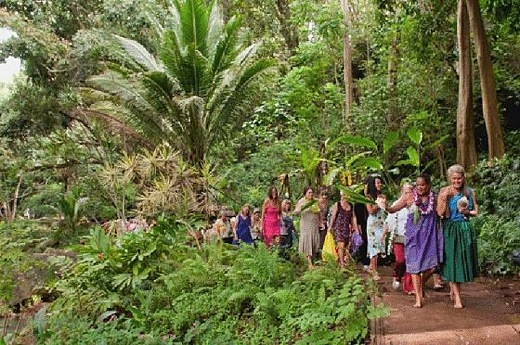
Please help me, if it’s not your job, who’s is it? Please, call for an immediate moratorium on “smart meter” installation until these serious public health issues are resolved.] By Cindy Sage on 19 January 2012 for EMS Safety Network - (http://emfsafetynetwork.org/?p=6985) Image above: Mothers angry about smart meter health threat shut down PG&E Service Center in Santa Rosa, California in 2010. From (http://www.indybay.org/newsitems/2010/12/09/18666171.php). The American Academy of Environmental Medicine (AAEM) has adopted a resolution calling for a halt to wireless smart meters. The text of the resolution is below. (link to PDF of AAEM resolution on letterhead). Below is the text of their proposal.
BEFORE THE PUBLIC UTILITIES COMMISSION OF THE STATE OF CALIFORNIA On the proposed decision 11-03-014 Dear Commissioners: The Board of the American Academy of Environmental Medicine opposes the installation of wireless "smart meters" in homes and schools based on a scientific assessment of the current medical literature (references available on request). Chronic exposure to wireless radiofrequency radiation is a preventable environmental hazard that is sufficiently well documented to warrant immediate preventative public health action. As representatives of physician specialists in the field of environmental medicine, we have an obligation to urge precaution when sufficient scientific and medical evidence suggests health risks which can potentially affect large populations. The literature raises serious concern regarding the levels of radio frequency (RF - 3KHx - 300 GHx) or extremely low frequency (ELF - OHx - 30OHx) exposures produced by "smart meters" to warrant an immediate and complete moratorium on their use and deployment until further study can be performed. The board of the American Board of Environmental Medicine wishes to point out that existing FCC guidelines for RF safety that have been used to justify installation of "smart meters" only look at thermal tissue damage and are obsolete, since many modern studies show metabolic and genomic damage from RF and ELF exposures below the level of intensity which heats tissues. The FCC guidelines are therefore inadequate for use in establishing public health standards. More modern literature shows medically and biologically significant effects of RF and ELF at lower energy densities. These effects accumulate over time, which is an important consideration given the chronic nature of exposure from "smart meters". The current medical literature raises credible questions about genetic and cellular effects, hormonal effects, male fertility, blood/brain barrier damage and increased risk of certain types of cancers from RF or ELF levels similar to those emitted from "smart meters". Children are placed at particular risk for altered brain development, and impaired learning and behavior. Further, EMF/RF adds synergistic effects to the damage observed from a range of toxic chemicals. Given the widespread, chronic, and essentially inescapable ELF/RF exposure of everyone living near a "smart meter", the Board of the American Academy of Environmental Medicine finds it unacceptable from a public health standpoint to implement this technology until these serious medical concerns are resolved. We consider a moratorium on installation of wireless "smart meters" to be an issue of the highest importance. The Board of the American Academy of Environmental Medicine also wishes to note that the US NIEHS National Toxicology Program in 1999 cited radiofrequency radiation as a potential carcinogen. Existing safety limits for pulsed RF were termed "not protective of public health" by the Radiofrequency Interagency Working Group (a federal interagency working group including the FDA, FCC, OSHA, the EPA and others). Emissions given off by "smart meters" have been classified by the World Health Organization International Agency for Research on Cancer (IARC) as a Possible Human Carcinogen. Hence, we call for:
• An immediate moratorium on "smart meter" installation until these serious public health issues are resolved. Continuing with their installation would be extremely irresponsible. • Modify the revised proposed decision to include hearings on health impact in the second proceedings, along with cost evaluation and community wide opt-out. • Provide immediate relief to those requesting it and restore the analog meters.
Members of the Board American Academy of Environmental Medicine
.

Gutting Environmental Protection

SUBHEAD: ‘Red tape’ is a red herring when it comes to protecting our environment in Hawaii. [Editor's note: It was the requirement for an Environmental Impact Statement that sank the Superferry. Without such checks there will be no balance.] By Gary Hooser on 23 January 2012 for GaryHooser Blog - (http://garyhooser.wordpress.com/2012/01/22/red-tape-is-a-red-herring-when-it-comes-to-protecting-our-environment) Image above: A Gomaco slip form concrete paving machine working to make the Big Island of Hawaii a better place. From (http://aaronstene.com/2012/01/17/8791) Judging from a variety of not so very subtle signals coming out of the legislature, the 2012 legislative session will feature a full frontal assault on environmental protections. Framed under the banner of eliminating “regulatory barriers” in order to stimulate economic development and create jobs, numerous bills to dismantle important environmental protections are forthcoming and will be pushed hard. Lawmakers will be in an untenable position. Hearing rooms will be packed with construction workers wearing bright orange t-shirts emblazoned with the words “Jobs Now” and countered with like numbers of environmental supporters sporting equally bright green “Keep the Country, Country” t-shirts. Behind the scenes, in the hallways, and in private meetings, large landowners and developers (who will not be wearing t-shirts) will push their agenda to increase profits by removing “regulatory barriers” and “red tape” – code words for environmental and public interest protections. But as we’ve seen throughout the country, while increased environmental degradation and increased profits are guaranteed, increased employment certainly is not. Red tape is a red herring. Without question, the vast majority of projects that fall under Hawaii’s environmental review law, Chapters 341 and 343, Hawaii Revised Statutes (HRS) go forward without delay or legal challenge. Yes, when someone attempts to circumvent the law or avoid doing what is obvious, pono, and in the public interest, the project may end up in court or even on the front page of the Wall Street Journal. My experience as the Director of the Office of Environmental Quality Control is that most do not really understand the law. Chapter §341-1 states:
“The legislature finds that the quality of the environment is as important to the welfare of the people of Hawaii as is the economy of the State.”
Chapter 343 simply requires reviewing certain proposed actions involving the public interest in order to disclose potential environmental impacts. These projects involve public funds, public lands, or sensitive/special areas. In other words, the law protects the public interest by ensuring wise use of our precious natural resources. Private projects on private lands that do not involve the public interest are not affected. Critics of Chapter 343 will often speak of the very small “manini” projects that have no environmental impact whatsoever and yet are forced to go through an onerous, time-consuming and expensive environmental review process. This is flat out just not true. Any project expected to have no or negligible environmental impacts can be exempted from the process in a simple, fast, and straightforward manner. This can be completed in one day and on a single sheet of paper. In fact, the vast majority of projects in Hawaii are exempted in just this way. If the impacts are more than negligible but not likely to be significant, then an EA is needed. Significance can mean irrevocably committing a natural resource, curtailing the range of beneficial uses of the environment, or adversely affecting the economic welfare, social welfare, or cultural practices of the community and State. If impacts are expected to be significant, a full environmental impact statement (EIS) is required. Less than a dozen or so projects a year, at most, go on to a full EIS. But for EAs and EISs, the law only requires the disclosure of impacts, suggested mitigations, and alternatives. It does not approve or deny a project, does not grant any permits, and does not require any permit conditions. It is an informational document that “discloses the environmental effects of a proposed action…on the economic welfare, social welfare, and cultural practices of the community and State…” Our goal, our mission and our actions should be focused on the creation of good jobs and a strong economy that sustains, protects and honors our social, cultural, and environmental welfare. Anything less sells short the future of our children. Here are two examples of bad bills:
HB1870 Exempts all state agencies, except State DOT from all building codes and permitting requirements • HB1893 appears to exempt from Chapter 343 environmental review majority of state/county construction – all roads, harbors, airports and public buildings for starters
.

Abercrombie and armed force

SUBHEAD: In the confrontation on Molokai its clear that Abercrombie would use as much force as Lingle did over Superferry.  

By Catherine Cluett on 22 January 2012 for tne Molokai Dispatch - (http://www.themolokaidispatch.com/security-measures-peaceful-protests-greet-yacht-s-return)

 
 Image above: From Protestors against the Young Brothers fence at Kaunakakai Harbor made their message loud and clear: “Cruise ships, go home!” From (http://themolokainews.com/2011/11/11/protests-against-cruise-ship-heat-up/protesters-against-fence/).

 Nearly 50 U.S. Coast Guard personnel, as well as dozens of county, state and federal law enforcement guarded a security zone around Kaunakakai Harbor for the return of American Safari Cruises’ yacht Safari Explorer last Saturday. Armed members of the San Francisco-based Maritime Safety and Security Team, specializing in anti-terrorism, manned Zodiacs, while officials also patrolled by jet-ski and on foot.

In equivalent numbers, Molokai residents held signs protesting not only the yacht, but also the security measures – which many community members said made them feel like terrorists. The temporary security zone was enforced one hour before and 10 minutes after the arrival and departure of the 36-passenger Safari Explorer, during which time no one was allowed to enter the perimeter.

The zone encompasses an approximately 925,000 square yard area – or about the size of 50 football fields. According to the ruling, the security zone may go into effect any time between Jan. 20 and May 15, according to Coast Guard Captain Joanna Nunan. Because no arrests were made and protesters did not enter the water, Nunan said officials will reevaluate the need for the security measures this week. “It’s not our goal to be here every time [the yacht docks],” she said Saturday.

“We’re hoping we won’t need to in the future.” Gov. Neil Abercrombie called for the security zone after public safety concerns were raised when Molokai protesters took to the water in order to block the yacht on Nov. 26. Coast Guard and state representatives met on Molokai last Tuesday informing residents of the new security zone.

 Many residents were outraged, saying it would interrupt their lifestyles and water activities like paddling and fishing. Department of Land and Natural Resources (DLNR) Chair William Aila said the state would be liable if someone was injured during protests. However, activists said they had planned to honor an agreement not to protest after American Safari Cruises agreed to temporarily suspend its Molokai visits. This was the company’s first port call since December.

During that time, the community has held a series of meetings discussing tourism and growth on Molokai, organized by the Aha Kiole, a resource management group that has acted as a neutral advisory body. “We protested so we could go through this process,” said Hanohano Naehu Tuesday. “Now as a protester who loves this `aina… you’re making me feel like a terrorist. We’re the guardians, we’re not the terrorists.”

Aila acknowledged the progress the Molokai community has made to reach an agreement. “Challenges of meeting tourism growth is something that’s not just restricted to Molokai,” said Aila. “These challenges are happening around the state, but Molokai is at the forefront to getting close to community consensus on these issues. Other communities are only starting and looking to Molokai for some success…”

Yet he added that ensuring public safety is the state’s main goal, and concluded that Saturday’s security measures would move forward no matter what. Some residents said they had not taken a stance for or against the yacht’s visit to Molokai, but were outraged by what they considered the use of excessive force in security measures.

 “I wasn’t against the cruise ship but I’m against [officials] blocking this harbor,” said one resident at Tuesday’s meeting. Coast Guard spokesperson Lt. Gene Maestas said the security zone was chosen over other options because it is “a legal mechanism that allows county, state and federal” enforcement to work together. He added that the Coast Guard’s expenses for the operation are part of their normal budget – they perform similar security details around the world. Aila said the state’s costs have not yet been calculated.

 See also:
Ea O Ka Aina: Extra security at Kaunakakai Harbor 1/23/12

 .

Somewhere in New Mexico

SUBHEAD: A story about de-industrialization of the empire before the end of time. By Guy McPherson on 23 January 2012 for Nature bats Last - (http://guymcpherson.com/2012/01/video-alerts-2/) Image above: Still frame from Mike Sosebee movie. See preview below.

I’ll be delivering a TEDx talk on Wednesday, 25 January 2012, 7:00 p.m. at Arizona State University’s Barrett Honors College Cottonwood Room 100 (820 East Apache Boulevard, Tempe, Arizona). I’ll be preceded by Mike Sliwa and our presentations will be followed by Q & A. Topic: Walking away from empire. This event is free and open to the public. Please register here. Video will be available in this space as soon as possible after the event.

I am featured in a documentary film currently in production. Independent filmmaker Mike Sosebee seeks donations to complete this film. More details are forthcoming, so please stay tuned.

Video above: Preview of film in production by Mike Sosebee "Somewhere in New Mexico Before the End of Time". From (http://youtu.be/ZsPqtWfIQoQ). See also: Ea O Ka Aina: Fall & Winter - The Movie 5/1/11 .

Extra security at Kaunakakai Harbor

SOURCE: Brad Parsons (mauibrad@hotmail.com) SUBHEAD: Maui county police and federal agents puts tail-spin on return of tourist vessel to Molokai. [Source note: An email from the Big Island claims "On January 21st 2012 over 100 police, coast guard, us sheriffs, and FBI converged on the tiny isle of Moloka'i. To protect a private luxury yacht and it's 36 passengers. At a cost of over $1 million dollars. Below is a video from Walter Ritte of what took place at the Moloka'i pier where there was armed force used against residents." Sounds high.] By Wendy Osher on 21 January 2012 for Maui Now - (http://mauinow.com/2012/01/21/molokai-demonstrators-extra-enforcement-puts-tail-spin-on-return-of-vessel/) Image above: Maui County police & federal agents protect Safari Explorer passengers (in white van) as Molokai residence protest docking of tourist ship. From original article.

A group of about 40 protesters returned to Kaunakakai Harbor on Molokai on Saturday, January 21, 2012, as the Safari Explorer vessel resumed port calls to the island.

“An agreement had been worked out and things had been going quite nicely,” said Molokai resident Walter Ritte, “but this show of force has put everything in a tail spin,” he said of the increased enforcement presence.

Ritte was among the group that shared words of discontent today, calling the government response “unfortunate.”

A variety of signs held in the demonstration included the statements, “We’re not terrorists,” “Be pono to Molokai,” and, “We have the right to access our ocean ways.”

The vessel, owned by the American Safari Cruises company, temporarily suspended port calls to the island last month in response to community concerns and a water blockade; but service resumed today under a compromise agreement reached with protesters who have argued that there was a lack of a community process in decisions related to tourism and its affects on the island’s lifestyle and resources.

Supporters of the operation maintain that the 36-passenger Safari Explorer yacht supports local business, and helps to address the island’s historically high unemployment rate.

Company officials said the vessel resumed its visits to Molokai in accordance with the agreement reached with all parties.

“Unfortunately, a group of people chose not to abide by the agreement for a peaceful resumption of visits to the island, but many signs were also observed welcoming the yacht’s guests to Moloka’i,” said Sarah Scoltock, Director of Communications & Business Development at American Safari Cruises.

As the vessel returned, the state announced plans to implement a security zone one hour prior to the vessel’s harbor entries and departures.

Demonstrators expressed anger and resentment over additional enforcement presence saying it, “brought out many more protesters, and made things worse.”

Officials with the Maui Police Department said there were no reports of disorderly conduct and no arrests were made upon the ship’s arrival.

Company officials said the yacht docked without obstruction, and guests toured the island as planned during the day.

An evening pa’ina was also held celebrating one of the guest’s 70th birthday.

Ritte said, “The Aha Kiole o Molokai is still determined to keep it’s word, and will stand by it’s agreement to work with it’s community and present documents of its findings to the government after its meetings with the Molokai community.”

He further stated that, “The goal of the Aha Kiole is to bring a voice to its grass roots community that is fair and representative.”

Key supporters of the American Safari Cruise company say they plan to issue a statement regarding the resumption of service early next week. Video above: Molokai invaded by tourists guarded by federal agents. From (http://www.youtube.com/watch?v=Z1GAMvKJROA).

See also: Ea O Ka Aina: Molokai blocks Kaunakakai Harbor 11/26/11 .

Trust Horizon & Murmuration

SUBHEAD: Interaction between the two could make for a rapid change to dependence on local resources. By James Kunstler on 23 January 2012 for Kunstler.com - (http://kunstler.com/blog/2012/01/murmuration.html) Image above: During the Arab Spring an ax-wielding Abdel Ibrahim is among a group of men helping to protect a poor neighborhood in Cairo. From (http://framework.latimes.com/2011/01/28/protests-in-egypt/#/94). Trust Horizon On last week's podcast, Duncan and I yakked about an important concept introduced by Nicole Foss at The Automatic Earth blog site. This concept was "the trust horizon," which outlines how legitimacy is lost in the political hierarchy. That is, people stop trusting larger institutions like the federal or state government and end up vesting their interests much closer to home. Thus, life de-centralizes and becomes more local by necessity. Your own trust horizon extends only as far as other persons, businesses, institutions, and authorities immediately around you - the banker who will meet with you face-to-face, the mayor of your small town, the local food-growers. At the same time, distant ones become impotent and ludicrous - or possibly dangerous as they flounder to re-assert their vanishing influence.
It is obvious that we are in the early stages of this process in the USA (and Europe), as giant institutions such as the Federal Reserve, the Executive branch under Mr. Obama, the US Congress (the ECB), the SEC, the Department of Justice, the Treasury Department, and other engines of management all fail in one way or another to discharge their obligations.
The people of the USA, having been let down and swindled in so many ways by the people they placed their trust in, and even freely elected, appear to be in a daze of injury. Maybe this accounts for the obsession with zombies and persons drained of blood - who yet seem to carry on normal lives (at least in TV shows). This odd condition is best defined by the familiar cry from non-zombies: "where's the outrage?" Which brings me to today's point.
Mumuration Investment guru James Dines introduced another seminal idea on Eric King's podcast last week. Dines's work over the years has focused much more on human mob psychology than technical market analysis - which he seems to regard as akin to augury with chicken entrails. Dines now introduces the term "murmuration" to describe the way that rapid changes occur in the realm of human activities. The word refers to behaviors also seen in other living species, such as the way a large flock of starlings will all turn in the sky at the same instant without any apparent communication. We don't know how they do that. It seems to be some kind of collective cognitive processing beyond our understanding.
Dines goes on to suggest that the political stirrings and upheavals of the past year represent an instance of human "murmuration" that will lead to even greater epochal changes in geopolitical and economic life. Now, I've often said 1) history doesn't repeat, but it rhymes [thank you, Mark Twain], and 2) that these times are like the 1850s. To be more precise today, these two concepts of "the trust horizon" and "murmuration" point to a moment in time that I believe we are now rhyming with: the revolutions of 1848 and the events that grew out of it.
The spring of that year was an inflection point when discontent over the changes sweeping through European society broke into open insurrection in France, Prussia, Austria, Italy, Poland, South America, and other places all seemingly at once - despite the absence of television and the internet. However, the upheavals of 1848 occurred not long after the first practical installation of a telegraph line from Annapolis, Maryland, to Washington, DC (and then in Europe). It was also a time when the first railroad networks were linking up.
In February that crucial year, the liberal "Citizen King" Louis-Philippe of France was driven off the throne after an 18-year-reign characterized by tranquility and prosperity compared to the decades that preceded it. In March, street protests and violence spread through the grab-bag of kingdoms, dukedoms, and obscure principalities (Prussia... Saxony... Hesse... Fulda...) that would eventually make up the super-state of greater Germany. The Austrian empire began its slide into senility as its constituent states rioted. Even the people in Switzerland went batshit. And so on. Enter, stage left, Marx and Engels with a new political theory, for the excellent reason that the industrial revolution was reaching its stride and the conditions of daily life were changing very rapidly. Country people left farms for factory jobs all over the continent, and the ill-effects of the new wage-slavery drove them into solidarity. The uproar of 1848 was widespread and left many changes in its wake. But it was short and it produced odd instances of right-wing reaction.
In France, for instance, Louis-Philippe was sent packing (to England), and a new republic was established - but the president it elected was Napoleon Bonaparte's nephew, Louis Napoleon who, in a matter of months declared himself president-for-life, and then Emperor. He was not at all a bad ruler, as things turned out. Among other achievements, he presided over the massive physical renovation of Paris that produced the "city of light" beloved today. But he was driven off his throne twenty-odd years later from the ill effects of the opera bouffe known as the Franco-Prussian War.
In any case, the main point is that so many people across a continent got the same idea in the first weeks of a particular year, and then set about expressing themselves violently. More to my point is how things worked out in America. You have no doubt realized by now that there was no uprising in the USA in 1848 (though we did prosecute a war with Mexico). Yet, in the best Fourth Turning sense of history, a new generation had come of age and was producing the revolution in ideas that included Emerson and Thoreau's Transcendentalism, and the abolition movement, dedicated to ending slavery. This combination of broadly-held idealistic notions boiled away for another decade and led to the "mumuration" that precipitated the biggest bloodbath of the civilized world in the 19th century: the American Civil War. The Revolution of 1848 expressed itself most horrifically in the place that thought itself most specially insulated from its effects.
Hence, when you read an idiot such as Paul Krugman in Monday's New York Times Op-Ed kindergarten, prating on the end of hard times in the USA, swallow a good half-pound of kosher salt. James Dines is right, a great human "murmuration" is underway, vibrating like a bass chord through bodies politic all over the world. Wait until you see what breaks loose at the Democratic and Republican conventions later this year.
.

CIA mining social networks

SUBHEAD: The agency's tracking of online "dangers" takes its activity into US homes and from there it gets complicated. By Rachel Martin on 22 January 2012 for NPR - (http://www.npr.org/2012/01/22/145587161/cia-tracks-public-information-for-the-private-eye) Image above: Photo by Manoocher Deghati of a student painting the Facebook logo on a mural commemorating Egypt's revolution last spring. From original article. Secrets: the currency of spies around the world.

The rise of social media, hash-tags, forums, blogs and online news sites has revealed a new kind of secret — those hiding in plain sight. The CIA calls all this information "open source" material, and it's changing the way America's top spy agency does business.

NPR recently got a rare behind-the-scenes look at the CIA's Open Source Center. It operates on the down-low, though it deals with public material. We aren't allowed to tell you where the Open Source Center is. All we can say is that it's housed in an unmarked and unremarkable office building just off a nondescript, busy street.

My producer and I were asked to leave our phones in our car. We were ushered inside to a small room with half a dozen analysts working at cubicles, their eyes fixed to computer screens. There was a bank of television monitors on the wall projecting news from around the world, which gave it kind of a newsroom feel.

The managing editor is Glen; he gave no last name. He pointed out a poster on the back wall made to look like a 1950s comic book, and in one corner it read, "There's no escaping the information highway."

Changing Responsibilities

Social media have forced the CIA into the fast lane. The Open Source Center's predecessor organization was basically a U.S. government translation service. Analysts translated foreign radio broadcasts or newspapers that sometimes took weeks to come in by ship.

Today, CIA analysts are still translating, but they're also responsible for figuring out what it all means. They're also under more pressure now to identify potential crises, sometimes with only a tweet or a status update to go on.

Doug Naquin, the director of the Open Source Center, says the volume of information the people are analyzing is massive.

He won't define "massive," but other intelligence officials say since the attacks of Sept. 11, 2001, it's been like trying to drink from a fire hose. The political revolutions erupting around the Middle East have turned that fire hose into a flood.

Lawmakers on Capitol Hill blamed the CIA for missing the Arab Spring, specifically the democratic uprising in Egypt. Naquin says his analysts knew something was brewing in the country.

"I want to clarify — we didn't predict, but we said it was going to be a game changer and did pose a threat to the regime," he says.

Naquin says that was in April 2009. His team wrote up reports on some kind of unrest, fueled by social media, but those reports were overlooked. That was in part, he says, because the CIA and the intelligence community as a whole weren't taking social media seriously.

"I remember there was a lot of resistance or skepticism, is the best word to say. 'Well it's just chatter, it's no value,' etc.," he says. "And we said ... 'No, there's something there.' "

'Narratives' Decoded

But figuring out what that something is — that's the hard part. Naquin says his office isn't trying to uncover secrets so much as they're trying to put together what he calls a country's "narrative."

"You know, what are the underlying beliefs? So in the United States, for example, one of our master narratives is the 'American Dream.' It's the same in other countries," he says.

Building those narratives for foreign countries means tracking almost anything.

For example, "What's trending? Is it the Justin Bieber concert?" Naquin says. Yes, the CIA uses Justin Bieber as a kind of social barometer.

"Well, it says to me that their attention is not terribly focused on other issues that we may consider more serious," he says. "I kind of raised it as a frivolous point, but if Justin is No. 1, and the water situation is four or five, it'll give you sense of the mindset of a certain part of the population."

More Than Just A Google Search

We were given access to a regular morning meeting where the CIA analysts talked about what they had been monitoring, though we were told in advance that the meeting would be sanitized. In other words: No sensitive stuff in front of the reporters.

These analysts take what they learn through open source material and put it into classified reports, used by the CIA and other government agencies. But it's hard to see how this is more specialized than what a graduate student could research and write as a senior thesis. Naquin has heard this critique before.

"It's very easy to say, 'Well, this is what I found in Google, and this is what they're saying, so this must be true,' and that's I think one of the biggest changes over the past five years," he says. "People realize this is much more than just doing a Google search."

Analysts are responsible for monitoring everything that comes out of a specific country, but they're also tracking political movements and terrorist groups. Beth — that's what the CIA wants us to call her — spends her day looking at terrorist-related websites and monitoring Twitter feeds and Facebook pages that raise red flags.

"In order for these really reclusive groups to communicate with their supporters, they have to do it in open forum, often times using the Internet," she says, "where, you know, they can reach supporters around the world, and the more open they have to be, the easier it is for people like us to find it."

Broader Impact

Social media can kind of "out" terrorist sympathizers. The challenge for the CIA is figuring out exactly who and where they are. That's complicated because the Internet makes it easy for users to hide themselves — to literally create digital identities using shadow IP addresses. Someone could be tweeting in Arabic under a Yemen email address, but it could be a U.S. citizen sitting in his house in Ohio. The problem with that is it's illegal for the CIA to monitor Americans on American soil.

"We can't tell where individual posts come from," Naquin says.

So if they're pursuing someone and, at some point in that analysis they realize that that person is sitting in the United States, how does that change what they're doing?

"I can't get into those types of questions in too much detail," he says, "but if there's any — let me put it broadly — if there's any situation in which we came across anything that involved U.S. persons, we would either stop or we would turn it over to one of our partners on the domestic side."

But the line between what kind of "monitoring" is legal and what's not could get more complicated as the technology evolves. Naquin says he's anticipating a future when our household appliances are all wired up to our iPhones and email accounts.

"The Internet is going from connecting people to connecting to things," he says. "People's thoughts that would never make it out of their homes now are available to everybody on the Internet."

For open source analysts with the CIA, that just means more information and hopefully more valuable intelligence. For those living in a country ruled by a government with a penchant for domestic spying, it's potentially a Big Brother nightmare.

See also: Ea O Ka Aina: DOD creates cyber sock puppets 3/17/11

.

Former Vegan becomes Butcher

SUBHEAD: By killing the animal himself, he says, strengthens his bond to that animal, as well as the food it provides. By Kristoror Husted on 21 January 2012 for NPR - (http://www.npr.org/blogs/thesalt/2012/01/21/145521431/how-one-former-vegan-learned-to-embrace-butchering) Image above: Andrew Plotsky, former vegan, assists dying pig he will soon butcher. From original article. The farm-to-table philosophy has been mostly about knowing where food was grown. For meat, that meant knowing if your chickens were caged and if your beef was grass fed. But with the revival of the butcher shop, some young people are undertaking the largely lost art of butchering as a stronger way to connect with their food. For 24-year-old Andrew Plotsky of Washington, D.C., that meant leaving his job as a barista in a snobby coffee shop to learn the process of raising an animal, slaughtering it and butchering it for a meal. "I had a romantic idea of the way I thought animals should and could be processed," he tells The Salt. He says he was attracted to the small scale tradition of a whole community having its hands involved in the raising of animals for food. "I wanted to be a part of that process," he says. "Somehow, that manifested in pig slaughter." Long gone is the idea that only chefs care about the provenance of the meat they cook. Now, the notion of knowing a piece of meat's history seems to be trickling into the mainstream. Who raised it? Who killed it? How did it die? Who butchered it? It was questions like these that led Plotsky across the country. The former vegan went to Vashon Island., Wa. to learn the butcher trade from Brandon and Lauren Sheard. His goal was to document the process for about a week and half. He ended up staying for two years. "I had been preparing myself intellectually for years," he says. "The immediacy of taking life was difficult at first. It's still something I'm figuring out how to rationalize." Pigs are first shot with a rifle to stun them. Then their throats are cut to let them bleed out. "The moment of silence before the shot is taken was difficult," Plotsky says. "It came out of fear that the pig would suffer." By killing the animal himself, Plotsky says he strengthens his bond to that animal, as well as the food it provides, the ground it lived on, and the family and friends he shares the meal with. Though killing the animal weighs heavy on Plotsky's heart, carving the precise cuts from the pig weighs heavy because of its physical size. He has to wrestle the carcass and take awkward positions to make sure he gets exact cuts. "There's a steep learning curve," he says. As a pork butcher, Plotsky typically uses a bone saw, a cleaver, a boning knife and another sharp knife to "break down" a pig. Each side of the pig will get cut into quarters: the shoulder, the leg, the loin and the belly. Using geographical markers, such as the sternum and vertebrae, butchers locate exactly where to slice first. For the leg quarter, it's one vertebra up from the curve near the bottom of the spine. Two years later, the butcher and filmmaker is still working at the farm and documenting the process with the Sheards for others to see. He says he finds the work enriching because he's present for the whole process — something he hopes more consumers can connect with through his agrarian videos. It seems to be working, too. "I see the 'hipification' of butchery in urban areas like Brooklyn and San Francisco," he says. "It's a good thing." His favorite cut of a pig? The trotter, or the foot. "If you have a trotter on a plate, you should feel blessed and not say 'Ew,'" he says. "They're kind of everything a chicken wing dreams of being."

Video above: Andrew Plotsky's film on pork butchery. Caution some images may be too graphic for some viewers. From original article (http://vimeo.com/32367993).

.

Map of US Trees

SUBHEAD: NASA maps area of continental United States for "above ground woody biomass" - or in English "tree cover". By Alex Davies on 22 January 2012 for TreeHugger - (http://www.treehugger.com/natural-sciences/nasa-maps-americas-trees.html) Image above: The ridgebacks of the Appalachian Mountains is the bulk of forests left in the United States with a strip running along the Sierra Nevada Mountains and into the Pacific Northwest. Heading due west from Cleveland, Ohio, there are no great stands of forests all the way to California and the southern Cascade Mountains. From (http://eoimages.gsfc.nasa.gov/images/imagerecords/76000/76697/whrc_carbon_us_lrg.jpg). Click to enlarge.

One of the harder things about proving climate change and other large-scale trends is that they're slow processes. Year-to-year data can't prove anything conclusive, and data from 10, 20 or 100 years ago is rarely as complete as we would like it to be. That's why the NASA Earth Observatory set out six years ago to create a map of the country's trees. Now scientists have a conclusive picture of today's forests, which are crucial to storing carbon and keeping its presence in the atmosphere pin check.

The map, which actually measures "aboveground woody biomass" in tons per hectare, was created by Josef Kellndorfer and Wayne Walker of the Woods Hole Research Center (WHRC), along with colleagues at the U.S. Forest Service and U.S. Geological Survey.

Forests store huge amounts of carbon- NASA says up to 45%- of the global supply. The loss of forests means the release of carbon; massive deforestation means unusually high atmospheric levels of carbon, and the rise of global temperatures (albeit with the occasional exception).

The goal of the NASA forest map is not to establish any change in national tree coverage, but rather to have a conclusive picture of what's here now- so future scientists and citizens know what's changed, and what needs to be done differently.

.

A Truly Old Day

SUBHEAD: The unpleasant truth is that modern agriculture, tourism and development is destroying Hawaii.  

By Juan Wilson on 20 January 2012 for Island Breath - 
  (http://islandbreath.blogspot.com/2012/01/truly-old-day.html)

 
Image above: Detail of an etching of a young Hawaiian woman dating from 1788. From CD on early Hawaiian maps and images available at (http://www.euriskodata.com).

Yesterday I read an article by Joan Conrow "A Truly New Day" (http://kauaieclectic.blogspot.com/2012/01/musings-truly-new-day.html) that questions Hawaii governor Abercrombie's "New Day in Hawaii" plan to provide both conservation and development. The perspective of the governor is to see "resources" like water as commodities. To quote the plan:
Fresh, clean water is an irreplaceable resource. It is fundamental to our well-being. It fuels agriculture, tourism, and sustainable development.
The governor's plan correctly identifies that maintaining the health of the watersheds in Hawaii is critical. Besides loss of forest we face a drier future as global warming raises the altitude of rain clouds. Abercrombie proposes fencing off of watersheds on public land and the elimination of hoofed animals within those areas with the use of local hunters. The unpleasant truth is that modern agriculture, tourism and development is destroying Hawaii.

To fence off public land to support water availability for those activities is privatization and corporatization of our future. It would not be right to secure the forest for those purposes. Joan's article points out that hunters will strongly resist any such plan. I concur. Hunters want to take game whenever they go to the forest.

As a result the hunting community wants as large a population of game as can be sustained, particularly goat and pig. They will never voluntarily hunt out the game that destroys the forest we all depend on, even though their practices will end in a collapse of the forest ecosystem. A similar case can be made for modern fishing practice. Harvest as much as you can until you cannot harvest any more. This is why it is argued we need government regulation of the environment.

Most progressives have agreed, but if the government is acting not in the interest of the Commons and the forest itself, but is dedicated to more jobs, progress and growth then regulations become a form of corruption. The unwelcome fact is we will probably have to have a self prescribed restriction on going anywhere we like, anytime we like, and doing anything we want in order to heal these islands.  

The Old Days
Early on in the Polynesian settlement of Hawaii there were too few people to destroy the islands outright. People could live anywhere, hunt any prey, and chop down anything with little consequence. Soon ground nesting birds with pretty red or yellow feathers were gone, but, hey! Who knew? As population grew and taro farming reached its limits in the valleys it became clear that rules (taboos, or kapu) were needed to maintain health, welfare and fairness.

A delicate balance seems to have been achieved that may have lasted almost a millennium. At least when Cook arrived in Waimea Kauai, he noted that he found a healthy vibrant people on an abundant island. This is not to say that the Hawaiians did not have injustices and inequalities among themselves, but at least they were able to get through several centuries without killing the island.

Abercrombie lives within the Honolulu Bubble. It's a place of fantasy with a million people living on a tiny tropical island fed by a 3000 mile long umbilical cord made of petroleum. Any plan to sustain Hawaii coming from Oahu is doomed to be a form of suicide for the outer islands. It is only on the outer islands is there a chance to find the solutions for our future. We need to dedicate ourselves to the health of the Hawaii islands ahead of our own needs.

Heaven forfend, we may even have to go without or with less. For the PDF file of Island Breath's Sustainability Land Use Plhatfield Kauai that was presented at the of Eco Roundtable LEGS Conference in October 2007 click here (http://www.islandbreath.org/2007Year/071013LandUsePlan.pdf).]

For more recent work on determining the Moku and Ahupuaa of the islands of Hawaii for a basis in managing the islands in a manner similar to ancient Hawaiians visit https://public.me.com/juanwilson for detailed maps of all the islands. Also, for additional information on traditional mapping of the islands using GoogleEarth see:
See also: Ea O Ka Aina: A Truly New Day 1/19/12
Island Breath: Mauka to Makai 5/8/07
Island Breath: Kauai Township Planning 6/27/07
Island Breath: Sustainability Land Use Plan 11/1/07

 .

A Truly New Day

SUBHEAD: The ongoing disconnect between conservation and development is because we can't have both.

 By Joan Conrow on 19 January 2012 for Kauai Eclectic -  
(http://kauaieclectic.blogspot.com/2012/01/musings-truly-new-day.html)
 
Image above: DLNR armed uniformed police patrol on land and in the ocean. From (http://en.wikipedia.org/wiki/Hawaii_Division_of_Conservation_and_Resource_Enforcement).

Driving to the beach for sunrise, I'm starstruck not by the stars, which were disappearing, but all the mountains — Kalalea, Makaleha, Waialeale, Kawaikini — standing perfectly clear against a backdrop the color of pink ginger. At the shore, the drama continues, with a strategically placed cloud blocking the top half of a fiery red sun, causing five broad shafts of rose and silver light to beam from sea to sky. The water, smoothed by a faint offshore wind that carries the musky-sweet scent of white hinano hanging in coastal hala trees, is a color somewhere between blue and brown, and conditions are perfect for the guys who pulled into the parking lot right behind me, driving a truck with a window decal of a diver preparing to spear a tako.

I think of the conversation I had the day before with fisherman/surfer Greg Holzman, who expressed concern about the possible loss of shoreline and ocean access that he and others fear could accompany critical habitat designations for the monk seal and the creation of marine life sanctuaries. I think also of comments he made about how access to the island's mauka areas has been lost with the closing of sugar plantations, development, landowner worries about liability.

As a result, he said, the areas that are open, like Kokee, get overused, creating conflicts between hunters and hikers/tourists, and the pig population has exploded in the places where guys can't get in to hunt anymore. And that makes me think of DLNR's new plan to protect our watersheds — provided the Legislature kicks down $11 million per year. Perhaps that's why the agency is taking its case to the public in the opening days of the Lege with a television special, “The Rain Follows the Forest,” set to air on KGMB at 6:30 tonight, and again at 4:30 p.m. on Sunday. The plan, which is part of Abercrombie's “New day in Hawaii,” and so includes language about public-private partnerships, sounds a serious alarm:
Immediate action is needed to secure Hawaii’s water supply. Hotter, drier conditions and damaged watersheds are escalating the costs and conflicts over water. Fresh, clean water is an irreplaceable resource. It is fundamental to our well-being. It fuels agriculture, tourism, and sustainable development. In turn, our water supply depends on the health of our mauka native forests, which capture and absorb rain. With over half of the original forest lost, and the remainder threatened by exploding populations of invasive species, the forest now relies on us for its survival.
The proposal identifies fencing key watersheds and removing all hooved animals from those enclosures as “the first step towards protection” — a concept that is essentially a repeat of what plantation owners did in the early 1900s. But it's likely to meet strong resistance from hunters, who have long had tremendous influence on public land management in Hawaii.

Though the plan calls for using hunters to remove the animals wherever it's safe to do so, hunters have consistently opposed efforts to fence public lands. When the state talks about partnerships, perhaps it could push harder for improved mauka and makai access, so that people, especially those who secure food through hunting and fishing, don't continue to feel so squeezed, which feeds conflicts with other humans, as well as wildlife. Witness the recent attacks on the monk seals, which are viewed as fishing competitors. I was also interested in the proposal's acknowledgement that:
Additionally, resorts are the most water-intensive land use, using over three times more water per acre than industrial and commercial, and five times more water per acre than agriculture. Because of this, water-intensive resort development and expansion can be restricted by limited water supplies.
But mightn't that be a good thing? Especially since the proposal also recognizes:
[T]he unique cultural and natural resources that attract visitors to Hawai`i are declining. Native species sacred to the Hawaiian culture are disappearing at the highest extinction rate in the nation because of development, introductions of invasive species, and other threats.
Once again we're confronted with this ongoing disconnect between conservation and development. We keep acting like we can have both, and we keep getting knocked up side the head by proof that we can't. If we're going to spend millions to protect the native forests, why not also get sensible about determining the carrying capacity of these islands when it comes to tourism? We've already heard Richard Lim, director of the state Department of Economic Development and Tourism admit:
[T]ourism has essentially remained stagnant for the last 20 years and can no longer be relied on to move the economy into a prosperous future.
So why keep pretending like it will? Instead of spending money to lure more and more tourists to the Islands, and jumping through hoops to ensure they're entertained, why not channel a big chunk of dough into supporting local ag? That way we'd save water, increase our self-sufficiency and keep our hard-earned cash in Hawaii, rather than sending it out to the places that grow our imported food. It's good to see DLNR pushing its ambitious plan to protect watersheds, and hopefully it's not too late.

But if the Guv truly wants to usher in "a new day in Hawaii," he needs to start steering the Islands away from their dependence on tourism and the military, neither of which will ever be sustainable, and into practices that are.

See also:
Ea O Ka Aina: A Truly Old Day 1/20/12

 .

Keysone XL pipeline fate

SUBHEAD: Canada pledges to sell oil to Asia after Obama rejects Keystone pipeline. By Theophilos Argitis on 19 January 2012 for Bloomberg News - (http://www.bloomberg.com/news/2012-01-19/canada-pledges-to-sell-oil-to-asia-after-obama-rejects-keystone-pipeline.html) Image above: lanborer's International Union of North Anmerica members supporting KXL pipleline. From original article.

President Barack Obama’s decision yesterday to reject a permit for TransCanada Corp.’s Keystone XL oil pipeline may prompt Canada to turn to China for oil exports.

Prime Minister Stephen Harper, in a telephone call yesterday, told Obama “Canada will continue to work to diversify its energy exports,” according to details provided by Harper’s office. Canadian Natural Resource Minister Joe Oliver said relying less on the U.S. would help strengthen the country’s “financial security.”

The “decision by the Obama administration underlines the importance of diversifying and expanding our markets, including the growing Asian market,” Oliver told reporters in Ottawa.

Currently, 99 percent of Canada’s crude exports go to the U.S., a figure that Harper wants to reduce in his bid to make Canada a “superpower” in global energy markets.

Canada accounts for more than 90 percent of all proven reserves outside the Organization of Petroleum Exporting Countries, according to data compiled in the BP Statistical Review of World Energy. Most of Canada’s crude is produced from oil-sands deposits in the landlocked province of Alberta, where output is expected to double over the next eight years, according to the Canadian Association of Petroleum Producers.

“I am sure that if the oil sands production is not used in the United States, they will be used in other countries,” Fatih Birol, chief economist at the International Energy Agency, said in an interview before a speech at Imperial College in London today.

‘Profound Disappointment’

Harper “expressed his profound disappointment with the news,” according to the statement, which added that Obama told Harper the rejection was not based on the project’s merit and that the company is free to re-apply.

Canada this month began hearings on a proposed pipeline by Enbridge Inc. to move crude from Alberta’s oil sands to British Columbia’s coast, where it could be shipped to Asian markets.

Environmentalists and Canadian opposition lawmakers welcomed the Obama administration’s decision. Megan Leslie, a lawmaker for the opposition New Democratic Party, said the Keystone pipeline project was harmful to Canada’s energy security.

“What I’m opposed to is continuing the unchecked expansion of the oil sands,” Leslie said by telephone.

New Flashpoint

Enbridge’s pipeline may now become the new flashpoint between Harper and the opposition. Harper has said building the capacity to sell the country’s oil to Asian markets is in the national interest, and the government will review regulatory- approval rules for new energy projects so they can be done more quickly. Harper has also said he will look more closely into complaints that “foreign money” is being used to overload the regulatory process.

“We have to have processes in Canada that come to a decision in a reasonable amount of time, and processes that cannot be hijacked,” Harper said at a press conference Jan. 6 in Edmonton.

The Keystone decision is the latest of several U.S. moves that have irked Canadian policy makers. Canada objected to “Buy American” provisions in the Obama administration’s $447 billion jobs bill that was blocked by Republicans in Congress, as well as the restoration of a $5.50 fee on Canadian travelers arriving in the U.S. by plane or ship.

Approval of Keystone is a “no-brainer,” Harper said in a Sept. 21 interview with Bloomberg.

Cornerstone of Development

Yesterday’s rejection “certainly introduces new uncertainties into the economic relationship,” said David Pumphrey, deputy director of the energy and national security program at the Center for Strategic and International Studies in Washington. “This is a cornerstone of economic development for the country.”

The denial came before a Feb. 21 deadline set by Congress after Obama postponed a decision in November. TransCanada said the 1,661-mile (2,673-kilometer) project would carry 700,000 barrels of crude a day from Alberta’s oil sands to refineries on the U.S. Gulf coast, crossing six U.S. states and creating 20,000 jobs.

“I’m disappointed that Republicans in Congress forced this decision, but it does not change my administration’s commitment to American-made energy,” Obama said today in a statement. “We will continue to look for new ways to partner with the oil and gas industry to increase our energy security.”

Canadian policy makers said they remain optimistic TransCanada will eventually be able to proceed.

Still Supporting

Alberta Premier Alison Redford said in a press conference in Edmonton that it is still “entirely possible” the pipeline will be built and said it was good news that TransCanada planned to apply again.

Canada will continue to support TransCanada Corp. (TRP)’s plans to build the Keystone XL pipeline, Canadian Foreign Minister John Baird said, adding that it is in the best interests of both Canada and the United States.

“We strongly believe that Keystone’s in the best interests of both countries,” he said. “We’ll continue to be an active supporter of the project.”


By Kate Anderson on 18 January 2012 for Bloomberg News - (http://www.bloomberg.com/news/2012-01-19/obama-s-rejection-of-keystone-pipeline-sets-up-campaign-battle.html) Image above: Hippie generation baby boomer protests KXL pipleline. From original article.

President Barack Obama’s rejection of TransCanada (TRP) Corp.’s Keystone XL pipeline permit exposed a split in a core Democratic constituency and handed Republicans a new line of election-year attack.

Unions representing construction workers condemned the move while labor groups including the United Steel Workers, the United Auto Workers and the Service Employees International Union joined with environmental advocates in saying they support Obama’s decision. It also triggered swift criticism from congressional Republicans and the party’s presidential candidates.

“The Republicans’ argument that he’s trying to run a populist campaign firing up the liberal base and that this is all politics at the expense of jobs is going to be an important continuing issue through much of the campaign,” said David Gergen, director of Harvard University’s Center for Public Leadership in Cambridge, Massachusetts, and an adviser to presidents of both parties.

Obama is heading into his re-election campaign with the U.S. still rebounding from the worst recession since the Great Depression and an unemployment rate that has been stuck above 8 percent for almost three years. The economy will be a prime focus of Obama’s State of the Union address on Jan. 24.

The jobs promised by the building of the Keystone pipeline were central to union support for the project originally and the focal point of Republican criticism of Obama. TransCanada said the 1,661-mile (2,673-kilometer) project would carry 700,000 barrels of crude a day from Alberta’s oil sands to refineries on the U.S. Gulf coast, crossing six U.S. states and requiring as many as 20,000 workers to build.

Big Decline

TransCanada fell 33 cents to $41.41 at 4:15 p.m. in New York, and earlier today fell 4.8 percent, the biggest intraday decline since June 2009.

Republicans joined in criticism by the oil and gas industry and the U.S. Chamber of Commerce, saying the president is sacrificing the nation’s energy independence and the creation of U.S. jobs to win the election.

Senate Minority Leader Mitch McConnell of Kentucky said in a statement yesterday the president’s “decision shows a fundamental disconnect with job creation in this country, and sadly, that his focus is on appealing to his liberal environmental base rather than taking steps that can lead to thousands of jobs and energy security for our nation.”

‘Lack of Seriousness’

Former Massachusetts Governor Mitt Romney, the front-runner for the Republican nomination, released a statement saying Obama’s decision shows “a lack of seriousness” about unemployment, economic growth and U.S. energy independence.

“He seems to have confused the national interest with his own interest in pleasing the environmentalists in his political base,” Romney said.

Another Republican contender, former House Speaker Newt Gingrich, called it “a stunningly stupid thing to do.”

“Maybe when they’re unemployed in November, they’ll figure out that jobs matter,” he said while campaigning in Warrenville, South Carolina.

Gergen said the Republican presidential candidates will “pounce” on the issue at their debate in South Carolina tonight, two days before the state’s Jan. 21 primary.

Obama blamed Republicans for forcing the action by setting a deadline as part of legislation that temporarily extended a payroll tax cut. Obama in November had postponed the pipeline decision until after the election while the State Department reviewed a revised route that avoided a Nebraska aquifer that is the drinking-water source for 1.5 million people.

‘Arbitrary Deadline’

“The rushed and arbitrary deadline insisted on by congressional Republicans prevented a full assessment of the pipeline’s impact, especially the health and safety of the American people, as well as our environment,” Obama said in a statement after the rejection was announced.

The issue had pitted unions and environmentalists, two groups Democrats rely on for campaign cash and volunteers, against each other. The White House reached out to labor groups, as well as the business community, to try to smooth over tensions, according to an administration official who spoke on condition of anonymity to discuss internal deliberations.

The effort was partially successful as the steel and autoworkers and the SEIU joined with two other unions to express support.

“President Obama has acted wisely,” they said in a statement. “Addressing global climate change, establishing sustainable and secure energy sources and creating and retaining safe and family-supportive jobs are keys to a positive future.”

Environmental Groups

Environmental groups also hailed the decision. Michael Brune, the Sierra Club’s executive director, called the announcement “a huge victory” and said it will energize the Democratic base.

“We’re confident that the Sierra Club volunteers who were working and volunteering countless hours in 2008 will feel the same way,” he said in an interview.

Wendy Abrams, who raised $50,000 to $100,000 for Obama in 2008, according to the Center for Responsive Politics in Washington, said rallying her friends around the president would have been hard if he had approved the pipeline. She said Obama’s decision shows that he’s not “in the pocket of big oil.”

The support wasn’t universal among Democratic supporters.

The administration should “hug a jobless, construction worker” instead of “hugging a tree,” Terry O’Sullivan, president of the Laborers Union International, said in an e- mailed statement. “Blue collar construction workers across the U.S. will not forget this.”

Money Commitment

Susie Tompkins Buell, a co-founder of clothing maker Esprit Holdings Ltd., said she won’t be raising money for Obama until she hears more about his commitment to environmental concerns in the State of the Union.

“I put my money where my mouth is,” Buell, who has raised at least $20 million for Democratic candidates and causes over the last decade, said in an interview. “I want to support people that I believe in and are doing the right things and I come from a very concerned environmental perspective; for me it’s much bigger than the economy.”

Jared Bernstein, former chief economist for Vice President Joe Biden, said the timing of the announcement yesterday suggests Obama “doesn’t want to fight about Keystone for the next month.”

Gergen said he thinks the White House wanted the decision made before the president’s address next week “so they can counter the idea that they are against jobs by having a strong State of the Union on jobs.”

.

Waking Up, Walking Away

SUBHEAD: If you’re going to be poor in the future, and you are, you might as well learn how to do it competently.

 By John Michael Greer on 18 January 2012 for Archdruid Report (http://thearchdruidreport.blogspot.com/2012/01/waking-up-walking-away.html)
   
Image above: Abandoned Detroit suburb. From (http://zfein.blogspot.com/2009/08/local-architecture-goes-to-detroit.html).

 Last week’s Archdruid Report post, despite its wry comparison of industrial civilization’s current predicament with the plots and settings of pulp fantasy fiction, had a serious point. Say what you will about the failings of cheap fantasy novels—and there’s plenty to be said on that subject, no question—they consistently have something that most of the allegedly more serious attempts to make sense of our world usually lack: the capacity to envision truly profound change. That may seem like an odd claim, given the extent to which contemporary industrial society preens itself on its openness to change and novelty. Still, it’s one of the most curious and least discussed features of that very openness that the only kinds of change and novelty to which it applies amount to, basically, more of the same thing we’ve already got.

A consumer in a modern industrial society is free to choose any of a dizzying range of variations on a suffocatingly narrow range of basic options—and that’s equally true whether we are talking about products, politics, or lifestyles. I suppose the automobile is the most obvious example, but it has dimensions not always recognized and these bear a closer look. To begin with, the vast majority of cars for sale these days are simply ringing changes on a suite of technologies that was introduced in the late 19th century and hit maturity close to fifty years ago.

That’s as true of electric and hybrid cars, by the way, as it is of the usual kind—the hype surrounding the so-called “hybrid revolution” conveniently fails to mention that the same system has been used for more than sixty years in diesel-electric locomotives, and cars powered by electricity were common on American roads before the Big Three auto firms succeeded in getting a stranglehold on the industry during the last Great Depression. Steam-powered cars were also to be had back then—the Stanley Steamer was a famous brand; try finding one now. What variations can be found nowadays are almost entirely a matter of style rather than substance, and this becomes even more evident when it’s recognized that the auto is simply one way to get people and light cargoes from one place to another.

Are there other ways to do this? You bet, but none of them get the saturation advertising, the huge capital investments in manufacturing and distribution, or the vast government subsidies on local, state, and federal levels that cars receive on an ongoing basis. It’s a continuing source of amusement to listen to the pseudoconservatives who dominate the Republican Party these days denounce the very modest government funding that goes to passenger rail service and public transit.

Ask them if they’re willing to give up Federal highway dollars, to name only one of the huge subsidies that autos receive, and you’ll very quickly hear a different tune. It so happens that I don’t own or drive a car, and indeed I never have. Among its other benefits, that’s a good way to see the limits on the alleged freedom of choice that the consumer economy provides its inmates. In today’s America, you can live without a car, but most other choices you make are going to be sharply curtailed by that decision.

When my wife and I decided a few years back to leave the west coast and settle in the Rust Belt, scores of pleasant towns we might otherwise have chosen were ruled out in advance because the only way to go from there to anywhere else was to drive a car, and our options for buying a house were just as tightly constrained by the need to be within walking distance of groceries and other necessary services.

All those choices the propagandists of the consumer economy prattle about? They exist, but only if you give up your right to make any of the decisions that matter. That same logic applies across the board in today’s industrial societies. What products would you like to buy? If it’s not something that a handful of gargantuan corporations want to make and market for you, good luck. Would you like a voice in the political process? Sure, but only if you agree with one of two or three major parties whose positions differ so little you’ll need a micrometer to tell them apart. How about a different lifestyle?

Here’s the list of available options, every one of them a slight variation on the common theme of shopping for products and running up debt; if that’s not what you have in mind, sorry, we don’t have anything else in stock. All this can be seen as simply one material expression of the thaumaturgy we discussed a while back in these posts, the manipulation of basic drives through the endless repetition of emotionally charged symbols that serves to swamp the thinking mind and keep the individual penned in a narrow circle of self-defeating behaviors.

From another perspective, though, the torrent of material goodies that comes surging through the channels of the consumer economy is the payoff for cooperating with the existing order of things; so long as you want the things you’re supposed to want, you can have them in fantastic abundance. It’s no exaggeration to point out that average middle class people in the industrial world just now have access to material benefits that emperors couldn’t expect to get five hundred years ago. That’s their share of the payoff for acquiescing in the status quo.

That’s the great strength of the "magician states" Ioan Culianu talked about in Eros and Magic in the Renaissance, those nations—and if you’re reading this, you’re almost certainly living in one—that maintain control over populations by thaumaturgy rather than by brute force. The thaumaturgy is backed up by very real material benefits for those who cooperate. Those who don’t—well, my own experience is a case in point; by the standards of most of humanity, I lead an extremely comfortable life, but most of the people I know are horrified by the thought that if it’s raining and I have errands to run, I put on a coat and open up an umbrella and go for a walk in the rain.


 They’d be more horrified still to learn that I deal with summer’s heat and humidity without an air conditioner, and respond to cold nights in winter by putting on a sweater rather than turning up the heat, but I don’t go out of my way to bring those details to their attention; my car-free life is enough of a shock for most of them. Of course there’s more to it than that.

The more of the payoff you refuse, the sharper the restrictions you have to live with. Now of course the less privileged classes in the industrial world, and the vast majority of people elsewhere, live with those restrictions every day of their lives, but suggest to those who don’t that they might find it useful to accept those restrictions, and I’m sure you can imagine the response you’re likely to get. Still, this is exactly what I intend to suggest, because there’s another factor in the situation, and it’s the one this blog has been discussing for more than five years now.

 The entire operation of the modern magician state, after all, depends utterly on uninterrupted access to gargantuan supplies of cheap, highly concentrated energy. The considerable amount of energy that goes to power the communication technologies that get thaumaturgy to its target audiences is only a drop in the oil barrel of the whole energy cost of the system. A much larger amount goes to supply and maintaining the infrastructure of thaumaturgy, and of course the largest fraction of all goes into produce that torrent of goods and services mentioned above, the collective payoff that keeps those target audiences docile.

Now factor in the depletion of concentrated energy sources—above all petroleum, which provides 40% of the world energy supply and close to 100% of energy used in transportation—and the proud towers of the magician state abruptly turn out to rest on foundations of sand. To understand the consequences of that awkward fact, it’s important to get past the rhetoric of victimization that fills so much space in discussions of social hierarchy these days. Of course the people at or near the upper end of the pyramid get a much larger share of the proceeds of the system than anybody else, and those at or near the bottom get crumbs; that’s not in question.

The point that needs making is that a great many people in between those two extremes also benefit handsomely from the system. When those people criticize the system, their criticisms by and large focus on the barriers that keep them from having as large a share as the rich—not the ones that keep them from having as small a share as the poor, or to phrase things a little differently, that keep their privileged share from being distributed more fairly across the population as a whole. Map the factor of middle class privilege onto the history of protest over the last half century or so and some otherwise puzzling trends are easy to understand.

The collapse of the 1960s protest movement here in America, for example, followed prompty on the abolition of the military draft in 1972. The real force behind that movement was the simple fact that the American middle classes were no longer willing to send their sons off to Vietnam, and were willing to use their not inconsiderable political clout to make that change of heart heard. It was indeed heard; the draft ended, the US extricated itself awkwardly from the Vietnam war, and the protest movement popped like a punctured balloon, leaving a minority of radicals who believed they were leading a revolution sitting among the shreds and wondering what happened.

Attempts to launch American antiwar movements since that time have foundered on the unmentionable but real fact that middle class Americans by and large have no trouble at all reconciling themselves to war, as long as someone else’s kids are doing the fighting. It’s in this light that last year’s spasmodic outbursts of protest from within the middle classes need to be understood. Since the peak of conventional petroleum production in 2005, economies around the world—above all the economies of the US and its inner circle of allies, which use more petroleum per capita than anybody else—have been stuck in a worsening spiral of dysfunction, and the middle classes have abruptly found themselves struggling to maintain their lifestyles. Their annoyance at that fact is easy to understand.

 From their point of view, after all, they’ve kept up their side of the bargain; they’ve bought what they were supposed to buy, borrowed when they were supposed to borrow, lined up obediently behind one or another of the approved political parties, and steered clear of all the hard questions. Now the payoff that was supposed to be their reward for all this, the payoff their parents and grandparents always got on time and that they themselves could rely on until now, is nowhere to be seen. The payoff is nowhere to be seen, in turn, as a result of processes sketched out more than thirty years ago in a forgotten classic of political economy,

 Paul Blumberg’s 1980 study Inequality in an Age of Decline. Analyzing the downward spiral of the American economy in the 1970s—the last time, please note, that soaring energy prices clamped down on an industrial society—Blumberg showed that while a rising tide lifts all boats, a falling tide behaves in a much more selective fashion, as those groups with more political influence and economic clout are able to hang onto a disproportionate share of a shrinking pie at the expense of those with less. The decades since Blumberg’s book appeared have only sharpened his argument. One after another, nearly every economic sector has undergone drastic reorganizations that slashed jobs, pay, and benefits for everyone below the middle class, and a growing number of people in the lower end of the middle class itself.

Now that everyone below them has been thrown under the bus, the middle classes are discovering that it’s their turn next, as the classes above them scramble to maintain their own access to the payoffs of privilege. Having nodded and smiled while those further down the pyramid got shafted, the middle classes are in no position to mount an effective resistance now that they’re the ones being made redundant. I can almost hear a former midlevel manager in an unemployment line saying: "First they laid off the factory workers, but I said nothing, because I wasn’t a factory worker..."

 Of course that’s not the way most people in today’s middle class like to think of things, and the gap between the reality of middle class privilege and the sort of rhetoric the Occupy movement spread last year—the claim that privilege applies only to the 1% of the population who are much richer than the middle class—opens an immense field of action for zealots and demagogues. Make the claim that you can keep the middle class supplied with its familiar comforts and status symbols and you’ll be able to count on a following in the years to come.

The demand for that particular form of comforting nonsense is already booming, and an increase in the supply is already forthcoming; human nature being what it is, it’s probably not safe to assume that all those who provide the supply will be harmless nitwits. This is where the capacity to envision profound change mentioned at the beginning of this essay becomes essential. In order to make sense of the future bearing down on us, it’s necessary to recognize that the privileged lifestyles of the recent past were the product of the chain of historical accidents that handed over half a billion years of stored sunlight to be burnt at extravagant rates by a handful of the world’s nations. Now that the supply is running short, those lifestyles are going away, and since the decline in petroleum production is gradual rather than sudden, the way it works out is that some people are losing access to them sooner than others.

The automatic reaction on the part of most people facing this challenge is to cling to their familiar perks and privileges like grim death; the problem with that reaction, of course, is that the deathgrip in question very quickly becomes mutual. The alternative is to let go of the perks and privileges before they drag you down. That may be the least popular advice I could offer, but it’s also among the most necessary. Over the years to come, as the real economy of goods and services contracts in lockstep with the depletion of fossil fuels, the fight over what’s left of the benefits of a failing industrial system is likely to become far more brutal than it is today. In the long run, that’s a fight with no winners.

The alternative is to walk away, now, while you still have the time and resources to do it at your own pace. This doesn’t mean, it probably needs to be said, pursuing the sort of green tokenism that’s become the latest form of conspicuous consumption in some circles on the leftward side of American life: the overpriced hybrid car parked ostentatiously in front of the suburban house with a few grid-tied solar panels on the roof, and the rest of it.

 It means giving things up: for example, doing without a car, getting rid of the suburban house and moving to a smaller, older, more efficient home two blocks from the bus route that will take you to work every day. It means accepting limits, not in some vague and abstract sense (which generally means accepting them for other people), but in the painfully specific sense that applies to your own choices. It means doing without things you want, during the difficult process of unlearning the mental automatisms that make you want them in the first place.

Unpleasant as it seems, this strategy has two massive advantages. The first is that you’ll quickly find yourself saving a great deal of money. Sell your car, and what you now spend on car payments, fuel, maintenance, insurance, and the rest of it, can go to something with a future. Apply the same logic to the other money-wasting habits of the middle class, and the money adds up fast. Since getting or staying out of debt, and providing yourself with the tools and skills you’ll need to get by in an age of decline, ought to be among your core priorities just now, that extra money is a valuable tool. So is the spare time you’ll have—most of those money-wasting habits are also time-wasting habits, remember.

The second advantage is one I’ve mentioned here before. If you’re going to be poor in the future, and you are, you might as well learn how to do it competently. It’s entirely possible to lead a life that’s poor in terms of money, material goods, and energy consumption, and profoundly rich—far richer than most contemporary lifestyles—in human values. If you’re going to do that, though, you’re going to have to learn how it’s done, and the only school where you can study that is that ancient institution, the school of hard knocks. If you start cutting your energy use and your material wants now, before you’re forced to do so, you can get past the hard part of the learning curve while you still have other options.

Thus it’s time, and maybe even past time, to wake up and walk away. Doing that, though, is going to require confronting one of the core superstitions of the modern world; we’ll discuss that next week.

See also:
 Ea O Ka Aina: Pulp Fantasy 1/11/12

 .