Fukushima poisons Japanese food

SUBHEAD: Japan’s food-chain threat multiplies as Fukushima radiation spreads.  

By Aya Takada on 24 July 2011 for Bloomberg News -  
http://www.bloomberg.com/news/2011-07-24/threat-to-japanese-food-chain-multiplies-as-cesium-contamination-spreads.html)

 
Image above: Meat on display in Japanese supermarket. From original article.

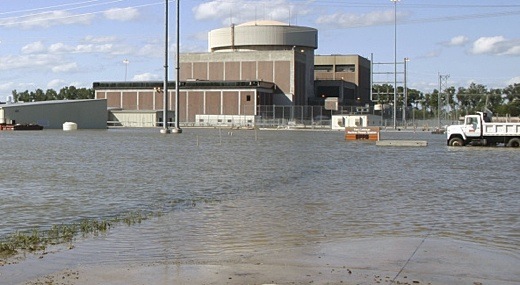
Radiation fallout from the wrecked Fukushima nuclear plant poses a growing threat to Japan’s food chain as unsafe levels of cesium found in beef on supermarket shelves were also detected in more vegetables and the ocean.

 More than 2,600 cattle have been contaminated, Kyodo News reported July 23, after the Miyagi local government said 1,183 cattle at 58 farms were fed hay containing radioactive cesium before being shipped to meat markets. Agriculture Minister Michihiko Kano has said officials didn’t foresee that farmers might ship contaminated hay to cattle ranchers. That highlights the government’s inability to think ahead and to act, said Mariko Sano, secretary general for Shufuren, a housewives organization in Tokyo. “The government is so slow to move,” Sano said. “They’ve done little to ensure food safety.”

On July 22, Aeon Co., Japan’s biggest supermarket chain, said 1,614 kilograms (3,558 pounds) of beef from cattle fed contaminated feed had been unknowingly sold at stores in Tokyo and nine other prefectures. Supermarkets started testing beef after the Tokyo Metropolitan Government found cesium in slaughtered cattle this month.

The government on July 19 banned cattle shipments from Fukushima prefecture, though not before some had been slaughtered and shipped to supermarkets. A ban on Shiitake mushrooms from another part of Fukushima was introduced on July 23 because of cesium levels, the health ministry said.

Seafood Concerns
As much as 2,300 becquerels of cesium a kilogram was detected in the contaminated beef, according to a July 18 statement from the health ministry. The government limit is 500 becquerels per kilogram. Seafood is another concern after cesium-134 in seawater near the Fukushima plant climbed to levels 30 times the allowed safety standards last week, according to tests performed by Tokyo Electric Power Co, national broadcaster NHK reported.

“We need to monitor the cesium 134 level detected in seawater around the plant,” Tetsuo Ito, the head of the Atomic Energy Research Institute at Kinki University in central Japan, said by phone today. “The increase could be from seawater churned by swells from the recent typhoon, but it’s possible that contaminated groundwater leaked from the plant.”  

Voluntary Testing
 Japan has no centralized system to check for radiation contamination of food, leaving local authorities and farmers conducting voluntary tests. Products including spinach, mushrooms, bamboo shoots, tea, milk, plums and fish have been found contaminated with cesium and iodine as far as 360 kilometers from Dai-Ichi. Hay contaminated with as much as 690,000 becquerels a kilogram, compared with a government safety standard of 300 becquerels, has been fed to cattle. Cattle with unsafe levels of the radioactive element were detected in four prefectures, the health ministry said July 23.

A becquerel represents one radioactive decay per second, which involves the release of atomic energy that can damage human cells and DNA, with prolonged exposure causing leukemia and other forms of cancer, according to the World Nuclear Association. Four months after the earthquake and tsunami damage to the Fukushima plant, local governments short of equipment, staff and funds are struggling to test all farm products.  

Tainted Meat
The government is considering if it’s feasible to test all cattle to prevent shipments of tainted meat to market, according to Yasuo Sasaki, senior press counselor for the agriculture ministry. On June 6, Japan’s Nuclear and Industrial Safety Agency said the plant released about 770,000 tera becquerels of radioactive material into the air between March 11 and March 16, doubling an earlier estimate. That’s about 14 percent of the radiation emitted in the Chernobyl disaster in modern-day Ukraine. About 2 million people in Ukraine are under permanent medical monitoring, 25 years after the accident, according to the nation’s embassy in Tokyo.

While 203 people were hospitalized and 31 died after the explosion at Chernobyl, about 400,000 children are considered to have received significant doses of radiation to their thyroid that merit monitoring, the embassy said. Cases of thyroid cancer in Belarus, which neighbors Ukraine, increased for at least 10 years after 1986 in children younger than 14 and for almost 20 years among 20-24 year olds, according to research by Shunichi Yamashita of Nagasaki University, who was appointed as an adviser to Fukushima prefecture on radiation exposure.

 .

Nobody Knows Anything

SUBHEAD: We don't know if that's spaghetti hitting a wall or the shit hitting the fan.  

By James Kunstler on 25 July 2011 for Kunstler.com -  
http://kunstler.com/blog/2011/07/nobody-knows-anything.html)

 
Image above: From (http://tochew.blogspot.com/2011/07/dining-etiquette-children-part-3.html).

That sound you hear out there is spaghetti hitting the wall. Everybody wonders: will it stick? The European Union lobbed a wad of kartoffelkloesse at a Greek wall last week. The thud was impressive, but then the darn thing started sliding down the greasy wall to where a gang of CDS counterparty wolves waited, snapping and slavering for it. And then there was a crowd of curious Germans in the alley, wondering who stole their precious kartoffelkloesse and lobbed it at the Greek wall, anyway. Grumbles were heard but, as yet, no mob action against the flingers of the purloined kartoffelkloesse.

Here in the pitiful tweet-sphere that contains the atomized remnants of USA governance, there is no such clarity. We don't know if that's spaghetti hitting a wall or the shit hitting the fan. But due to the amazing obduracy of the parties involved, the next sound you hear may just be the wall itself tumbling down, perhaps even the famous wall with the famous street attached.

All I know is that I dumped a largish bundle of 13-week US treasuries on Friday, a tad shy of the August 4 rollover and moved the hypothetical cash into less freaky hypothetical foreign sovereign instruments. I found a great bid for the T-bills, too. The whole transaction cost me a buck. I wondered: what were these people thinking who bought this crap at just the moment in history when everything is flying into walls and fans?

Whatever other conclusions can be drawn from the great debt ceiling debate of 2011, the main one seems to be that this country can no longer govern itself. Our reverence for the constitution appears to be inflated along with everything else in the USA these days: gas prices, waistlines, cable TV bills. Even congresspersons themselves seem to hold it in low regard, since proposals for a "super-congress" were floated last week. A lot of sentient folk who follow national affairs actually wondered out loud, "what the fuck is that supposed to mean?"

I took it to mean that our faith in the apparatus of governing has evaporated at the same rate as faith in our promises to pay back stuff-of-value denominated in certificates called dollars, our faith in which also melts into air. One thing for sure everybody knows: this is not a good time of year for financial shenanigans and chicanery. The rough beast called Reality comes back from its vacation in foul and turbulent spirits. Things shake loose when it roars.

There is widespread and growing agreement that the two major political parties have reached the end of their useful lives. No other serious faction is waiting in the wings to replace them, except the one led by a claque of overfed radio clowns and know-nothing Jesus Jokers with an axe to grind against the wicked hosts of birth control. Seek no further for the answer as to why our political leaders are not serious: there is nothing they can do at this point. In order to conceal the reality of epochal economic contraction, they have run our money affairs off a cliff - and so the next sound you will hear may not be of things hitting walls and fans, but of a sickening crash, as the overloaded carriage of government (drawn by a scrawny coyote) spirals down into the Canyon of Lost Causes.

We need a financial convulsion to sweep away the accumulated debris of poor choices, false hopes, squandered resources, frauds, swindles, and lies. Such an event can't help but set off a true political convulsion. Let the banks eat their own tails and strangle to death. I hope somebody catches a photo of Lloyd Blankfein paddling a surfboard due south off Georgica Beach, destination: Fortaleza. I hope he brings a few Red Bulls with him for the trip, and perhaps a whiffle bat to hold off the sharks - if there are any left in overfished deep blue sea.

I post a few seconds before the markets' openings this ominous Monday. Gold is already riding high. The rest is largely up to the robots in Lower Manhattan and the zombies in Washington.
See also:
Ea O Ka Aina: Bring it on! 7/17/11

.

$16 Trillion in Secret Loans

SUBHEAD: According to Sen. Bernie Sanders, the U.S. provided $16 trillion in secret loans to bail out foreign banks and business recently.  

By Bernie Sanders on 21 July 2011 for SteveBeckow.com -  
(http://sanders.senate.gov/newsroom/news/?id=9e2a4ea8-6e73-4be2-a753-62060dcbb3c3)


Image above: Federal Reserve and some of its "clients". From original article.

 
The first top-to-bottom audit of the Federal Reserve uncovered eye-popping new details about how the U.S. provided a whopping $16 trillion in secret loans to bail out American and foreign banks and businesses during the worst economic crisis since the Great Depression. An amendment by Sen. Bernie Sanders to the Wall Street reform law passed one year ago this week directed the Government Accountability Office to conduct the study.

“As a result of this audit, we now know that the Federal Reserve provided more than $16 trillion in total financial assistance to some of the largest financial institutions and corporations in the United States and throughout the world,” said Sanders. “This is a clear case of socialism for the rich and rugged, you’re-on-your-own individualism for everyone else.”

Among the investigation’s key findings is that the Fed unilaterally provided trillions of dollars in financial assistance to foreign banks and corporations from South Korea to Scotland, according to the GAO report. “No agency of the United States government should be allowed to bailout a foreign bank or corporation without the direct approval of Congress and the president,” Sanders said.

The non-partisan, investigative arm of Congress also determined that the Fed lacks a comprehensive system to deal with conflicts of interest, despite the serious potential for abuse. In fact, according to the report, the Fed provided conflict of interest waivers to employees and private contractors so they could keep investments in the same financial institutions and corporations that were given emergency loans.

For example, the CEO of JP Morgan Chase served on the New York Fed’s board of directors at the same time that his bank received more than $390 billion in financial assistance from the Fed. Moreover, JP Morgan Chase served as one of the clearing banks for the Fed’s emergency lending programs.

In another disturbing finding, the GAO said that on Sept. 19, 2008, William Dudley, who is now the New York Fed president, was granted a waiver to let him keep investments in AIG and General Electric at the same time AIG and GE were given bailout funds. One reason the Fed did not make Dudley sell his holdings, according to the audit, was that it might have created the appearance of a conflict of interest.

To Sanders, the conclusion is simple. “No one who works for a firm receiving direct financial assistance from the Fed should be allowed to sit on the Fed’s board of directors or be employed by the Fed,” he said.

The investigation also revealed that the Fed outsourced most of its emergency lending programs to private contractors, many of which also were recipients of extremely low-interest and then-secret loans.

The Fed outsourced virtually all of the operations of their emergency lending programs to private contractors like JP Morgan Chase, Morgan Stanley, and Wells Fargo. The same firms also received trillions of dollars in Fed loans at near-zero interest rates. Altogether some two-thirds of the contracts that the Fed awarded to manage its emergency lending programs were no-bid contracts. Morgan Stanley was given the largest no-bid contract worth $108.4 million to help manage the Fed bailout of AIG.

A more detailed GAO investigation into potential conflicts of interest at the Fed is due on Oct. 18, but Sanders said one thing already is abundantly clear. “The Federal Reserve must be reformed to serve the needs of working families, not just CEOs on Wall Street.”

To read the GAO report, click here for PDF.
.

Geithner Gets Gruesome

SUBHEAD: The plan needs to be in place today and the debt limit process must start tomorrow.  

By Ian Katz on 24 July 2011 for Bloomberg News -  
 (http://www.bloomberg.com/news/2011-07-24/geithner-says-house-must-start-debt-limit-process-tomorrow.html)

 
Image above: Illustration of Tim Geithner by Keith Taylor and modified by Juan Wilson.
 

U.S. Treasury Secretary Timothy F. Geithner said he hopes lawmakers can agree on the framework of a debt-limit agreement today because the House of Representatives must start deliberations tomorrow to meet the Aug. 2 deadline.

“They need to get this process moving in the House by Monday night,” Geithner said today on ABC’s “This Week” program. “To achieve that deadline, they need to have a framework that they know with complete confidence will pass both houses of Congress that is acceptable to the president. That should happen today.” When asked if he thinks a deal will be reached today, Geithner said, “I hope so.”

Geithner said two types of plans are being discussed: One is a “comprehensive, balanced” plan including spending cuts and “tax reform that would generate revenues,” which President Barack Obama is still negotiating with House Speaker John Boehner. The other, proposed by Senate Minority Leader Mitch McConnell and Majority Leader Harry Reid, would put in place “some up-front savings, but then establish a special committee with exceptional powers that could legislate quickly.”

Republicans yesterday challenged a presidential veto threat by preparing for a short-term extension of the $14.3 trillion debt limit, hardening partisan differences in the face of warnings that a stalemate risks roiling financial markets as soon as tonight.
Reid’s Reaction

Reid, a Nevada Democrat, declared himself “deeply disappointed” with a Republican stance that’s “pushing us to the brink of a default.” Michael Steel, Boehner’s spokesman, said a short-term extension, which would mean another vote on the nation’s borrowing authority before the 2012 elections, is “inevitable.”

Geithner, during a separate appearance today on CNN’s “State of the Union,” said a deal that doesn’t go through the 2012 elections wouldn’t get to Obama to sign because “it will not make its way through the Senate. So that’s not a viable option. Now there’s nothing wrong with doing this in stages, but what we can’t do is leave the threat of default hanging over the American economy. That’s like a tax on all Americans. It’s deeply irresponsible.” Geithner also appeared today on “Fox News Sunday.”

Geithner told congressional leaders at a White House meeting yesterday with Obama that delaying a deal risked an adverse reaction from credit-rating companies and financial markets. He noted Asian markets open tonight, said an official familiar with the meeting.
Market Reaction

“You can’t tell,” if investors would react negatively tonight if a deal isn’t reached, Geithner said on CNN today. “You can never know.”

Geithner also said Obama “absolutely” remains involved in the talks and said it’s “not true” that Obama and Boehner are no longer negotiating.

Geithner said the Obama administration and Boehner had never agreed on a deal to raise $800 billion in revenue.

“The president and the speaker got very close,” Geithner told ABC. “But there was a whole range of things yet to be resolved at that point when the speaker pulled out on Friday.”

Geithner said using the 14th Amendment to avoid default is “not a workable option.” He said the administration has “looked at his very carefully.”
14th Amendment

Some Democrats in Congress have discussed the idea of claiming presidential authority to continue borrowing without congressional approval based on an interpretation of the Constitution’s 14th Amendment.

“This is a critical test for the American political system,” Geithner said. “It’s a critical test for Congress and for the Republican leaders in Congress, because the eyes of the world are on us.”

The Treasury secretary reiterated his view that Republican leaders understand that the U.S. can’t allow a default.

“If you listen to them carefully, Speaker Boehner, Senator McConnell have said unequivocally that this country will not default, we will meet our obligations,” he said. “The problem is, they have a vocal, loud, frankly irresponsible minority.”

Geithner declined to discuss any possible contingency plans if the debt limit isn’t raised.

“We will do everything we can to mitigate the damage,” Geithner said on the “Fox News Sunday” program. “We do not have the ability, only Congress has the ability, to make sure that people get their payments on time.”

“We write 80 million checks a month,” Geithner said. “There are millions and millions of Americans that depend on those checks coming on time. Not just people that supply our military, but people who get Social Security benefits, Medicare, Medicaid benefits. And we cannot put those payments at risk, and we do not have the ability to limit the damage on them, if Congress fails to act in time.”

See also:
Ea O Ka Aina: Bring it on! 7/17/11 .

Cantor Carefully Considers

SUBHEAD: Rep. Eric Cantor continues debate over whether or not nation should be economically ruined.  

By Staff on 20 July 2011 for Onion News Network -
(http://www.theonion.com/articles/congress-continues-debate-over-whether-or-not-nati,20977/)

 
Image above: Could someone please wipe that sh#t eating grin off this fool's face. From (http://gop12.thehill.com/2009/01/profile-eric-cantor-in-2012.html).

 Members of the U.S. Congress reported Saturday they were continuing to carefully debate the issue of whether or not they should allow the country to descend into a roiling economic meltdown of historically dire proportions. Asked House Majority Leader Eric Cantor (R-VA),
"It is a question that, I think, is worthy of serious consideration: Should we take steps to avoid a crippling, decades-long depression that would lead to disastrous consequences on a worldwide scale? Or should we not do that?"
Cantor added that arguments could be made for both sides, and that the debate over ensuring America’s financial solvency versus allowing the nation to default on its debt—which would torpedo stock markets, cause mortgage and interests rates to skyrocket, and decimate the value of the U.S. dollar—is “certainly a conversation worth having.” He continued,
"Obviously, we don't want to rush to consensus on whether it is or isn't a good idea to save the American economy and all our respective livelihoods from certain peril until we've examined this thorny dilemma from every angle. And if we’re still discussing this matter on Aug. 2, well, then, so be it.”
At press time, President Obama said he personally believed the country should not be economically ruined.

See also:
Ea O Ka Aina: Bring it on! 7/17/20

 .

Beginning of the end for bananas

SOURCE: Ken Taylor (taylork021@hawaii.rr.com)
SUBHEAD: Most bananas eaten in the United States are now threatened by a new—but old—enemy.  
By Dan Koeppel on 22 July 2011 for The Scientist -  
(http://the-scientist.com/2011/07/22/the-beginning-of-the-end-for-bananas/)

 
 Image above: Bananas in Hanapepe Valley in 2005 that died from virus. Photo by Juan Wilson.

Our standard supermarket banana, a variety called Cavendish, may be at the brink of disaster. Chosen for its resistance to a fungal pathogen that wiped out its predecessor, the Gros Michel banana, the popular fruit has long battled a related fungus, which has all but devastated the banana industry in certain parts of the world. Now, it appears the Cavendish variety is facing a new threat—the very same fungal disease that drove Gros Michels off the market. Cavendish bananas account for about 45 percent of the fruit’s global crop, with an annual export value of US$8.5 billion, according to the United Nations Food and Agriculture Organization.

It was chosen to replace the original Gros Michel banana after a deadly fungal infection, known as Panama disease (Fusarium oxysporum f. sp. Cubense), wiped out much of the world’s banana crop in the first half of the 20th century. Farmers adopted the Cavendish variety because it appeared to resist the blight, as well as about a dozen other banana diseases that also threaten the worldwide crop. But it wasn’t long before it too started suffering from disease.

In the late 1980s, a mysterious malady began to wipe out Asian Cavendish plantations. Soil samples were sent to plant pathologist Randy Ploetz of the University of Florida’s Tropical Research and Education Center, who made the shocking identification: Panama disease was back, in the form of a new strain, which he dubbed Tropical Race 4. Race 4 is just as virulent to Cavendish as Race 1 was to Gros Michel. The fungus enters the plant via its roots through infected soil or water and spreads via the plant’s vascular system.

Once exposed, the plant yellows, and begins to look obviously sick—dried-out, sunken, and sagging. As the disease progresses, brown and purple stripes appear on the trunk, and the plant eventually dies. The disease, however, lives on, spreading via infected soil from plant to plant, plantation to plantation. Today the disease has spread across Asia, into the Pacific, and to Australia, where it has devastated the island country’s banana industry.

Though Race 4 has yet to hit Latin America, where bananas imported to the United States are grown, there’s little doubt it will, said Ploetz. But it turns out that Race 4 is not the only threat to Cavendish bananas.

As banana growers have fled from Race 4, replanting their Cavendish trees in areas only known to harbor Race 1, they quickly learned that Gros Michel’s old foe was now tormenting Cavendish bananas as well. In 2010, scientists conducting a survey of plants infected in India, which grows and consumes more bananas than any other country in the world, were the first to conclusively identify the presence of Race 1 in the Cavendish banana.

They published their findings in Plant Disease that November, and this March, Bioversity International—the global umbrella group for banana research—released a report confirming the finding: Race 1 had begun killing Cavendish plants in plantations around the Theni District of Tamil Nadu, India. Banana scientists are still trying to determine why some Cavendish are no longer immune to Race 1.

Altus Viljoenm, a researcher with the University of Stellenbosch in South Africa, speculates that this new strain of Race 1 may have evolved over time so that it could attack Cavendish. Other researchers are skeptical of the finding.

Ploetz notes that there have been rare cases in which Race 1 has killed individual Cavendish plants when they were already stressed—due to drought conditions, for example, or flooding. “I suspect that this is the same thing,” he said. But the authors of the Plant Disease paper reported that they had confirmed the finding with laboratory tests on sterile, potted Cavendish. “To our knowledge,” the researchers wrote, “this is the first report of [such] a virulent strain.”

Today, there are no cures, treatments, or even reliable molecular diagnostic tests for either Race, partly due to lack of detailed information on the banana genome, according to Bioversity. Currently, the best available strategy is containment. Ploetz has developed a plan to fight Race 4 if it appears in Latin American plantations, involving the use of strict quarantines on affected plantations to prevent, at least temporarily, the spread of the disease.

But isolating infected plantations is more a stopgap than a solution, Ploetz knows. “It buys time,” he said, but barring any new discoveries, the spread of Panama disease remains inevitable. Ploetz said it’s important that similar agricultural practices be instituted in already affected countries to help prevent the spread to Latin America in the first place.

In the meantime, scientists are working to develop new approaches to quell disaster. Last year, for example, University of Queensland researcher James Dale began the first field tests of a genetically modified Cavendish, which he hopes will provide long-term resistance against Race 4. Banana companies such as Chiquita and Dole are also reportedly working to develop new varieties.

Though genetic modification has long been considered the only way to breed Cavendish, since the variety is completely sterile, recent research conducted in Honduras has revealed that a few Cavendish plants do produce viable seeds. Researchers at the Fundacíon Hondureña de Investigación Agrícola (FHIA) say these non-sterile fruit form the basis of a series of promising hybrids, that can be bred for resistance to the fungi.

It will still be at least six years before the new breeds are ready to be brought to market, however, according to a source familiar with the project, or may never appear at all, now that the banana companies are no longer funding the research.

Most banana researchers agree that the real answer—as has been the case with crops like potatoes, apples, and grapes—is to abandon the monoculture that makes the emergence of a disease so devastating.

A more diverse banana harvest would allow farmers to isolate susceptible bananas, surrounding them with more resistant varieties. If the solution ends up being a Cavendish stand-in that is resistant to both strains, on the other hand, the predicament of the banana monoculture—with its vulnerability to old, new, and yet-to-be discovered pathogens—would continue.

.

Too warm for tigers

SUBHEAD: Heat wave got ya? Zoo tigers beat deadly heat wave by snacking on bloodsicles and frequent pool dips.  

By Alex Davies on 23 July 2011 for TreeHugger -  
(http://www.treehugger.com/files/2011/07/zoo-tigers-beat-deathly-heat-wave-by-snacking-on-bloodsicles.php)

 
Image above: Tiger in Busch Gardens with a bloodsicle. From (http://gothamist.com/2011/07/22/move_over_meatsicles_tigers_like_to.php).
 

With an unprecedented spike in temperatures breaking records all over the country, humans aren't the only ones feeling the heat. But just as humans have come up with lot of ways to keep cool, tigers at Busch Gardens Tampa Bay and the Minnesota Zoo have found a strategy to beat with the heat, reported Today. They're slurping down popsicles made of blood.


In Minnesota, the heat index hit a staggering 119° last week, and temperatures in Tampa have been hanging in the 90s recently. In addition to regular swims, the "bloodsicles" help the zoos' tigers keep their own body temperatures down. Diana Weinhardt of the Minnesota Zoo told Today: "It's kind of gross, but they like it."

So what to do if you're not a tiger and don't particularly like the taste of frozen blood? Why not make your own popsicles - out of fruit and juice, of course..

Kingdom of Atooi Badgered

SUBHEAD: Kauai police officer Roy Asher had no right to confiscate federal marshal badge of Dayne “Aipoalani” Gonsalves.  

By Joan Conrow on 23 July 2011 for Honolulu Weekly -  
(http://honoluluweekly.com/diary/2011/07/badgering)


Image above: KPD Lt. Roy Asher (l.) and Kingdom of Atooi leader Dayne Aipoalani (r.) discuss Superferry entry into Nawiliwili Harbor
on 8/26/07. Photo by Jonathan Jay for Island Breath.
 
A four-year-old case stemming from protests over the Hawaii Superferry took an unusual turn recently when a judge ordered the Kauai Police Department (KPD) to return a badge they took from the arrested leader of the Kingdom of Atooi.

Kauai attorney Dan Hempey successfully argued that his client is entitled, under the United Nations Declaration on the Rights of Indigenous Peoples, to possess a badge identifying himself as a federal marshal in the Kingdom of Atooi.

Dayne “Aipoalani” Gonsalves, the alii nui of the Kauai-based Kingdom of Atooi, is awaiting trial on misdemeanor charges stemming from an Aug. 26, 2007, protest against the Superferry, as well as two counts of impersonating a law enforcement officer.

Gonsalves allegedly produced the badge when police arrested him on Oct. 23, 2007, for the Superferry-related offenses, resulting in the first charge of impersonating an officer. The second count was added when police found the badge in a pouch in Gonsalves’s truck during an his arrest on April 30, 2008, for failing to appear in court on the initial impersonation charge.

Gonsalves has consistently maintained that he was not impersonating a police officer, but instead legitimately holds the badge as a marshal of the Kingdom of Atooi, a sovereign entity over which the cops have no authority. The badge bears the Gonsalves family’s coat of arms and reads “Hawaii Federal Marshall–Kingdom of Atooi.”

Gonsalves agreed to a settlement offer according to which he would pay a $250 fine for obstruction and in return the other charges would be dropped. The deal soured, however, when the Kauai County prosecutor’s office imposed an additional term requiring Gonsalves to surrender his badge, according to Hempey’s motion asking the judge to enforce the original plea offer and strike the “illegal condition.”

HempeyÊ»s motion further included that the “Defendant contends that this United Nations declaration clearly obliges the United States and its political subdivisions to recognize, at a minimum:
1) Defendant’s right to a position in government in his Atooi nation;

2) Defendant’s right to possess an identification card identifying him as a citizen of his Atooi nation; and the right to possess a badge.

“Defendant contends that the Kauai Office of the Prosecuting Attorney violates his human rights by demanding, as a condition of a plea bargain in a criminal case involving misdemeanors and petty misdemeanors, that he surrender any of his human rights to self-determination as an indigenous person of these islands–including his right to be identified within his Kingdom by his title and badge,” according to the motion.

Kauai Circuit Court Judge Kathleen Watanabe agreed during a July 13 hearing that Gonsalves does have a right to his badge, and she told Hempey to prepare an order directing KPD to return the badge now.

The judge did not grant the part of the motion that asked for the original plea agreement to be enforced, saying that no agreement was in effect.

Deputy Prosecutor Melinda Mendes vigorously opposed Watanabe’s decision, saying the badge was needed as evidence to try Gonsalves on charges of impersonating an officer.

Kauai prosecutors have not determined whether they will appeal the ruling or offer Gonsalves another plea agreement. His trial is set for August 29.

.

Hungary destroys Monsanto corn

SUBHEAD: With season already under way, it is too late to sow new seeds, so this years harvest has been lost.

By Shellee Tyler on 21 July 2011 for PlanetSave -
(http://planetsave.com/2011/07/21/hungary-destroys-all-monsanto-gmo-maize-fields)

 
Image above: Closeup photo of corn from original article.

In an effort to rid the country of Monsanto’s GMO products, Hungary has stepped up the pace. This looks like its going to be another slap in the face for Monsanto. A new regulation was introduced this March which stipulates that seeds are supposed to be checked for GMO before they are introduced to the market. Unfortunately, some GMO seeds made it to the farmers without them knowing it.

Almost 1000 acres of maize found to have been grown with genetically modified seeds have been destroyed throughout Hungary deputy state secretary of the Ministry of Rural Development Lajos Bognar said. The GMO maize has been ploughed under, said Lajos Bognar, but pollen has not spread from the maize, he added. Unlike several EU members, GMO seeds are banned in Hungary.

The checks will continue despite the fact that seed traders are obliged to make sure that their products are GMO free, Bognar said. During their investigation, controllers have found Pioneer and Monsanto products among the seeds planted.

The free movement of goods within the EU means that authorities will not investigate how the seeds arrived in Hungary but they will check where the goods can be found, Bognar said. Regional public radio reported that the two biggest international seed producing companies are affected in the matter and GMO seeds could have been sown on up to thousands of hectares in the country.

Most of the local farmers have complained since they just discovered they were using GMO seeds. With season already under way, it is too late to sow new seeds, so this years harvest has been lost.

And to make things even worse for the farmers, the company that distributed the seeds in Baranya county is under liquidation. Therefore, if any compensation is paid by the international seed producers, the money will be paid primarily to that company’s creditors, rather than the farmers.

See also:
Ea O Ka Aina: GMO crop sabotage on the rise 8/20/10


It Can't Happen Here

SOURCE: Sharon Rudolph (shannonkona@gmail.com
 SUBHEAD: We know we in the US are nuts, but even in happy healthy Norway madness has its way.

[IB Editor's note: Recent events in Norway don't mean an enlightened progressive perspective is wrong. It's just means shit happens everywhere, even perpetrated by young handsome educated christian white guys.] 

 
Image above: Ronnie Mierstadt is serving 21 years (maximum sentence) for murder at Bastoy Prison in Norway. From video below. 


 Extras from Michael Moore's "Sicko". Does France really have the best health care system in the world? If you thought the Canadian and British systems made the U.S. look bad, brace yourself. In this chapter, we visit a country that blows them all out of the water. Come visit the country that was too extreme, too controversial and too scary to make it into 'SiCKO.'


Video above:"This Country Beats France" outtake from "Sick0" about Norway by Michael Moore. from (https://www.youtube.com/watch?v=k4L6-0WRfSA&feature=player_embedded).

It Can happen There  

By Josiane Kremer on 223 July 2011 for Bloomberg News
  (http://www.bloomberg.com/news/2011-07-22/oslo-blast-shatters-windows-at-prime-minister-s-office-nearby-buildings.html)


Image above:
Anders Behring Breivik,is accused of killing 91 people. He has been identified a 32 year old farmer as well as a Christian fundamentalist and anti-immigrant right-winger

 From (http://www.thejakartaglobe.com/international/norway-attacks-suspect-is-christian-fundamentalist-police/454790).
 
Twin attacks in Norway, the deadliest since World War II, left 92 people dead after a gunman fatally shot 85 at a political youth camp near Oslo and a bomb explosion in the capital’s government quarter killed seven.

A 32-year-old Norwegian man, a former member of the anti-immigrant Progress Party, was arrested in the attacks, police said in Oslo today. Authorities declined to confirm local media reports identifying the suspect as Anders Behring Breivik.

“He has been charged in both” incidents, Deputy Oslo Police Chief Roger Andresen told reporters. The two counts of “dangerous crimes to society” mean the perpetrator could receive 21 years in prison, Norway’s toughest punishment, Andresen said.

The Oslo blast yesterday shattered windows at the office of Prime Minister Jens Stoltenberg and other government buildings. About 600 people were on the island of Utoeya, 40 kilometers (25 miles) from Oslo, attending the annual camp organized by the youth wing of Stoltenberg’s Labor Party when the shootings took place, Foreign Minister Jonas Gahr Stoere said. The suspect, who was wearing a police uniform when arrested on the island, was not a police officer, authorities said.

“I heard a shot and someone came and said, ‘there’s a man with a weapon, just run,’ so I ran through the forest,” said 17-year-old Ahmed Rasooli, who was on the island. “When I came back I saw a policeman and I thought he could help us, so we went toward him. There was a girl in front of me and he shot her. She screamed, and then she died.”

Dozens Injured Along with those who were killed, dozens more were hurt in the shooting and nine others were seriously injured in the bombing, Gahr Stoere said. Police roped off streets surrounding the bomb site, while the army blocked access to the area from onlookers.

The rampage on the island lasted 90 minutes, Acting Police Chief Sveinung Sponheim told a press briefing in Oslo today. The gunman surrendered without any resistance when he was finally approached by a special police force, Sponheim said. He said he didn’t know if the gunman had acted alone. The death toll may rise, he said, as four to five people are still missing.

The attacks were the deadliest in Europe since about 350 people were massacred at a school in Beslan, Russia, in 2004.

Engineers and construction personnel today worked cleaning up debris, with the glass facades of stores damaged several blocks away from where the explosives detonated.

“I’ve never been to a war zone, but this must look like one,” said Haakon Christensen, 42, as he surveyed the scene.

Six Tons of Fertilizer The suspect owned a farm in the small eastern town of Rena, which is listed as Breivik Geofarm on a Facebook page bearing his name and image. He bought 6 tons of fertilizer in May, said Jan Kollsgaard, a director at agricultural supply company Felleskjoepet.

Breivik became a member of the Progress Party, Norway’s second biggest, in 1999 and paid his membership fees until 2004, party spokesman Mazyar Keshvari said in an e-mail today. He was also a member of the party’s youth movement from 1997 to 2007, acting as deputy chairman for one of the local Oslo chapters.

On a Twitter account bearing his name, Breivik made only one posting, on July 17, paraphrasing English economist and philosopher John Stuart Mill: “One person with a belief is equal to the force of 100,000 who have only interests.”

He’s a Christian fundamentalist with no previous record of criminal offences, Andresen, the deputy police chief, said.

Two policemen stood outside the 4-story brick apartment building listed as Breivik’s Oslo address in a quiet residential area in the capital’s west. Hemen Noaman, a 27-year-old accounting consultant living in the building, said Breivik’s mother resided in the apartment and that her son would often visit her.

Crisis Centers Municipalities and cities throughout Norway were setting up crisis centers to aid relatives of the victims. From Tromsoe in the far north of the rugged Nordic country with 4.9 million inhabitants to Oslo in the south, flags were flown at half-mast in remembrance of the victims. The annual youth camp, which began July 19, was set to conclude tomorrow.

“Not since World War II has our country experienced a greater tragedy,” Stoltenberg said. “For me, Utoeya was the paradise island of my youth that was transformed into hell.”

Police, who would not speculate about a motive, “see a connection between the attack in the Oslo center and the attack on the island because both are at political sites,” Anders Frydenberg, an Oslo police spokesman, said by telephone. Police are not searching for a second gunman, spokeswoman Trine Dyngeland said.

Progress Party The Progress Party, which posted its best result in Norway’s last parliamentary elections since it was formed as an anti-tax movement in 1973, is preparing to contest local elections on Sept. 12. A poll conducted by Norfakta earlier this month showed the opposition Conservative and Progress parties combined would obtain a majority in parliament, beating the ruling center-left coalition government.
“The parties on the right have had strong loyalty recently while parties on the left have had less,” Frank Aarebrot, a University of Bergen political science professor, said today. After these attacks, “Labor supporters will rally to the flag. Progress Party supporters could become a little less certain.”

Like other Nordic countries, Norway has a high rate of gun ownership, mostly semi-automatic and bolt-action rifles and shotguns, due to the popularity of hunting. As of January 1, 2010, 439,000 Norwegians were recognized by the Norwegian Register of Hunters, or about one in every ten citizens.

Neighboring Sweden had a brush with what police treated as a possible terrorist attack in December when a suicide bomber injured two people in central Stockholm.

“From a Swedish perspective, we’re following the ongoing development,” Swedish Prime Minister Fredrik Reinfeldt said. “There is still a lot that is unclear about what has happened.”

Danish Prime Minister Lars Loekke Rasmussen sent a statement conveying his “deepest sympathy and solidarity” with the Norwegian people. U.S. President Barack Obama said the attacks showed that “no country large or small” is immune to such violence.


.

Contortionist Compomises

SUBHEAD: Contorted, convoluted, con artists. They're gutting our futures, and those of our children.

 By Ilargi on 22 July 2011 for the Automatic Earth -
  (http://theautomaticearth.blogspot.com/2011/07/july-22-2011-contortionist-compromises.html)

   
Image above: Battle of Zama (202 bc) in which Scipio Africanus, of Rome, defeated Hannibal, of Carthage. Painted by Giulio Romano (c. 1521).From (http://www.britannica.com/bps/media-view/100946/1/0/0).

 It's often hard to define with precision when the beginning of an end is reached. In many instances, and certainly in the case of the Euro and its zone, it's really inconsequential. The only thing that truly counts is that after yesterday's contortionist €159 billion Greek bail-out 2.0, there is no way back to a healthy currency, or an economically viable region to use it in, for that matter. But the markets are up, you say!

Yes, of course they are, because they were just handed access, in the form of a "reformed" European Financial Stability Facility (EFSF) to potentially trillions of euros worth of European taxpayers' money. And even though they're well aware that it's all just temporary, for today - and maybe tomorrow- their profits are guaranteed.

So of course they're up. For now.

There's no serious investor, however, who’ll dive in for the long, or even the medium, term. The message that emanates from the hastily broken vows and neglected solemn pledges by the major players in Europe does nothing to restore confidence in either Greece, Ireland or Portugal. In fact, it does the exact opposite. If there had been any chance at all that Greece could have paid off its debts, the terms of the present deal would not be what they are. What it all spells, going forward, is increasing volatility. Which suits the most savvy players just fine, thank you. Europe is, of -financial- necessity, sliding towards a fiscal and subsequent political union (and yesterday was a big step).

A union that has zero chance of being accepted by its members. That is how we recognize that this is the beginning of the end. Without the extended powers of the EFSF, an outright Greek default would have been unavoidable. With the revamped facility, there can be a few more months (or is it even just weeks?) of pretending. And then, German, Dutch and/or Finnish voters will hammer it down. It's still nothing but the same old same old: a severe bout of insolvency that is being treated as if it were as simple case of illiquidity. All bail-outs on both sides of the Atlantic carry this signature.

And for good reason: they deal with bankrupt entities, banks in the one instance, countries in the other. Whatever the differences may be, that common feature trumps them all. The markets -represented where the PIIGS are concerned by the bond vigilantes- are kept satisfied for a vanishingly fleeting moment, and everyone prays the quiet will last. But then it never does. The PIIGS are bankrupt. They will never be able to pay back their debts, and it makes little difference whether these are public or private.

There's so much blood in the -Mediterranean- waters (and the Irish Sea) that the sharks are certain to remain where they are, restlessly swimming. There's simply too much money to be made. The changes to the EFSF are presented by the big kahunas as tokens of strength and solidarity. But they're just a charade. Everybody knows the truth; at least everybody who plays at the big kahuna table, while the ones who don't know are forced to pick up the bill. After all, as Simon Jenkins writes in the Guardian: 

"Power always wins, so long as it can get someone else to pay".

The US has its own contorted compromise. Bernie Saunders, Senator for Vermont, writes:  
The first top-to-bottom audit of the Federal Reserve uncovered eye-popping new details about how the U.S. provided a whopping $16 trillion in secret loans to bail out American and foreign banks and businesses during the worst economic crisis since the Great Depression. 
Not even the EFSF will get that far anytime soon. we may presume. It's somewhat funny that both sides of Congress and the Senate, as well as the White House, have now spent months rolling over the floors, jockeying for election position in the debate over the debt ceiling. Which, though incomprehensibly large as it already is supposed to become, is nevertheless still smaller than just the secret loans the Federal Reserve has handed out over the past few years alone.

Contorted, convoluted, con artists. They're gutting our futures, and those of our children. We elected -most of- these fine folk. And it's up to us to get rid of them.

 .

Black Rain in Japan

SUBHEAD: Hot radioactive particles from Fukushima poison cattle feed throughout northern Japan.  

By Arne Gundersen on 19 July 2011 for Fairwinds Associates - 
(http://www.fairewinds.com/content/x-japanese-nuclear-regulator-blames-radioactive-animal-feed-black-rain)

 
Image above: Arne Gundersen of Fairwinds Associates. From video below.

 While many radioactive cattle have been discovered large distances from Fukushima, what is more important is where their feed is coming from. "It's not only about the radioactive cattle in Fukushima Prefecture; its also about the radioactive straw the cattle eat that was grown elsewhere". Straw found 45 miles from Fukushima is highly contaminated with radioactive cesium, which is an indication that radiation has contaminated large portions of Northern Japan. More than half a million disintegrations per second in a kilogram of straw are comparable to Chernobyl levels.

This proves that the American Nuclear Regulatory Commission was correct when it told Americans to evacuate beyond 50 miles and that the Japanese should have done the same. An Ex-Secretariat of Japan's Nuclear Safety Commission blames this contamination on "Black Rain". Rather than minimize the information the Japanese people receive, Gundersen suggests minimizing their radiation exposure."


Video above: Ex Japanese nuclear regulator blames radioactive animal feed on "Black Rain". From (http://vimeo.com/26651670)

The following is transcript of the video:


Hi, I'm Arnie Gundersen from Fairewinds and it is Tuesday, July 19th. Today, I plan to talk about the condition of the reactors at Fukushima. And more importantly, the radiation that has been detected throughout Japan, not just on the site. And finally, I want to talk about a condition that the Japanese are beginning to call Black Rain.

The first thing is the condition of the site itself. All 3 Fukushima reactors that were running, I, II and III, and the fuel pool on Unit 4, continue to release radiation. Now, you do not see it in the day because the days are warm now, but you do see it at night. I have gotten many, many emails about this, where people think that the site is blowing up. In fact, it is steam coming out of these reactors and hitting cold air from the Pacific. So they continue to release radiation. But most of the radiation from Fukushima was released in March and in April. At this point, there is a lot less radiation every day than there was in March and April. About 90-95% of the radiation from Fukushima was released in the first 6 weeks of the accident. While it continues to release radiation, there is nowhere near as much on a daily basis. On the other hand, Fukushima may be continuing to release radiation for a long time.

The Japanese are building large tents to put over each of these reactors. The first tent is in fabrication now and it will cover reactor 1, and then they will move to reactor 2, and reactor 3, and finally reactor 4. Those tents are designed to prevent the steam from getting out and to collect it as water and treat it. So beginning in September, most of the airborne radiation will be eliminated from Fukushima, at least Unit 1. More and more though, we will wind up with the contaminated ground water and the contaminated liquids that are on site. There is nothing in the foreseeable future to eliminate those. As a matter of fact, the Japanese announced that it is going to be 10 years before they begin, begin to remove those cores from the bottom of the containment. There is no technology right now to remove them. Remember they have melted through the nuclear reactor and they are lying on the floor of the nuclear containment.

At Three Mile Island, they had melted onto the bottom of the reactor, but not through the reactor. So this is brand new. It is sort of like trying to peel an egg off the bottom of a frying pan. If it is cooked too long, it is a very, very complicated and difficult process. And that is what we are facing at Fukushima in the long term clean up. So in the meantime, there will be an awful lot of liquid radioactive waste that will have to be processed for 10 or perhaps 20 years.

Well, in my mind, the more concerning thing is the information that has been coming in from off site lately. Some friends of mine are biologists that had worked at Chernobyl and went to Japan to do some scientific work over there. They went anticipating things were going to be bad. I got a call this week from them and they said that things are really, really bad. So these are hardened scientists that are used to dealing with radiation and they believe that conditions at Fukushima are much worse than they had thought.

There is some corroborating evidence that has come in on that. The first is that mushrooms between 30-40 miles from the reactor, are found to be contaminated well in excess of what the Japanese are allowing. The interesting part of that is that the mushrooms were grown indoors. So how can a mushroom grown indoors exceed the radiation standards that the Japanese have set? It is a major concern and again, it is 35 miles from the accident.

The second piece of corroborating evidence, is that cattle have been contaminated throughout the Fukushima Prefecture and beyond. In the last week, first it started that 8 cows were contaminated and then it became 40 cows and now it is over 130 cows that are contaminated, and I am sure that number will go up as time goes on. Now there are a couple of interesting things here. First is that the cows were 30-40 miles from the reactor and their cesium levels are well in excess of anything anyone has ever approved for human consumption.

When the cows got to market, the Japanese did not sample the meat, they rubbed the hide of cow to see if there was any contamination. And based on rubbing the hide of the cow, they released it to market. It was only after that, that it was discovered that the meat was contaminated. That is not an acceptable way of measuring beef. But the more important issue here is, how did the cows pick up that contamination when everyone thought the cows were being fed silage, in other words, straw that had been saved from before the accident?

It turns out that the Japanese use the stalks of rice to feed their cows. And farmers out at 45 miles and beyond, were cutting their rice stalks down and shipping it in to the farms that were inside the Fukushima Prefecture. The straw was contaminated to 500,000 disintegrations every second, in a kilogram of straw. Now this is cesium. It has got a 30 year half life. But 30 years from now, it is still going to be disintegrating at 250,000 disintegrations per second. And 30 years after that at 125,000 disintegrations per second. That is what this term half life means.

This occurred out at 45 miles. You will recall that the Nuclear Regulatory Commission suggested evacuation out beyond 50 miles. This appears to indicate that the NRC was right. The Japanese should have evacuated their population out beyond 50 miles and instead stopped at around 12 – 18 miles.

This contamination then has spread beyond the Fukushima Prefecture. Yet, the Prefecture itself seems to be the only place the Japanese are worried about this radioactive exposure.

The last thing I would like to talk with you about today, is what happens outside the 50 miles that we have just been talking about. It is already pretty clear based on the radiation in the straw that we have discovered that radiation, even out as far as 50 miles, is as high in some areas as Chernobyl was.

Well, what about further? Let's take a look at Tokyo and I am concerned there too. First, the sewage treatment plants in Tokyo have contaminated their sewage sludge. Normally, that material is used in building construction material. But it is so radioactive that it has to be stored outside under tarps, until someone can figure out a way to get rid of it.

The second thing is, a Japanese gentleman sent me a lab report. This person took it into his own hands to pay for a lab to analyze data on a street near a playground in Tokyo.

Here is the lab report. It shows that there are 53,000 disintegrations per second in a kilogram, that is 2.2 pounds of material, on the side of a street near a playground in Tokyo.

This person was so concerned that they went to the mayor of that town and the mayor said, I am not worried about it. Here is a citizen that with his own money, paid for a lab report and could get nowhere with his local government.

Well, there is another piece of data. And that comes out of the National Cancer Center hospital near Tokyo as well. It has been on their website since a couple of days after the accident. The report shows that on March 24th, that is 9 days after the accident, the radioactive background outside the hospital was 30 times higher than the radioactive background inside the hospital. There was deposition of hot particles on the soil. And it was significant enough to increase the amount of radiation that the detectors were picking up by a factor of 30. Now a national cancer hospital clearly knows how to measure radiation, so these are experienced scientists.

The last report I want to share with you is every day, I get an email from a prominent Japanese physicist named Dr. Glen Saji. He was their secretariat of the Nuclear Regulatory Commission in Japan. He wrote two days ago, this. And it has to do with the straw that has been discovered near Fukushima.

"I believe it is due to storing straw in a field at the time the plume passed by during the first week of the accident, in particular, due to the Black Rain."

Now Black Rain is not a term I am sure he uses lightly. But it clearly was experienced in Japan after the accident. What he is referring to there is clouds of radioactive hot particles depositing everywhere in northern Japan.

Well, the Japanese are resourceful people, as evidenced by their world cup win on Sunday. But they need to know the magnitude of the problem they are facing in order to handle it correctly. Rather than limit the information, it is important that they limit the radiation.

Thank you very much and I will get back to you.
See also: Fairwinds: NRC knows same could happen in USA (http://www.fairewinds.com/content/why-fukushima-can-happen-here-what-nrc-and-nuclear-industry-dont-want-you-know) .

HECO's new RFP for Big Wind

SUBHEAD: PUC says HECO and C&C can't just give away 200MW of wind capacity to Pattern Energy. By Keone Kealoha on 21 July 2011 for Malama Kauai - (http://campaign.r20.constantcontact.com/render?llr=uupz6mcab&v=001hgLWFIFcpZ2MxP50BYvn3kSmuX_qMbb9PeH8-JGpcq7IGJDBJF_FPKCaUw6ecKOxeUfofWjBXsMxT7doviRIavmSbvw-npcsup9VfQtw8fiCXpo6aRtarRrz-LMXG2Ai) Image above: In 1987 Kamaoa Wind Farm, at South Point on the Big Island, consisted of 37 wind generators on 100 acres producing 7.5MW. It became dilapidated and was abandoned in 2006. Since then parts have been salvaged to keep some generators operational. It's not a pretty sight. From (http://www.waymarking.com/waymarks/WMJKM_Kamaoa_Wind_Farms_South_Point_Hawaii). The Hawaiian Electric Co. (HECO) and Castle & Cooke (C&C) that they do not have the authority to "give away" 200 of the allotted 400 MW of wind-generated power for Oahu to a new player -- Pattern Energy -- as they had assumed. HECO now has 90 days to submit a new Request for Proposal (RFP) for Public Utility Commission (PUC) approval to solicit competitive bids for the remaining 200 MW from ANY renewable energy source, to be found on ANY island, including Oahu. The PUC also made it clear that its denial of HECO's request in no way approves the C&C wind power plant for Lana'i, and listed several of the critical steps remaining before that project is considered "approved." According to the Star-Advertiser, C&C and HECO still must seek PUC approval for a power purchase agreement "and, if applicable, the community benefit agreements," along with completing required environmental reviews and securing land use and other permitting approvals.
HECO must find new bidders By Staff on 15 July 2011 for the Star Adertiser - (http://www.staradvertiser.com/news/20110715__HECO_must_find_new_bidders_for_MolokaiLanai_wind_project.html)

The Public Utilities Commission ordered Hawaiian Electric Co. Thursday to seek new bidders to develop half of the large-scale wind energy project proposed for Molokai and Lanai.

The order follows a series of events in which HECO dropped Boston-based First Wind LLC from the project because it missed a March deadline to submit plans to develop 200 megawatts of generating capacity on Molokai.

The order allows Castle & Cooke to continue pursuing its plan to develop 200 megawatts of wind energy on Lanai.

Castle & Cooke initially received approval from the Public Utilities Commission in 2008 to develop a full 400 megawatts of wind power on Lanai alone. The agreement was later amended to split the 400 megawatts evenly between Lanai and Molokai.

Under that deal, Castle & Cooke was to develop 200 megawatts on Lanai with First Wind pursuing 200 megawatts on Molokai.

However when First Wind missed the March deadline, Castle & Cooke stepped in and said it would "assign" half of its original 400 megawatts of generating capacity to Molokai Ranch and Pattern Energy Group.

The PUC ruled that Castle & Cooke did not have the authorization to do so.

"Part of the PUC's role in clean energy development in Hawaii is to ensure an open and fair process," PUC Chairwoman Hermina Morita said in a news release.

Castle & Cooke and HECO's "proposed assignment of 200 megawatts to Molokai Ranch goes beyond the scope of the PUC's waiver from the original competitive bid process," Morita said.

The PUC gave HECO 90 days to restart the bidding.

In its order the PUC also noted that this ruling did not constitute approval of Castle & Cooke's Lanai project.

"Castle & Cooke and HECO still must seek PUC approval for their negotiated power purchase agreement and, if applicable, the community benefit agreements," according to the order.

Castle & Cooke also must complete a required environmental review and seek land-use and other permitting approvals.

See also: Ea O Ka Aina: Lanai challenges Big Wind 4/28/11 Ea O Ka Aina: Big Wind Storm 4/16/11 .

Unto the 3rd & 4th Generation

SUBHEAD: “We stole from the future, and then the future moved into our house.” By Jon Rember on 19 July 2011 for Nature Bats Last - (http://guymcpherson.com/2011/07/unto-the-third-and-fourth-generations/) Image above: "The Potato Eaters" painted by Vincent Van Gogh in 1885. From (http://www.chetthedog.com/chet-the-dog/iditarod-again#comment-60757).

[Author's note: Everything we write depends on an imagined future. It’s not too much to say that narratives are like icebergs: nine-tenths of the meaning of a story lies not in its words, but in the past and the future that its words evoke.

Last week I tried to demonstrate a disconnect between the past and the present, and suggested that these days, our present can’t find meaning in its past. Technology, like the Khmer Rouge, has declared a Year Zero, and we can only hope that technology’s reign will be less murderous.

Writers are left with the future as a source for meaning in their fiction and nonfiction. But the future cannot be observed, it can only be imagined.

The usual way of imagining a future is to extrapolate identifiable trends. But trends often fade away before they get to the future, and sometimes we find out that the future has been transformed by an event that isn’t part of any trend. Nonetheless, it’s possible to project ourselves ahead a few decades or even a few centuries, bearing in mind that our projections tell our readers more about ourselves and our time and place than they do about what is to come.]

July 17, 2031 Sawtooth Valley, Idaho, Han Empire

Dear Great-Grandkid:

By the time you are old enough to understand this letter, you will have heard stories about my generation — the Baby Boomers — and they’re all true. Yes, our family owned its own home, and that home had several rooms. Yes, we did have a car, and that car was powered by gasoline, and we could buy gasoline without the danger of being caught and sent to the potato fields. Yes, both your great-grandmother and I both went to university and could choose our occupations. We could have become mining engineers or tax officials or even officers in the military, but we studied literature instead. Literature used to be an honorable profession. People were paid to study it and even — I’m not kidding — to produce it.

As it happened, neither your great-grandmother nor I got rich at literature, which probably saved our lives during the wealth redistribution riots of 2016, when so many of our fellow Boomers perished. True, we were educated, old, and had canned food stored in our crawl space, but we weren’t bankers, politicians, lawyers, or corporate executives who had moved jobs offshore. Our location in a rural community saved us from search and seizure and summary execution by the Hoarding Police — we had always lived modestly, and even during the great famines there were better pickings elsewhere.

It has always amazed me how long America held together after capitalism started eating itself. The three generations prior to the Boomers had worked to accumulate tremendous stores of wealth, and the salvage economy based on their efforts carried into your grandparents’ generation, allowing them to live all their lives in front of screens showing videogames. That’s what happened to your grandparents. As things got worse in the country, they retreated further toward the limitless internal horizons of virtual reality, and starved to death at their game consoles.

As was the practice in those days, your great grandmother and I took in our children’s children — your parents — and raised them. We were not able to afford to educate them, however. As soon as they were old enough to work in the fields, we rented them out to Monsanto and Archer Daniels Midland, and so were able to hang on to our house for a few more years, until the Chinese foreclosed on us.

A good many of our fellow Boomers still see the Chinese foreclosure and the incorporation of North America into the Han Empire as a catastrophe. But your great-grandmother and I have fared well as naturalized citizens of China. We have enough to eat, for one thing. And even though we aren’t fluent in Chinese, we are respected because of our age and education, and we have been given an entire room in an Autumn Residence, the Chinese term for what used to be known as retirement communities. We have been able to make the occasional small sum explaining idiomatic English to Chinese historians, who study America as a cautionary example. “We do not want to end up like America,” they tell us. “Where did you go wrong?”

Of course they know where we went wrong, but it amuses them to hear our answers. “We stole from the future,” I tell them, “and then the future moved into our house.” It’s a phrase that translates well into Chinese, I’m told.

I am delivering this letter by bicycle courier to the potato farm where your parents supervise the chain gangs of black-market gasoline sellers, captured Canadian resistance fighters, and the descendants of hedge-fund managers. Considering that they started out as indentured servants, your parents have done well for themselves, and it is an indication of how well they’ve done that they were granted permission to have a child. I have congratulated them in another letter, one I paid to have translated. I’m not sure if they remember English.

Our legacy to you will be necessarily small — a few books, enough money for a year of school, and our photo album. The house in the photos is real, made out of real wood. Our smiles are genuine. You won’t believe this, but we used to get in that car and drive a hundred miles just to see a movie. We even used to fly through the air in airplanes, and once we visited the real China, if you can imagine that.

Try not to blame us for giving you a world that is much different than the one we were given. When we were born — this sounds more stupid than it seemed at the time — people didn’t realize actions had consequences. Citizens were referred to as consumers in those days, and we didn’t realize how voracious we were until we consumed everything in our world and yours. Even when it was apparent we were poisoning the atmosphere and acidifying the oceans and destroying most of the creatures that shared the planet with us, we kept on keeping on, until what little we hadn’t consumed had to be sold to pay the bills.

Your parents may be able to pay for more than a year of education. If they do, and if they don’t consider it a waste of your time and their money, you should study English. It of course won’t be of much use to you growing potatoes, but it was a language that gave rise to a beautiful body of literature, one that’s a joy to read in the original. Over the years, our books have given us constant pleasure in inconstant times, and your great-grandmother and I would be pleased if you could read them. That way, when you’re tempted to think we left you nothing of value, you can share with us at least one small part of the world we thought would last forever.

Good luck with this year’s potato crop, and I do hope that you’re reading this letter and not having it read to you.

Your great-granddad,

J__________

Post Script: There. That was fun. A little fiction to work up an appetite for breakfast, inspired by a bumper sticker on a big motorhome parked at the Post Office yesterday: “We’re Spending Our Grandchildren’s Inheritance.” Well, yes. You are. They will not think kindly of you for it, either.

Another source of inspiration, from the morning news: the utter inability of our elected leaders to act in the face of a financial and political crisis that has left this country with a fifth of its workforce unemployed.

Yet another: the passivity of Americans in the face of restrictions on civil liberty, offshoring, propaganda disguised as news, an oligarchy disguised as a two-party system, theft disguised as financial deregulation, and permanent damage to the land and water by people who won’t clean up their messes.

As a writer, I’m not yet to where Cormac McCarthy was when he wrote The Road, but the trends I’m seeing these days make me think that people with children and grandchildren should be worried. The great-grandchild above bears no resemblance to anyone living or dead, as the disclaimer goes, because Julie and I decided long ago not to have children, much less grandchildren.

Perhaps that’s why I can witness what I’m witnessing. British Petroleum’s oil spill in the Gulf of Mexico and the nuclear disaster at Fukushima have been events that I’ve continued to research because they weren’t supposed to happen and yet they happened and I find them as interesting as they are tragic. It’s possible we’re in an era when any decision will turn out to be the wrong one, any leader will be overwhelmed by the impossibilities of his position, any technology will turn out to be lethal, and any profit will result in someone else’s loss.

The implications for writers are profound. I can’t think of a better time to be alive and witnessing the world, but I also can’t think of a time when the pitfalls have been so deep and wide. The stage directions have become the play, and we face the problem of writing characters who can keep their eyes wide open to the huge events around them. I suppose it will help if we don’t give them children.

.

Salvaging Resilience

SUBHEAD: Older technologies are more resilient, because they were made in an age when efficiency wasn’t as overvalued as it is today. By John Michael Greer on 20 July 2022 for the ArchDruid Report - (http://thearchdruidreport.blogspot.com/2011/07/salvaging-resilience.html) Image above: The back of a modern tube radio, the Areaware's 2B table radio, was created by Frog Design. From (http://www.retrothing.com/2009/02/2b-tube-radio.html). Regular readers of this blog will know by this point that my efforts to make sense of the shape of the emerging deindustrial future involve the occasional odd detour, and one of those is central to this week’s post. Mind you, those same regular readers may be wondering if the detour in question has to do with Ben Bernanke’s secret name as a Sith Lord, a point which occupied some space in comments on a recent Archdruid Report. (The best proposal so far, in case you’re wondering, was Darth Flation – think (in)Vader, (in)Sidious, etc.) Still, that tempting topic will have to be left for another week. Instead, I’m going to have to clear up the confusions surrounding a bit of jargon popular in the current peak oil blogosphere. That process is more than a little reminiscent of fishing scrap metal out of a swamp; in the present case, the word that needs to be hauled from the muck, hosed off, and restored to its former usefulness, is “resilience.” The rise of this term to its present popularity in green circles has a history worth noting. A year or two ago, the word “sustainability” began to lose its privileged place in the jargon of the time, as it began to sink in that no matter how much manhandling was applied to that much-abused term, it couldn’t be combined with the phrase “modern middle-class lifestyle” without resulting in total absurdity. Enter “resilience,” as another way to talk about what too many people nowadays want to talk about, generally to the exclusion of more useful conversations: the pretense that a set of lifestyles, social habits, and technologies that were born in an age of unparalleled extravagance can be maintained as the material basis for that extravagance trickles away. The word “sustainability,” it bears remembering, has a perfectly clear meaning. It means, as the word itself suggests, the ability of something to be sustained, either for a set period of time – “sustainable over a twenty year period,” for example – or indefinitely. That was its problem as a green buzzword, because next to nobody wanted to talk about just how long the current crop of “sustainable” tech was actually likely to stay viable (hint: not very long), and even fewer were willing to grapple with the immense challenges facing any attempt to sustain any of today’s technologies into the indefinite future. The problem with “resilience,” though, is that it also has a perfectly clear meaning. Once people figure out what that is, it’s a safe bet that they’ll be hunting for another buzzword in short order, because resilience can be defined very precisely: it’s the opposite of efficiency. Okay, now that you’ve stopped spluttering, let me explain. We can define efficiency informally as doing the most with the least. An efficient use of resources is thus one that puts as few resources as possible into places where they sit around doing nothing. The just-in-time ordering process that’s now standard in manufacturing and retail, for example, was hailed as a huge increase in efficiency when it was introduced; instead of having stockpiles sitting around in warehouses, items could be ordered electronically from a database so that they would be made and shipped just in time to go onto the assembly line or the store shelf. What nobody asked, and very few people have asked even yet, is what happens when something goes wrong. The great Tohoku tsunami a few months back provided a wakeup call in that direction, as factories across Japan and around the world suddenly discovered that the shipment of parts they needed just in time for next month’s production runs had been delivered instead to the bottom of the Pacific Ocean. In the inefficient old days, when parts jobbers scattered all over the industrial world had warehouses full of parts being produced by an equally dispersed array of small factories, that would have given nobody sleepless nights, since the stock of spares on hand would be enough to tide things over until factories could run some extra shifts and make up the demand. Since production had been efficiently centralized in very few factories, or in some cases only one, and the warehouses full of parts had been rendered obsolete by efficient new ordering systems, knock-on costs that would have been negligible in 1970 are proving to be very substantial today. Efficiency, in other words, is not resilient. What makes a system resilient is the presence of unused resources, and these are inefficient by definition. A bridge is resilient, for example, if it contains a good deal more steel and concrete than is actually needed to support its normal maximum load; that way, when some outside factor such as a hurricane puts unexpected stresses on the bridge, the previously unnecessary structural strength of all that extra steel and concrete comes into play, and keeps the bridge from falling down. Most bridges are designed and built with that sort of inefficiency in place, because the downside of too little efficiency (the bridge costs more to build) is a good deal less troubling than the downside of too little resiliency (the bridge collapses in a storm). Like every project worth doing, a good bridge has to strike a balance between many conflicting factors, no one of which can be maximized except at the expense of others of equal importance. This is something that one of the iconic figures of the Seventies, Buckminster Fuller, never quite grasped. For me, Fuller is what another iconic Seventies figure called a worthy opponent; his writings constantly force me to reexamine my own ideas, because they grate on my nerves so reliably. Partly that’s a function of Fuller’s insouciant assurance that technology inevitably one-ups everything else in the cosmos – Theodore Roszak’s apt gibe, “I would not be surprised to hear (Fuller) announce someday that he had invented a better tree,” comes to mind – and partly it’s his insistence that the universe had to make the kind of sense he wanted it to make – this is a man, remember, who spent much of his life insisting that pi couldn’t really be an irrational number – but the issue that comes to mind right now is his consistent preference for efficiency at the cost of resilience. That’s not to say that Fuller didn’t score some major successes. If my house was in a good location for a wind turbine, I’d almost certainly use Fuller’s octet truss design for the tower, and a lot of very sturdy geodesic domes have been built using his patents. Still, it’s worth noting that not even Fuller was able to live for long in a dome house made to his own designs; if it had been perfectly caulked, it would have provided a comfortable home with very efficient use of materials, but since caulking is never perfect in the real world, it leaked like a sieve whenever it rained. That’s one of the reasons why Lloyd Kahn, the compiler of Domebooks I and II and a major proponent of geodesic domes back in the day, backpedaled in his 1973 compilation Shelter. That very worthwhile piece of Green Wizard literature talked at length about the problems with geodesic dome construction, and put most of its space into vernacular building from cultures around the world, from yurts and tipis to good sturdy old-fashioned carpentry that holds off the rain. Most of the troubles that saddled Fuller with the label “failure-prone” were, like the vast number of leaky geodesic dome houses that sprang up in the Sixties, the product of too much efficiency and too little resilience. The Dymaxion car of 1933 is a case in point. In most respects it was a brilliant design, maneuverable and ultraefficient, but its career came to a sudden halt when one of the three prototypes got bumped by another car on Lake Shore Drive in Chicago, flipped, and rolled, killing the driver and seriously injuring everybody else on board. Fuller designed the car with a narrow wheelbase relative to its length for the sake of maneuverability, and a high center of gravity to provide a smoother ride on rough roads. Both those choices made the Dymaxion car more efficient but less stable, and at highway speeds that’s not a safe tradeoff to make. Thus efficiency is not resilient, and resilience is not efficient. Just-in-time ordering is conceptually the same as the Dymaxion car’s narrow wheelbase and high center of gravity: a great idea, as long as nothing goes wrong. Since it may have occurred to you, dear reader, that today’s industrial civilization seems to have a lot in common just now with these examples of high efficiency and low resilience, you may be thinking that it might turn out to be necessary to accept a lower degree of efficiency, in order to provide our civilization with the backlog of unused resources that will give it resilience. Ah, but here’s where things get difficult. There’s a reason why contemporary industrial culture is obsessed with efficiency, and it’s not because we’re smarter than our grandparents. Every civilization, as it nears the limits of its resource base, has to deal with the mismatch between habits evolved during times of relative abundance and the onset of shortages driven by too much exploitation of that abundance. Nearly always, the outcome is a shift in the direction of greater efficiency. Local governments give way to centralized ones; economies move as far toward mass production as the underlying technology will permit; precise management becomes the order of the day; waste gets cut and so, inevitably, do corners. All this leads to increased efficiency and thus decreased resilience, and sets things up for the statistically inevitable accident that will push things just past the limits of the civilization’s remaining resilience, and launch the downward spiral that ends with sheep grazing among ruins. Trying to build resilience into a system that’s already gotten itself into this bind is a difficult project at best. The point of these efficiency drives, after all, is to free up resources to support the standards of living of the privileged classes. Since these same privileged classes are the ones who have to sign off on any project to redirect resources toward resilience, the difficulties in convincing them to act against their immediate self-interest are not hard to imagine. Since efficiency tends to take an aura of sanctity in such cases – privileged classes, after all, are as prone as anyone else to convince themselves that what’s good for them is good for everyone – proponents of resilience face an uphill fight against deeply rooted assumptions. After all, who wants to go on record in support of inefficiency? And of course that’s exactly what we’ve seen in recent decades in industrial society. The Glass-Steagall Act, which imposed resilience on the US banking system at the cost of a fair amount of inefficiency, is a good example; it was gutted by an enthusiastically bipartisan majority, giving us the highly efficient but hopelessly brittle financial system we have today. Many other measures that put resilience into the system were also scrapped in the name of “competitiveness,” though it’s worth noticing that America’s ability to compete in any arena that doesn’t involve blowing large chunks of a Third World country to kingdom come has gone down steadily while these allegedly competitive measures have been at work. All of it, slogans aside, served to free up resources to maintain living standards for America’s privileged classes – a category that extends well down into the middle class, please note, and includes a great many people who like to denounce the existing order of American society in heated terms. That’s our version of the trap that closes around every society that overshoots its resource base. The struggle to sustain the unsustainable – to maintain levels of consumption the remaining resource base won’t support indefinitely – always seems to drive the sort of short-term expedients that make for long-term disasters. I’ve come to think that a great many of the recent improvements in efficiency in the industrial world have their roots in this process. Loudly ballyhooed as great leaps forward, they may well actually be signs of the tightening noose of resource constraints that, in the long run, will choke the life out of our civilization. Thus it’s a great idea in the abstract to demand a society-wide push for resilience, but in practice, that would involve loading a great many inefficiencies onto the economy. Things would cost more, and fewer people would be able to afford them, since the costs of resilience have to be paid, and the short term benefits of excessive efficiency have to be foregone. That’s not a recipe for winning an election or outcompeting a foreign rival, and the fact that it might just get us through the waning years of the industrial age pays nobody’s salary today. It may well turn out that burning through the available resources, and then crashing into ruin, is simply the most efficient way for a civilization to go. Where does that leave those of us who would like to find a way through the crisis of our time and hand down some part of the legacy of our civilization to the future? The same principles apply, though it’s fortunately true that individuals, families, and local communities often have an easier time looking past the conventional wisdom of their era and doing something sensible even when it’s not popular. The first thing that has to be grasped, it seems to me, is that trying to maintain the comfortable lifestyles of the recent past is a fool’s errand. It’s only by making steep cuts in our personal demand for resources that it’s possible to make room for inefficiency, and therefore resilience. Most of the steps proposed in these essays, in turn, are inefficient – indeed, deliberately so. It’s unquestionably nefficient in terms of your personal time and resources to dig up your back yard and turn it into a garden; that inefficiency, however, means that if anything happens to the hypercomplex system that provides you with your food – a process that reaches beyond growers, shippers and stores to the worlds of high finance, petroleum production, resource politics, and much more – you still get to eat. It’s inefficient to generate your own electricity, to retrofit your home for conservation, to do all the other things we’ve discussed. Those inefficiencies, in turn, are measures of resilience; they define your fallback options, the extra strength you build into the bridge to your future, so that it can hope to stand up to the approaching tempests. The emerging patterns of the salvage economy that have been discussed here over the last few weeks feed into this same quest for resilience. Many older technologies, of the sort that might readily be salvaged and put to use, are a good deal less efficient than their modern replacements, and therefore much more resilient. Here’s an example. There’s been plenty of talk in recent years about the risk of an electromagnetic pulse (EMP) attack against the United States. It’s been the subject of Congressional hearings, a popular novel, and a great deal of hoopla in the media. There’s some reason for all this concern, as a single modest nuclear warhead detonated up in the ionosphere above the northern Midwest would generate a pulse that would fry electronic equipment over most of the continental United States, and it’s been argued that any of several non-nuclear technologies could do the same thing on a more local scale. There’s been a great deal of backing and forthing about how to shield national infrastructure against such an attack, but it’s only occasionally been noted that electronic technologies that are very nearly invulnerable to EMP already exist, and can be found in antique malls across the country. The secret to those technologies? The old-fashioned vacuum tube. Vacuum tubes use plenty of power and convert most of it into heat, and the sturdy structure made necessary by that inefficiency makes tubes shrug off sudden transient pulses of the sort an EMP generates. Modern integrated circuits are many orders of magnitude more efficient, and so those same transient pulses go right into the heart of an IC chip and destroy it. If you plan on using a tube-based radio for communication in the event of an EMP attack, mind you, you need to be sure that it doesn’t have first-generation solid state components such as selenium rectifiers, or replace those with diode tubes, and you’d probably better do the sensible thing and get your amateur radio license, too, so you can get in some practice with your rig in advance. Still, it’s a viable approach, and a good deal cheaper than the alternatives – and it would be just as viable, and just as cheap, if the US government were to do the smart thing and arrange for a couple of midsized domestic electronics firms to start manufacturing reliable tube-based electronics as backups for critical infrastructure across the country. There are countless other examples. By and large, older technologies are less efficient, because they were made in an age when efficiency wasn’t as overvalued as it is today. That means, in turn, that older technologies are by and large more resilient, and those who are concerned about resilience will often find that older, simpler, sturdier technologies are a better bet than the current state of the art. By and large, in turn, making use of those technologies means accepting downscaled expectations; a tube-based radio is easy, a tube-based television is challenging, and a tube-based video game would be around the size of a double-wide mobile home and use as much power as a five-story office building. This is why, sixty years ago, radios were common and cheap, televisions were less common and pricey, and games were played on brightly colored boards on the kitchen table or the family room floor without any electronics at all. Still, downscaled expectations will be among the most common themes of the decades ahead of us, and those who have the uncommon sense to figure this out in advance and start getting ready for a less efficient future will very likely benefit from the increased resilience that will provide. Over the weeks to come, as I finish up the discussion of salvage and prepare to wrap up the entire series of posts on green wizardry that have been central to this blog’s project for more than a year now, I hope to be able to suggest a few more options for resilience along these same lines. See also: Ea O Ka Aina: Salvaging Quality 7/14/11 Ea O Ka Aina: Salvaging Energy 7/6/11 Island Breath: Salvage Societies 10/28/07 Island Breath: The Powerdown Revisited 10/17/07 .