What if Matt Simmons is Right?

SUBHEAD: He says that several states along the Gulf ought to begin systematic evacuations in counties along the shore now.

By James Kunstler on 19 July 2010 in Kunstler.com -
(http://kunstler.com/blog/2010/07/what-if-hes-right.html)

 
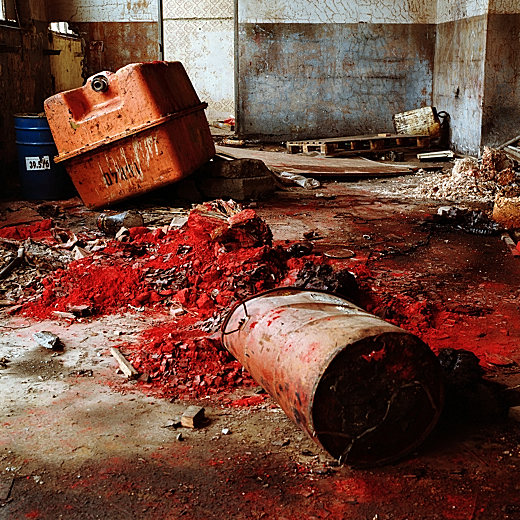
Image above: Lightening bolt strikes the sea. From (http://skywatch-media.com/2007/09/strongest-storm-in-20-years-to-hit.html) 

Just when America was celebrating the provisional end of BP's Macondo oil blowout, and getting back to important issues like Kim Kardashian's body-suit collection, along comes Matthew Simmons with a rather strange and alarming outcry on doings in the Gulf of Mexico that contradicts the mood of renewed festivity, as well as just about every shred of reportage from any media outlet, mainstream or otherwise.

Matt Simmons Houston-based company has been the leading investment bank to the US oil industry for a long time, financing exploration and drilling in places like the Gulf of Mexico. Simmons, 68, recently retired from day-to-day management of the company. For much of the decade he has been what may be described as a peak oil activist. His 2005 book, Twilight in the Desert, warned the public that Saudi Arabia's oil production had reached its limits and, more generally, that an oil-dependent world was entering a zone of serious trouble over its primary resource. He took this aggressive stance despite risking the ire of the people he did business with.

Matt Simmons is a sober individual and a very nice man (I've met him twice over the years), a button-downed corporate executive who's been around the oil business for forty years. His knowledge is deep and comprehensive. From the beginning of the BP Macondo blowout incident in April, he's taken the far out position that the well-bore is fatally compromised and that BP has been consistently lying about their operations to stop the flow of oil. Perhaps most radically, Simmons claims that an oil "gusher" is pouring into the Gulf some distance from the drilling site itself.

Last week, Simmons came on Dylan Ratigan's MSNBC financial show, but he did a longer interview over at the King World News website. (click here for Eric King's interview with Simmons). Simmons's current warning about the situation focuses on the gigantic "lake" of crude oil that is pooling under great pressure 4000 to 5000 feet down in the "basement" of the Gulf's waters. More particularly, he is concerned that a tropical storm will bring this oil up - as tropical storms and hurricanes usually do with deeper cold water - and with it clouds of methane gas that will move toward the Gulf shore and kill a lot of people. (I really don't know the science on this and welcome any reader to correct me, but I suppose that the oil "lake" deep under the Gulf waters contains a lot of methane gas dissolved at pressure, and that as the oil rises toward the ocean's surface, and lower pressures, the gas will bubble out of solution.)

Simmons makes two additional points that are pretty radical: he says that several states along the Gulf ought to begin systematic evacuations in counties along the shore now. From his experience in Houston with Hurricane Rita (2005), he says a last-minute evacuation is bound to be a disaster -- the highways jammed hopelessly, drivers ran out of gas, and then the gas stations ran out of gas. Based on where the nation's collective state-of-mind is these days, I can't imagine that any Gulf state governor or mayor will heed this warning and begin preparing an evacuation now. (The practical problems are obvious for householders but what if it really is a matter of life and death?)

Secondly, Simmons maintains - as he has from near the beginning of the blowout - that the US military should take over operations from BP and ought to set off a "small" nuclear device down in the well-bore to fuse the rock into glass and seal the site permanently. Simmons says, based on his experience growing up in Utah near the government's underground nuclear testing sites in neighboring Nevada, where scores of very large atomic bombs were set off for years with no measurable consequences above ground, that a small nuclear explosion down in the Macondo well is unlikely to have any effect above the undersea rock surface. I have no idea, personally if this is true.

Matt Simmons is taking a position so "out there" that even the radical peak oil website TheOilDrum.com won't comment on his remarks (at least not as of early Monday morning July 19). I don't know how to evaluate Simmons's contentions myself, except to say that I don't believe Simmons is a nut, or that he's lost his marbles. We also must suppose that someone in his position is able to talk with an awful lot of the best people in the oil industry. Simmons has put his reputation on the line. A lot of bystanders and commentators are treating him as a fool. Simmons himself is painfully aware of his lonely stance and seems, in his public appearances, to be a very regretful messenger.

In the past twenty-four hours, BP has reported some possible leaks coming out of the seabed some distance from the well-bore. Nobody has been able to confirm yet exactly what is happening down there. One other thing Simmons said is that BP should be barred from the media airwaves since, he says, they have lied consistently in order to cover up their criminal negligence and culpability. The company itself cannot be saved because the claims against it are much greater than the value of its assets - but the people running the company could be sent to jail, so the incentive to keep lying remains high.

Jesse at the Jesse's Café Américain website makes an excellent point that if Matt Simmons is correct, and it turns out that the US government has been played by BP, then remaining public trust in the competence and legitimacy of government could evaporate. This is not a happy thing to contemplate at a time when the state of the nation and its economy are so fragile. What follows could make the current political situation seem like little more than, well, than a tea party, compared to the politics-to-come.

Readers here at Clusterfuck Nation are probably well aware of my past declarations of being allergic to conspiracy theories and crazy ideas generally. I'm not really equipped to evaluate Matt Simmons's warnings about the exact nature of the Macondo blowout and what might happen in the months ahead. But I am confident, having met the guy and corresponded with him and read his books, that he is a straight shooter. I'm sure that he is sincere in proclaiming his extreme discomfort with the position he's taken. Listen and decide for yourselves. See also: Matthew Simmons interview with Eric King (http://www.kingworldnews.com/kingworldnews/Broadcast/Entries/2010/7/17_Matt_Simmons.html).

.

Military welcomes Students

SUBHEAD: 'Students First In Line' program to offer job training at needy schools.

By Staff on 14 July 2010 for Onion News Network -
 
 
Image above: Still Frame from humorous report by Onion News Network on military opportunities in schools. See video below.  
[IB Editor's note: ONN is a commercial operation and there is advertising on its site.]

 
Video above: From (http://www.theonion.com/video/students-first-in-line-program-to-offer-job-traini,14166).


Aloha Military Families & Students  

By Cherise Imai for AMFAS -
(http://militaryfamily.k12.hi.us/)

This site was developed by the Hawaii Department of Education (HIDOE), and the School Liaison Offices of the Army, Navy, Air Force, and Marines in Hawaii in cooperation with the Hawaii State Department of Education. Aloha, Military Families & Students (AMFAS) is an information center for military families transitioning in Hawaii Public Schools.

Hawaii’s unique location in the Pacific Ocean established our islands as the military hub of the Pacific. With Air Force, Army, Coast Guard, Marines, and Navy base installations located on Oahu, Kauai, and the Big Island, and the Pacific Component Commands headquartered on Oahu, Hawaii supports the 300,000 plus service personnel and their families.

About 15,000 military dependents, representing about 8% of the total student enrollment, attend public schools. With the support of Senator Daniel K. Inouye, the Joint Venture Education Forum (JVEF) was established in 1999 as a partnership between the HIDOE, military, and community stakeholders as a venue to address mutual concerns through meaningful discussion and relationships to promote educational opportunities for Hawaii’s children.

In addition to the active duty components, the HIDOE supports activities and programs that support the Hawaii National Army and Air Guard. The HIDOE and military partnerships have a positive impact on public schools, support for military families and children, and increased community for both cultures.

In 2002, JVEF recognized need to establish a military liaison serve as a point of contact on schools, families, and students. After extensive lobbying by the JVEF military community, Military Impacted Principal Council, and Board of Education (BOE) - the HIDOE Military Liaison position was passed by the Hawaii State Legislature in 2004. Along with the SLO, the HIDOE Military Liaison serves as the point of contact for all military families transitioning to and from Hawaii’s schools.

. .

Calling All Future-Eaters

SUBHEAD: The 10,000-year experiment of settled life is about to come to a crashing halt.


By Chris Hedges on 19 July 2010 in Truthdig -
(http://www.truthdig.com/report/item/calling_all_future-eaters_20100719)
 
   
Image above: Nomads from the Thar desert in India. From (http://www.trekearth.com/gallery/Asia/India/West/Rajasthan/Jaisalmer/photo789500.htm).  

The human species during its brief time on Earth has exhibited a remarkable capacity to kill itself off. The Cro-Magnons dispatched the gentler Neanderthals. The conquistadors, with the help of smallpox, decimated the native populations in the Americas. Modern industrial warfare in the 20th century took at least 100 million lives, most of them civilians.

And now we sit passive and dumb as corporations and the leaders of industrialized nations ensure that climate change will accelerate to levels that could mean the extinction of our species. Homo sapiens, as the biologist Tim Flannery points out, are the “future-eaters.” In the past when civilizations went belly up through greed, mismanagement and the exhaustion of natural resources, human beings migrated somewhere else to pillage anew. But this time the game is over.

There is nowhere else to go.

The industrialized nations spent the last century seizing half the planet and dominating most of the other half. We giddily exhausted our natural capital, especially fossil fuel, to engage in an orgy of consumption and waste that poisoned the Earth and attacked the ecosystem on which human life depends. It was quite a party if you were a member of the industrialized elite. But it was pretty stupid. Collapse this time around will be global.

We will disintegrate together. And there is no way out. The 10,000-year experiment of settled life is about to come to a crashing halt. And humankind, which thought it was given dominion over the Earth and all living things, will be taught a painful lesson in the necessity of balance, restraint and humility. There is no human monument or city ruin that is more than 5,000 years old. , As Ronald Wright notes in “A Short History of Progress” :
“Civilization occupies a mere 0.2 percent of the two and a half million years since our first ancestor sharpened a stone.”
Bye-bye, Paris. Bye-bye, New York. Bye-bye, Tokyo. Welcome to the new experience of human existence, in which rooting around for grubs on islands in northern latitudes is the prerequisite for survival. We view ourselves as rational creatures.

 But is it rational to wait like sheep in a pen as oil and natural gas companies, coal companies, chemical industries, plastics manufacturers, the automotive industry, arms manufacturers and the leaders of the industrial world, as they did in Copenhagen, take us to mass extinction? It is too late to prevent profound climate change. But why add fuel to the fire? Why allow our ruling elite, driven by the lust for profits, to accelerate the death spiral? Why continue to obey the laws and dictates of our executioners? The news is grim. The accelerating disintegration of Arctic Sea ice means that summer ice will probably disappear within the next decade.

The open water will absorb more solar radiation, significantly increasing the rate of global warming. The Siberian permafrost will disappear, sending up plumes of methane gas from underground. The Greenland ice sheet and the Himalayan-Tibetan glaciers will melt. Jay Zwally, a NASA climate scientist, declared in December 2007: “The Arctic is often cited as the canary in the coal mine for climate warming. Now, as a sign of climate warming, the canary has died. It is time to start getting out of the coal mines.”

But reality is rarely an impediment to human folly. The world’s greenhouse gases have continued to grow since Zwally’s statement. Global emissions of carbon dioxide (CO2) from burning fossil fuels since 2000 have increased by 3 per cent a year. At that rate annual emissions will double every 25 years. James Hansen, the head of NASA’s Goddard Institute for Space Studies and one of the world’s foremost climate experts, has warned that if we keep warming the planet it will be “a recipe for global disaster.”

The safe level of CO2 in the atmosphere, Hansen estimates, is no more than 350 parts per million (ppm). The current level of CO2 is 385 ppm and climbing. This already guarantees terrible consequences even if we act immediately to cut carbon emissions. The natural carbon cycle for 3 million years has ensured that the atmosphere contained less than 300 ppm of CO2, which sustained the wide variety of life on the planet.

The idea now championed by our corporate elite, at least those in contact with the reality of global warming, is that we will intentionally overshoot 350 ppm and then return to a safer climate through rapid and dramatic emission cuts. This, of course, is a theory designed to absolve the elite from doing anything now. But as Clive Hamilton in his book “Requiem for a Species:

Why We Resist the Truth About Climate Change” writes, even “if carbon dioxide concentrations reach 550 ppm, after which emissions fell to zero, the global temperatures would continue to rise for at least another century.” Copenhagen was perhaps the last chance to save ourselves.

Barack Obama and the other leaders of the industrialized nations blew it. Radical climate change is certain. It is only a question now of how bad it will become. The engines of climate change will, climate scientists have warned, soon create a domino effect that could thrust the Earth into a chaotic state for thousands of years before it regains equilibrium.

“Whether human beings would still be a force on the planet, or even survive, is a moot point,” Hamilton writes. “One thing is certain: there will be far fewer of us.” We have fallen prey to the illusion that we can modify and control our environment, that human ingenuity ensures the inevitability of human progress and that our secular god of science will save us.

The “intoxicating belief that we can conquer all has come up against a greater force, the Earth itself,” Hamilton writes. “The prospect of runaway climate change challenges our technological hubris, our Enlightenment faith in reason and the whole modernist project. The Earth may soon demonstrate that, ultimately, it cannot be tamed and that the human urge to master nature has only roused a slumbering beast.” We face a terrible political truth.

Those who hold power will not act with the urgency required to protect human life and the ecosystem. Decisions about the fate of the planet and human civilization are in the hands of moral and intellectual trolls such as BP’s Tony Hayward. These political and corporate masters are driven by a craven desire to accumulate wealth at the expense of human life. They do this in the Gulf of Mexico. They do this in the southern Chinese province of Guangdong, where the export-oriented industry is booming.

China’s transformation into totalitarian capitalism, done so world markets can be flooded with cheap consumer goods, is contributing to a dramatic rise in carbon dioxide emissions, which in China are expected to more than double by 2030, from a little over 5 billion metric tons to just under 12 billion.

This degradation of the planet by corporations is accompanied by a degradation of human beings. In the factories in Guangdong we see the face of our adversaries. The sociologist Ching Kwan Lee found “satanic mills” in China’s industrial southeast that run “at such a nerve-racking pace that worker’s physical limits and bodily strength are put to the test on a daily basis.”

Some employees put in workdays of 14 to 16 hours with no rest day during the month until payday. In these factories it is normal for an employee to work 400 hours or more a month, especially those in garment industry. Most workers, Lee found, endure unpaid wages, illegal deductions and substandard wage rates. They are often physically abused at work and do not receive compensation if they are injured on the job. Every year a dozen or more workers die from overwork in the city of Shenzhen alone.

 In Lee’s words the working conditions “go beyond the Marxist notions of exploitation and alienation.” A survey published in 2003 by the official China News Agency, cited in Lee’s book “Against the Law: Labor Protests in China’s Rustbelt and Sunbelt,” found that three in four migrant workers had trouble collecting their pay. Each year scores of workers threaten to commit suicide, Lee writes, by jumping off high-rises or setting themselves on fire over unpaid wages. “If getting paid for one’s labor is a fundamental feature of capitalist employment relations, strictly speaking many Chinese workers are not yet laborers,” Lee writes.

The leaders of these corporations now determine our fate. They are not endowed with human decency or compassion. Yet their lobbyists make the laws. Their public relations firms craft the propaganda and trivia pumped out through systems of mass communication.

Their money determines elections. Their greed turns workers into global serfs and our planet into a wasteland. As climate change advances we will face a choice between obeying the rules put in place by corporations or rebellion. Those who work human beings to death in overcrowded factories in China and turn the Gulf of Mexico into a dead zone are the enemy. They serve systems of death. They cannot be reformed or trusted. The climate crisis is a political crisis.

We will either defy the corporate elite, which will mean civil disobedience, a rejection of traditional politics for a new radicalism and the systematic breaking of laws, or see ourselves consumed. Time is not on our side.

The longer we wait, the more assured our destruction becomes. The future, if we remain passive, will be wrested from us by events. Our moral obligation is not to structures of power, but life.

 .

Theft of the American Dream

SUBHEAD: How the largest theft in the history of the world was carried out.

 By Arthur Cutten, aka Jesse on 17 July 2010 in Jesse's Café Américain - (http://jessescrossroadscafe.blogspot.com/2010/07/phil-it-is-end-of-world-as-we-know-it.html)
 
 
Image above: Cover detail from Marvel Comic "American Dream" #1. From (http://www.comicsbulletin.com/news/121099460552657.htm).


America must decide what type of country it wishes to be, and then conform public and foreign policy to those ends, and not the other way around. Politicians have no right to subjugate the constitutional process of government to any foreign organization.

Secrecy, except in very select military matters, is repugnant to the health of a democratic government, and is almost always a means to conceal a fraud. Corporations are not people, and do not have the rights of individuals as such.

Banks are utilities for the rational allocation of capital created by savings, and as utilities deserve special protections. All else is speculation and gambling. In banking, simpler and more stable is better. Low cost rules, as excessive financialisation is a pernicious tax on the real economy. Financial speculation, as opposed to entrepreneurial investment, creates little value, serving largely to transfer wealth from the many to the few, often by exploiting the weak, and corrupting the law. It does serve to identify and correct market inefficiencies, but this benefit is vastly overrated, because those are quickly eliminated.

As such it should be allowed, but tightly regulated and highly taxed as a form of gambling. When the oligarchy's enablers, hired help is the politer word, and assorted useful idiots ask, "But how then will we do this or that?" ask them back, "How did we do it twenty years ago?" Before the financial revolution and the descent into a bubble economy and a secretive and largely corrupted government with a GDP whose primary product is fraud.

Other nations, such as China, are surely acting for their own interests, and in many cases the interests of their people, much more diligently and effectively than the kleptocrats who are in power in Washington and New York these days. How then could we possibly subvert the Constitution and the welfare of the people to unelected foreign organizations? If this requires a greater reliance on self-sufficiency, then so be it.

America is large enough to see to its own, as the others see to theirs. Economics will not provide any answers in and of itself. Economics without an a priori policy and morality, without a guiding principle like the Constitution, is a heartless monster easily manipulated to say whatever one wishes it to say, if they are willing to pay enough economists to say it. Its reputation as a science is greatly exaggerated. "Eliminating government" is a trap put forward by the plutocrats for those unable to reason except by prejudice, as they desire to exercise their power unimpeded by the rule of law. Once you knock down the protections and the safeguards in the name of reform, the wolves will turn on the public in an orgy of looting and exploitation.

This is an old story, and sadly it often works. Efficient markets hypothesis is almost as great a hoax as the benefits of globalization and 'free trade' have been to the American people as a whole.

These things are promoted by the few, at the expense of the gullible many, for their own personal benefit. Hatred, mean spiritedness, and resentment of the weak, the old, the different, is a trick played on the masses by oligarchs and would be dictators from time immemorial. They play to the darker side of the crowd. It is a trap, and the means to the demise of freedom. And these tricksters play it well, because deceit is their specialty, their stock in trade.
"First they ignore you, then they ridicule you, then they fight you, then you win." - Mohandas K. Gandhi
So it will not be easy, and it is a mistake to think that it will be. But what greater task can we set ourselves to, other than justice and freedom for ourselves and children?

End of the World As We Know It  

By Phil on 17 July 2010 in Phil’s Stock World - (http://www.philstockworld.com/2010/07/17/its-the-end-of-the-world-as-we-know-it)

What are 308,367,109 Americans supposed to do?

First of all, despite clamping down on immigration, our population grew by 2.6M people last year. Unfortunately, not only did we not create jobs for those 2.6M new people but we lost about 4M jobs so what are these new people going to do? Not only that, but nobody is talking about the another major job issue: People aren’t retiring! They can’t afford to because the economy is bad – that means there are even less job openings… The pimply faced kid can’t get a job delivering pizza because his grandpa’s doing it. There are some brilliant pundits who believe cutting retirement benefits will fix our economy. How will that work exactly?

Pay old people less money, don’t cover their medical care and what happens? Then they need money. If they need money, they need to work and if they need to work they increase the supply of labor, which reduces wages and leaves all 308,367,109 of us with less money. Oh sorry, not ALL 308,367,109 – just 308,337,109 – the top 30,000 (0.01%) own the business the other 308,337,109 work at and they will be raking it in because labor is roughly 1/3 of the cost of doing business in America and our great and powerful capitalists have already cut their manufacturing costs by shipping all those jobs overseas, where they pay as little as $1 a day for a human life so now, in order to increase their profits (because profits MUST be increased) they have now turned inward to see what they can shave off in America. How does one decrease the cost of labor in America?

  • Well first, you have to bust the unions. Check.
  • Then you have to create a pressing need for people to work – perhaps give them easy access to credit and then get them to go so deeply into debt that they will have to work until they die to pay them off. Check.
  • It also helps if you push up the cost of living by manipulating commodity prices. Check.
  • Then, take away people’s retirement savings. Check.
  • Lower interest rates to make savings futile and interest income inadequate. >Check.
  • And finally, threaten to take away the 12% a year that people have been saving for retirement by labeling Social Security an “entitlement” program – as if it wasn’t money Americans worked their whole lives to save and gave to the government in good faith. Check.

As Allen Smith says:
Ronald Reagan and Alan Greenspan pulled off one of the greatest frauds ever perpetrated against the American people in the history of this great nation, and the underlying scam is still alive and well, more than a quarter century later. It represents the very foundation upon which the economic malpractice that led the nation to the great economic collapse of 2008 was built. Essentially, Reagan switched the federal government from what he critically called, a “tax and spend” policy, to a “borrow and spend” policy, where the government continued its heavy spending, but used borrowed money instead of tax revenue to pay the bills. The results were catastrophic. Although it had taken the United States more than 200 years to accumulate the first $1 trillion of national debt, it took only five years under Reagan to add the second one trillion dollars to the debt. By the end of the 12 years of the Reagan-Bush administrations, the national debt had quadrupled to $4 trillion!“ 
Both Reagan and Greenspan saw big government as an evil, and they saw big business as a virtue. They both had despised the progressive policies of Roosevelt, Kennedy and Johnson, and they wanted to turn back the pages of time. They came up with the perfect strategy for the redistribution of income and wealth from the working class to the rich.

If Reagan had campaigned for the presidency by promising big tax cuts for the rich and pledging to make up for the lost revenue by imposing substantial tax increases on the working class, he would probably not have been elected. But that is exactly what Reagan did, with the help of Alan Greenspan. Consider the following sequence of events:
1) President Reagan appointed Greenspan as chairman of the 1982 National Commission on Social Security Reform (aka The Greenspan Commission)

2) The Greenspan Commission recommended a major payroll tax hike to generate Social Security surpluses for the next 30 years, in order to build up a large reserve in the trust fund that could be drawn down during the years after Social Security began running deficits.

3) The 1983 Social Security amendments enacted hefty increases in the payroll tax in order to generate large future surpluses.

4) As soon as the first surpluses began to role in, in 1985, the money was put into the general revenue fund and spent on other government programs. None of the surplus was saved or invested in anything. The surplus Social Security revenue, that was paid by working Americans, was used to replace the lost revenue from Reagan’s big income tax cuts that went primarily to the rich.

5) In 1987, President Reagan nominated Greenspan as the successor to Paul Volcker as chairman of the Federal Reserve Board. Greenspan continued as Fed Chairman until January 31, 2006. (One can only speculate on whether the coveted Fed Chairmanship represented, at least in part, a payback for Greenspan’s role in initiating the Social Security surplus revenue.)

6) In 1990, Senator Daniel Patrick Moynihan of New York, a member of the Greenspan Commission, and one of the strongest advocates the 1983 legislation, became outraged when he learned that first Reagan, and then President George H.W. Bush used the surplus Social Security revenue to pay for other government programs instead of saving and investing it for the baby boomers. Moynihan locked horns with President Bush and proposed repealing the 1983 payroll tax hike. Moynihan’s view was that if the government could not keep its hands out of the Social Security cookie jar, the cookie jar should be emptied, so there would be no surplus Social Security revenue for the government to loot. President Bush would have no part of repealing the payroll tax hike. The “read-my-lips-no-new-taxes” president was not about to give up his huge slush fund.
The practice of using every dollar of the surplus Social Security revenue for general government spending continues to this day. The 1983 payroll tax hike has generated approximately $2.5 trillion in surplus Social Security revenue which is supposed to be in the trust fund for use in paying for the retirement benefits of the baby boomers. But the trust fund is empty! It contains no real assets. As a result, the government will soon be unable to pay full benefits without a tax increase. Money can be spent or it can be saved. But you can’t do both. Absolutely none of the $2.5 trillion was saved or invested in anything.
That is how the largest theft in the history of the world was carried out. 300M people worked and saved their whole lives to set aside $2.5Tn into a retirement system that, if it were paying a fair compounding rate of 5% interest over 40 years of labor (assuming an even $62Bn a year was contributed), would be worth $8.4Tn today – enough money to give 100M workers $84,000 each in cash! The looting of FICA hid the massive deficits of the last 30 years in the Unified Budget. Presidents and Congresses were able to reduce taxes on the wealthiest Americans without complaint from the deficit hawks, because they benefited. The money went directly from the pockets of average Americans into the pockets of the rich
Now that it is time to repay those special bonds in the Trust Fund, we are inundated in opinion pieces in the leading newspapers and magazines complaining about Social Security and its horrible impact on the budget. Government finances have been trashed by foolish tax cuts, unpaid wars, tax loopholes for corporations and the very wealthy, the failures of economists, the greedy search for greater returns in financial markets and the collapse of moral values in giant businesses, but Social Security is supposed to be the problem that needs fixing… Social Security is not “broken“–the money is in the Trust Fund.

But the people who manage the finances of the United States don’t want to repay the bonds held by the Trust Fund. They want to default selectively against average people, their fellow citizens, who paid their taxes expecting to be protected in their retirement. Refusing to repay the $2.54 trillion dollars in bonds held by the Social Security Trust makes the US look like Greece, just another nation unable to govern itself coherently.

The people who manage US finances come from the financial elites, the best that Wall Street and enormous corporations have to offer. Selective default exposes them as charlatans. The claims of the economics profession to expertise are puffery. Their theories about the benefits of tax cuts are proven false.

Their mathematical proofs about free markets collapse in the real world. So, what is this all about? It’s about forcing 5M people a year who reach the age 65 to remain in the work-force. The top 0.01% have already taken your money, they have already put you in debt, they have already bankrupted the government as well so it has no choice but to do their bidding.

Now the top 0.01% want to make even MORE profits by paying American workers even LESS money. If they raise the retirement age to 70 to “balance” Social Security – that will guarantee that another 25M people remain in the workforce (less the ones that drop dead on the job – saving the bother of paying them severance). What’s next? Is it fair to say that children can’t work in a struggling family business? Isn’t it to everybody’s benefit that kids should be allowed to help out at the family store?

That will be the next step towards turning America into a 3rd World country. The seemingly innocent concept of “letting” kids work will deprive another 5M people of paying jobs – throwing them out into the labor force as well and driving labor costs down even further. There’s an expression that goes “give them an inch and they’ll take a yard.” The top 0.01% of this country have taken their inches and they are foreclosing on the yards and they will come for the rest of your stuff next.

If you think you are “safe” from the looting of America, it is only because they haven’t gotten around to you yet. As I explained in “America is 234 Years Old Today – Is It Finished?” – the game is rigged very much like a poker tournament. The people at the top table don’t care how well you do wiping out your fellow players at the lower tables, they know they will get you eventually and your efforts to scoop up a pile of cash for yourself simply makes their job easier when they are ready to take it from you.

The average American is $634,000 in debt thanks to the efforts that Reagan and Greenspan put in motion 30 years ago and the richer you are, the more of that money is going to come out of your hide eventually and the more you lobby to make sure that the “rich” are not taxed unfairly, the less fair it will be to you because, no matter how rich you THINK you are, unless your income is measured in MILLIONS PER MONTH, you aren’t even close to the top 30,000.  
No progressive tax? That means that people and corporations who make $1M PER DAY should pay no more tax than a person making $1M per year, right? Well that means that the $2.5M debt that your family of four owes will be paid by you over 2.5 years of labor while the $2.5M owed by your Billionaire competitor will be paid over a long weekend, after which he can turn his attention back to crushing your business by creating cheaper goods – maintaining profit margins by driving down local labor costs and outsourcing the rest
It’s a new world, America, and you’d better get used to it – we were sold down the river on a slow boat to China long ago and we’re only just beginning to feel the first effects of waves that wash back to our own shores. The people who own the media don’t want CHANGE. That’s why you never hear this stuff in the MSM – things are going exactly according to plan and the old money crowd is playing a long, patient game and they already have most of the chips – the last thing they want is people questioning the system… .

Dance Nature! - Don’t Drive!

SUBHEAD: Comfort, security, and meaning will no longer be determined by ownership, but by community membership.

By Chip Ward on 14 July 2010 in Alternet - (http://www.alternet.org/vision/147548/dance%2C_don%E2%80%99t_drive%3A_how_to_live_in_tune_with_the_planet)

 
Image above: Detail of 'Dance around the Maypole' by Pieter Brueghel the Younger (1564-1635). From (http://www.metanexus.net/magazine/tabid/68/id/10410/Default.aspx).  
 
The fundamental contradiction of our time is this: we have built an all-encompassing economic engine that requires constant unending growth -- a contraction of even a percent or two is a crisis. But we are embedded in ecosystems that are indeed limited. There is only so much fertile soil, so much fresh water, so many fish in the ocean, the atmosphere can only absorb so much CO2 and stay benign. As Kenneth Boulding memorably remarked,

“Anyone who thinks exponential growth can go on forever in a finite world is either a madman or an economist.”
Shedding a way of life based on limitless growth, the celebration and reward of excess, and deeply ingrained habits of acquisition, consumption and waste is going to be an overwhelming challenge. The culture of "faster-bigger-more" will not yield easily to a new orientation where sustainability is the rule. We are going to need all the expertise we can muster to understand how we have overloaded the carrying capacity of our planet and its ecosystems -- and how we can tread from here on with a lighter footprint. Innovations in technology, law, policy and practices are absolutely essential. We must change the goals and rules we live by and create incentives and constraints to shape sustainable behaviors. We need new models.

At a deeper level, I believe that living within the boundaries of nature requires a profound shift in perspective: we stop seeing nature merely as a limitless source of lifeless commodities to be used and traded and start seeing the natural realm as an astounding web of living communities that includes us. And we see that we do not live above and beyond the dynamic of the earth’s operating systems that sustain life itself. After centuries of driving economies, we must learn to dance with ecosystems.

When you see your habitat as a collection of dead, disconnected commodities to be manipulated for power and profit, you try to steer and control nature. If you see yourself embedded in an ecosystem that is fluid, that has thresholds, that is so thoroughly interconnected, self-organizing and emergent that is not only more complex than we thought, but more complex than we can think, then you don’t drive nature, you dance.

Let me offer some dancing lessons. Our understanding of ecosystems tells us that biological diversity is key and can be translated into resilience when an ecosystem is disrupted or stressed. We would be wise to heed that in the cultural realm as well, where intellectual diversity and lots of open and inclusive feedback are also key. As someone who has organized campaigns to hold polluters accountable, I can attest that the health of one’s physical/natural environment is a direct expression of the health and vitality of one’s civic environment. Decisions about how to protect human health and how to conserve ecosystem vitality are more likely to be wise and precautionary when they are made openly, when they are inclusive, informed, and accountable. Creating an active democratic culture, then, is key.

If you look to where sustainability -- or at least a hopeful transition to sustainability -- is actually being attempted, you find citizens acting at the grassroots, neighbor to neighbor, rebuilding their communities’ civic environments while aiming to be sustainable. This is often happening under a different banner than sustainability, per se. People talk about peak oil, for example, and the potential for crippling shortages and price hikes. They understand that nature is loaded with disturbances -- earthquakes, hurricanes, firestorms, floods, droughts, and pandemics that could interrupt our far-flung food and energy supply lines.

The people who are actually trying to build sustainable communities recognize that if our way of life is not sustainable, the obvious implication of that is collapse. The very term “unsustainable” tells you the end of the story -- and if you see yourself and your loved ones at the end of that story, then you would be wise and prudent to work to make the unsustainable system sustainable or to build a lifeboat, or do both.

Ark-building abounds. There is the Transition Towns movement, a re-localization movement, and various “post-carbon” projects. Across America people are organizing community gardens and farmers markets, strengthening regional food security, homesteading abandoned urban landscapes, building bike paths, retrofitting homes and businesses with off-grid solar and wind, and conserving local watersheds and wildlife habitat. .

This movement towards what might be called de facto sustainability is a grassroots phenomenon because those whose wealth and power are entrenched in the unsustainable system are unlikely to challenge the very system that upholds their wealth and power. It is less coherent and intentional than a traditional political “movement” -- more emergent than ideological, more open-source than doctrinaire.

Living sustainably is ultimately a profoundly moral imperative about our obligations to future generations, to our children’s children. That moral argument must be made and, hopefully, it will take hold over the long run. In the meanwhile, we must motivate others to change now. In my experience as an activist and organizer, people are more likely to change their immediate behaviors when it seems in their self-interest to do so, not because someone tells them they “ought” to do something new or they “should” do so. Too often, when we use the term “sustainability” others we want to influence hear “eat your peas!” Or eat fewer of them. I prefer the word “resilience.”

A vision of resilient communities makes sense and resonates positively. If disturbance is inevitable in this emerging age of climate chaos and economic failure, then it makes sense to belong to a group that will offer mutual aid. On the helter-skelter road ahead, comfort, security, and meaning will no longer be determined by ownership, but by membership, by being a participant in a robust community that can provide mutual aid in tough times.

Scale matters. Most of us who are aware that change is needed are caught between the seeming futility of small-scale actions -- like recycling our trash, using different light bulbs, or taking shorter showers -- and the impotence we experience when we push for large scale change, like climate legislation in Congress or international treaties in Copenhagen. On the one hand, too little. On the other, too late. There is, however, a middle scale between individual actions and national or global campaigns that works well and makes sense -- the community. At the community scale, people can embrace their roles as citizens, face one another, share, contend, cooperate, create, learn from and empower one another.

Participation in a community requires commitment and commitment is an investment in precious time and energy. The rewards for that have to be real. The relationships created within one’s own neighborhood and town can be powerful and compelling. Especially in hard economic times, one’s personal network of friends, family, co-workers and neighbors can be all we have to fall back on when a job disappears, a business fails, or a home is lost.

Ultimately, we save what we love -- caring for a landscape to which we feel keenly connected is the very ground of our commitment to ecological citizenship. But we also need tools. Ecological literacy is key. You can’t do the dance if you can’t get the beat, you don’t know the moves, and you can’t see the dance floor.

When I worked with people who lived downwind from chemical weapons testing and toxic waste incinerators, I realized that I couldn’t enlist them in campaigns to make polluters accountable until they understood that the closest link between them and their environment was their own bloodstreams, that decisions about what we allow into our air, water, and soil get translated into flesh and bone and daily experience. That consciousness had to precede commitment.

The emerging global movement to deal with global climate chaos and restore the earth's operating systems is premised on understandings gained through the environmental sciences. Ignorance of those sciences undermines the basis for changes that are urgently needed.

Ecological science, for example, shows us the value of biodiversity in the resilience of stressed ecosystems and the important role that keystone species play in keeping ecosystems vital. If you do not accept evolutionary theory, you are likely to also reject the need to protect biodiversity. Saving owls and restoring wolves may strike you as the crazy idea of extremists, elitists. You are also less likely to recognize when a natural system, like the earth’s climate, is getting pushed to a tipping point.

Language is both a filter and a lens. It shapes perceptions and actions fundamentally because the articulation of reality is more primal than any strategy. A vocabulary implies a story about how the world works and why. Words like “baptize,” “market,” or “democracy” help create what they describe. A society that incessantly talks about “productivity” but rarely about “resilience” will be productive, not resilient. We chatter endlessly about opinion poll and stock market percentages but the chance that you will hear or read the phrase “carrying capacity” in popular discourse is next to nil. We have easily acquired new terms like blog and tweet, but who knows what an ecotone is?

Eco-literacy replaces a delusional context -- the notion that humans live above and beyond the boundaries of the natural/physical realm without need for restraint, responsibility, respect, or reverence -- with a context that sees us embedded in that natural realm and that realm embedded in us, in our bones, our lungs, our guts, our hearts. It replaces an orientation than engenders alienation with one that fosters affiliation. It leads us away from reduction, fragmentation, and an obsession with prediction and control. The self-organizing, emergent, ever-morphing, complex, dynamic, interconnected, nonlinear world that ecological fluency describes is not a world of things, but a realm where relationship and process reign -- again, a dance.

So, practice that awkward dance of mutuality that is the very signature of a democratic culture -- the dance where we share, learn, listen, reconcile, invite, reciprocate, step towards one another and embrace. Do not shy away from engaging politically -- to take what you learn and share it openly, applying and testing it out in a messy, complicated, contradictory world that will sometimes receive it with rough hands and a tenuous grasp.

If we take our dancing lessons to heart, we may become not only resilient but grateful, humble, and reverent. Wisdom and grace, or business as usual? The choice is here now..

Adaptation to the Long View

SUBHEAD: We almost never ask whether the cure might end up being worse than the disease.

 By Kurt Cobb on 18 July 2010 in Resource Insights -  
(http://resourceinsights.blogspot.com/2010/07/adaptation-and-long-view.html)
 
 
Image above: An 18th century village in Himachak, India, features th Pujarli Hindu temple. From (http://himachal.us/2005/03/18/hidden-himachal/91/media/photo-news/avnish).

One blade of grass is vulnerable to all sorts of shocks: drought, flood, infestation, and various human interventions including plowing and herbicides (if it's not the kind of grass a groundskeeper wants). But the whole family of grasses would be hard to eliminate. They are so various, so well adapted to their habitats, so ubiquitous in their reach. In short, they are excellent examples of organisms conditioned by millions of years of natural selection, nature's form of trail and error. That's the long view of adaptation.

Then, there is the human view. We are a species with a short history--perhaps at most 500,000 years. Our natural way of living--hunting and gathering--has been superseded by agriculture only in the past 10,000 years. And, our industrial way of life might be said to have begun a little over 200 years ago. And, yet we imagine that the least tested of our human systems of adaptation is somehow the most robust. One of the latest adaptations in industrial society has been the microchip, now only about 70 years old with widespread application only about 30 years ago.

Like a pioneer species it has spread quickly and is now ubiquitous in the modern world which could not function without it. We know its vulnerabilities including susceptibility to electromagnetic pulse, coding errors such as the Y2K or Year 2000 problem, malicious software that can not only commandeer computer resources but also destroy hardware, and a high degree of connectivity through the Internet that makes the spread of software-related problems easy and fast. And yet, we build an ever more complex world completely dependent on it.

We are now experimenting with even more destabilizing technologies such as nanotechnology, genetic engineering, and robotics that computer scientist Bill Joy suggested might endanger the entire human species and perhaps many other species as well.

This understanding and the gathering problems of fossil fuel depletion and climate change have led some groups to suggest that new technology may not be the most adaptive path. The worldwide integration and homogenization of technology might be analogized to a monoculture, highly susceptible to a complete failure in the way that the grasses of the world discussed above are not. So often we hear that technology will solve this or that problem and increasingly that it will solve global climate change and rescue us from fossil fuel depletion.

And, many of us have become conditioned never to think of the possible downsides of this technology. We almost never ask whether the cure might end up being worse than the disease. Part of the problem is that the threats to the sustainability of human civilization are rushing toward us so fast that we simply don't have the time to do what nature does, namely, weed out poor adaptations over thousands of years.

Nor do we seem to understand the risks we are running because of our highly interconnected society. Fatally flawed adaptation strategies won't just imperil an isolated population in one segregated locale.

Rather, poor strategies have the potential to bring down all of modern civilization. The optimists say that such risks are overblown, that so far all the concern about technology bringing us to our knees has been for nothing. But a fair reading of the data on climate change, fossil fuel depletion, soil depletion, water depletion, biodiversity destruction, and myriad other measures tells a different story.

What the optimists mean is that human populations are still growing and flourishing. What they leave out is that the natural systems upon which those populations depend for their survival are being swiftly degraded. We are like the proverbial man falling from the 100-story building who, when asked how things are as he passes by the 50th floor, says, "Fine."

The wiser course may be to return to the type of systems that have shown themselves to be more resilient through history: smaller settlements with more decentralized production of goods and services, broader participation in the growing of food and the production of goods, reliance on renewable energy such as wind and solar, and a society that designs its objects to make the full cycle from "cradle to cradle." This doesn't mean abandoning all new technology.

It means developing technology that will stand the test of time based on known principles of resilience and sustainability and will do so without risking the wholesale destruction of humanity.

 .

Thinking in Straight Lines

SUBHEAD: The future is certain to be nonlinear, but I am quite sure that there will be trees in it.

By Dmitry Orlov on 17 July 2010 in ClubOrlov -  
(http://cluborlov.blogspot.com/2010/07/thinking-in-straight-lines.html)

  
Image above: A British 19th century adjustable mahogany T-Square used in drafting. From (http://archives.deskarticles.oneofakindantiques.com/3869_antique_mahogany_t_square_drafting_tool_2.htm). 

Let’s face it, we, the civilized, educated, enlightened part of humanity like things to be straight. Let primitive tribesmen live in picturesque and practical round huts—we require abstract boxes of steel and concrete clad in plate glass, with plenty of nice straight lines, true vertical and horizontal planar surfaces and lots of ninety-degree angles to please the eye. Let these tribesmen spend their days meandering up and down picturesque winding paths laid down by grazing animals—when we build a road, we take a map and apply a ruler to it, and anything that’s in the way of that ruler, picturesque or not, must be dynamited and bulldozed because everyone knows that traveling in straight lines is more efficient.

This is good enough for most of us, and so we have come to regard straight lines as natural. In fact, in our world there are just two types of natural phenomena that give rise to straight lines: objects drop or hang down in straight vertical lines, and light beams travel in straight lines; beyond plumb lines and lines of sight everything is either a curve or a squiggle. But since most of our environment is artificial—and crammed full of straight lines and flat horizontal and vertical surfaces—we hardly ever have to confront this fact. Of course, the more scientifically astute among us know that straight lines are but a convenient fiction. We start with a conceptual framework of space that consists of x, y and z axes, and proceed to coerce our observations to fit this framework until the mismatch becomes too obvious to ignore, as with objects dropped from orbit, or with light from far-away galaxies that’s so warped by nearby galaxies that the image looks like a smear.

But the fiction is indeed very convenient. To start with, all straight lines are interchangeable and compatible. When we build, we tend to put things either on top of or next to other things, and if they involve straight lines, then no intricate fitting is involved—we can just slap it together any which way and efficiently move on to our next box-building exercise.

When we go to a lumberyard, what we buy is not so much wood as straight lines cut through wood. Trees know a lot more than we do about constructing maximally efficient structures out of wood, but we like straight lines, and so we cut through the strongest part of the tree—the concentric rings of wood that make up the trunk—for the sake of making a perfectly straight stick. We could build beautiful, strong, long-lasting structures using round timbers grown to order (as some of us do) but generally we don’t because we are mentally lazy, always in too much of a hurry, and have made a fetish of straight lines.

Quite unsurprisingly, our preference for straight lines carries over into the way we think about relationships between things—the mental models we construct of our world. For instance, we consider it a matter of moral rectitude and straight dealing that the price be linearly proportional to the amount of stuff we get: if you pay twice as much, you should get twice as many potatoes.

Quantity discounts are acceptable and sometimes expected, but pricing on a curve is generally seen as underhanded. We mistrust curves. Stepwise functions are fine, though, because they are made up of straight line segments. We can put up with having tax brackets, but try taxing people based on a nonlinear formula, and there is sure to be a tax revolt. Were the potato market a product of biological evolution rather than of human artifice, it would perhaps work like this:
The price would be some nonlinear function that’s directly proportional to the customer’s net worth, and the number of potatoes dispensed would be some nonlinear function that’s inversely proportional to his net girth. Place your moneybags on one sliding scale, your flab-bags on the other, and some potatoes come out. Such a natural regulatory mechanism would prevent fat, rich gluttons from out-eating the rest of us, but it cannot be, for we have a very strong cultural preference for a simple linear relationship between price and quantity.
Straight lines are popular with grocers and their customers, but nobody loves a straight-edge more than the technocrat. Real-world data generally look like a collection of unique artifacts described by a multitude of qualitatively dissimilar properties and inferred relationships, all fluctuating unpredictably over time in a way that resists the direct application of the straight-edge.

Therefore, the first step is to quantify the properties and, if at all possible, ignore the relationships. The next step is to choose just two parameters and to plot these artifacts as points on a piece of graph paper. Then, finally, a technocrat can grab a straight-edge, slap it down on the piece of paper, move it around a bit to find what looks like a good fit, and draw a straight line. Voilà: a linear relationship between two complex phenomena has been found, which can now be treated as real and objective—something that can be shared with one’s colleagues and be used as a basis for setting policy—because it involves a straight line which tells that one thing is proportional to some other thing, so that we know what result to expect when we perturb one or the other.

Straight lines are popular with engineers as well. Engineers work hard to design linear, time-invariant systems in which the output is directly proportional to the input any time you like. To them, deviations from linear behavior are defects. They are to us as well: we can hear it if the audio amplifier has nonlinear effects because it distorts the sound, and we can see it if the optics distorts the image. We can tell a straight line from a crooked one without any tools. But the mathematical tools which engineers use when they design these linear time-invariant systems are particularly good, as mathematical tools go.

Mathematics can be quite fun as a sort of advanced parlor game for philosophers, but most math is rather problematic from an engineer’s point of view. You can describe just about anything using a set of differential equations, but most of the interesting phenomena—the behavior of an airfoil in an airstream, for instance, or the behavior of high-temperature gases in a combustion chamber—produce equations that can’t be solved analytically, and can only be approached using numerical methods, using a computer. A mathematical model is constructed, and random numbers are thrown at it to see what comes out.

But linear time-invariant systems are described using a singularly well-behaved class of differential equations which do have closed-form, analytical solutions that directly provide answers to design questions, and so engineering students are drilled in them ad naseam and then go on to design and build all kinds of machinery that behaves as linearly as possible, from humble volume knobs to complex aircraft control surfaces. In turn, this well-behaved, predictable machinery allows us to achieve linear effects within the economy: build more stuff—get proportionally more money; spend more money—get proportionally more stuff. But, just as one might suspect, this only works up to a point.

Let us recall: straight lines are but a convenient fiction. There is no physical analogue of a mathematical straight line that goes from minus infinity to plus infinity. The best we can do is use all of our artifice to create relatively short straight line segments. Truth be told, the engineers can’t create linear systems; they can only create systems that exhibit linear behavior in their linear region.

Outside of that region, nature does what it always does: make crazy curves and squiggles and generally behave in random and unpredictable ways. An example of what happens when we exceed the limits of the linear region from our everyday experience is the phenomenon of overloading an audio amplifier. The resulting effect is called clipping, and it sounds like a particularly unpleasant, harsh, grating noise. There are only two solutions: turn down the volume (return to the linear region), or get a more powerful amplifier.

In the economic realm, the effects of exceeding the limits of the linear region can be even more unpleasant. While within that region, building more houses generates more wealth, but just outside of that region strange things begin to happen rather quickly: house prices crash, mortgages go bad, and building any more houses becomes a singularly bad idea. In the linear region, having more money makes you richer, in the sense of being able to buy more stuff, but outside of that region one is forced to realize that since most money has been loaned into existence, it is in fact composed of debt, and once this debt goes bad, no matter how good your net worth looks on paper you are still facing destitution, greatly exacerbated by the fact that you are out of practice when it comes to being poor. In the linear region, investing more money in energy production produces more energy, but just outside that region it produces less energy, and may also inadvertently destroy entire industries and ecosystems.

If linearity is a fiction that is only useful up to a point, then what about time-invariance? Clearly, it too must have its limits. Stepping on the accelerator may produce the same acceleration every time, but the amount of fuel in the tank decreases monotonically until there is none left. When it comes to more complex, dynamic systems—industries, economies, societies—they may continue to respond to external stimuli in a linear and time-invariant manner up to a point, but behind this stable façade their capabilities erode, their resources dwindle, their complexity increases, and beyond a certain point an entirely different process begins: the process of collapse. Such systems generally do not become smaller, spontaneously become less complex or reduce their resource use while continuing to respond to external stimuli in a controlled, linear manner.

But so strong and so deeply ingrained is our habit of thinking in straight lines that often we cannot imagine that we can ever leave the linear region, or, once we do, that we have done so, even when the evidence is staring us in the face. Forensic analyses of airplane crashes have revealed that sometimes, as his last act, the pilot ripped the control console off the cockpit floor—an act that requires superhuman strength—so hard was he pulling back on the yoke to bring up the airplane’s nose. I am sure that there are plenty of pilots—in all walks of life—who will prefer to crash, gripping the controls with all their might, gaze fixed on the distant, irrelevant or fictional horizon, than to push the eject button. Their entire life’s experience has been confined to the linear region, and so they cannot imagine that it can ever end.

One particularly significant example of this thinking is the belief in Peak Oil, generally expressed as the idea that global oil production already has or will soon reach an all-time peak, and will then gradually decrease over a time span of several decades. Oil depletion is being modeled as a linear function of oil production: a few percent a year, holding more or less steady from one year to the next. At the same time, the use of oil by industrialized societies is often quite usefully characterized as an addiction.

Let us exercise this metaphor a bit and see where it takes us. Suppose you have a junkie who has an ever-increasing heroin habit and who has to go out and hustle harder and harder to score his next fix. Now, suppose global heroin production peaks, prices go up, supply dwindles, and our junkie has to start cutting the dose. Not too far along what you then have is a sick junkie, in withdrawal, who cannot go out and hustle for his next fix.

And very soon after that you have a collapse of the heroin market because the junkies have all been forced to kick the habit to one extent or another. This disruption of the heroin market, even if temporary, causes heroin production to decrease even faster, production costs and associated risks to go up, and so forth. Beyond a certain point, the heroin market would no longer be characterized as a linear, time-invariant system where the more you pay the more of it you get any time you like, because there would be so little of it around.

Similarly with oil. Right after Hurricane Katrina there was some disruption of gasoline supplies in some of the southern US states. People have written to me to tell me that the result was instant mayhem. Society at all levels swiftly stopped functioning. The shortage was temporary and was quickly forgotten, but were it a long-term, systemic shortage, we would no doubt observe all the usual effects.
  • Much extra fuel evaporated from topping off fuel tanks and burned from driving around with a full tank and full jerrycans in the trunk.
  • Much fuel wasted from driving around looking for gasoline and from idling in long lines at filling stations
  • A lot of siphoning of gas from tanks and motorists left stranded as a result,
  • A lot of people unable to get to work,
And, shortly after that we'll see hoarding, looting and rioting, commerce at a standstill, use of federal troops to restore public order, curfews and limitations on all travel, bank holidays and a balance of payments crisis, and, finally, the general inability to pay for further oil production or imports.

All of these disruptions cause oil production to fall even faster, along with all other economic activity, until there is simply not that much demand for the stuff. As much of the global oil industry is idled, drilling rigs, refineries and pipelines fall into disuse and become inoperable. Instead of a nice few-percent-a-year gradual decline, we would have what Douglas Adams would have described as a “spontaneous existence failure.”

I am sure that some people would like me to whip out my straight-edge, plot some straight lines and make some projections: What is my price forecast? What production numbers are we talking about, ten or twenty years out? Well, that to me feels like a complete waste of time. I’d rather spend time learning how to train trees for round timber construction. The future is certain to be nonlinear, but I am quite sure that there will be trees in it. The reason I bring this up is that there are a few of pilots out there who I hope will have the presence of mind to push the eject button instead of clutching at the controls with their eyes locked on the artificial horizon..

Emergence of Localism

SUBHEAD: The localization movement is about transforming our societies beyond what governments are able or willing to pursue.

By Richard K. Moore on 17 July 2010 in RKM Documents -
(http://rkmdocs.blogspot.com/2010/03/localism.html)

  
Image above: Sign-up for Transition Town Blackwood in England in April 2010. From (http://transitionblackwood.blogspot.com/2010/04/easter-carnival-seed-spree.html).   

Always darkest before the dawn Our global society is in crisis, and the core of the crisis seems to be about resources: limits, overuse and misuse of resources, resource-related conflicts, and the resulting destruction of our natural life-support systems. 

The crisis is at an extreme stage, as we are approaching the final hard limits of a finite earth. This is all the more frightening because our governments seem powerless to respond effectively to the crisis. We can all see the rocks ahead, and yet the crew steams straight on, as the ship-of-state carries us toward destruction. 

 Some people saw the crisis coming years ago. A worldwide environmental movement has been active since at least 1962, after Rachael Carson’s The Silent Spring was published to wide acclaim. This movement has focused on lobbying for environmental protections, and for stronger regulation of corporations. The movement has had a number of successes, as when the Environmental Protection Agency was first established in the USA. 

But over time the movement has become less effective, the regulatory agencies have been corrupted by corporate influence, and the dark clouds of crisis loom ever larger. But hark! At this darkest time, promising new initiatives are emerging. 

While the environmental movement may have faltered, environmental consciousness has spread throughout the society. And in the face of government ineffectiveness, activists are turning their attention toward grassroots solutions to the crisis. From the early days of the environmental movement, we have had the notion of ‘think globally and act locally’. This translated mostly into individual life-style choices, such as driving and consuming less, recycling and bicycling, installing double-glazed windows, etc. 

The new wave of activists are interpreting ‘act locally’ in a more empowered way: they are working to mobilize whole communities around the goal of achieving sustainability at the local level. This new wave of environmentalism is non-confrontational and more or less apolitical, unlike the feisty old wave, and yet the new wave represents a much more radical response to the resource crisis. These activists realize that environmental regulations are simply not enough, even if they could be achieved. 

A total transformation is needed in the way we use resources and in the way we run our economies. If every community could go through a transition process, and achieve sustainability locally, then the whole society would be transformed. The total economic transformation of our societies is a very radical agenda indeed. If we look back in history for movements with equally radical agendas, we find only violent revolutionary movements, and mass political movements. 

Our new wave of environmental activists are not at all radically minded, in that traditional political sense, and yet they find themselves on a very radical path, a path toward social transformation. 

How do we account for this novel emergence of politically innocent, and yet potentially effective, radicalism? I suggest that this new kind of radicalism comes from a fundamental shift in consciousness on the part of leading-edge activists. That shift is not toward radicalism itself, rather it is a shift from ‘asking government to solve our problems’, to ‘figuring out what we can do for ourselves’. 

Activists were drawn toward this new consciousness, as it became increasingly clear that governments were simply not facing up to the crisis, and that no amount of political activism was going to wake them up. As long as activist energy is directed towards influencing governments, only small things will be asked for. In order for initiatives to have any hope of success, they must be framed within the context of overall government policy, and they must not be making ‘unrealistic demands’. Thus stifled in their options, the very imagination of activists ends up being constrained to incremental hopes and proposals. 

But once activists turn their attention to grassroots solutions, their imagination, their visions, and their creativity are unleashed. Instead of limiting their thinking to ‘achievable reforms’, they begin to ask, ‘How can the problem actually be solved?’ Once that bold question is asked, sensible people can often find answers, even if governments can’t. 

The community is the natural place to pursue grassroots initiatives, and the techniques of sustainability have been pioneered by intentional communities, ecovillages, permaculture farms, etc. This new wave of environmental localism is simply bringing the available tools to bear in a place where they can make a real difference in mainstream society. While governments aren’t listening, communities might be persuaded to pay attention — to ideas that can benefit them. 

This seems to be a quite sensible strategy for moving toward sustainability, one community at a time. It is not only environmentalists who have turned their attention to the local, as a focus for effective activism. The crisis is multi-faceted, extending to economic collapse, unemployment, homelessness, etc. And in every such area of crisis, governments show the same inability to respond effectively. 

Activists who have ideas for creating employment, or responding to some other area of crisis, are increasingly seeing the community as the best place to apply their ideas and their energies. As these energies converge on the community, we are beginning to see the emergence of a generalized localization movement.
Around the world, there is a growing movement to pull back from the relentless march of corporate globalisation by re-rooting economic and social activities at the community level. From the burgeoning popularity of farmers’ markets and food co-ops to the revitalisation of community banking, people are organising themselves to reclaim the economy from large profit-driven corporations and instead build sustainable, local alternatives. — Anna White, “Why Local Economies Matter
Anna White talks about a ‘growing movement’, but unfortunately the growth is horizontal rather than vertical. More and more activists are getting involved, in a growing number of communities and a variety of initiatives, but in each community the actual benefit of the initiatives has remained marginal. There might be a weekly farmer’s market, for example, and it might be crowded with happy farmers and happy customers. But in terms of the overall food business in the community, the farmer’s market usually handles only a negligible percentage. 

The early adopters get on board, for some percentage of their food purchases, and the program never grows much beyond that. Localization activists are motivated by a vision of transformation, and their initiatives do have transformational potential. However none of these initiatives, apart from a few notable exceptions, has found a way to escape from marginalism and really begin to have a significant effect on any community’s economy, or to move any community significantly closer to sustainability.

Let us now take a closer look at the various initiatives, in order to understand the nature of the obstacles preventing greater progress. In the next chapter, we will then take on the challenge of figuring out how these obstacles might be overcome.  

Reviewing the threads of localism The various localization initiatives can be categorized under three primary threads of activity:
  • achieving greater self-sufficiency
  • revitalizing the local economy
  • awakening grassroots energy
Achieving greater self-sufficiency These initiatives are oriented around making the most of local resources, reducing consumption of resources generally, and seeking to minimize dependence on goods and services sourced from outside the surrounding region. To the extent these efforts succeed, the community could be shielded from disruption by global resource scarcities, or by a collapse in society’s supply chains. 

 Among the specific initiatives are campaigns to encourage certain individual lifestyle choices, such as buying from local shops, riding bicycles, installing better insulation, and all those other things that environmentally-minded people have been doing for quite some time, on the basis of the principle, ‘think globally and act locally’. The new-wave activists have extended the initiatives to group undertakings, such as urban gardens, farmer’s markets, local energy production, and local currencies to encourage local shopping. As regards the lifestyle-choice initiatives, the obstacle to greater progress is clear. 

The immediate benefits to the individual from making such choices are marginal, there are costs and sacrifices involved, and only a limited number of people are sufficiently motivated by long-term concerns to join in. In the case of the group undertakings, there are two different obstacles preventing the initiatives from having a more significant impact on the local economy. In some cases, as with Farmer’s markets, the obstacle is the same as above: not enough immediate benefits to attract widespread participation. 

In other cases, we see a different kind of obstacle. In these cases activists have found a way to generate widespread participation. But in doing so they have narrowed the scope of their initiatives to the point where even widespread participation has only a marginal impact on the local economy. 

Examples of this are Berkshares and the Transition Towns movement. Berkshares are a community currency that has been introduced into the Berkshire region of Massachusetts. Local residents can purchase Berkshares at a discount, 100 Berkshares for $95. They can then spend those Berkshares as if they were dollars, at merchants who have chosen to participate. Such a merchant can trade in 100 Berkshares and get back $95. 

The net effect is that merchants are offering a 5% discount to local residents, in order to increase their business volume, and in order to encourage a community spirit of ‘shop locally’. This is an attractive enough proposition that many local businesses and residents are participating. 

This has succeeded in increasing the percentage of local shopping, and the local residents are benefitting from the 5% discount. Those are certainly good outcomes, but in terms of moving toward local self-sufficiency or sustainability, the net result is marginal. The Transition Towns movement is focused specifically on the need to reduce energy consumption, based on the belief that oil is getting scarce and that society’s supply chains are going to break down. 

The movement has a step-by-step plan for communities, based on educating the people in the community about the need to reduce energy usage, working with local authorities, and developing a multi-year Energy Descent Action Plan, with the overall support of the community. 

The town of Totnes, in the UK, seems to be the most advanced of the Transition Towns, having launched their project in 2006. They have an Energy Descent Action Plan, with 39 projects on the go, and the activity has generated more than £8,000 income for the community. They also have a local currency, the ‘Totnes Pound’, and out of a population of less than 8,000, over 3,000 have signed up as supporters of the project. These are impressive achievements in terms of community organizing, and yet, with all that local support and activity, and four years of effort, the income generated has amounted to only about £1 per resident. 

And the Action Plan, at this point, is actually just a plan to create a plan, which in turn will hopefully outline a path to becoming somewhat more sustainable by the year 2030. This has been an admirable effort by the activists and the community, and in many ways the project is an ongoing success story. But again, in terms of moving toward local self-sufficiency or sustainability, the net result is marginal. 


Revitalizing the local economy
These initiatives are oriented around stimulating the local economy, putting people to work, and seeking to create local prosperity — while minimizing dependence on the outside economy or outside investment. These objectives are complementary to the self-sufficiency objectives above, but the emphasis is on stimulating economic activity, rather than on reducing imports to the community. The primary revitalization initiatives have to do with local currencies, local funding entities, and co-ops

Local currencies
 In the previous section, local currencies were seen as a way to encourage buying from local businesses. Here we are emphasizing something else: the ability of local currencies to enable a greater level of local economic activity, than can be supported by the locally available dollars. 

[Author's note: for simplicity, I’m using the term ‘dollars’ for the local official currency, but of course this might really be Euros, Pounds, or whatever, depending on where the community is located.] 

In discount-based local currencies, such as Berkshares, some degree of increased economic activity can be generated, but that is limited to a small percentage increase over what could be supported by available dollars. 

In order to move beyond that, another kind of local currency is needed, a complementary currency, such as Ithaca Hours, Time Dollars, or LETS. Complementary currencies are separate currencies in their own right. Units are not purchased for dollars, but are issued on some other basis. And units are not exchangeable for dollars; their value is defined only by the goods and services that can be accessed with them. 

Complementary currencies have the potential to support a vibrant local economy, even in a dollar-impoverished community. Discount-based currencies and complementary currencies each appeal to different constituencies, and for different kinds of transactions. As we saw with Berkshares, discount-based currencies are appealing to established merchants, as a way of increasing their business volume. However established merchants are not likely to be interested in accepting complementary currencies, because they are unlikely to be able to buy their supplies of goods using such a currency. 

Complementary currencies are appealing to ordinary people, as a way to exchange goods and services among one another. Someone might earn units by giving haircuts, and then use those units to buy bread from someone who bakes. For these kinds of transactions, a discount-based currency offers no benefits over using dollars directly. The reason discount-based currencies have only a marginal effect on the local economy — despite widespread participation — is that discounts are inherently limited as regards the the benefits they can provide. 

 In the case of complementary currencies, the benefits have been marginal because not enough people have participated thus far, and the transactions involved have tended to be of marginal value. 

Local funding entities
A local funding entity could be a local bank, a local credit union, or some kind of local entity that is able to invest in local projects and enterprises. In order to serve the purpose of revitalizing the local economy, the funding entity needs to have a certain ethic about its operations. In particular, the entity needs to be dedicated to revitalizing the local economy, rather than dedicated to maximizing its own return on investment. Credit unions are very beneficial to communities. 

They are owned by their members, and their mission is to serve their members rather than maximize their profits. They tend to offer better terms on both loans and savings accounts than banks do. And since credit unions don’t make speculative investments, they survived the recent financial collapse relatively unscathed. Banks, if they are established on an appropriate basis, can also be very beneficial to their communities. 

If we consider the state of North Dakota to be a ‘community’, then the Bank of North Dakota demonstrates the ability of a bank to insulate its community from external financial problems. 

This bank is owned by the state of North Dakota, rather than by private investors, and it is dedicated to promoting the economic welfare of its citizens and businesses, rather than maximizing profits. As with credit unions, this bank came through the financial collapse in very good shape: How the Nation’s Only State-Owned Bank Became the Envy of Wall Street. Perhaps the most impressive example of how a bank can benefit its community can be found in Mondragon, Spain, as explained in the excellent documentary film, The Mondragon Experiment, and in the article, The Mondragon Co-operative Federation: A Model for our Time?

This bank was created for the specific purpose of developing the local economy, and in particular to fund and launch worker-owned production co-ops. The bank not only provides funding, but it helps people with entrepreneurial ideas to develop a business plan, and to set up a sound management team. 

The bank then stays in touch with the enterprise, providing counseling, and making additional funding available, when that makes good business sense. The bank acts as a friendly partner and mentor in such enterprises, and the economic success of the Mondragon system has been remarkable. 

The Grameen Bank demonstrates another way that local communities can benefit, using the mechanism of microcredit. Grameen makes small loans to people in poverty, creating self-employment for income-generating activities and housing for the poor. Prof. Muhammad Yunus, founder of the Bangladesh-based Grameen Bank, received the 2006 Nobel Peace Prize for his work. Grameen has shown that people are not poor due to a lack of talent or enterprise, but because of a lack of opportunities. One of the most promising proposals for a local funding entity is the Common Good Bank

This bank has been designed from the very beginning as a vehicle to support democratically-managed community development. The plan is to have local divisions of the bank in participating communities, and in each community the depositors would decide what the bank should invest in. Bank profits are to go to schools and suitable non-profit organizations, and some loans will be micro-loans, as with the Grameen Bank. 

The most remarkable element of this banking scheme is a very special kind of local currency, called Local Money. This is a kind of complementary currency, in that it can be issued for free, but it has the virtues of a discount currency, as it can be exchanged for dollars — and there isn’t even a discount. 

Such a currency would be appealing to everyone in the community, including the local merchants. Local Money is an extension of the principle of fractional reserve banking. All banks, under this principle, can issue loans in excess of their actual reserves, on the theory that most loans get repaid, and the bank won’t be caught short. In essence, money is created when a loan is issued, and the bank profits from the interest on this newly created money. It’s a very profitable scam for the banks. 

Local Money transforms that scam into something beneficial to communities. Units of Local Money can be issued as loans, or as grants to community projects, or as part of the remuneration for bank workers. These units can then be used to buy things from local merchants, or exchanged for services. The value of a Local Money unit is based on the stable, inflation-free value of some basic local commodities, benchmarked regularly against the dollar. 

The bank will accept units and exchange them for dollars, based on the current valuation. Needless to say, the stability of this scheme depends on fiscal prudence in the issuing of Local Money. 

Just as with national currencies, careful control of the local money supply is called for. The money supply must be kept in balance with the volume of trading taking place in the community. If the money supply is too great, inflation results; if the money supply is too small, the operation of the local economy is unnecessarily restrained. In addition, the amount of Local Money in circulation must be kept in balance with the bank’s dollar reserves, because of the convertibility guarantee. 

Provided that Local Money is prudently managed, the scheme has great potential for stimulating development and prosperity in the community. Wherever there are untapped talents, or undeveloped economic potential, Local Money can be made available to put that talent to work and realize that economic potential. We might recall here that, according to Benjamin Franklin, the main reason for the Revolutionary War was the fact that Britain outlawed the issuance of local currency by the Colonies. Local currencies had enabled prosperity in the Colonies, and the Bank of England was not benefitting. It’s not nice to mess with central bankers

There is one pitfall for the Common Good Bank’s scheme. If severe inflation occurs in the dollar economy, the convertibility guarantee cannot be maintained. If the value of the official currency plummets, and Local Money retains its value, the bank wouldn’t have sufficient reserves to handle exchanges, particularly if people panicked and started a dollar-exchange run on the bank. If such inflation did happen, it would be a good idea for the bank to sponsor a public viewing of Jimmy Stewart’s, It’s a Good Life

I say that only partly in jest. 

The fact is that in a period of severe dollar inflation, assuming that Local Money has been in use for a reasonable length of time, local people would be happy they have a currency that is working for them. They would have every reason to continue to honor it, and little incentive to exchange for a national currency that is in trouble. They would be likely to accept a change of policy, where exchanges for dollars would be limited based on need, and on the dollar reserves available to the bank. To sum up this section on local funding entities, we can see that the effect of such entities has gone far beyond the marginal in many cases. 

With Mondragon, the Grameen Bank, and the Bank of North Dakota, we have seen that a well-managed and well-conceived local funding mechanism can provide very significant benefits to its ‘community’. 

In the Common Good Bank’s scheme, we see a very well thought out synthesis, bringing together proven elements into a package designed specifically for facilitating community empowerment. With their Local Money, they have combined the virtues of a complementary currency with the powerful monetary model that is routinely abused by central banks, but that can also be a potent enabler of community prosperity, if used wisely. 

The Common Good Bank provides a good model of local finance, but there are drawbacks to the centralization aspect of the model, where each community operation is established as a branch of the central Common Good Bank. Clearly this offers convenience and simplicity to the community, in setting up a local system, but it inhibits local innovation, and it makes the whole scheme highly vulnerable to co-option or disruption at that one central point. Community empowerment would be better served by adapting the model to local circumstances, and implementing it locally, perhaps in a more lightweight form than an officially registered bank. 

Co-ops
There are several kinds of co-ops, including worker-owned co-ops, consumer-owned co-ops, and co-ops whose members are other enterprises, such as a marketing co-op for local farmers. Co-ops provide both economic and cultural benefits to the community, and to co-op members. Culturally, co-ops bring local people into a collaborative relationship, and they give them experience in managing their own ‘community affairs’, within the microcosm of the co-op. In these ways co-ops help build a sense of community, and a sense of empowerment, among community residents. The initial funding for co-ops typically comes at least in part from the members themselves, which minimizes start-up indebtedness, and motivates the owner-members to make a success of the venture. 

And without non-participating investors, a co-op has the flexibility to operate on a break-even basis if that best serves the interests of the members and the nature of the co-op. In these ways, the co-op form is complementary to the goals of local self-sufficiency and community empowerment. 

Consumer co-ops are a means of leveraging buying power, getting goods at wholesale prices, being able to control the quality of the goods, and being able to choose the suppliers. When people shop at a local co-op, wealth isn’t being drained from the community, as it is when they shop at corporate outlets. And the co-op can give preference to local suppliers. 

Unfortunately, while cheap foreign imports are still so readily available through corporate outlets, consumer co-ops can have a hard time competing in the local marketplace. Co-ops whose members are enterprises can be leveraging either buying power or marketing budgets, depending on which side of the supply chain the co-op is operating on. These kinds of co-ops can be of considerable benefit to small local businesses, increasing their competitiveness by reducing their costs, while at the same time providing them with broader access to suppliers and markets. 

Local worker-owned co-ops can be very beneficial to both the workers and the community, particularly if the members were formerly unemployed or under-employed. In these cases, the worker benefits significantly, and the community economy also gains from the productive contribution of formerly wasted local talent. Local talent is a local resource, and as with all local resources, if it can become more productive, that contributes to both community prosperity and community self-sufficiency. 

Mondragon provides not only a successful model of local funding, but also a very successful and highly evolved model for worker co-ops, as described in the documentary video referenced above. They have developed a set of guidelines, and organizational mechanisms, that make for a very healthy enterprise. Under their system, the management team is empowered to do its job on a day-to-day basis, while at the same time the owner-workers are effectively represented at every level of the organization, ensuring that the co-op is managed in the best interests of all concerned. 

Ongoing communication across the levels of the organization is maintained, by means of various councils. A participatory spirit of ‘being on the same team’ is very important to the sound functioning of a worker-owned co-op, and at Mondragon they have learned that this spirit becomes difficult to maintain if a co-op grows too large. Rather than adding a new division to an existing co-op, for example, it often makes more sense to spin off a new autonomous co-op. 

A sense of team participation not only makes for productive and efficient operation, but it makes it easier for members to work out an equitable arrangement in bad economic times as well: Mondragón Worker-Cooperatives Decide How to Ride Out a Downturn.  

Awakening grassroots energy In the various localization initiatives we have looked at so far, the community itself has been a more or less passive participant in the process. The activists provide the energy, the programs are largely pre-defined, and the folks in the community need only decide whether or not to participate. Those initiatives have been about teaching things to the community, and advising local people about what they should be doing as a community. There is another thread of initiatives that are about listening to the community, and helping the local people to find out what they want to be doing as a community. 

Rather than programs, these initiatives involve various processes that are aimed at creating an environment where people can work together more productively and creatively than typically occurs in discussions or meetings. There are a wide variety of such processes, appropriate to different situations, with varying degrees of effectiveness, and with varying degrees of overhead involved. 

A comprehensive catalog of community-oriented processes can be found in the Co-Intelligence Institute’s toolbox of processes for community work. As this book continues, we will be looking at various of these initiatives and processes, as we are considering situations where each might be relevant. For now I’d like to introduce one particular initiative that has achieved remarkable results, as regards:
  • finding common ground
  • generating sensible proposals
  • awakening the energy of the participants
A case study: Wise Democracy Victoria
One very promising initiative has been unfolding over the past few years in the city of Victoria, British Columbia. A group of local citizens came together under the name Wise Democracy Victoria, and they have convened a series of Wisdom Councils in which local residents have participated. Wisdom Councils were invented by Jim Rough, of Port Townsend, Washington, based on practices that evolved out of his consulting work in industry. The participants in a Wisdom Council are selected randomly from the local population, much like jury members are selected. 

The Council then convenes for one or more days, using a process Jim developed, called Dynamic Facilitation. In this process, the facilitator’s job is to give their full attention to whoever is speaking, and encourage the person to fully express what’s on their mind. The facilitator repeats back the main statements, and writes them down on a flip chart, so that everything said is clearly understood by everyone. The facilitator makes no attempt to push the group toward reaching conclusions, but just helps the group follow its own energy. 

In a Wisdom Council there isn’t even a topic for discussion: the participants themselves gradually converge on what they want to talk about. Wise Democracy Victoria has posted detailed descriptions of their series of three Wisdom Councils on this website: http://wisedemocracyvictoria.wetpaint.com/. Included are videos, newspaper reoprts, reference information, and statements that were created by each of the three Councils. The website offers this summary:
Wisdom Councils precipitate energy, enthusiasm and HOPE for the Future: Past participants have indicated that the experience was transforming and energizing because they felt that their voices could actually make a difference! Like a match in a haystack, the ‘latent energy of democracy’ is there, ready to be tapped. It only takes a few people at the right time and the right place. You can help provide the spark! Three Wisdom Councils have now been successfully convened in Victoria, including the first in Canada and one in the close-knit neighbourhood of Fernwood. In each case the Council members have prepared an amazing statement of community spirit! Even though the council members did not know one another prior to meeting and came from a wide diversity of backgrounds and experiences, in each case they have prepared a powerful, unanimous statement.
If you look at some of the videos and statements you will see that this summary does not exaggerate the remarkable outcomes of the Councils. There is indeed a ‘latent energy of democracy’ that can be woken up when people know that their voices can really make a difference, and they are in an environment where they are encouraged to express themselves. Following each of the Councils, a public meeting was held where the Council participants reported on their experience and their unanimous statement. 

From the videos of these reports we can see that the participants didn’t just ‘agree on a statement’, rather they are all very enthusiastic about the ideas they have created together. Their enthusiasm spills over to the folks at the public meeting, and for one promising evening, following each Council, the latent energy of democracy comes alive in the room. Unfortunately, these promising evenings are always followed by a let-down. Experiencing the possibility of participatory democracy is energizing, but there’s nowhere to go with that energy. 

When the event is over it’s like when an enchanting movie is over; you go back into the real world, with just a memory of an appealing world that you wish could be real. Every attempt was made in Victoria to get the community interested in the Councils, first in Victoria as a whole, and later in the neighborhood of Fernwood. There were announcements and public meetings of various kinds, both before and after the events, and there was some good newspaper coverage. 

The hope was to generate public enthusiasm around the potential of particpatory processes in giving people a greater voice in public affairs. Again, a let-down, as the public response was relatively insignificant. Wisdom Councils are a very important proof-of-concept, despite the fact that they have not yet escaped from marginality in their effect on communities. They have demonstrated that people in communities are capable of finding common ground and collaborating effectively, if they are in an appropriately supportive environment. 

These Councils have demonstrated in microcosm that people have a natural energy for participatory democracy, that there is indeed a ‘latent energy of democracy’ embedded in human nature. How that energy might be awoken in a whole community, and how direct democracy might operate effectively on the community level, are still unanswered questions. Those questions are in fact a central theme of this book, and we’ll be returning to them in the next chapter and beyond. Meanwhile, the Wise Democracy Victoria folks have managed to get the local government interested in the potential of ‘wise democracy’ processes. 

The City of Victoria recently sponsored two Citizen Insight Councils, which are like Wisdom Councils, except they have a predefined topic to explore. This is happening as part of the city’s public engagement strategy, as they are reviewing the city’s Official Community Plan. With city sponsorship, these Councils got a lot more attention than the Wisdom Councils did, and they may have a beneficial impact on city planning as well. 

The recommendations that emerged from the Councils are very sensible and creative. Using these processes in the context of public engagement with government, is in many ways a very good thing. It gives Councils an opportunity to have greater impact on communities than was happening otherwise; it raises public awareness about democratic processes, and it is a very effective way of providing public input to local government that is of high-quality and that has a considerable claim to democratic legitimacy. That path, however, tends to take the processes away from the core direction of the localization movement, which is about transforming our societies beyond what governments are able or willing to pursue. 

To the extent processes are devoted to advising government, only ‘realistic’ proposals can be entertained. And the proposals are recommendations only. Perhaps in the case of Victoria, the local government will entertain ideas that can really make a difference. It will be very interesting to see the new Community Plan when it comes out.

• The author can be reached here: rkm@quaylargo.com
  .