Reality Awareness = Doomsaying

SUBHEAD: Examining the triumvirate of collapse - peak oil, catastrophic climate destabilization, and corporatism. By Dave Ewoldt on 11 August 2009 in Natural Systems Solutions http://naturalsystems.blogspot.com/2009/08/awareness-of-reality-seen-as-doomsaying.html A rational people would look at the title of this short essay and think it's a sci-fi piece describing an alternate bizarro universe. A rational people would examine the facts--the assembled evidence and the veracity of the people presenting it--and use that as a basis for both determining appropriate action and the timeframe necessary to implement said action.
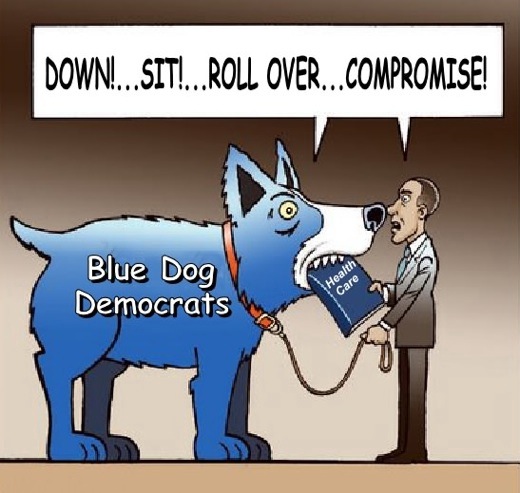
image above: Corporate sponsorship. From http://www.swapmeetdave.com/Humor/Fun3.htm Because time is running out and things are getting worse. It should be obvious the manner in which we're going about our attempts to institute change isn't working, so we should re-evaluate proposed action plans. Instead, we have somehow fooled ourselves into thinking that we will cause irreparable damage to tender, fragile psyches by pointing out that someone's actions will either not deliver the intended results, or will actually cause more harm. We have what resembles the attitude of too many modern parents, "Oh, isn't that cute, he's trying so hard" as the toddler destroys instead of saying "No" and taking the hammer away. It appears that what may be happening is that the possible loss of a few modern "conveniences" (as we run up against peak oil, peak soil, peak water, peak money and peak life) is being equated with doom and gloom, as we glibly ignore the actual negative consequences of these conveniences. Or we spend inordinate amounts of time and energy attempting to find loopholes to continue the status quo instead of figuring out other ways to meet our needs or even seriously analyze whether those are real or manufactured needs in the first place. We want the economy to return to normal, when "normal" is what has caused the myriad global crises we face. We rationalize and excuse inaction, inappropriate action or compromise as we steadfastly ignore the improvements to quality of life from proposed alternatives that systemically challenge the fundamentals of the status quo such as reconnecting with nature and relocalizing our lifestyles, organizations, and communities. What this all mainly demonstrates to me is a lack of imagination. The main "convenience" we seem to be protecting is not having to think too hard about any of this. It's like the oil company executives who say we won't actually hit peak oil until we run out of technology. Forget about climate and/or exploitation of people and nature and/or the known laws of physics and/or true human nature when freed from the shackles of dominator hierarchies. The liberal, NewAge mindset that every view is equally valid is actually a sign of moral decay. It is a sign of a society that has lost its way; that has abandoned its soul because it has disconnected it from its sustaining and nurturing source. Spending a weekend at a grief workshop while pretending to be a nature spirit isn't going to overcome this. In fact, the likelihood of doing so seems to be inversely proportional to the number of books published on the subject. Now, I fully understand that people who are working hard, for noble purposes, on "change" don't want to hear that • cash-for-clunkers, ACES, and the public option for disease care are just reshuffling deck chairs; • that sustainability initiatives that enable continued growth on an overdeveloped planet are anything but sustainable; • that the natural world imposes real limits on both population and resource extraction that we ignore to our--and all other forms of life--peril. But, there it is. And until you figure out a way to connect with a parallel universe, you're going to have to deal with it in a manner that is more effective than telling people to shut up when they point out the Emperor (regardless of ethnic background or which wing of the Corporate War Party he or she represents) has no clothes. Until someone can explain to me the advantages of compromising with evil (that which doesn't support life) I will continue to hold moral actors accountable for their actions based on the way that natural systems principles contribute to healthy, vibrant and resilient--that is, sustainable--ecosystems. Which we are perfectly capable of duplicating. Right now.

Kauai's Important Ag Land

SOURCE: Hope Kallai (lokahipath2@live.com) SUBHEAD: Dr. Karl Kim from UH, will be addressing the island-wide issue of Identifying Kauai's Important Ag Lands.
image above: View looking into Hanapepe Valley towards taro fields. Photo by Juan Wilson.
BACKGROUND: Hawai‘i’s Constitution requires the state to conserve and protect ag lands, promote diversified agriculture and increase agricultural self- sufficiency (Article XI, Section 3). · Kaua‘i is the first county to conduct an IAL study, as mandated by Act 233. Dr. Kim has been awarded the county contract. · Dr. Kim will explain the process whereby counties must identify and map potential IAL in consultation with the public, landowners, agricultural organizations and the Dept. of Ag, using 8 criteria defined by the Legislature, such as water availability & soil quality.
WHAT:
Wailua-Kapaa Neighborhood Association Presentation
Identifying Kauai’s Important Agricultural Lands (IAL)
WHO: Dr. Karl Kim, PhD University of HI, Dept. of Urban & Regional Planning
WHEN: Join us, Monday, August 24th, 6-8 pm
WHERE: Kapa‘a Library Meeting Room (free & open to the public)
Dr. Kim conducted the pilot study last year for Koloa-Poipu which can be downloaded at: http://www.4shared.com/file/97383540/4de436be/Koloa-Poipu_IAL_Pilot_Study.html
see also:

2 track trash = 1 train wreck

SUBHEAD: Why the Mayor's curbside recycling & WTE campaign promises will fail Kauai.

By David Ward on 12 August 2009

Have you been wondering about why our Mayor, Bernard Carvalho Jr. seems to have a disconnect between his stated support for curbside recycling while not proposing any funding for a MRF and a recycling coordinator? Wonder no more. This appears to be clearly on track towards failure. Of course, curbside recycling will not work without a MRF and a Recycling Coordinator, two critical components. And why, you ask, should curbside recycling be designed to fail? Because all our trash is not enough to feed the waste to energy incinerator (WTE).

Failure is the best way to silence the local environmentalists and still claim to have met campaign promises. When asked about why the County chose not to have a Recycling Coordinator position filled and build a MRF, the mayor's response: "...the bottom line is to do the low hanging fruit first, but also keep looking at the bigger picture.”

Looking at the bigger picture is what we all need to do. Connecting the dots has not been made easy because the Mayor and the powers at KIUC do not want to feel the heat from their incinerator plans until funding is locked in. Thanks to Ken Stokes for pointing out that KIUC has been hiding the ball until forced by the PUC to post their IRP on their web site.

Black & Veatch submitted their Integrated Resource Plan to Kaua’i Island Utility Cooperative. Table 1-6. KIUC Preferred Expansion Plan.

Timing Unit
Nameplate MW
Firm Capacity
Continuous Demand Side Mgt.
-4.34mw by 2028
-4.34mw by 2028
2011 Kekaha Landfill
1.60 mw
1.60 mw
2012 1x1 Combined Cycle
17.37 mw
17.37 mw
2013 Wind
10.50 mw
0.00 mw
2013 Direct Fired Biomass
20.00 mw
20.00 mw
2015 Hydro (mult. units)
11.00 mw
11.00 mw
2015 MSW Mass Burn
7.30 mw
7.30 mw

1.9.6 Mass Burn Waste to Energy Project The 7.3 MW mass burn waste to energy project is in the early development phase. Although project development work for this particular project has not started, there have been other developments on Kauai that directly impact the project: In March 2007, the County released an integrated solid waste management plan that, in part, recommended the construction of a waste-to-energy plant to help handle the island's refuse. Despite these positive signs, development of the waste to energy project has not been active, and the project is not forecast to come online in the IRP until 2015. Despite the long lead-time, KIUC will need to begin working closely with the County and other interested stakeholders to pursue development of this option in a manner that balances economically. Randy Hee at the KIUC Quarterly Update on 04 August 2009 gave some indication that there was now little confidence in their Preferred Expansion Plan due to the current unanticipated economic down turn. He said that any WTE project would have to funded and built by Kauai County. One has to wonder if the leadership at KIUC or in the Office of the Mayor has read the first report released on the the Kaua`i Energy Sustainability Plan that was posted 04 June 2009 by the SENTECH Hawaii Team. It is very clear from reading this report that there will not be a County/KIUC WTE in 2015. The Basics of Waste to Energy on Kaua`i report states that : Incineration is the only waste treatment technology now in use on a utility scale in the USA. No new WTE plants have come online in the USA since year 2000. The U.S. Environmental Protection Agency requires new facilities to use the "maximum achievable control technology." Meeting this standard takes the development of new WTE projects out of the realm of financial viability. Incineration WTE must take advantage of economies of scale to be cost effective, meaning that they need to process 500-1000 tons per day or more of trash. This is significantly more waste than Kauai currently or will ever produce. in 2005 the Kekaha landfill received 89,156 tons of municipal solid waste (MSW), for an average of 244 tons per day. If all the recycled materials were added to the burn pile, only a total of 319 tons would have been available to incinerate. A global economic depression and peak oil will all but guaranty that we will have declining amount of trash to dispose of. 8. Timeframe
The lifetime of many WTE plants is 25-30 years or more. Such long-term contracts may be inadvisable for communities and waste generators as there may be better options that may become available in the shorter term. Many alternative technologies such as gasification and plasma gasification remain under development and significant advances could emerge sooner than 25 years. The WTE process is far from clean and its track record in terms of energy efficiency and emissions can hardly be considered green. Not to mention the fact that it encourages the throwaway society that the environmental movement has been trying so hard to change. The mayor's dual track planning for our trash is headed for a train wreck. The plan to start curbside recycling pickup in Lihue is clearly putting the cart before the horse. The plan is to start curbside recycling pickup without a single point person to provide oversight and management of the development of a MRF and a multi-material composting operation. These projects will not move forward in a reasonable time frame and will almost certainly cost significantly more than waiting until all critical facilities and personnel are in place.
The current plan is to ship our trash to Honolulu for sorting and recycling. So we would be shipping trash, and jobs, and our tax revenue off island only to satisfy a campaign promise. This out of sequence effort is a guaranteed failure and could insure that island wide curbside recycling will be delayed indefinitely.
see also:

Wailua Bike Path Meeting

SOURCE: Ken Taylor (taylork021@hawaii.rr.com) SUBHEAD: Message sent out concerning the results of the meeting about the Wailua bike path alignment. Thank you, thank you, thank you. Last night’s showing to protect Sacred Wailua was magnificent. At least 60 members of the community watched the Path presentation then poured their hearts out to the designers and managers of the project. Though the crowd had to request that genuine time be allotted for community input, rather than the standard on Kaua’i; “Oops, sorry, but it’s 9:00, thanks for coming.”
image above: Wailua Beach viewed from the east using GoogleEarth.
Photo by Dennis Fujimoto in http://www.kauaiworld.com/articles/2009/01/19/news/kauai_news
The Path people listened graciously to what they surely didn’t want to hear: that, even though it’s “officially” too late for this, the Wailua part of the plan is seriously flawed by not taking enough into account the cultural, spiritual, visual and recreational realities of Wailua Beach. Apparently, the community thinks it’s never too late, despite cost and inconvenience, to do the right thing -- basically, to put the path mauka of the beach. Though the Path people (O’ahu designers, Kaua’i managers), truthfully, maintain that no matter what they come up with, there will be criticism and complaints, there was too much powerful sentiment last night to ignore. And by evening’s end (eleven o’clock), after the forum peetered out to more of a pow-wow, and Path people obligingly heard every last word, there was a sense of true communication. As it often is here, there’s no dislike or animosity, and essentially we all want what’s best.....we just have to work it out. And that willingness to try, the generosity of both giving and accepting mana’o, is a real strength of our island. This is not to say the Path won’t go in exactly as the diagrams intend, but there will be another community meeting, the community is tighter, and the facts, including the spiritual ones (if there’s such a thing as a spiritual fact), are on the table. If the Path were to proceed as planned, it would be against the wishes of the people. Of all the testimony, there were only two in support. So thank you, again, from the sands under Wailua Bay to the waters atop Ale Ale, for not just your presence and testimony at the meeting, (or for wishing you could be there but couldn’t), but for the deeper reasons why you care. see also:

Eating the Future

SUBHEAD: We are an infected species, delusional, and self destructive, yet we believe ourselves invincible.

By Andy Coghlan on 7 August 2009 in New Scientist -

image above: Photo titled "I'm Luvin it!" by Perpetually on Flickr.

We're a gloomy lot, with many of us insisting that there's nothing we can do personally about global warming, or that the human race is over-running the planet like a plague.

But according to leading ecologists speaking this week in Albuquerque at the annual meeting of the Ecological Society of America, few of us realise that the main cause of the current environmental crisis is human nature.

More specifically, all we're doing is what all other creatures have ever done to survive, expanding into whatever territory is available and using up whatever resources are available, just like a bacterial culture growing in a Petri dish till all the nutrients are used up. What happens then, of course, is that the bugs then die in a sea of their own waste.

One speaker in Albuquerque, epidemiologist Warren Hern of the University of Colorado at Boulder, even likened the expansion of human cities to the growth and spread of cancer, predicting "death" of the Earth in about 2025. He points out that like the accelerated growth of a cancer, the human population has quadrupled in the past 100 years, and at this rate will reach a size in 2025 that leads to global collapse and catastrophe.

But there's worse. Not only are we simply doing what all creatures do: we're doing it better. In recent times we're doing it even faster because of changes in society that encourage and celebrate conspicuous and excessive consumption.

"Biologists have shown that it's a natural tendency of living creatures to fill up all available habitat and use up all available resources," says William Rees of the University of British Columbia in Vancouver, Canada. "That's what underlies Darwinian evolution, and species that do it best are the ones that survive, but we do it better than any other species," he told me prior to the conference.

Spreading humans
Although we like to think of ourselves as civilised thinkers, we're subconsciously still driven by an impulse for survival, domination and expansion. This is an impulse which now finds expression in the idea that inexorable economic growth is the answer to everything, and, given time, will redress all the world's existing inequalities.

The problem with that, according to Rees and Hern, is that it fails to recognise that the physical resources to fuel this growth are finite. "We're still driven by growing and expanding, so we will use up all the oil, we will use up all the coal, and we will keep going till we fill the Petri dish and pollute ourselves out of existence," he says.

But there's another, more recent factor that's making things even worse, and it's an invention of human culture rather than an evolved trait. According to Rees, the change took place after the second world war in the US, when factories previously producing weapons lay idle, and soldiers were returning with no jobs to go to.

American economists and the government of the day decided to revive economic activity by creating a culture in which people were encouraged to accumulate and show off material wealth, to the point where it defined their status in society and their self-image.

Rees quotes economist Victor Lebow as saying in 1955: "Our enormously productive economy demands that we make consumption our way of life, that we convert the buying and use of goods into rituals, that we seek our spiritual satisfaction and our ego satisfaction in consumption. We need things consumed, burned up, worn out, replaced and discarded at an ever-increasing rate".
 
Insecure society
In today's world, such rhetoric seems beyond belief. Yet the consumer spree carries on regardless, and few of us are aware that we're still willing slaves to a completely artificial injunction to consume, and to define ourselves by what we consume.

"Lebow and his cronies got together to 'create' the modern advertising industry, which plays to primitive beliefs," says Rees. "It makes you feel insecure, because the advertising industry turned our sense of self-worth into a symbolic presentation of the possessions we have," he told me. "We've turned consumption into a necessity, and how we define ourselves."

The result is a world in which rampant consumption in rich countries is rapidly outstripping the resources in the world needed to satisfy demand.

For evidence, Rees developed in 1992 a process called ecological footprint analysis (EFA). Produced by combining national consumption statistics with calculations of the resources needed to meet reported consumption patterns, EFA generates figures that conveniently demonstrate where consumption is least sustainable, and how fast finite material resources are being used up (calculate your own here).
 
Big footprints
Rees's latest figures, presented in Albuquerque, show that, globally, we're already in "overshoot", consuming 30 per cent more material than is sustainable from the world's resources. At present, 85 countries exceed their domestic "bio-capacities", compensating for their lack of local material by depleting stocks elsewhere, in countries that have "surpluses" because they're not consuming as much.

Perhaps not surprisingly, given the encouragement from Lebow, North Americans are the most consumptive, eating resources equivalent to 9.2 global average hectares per capita.

The world can only supply 2.1 global average hectares per person, so already, Americans are consuming four times what the Earth can sustainably supply. "North Americans should be taking steps to lower their eco-footprints by almost 80 per cent, to free up the 'ecological space' for justifiable growth in the developing world," says Rees.

The worrying thing is that if everyone on Earth adopted American lifestyles overnight, we would need four extra worlds to supply their needs, says Rees.

We haven't yet mentioned climate change or global warming. What's to be done? Marc Pratarelli of Colorado State University at Pueblo believes we need to snap out of our sleepwalking and begin to take real steps to cut consumption. "We have our heads in the sand, and are in a state of denial," he says. "People think: 'It won't happen to me, or be in my lifetime, or be that bad, so what's the point of change'."
 
What to do? 
But there is hope, however slim, according to Rees, both from the top down and the bottom up. The hope from above is that governments will finally realise that never-ending economic growth is incompatible with the finite material resources Earth has to offer, and begin to manage those resources more fairly and equitably through some kind of world government.

Without global management, destruction will continue, producing food and energy "crunches" that make the credit crunch look like a tea party.

"We need to learn to live within the means of nature," says Rees. "That means sharing and redistribution of wealth, and for that we need leadership at the highest level to understand that the competitive instinct and the drive for power and more resources is mutually destructive, so governments must act in our collective interest."

From the bottom up, there are the glimmers of global grassroots organisations campaigning for global justice and global solutions, such as the internet-based justice organisation Avaaz, which collects email votes for petitions on issues of international or personal justice.
Desire to acquire

Solving the other problem – the advertising that feeds our desire to acquire – might be more tricky. In an ideal world, it would be a counter-advertising campaign to make conspicuous consumption shameful.

"Advertising is an instrument for construction of people's everyday reality, so we could use the same media to construct a cultural paradigm in which conspicuous consumption is despised," he says. "We've got to make people ashamed to be seen as a 'future eater'."

Whether we're capable of such a counter-revolution is doubtful, both because of our state of personal denial and because of the huge power of industry to continue seducing us.

"In effect, globalism and consumerism have succeeded in banishing moderation and sanctifying greed, thereby liberating Homo economicus from any moral or ethical constraints on consumption," says Rees.

Pararelli is even more pessimistic. The only hope, he says, is a disaster of immense scale that jolts us out of our denial. "My sense is that only when the brown stuff really hits the fan will we finally start to do something."

.

Constrained Redundancy

SUBHEAD: Redundancy? Renewable powered grid? Electric auto fleet? Not in our lifetimes!
By Stoneleigh on 1 July 2009 in The Automatic Earth -
Since it is the major world conundrum with the shortest timescale, I usually focus on finance here, but alternative energy sources and power systems are my day job. Ilargi suggested that, in response to a question about the potential for renewable energy and electric vehicles (EVs), I write an article on the future of power systems.
With people hanging so many of their hopes on an electric future, it seems timely to inject a dose of reality. This is meant as a cursory overview of some of the difficulties we are facing with regard to electrical power in the future. The extraordinary technical and organizational complexity of power systems is difficult to convey, and there is far more to it than I am attempting to address here.
image above: An electric vehicle (EV) charging on a street in Dun Laoghaire, Ireland.
From http://www.autobiz.ie/news.php?sc=6bb2659945b63c27c3554f9a00ab094b2473486d First off: As we are entering a depression, within a few years hardly anyone will have the money to buy an EV. Second: the grid could not come close to handling the current transportation load even if EVs could become common. An economy based on EV transportation would have to be fueled by base-load nuclear that doesn't currently exist and would take decades to build, and no one builds anything in a depression. What they do is mount a losing battle to maintain existing infrastructure and hope they don't lose too much before better times return. This depression will last long enough that the infrastructure degradation will be enormous, even without the impact of above ground events resulting from serious societal unrest. Attempts at recovery after deleveraging are going to hit a hard energy ceiling. Power systems are critical to the functioning of a modern economy, but are almost completely taken for granted. That will not be the case in a few short years. Here in Ontario, Canada (pop.13 million), the provincial government has just passed the Green Energy Act, and renewable energy proponents are queuing up to sign 20-year feed-in tariff contracts for power generation at a premium rate per kWh (varying by technology and reaching a maximum of 80 cents/kWh for small-scale roof-top solar). The general assumption is that we are well on our way to building a future of renewable energy powered smart grids that will be able to accommodate not only our current demand, but much of our transportation load as well, thanks to EVs. Unfortunately, much of this techno-positivist vision is nothing but pie-in-the-sky, thanks to the limitations of the electrical grid, as well as the low EROEI of renewable energy, the effect of receding horizons on the prospects for scaling up renewable energy development and the impending deflationary collapse of the money supply. Investment in grid infrastructure, as with public infrastructure of most other kinds, has been sadly neglected for a long time. Much of the existing grid equipment is at or near the end of its design life, as are many of the power plants we depend on. (For instance, in Ontario we haven't got around to paying for the last set of nuclear power plants we built, that are now approaching the end of design life and have had to be very expensively re-tubed in recent years. The outstanding debt is some $40 billion, and the debt retirement charge we pay doesn't even cover the interest.) Liberalization in the electricity sector has led to a relentless whittling away of safety margins in many places. Where we once had a system with a great deal of resilience through redundancy, that is generally no longer the case. In North America we now have an aging system with a very limited capacity for accommodating either new generation or new load, and we have great difficulty building any new lines. As the power system was designed under a central station model to carry power in one direction only, with high voltage transmission and low voltage distribution, the modifications that would be required to enable two-way traffic, especially at the distribution level, are very substantial. Comprehensive monitoring and two-way communication would be required down to the distribution level, with central control (dispatchability, or at least the power to disconnect) of large numbers of very small generators. The level of complexity would be vastly higher than the existing system, where there are relatively few generators to control in order to balance supply and demand in real time, and maintain system parameters such a frequency and voltage within acceptable limits. The image above conveys by analogy the essence of power system frequency control - the easiest parameter to visualize. Frequency must be maintained at a set level by balancing supply and demand over the entire AC system. There are 4 such systems in North America - the east, the west, Texas and Quebec - and each functions as a single giant machine. The trucks in the image are generators and the boulder they tow up the uneven hill represents variable load. The trucks must pull the boulder at an even speed despite the bumps. For a more accurate representation, one would actually need additional trucks, some moving at the same speed waiting to pick up a line if one should be dropped (spinning reserve) and others parked by the side of the hill (standing reserve). Some of the trucks would have to be able to start the boulder moving again from a standing start if it should stop for any reason (black-start). We are looking at a world where there would be many more trucks, but each would be much smaller, and some of them would only pull if the wind was blowing or the sun was shining. The difficulty of the task will increase exponentially, and frequency management is only one parameter that must be controlled. The mismatch between renewable resource potential, load and grid capacity is considerable. Resource potential is often found in areas far from load, where the grid capacity is extremely limited. Developing this potential and attempting to transmit the resulting power with existing infrastructure to where it can be used would involve very high losses. Many rural areas are served by low voltage single phase lines, and the maximum generation size that can be connected under those circumstances is approximately 100kW. Even where three-phase lines exist, so that larger generators can be connected, carrying the power at low voltage is particularly inefficient, as low voltage means high current, and losses are proportional to the square of the current. Building high-voltage transmission lines to serve relatively small amounts of renewable energy would be an exceptionally expensive and difficult proposition, especially in a capital constrained future. Renewable energy generation far from load could amount to little more than a money generating scheme, as a premium rate will be paid from the public purse for the time being, but little of the power might reach anywhere it could actually be used. Difficulties occur when generation proposed would amount to more than 50% of the minimum load on the feeder. At this threshold, special anti-islanding measures are required that add considerable cost to the grid connection. In North America, we have large geographical areas served by a network of long stringy feeders with very low load. Adding much of anything to this system will be very challenging. In much of Europe, where renewable energy penetration is relatively high, the population density is high enough to be served by a three-phase grid composed of relatively short feeders with high loads. Many of the limitations faced by North America simply do not apply in places like Germany, Denmark or the Netherlands. The North American grid has more in common with rural Portugal or the Greek Islands. In this province alone, the amount of grid construction required in order to connect our renewable potential with load would cost tens, if not hundreds, of billions of dollars, and it would take decades to build. The cost of building, installing and connecting the necessary power generation equipment would also be enormous, and we would have to maintain at least some of the large plants needed for power system control and ancillary services (rapid load-following adjustments for frequency management, spinning reserve, rapid-response standing reserve, black-start capability, provision of reactive power etc). This will be difficult as many large plants are due for replacement, large power plants take many years to complete, conventional fuels are depleting and capital will be very limited. While demand destruction will build in a temporary supply cushion, the lack of maintenance and new construction, which will inevitably follow a lack of funds, will take a huge toll in relatively few years. Far from a future of greater high-tech connectedness under a smart-grid model, where EVs would charge at night and cover both transportation needs and power storage, we are looking at a much more fragmented picture. We are very unlikely to see massive AC grids covering anything like the area they do now, and much less likely to see power carried over large distances. Rural areas may well be cut off and will have to provide any power they need themselves (yet another example of the core preserving itself at the expense of the periphery). This will mean a drastic cut in demand to a third world level in many rural areas, and may lead to other areas with no power production, and no money to build any, being abandoned completely or reverting to a pioneer lifestyle. In urban areas, where dispossessed rural people migrate in very hard times, electricity provision in places down on their luck could look more like this picture of a favela in Rio de Janeiro. It's a far cry from a neat and tidy high-tech vision of efficiency.

KIUC's PUC Hearing

SUBHEAD: Kauai public input sought at KIUC Public Utility Commission Hearing on August 25th. By Brad Parsons on 10 August 2009 in Aloha Analytics - http://alohaanalytics.blogspot.com/2009/08/kauai-public-input-sought-on-kiucs-puc.html
Important Regulatory PUC Testimony Hearing on KIUC's Utility Rate Increase Case. Meeting before the State PUC Commissioners will be Aug. 25th at 6pm at Wilcox Elementary. This PUC hearing will be the best opportunity that Kaua'i residents have had to influence the future of KIUC since its inception.
image above: Homer Simpson at the controls of the Springfield Nuclear Power Plant.
From http://nerdlitter.blogspot.com/2006_07_01_archive.html
WHAT:
KIUC PUC Hearing on Rate Increase
WHEN:
25 August 2009
WHERE:
Wilcox Elementary School in Lihue
WHY:
Because it's your power company
Here is a start on information on this. This is Walter Lewis' Op-Ed piece from yesterday. Here are Ken Stokes related pieces here, here, here, here, here, and here. Lastly, here is KIUC's Rate Case Application and below is the listing of ALL the filings on KIUC's Rate Case. Don't let it intimidate you, most of it's just filler, they've got a lot of false assumptions built into it.
Docket No 2009-0050
Docket Title NOTICE OF INTENT TO FILE AN APPLICATION FOR A GENERAL RATE INCREASE. APPLICATION FILED ON JUNE 30, 2009.
File Date 03/03/2009
Docket Type Code Rate Case
Status Open
Industry Code Electric

Number of Documents -- 22 (click on "page" icon to download)

Date Document Title Pages
Open Document dated 03/03/2009
03/03/2009
Notice of Intent
5 pgs
Open Document dated 03/04/2009
03/04/2009
Motion to Allow 2010 Calendar Year as the Test Year in Lieu of Mid-Year Test Year; Memorandum in Support of Motion
8 pgs
Open Document dated 03/13/2009
03/13/2009
Proposed Protective Order; Stipulation for Protective Order; Exhibit A
54 pgs
Open Document dated 03/20/2009
03/20/2009
ORDER GRANTING MOTION TO ALLOW 2010 CALENDAR YEAR AS THE TEST YEAR IN LIEU OF MID-YEAR TEST YEAR; Kauai Island Utility Cooperative; Docket No. 2009-0050
7 pgs
Open Document dated 04/02/2009
04/02/2009
PROTECTIVE ORDER; Kauai Island Utility Cooperative; Docket No. 2009-0050
27 pgs
Open Document dated 06/30/2009
06/30/2009
Application; Exhibits KIUC 1 through KIUC 10; Attachments; Verification (Volume 1 of 3)
438 pgs
Open Document dated 06/30/2009
06/30/2009
Application; Exhibits KIUC 1 through KIUC 10; Attachments; Verification (Volume 2 of 3)
322 pgs
Open Document dated 06/30/2009
06/30/2009
Application; Exhibits KIUC 1 through KIUC 10; Attachments; Verification (Volume 3 of 3)
503 pgs
Open Document dated 07/08/2009
07/08/2009
Letter From: Commission; To: K. Morihara; Re: Docket No. 2009-0050, Kauai Island Utility Cooperative (KIUC) - General Rate Case
4 pgs
Open Document dated 07/14/2009
07/14/2009
Kauai Island Utility Cooperative's Responses to the Public Utilities Commission's Information Requests
27 pgs
Open Document dated 07/16/2009
07/16/2009
Motion to Intervene and Become a Party
5 pgs
Open Document dated 07/20/2009
07/20/2009
Division of Consumer Advocacy's Statement of Position Regarding Completeness of Application
6 pgs
Open Document dated 07/20/2009
07/20/2009
Letter From: Commission; To: J. McCormick; Re: Docket No. 2009-0050, Kauai Island Utility Cooperative (KIUC)--General Rate Case
1 pg
Open Document dated 07/20/2009
07/20/2009
Letter From: Commission To: J. McCormick Re: Docket No. 2009-0050, Kauai Island Utility Cooperative ("KIUC") - General Rate Case
1 pg
Open Document dated 07/23/2009
07/23/2009
Notice of Public Hearing
2 pgs
Open Document dated 07/24/2009
07/24/2009
Letter From: J. McCormick To: Commission Re: Docket No. 2009-0050, Kauai Island Utility Cooperative ("KIUC") - General Rate Case, Amended Certificate of Service
6 pgs
Open Document dated 07/24/2009
07/24/2009
Statement of No Opposition to Department of Navy's Motion to Intervene and Become a Party
4 pgs
Open Document dated 07/27/2009
07/27/2009
Letter From: J. McCormick To: Commission Re: Docket No. 2009-0050, Kauai Island Utility Cooperative ("KIUC") - General Rate Case
1 pg
Open Document dated 07/27/2009
07/27/2009

Letter From: Commission To: Parties Re: Docket No. 2009-0050, Kauai Island Utility Cooperative ("KIUC") -General Rate Case

4 pgs
Open Document dated 07/29/2009
07/29/2009
ORDER REGARDING COMPLETED APPLICATION AND OTHER INITIAL MATTERS; Kauai Island Utility Cooperative; Docket No. 2009-0050
14 pgs
Open Document dated 07/31/2009
07/31/2009
ORDER GRANTING INTERVENTION TO THE DEPARTMENT OF THE NAVY; Kauai Island Utility Cooperative; Docket No. 2009-0050
8 pgs
Open Document dated 08/03/2009
08/03/2009
Notice of Entry of Appearance of Counsel
4 pgs
see also:
Ea O Ka Aina: KIUC $75 million Gen X Plan 8/2/09

Recreational Rennaisance Plan B

SUBHEAD: Staff presentation of "Recreational Rennaisance Plan B" and revenue generating fees.
image above: Lingle signs SB1891 that increases fine for violating DLNR regulations and presents copies to Tim Johns, BLNR President, Ron Agor, and Mark Fox of the Nature Conservancy. WHAT:
Agenda for the meeting of the Board of Land and Natural Resources
WHEN:
Friday, August 14, 2009 at 9:00 am WHERE:
Kalanimoku Building Land Board Conference Room 132 1151 Punchbowl Street, Honolulu, HI 96813
WHO:
Kauai Representative to BLNR is Ron Agor

4028 Rice Street, #B Lihue, HI 96766

phone: (808) 245-4550

email: ron@agordesigngroup.com

website: www.agordesigngroup.com

[Publisher's note: Ron Agor is also a Kauai architect and chairman of the Kauai Republican Party]
BLNR AGENDA A. MINUTES 1. July 22, 2009 Minutes B. ADMINISTRATION 1. STAFF PRESENTATION AND BOARD APPROVAL OF RECREATIONAL RENAISSANCE “PLAN B” AS FOLLOWS: 1. STATE PARKS a. Appoint Staff to be Hearing Officers for purposes of Conducting Public Hearings related to Proposed Amendments to Certain Sections of Chapter 13-146, HAR for the State Parks System to allow for Overnight Accommodations to be reserved via the Internet, Payment by Credit Card and to Charge a Service Fee, and make other substantive and technical amendments relating to clarifying management action and regulatory powers; b. Establish parking fees at certain State Parks, Monuments, Recreation Areas, and Waysides and Authorize the Chairperson to issue and Invitation for Bids, Concession, Agreement or Other Public Process as Allowed by Law, such as a Request for Proposals, and to Award a Contract Related to Parking; c. Increase Fees for Overnight Accommodations at State Parks; d. Establish Commercial Filming Fees for State Parks; 2. DOBOR e. Preliminary Approval to Amend Portions of DOBOR’s Hawaii Administrative Rules, Title 13, sub-title 11, Chapters 230 et. seq., Parts I, II, and III, and Conduct Public Hearings related to the Proposed Amendments to the Administrative Rules; f. Authorize the issuance of Contracts, Concessions, Leases and Other Agreements as Allowed by Law on Lands, Including Submerged Lands Under DOBOR’s Management Jurisdiction for Income Production; g. Delegation of Authority to the Chairperson to Select the Appropriate Processes for Offering and Disposing of Long-term Parking Agreements as allowed by law for the Generation of Parking Revenues at the Ala Wai Small Boat Harbor and the Kailua-Kona Pier; h. Delegation of Authority to the Chairperson to Select the Appropriate Processes to Offering and Disposing of a Long-term Agreement for the Operation of the Heeia Kea Small Boat Harbor Fuel Dock, Convenience Store, and Snack Shop for DOBOR’s Income Production, whether by Lease, Concession or other agreement as allowed by law; 3. DOFAW i. Approve Updated fees for camping, and other recreational uses in forest reserves; j. Approval to Conduct Public Hearings to Repeal Hawaii Administrative Rules (HAR) Chapter 13, §13-125, “RULES REGULATING WILDLIFE SANCTUARIES,” and Adopt Chapter 13, §13-126, “RULES REGULATING WILDLIFE SANCTUARIES”; k. Set aside to DLNR, Division of Forestry and Wildlife for Wildlife Sanctuary Purposes and Issuance of a Management Right-of-Entry, Eighteen (18) Wildlife Sanctuaries Previously Designated by the Board and Identified in Chapter 13-125, HAR; l. Set aside to DLNR, Division of Forestry and Wildlife for Wildlife Sanctuary Purposes and Issuance of a Management Right-of-Entry, Pālā‘au, Moloka‘i, Tax Map Keys: (2)5-1-1:2, 4, 5, and the Unencumbered Lands Seaward of (2)5-1-1:2, 4 AND (2) 5-2-11:4; m. Authorize the Chairperson of DLNR to Develop and Operate Public Shooting Ranges Via Cooperative Agreement, Concession, or Lease; n. To Conduct Public Hearings to Amend Chapter 13, §13-121, “RULES REGULATING THE HUNTING OF WILDLIFE ON PUBLIC LANDS AND OTHER LANDS” to Establish Rules Regulating the Use of Public Shooting Ranges; o. Set Aside to DLNR, DOFAW for Na Ala Hele Trail and Off Highway Vehicle Park Purposes and Issuance of a Management Right-of-Entry, Wahikuli, Maui, Tax Map Key: (2)4-5-21:4; 4. ENGINEERING (Asset Management) p. Permission to Hire a Consultant to Develop Pilot Asset Management System for Selected DLNR Facilities. 5. LAND (Revenue Enhancement) q. Designation of certain Revenue Generating Properties as income-producing assets and reserve these properties to DLNR for the purpose of generating revenues to fund Plan B of the Recreational Renaissance, and ultimately upon receiving the necessary legislation, to also repay bonds issued for DLNR’s original or any approved Recreational Renaissance plan. r. Subject to Federal Aviation Administration prior approval, approve of and recommend to the Governor the issuance of executive orders: (1) withdrawing lands currently set aside to Department of Transportation for airport purposes, identified above as Ualena Street Industrial Properties and Kona Airport Industrial Lands, and resetting aside those lands to DLNR Land Division for income production purposes; and (2) setting aside lands identified above as Kanoelehua Industrial-Commercial Lot to Department of Transportation for airport purposes. s. Authorization to issue long-term leases for the Revenue Generating Properties via public auction, requests for proposals, or any other process authorized under Chapter 171, Hawaii Revised Statutes, as amended (“HRS”). t. Delegation of authority to the Chairperson of the Board of Land and Natural Resources (the “Chairperson”) to: (a) determine the appropriate process for offering and disposing of leases for each of the Revenue Generating Properties; and (b) determine the terms and conditions of each lease, provided, however, that all process, terms and conditions determined by the Chairperson shall comply with the provisions of HRS Chapter 171. u. Delegation of authority to the Chairperson to amend the terms and conditions of any lease, sale of a lease, public auction, request for proposal, or any other disposition previously approved/authorized by the Board, including, but not be limited to, amending the method of disposition, amending the terms and conditions of a lease to be offered for sale, adjusting the upset lease rent for leases to be sold at public auction, and amending the procedures of a request for proposal to authorize the Chairperson to select the successful applicant, negotiate the terms of any development agreement or lease, and execute any documents that are necessary or appropriate to effectuate the intent of the disposition; provided, however, that any amended terms and conditions shall comply with the provisions of HRS Chapter 171 and be subject to review and approval by the Department of the Attorney General. v. Authorize the revenues generated from leases of the Revenue Generating Properties to be held separately in a special fund or account to fund Plan B of the Recreational Renaissance, and ultimately upon receiving the necessary legislation, to also repay bonds issued for DLNR’s original or any approved Recreational Renaissance plan. w. Authorize the hiring of an independent real estate consultant to review DLNR’s land inventory, identify properties with development and revenue-generating potential, and provide recommendations on the disposition of leases for those properties; and delegate to the Chairperson the authority to determine the scope of work of the consultant’s contract, select the parcels to be reviewed under the contract, enter into supplemental contracts to address unforeseen conditions, and sign the necessary documents pertaining to the project. Here is the link to the full Agenda submittal which provides links for each agenda item.

http://hawaii.gov/dlnr/chair/meeting/submittals/090814

See State Parks proposed fees for camping & parking for Haena State Park/Napali Coast Trail & Kokee/Waimea at the above link.

Written testimony may be submitted in one of the following ways:

fax: (808) 587-0390 Attn: Board Members

e-mail: Board Secretary adaline.f.cummings@hawaii.gov

mail: Department of Land and Natural Resources

Attn: Board Members

1151 Punchbowl Street, Room 130,

Honolulu, Hawaii 96813.