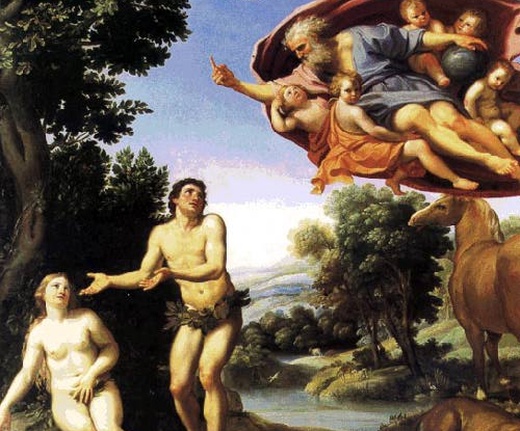
Image above: Marvel hero Captaon America from http://www.heroicwallpapers.com/desktop/captain-america
The wishes of the "green shoots and mustard seed" crowd really hinge on whether the various organs of the suburban economy can be jump-started back to life -- the production home-builders, the granite countertop outfitters, the mall and strip-mall gang, the national chain discount retailers, all the people who make Happy Motoring possible from the factory to the showroom, and, of course, the banks who shovel money into these enterprises.
All these organs of our now-former economy are gravely impaired, and a realistic appraisal of them would have to conclude that they've entered the zone of congestive failure. The choice we face really comes down to this: do we put our dwindling resources and "hopes" into resuscitating those dying systems, or do we move forward to the next chapter of American life, cut our losses, and make new arrangements more consistent with the realities on offer from the universe? To take it a step further, can we remain one nation, a common culture, without such a conscious re-purposing of our collective spirit?
The bizarre spectacle being played out right now by President Obama and his team only adds layers of mystery and mystification to this big question. On the one hand, you have Mr. Obama giving a graceful, thoughtful speech on a very difficult issue (abortion) at a very tough venue (the country's leading Catholic university), and presenting an excellent case for common ground. It was a bold deed, unshirking, even brave considering what have come to be the standard modes of pander or evasion in presidential politics. I suspect that Mr. Obama did it as much to demonstrate his willingness to face tough questions in general as to address abortion per se.
All this is to say why it is so dispiriting to see Mr. Obama's White House mount a campaign to sustain the unsustainable in the economic realm. Everything they've done for four months involving money management and enterprise policy -- from backstopping hopeless banks, to gaming the bankruptcies of the big car companies, to the bungled efforts to prop up artificially-high house prices -- amounts to a gigantic exercise in futility. Worse, it gives off odors of dishonesty or stupidity, since the ominous tendings of our system are so starkly self-evident.
Not least of the problems entailed in all this are the scary political consequences. It's one thing for a business such as a bank to fail; its another thing for the public to lose confidence in banking, or their own currency, or the credibility of all the people who work in banking, or the authority of those charged to regulate these activities, or the courts and their officers who are supposed to adjudicate misconduct in them. When faith in all these things starts to go, all bets are off for even larger social constructs like democracy, justice, and the destiny of a federal republic.
The Obama White House has very quickly painted itself into a corner on these things. The so-called bank "stress test" couldn't have backfired more completely. Rather than bolster confidence in our money system and the people who run it, it only made the system appear more obviously corrupt. It made the Treasury Department (and the White House by extension) look idiotic for concocting it. Worse, the game of allowing the banks to audit themselves, and cook their books under newly jiggered accounting rules, only made them look less sound and trustworthy, and their executives more venal and mendacious. The stress test scam also virtually guaranteed that the banks will not get another dime out of congress -- even while it is common knowledge that they will desperately need quadrillions more dimes in the months ahead.
Who knows what the point of this ludicrous exercise was? Observers in all corners of the media saw through it, and the public has only been made more cynical, and is now so furious over related stunts like AIG using taxpayer money to pay back swaps bets to Goldman Sachs that there is a whiff of revolution in the American air for the first time, really, since 1861. A lot of reasonable people see a good chance that our society will sink into disorder if these trends continue, and these fears could beat a path into radical politics, even the frightful prospect of coup d'etat -- not something that I advocate, by the way.
The president is playing with fire on all this. The old economy is not going to recover, and so far he has not used his rhetorical talents to articulate what the next economy is likely to be about. It is reasonable to wonder whether he even really has a clear sense of it -- and, based on the fatuous utterances of his economic mandarins like Larry Summers and Austan Goolsby, this team is really behind the curve.
There are plenty of things you can state about the economy past and future with some confidence right now:
• Cheap energy is over and our wishes for alt.energy are currently inconsistent with reality, meaning we have to live differently.
• We have to downscale and re-localize our major economic activities: food production, commerce and manufacturing, banking, schooling, etc.
• We can't hope to have a stable money system unless we allow a workout of unpayable debt to proceed.
• Even if we can do this, universal easy credit is a thing of the past. From now on, we have to save for the things we want and run our businesses and households on accounts receivable.
• Major demographic shifts are inevitable as it becomes necessary to let go of suburbia and reactivate our derelict towns and smaller cities (and allow our giant metroplexes to contract).
• We have to face the truth that our major social contracts cannot be met, namely the continuation of social security as we know it and probably all pension arrangements. We'll probably have to change household arrangements to make up for these losses.
• Health care will have to go through a revolution more comprehensive than just changing how we pay for it. Like everything else, it will have to downscale,
We're not going to rescue the banks. The collateral for their loans is no good and it will only lose more value. All those tract houses on the cul-de-sacs of America and scattered on the out-parcels of our tragically subdivided farming landscape will only lose value, one way or another, in the years ahead.
Right now they're simply losing inflated cash value -- and that has been bad enough to sink the banks. In the months and years ahead, they'll lose their sheer usefulness as the distances once mitigated by cheap gasoline loom larger again, and the jobs vanish and incomes with them, and the supermarket shelves cease to groan with eighty-seven different varieties of flavored coffee creamers, and one-by-one the national chain stores shutter, and the theme parks, and the Nascar ovals, and the malls, and the colossal superfluous cretin-cargo of consumer nonsense that we've been daydreaming in gets blown away in a hurricane of change that we were not ready to believe in
Bad Collateral
Image above: Marvel hero Captaon America from http://www.heroicwallpapers.com/desktop/captain-america
The wishes of the "green shoots and mustard seed" crowd really hinge on whether the various organs of the suburban economy can be jump-started back to life -- the production home-builders, the granite countertop outfitters, the mall and strip-mall gang, the national chain discount retailers, all the people who make Happy Motoring possible from the factory to the showroom, and, of course, the banks who shovel money into these enterprises.
All these organs of our now-former economy are gravely impaired, and a realistic appraisal of them would have to conclude that they've entered the zone of congestive failure. The choice we face really comes down to this: do we put our dwindling resources and "hopes" into resuscitating those dying systems, or do we move forward to the next chapter of American life, cut our losses, and make new arrangements more consistent with the realities on offer from the universe? To take it a step further, can we remain one nation, a common culture, without such a conscious re-purposing of our collective spirit?
The bizarre spectacle being played out right now by President Obama and his team only adds layers of mystery and mystification to this big question. On the one hand, you have Mr. Obama giving a graceful, thoughtful speech on a very difficult issue (abortion) at a very tough venue (the country's leading Catholic university), and presenting an excellent case for common ground. It was a bold deed, unshirking, even brave considering what have come to be the standard modes of pander or evasion in presidential politics. I suspect that Mr. Obama did it as much to demonstrate his willingness to face tough questions in general as to address abortion per se.
All this is to say why it is so dispiriting to see Mr. Obama's White House mount a campaign to sustain the unsustainable in the economic realm. Everything they've done for four months involving money management and enterprise policy -- from backstopping hopeless banks, to gaming the bankruptcies of the big car companies, to the bungled efforts to prop up artificially-high house prices -- amounts to a gigantic exercise in futility. Worse, it gives off odors of dishonesty or stupidity, since the ominous tendings of our system are so starkly self-evident.
Not least of the problems entailed in all this are the scary political consequences. It's one thing for a business such as a bank to fail; its another thing for the public to lose confidence in banking, or their own currency, or the credibility of all the people who work in banking, or the authority of those charged to regulate these activities, or the courts and their officers who are supposed to adjudicate misconduct in them. When faith in all these things starts to go, all bets are off for even larger social constructs like democracy, justice, and the destiny of a federal republic.
The Obama White House has very quickly painted itself into a corner on these things. The so-called bank "stress test" couldn't have backfired more completely. Rather than bolster confidence in our money system and the people who run it, it only made the system appear more obviously corrupt. It made the Treasury Department (and the White House by extension) look idiotic for concocting it. Worse, the game of allowing the banks to audit themselves, and cook their books under newly jiggered accounting rules, only made them look less sound and trustworthy, and their executives more venal and mendacious. The stress test scam also virtually guaranteed that the banks will not get another dime out of congress -- even while it is common knowledge that they will desperately need quadrillions more dimes in the months ahead.
Who knows what the point of this ludicrous exercise was? Observers in all corners of the media saw through it, and the public has only been made more cynical, and is now so furious over related stunts like AIG using taxpayer money to pay back swaps bets to Goldman Sachs that there is a whiff of revolution in the American air for the first time, really, since 1861. A lot of reasonable people see a good chance that our society will sink into disorder if these trends continue, and these fears could beat a path into radical politics, even the frightful prospect of coup d'etat -- not something that I advocate, by the way.
The president is playing with fire on all this. The old economy is not going to recover, and so far he has not used his rhetorical talents to articulate what the next economy is likely to be about. It is reasonable to wonder whether he even really has a clear sense of it -- and, based on the fatuous utterances of his economic mandarins like Larry Summers and Austan Goolsby, this team is really behind the curve.
There are plenty of things you can state about the economy past and future with some confidence right now:
• Cheap energy is over and our wishes for alt.energy are currently inconsistent with reality, meaning we have to live differently.
• We have to downscale and re-localize our major economic activities: food production, commerce and manufacturing, banking, schooling, etc.
• We can't hope to have a stable money system unless we allow a workout of unpayable debt to proceed.
• Even if we can do this, universal easy credit is a thing of the past. From now on, we have to save for the things we want and run our businesses and households on accounts receivable.
• Major demographic shifts are inevitable as it becomes necessary to let go of suburbia and reactivate our derelict towns and smaller cities (and allow our giant metroplexes to contract).
• We have to face the truth that our major social contracts cannot be met, namely the continuation of social security as we know it and probably all pension arrangements. We'll probably have to change household arrangements to make up for these losses.
• Health care will have to go through a revolution more comprehensive than just changing how we pay for it. Like everything else, it will have to downscale,
We're not going to rescue the banks. The collateral for their loans is no good and it will only lose more value. All those tract houses on the cul-de-sacs of America and scattered on the out-parcels of our tragically subdivided farming landscape will only lose value, one way or another, in the years ahead.
Right now they're simply losing inflated cash value -- and that has been bad enough to sink the banks. In the months and years ahead, they'll lose their sheer usefulness as the distances once mitigated by cheap gasoline loom larger again, and the jobs vanish and incomes with them, and the supermarket shelves cease to groan with eighty-seven different varieties of flavored coffee creamers, and one-by-one the national chain stores shutter, and the theme parks, and the Nascar ovals, and the malls, and the colossal superfluous cretin-cargo of consumer nonsense that we've been daydreaming in gets blown away in a hurricane of change that we were not ready to believe in
Waking up to reality
Image above: "Dutch Mania" on display in orange at World Cup time. From http://worldcup-corner.blogspot.com
Dearest Ones of Future Generations,
I thought you might find it interesting to hear what I’m observing of those people I know about who are just waking up to what the state of the planet is. Last month saw Earth Day, an international day of observance for the Earth. For nearly 40 years, it has been a day when environmentalists have had a chance to provide a reckoning of the damage that industrial civilization has been inflicting on the natural world. It is usually a time when print media make some obligatory gesture of recognition that humans live on a planet that we depend upon and that needs our attention. This year the statements were a little more urgent than usual, especially about climate change, which is increasingly referred to as "climate emergency."
The reason that we are in a climate emergency -- in fact, a biological holocaust, as it was identified over 20 yrs ago -- is that the dominant Western, globalized culture has been in a "cultural trance," drunk on oil, living in a delusional bubble for about 60 years. Now, the question is, is it unkind or rude or unskillful to try to wake people up from their cultural trance and point out that we are endangering the future of our species, and many others, to remain asleep?
Is it "mean" to wake somebody up to tell them that their house is on fire? A lot of people seem to think so. I’ve lost friends by trying to wake them up. Waking up at this time of the Great Turning from the industrial growth society to a life-sustaining way of life is painful. Many people still don’t want to know, don't want to think, because it would entail facing painful truths and making hard choices. They can stand to think about it only briefly on one day out of the year. This is the reason I write letters to the future.
I feel that beings of the future need and deserve an explanation for the destruction caused by my generation. And I can be more straightforward with you than with my contemporaries, for the aforementioned reasons. In the last resort, perhaps I am writing only to my future incarnations to remind them of what this lifetime was like, remind them of the dismay, frustration and pain of not being able to wake people up so that the future might be more livable.
In any case, this missive is about what I observe to be the difficult stages of waking up at this time of crisis and danger. There is complex inner terrain to traverse before we can identify the opportunities and the adventure that await us if we have the courage to wake up and make the Great Turning. The challenge is that the Great Turning requires a psychological transformation from childlike dependence on external authorities and their outworn belief systems, to a mature, individuated, authentic sense of responsibility for oneself and one’s effects on the world. This is a major transformation, much more than is normally implied when we, at this time, speak of ‘growing up.’
It seems that the hardest part of waking up at this time is facing the fact that it is too late to avoid the pain, suffering and loss that could have been forestalled, had humans collectively heeded the warnings. The warnings were and are rational and scientifically based. The denial of the warnings was and is irrational, based on false beliefs.
Pointing out that the denial was collective and irrational causes some people to point the ‘shame and blame’ finger at those who make this point. Instead of allowing themselves to evaluate the truth of the statement, they whine,
‘You’re shaming and blaming us. That’s not healing. You’re being apocalyptic. We don’t want to hear it, and it’s your fault for not giving us the message of hope that we need.’
This is a common shoot-the-messenger response, in which people who don’t like the message blame, or ‘shoot,’ the messenger.
The message of ‘hope’ that is demanded is the hope that we don’t have to take responsibility for ourselves and our world by changing how we live, and what we preoccupy ourselves with. The hope that many people want is very conditional. They can only take hope if they are reassured that things will continue as they have been during these very extraordinary last few decades.
The cultural trance prevents people from recognizing that the reality of living on Earth is unconditional. Our survival depends upon facing the reality of the larger living system we depend upon, and that larger living system doesn’t make deals. We can’t bargain with it. We live within its jurisdiction. The Earth has been very patient. It has put up with a lot of abuse, but the biological life of living systems is quite fragile, very vulnerable to damage by machines. Living systems have limits and tipping points beyond which breakdown and/or evolution can occur. The limits to which we can push living systems have been in view for decades. Because the limits were ignored, we are now seeing and experiencing the tipping point stage, and systemic chaos can therefore be expected.
The reality is that, not only do we have to change the way we live, but we need to recognize our part in creating this necessity. In order to survive we need to own this responsibility and grow up, so that we don’t repeat our mistakes again. That this message is taken as an insult is an ego-based default response, which is irrational and childish. This is the crux of the reason that humanity needs to grow up. Growing up resets these immature default settings. Growing up means accepting responsibility, taking the blame upon oneself, acknowledging one’s blind spots, and one’s dysfunctional social conditioning. Growing up means getting honest and feeling remorse for the consequences of one’s childishness and self-deception.
This is the point where we are right now, collectively. The minority of visionary Cassandras is turning out to be correct. But that is small comfort since they/we are still facing the wrath – and the consequences – of the majority who rejected foresight, and want to blame somebody, scapegoat somebody. The stages of grief have to be worked through in the process of waking up: denial, anger, bargaining, depression, and finally acceptance. Coming out of denial, the next reaction for most people is anger.
But I hope you of future generations can have some sympathy and compassion for those who are just waking up, because the discrepancy between the dream they are coming out of and the reality they must face is quite enormous. Some people talk about how “we need a new story,” a new cosmology, and this is true as far as it goes. But there are two facts that belie the simplicity of that statement. One is that the new story is still in gestation and isn’t yet a ‘live birth.’ The other is that the gap between the cultural trance of the old story and the unfolding reality of the world has never – in the history of our species – been so wide as it has become in Western civilization. The American Dream, in particular, has been so disconnected from the reality of the Earth that waking up from it is truly a ‘rude awakening,’ as we say, that can seem traumatic. Although waking up may be most difficult for Americans, that dream has also entranced much of the rest of the world.
However, since I am an American, I can identify with the difficulty of waking up from the American Dream. I know from experience that it entails working through layers and layers of collective delusion: the sense of entitlement and security of being a citizen within the “greatest country the world has ever known”; the sense that our country is superior and can do no wrong, and that it is ‘exceptional’ and will not collapse like other civilizations and empires; the sense that America is entitled to take what it wants from the rest of the world – by force if necessary; the sense that living in the United States is an unsurpassable blessing for which we should be grateful; the sense that ‘we’ (Americans) are the best people; and the sense that loyalty to our country demands that we turn a blind eye to its wrongdoings and faults. These are the delusions of the citizens of empire, carried over from ancient tribalistic habitual patterns.
Just to wake up to the injustices, lies, and crimes of our empire, and to realize that our arrogant assumptions of entitlement and superiority are baseless, takes a lot of courage; for to face these things means we must step out of the herd, and leave the herd mentality of the majority behind. This is a necessary part of growing up.
But once we’ve woken up to the injustices of our empire, the next step in growing up and facing reality is the realization that our empire is faltering and failing; in fact, it is disintegrating. At this stage one peeks over the edge of the cloud or the cliff and begins to comprehend how far it is to the ground – how far we have to fall. This is where we truly begin to realize that we are living in a former empire at the end of the industrial age, and that ‘progress’ as we’ve known it is over. Then we begin to comprehend that the glories of the way of life we’ve taken for granted – the glamour, ease and convenience of the industrial age – can never, ever be repeated, because our civilization has stripped the Earth of the resources that are accessible through the use of fossil fuels, and fossil fuels are going away. As Richard Heinberg has detailed for us, we have reached “Peak Everything” and after the peak, the only way is down.
This “Long Descent” or “Long Emergency” – as John Michael Greer and James Howard Kunstler, respectively, have described it – is the future that the majority of citizens of former empires have not yet been able to face. I don’t mean just Americans. I live in another former empire, the Netherlands. Here is what I recently observed of the masses in this overcrowded country.
Queens Day, April 30, 2009
With the sun shining and temperatures in the low 60s, boats and barges full of people wearing bright orange, often standing up shoulder-to-shoulder, float by on the canal, blaring loud music. The Dutch make a lot of noise celebrating their Dutchness on this national holiday, celebrating the chance to take a day off in the sunshine after a long, dark winter.
This is the way the Dutch have ‘fun’: they crowd together in the streets and on barges and boats, and make a lot of noise. They wear their national color, orange, to show their nationalistic solidarity. They play popular music at high volume and wave their arms in the air to express themselves. They get drunk and do crazy things.
Today a driver drove his car into a crowd of people, and four people died. My Dutch husband said it was simply ‘mania,’ a mania he reported seeing on the streets yesterday as people prepared to ‘celebrate.’ The Dutch are prone to do crazy things when they have an excuse to relax their habitual stiffness.
I catch myself looking at these people unkindly. I am not only detached, but arrogantly so. Yet I immediately recognize that my arrogance is a cover for the sadness I feel, knowing that the loud display of color and sound is a cover for a psychological condition, of which the Dutch are in stubborn denial. I think about all the petroleum that is being wasted to power these people around and around the canals of the city, trying so hard to have a good time. What is behind this frivolity?
Why do people waste time, energy and resources on such frivolity, if it isn’t an avoidance mechanism – an avoidance of the truth? Do they know at some level that they live in a former empire at the end of the industrial age? Is this the subconscious awareness, the anxiety that is fueling their manic ‘fun’?
I am reminded of the drunken parties of the Nazi elites, portrayed in many films, just before the fall of Berlin and Hitler’s suicide, which marked the end of World War II. This kind of frivolous abandon – also evoked by the image of the mad emperor Nero fiddling while Rome burned – seems to be a compensatory measure of resistance to facing a reality that cannot be faced. The drunken parties precede suicide.
Not far from the Dutch geographically or politically is another former empire, Britain. Both the UK and the Netherlands have supported the American empire in its military adventures to control the supply of oil. But the Brits seem to be expressing their anxiety slightly less frivolously – by attacking each other for policies that are meant to maintain the status quo and the illusion that economic recovery is possible. (The British are much better at publicly arguing with each other than the Dutch are.) However, things seem to be in a more advanced stage of economic and social breakdown in the UK than in Holland, and grassroots movements – notably Transition initiatives – are far more robust in the UK than in Holland. In fact, they started there. I attribute the Transition movement’s birth in the UK to the deeper spiritual connection with the natural world that people traditionally have had in the British Isles, and also a deeper understanding of the dark side of industrialism. After all, the industrial revolution started in England, which provoked several opposition movements – the Romantic poets, the Arts and Crafts movement, and the Luddite protests against machines, not to mention many novels. It’s almost as though something in the British cultural psyche has been waiting and preparing for the end of the industrial age since it began.
Waking up to living in a former empire at the end of the industrial age brings gravitas to one’s outlook, as Kurt Cobb suggests in Does understanding complexity beget a tragic view of life? One does not and cannot celebrate as the Dutch were celebrating outside my window. That kind of frivolous abandon is no longer possible once one has worked through the cultural trance, come down to Earth, and accepted responsibility. Then celebration takes on a decidedly more sober, mindful, even reverential tone.
But, dear ones of the future, few people in this former empire, Holland, or in America (which will soon be globally recognized as a former empire) have acquired the gravitas – the groundedness in reality – to prepare for the end of cheap oil, or any of the other circumstances that will radically change our supposedly ‘non-negotiable’ way of life.
So, if you can, try to see the wastefulness and triviality that are so prevalent at this time as the desperation of an immature culture, which is resisting the necessity of a rite of passage that only those capable of growing up are likely to survive. The ones who do survive are likely to be your ancestors. They will probably be the ones who woke up in time and prepared for the end of the industrial age and climate change.Get rid of plastic bags now!
Image above: A sea turtle ingests a plastic bag thinking it's a jellyfish. From http://www.treehugger.com/files/2008/05/teen-decomposes-plastic-bag-in-three-months.php
Hanalei — A white plastic bag silently drifts across the highway, floating closer and closer to a nearby beach and threatening to be swept out to sea.
Some might not think twice about the damage this single non-biodegradable plastic bag may cause the environment as they drive by and go about their busy day. On the other hand, there are a few eco-chic businesses on the island that are taking the matter seriously and are doing something to help reverse the harmful situation.
“This is about the ocean and preserving Kaua‘i,” said Beatrice Allen, owner of Hanalei Dolphin Restaurant, Fish Market & Sushi Lounge, when asked why they use only biodegradable materials. “We believe in educating and raising awareness, from our family at the Dolphin to our customers.”
Patrons won’t find plastic anywhere near their take-out food at the Hanalei Dolphin, as the business uses products such as to-go containers made from potatoes and bags made from corn.
“I don’t think we’re doing anything above and beyond what other people should do or would do if they thought about it,” said Mitch McPeek, general manager of Hanalei Dolphin, Wednesday.
He admits that biodegradable materials do come at a higher price, but benefits of using them far outweigh the costs.
“Even if it costs a little more money, it comes back to you, as far as building a business is concerned, and it comes back to you in ways that you can’t really explain,” McPeek said. “We should take care instead of just taking.”
Kaua‘i may soon follow the lead of Maui in limiting the amount of plastic bags used on the island.
County Councilmembers Tim Bynum and Lani Kawahara are working on introducing legislation that would disallow plastic bags to be distributed at point of sale and retail establishments and would only permit the use of paper bags and compostable bags.
“We need to take care of our planet and this island,” Bynum said in a phone interview Wednesday.
He added that it has “become clear” plastic bags are unnecessary and harmful to the planet; they are difficult to recycle and remain in the environment for “many, many years.”
Bynum said the bill is close to submission, though he is expecting another couple months for further review.
With the research and input acquired from the community, including Zero Waste Kaua‘i, he added that “we can anticipate making it a strong bill.”
It is his hope that the ban would eventually go into effect by January 2011; the same as Maui.
“The time has come; this is the logical next step,” he said.
Across the street at Mayor Bernard Carvalho Jr.’s office, the administration says it remains concerned about the environment but seems to favor incentivizing the behavior as opposed to banning the sale of plastic bags.
“The mayor has no immediate plans to introduce legislation banning plastic bags, however, efforts like that of some Kaua‘i retail outlets to incentivize the use of reusable grocery bags via discounts or rebates is a great first step in reducing the number of plastic bags on Kaua‘i,” said Beth Tokioka, the mayor’s executive assistant, in an e-mail Wednesday.
Certain markets on the island are offering reimbursements of up to 15 cents for shoppers that utilize their own bags, according to a letter published in Tuesday’s edition of The Garden Island, written by John Harder, chair of Zero Waste Kaua‘i.
“Not only do plastic bags create unsightly litter on our beautiful Kaua‘i, but they also put an additional burden on our landfill and contribute to the potential death of marine animals through entanglement and ingestion,” he wrote.
For more information, visit http://www.zerowastekauai.org/
Quit using plastic bags -
By John Harder on 12 May 2009 in The Garden Island
http://www.kauaiworld.com/articles/2009/05/12/opinion/letters_to_the_editor/doc4a08fbc79affd166299692.txt
Zero Waste Kaua‘i would like to commend Papayas, Foodland, Star Markets, Sueoka’s and Safeway for their leadership in providing reimbursements (as shown below) to shoppers who bring their own bags when shopping in those stores.
Papayas (15 cents), Sueokas (5 cents), Star Markets (5 cents), Foodland (5 cents), Safeway (3 cents cloth bag, 1 cent plastic bag).
Mahalo to these local stores for encouraging all of us to reduce our plastic grocery bag usage.
Americans throw away 100 billion plastic bags each year, causing many problems for the environment and wildlife. It also takes 12 million barrels of oil to produce these bags.
Not only do plastic bags create unsightly litter on our beautiful Kaua‘i, but they also put an additional burden on our landfill and contribute to the potential death of marine animals through entanglement and ingestion.
Plastic bags don’t biodegrade; they can take 1,000 years to decompose.
The environmental problems caused by plastic bags are felt worldwide.
Zero Waste Kaua‘i applauds the above businesses for changing their policies to encourage the right habits. They deserve our appreciation and support.
We can all make a difference when shopping by bringing our own cloth bags for carrying groceries.
Kauai Currency
By Andrea Brower on 17 May 2009 in The Garden Island
http://www.kauaiworld.com/articles/2009/05/17/business/kauai_business/doc4a0fc0de6dae9470381195.txt
Image above: Ithaca Hour denominations from two hour note down to one-tenth ($1)
This past Friday, the Malama Kaua‘i radio show on KKCR hosted Paul Glover, founder of Ithaca HOURS, one of the most successful local currencies in the country. It was an inspiring and interesting discussion about the economic, social, cultural, and environmental benefits of creating local exchange and investment systems, and what we could do on Kauai.
Local currencies are a tool of sustainable economic development — they are designed to build a local economy by maximizing circulation of trade within a defined region. Popular in the 1930s during the Great Depression, they are now seeing a revival in North America.
They help to keep money local, build community connection, and incentivize business development in places where there are dollar “leakages.” Paul Glover states, “We printed our own money because we watched federal dollars come to town, shake a few hands, then leave to buy rainforest lumber and fight wars.
Ithaca’s HOURS, by contrast, stay in our region to help us hire each other. While dollars make us increasingly dependent on transnational corporations and bankers, HOURS reinforce community trading and expand commerce which is more accountable to our concerns for ecology and social justice.”
There are over 900 participating businesses in Ithaca, including grocery stores, movie theaters, farmers and medical clinics, and thousands of people receive HOURS (one HOUR = $10) as part of their paycheck.
Through the system, business loans are offered at no interest, hundreds of non-profits have received grants, and a very affordable cooperative health insurance system is thriving! HOURS have even become a popular souvenir and “special attraction” for the visitor industry.
In a similar system in Massachusetts, six banks offer exchange for the local currency (BerkShares), and over one million BerkShares were circulated in the first nine months of the project. Susan Witt, co-founder of BerkShares, published the following analysis in Orion Magazine: Use of BerkShares, a paper currency, requires face to face economic exchange. The citizen/buyer must meet the merchant/owner and enter into conversation about the item purchased.
In the course of these multiple transactions an understanding begins to grow of the nature of the business, how it fits in the streetscape of the town, the working conditions of its employees, availability of locally made goods, the impact of new regulations, the necessity to respond to the changing tastes of consumers, the hurdles to prosperity, the many roles the merchant plays in the community as volunteer ambulance squad member, school board official, community theater player.
Most of today’s national currencies are no longer commodity-based. They are at best pegged to each other, or tied in a vague way to the general productivity of the country of origin. At the end of the twentieth century money has become altogether abstracted from our daily experience. We talk of earning 6 percent interest, but have no picture of “what our money is doing tonight” — whether it is working to build wheelbarrows in Brazil, grow corn on chemically fertilized land in Iowa, or make shoes in a crowded factory in Thailand.
By intentionally narrowing our choices of consumer goods to those locally made, local currencies allow us to know more fully the story of items purchased; stories that include the human beings that made them and the minerals, rivers, plants and animals that gave of their substance to form them.
Such stories, formed from real life experience, work in the imagination to foster responsible consumer choices and re-establish a commitment to the community. In this sense, local currencies become a tool not only for economic development but for cultural renewal. Inspired by Malama Kaua‘i ’s Friday radio show, a group will be meeting on June 20 to discuss the possibilities for local currency and investment systems on Kauai.
For details, visit MalamaKauaiNews.Org • Andrea Brower is the projects supervisor for Malama Kaua‘i and can be reached at andrea@malamakauai.org
See also:
Island Breath: TGI#22 Time better than money 1/27/07
The Gobbler: The Ithaca money system 11/21/93
Moloaa Stream must be restored
By Hope Kallai on 15 May 2009 for in Island Breath -
(http://islandbreath.blogspot.com/2009/05/moloaa-stream-must-be-restored.html)
Image above: Lower reaches of Moloaa Stream, when full, as it nears the ocean.
The County of Kauai Office of Economic Development has recently released;
"KILAUEA IRRIGATION WATER ENGINEERING DESIGN AND MONITORING STUDY"
available at www.srgii.com/projects/KilaueaIrrigationReport_April09.pdf
It discusses the inflow to Ka Loko reservoir as now coming from Pu`u Ka Ele stream (via the Ka Loko ditch) and the un-permitted Moloa`a ditch. According to the county report, sometime in the past decade, a new ditch system was constructed beginning on Mary Lucas Estate land, and continuing about a half mile on Moloa`a Forest Reserve, state land. During the Kilauea Sugar plantation era, the Moloa`a ditch system delivered an "inconsequential amount of water" and fell into disrepair from non-use.
Mysteriously, a new ditch system appeared - about the same time as the spillway at Ka Loko disappeared and the raising of the elevation of the dam face. Kalua`a is a perennial stream tributary that starts from a soggy seep on state forest land, flows into Moloa`a stream and is the main water source for Moloa`a stream. Mysteriously, someone poured a new cement ditch system diverting Kalua`a water from Moloa`a stream into Ka Loko Reservoir and into a pipe system servicing Mary Lucas Trust lands and Pila`a.
This extra water inflow allowed the impoundment of hundreds of millions of gallons of extra water in the increased-capacity Ka Loko reservoir (altered by removal of spillway and elevation of dam) beyond the intended storage capacity of the reservoir.
At least until March 14, 2006. Our ahupua`a based group of neighbors, Malama Moloa`a, formed about a decade ago around a common cause - the de-watering of the streams from Anahola to Kilauea. About the same time, late 1990's, Moloa`a stream began changing. There were no flushing flows - high precipitation events didn't cause the stream to rise as it used to. Sometimes, Moloa`a stream rose when there was no precipitation.
A few times the stream ran really dirty - brown water and grey water (looking like cleaning up after a cement pour). Early 2000's Moloa`a stream had a sand berm at the mouth that didn't clear for 3 years, blocking the migration of o`opu. Malama Moloa`a wrote many letters with maps and photos where we thought the diversion was, but Mayor Kusaka wouldn't honor anonymous photos submitted to our group from the public.
DLNR's Commission of Water Resources Management (CWRM) sent a representative to investigate but they were escorted by a representative of a land owner who did not show them the new diversion from Kalua`a into the re-aligned historic Moloa`a ditch and into Ka Loko reservoir or the Mary Lucas/Pila`a pipeline. Alterations to state land in the Moloa`a Forest Reserve by James Pflueger were revealed in the EPA Consent decree settlement, in very close proximity to the newly-created ditch system, and the unpermitted grading and grubbing remediated.
Yet no agency present noticed the disappearance of the spillway or the increased flow into Ka Loko from a new, unpermitted stream diversion from Kalua`a/Moloa`a. On Feb. 21, 2006, Moloa`a Stream experienced a destructive flood that took out the Old Government Road bridge in lower Moloa`a. Due to the volume of water and how long the flood lasted, we thought that Ka Loko had blown. We were told by county representatives "Ka Loko's not full; it's still holding. Don't worry, if it blows, it will take out Kilauea side."
Three weeks later it did - killing 8 people. We believe what actually happened was the diversion experienced a log jam and Moloa`a regained it's stolen water. Since the failure of the alterations to the historic dam, Ka Loko has had some high tech additions of monitoring equipment. Pu`u Ka Ele stream delivers water via the Ka Loko ditch into the reservoir but is "insufficient to meet the water needs of 20 farmers and Mary Lucas Trust".
An unknown amount of water is being delivered by the newly constructed, unpermitted Kalua`a/Moloa`a ditch system into the reservoir. There still is no spillway or way to remove water during high flow/emergency situations. Kalua`a Stream, the major source for Moloa`a Stream waters, is being heavily diverted from the Moloa`a ahupua`a. Moloa`a is one of the few areas of Kauai not serviced by county water; there are NO residential hookups. Most residences have water wells.
Since the removal of the only perennial tributary from our stream system, Kalua`a, Moloa`a Steam has gone completely dry in the lower reaches during the summers of 2007 and 2008. The ground water aquifer has dropped. Wells have gone dry. Pumps have been lowered and residents are rationing water during the summer.
Many houses have been built within the past decade, all with well water. There is no alternative water source available to the residents of Moloa`a. Will over 200 Moloa`a residents have to move because of loss of primary source of water to deliver a secondary source of water to the 20 water users of Kilauea Irrigation System (who use 37%) and the Mary Lucas Estate (who use 63% of the water from Ka Loko and as much of the Moloa`a ditch as they want)?
This plan is not sustainable to the residents of the source water - Moloa`a and is a violation of Public Trust. Moloa`a residents must be considered as stakeholders and included in this planning process. Moloa`a water is not for sale.
Our stream needs its' water. Our groundwater table needs its' water. Our reefs need fresh water. All Kalua`a Ditch waters must be returned to the Kalua`a/Moloa`a Stream of origin. Out-of-the-watershed export of water cannot be considered. An unpermitted, un-engineered, stream diversion, in trespass on state land, constructed illegally, can not be considered as a water source for a public water delivery system.
There is no insurance or maintenance agreement. This theft of water cannot be allowed to continue. If a flash flood happens on this diversion and another wall of water kills people, who is responsible?

Image above: Moloaa Stream ends here as it enters the bay. Photo by Juan Wilson 9/8/05
See also:
Island Breath: Moloaa diversion details 5/13/09
Island Breath: Molaa Water Diverted 5/9/09
.
Healing or Stealing?
http://docs.google.com/Doc?id=dd8s33dc_15hfm6j9fc
Image above: "New Man New Woman", by Alex Grey - 1984. From http://www.alexgrey.com.
When I was invited to give this speech, I was asked if I could give a simple short talk that was “direct, naked, taut, honest, passionate, lean, shivering, startling, and graceful.” Boy, no pressure there. But let’s begin with the startling part. Hey, Class of 2009: you are going to have to figure out what it means to be a human being on earth at a time when every living system is declining, and the rate of decline is accelerating.
Kind of a mind-boggling situation – but not one peer-reviewed paper published in the last thirty years can refute that statement. Basically, the earth needs a new operating system, you are the programmers, and we need it within a few decades. This planet came with a set of operating instructions, but we seem to have misplaced them.
Important rules like don’t poison the water, soil, or air, and don’t let the earth get overcrowded, and don’t touch the thermostat have been broken. Buckminster Fuller said that spaceship earth was so ingeniously designed that no one has a clue that we are on one, flying through the universe at a million miles per hour, with no need for seatbelts, lots of room in coach, and really good food – but all that is changing.
[Editor's Note: Fuller wrote a book titled "The Operating Manual for The Spaceship Earth" 40 years ago].
There is invisible writing on the back of the diploma you will receive, and in case you didn’t bring lemon juice to decode it, I can tell you what it says:
YOU ARE BRILLIANT, AND THE EARTH IS HIRING.
The earth couldn’t afford to send any recruiters or limos to your school. It sent you rain, sunsets, ripe cherries, night blooming jasmine, and that unbelievably cute person you are dating. Take the hint. And here’s the deal: Forget that this task of planet-saving is not possible in the time required.
Don’t be put off by people who know what is not possible. Do what needs to be done, and check to see if it was impossible only after you are done. When asked if I am pessimistic or optimistic about the future, my answer is always the same: If you look at the science about what is happening on earth and aren’t pessimistic, you don’t understand data.
But if you meet the people who are working to restore this earth and the lives of the poor, and you aren’t optimistic, you haven’t got a pulse. What I see everywhere in the world are ordinary people willing to confront despair, power, and incalculable odds in order to restore some semblance of grace, justice, and beauty to this world. The poet Adrienne Rich wrote,
“So much has been destroyed I have cast my lot with those who, age after age, perversely, with no extraordinary power, reconstitute the world.”There could be no better description. Humanity is coalescing. It is reconstituting the world, and the action is taking place in schoolrooms, farms, jungles, villages, campuses, companies, refuge camps, deserts, fisheries, and slums. You join a multitude of caring people. No one knows how many groups and organizations are working on the most salient issues of our day: climate change, poverty, deforestation, peace, water, hunger, conservation, human rights, and more.
This is the largest movement the world has ever seen. Rather than control, it seeks connection. Rather than dominance, it strives to disperse concentrations of power. Like Mercy Corps, it works behind the scenes and gets the job done. Large as it is, no one knows the true size of this movement. It provides hope, support, and meaning to billions of people in the world. Its clout resides in idea, not in force.
It is made up of teachers, children, peasants, businesspeople, rappers, organic farmers, nuns, artists, government workers, fisherfolk, engineers, students, incorrigible writers, weeping Muslims, concerned mothers, poets, doctors without borders, grieving Christians, street musicians, the President of the United States of America, and as the writer David James Duncan would say, the Creator, the One who loves us all in such a huge way.
There is a rabbinical teaching that says if the world is ending and the Messiah arrives, first plant a tree, and then see if the story is true. Inspiration is not garnered from the litanies of what may befall us; it resides in humanity’s willingness to restore, redress, reform, rebuild, recover, reimagine, and reconsider.
“One day you finally knew what you had to do, and began, though the voices around you kept shouting their bad advice.”...is Mary Oliver’s description of moving away from the profane toward a deep sense of connectedness to the living world. Millions of people are working on behalf of strangers, even if the evening news is usually about the death of strangers. This kindness of strangers has religious, even mythic origins, and very specific eighteenth-century roots.
Abolitionists were the first people to create a national and global movement to defend the rights of those they did not know. Until that time, no group had filed a grievance except on behalf of itself. The founders of this movement were largely unknown – Granville Clark, Thomas Clarkson, Josiah Wedgwood – and their goal was ridiculous on the face of it: at that time three out of four people in the world were enslaved. Enslaving each other was what human beings had done for ages.
And the abolitionist movement was greeted with incredulity. Conservative spokesmen ridiculed the abolitionists as liberals, progressives, do-gooders, meddlers, and activists. They were told they would ruin the economy and drive England into poverty. But for the first time in history a group of people organized themselves to help people they would never know, from whom they would never receive direct or indirect benefit.
And today tens of millions of people do this every day. It is called the world of non-profits, civil society, schools, social entrepreneurship, and non-governmental organizations, of companies who place social and environmental justice at the top of their strategic goals. The scope and scale of this effort is unparalleled in history. The living world is not “out there” somewhere, but in your heart. What do we know about life? In the words of biologist Janine Benyus, life creates the conditions that are conducive to life. I can think of no better motto for a future economy.
We have tens of thousands of abandoned homes without people and tens of thousands of abandoned people without homes. We have failed bankers advising failed regulators on how to save failed assets. Think about this: we are the only species on this planet without full employment. Brilliant. We have an economy that tells us that it is cheaper to destroy earth in real time than to renew, restore, and sustain it.
You can print money to bail out a bank but you can’t print life to bail out a planet. At present we are stealing the future, selling it in the present, and calling it gross domestic product. We can just as easily have an economy that is based on healing the future instead of stealing it. We can either create assets for the future or take the assets of the future. One is called restoration and the other exploitation. And whenever we exploit the earth we exploit people and cause untold suffering. Working for the earth is not a way to get rich, it is a way to be rich.
The first living cell came into being nearly 40 million centuries ago, and its direct descendants are in all of our bloodstreams. Literally you are breathing molecules this very second that were inhaled by Moses, Mother Teresa, and Bono. We are vastly interconnected.
Our fates are inseparable. We are here because the dream of every cell is to become two cells. In each of you are one quadrillion cells, 90 percent of which are not human cells. Your body is a community, and without those other microorganisms you would perish in hours. Each human cell has 400 billion molecules conducting millions of processes between trillions of atoms.
The total cellular activity in one human body is staggering: one septillion actions at any one moment, a one with twenty-four zeros after it. In a millisecond, our body has undergone ten times more processes than there are stars in the universe – exactly what Charles Darwin foretold when he said science would discover that each living creature was a... “little universe, formed of a host of self-propagating organisms, inconceivably minute and as numerous as the stars of heaven.” So I have two questions for you all:
• First, can you feel your body? Stop for a moment. Feel your body. One septillion activities going on simultaneously, and your body does this so well you are free to ignore it, and wonder instead when this speech will end.What I want you to imagine is that collectively humanity is evincing a deep innate wisdom in coming together to heal the wounds and insults of the past. Ralph Waldo Emerson once asked what we would do if the stars only came out once every thousand years. No one would sleep that night, of course. The world would become religious overnight. We would be ecstatic, delirious, made rapturous by the glory of God. Instead the stars come out every night, and we watch television. This extraordinary time when we are globally aware of each other and the multiple dangers that threaten civilization has never happened, not in a thousand years, not in ten thousand years.
• Second question: who is in charge of your body? Who is managing those molecules? Hopefully not a political party. Life is creating the conditions that are conducive to life inside you, just as in all of nature.
Each of us is as complex and beautiful as all the stars in the universe. We have done great things and we have gone way off course in terms of honoring creation. You are graduating to the most amazing, challenging, stupefying challenge ever bequested to any generation. The generations before you failed. They didn’t stay up all night. They got distracted and lost sight of the fact that life is a miracle every moment of your existence. Nature beckons you to be on her side. You couldn’t ask for a better boss.
The most unrealistic person in the world is the cynic, not the dreamer. Hopefulness only makes sense when it doesn’t make sense to be hopeful. This is your century. Take it and run as if your life depends on it.
As you go into the world…
mage above: TCommencement for the class of 2007 at Loveland High School in Colorado. From the Loveland, Colorado, Reporter Herald http://gallery.pictopia.com/loveland/photo/1423515
A reader of mine emailed me, informing me that she had been asked to do the commencement address at the college where she is employed, and then asked me what I would say, given the opportunity to address a graduating class. She also asked me to ask my readers what they would advise someone to tell a graduating class, and so, I have written my own commencement address here, and I invite you to either write one yourself and link to it, or offer suggestions in comments on the salient points to raise.
I admit, I feel particularly unqualified to do so, since not only have I never delivered a commencement address, but I’ve never actually listened carefully to one. I skipped both my college and Masters commencements, attending only the departmental degree ceremonies.
I did sit through my husband’s Doctoral graduation, but I was mostly involved in attending to three month old Eli at the time, and remember little of it, although I did enjoy and at least partly understand the Latin address. I attended my high school graduation, but have no memory whatsoever of anything that was said. So I am perhaps the last person in the world who should give one. Perhaps it is just me, but my first reaction to this request was ”does anyone actually listen to these things?” And yet, the thought that I might be ignored has never stopped me yet. So here goes.
It is, I believe, conventional at college graduations to begin from the premise that those graduating are about to embark upon life in the “real” world - a venture that is supposed to be radically different than their carefree college years. The assumption is that the institution in question has given you what you need to embark upon a meaningful and productive future - you are wiser than when you came in, and perhaps more ethical, certainly fitted to the world of work. Now, I have been chosen to give you your very last bit of wisdom, something to carry with you into the future. So here is the sum total of that wisdom
“Everything you have been taught to expect is wrong.”
Unfortunately, that isn’t a joke. You have been taken in by a host of assumptions that are not true, and if you walk out of here believing what you have been told and taught over the last four years, you will leave woefully unprepared for life. The consolation, I can offer you, however, is that while what you have been taught to expect is wrong, the things you have actually learned may be of more use than you think.
The first bad assumption here is that is that college is not the real world of work - it is true that those of you supported totally by your parents are perhaps living a dream you will never experience again. But how many of you fall in that category? Most of you will have taken out substantial student loans, and worked many hours during summers and school years supporting your educational dream, in addition to whatever attention you gave your school work. For most of you, the real world will not be new because it involves hard work. In fact, what may be newest about it is the absence of such work.
In fact, even those who were lucky enough to have their way paid by others have probably worked hard all their lives. During your childhood, you were told to work hard at school, so you could go to a good college. And you did. You were told to work hard at your extra-curricular activities - soccer and violin, newspaper writing and dance are no longer pleasures, they are jobs for children. After school and during summers in your teenage years, you were told to work hard to save for college, ensure the right appearance, or make sure you had a car to transport you to your job.
In college, you were told to work hard to get a good job. Moreover, many of you were on workstudy or required to support your hobbies, or simply seeking betterment through internships and other unpaid work, so you worked even harder. Now, you have been told you will have the opportunity to get a starter job, which, if you work hard, will lead to another job, which, with luck will eventually lead to 45 years of employment and hard work, after which you can retire.
The problem with this model, of course, is that there is no job waiting for you. You probably know this already, and have already been making the rounds of job fairs and sending out resumes. But there are 2.1 million of you, and unless you’ve come out with a nursing or mining degree, odds are your contribution is not much needed. Some of you will take from this the lesson that you should go to graduate school, take out more loans and work harder to get a still better job.
Now I came out of college into a recession in 1994 as well, and going to graduate school was a time honored method of avoiding the “real world” for a while, one I chose myself. But what is different about this economic crisis is that it is an expression of a larger change - that is, the shift away from the global economy and affluent society that you were trained for. The economy you were trained to serve (and you were trained to serve it, the economy was not designed to serve you) does not really exist - even before the economic collapse of global trade, high energy prices were ending globalization. Even before the current crisis, it was not clear how a ”service economy” could exist in perpetuity without creating anything, or how indebted a nation could become before a crisis emerged.. The job you have trained for is very likely not to exist fairly soon into your career as a working person, while the retirement dangled at the end is almost certainly not going to exist.
In some ways, eventually, I think you may find this to be a blessing. Even were the retirement you were promised likely to come, subsidized by the government (and I suspect it is quite unlikely, actually), is it really worth it to have worked so very hard for 60+ years, only to be promised a fixed income, golf and the exclusive company of your now aged peers? That is, what you are being offered right now - a period of impoverished leisure, may be a better deal - but we will come back to that. The problem, of course, is that you may feel you have no option of indulging that leisure.
Most of you have entered into an economic contract for this education you received that amounts to debt slavery - you must work to pay it off. In many cases, the payment period covers the period in which you hoped to make some money, buy a house, find a mate and settle down into what leisure and pleasure your working life permitted. This was possible, despite heavy debts, in an era where credit was freely given - unfortunately, you have not come of age in that era. It will be difficult for you to pay your student loans, more difficult still to get a house, even if you credit rating isn’t trashed by said loans, and more difficult still to establish a household and family with two of you working to pay down your respective and collective debts.
I hope someone did explain to you before you took out your loans that student loans were the one form of debt that cannot be vacated by bankruptcy, and to which you can be perpetually enchained - they can and will garnish your wages, they can and will double, triple or quadruple your debt due to periods of personal insolvency. I do hope that someone told you how high a price you are paying for your education.
That is not to say that you have learned nothing of value - on the contrary, while college is an extremely expensive way of learning these things, you may well have learned some extremely useful things. It would be a mistake, seeing the high price, to imagine you got nothing for it.
Most obviously, I would hope that you have learned something that gave you pleasure, excited your mind, made you think critically or argue. The poetry and art, the music and mathematics, the history and ethics that you may have derived now and again from your classes remain in your head as long as you choose to keep them there. The odds are good that much of your working life will involve doing very dull things - having something to think about while you are doing them is enormously valuable.
But most of the lessons that you probably learned in college aren’t ones taught by your professors. For example, you learned how to live closely with others, and share resources with them. This is an important lesson, since odds are very good that you will either share a small space with several housemates as you eke out your living, or that you will move back in with parents or other family in order to make ends meet. The skill of living closely with others, of deriving happiness from late night conversation and shared work in the kitchen, of taking turns to use the bathroom will stand you in excellent stead.
So too will making the food last, or finding more food when the meal points don’t meet the end of the month. Tasty things to do with ramen noodles, the making of a pot of soup to feed 15 hungry people, and the ability to scavenge will be of the utmost use. So will a willingness to drink cheap beer and to laugh about one’s circumstances.
So too will be contentment with the lot of a college student - building cinderblock bookcases, picking furniture out of dumpsters, insulating windows with old bits of bubble wrap are useful skills. your ability at busking, finding intermittent work and sharing resources are useful skills. In fact, these are real, “real world” skills. It is a pity that 20, 50, 80K in debt was required for you to master them, but there is no point understating one’s gains.
If these constitute the beginnings of your skill set, it must be admitted (and perhaps best we admit it here, while your deans and college presidents, professors and administrators are present to answer your queries on this subject) much of what you need to know no one has taught you at all.
For example, the odds are good that your education has been for a globalized and parochial world, rather than a local and international one. By this I mean that you have been taught that America is unique and special - even if you have received critiques of this worldview, you have most likely been taught that it is specially invulnerable to hardship. You have also been taught that your work will enable the cause of a globalization that has already failed, a globalization that has also done enormous harm.
Unfortunately, unless you are lucky, you have also never been taught to understand the world order without America fully at its center. You are not prepared for the international realities of energy depletion and climate change. The language of the last two decades, in which you have been immersed, has placed America in the position of the sun, with the rest of the nations revolving around it. While some of you have managed to see more than this, many have not, and thus the implications of our global predicament are likely to be startling and painful.
You have been unfitted for a local future. The assumption has been from the moment of your birth that you will grow up and go away - away from your parents, away from your hometown, towards those globalized jobs, towards affluence. Sense of place, family ties - these are all assumed to be transient, and a good future is one in which you do not return home in any sense. Growing up, you have been taught, is about going out and away, about abjuring family ties, rather than supporting them. To go home, to support ties is to be perpetually adolescent, rather than mature, to be the butt of jokes about still living in your parents’ basement. Contempt for the local and familial has pushed you to disregard the real possibilities of returning to places where you in some measure belong, and where there are people you can throw your lot in with. At a minimum, you should decline to be ashamed to do so.
Even more derided is the idea of producing something useful - the thought that your work should be good and useful. Instead, you’ve grown up in the most affluent, and money-centered society in human history, where no other value system has had a hope of penetrating.
You grew up in a world where shopping and wealth were everything, and now, that cannot be any more, and you would be less than human if you were not frustrated. But consider the merits of replacing consumption with production, bad work with good, an economy that serves your interests rather than an economy that does not. Consider the pleasures of actually making and doing something that matters in the world.
You may not know how to go about this.
• Few of you will have had professors who spoke of practical applications for your knowledge.
• Few of you will have learned manual skills of any kind, except by accident. Even fewer will have learned the uses of unmediated experience.
• Few of you when you learned of Shakespeare’s eglantine will have wondered what it smelled like, or sought to see and touch an eglantine rose.
• Few of you will have learned to identify the stars, not through a telescope, but through the naked eye, for pleasure or knowledge.
Mediated experience is the norm - mediated through electronics, through books, through teachers, through drugs. Because you have only rarely known real leisure - even your play was work, because you have rarely known unstructured time, this transition to unmediated experience is likely to be shocking, scary, and painful.
The world is about to become radically less mediated. The lures of hard work in the interest of a good job and a someday leisure are likely to become less attractive, when the work is dull, the respite never comes and the dream of affluence is lost.
The world is likely to require more people who can produce things, grow them, tend them, repair them. The world is likely to require more community, more extended family, more going home and more staying there.
My suggestion, then, would be to seek out unmediated experiences. Put a seed in some dirt, and watch it grow. Harvest something and eat it. Take a hammer and a nail and make something you need. Ask a friend to help you, rather than hiring someone. Share resources rather than purchasing anything. Talk to someone rather than texting them. Sit down with those you love - family or friends, and talk about how you can make use of your new time, your new delight in life unmediated, your hopes for the future in ways that are imaginative and human - how could you work together.
You began your lives with a set of promises that are likely to be unfulfilled. First, you were told to work hard, for an end that will not come. Then you were told your future would operate through devices, that direct contact was not needed. You were told that America was immune from dangers it now faces. You were told that the skills you picked up by accident were less valuable than the ones that you paid dearly for. All these things were wrong. I wish I could offer you better than this, but better the truth today than later.First GMO-Freek Fest
image above: Detail of GMO-Freek Fest poster. Click on it for full size for distribution.
Please join GMO Free Kauai for a benefit concert on Saturday, May 30 at the KCC Performing Arts Center. Doors open at 6pm with music 'til 11pm. 3 bands, Animal Dream, Jazz Bug and Levi Levitt will rock the PAC, with special guests. Tickets are $20 for general admission or $50 for VIP seating and backstage pass (with pupus!).
All proceeds will benefit GMO Free Kauai and our continuing efforts to educate the public on the dangers of transgenic frankenfood crops being grown by chemcial companies on Kauai's prime ag land.
Free tabling space available in the lobby for local, sustainable and eco friendly project demonstrations, sales and education. Please phone to reserve your spot.
See you at the PAC!
WHAT:
1st Annual GMO-Freek Fest Musical Concert Benefit
WHEN:
May 30th 2009 from 6:00pm - 11:00pm
WHERE:
Kauai Community College Performing Arts Center (KCC PAC)
WHO:
Animal Dream - Todd Walker, Philly White, Chris Shay, Kawika Scotland, mario Rodriguez
Jazz Bug
Levi Levitt
Special guests
COST:
$20 General admission
$50 VIP Seating and Backstage Pass (f00d & drinks)
TICKETS:
Tickets available at these fine stores:
Yoga Hanalei
Hanalei Strings n Things
Majestic Gems Princeville
Kalaheo Coffee
Scotty's Music
Kauai Musik and Sound Kapaa
Tickets also available at the door.
CONTACT:
(808) 651 9603
Superferry still dead
Image above: Illustration of dead overturned ferry graphic by Juan Wilson.
"IT IS HEREBY ORDERED that the motion for reconsideration is DENIED"
Here is the Decision on the Motion for Reconsideration:
http://www.state.hi.us/jud/opinions/sct/2009/29035recond.pdf
Here is the Order of Amendment on the original Opinion of March 16, 2009: http://www.state.hi.us/jud/opinions/sct/2009/29035am.pdf
Here is the Amended Opinion of the Majority of the Court from March 16, 2009: http://www.state.hi.us/jud/opinions/sct/2009/29035opam.pdf
Here is the Concurring and Dissenting Opinion of the minority from March 16, 2009:
http://www.state.hi.us/jud/opinions/sct/2009/29035conam.pdf
You can read them all or just read the title here to get the point. This is done...for now.
Labels: Act 2, DENIED, done, kaput, unconstitutional.
see also:
Island Breath: No Superferry Party 3/20/09
Island Breath: Ruling Shuts Down Superferry 3/17/09
Island Breath: Fate of the Superferry 3/16/09
Moloaa diversion details
Image above: Detail of diagram of the illegal Moloaa Stream Diversion to Kaloko Reservoir. From http://homepage.mac.com/juanwilson/islandbreath/2009Year/2009-05/090514MoloaaDiversion.pdf
I just found these docs in the Godbey Report exhibit list in a forty-three page PDF file (4.2MB) that includes several separate documents.
The EPA knew about all of this as early as 2002. The state and the feds knew in 2002 that Moloaa water was being diverted into Kaloko Reservoir for private gain without a permit.
It is my understanding that the state owns the "improvements" on state land. In other words, the state owns the Ka Loko ditch diversion even though they didn't build it.
I guess we, in Moloa`a, are the only ones who didn’t know where our water was going. The state seems to be condoning the mass export for profit of Public Trust resources. No reporting. No insurance.
It would be really amazing for the person who sent this report out in 2002 was to come forward now. This is a pretty amazing letter. I have never gone mauka to the Ka Loko area. From this letter and map the you can figure out so much. Too bad it wasn't considered before 8 people died.
Editor's Note:
This PDF file (4.2MB) is actually several documents that are collected and presented together. Our review of the material reveals the following - The photo images have been reduced to high-contrast B&W and are almost unreadable. We need to see the originals for a better set of copies to evaluate what is claimed they illustrate. However the rest of the file is very informative. The documents in the EPA PDF file includes the following sections:
One (pages 1-6 • EPA 500-505) is a 2002 plan for construction on the Kaloko Dam that was developed for Pflueger Properties by Belt Collins (the Superferry Pseudo-EIS engineers).
Two (page 7,8 • EPA 506,507) is a cover letter describing following report and its distribution concerning the Moloaa water diversion. This cover letter indicates that the document was provided to The Garden Island News, The Honolulu Advertiser, EarthJustice, and the landowners along Moloaa Stream.
Three (pages 9-11 • EPA508-510) A detailed report of the Moloaa water diversion and
explanation of following photographic evidence.
Four (page 12 • EPA 511) A TMK map with hand drawn diagram of diversion of Moloaa Stream locating earhten dam, pond, ditches, underground tunnels, and catchment basin just above Kaloko Reservoir.
Five (page 13,14 • EPA 512,513) EPA map of Kauai identifying Pfleuger/Pilaa 400 Settlement. NOAA aerial photo of area.
Six (pages 15-21 • EPA 514-520) Listing of 6 high resolution jpg photo files titled "Kaloko 3/7/06 pix details" downloaded 3/13/2006, allowed by the described photos.
Seven (pages 22-43 • EPA 521-543 Listing of 22 high resolution jpg photo files titled "Kaloko Sep 02 pix details" downloaded 9/23/2002, followed by the described photos. (Note photo P918049 on EPA 540 is missing from this PDF file).
Our examination of the contents of the PDF indicates that Section Three and Four are the heart of the matter. They are the most detailed record we have seen on the illegal water diversion that led up to the Kaloko Reservoir failure and the loss of stream water in the Moloaa apupuaa.
The Summary states:
"For several years there has been a diminished flow in Moloaa Stream throughout its course to the ocean at Moloaa Bay. It has been suspected that there has been a diversion of water away from Moloaa Stream to land that is not adjacent to the stream. The accompanying diagrams and pictures demonstrate how water has been diverted from 2 of the 3 major headwater tributaries of Moloaa Stream to Kaloko Reservoir and to a private irrigation system; this has resulted in a significant reduction in the natural flow of water down Moloaa Stream."
It should be added that if this diversion takes water from Moloaa Ahupuaa and channels it into Pilaa Ahupuaa, without permision of Moloaa Ahupuaa residents, and without permission of the island or Hawaiian government that this activity constitutes a serious ongoing inustice. In traditional Hawaiian culture such an act would represent a capital crime.
Page 12 of the document is EPA 511, however it is not so labeled on 8.5x11 printouts. The EPA page number is outside the printing margin and it appears that the page graphic was partially rotated. This page is the most interesting page in the file. It is handwritten notes and diagrams over a Hawaii TMK map of the area in question. It purports to show the elements and locations of the Moloaa Stream diversion system. This includes:
• Earthen dam to block tributaries into Moloaa Stream.
• A rentention pond.
• Ditches
• Underground ditches
• Wooden flume
• Flood gate to return water to Moloaa
• a Catchment basin
• Entry into Kaloko Reservoir
We have added to this sketch color and vector graphics to make it more legible. We have also added property owners from the county database and ahupuaa boundaries from the Aha KIole Council map.
Links:
Full Document: EPA 500-543 PDF (4.2MB)
http://homepage.mac.com/juanwilson/islandbreath/2009Year/2009-05/090514EPA_500-543.pdf
Summary of Document: EPA 507-511 PDF (1MB)
http://homepage.mac.com/juanwilson/islandbreath/2009Year/2009-05/090514EPA_507-511.pdf
Enhanced Diversion Map EPA 511 (667KB)
http://homepage.mac.com/juanwilson/islandbreath/2009Year/2009-05/090514MoloaaDiversion.pdf
see also:
Island Breath: Molaa Water Diverted 5/9/09
Cyberspace is getting crowded
Image above: YouTube logo in flames illustration by Juan Wilson
Ever-increasing internet use is causing a drain on energy resources and threatens the future of Google and YouTube, according to experts.
They warn that as people become more reliant on computers and search engines, more power will be required to run websites which could lead to power cuts which cost millions of pounds in lost business every hour.
Scientists estimate that with more than 1.5 billion people online around the world, the energy demands of the internet are increasing by more than 10 per cent each year.
girl on laptop
With more than 1.5 billion people online around the world, the energy demands of the internet are increasing by more than 10 per cent each year
And with the recession taking its toll on the computer industry through falling advertising revenues, many online companies will not be able to cope with the extra costs.
'In an energy-constrained world, we cannot continue to grow the footprint of the internet … we need to rein in the energy consumption,' said Subodh Bapat, vice-president at Sun Microsystems, one of the world's largest manufacturers of web servers.
He said that the costs of running the web servers and data centres that store online information are rising during a time when the industry's profits are suffering.
'We need more data centres, we need more servers. Each server burns more watts than the previous generation and each watt costs more,' he told the Guardian.
'If you compound all of these trends, you have the perfect storm.'
One website which is thought to be suffering the most is YouTube. Now the world's third-biggest website, it offers online videos, but it requires a heavy subsidy from its owner Google.
A recent report by Credit Suisse suggested that it could lose as much as £317 million this year, due to the cost of providing live videos which are incredibly energy-intensive to run.
Figures show the power usage of the computer industry has gone from being relatively small to overtaking other sectors like the airline industry.
However, tracking the growth of how much power the internet uses is difficult, since internal company estimates of power consumption are rarely made public.
A study commissioned by Rich Brown, an energy analyst at the Lawrence Berkeley National Laboratory in California, showed that US data centres used 61 billion kW of power in 2006, which is enough to supply the whole of the UK with energy for two months and accounts for 1.5 per cent of the electricity used by the US.
He said that despite the industry's efforts to become more efficient, internet usage was increasing so quickly that companies could not make technical improvements quickly enough to keep up.
'Efficiency is being more than overwhelmed by continued growth and demand for new services,' he told the Guardian.
'It's a common story … technical improvements are often taken back by increased demand.'
He estimated that the power required to run the internet in the US could grow to 80 billion kW hours this year. Beware: cyberspace is filling up By John Harlow on 26 April 2009 in the London Times - (http://technology.timesonline.co.uk/tol/news/tech_and_web/the_web/article6169488.ece) Internet users face regular “brownouts” that will freeze their computers as capacity runs out in cyberspace, according to research to be published later this year. Experts predict that consumer demand, already growing at 60 per cent a year, will start to exceed supply from as early as next year because of more people working online and the soaring popularity of bandwidth-hungry websites such as YouTube and services such as the BBC’s iPlayer. It will initially lead to computers being disrupted and going offline for several minutes at a time. From 2012, however, PCs and laptops are likely to operate at a much reduced speed, rendering the internet an “unreliable toy”. When Sir Tim Berners-Lee, the British scientist, wrote the code that transformed a private computer network into the world wide web in 1989, the internet appeared to be a limitless resource. However, a report being compiled by Nemertes Research, a respected American think-tank, will warn that the web has reached a critical point and that even the recession has failed to stave off impending problems. “With more people working or looking for work from home, or using their PCs more for cheap entertainment, demand could double in 2009,” said Ted Ritter, a Nemertes analyst. “At best, we see the [economic] slowdown delaying the fractures for maybe a year.” In America, telecoms companies are spending £40 billion a year upgrading cables and supercomputers to increase capacity, while in Britain proposals to replace copper cabling across part of the network with fibreoptic wires would cost at least £5 billion. Yet sites such as YouTube, the video-sharing service launched in 2005, which has exploded in popularity, can throw the most ambitious plans into disarray. The amount of traffic generated each month by YouTube is now equivalent to the amount of traffic generated across the entire internet in all of 2000. The extent of its popularity is indicated by the 100 million people who have logged on to the site to see the talent show contestant Susan Boyle in the past three weeks. Another so-called “net bomb” being studied by Nemertes is BBC iPlayer, which allows viewers to watch high-definition television on their computers. In February there were more than 35 million requests for shows and iPlayer now accounts for 5 per cent of all UK internet traffic. Analysts express such traffic in exabytes – a quintillion (or a million trillion) bytes or units of computer data. One exabyte is equivalent to 50,000 years’ worth of DVD-quality data. Monthly traffic across the internet is running at about eight exabytes. A recent study by the University of Minnesota estimated that traffic was growing by at least 60 per cent a year, although that did not take into account plans for greater internet access in China and India. While the net itself will ultimately survive, Ritter said that waves of disruption would begin to emerge next year, when computers would jitter and freeze. This would be followed by “brownouts” – a combination of temporary freezing and computers being reduced to a slow speed. Ritter’s report will warn that an unreliable internet is merely a toy. “For business purposes, such as delivering medical records between hospitals in real time, it’s useless,” he said. “Today people know how home computers slow down when the kids get back from school and start playing games, but by 2012 that traffic jam could last all day long.” Engineers are already preparing for the worst. While some are planning a lightning-fast parallel network called “the grid”, others are building “caches”, private computer stations where popular entertainments are stored on local PCs rather than sent through the global backbone. Telephone companies want to recoup escalating costs by increasing prices for “net hogs” who use more than their share of capacity. see also: Island Breath: Data's Carbon Footprint 5/12/09 .
Data's carbon footprint
Image above: Detail of image from The Matrix of data flowing over skull. From http://intermedias.wordpress.com/2008/11/14/the-subtexts-of-the-matrix
Technology should be the environment’s friend. Rather than flying around the world to meet a business partner, we can hold a video conference. Rather than printing out and posting a document, we can send an e-mail. The reality is more complicated. The amount of energy used by information technology is growing fast, and already accounts for about 2% of the world’s carbon emissions – roughly equivalent to that of global aviation. The rate at which the sector is growing, particularly in developing nations such as China and India, means emissions will double by 2020 compared with 2007 levels, according to research by the Climate Group, a nonprofit consultancy. This will add 1.4 billion tonnes of carbon dioxide to the atmosphere – more than twice the current emissions for all of Britain.
Even this estimate could be too conservative. The Climate Group’s analysis relied partly on the assumption that businesses would monitor their carbon emissions and invest in efficiency. It now appears those assumptions were optimistic.
A report by Gartner, a research firm, shows that most firms are not putting systems in place to measure their carbon footprint. In Britain, only 17% of mid and large-sized companies report their carbon emissions.
“This is surprising given that from next year thousands of UK firms will be subject to emissions reporting under the UK’s carbon reduction commitment legislation,” said Simon Mingay, the report’s author.
Gartner found telecommunications firms, which could make the biggest impact on greening the technology sector, are less likely to spend money on energy efficiency in a recession.
“If few businesses are tracking their energy use and sales of efficient IT is as a result lower than predicted, then previous growth estimates of the environmental impact of technology may need to be reevaluated,” said Molly Webb of the Climate Group.
The emissions growth of the technology industry is generally based on the power consumed by its products – laptop computers, for example – and the carbon intensity of that power. This doesn’t always show the entire picture. Laptops are getting much more energy efficient, as is their source of power. But these gains are being offset by growth – laptops will comprise nearly a quarter of all IT-related emissions by 2020, as millions more people use them.
Emissions from mobile phones will also rise to reflect future sales of smart phones like Apple’s iPhone, which consume about 60% more energy than regular handsets.
Across the IT chain, data centres provide the greatest cause for concern. Data centres hold thousands of computers that store information and process the billions of transactions required to run a modern economy.
They need electricity not only to run the computers, but also the large air-conditioning systems that keep them at a constant cool temperature. The world’s 44m servers already consume 0.5% of all electricity, with data-centre emissions now approaching those of Argentina, according to research by McKinsey, the management consultancy.
Demand for digital storage is growing by about 60% a year, according to McKinsey. In America alone, the electricity required by data centres between 2008 and 2010 will be the equivalent of 10 new power plants.
Without efforts to curb demand, current projections show worldwide carbon emissions from data centres will quadruple by 2020.
Data-centre demand reflects the huge growth of the internet. Bandwidth capacity on the web has doubled every year since the mid1990s and shows no sign of slowing down. “More bandwidth demand means that bigger networks and routing systems are needed,” said Jeff Ferry of Infinera, a Silicon Valley technology firm that makes the computer chips that deliver data across the internet.
This growth has led to a sharp rise in IT costs. Data centres typically account for 25% of total corporate IT budgets, but this is rising by as much as 20% a year – outpacing overall IT spending, which is growing by 6%.
Emerging technologies will help ease costs and energy consumption by allowing companies to store more information along the same routes. Infinera’s next-generation chip, the size of a fingernail, will have enough data capacity to carry 1.2m YouTube videos, compared with 300,000 today, and will improve energy efficiency by 80%.
This will allow network providers to send more information along the same, albeit more crowded, path without substantially increasing their costs.
“Because hardware costs are falling rapidly, and energy costs are rising, the cost burden of IT has actually reversed,” according to Jonathan Steel of IT consultancy Bathwick Group. “This means it is more affordable to invest in new, more efficient technologies than to keep old ones that consume more energy.”
Whether companies are willing to make that investment remains to be seen.
Hobbits and Menehunes
By Juan Wilson on 11 May 2009 in Island Breath -
(http://islandbreath.blogspot.com/2009/05/hobbits-and-menehunes.html)
Image above: Still from video on Homo floresiensis discovery in Liang Bua Cave in Indonesia. From http://www.npr.org/templates/player/mediaPlayer.html?action=1&t=1&islist=false&id=103934319&m=103943549
Did Menehune Discover Hawaii?
Since moving to Hawaii I have heard many stories of the Mehehune. Some are fantastic tales that involve legend and mystery. Others are more practical explanations of the Polynesian historic experience. The stories seem to share on several characteristics about the Menehune. They were small in stature, but strong. They were industrious and clever. They were reclusive and secretive. They were mischievous.
Another common theme in stories about Menehune is that they could be relied upon to do heavy labor tasks, beyond what could be expected from their small stature. The Menehune were clever craftsmen on civil engineering projects. They worked through the night. Legendary stories about "wee" people are not uncommon throughout the world. The Irish have their Leprechauns and many cultures have their dwarfs, elves, sprites and fairies.
One thing different about Menehunes is that they seem to have some historic reality. Some stories place Menehune living on Kauai until recent times, hiding out in closed valleys along the Na Pali and isolated locations in the upper reaches of the island. There are records indicating that Menehune were counted in the first population census in the mid 19th century.
My opinion about the historic reality of Menehune has been that they may have been the earliest discoverers of Hawaii. I agree with those who believe that the first Polynesians arrived in Hawaii in the 3rd century from the Marquises and were followed by Tahitian settlers in AD 1300 who conquered the original inhabitants. It is well documented that the Polynesian culture evolved from Southeast Asia. Our ancestors spread from Africa, crossed Asia and eventually found their way throughout what is now Indonesia and New Guinea, before developing the Polynesian culture that discovered Hawaii.
That culture spread an agrarian package of chickens, pigs and dogs as well as sweet potato, taro and breadfruit. This was a hearty and resilient package for sailing off to distant undiscovered tropical islands. However, this package included no metal or draft animals. That meant that no matter how sophisticated their culture, the Polynesians were limited by doing work within the bounds of manual labor, using stone-age tools. (Read Jared Diamond's "Collapse" and "Gun, Steel and Germs" for background on the role of domestication of animals and plants in the development of civilizations.)
Were these Hobbits the Menehune?
Something I heard on the radio this weekend has added a new wrinkle to my thoughts on Polynesian history and the legends of the Menehune. A recent National Public Radio Broadcast of "Science Friday", updated a fascinating story that featured Stony Brook University anthropologist Bill Jungers, who discussed the skeleton of a recently discovered humanoid species.
The discovery was made in 2003 on an Indonesian island named Flores (Flower Island). Flores lies southeast of Java, and Sumatra and west of East Timor. A team of Australian anthropologists (Peter Brown and Michael Morwood) conducted a dig in the Liang Bua Cave. About twenty feet below the current floor of the cave they unearthed a new species of hominid they named named Homo Floresiensis. It was soon nicknamed The Hobbit. The nickname stuck because of the diminutive height (three feet) and large feet of H. floresiensis.
The feet are chimpanzee-like while the arms and hands more human-like. The bones discovered in Liang Bua Cave were about 17,000 years old. The species is thought to have survived on Flores until as recently as 12,000 years ago making it the longest-lasting non-modern human, surviving long past the Neanderthals (H. neanderthalensis) which became extinct about 24,000 years ago. Due to a deep neighboring strait, Flores remained isolated during the last glacial period. This has led the discoverers of H. floresiensis to conclude the species, or its ancestors, could only have reached the isolated island by water transport, perhaps on bamboo rafts around 100,000 years ago.
This idea of H. floresiensis using cooperation and technology on a modern human level has prompted the discoverers to hypothesize that the Hobbit almost certainly had language. These suggestions have been some of the most controversial of the discoverers' findings. One thing seems clear from the time line. The Hobbits of Flores coexisted with some the modern humans in Indonesia. Some of those humans migrated on and eventually became Polynesians. There may be oral legends about H. floresiensis that are based on historical facts and personal contact. These oral histories may be the basis of our Menehune legends.
Could humans have used draft hominids?
Let me throw in another idea. This, obviously, is not supported by any anthropological evidence. And this is not meant to be a scientific argument - just a socio-anthropological thought experiment to explain some of the content of the Menehune legends. What if H. floresiensis were used by early Indonesian modern humans as domesticated animals? There are not many species of animals that have ever been domesticated.
There are only a few large draft animals that include the horse, ox, camel and llama. One key to human domestication of another species is that the animal grouped itself in herds or packs and is obedient to an alpha-leader. Is it possible that H. floresiensis and humans learned to share a language and were domesticated by humans? Is it possible that H. floresiensis traded its independence for safety as the laborers for a larger dominant parental species? Certainly, humans have been able to rationalize the use of slave-labor of their own species to this day.
See also: http://en.wikipedia.org/wiki/Homo_floresiensis
Island Breath: TGI#11 - The Future Polynesian Package 8/24/07
Island Breath: Legend of the Menehune Fish Pond 6/14/2004
.