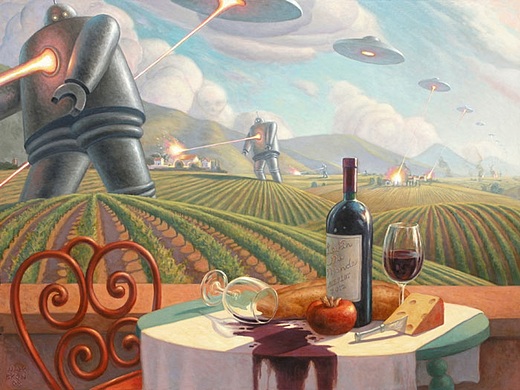
Permaculture Design Course

SOURCE: Vermiculture Kauai: (http://vermiculturekauai.pbwiki.com)
SUBHEAD: Permaculture course on Kauai, with Michael Pilarski and local experts.
Image above: detail of permaculture course poster. From (http://www.activatekauai.org/PDCflyer2009.htm)
By Linda Pascatore on 16 February 2009 -
WHEN & WHERE:
Course may be taken as full 2 week course, one 5 day course, or day by day
Part I: March 21st to March 25th, at Kauapea Farm in Kilauea
Part II: March 28th to April 1st, at Waipa Foundation in Hanalei
WHAT:
Ahupuaa Activation Permaculture Design Course, with Michael Pilarski and local teachers. Course Topics include: Ecosystem Restoration, Organic Gardening, Natural Building, Native Plant Restoration, Sustainable Forestry, Appropriate Technology & New Energy, Whole Systems Design, Village Development, and much more. Cerificate awarded upon completion of the entire course. Scholarships and Work Trade available to local Kauai residents. Seeking Donations and sponsorships. Food Onsite and Locally Grown.
Michael Pilarski is a farmer, educator, and author who has dedicated his life to teaching how people can live sustainably on this earth. He has authored many books on forestry, agriculture, agroforestry and ethnobotany. Michael has been involved in the permaculture movement since 1981 as a writer, teacher and networker. He has taught over 20 full Permaculture Design Courses in the USA and abroad.
COST:
Includes meals and lodgings on site.
$800 for 10 day course
$500 per 5 day session
$85 per day session
Some scholarships and work study available to local Kauai residents.
CONTACT:
Register online: www.activatekauai.org
or Call: (808) 990-0102
.

President's Day

SUBHEAD: It pays to be lucky, even if your the president. By James Howard Kunstler on 16 February 2009 in Clusterfuck Nation http://jameshowardkunstler.typepad.com/clusterfuck_nation/2009/02/presidents-day.html
A creepy feeling ushers in President's Day this year as the suspicion grows that nobody in charge of anything knows what what to do next. The usual yin-yang consensus has solidified in congress along party lines, both equally idiotic. In the White House, Mr. Obama is under excruciating pressure to "do something" as systems unravel and economies augur into darkness. Amid all the anxiety and raging cluelessness, one thing is clear: we're doing everything possible to evade reality.
image above: The living U.S. presidents in the Oval Office on January 7, 2009. From Getty Images
The reality we can't face is that one way of life is over and a new one is waiting to be born. It's been waiting, really, since the early 1970s, when God whacked the USA upside its head to announce that we'd outgrown our once-stupendous domestic supply of oil. I remember those fervid months following the OPEC oil embargo of 1973 (I covered the story as a young newspaper reporter.) The basic message was this: from now on we'll be running this show on other people's oil so we better start doing things differently. Back then, the not-yet-lost-in-a-fog-of-greed Baby Boom generation rolled up its tie-dyed sleeves and got to work doing a lot of forward-looking things: micro hydro-electric, passive solar houses, rural homesteading, the next generation of public transit (BART, the D.C. Metro), the first wave of urban gentrification.... Then, in 1979, the Ayatollah tossed out the Shah of Iran, we got another dose of oil problems, and a year later, President Jimmy Carter's clear-eyed view of the oil situation as "the moral equivalent of war" got overturned in favor of Ronald Reagan's dreadful Hollywood nostalgia projector. As usual in times of severe social stress, the public got delusional. Mr. Reagan was very lucky. During his tenure, two of the last great non-OPEC oil discoveries came into full production -- Prudhoe Bay, Alaska and the North Sea -- and took the leverage away from the Islamic oil nations who had been making us miserable with their threats, embargos, price-jackings, and hostage-takings. Americans drew the false conclusion that Ronald Reagan was an economic genius (a similar thing happened in Great Britain with Margaret Thatcherism). The price of oil went down steeply while they were in office. Britain could kick back and enjoy it's last remaining industry, banking, on a majestic cushion of energy resources. The USA resumed its major post-war industry: suburban sprawl building. Reaganism got elevated to the status of a religion, though it was little more than a twisted version of Eisenhower-on-steroids. Under Reagan, WalMart embarked on its campaign to destroy every main street economy in the nation. The Baby Boomers came back from the land, clipped their pony tails, discovered venture capital, real estate investment trusts, securitization of "consumer" debt, and the Hamptons. Greed was good. (No, really....) The first President Bush's Gulf War jolted the oil markets briefly, but Saudi Arabia was demonstrably on our side in that conflict, while the non-OPEC oil supply was goosed up by production from Mexico's giant Cantarell field. The slight economic shudder caused by the Gulf War was enough, though, to unseat Bush Number One in favor of the Boomer Bill Clinton. A puzzling figure in many ways, articulate and magnetic, Bill Clinton was hardly a reformer, surely not in terms of the national lifestyle. He was in so many ways an exemplar of it. He'd been governor of WalMart's home state (and his wife sat on its board of directors). He was a pure product of the New South, the sunbelt, with its economy literally driven by everything connected to cars -- new suburbs, malls, fast food huts, Nascar. He wasn't about to pull a Jimmy Carter and try to prepare the people for some harsh realities. Really nobody saw what was going on during the Clinton years. The public was sleepwalking in a Martha Stewart nesting fantasy. Clinton was as lucky as Reagan. The only geopolitical conflict he faced was the Balkan gang-war that attended the collapse of Yugoslavia. Baby Boomer greed went into overdrive during the Clinton years as the former hippies hit their mid-life career strides, epitomized in billionaire-worship and the eventual money-grubbing book deals both Clintons made on departure. Does anyone remember Mr. Clinton saying, even once, that an economy based on suburban sprawl building and car dependency might not be such a good thing? Of course not. Under Clinton, the SUV became our new national bird. The price of oil flat-out crashed while Clinton was in office, sinking to the $10-a-barrel range by the time he handed over the White House keys to Bush Number Two. Poor dim "W" rode his generation's last wave of cultural inertia into two terms as little more than custodian of things set into motion by others years before. Reality was shifting starkly "out there" but "W," raised in the protective globe of great wealth, coddled in made-to-order business deals, surrounded by political triumphalists and Jesus Jokers, couldn't see through the brush-piles in his mind. (Maybe it was all that cocaine from the years before.) He paid lip service to a murky notion called "energy independence," but to him that just meant finding a home-grown way to maintain extreme car dependency and all its perilous usufructs. The 9/11 tragedy allowed him to pretend to be a man-of-action, but as the various wars and occupations ground on, "W" more or less disappeared into the deep groove of his own limited programming. During those years, more than a few things happened to inform the American people -- not all of whom were dim, of course -- what was up. For one, a cohort of senior geologists retired out of service to the oil industry and started publishing their own dark thoughts about the world's energy future. The discussion of these matters spread to the internet, where it grew in clarity and insight. We began to understand, for instance, the connection between our energy predicament (peak oil, so-called), and the growing parallel fiasco in hypertrophic debt creation that was driving the banking system and threatening to wreck it. Now we've arrived at the moment of wreckage. Meanwhile, Barack Obama sailed into the White House on a tide of "hope" for "change." The change was unspecified, by both Mr. Obama and the general public (and the news media that audits its thinking). What is dogging many of us who supported Mr. Obama is the delayed entrance of much-vaunted change. At this moment of "stimulus" and TARP-II, it seems to have been about a desperate attempt to preserve the hypertrophic debt economy of "miracle" mortgages, blue-light-special shopping on credit cards, and endless happy motoring at all costs. And by "all costs" I mean literally bankrupting our society at every level to keep on living as if it were still 1999. This naturally alarms those of us who perceive a need for more drastic reprogramming in American life. Mr. Obama is not dim. The euphoria that attended his election was largely about acquiring a leader of first-rate intelligence and sensibility, compared to his lamentable predecessor. I like to think that Mr. Obama really does know what's up -- that "change" means we have to live a lot differently, not mount a campaign to sustain the unsustainable. I suspect that President Obama has learned over the last several weeks that the nation's banking system and economy -- indeed, the whole world's -- are in way worse shape than anyone imagined before January 20. He is faced with the immediate crushing problem of appearing to do something while a tsunami of catastrophic debt deleveraging sweeps away the first outlier nations and their economies and bears down on the G-7. I suspect that in a few weeks, or possibly even a few days, Mr. Obama will have to start announcing all kinds of new and more drastic measures that will shock the stunned American public -- things like bank holidays, nationalizations, possibly even dollar devaluation. As I've said more than once, I believe this basically honest and intelligent president will have to take on the role of the nation's hand-holding camp counselor or school teacher. When the time comes that he assumes this role, I think he'll do it pretty well, even though great pain and misery will be abroad in this land.

GMO Taro Ban

SUBHEAD: Efforts to stop genetically modified taro continue.
By Jeri DiPietro on 15 February 2009
This is our gmo free Taro bill that would BAN all gmo taro in the state of Hawai`i. The hearing will be on Wednesday at 9:10 am in Honolulu. Please testify in support of HB 1663 to the Hawaiian Affairs committee. www.Kahea.org will place the appropriate heading and room number.
Please submit testimony to malama Haloa the taro by clicking Maka`ala Legislation 2009 at www.kahea.org or at
HB 1663 hearing notice for the Wednesday, the 18th, please submit testimony ,

HB 1663

Status

RELATING TO TARO SECURITY.

Prohibits the development, testing, propagation, release, importation, planting, or growing of genetically modified taro in the State of Hawaii.

here's the link to submit testimony

HAW, AGR

http://www.capitol.hawaii.gov/emailtestimony/

image above: Painting 'The Planter" by Herb Kawainui Kane.

Other events on Kaua`i include:

• Monday, Feb 16 KKCR Mixed Plate with Jimmy Trujillo & GMO free Kauai 5 to 6pm • Thursday, Feb 19 sign waving for gmo free taro in Hawai`i Lihue airport gateway 3 to 6pm • Tuesday, Feb 24 gmo free Kaua`i meeting at Cafe Cocos 7pm • Saturday, March 7 free Community Seed and Plant Exchange at Koloa Neighborhood Center with registration beginning at noon and seed exchange at 2pm Important you come out this Thursday! HB 1663 is being heard this week before the Hawaiian Affairs committee in the House, and then will move to the agriculture committee. Last year citizens from across the state submitted over 7000 letters of testimony in support of protecting Haloa the taro from genetic modification. Please join us and show your support for HB 1663 by bringing a sign or banner, or coming to hold one of our signs. We want to malama Haloa and protect traditional Hawaiian varieties and protect the rights of taro farmers to save their huli and replant their fields in the manner that they have practiced for generations. Genetically modified and patented taro must be repurchased from the UH each time you plant your field. Seeds and planting material have always been a free, common resource for growers. Don't allow farmers to lose their right to save the seed and huli that20they produce. The University of Hawai`i has experimented on the forceful insertion of DNA from the unrelated species of wheat, rice and grapevine. We must prevent these plantlets from leaving the laboratory and mixing in the environment with our 60 traditional varieties of taro. You cannot tell genetically altered taro from traditional taro by looking at them. If these synthetic plants are released, we would never know for certain which taro contained potential food allergens and which were hypo allergenic. KAHEA: The Hawaiian-Environmental Alliance and Na Kahu o Haloa are working to spread the good news about ongoing taro-related current events. Na Kahu O Haloa, the "Guardians of Haloa", are taro farmers and consumers from many diverse backgrounds and purposes joined together to share our profound respect and aloha for Haloa--the taro plant, a sacred and healthy plant that is uniquely important to Hawaii's ecology, local agriculture and traditions. We encourage your continued support to Malama Haloa and perpetuate taro culture in Hawaii, by helping to: - Protect water rights for taro farmers and native ecosystems, and, - Protect natural taro from the risks posed by genetically modified, or GMO-taro. Haloa is Growing Strong in 2009!!! Many lo'i kalo (taro patches) have been re-opened in just the past few months all over Hawaii nei, as well as beginning the restoration of neighboring native ecosystems. Volunteers at community work days come excited to learn the ancient and modern techniques used to set up taro patches in a variety of locations and environments. Many go home to plant their own patches or pots of all kinds of Hawaiian kalo- looking forward to choice lu'au leaf and 'ono homemade poi for the family!SB709 Good news! SB709- a bill to protect taro from genetic modification, on PASSED its 1st hearing before the Senate Committee on Energy and the Environment last week! Six of the seven senators on the committee voted in favor of banning on GMO-Taro. Mahalo piha to the Senators who listened to the community concerns and did their own research: Senator Mike Gabbard, Senator J. Kalani English, Senator Russell S. Kokubun, Senator Josh Green, Senator Gary L. Hooser, and Senator Les Ihara. Only 1 voted against the ban, Senator Fred Hemmings. The committee also agreed to amend the original language of the bill, upon the recommendation of taro farmers, with language that will protect all varieties of taro, not just Hawaiian varities. These good amendments also present other important points brought up in HB1663. This bill should be getting its 2nd hearing in the next couple weeks. NEXT for SB709, more or less: 1) it will be reviewed by the Committee on Water, Land, Agriculture and Hawaiian Affairs, which is chaired by Sen. Clayton Hee (D-Kahuku/Laie/Kaneohe). If it passes the vote, then it will- 2) be heard by the entire Senate, if it passes the vote then it will- 3) cross-over to the House to be heard in committees and voted on, then- 4) heard by entire House of Reps, if it passes the vote then- 5) to Governor for approval, then- 6) become an official law. What happened to the GMO-taro bills last year? Did you know that if the 2008 bill (SB958) to ban GMO-taro had been heard by the entire House of Representatives it would have passed with a majority of votes? Its true! Not only did the bill have the support of the majority of the House but it also had already passed all the way through the Senate. What happened at the end was that a small group of legislators, led by Reps. Calvin Say & Clift Tsuji, 'poisoned' the bill to represent only the interests of the biotech industry, despite the public's overwhelming concerns and support of a ban on GMO-taro. Our challenge, this year, is not to be discouraged by the unfair actions of those few but to continue to gather the majority of support and make our public voice ever stronger-- e Onipa'a, to protect our right to eat and farm healthy, safe, natural taro. This historic and crucial effort takes commitment and time- but after 1,200+ years of natural kalo farming we got plenty of both, plus pure Aloha! Mahalo nui loa for your kokua! For more information please contact: Jeri Di Pietro 651 1332 or MiKey Boudreaux 651 9603

see also: Island Breath: UH releases tarot patents 6/23/06

Power Rivalry

SOURCE: Ken Taylor taylork021@Hawaii.rr.com SUBHEAD: "Smart Cities" Mean Rivalry In Power, Construction
by Pete Harrison on 11 February 2009 for Reuters
http://uk.reuters.com/article/motoringAutoNews/idUKIndia-37930520090210 In the city of the future, could power suppliers be rivaled by construction firms? An embryonic movement is growing in Europe to build "smart cities" that will challenge the status quo. The vision is fueled by the fear of climate change and the need to find green alternatives to dirty coal, unpopular nuclear power and unreliable gas imports from Russia.
image above: Solar panels are seen atop the roofs of the Nokia Theatre and Staples Center at the L.A. Photo: Fred Prouser
Such cities would become self-contained units, their buildings gleaning energy from the powerful weather systems sweeping across their roofs and feeding it down to homes below and vehicles in the streets. Electric cars in the garages would double up as battery packs for when energy supplies are scarce. Every scrap of waste food, garden trimmings and even sewage would be used to ferment gas. Facing up to the end of their traditional business model, utilities are mapping a long-term survival strategy. "A very different business model will emerge over time," said Gearoid Lane, managing director of British Gas New Energy, the UK utility's green division. "If any energy company ignores the long-term impact on future fossil-fuel backed energy sales, they will be in for a shock." The idea of self-sufficient cities is gaining currency in the European Union, which has set itself the ambitious task of cutting carbon dioxide (CO2) emissions to a fifth below 1990 levels by 2020 -- the biggest cuts anywhere in the world. "In 25 years from now, millions of buildings...will be constructed to serve as both 'power plants' and habitats," says writer and economist Jeremy Rifkin, who has advised governments and corporations on tackling climate change and energy security. At the hub of the system would be a "smart electricity grid" that allows electricity to flow where it is needed most and dissipates the energy spikes as weather systems sweep through. "The more fluctuating energy you have from renewables, the more it makes sense to have a smart grid," Markus Ewert from the new technologies team of German utility E.ON told Reuters. "It would help stabilize the energy flows, so you don't come up against the limits of the grid. "Electric vehicles could be connected to the grid and could store energy at times when too much is produced -- and they could feed it back into the grid when there's not enough." SUSPICION While utilities such as E.ON are looking for opportunities, there is also strong suspicion that others are trying to preserve their vested interests and slow the pace of change in Brussels, the main driver of European climate regulation. That was fueled last month when a plan to put 500 million euros ($645.5 million) into researching smart cities was scrapped. "It's stunning that funding was kicked out, and it's pretty clear the big electricity utilities were not innocent," said Green party member Claude Turmes who last year helped draft EU green energy policy. "Their influence on policy-making is tremendous," he added. The reason the funding was dropped is not clear, but the challenge facing Europe's big power generators is obvious -- insulating or rebuilding Europe's rickety housing stock could cut heating bills any where between 30 and 80 percent, which would slash demand for their product. Not only would smart cities slowly reduce energy needs, they would also start producing their own over time. Much of the technology needed is still a distant dream -- but not all of it. French construction company Bouygues is working on an office in Meudon, western Paris, which uses 4,000 square meters of solar panels to meet not only its own energy needs but also to export surplus energy back to the power grid. "We have entered an era of breakthroughs and of a technological revolution in the construction sector," said Eric Mazoyer, deputy managing director of Bouygues Immobilier. "Because tenants will pay 60 percent less in electricity bills, we can charge higher rents and we will sell the surplus of electricity back to (French utility) EDF," he added. OUTSIDE THE BOX Myriad other examples exist throughout Europe, but at the heart of the plan is the philosophy that energy, ideas and enthusiasm are most easily shared in densely populated areas. "Cities are a perfect for promoting change and renewable energies," said the politician, Turmes. "Cities can serve as innovation platforms, creating clusters of businesses around green energy, and they control urban planning and parking slots, so they can promote electric transport systems." Environmentalists see another advantage to local entities -- they have a degree of autonomy beyond the reach of federal government and can often make tough decisions: for example, California's climate goals and London's congestion charging. This week, the mayors and deputies of more than 300 mainly European cities are due in Brussels to sign a covenant pledging to cut their cities' greenhouse gas emissions above and beyond the EU targets. "It's a very new way of doing things," said Gerard Magnin of Energie-Cites, a group of green local authorities. "It's about giving power to society, so society can put pressure on the institutions. By demonstrating people are ready for change, the cities will help the governments." European Energy Commissioner Andris Piebalgs estimates the cities involved will together save $10 billion a year in fuel. So how do energy companies cope with such upheaval? Much can be learned from other sectors undergoing similar revolution, such as telecoms which suddenly hit fierce competition from cable and internet providers, or the music industry which is struggling to cope with digital MP3 uploads. "The MP3 was the first open platform that the music industry couldn't control," said Tim Hole of Audio Authority Management, a London music manager who is trying to keep pace with change. "It took a company from a completely different sector to step in and take control of things -- Apple coming from the computer industry to deliver iTunes and the iPod," he added. "You may see that start to happen in the energy sector." "To survive, you have to get closer to your customers, so you can keep up with their changing expectations," he added. Many in the energy sector already expect their new rivals to be constructors or property developers like Bouygues. "We have had some interesting discussions with developers," said Lane of British Gas. "Whether they will develop the expertise in-house, or work in partnerships with energy companies remains to be seen." "We have 10,000 engineers out there every day, installing and servicing boilers," he added. "There's a relationship of trust already. That model will become more and more valuable when it comes to selling renewables and microgeneration."
see also:

Old world is crashing down

SUBHEAD: Renewal awaits on the other side of collapse.
By Jan Lundberg on 14 February 2009 in Culture Change Letter #236
This is the time we have been waiting for... some of us, anyway. We wanted a better world, and we might just get it. The old one had to fall and get out of the way, and this must be finished for the sake of our faltering climate and for our own sakes. Meanwhile the old guard is floundering around and is as useless as tits on a bull - as my father used to say. People are still mesmerized by power and imagery, but the luster and facade are fading. While some government spending can be along healthy lines, it is certainly not "the answer."
image above: Roman ruins in Palmyra, Syria
We have entered the time of the most rapid, sweeping change in culture. Great changes are in the works for the way people live and think. We are just beginning to see the failure of not just easy credit and overspending, but the failure of living for money and material things. Granted, most participants in the growth economy thought that's how things were supposed to work, and now they feel at a loss. These are people who have had little use for traditions of their ancestors. They thought nature was something to dominate into submission and rape for pleasure and profit. They thought technology placed us above all life forms as well as primitive peoples, and that we could cast any number of them into the extinction bin. For we could continue to extract resources forever and solve any problem.
Now the humbling has begun, on several levels. By now only an idiot isn't worried about climate change. Now that we know full well what we're doing to the ecosystem, how can any sane person put the economy first instead of integrating it with ecology? How can defending our systemic destruction be tolerated?
There's been progress from a rude awakening: now only an idiot trusts the big bankers and government regulators. Only a fool is comfortable with the oil companies and car companies. All these forces are seen to have brought us low, and no one can deny the joblessness caused by letting the big shots call the shots. And most people sense things will get worse before they get better. Printing money and throwing it at lenders and government programs is obviously just more of the same -- the definition of insanity.
So far so good, in terms of better awareness. But real leadership would tell the people about the energy and oil reality and the consequences of overbuilding an economy based on a now depleted resource -- the easily produced oil is bye-bye. Alternative fuels cannot pick up the slack meaningfully for hundreds of millions of consumers of petroleum-fed crops and animal foods.
Going further, real leadership admits the shortcomings of "our" system: the reward of greed and the acceptance of other antisocial values, and the unsustainable wrecking of nature for a higher overpopulation to ride out into oblivion. As the politicians and the sell-out columnists and commentators hold their tongues and pretend everything is still more or less in control -- while nervously wondering what the free fall is going to do to their own security -- the masses of people turn to whatever is at hand to survive. The answer for us in North America is not in Afghanistan or Iraq.
But let's talk about goodness from the collapse of the established order. Keeping in mind that sudden decline is not pretty, and indeed is painful and tragic with many casualties on the way, there is reason for great optimism in the ending of big-money corporatism and the closing of the history book on unlimited growth. It had to be thus; any schoolkid knows that there can't be an infinite supply of anything in a finite sphere. How can the abandonment of such stupidity usher in anything worse than the tyranny of denialists we've had to put up with?
Necessity is the mother of re-invention. We don't need gadgetry invention; we need adaptations and skills to cope with a lower-energy world. We are increasingly forced to deal with a pissed off Mother Nature -- she is overshadowing mere concerns about the growth economy, more and more each day. So our approach to meeting basic human needs has got to use common sense and -- are you ready for this -- mutual cooperation. Now that the economy is collapsing -- I believe it will be final, total, and for good -- essential needs have to be met locally. With food being shipped on average 1,500 miles from farm to the U.S plate, such extravagance and idiocy must give way to what is grown locally. And we're stuck with our own local fresh water than can no longer be polluted by an employer, privatized by greedballs, or depleted for an animal-based diet.
The older world we threw out -- when our parents and grandparents embraced techno-conveniences and slacked off on the responsibility of educating their own children to learn what the great-grandparents knew -- is going to return shortly. Preserving food, repairing things, sitting down to all meals together, amusing ourselves with creativity and conviviality (instead of with machines in isolation), knowing our relatives well, respecting the land and waters that give us life -- such traditions are not choices but requirements for survival. And it's fun to survive, or more fun than the alternative. The individual will again feel pride that what one does matters to the community while not harming the planet. This does not mean that there won't be opportunists and mistaken people obstructing positive change. But with the end of the old order and its narrow mindset of paving over the farmland for "progress" -- largely because it will no longer be possible -- we can't help but restore our village ways and tribal ways of mutual aid, once again serving the common interest over personal gain. For we have just seen the era of personal gain start its free fall to the trash heap. Stimulus? Too bad there's not any discussion on what might be stimulated for the needed fundamental change.
A common error is to promote sustainable systems in a vacuum as if their logical superiority over idiotic and subsidized capitalist anachronisms need only to be made available. It's great to promote them, provided they are not pie-in-the-sky technofixes. The problem is that good models are suppressed as long as the dominant system is intact or while petroleum is available. Therefore, the right course of action is to pursue the kinds of alternative models that both starve the beast and educate people to reject the present system. Then people can start to glimpse a better culture of sustainability and all that goes with it: sensible economics, co-leadership, compassion for the rest of the Earth's species, and the realization that we will never get another chance like now.

Role of food in sustainability

SUBHEAD: The vitality of local food production.
By Glenn Hontz on 15 February 2009 in The Garden Island News
It seems that many of us on Kaua‘i are responding to the challenge of increasing food self-sufficiency. This is encouraging. As public support increases, the changes we must make to achieve genuine food security will be more effective. It might even be safe to say that with public support these changes will become sustainable.
Many of us are recognizing that sustainability in our food supply system requires a shift away from our heavy dependence on the national/international food conglomerates and an increasing emphasis on local systems of production and distribution. This shift is becoming necessary as it recognizes that the giant food conglomerates are no longer able to feed the burgeoning population of the planet.
image above: a view of historic Limahuli Gardens on Kauai part of NTBG from
The reasons include the fact that farm land resources are being depleted at an alarming rate worldwide, the old production methods are actually producing less food, traditional agriculture systems and shipping costs are both oil-dependent and oil resources are declining, the intense level of competition among the large food producers for greater shares of the market have squeezed many companies out of business and produced compromises in food processing methods that are resulting in serious threats to human health, the nutritional quality of processed food and even that of food grown “fresh” at distant sites is being questioned by consumers, and not the least of these reasons is the fact that many customers are demanding locally grown food just because it tastes better.
However, the popularity of locally grown food does not automatically guarantee that we can grown enough on our island to become self-sufficient, nor does it promise that our methods will be sustainable. Most people would agree that any sustainability plan must provide for a sufficient supply of food, but the real challenge is to supply that food in adequate quantity and in a consistent manner without damage to the environment. That is what sustainability is all about.
The question is, “Does Kaua‘i have a plan for supplying the food we need in a sustainable manner?” The truthful answer is, “Well, not yet.”
The Kaua‘i Food Industry Forum, a informal community action group sponsored by Kaua‘i Community College in cooperation with several other interested organizations and agencies, has during the past year been developing a plan to revitalize food production on the island. The basic logic of this plan is as follows:
  • We don’t have enough farmers on Kaua‘i to grow the food we need
  • Recent efforts to encourage more candidates into farming careers have not been adequately successful
  • The immediate alternative is to engage the existing farmers to train more people to grow more food
  • The best people to train are those that will benefit from a supply of fresh locally grown food
  • Those are the local residents,
  • That means we need to support training for the development and expansion of home-based and community-based gardens
  • This will engage more people in growing more food for themselves and the benefit of their friends and neighbors. Eventually, the experience of developing cooperative community gardens can encourage candidates to create small commercial farms.

Thus was launched the “Community Gardens Project.” KCC began offering courses on growing food and established a campus garden as a practical hands-on training site. People learned how to start and manage a garden successfully and took those skills into their backyard and formed a family garden. Community gardens also were launched in various neighborhoods. Training programs are being offered in those regions to provide the convenience of technical assistance at the local level.

Today, home gardens are increasing in many neighborhoods. And more folks are enrolling in classes that offer training in ways to create and mange community gardens in their neighborhoods. Since the start of the Community Gardens Project last September, more than 200 persons have participated in training programs held at the KCC campus and at satellite training sites on the Westside and the North Shore. Although this “movement” is still small, it is receiving encouragement and support from several organizations and agencies. The College is continuing to offer classes and hands-on training programs. Similar programs are being provided by Malama Kaua‘i, the Kilauea non-profit that specializes in designing sustainable systems of all kinds. Some of Kaua‘i’s experienced farmers like Jillian and Gary Seals, Scott Pomeroy and April Courture, Marie Mauger and Mathew Field, Paul Massey, Kelly Ball, Tom Legacy and others are offering training and technical assistance to home gardeners and community garden start-up groups. Much of this support is focused on organic practices, mainly because these farmers believe that the organic methods are the sustainable ones that support rather than damage the environment.

Will this young movement bring forth a sustainable system of food production and provide the quantity of food we need? It is really too early to tell. But those who support the movement point out that local food production is receiving increasing support from all levels of government and has captured the approval of growing sectors of the public. It is important to recognize that the old conglomerate systems of food production are not adequately feeding the world’s population. Although these giant food producers may rise again, in the meantime it seems prudent to begin growing our own.

• Glenn Hontz is coordinator and director of the Food Industry Program at Kaua‘i Community College and can be reached at 246-4859 or hontz@hawaii.edu

Down the Rabbit Hole

SUBHEAD: Dollars gambled on growth are not safe.

By Sharon Astyk on 11 February 2009 in Casaubon's Book -
http://sharonastyk.com/2009/02/11/down-the-rabbit-hole-understanding-where-we-are-now/

Image above: Alice in Wonderland by Blind Infinity from http://behindinfinity.deviantart.com

“It was much pleasanter at home, when one wasn’t always growing larger and smaller, and being ordered about by mice and rabbits.” - Alice in Wonderland

Rod Dreher has a fascinating observation over at his blog. He talks about watching an interview on CNBC with Taleb and Roubini:

“Both men are notorious bears, and called the current crash long in advance. Both, CNBC tells us, were the hottest tickets at the recent Davos gathering. CNBC called them in to discuss the crisis. Roubini and Taleb were both trying to make their case for why what’s wrong with the economy is radical, is fundamental, goes to the very base of all our economic assumptions.

The CNBC twits just wanted stock tips and investing advice.”

The more I think about his point, the more I think that it epitomizes something fundamental about the intellectual shift we have to make - and about how hard it is to make it. Moreover, it caused me to think about how hard it will be to unmake that shift. I commented on the piece at Rod’s blog, and said,

”I think the biggest problem is that people have been told that investing is a form of saving - *the* form of saving, in fact. And they believe it - even when their “savings” are being ripped out of their hands. So the problem, through that lens, must be investing in the wrong things, rather than the whole fact that what you put into the markets should be what you can afford to lose, not what you depend on for basic things.

Add to that the fact that the society has transformed basic things like security in old age and education into things that can only be achieved through fake saving (investing) in a market that goes up, rather than things ordinary people could have, and it is no wonder that people who live in this never-never land can’t grasp that it is a world of myth. That is, they know they are not going to be able to eat during retirement or send their kids to college on their income or on regular savings. But they haven’t yet grasped that the situation has changed radically and the choices are now - change the system or accept that a college education and independent retirement are no longer choices for most of us.”

I wanted to say more about this, though, because I think that while this does show where we’re not yet, it also gives us a glimpse of where we are a going, a change as radical as falling into Wonderland or Through the Looking Glass.


Here is what Taleb and Roubini are telling us with their answer that they keep their money in cash - roughly translated this means “We expect the markets to decline still more. We expect to lose anything we put into the markets. We believe that money is safer in holes in the backyard than in the stock market.”

Here is what people who kept asking questions about college and retirement savings were saying, in translation: “We’re terrified to take our money out of the markets, and we’re terrified to leave it in. We depend on the “fake saving” message of investment for basic things like food, housing, health care and education. We know we have no way of insuring food in the pantry when we are old, or that our children will get an education without it, and we’re not yet ready to admit that our hope of those things is already lost, and thus, cut our losses.

We desperately need the market to go up, so we are in profound denial about what you are saying. We have no alternate plan, and our government has no alternate plan. If what you say is true, we face utter disaster. Please tell me that there’s a way to make that not happen.”

And they are right. Both sides of the discussion are right. Without infinite growth, the hopes of an independent retirement were doomed - everyone was told they’d need half a million dollars or more to live on in retirement? What was the likelihood of that money being saved over the course of 35 working years out a 50K per year salary? Hmmm….

Four years at a State University costs $50,000 - a young family with two kids, who began saving at birth - what was the odds they were going to be able to pay for college without the markets? None.

That is, it isn’t just that people bought the mantra of fake saving, it was that they knew that this mantra was their only hope and clung to it as people being swept away in a current cling to anything in reach. And thus, most of us got into the stock market somehow. In fact, we often didn’t have any choice - our pensions, our health insurance funds, our mortgages were invested without our consent.

Our companies matched not our savings, but our 401K contributions. And all of this meant that the markets had an enormous amount of the average person’s money to play with. This enforced participation meant that the growth cycle had a feedback loop going - more people had to play, which meant more pay. Now we’re into negative loops.

We were lied to, and we were betrayed, and most of us will never see our money again. And that leads to an even more important corrollary point - it will be a very long time before our society sees this level of investment again.

Think about it. I’m 35, and my friends in their 40s and early 50s are often already caring for or concerned about aging parents that depend heavily on their investments. Many have lost nearly half of their money already, but haven’t pulled out of the markets because they have been told that this would hurt them, that it is a bad idea, and because they desperately need to believe that they someday will be able to retire. They can’t bring themselves to accept that the money they have now may well be as well as they can do, because it will not support the future they’ve envisioned for themselves. So they leave it in.

Many economists have estimated the bottom - quite a few have estimated it at Dow 4000 or so, while others are optimistic. But let’s assume that the most optimistic estimates are wrong, and that much more of the money is going to disappear. It took *30* years for the Dow to reach the same levels that it hit in 1929 - the recovery was not quick, and there’s really no certainty that we’d recover quickly either.

So millions of baby boomers are facing disaster - either extra years of work, or poverty in old age. And they are going to be angry and betrayed - none of them imagined their later years to be strained and struggling. They did what they were told. And eventually, they will take what is left of their money out of the markets and salvage what they can - and they won’t put it back. They won’t be able to afford to risk what little they have.

Shift down half a generation, to my peers, and those slightly older and younger. As we watch our parents struggle, how many of us are going to trust in the stock market for our own retirement? As we explain to our kids why they may not get to go to college, are we going to put our limited funds there?

Universal investment is over - and we will remember our whole lives what the dangers of speculation are. I’ve never met a peer of mine who expected to collect social security, and I don’t think that in 10 years, I’ll meet one who expects to derive money from a 401K.

The 20 and 30 year olds buried under massive student loans, the 19 year olds who will have to drop out because the college fund isn’t there - they will remember, inscribed on their chests where their vision of their future lay, that investment is not safe, it is not secure, it is not a way to ensure the future, but a way to betray it.

It took 30 years for the stock market levels to rise back up to the adjusted equivalents of the Dow in 1929 - in part, because it took 30 years for the people who were children in the Depression, and on whom the fear of banks and markets did not imprint, to grow up and tentatively step back into them.

It took 50 years, until the 1980s, to get levels of participation in the markets up to approximate the 1920s - until a generation of children who could not remember the Depression, and had only known growth, had grown up.

It was only after that that ideas like giving people their safety nets and letting the gamble in the markets with them came up - and anyone want to bet how long before the next time Social Security privatization comes to the table?

Let’s assume that peak oil and climate change simply aren’t that big a deal (for the record, I assume y’all know that they are). Even without these ecological limits, the idea that the markets will rebound in the long term is probably dubious - because market participation depends on people who believe the “investing is savings” mantra. And people who have seen it shown to be false will not believe it - you have to wait until a new generation of people, more gullible because they have not seen, arises.

And that means that even if we don’t face energy constraints (we do) and ecological constraints (we definitely do), we face capital restraints - much of our current infrastructure, the way of our way of life, was built with other people’s money, invested in the stock market.

Who will choose to give their money to corporations to spend? Who will choose to see their health care, housing and education dollars gambled? And that means that our long term recovery prospects must include the reality that the “investing is savings” mantra has been proved to be a lie, and it will be twenty years, or more, before anyone will buy that lie again.

Now mixed in with energy and ecological constraints, I think the constraints in investment capital do mean that we must - I don’t mean should, but must, make our plans for the future very carefully, that we must choose now where to put our limited resources and energies, because they may well turn out to be more limited than we thought. Down the rabbit hole we go - and it isn’t very clear what size we’ll be when we stop growing.


Feeding the soil

SUBHEAD: Ever wonder why forests don’t need to be fertilized.
By Aaron Newton on 12 February 2009 in Powering Down
This post is the second part of an excerpt from _ A Nation of Farmers _ regarding soil.

If a healthy soil is full of death, it is also full of life: worms, fungi, microorganisms of all kinds.... Given only the health of the soil, nothing that dies is dead for very long.—Wendell Berry
Image above: detail of photo at http://niche.uwo.ca/aggregator_summary/sources/5
One of our hobbies here in the United States the hyper-distillation of ideas. We’re trying to perfect the sound bite, a pursuit made necessary by a mainstream media that consists of a handful of news tycoons trying, in a fair and balanced fashion, to offer us only two perspectives of exactly 150 seconds per idea. Never mind that some of these complex ideas have to be dumbed down immensely to fit into this short window; the complex versions are really important to the lives of the citizens of our nation. It’s as if what really matters is whether the nightly news can afford to fit in a quick story about the state of American health care between commercials for burger joints and drug companies.
A good example of our oversimplification can be seen in our whole approach to the question of plant nutrition (well, human too, but that’s another discussion). NPK stands for nitrogen, phosphorus (phosphorus pentoxide) and potassium (potash or potassium oxide). K is the atomic symbol for potassium. P was already taken and the Latin for potassium is kalium, so that’s how we get K. See how complicated this is getting already? But stay with me here, this is important. This acronym NPK describes three major plant nutrients and helps to describe the ratio of the each as a percentage of weight in any particular synthetic fertilizer. For instance, a bag of fertilizer labeled 20-7-10 has 20 percent nitrogen, 7 percent phosphorus and 10 percent potassium. The remaining 63 percent is ballast, or stuff not necessarily useful to the plant.
NPK represents only three of the six plant macronutrients. That is, these are things that the plants need to survive. The other three are calcium, magnesium and sulfur. In addition plants need varying amounts of micronutrients including iron, manganese, boron, copper, molybdenum, nickel, lithium, chlorine, zinc, selenium and others. But ask someone who sells fertilizer about how to choose which fertilizer to use in your garden and they will rarely get past NPK, any more than politicians get past the soundbyte. And not only do we have a hard time getting past those three nutrients, we almost never get to the delivery system of these nutrients, which is just as essential.
Most people think in terms of plants absorbing needed nutrients through their roots. The truth is much more complicated. In fact plants feed themselves through a host of symbiotic relationships between the plants and other microorganisms in the soil. The plants in turn feed the microorganisms sugars. In some cases the connection is a physical one. Sometimes the roots of plants are penetrated by microrhiza; other times the plants are fed by nearby neighbors. The soil is a community of living organisms that makes up one of the most densely populated ecosystems on the planet.
Try to imagine millions of living organisms in one cubic centimeter. It is this community on which all of us who eat plants—or eat animals that eat plants—are dependant, which is to say it’s much more complicated than a three-letter abbreviation. Forget the idea that plants eat first. Microorganisms are at the head of the table.
It is true that nitrogen, phosphorus and potassium are very important for the successful growth of plants. It’s just silly to say that the right combination of these three alone can continue to provide enough food to feed us. The very reason we need to add N, P and K to our farm fields is that we’ve stripped off much of the topsoil in which the healthy ecosystem of soil microbes lived. In many cases the remaining microbial communities were then killed by applications of synthetic fertilizers and pesticides. The topsoil of many industrial farming operations is rightly described as simply lifeless sponge onto which chemicals are poured in order to make up for this community that once nourished the plants without such inputs.
And perhaps if this was a simple trade, the life of the soil traded for better living through chemistry, it might be a trade we would be willing to make. But as we have discussed elsewhere in this book, these chemicals have negative effects on human beings as well as destroying entire ecosystems such as our waterways. The cost in terms of human health and in terms of ecological health are two strong reasons for imagining a different way of growing food. Another is the economic cost.
Frank Dean of ICL Performance Products says the price of Merchant Grade Acid (MGA) used to process phosphate rock into phosphorus fertilizers rose between 25 and 30 percent in 2007, while “fertilizer phosphates, which use MGA as a feedstock, have increased by as much as 70% to 100%.”[i] That means some fertilizer phosphates have nearly doubled in price only a year. Meanwhile, the price for potash rose by 230 percent in April 2008, and potash production is increasingly concentrated among only a few companies.[ii]
No projections include a drop in demand for food or for the fertilizers currently used in their industrial production. In fact it is precisely the opposite. “World fertilizer demand has grown by 14% in the last five years—Equivalent to a new U.S. market,” said Deen. Phosphorus and its uptake by plants is a somewhat complicated matter, but the practice of mining rock phosphates from the other side of world and shipping them to the US for use as fertilizers is likely not a practice that will increase in the future. While a worldwide economic crisis may reduce consumption of energy, it is unlikely to dramatically reduce desire for food.
Meanwhile, synthetic nitrogen fertilizers are extracted using natural gas (NG), which is itself a finite resource, one likely to decline in production during the next decade or two. Already we’ve witnessed fertilizer companies moving oversees to parts of the world where NG is more abundant. This is another way that we face increasing reliance on faraway places that don’t have our interests at heart. It is not just that dumping massive amounts of synthetic nitrogen fertilizers is bad for our health and bad for the environment; doing so is fast becoming prohibitively expensive and further increasing our reliance on parts of the world where we aren’t popular.
And natural gas isn’t the only fertilizer macronutrient potentially in short supply. Research Patrick Dery has concluded that the world is facing a peak in phosphorus production.[iii] Industrial agriculture strips phosphorus rapidly from the soil, and we are mining rock phosphates rapidly. This means that the price will rise and the ability of the world’s lower-income people to buy fertilizers to grow food is in real danger. In the longer term, we must address the problem of phosphorus availability in order to ensure a reliable food supply for our grandchildren.
But is there an alternative? The short answer is yes. The long answer is more complicated than a three-letter initialism but is not beyond the understanding of those who study soil and understand how the microbial community therein can help in a world in which we can’t afford the costs of synthetic fertilizers. There more than 100 microorganisms, including rhizobia and several yeasts, that fix nitrogen from the atmosphere and make it available to plants.[iv] These microorganisms provide plants with nitrogen on demand—far more useful and complex than simply pouring on the fertilizer. That is, if the plant is in need of nitrogen, the microorganisms make it available. If the plant no longer needs more nitrogen, the microbes stopping making it available. Nitrogen doesn’t have the opportunity to build up to toxic levels in the soil or run off into nearby waterways. Microorganisms also make available other nutrients, macro and micro alike, and are the key to developing a sustainable soil structure for supporting permanent agriculture.
Ever wonder why forests don’t need to be fertilized, how towering oak trees came to be without someone applying the right combination of NPK? Microorganisms break down carbon and leach weak acids that break down minerals, making them available to plants. Those oak trees and the other plants in the forest rely on the nutrient recycling undertaken by the microbial community naturally occurring in the soil. We can mimic this process. We can establish healthy soil communities and provide nutrients for recycling. We can sequester carbon, a necessary part of this soil recycling program, helping to offset carbon emissions while we build soil. (More on this later.) The typical NPK approach to providing the nutrients necessary for useful industrial agriculture needs to be turned on its head. The answer isn’t an initialism. It’s fostering natural soil systems and the communities of beneficial microorganisms that make up those systems and protecting them at all costs.
That doesn’t mean we won’t have to fertilize soils if we continue removing agricultural products from them—we will. But we can do so with organic materials. Indeed, it is a basic premise of this book that we will probably have no choice but to shift toward organic agriculture—not out of some elitist preference but because we simply can’t feed the world any other way. Reliance on distant macronutrients and fossil fuels is a recipe for disaster as those things rise in price and availability. Many people have assumed that if we cannot get these things we are doomed to starvation. But this is not true.
Not only can we make nature work for us but we also have an enormously valuable resource that we largely waste—human manures and human urine. On a planet with 6.7 billion people, the one thing we have in abundance is human outputs. These outputs can indefinitely recycle the phosphorous and nitrogen we’ve been using all along, keeping world food yields high.
To do so, we will have to shift our relationship to our own manures. Historically in many places there was a tie between city and country. We will talk more about recreating the ties between urban and rural cultures, but one way we will probably have to do this is by the return of human biosolids to agricultural fields. In rural areas, we will have to take up the composting of human manures and the collection of human urine.
We tend to be very squeamish about these issues, but we will have to face these subjects head on in order to keep up our food supply. Our food supply depends on our ability not to treat these complexities as soundbyte issues, but to truly understand the ways in which we can transform our liabilities into assets.
[i] ICL Performance Products presentation, Concord, N.C., 1.10.08.
[ii] http://www.topix.com/world/canada/2008/04/potash-stocks-nourished-by-230-increase-400-tonne-price-hike-but-canadians-where-profits-go (accessed Nov. 25, 2008).
[iii] http://energybulletin.net/node/33164 (accessed Nov. 25, 2008).
[iv] Personal communication with Ron Danise, a certified arborist who has worked in the field of arboriculture since 1964, during which time he has researched and developed organic soil amendments that develop living soil systems.
further reading recommendations from the editor
Soil food web - opening the lid of the black box by Bart Anderson http://www.energybulletin.net/node/23428

Kauai's Clean Energy ‏

SUBHEAD: Hawaii's Clean Energy Initiative comes to Kauai. By Ben Sullivan on 11 February 2009 in Island Breath - (http://islandbreath.blogspot.com/2009/02/hawaiis-clean-energy-initiative-comes.html) Image above: "Energy Plant" composite image from http://www.urbansprout.co.za/green_energy_trends_for_2008 For those who were not able to make it, last night’s (Tuesday's) presentation on the Hawaii Clean Energy Initiative was a great success. We had a full house of over 120 people and all listened excitedly to the four speakers who presented discussion in this landmark agreement. For those who could not make it, Diane Zachary and KPAA, who brought us the event, have posted the presentations on their website. For years, many of us on Kauai have clamored for transformational change in the way we make, use, and think about energy. The concerns around climate change, oil depletion, and the general economic debilitation associated with our globally unrivalled petroleum addiction have come to a boil on our small Pacific Isle. We have listened, learned, and discussed a great deal about the potential for a wide array of solutions to these problems. At times we have been rational, thoughtful, and open-minded. At times we have been passionate, insistent, and maybe even a bit naïve. In the end, though, we have held doggedly to a common goal of ‘turning this boat around’ and ultimately sending those oil barges back from where they came. Although far from complete, and (like all of us) far from perfect, the Hawaii Clean Energy Initiative is the clearest, most direct, aggressive, and meaningful response our State has issued to date to this ever-broadening global crisis, and sets a clear path for how we might respond here in Hawaii, and even here on Kauai.. I say ‘might respond’ here for three important reasons. First; For those who have read the October 20th agreement, one of the most important realizations is that it is a point of beginning. In my own humble opinion, it’s most important quality is its vision. The HCEI agreement proposes bold action with specific, tangible directions, but does not take the 20th century hyper-conservative utility approach of only proposing things that have been proven and engineered down the last rivet. The initiative proposes sweeping changes, and takes inspiration from the growing national sentiment of ‘yes, we can’. Second; We all clearly recognize that the HCEI agreement is not THE response to our global crisis, it is ONE response. Our addiction to oil oozes into every aspect of our community. The Hawaii Clean Energy Initiative addresses a significant piece of this, but it is up to us to bring the rest of it to the table. Our move towards a sustainable Kauai includes many efforts outside HCEI’s scope that we are already knee deep in; increasing public transportation reducing energy use in water and wastewater eliminating solid waste feeding ourselves with local farming Rethinking relationships to our living systems Third; The Hawaii Clean Energy Initiative, both figuratively and actually, has not yet made its way across the Kauai Channel. Although we will never get the undersea cable the plan proposes for the other major islands, we will get the full support of the HCEI Team, to the extent that our COOP chooses to engage them. We do hope and believe that our COOP is listening, although their most recent IRP, which came out around the same time last fall, looked a bit more like business as usual than HCEI’s transformational vision. The ’08 IRP (pdf) openly discloses a strong reliance on the petroleum price forecasts of the US EIA in reaching its recommendations for our COOP. This is somewhat confounding, but clearly a strategic point the COOP recognizes as a weakness. Speaking with Randy Hee about this point after the event last night, he said to me; “Who the heck knows where the price of oil is going?” I think Randy really hit the nail on the head there; It is clear based on our experience over the last few years that petroleum is simply not a reliable source of energy. Given this realization, HCEI’s ‘official arrival’ on Kauai is not a moment too soon. Now that our community has been formally introduced to the HCEI discussion, we can and should all look forward to a full embrace of this initiative by our Cooperative Board of Directors, who are responsible for setting our direction at the COOP. Oh yeah, one last very small detail. I do ask for your vote, and if your willing, even your advocacy, in the upcoming Board of Directors Elections. If elected to one of the three open seats, I promise to vote ‘yes’ to our clean energy future. • Ben Sullivan is a Community Energy Advocate & Candidate, KIUC Board of Directors
see also: